Tag: Satire

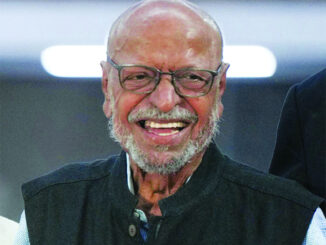
  • Shyam Benegal: 14 December 1934 – 23 December 2024

    Shyam Benegal: 14 December 1934 – 23 December 2024

    Prolific arthouse auteur whose lens captured the many realities of India

    His lens empathetic, rooted to the Indian reality and always political, Shyam Benegal was the arthouse pioneer who rewrote the rules of cinema with films such as “Ankur”, “Nishant” and “Bhumika” that blazed an alternate path to mainstream movies.
    The pioneer of parallel cinema, one of India’s greatest directors whose work found an audience in the most discerning of global film circles, died in a Mumbai hospital on Monday, December 23, evening. It was just nine days after he celebrated his 90th birthday.
    Benegal, who burst on the scene with his first film “Ankur” in 1974, was a chronicler of India’s times and politics, that rare artiste who worked both in non-fiction and fiction across varied mediums — films, documentaries, biopics and ambitious TV shows.
    The title of his debut film, translating to seedling, was perhaps prophetic. “Ankur”, which delves into caste struggles and feudalism in a small village in India, was the first of his more than 25 films that included “Mandi”, “Manthan”, “Junoon”, “Kalyug” and “Zubeidaa”.
    The remarkable oeuvre boasts the documentary on another great, “Satyajit Ray, Filmmaker”, and televisions shows, the ambitious “Bharat Ek Khoj”, based on Jawaharlal Nehru’s book “Discovery of India”, and “Samvidhaan”, a 10-part serial on the making of the Constitution.
    Through his work, which was distinctly different and alternate to mainstream movies as audiences knew till then, Benegal made several stars out of great actors. There was Shabana Azmi, Smita Patil, Naseeruddin Shah and Girish Karnad of course. And then there were those stars such as Shashi Kapoor and Rekha who gave arguably their best performances in “Kalyug” and “Vijeta”.
    The filmmaking was both deeply personal and inherently political. Telling stories of class and caste struggles, feminist concerns, rural distress and community dynamics. The gaze was incisive, the themes serious and the treatment sometimes sombre and other times satirical.
    If “Kalyug” is a modern day retelling of the Mahabharata, “Bhumika” is a searing profile of a woman filmstar and her often exploitative relationships, “Mandi” deals with a brothel and its occupants who deftly navigate the men in their lives and “Welcome to Sajjanpur” about an aspiring novelist turned letter writer is an outright satire.
    Fondly called Shyam Babu by friends and colleagues, Benegal was a pillar of meaningful cinema of the 1970s and 1980s alongside Sai Paranjpye, Govind Nihalani, Mani Kaul, Saeed Akhtar Mirza, and Kumar Shahani.
    Benegal disliked the term “middle cinema” used to bracket his films and preferred that his work be called “new or alternate cinema”.
    “I don’t remember who said this: ‘Every social act of yours is also a political act whether you like it or not’,” he told PTI in 2022.
    “One has to be as objective as possible and the second point is to be sympathetic. If you are not objective, you are already colouring the story with your subjectivity. Sympathy is necessary. When I say sympathy, I mean empathy so you can be one with the subject,” Benegal said. His was the cinema of and by the erudite, attracting some of the most talented in the business.
    The late playwright Vijay Tendulkar wrote the screenplay “Manthan”, a film on the milk cooperative movement in Anand, Gujarat, made with Rs 2 funding from five lakh farmers, and “Nishant”, set in a feudal family. The late music composer Vanraj Bhatia, cinematographer Govind Nihalani and the great theatre director Satyadev Dubey worked with him in multiple films. Girish Karnad wrote the screenplay for “Bhumika” and Ruskin Bond for “Junoon”.
    Benegal was understated about his achievements.
    “There are people who have done wonderful things. There’s nothing unique in what one has done. You do what you think you want to do. That’s not unique. Climbing Mount Everest is unique,” he said.
    Interestingly, Mahatma Gandhi was the one personality Benegal explored in all his complexities and significance. In “The Making of the Mahatma”, Rajit Kapoor portrayed Gandhi during his South African years. Gandhi appeared in two episodes of “Bharat Ek Khoj” and was played by Neeraj Kabi in 10-part series “Samvidhaan”. In his biopic on Netaji, 2005’s ” Netaji Subhas Chandra Bose: The Forgotten Hero”, the role of Gandhi was enacted by Surendra Rajan.
    “It is very difficult to judge or ascertain this but I do believe Gandhi’s influence has been very profound on Indians. It may not necessarily show on the surface but somewhere it has to do with the idea of compassion and a sense of humanity,” he had once said.
    The beginnings of the extraordinary career in the moving visual began in advertising.
    And it was probably in his genes. Born in Tirumalagiri, now in Telangana, Benegal grew up with cinema around him. His father was a still photographer who also made short films. He was also a second cousin of film legend Guru Dutt.
    Benegal did his masters in economics from Hyderabad’s Osmania University. He planned to take up teaching but decided against it. The young Benegal soon moved to Mumbai looking for work and initially thought about assisting Guru Dutt but gave up on that as he had his own ideas.
    Next, he took up a job as copywriter at an advertising agency. After a while, his agency shifted him to the film department sensing his inclination towards the medium where he began making ad films until becoming a full-time filmmaker. He then made documentaries for the Films Division of India before making his feature film debut with “Ankur”.
    He was a much awarded filmmaker. Benegal received many National Awards in his career. He got the Padma Shri in 1976 and the Padma Bhushan in 1991. In 2005, he was honoured with the Dadasaheb Phalke Award, India’s highest award in the field of cinema. Benegal also served as a Rajya Sabha MP from 2006 to 2012.
    Unwell with chronic kidney disease and notwithstanding his 90 years, Benegal was unwilling to call it a day.
    “I’m working on two to three projects; they are all different from one another. It’s difficult to say which one I will make. They are all for the big screen,” Benegal told PTI just last week on the occasion of his 90th birthday. It was possibly his last interview. Source: PTI

  • India in history this Week-December 31, 2021, to january 6, 2022

    India in history this Week-December 31, 2021, to january 6, 2022

    31 DECEMBER

    1925       Hindi writer Shrilal Shukla, born for satire, was born.

    1984       Rajiv Gandhi became Prime Minister and Congress President for the first time.

    1802       The Maratha ruler Peshwa Bajirao II came under the protection of the British.

    1866       Chief Minister of Bihar and freedom fighter Krishna Ballabh Sahai was born.

    1926     Renowned Indian writer, historian, best orator and scholar Vishwanath Kashinath Rajwade died.

    1929    Congress workers led by Mahatma Gandhi started the movement for complete self-rule in Lahore.

    01 JANUARY

    2001       Calcutta was officially named Kolkata.

    1971       Broadcasting of cigarette advertisements on television was banned.

    1950       Rahat Indouri, famous Urdu poet and lyricist was born.

    2020       India’s first Chief of Defense Staff General Bipin Rawat, who took charge (CDS) on 1 January, 2020

    02 JANUARY

    1978       Air India had a Boeing 747 accident. All 213 people aboard this plane were killed.

    1757       British troops captured the city of Calcutta (now Kolkata) in India.

    1954       Bharat Ratna Award was started.

    03 JANUARY

    2009       Rajasthan Chief Minister Ashok Gehlot won the trust vote in the Vidhan Sabha.

    2005       USA announces Rs 6.2 crore assistance to provide clean drinking water to tsunami victims in Tamil Nadu.

    1995       360 people died in a fierce fire in a school in Dabwali, Haryana.

    1968       Launch of ‘Maneka’, the country’s first meteorological rocket.

    1943       For the first time, information about missing people was broadcast on television.

    1929       Mahatma Gandhi met Lord Irwin.

    1901       Brahmacharya Ashram opened in Shanti Niketan.

    1984       Ravindra Nath Tagore inaugurated the ‘Pausha Mela’ at Shanti Niketan.

    1998       Bangladesh refused to hand over India to ULFA general secretary Anoop Chetia.

    04 JANUARY

    1994       Rahul Dev Burman (RD Burman) famous music composer of Hindi films passed away.

    1972       Institute of Criminology and Forensic Science inaugurated in New Delhi.

    1966       India-Pakistan Conference between Prime Minister of India Lal Bahadur Shastri and General Ayub Khan of Pakistan begins.

    05 JANUARY

    2014       Indian communication satellite GSAT-14 was successfully placed into orbit.

    2009       Omar Abdullah, President of National Conference, sworn in as Chief Minister of Jammu and Kashmir.

    2006       India and Nepal extend the duration of the transit treaty by 3 months.

    1957       Central Sales Tax Act comes into effect.

    1955       Birth of West Bengal Chief Minister Mamata Banerjee in Calcutta (now Kolkata).

    1941       Birth of cricketer Mansoor Ali Khan Pataudi in Bhopal.

    1934       Birth of Bharatiya Janata Party leader Murli Manohar Joshi.

    1890       Advocate Gyanendra Mohan Tagore died.

    1671       Chhatrapati Shivaji Maharaj captured the Salhar region from the Mughals.

    1659       Aurangzegb defeated Shah Shuja in the Battle of Khajwah.

    06 JANUARY

    1966       Oscar-winning Indian composer AR Rahman was born.

    1967       Allah Rakha Rahman, who created a new place in the world of music, was born.

    1959       One of the all-rounders of the country, Kapil Dev was born on this day.

    1932       Famous Hindi writer Kamleshwar was born.

    1928       Indian playwright and theatergoer Vijay Tendulkar was born.

    1885       Bharatendu Harishchandra, one of the leading Hindi poets and writers of modern India, died.

    1918       Bharata Vyas, the famous lyricist of Bollywood, was born.

  • Clash of Civilizations

    Clash of Civilizations

     Islam, more than any other religion, smells apostasy in rejection of its beliefs

    By Julio Ribeiro

    More than any other religion in our universe, Islam smells apostasy and insult in any rejection of its beliefs, however casual the intent of the culprit. In Muslim nations, the apostate would be put to the sword. In non-Muslim countries like France, the violent reactions of true believers would send out messages of dire consequences. The beheadings in Paris and Nice and the stabbings in the latter city were the responses of extremists who really believe that violent revenge would win them grace in heaven!

    The French have always been irreverent about anything to do with religion. Perhaps this almost national attitude to God and God’s attributes was a fallout of the French Revolution. It is not surprising, therefore, that French President Emmanuel Macron made an off-the-cuff statement that conveyed to the Islamic world that the French government would uphold the right of its citizens to dabble in cartoons of the Prophet.

    The issue arose because of the beheading of a Paris schoolteacher who had shown the cartoons drawn in a popular French magazine, Charlie Hebdo, a publication that specializes in political satire, to his pupils in a classroom. Ordinary Muslims take umbrage to the depiction of their Prophet in picture form. Cartoons, of course, are the worst form of picture depictions since the artist intends to draw wry humor which fragile minds cannot stomach. More than any other religion in our universe, Islam smells apostasy and insult in any rejection of its beliefs, however casual the intent of the culprit. In Muslim nations, the apostate would be put to the sword. In non-Muslim countries like France, the violent reactions of true believers would send out messages of dire consequences. The beheadings in Paris and Nice and the stabbings in the latter city were the responses of extremists who really believe that violent revenge would win them grace in heaven!

    What brought me cause for joy and hope was a body of local believers calling themselves ‘Muslims for Secular Democracy’, led by my friend Javed Anand, husband of an even bigger friend, Teesta Setalvad, who in castigating the beheading of the teacher, Samuel Paty, made secular liberals exult. Here, at last, was a group of moderate and sensible Muslims that knows that no religion and no God will condone the brutality of murder and mayhem.

    The very next day, to the consternation of the same secular liberals, thousands of Muslim protesters took to the streets of our cities, condemning France and its President for standing up to the legal rights of its citizens! Cinema houses in France and other countries of Europe have often screened films debunking some core beliefs of Christians regarding Jesus Christ, while hardcore Christians protested peacefully outside. Peaceful protests are par for the course in mature democracies.

    France enforces strict segregation of the Church from the State. In its schools, religious symbols like crucifixes are not displayed. They are, in fact, not permitted. In many Christian lands, the crucifix is prominently displayed above hospital beds — but not in France or the Nordic countries which pride themselves on their secularism.

    In his seminal work, The Clash of Civilizations, political scientist-cum-writer Samuel Huntington had predicted that the North-South divide between democracy and communism would be replaced by the East-West divide between the more populous but economically backward Muslim countries of the East and the established Christian-led economies of the West. The Islamic concept of a caliphate led to the establishment of the ISIS which tried to conquer lands and cities with economies based on oil revenues in Syria and Iraq and actually controlled vast territories in those lands for a decade. It established its capital in the Syrian city of Rakka, then under its control.

    A French journalist named Anna Erelle went undercover to befriend an Algerian-descended ISIS emir or captain of French nationality. Her book Undercover Jihadi Bride gives a fair account of the murders and beheadings ordered by ISIS forces in and around Rakka in the decade before the organization was ousted from the Middle East and its caliph killed by the joint forces of Syria, Russia and the US.

    The depredations linked to the ISIS should caution like-minded Islamic jihadist adventurers from dreaming of the unattainable! But they continue to dream and to feed on promises of rewards in the after-life made to them by semi-literate mullahs. Lacking secular education and skills to compete in a secular environment, they fall back on antiquated religious practices that can only lead them to despair and from despair to crime and from crime to destruction. Candidates to avenge perceived wrongs are never wanting. I have seen this in the Khalistani terrorist scene in Punjab. The emotional chord is one that is easily touched. It leads soldiers of terror to self-destruct sooner or later. The problem with jihadi terrorism is that it transcends boundaries and even geographies. The ISIS and the Al-Qaida attracted recruits from all over the Islamic world. The ‘ummah’, the brotherhood, provided the cannon fodder from among the gullible who were fired by visions of Islamic rule in the world, with the Sharia law dictating how men must pray and dress and eat and how women should be treated.

    In India, extreme elements of the Hindu right were disgusted with the terror strikes by jihadists in a land that had been populated from times immemorial by the Indo-Aryans and the people they had conquered but later assimilated into Aryan society at lower graded levels. These disgruntled elements decided to take matters in their own hands and give a befitting reply to their tormentors. But they went about the riposte in a very amateurish manner, with the result that they were soon discovered and put out of commission. The moral of the story is that the call to arms by extremist elements of any religious persuasion will be answered by disgruntled young men who have smelt insult to their religion and its culture. But those who answer the call will soon repent because those who want to live peaceful and conventional lives outnumber them by wide and convincing margins.

    (The author is a former Indian Police Services Officer)

    (Source: The Tribune, India)

  • Pakistan Tourism Industry Hit after India’s Surgical Strikes: Nawaz Sharif

    Pakistan Tourism Industry Hit after India’s Surgical Strikes: Nawaz Sharif

    Islamabad: Shortly after Lt General Ranbir Singh, Director General of Military Operations (DGMO), announced at a press conference that India has carried out surgical strikes across Line of Control targeting terror launchpads, Pakistan PM Nawaz Sharif has criticized India sharply for their behavior. Mr Sharif has said that this is a direct attack on tourism industry in Pakistan and it will not be tolerated.

    Thought from Pakistan: Such is our infamy that whenever there is a lunatic who blows himself up in a foreign land, we wait anxiously, our fingers crossed, hoping that the perpetrator is not one of us. Our country accounts for more suicide bombings than Iraq or Afghanistan and has more than its fair share of sectarian and other hate crimes.

    We keep blowing up our schools so that our girls don’t get an education, keep silencing our moderates who preach tolerance and keep living in the false belief that the world is out to get us. The fact is that for most of the rest of the world, which in any case is moving ahead, we are not more than a headache that refuses to go away.

    Tensions have been high across LoC after the terror attack in Uri earlier this month and now India has responded by striking on terror launchpads on the other side of LoC.

    “First they came for our agriculture by reviewing Indus Water Treaty, then they came for our manufacturing by reviewing MFN status, and now they are directly attacking our tourism industry by targeting the terror camps. Terrorists from all over the world come to Pakistan to enjoy our hospitality. Now India wants to scare them away through such attacks, this is an act of war”, Pakistani PM Mr Sharif said at a press conference.

    image“We suffered huge losses when our esteemed guests like Osama Bin Laden, Mullah Mohammed Omar and Mullah Akhtar Mansour etc were killed inside Pakistan. However, USA pays us more than what we earn through terror tourism so we didn’t make much noise about our losses then, India to paise bhi nahin de raha humein. We worked hard and somehow managed to rebuild our industry and convinced terrorists that we are still a safe and enjoyable place to visit. However, this direct strike by India really jeopardizes things and hurts our economy”, Mr Sharif added.

    When someone asked whether Pakistan is preparing any response to the surgical strikes by India, Mr Sharif said,”That is a question for the wrong Sharif, I don’t decide things here.”


    Except for the comment the article was first published by First Post and is a satire or Fake News

  • Conscience and the Body Politic

    Conscience and the Body Politic

    Bureaucrats have social status and power. They also possess personal knowledge of the rules. So, as a reasonably educated Indian citizen knows, it is pointless to argue with a bureaucrat: one can only plead with him or her. The case of politicians is different. They seem to be one of “us”, as they derive their power from their popularity among ordinary men and women. Also, we learn at school that democratic politics is all about discussion and debate. So, when we grow up and attain adult citizenship, we live in the hope that our views will be heard by those who represent us.

    This hope — and the belief that keeps it alive — received a body blow during the 21 months of Emergency rule, in effect from June 25, 1975 until its withdrawal on March 21, 1977. Ordinary citizens realized with shock that they had no rights whatsoever under the new system. When Indira Gandhi became supreme leader, the politicians surrounding her became small dictators. The new style of exercising control was copied all the way to the municipal level. Civil servants radiated jubilation over the clarity of orders they had from above. Many prominent public voices turned into sycophants.

    The exceptions took refuge overseas. The ethos of everyday life turned bleak quite smoothly while the totalitarian state apparatus took charge. Many chose to rejoice following the new sense of normality — trains ran on time while some people you knew went missing. The initial shock that this could happen in India faded within a few weeks though arrests continued as though it was a routine matter.
    Relevant lessons

    The benchmark of totalitarian power set under the Emergency continues to serve both politicians and civil servants as a secretly inspiring feat. Memories of the Emergency differ, depending on who remembers what. Stories also differ because cities, towns and villages suffered differently. It was not merely a dark period as many kept saying it was. It demonstrated how vulnerable the democratic system was in India. It also showed how weak some of our key institutions were.

    Forty years on, the messages of the Emergency still remain sharp and relevant. When faced with a crisis, the ordinary citizen who does not know at least a few important people, does tend to end up feeling lonely and helpless. The democratic system, especially the electoral process, remains open to misuse and chicanery. Institutions remain weak and dependent on individual whims. Someone in charge of running a public institution can substantially distort its functioning without being noticed or stopped. Not everyone in the new, richer middle class regards dictatorial behavior as a high cost to pay for efficiency. Rather, appreciation of authoritarian use of power is quite common. The fragile balance between power and reason was jolted during the Emergency. Ultimately, reason returned, almost as a gesture of courtesy from someone of good upbringing. Nothing in particular happened to suggest that those with power and status will from now onwards bow to reason and practice moderation. The Emergency changed politics in a manner that reason alone cannot address or influence. That was the real damage and we are still coping with it.
    State’s opacity

    After the Emergency was over and the electoral process was resumed, one expected that the new regime would be sustained by its claim to taking the moral high ground. That did not happen. The tall figure of Jayaprakash Narayan (popularly known as JP) failed to keep politicians within the bounds of reason. Ideological interests and habits wrecked the first experiment of bandaging the injury that India’s body politic had suffered. Indira Gandhi’s return to power accompanied no public acknowledgement of regret. It conveyed the indispensability of her style. From that point onwards, the citizen’s bewilderment could only grow.

    In the 1980s, it became clear that politics was not so much about representation and debate over alternatives as about launching of personal visions. The Emergency had intensified the state’s opacity; it now seemed like its nature. New social forces and forms of communication established the impression that arguing was not worth the time it took. Getting on with life and having an income were more desirable than making sense of the whims and deeds of politicians. A generation of youth grew up groomed in the conviction that politics was essentially murky; therefore, it was better to leave it to politicians and their progeny. Neither schools nor colleges had the pedagogic will and rigor to tell the young what had happened in the mid-1970s and why.

    Politics as entertainment

    Soon enough, a better way to cope with politics became accessible through television. In the first round, news bulletins underwent a facelift. News designers, editors and readers worked together to serve politics as an evening drink. Bad news posed no problem. It was the job of designers to make all news fit for pleasant consumption. The meaning and purpose of news changed quite dramatically. Accidents offered opportunities to bash up state officials; explosions created an occasion for sound and light effects. A whole new world of entertainment opened up for everyday exploitation and profit. Then came the live debates that now dominate prime time television. They work on the principle of theatre: all participants must follow their scripts. If no one is supposed to deviate from an expected role, what is the attraction? It comes from scratchiness and the anticipation of a few drops of blood. The participants know each other well and often use first names to display intimacy and a commonality of business. They act like verbal acrobats, making repetitious, circular arguments to defend the positions they have been called to represent. Their skilled ease at ignoring the opposition or questions makes the seasoned anchor smile as an aside, and we laugh.

    The slogans painted in buses during the Emergency marked the beginning of this cynical, simplified democracy. Some of the slogans directly mocked the citizen’s right to grasp what was going on. One that was painted inside every Delhi bus specifically asked us to “Smile all the time”. Another said, “Talk less, Work more [baatein kam, kaam zyada”]. The all-powerful regime wanted us to think positive thoughts rather than worry about the loss of our crucial rights, liberties and dignity. The Hindi poet and journalist, Raghuvir Sahay, used the regime’s injunction to be positive in the title of his collection of poems written during the Emergency, “Laugh, Laugh, Laugh, hurry up and laugh [Hanso hanso jaldi hanso”]. If you felt cheated and cynical, you had to learn to shed these feelings. Humor and satire had no relevance or place either. When Shankar’s Weekly declared its closure, in 1975, an era ended and another started. This modest magazine symbolized the citizen’s right to be an ordinary human in the face of powerful people. K. Shankar Pillai — its founder, and considered to be the father of political cartooning in India — and his associates drew cartoons and wrote funny articles in an ethos where tolerance was taken for granted. It didn’t have to be eulogized as a great quality of India’s ancient civilization or taught in the moral-education period. When asked to submit the contents of each issue for prepublication scrutiny by censor officials, Shankar chose to close down his magazine with voluntary grace.

    Forgotten legacy

    Shankar’s decision reminds us of a legacy of the Emergency that has now been forgotten. It is about the role of conscience. JP mentioned it in a public speech. At the historic Ramlila grounds on the night of June 25, endorsing the call for Indira Gandhi to step down, JP recited Ramdhari Singh Dinkar’s evocative poem, “Singhasan khaali karo/ke janata aati hai (surrender your throne, for the people are coming”). His plea that government servants, even the police, should not ignore their conscience while following orders from above was perceived as a provocation.

    As an idea, it was neither new nor original. Gandhiji had used it several times to mobilize people against colonial rule — both its excesses and its normality. By appealing to the conscience of those who directly served the state, JP was trying to remind them that they too were human, like all other citizens. He was also reminding the audience that citizens matter, not merely as constituents of a powerful nation, but as ordinary human beings as well.

    The idea that human beings have a conscience offers an interesting perspective on democracy. If politics is about a competitive opportunity to serve and build the nation, loyalty and a sense of duty are naturally important but not sufficient. Both politicians and citizens need space to demonstrate their humanity by acting on their conscience. Emphasis on accountability and transparency does not necessarily help, especially when they are enforced by technological means. The exercise of conscience in the public space has to do with examples, set and followed in the course of ordinary life. If this lesson is learnt and remembered, the damage and hardships that the Emergency caused would not look wasted.

    (The author is Professor of Education at the University of Delhi and a former Director of NCERT.)

  • Charlie Hebdo sells out as 5 million print run is announced

    Charlie Hebdo sells out as 5 million print run is announced

    Charlie Hebdo is fetching $600 asking prices on eBay as millions hope to get their hands on the commemorative edition, the first to come out after eight staffers and four others were slaughtered.

    PARIS (TIP): A defiant Charlie Hebdo went on sale Wednesday, January 14, in five languages and in more than 20 countries, splashing a cartoon purporting to be Mohammed on its front cover a week after jihadist gunmen stormed the satirical weekly’s offices killing 12 people.

    The newspaper normally prints 60,000 copies a week. This week’s print run will be five million (up from three million announced on Tuesday), distributed over the next two weeks.

    It is a record for any French newspaper, with versions being printed in Spanish, Arabic, Italian, Turkish and English for the first time.

    Across Paris on Wednesday, even at 6am, many shops and kiosks had already sold out.

    At Belleville in Paris’s 19th arrondissement (district), the newspaper kiosk at the metro station had sold its 150 copies within minutes of opening at 6am.

    The paper’s front cover shows a turbaned man (not explicitly the Prophet Mohammed) shedding a tear and declaring that he too “is Charlie” – “Je suis Charlie” was the slogan of a huge outpouring of grief and solidarity in France in the days that followed the attacks. The front-page figure adds that “all is forgiven”.

    Global response

    The global attention following last week’s attacks – which saw another gunman kill four hostages in a Jewish supermarket in Paris -has seen demand for Charlie Hebdo explode as far away as India and Australia.

    While the front page had been widely shared online ahead of publication, many newspapers in both Muslim countries and in the West refrained from printing the cartoon because of blasphemy laws and also sensitivity over reproducing an image of the Prophet, which is considered offensive by Muslims.

    Charlie Hebdo’s front page was not reproduced by the mainstream media in the US, where any kind of religious satire is frowned upon, although the White House reaffirmed its “absolute support [of the] the right of Charlie Hebdo to publish things like this”.

    In Egypt, the chief imam at the al-Azhar mosque, an institution widely-seen as the centre of the Sunni Muslim faith, condemned Charlie Hebdo’s decision to lead its latest issue with a cartoon of the Prophet, calling it an “incitement to hatred”.

    The Dar al-Ifta, which represents Egyptian Muslims, called the new front page a “provocation”, while in Shiite-dominated Iran, conservative news site Tabnak accused Charlie Habdo of “once again insulting the Prophet”.

    Islamophobia and France’s far right
    Paradoxically, Charlie Hebdo is one of France’s loudest voices against racism, whose principal target of abuse has always been France’s far-right National Front (FN, whose founder Jean-Marie Le Pen has been convicted numerous times of racism and anti-Semitism). The FN is widely seen as virulently Islamophobic.

    But the newspaper’s decision in 2006 to re-print cartoons of Mohammed published in Danish daily Jyllands-Posten brought so much ire on Charlie Hebdo that its editors decided to publish regular cartoons lampooning radical Islamists as well as depictions of Mohammed himself, who, in one case, is shown lamenting the difficulty of being “followed by complete idiots”.

    Inevitably, Charlie Hebdo became the focus for widespread disapproval in France’s large Muslim community, and the two French-born gunmen who entered the newspapers offices last Wednesday, murdering 12 people, ran out shouting that they had “avenged the Prophet”.

    The survivors of the attack have defended their caricatures of Islam and Mohammed.

    “The Mohammed we have portrayed is a much nicer character than the version of Mohammed brandished by the attackers,” said one member of the weekly’s editorial staff.

    “And if we can get our ideas read across the world, it is we who are the ultimate winners,” added Charlie Hebdo’s editor-in-chief Gérard Biard.

    On Tuesday, French Prime Minister Manuel Valls set out the government’s updated response to terrorism, following last week’s murderous assault on the magazine and a Jewish supermarket.

    But he insisted that “blasphemy does not feature in the laws of France, and it never will”.

  • ‘Birdman’, ‘Budapest Hotel’ lead Oscar race

    ‘Birdman’, ‘Budapest Hotel’ lead Oscar race

    BEVERLY HILLS, CALIFORNIA (TIP) Show business satire ‘Birdman’ and colorful caper ‘The Grand Budapest Hotel’ led the Academy Award nominees on Thursday with nine nods apiece, including best picture, in the quest for Hollywood’s top film prize.

    The two Fox Searchlight films are joined in the best picture Oscar race by ‘American Sniper’, ‘Boyhood’, ‘The Imitation Game’, ‘Selma’, ‘The Theory of Everything’ and ‘Whiplash’. The Academy chose only eight films to compete for its highest honor, although it could nominate up to 10. British World War-II biopic ‘The Imitation Game’ garnered eight nominations, including best actor for Benedict Cumberbatch, while Iraq war portrait ‘American Sniper’ and coming of age tale ‘Boyhood’ each earned six.

    The best picture race promises to be competitive, with no clear frontrunner before the February 22 Oscars ceremony. Several of the top films have pushed cinematic boundaries with novel approaches to storytelling.

    ‘Boyhood’, which director Richard Linklater made over 12 years with the same actors, was considered a favorite after winning the Golden Globe for best drama last weekend.

    ‘Birdman’ from Mexican director Alejandro G Inarritu lost in the best comedy or musical category to Wes Anderson’s quirky ‘Grand Budapest Hotel’. Both films offer innovative visual spectacles and original characters.
    ‘Birdman’ features Michael Keaton, a best actor nominee, as a washed-up former superhero actor battling to make a comeback by putting on his own Broadway play, his angst captured in what looks like one long shot in the cramped confines of the theater.

    ‘The Grand Budapest Hotel’ was an early favorite last year with critics, with its whimsical story of a hotel concierge caught up in a murder plot. It won nominations for its colorful production design, costumes and makeup, among others.

    “It’s harder and harder to get any film made, and all of these movies are really original and difficult,” said Tim Gray, awards editor at Variety. “On the scale of difficulty, all of these are off the chart.”

  • Nightcrawler

    Nightcrawler

    Cast: Jake Gyllenhaal, Rene Russo, Riz Ahmed, Bill Paxton
    Direction: Dan Gilroy
    Genre: Crime
    Duration: 1 hour 58 minutes

    Story: If you find twisted human behaviour fascinating and have a penchant for psychological thrillers, Nightcrawler is your film this week.

    Review: Made with a modest budget, the film highlights the devious tricks of contemporary crime journalism. It lets fear engulf your mind with its threatening silence, dangerous chase sequences, creepy nights and a creepier protagonist Lou Bloom (Jake Gyllenhaal). Desperate for a job, Lou, a sociopath, realizes that shooting and selling raw crime footage to local news channel is a good source of income. Equipping himself with a camera and a police scanner, he goes hunting in the night, seeking an untouched crime scene. Soon, the job that begins as his means of survival becomes his vicious obsession.

    In order to stay at the top of his game, Lou resorts to staging and manipulating crime scenes. Can he get away with it? Other than being noirish, Nightcrawler also works as a social satire. It mocks the voyeurism and lack of ethics that the media often shamelessly exhibits. The cinematography is another asset. First-time director Dan Gilroy must be lauded for his edgy execution. However, by giving one of the best performances of his career, it is Gyllenhaal, who carries the entire film on his shoulders. As the lonely, soulless, egotistical, cold and calculative anti-hero, he is a revelation here.

    The actor sends shivers down your spine with his prolonged piercing stare and ambiguous intentions. He will remind you of Robert De Niro’s terrific Travis Bickle in Taxi Driver. Jake’s noticeable weight loss, unpleasant look further add to the eeriness of his character and psyche. His indecent proposals to Rene Russo (head of a news channel) are cringeworthy. Riz Ahmed (The Reluctant Fundamentalist) as Lou’s hapless employee is perfectly cast as well. Nightcrawler is tense and appalling, yet strangely funny, intriguing and engaging at the same time. Watch it.

  • A Mushaira Celebrates

    A Mushaira Celebrates

    DALLAS (TIP): A Mushaira in celebration of unity and peace was organized by the local Al Noor International in Irving on September 12 to honor a celebrated Indian poet Munawwar Rana. Several local and guest poets from India and America participated. Munawwar Rana was born in Rae Bareli in Uttar Pradesh but spent most of his life in Kolkata. He published his poetry not only in Urdu but also in Hindi and Bengali.


    70
    Dr. Hasan Hashmi presided over the Mushaira


    The notable feature of his poetry is that he used the genre of ghazal to eulogize mother, which is unique, as ghazal was considered a poetic form in which lovers’ conversed with each other. He avoids using flowery language and shuns chaste Urdu in his couplets, which is a reason that he is successful in poetic meetings in non-Urdu areas also.

    He is considered[ to be one of the most successful poets at Mushairas and is popular outside India also. “Yeh Aisa Karz Hai Jo Main Ada Kar hi Nahin Sakta Main Jab tak Ghar na Lautun meri Maa Sajde Mein Rehti hai” Noor Amrohvi who has been organizing Mushairas in Dallas for the last couple of years, despite all odds- financial constraints and opposition from some in his own community- has once again proved he is an organizer par excellence.


    71
    Surinder K. Mital graced the occasion as Chief Guest of the evening


    Noor who belongs to the famous Amroha in Uttar Pradesh in India which has given quite a few artists, including the famous film maker and director Kamaal Amrohvi, is very proud of his heritage. He has great attachment for Urdu and has been trying to promote it in America ever since he arrived in the United States. An experienced compere, Noor conducted the proceedings of the Mushaira in a very professional and orderly manner. While Dr.Hasan Hashmi presided over the Mushaira, a local businessman Surinder K. Mital graced the occasion as the chief guest. Sunil Jogi, a State Minister from India, who excels in humorous poetry, displayed his skill with a torrent of anecdotes, jokes and amusing satire.


    72
    Dr. Hashmi(second from left), Surinder K Mittal (third from left) and Noor Amrohvi(extreme right) honoring Dr. Munawwar Rana(extreme left) with a Souvenir Calendar that listed Dr. Rana’s achievements in the field of poetry


    He was the most appreciated poet of the evening. Dr. Irfan is a celebrated and widely popular poet for his humorous, hilarious and witty four line compositions. His verses are meaningful satire on social evils and peoples’ attitude. Shah Alam is a versatile poet with a distinction. He has been quite active in literary circles for many years. He recited his latest composition that was highly applauded for its originality and message. It had spiritual undertones that gave a new dimension to his poetic vision. He was greatly applauded by the audience for his presentation Saeed Qureshi has a long literary background both as a writer and a poet. He recited his latest Ghazal portraying the uncertainties of human life and mysteries that a person encounters. The tone and tenor and the depth of the ghazal that he presented received great ovation and admiration.


    73
    Sunil Jogi, a State Minister from India, who excels in humorous poetry, displayed his skill with a torrent of anecdotes, jokes and amusing satire


    Khalid Khaja has an originality of both thought content and style of delivery of his poetic compositions. He is a favorite with mushairas in America and elsewhere in the world. His picks the themes from the daily life and writes in a unique diction that is only unique to him. His ghazal was greatly appreciated and clapped by the audience. Dr. Shamsa arrived in Dallas only in the recent past. She has been reciting her poetry at various Mushairas held in Dallas Fort Worth area. She presented her Ghazal and was loudly applauded. The Mushaira continued till midnight- an indication of the strength and success of the event.
    Unity and Peace

    Reciting their compositions


    47
    Noor Amrohvi


    48
    Jyoti Kumar welcomes guests


    49
    Shazia Khan compered well


    50
    Naheed Shad


    51
    Mike Ghouse- thinker, writer and poet is a well known activist for pluralism


    52
    Shah Alam Siddiqui


    53
    Dr. Shamsa Qureshi


    54
    Zohra Chishti


    55
    Dr. Amir Suleman


    56
    Saeed Qureshi


    58
    Tariq Hashmi


    59
    Yunus Ijaz


    60
    Khalid Khaja


    61
    Archuna Pandit


    62
    Farah Iqbal


    63
    Fayaz Hussain


    64
    Arif Imam


    65
    A group photo of poets at the Mushaira


    66
    A view of the audience


    68
    Dr. Nirmal Mann

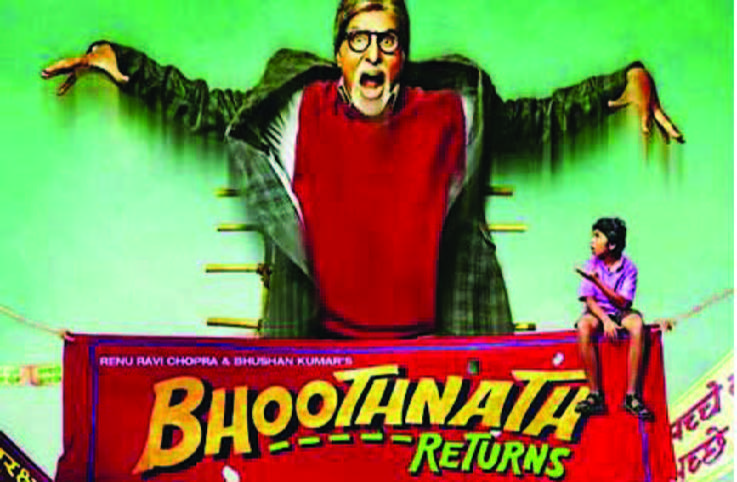
  • Bhoothnath Returns

    Bhoothnath Returns

    Cast: Amitabh Bachchan, Parth Bhalerao, Boman Irani, Sanjay Mishra

    Direction: Nitesh Tiwari Genre: Drama Duration: 2 hours 35 minutes

    STORY: Our good-hearted ghost with a dost is back. This time he’s all set for some social seva by contesting elections and befriending a street-smart slumboy.

    REVIEW: ‘Knock Knock!’ ‘Who’s there?” ‘BOO!’ ‘Boo, who?’ Don’t wet your chads, kiddos. It’s just ‘Ghostbuster’ time with a 70-year old bhoot – mushy as marshmallow – gearing up to play ‘peek-a-BOO’ once again. After his last visit to earth (prequel), Bhoothnath (Bachchan) goes back to exotic Bhoothworld, where ghosts lavishly live it up. Though it’s run like a sarkari organization with departments like ‘Reincarnation Section’, ‘Bhooth Mail’, et al. Lol!. ‘BN’ is ridiculed by his gang-of-ghosts at his inability at scaring kids. While there’s a long wait for reincarnation (longer if you want to be reborn as Aamir’s dog. Bhoots love Bollywood too!), ‘BN’ gets one final chance to descend to earth for another kiddie scarefest. There he meets the zesty, tapori slumboy, Akhrot (Parth) who’s the only one who can see ghosts.

    They form an inseparable team of ghostbusters – evicting haunting bhooths from buildings, and other earthly endeavours (like cleaning up garbage on the streets and inside the system). Soon they meet the conniving politician Bhau (Boman), and after some awakening ‘BN’ agrees to contest elections as the first ever bhooth candidate. He turns into a celebrity ghost, posing for media interviews, and teaming up with filmys.

    But will Bhoothnath’s ghostly powers be able to match up to the ghastly politics of humans? Tiwari’s sequel sets off with a lot of promise, entertainment, laughs and endearing camaraderie between a bhooth and a boy. The first-half has wittily written scenes – strung with satire and emotion, but the story slowly turns into a tedious vocational course on voting. The preaching distracts from some superb performances and inadvertently loses humour, but the story does have its heart in the right place.

    ‘BN’ makes a comeback at a perfect time – bang on with our Indian elections, and packs a powerful message, albeit with potholes in the plot. Bachchan is brilliant as the bhooth having a ball at his bhootiyapa, but his booming spiels are sometimes banal; it’s the one-liners that score. Boman is ‘predictably’ good but OTT in parts; and Mishra (lawyer) enthuses with an effortless act.

    The leader of this party is unquestionably child artist Parth. His confidence, charm and energy are incredible. He has the best lines in the film, adding as much gusto (if not more) to this ghost-story.

  • Not to miss: Modi sir’s history class

    Not to miss: Modi sir’s history class

    Modis’ gaffes on historical facts inspired Akash Deep Ashok of New Delhi to come up with the following dramatization. We hope the satire will amuse our readers.
    SCENE

    Agroup of impish-looking students are sitting in a class in session. The teacher is seated in a chair on a slightly-elevated podium and speaking to them. MODI: History is treacherous. At times, you make it. At times, it makes you. Sometimes it forgets you. Some other time you forget it. That last one plagues me. A STUDENT: Sir, you were telling about how Biharis defeated Alexander, The Great? MODI: Oh yes. See, how I forget. Anyway, I told you how Alexander’s army conquered the entire world, but was defeated by the Biharis. That’s the might of this land. ANOTHER STUDENT: But sir, Alexander defeated by the Biharis…?! MODI: That’s why I keep saying an understanding of politics is crucial to learning history. Not all gaffes are meant for guffaws. Historical gaffes can be political. Likewise political gaffes can be historic, too! What I meant to say about Alexander was not easy to understand. Let me explain. A young Chandragupta Maurya met Alexander at one of his camps near Taxila. Greek historian Plutarch makes a mention of this meeting in his famous book ‘Parallel Lives: Life of Alexander’. Chandragupta wanted Alexander’s help in ridding India of the tyrannical rule of the Nanda dynasty. However, the meeting did not fructify and Alexander apparently lost his temper and asked the young Chandragupta to leave his camp. Now you see the correlation here. Chandragupta was a Bihari. Even if that’s in doubt, he and his successors ruled Bihar for more than a couple of centuries. Right? STUDENTS, IN A CHORUS: Right, sir. MODI: And Alexander lost something when he met Chandragupta, even if it was his temper only. Right? STUDENTS, IN A CHORUS: Right, sir. MODI: That’s what I meant to say: Alexander was defeated by the Biharis. That’s the might of this land.

    Am I crystal clear now? STUDENTS, IN A CHORUS: Right, sir. MODI: There is another angle to prove how I was cent per cent right about Alexander. After Chandragupta became the king, he became well known in the Hellenistic world for conquering Alexander the Great’s easternmost satrapies, and for defeating the most powerful of Alexander’s successors, Seleucus I Nicator, in battle. Now you re-analyze what I had said. I said: Alexander’s army conquered the entire world, but was defeated by the Biharis. That’s the might of this land. Did I say Alexander or Alexander’s army? ANOTHER STUDENT: Sir, but you also said Taxila, the learning hub of ancient times, was in Bihar. MODI: Yes, I did. And I stand by it even today. See, Bihar, then called Magadh, was the seat of power. It ruled India, a name which did not exist then. So where could Taxila be? STUDENTS, IN A CHORUS: Bihar, sir. ANOTHER STUDENT: But then, you recently said Nehru did not attend Patel’s funeral and they flashed photographs of a grim-looking Nehru at his funeral. MODI: Exactly. Nehru was Patel’s friend of a lifetime. He was too shocked to be there mentally. Physically, he might have attended the funeral. But did I specify mentally or physically? STUDENTS, IN A CHORUS: No, sir. You did not. MODI: Any more questions? Or should we wrap up the class? Where is the monitor? A bearded, healthy-looking student, who goes by the name of Master Shah, casts a menacing look at the students who obediently rise to leave the room. The curtain falls. All the characters used in this one act play are imaginary. Any resemblance to anybody in politics is merely coincidental.

  • ‘Assam Rape Fest’ story in US media triggers row

    ‘Assam Rape Fest’ story in US media triggers row

    NEW DELHI (TIP): An American news satire website’s play of words and comment on the security of women in India, and particularly in Assam, has evoked sharp criticism from netizens. Social media is abuzz with reactions – many believing the satire to be “true news” – after the website published a report headlined, ‘The Assam Rape Festival In India Begins This Week’ on November 3. The report, first published on NationalReport.net, which claims to be America’s Number 1 independent news team, was widely shared on social media. The report was later picked up by many websites and forums. With the frenzy snowballing, a few others tried to explain that the report was indeed a satire although it was not written anywhere on the website that it publishes fake news. On Thursday, Assam criminal investigation department registered a suo motu case against the website for posting the defamatory article. Commenting on Facebook, Arindom Phukan pointed out that the website had nowhere mentioned that the story was a satire. Ironically, the report was shared more than 89,500 times on Facebook and around 1,000 times on Twitter. “Men in India are already beginning to celebrate as the annual Assam Rape Festival is just days away. Every non-married girl age 7-16 will have the chance to flee to safety or get raped,” the write-up said. Commenting on the post, one Terrance believed that the report was true and went on to write, “India is always raping something. Makes me sick!” Cursing the male gender, one Hannah wrote, “God have mercy on these innocent women… what kind of tradition is this. All you have to know is that God is watching you and you are going to pay for your sins.”