Tag: Satish Dhawan

  • ISRO launches SpaDeX mission for space docking

    ISRO launches SpaDeX mission for space docking

    With the mission, ISRO aims to exhibit technologies needed for spacecraft rendezvous, docking, and undocking using two small satellites which have been mastered by only an elite group of spacefaring nations

    SRIHARIKOTA (TIP): The Indian Space Research Organisation (ISRO) successfully launched the Space Docking Experiment (SpaDeX) mission on Monday , December 30, 2024.

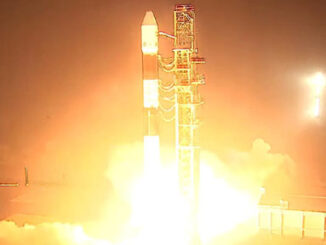
    The PSLV C60 rocket carrying two small satellites, SDX01 (Chaser) and SDX02 (Target), along with 24 payloads, lifted off from the first launchpad of the Satish Dhawan Space Centre in Sriharikota at 10 p.m. About 15 minutes after liftoff, the two small spacecraft weighing about 220 kg each were launched into a 475-km circular orbit as intended.

    “The rocket has placed the satellites in the right orbit which is into a 475-km circular orbit. The spacecraft’s solar panels have been deployed successfully. The two SpaDeX satellites have moved one behind another so over a period of time it will pick up travel further distance, the distance will increase by 20 km over the next few days and then the rendezvous and docking process will start. The docking process can happen in another one week; the nominal time will be approximately January 7,” said ISRO Chairman S Somanth.

    With the SpaDeX mission, ISRO aims to exhibit technologies needed for spacecraft rendezvous, docking, and undocking using two small satellites which have been mastered by only an elite group of spacefaring nations.

    The demonstration of this technology is essential for futuristic missions such as sending an Indian astronaut on the Moon, sample return from the Moon, the building and operation of the Indian Space Station.

    ISRO said that the demonstrated precision of the PSLV vehicle will be utilized to give a small relative velocity between the Target and Chaser spacecraft at the time of separation from the launch vehicle.

    GSLV mission planned in January would be 100th launch from Sriharikota: ISRO chief

    “This incremental velocity will allow the Target spacecraft to build a 10-20 km inter-satellite separation with respect to the Chaser within a day. At this point, the relative velocity between the Target will be compensated using the propulsion system of the Target spacecraft,” ISRO said.

    ISRO added that at the end of this drift arrest maneuver, Target and Chaser will be in the same orbit with identical velocity but separated by about 20 km, known as Far Rendezvous.

    “With a similar strategy of introducing and then compensating for a small relative velocity between the two spacecraft, the Chaser will approach the Target with progressively reduced inter-satellite distances of 5 km, 1.5 km, 500 m, 225 m, 15 m, and 3 m, ultimately leading to the docking of the two spacecraft,” it added.

    U R Rao Satellite Centre Director M. Sanakaran said the docking is expected between January 7 and 10.

    Twenty-four PS4-Orbital Experiment Module (POEM-4) payloads will also onboard the PSLV-C60 SpaDeX mission.

  • What will Chandrayaan-3 do on the Moon?

    What will Chandrayaan-3 do on the Moon?

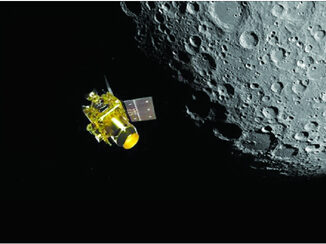
    As the Indian Space Research Organisation (ISRO) gears up to launch the Chandrayaan-3 mission to the Moon, the world is awaiting the discoveries that it will unravel on the lunar surface. The mission is likely to be launched this year and Isro has learned from the failure of the previous mission.

    Chandrayaan-3 is a follow-up to the Chandrayan-2 mission that will demonstrate end-to-end capability in safe landing and roving on the lunar surface and consists of a lander-rover configuration. The mission will be launched aboard India’s most powerful rocket, the LVM-III, from the Satish Dhawan Space Centre in Sriharikota.

    While the Indian space agency is yet to say anything about the final launch dates, it is likely to be in the second or third quarter of 2023.

    The mission is aimed at better understanding the Moon’s composition. Isro has laid out three main objectives for the mission, which include demonstrating a safe and soft landing on the lunar surface, demonstrating the rover’s roving capabilities on the moon and performing in-situ scientific observations. Isro said that the mission’s Chandra Surface Thermophysical Experiment (ChaSTE) will measure the thermal conductivity and temperature, while the Instrument for Lunar Seismic Activity (ILSA) will measure the seismicity around the landing site. The Langmuir Probe (LP) will estimate the plasma density and its variations and a passive Laser Retroreflector Array from NASA is accommodated on the mission for lunar laser ranging studies.

    “Chandrayaan-3 consists of an indigenous Lander module (LM), Propulsion module (PM), and a Rover with the objective of developing and demonstrating new technologies required for Interplanetary missions. The Lander will have the capability to soft land at a specified lunar site and deploy the Rover which will carry out in-situ chemical analysis of the lunar surface during the course of its mobility. The Lander and the Rover have scientific payloads to carry out experiments on the lunar surface,” Isro said in new detail.

                    Source: India Today

  • ISRO rocket with three satellites lifts off from Sriharikota

    ISRO rocket with three satellites lifts off from Sriharikota

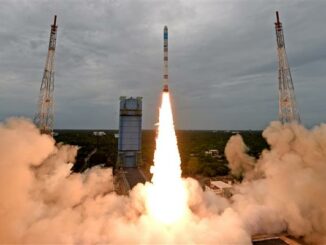
    SRIHARIKOTA (TIP): ISRO’s LV D2 carrying EOS-07 satellite and two co-passenger payloads lifted off from the spaceport here on Friday, February 10. In its second developmental flight, LV D2 carried EOS-07, an earth observation satellite as its main payload and two others — Janus-1 built by US-based Antaris and Chennai-headquartered Space Kidz India’s Azaadi SAT-2. This was ISRO’s maiden mission this year. At the end of a six-and-a-half hour countdown, the 34-metre-tall rocket lifted off from the Satish Dhawan Space Centre here, even as ISRO has pinned hopes on it to lead the space agency to success in tapping the small satellite launch vehicle market.

    The maiden flight of LV on August 7, 2022 was a partial failure due to an orbit anomaly and deviation in the flight path of the rocket. LV caters to the launch of up to 500kg satellites to low earth orbits on ‘launch-on-demand’ basis. It provides low-cost access to space, offers low turn-around time and flexibility in accommodating multiple satellites, and demands minimal launch infrastructure.

    EOS-07 is a 156.3kg satellite which has been designed, developed and realized by ISRO. New experiments include mm-Wave Humidity Sounder and Spectrum Monitoring Payload. While Janus-1 is a 10.2kg satellite, the 8.7kg AzaadiSAT-2 is a combined effort of about 750 girl students across India guided by Space Kidz India, Chennai.

    The mission objective is to inject these satellites in a 450-km circular orbit.

    (Source: PTI)