Tag: SBA

  • SBA Announces 14 New Awards for Regional Innovation Cluster Network to Drive Nationwide Small Business Growth, Job Creation and Innovation

    SBA Announces 14 New Awards for Regional Innovation Cluster Network to Drive Nationwide Small Business Growth, Job Creation and Innovation

    Awardees Will Serve as Hubs for Local Economies in BioTech, Cybersecurity, Smart Manufacturing, and Agriculture

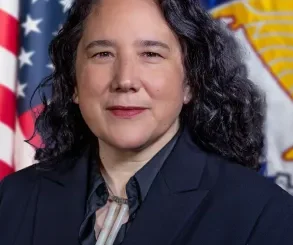
    WASHINGTON, D.C. (TIP): Administrator Isabel Casillas Guzman, head of the U.S. Small Business Administration (SBA) and the voice in President Biden’s Cabinet for America’s more than 34 million small businesses, on October 3, announced the expansion of the SBA’s Regional Innovation Cluster (RIC) network with 14 new awards. These awards aim to enhance the reach and impact of the SBA’s support for innovative small businesses and entrepreneurial support organizations across the country.

    “As the Biden-Harris Administration continues to deliver historic investments in America that strengthen innovation, manufacturing, and emerging industries, these 14 new awardees will serve as vital hubs connecting entrepreneurs with the resources needed to develop cutting-edge technologies critical to the nation’s economic and security priorities,” said Administrator Guzman. “Our nation’s entrepreneurs develop and commercialize innovative technologies in areas of global importance, including biotechnology, cybersecurity, smart manufacturing, and sustainable agriculture. The SBA’s Regional Innovation Cluster network helps America’s entrepreneurs start and scale their businesses in these highly competitive industries with a focus on leveraging regional strengths and collaboration –strengthening America’s competitiveness.”

    “For the first time, the SBA is tailoring funding for emerging and mature clusters,” said Bailey DeVries, Associate Administrator for SBA’s Office of Investment and Innovation. “The SBA recognizes innovation clusters across industries and technology verticals are at different stages in their lifespan, and the varied funding levels right-sizes our awards so clusters can grow and improve their support of small businesses and startups.”

    The SBA launched the RIC Initiative in September 2010 to promote and support the development of clusters, which are geographically concentrated groups of interconnected businesses, suppliers, service providers, and associated institutions in a particular industry or field across the country. Clusters act as a networking hub for small businesses, convening several resources to help navigate the funding, procurement, and supply-chain opportunities in a specific industry. They also assist businesses in matching cutting-edge technology to industry needs and increase the number of innovative small businesses and entrepreneurs in the nation’s supply chain.

    “For 14 years, the RIC Initiative has had an incredible impact in communities and industries across the country, supporting startups and small businesses as they enter the nation’s supply chain. We look forward to continuing to expand our nation’s innovation ecosystem and ensuring small businesses can match their cutting-edge technologies to industry opportunities,” said SBA’s Investment and Innovation Ecosystems Director Brittany Sickler.

    This funding makes awards for the first time at two funding levels: emerging and mature clusters. Emerging clusters develop and deploy small business support services in their designated regions and industries, and the RIC Initiative enables them to scale their current and future programming to reach more small businesses. Mature clusters have experience building and implementing programming to support small businesses, and the RIC Initiative enables them to increase the effectiveness of programming and operations to reach more small businesses and strengthen existing and new partnerships.

    The new Regional Innovation Clusters are:

    1. AgTech Innovation Alliance will support AgriFoodTech small businesses in California’s Central Valley.

    2. Applied Research Institute will support small businesses in the biotech industry across central Indiana.

    3. Bounce Innovation Hub will support small businesses developing novel materials for medical devices and wearable sensors in Northeast Ohio.

    4. Celdara Medical will support life science small businesses across Vermont, New Hampshire, Maine, Delaware, and Rhode Island.

    5. CleanTech Alliance Washington will support small businesses in the clean technology industry in Washington state.

    6. Hyperion Technologies will support small businesses developing clean technologies in the Four Corners region of Arizona, New Mexico, Utah, and Colorado.

    7. Integrative Business Services will support artificial intelligence and optics small businesses in Southern Arizona.

    8. LSI Business Development will support small, advanced manufacturers in Utah

    9. RIoT will support small businesses building internet of things (IoT) and data economy technologies in North Carolina.

    10. Shadow Ridge Analytics will support small businesses in the advanced engineering and critical materials industries in Southwest Montana.

    11. Southwestern College Foundation will support small businesses in the manufacturing and biotechnology industries in San Diego and Imperial Counties in California.

    12. StartUp Junkie Consulting will support small businesses in leveraging Lithium for the clean energy and electric vehicle transition across Northeast Texas, Southern Arkansas, Northern Louisiana, and West Mississippi.

    13. The Water Council will support small businesses in the water and resiliency industry in Wisconsin.

    14. UpSurge Baltimore will support small businesses in cybersecurity and biotechnology industries across the Baltimore metropolitan area.

    To learn more about the RIC Initiative, including current RICs, please visit: Regional Innovation Clusters | U.S. Small Business Administration (sba.gov).

    About SBA’s Office of Investment and Innovation

    The U.S. Small Business Administration (SBA) Office of Investment and Innovation (OII) leads programs that provide the U.S. growth-oriented small business and startup community with access to financial capital, networks, assistance, and R&D funds to develop commercially viable innovations. Our work is underpinned by public-private partnerships that help small businesses on their trajectory from idea to IPO. Learn more at Office of Investment and Innovation (OII).

    About the U.S. Small Business Administration

    The U.S. Small Business Administration makes the American dream of business ownership a reality. As the only go-to resource and voice for small businesses backed by the strength of the federal government, the SBA empowers entrepreneurs and small business owners with the resources and support they need to start, grow, or expand their businesses, or recover from a declared disaster. It delivers services through an extensive network of SBA field offices and partnerships with public and private organizations. Learn more at www.sba.gov.

  • Changes (and potential changes) coming to $28.6B Restaurant Revitalization Grant Fund

    Changes (and potential changes) coming to $28.6B Restaurant Revitalization Grant Fund

    National Restaurant Association offers 39 questions and answers on program that could be lifeline for many

    EDISON, NJ (TIP): The coverage period for the Restaurant Revitalization Grant Fund may be extended by 14 months (until March 2023) … the definitions of bakeries, breweries and inns may change, based on percentage of onsite sales … the gross receipts total for 2020 may no longer include Paycheck Protection Program loans and other debt relief awards, says a news report published April 9 in RIONJ.Com

    Applications for the $28.6 billion Restaurant Revitalization Grant Fund are still expected later this month. But, before they come out, the National Restaurant Association released a list of 39 answers to the most frequently asked questions the group has received since the program was introduced. “Eligible entity” definition may have new context for bakeries, breweries, brewpubs, distilleries, taprooms and wineries, only if onsite sales to the public comprise at least 33% of gross receipts (presumably in 2019). For inns, onsite sales of food and beverage to the public may need to comprise at least 33% of gross receipts.

    Permanently closed entities might be ineligible.

    Bankrupt entities without approved plans for reorganization might be ineligible.

    The minimum grant award might be set at $1,000.

    Some of the items with additional clarification include:

    For gross receipt totals in 2020, applicants might not need to include PPP loans, SBA debt relief, COVID-19-related Economic Injury Disaster Loans, EIDL advances, targeted EIDL advances or any other state and local small business grants (via CARES Act or otherwise). This was a recommendation from the National Restaurant Association to SBA. PPP first-draw loans, returned before the safe harbor deadline, might not be counted against grant fund amount. This was also a recommendation to SBA from the National Restaurant Association. Self-certification for prioritization eligibility is the likely path for targeted groups and differs from SBA certification for traditional loan programs. The FAQ also provides specific details about the documents that might be required for application:

    Application form.

    IRS Form 4506-T.

    Acceptable documentation of gross receipts and, if applicable, eligible expenses, might include:

    Business tax returns (IRS Form 1120 or IRS 1120-S).

    IRS Forms 1040 Schedule C; IRS Forms 1040 Schedule F.

    For a partnership: partnership’s IRS Form 1065 (including K-1s).

    Bank statements.

    Externally or internally prepared financial statements such as income statements or profit and loss statements.

    Point of sale report(s), including IRS Form 1099-K.

    Sean Kennedy, executive vice president of public affairs for the National Restaurant Association, said the group is determined to provide this much-needed information.

    Good news for restaurants seeking Revitalization Fund grants

    “These updates are essential for the small business restaurants that are trying to prepare their application while working long hours to keep their doors open,” he said. “For that reason, the association and our state partners are committed to getting these details to operators as we learn them.

    “We appreciate the speed at which the SBA is working to set up this program, and we are doing everything we can to make sure that it will work well for the restaurants that have been hoping for this relief over the last 12 months.”

    How much money is available?

    Grants will be equal to 2019 gross revenue minus 2020 gross revenue — with a maximum grant of $5 million ($10 million for restaurant groups).

    Will it be taxed? Grant funds will not be taxed like income.

    What can it be used for?A variety of uses, including:

    Payroll costs.

    Principal and interest payments on a mortgage.

    Rent payments.

    Utilities.

    Maintenance expenses.

    Supplies, including personal protective equipment and cleaning materials.

    Covered supplier costs.

    Operational expenses.

    Paid sick leave.

    (Source: ROI.NJ. Com)

  • Indian American Texas based engineer pleads guilty to $10 million Covid-relief fraud

    Indian American Texas based engineer pleads guilty to $10 million Covid-relief fraud

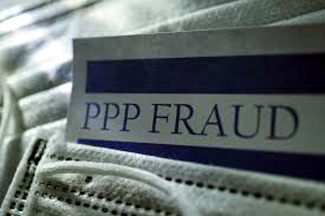
    BEAUMONT, TX (TIP): A Texas based Indian American engineer has pleaded guilty for filing fraudulent bank loan applications seeking more than $10 million dollars in forgivable loans under Covid-relief law.

    Shashank Rai, 30, of Beaumont, pleaded guilty in the Eastern District of Texas Tuesday, February 9, to one count of making false statements to a bank, according to a Justice Department release.

    He was charged on May 13, 2020, with violations of wire fraud, bank fraud, false statements to a financial institution, and false statements to the Small Business Administration (SBA).

    As part of his guilty plea, Rai admitted that he sought millions of dollars in forgivable loans guaranteed by the SBA from two different banks by claiming to have 250 employees earning wages when, in fact, no employees worked for his purported business. Rai made two fraudulent claims to two different lenders for loans guaranteed by the SBA for Covid-19 relief through the Paycheck Protection Program (PPP).

    In the application submitted to the first lender, Rai sought $10 million in PPP loan proceeds by fraudulently claiming to have 250 employees with an average monthly payroll of $4 million.

    In the second application, Rai sought approximately $3 million in PPP loan proceeds by fraudulently claiming to have 250 employees with an average monthly payroll of approximately $1.2 million.

    According to court documents, the Texas Workforce Commission provided information to investigators of having no records of employee wages having been paid in 2020 by Rai or his purported business, Rai Family LLC.

    In addition, the Texas Comptroller’s Office of Public Accounts reported to investigators that Rai Family LLC reported no revenues for the fourth quarter of 2019 or the first quarter of 2020.

    According to court documents, materials recovered from the trash outside of Rai’s residence included handwritten notes that appear to reflect an investment strategy for the $3 million, which is the amount of money that Rai allegedly sought from the second lender.

    The Coronavirus Aid, Relief, and Economic Security (CARES) Act enacted on March 29, 2020 provided for emergency financial assistance including up to $349 billion in forgivable loans to small businesses for job retention and certain other expenses, through the PPP. The PPP allows qualifying small businesses and other organizations to receive loans with a maturity of two years and an interest rate of one percent. PPP loan proceeds must be used by businesses for payroll costs, interest on mortgages, rent and utilities.

    The PPP allows the interest and principal to be forgiven if businesses spend the proceeds on these expenses within a set time period and use at least a certain percentage of the loan towards payroll expenses.