[vc_row][vc_column][vc_custom_heading text=”E-Edition” font_container=”tag:h2|text_align:center” google_fonts=”font_family:Istok%20Web%3Aregular%2Citalic%2C700%2C700italic|font_style:700%20bold%20regular%3A700%3Anormal” css=”” link=”url:https%3A%2F%2Fwww.theindianpanorama.news%2Fwp-content%2Fuploads%2F2026%2F02%2FTIP-January-30-E-Edition.pdf”][vc_single_image image=”291753″ img_size=”full” alignment=”center” onclick=”custom_link” css=”” link=”https://www.theindianpanorama.news/wp-content/uploads/2026/02/TIP-January-30-E-Edition.pdf”][/vc_column][/vc_row][vc_row][vc_column width=”2/3″][vc_custom_heading text=”Lead Stories This Week” google_fonts=”font_family:Istok%20Web%3Aregular%2Citalic%2C700%2C700italic|font_style:700%20bold%20regular%3A700%3Anormal” css=”” link=”url:https%3A%2F%2Fwww.theindianpanorama.news%2F”][vc_wp_posts number=”5″ show_date=”1″][/vc_column][vc_column width=”1/3″][vc_single_image image=”82828″ img_size=”medium” alignment=”center” onclick=”custom_link” css=”” link=”https://www.theindianpanorama.news/advertising-media-kit-portal-indian-panorama/ “][vc_single_image image=”82829″ img_size=”medium” alignment=”center” onclick=”custom_link” css=”” link=”https://www.theindianpanorama.news/advertising-media-kit-portal-indian-panorama/ “][/vc_column][/vc_row]
Tag: Science & Technology
-
Map of dark matter’s distribution in universe unveiled
Using observations from the James Webb Space Telescope (JWST) in a patch of the sky covering almost three times the area of the full moon, scientists have created the most detailed cosmic map to date of the mysterious substance called dark matter that accounts for most of the stuff that populates the universe.
Ordinary matter makes up stars, planets, people and everything else we can see. But it represents only about 15% of all the matter in the cosmos. The rest is dark matter, which does not emit or reflect light, making it invisible to the human eye and to telescopes.
Scientists infer its existence based on the gravitational effects it exerts on a large scale such as how quickly galaxies rotate, how galaxy clusters are held together and how light from distant objects bends as it passes through massive cosmic structures.
The new map of the distribution of dark matter was based on this phenomenon of light bending — causing subtle distortions in the shape of roughly 2,50,000 distant galaxies as observed by Webb — thanks to the gravitational effects of matter along the line of sight.
A previous map of dark matter was based on observations by the Hubble Space Telescope. The new map, powered by Webb’s greater capabilities, offers double the resolution of the previous map, spans more parts of the cosmos and peers further back in time — effectively looking to roughly 8 to 10 billion years ago, a key period for galaxy formation.
“This allows us to resolve finer dark matter structures, detect mass concentrations that were previously unseen, and extend dark-matter mapping into earlier epochs of the universe,” said observational cosmologist Diana Scognamiglio of NASA’s Jet Propulsion Laboratory in California, lead author of the research published on Monday in the journal Nature Astronomy.
The map reveals with unprecedented clarity new details of the macrostructure of the universe called the cosmic web – galaxy clusters, immense filaments built of dark matter along which galaxies and gas are distributed, as well as regions with less density of mass. Webb, an infrared telescope possessing about six times the light-gathering power of Hubble, was launched in 2021 and became operational in 2022.
“The James Webb Space Telescope is like putting on a new pair of glasses for the universe,” Scognamiglio said. “It sees fainter and more distant galaxies with much sharper detail than ever before. That effectively gives us a much denser grid of background galaxies to work with, which is exactly what you want for this kind of study. -

OpenAI is secretly building a social network, master plan to catch bots leaked
OpenAI may be quietly preparing its boldest consumer-facing experiment yet, and it has little to do with chatbots answering questions. People familiar with the matter told Forbes that the company is working on an early version of a social network designed around a single promise, which is basically conversations led by real people and not automated accounts pretending to be human.
The idea comes at a time when many popular platforms feel increasingly crowded with fake profiles, spam replies and AI-generated chatter. Insiders say OpenAI wants to tackle that problem at the root by building a space where every account belongs to a verified person. The project is still in its infancy and is reportedly being built by a very small team of fewer than ten people, with no public launch plan in sight yet.
What makes OpenAI’s approach different is how seriously it is considering identity checks. Unlike existing social apps that rely on phone numbers, email IDs or behavioural patterns, this network could ask users to prove they are human through biometric verification. Options discussed internally include Apple’s Face ID and the World Orb, a device that scans a person’s iris to create a unique digital identity. The World project is run by Tools for Humanity, a company founded and chaired by OpenAI CEO Sam Altman.
Such a system would make it extremely difficult for bot networks to exist on the platform. At the same time, it has already raised alarms among privacy advocates, who warn that biometric data cannot be changed if misused and could create serious risks if leaked or mishandled. Sources say these concerns are part of ongoing internal discussions.
While details about the app’s features remain limited, people aware of the project say users would likely be able to use AI tools to create content such as images or videos. That would place OpenAI in direct competition with platforms like Instagram and TikTok, both of which are already leaning heavily into AI-powered creation tools. Instagram alone has over three billion monthly active users, underlining just how crowded the space already is.
The motivation behind the project appears closely tied to the current state of social media, particularly X. Bot activity has long been an issue across platforms, but it became far more visible after Elon Musk took over Twitter, renamed it X, and drastically reduced its trust and safety workforce. Although the company removed around 1.7 million bot accounts in 2025, spam and automated replies continue to frustrate users.
Altman has spoken openly about this problem. In posts on X, he has said that discussions around AI on social platforms now feel strangely artificial, filled with accounts that do not seem human. He has even pointed to the so-called dead internet theory, noting that large language model–run accounts appear to be far more common than they were just a couple of years ago. -

Earth 2.0 discovered outside Solar System. But, there is a bad news
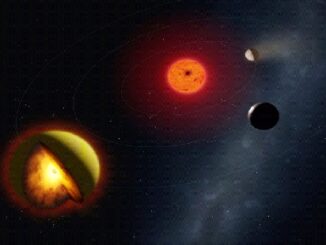
Astronomers have unearthed a tantalising exoplanet candidate that could mirror Earth in size and orbit, orbiting a Sun-like star just 146 light-years away.
Dubbed HD 137010 b, this rocky world, slightly larger than our planet, sits at the chilly outer edge of its star’s habitable zone, where liquid water might exist under the right atmosphere.
Detected in archival data from NASA’s retired Kepler Space Telescope, it represents a rare find: the first potential Earth twin transiting a nearby, bright, Sun-like star ideal for follow-up studies.
The discovery, detailed in a paper in The Astrophysical Journal Letters, comes from lead author Alexander Venner, a postdoctoral researcher at Germany’s Max Planck Institute for Astronomy.
Previously a Ph.D. student at Australia’s University of Southern Queensland, Venner and his international team mined Kepler’s K2 mission data, spotting a single 10-hour transit, the planet’s shadow eclipsing its star’s face.
With an orbital period around one year, much like Earth’s 13-hour transit duration, HD 137010 b tantalises as “Earth 2.0.”
WHAT IS THE BAD NEWS?
Its star, HD 137010, a cooler, dimmer K-dwarf, delivers less than a third of the heat and light Earth gets from the Sun.
Surface temperatures could plunge to minus -68°C, colder than Mars’ average -65°C, evoking a perpetually frozen world.
Confirmation remains pending. A lone transit demands repeats for validation, a challenge given the year-long orbit that spaces events far apart. NASA’s TESS or ESA’s CHEOPS satellites might catch more, but next-gen telescopes may be needed.
Modelling offers hope: a CO2-rich atmosphere could warm it into the conservative habitable zone (40% chance) or optimistic one (51%), potentially yielding a temperate or watery oasis. Odds are 50-50 it lies entirely beyond habitability. This frigid contender points to exoplanet hunting’s highs and hurdles.
As Venner notes, such Earth-like orbits evade easy detection, but HD 137010 b’s precision single transit breakthroughs that barrier. Follow-up could redefine habitable worlds, or reveal another icy also-ran. -

AI not just about creating content, it can predict road crashes too!
Artificial Intelligence is not just about creating text, images, graphics and videos online; it can make a big change in the physical life and for humanity by even predicting road crashes. The assertion was made by SaveLife Foundation Founder and CEO Piyush Tewari here during the World Economic Forum Annual Meeting.
Tewari, who ventured into the area of working on road safety after losing a young family member in a road crash, said his organisation is looking at using AI in a big way for predictive analysis.
He also lauded the Government of India for a big push around AI in road safety.
Union Transport Minister Nitin Gadkari recently announced an initiative where AI is going to be used to interpret the road crash data that is coming out and provide faster insights.
“Can we predict road crashes by bringing some data points together? So, there’s definitely a huge amount of application, and the signs are very much positive.
“At SaveLife, we have used AI for the last 7-8 years. We’ve trained cameras using AI, fixed with drones to preemptively identify parked vehicles on highways, for example, because rear-end collisions are a big issue when it comes to road safety.
“Similarly, we have used AI-trained cameras on intersections to identify conflicts and to create a heatmap of such intersections. We’ve defined conflicts on the basis of proximity, etc.,” he said.
Tewari, who is participating in AI and social innovation sessions at WEF, said there’s a significant amount of application of AI in this whole space of road safety.
“I hope to be contributing with regard to our experience of using it in India at a very, very grassroots level,” he said.
“AI has the ability to transform lives. The decisions and the thought process that might take months sometimes can be done in hours or minutes using AI. We have to make AI more accessible to the public, and the Government of India’s mission is also to make it more accessible.
“So we are very much aligned with the idea of using AI to make mobility safer,” he said. Source: PTI -

After years of saying no, Apple is turning Siri into an AI chatbot called Campos
Apple is working on a major upgrade to Siri that could change how users interact with their iPhones, iPads and Macs. Later this year, the company plans to turn Siri into a full conversational AI assistant, a move that puts Apple directly into the fast-growing chatbot space led by OpenAI and Google.
The new version of Siri, internally called Campos, is designed to behave more like a chatbot than a traditional voice assistant. Instead of giving short replies or failing at follow-up questions, Siri will be able to hold proper conversations, understand context and complete complex requests. Users will activate it the same way they do today, either by saying “Siri” or pressing the side button, but the experience after that is expected to feel far more natural.
People familiar with the development told Bloomberg this chatbot is separate from the Siri update Apple plans to release soon as part of iOS 26.4. That earlier update will keep the current Siri layout and add features shown last year, such as reading on-screen content, using personal data when allowed, and offering improved web searches. The chatbot experience will arrive later and will replace the existing Siri interface entirely.
This project is a key part of Apple’s effort to improve its standing in artificial intelligence. Apple Intelligence, introduced in 2024, struggled to impress due to delayed features and limited usefulness at launch. News of the chatbot plans was welcomed by investors, with Apple’s stock moving up after the report.
Apple is expected to show the new Siri at its Worldwide Developers Conference in June, followed by a public release around September. The chatbot will be the main addition to iOS 27, iPadOS 27 and macOS 27. Apart from AI-related changes, these software updates are said to focus mostly on speed improvements and fixing long-standing bugs, rather than introducing new designs.
Inside Apple, engineers have tested the chatbot as a standalone Siri app, similar to ChatGPT or Gemini. However, the company does not plan to release it that way. Instead, Siri will remain built into the system and available across apps and settings, just like it is today.
For years, Apple avoided launching a chatbot, arguing that users prefer tools that work quietly in the background. But with Samsung, Google and several Chinese phone makers already offering built-in conversational AI, Apple faced growing pressure to act.
Once launched, the new Siri will be able to search the web, write text, generate images, summarise documents and analyse uploaded files. It will also use personal data, with permission, to find messages, calendar events, music and files more quickly. Unlike third-party chatbots, Siri will be able to see open apps and content on the screen, allowing it to take actions such as changing settings, opening apps, placing calls or starting the camera.
Apple plans to connect Siri deeply with its own apps, including Mail, Photos, Music, Podcasts, TV and Xcode. For example, users could ask Siri to find a photo based on what’s in it and then edit it using voice commands, or request help writing an email using details from upcoming calendar events.
Privacy remains a sensitive topic inside the company. While many chatbots remember past conversations to personalise responses, Apple is considering tight limits on how much the new Siri can remember, keeping privacy concerns in mind. -
Mars is back from blackout: Nasa gets first signals from Red Planet
Nasa has triumphantly reestablished communications with its Mars rovers following a two-week solar conjunction blackout, marking the resumption of Red Planet operations at the dawn of an ambitious 2026 exploration campaign.
The blackout, peaking around January 9 when Earth and Mars aligned behind the Sun, severed direct links from late December 2025 to mid-January, forcing Perseverance, Curiosity, and orbiting assets into autonomous mode.
“Loud and clear: Curiosity and Perseverance are both back in touch with Earth following solar conjunction. They’re beginning to downlink data collected while the Sun was blocking the signal path between us and the Red Planet,” Nasa said in an update.
Engineers at the Jet Propulsion Laboratory (JPL) confirmed signal lock with Perseverance first, followed by Curiosity and the Mars Reconnaissance Orbiter relay network.
The rovers hunkered down flawlessly, capturing weather data, dust devil imagery, and surface scans while storing gigabytes for downlink. No anomalies have been reported, rovers remain power-positive, with Perseverance prepped for diagnostic and exploration.
This biennial event, driven by the Sun’s plasma corona corrupting signals, halts commands to prevent spacecraft malfunctions. Rovers like Curiosity, now over 13 Martian years operational, parked in safe zones, executing pre-loaded scripts.
Orbiters such as MAVEN, briefly offline earlier, now bolster data relays for surface missions. “We’ve downloaded petabytes already; 2026 science ramps up immediately,” noted Mars program scientist Dimitri Bykov.
The timing couldn’t be better. With solar maximum fueling dynamic space weather, Nasa’s fleet targets sample collection for the Mars Sample Return mission and astrobiology hunts in Jezero Crater.
Perseverance’s cache of 20+ rock cores, potential biosignatures, awaits analysis, while Curiosity drills Gale Crater for habitability clues. Upcoming: China’s Tianwen-3 sample return and ESA’s Rosalind Franklin rover, fostering global collaboration. -

Humanoid robots or human connection? What Elon Musk’s Optimus reveals about our AI ambitions
When Elon Musk talks about robotics, he rarely hides the ambition behind the dream. Tesla’s Optimus is pitched as an all-purpose humanoid robot that can do the heavy lifting on factory floors and free us from drudgery at home. Tesla is targeting a million of these robots in the next decade. But is Musk likely to succeed? A few years ago, the thought of a friendly, capable household robot belonged in science fiction. We could imagine machines that danced, shifted boxes or played chess, but not ones that understood us well enough to be genuinely helpful. Then came generative artificial intelligence, or gen AI.
Whether your first encounter was with ChatGPT, Gemini or Copilot, many of us felt the same jolt of surprise. Here was a bot that seemed to understand us in a way we didn’t expect. That has made Musk’s dream of a robot companion feel if not close then certainly closer.
Imagine leafing through a catalogue of robots the way we browse for home appliances. If a personal robot still feels too expensive, perhaps we might hire one part time. Maybe a dance instructor that doubles as a therapist. Families could club together to buy a robot for an elderly relative. Some people might even buy one for themselves.
The future Musk describes isn’t just mechanical, it’s emotional.
Why the humanoid shape matters
The idea of robots that look like us can seem creepy and threatening. But there’s also a practical explanation for the drive to make robots that look like us.
A dishwasher is essentially a robot but you have to load it yourself. A humanoid robot with hands and fingers could clear the table, load the dishwasher and then feed the pets too. In other words, engineers create humanoid robots because the world is designed for human bodies.
But the humanoid form also carries an emotional charge. A machine with a face and limbs hints at something more than functionality.
It’s a promise of intelligence, empathy or companionship. Optimus taps into that deep cultural imagery. It is part practical engineering, part theatre and part invitation to believe we are close to creating machines that can live alongside us. There are moments when a personal robot might be genuinely welcoming. Anyone who has been ill, or cared for someone who is, can imagine the appeal of a helper that preserves dignity and independence. -
Astronomers spot white dwarf star creating a colourful shockwave
Astronomers have observed a white dwarf — a highly compact Earth-sized stellar ember — that is creating a colorful shockwave as it moves through space, leaving them searching for an explanation.
The highly magnetized white dwarf is gravitationally bound to another star in what is called a binary system. The white dwarf is siphoning gas from its companion as the two orbit close to each other. The system is located in the Milky Way about 730 light-years from Earth — relatively nearby in cosmic terms – in the constellation Auriga.
A light-year is the distance light travels in a year, 5.9 trillion miles (9.5 trillion km).
The shockwave – more specifically a bow shock – caused by the white dwarf was observed using the European Southern Observatory’s Chile-based Very Large Telescope. The shockwave was seen in an image released by the scientists glowing in various colors produced when material flowing outward from the white dwarf collided with interstellar gas.
“A shockwave is created when fast-moving material plows into surrounding gas, suddenly compressing and heating it. A bow shock is the curved shock front that forms when an object moves rapidly through space, similar to the wave in front of a boat moving through water,” said astrophysicist Simone Scaringi of Durham University in England, co-lead author of the study published on Monday in the journal Nature Astronomy.
“The colours come from interstellar gas that is being heated and excited by the shock. Different chemical elements glow at specific colors when this happens,” Scaringi added.
In this shockwave, a red hue represented hydrogen, green represented nitrogen and blue represented oxygen residing in interstellar space.
A handful of other white dwarfs have been observed creating shockwaves. But all of those were surrounded by disks of gas siphoned from a binary partner. Although this white dwarf is siphoning gas from its companion, it lacks any such disk and is releasing gas into space for unknown reasons. -

OpenAI smart device could be a computer in shape of earphones, may challenge Apple AirPods
OpenAI has some big plans for 2026. Most important of them involves a smart computer, which will be tiny, without screen and will work with voice commands. It will be ChatGPT rolled into a very small device. That is the expectation and now rumours around the device have started to hint at some of its features. According to leaks, OpenAI has codenamed the device “Sweetpea” and it is going to be launched in 2026, which means this year.
The device has been in the works for couple of years now. It all started in 2023 when OpenAI partnered with Johny Ive’s company. Ive, if the name doesn’t ring a bell, is the famed designer behind the iPhone and other iconic Apple devices. Now rumours hint that OpenAI and Ive are inching closer to the goal of creating a new type of computer that will entirely be voice-driven and will be powered by ChatGPT. The device is likely to be in shape of an earbud, similar to TWS buds, and is likely to challenge Apple AirPods.
According to an X post by well-known leaker Pikachu, OpenAI is working on a product internally codenamed “Sweetpea”, a special audio gadget that would function like a tiny computer worn on the ears.
While it may look like a device that you can wear in ears, Sweetpea is rumoured to be significantly more powerful than something like AirPods. “Hearing fresh detail on OpenAI to-go hardware project. Now confirmed it is a special audio product to replace AirPod, internal code name is Sweetpea… It is now front of the line due to priority of Johnny Ive team,” Pikachu wrote on X.
According to reports, OpenAI has partnered with manufacturing giant Foxconn. The manufacturer has been asked to prepare for up to five different OpenAI hardware products by late 2028. The leak adds that Sweetpea may launch around September, the same month when Apple is also likely to launch its iPhone 18 and iPhone Fold. The OpenAI goal for Sweetpea is likely to be ambitious with the company hoping to sell around 40 to 50 million units in first year.
Earbuds that work like a computer
If OpenAI is indeed working on this project, it is clearly not aiming for conventional earbuds. The leak suggests Sweetpea would be a “computer in the shape of earphones.”
On the design front, Sweetpea is said to have a “unique, unseen before,” look with the main body made of metal and shaped like an “egg stone.” Inside it would be two capsule-like modules that users will be able to remove and wear behind the ear. This behind-the-ear design will allow the device to offer a more secure fit and also make space for advanced internal components.
Rumors suggest that a 2nm smartphone-class processor, most likely Samsung Exynos chip, will power the device. There is also a talk of OpenAI developing a custom chip to allow the device to “replace iPhone actions by commanding Siri,” suggesting Sweetpea could act as an AI-powered control layer over Apple devices. -

Arattai vs WhatsApp: Features that might make you switch today
Zoho’s messaging platform, Arattai, had a big 2025. The homegrown messaging app skyrocketed in popularity and even topped the charts on app stores. Now, the company has shared its 2025 ‘Wrapped,’ detailing the major new features it introduced in the past twelve months, which may even entice you to ditch WhatsApp in favour of the Indian app.
The official Arattai X handle shared the list in a thread. The thread covers the entire year, listing each update pushed by the platform in an effort to bring more convenience to users.
The list includes –
– End-to-end encryption: While E2E encryption was rolled out later in the year, it was arguably the most important Arattai update. End-to-end encryption ensured that direct chats on the platform remain secure.
– Share screen during calls: Arattai allows users to share their screen when on a call on the platform.
– Start meetings without an account: Users on Arattai can start meetings without having to create an account.
– Quick reactions: You can react to a message on Arattai by simply double-tapping.
– Add captions to GIF: Ever wanted to give context to your GIF? On Arattai, you can add a caption to make your friends better understand why you sent a GIF.
– Chat list filters: Arattai comes with chat filters, allowing you to find the chat you are looking for with ease.
– Lock meetings: To ensure your meeting on Arattai is not disturbed, you can lock the meeting and prevent anyone else from joining in.
– Display picture updates: Get notified when your close ones change their profile picture.
– Message-based reactions: React to any message as you want with different emojis.
– Reaction alert: Be notified when someone reacts to your message
– Story likes: You can like someone’s story on Arattai to let them know you appreciate what they posted.
– Story notifications: You can get notified when someone posts on a story on the app
– Repeat meetings: You can schedule recurring meetings on the platform.
– Language support: Arattai supports 17 different languages. -
Finland working on transmitting electricity without wires
Finland continues to make progress in the field of wireless electricity transmission, an area of research that aims to send power through the air without the use of traditional cables or plugs.
Recent demonstrations and experiments by Finnish researchers have highlighted steady advancements in technology that could one day reshape how devices are powered, though widespread commercial deployment remains distant.
In controlled experiments, engineers have shown that electricity can be transmitted through the air using highly controlled electromagnetic fields and resonant coupling techniques, conceptually similar to the way data is sent via Wi-Fi but tailored for energy transfer. These approaches build on decades of research into magnetic resonance and inductive power transfer, which seek to send energy efficiently across short distances without physical contact between transmitter and receiver.
Studies conducted at Finnish institutions such as Aalto University have contributed to the theoretical and experimental foundation of the technology. Past research from the university demonstrated that magnetic loop antennas can transfer power wirelessly at relatively high efficiency over short ranges, offering insights into how to optimize coupling and reduce energy losses. -

Humans might have left Earth by the time Voyager-I reaches another Solar System
In September 1977, Nasa launched a message in a bottle into the cosmic ocean. Today, Voyager 1 is no longer just a planetary scout; it is a silent ambassador drifting through the cold, dark void of interstellar space.
After a 35-year journey, Voyager 1 reached interstellar space in 2012.
Having long since bid farewell to our solar system, the 48-year-old probe is now on a journey so vast that human history seems like a mere blink in comparison.
The most distant human-made object is currently moving at approximately 61,155 kilometres per hour, yet even at this breakneck speed, the Milky Way galaxy is a very big place.
While many imagine Voyager 1 heading straight for a specific target, space is mostly empty. It is not exactly aiming for a “new Earth,” but rather drifting where gravity and its initial momentum take it.
In about 40,000 years, the spacecraft will make its closest approach to a star called Gliese 445. Located in the constellation Camelopardalis, this star is actually moving toward our solar system while Voyager moves toward it. Despite this mutual “handshake,” the probe will still be 1.6 light years away from the star at its closest point.
THE OORT CLOUD AND BEYOND
Before it can even dream of meeting Gliese 445, Voyager 1 must navigate the Oort Cloud. This is a massive, spherical shell of icy debris that surrounds our solar system. It is so large that it will take the probe about 300 years just to reach the inner edge, and perhaps 30,000 years to fly out the other side. This highlights the sheer scale of the “final frontier” that pop culture so often makes look easy.
Voyager 1 is effectively a ghost ship, as its power sources will likely die out long before it reaches the next star.
Ultimately, Voyager 1 represents the ultimate endurance test for human engineering. By the time it reaches the vicinity of Gliese 445, the Earth it left behind will be unrecognisable. Whether humanity still exists to track its progress is a question for philosophers, but for now, the gold-plated record on its side carries the sounds of our world into infinite silence. It remains a testament to our desire to be known, even if the “hello” takes 40,000 years to arrive. -

UK market milestone: FTSE 100 hits 10,000 mark for first time
London (TIP)- The FTSE 100 index has climbed above 10,000 points for the first time, passing a significant stock market milestone, on the first trading day of the year. Shares included in the index performed strongly in 2025, leaving the benchmark more than 21% higher than a year ago, when it stood at just over 8,260.
Rising share prices are good news for investors, including anyone with a pension or other savings that are invested in the stock market.
But the London index is dominated by large international companies, so is not a direct reflection of the UK economy’s performance.
Share prices on the FTSE 100, which tracks the performance of the 100 largest companies listed on the London Stock Exchange, have surged over the past year, thanks to strong gains in some sectors including precious metal mining, defence and financial services.
Rising gold and silver prices boosted firms such as Rio Tinto, while increased global defence spending lifted contractors including Babcock and Rolls-Royce – amid economic uncertainty and geopolitical tensions.
The British benchmark set a new all-time intraday record as trading resumed after the new year holiday, rising more than 1% within the first hour to reach 10,046.3 points – up 114.9 from its previous level, before falling back below the threshold.
Susannah Streeter, an independent financial commentator, said the 10,000-point marker was “a psychologically important milestone” and showed London’s blue-chip index was “back in favour” with investors.
“Concerns continue to swirl about the super-high valuation of US tech sector,” she said, making the UK market more appealing.
Dan Coatsworth, head of markets at AJ Bell, said crossing the 10,000-point was a New Year’s gift for the chancellor, Rachel Reeves, who has been calling for more investment in the share market to boost economic growth.
“She has been banging the drum about the merits of investing over parking cash in the bank.
“The FTSE 100’s achievements just go to show what’s possible when buying UK shares,” he said.
The FTSE 100’s had outperformed US’s S&P index in 2025, he added.
While some London-quoted companies were sometimes considered “old and boring” its mix of industries, including mining and banking, appealed to investors seeking stability during uncertain times, he said. -

2026 could be Apple’s biggest year yet: foldable iPhone, OLED MacBook, AI glasses and more
Apple had a hectic 2025. The Cupertino giant launched a host of products, be it the new MacBook Pro, the latest Apple Watch Ultra 3, and of course, the new iPhones. The iPhone 17 series came with major upgrades and some big design changes for the Pro models, with Apple also debuting the slimmest iPhone ever, the iPhone Air. However, if you thought that the tech giant was going to take things easy after such a busy year, you may be wrong.
As per reports, Apple may have an even busier 2026, with several upgrades planned across its product lineup. As always, India Today Tech will bring you all the updates as they happen. But for now, let’s take a look at what the Cupertino giant may have in store for this year.
1. iPhone fold
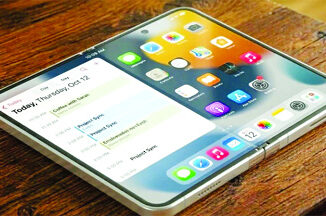
Let’s start with the elephant in the room. Apple is the only major phone maker left to enter the foldable smartphone market. And in 2026, the Cupertino giant is expected to finally join this race. As per reports, the first-ever foldable iPhone will make its debut in fall 2026, and may look like two iPhone Air devices stacked on one another.
The iPhone fold is expected to come in a book-like form factor, something we originally saw on the Pixel fold. The foldable iPhone is rumoured to come with a 5.25-inch cover screen, coupled with a 7.6-inch inner display. Both screens are said to be AMOLED panels. Apple is expected to ditch Face ID for the iPhone fold to keep the device thin, and use a side-mounted Touch ID sensor instead. The iPhone fold is tipped to be priced at $2,400 (roughly Rs 2,15,000) in the US
2. OLED MacBook
The MacBook Pro is one of the most powerful machines out there. But there was one aspect where Apple seemed to be falling behind – the display. The MacBook Pro still comes with an IPS LCD display, and Apple may finally change it this year. As per Bloomberg, the next-generation MacBook Pro devices could get OLED displays with touch support, just like the iPhones. However, it is believed that only the M6 Pro and M6 Max variants of the MacBook Pro will get a new OLED screen, while the base M6 MacBook may still use an IPS panel.
The OLED MacBook Pro models are expected to launch in late 2026.
3. AI glasses
AI glasses have become increasingly popular over the last couple of years, and now Apple may want a piece of this pie. The rumoured Apple AI glasses would likely compete with the Meta Ray-Bans. The headset is expected to come with built-in cameras, speakers with AI integration. You will likely be able to make phone calls, click pictures, and get answers via voice commands. Though you may not get a display.
Apple is expected to unveil the AI glasses by the end of this year. But a release may only happen by 2027.
4. iPhone 17e
Now, let’s look at the device Apple is likely to launch first this year, the iPhone 17e. The iPhone 17e would be the second device in the company’s e-series of iPhones. As per reports, the device will get the new A19 chipset from the iPhone 17 and slimmer bezels for the display. However, it is unclear if Apple will retain the notch from its predecessor.
Though the iPhone 17e is likely to come with MagSafe support, something the iPhone 16e lacked. Apple is expected to launch the iPhone 17e in February this year. The pricing of the iPhone 17e may remain unchanged from the iPhone 16e, which was launched in India for Rs 59,900.
5. iPhone 18 Pro and iPhone 18 Pro Max
The iPhone 17 Pro models came with big design changes and performance improvements. For the next Pro models, Apple is not expected to deliver the same magnitude of upgrades, but there is still plenty in store. The iPhone 18 Pro and iPhone 18 Pro Max will likely come in new colours with a unified design, instead of the dual-tone look on their predecessors. Recent leaks also suggest that Apple may go for under-display scanners for Face ID and remove the Dynamic Island. -

Voyager 1: Most distant human object from Earth to cross 1 light-day mark in 2026
Nasa’s Voyager 1, the most distant human-made object in history, is about to cross a symbolic finish line that defines the true scale of our universe. By mid-November 2026, the venerable probe will reach a distance of one light-day from Earth. This milestone is not just a number; it is a profound testament to a journey that has lasted nearly half a century. It represents the furthest our technological voice has ever reached into the silent expanse of the cosmos, marking a new chapter in interstellar exploration.
WHAT IS ONE-LIGHT DAY?
A light-year refers to the distance travelled by light in one year, and a light-day represents the distance light travels in 24 hours through a vacuum. One can also say that one light-year has 365.25 Julian days. Light moves at roughly 3,00,000 kilometres per second.
One light year is equal to 9.46 trillion kilometres, and by dividing it by 365.25, the number of days in a Julian year, we get 25.9 billion kilometres, or approximately 26 billion kilometres.
The fact that Voyager 1 will be one light-day away from Earth in mid-November 2026 means it will be at a distance of 26 billion kilometres from us.
Similarly, the calculation of the distance of a light-day in kilometres can be made by multiplying the speed of light with the number of seconds in a day, which is 86,400 seconds.
REACHING THE 26-BILLION-KM MARK
At a staggering distance of 26 billion kilometres, any radio command sent from mission control in California will take a full day to reach the spacecraft.
Its response, carrying data from the edge of our solar system, will take another 24 hours to return. This 48-hour round trip highlights the extreme isolation of our deepest interstellar scout.
Voyager 1 is currently so far away that the Sun appears as nothing more than an exceptionally bright star in its dark sky, yet it remains tethered to us by these invisible threads of data.
Launched on September 5, 1977, Voyager 1 was originally designed for a four-year mission to study Jupiter and Saturn.
It exceeded all expectations, revealing volcanic activity on Jupiter’s moon Io and the intricate structure of Saturn’s rings. -

Apple to skip iPhone 18 in 2026, here is what it may launch instead
In September every year, all eyes in the tech world are fixated on Apple for the launch of the latest iPhones. 2025 was no different as the Cupertino giant not only launched the iPhone 17 series, but also announced the addition of the iPhone Air. Now, as per reports, Apple is planning to add another twist for the iPhone release next year, by reportedly removing the vanilla iPhone 18 from the expected launch in fall 2026.
Now, this may raise eyebrows, particularly for Apple fans, who are always looking to upgrade to the latest iPhone. But the Cupertino giant does seem to have a plan in place. Here is what Apple could launch next year after skipping the iPhone 18. While Apple is reportedly planning to skip the iPhone 18 for 2026, the company still has a big launch planned for the fall event. As per reports, the Cupertino giant is expected to launch the iPhone 18 Pro, iPhone 18 Pro Max, and the first-ever iPhone fold in September 2026.
The iPhone 18 Pro models will come with some notable upgrades compared to the iPhone 17 series. Apple is rumoured to ditch the Dynamic Islands in favour of a punch-hole selfie camera and under-display sensors for Face ID, for a more seamless viewing experience.
On the back, Apple is expected to go more a more unified single-tone design on the rear to replace the two-tone look on the iPhone 17 Pro models.
Under the hood, you can expect the yet-to-be-announced A20 Pro chipset to power the iPhone 18 Pro models, which may bring notable performance upgrades. The two devices are also expected to come with larger batteries, which may make them heavier compared to their predecessors.
On the camera front, the iPhone 18 Pro models are expected to get variable apertures for the main camera, allowing users to manually adjust the depth of field.
Apple is reportedly set to finally enter the foldable smartphone market with the iPhone fold. As per rumours, the device will have a wide form factor, similar to the original Pixel fold. The foldable iPhone is said to come with a 5.25-inch cover display and a 7.6-inch inner display. Both screens are said to be AMOLED panels.
The iPhone fold will likely come with a total of four cameras, including two selfie shooters for each display. The device is expected to be powered by the A20 Pro chipset, the same as the iPhone 18 Pro models. -

ISRO rocket LVM-3 places 6000-kg US satellite – its heaviest – into orbit
In a historic Christmas eve mission, ISRO’s heaviest rocket, LVM3-M6, successfully placed a heavy US communication satellite into orbit on Wednesday, a feat described by the space agency chief as a season’s gift to the country. The 6,100 kg BlueBird Block-2 satellite is part of a constellation of global Low Earth Orbit (LEO) mission to provide direct-to-mobile connectivity through satellite that would enable 4G and 5G voice and video calls, texts, streaming and data for everyone, everywhere at all times. It was the heaviest satellite to be launched from Indian soil, ISRO said.
ISRO said the LVM3-M6, nicknamed ‘Bahubali’ for its heavylift capability, injected the satellite into its intended orbit in a textbook launch.
LVM3-M6 carried the communication satellite as part of a commercial deal between NewSpace India Ltd (NSIL) and US-based AST SpaceMobile (AST and Science, LLC).
NewSpace India is the commercial arm of the ISRO.
On Wednesday, the 43.5 metre tall rocket soared majestically at 8.55 am from the second launch pad here at the end of a 24 hour countdown.
After a flight journey of about 15 minutes, the spacecraft got separated from the launch vehicle and it was successfully placed into the orbit, bringing all-round cheers in the Mission Control Centre here.
On the successful launch, ISRO Chairman V Narayanan said, “I am extremely happy to say that the LVM3M6 Bahubali rocket has successfully placed the Bluebird Block-2 satellite into the intended orbit. Let me congratulate NewSpace India and AST Space Mobile on the outstanding achievement.”
The satellite was placed in a 518 km circular orbit against the planned 520 km altitude, he said, describing it as a “textbook launch”.
The LVM3 rocket has demonstrated its 100 per cent success rate, he added.
Weighing 6,100 kg, the communication satellite is be the heaviest payload to be placed into the LEO in LVM3 launch history from Indian soil, the space agency said.
The previous heaviest was the LVM3-M5 Communication Satellite 03, weighing about 4,400 kg, which was successfully launched by ISRO on November 2 in the Geosynchronous Transfer Orbit (GTO).
According to Narayanan, this is the first time ISRO has launched two LVM3 rockets within just 52 days, following the earlier successful mission on November 2.
Addressing his team from the Mission Control Centre post the launch, he thanked them for one of the finest performances of any rocket and said this mission brings India’s total to 434 satellites launched for 34 countries. -
Driverless robotaxis are going global, but the self-driving dream still hits bumps
Humans have been obsessed with self-driving cars since time immemorial. In films, the fascination dates to 1927. Metropolis, a silent feature deemed both silly and the first of its kind science fiction epic, imagined a futuristic city where sleek, automated vehicles traversed along elevated highways in a highly coordinated fashion. As they say, if you can imagine it then you can make it and so, humankind too, has been on a mission to make them ever since. It was not easy. It took a lot of time. But finally, we seem to be getting there.
Earlier in the year, when Alphabet and Google CEO Sundar Pichai took the stage of I/O, to give the developer community a sneak-peek into all the AI his company was preparing to unleash on the world, he left the keynote with one very personal anecdote. He told everybody about the time when his parents were visiting him in San Francisco. The first thing they wanted to do was to ride in a Waymo. Pichai had obviously used Waymo taxis before but watching his father, who is in his 80s, being totally amazed by self-driving technology made him see the progress in a whole new light, he admitted.
If you can read between the lines, this was all the assurance that anybody needed, that the “future” has officially moved from the laboratory to the curb. Not just in San Francisco, but even if you live in Beijing, Phoenix, or Abu Dhabi, the sight of a steering wheel spinning by itself is no longer a reason to be spooked and call the cops: it is just how people get to brunch today.
According to the RoboTaxi Global Market Report 2025, the global robotaxi market is growing exponentially, up from $1.19 billion in 2024 to a projected $2 billion-plus this year. The increasing penetration of autonomous technology and need for sustainable and eco-friendly travel is a big growth driver. With improvements, scale and affordability pitching in eventually, the market size is expected to grow further, reaching tens or even hundreds of billions of dollars by 2030. Waymo clocked over 20 million miles and 14 million paid rides in 2025 following concerted expansion across Phoenix, Los Angeles, and San Francisco.