Tag: Science & Technology

  • NASA discovers Earth’s third energy field called ‘Polar wind’

    NASA discovers Earth’s third energy field called ‘Polar wind’

    Earth’s third energy field known as ‘Polar Wind’, which only existed in theory so far, has now been discovered by Nasa after a search that has lasted 60 years.
    Glyn Collinson, principal investigator of Endurance at Nasa’s Goddard Space Flight Centre in Maryland, in a video released by Nasa, said that this field is fundamental to understanding the way our planet works. According to Collinson, the field has been there since the beginning alongside the other two energy fields – gravity and magnetic. The scientists said that although the field is weak, it is significant to Earth as it counters gravity and lifts the skies up.
    According to the team of scientists, Polar winds have crucial answers about how Earth’s atmosphere evaporates rapidly above the north and south poles. They feel that this field of energy may have played a critical role in the evolution of our atmosphere’s upper-most layer.
    In the 1960s, several spacecrafts that flew over the Earth’s poles had witnessed a stream of particles from the atmosphere flowing into space at supersonic speeds. Scientists were aware that sunlight caused particles to leak into space. Regardless, the detected particles did not show any signs that they were heated. Collinson said that there had to be something that was drawing these particles out of the atmosphere. However, back then, the technology that was needed to detect an energy field, which can only be sensed over hundreds of miles, was not available.
    How did the scientists discover the field?
    The team of scientists made the discovery based on the observation from a Nasa suborbital rocket which was able to measure this planet-wide electric field. The measurements given by Nasa’s Endurance Mission confirmed the existence of this ambipolar field. According to Nasa, the observations revealed that this energy field has been driving atmospheric escape and shaping the ionosphere – a layer of the upper atmosphere.

  • WhatsApp for iOS reportedly testing AR capabilities for call effects and filters in Beta

    WhatsApp for iOS reportedly testing AR capabilities for call effects and filters in Beta

    WhatsApp for iOS is testing a new feature that leverages augmented reality (AR), according to claims by a feature tracker. The said feature is said to bring AR capabilities for video calls on the platform, enabling users to customise factors such as lighting conditions and surroundings. The feature, available via a beta update, also reportedly includes the ability to add touch-up filters that tweak the appearance in real time and a dedicated low-light mode.
    WhatsApp Update
    According to the feature tracker WABetaInfo, AR support was first spotted on WhatsApp beta for Android version 2.24.16.7 in July. It has now arrived on its iOS counterpart too, following the reported rollout of WhatsApp beta for iOS version 24.15.10.70 update via the TestFlight program.
    As per the shared screenshot, WhatsApp’s new AR capabilities include dynamic facial filters. Users can now reportedly tweak their appearance, such as the overall colour tone of the video feed. It is also said to include a background editing tool that enables users to blur their background or replace it with a preset background provided by the instant messaging platform. Additionally, the WhatsApp for iOS beta update is also reported to include two dedicated modes: touch-up and low-light. While the former is said to add a facial filter that removes blemishes and smoothens the skin akin to face beauty filters present on smartphones, the latter is claimed to enhance visibility in low-light environments.
    The feature tracker suggests this new functionality is still in development and only beta testers who have registered themselves via Apple’s TestFlight program may have access to it. The will likely be rolled out to more users over the next few weeks.
    Other New Features
    In addition to in-development AR capabilities, WhatsApp also recently expanded its sticker lineup with the introduction of GIPHY-powered stickers. Users can also now search for relevant stickers without leaving the app. Additionally, the custom sticker maker, which was introduced on iOS in January, is now available on Android.
    If users still cannot find a relevant sticker from the library, they can simply generate their own using Meta AI – the conversational artificial intelligence (AI) assistant which is available on Meta Platforms’ apps such as WhatsApp and Instagram.
    WhatsApp has been working on adding support for chat themes on more than one occasion, and a feature tracker has now given us a peek at what the feature could look like when it is launched. The messaging app is expected to let users change the colour of the chat bubbles as well as the background using preset themes, or pick their own colour and wallpaper. The company was also spotted working on the ability to pick a username and set a PIN that protects them from unknown users on WhatsApp.
    WhatsApp has been developing a username feature that will allow users to start new conversations without sharing their phone numbers, but that feature is yet to be released to beta testers. It appears that the company is now working a feature that will protect users from unwanted contact after they set up a username. Source: NDTV

  • iPhone 16 event, launch set for September 9

    iPhone 16 event, launch set for September 9

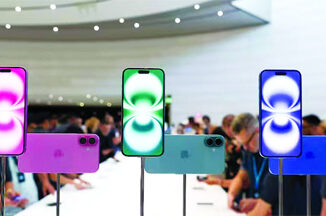
    Apple has finally announced the launch event of the iPhone 16 series. After months of leaks and rumours, the company has confirmed that its 2024 iPhones are coming soon. Apple has started sending out special Apple event invites with a mysterious message. The iPhone 16 launch event will take place on September 9.
    The brand was heavily rumoured to launch its new iPhone 16 series on September 10 but it seems that Apple might have made some last-minute changes. The official Apple announcement also includes the Apple logo with a cryptic message – “It is Glowtime.” Well, this sounds quite interesting, but no one really knows what it means. We will likely get clarity in the coming days and hopefully before the iPhone 16 launch event. The latest Apple event will include an in-person component at Apple Park but those who are interested in watching the full iPhone 16 series launch event will be able to livestream it online. In India, the iPhone 16 event will start at 10:30PM, just like every year. The event will likely be live-streamed via Apple’s official YouTube channel.
    Apple will likely introduce four models, including iPhone 16, iPhone 16 Plus, iPhone 16 Pro, and iPhone 16 Pro Max. The standard models are expected to receive minor upgrades. The standard and the Plus models are said to retain the old displays and camera setup but offer a new chipset, a bigger battery, a new vertical rear camera layout, and a new Action button. The Pro models, on the other hand, are tipped to come with big camera upgrades, a slimmer design, a larger display with minimal bezels, a new chipset and a bigger battery. It is currently unknown whether Apple will offer faster charging or not. We do know that all the iPhone 16 models will likely come with support for Apple Intelligence features.
    The price details have also leaked online ahead of the official Apple event. The iPhone 16 base model is tipped to cost $799 (about Rs 67,100 in India). The larger iPhone 16 Plus may cost $899 (around Rs 75,500), as per leaks. The iPhone 16 Pro with 256GB might be priced at $1,099 (about Rs 92,300), and the iPhone 16 Pro Max with the same storage is tipped to start at $1,199 (around Rs 1,00,700). The India prices will likely be higher, as is the case with every launch because of customs charges.

  • NASA to keep 2 astronauts in space until Feb, nixes return on troubled Boeing capsule

    NASA to keep 2 astronauts in space until Feb, nixes return on troubled Boeing capsule

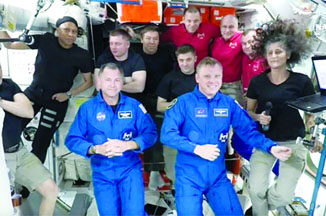
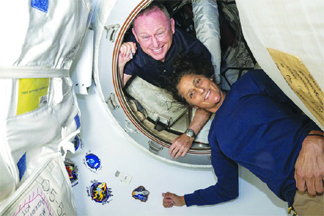
    NASA has decided that it’s too risky to bring two astronauts, including Indian-American Sunita Williams, back to Earth in Boeing’s troubled new capsule, and they’ll have to wait until next year for a ride home with SpaceX.
    What should have been a week long test flight for the pair will now last more than eight months.
    The seasoned pilots have been stuck at the International Space Station since the beginning of June. A cascade of vexing thruster failures and helium leaks in the new capsule marred their trip to the space station. They ended up in a holding pattern as engineers conducted tests and debated what to do about the trip back.
    After almost three months, the decision finally came down from NASA’s highest ranks on Saturday. Butch Wilmore and Williams will come back in a SpaceX spacecraft in February. Their empty Starliner capsule will undock in early September and attempt to return on autopilot. As Starliner’s test pilots, the pair should have overseen this critical last leg of the journey, with a touchdown in the US desert.
    “A test flight by nature is neither safe nor routine,” said NASA Administration Bill Nelson. “And so the decision … is a commitment to safety.” “This has not been an easy decision, but it is absolutely the right one,” added NASA Associate Administrator Jim Free.
    It was a blow to Boeing, adding to the safety concerns plaguing the company on its airplane side. Boeing had counted on Starliner’s first crew trip to revive the troubled program after years of delays and ballooning costs. The company had insisted Starliner was safe based on all the recent thruster tests both in space and on the ground.
    Boeing did not participate in Saturday’s news conference by NASA but released a statement, “Boeing continues to focus, first and foremost, on the safety of the crew and spacecraft. We are executing the mission as determined by NASA, and we are preparing the spacecraft for a safe and successful uncrewed return.” Source: AP

  • August 30 New York & Dallas E – Edition

    [vc_row][vc_column][vc_custom_heading text=”E-Edition” font_container=”tag:h2|text_align:center” google_fonts=”font_family:Istok%20Web%3Aregular%2Citalic%2C700%2C700italic|font_style:700%20bold%20regular%3A700%3Anormal” css=”” link=”url:https%3A%2F%2Fwww.theindianpanorama.news%2Fwp-content%2Fuploads%2F2024%2F08%2FTIP-August-30-E-Edition.pdf”][vc_single_image image=”170075″ img_size=”full” alignment=”center” onclick=”custom_link” css=”” link=”https://www.theindianpanorama.news/wp-content/uploads/2024/08/TIP-August-30-E-Edition.pdf”][/vc_column][/vc_row][vc_row][vc_column width=”2/3″][vc_custom_heading text=”Lead Stories This Week” google_fonts=”font_family:Istok%20Web%3Aregular%2Citalic%2C700%2C700italic|font_style:700%20bold%20regular%3A700%3Anormal” css=”” link=”url:https%3A%2F%2Fwww.theindianpanorama.news%2F”][vc_wp_posts number=”5″ show_date=”1″][/vc_column][vc_column width=”1/3″][vc_single_image image=”82828″ img_size=”medium” alignment=”center” onclick=”custom_link” css=”” link=” https://www.theindianpanorama.news/advertising-media-kit-portal-indian-panorama/”][vc_single_image image=”82829″ img_size=”medium” alignment=”center” onclick=”custom_link” css=”” link=” https://www.theindianpanorama.news/advertising-media-kit-portal-indian-panorama/”][/vc_column][/vc_row]

  • ‘Complex, expensive’: Further tranches of sovereign gold bonds unlikely

    Further tranches of sovereign gold bonds are unlikely, said sources to Business Today TV. SGBs are government securities denominated in grams of gold and are substitutes for physical gold. According to sources, “SGB is a complex and expensive instrument”.
    SGBs are issued by the Reserve Bank of India (RBI) on behalf of the Indian government.
    Meanwhile, earlier this month, the RBI announced the final redemption price at Rs 6,938 per gram – 122 per cent higher – for SGBs that were issued on August 5, 2016. The gold bonds were issued at a price of Rs 3,119 in August 2016 by RBI. The final redemption date was August 5. The price of Sovereign Gold Bonds is based on the average closing price of 999 purity gold as published by the India Bullion and Jewellers Association Limited for the week before the subscription period, according to RBI guidelines. Investors buy SGBs at the issue price in cash and redeem them for cash upon maturity. The central bank issues these bonds on behalf of the government.
    SGBs, issued by the government, have an 8-year tenure. The SGB August 2016 issue is reaching maturity, requiring redemption. Unlike the optional redemption by the RBI at the end of the fifth year, this bond’s redemption is mandatory.
    Source: Business Today

  • Chandrayaan 4-5 design complete; 70 satellites likely to be launched in 5 yrs: ISRO chief

    ISRO chairman S Somanath has said the space agency has completed the design for the next round of moon missions – Chandrayaan 4 and 5 – and is in the process of seeking government approval for the same.
    The Chandrayaan-4 mission includes bringing back moon rocks and soil to earth after a soft landing on the lunar surface, launching a spacecraft from the moon, demonstrating a space docking experiment in lunar orbit and getting the samples back to earth. “We have a series of missions to go to the moon. Chandrayaan-3 is over. Now, design for Chandrayaan 4 and 5 has been completed and we are seeking approval of the government,” Somanath told reporters here on the sidelines of an event organized by the All India Council for Technical Education and Indian Space Association. Earlier, the ISRO officials had said that the targeted launch for Chandrayaan-4 mission was 2028.
    Somanath also said that the space agency was planning to launch 70 satellites over the next five years, including a constellation of low earth orbit satellites to meet the requirements of different ministries and departments of the government.
    These 70 satellites include four for the NAVIC regional navigation system to provide positioning, navigation and time service, INSAT 4D weather satellites, the Resourcesat series of satellites, Cartosat satellites for remote sensing and high resolution imaging, he said.
    Somanath said the space agency was also planning to develop the Oceansat series of satellites and technology demonstration satellites 01 and 02 to demonstrate electric propulsion systems, and quantum key distribution technologies.
    The ISRO was also developing data relay satellites for the Gaganyaan mission, high throughput satellites for providing internet connectivity and GSAT satellite which was getting ready for shipping to the US for launch on a Falcon rocket of SpaceX, he said.
    Somanath said the space agency was also planning to launch a series of earth observation satellites over the next five years. Source: HT

  • AI scientists are producing new theories of how the brain learns

    AI scientists are producing new theories of how the brain learns

    Five decades of research into artificial neural networks have earned Geoffrey Hinton the moniker of the Godfather of artificial intelligence (AI). Work by his group at the University of Toronto laid the foundations for today’s headline-grabbing AI models, including ChatGPT and LaMDA. These can write coherent (if uninspiring) prose, diagnose illnesses from medical scans and navigate self-driving cars. But for Dr Hinton, creating better models was never the end goal. His hope was that by developing artificial neural networks that could learn to solve complex problems, light might be shed on how the brain’s neural networks do the same.
    Brains learn by being subtly rewired: some connections between neurons, known as synapses, are strengthened, while others must be weakened. But because the brain has billions of neurons, of which millions could be involved in any single task, scientists have puzzled over how it knows which synapses to tweak and by how much. Dr Hinton popularised a clever mathematical algorithm known as backpropagation to solve this problem in artificial neural networks. But it was long thought to be too unwieldy to have evolved in the human brain. Now, as AI models are beginning to look increasingly human-like in their abilities, scientists are questioning whether the brain might do something similar after all.
    Working out how the brain does what it does is no easy feat. Much of what neuroscientists understand about human learning comes from experiments on small slices of brain tissue, or handfuls of neurons in a Petri dish. It’s often not clear whether living, learning brains work by scaled-up versions of these same rules, or if something more sophisticated is taking place. Even with modern experimental techniques, wherein neuroscientists track hundreds of neurons at a time in live animals, it is hard to reverse-engineer what is really going on.
    One of the most prominent and longstanding theories of how the brain learns is Hebbian learning.
    Source: The Economist

  • WhatsApp will soon allow users to choose a default theme for the app

    WhatsApp will soon allow users to choose a default theme for the app

    WhatsApp is working on a new feature for the app that will allow users to select a default theme for the app. This theme will be independent of the theme setting of the phone. Till now, the WhatsApp theme is in sync with the default theme of the phone. So if the device is on dark theme, the app also turns dark, and if the phone’s setting is on a light theme, then WhatsApp also runs the same theme. However, with the upcoming features, users will be able to customise the theme for the app individually.
    The feature is still in beta and was spotted by WABetaInfo. It is part of the WhatsApp beta for Android 2.24.18.6 update. There is no timeline when this feature will roll out to the stable version. However, users running WhatsApp on the beta version should now be able to see the feature in settings.
    WABetaInfo has also shared a screenshot of the upcoming features. With the feature rolling out, WhatsApp will likely get a fresh look by updating its signature green colour across two distinct themes. In the light theme, the familiar green will be replaced with black, lending the app a sleek, modern, and minimalist appearance. On the other hand, in the dark theme, the primary colour will switch to white, creating a bold contrast that not only enhances readability but also adds a contemporary edge to the app’s overall aesthetic.
    A similar feature was also spotted last month. WhatsApp was reported to be developing chat themes that allow iPhone users to choose from five preset colours for their chat bubbles and wallpaper, including classic green, white, blue, pink, and purple.. Additionally, WhatsApp is reportedly working on a feature to change the app’s accent colour, offering the same color choices as the chat themes, allowing for customisable in-app buttons. While these features aren’t publicly available yet, their presence in beta indicates a potential upcoming release.
    In April this year, WhatsApp started to go green. No, not in the environmental preservation kind of a way. The text, bubbles and accent on the app all turned green. For iPhone users, in particular, this just happened overnight. It was not a change users asked for, and there was quite a bit of conversation around it on social media.
    These new customisation options could position WhatsApp more favourably against competitors like Telegram, which already offers a variety of personalisation features. By providing users with greater control over the app’s appearance, WhatsApp seems to be aiming to attract and retain those who prioritise a personalised messaging experience.
    WhatsApp is introducing a significant privacy feature designed to address one of the platform’s most persistent issues–spam. The new feature, available in the beta version 2.24.18.2 for Android, introduces a Username PIN system aimed at improving user security and curbing unwanted messages, according to GSM Arena. This new functionality allows WhatsApp users to set a four-digit PIN in addition to their username.
    The PIN serves as an extra layer of security, ensuring that users who have not interacted with you previously cannot send you messages solely by knowing your username.
    This measure is expected to significantly reduce spam and enhance privacy for WhatsApp users, according to GSM Arena. “Once implemented, this feature should greatly cut down on spam, which has been a prevalent issue on WhatsApp,” said a spokesperson for the company, according to GSM Arena.

  • August 23 New York & Dallas E – Edition

    [vc_row][vc_column][vc_custom_heading text=”E-Edition” font_container=”tag:h2|text_align:center” google_fonts=”font_family:Istok%20Web%3Aregular%2Citalic%2C700%2C700italic|font_style:700%20bold%20regular%3A700%3Anormal” css=”” link=”url:https%3A%2F%2Fwww.theindianpanorama.news%2Fwp-content%2Fuploads%2F2024%2F08%2FTIP-August-23-E-Edition.pdf”][vc_single_image image=”169815″ img_size=”full” alignment=”center” onclick=”custom_link” css=”” link=”https://www.theindianpanorama.news/wp-content/uploads/2024/08/TIP-August-23-E-Edition.pdf”][/vc_column][/vc_row][vc_row][vc_column width=”2/3″][vc_custom_heading text=”Lead Stories This Week” google_fonts=”font_family:Istok%20Web%3Aregular%2Citalic%2C700%2C700italic|font_style:700%20bold%20regular%3A700%3Anormal” css=”” link=”url:https%3A%2F%2Fwww.theindianpanorama.news%2F”][vc_wp_posts number=”5″ show_date=”1″][/vc_column][vc_column width=”1/3″][vc_single_image image=”82828″ img_size=”medium” alignment=”center” onclick=”custom_link” css=”” link=” https://www.theindianpanorama.news/advertising-media-kit-portal-indian-panorama/”][vc_single_image image=”82829″ img_size=”medium” alignment=”center” onclick=”custom_link” css=”” link=” https://www.theindianpanorama.news/advertising-media-kit-portal-indian-panorama/”][/vc_column][/vc_row]

  • Instagram testing new feature to let users keep friends updated on their location

    Instagram is reportedly working on allowing users to share real-time updates with their friends on a map. The new feature, which has been in the pipeline since February, is being rolled out for testing in a few small markets, according to a report by The Verge.
    With this feature, Instagram users can share text or video updates that will be pinned to the locations from where these updates are posted. However, they can only be viewed by users who you follow back or have added to your Close Friends. Similar notes uploaded by your friends will appear alongside each other on the same map. The feature will not be enabled by default for all Instagram users.
    A similar feature has been available on Snapchat since 2017. But the key difference between the two is that Snap Maps lets users make their map updates public for everyone to see, whereas Instagram seems like it does not want to take that chance. “As always, we are building this feature with safety in mind,” a Meta spokesperson was quoted as saying in the report. It is not yet clear for how long the updates shared on the map will remain there.
    The Meta-owned social media platform has been down this road before. Back in 2012, the platform experimented with a feature that allowed users to view their uploaded photos on a map. But the feature was not popular as the photos on the map could not be shared with other users.

  • Mars may have enough underground water to form a global ocean: New study

    Mars may have enough underground water to form a global ocean: New study

    A recent study indicates that Mars might hold vast amounts of water beneath its surface, potentially enough to form a global ocean. The research, released on Monday, is based on seismic data from NASA’s Mars InSight lander, which recorded over 1,300 marsquakes before ceasing operations two years ago.
    According to lead scientist Vashan Wright from the Scripps Institution of Oceanography at the University of California San Diego, this water is likely located between seven to twelve miles (11.5 to 20 kilometers) deep in the Martian crust, ABC news reported.
    Wright explained that this water probably seeped into underground cracks billions of years ago when Mars had surface rivers, lakes, and possibly oceans.
    ABC News reports that researcher Wright tempered expectations about the discovery of water on Mars, saying, “The presence of water on Mars doesn’t automatically mean it supports life. Rather, our findings suggest that there are environments on Mars that have the potential to be habitable.”
    The team used computer models alongside InSight’s seismic readings to conclude that underground water was the most plausible explanation for the observed data. The results were published in the Proceedings of the National Academy of Sciences.
    Wright added that if the underground water near InSight’s location at Elysium Planitia, close to Mars’ equator, is representative of the entire planet, it could be enough to fill a global ocean up to two kilometers deep.
    However, confirmation would require drilling and other equipment to explore further and search for any signs of microbial life.
    Although the InSight lander is no longer operational, scientists are still analyzing data collected from 2018 to 2022, seeking more insights into Mars’ interior.
    Historically, Mars was wet almost all over more than 3 billion years ago, but as its atmosphere thinned, much of its surface water is believed to have either escaped into space or become buried underground.
    Scientists propose warming up Mars by using heat-trapping ‘glitter’
    The idea of transforming Mars into a world more hospitable to human habitation is a regular feature of science fiction. But could this be done in real life?
    Scientists are now proposing a new approach to warm up Earth’s planetary neighbor by pumping engineered particles -similar in size to commercially available glitter and made of iron or aluminum – into the atmosphere as aerosols to trap escaping heat and scatter sunlight toward the Martian surface. The idea would be to augment the natural greenhouse effect on Mars to raise its surface temperature by roughly 50 degrees Fahrenheit (28 degrees Celsius) over a span of a decade.
    This alone would not make Mars habitable for people, but the scientists who developed the proposal see it as a potentially doable initial step.
    “Terraforming refers to modifying a planet’s environment to make it more Earth-like. For Mars, warming the planet is a necessary, but insufficient, first step. Previous concepts have focused on releasing greenhouse gases, but these require large amounts of resources that are scarce on Mars,” said University of Chicago planetary scientist Edwin Kite, who helped lead the study published this week in the journal Science Advances.

  • iPhone SE 4 to surprise users with Apple Intelligence, a feature that’s missing even on iPhone 15

    iPhone SE 4 to surprise users with Apple Intelligence, a feature that’s missing even on iPhone 15

    Right now, Apple Intelligence is limited to just the top-trim iPhones—the iPhone 15 Pro and the iPhone 15 Pro Max. It is expected to be available across the iPhone 16 series, which should help Apple democratise its AI efforts to more users. Now, a new report from Bloomberg suggests that Apple Intelligence is also coming to the next iPhone SE, speculated to launch by early 2025.
    The last three generations of the iPhone SE have focused on providing the premium Apple experience at a lower price point. Despite their lower entry-level price and older design, Apple has included its latest chip, resulting in a fast and smooth experience that users expect from an iPhone.
    The upcoming iPhone SE 4 is expected to undergo a design overhaul, taking cues from the iPhone 14. It is rumoured to be equipped with the A18 chip, which is expected to power the upcoming iPhone 16. This could make the iPhone SE 4 the most affordable iPhone to support Apple Intelligence.
    Additional standout features of the iPhone SE 4 comprise a single 48 MP primary camera and a Face ID system. Similar to the iPhone 14, it is expected to feature an OLED screen, marking a first for iPhone SE.
    The iPhone SE 3, released in 2022, will be the final model to feature the classic design with a large notch, a home button that also acts as TouchID, and a chin. According to leakster Revegnus, the iPhone SE 4 is expected to be priced around $500, which translates to approximately Rs 50,000 in India.
    And to make the deal sweeter for the iPhone SE buyers, the new model will also support AI features from Apple, which suggests the new model could be powered by the A17 Pro or the A18 chipset. It remains to be seen if the high-end AI features will come to the device but people will surely find the rumoured iPhone SE 4 model appealing if it can pack the said features and offered in an iPhone 14-like design. The next SE model from Apple is expected to launch in Q1 2025 which is usually when the previous iPhone SE versions have been announced by the company.
    We already know about AI and a premium design but there seems to be a lot more expected from the next SE model. The device could feature a 48MP main camera which will be a big upgrade on the 8MP unit. The iPhone SE 4 could come with 6GB RAM and also support USB C for charging which is now a given for all Apple devices in the market.

  • August 16 New York & Dallas E – Edition

    [vc_row][vc_column][vc_custom_heading text=”E-Edition” font_container=”tag:h2|text_align:center” google_fonts=”font_family:Istok%20Web%3Aregular%2Citalic%2C700%2C700italic|font_style:700%20bold%20regular%3A700%3Anormal” css=”” link=”url:https%3A%2F%2Fwww.theindianpanorama.news%2Fwp-content%2Fuploads%2F2024%2F08%2FTIP-August-16-E-Edition-1.pdf”][vc_single_image image=”169414″ img_size=”full” alignment=”center” onclick=”custom_link” css=”” link=”https://www.theindianpanorama.news/wp-content/uploads/2024/08/TIP-August-16-E-Edition-1.pdf”][/vc_column][/vc_row][vc_row][vc_column width=”2/3″][/vc_column][vc_column width=”1/3″][vc_single_image][vc_single_image image=”82828″ img_size=”medium” alignment=”center” onclick=”custom_link” css=”” link=”https://www.theindianpanorama.news/advertising-media-kit-portal-indian-panorama/ “][vc_single_image image=”82829″ img_size=”medium” alignment=”center” onclick=”custom_link” css=”” link=”https://www.theindianpanorama.news/advertising-media-kit-portal-indian-panorama/ “][/vc_column][vc_column][vc_custom_heading text=”Lead Stories This Week” google_fonts=”font_family:Istok%20Web%3Aregular%2Citalic%2C700%2C700italic|font_style:700%20bold%20regular%3A700%3Anormal” css=”” link=”url:https%3A%2F%2Fwww.theindianpanorama.news%2F”][vc_wp_posts number=”5″ show_date=”1″][vc_single_image][vc_single_image][vc_single_image][vc_single_image][/vc_column][/vc_row][vc_row][vc_column][vc_single_image][/vc_column][/vc_row]

  • Wearable body sensors that harvest energy from motion

    Wearable body sensors that harvest energy from motion

    Scientists have developed new technology that can help fabricate cost-effective and efficient piezoelectric devices for self-powered wearable devices that harvest energy from the human body to monitor diverse physiological parameters.
    Piezoelectric devices are based on electric charge that accumulates in certain solid materials, such as crystals and ceramics, as well as biological matter, such as bone or various proteins, in response to applied mechanical stress. Researchers at the Institute of Nano-Science and Technology (INST), Mohali, have found a technique in the field of microfluidics to produce microspheres that are tiny solids or hollow spheres of a protein or synthetic polymer with a high electro-active phase that can be used in piezoelectric devices.
    Polymer microspheres are known for their increased surface area and enhanced interface capabilities; however, the existing methods for their production have several drawbacks, such as shape irregularities and high energy requirements.
    To address these limitations, microfluidic techniques have emerged, offering benefits such as tunability, size and shape control, and efficiency. Researchers at INST addressed the technical challenges by combining microfluidics technology with off-chip thermal polymerisation techniques to produce microspheres that exhibited uniformity and monodispersity.
    Artificial intelligence (AI) was also used as a vital tool in enabling accurate predictions for microsphere diameter and phases, reducing the need for extensive laboratory optimisation prior to droplet generation in microfluidics.
    As a proof of concept, the researchers explored the application of polyvinylidene fluoride (PVDF) microspheres in the development of a flexible piezoelectric device that can seamlessly integrate with different parts of the human body, like the elbow, knee, etc., through wearables.
    It underwent varying degrees of compression at different rates, depending on specific body movements, harnessing the energy generated by body movements that would otherwise go to waste. This generated electrical response proved to be substantial, providing enough output voltage to operate low-power devices. Source: TNS

  • Isro to launch SSLV on third development flight on I-Day

    Isro to launch SSLV on third development flight on I-Day

    The Indian Space Research Organisation (Isro) is set to launch the Earth Observation Satellite-08 (EOS-08) aboard the Small Satellite Launch Vehicle (SSLV)-D3 on Independence Day, August 15, at 9:17 am. The launch will take place from the Satish Dhawan Space Centre (SDSC) in Sriharikota, Andhra Pradesh. EOS-08 is designed to enhance environmental monitoring, disaster management, and support for the Gaganyaan mission.
    “It will complete the SSLV development project and will enable operational missions by Indian industry and NSIL,” Isro said.
    The satellite carries three primary payloads: the Electro Optical Infrared Payload (EOIR), the Global Navigation Satellite System-Reflectometry payload (GNSS-R), and the SiC UV Dosimeter.
    The EOIR payload is engineered to capture images in both the Mid-Wave Infrared (MIR) and Long-Wave Infrared (LWIR) bands, providing critical data for applications such as satellite-based surveillance, disaster monitoring, environmental observation, fire detection, volcanic activity tracking, and industrial disaster assessment.
    This payload will operate both day and night, ensuring continuous data collection.
    The GNSS-R payload demonstrates the potential of using GNSS-R-based remote sensing for various applications, including ocean surface wind analysis, soil moisture assessment, cryosphere studies over the Himalayan region, flood detection, and monitoring inland water bodies. This capability is crucial for accurate weather forecasting and flood warnings.
    The SiC UV Dosimeter monitors UV irradiance at the viewport of the Crew Module in the Gaganyaan Mission and serves as a high-dose alarm sensor for gamma radiation, ensuring the safety of astronauts.
    Built on the Microsat/IMS-1 bus, EOS-08 is configured to operate in a Circular Low Earth Orbit (LEO) at an altitude of 475 km with an inclination of 37.4°. The satellite weighs approximately 175.5 kg, generates about 420 W of power, and has a mission life of one year.
    EOS-08 represents a significant advancement in satellite mainframe systems with the inclusion of an Integrated Avionics system, known as the Communication, Baseband, Storage, and Positioning (CBSP) Package.
    This system consolidates multiple functions into a single efficient unit, showcasing ISRO’s commitment to innovative mission management.
    The launch of EOS-08 on Independence Day not only marks a technological milestone for ISRO but also underscores India’s growing capabilities in space exploration and satellite technology.

  • Engineers develop earbuds to combat drowsiness while driving

    Engineers develop earbuds to combat drowsiness while driving

    Drowsy driving is a critical hazard which contributes to road accidents worldwide. However, engineers have now developed earbuds to address the drowsiness while driving.
    Engineers at the University of California, Berkeley, have developed prototype earbuds that can detect signs of drowsiness in the brain, aiming to protect drivers and machine operators from the dangers of drowsiness. The earbuds function like an electroencephalogram (EEG), measuring brain waves through built-in electrodes that contact the ear canal. While the electrical signals detected are smaller than those in traditional EEGs, the new study shows that the Ear EEG platform is sensitive enough to detect alpha waves, a pattern of brain activity that increases when drowsiness sets in.
    “I was inspired when I bought my first pair of Apple’s AirPods in 2017. I immediately thought what an amazing platform for neural recording. We believe this technology can classify drowsiness, indicating its potential to classify sleep and diagnose sleep disorders,” said study author Rikky Muller, Associate Professor of Electrical Engineering and Computer Science at UC Berkeley
    Creating an earbud that fits a variety of ear sizes and shapes posed significant challenges. While other groups used wet electrode gels or custom-moulded earpieces, Muller’s team aimed for a dry, user-generic model that anyone could use. “My goal was to create a device usable every day by those who would benefit from it,” said Ryan Kaveh, the designer.
    Kaveh designed the earpiece in three sizes. The design includes multiple electrodes applying gentle pressure to the ear canal, ensuring a comfortable fit, with signals read through a low-power, wireless interface. In a paper, the researchers demonstrated the earpieces could detect physiological signals, including eye blinks and alpha brain waves. The study incorporated machine learning to validate the earpieces’ real-world application. Nine volunteers wore the earpieces while performing tasks in a darkened room, periodically rating their drowsiness and response times.

  • August 9 New York & Dallas E – Edition

    [vc_row][vc_column][vc_custom_heading text=”E-Edition” font_container=”tag:h2|text_align:center” google_fonts=”font_family:Istok%20Web%3Aregular%2Citalic%2C700%2C700italic|font_style:700%20bold%20regular%3A700%3Anormal” css=”” link=”url:https%3A%2F%2Fwww.theindianpanorama.news%2Fwp-content%2Fuploads%2F2024%2F08%2FTIP-August-9-E-Edition.pdf”][vc_single_image image=”168856″ img_size=”full” alignment=”center” onclick=”custom_link” css=”” link=”https://www.theindianpanorama.news/wp-content/uploads/2024/08/TIP-August-9-E-Edition.pdf”][/vc_column][/vc_row][vc_row][vc_column width=”2/3″][vc_custom_heading text=”Lead Stories This Week” google_fonts=”font_family:Istok%20Web%3Aregular%2Citalic%2C700%2C700italic|font_style:700%20bold%20regular%3A700%3Anormal” css=”” link=”url:https%3A%2F%2Fwww.theindianpanorama.news%2F”][vc_wp_posts number=”5″ show_date=”1″][/vc_column][vc_column width=”1/3″][vc_single_image image=”82828″ img_size=”medium” alignment=”center” onclick=”custom_link” css=”” link=” https://www.theindianpanorama.news/advertising-media-kit-portal-indian-panorama/”][vc_single_image image=”82829″ img_size=”medium” alignment=”center” onclick=”custom_link” css=”” link=” https://www.theindianpanorama.news/advertising-media-kit-portal-indian-panorama/”][/vc_column][/vc_row]

  • What are ‘metacrimes’ – and how can we stop them?

    What are ‘metacrimes’ – and how can we stop them?

    The Apple Vision Pro is the newest tool for Australians to access three-dimensional, immersive online environments, also known as the metaverse. Released in Australia earlier this month, it allows users to take a (virtual) walk in the savanna from their living room, watch sports matches in an immersive environment, or even buy a house after completing a virtual inspection.
    But these new online environments also have the potential to enable new crimes. Metacrimes are those crimes occurring in the metaverse. They challenge our definitions of crimes in the digital realm, because they do not fit into existing frameworks of reporting and investigating crime.
    Our new study tackles this problem by shedding light on the key characteristics of metacrimes. And by understanding these crimes better, we will be better able to fight them.
    Metaverse, metacrime and cybercrime
    The metaverse is a loose term describing a kind of three-dimensional, virtual world that users access via a virtual reality headset. The 2018 movie ‘Ready Player One’ provides a good visualisation of what the metaverse might look like. In the movie, people put on special goggles and pick their avatar to enter a massive, interactive digital universe where they can do almost anything.
    Immersion is created through a number of sensory techniques in the headset, including visual, sound and haptic (touch). This creates a feeling of spatial presence that allows the user to perceive and experience the virtual space as real. This means negative experiences such as sexual violence and harassment also feel real.
    Unless you are constantly recording your interactions in the metaverse via your headset, crucial evidence of that unpleasant interaction would not be captured. Some companies have created user controls, such as a safety bubble that can be activated around your avatar. However, we do not yet have sufficient research to know whether these are effective.
    Our study argues the impact of metacrimes will also be exacerbated for vulnerable populations, especially children who occupy a large proportion of active metaverse users. Difficulties in verifying children’s age online add extra concerns about grooming and minor abuse. These risks are not hypothetical.
    In 2022, researchers from the Centre for Countering Digital Hate conducted 11 hours and 30 minutes of recorded user interactions on Meta’s Oculus headset in the popular VRChat. They found that users, including children, encounter abusive behaviour approximately every seven minutes.
    Bullying and sexual harassment was also rife, and minors were often manipulated into using racist slurs and promoting extremist ideas.
    In January 2024, police in the United Kingdom launched the first case of rape in the metaverse after a 16-year-old girl’s avatar was attacked. Police reported the victim suffered psychological and emotional trauma, similar to an attack in the physical world.
    The outcomes of the case are currently pending and are likely to set a legal precedent for the protection of minors in the metaverse. At the moment, metacrime presents new challenges in defining, measuring and pursuing avatars’ liability that conventional cybercrime does not usually confront.
    We also found other risks including hacking and recording of a person’s environment. Manipulation of VR technologies, such as haptic suites that enable users to physically engage with virtual spaces, also enable perpetrators to inflict direct physical harm on users.
    This can include inflicting visual vertigo, motion sickness, and neurologic symptoms.
    Where to from here?
    Major tech companies such as Apple, Meta and Microsoft are investing heavily in the metaverse, developing both hardware and software to enhance their platforms.
    Research firm Gartner predicted by 2026, 25 per cent of people will spend at least an hour each day in the metaverse for work, shopping, education, social media and entertainment.
    This prediction may be not too far away from reality. Australia’s eSafety Commissioner’s national online safety survey conducted in 2022 found 49 per cent of metaverse users said they had entered the metaverse at least once a month in the last year.
    It is therefore urgent that governments and tech companies develop metaverse-specific legal and regulatory frameworks to safeguard immersive virtual environments. National and international legal frameworks will need to account for the new characteristics of metacrime we have identified. Law enforcement will need to upskill in metacrime reporting and investigations.
    In the past, companies have talked about using new technologies responsibly – but haven’t taken responsibility when their platforms were used for crimes and harms. Instead, tech leaders deploy what researchers are now calling an “artful apology” (for example, “I’m sorry you experienced this on our platform”).
    But this does nothing tangible to tackle the problem, and metaverse companies should instil clear regulatory frameworks for their virtual environments to make them safe for everyone to inhabit. Source: PTI

  • NASA images reveal complex history of two near-earth asteroids

    NASA images reveal complex history of two near-earth asteroids

    NASA’s DART spacecraft, prior to its historic impact on the asteroid Dimorphos in 2022, captured high-resolution images of both Dimorphos and its larger counterpart Didymos.
    These images have allowed scientists to decode the intricate history of these near-Earth asteroids and understand the formation of binary asteroid systems, which consist of a primary asteroid with a smaller moonlet orbiting it. Analysis of Didymos’s craters and surface strength suggests it formed around 12.5 million years ago, while Dimorphos is estimated to have formed about 300,000 years ago.
    Didymos likely originated in the main asteroid belt between Mars and Jupiter before being pushed into the inner solar system.
    Examination of the largest boulders on Didymos and Dimorphos revealed that these asteroids are made up of rocky fragments from the destruction of a parent asteroid.
    “These large boulders could not have formed from impacts on the surfaces of Didymos and Dimorphos themselves,” said Maurizio Pajola of the National Institute for Astrophysics (INAF) in Italy. Pajola explained that such impacts would have shattered the asteroids, according a report by Reuters.
    Didymos, with a diameter of about 780 meters, and Dimorphos, roughly 170 meters wide, are classified as “rubble pile” asteroids. Their surfaces are strewn with boulders, with the largest on Dimorphos comparable to a school bus and on Didymos as large as a soccer field. Olivier Barnouin from Johns Hopkins University noted that the surfaces of both asteroids are much weaker than loose sand.
    The study shows that Dimorphos likely formed from material ejected from Didymos’s equatorial region due to the latter’s faster rotation in the past. Didymos currently rotates once every 2.25 hours. The DART mission, which struck Dimorphos on September 26, 2022, at approximately 14,000 miles per hour, successfully demonstrated the ability to alter an asteroid’s trajectory, although Didymos and Dimorphos pose no immediate threat to Earth.

  • August 2 New York & Dallas E – Edition

    [vc_row][vc_column][vc_custom_heading text=”E-Edition” font_container=”tag:h2|text_align:center” google_fonts=”font_family:Istok%20Web%3Aregular%2Citalic%2C700%2C700italic|font_style:700%20bold%20regular%3A700%3Anormal” css=”” link=”url:https%3A%2F%2Fwww.theindianpanorama.news%2Fwp-content%2Fuploads%2F2024%2F08%2FTIP-August-2-E-Edition.pdf”][vc_single_image image=”168429″ img_size=”full” alignment=”center” onclick=”custom_link” css=”” link=”https://www.theindianpanorama.news/wp-content/uploads/2024/08/TIP-August-2-E-Edition.pdf”][/vc_column][/vc_row][vc_row][vc_column width=”2/3″][vc_custom_heading text=”Lead Stories This Week” google_fonts=”font_family:Istok%20Web%3Aregular%2Citalic%2C700%2C700italic|font_style:700%20bold%20regular%3A700%3Anormal” css=”” link=”url:https%3A%2F%2Fwww.theindianpanorama.news%2F”][vc_wp_posts number=”5″ show_date=”1″][/vc_column][vc_column width=”1/3″][vc_single_image image=”82828″ img_size=”medium” alignment=”center” onclick=”custom_link” css=”” link=” https://www.theindianpanorama.news/advertising-media-kit-portal-indian-panorama/”][vc_single_image image=”82829″ img_size=”medium” alignment=”center” onclick=”custom_link” css=”” link=” https://www.theindianpanorama.news/advertising-media-kit-portal-indian-panorama/”][/vc_column][/vc_row]

  • Crowdstrike blames update for letting bad data slip through causing global tech outage

    Crowdstrike blames update for letting bad data slip through causing global tech outage

    Crowdstrike is blaming a bug in an update that allowed its cybersecurity systems to push bad data out to millions of customer computers, setting off last week’s global tech outage that grounded flights, took TV broadcasts off air and disrupted banks, hospitals and retailers.
    Crowdstrike also said it would take measures in the future to prevent similar outages, including staggering the rollout of updates, giving customers more control over when and where they occur, and providing more details about the updates that it plans.
    The company on Wednesday posted details online from its “preliminary post incident review” of the outage, which caused chaos for the many businesses that pay for the cybersecurity firm’s software services.
    The problem involved an “undetected error” in the content configuration update for its Falcon platform affecting Windows machines, the Texas company said.
    A bug in the content validation system allowed “problematic content data” to be deployed to Crowdstrike’s customers. That triggered an “unexpected exception” that caused a Windows operating system crash, the company said.
    CrowdStrike has said a “significant number” of the approximately 8.5 million computers that crashed on Friday, causing global disruptions, are back in operation as customers and regulators await a more detailed explanation of what went wrong.
    Once its investigation is complete, Crowdstrike said that it will publicly release its full analysis of the meltdown. The outage caused days of widespread technological havoc, highlighted how much of the world depends on a few key providers of computing services and drawn the attention of regulators who want more details on what went wrong.
    Source: AP

  • OpenAI enters Google-dominated search market with SearchGPT

    OpenAI enters Google-dominated search market with SearchGPT

    OpenAI is venturing into a territory long dominated by Google with the selective launch of SearchGPT, an artificial intelligence-powered search engine with real-time access to information from the internet.
    The move, announced on Thursday, July 25, also places the AI giant in competition with its largest backer Microsoft’s Bing search and emerging services such as Perplexity — a search-focused AI chatbot firm backed by Amazon founder Jeff Bezos and semiconductor giant Nvidia.
    Shares of Google’s parent company Alphabet ended 3% lower on Thursday, July 25, after OpenAI’s announcement.
    OpenAI said it has opened sign-ups for the new tool, which is currently in the prototype stage and is being tested with a small group of users and publishers. The company plans to integrate the best features from the search tool into ChatGPT in the future.
    “AI-powered search tools from OpenAI and Perplexity re-affirm search as a content engagement model but pressure Google to be better at its own game,” Canaccord Genuity analyst Kingsley Crane said.
    Google dominates the search engine market with a 91.1% share as of June, according to web analytics firm Statcounter.
    SearchGPT will provide summarized search results with source links in response to user queries, OpenAI said in a blog post. Users will also be able to ask follow-up questions and receive contextual responses.
    The company will give publishers access to tools for managing how their content appears in SearchGPT results. News Corp and The Atlantic are publishing partners for SearchGPT.
    SearchGPT signals a closer collaboration between publishers and OpenAI, following content licensing agreements with major organizations like Associated Press, News Corp and Axel Springer. “Newer AI-powered search providers could face challenges of their own, with Perplexity already facing pending legal action from publishers like Wired and Forbes, and Condé Nast,” said Crane.
    Major search engines have been trying to integrate AI into search since ChatGPT first launched in November 2022. Microsoft, through its early investment, adopted OpenAI technology for its Bing search engine, while Google rolled out AI-powered summaries for the wider public at its developer conference in May. Google did not respond to a Reuters query on the potential impact of SearchGPT on its business.
    Google AI systems make headway with math in progress toward reasoning
    Alphabet’s Google unveiled a pair of artificial intelligence systems on Thursday that demonstrated advances in solving complex mathematical problems, a key frontier of generative AI development.
    The current class of AI models, which work by statistically predicting the next word, have struggled with abstract math, which requires greater reasoning capabilities resembling human intelligence. DeepMind, the company’s AI unit, published results showing that its new AI models in development, called AlphaProof and AlphaGeometry 2, solved four out of six questions at the 2024 International Math Olympiad, a prominent competition for high school students. Source: Reuters

  • Chinese scientists find traces of water in lunar soil brought by Chang’e-5 mission

    Chinese scientists find traces of water in lunar soil brought by Chang’e-5 mission

    Chinese scientists studying the soil samples of the moon brought by Chang’e-5 mission found water molecules in lunar soil, according to the Chinese Academy of Sciences (CAS).
    The research, carried out jointly by researchers from the Beijing National Laboratory for Condensed Matter Physics and the Institute of Physics of CAS and other domestic research institutions, was published in the peer-reviewed journal Nature Astronomy on July 16, the Hong Kong-based South China Morning Post reported.
    Based on lunar soil samples returned by Chang’e-5 mission in 2020, Chinese scientists have found a hydrated mineral “enriched” with molecular water, CAS said.
    In 2009, India’s Chandrayaan-1 spacecraft detected signs of hydrated minerals in the form of oxygen and hydrogen molecules in sunlit areas of the moon.
    Among its suite of instruments, it carried NASA’s Moon Mineralogy Mapper (M3), an imaging spectrometer that helped confirm the discovery of water locked in minerals on the Moon.
    In 2020, NASA announced the discovery of water on the sunlit surface of the moon based on data from the airborne Stratospheric Observatory for Infrared Astronomy, which detected water molecules in the Clavius crater, one of the largest craters visible from Earth, in the moon’s southern hemisphere.
    But the lack of returned lunar samples from high latitude and polar regions means that “neither the origin nor the actual chemical form of lunar hydrogen has been determined”, according to the Nature article.
    The Chinese scientists studying the lunar soil isolated more than 1,000 mineral “clasts”. The researchers said that among them was a platelike transparent crystal, dubbed “unknown lunar mineral” (ULM-1), that contained water molecules, the Post reported.
    The researchers ruled out the possibility that the water-bearing mineral was contaminated by terrestrial sources or rocket exhaust.
    But one geochemist said he expected the team to find more evidence in their further study. “If this water-bearing mineral is present in the lunar samples, more than one piece should be found,” said the scientist who asked not to be named and was not associated with the study. Source: PTI

  • July 26 New York & Dallas E – Edition

    [vc_row][vc_column][vc_single_image image=”168082″ img_size=”full” alignment=”center” onclick=”custom_link” css=”” link=”https://www.theindianpanorama.news/wp-content/uploads/2024/07/TIP-July-26-E-Edition.pdf”][/vc_column][/vc_row][vc_row][vc_column width=”2/3″][vc_custom_heading text=”Lead Stories This Week” google_fonts=”font_family:Istok%20Web%3Aregular%2Citalic%2C700%2C700italic|font_style:700%20bold%20regular%3A700%3Anormal” css=”” link=”url:https%3A%2F%2Fwww.theindianpanorama.news%2F”][vc_wp_posts number=”5″ show_date=”1″][/vc_column][vc_column width=”1/3″][vc_single_image image=”82828″ img_size=”medium” alignment=”center” onclick=”custom_link” css=”” link=” https://www.theindianpanorama.news/advertising-media-kit-portal-indian-panorama/ “][vc_single_image image=”82829″ img_size=”medium” alignment=”center” onclick=”custom_link” css=”” link=” https://www.theindianpanorama.news/advertising-media-kit-portal-indian-panorama/ “][/vc_column][/vc_row]