Tag: Science & Technology

  • ADB retains India’s growth forecast at 7%

    The Asian Development Bank (ADB) has maintained India’s GDP growth forecast at 7 per cent for the current financial year, citing that a rebound in agriculture is expected given above-normal monsoon projections.
    The ADB forecast comes a day after the International Monetary Fund revised upward its GDP growth projections for India to 7 per cent compared to 6.8 per cent projected in April.
    The Indian economy is on track to grow by 7 per cent in FY2024 (ending 31 March 2025) and 7.2 per cent in FY2025, as projected in ADO April 2024, said the July edition of the Asian Development Outlook (ADO). The Indian economy logged a growth rate of 8.2 per cent for the financial year ended March 2024.

  • Google deal for ‘hot market’ cyber firm Wiz would bolster cloud security

    Google deal for ‘hot market’ cyber firm Wiz would bolster cloud security

    If Alphabet’s Google is successful in its effort to buy cloud security company Wiz, it would bolster its cloud security offerings for large organisations, a hotspot for hackers, and help it take on cloud rivals Amazon and Microsoft, experts said. Alphabet is in advanced talks to acquire Wiz, a person familiar with the matter said on Sunday, in an up to $23 billion deal that would be Google’s most expensive acquisition and provide it with cybersecurity products that defend against ransomware gangs wreaking havoc on large enterprises.
    “There is a hot market for cloud security,” said Jerome Seguera, a senior intelligence analyst at the cybersecurity firm MalwareBytes, adding that Wiz gives customers “great visibility into their assets in a straightforward way.”
    Wiz offers tools that allow organisations to scan their entire infrastructure and specific software for threats.
    Google has been steadily expanding its cybersecurity offerings in recent years. Two years ago it bought the popular cyber firm Mandiant for $5.4 billion.
    “I think they are trying to compete with Microsoft and to a smaller extent AWS (Amazon Web Services),” said Marc Bleicher, chief technology officer of the security firm Surefire Cyber.
    “Wiz is one of only a few who address a big chunk of the cloud security market in one platform,” Bleicher said.
    Wiz was founded in 2020 at the height of the coronavirus pandemic, primed to benefit from the move towards remote work and the shift by organisations to cloud environments from desktops. Most large organisations have also shifted to storing their data on the cloud over the years, but that has come with security risks – especially as companies expand and become more complex.
    Its founders, former Israeli army intelligence members, earlier founded another cloud security firm named Adallom that Microsoft bought for $320 million in 2015.
    Headquartered in New York, the company has grown rapidly since then. Only two months ago, at the RSA cybersecurity conference in San Francsico, Wiz said it was valued at $12 billion. It now expects annual organic revenue of $1 billion in 2025 and has raised nearly $2 billion in venture capital investment in total, said a person familiar with the Google deal talks, declining to be named. Source: Reuters

  • Cave discovered on Moon could be home for humans

    Cave discovered on Moon could be home for humans

    Scientists have for the first time discovered a cave on the Moon. At least 100m deep, it could be an ideal place for humans to build a permanent base, they say.
    It is just one in probably hundreds of caves hidden in an “underground, undiscovered world”, according to the researchers.
    Countries are racing to establish a permanent human presence on the Moon, but they will need to protect astronauts from radiation, extreme temperatures, and space weather.
    Helen Sharman, the first British astronaut to travel to space, told BBC News that the newly-discovered cave looked like a good place for a base, and suggested humans could potentially be living in lunar pits in 20-30 years.
    But, she said, this cave is so deep that astronauts might need to abseil in and use “jet packs or a lift” to get out.
    Lorenzo Bruzzone and Leonardo Carrer at the University of Trento in Italy found the cave by using radar to penetrate the opening of a pit on a rocky plain called the Mare Tranquillitatis. It is visible to the naked eye from Earth, and is also where Apollo 11 landed in 1969.
    The cave has a skylight on the Moon’s surface, leading down to vertical and overhanging walls, and a sloping floor that might extend further underground.
    It was made millions or billions of years ago when lava flowed on the Moon, creating a tunnel through the rock.
    The closest equivalent on Earth would be the volcanic caves in Lanzarote, Spain, Prof Carrer explains, adding that the researchers visited those caves as part of their work.
    “It’s really exciting. When you make these discoveries and you look at these images, you realise you’re the first person in the history of humanity to see it,” Prof Carrer said.
    Once Prof Bruzzone and Prof Carrer understood how big the cave was, they realised it could be a good spot for a lunar base.
    “After all, life on Earth began in caves, so it makes sense that humans could live inside them on the Moon,” says Prof Carrer.
    The cave has yet to be fully explored, but the researchers hope that ground-penetrating radar, cameras or even robots could be used to map it.
    Scientists first realised there were probably caves on the Moon around 50 years ago. Then in 2010 a camera on a mission called the Lunar Reconnaissance Orbiter took pictures of pits that scientists thought could be cave entrances.
    But researchers did not know how deep the caves might be, or if they would have collapsed.
    Prof Bruzzone and Prof Carrer’s work has now answered that question, although there is much more to be done to understand the full scale of the cave.
    “We have very good images of the surface – up to 25cm of resolution – we can see the Apollo landing sites – but we know nothing about what lies below the surface. There are huge opportunities for discovery,” Francesco Sauro, Coordinator of the Topical Team Planetary Caves of the European Space Agency, told BBC News. The research may also help us explore caves on Mars in the future, he says.
    That could open the door to finding evidence of life on Mars, because if it did exist, it would almost certainly have been inside caves protected from the elements on the planet’s surface.
    The Moon cave might be useful to humans, but the scientists also stress that it could help answer fundamental questions about the history of the Moon, and even our solar system.
    The rocks inside the cave will not be as damaged or eroded by space weather, so they can provide an extensive geological record going back billions of years. Source: BBC

  • Meteorites from Mars help scientists understand the red planet’s interior

    Meteorites from Mars help scientists understand the red planet’s interior

    Of the more than 74,000 known meteorites – rocks that fall to Earth from asteroids or planets colliding together – only 385 or so stones came from the planet Mars.
    It’s not that hard for scientists to work out that these meteorites come from Mars. Various landers and rovers have been exploring Mars’ surface for decades. Some of the early missions – the Viking landers – had the equipment to measure the composition of the planet’s atmosphere. Scientists have shown that you can see this unique Martian atmospheric composition reflected in some of these meteorites.
    Mars also has unique oxygen. Everything on Earth, including humans and the air we breathe, is made up of a specific composition of the three isotopes of the element oxygen: oxygen-16, oxygen-17 and oxygen-18. But Mars has an entirely different composition – it’s like a geochemical fingerprint for being Martian.
    The Martian meteorites found on Earth give geologists like me hints about the makeup of the red planet and its history of volcanic activity. They allow us to study Mars without sending a spacecraft 140 million miles away.
    A planet of paradoxes
    These Martian meteorites formed from once red-hot magma within Mars. Once these volcanic rocks cooled and crystallised, radioactive elements within them started to decay, acting as a radiometric clock that enables scientists to tell when they formed.
    From these radiometric ages, we know that some Martian meteorites are as little as 175 million years old, which is – geologically speaking – quite young. Conversely, some of the Martian meteorites are older, and formed close to the time Mars itself formed.
    These Martian meteorites tell a story of a planet that has been volcanically active throughout its entire history. In fact, there’s potential for Martian volcanoes to erupt even today, though scientists have never seen such an eruption. Source: PTI

  • July 19 New York & Dallas E – Edition

    [vc_row][vc_column][vc_custom_heading text=”E-Edition” font_container=”tag:h2|text_align:center” google_fonts=”font_family:Istok%20Web%3Aregular%2Citalic%2C700%2C700italic|font_style:700%20bold%20regular%3A700%3Anormal” css=”” link=”url:https%3A%2F%2Fwww.theindianpanorama.news%2Fwp-content%2Fuploads%2F2024%2F07%2FTIP-July-19-E-Edition.pdf”][vc_single_image image=”167750″ img_size=”full” alignment=”center” onclick=”custom_link” css=”” link=”https://www.theindianpanorama.news/wp-content/uploads/2024/07/TIP-July-19-E-Edition.pdf”][/vc_column][/vc_row][vc_row][vc_column width=”2/3″][vc_custom_heading text=”Lead Stories This Week” google_fonts=”font_family:Istok%20Web%3Aregular%2Citalic%2C700%2C700italic|font_style:700%20bold%20regular%3A700%3Anormal” css=”” link=”url:https%3A%2F%2Fwww.theindianpanorama.news%2F”][vc_wp_posts number=”5″ show_date=”1″][/vc_column][vc_column width=”1/3″][vc_single_image image=”82828″ img_size=”medium” alignment=”center” onclick=”custom_link” css=”” link=”https://www.theindianpanorama.news/advertising-media-kit-portal-indian-panorama/ “][vc_single_image image=”82829″ img_size=”medium” onclick=”custom_link” css=”” link=”https://www.theindianpanorama.news/advertising-media-kit-portal-indian-panorama/ “][/vc_column][/vc_row]

  • Chinese scientists identify super moss able to ‘survive’ on Mars

    Chinese scientists identify super moss able to ‘survive’ on Mars

    Scientists have identified a super resilient desert moss species in China’s western region of Xinjiang that could help sustain possible colonies on Mars, a study by the Chinese Academy of Sciences showed. When subjected to conditions that simulate the environment on Mars, the moss – Syntrichia Caninervis – was found to be able to withstand extreme dryness, ultra-low temperatures and radiation, the academy said in a research paper published in The Innovation journal last week.
    The moss could serve as the “basis for the establishment and maintenance of the ecosystem by contributing to oxygen production, carbon sequestration, and soil fertility”, the researched said in the study, published on July 1.
    “(It) can help drive the atmospheric, geological, and ecological processes required for other higher plants and animals while facilitating the creation of new habitable environments conducive to long-term human settlement,” the paper added.
    In the research, scientists found that even after losing more than 98% of its cellular water content, the moss was able to recover photosynthetic and physiological activities within seconds after it was hydrated.
    When intact, the plant can also tolerate ultra-low temperatures and regenerate after being stored in a freezer at minus 80 degree Celsius (minus 112 Fahrenheit) for five years or in liquid nitrogen for a month.
    The moss is found in Xinjiang, Tibet, a Californian desert, the Middle East and polar regions.
    The race to place a larger footprint in space has spurred China and the United States to launch exploration plans in recent years. Chinese missions include launching near-Earth asteroid probe Tianwen-2 next year, and Tianwen-3 around 2030 to bring samples back from Mars. China last month retrieved samples from the far side of the moon. In the United States, NASA has formulated a 20-year plan for Mars, seeking answers to whether the red planet is habitable for humans. Source: Reuters

  • Microsoft rolls out spellcheck, autocorrect for Notepad users in Windows 11

    In good news for Notepad users, Microsoft has rolled out spellcheck and autocorrect in the Notepad app in Windows 11 -40 years after the text editor was first introduced in Windows in 1983.
    The tech giant started testing both features in March. According to multiple reports, it has now quietly begun rolling out both the features for Windows 11 users. The spellcheck feature is nearly identical to how Word or Microsoft Edge highlight misspelled words, with a red underline to show errors.
    The users can enable or disable spellcheck on a file type basis in Notepad for Windows 11.
    Microsoft has been adding new features to its Notepad app for Windows 11.
    Notepad now offers character count, dark mode, tabs, Copilot integration, and even a virtual fidget spinner.
    In December last year, Notepad app on Windows 11 received a character count feature at the bottom, similar to how Microsoft Word counts the number of words in a document.
    When text is selected, the status bar shows the character count for both the selected text and the entire document.

  • Soon, get a satellite image of your backyard at click of mouse

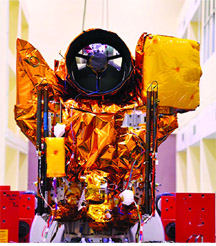
    Want a satellite picture of your backyard? It may soon be possible as Bengaluru-based space start-up Pixxel plans to unveil an online software suite to browse through images of earth captured by its satellites and also order customised pictures. In an interaction with PTI editors here, Pixxel Space Chief Executive Officer and co-founder Awais Ahmed said the start-up’s earth observation studio ‘Aurora’ was part of efforts to make space-based data accessible to the common person for a small fee.
    Pixxel’s earth observation studio is expected to go live later this year and make the hyperspectral images of the earth taken by its satellites and data analysis accessible to everyone.
    “It would be as simple as using Google Earth but pictures and satellite imagery would be much more advanced,” Ahmed, the 26-year-old CEO, who is among the handful of entrepreneurs who are making a mark in the space sector which was opened to private players about four years ago, said.

  • How a few days in space can change biology of astronauts

    How a few days in space can change biology of astronauts

    Only about 600 people have ever traveled to space. The vast majority of astronauts over the past six decades have been middle-aged men on short-duration missions of fewer than 20 days. Today, with private, commercial and multinational spaceflight providers and flyers entering the market, we are witnessing a new era of human spaceflight. Missions have ranged from minutes, hours and days to months. As humanity looks ahead to returning to the Moon over the coming decade, space exploration missions will be much longer, with many more space travelers and even space tourists. This also means that a wider diversity of people will experience the extreme environment of space – more women and people of different ethnicities, ages and health status.
    Since people respond differently to the unique stressors and exposures of space, researchers in space health, like me, seek to better understand the human health effects of spaceflight. With such information, we can figure out how to help astronauts stay healthy both while they’re in space and once they return to Earth. As part of the historic NASA Twins Study, in 2019, my colleagues and I published groundbreaking research on how one year on board the International Space Station affects the human body. I am a radiation cancer biologist in Colorado State University’s Department of Environmental and Radiological Health Sciences. I’ve spent the past few years continuing to build on that earlier research in a series of papers recently published across the portfolio of Nature journals.
    These papers are part of the Space Omics and Medical Atlas package of manuscripts, data, protocols and repositories that represent the largest collection ever assembled for aerospace medicine and space biology. Over 100 institutions from 25 countries contributed to the coordinated release of a wide range of spaceflight data.
    NASA’s Twins Study seized on a unique research opportunity.
    NASA selected astronaut Scott Kelly for the agency’s first one-year mission, during which he spent a year on board the International Space Station from 2015 into 2016. Over the same time period, his identical twin brother, Mark Kelly, a former astronaut and current U.S. senator representing Arizona, remained on Earth.
    My team and I examined blood samples collected from the twin in space and his genetically matched twin back on Earth before, during and after spaceflight. We found that Scott’s telomeres – the protective caps at the ends of chromosomes, much like the plastic tip that keeps a shoelace from fraying – lengthened, quite unexpectedly, during his year in space.
    When Scott returned to Earth, however, his telomeres quickly shortened. Over the following months, his telomeres recovered but were still shorter after his journey than they had been before he went to space.

  • July 12 New York & Dallas E – Edition

    [vc_row][vc_column][vc_custom_heading text=”E-Edition” font_container=”tag:h2|text_align:center” google_fonts=”font_family:Istok%20Web%3Aregular%2Citalic%2C700%2C700italic|font_style:700%20bold%20regular%3A700%3Anormal” css=”” link=”url:https%3A%2F%2Fwww.theindianpanorama.news%2Fwp-content%2Fuploads%2F2024%2F07%2FTIP-July-12-E-Edition.pdf”][vc_single_image image=”167274″ img_size=”full” alignment=”center” onclick=”custom_link” css=”” link=”https://www.theindianpanorama.news/wp-content/uploads/2024/07/TIP-July-12-E-Edition.pdf”][/vc_column][/vc_row][vc_row][vc_column width=”2/3″][vc_custom_heading text=”Lead Stories This Week” google_fonts=”font_family:Istok%20Web%3Aregular%2Citalic%2C700%2C700italic|font_style:700%20bold%20regular%3A700%3Anormal” css=”” link=”url:https%3A%2F%2Fwww.theindianpanorama.news%2F”][vc_wp_posts number=”5″ show_date=”1″][/vc_column][vc_column width=”1/3″][vc_single_image image=”82828″ img_size=”medium” alignment=”center” onclick=”custom_link” css=”” link=”https://www.theindianpanorama.news/advertising-media-kit-portal-indian-panorama/ “][vc_single_image image=”82829″ img_size=”medium” alignment=”center” onclick=”custom_link” css=”” link=”https://www.theindianpanorama.news/advertising-media-kit-portal-indian-panorama/ “][/vc_column][/vc_row]

  • July 5 New York & Dallas E – Edition

    [vc_row][vc_column][vc_custom_heading text=”E-Edition” font_container=”tag:h2|text_align:center” google_fonts=”font_family:Istok%20Web%3Aregular%2Citalic%2C700%2C700italic|font_style:700%20bold%20regular%3A700%3Anormal” css=”” link=”url:https%3A%2F%2Fwww.theindianpanorama.news%2Fwp-content%2Fuploads%2F2024%2F07%2FTIP-July-5-E-Edition.pdf”][vc_single_image image=”166925″ img_size=”full” alignment=”center” onclick=”custom_link” css=”” link=”https://www.theindianpanorama.news/wp-content/uploads/2024/07/TIP-July-5-E-Edition.pdf”][/vc_column][/vc_row][vc_row][vc_column width=”2/3″][vc_custom_heading text=”Lead Stories This Week” google_fonts=”font_family:Istok%20Web%3Aregular%2Citalic%2C700%2C700italic|font_style:700%20bold%20regular%3A700%3Anormal” css=”” link=”url:https%3A%2F%2Fwww.theindianpanorama.news%2F”][vc_wp_posts number=”5″ show_date=”1″][/vc_column][vc_column width=”1/3″][vc_single_image image=”82828″ img_size=”medium” alignment=”center” onclick=”custom_link” css=”” link=”https://www.theindianpanorama.news/advertising-media-kit-portal-indian-panorama/ “][vc_single_image image=”82829″ img_size=”medium” alignment=”center” onclick=”custom_link” css=”” link=”https://www.theindianpanorama.news/advertising-media-kit-portal-indian-panorama/ “][/vc_column][/vc_row]

  • WhatsApp soon lets you dial numbers to place calls directly from app

    WhatsApp soon lets you dial numbers to place calls directly from app

    Meta-owned WhatsApp is reportedly working on a new in-app dialer feature that will allow users to make calls directly from the app. According to WABetaInfo, they will not need to add contacts to their address book to make calls from the app. According to WABetaInfo, they will not need to add contacts to their address book to make calls from the app.
    People will find a new floating action button located within the calls tab that will enable access to the in-app dialer. In addition, the report mentioned that after entering a phone number, users will also have the option to save the number to the address book as a new contact or add it to an existing contact card.
    A messaging shortcut will also be available within the dialer screen that will allow them to quickly send a message to a phone number they initially planned to dial but chose to message instead, the report added.
    The feature is presently available to some beta testers who install the latest updates of WhatsApp beta for Android from the Google Play Store, and will roll out to even more people over the coming days, the report said.
    Meanwhile, WhatsApp is reportedly working on a new feature that will allow users to see all media shared in community group chats. This feature will let community members see an overview of all images, videos and other media files shared within the community, which will make it easier for them to locate and access shared content.
    Source: IANS

  • Scientists develop speech recognition tool to predict Alzheimer’s onset

    Scientists develop speech recognition tool to predict Alzheimer’s onset

    A new AI-based model could predict the onset of Alzheimer’s disease by analysing an individual’s speech, the developers said. Trained on audio recordings of patients with mild cognitive impairment—early stages of memory loss, the model achieved 78.5 per cent accuracy in forecasting whether patients would remain stable or progress to dementia within six years, according to the researchers. Alzheimer’s disease is the most common form of dementia and impacts one’s everyday activities by impairing memory and thinking.
    The researchers at Boston University, US, used recordings of initial interviews of 166 patients aged 63-97 and trained the model using machine learning to discern patterns between speech, demographics, diagnosis, and how their condition was worsening.
    The model analyses interview content such as spoken words and sentence structure, rather than speech features such as enunciation or speed, showed the study published in the journal Alzheimer’s and Dementia.
    “We combine the information we extract from the audio recordings with some very basic demographics – age, gender, and so on – and we get the final score,” said Ioannis C. Paschalidis, a professor of engineering and the study’s corresponding author.
    “You can think of the score as the likelihood, the probability, that someone will remain stable or transition to dementia. It had significant predictive ability,” said Paschalidis.
    The researchers said that the model was able to perform well, despite challenges like low-quality recordings and background noise.
    The researchers emphasised that early prediction is crucial as current diagnostic tests often identify Alzheimer’s disease only after significant cognitive decline has occurred such as memories starting to slip away and personality traits beginning to shift.
    Source: PTI

  • AI is set to change phone experience as Apple, Realme rush to add generative tools

    AI is set to change phone experience as Apple, Realme rush to add generative tools

    Just like the flip phones in the ’90s, the QWERTY phones in the aughts, and the big battery and big camera phones in the 2010s, the trend that will define the 2020s is going to be artificial intelligence (AI) in phones. AI and machine learning (ML) have been integrated into smartphones for about a decade now with features like Siri on iPhones, smart text suggestions in Google Keyboard, etc. But it is only in the past one year that we are truly seeing this integration on both hardware and software levels. The Google Pixel 8s and Samsung Galaxy S24 series really set the ball rolling by placing generative AI features right at the centre of the smartphones with features like circle to search and upgraded Magic Editor that can now regenerate backgrounds, reposition people, and upscale low-resolution images using AI.
    Thanks to how fast-paced AI tech is evolving, features that were groundbreaking in 2023 are almost the norm in 2024. This year, brands like OpenAI, Google, Apple, Nothing and Realme are all talking about bringing AI into the hands of people. This year, OpenAI held its Spring Update event where it announced updates to the phone app that allow users to interact with the chatbot via voice and video. Then Google I/O happened, and some big updates were announced to Gemini and its app, which now allows users to just point their camera at a location and the app will tell you your exact location. We are also hearing announcements from brands like Nothing, Realme and Oppo. Nothing said it is working on deep AI integration into the Nothing Phone 3 that will launch in 2025. Realme announced the GT6 (quick review) as its new AI phone and said by the end of 2024, all its smartphones will use AI features.
    And then came the big announcement by Apple. You know it’s a trend to bet on when Apple dives into it head-first. At WWDC 2024, Apple declared it is joining the AI army, and announced its own Apple Intelligence. A select few existing iPhones and all the future ones will now take advantage of generative AI features like allowing you to generate your own emojis in iMessage, or the Notes app doing the math for you.
    But here is where I ask you to take a step back. We have been hearing “AI phones” a lot lately. Samsung calls it Galaxy AI, Realme has tagged its latest phone, Realme GT 6, as the “AI flagship killer”. But what is an AI phone? “A true AI phone will come with on-device Gen AI apps, seamless system-wide integration, AI-optimised processors, and powerful hardware to run AI models locally. The initial wave of Gen AI phones will deliver fast photo and video editing, enhanced speech-to-text and translation capabilities, and enhanced gaming to redefine smartphone experiences”, explains Prabhu Ram, industry analyst at CyberMedia Research.
    Source: India Today

  • June 28 New York & Dallas E – Edition

    [vc_row][vc_column][vc_custom_heading text=”E-Edition” font_container=”tag:h2|text_align:center” google_fonts=”font_family:Istok%20Web%3Aregular%2Citalic%2C700%2C700italic|font_style:700%20bold%20regular%3A700%3Anormal” css=”” link=”url:https%3A%2F%2Fwww.theindianpanorama.news%2Fwp-content%2Fuploads%2F2024%2F06%2FTIP-June-28-E-Edition.pdf”][vc_single_image image=”166550″ img_size=”full” alignment=”center” onclick=”custom_link” css=”” link=”https://www.theindianpanorama.news/wp-content/uploads/2024/06/TIP-June-28-E-Edition.pdf”][/vc_column][/vc_row][vc_row][vc_column width=”2/3″][vc_custom_heading text=”Lead Stories This Week” google_fonts=”font_family:Istok%20Web%3Aregular%2Citalic%2C700%2C700italic|font_style:700%20bold%20regular%3A700%3Anormal” css=”” link=”url:https%3A%2F%2Fwww.theindianpanorama.news%2F”][vc_wp_posts number=”5″ show_date=”1″][/vc_column][vc_column width=”1/3″][vc_single_image image=”82828″ img_size=”medium” alignment=”center” onclick=”custom_link” css=”” link=”https://www.theindianpanorama.news/advertising-media-kit-portal-indian-panorama/ “][vc_single_image image=”82829″ img_size=”medium” alignment=”center” onclick=”custom_link” css=”” link=”https://www.theindianpanorama.news/advertising-media-kit-portal-indian-panorama/ “][/vc_column][/vc_row]

  • Earth’s inner core ‘unambiguously’ slowing down, could change day’s length

    Earth’s inner core ‘unambiguously’ slowing down, could change day’s length

    A new study has provided “unambiguous evidence” that the Earth’s inner core began to slow down its rotation in 2010, compared to the planet’s surface.
    Researchers said that the slowing down could change the length of one day on the Earth by fractions of a second.
    The Earth’s inner core, a solid sphere made of iron and nickel, is suspended within the liquid outer core (made of molten metals) and anchored in its place by gravity. Together, the inner and the outer core, form one of the planet’s three layers—the other two being mantle and crust.
    Being physically inaccessible, researchers usually study the core by analysing the recordings of waves sent out by earthquakes—seismograms.
    “When I first saw the seismograms that hinted at this change, I was stumped,” said John Vidale, a professor of Earth Sciences at the University of Southern California, US.
    “But when we found two dozen more observations signalling the same pattern, the result was inescapable. The inner core had slowed down for the first time in many decades,” said Vidale, also the corresponding author of the study published in the journal Nature. The slowing down of the inner core is hotly debated in the scientific community, with some studies even suggesting that it rotates faster than the Earth’s surface.
    It is known that the spin of the inner core is influenced by the magnetic field generated in the outer core and the gravitational effects within Earth’s mantle. However, it is considered that the inner core is reversing and backtracking relative to the surface, because of rotating slower than the mantle for the first time in about 40 years. “Other scientists have recently argued for similar and different models, but our latest study provides the most convincing resolution,” Vidale said. A study published earlier this year, in the journal Nature, had found that climate change-driven melting of ice in Greenland and Antarctica was affecting global timekeeping by slowing down Earth’s rotation. Source: PTI

  • Apple watch to get ability to change default ringtones with watchOS 11 update: Report

    Apple watch to get ability to change default ringtones with watchOS 11 update: Report

    Apple’s latest watchOS 11 update will finally let users change the default ringtone on their Apple Watch, according to a report. The Cupertino-based tech giant unveiled watchOS 11 – the latest operating system for its smartwatches at the Worldwide Developers Conference (WWDC) 2024 on June 10. The key highlights included a new Vitals app and more Smart Stack widgets. One of the features which Apple did not advertise but is said to be making its way to the Apple Watch is the ability to change the default ringtone.
    Change ringtones with watchOS 11
    At present, Apple Watch users have only one ringtone without any option to change it. According to a 9to5Mac report, that is set to change with the upcoming update. With the watchOS 11 developer beta update, users can choose from eight different ringtones, including the two original ones: Pebbles (Cellular ringtone), Focus, Jingle (original ringtone), Nighthawk, Transmit, Twirl, Windup, and Wonder.
    In addition to changing ringtones, users are also reported to have the option to set tones for different alerts, notifications and reminders for text messages, emails, and more.
    While changing ringtones has now become possible, the report speculates that it still does now allow setting a specific ringtone for a user on the Apple Watch.
    With watchOS 11, Apple is also reportedly bringing automatic sleep tracking to the Apple Watch. Prior to the update, Apple Watch tracked the sleep activity only when the Sleep Focus mode was toggled. Moreover, it is also said to bring a new Smart Stack widget for Shazam. Although the app was already available to Apple users via the App Store or through Siri, this new shortcut could potentially allow for even quicker music searches. Source: NDTV

  • Google releases Android 15 beta 3 phase with improved UI for passkeys

    Google releases Android 15 beta 3 phase with improved UI for passkeys

    As Android 15 gets ready, Google is a step closer to releasing the new operating system. Today, Google announced that it will be releasing Android 15’s third beta. The update indicates that it has reached platform stability. This means that the developer APIs and all app-facing behaviours are now final for testers to review and integrate into their apps, and apps targeting Android 15 can be made available on Google Play. While Android 15 Beta 3 has not changed much since the last update, there are a few interesting pin-pointers that have been unveiled with this update. In the blog, Google brings attention to one significant change to the passkey UI.
    Android 15: Improved passkey UI
    The Android 15 Beta 3 update uses a passkey with biometric authentication that happens in one step rather than two. Users will be able to sign-into apps that target Android 15 using passkeys in a single step, either with facial recognition, fingerprint, or screen lock.
    If they accidentally dismiss the prompt to use a passkey to sign-in, they will be able to see the passkey or other Credential Manager suggestions in autofill conditional user interfaces, such as keyboard suggestions or drop-downs.
    As the final release is close, Android expert Mishaal Rahman dug out that it might be able to identify when a biometric model is not working well. According to the expert, in this case, it will automatically delete it and prompt the user to redo it.
    Other Highlights of Android 15 Beta 3
    Apart from the improved passkey UI, Google also shares that the Android 15 Beta 3 update will have other new features as well.
    Private Space Feature: Similar to Samsung’s Secure Folder, this allows locking certain apps behind extra authentication. Developers may need to adjust profile logic, and custom launchers must be updated to hide these apps from the home screen and app drawer.
    Force-Close Changes: When an app is force-closed, it is stopped indefinitely until relaunched. Widgets for such apps will be grayed out.
    Memory Page Size Support: Android 15 now supports devices with a maximum memory page size of up to 16KB, up from the usual 4KB, allowing for phones with larger RAM capacities.
    Predictive Back Animations: Enabled by default, incentivising developers to support the feature.
    While Google has not announced the release date of the final product, the rumour has it that Android 15 might be released around October 2024, following the launch of the Pixel 9 series. Last year, Google also launched Android 14 with the Pixel 8 series. The latest Pixel phones are generally the first to come with the final version of the new Android iteration. Source: India Today

  • June 21 New York & Dallas E – Edition

    [vc_row][vc_column][vc_custom_heading text=”E-Edition” font_container=”tag:h2|text_align:center” google_fonts=”font_family:Istok%20Web%3Aregular%2Citalic%2C700%2C700italic|font_style:700%20bold%20regular%3A700%3Anormal” css=”” link=”url:https%3A%2F%2Fwww.theindianpanorama.news%2Fwp-content%2Fuploads%2F2024%2F06%2FTIP-June-21-E-Edition.pdf”][vc_single_image image=”166226″ img_size=”full” alignment=”center” onclick=”custom_link” css=”” link=”https://www.theindianpanorama.news/wp-content/uploads/2024/06/TIP-June-21-E-Edition.pdf”][/vc_column][/vc_row][vc_row][vc_column width=”2/3″][vc_custom_heading text=”Lead Stories This Week” google_fonts=”font_family:Istok%20Web%3Aregular%2Citalic%2C700%2C700italic|font_style:700%20bold%20regular%3A700%3Anormal” css=”” link=”url:https%3A%2F%2Fwww.theindianpanorama.news%2F”][vc_wp_posts number=”5″ show_date=”1″][/vc_column][vc_column width=”1/3″][vc_single_image image=”82828″ img_size=”medium” alignment=”center” onclick=”custom_link” css=”” link=”https://www.theindianpanorama.news/advertising-media-kit-portal-indian-panorama/ “][vc_single_image image=”82829″ img_size=”medium” alignment=”center” onclick=”custom_link” css=”” link=”https://www.theindianpanorama.news/advertising-media-kit-portal-indian-panorama/ “][/vc_column][/vc_row]

  • Water frost discovered on Mars’ tallest volcanoes for the first time

    Water frost discovered on Mars’ tallest volcanoes for the first time

    In a surprising find that challenges previous beliefs about Mars’ climate, the European Space Agency’s spacecraft have detected water frost on the towering Tharsis volcanoes near the Red Planet’s equator – a region thought to be too warm for such frozen formations.
    The frost was first spotted by ESA’s ExoMars Trace Gas Orbiter (TGO) atop the massive Olympus Mons volcano, which at nearly three times the height of Mount Everest is the tallest in the solar system. Subsequent observations by TGO’s NOMAD instrument and the Mars Express orbiter confirmed the unexpected presence of frost across multiple volcanoes in the Tharsis region.
    “We thought it was impossible for frost to form around Mars’s equator, as the mix of sunshine and thin atmosphere keeps temperatures relatively high at both surface and mountaintop,” said lead researcher Adomas Valantinas of Brown University, who made the initial discovery during his PhD at the University of Bern.
    Despite being incredibly thin – about one-hundredth of a millimeter or the width of a human hair – the frost patches cover vast areas within the volcanoes’ summit calderas. The amount represents a staggering 150,000 tonnes of water swapping between the surface and atmosphere each day during Mars’ cold seasons, equivalent to 60 Olympic-sized swimming pools.
    The frost is present for just a few hours around sunrise before evaporating in the daylight. Its existence hints at “exceptional processes” creating a frost-friendly microclimate inside the deep volcanic calderas, according to the researchers.
    “Winds travel up the slopes, bringing relatively moist air that condenses and settles as frost,” explained Nicolas Thomas of the University of Bern, principal investigator for TGO’s imaging system. “We see this on Earth and elsewhere on Mars causing clouds, but the frost appears to favor the shadowed, colder caldera regions.”

  • Apple not paying OpenAI for ChatGPT integration into iOS

    Apple not paying OpenAI for ChatGPT integration into iOS

    At the Worldwide Developers Conference (WWDC) on Monday, Apple made an exciting announcement about teaming up with OpenAI to integrate ChatGPT into Apple’s upcoming iOS 18. This news has generated a lot of buzz, but the specifics of the deal were initially unclear. A recent report from Bloomberg has shed some light on the details of this intriguing partnership.
    According to the Bloomberg report, Apple is not paying OpenAI for this collaboration. Mark Gurman, a well-known tech journalist at Bloomberg, explained that the partnership is not expected to bring in significant revenue for either company, at least in the beginning. Instead, neither Apple nor OpenAI will exchange any money for the integration. The true value lies in the exposure and integration of ChatGPT into Apple’s vast ecosystem.
    Apple believes that integrating ChatGPT into iOS 18 will give OpenAI’s technology a huge visibility boost. By embedding ChatGPT into Siri and other new writing tools, Apple is providing OpenAI with a platform that reaches hundreds of millions of users. This kind of exposure is seen as potentially more valuable than direct financial compensation. Sources close to the matter, who requested anonymity, indicated to Bloomberg that Apple views this promotional opportunity as equally, if not more, valuable than cash.
    Looking ahead, Bloomberg reports that Apple plans to establish revenue-sharing agreements with AI companies in the future. This would mean that Apple would receive a share of the revenue generated by AI partners who monetise their services on Apple platforms. This strategy aligns with Apple’s broader vision of integrating advanced AI capabilities into its devices while also creating new revenue streams.
    For users, the integration of ChatGPT into iOS 18, iPadOS 18, and macOS Sequoia will be free but optional. Users who subscribe to ChatGPT Plus will be able to access additional features by logging into their accounts. Currently, OpenAI’s standalone ChatGPT app for iOS allows users to pay for ChatGPT Plus through Apple’s In-App Purchase system, which gives Apple a 15-30 per cent share of those subscriptions.
    In summary, Apple’s partnership with OpenAI is about strategic value and future potential rather than immediate financial gain. By incorporating ChatGPT into its operating systems, Apple enhances its AI capabilities and gives OpenAI a significant boost in visibility. This sets the stage for potential revenue-sharing models down the line, highlighting a mutually beneficial relationship that could shape the future of AI integration in consumer technology.

  • Elon Musk’s X begins hiding all likes for users

    Elon Musk on July 12 confirmed the roll out of a new feature that will hide all likes by default for X users. X is rolling out “private likes” which will likely show up on users’ timelines from July 12. This means that users’ likes on the platform will be hidden by default and they “will be able to like content without worrying about who might see it”. Musk said that it is “important to allow people to like posts without getting attacked for doing so”.
    Last month, Haofei Wang, X’s director of engineering, had said the upcoming change is meant to protect users’ public image.
    “Yeah, we are making likes private. Public likes are incentivising the wrong behaviour,” he had posted on X.
    For example, many people feel discouraged from liking content that might be “edgy” in fear of retaliation from trolls, or to protect their public image.
    “Soon you’ll be able to like without worrying who might see it. Also a reminder that the more posts you like, the better your ‘For you’ algorithm will become,” Wang had said.
    According to the social media platform, like is visible between you and the author. “The author will be notified, but not anyone else. Bookmark is only visible to you. We could even make it customisable for users,” according to Wang.

  • Google developing new ChromeOS

    Google has announced that ChromeOS will soon go through a transformation. As per the company, the large portions of ChromeOS will be the Android stack. With this update, Google aims to bring AI features at a faster pace to ChromeOS. The tech giant stated that it will be embracing things like the Android Linux kernel and Android frameworks “as part of the foundation of ChromeOS.”
    In a detailed blog, Google explains that these changes won’t be just AI features. They said that the addition will also help simplify engineering efforts and help different devices like phones and accessories work better together with Chromebooks.
    With these recent announcements around new features powered by Google AI and Gemini, Chromebooks now offer the opportunity to put powerful tools in the hands of more people to help with everyday tasks.
    The blogpost states, “To continue rolling out new Google AI features to users at a faster and even larger scale, we’ll be embracing portions of the Android stack, like the Android Linux kernel and Android frameworks, as part of the foundation of ChromeOS.”

  • June 14 New York & Dallas E – Edition

    [vc_row][vc_column][vc_custom_heading text=”E-Edition” font_container=”tag:h2|text_align:center” google_fonts=”font_family:Istok%20Web%3Aregular%2Citalic%2C700%2C700italic|font_style:700%20bold%20regular%3A700%3Anormal” css=”” link=”url:https%3A%2F%2Fwww.theindianpanorama.news%2Fwp-content%2Fuploads%2F2024%2F06%2FTIP-June-14-E-Edition.pdf”][vc_single_image image=”165918″ img_size=”full” alignment=”center” onclick=”custom_link” css=”” link=”https://www.theindianpanorama.news/wp-content/uploads/2024/06/TIP-June-14-E-Edition.pdf”][/vc_column][/vc_row][vc_row][vc_column width=”2/3″][vc_custom_heading text=”Lead Stories This Week” google_fonts=”font_family:Istok%20Web%3Aregular%2Citalic%2C700%2C700italic|font_style:700%20bold%20regular%3A700%3Anormal” css=”” link=”url:https%3A%2F%2Fwww.theindianpanorama.news%2F”][vc_wp_posts number=”5″ show_date=”1″][/vc_column][vc_column width=”1/3″][vc_single_image image=”82828″ img_size=”medium” alignment=”center” onclick=”custom_link” css=”” link=” https://www.theindianpanorama.news/advertising-media-kit-portal-indian-panorama/”][vc_single_image image=”82829″ img_size=”medium” alignment=”center” onclick=”custom_link” css=”” link=” https://www.theindianpanorama.news/advertising-media-kit-portal-indian-panorama/”][/vc_column][/vc_row]

  • June 7 New York & Dallas E – Edition

    [vc_row][vc_column][vc_custom_heading text=”E-Edition” font_container=”tag:h2|text_align:center” google_fonts=”font_family:Istok%20Web%3Aregular%2Citalic%2C700%2C700italic|font_style:700%20bold%20regular%3A700%3Anormal” css=”” link=”url:https%3A%2F%2Fwww.theindianpanorama.news%2Fwp-content%2Fuploads%2F2024%2F06%2FTIP-June-7-E-Edition.pdf”][vc_single_image image=”165544″ img_size=”full” alignment=”center” onclick=”custom_link” css=”” link=”https://www.theindianpanorama.news/wp-content/uploads/2024/06/TIP-June-7-E-Edition.pdf”][/vc_column][/vc_row][vc_row][vc_column width=”2/3″][vc_custom_heading text=”Lead Stories This Week” google_fonts=”font_family:Istok%20Web%3Aregular%2Citalic%2C700%2C700italic|font_style:700%20bold%20regular%3A700%3Anormal” css=”” link=”url:https%3A%2F%2Fwww.theindianpanorama.news%2F”][vc_wp_posts number=”5″ show_date=”1″][/vc_column][vc_column width=”1/3″][vc_single_image image=”82828″ img_size=”medium” alignment=”center” onclick=”custom_link” css=”” link=”https://www.theindianpanorama.news/advertising-media-kit-portal-indian-panorama/ “][vc_single_image image=”82829″ img_size=”medium” alignment=”center” onclick=”custom_link” css=”” link=”https://www.theindianpanorama.news/advertising-media-kit-portal-indian-panorama/ “][/vc_column][/vc_row]