Tag: Science & Technology

  • Apple is coming to eat Google and Microsoft’s lunch with new low-cost MacBook: Report

    Apple is coming to eat Google and Microsoft’s lunch with new low-cost MacBook: Report

    Apple is said to be working on an affordable MacBook for some time now. The Cupertino giant has seen a rise in MacBook sales recently, but its devices remain at the higher end, including the base M4 MacBook Air. Now, the company is planning to fill the gap in the lineup, with the low-cost MacBook targeting students and users on a budget.
    According to Bloomberg, Apple will use less-advanced components to keep the price of the affordable MacBook under $1,000 (roughly Rs 88,740) in the US. The report states that the device will be powered by an iPhone chipset. Previously, it was believed that the low-cost MacBook would use the A18 Pro chipset from the iPhone 16 Pro.
    On the surface, the iPhone chip may raise doubts over performance. However, the report suggests that it would perform better than the M1 chipset.
    Additionally, the new MacBook is expected to pack a lower-end LCD compared to the 13.6-inch unit in the MacBook Air.
    Apple wants to target students with new MacBook
    Apple is planning to target students with its low-cost MacBook. The company wants to cater to users who would normally use a Windows laptop or a Chromebook at around $600 (roughly Rs 53,000) in price. As per IDC, Apple stood in fourth place in terms of global PC market share in the third quarter of 2025 with 9 per cent. The company trailed behind Lenovo, HP and Dell.
    Though some do opt for an iPad with a Magic Keyboard, the new MacBook would provide better battery life and greater flexibility at the same price range.
    Apple low-cost MacBook launch and expected price
    The report states that the device is already in early production and is being tested with the codename J700. Apple is expected to launch the device in the first half of 2026. The low-cost MacBook is likely to be priced at $600 (roughly Rs 53,000) in the US. There is no information available on pricing for the Indian market yet.

  • India’s first electric rocket Vayuputhra could change space forever

    India’s first electric rocket Vayuputhra could change space forever

    Chennai-based Space Kidz India is set to launch an electricity-powered eco-friendly rocket named ‘Vayuputhra,’ marking a significant breakthrough in green space technology with a focus on zero emissions, affordability, and accessibility.
    Space Kidz India, an aerospace and defense organisation dedicated to making space exploration accessible and educational for children, has been credited with several successful launches. The latest initiative, led by Srimathy Kesan, aims to develop a rocket powered by electricity rather than traditional solid fuels that produce high emissions.
    “When it comes to rockets, we predominantly use solid fuel which emits a large amount of pollution. Our start-up, filled with young brains, was able to come up with this innovative idea. Rocketry is a passion for many, and following our success with KalamSat, numerous students across India now view space as something accessible,” said Srimathy Kesan.
    Vayuputhra was mainly crafted using 3D printing with carbon fiber and biodegradable plastic, making it lightweight and precise. “3D printing is a boon. It allows us to produce parts, both metal and plastic, with better precision. Mass production can reduce costs by at least 2% annually, which is significant. Our main goal remains providing easy access to space technology for children,” Kesan added.
    This electric rocket is reusable and can be charged, making it unlike conventional rockets that require extensive infrastructure.
    Mechanical lead Gokul elaborated on the design, “The e-rocket is modular and customizable, and our in-house designed brushless DC motors provide effective propulsion. It is ideal for low-altitude research up to 6 km, and the battery cost per launch is just Rs 25. Since it uses no combustion, it doesn’t need a launchpad, simplifying the launch process.”
    Srimathy Kesan, recently honoured with the Brand Laureate award, emphasised the mission’s core aim: to democratise space technology for Indian children.
    The next big mission will involve girls worldwide in the creation and launch of ShakthiSat, a satellite to be sent to the Moon, promoting inclusion and inspiring the next generation of space explorers. With Vayuputhra, Space Kidz India not only pioneers eco-friendly rocket technology but also opens avenues for educational and affordable space access for youth across India and beyond.

  • What is next for high-end phones? An external lens system and this is the way

    What is next for high-end phones? An external lens system and this is the way

    Oppo has already launched its next flagship phone — Find X9 Pro. Vivo will be doing so soon with the X300 Pro, which it has already revealed in China. Given that the phones are out in public, although in a limited way, we already know a lot about them. These are premium, nay ultra-premium, phones with the hardware that is top of the line and sets a new benchmark for smartphones of 2026. This means they come with top chipsets, plenty of RAM and storage, revamped camera systems built around extremely high-resolution 200MP sensors, and displays that are richer and brighter than ever. But of all things that the X9 Pro and the X300 Pro come with, I am most excited about the external lens that they will support.
    Of course, this lens is an extra. In other words you will have to pay more for it. And I am not yet sure how good it is going to be in use. But I am excited because this is a step that pushes mobile photography into a new realm. It opens up new possibilities.
    For several years now phone companies have been working hard at improving mobile phone photography. But all the low-hanging fruits have been plucked and increasingly it is evident that physics behind optics and sensors can’t be defeated with clever tricks. This is the reason why even now Nokia Pureview 808, a phone launched in 2012, can click photos that are almost as good or even better than what most flagships can manage in 2025.
    Once the limits became clear companies started using computational photography. Most notably Google has shown with Pixel phones what is possible using clever software and tuned up image processing. But there are limits to that as well. There are limits to AI too. At the end of the day photography is all about light, lenses, sensors. And there is no bypassing physics that governs it all.
    It is in this context I feel that the move towards external lenses is the next big thing in mobile photography. This is particularly important for telephoto shooting, because zoom is one thing that is hardest to do within small and petite shells of smartphones.
    The approach is clearly visible with the Vivo X300 Pro and the Oppo Find X9 Pro. Both these phones come with a large telephoto lens that can be attached to the camera module. This lens then increases the optical zoom offered in the phone to a significant range. The Vivo lens, branded Zeiss, extends the phone’s optical zoom to 200mm. The Oppo lens, branded Hasselblad, makes the phone’s optical zoom 230mm. This is still not enough range to shoot birds and small animals. But it is enough of a range that you can actually carry your phone to a safari in Kenya and get fairly decent, if not spectacular photos, of bigger animals.
    Of course, I haven’t used any of these telephoto lenses with these phones. And I am not even sure if Vivo and Oppo will be launching these accessories here in India. There are obviously optical challenges that are going to be there. An increase in optical zoom range is welcome, but it is almost certain that it will also mean a reduction in light gathering capabilities — read narrow aperture. Similarly, I do not know what sort of distortion these telephotos introduce, and whether the small image sensors in the phones can actually support such large lenses or not.
    But as a trend this is a welcome trend. That is because it allows a lot of people, people who only shoot occasionally, to go by using their phones even in special circumstances. For example it will give phone-totting people in a wildlife park a chance of capturing better photos. Or it can potentially allow users to click better portraits on a sunny afternoon at a family gathering.

  • Why is the Sun’s outer layer hotter than its surface? Mystery solved

    Why is the Sun’s outer layer hotter than its surface? Mystery solved

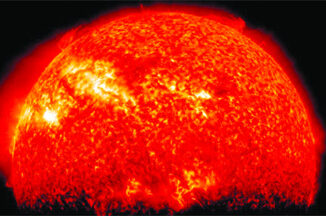
    Researchers have made a landmark discovery in solar physics by directly observing small-scale waves in the Sun’s corona, elusive magnetic waves that have baffled scientists for more than 80 years. The breakthrough, published in Nature Astronomy, was achieved using the Daniel K. Inouye Solar Telescope (DKIST) in Hawaii, the world’s most powerful solar observatory.
    The phenomena, termed the torsional Alfven waves, could finally unravel the mystery of the Sun’s super-hot outer atmosphere, offering vital clues to how the corona reaches temperatures of millions of degrees while the solar surface remains comparatively cool at about 5,500°C.
    Alfven waves, named after the 1942 Nobel laureate Hannes Alfven, are magnetic disturbances that travel through plasma, the electrically charged gas that makes up the Sun.
    While larger and more sporadic Alfven waves linked to solar flares have been detected before, this is the first time the subtle, ever-present twisting waves, thought to be powerful enough to heat the corona, have been directly confirmed.
    Professor Richard Morton of Northumbria University led the research team, employing DKIST’s Cryogenic Near-Infrared Spectropolarimeter (Cryo-NIRSP) to discern the twisting, or torsional, motions hidden within the turbulent coronal plasma.
    The Cryo-NIRSP allowed the team to analyse highly ionised iron at 1.6 million degrees Celsius, detecting tiny, periodic Doppler shifts, red and blue shifts on opposite sides of magnetic structures caused by twisting waves. This was possible thanks to the instrument’s unrivalled spectral resolution and sensitivity to minuscule plasma movements. To reveal the elusive torsional signal, Professor Morton also developed new analytical techniques to separate out the dominant ‘kink’ waves, large swaying motions that usually mask the twisting effect.
    The implications are huge: confirmation of small-scale torsional Alfven waves may solve the “coronal heating problem”, explaining how the corona’s temperature greatly exceeds that of the Sun’s surface, and identifying a key driver of the solar wind.
    This discovery, by an international team including members from the UK, China, Belgium and the US, will help refine space weather models, advancing our ability to forecast solar storms that can disrupt satellites, GPS, and power grids on Earth.
    It also marks a new era in high-resolution solar physics, laying the groundwork for future DKIST-based exploration into the fundamental dynamics powering our star.

  • WhatsApp on Apple Watch is coming soon so you can chat without needing an iPhone

    WhatsApp has begun rolling out a dedicated app for the Apple Watch for users who want to stay connected on the go. As per WABetaInfo, the app, currently available through the latest WhatsApp beta for iOS, allows Apple Watch owners to chat, reply, and interact with messages directly from their wrist.
    Unlike its Wear OS counterpart, the initial version of WhatsApp on Apple Watch functions as a companion app and still requires the iPhone to be connected. Users looking to leave their phone at home and use WhatsApp solely on their watch will find that the app does not yet support full independence. The iPhone connection is necessary for messaging, so the experience is not yet standalone, but this release is still a big step forward for WhatsApp on Apple Watch.
    Previously, Apple Watch users could access WhatsApp only through basic notification mirroring, which offered limited interaction. The new companion app changes this by providing more direct access, including viewing conversations, sending quick replies, reacting with emojis, and checking media—all without waiting for a phone notification. These additions bring the Apple Watch closer to the level of support offered by other messaging apps on watchOS.

  • October 31 New York & Dallas E – Edition

    [vc_row][vc_column][vc_custom_heading text=”E-Edition” font_container=”tag:h2|text_align:center” google_fonts=”font_family:Istok%20Web%3Aregular%2Citalic%2C700%2C700italic|font_style:700%20bold%20regular%3A700%3Anormal” css=”” link=”url:https%3A%2F%2Fwww.theindianpanorama.news%2Fwp-content%2Fuploads%2F2025%2F11%2FTIP-October-31-E-Edition.pdf”][vc_single_image image=”231533″ img_size=”full” alignment=”center” onclick=”custom_link” css=”” link=”https://www.theindianpanorama.news/wp-content/uploads/2025/11/TIP-October-31-E-Edition.pdf”][/vc_column][/vc_row][vc_row][vc_column width=”2/3″][vc_custom_heading text=”Lead Stories This Week” google_fonts=”font_family:Istok%20Web%3Aregular%2Citalic%2C700%2C700italic|font_style:700%20bold%20regular%3A700%3Anormal” css=”” link=”url:https%3A%2F%2Fwww.theindianpanorama.news%2F”][vc_wp_posts number=”5″ show_date=”1″][/vc_column][vc_column width=”1/3″][vc_single_image image=”82828″ img_size=”medium” alignment=”center” onclick=”custom_link” css=”” link=”https://www.theindianpanorama.news/advertising-media-kit-portal-indian-panorama/ “][vc_single_image image=”82829″ img_size=”medium” alignment=”center” onclick=”custom_link” css=”” link=”https://www.theindianpanorama.news/advertising-media-kit-portal-indian-panorama/ “][/vc_column][/vc_row]

  • Samsung unveils Galaxy XR, the first Android XR headset built for the AI era

    Samsung unveils Galaxy XR, the first Android XR headset built for the AI era

    Samsung has officially introduced Galaxy XR, a next-generation AI-native headset designed to redefine immersive experiences across work, play and discovery. Announced in Seoul, the device marks the beginning of the Android XR ecosystem, developed in collaboration with Google and Qualcomm Technologies.
    As the first product built on the new Android XR platform, Galaxy XR merges advanced AI and extended reality (XR) to offer natural interactions through voice, vision and gestures. The launch signals the start of Samsung’s long-term XR journey, which will eventually include AI-powered glasses and other form factors.
    “With Galaxy XR, Samsung is introducing a brand-new ecosystem of mobile devices,” said Won-Joon Choi, Chief Operating Officer of Mobile eXperience (MX) Business at Samsung Electronics. “Built on Android XR, Galaxy XR expands the vision for mobile AI into a new frontier of immersive and meaningful possibilities, allowing XR to move from concept to everyday reality, for both the industry and users.”
    Sameer Samat, President of Android Ecosystem at Google, added, “Android XR is the first Android platform built entirely for the Gemini era, and we are incredibly excited to take a significant leap forward today with the launch of Galaxy XR. Through our partnership with Samsung, Android XR will unlock entirely new ways to explore, connect and create, building an open, unified platform for the next evolution of computing.”
    Alex Katouzian, Group GM of Mobile, Compute & XR at Qualcomm Technologies, said, “Galaxy XR embodies our vision for the future, where the synergy of AI and XR transforms the possibilities of personal computing. We’re thrilled to be collaborating on this initiative, as Galaxy XR will help to bring new use cases across various industries and pave the way for exciting multi-device experiences.”
    Galaxy XR is built around multimodal AI, enabling intuitive experiences that combine sight, sound and movement. Integrated with Gemini AI at the system level, the device can interpret the user’s surroundings and respond naturally, creating fluid, human-like interactions.
    The headset features advanced sensors and cameras that track head, hand and eye movements for precise control. A separate battery pack reduces weight and enhances comfort, while a detachable light shield allows users to switch between immersive and open viewing modes.

  • Meta expands safety tools to help older adults stay safe from online scams

    Meta expands safety tools to help older adults stay safe from online scams

    Meta has introduced new safety measures and awareness programmes designed to help users, particularly older adults, stay safe from online scams and cyber fraud. The company announced the updates as part of its ongoing global effort to make its platforms safer and more secure.
    On WhatsApp, users will now receive warnings if they attempt to share their screens with unknown contacts during video calls. This aims to prevent scammers from tricking people into revealing sensitive information such as bank details or verification codes.
    Messenger is testing a more advanced scam detection system that identifies potentially suspicious messages from new contacts. When triggered, users can choose to send recent chats for AI-powered scam review. If a possible scam is detected, users are informed about common fraud tactics and offered options to block or report the sender.
    Additionally, users across Facebook, Messenger, and WhatsApp can now set up Passkeys, allowing them to log in securely using their device’s fingerprint, face, or PIN. On Facebook and Instagram, Security Checkup guides users through key account protection steps, while WhatsApp’s Privacy Checkup helps people customise settings like who can add them to groups.
    Meta is also strengthening partnerships with government and industry stakeholders. In India, it has collaborated with the Department of Telecommunications (DoT) to expand the Scams Se Bacho campaign, which includes multilingual video content aimed at helping senior citizens identify and report scams.
    The company continues to support Saksham Senior, an initiative that empowers older adults to navigate the digital world confidently through learning resources on technology use, scam prevention, and misinformation awareness. The programme operates across major Indian cities, with workshops held at senior living communities, clubs, and online platforms.
    Meta reported disrupting approximately 8 million accounts linked to scam centres across Myanmar, Laos, Cambodia, the UAE, and the Philippines in the first half of 2025. The company also took down over 21,000 pages and fake customer support accounts attempting to deceive users into sharing personal data.

  • Scientists may have come closer to confirming dark matter’s existence

    Scientists may have come closer to confirming dark matter’s existence

    Dark matter is something that we can’t see. According to NASA, it is an “invisible glue” that holds the universe together. Some scientists are convinced that this mysterious material exists, making up most of the matter in the universe. But no one knows what exactly it is.
    Meanwhile, scientists are curious about a mysterious glow of gamma rays near the centre of the Milky Way, and they think it could be evidence of dark matter.
    The glow, which was detected by NASA’s Fermi Gamma-ray Space Telescope shortly after it was launched in 2008, continues to puzzle scientists even today.
    There are two main theories about this glow. One suggests that dark matter particles might be colliding and destroying each other, producing gamma rays as a byproduct.
    Another theory suggests that the glow could be caused by thousands of unobserved millisecond pulsars, which are neutron stars that emit gamma rays as they spin rapidly.
    Both theories have been supported by scientists. But as per CNN, the gamma ray glow was in the shape of the galactic bulge, which is a crowded and bulbous region at the centre of the Milky Way, mostly made up of old stars.
    Now, a new paper that has been published in the journal Physical Review Letters reveals new findings about the glow and dark matter.
    Based on simulations which are made using supercomputers, for the first time shows that dark matter collisions could also have created the bulge-shaped glow.
    “Dark matter dominates the universe and holds galaxies together. It’s extremely consequential and we’re desperately thinking all the time of ideas as to how we could detect it,” said co-author Joseph Silk, a professor of physics and astronomy at Johns Hopkins and a researcher at the Institut d’Astrophysique de Paris and Sorbonne University.
    “Gamma rays, and specifically the excess light we’re observing at the center of our galaxy, could be our first clue.”
    The study notes that if excess gamma light is not from dying stars, it could become the first proof that dark matter exists.
    The Fermi Gamma-ray Space Telescope has mapped this excess gamma-ray emission, and scientists are confident that dark matter exists due to its gravitational effects on visible matter. However, detecting it directly has proven challenging.
    The key findings of the dark matter fit the gamma-ray data as well as the millisecond pulsar hypothesis.
    Scientists say that the Cherenkov Telescope Array Observatory might provide an answer by differentiating the gamma-ray emissions from these two sources.

  • October 24 New York & Dallas E – Edition

    [vc_row][vc_column][vc_custom_heading text=”E-Edition” font_container=”tag:h2|text_align:center” google_fonts=”font_family:Istok%20Web%3Aregular%2Citalic%2C700%2C700italic|font_style:700%20bold%20regular%3A700%3Anormal” css=”” link=”url:https%3A%2F%2Fwww.theindianpanorama.news%2Fwp-content%2Fuploads%2F2025%2F10%2FTIP-October-24-E-Edition.pdf”][vc_single_image image=”225516″ img_size=”full” alignment=”center” onclick=”custom_link” css=”” link=”https://www.theindianpanorama.news/wp-content/uploads/2025/10/TIP-October-24-E-Edition.pdf”][/vc_column][/vc_row][vc_row][vc_column width=”2/3″][vc_custom_heading text=”Lead Stories This Week” google_fonts=”font_family:Istok%20Web%3Aregular%2Citalic%2C700%2C700italic|font_style:700%20bold%20regular%3A700%3Anormal” css=”” link=”url:https%3A%2F%2Fwww.theindianpanorama.news%2F”][vc_wp_posts number=”5″ show_date=”1″][/vc_column][vc_column width=”1/3″][vc_single_image image=”82828″ img_size=”medium” alignment=”center” onclick=”custom_link” css=”” link=”https://www.theindianpanorama.news/advertising-media-kit-portal-indian-panorama/ “][vc_single_image image=”82829″ img_size=”medium” alignment=”center” onclick=”custom_link” css=”” link=”https://www.theindianpanorama.news/advertising-media-kit-portal-indian-panorama/ “][/vc_column][/vc_row]

  • Apple teases new MacBook with M5 chip, says something powerful is coming soon

    Apple teases new MacBook with M5 chip, says something powerful is coming soon

    Apple has dropped a fresh teaser that has set the tech world buzzing. In a post on X, Greg Joswiak, Apple’s senior vice president of marketing, hinted at an imminent launch, writing, “something powerful is coming.” The message was paired with an animation showing the sleek outline of a MacBook Pro, immediately sparking speculation about the company’s long-rumoured M5-powered laptop.
    The teaser itself seems to carry more meaning than it first appears. The MacBook’s silhouette is styled in a “V” shape, a subtle nod to the Roman numeral for five, while Joswiak’s caption included five consecutive “M”s, which many interpret as a wink at the upcoming M5 chip. The device shown in the animation also carries a hint of blue, raising questions about whether Apple could bring its new Sky Blue finish, first seen on the MacBook Air and iPhone Air, to the MacBook Pro lineup.
    Rumors about Apple’s fall hardware refresh have been swirling for weeks. Reports from Bloomberg and other outlets suggest that the company is readying several devices for launch, including a 14-inch MacBook Pro with the new M5 processor, an updated iPad Pro, and the Vision Pro headset powered by the same chip. Apple is expected to first introduce the standard M5 MacBook Pro model, while more advanced versions with M5 Pro and M5 Max processors may not arrive until next year.
    For those hoping for a complete design overhaul, this MacBook Pro may look familiar. Current leaks indicate that aside from the new silicon, Apple is unlikely to make big changes to the chassis. The focus, at least for this round, appears to be all about performance and efficiency gains delivered by the M5 chip.
    Apple’s teasers often set the stage for bigger announcements, and this one feels no different. With multiple new products in the pipeline — from laptops to tablets and possibly even refreshed Apple TV and HomePod mini models, the company seems ready to close out the year with a strong hardware lineup.
    While Apple hasn’t confirmed dates, Joswiak’s words make it clear that the wait won’t be long. For now, the promise of “something powerful” has left fans watching closely, especially those considering upgrading to Apple’s next generation of MacBook Pro.

  • When Lakshmi adopted Ganesha: The divine bond behind Diwali’s twin worship

    When Lakshmi adopted Ganesha: The divine bond behind Diwali’s twin worship

    On the night of Diwali, homes across India shimmer with lamps, prayers, and devotion. Amid the joyous sparkle, one sacred ritual unites every household-the worship of Goddess Lakshmi and Lord Ganesha together.
    Goddess Lakshmi, the divine embodiment of wealth, fortune, luxury, and prosperity-both material and spiritual-is invoked to bring abundance into the home. Lord Ganesha, revered as the remover of obstacles, the patron of arts and sciences, and the ‘Deva’ of intellect and wisdom, is invoked for guidance and success.
    The belief is clear: wealth without wisdom can lead to downfall, while intelligence without resources limits progress. Therefore, the two deities are worshipped together to welcome prosperity tempered by prudence.
    No Hindu celebration is considered complete without invoking Lord Ganesha first, and Diwali is no exception. His presence ensures that obstacles are removed and the path ahead remains auspicious. Following Him, the forms of Goddess Mahalakshmi are worshipped with reverence, for it is said that on Diwali night, the Goddess visits every home that is clean, bright, and filled with faith to bless its inhabitants with wealth and happiness.
    But beyond ritual lies a beautiful mythological story-one that reveals the deep spiritual and symbolic connection between the two divine beings.
    The Mythological Tale: When Lakshmi Yearned for Completeness
    According to ancient scriptures, there came a time when Goddess Lakshmi grew proud of her powers and riches. She often praised herself in front of her consort, Lord Vishnu, saying that she alone was worthy of worship, for it was by her grace that people attained happiness, luxury, and prosperity.
    Lord Vishnu, smiling at her words, decided to teach her a gentle lesson about humility. He said, “Devi, you indeed possess every divine quality. Yet, despite your splendor, you remain incomplete-you have not experienced the joy of motherhood, which is considered the highest fulfillment for a woman.”
    The words struck Goddess Lakshmi deeply. Though she was the source of all abundance, she felt a void in her heart. Seeking to experience the bliss of motherhood, she turned to her divine friend, Goddess Parvati, the mother of two sons-Kartikeya and Ganesha.
    Lakshmi’s Request to Parvati
    Lakshmi approached Parvati and confided her sorrow. “Devi,” she said, “you are blessed with two sons, while I have none. Kindly allow me to adopt one of your sons so that I too may experience the joy of being a mother.”
    Parvati, though compassionate, was hesitant. She replied, “I have two sons-Kartikeya, who is ever hungry because of his six faces, and Ganesha, who is mischievous and playful. You, dear Lakshmi, never stay in one place for long. How will you care for a child who needs constant attention?”
    Lakshmi, moved by longing, assured her, “I will take care of him with all my love and devotion. The attendants of heaven will serve him day and night. Please grant me this blessing.”
    Touched by Lakshmi’s sincerity, Parvati agreed to let her adopt Lord Ganesha.
    A Divine Adoption and a Sacred Vow
    Overjoyed, Goddess Lakshmi embraced Ganesha as her own son and promised to bestow upon him all her riches and virtues. She declared,
    n “From this day forth, all my accomplishments, luxury, and prosperity shall belong to my son Ganesha.
    – Whoever wishes to seek my blessings must first worship him.
    – Those who do not honor Ganesha before me shall never receive my grace.”
    Hearing these words, Goddess Parvati was deeply moved. She gladly entrusted her beloved Ganesha to Lakshmi’s care.
    Thus began the eternal association between wealth and wisdom, prosperity and intellect-represented by Goddess Lakshmi and Lord Ganesha respectively. From that moment, it was ordained that Lakshmi Puja would always include Ganesha Puja, for one without the other would be incomplete.
    The Spiritual Meaning Behind the Union
    Beyond the charm of the legend lies a profound spiritual truth. Wealth, when guided by wisdom, leads to growth and harmony, but wealth without discernment can bring arrogance and downfall. Lakshmi symbolizes material abundance and divine grace, while Ganesha represents intelligence, clarity, and the ability to overcome challenges.
    Together, they embody a perfect balance-a reminder that prosperity should always be managed with humility and insight. Their joint worship on Diwali signifies this unity of fortune and foresight.
    On a deeper level, the story also reflects the ideal of divine motherhood-Lakshmi’s desire for completeness through love and care rather than mere power. It transforms Diwali from a festival of material gain into a celebration of spiritual fulfillment and gratitude.
    The Tradition That Shines Bright
    This is why, during Diwali night, after the lamps are lit and prayers are offered, the first invocation is made to Lord Ganesha-to remove all hindrances and open the way for success. Then, the household welcomes Goddess Lakshmi in her three forms-Mahalakshmi (wealth), Mahasaraswati (knowledge), and Mahakali (strength). Together, they bring prosperity, learning, and power to the devotees’ lives.
    Images and idols of Lakshmi and Ganesha are always placed side by side, signifying that material success and mental clarity must coexist. The ritual is completed with offerings of sweets, flowers, diyas, and prayers for a future illuminated by both abundance and wisdom.
    The Eternal Message
    The story of Lakshmi and Ganesha reminds us that life’s true prosperity lies not merely in accumulating wealth but in using it wisely, compassionately, and ethically. Ganesha teaches us to remove the inner obstacles of ego and ignorance, while Lakshmi inspires us to cultivate generosity and gratitude.
    Thus, on the radiant night of Diwali, as lamps flicker across thresholds and prayers fill the air, the divine union of Lakshmi and Ganesha reminds us of a timeless truth-
    that wealth finds meaning only when guided by wisdom, and wisdom flourishes best when supported by prosperity.

  • Dust devils on Mars: Raging winds can reach up to 160 kmph on the Red Planet

    Dust devils on Mars: Raging winds can reach up to 160 kmph on the Red Planet

    Powerful, swirling dust devils on Mars have stunned researchers by reaching speeds up to 160 km/h, far exceeding previous estimates and revealing the Red Planet’s atmosphere is more dynamic than scientists once believed.

    Despite being over 100 times thinner than Earth’s, the Martian atmosphere is capable of generating these raging whirlwinds, which play a crucial role in shaping Martian climate and surface features.

    What Are Dust Devils?

    Dust devils are rotating columns of dust and air that sweep across the Martian surface, visible in satellite imagery as moving streaks and plumes. Unlike the invisible winds themselves, dust devils act as natural indicators, letting scientists track powerful gusts otherwise hidden from view.

    Their movement and visibility provide clues to the underlying wind speeds and directions.

    A recent study led by Dr. Valentin Bickel of the University of Bern harnessed cutting-edge deep learning techniques to identify dust devils in more than 50,000 images from ESA’s Mars orbiters, CaSSIS aboard the ExoMars Trace Gas Orbiter, and HRSC onboard Mars Express.

    By assembling stereo images, multiple photos of the same spot taken seconds apart, the team measured the velocity and trajectory of about 300 dust devils.

    The analysis revealed that these dust devils, along with their surrounding winds, frequently reach speeds of 160 kmph, much higher than the previously assumed maximum of 100 kmph.

    Such powerful winds are believed to drive most of the dust uplift on Mars, injecting vast quantities of dust into the atmosphere and influencing weather and climate across the planet. This has far-reaching consequences: dust storms can engulf large regions, affect temperatures, and even alter sunlight reaching the surface.

    For future Mars missions, including robotic and human landings, understanding these wind dynamics is vital. Accurate models of Martian winds will help engineers design safer landers, rovers, and habitats and avoid risks posed by dust-laden gusts.

  • OpenAI to let ChatGPT engage in sexually explicit conversations with verified users

    OpenAI to let ChatGPT engage in sexually explicit conversations with verified users

    OpenAI is looking to ease restrictions in order to allow ChatGPT users access to a broader range of content, including adult-themed and erotic content

    The move is part of OpenAI’s push to “treat adult users like adults,” according to CEO Sam Altman. “We made ChatGPT pretty restrictive to make sure we were being careful with mental health issues. We realize this made it less useful/enjoyable to many users who had no mental health problems, but given the seriousness of the issue we wanted to get this right,” Altman said in a post on X on Tuesday, October 14. The AI startup will also be issuing a new behavioural update to ChatGPT that would enable it to act in a more human-like way. The update is expected to be rolled out in the coming weeks.

    “If you want your ChatGPT to respond in a very human-like way, or use a ton of emoji, or act like a friend, ChatGPT should do it (but only if you want it, not because we are usage-maxxing),” Altman said. The decision to permit erotic content generated by ChatGPT could help OpenAI attract more subscribers. Elon Musk’s xAI followed a similar move and introduced two sexually explicit role-playing characters within its Grok chatbot.

    However, the AI industry is also facing increasing scrutiny on ensuring the online safety of children.

    Meta’s AI policies allowed its chatbots to engage in provocative behaviour, including engaging in “conversations that are romantic or sensual” with underage users, according to a report by Reuters. Even ChatGPT accounts registered as minors were previously allowed to prompt and generate erotic content via the AI chatbot, as per TechCrunch. Concerns regarding the use of chatbots as therapists have also been raised.

    Most recently, OpenAI was sued by a family in Colorado, United States, who filed a lawsuit alleging that their 13-year-old daughter had died by suicide following a series of problematic and sexualised conversations with ChatGPT. One in five students reported that they or someone they know has had a romantic relationship with AI, according to a survey published by the nonprofit Centre for Democracy and Technology (CDT) earlier this month.

    Tech companies have scrambled to implement safeguards designed to protect children over the past few months.

    For instance, OpenAI has announced that it is creating a “different ChatGPT experience,” specifically for teenagers, that will be rolled out later this year. The upcoming ‘teen-friendly’ version of ChatGPT will include stricter content filters that block flirtatious conversations and discussions of self-harm, regardless of whether they are in a fictional or creative-writing context.

    Meta has said it is adding new teen safeguards to its AI products by training systems to avoid flirty conversations and discussions of self-harm or suicide with minors.

  • October 17 New York & Dallas E – Edition

    [vc_row][vc_column][vc_custom_heading text=”E-Edition” font_container=”tag:h2|text_align:center” google_fonts=”font_family:Istok%20Web%3Aregular%2Citalic%2C700%2C700italic|font_style:700%20bold%20regular%3A700%3Anormal” css=”” link=”url:https%3A%2F%2Fwww.theindianpanorama.news%2Fwp-content%2Fuploads%2F2025%2F10%2FTIP-October-17-E-Edition.pdf”][vc_single_image image=”224098″ img_size=”full” alignment=”center” onclick=”custom_link” css=”” link=”https://www.theindianpanorama.news/wp-content/uploads/2025/10/TIP-October-17-E-Edition.pdf”][/vc_column][/vc_row][vc_row][vc_column width=”2/3″][vc_custom_heading text=”Lead Stories This Week” google_fonts=”font_family:Istok%20Web%3Aregular%2Citalic%2C700%2C700italic|font_style:700%20bold%20regular%3A700%3Anormal” css=”” link=”url:https%3A%2F%2Fwww.theindianpanorama.news%2F”][vc_wp_posts number=”5″ show_date=”1″][/vc_column][vc_column width=”1/3″][vc_single_image image=”82828″ img_size=”medium” alignment=”center” onclick=”custom_link” css=”” link=”https://www.theindianpanorama.news/advertising-media-kit-portal-indian-panorama/ “][vc_single_image image=”82829″ img_size=”medium” alignment=”center” onclick=”custom_link” css=”” link=”https://www.theindianpanorama.news/advertising-media-kit-portal-indian-panorama/ “][/vc_column][/vc_row]

  • October 10 New York & Dallas E – Edition

    [vc_row][vc_column][vc_custom_heading text=”E-Edition” font_container=”tag:h2|text_align:center” google_fonts=”font_family:Istok%20Web%3Aregular%2Citalic%2C700%2C700italic|font_style:700%20bold%20regular%3A700%3Anormal” css=”” link=”url:https%3A%2F%2Fwww.theindianpanorama.news%2Fwp-content%2Fuploads%2F2025%2F10%2FTIP-October-10-E-Edition.pdf”][vc_single_image image=”222131″ img_size=”full” alignment=”center” onclick=”custom_link” css=”” link=”https://www.theindianpanorama.news/wp-content/uploads/2025/10/TIP-October-10-E-Edition.pdf”][/vc_column][/vc_row][vc_row][vc_column width=”2/3″][vc_custom_heading text=”Lead Stories This Week” google_fonts=”font_family:Istok%20Web%3Aregular%2Citalic%2C700%2C700italic|font_style:700%20bold%20regular%3A700%3Anormal” css=”” link=”url:https%3A%2F%2Fwww.theindianpanorama.news%2F”][vc_wp_posts number=”5″ show_date=”1″][/vc_column][vc_column width=”1/3″][vc_single_image image=”82828″ img_size=”medium” alignment=”center” onclick=”custom_link” css=”” link=” https://www.theindianpanorama.news/advertising-media-kit-portal-indian-panorama/”][vc_single_image image=”82829″ img_size=”medium” alignment=”center” onclick=”custom_link” css=”” link=” https://www.theindianpanorama.news/advertising-media-kit-portal-indian-panorama/”][/vc_column][/vc_row]

  • Nasa is closed: Here’s why the American space agency is shut down

    Nasa is closed: Here’s why the American space agency is shut down

    Nasa has announced that its operations are currently halted due to a lapse in government funding, with a notice on its website stating the agency is “closed” until further notice. The development comes as the United States entered a government shutdown on October 1, 2025, after Congress failed to pass a budget or temporary funding measure.

    The shutdown, the first in nearly six years, has forced thousands of federal workers to be furloughed across government agencies, including Nasa. According to official guidelines, only essential staff required for the protection of life and property are continuing work, meaning most Nasa projects — from space science research to public outreach — have been paused.

    Day-to-day communications from the agency have gone silent, with social media channels dormant and updates on ongoing missions delayed. Critical operations, however, remain active. This includes monitoring astronauts aboard the International Space Station (ISS), spacecraft currently in operation across the solar system, and planetary defense activities like asteroid tracking. These efforts are considered vital to safety and are continuing with a limited workforce.

    The shutdown could have wide-reaching consequences for Nasa’s programs and future missions. Preparatory work for upcoming launches, such as the Artemis program’s next steps toward returning humans to the Moon, may face delays.

    Research projects supported by Nasa funding have been suspended, interrupting scientific studies and university collaborations that rely heavily on the agency’s resources. Contractors working with Nasa could also experience disruptions if prolonged gaps in government funding continue.

    This is not the first time Nasa has faced such challenges. Previous shutdowns, including a significant one in 2018–2019, stalled progress on projects and created uncertainty for the agency’s scientists and engineers.

    The longer the standoff persists in Washington, the more difficult it becomes for Nasa to maintain momentum on ambitious goals like lunar exploration and Mars missions.

    With no clear resolution in sight, Nasa’s closure serves as a stark reminder of how political deadlocks directly impact science and space exploration. For now, the agency’s vast workforce waits, while critical eyes remain on space — operating quietly to ensure the safety of both astronauts and spacecraft.

  • OpenAI puts popular apps like Spotify and Canva inside ChatGPT

    OpenAI puts popular apps like Spotify and Canva inside ChatGPT

    OpenAI is taking another big leap with ChatGPT by allowing users to use some of their favourite apps directly inside the chatbot. The company has announced new integrations with services like Spotify, Canva, Coursera, Figma and Zillow, all of which can now be accessed through simple text prompts in ChatGPT. The update was revealed during OpenAI’s DevDay event and is powered by the company’s new Apps SDK, which allows developers to build and connect third-party tools to the AI platform.

    ChatGPT now supports popular third-party apps

    The idea behind this integration is to let users do more from within ChatGPT without needing to switch between different websites or apps. For instance, you can now ask ChatGPT to create a playlist on Spotify, design a poster on Canva, or look for rental listings on Zillow, all through a chat conversation. To use these tools, users will first need to connect their app accounts to ChatGPT. After that, they can start giving instructions naturally as part of their conversation. For example, you can say, “Spotify, make a playlist for my morning run,” and ChatGPT will create one based on your preferences. Or you can tell it, “Canva, design a promotional post for my bakery,” and the chatbot will instantly generate a design preview. Spotify said the experience is still evolving, noting, “It’s early days, so while we might not be able to deliver on every request just yet, we’ll continue to build, refine, and improve the experience over the coming weeks and months.”

    Canva, Coursera, Figma, and Zillow join the lineup

    Among the apps now available, Canva stands out for its creative capabilities. Inside ChatGPT, users can ask Canva to generate a design, preview it, and even make changes by typing simple instructions such as “make the text bigger” or “change the background colour.” Once done, users can open the design in Canva for final edits.

    Figma brings similar creative power, allowing users to create or modify diagrams, brainstorm layouts, and collaborate on designs. Coursera, on the other hand, makes learning easier, ChatGPT can now recommend online courses, videos, and study materials directly from Coursera’s database based on what users are discussing.

    Meanwhile, Zillow’s integration focuses on real estate. Users can ask ChatGPT to find homes with specific requirements like “three-bedroom houses with a garden near Delhi,” and the chatbot will show listings complete with prices, photos, and maps.

  • More evidence suggests Saturn’s moon Enceladus could support life

    More evidence suggests Saturn’s moon Enceladus could support life

    A fresh look at data collected by NASA’s Cassini spacecraft has uncovered more evidence that Saturn’s moon Enceladus may be able to support life, with additional complex organic molecules identified from the geyser-like jets of ice grains that spew into space from this small icy world’s subsurface ocean.

    Researchers re-examined in great detail data obtained when Cassini conducted its closest flyby of Enceladus in 2008, including when it flew directly through plumes of ice grains and gases erupting from the ice-encrusted moon’s surface through fractures near its south pole. In doing so, they were able to gain a clearer picture of the moon’s subsurface chemistry.

    In addition to confirming the presence of certain organic molecules, including precursors for amino acids — the building blocks of proteins, the large and complex molecules essential for life —previously detected in the plumes, they found new classes of organic molecules not spotted before.

    “We have found several categories of organic — meaning primarily carbon-containing — molecules that span a range of structures and chemical properties,” said Nozair Khawaja, a planetary scientist at Freie Universität Berlin and lead author of the study published this week in the journal Nature Astronomy.

    These are the type of molecules that could be involved under the right circumstances in the processes leading to the formation of more complex organic compounds that are essential components for life.

    “Such compounds are believed to be intermediates in the synthesis of more complex molecules, which could be potentially biologically relevant. It is important to note, however, that these molecules can be formed abiotically as well without any interaction with life on Earth,” Khawaja said.

    Enceladus is considered one of the most intriguing places in our Solar System to look for possible life beyond Earth. Named after a giant in ancient Greek mythology, it is one of the innermost moons of the ringed gas giant Saturn, our Solar System’s second-largest planet. It has a diameter of 504 km and orbits Saturn at a distance of roughly 2,38,000 km.

  • October 3 New York & Dallas E – Edition

    [vc_row][vc_column][vc_custom_heading text=”E-Edition” font_container=”tag:h2|text_align:center” google_fonts=”font_family:Istok%20Web%3Aregular%2Citalic%2C700%2C700italic|font_style:700%20bold%20regular%3A700%3Anormal” css=”” link=”url:https%3A%2F%2Fwww.theindianpanorama.news%2Fwp-content%2Fuploads%2F2025%2F10%2FTIP-October-3-E-Edition.pdf”][vc_single_image image=”216620″ img_size=”full” alignment=”center” onclick=”custom_link” css=”” link=”https://www.theindianpanorama.news/wp-content/uploads/2025/10/TIP-October-3-E-Edition.pdf”][/vc_column][/vc_row][vc_row][vc_column width=”2/3″][vc_custom_heading text=”Lead Stories This Week” google_fonts=”font_family:Istok%20Web%3Aregular%2Citalic%2C700%2C700italic|font_style:700%20bold%20regular%3A700%3Anormal” css=”” link=”url:https%3A%2F%2Fwww.theindianpanorama.news%2F”][vc_wp_posts number=”5″ show_date=”1″][/vc_column][vc_column width=”1/3″][vc_single_image image=”82828″ img_size=”medium” alignment=”center” onclick=”custom_link” css=”” link=” https://www.theindianpanorama.news/advertising-media-kit-portal-indian-panorama/”][vc_single_image image=”82829″ img_size=”medium” alignment=”center” onclick=”custom_link” css=”” link=” https://www.theindianpanorama.news/advertising-media-kit-portal-indian-panorama/”][/vc_column][/vc_row]

  • OpenAI launches new social app Sora, lets you add friends to videos using AI

    OpenAI launches new social app Sora, lets you add friends to videos using AI

    OpenAI has announced the launch of its new social video app Sora, which brings artificial intelligence-powered video creation directly to users. The app, currently limited to iPhones in the US and Canada, works on an invite-only basis. Those who gain early access can also share four additional invites with friends. An Android release has not been confirmed yet.
    Unlike traditional short-video platforms such as TikTok or Instagram Reels, Sora is built around AI-generated content. Users can record a short video of themselves, called a “cameo,” which others can then use to generate fresh clips using OpenAI’s upgraded Sora 2 model. This cameo feature allows friends, or even the wider community if permitted, to add someone into their own videos. Importantly, the person whose face is being used remains a “co-owner” of that video, with the ability to delete or revoke access at any time.
    The app includes a “Remix” feature that encourages users to interact with existing clips and trends, though the generated videos are capped at 10 seconds for now. To maintain safety, OpenAI has put in restrictions that prevent the generation of explicit or extreme content. The company has also barred public figures from appearing in AI-generated clips unless they personally upload a cameo and allow its use.
    The launch of the app goes hand in hand with the introduction of Sora 2.0, OpenAI’s most advanced video generator so far. The company says the new model improves physical realism, audio-video sync, and supports more complex storytelling across multiple shots.
    During a press briefing, OpenAI employees described the project as having the potential to become the “ChatGPT moment for video.” The comparison highlights the company’s expectation that Sora could change how people approach video creation, in the same way ChatGPT altered everyday use of AI for text.
    However, the rollout is already attracting scrutiny. A report in The Wall Street Journal revealed that OpenAI has informed studios and talent agencies that their copyrighted material might appear in Sora-generated videos unless they specifically opt out. The company, on its part, says it sees this as a form of fan engagement and creative expression, similar to how users remix images and memes.
    That said, OpenAI has drawn a strict boundary when it comes to personal likeness. Individuals cannot be generated without uploading their cameo, ensuring that people retain complete control over whether and how they appear in any content made with the app.

  • Amazon launches new Alexa Plus powered Echo speakers and Kindle Scribe upgrade

    Amazon launches new Alexa Plus powered Echo speakers and Kindle Scribe upgrade

    Amazon has kicked off its latest hardware refresh with a double headline act: the company’s first-ever Kindle Scribe with colour support and a long-awaited upgrade to its voice assistant, now called Alexa Plus. Being a Kindle fan, this is one of the most exciting news. But, before diving into Kindles, it’s worth talking about Alexa. Amazon’s virtual helper has long been accused of being stuck in the past, struggling to keep up with Google Assistant and Apple’s Siri. Now, with Alexa Plus, the company promises an assistant that feels less like a robot and more like a conversation partner.
    In early access, Alexa Plus already shows off new “agentic” skills. Link it to your Uber, OpenTable or Ticketmaster account, and you can ask it to book you a ride, make dinner reservations, or even grab tickets for a gig. You can also get it to remember details for later, whether that’s a friend’s birthday or your Wi-Fi password, and create smart home routines using natural voice commands.
    Perhaps the most refreshing change is that you no longer need to “speak Alexa” to get things done. Instead of memorising specific phrasing, you can talk casually, and Alexa Plus will figure it out. That shift alone might be the breakthrough Amazon needs to put its assistant back in the spotlight. The upgraded assistant will come preloaded on new Echo speakers and Fire TV devices, all of which are already available for pre-order. Some Echo models are expected to ship in October. For now, Alexa Plus remains US-only under its early access programme, but Amazon hints at wider rollouts in the coming year.
    Kindle Scribe goes colour
    Now, onto the main act for book lovers. Amazon’s Kindle Scribe lineup has been completely refreshed, with the star of the show being the Kindle Scribe Colorsoft, a model that finally lets readers and note-takers use colour. This marks the first time a Kindle has moved beyond the classic greyscale E Ink experience.
    According to Amazon, the Colorsoft display technology is designed to be softer on the eyes than traditional LCD panels. Users will be able to highlight text in multiple colours, sketch with different digital pens, or add shading to illustrations. It’s not aiming to be a tablet replacement, but rather an evolution of the Kindle philosophy: distraction-free reading with a splash of creativity.

  • Moon’s far side may be cooler deep inside: Study

    Moon’s far side may be cooler deep inside: Study

    The mysterious far side of the Moon may be significantly cooler deep within its interior than the side that permanently faces Earth, according to a new study co-led by researchers from University College London (UCL) and Peking University.
    The research, published in Nature Geoscience, analysed rock and soil fragments collected in 2024 by China’s Chang’e-6 spacecraft from a vast crater on the Moon’s far side.
    Using advanced chemical analysis, the team found that the sample, about 2.8 billion years old, crystallised from lava at roughly 1,100C, around 100C cooler than near-side rocks studied from the Apollo missions.
    Professor Yang Li, co-author from UCL’s Earth Sciences department, described the phenomenon as one of the “great mysteries” of lunar science.
    “The near side and far side of the Moon are very different at the surface and potentially in the interior. We call it the two-faced Moon,” he said. “Our study provides the first evidence for a dramatic temperature difference using real samples.”
    The far side, with its thicker crust and rugged, cratered terrain, appears to have been less volcanically active than the near side. Researchers suggest this may be due to a shortage of heat-producing elements, uranium, thorium, and potassium, within its interior. These elements, typically associated with volcanic activity, seem disproportionately concentrated on the near side, where vast basalt plains are visible. The imbalance may have been caused by a massive impact early in the Moon’s history, redistributing heat-producing material, or potentially by the collision of two smaller moonlets forming today’s lunar body. Another theory is that Earth’s gravitational pull helped sustain higher temperatures beneath the side it constantly faces.
    To reach their conclusions, scientists used electron and ion probes to map mineral compositions and measure isotopes within the 300 grams of lunar soil returned. Additional computer simulations and satellite data confirmed consistent temperature differences between the two hemispheres.
    Lead author Sheng He of the Beijing Research Institute of Uranium Geology emphasised the significance of the findings: “This is the first sample ever collected from the far side of the Moon. It gives us a rare window into the hidden half of our nearest neighbour.”
    Researchers hope to further investigate whether these thermal differences still persist today, as the Moon continues its slow cooling journey since its fiery origins billions of years ago.

  • In a first, scientists create AI virus to hunt down harmful bacteria

    In a first, scientists create AI virus to hunt down harmful bacteria

    In a first-of-its-kind breakthrough, scientists have used artificial intelligence to design viruses—bacteriophages—that can hunt down and kill harmful bacteria.
    Researchers at Stanford University and the Arc Institute created the world’s first entirely AI-generated genome, marking a major leap in computational biology. Until now, AI had been used to design proteins or small gene systems, but building a whole genome—which requires multiple interacting genes and regulatory switches to work in harmony—was a far greater challenge.
    “Genome design requires orchestrating multiple interacting genes and regulatory elements while maintaining a balance that enables replication, host specificity, and evolutionary fitness. This increase in complexity introduces new constraints and failure modes that do not arise when only designing a single protein or a two-component system,” the team explained in a post on arcinstitute.org.
    Testing the AI-made viruses
    For the study (not yet peer-reviewed), the team used genomic AI models to generate viral genomes able to infect and kill specific strains of Escherichia coli, including antibiotic-resistant ones. Out of 302 AI-designed bacteriophages, 16 successfully infected the bacteria.
    The results point to potential new therapies for bacterial infections, but they also raise bigger possibilities. One researcher told Nature: “The next step is AI-generated life.”
    For their test case, the scientists chose bacteriophage FX174 (phi-X-174), a tiny virus with 5,386 DNA letters and 11 overlapping genes. This same virus was the first to be fully sequenced in 1977 and synthesised in 2003. Now, it has become the first virus designed by AI.
    Using a genomic language model named Evo—trained on thousands of similar genomes—the AI generated thousands of candidate designs. After rigorous software checks and lab tests, hundreds of these genomes were synthesised and tested inside E. coli. From them, 16 functional viruses emerged, each carrying dozens to hundreds of mutations never seen before.
    One striking design even borrowed a DNA-packaging protein from a distant relative, something human scientists had tried and failed to achieve. Cryo-electron microscopy confirmed the novel protein fit perfectly inside the virus shell.

  • Qualcomm Snapdragon 8 Elite Gen 5 launched, pushing Android gaming and AI to new levels

    Qualcomm Snapdragon 8 Elite Gen 5 launched, pushing Android gaming and AI to new levels

    Qualcomm has officially unveiled the Snapdragon 8 Elite Gen 5 chip, marking the latest advance in flagship mobile processors for Android smartphones. As the successor to the 8 Elite, this chip is set to power upcoming high-end devices from brands such as Xiaomi, Samsung, and OnePlus. The Xiaomi 17 series is the first confirmed phone line to use this new chipset, with others expected to follow. Qualcomm’s announcement brings a focus on camera improvements, AI advancements, and gains in efficiency and connectivity. The chip’s launch signals a continued push from Android manufacturers to compete directly with Apple’s iPhone, particularly in video and computational photography.
    At the heart of the Snapdragon 8 Elite Gen 5 are several standout features. The chip supports the Advanced Professional Video (APV) codec, a first for mobile processors, allowing “near-lossless” video capture and greater post-production flexibility. Qualcomm also highlights its collaboration with Arcsoft and Dragon Fusion technology, which promises to treat “every video frame as a photo.” This “fully computational” video pipeline could reshape mobile videography if widely adopted by phone makers, though previous collaborative features have sometimes seen limited uptake.
    Improvements extend beyond video. The Snapdragon 8 Elite Gen 5 boasts a peak CPU speed of 4.6GHz, with rumours of an even faster version for Galaxy devices. Qualcomm says users can expect “20 per cent better performance compared to the Snapdragon 8 Elite chip, although it’s unclear if this applies to single- or multi-core workloads.” The processor retains a 2+6 core layout and introduces hardware-based AI acceleration, with further support for “hardware matrix acceleration.” According to Qualcomm, overall processor efficiency has improved, up to 16 per cent better power savings and a 35 per cent increase in CPU efficiency, potentially translating into longer battery life.
    A key element of the new chip is its camera and video processing pipeline. The Snapdragon 8 Elite Gen 5 supports up to 48-megapixel triple cameras, 108-megapixel single sensors, and advanced video formats like 4K/120fps. The main change is the addition of the APV codec, which Qualcomm says “lets you capture ‘near-lossless’ video quality while letting you make adjustments in post-production, such as highlights/shadow tweaks and ‘precise’ colour grading.” Samsung described this codec as offering “perceptually lossless” video quality in 2023, aiming to provide professionals and enthusiasts greater creative control.
    Additional camera enhancements include a 20-bit triple ISP and Dragon Fusion computational imaging, co-developed with Arcsoft. This technology enables “advanced AI tone mapping” and is described by Qualcomm as “fully computational,” treating each video frame as a high-quality photograph. By leveraging enhanced dynamic range, colour, and shadow detail, the chip aims to offer noticeable gains for mobile photography and video, though adoption by phone manufacturers remains to be seen.
    For gaming, the chip supports “full Unreal Engine 5” compatibility with Nanite and Lumen, alongside mesh shading for improved graphics rendering efficiency. Qualcomm has not revealed improvements to ray tracing and stated, “the company told us we’ll have to wait for benchmark results.” These features are targeted at providing developers with more graphical headroom or reducing power consumption during demanding tasks.