Tag: Science & Technology

  • ‘SECOND SKIN’ SPACESUITS TO EASE ASTRONAUTS’ LIFE

    ‘SECOND SKIN’ SPACESUITS TO EASE ASTRONAUTS’ LIFE

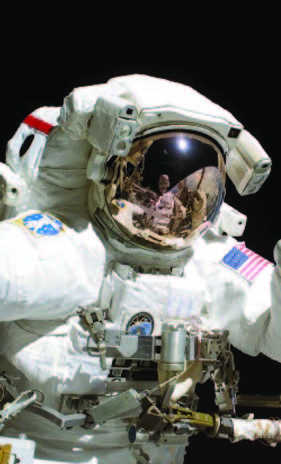
    WASHINGTON (TIP): Researchers at the Massachusetts Institute of Technology (MIT) are developing an active “secondskin” spacesuit for future astronauts that incorporates small, spring-like coils that contract in response to heat.

    These spacesuits will give astronauts the much-needed mobility and flexibility in the space environment. The coils are made from a shape-memory alloy (SMA), a kind of material that “remembers” an engineered shape and, when bent or deformed, can spring back to this shape when heated.

    “With conventional spacesuits, you are essentially in a balloon of gas that is providing you with the necessary one-third of an atmosphere (of pressure,) to keep you alive in the vacuum of space,” said Dava Newman, a professor of aeronautics, astronautics and engineering systems at MIT.

    Such skintight spacesuits were proposed earlier also but the hurdle was how to squeeze in and out of a pressurized suit that’s engineered to be extremely tight. In such a condition, shape-memory alloys may provide a solution. These materials only contract when heated, and can easily be stretched back to a looser shape when cool.

    “These are basically self-closing buckles,” said Bradley Holschuh, a researcher in Newman’s lab, who who conceived the coil design. The group’s designs and active materials may be used for other purposes such as in athletic wear or military uniforms. “We are trying to keep our astronauts alive, safe and mobile but these designs are not just for use in space,” Newman concluded.

  • New smartphone app can tell your state of mind

    New smartphone app can tell your state of mind

    WASHINGTON (TIP): Your smartphone may tell if you are depressed, stressed or lonely, thanks to a first-of-itskind app that automatically tracks users’ mental health, academic performance and behaviour. The StudentLife app, which compares students’ happiness, stress, depression and loneliness to their academic performance, also may be used in the general population —for example, to monitor mental health, trigger intervention and improve productivity in workplace employees. “The StudentLife app is able to continuously make mental health assessment 24/7, opening the way for a new form of assessment,” said Dartmouth College computer science Professor Andrew Campbell, the study’s senior author. “This is a very important and exciting breakthrough,” said Campbell. The researchers built an Android app that monitored readings from smartphone sensors carried by 48 students during a 10-week term to assess their mental health (depression, loneliness, stress), academic performance (grades across all their classes, term GPA and cumulative GPA) and behavioural trends. They used computational method and machine learning algorithms on the phone to assess sensor data and make higher level inferences.

  • Now, digital eye to study their breeding behaviour of vanishing floricans

    Now, digital eye to study their breeding behaviour of vanishing floricans

    (TIP) Madhya Pradesh forest department has taken up digital route to protect critically endangered Lesser Florican birds. It has installed solar powered cameras at Sailana Wildlife Sanctuary to record round the clock movement of the birds for the next four months.

    The first of its kind exercise will help the department to study the breeding behaviour of the bird and prepare a plan for their habitat development. Lesser Floricans are one of four critically endangered bird species in India and one of the 50 rarest birds of the world. Locally known as Likh and Kharmore, they migrate to Madhya Pradesh every year for breeding. Environmentalists the world over are expressing concerns over the continuous decline in the number of the birds.

    The number of the birds migrating to the state too has come down by 26% this season compared to the previous year. Chief conservator of forest (CCF) P C Dubey said that till date, no scientific documentation of breeding behaviour of the birds is done.

    “It will be the first in-camera study of the birds during which a systematic study of their breeding behaviour including egg laying, hatching, duration for which the hatchlings stay here and the last migratory flight of birds etc will be done,” he said. The study will focus on little-known behaviour of the female birds. “It is believed that the male birds fly back early in October while females stay here till November- December.

    They fly back when the hatchlings grow big enough to fly. However, there is no documental proof of this behaviour. Based on the findings of the study, we will chalk out plans including restriction of human movement inside the sanctuary, to protect the habitat,” said Dubey. Ornithologist Ajay Gadikar, who is associated with the study, said two high definition (HD) cameras with zoom and other features have been already installed.

    “The study will offer detailed knowledge about diet of the birds, frequency of their jumps and behaviour of the female birds which is a mystery,” he added.

  • SCIENTISTS CAPTURE THE SOUND OF AN ATOM

    SCIENTISTS CAPTURE THE SOUND OF AN ATOM

    LONDON (TIP): For the first time, scientists have used sound to ‘talk’ to an artificial atom, demonstrating a curious phenomenon in quantum physics that sees sound waves take on the role of light. The interaction between atoms and light is well known and has been studied extensively in the field of quantum optics. However, to achieve the same kind of interaction with sound waves has been a more challenging undertaking.

    The researchers at the Chalmers University of Technology in Sweden have now succeeded in making acoustic waves couple to an artificial atom. “We have opened a new door into the quantum world by talking and listening to atoms,” said Per Delsing, head of the experimental research group. “Our long term goal is to harness quantum physics so that we can benefit from its laws, for example in extremely fast computers. We do this by making electrical circuits which obey quantum laws, that we can control and study,” said Delsing. An artificial atom is an example of such a quantum electrical circuit. Just like a regular atom, it can be charged up with energy which it subsequently emits in the form of a particle.

    This is usually a particle of light, but the atom in the Chalmers experiment is instead designed to both emit and absorb energy in the form of sound. “According to the theory, the sound from the atom is divided into quantum particles,” said Martin Gustafsson, the research article’s first author. “Such a particle is the weakest sound that can be detected,” said Gustafsson. Since sound moves much slower than light, the acoustic atom opens entire new possibilities for taking control over quantum phenomena.

    “Due to the slow speed of sound, we will have time to control the quantum particles while they travel. This is difficult to achieve with light, which moves 100,000 times more quickly,” said Gustafsson. The low speed of sound also implies that it has a short wavelength compared to light. An atom that interacts with light waves is always much smaller than the wavelength. However, compared to the wavelength of sound, the atom can be much larger, which means that its properties can be better controlled, researchers said.

    For example, one can design the atom to couple only to certain acoustic frequencies or make the interaction with the sound extremely strong. The frequency used in the experiment is 4.8GHz, close to the microwave frequencies common in modern wireless networks. In musical terms, this corresponds approximately to about 20 octaves above the highest note on a grand piano.

  • DOUBLE SOLAR STORMS HEADED TO EARTH RAISE DISRUPTION CONCERNS

    DOUBLE SOLAR STORMS HEADED TO EARTH RAISE DISRUPTION CONCERNS

    CAPE CANAVERAL (TIP): A rare double burst of magnetically charged solar storms will hit Earth on Thursday night and Friday, raising concerns that GPS signals, radio communications and power transmissions could be disrupted, officials said. Individually, the storms, known as coronal mass ejections, or CMEs, wouldn’t warrant special warnings, but their unusual close timing and direct path toward Earth spurred the National Oceanic and Atmospheric Administration’s Space Weather Prediction Center to issue an alert.

    The first CME, which burst from a magnetically disturbed region of the sun on Monday night, should reach Earth Thursday night, center director Thomas Berger told reporters on a conference call. The same patch of solar real estate produced a second, more powerful storm about 1.45 pm EDT/1745 GMT on Wednesday. “We don’t expect any unmanageable impacts to national infrastructure from these solar events at this time, but we are watching these events closely,” Berger said. The sun currently is in the peak of its 11-year cycle, though the overall level of activity is far lower than a typical solar max.

    Storms as powerful as the ones now making their way toward Earth typically occur 100 to 200 times during a solar cycle, Berger said. “The unique thing about this event is that we’ve had two in close succession and the CMEs could possibly be interacting on their way to Earth, at the Earth’s orbit or beyond. We just don’t know that yet,” he said. The highly energetic, magnetically charged solar particles could hit Earth’s magnetic field and disrupt some radio communications and degrade GPS signals, NOAA said.

    The storms also have the potential to impact electric field power grids in the northern latitudes, which are more susceptible to geomagnetic disturbances. Power grid operators and the Federal Emergency Management Agency (FEMA) have been notified “just in case,” Berger added. On the plus side, the storms should trigger beautiful auroral displays, visible wherever clear skies prevail along the northern tier of the United States. Aurora are caused by electrically charged solar particles hitting oxygen, nitrogen and other gases high in the atmosphere, creating curtains of light above the planet’s magnetic north and south poles.

  • NOW, POWER YOUR DEVICES WHILE TALKING, CHEWING

    NOW, POWER YOUR DEVICES WHILE TALKING, CHEWING

    TORONTO (TIP): Researchers have developed a chin strap that can generate electricity from jaw movements such as eating, chewing and talking to power a number of small-scale implantable or wearable electronic devices. Jaw movements have proved to be one of the most promising candidates for generating electricity from human body movements, with researchers estimating that an average of around 7 milliwatts of power could be generated from chewing during meals alone.

    To harvest this energy , the study’s researchers, from Sonomax-ETS Industrial Research Chair in In-ear Technologies (CRITIAS) at Ecole de technologie superieure (ETS) in Montreal, Canada, created a chin strap made from piezoelectric fiber composites (PFC). PFC is a type of piezoelectric smart material that consists of integrated electrodes and an adhesive polymer matrix. The material is able to produce an electric charge when it stretches and is subjected to mechanical stress.

    The researchers created an energy-harvesting chin strap made from a single layer of PFC and attached it to a pair of ear muffs using a pair of elastic side straps. The chin strap was fitted snugly to the user, so when the jaw moved, it caused the strap to stretch. To test the performance, the subject was asked to chew gum for 60 seconds whilst wearing the head-mounted device; at the same time the researchers recorded a number of different parameters.

    The maximum amount of power that could be harvested from the jaw movements was around 18 microwatts, but taking into account the optimum set-up for the head-mounted device, the power output was around 10 microwatts. “Given that the average power available from chewing is around 7 milliwatts, we have a long way to go before we perfect the performance of the device,” said co-author of the study Aidin Delnavaz. “For example, 20 PFC layers, with a thickness of 6 mm, would be able to power a 200 microwatts intelligent hearing protector.”

  • Scientists study how fear is processed in brain

    Scientists study how fear is processed in brain

    WASHINGTON (TIP): Scientists have mapped brain activity to illustrate how fear arises when individuals are exposed to threatening images. Researchers from the Center for BrainHealth at The University of Texas at Dallas built on previous animal and human research to identify an electrophysiological marker for threat in the brain. “We are trying to find where thought exists in the mind,” said John Hart, Medical Science Director at the Center for BrainHealth.

    “We know that groups of neurons firing on and off create a frequency and pattern that tell other areas of the brain what to do. By identifying these rhythms, we can correlate them with a cognitive unit such as fear,” he said. Utilising electroencephalography (EEG), Hart’s research team identified theta and beta wave activity that signifies the brain’s reaction to visually threatening images. “We have known for a long time that the brain prioritises threatening information over other cognitive processes,” said Bambi DeLaRosa, lead author of the study. “These findings show us how this happens.

    Theta wave activity starts in the back of the brain, in it’s fear center — the amygdala — and then interacts with brain’s memory center — the hippocampus — before travelling to the frontal lobe where thought processing areas are engaged. “At the same time, beta wave activity indicates that the motor cortex is revving up in case the feet need to move to avoid the perceived threat,” DeLaRosa said. For the study, 26 adults (19 female, 7 male), ages 19-30 were shown 224 randomised images that were either unidentifiably scrambled or real pictures.

    Real pictures were separated into two categories: threatening (weapons, combat, nature or animals) and nonthreatening (pleasant situations, food, nature or animals).

  • STRONG SOLAR STORM HEADING TO EARTH

    STRONG SOLAR STORM HEADING TO EARTH

    WASHINGTON (TIP): A strong solar flare is blasting its way to Earth, but the worst of its power looks like it will barely skim above the planet and not cause many problems. It has been several years since Earth has had a solar storm of this size coming from sunspots smack in the middle of the sun, said Tom Berger, director of the Space Weather Prediction Center in Boulder, Colorado. The flare on the sun barely hits the “extreme” on forecasters’ scale, but with its worst effects missing Earth it is only looking “potentially strong” at most when it arrives at Earth as a solar storm, he said.

    New calculations from satellite data show that the worst of the energetic particles streaming from the sun likely will go north or above Earth this time, Berger said. So while the power grid may see fluctuations because the storm will cause changes in Earth’s magnetic field, it won’t knock power systems off line, Berger said. It may cause slight disturbances in satellites and radio transmissions but nothing major. “We’re not scared of this one,” Berger said. The storm is moving medium fast, about 2.5 million mph (4.02 million kph), meaning the soonest it could arrive is early Friday.

    But it could be later, Berger said. Solar storms occur often, especially during peaks in the solar cycle, and don’t directly harm people. “There’s been a giant magnetic explosion on the sun,” Berger said. “Because it’s pointed right at us, we’ll at least catch some of the cloud” of highly energized and magnetized plasma that can disrupt Earth’s magnetic sphere, which sometimes leads to temporary power grid problems. On the plus side, sun flares expand the colorful northern lights so people farther south can see them. But don’t expect them too far south, Berger said.

  • ALIEN-LIKE GIANT WATERLIVING DINOSAUR UNVEILED

    ALIEN-LIKE GIANT WATERLIVING DINOSAUR UNVEILED

    WASHINGTON (TIP): Picture the fearsome movie creatures of “Jurassic Park” crossed with the shark from “Jaws.” Then super-size to the biggest predator ever to roam Earth. Now add a crocodile snout as big as a person and feet like a duck’s.

    The result gives one some idea of a bizarre dinosaur scientists unveiled. This patchwork of critters, a 50-foot (15-meter) predator, is the only known dinosaur to live much of its life in the water. The beast, called Spinosaurus aegyptiacus, was already known to scientists from a long-ago fossil discovery, but most of those bones were destroyed in Germany during World War II. Now, 70 years later, a new skeleton found in Morocco reveals that the beast was far more aquatic than originally thought.

    Spinosaurus had a long neck, strong clawed forearms, powerful jaws and the dense bones of a penguin. It propelled itself in water with flat feet that were probably webbed, according to a study released on September 11 by the journal Science. The beast sported a spiny sail on its back that was 7 feet (2 meters) tall when it lived 95 million years ago.

    “It’s like working on an extraterrestrial or an alien,” study lead author Nizar Ibrahim of the University of Chicago said, while standing in front of a room-sized reconstruction of the skeleton at the National Geographic Society, which helped fund the research.” “It’s so different than anything else around,” he said. Ibrahim described the creature as “so bizarre it’s going to force dinosaur experts to rethink many things they thought they knew about dinosaurs.” Scientists had thought that all dinosaurs stuck to the land, with occasional brief trips into the water.

    But the new skeleton shows clear evidence of river and lake living: hip bones like a whale’s, dense bones that allowed it to dive for food, and nostrils positioned high on the skull, allowing Spinosaurus to mostly submerge. It could walk and would probably nest on land, but on land it moved more awkwardly than in water, said study coauthor Paul Sereno of the University of Chicago. It lumbered on its two hind feet because its powerful forelegs with sharp curved claws were designed more for killing than walking, he said. Sereno called it “an evolutionary experiment going into the water.”

    The new find is amazing and convincing, showing how wrong scientists have been about this dinosaur and about how diverse dinosaurs can be, said University of Maryland dinosaur expert Thomas Holtz Jr., who wasn’t part of this study. It’s also a creature that once was lost to history and war. German paleontologist Ernst Stromer first discovered Spinosaurus bones in Egypt in 1912. The bones went back to Europe, but in 1944, most were destroyed in the bombing of Munich in World War II. Spinosaurus was lost. But in 2008, Ibrahim was in Morocco on a quest for Spinosaurus.

    It wasn’t going well. He had heard of a local dealer who might know where some bones were, but couldn’t find him. Ibrahim had given up hope and was contemplating returning home while sitting in a cafe. He looked up and spotted the dealer walking by. They went to a Moroccan dig site and found a mostly complete set of bones. Spinosaurus, which grew some 9 feet (3 meters) longer than Tyrannosaurus rex, feasted on aquatic creatures the size of cars in an area that was history’s “most dangerous place,” Ibrahim said. Three giant predators nearly the size of a T. rex roamed on land. Even the sky had giant predators. And in the water 25-foot (8-meter) sharks, giant sawfish and six or seven types of ancient nasty crocodiles lurked.

    Sereno noted that a Spinosaurus did fight a T. rex in the movie “Jurassic Park III,” but it was a land battle and based on the old conception of the dinosaur. In reality, the two didn’t live on the same continent or in the same time period. In the movie, the Spinosaurus won. And Sereno said if the two species had fought in the water, Spinosaurus would have won easily.

  • BACTERIA FOUND IN HONEY BEES STOMACH NEXT BIG ALTERNATIVE TO ANTIBIOTICS

    BACTERIA FOUND IN HONEY BEES STOMACH NEXT BIG ALTERNATIVE TO ANTIBIOTICS

    LONDON (TIP): Grandma was right.Wild honey does work wonders against infections and scientists finally know why. Scientists now say that 13 lactic acid bacteria found in the honey stomach of bees have shown promising results in a series of studies at Lund University in Sweden. The group of bacteria counteracted antibiotic-resistant MRSA in lab experiments. The bacteria, mixed into honey, has healed horses with persistent wounds. They have now suggested that bacteria from bees can be a possible alternative to antibiotics.

    Raw honey has been used against infections for millennia, before honey – as we now know it – was manufactured and sold in stores. Researchers at Lund University in Sweden have identified a unique group of 13 lactic acid bacteria found in fresh honey, from the honey stomach of bees. The bacteria produce a myriad of active antimicrobial compounds.While the effect on human bacteria has only been tested in a lab environment thus far, the lactic acid bacteria have been applied directly to horses with persistent wounds.

    The lactic acid bacterial(LAB) was mixed with honey and applied to 10 horses;where the owners had tried several other methods to no avail. All of the horses’ wounds were healed by the mixture. The researchers believe the secret to the strong results lie in the broad spectrum of active substances involved. “Antibiotics are mostly one active substance, effective against only a narrow spectrum of bacteria. When used alive, these 13 lactic acid bacteria produce the right kind of antimicrobial compounds as needed, depending on the threat.

    It seems to have worked well for millions of years of protecting bees’ health and honey against other harmful microorganisms. However, since store-bought honey doesn’t contain the living lactic acid bacteria, many of its unique properties have been lost in recent times,” explains Tobias Olofsson. The study says “Today, due to overuse of antibiotics and emerging antibiotic-resistant pathogens,we are facing a new era of searching for alternative tools against infectious diseases.

    Chronic wounds infected by pathogens are subjects for intensive research efforts because of the bacteria’s ability to sustain antibiotic treatment and maintain chronic infections”. They added “Less than a decade ago,we discovered a large unexplored bacterial microbiota in symbiosis with honeybees and located in the honey stomach. The novel microbiota is entirely composed of approximately 40 lactic acid bacterial strains with 13 taxonomically well-defined Lactobacillus species. Certain species within LAB may produce bioactive compounds such as organic acids, free fatty acids, ethanol, benzoate, enzymes, hydrogen peroxide, antimicrobial peptides and antibiotics.

  • N waste-eating bacteria discovered

    N waste-eating bacteria discovered

    LONDON (TIP): Tiny single-cell organisms discovered living underground could help dispose off hazardous nuclear waste, scientists say. Although bacteria with wasteeating properties have been discovered in relatively pristine soils before, this is the first time that microbes that can survive in the very harsh conditions expected in radioactive waste disposal sites have been found. The disposal of nuclear waste is very challenging, with very large volumes destined for burial deep underground.

    The largest volume of radioactive waste, termed ‘intermediate level’, will be encased in concrete prior to disposal into underground vaults, researchers said. When ground waters eventually reach these waste materials, they will react with the cement and become highly alkaline. This change drives a series of chemical reactions, triggering the breakdown of the various ‘cellulose’ based materials that are present in these complex wastes.

    One such product linked to these activities, isosaccharinic acid (ISA), causes much concern as it can react with a wide range of radionuclides – unstable and toxic elements that are formed during the production of nuclear power and make up the radioactive component of nuclear waste.

  • SCIENTISTS DEVELOP BATTERYLESS CARDIAC PACEMAKER

    SCIENTISTS DEVELOP BATTERYLESS CARDIAC PACEMAKER

    LONDON (TIP): Researchers have developed a new batteryless cardiac pacemaker which is based on an automatic wristwatch and is powered by heart motion. “Batteries are a limiting factor in today’s medical implants. Once they reach a critically low energy level, physicians see themselves forced to replace a correctly functioning medical device in a surgical intervention,” said Adrian Zurbuchen from the University of Bern, Switzerland. “This is an unpleasant scenario which increases costs and the risk of complications for patients,” Zurbuchen said. He has now come up with a way to power a cardiac pacemaker with an alternative energy source – the heart motion.

    Four years ago Professor Rolf Vogel, a cardiologist and engineer at the University of Bern, had the idea of using an automatic wristwatch mechanism to harvest the energy of heart motion. “The heart seems to be a very promising energy source because its contractions are repetitive and present for 24 hours a day, 7 days a week,” Zurbuchen said.

    “Furthermore, the automatic clockwork, invented in 1777, has a good reputation as a reliable technology to scavenge energy from motion.” The researchers’ first prototype is based on a commercially available automatic wristwatch. All unnecessary pa8rts were removed to reduce weight and size. They developed a custommade ho8using with eyelets that allows suturing the device directly onto the myocardium. The prototype works the same way it would on a person’s wrist.

    When it is exposed to an external acceleration, the eccentric mass of the clockwork starts rotating. This progressively winds a mechanical spring. After the spring is fully charged it unwinds and thereby spins an electrical micro-generator. To test the prototype, the researchers developed an electronic circuit to transform and store the signal into a small buffer capacity. They then connected the system to a custom-made cardiac pacemaker.

    The system worked in three steps. First, the harvesting prototype acquired energy from the heart. Second, the energy was temporarily stored in the buffer capacity. And finally, the buffered energy was used by the pacemaker to apply minute st8imuli to the heart. The researchers successfully tested the system in in vivo experiments with domestic pigs. The mechanism allowed them for the first time to perform batteryless overdrive-pacing at 130 beats per minute.

    “We have shown that it is possible to pace the heart using the power of its own motionThe next step in our prototype is to integrate both the electronic circuit for energy storage and the custom-made pacemaker directly into the harvesting device. This will eliminate the need for leads,” Zurbuchen said.

  • Modern airships brace for space odyssey

    Modern airships brace for space odyssey

    Airships are dusty relics of aviation history. Lighter-thanair vehicles conjure images of the Hindenburg, in its glory and destruction, and the Goodyear Blimp, a floating billboard that barely resembles its powerful predecessors. But now engineers are designing sleek new airships that could streak past layers of cloud and chart a course through the thin, icy air of the stratosphere, 65,000 feet above the ground — twice the usual altitude of a jetliner.

    Steered by scientists below, these aerodynamic balloons might be equipped with onboard telescopes that peer into distant galaxies or gather oceanic data along a coastline. “Stratospheric airships could give us spacelike conditions from a spacelike platform, but without the spacelike costs,” said Sarah Miller, an astrophysicist at the University of California, Irvine.

    High-altitude airships are still in their relative infancy. None has ever flown at 65,000 feet for longer than eight hours. But a recent study from the Keck Institute for Space Studies at Caltech suggests that a more capable airship may not be far-off. And NASA is expected to sponsor a contest to build better airships, breathing new life — and funding — into the idea. These airships would not be the first vehicles to venture into the stratosphere, of course.

    Rockets and satellites routinely whiz past 65,000 feet into earth orbit and beyond, and weather balloons already bob about in the upper reaches of the atmosphere. “Balloons have been around for 200 years, so everybody thinks, well, gosh, it’s such old technology, how hard can it be?” said Steve Smith, an aerospace engineer who in 2005 designed one of the first successful stratospheric airships. “That’s the farthest thing from the truth.” Unlike free-flying weather balloons, a blimp can be actively maneuvered, providing the control necessary to carry out advanced missions with expensive equipment. But that maneuverability is compromised the moment it begins to lose its aerodynamic shape.

    For that reason, airship design is a balancing act. During the day, the helium inside the balloon warms and expands; at night, it contracts as the temperature drops. “That’s the real technical challenge,” Smith said. “You want enough gas in there so that it won’t collapse at night, and strong materials so it won’t burst during the day.” This problem is compounded in a stratospheric airship, which must maintain its aerodynamic shape as it ascends through rapid temperature and pressure changes between layers of the atmosphere.

    For Mr. Smith’s first successful stratospheric airship, the Hi- Sentinel 20, he chose a milky white polyester fabric that was tear-resistant and highly flexible. The United States Army commissioned test flights of the Hi-Sentinel 20 to determine whether blimps could hoist communications satellites above enemy territory. The airship took off from New Mexico in 2005 and remained aloft only about eight hours, but it proved that an unmanned blimp could be steered through the stratosphere by a team of engineers on the ground.

    Other test ships — the Hi-Sentinel 50 and the Hi-Sentinel 80 — were also successful. But the Army’s interest waned with the end of the Iraq war, leaving Mr. Smith and his team short on funds. In search of a new market, he approached scientists with his promise of an inexpensive aircraft that could carry remote-controlled telescopes above the clouds.

  • NASA TESTS 3D-PRINTED ROCKET ENGINE PARTS

    NASA TESTS 3D-PRINTED ROCKET ENGINE PARTS

    WASHINGTON (TIP): Nasa has successfully tested the most complex rocket engine parts ever designed by the agency and created by 3D printing, pushing the limits of the technology. The advance at Nasa’s Marshall Space Flight Centre in Huntsville, Alabama shows just how the 3D printing technology could potentially revolutionize how the agency makes use of additive manufacturing in rocket design.

    Nasa engineers pushed the limits of the technology by designing a rocket engine injector — a complex part that sends propellant into the engine — with design features that took advantage of 3D printing. To make the parts, the design was entered into the 3D printer’s computer. The printer then built each part by layering metal powder and laser-fusing it together, a process known as selective laser melting.

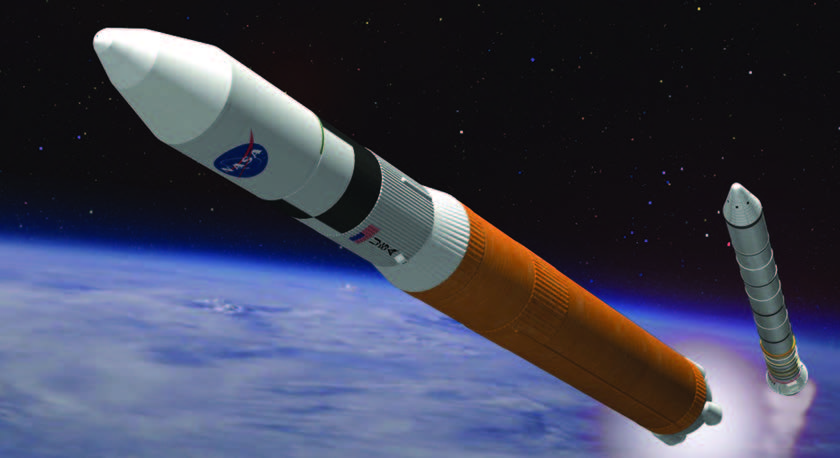
    The additive manufacturing process allowed rocket designers to create an injector with 40 individual spray elements, all printed as a single component rather than manufactured individually. The part was similar in size to injectors that power small rocket engines and similar in design to injectors for large engines, such as the RS-25 engine that will power Nasa’s Space Launch System (SLS) rocket, the heavy-lift, exploration class rocket under development to take humans beyond Earth’s orbit and to Mars.

    “We wanted to go a step beyond just testing an injector and demonstrate how 3D printing could revolutionise rocket designs for increased system performance,” said Chris Singer, director of Marshall’s Engineering Directorate. “The parts performed exceptionally well during the tests,” said Singer. Using traditional manufacturing methods, 163 individual parts would be made and then assembled.

    But with 3D printing technology, only two parts were required, saving time and money and allowing engineers to build parts that enhance rocket engine performance and are less prone to failure. Two rocket injectors were tested for five seconds each, producing 20,000 pounds of thrust. Designers created complex geometric flow patterns that allowed oxygen and hydrogen to swirl together before combusting at 1,400 pounds per square inch and temperatures up to 3,315 degrees celsius. Additive manufacturing not only helped engineers build and test a rocket injector with a unique design, but it also enabled them to test faster and smarter, Nasa said.

  • Japanese researchers develop 30-minute Ebola test

    Japanese researchers develop 30-minute Ebola test

    TOKYO (TIP): Japanese researchers said on Tuesday they had developed a new method to detect the presence of the Ebola virus in 30 minutes, with technology that could allow doctors to quickly diagnose infection. Professor Jiro Yasuda and his team at Nagasaki University say their process is also cheaper than the system currently in use in west Africa where the virus has already killed more than 1,500 people.

    “The new method is simpler than the current one and can be used in countries where expensive testing equipment is not available,” Yasuda said. “We have yet to receive any questions or requests, but we are pleased to offer the system, which is ready to go,” he said. Yasuda said the team had developed what he called a “primer”, which amplifies only those genes specific to the Ebola virus found in a blood sample or other bodily fluid.

    Using existing techniques, ribonucleic acid (RNA), biological molecules used in the coding of genes, is extracted from any viruses present in a blood sample. This is then used to synthesise the viral DNA, which can be mixed with the primers and then heated to 60-65 degrees Celsius (140-149 Fahrenheit). If Ebola is present, DNA specific to the virus is amplified in 30 minutes due to the action of the primers. The byproducts from the process cause the liquid to become cloudy, providing visual confirmation, Yasuda said.

  • IN A FIRST, SCIENTISTS GROW FULLY FUNCTIONAL ORGAN FROM SCRATCH INSIDE A LIVING ANIMAL

    IN A FIRST, SCIENTISTS GROW FULLY FUNCTIONAL ORGAN FROM SCRATCH INSIDE A LIVING ANIMAL

    LONDON (TIP): Scientists have for the first time grown a fully functional organ from scratch inside a living animal by transplanting cells that were originally created in a laboratory. The advance could in future aid the development of ‘lab-grown’ replacement organs. Scientists created a working thymus, a vital immune system – “nerve centre” located near the heart, with connective tissue cells from a mouse embryo which were converted into a completely different cell strain by flipping a genetic “switch” in their DNA.

    The resulting cells grew spontaneously into the whole organ when injected into the mouse with other similar cells. Researchers from the MRC Centre for Regenerative Medicine at the University of Edinburgh, took cells called fibroblasts from a mouse embryo and converted them directly into a completely unrelated type of cell – specialised thymus cells – using a technique called ‘reprogramming’.

    When mixed with other thymus cell types and transplanted into mice, these cells formed a replacement organ that had the same structure, complexity and function as a healthy native adult thymus. The reprogrammed cells were also capable of producing T cells – a type of white blood cell important for fighting infection – in the lab. The researchers hope that with further refinement their lab-made cells could form the basis of a readily available thymus transplant treatment for people with a weakened immune system. They may also enable the production of patient-matched T cells.

    The thymus, located near the heart, is a vital organ of the immune system. It produces T cells, which guard against disease by scanning the body for malfunctioning cells and infections. When they detect a problem, they mount a coordinated immune response that tries to eliminate harmful cells, such as cancer, or pathogens like bacteria and viruses. People without a fully functioning thymus can’t make enough T cells and as a result are very vulnerable to infections. This can be a particular problem for some patients who need a bone marrow transplant (for example to treat leukaemia), as a functioning thymus is needed to rebuild the immune system once the transplant has been received.

    The problem can also affect children; around one in 4,000 babies born each year in the UK have a malfunctioning or completely absent thymus. Thymus disorders can sometimes be treated with infusions of extra immune cells, or transplantation of a thymus organ soon after birth, but both are limited by a lack of donors and problems matching tissue to the recipient. Being able to create a complete transplantable thymus from cells in a lab would be a huge step forward in treating such conditions.

    And while several studies have shown it is possible to produce collections of distinct cell types in a dish, such as heart or liver cells, scientists haven’t yet been able to grow a fully intact organ from cells created outside the body. Professor Clare Blackburn from the MRC Centre for Regenerative Medicine at the University of Edinburgh, who led the research, said “The ability to grow replacement organs from cells in the lab is one of the ‘holy grails’ in regenerative medicine. But the size and complexity of lab-grown organs has so far been limited. By directly reprogramming cells we’ve managed to produce an artificial cell type that, when transplanted, can form a fully organised and functional organ.

  • NEW IMPLANT MAY MAKE READING GLASSES A THING OF THE PAST

    NEW IMPLANT MAY MAKE READING GLASSES A THING OF THE PAST

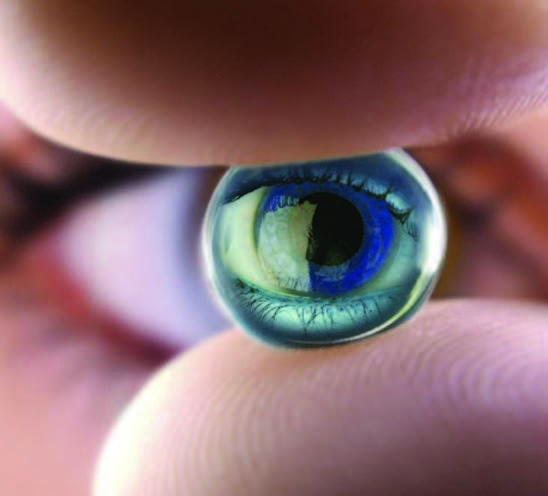
    LONDON (TIP): Scientists have developed a tiny implant, no bigger than a pinhead, which sits inside the cornea to reverse vision problems in ageing eyes. As some people age, their ability to switch focus between near and distant objects diminishes, a condition known as presbyopia. It can skew the perception of depth and makes reading in poor light impossible.

    Now, scientists have developed a tiny implant that sits inside the cornea and slightly increases its curvature, to allow the eye to focus again. Known as a Raindrop corneal inlay, the technique was developed by scientists at ReVision Optics in California but the first operations have now been carried out at a clinic in Leamington Spa, Warwickshire, ‘The Telegraph’ reported. The inlay is called Raindrop because it is the shape of a droplet and is made of a substance called hydrogel which is also used in contact lenses.

    Hydrogel is 80 per cent water which makes it more compatible with the eye than other corneal implants. Until now, the only long-term treatment for presbyopia has been laser surgery, but sufferers are still likely to need reading glasses when the light is poor. The results are often not permanent because lasers remove part of the cornea to reshape it, and so the problem can return as the lens flattens out again. The new operation – which costs 2,495 pounds – is quicker, taking just 10 minutes, whereas laser surgery can take an hour.

  • Nasa satellite to help farmers combat drought

    Nasa satellite to help farmers combat drought

    WASHINGTON (TIP): Nasa scientists, including one of Indian-origin, have developed a new satellite than can predict the severity of droughts worldwide and help farmers maximize crop yield. Currently, there is no ground- or satellite-based global network monitoring soil moisture at a local level.

    Farmers, scientists and resource managers can place sensors in the ground, but these only provide spot measurements and are rare across some critical agricultural areas in Africa, Asia and Latin America. Nasa’s Soil Moisture Active Passive (SMAP) satellite mission, scheduled to launch later, will collect the kind of local data agricultural and water managers worldwide need. SMAP uses two microwave instruments to monitor the top 5 centimetres of soil on Earth’s surface.

    Together, the instruments create soil moisture estimates with a resolution of about 9 kilometres mapping the entire globe every two or three days. Although this resolution cannot show how soil moisture might vary within a single field, it will give the most detailed maps yet made. “Agricultural drought occurs when the demand for water for crop production exceeds available water supplies from precipitation, surface water and sustainable withdrawals from groundwater,” said Forrest Melton, a research scientist in the Ecological Forecasting Lab at Nasa Ames Research Centre in Moffett Field, California.

    “Based on snowpack and precipitation data in California, by March we had a pretty good idea that by summer we’d be in a severe agricultural drought,” Melton added. “But irrigation in parts of India, the Middle East and other regions relies heavily on the pumping of groundwater during some or all of the year,” Melton said. Underground water resources are hard to estimate, so farmers who rely on groundwater have fewer indicators of approaching shortfalls than those whose irrigation comes partially from rain or snowmelt. For these parts of the world where farmers have little data available to help them understand current conditions, SMAP’s measurements could fill a significant void. Some farmers handle drought by changing irrigation patterns. Others delay planting or harvesting to give plants their best shot at success.

  • INDIAN-ORIGIN SCIENTIST CREATES MECHANICAL BRAIN TO TEACH ROBOTS HOW TO LIVE ALONGSIDE HUMANS

    INDIAN-ORIGIN SCIENTIST CREATES MECHANICAL BRAIN TO TEACH ROBOTS HOW TO LIVE ALONGSIDE HUMANS

    LONDON (TIP): An Indian-originscientist has created a mechanical brain that will teach robots how to live and perform alongside humans. Robo Brain – a large-scale computational system that learns from publicly available Internet resources – is currently downloading and processing about 1 billion images, 120,000 YouTube videos, and 100 million how-to documents and appliance manuals. The information is being translated and stored in a robot-friendly format that robots will be able to draw on when they need it.

    Ashutosh Saxena, assistant professor of computer science at Cornell University along with colleagues at Cornell, Stanford and Brown universities and the University of California, Berkeley say Robo Brain will process images to pick out the objects in them and by connecting images and video with text, it will learn to recognize objects and how they are used, along with human language and behavior. The system employs what computer scientists call structured deep learning, where information is stored in many levels of abstraction.

    A robot’s computer brain stores what it has learned in a form mathematicians call a Markov model. The nodes could represent objects, actions or parts of an image, and each one is assigned a probability – how much you can vary it and still be correct. In searching for knowledge, a robot’s brain makes its own chain and looks for one in the knowledge base that matches within those limits. “The Robo Brain will look like a gigantic, branching graph with abilities for multi-dimensional queries,” said Aditya Jami, a visiting researcher at Cornell, who designed the large-scale database for the brain. Perhaps something that looks like a chart of relationships between Facebook friends, but more on the scale of the Milky Way Galaxy.

    Like a human learner, Robo Brain will have teachers, thanks to crowdsourcing. The Robo Brain website will display things the brain has learned, and visitors will be able to make additions and corrections. They say that to serve as helpers in our homes, offices and factories, robots will need to understand how the world works and how the humans around them behave. Robotics researchers have been teaching them these things one at a time: How to find your keys, pour a drink, put away dishes, and when not to interrupt two people having a conversation.

    This will all come in one package with Robo Brain. “Our laptops and cell phones have access to all the information we want. If a robot encounters a situation it hasn’t seen before it can query Robo Brain in the cloud,” said Saxena. He adds that if a robot sees a coffee mug, it can learn from Robo Brain not only that it’s a coffee mug, but also that liquids can be poured into or out of it, that it can be grasped by the handle and that it must be carried upright when it is full, as opposed to when it is being carried from the dishwasher to the cupboard.

  • MARTIAN STRUCTURE REVEALS SIGNS OF LIFE ON RED PLANET

    MARTIAN STRUCTURE REVEALS SIGNS OF LIFE ON RED PLANET

    WASHINGTON (TIP): A new mineral-rich structure discovered from a Martian meteorite has led scientists to believe that there may be niche environments on Mars subsurface that support life. The ovoid structure discovered in the Nakhla Martian meteorite is made of nanocrystalline iron-rich clay and contains a variety of minerals.

    It shows evidence of undergoing a past shock event from impact, with resulting melting of the permafrost and mixing of surface and subsurface fluids, researchers said. “The findings illustrate the importance of correlating different types of datasets when attempting to discern whether something in rock is a biosignature indicative of life,” said Sherry L. Cady, editor-in-chief of the journal Astrobiology and chief scientist at the Pacific Northwest National Laboratory in Washington, DC.

    To reach this hypothesis, Elias Chatzitheodoridis from National Technical University of Athens, Greece and Sarah Haigh and Ian Lyon from University of Manchester used modern tools like electron microscopy and spectroscopy to analyse the ovoid structure. Based on the results, they presented the competing hypotheses for how this ovoid was formed, leading to a possible hypothesis that the Red Planet’s subsurface may support support life. “The research strategy revealed a significant amount of information about the potential for life to inhabit the subsurface of Mars,” Cady added.

  • NOW, BEAM YOUR PICTURES TO MARS

    NOW, BEAM YOUR PICTURES TO MARS

    WASHINGTON (TIP): A US-based space-funding company has launched a new project that will allow you to send messages and pictures to Mars. The company Uwingu in Boulder, Colorado has launched its ‘Beam Me to Mars’ project, inviting people to contribute, for a fee, to a ‘digital shout-out’ that will send messages from Earth to the Red planet. Uwingu and its transmission partner, communications provider Universal Space Network, will use radio telescopes to beam the messages on November 28 at the rate of 1 million bits per second.

    The transmission, travelling at the speed of light, will reach the Red planet on that day in just 15 minutes, company representatives said. For comparison, it took the first successful Mars mission, Nasa’s Mariner 4, launched on November 28, 1964 more than seven months to get to the Red planet. ‘Beam Me to Mars’ celebrates Mariner 4’s landmark effort in a new and original way, the company said. The messages won’t be read or recorded by anyone on Mars but they’ll be archived here on Earth, and participants will receive a commemorative certificate. “We want it to inspire people,” said Uwingu CEO Alan Stern, a planetary scientist and former Nasa science chief.

    “There has never been an opportunity before for people of Earth to shout out across the solar system their hopes and wishes for space exploration, for the future of mankind – for any of that,” Stern told Space.com. You can beam your name — or someone else’s — to the Red Planet for $4.95. For $9.95, you can contribute a name and a 100-character message, while $19.95 gets you a 1,000-character note. You can also shell out $99 to send a name, a long message and an image of your choice.

  • ‘See-through’ solar panels to provide clear view

    ‘See-through’ solar panels to provide clear view

    WASHINGTON (TIP): Researchers have created new “transparent” solar panels that can create solar energy while also letting people to see-through them. The device has been called transparent luminescent solar concentrator, which could be used on buildings, cell phones, windows and any other device that has a clear surface. The solar harvesting system uses small organic molecules developed by Richard Lunt of MSU’s College of Engineering, and his team to absorb specific non-visible wavelengths of sunlight.

    One of the benefits of this new development would be its flexibility. While the technology is at an early stage, it has the potential to be scaled to commercial or industrial applications with an affordable cost. Lunt said more work was needed in order to improve its energy-producing efficiency, as currently it could produce solar conversion efficiency close to 1 percent, but noted they aim to reach efficiencies beyond 5 percent when fully optimized. The best colored LSC has an efficiency of around 7 percent. The research is published in the journal Advanced Optical Materials.

  • NASA GETS RARE GLIMPSE AT BLACK HOLE

    NASA GETS RARE GLIMPSE AT BLACK HOLE

    Scientists have caught a better-than-ever view of the way that black holes can drag space and time around with them as they spin, a finding that could lead to new understanding of Einstein’s theory of relativity. Nasa’s Nuclear Spectroscopic Telescope Array (NuSTAR) captured the effect when a compact source of X-rays, known as the corona, moved towards the black hole and was pulled into it.

    That blurred and stretched the X-rays, a phenomenon that is rarely captured and has never been studied in such detail before. Some of the light that falls into supermassive black holes is never seen again, but other high-energy light comes from the corona and a disk of superheated material that surrounds it. Scientists don’t know the shape and temperature of coronas — though artists have produced sketches of how the formations could look — but know that they contain particles that move close to the speed of light.

    The light shining from the corona lit the part of the black hole that scientists were studying, which the agency described as almost as if a torch had been shone on the exact place they were looking at. The black hole involved is known as Markarian 335, and is about 324 million light-years from Earth. The mass of around 10 million of our suns is packed into a space only 30 times as big, and the spinning black hole pulled space and time around with it.

    Studying the blurring could help scientists to better understand black hole coronas, which until now have been mysterious. It might also help demonstrate some of the effects described in Einstein’s theory of relativity, because of the particles’ speed. “NuSTAR’s unprecedented capability for observing this and similar events allows us to study the most extreme light-bending effects of general relativity,” said Fiona Harrison, who is NuSTAR principal investigator and based at the California Institute of Technology.

  • DRUG FOR EBOLA-LIKE VIRUS PROMISING IN ILL MONKEYS

    DRUG FOR EBOLA-LIKE VIRUS PROMISING IN ILL MONKEYS

    WASHINGTON (TIP): Researchers in Texas are reporting that an experimental drug saved monkeys from a virus closely related to Ebola even after symptoms began. The drug targets a strain of Marburg virus that is even more lethal than the Ebola ravaging West Africa. Both viruses take time to multiply in the body before symptoms appear, and few studies have explored how late treatment might be effective. Researchers at the University of Texas Medical Branch at Galveston found that treated monkeys survived even if given the drug three days after infection, when symptoms had begun. Although Wednesday’s study is very small, the work is generating interest because a drug that targets Ebola the same way is under development by a Canadian company, Tekmira Pharmaceuticals Corp.

  • New vaccine offers protection against tuberculosis, leprosy

    New vaccine offers protection against tuberculosis, leprosy

    WASHINGTON (TIP): In a breakthrough, US researchers have found that an improved tuberculosis vaccine can offer strong protection against leprosy. “This is the first study demonstrating that an improved vaccine against tuberculosis also offers cross-protection against Mycobacterium leprae, the causative agent of leprosy,” said Marcus A. Horwitz, a professor of medicine and microbiology, immunology and molecular genetics from University of California Los Angeles. That means that this vaccine has promise for better protecting against both major diseases at the same time. “It also demonstrates that boosting a recombinant BCG vaccine further improves cross-protection against leprosy,” Horwitz added.