Tag: Science & Technology

  • JAPAN PLANS GIANT GUNDAM ROBOT

    JAPAN PLANS GIANT GUNDAM ROBOT

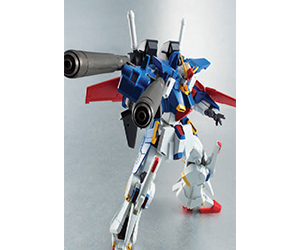
    TOKYO (TIP): A team of Japanese animators and engineers unveiled plans to build a moving 18-metre tall Gundam robot, in a nod to millions of science fiction fans. The “Mobile Suit Gundam” anime series first aired in Japan in 1979, and spin-offs featuring robots locked in intergalactic battles have won legions of enthusiastic fans in Asia, Europe and elsewhere. In 2009, the 30th anniversary of the show saw an 18-metre-tall Gundam statue erected in a Tokyo park.

    “When I created Gundam 35 years ago, I used my imagination freely because it wasn’t real,” Yoshiyuki Tomino told reporters in Tokyo. “That is what creativity is for – when you dream of something. Four decades later, Gundam is growing into something new.” Now, the plan is to give a new giant Gundam some moves, and organizers are calling on the public for ideas about how to make it happen. Plausible suggestions would be used in constructing the robot by 2019, the series’ 40th anniversary and a year before Tokyo hosts the Olympic Games.

  • Voyager 1 reports ‘singing’ space from 19 billion kms away

    Voyager 1 reports ‘singing’ space from 19 billion kms away

    NEW DELHI (TIP): Voyager 1, the spacecraft that is now over 19 billion kilometers from the Earth, has reported a sudden burst of tinkling bells from around it. Travelling in a region where no manmade spacecraft has ever been before, the instruments aboard Voyager 1 registered this ‘singing’ in the otherwise silent space around it and informed mission control back at Earth. NASA scientists have figured out that this is what happened: the Sun goes through periods of increased activity, where it explosively ejects material from its surface, flinging it outward.

    These events, called coronal mass ejections, generate shock, or pressure, waves. Three such waves have reached Voyager 1 since it entered interstellar space in 2012. “Normally, interstellar space is like a quiet lake,” said Ed Stone of the California Institute of Technology in Pasadena, California, the mission’s project scientist since 1972. “But when our sun has a burst, it sends a shock wave outward that reaches Voyager about a year later. The wave causes the plasma surrounding the spacecraft to sing.”

    Data from this newest tsunami wave generated by our sun confirm that Voyager is in interstellar space – a region between the stars filled with a thin soup of charged particles, also known as plasma. The mission has not left the solar system – it has yet to reach a final halo of comets surrounding our sun – but it broke through the wind-blown bubble, or heliosphere, encasing our sun. Cosmic rays are energetic charged particles that come from nearby stars in the Milky Way galaxy.

    The sun’s shock waves push these particles around like buoys in a tsunami. Data from the cosmic ray instrument tell researchers that a shock wave from the sun has hit. Meanwhile, another instrument on Voyager registers the shock waves, too. The plasma wave instrument can detect oscillations of the plasma electrons. “The tsunami wave rings the plasma like a bell,” said Stone. “While the plasma wave instrument lets us measure the frequency of this ringing, the cosmic ray instrument reveals what struck the bell – the shock wave from the sun.” Voyager 1 and its twin, Voyager 2, were launched 16 days apart in 1977.

    Both spacecraft flew by Jupiter and Saturn. Voyager 2 also flew by Uranus and Neptune. Voyager 2, launched before Voyager 1, is the longest continuously operated spacecraft and is expected to enter interstellar space in a few years.

  • Fossil of world’s biggest flying bird found

    Fossil of world’s biggest flying bird found

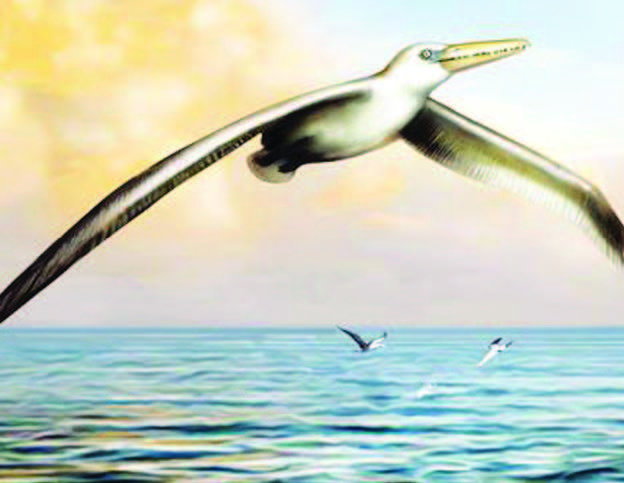
    WASHINGTON (TIP): In a groundbreaking discovery, scientists have identified the fossilised remains of an extinct giant bird that could be the world’s biggest such. Named “Pelagornis sandersi,” the bird lived 25 to 28 million years ago after the dinosaurs were wiped out but long before the first humans arrived. The creature was an extremely efficient glider, with long slender wings that helped it stay aloft despite its enormous size. “The specimen was so big they had to dig it out with a backhoe.

    The upper wing bone alone was longer than my arm,” said author Dan Ksepka of the National Evolutionary Synthesis Center in Durham, North Carolina. The new fossil was first unearthed in 1983 near Charleston, South Carolina, when construction workers began excavations for a new terminal at the Charleston International Airport. With an estimated 20-24-foot wingspan, the creature surpassed size estimates based on wing bones from the previous record holder – a long-extinct bird named “Argentavis magnificens”.

    It was twice as big as the Royal Albatross – the largest flying bird today. P sandersi was probably too big to take off simply by flapping its wings and launching itself into the air from a standstill. It may have gotten off the ground by running downhill into a headwind or taking advantage of air gusts to get aloft, much like a hang glider. Once it was airborne, the bird’s long, slender wings made it an incredibly efficient glider. “By riding on air currents that rise up from the ocean’s surface, P sandersi was able to soar for miles over the open ocean without flapping its wings, occasionally swooping down to the water to feed on soft-bodied prey like squid and eels,” researchers noted

  • Higher storage batteries developed

    Higher storage batteries developed

    WASHINGTON (TIP): Researchers have developed new molten air rechargeable batteries for electric vehicles which have a significantly higher storage capacity than lithium batteries. While electric vehicles offer many advantages, at least one barrier stands in the way: “range anxiety.” Researchers at George Washington University, led by Stuart Licht, have developed what they’re calling “molten air battery.”

    These new rechargeable batteries, which use molten electrolytes, oxygen from air, and special “multiple electron” storage electrodes, have the highest intrinsic electric energy storage capacities of any other batteries to date. Their energy density, durability and cost effectiveness give them the potential to replace conventional electric car batteries. Molten air batteries made with iron, carbon or vanadium boride have 0 to 50 times the storage capacity of a lithium-ion battery.

  • MUSCLE-DRIVEN ‘BIO BOTS’ TO WALK AS YOU WISH

    MUSCLE-DRIVEN ‘BIO BOTS’ TO WALK AS YOU WISH

    NEW YORK (TIP): Imagine walking robots powered by muscle cells and controlled with electrical pulses that can give them an unprecedented command over their function. Engineers at University of Illinois at Urbana-Champaign have demonstrated a class of “bio-bots” that are powered by a strip of skeletal muscle cells that can be triggered by an electric pulse.

    “We are trying to integrate the principles of engineering with biology in a way that can be used to design and develop biological machines and systems for environmental and medical applications,” explained Rashid Bashir, head of bioengineering at University of Illinois.

    Skeletal muscles cells are very attractive because you can pace them using external signals, Bashir added. The design is inspired by the muscle-tendon-bone complex found in nature. There is a backbone of 3D printed hydrogel, strong enough to give the bio-bot structure but flexible enough to bend like a joint. Two posts serve to anchor a strip of muscle to the backbone, like tendons attach muscle to bone, but the posts also act as feet for the bio-bot.

    A bot’s speed can be controlled by adjusting the frequency of the electric pulses. A higher frequency causes the muscle to contract faster, thus speeding up the bio-bot’s progress. “The ‘bio-bots’ could eventually evolve into a generation of biological machines that could aid in drug delivery, surgical robotics, ‘smart’ implants, or mobile environmental analyzers, among countless other applications,” said Caroline Cvetkovic, a graduate student and co-first author of the paper. The group published its work in the online edition of Proceedings of the National Academy of Science.

  • NASA TESTS ‘FLYING SAUCER’ FOR FUTURE MARS MISSIONS

    NASA TESTS ‘FLYING SAUCER’ FOR FUTURE MARS MISSIONS

    LONDON (TIP): Nasa’s experimental flying saucer, which was being used to test technologies for future Mars landings, hurtled down and crashed into the Pacific Ocean off Kauai, Hawaii, after its parachute failed to deploy. Nasa called the Low-Density Supersonic Decelerator’s (LDSD) maiden flight successful but cheers rapidly died down as the gigantic chute designed to slow its fall emerged tangled.

    Nasa officials declared it “a good test of technology” that will one day be used to deliver heavy spacecraft and eventually astronauts to Mars. “What we just saw was a really good test,” said Nasa engineer Dan Coatta, who is with the Jet Propulsion Laboratory.

    This test was the first of three planned for the LDSD project developed to evaluate new landing technologies for future Mars missions. While this initial test was designed to determine the flying ability of the vehicle, it also deployed two new landing technologies. Those landing technologies will be officially tested in the next two flights involving clones of the saucer-shaped vehicle. Future robotic missions to Mars and eventual human exploration of the Red Planet will require that massive payloads bigger than the Curiosity rover to be delivered to the surface.

    Nasa, therefore, is developing new large, sturdy, and lightweight systems to deliver next-generation rovers and landers to Mars. These new technologies would be able to slow larger and heavier landers from the supersonic speeds at Mars atmospheric entry to subsonic ground-approach necessary for a safe landing.The LDSD design borrows from the technique used by the Hawaiian pufferfish-the ‘O’opu Hue — to increase its size without adding mass by rapid inflation.

    These systems called low density supersonic decelerators aim to solve the complicated problem of slowing Martian entry vehicles down enough to safely deliver large payloads to the Martian surface without bringing along massive amounts of extra rocket propellant or carrying a large and heavy atmospheric entry shield. Landing on Mars is not like landing on Earth which has a dense atmosphere or on the moon which has no atmosphere.

    Mars is somewhere in-between with too much atmosphere to allow rockets alone to land heavy vehicles as is done on the moon but too little atmosphere to land vehicles from space purely with friction and parachutes as is done on Earth. Parachutes for Mars surface-bound craft must be enormous because the atmosphere is too thin to fill a parachute like those used on Earth.

    Even with large parachutes, powerful retro rockets or rugged airbags have been required to complete the landing. These are some of the factors that make delivering large payloads to the surface of Mars extremely difficult.During Saturday’s trial, after taking off from the Pacific Missile Range Facility on Kauai, the balloon boosted the LDSD over the Pacific. Its rocket motor then ignited, carrying it to a height of 55km. After two and a half hours of ascent, when the balloon reached a height of 120,000 feet, it detached the saucer, which fired its engine and rose to 180,000ft, traveling at 3.8 times the speed of sound.

  • NASA GETS NEW EYE IN SKY TO TRACK CARBON POLLUTION

    NASA GETS NEW EYE IN SKY TO TRACK CARBON POLLUTION

    MUMBAI (TIP): In the first-ever mission of its kind which will make 24 measurements each second, Nasa on July 1 launched a flight dedicated to studying atmospheric carbon dioxide, the leading human-produced gas driving changes in the earth’s climate. It will allow scientists to make daily detailed measurements of carbon dioxide at a global level amounting to nearly 100,000 measurements of the gas every day.

    To carry out the scientific study, the spacecraft will be positioned 438 miles above earth and the first science observations are expected to begin in 45 days after launch. As the Delta 11 rocket carrying the spacecraft designated as OCO-2 (Orbiting Carbon Observatory) lifted off at 3.30 p.m. (IST) at the Vandenburg Air Base in California, the launch commentator at the mission control centre declared: “OCO-2 will track a greenhouse gas driving changes in the earth’s climate.”

    There was just a 30-second launch opportunity on Tuesday afternoon. Nasa explained that the timing had to be precise because OCO-2 will join a constellation of five other international earth observing satellites functioning close to each other and make simultaneous observations of the earth. Had OCO’s launch been too early or late it would have missed the right track. According to Nasa, the mission will produce the most detailed picture to date of natural sources of carbon dioxide as well as what is known as their “sinks” -places on earth’s surface where CO2 is removed from the atmosphere.

    The observatory will study how these sources and “sinks” are distributed around the globe and how they change over time. The flight assumes significance because according to Nasa humans release nearly 40 billion tonnes of carbon dioxide into the atmosphere annually. The amount, however, varies from nation to nation, but it averages about 5.5 tonnes per person, according to Nasa. It has pointed out that each time a person gets into a car and when gasoline is burnt, it releases carbon dioxide and other compounds into the air disturbing the earth’s climate.

  • New Bond-style camera can peer around corners

    New Bond-style camera can peer around corners

    LONDON (TIP): British researchers have developed a James Bond-style camera that can peer around corners to see people or objects. The technology could someday allow troops to obtain information without breaking cover or be fitted on cars to give advance warnings of obstacles.

    The prototype uses short high-intensity bursts of laser light to illuminate a target object and then collects the tiny fraction of that light that is scattered back on to a detector on the camera. The geometry of the setup is similar to that in a conventional periscope, in which light from the target object turns a corner by bouncing off a reflecting surface. In this case, however, the reflecting surface is simply a wall or the floor and, unlike a mirror, which reflects light in clean, straight lines, the light is scattered in every direction.

    Normally this scattering of light would make it impossible to reconstruct the shape and position of the target object, ‘The Times’ reported. The new camera overcomes this by recording the incoming light at more than 15 billion frames per second — quickly enough to detect tiny differences in the times at which individual photons arrive back at the camera. To build a picture, the camera fires the laser 4,000 times each second, at many different angles.

    A computer algorithm is then used to reconstruct the shape and position of hidden objects around the corner. The prototype will soon be tested in the laboratory to see whether it can be used to distinguish basic shapes, such as cut-out letters. “You could probably read a newspaper headline. It’s very Superman, very James Bond,” said Jonathan Leach, a member of the research team at Heriot-Watt University in Edinburgh.

  • AN EARTH-SIZED ‘DIAMOND’ DISCOVERED IN SPACE

    AN EARTH-SIZED ‘DIAMOND’ DISCOVERED IN SPACE

    WASHINGTON (TIP): Astronomers have discovered an Earth-sized ‘diamond’ about 900 light-years away in space, which is possibly the coldest, faintest white dwarf star ever detected. This ancient stellar remnant is so cool that its carbon has crystallised, forming — in effect — an Earth-size diamond in space.

    The object is likely the same age as the Milky Way, approximately 11 billion years old. “It’s a really remarkable object. These things should be out there, but because they are so dim they are very hard to find,” said David Kaplan, a professor at the University of Wisconsin-Milwaukee.

    Kaplan and his colleagues found this stellar gem using the National Radio Astronomy Observatory’s Green Bank Telescope and Very Long Baseline Array, as well as other observatories. White dwarfs are very dense end-states of stars like our Sun that have collapsed to form an object approximately the size of Earth. Composed mostly of carbon and oxygen, white dwarfs cool and fade over billions of years.

    Pulsars are rapidly spinning neutron stars, the superdense remains of massive stars that have exploded as supernovas. As neutron stars spin, lighthouse-like beams of radio waves, streaming from the poles of its powerful magnetic field, sweep through space. When one of these beams sweeps across Earth, radio telescopes can capture the pulse of radio waves. The pulsar companion to this white dwarf, dubbed PSR J2222- 0137, was the first object in this system to be detected. It was found using the GBT by Jason Boyles, then a graduate student at West Virginia University in Morgantown

  • DRUG FROM INDIAN SPICES TO FIGHT HYPERTENSION

    DRUG FROM INDIAN SPICES TO FIGHT HYPERTENSION

    The search for an affordable drug to treat hypertension without side effects has led scientists to the Indian kitchen. Some spices and condiments commonly used in Indian soups, curries and rasam, when taken in a specific proportion with white lotus petals, can bring down blood pressure, say scientists after an animal study done in Chennai.

    Researchers found that Siddha drug ‘venthamarai chooranam,’ a mixture of cardamom, ginger, cumin seeds, long pepper (thippili), dill (sada kuppi), licorice (adimadhuram) and white lotus petal could bring down blood pressure in rats during laboratory experiments.

    Excited by the finding published recently in science journal Experimental Biology and Medicine, doctors at the Sri Ramachandra University are now gearing up for a larger animal study and clinical trials of the Siddha drug. Genetically predisposed to hypertension, one in four Indians in cities suffer from the disorder. The incidence is about 15% in rural population.

    Cardiologist Dr S Thanikachalam, who led the research, said: “Every time I see a patient’s case sheet, I underline four causes – smoking, diabetes, hypertension and obesity.” People with hypertension are mostly treated with allopathic drugs, but dropouts are high because many find the drugs expensive and some suffer from side effects. “So, we decided to look at the ancient Indian medical literature for answers,” he said.

    Scientists first tried the Siddha powder on rats and found it effective. “When we gave this chooranam for 63 days and the blood pressure dropped,” said C Saravana Babu, a toxicologist who was a part of the research. Pathological reports showed the drug had made healthy changes in the genes, tissues and blood vessels, he said. The herbal medicine will be put to further animal and human test, before it can be given to humans, Dr Thanikachalam said.

    During the study the doctors divided the rats into three groups – for the first the abdomen was cut and closed, for the second and third the scientists partially blocked blood supply to one of the kidneys. Two months after the surgery, most rats became hypertensive and they developed problems in the blood vessels, kidneys and heart. Scientists used special equipment that could measure blood pressure in rats’ tails.

    While the second group was fed with a placebo, the third was orally fed venthamarai chooranam at a dosage of 400g per kilogram bodyweight for 63 days. “We started noticing changes from the third day. At the end of two months, the blood pressure was almost normal,” said Saravana Babu. But what surprised scientists was not just the change in blood pressure, but other actions as normalization of the carotid arteries and kidney. Scientists feel that the presence of an enzyme called eNOS enhanced nitric oxide level and helped carotid arteries.

    “The inflammation in kidney was reversed in almost all animals. Pathological reports showed the drug make healthy changes in the genes, tissues and blood vessels,” he said. The drug has exhibited its anti-hypertensive properties, but doctors want to expand the animal study to see if this works in chronic conditions. “In these animals, hypertension was acute, as it developed after a surgery. We will have to test them on animals with chronic conditions,” said Dr Thanikachalam. “If that succeeds, we will begin our clinical trials. We hope it would offer cure to millions of people with hypertension,” he said.

  • SAY GOODBYE TO SELFIE, ‘DRONIE’ IS THE NEW RAGE

    SAY GOODBYE TO SELFIE, ‘DRONIE’ IS THE NEW RAGE

    Over the last few years, drones have been finding jobs in industry. They are used for gathering news, checking crops on farms, as well as photographing houses for real estate agents, and — at least in the imaginations of Amazon executives — drones will one day deliver packages to consumers.

    Now, among the first mainstream uses for drones will be airborne selfies. Recently, a number of new products and social media services have popped up, in an effort to help people take better pictures and videos of themselves with the aid of a drone. Last week, two drones made their debuts on the crowdfunding site Kickstarter , both designed to allow people to shoot drone selfies, or dronies.

    The Hexo Plus is compatible with a GoPro high definition camera and is billed as an “intelligent drone that follows and films you autonomously”. A competitor, called the AirDog, treats a drone like a dog on a leash, tracking and following you wherever you go and snapping video and pictures of you as you do action sports. Based on sales, consumers seem eager to buy these kinds of products.

    Hexo Plus had hoped to raise $50,000 on Kickstarter. In three days, it passed $700,000. Air-Dog quickly flew past its $200,000 target, too. The drone selfie movement even had its modern Gilded Age moment when the Marquee Dayclub , at the Cosmopolitan hotel in Las Vegas, announced a new type of bottle service where patrons in bikinis at an outdoor pool can have their drinks delivered via a drone.

    Then it’s time to smile for the camera as your drink delivery vehicle snaps a picture. The price is a cool $20,000. But take it from me, the drone craze is not all $20,000 bottle service . When I tried to fly a drone recently , it was as difficult as the first time I drove a car. I have crashed drones into the San Francisco Bay, concrete sidewalks, trees and walls. Drones sometimes crash into other people, too. In April, a runner at the West Australian triathlon was hit on the head by a drone that was being used to photograph the event.

  • TIME TRAVEL SIMULATED USING LIGHT PARTICLE

    TIME TRAVEL SIMULATED USING LIGHT PARTICLE

    MELBOURNE (TIP): Australian researchers have used photons — single particles of light — to simulate quantum particles travelling through time. University of Queensland researchers used photons to simulate quantum particles travelling through time and study their behaviour, possibly revealing bizarre aspects of modern physics.

    “The question of time travel features at the interface between two of our most successful yet incompatible physical theories — Einstein’s general relativity and quantum mechanics,” said lead author and PhD student Martin Ringbauer, from UQ’s School of Mathematics and Physics.

    “Einstein’s theory describes the world at the very large scale of stars and galaxies, while quantum mechanics is an excellent description of the world at the very small scale of atoms and molecules,” he said. Einstein’s theory suggests the possibility of travelling backwards in time by following a space-time path that returns to the starting point in space, but at an earlier time — a closed timelike curve.

    This possibility has puzzled physicists and philosophers alike since it was discovered by Kurt Godel in 1949, as it seems to cause paradoxes in the classical world, such as the grandparents paradox, where a time traveller could prevent their grandparents from meeting, thus preventing the time traveller’s birth. This would make it impossible for the time traveller to have set out in the first place.

    UQ physics professor Tim Ralph said it was predicted in 1991 that time travel in the quantum world could avoid such paradoxes. “The properties of quantum particles are ‘fuzzy’ or uncertain to start with, so this gives them enough wiggle room to avoid inconsistent time travel situations,” he said.

  • NOW, YOU CAN SEND ‘SCENTED’ TEXT MESSAGES TO YOUR LOVED ONES

    NOW, YOU CAN SEND ‘SCENTED’ TEXT MESSAGES TO YOUR LOVED ONES

    WASHINGTON (TIP): Harvard engineering professor David Edwards has invented a new device along with his former student, Rachel Field, that can send ‘aromas’ through mobile messages. Paris-based Vapor Communications, the startup behind the scent-based messaging system, launched an Indiegogo campaign for the setup.

    The device called oPhone DUO, consists of small cartridges called oChips, which are similar to ink cartridges but for scents, which help in the transfer of scent-based messages between two oPhones, CNet reported. People can use the free iPhone app oSnap to click a picture their food, and choose from the app’s combination of more than 300,000 aroma to capture your scent, and send the message through “oNote” app.

  • COFFEE WASTE MAY FUEL YOUR CAR NOW

    COFFEE WASTE MAY FUEL YOUR CAR NOW

    Scientists have created a new biofuel to get the cars running using ground coffee. The study by University of Bath found that different varieties of coffee, including Robusta and Arabica, have reasonably standard composition and relevant physical properties of fuel, suggesting that all coffee waste could be a “viable” way of producing biodiesel.

    Chris Chuck, a research fellow at the university, said that around eight million tonnes of coffee are produced globally each year, and ground waste coffee contains up to 20% oil per unit weight. This oil also has similar properties to current feedstocks used to make biofuels. Spent coffee grounds are waste and there’s a real potential to produce a truly sustainable biofuel using these, he added.

  • Soon, astronauts to enjoy freshly brewed coffee at ISS

    Soon, astronauts to enjoy freshly brewed coffee at ISS

    The ISS will soon get an espresso machine, allowing astronauts to enjoy hot, freshly brewed coffee in space. A pair of Italian companies in cooperation with the Italian Space Agency have announced plans to send an espresso machine to the ISS by November, which they are calling the ISSpresso machine. Lavazza has joined forces with Italian aerospace engineering company to design an espresso machine.

    The new machine will use a capsule system instead of a full ground system and will be capable of making not just espresso, but several other hot beverages. The plastic tube that usually conveys hot water inside a normal espresso machine has been replaced by steel tube, making the unit capable of withstanding very high pressure. They also added multiple redundant systems to ensure continued service for many years to come. The liquid product made by the machine is dispensed into a plastic bag.

  • SILICON-BASED CHIP SOON THING OF THE PAST

    SILICON-BASED CHIP SOON THING OF THE PAST

    NEW YORK (TIP): The dominance of silicon in electronics may soon be over as researchers have now developed a flexible, energy-efficient hybrid circuit combining carbon nanotube thin film transistors with other thin film transistors. Since carbon nanotubes are more transparent and flexible and can be processed at a lower cost, this hybrid could take the place of silicon as the traditional transistor material used in electronic chips.

    Researchers developed this energyefficient circuit by integrating carbon nanotube (CNT) thin film transistors (TFT) with thin film transistors comprised of indium, gallium and zinc oxide (IGZO). “It is like a perfect marriage,” said Chongwu Zhou, an electrical engineering professor at University of Southern California (USC) in the US. “We are very excited about this idea of hybrid integration and believe there is a lot of potential for it,” Zhou added. Carbon nanotubes are so small that they can only be viewed through a scanning electron microscope.

    This hybridisation of carbon nanotube thin films and IGZO thin films was achieved by combining their types, p-type and n-type, respectively, to create circuits that can operate complimentarily, reducing power loss and increasing efficiency. The inclusion of IGZO thin film transistors was necessary to provide power efficiency to increase battery life. “This gives us further proof that we can make larger integrations so we can make more complicated circuits for computers and circuits,” added Haitian Chen, research assistant at USC’s Viterbi school of engineering. The findings appeared in the journal Nature Communications.

  • Scientists develop sensor that can embedded in the eye

    Scientists develop sensor that can embedded in the eye

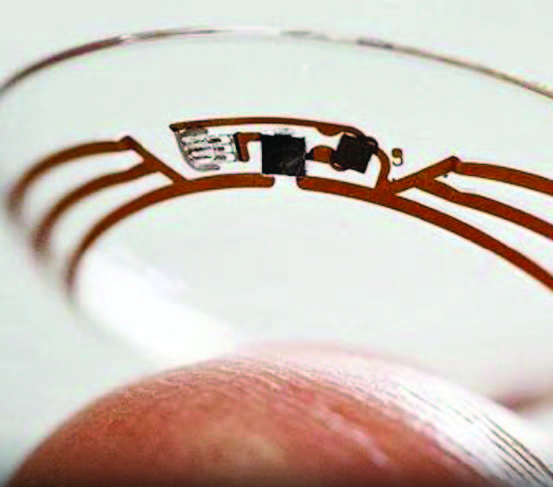
    LONDON (TIP): Your eyes could soon become a high-tech information centre that tracks changes and tells you when it’s time to see an eye doctor. Scientists from the University of Washington have designed a lowpower sensor that could be placed permanently in a person’s eye to track hard-to-measure changes in eye pressure. The sensor would be embedded with an artificial lens during cataract surgery and would detect pressure changes instantaneously and then transmit the data wirelessly using radio frequency waves.

    “No one has ever put electronics inside the lens of the eye, so this is a little more radical,” said Karl Bohringer, a UW professor of electrical engineering and of bioengineering. “We have shown this is possible in principle. If you can fit this sensor device into an intraocular lens implant during cataract surgery, it won’t require any further surgery for patients.” Scientists were looking to keep a close watch over eye pressure for management of glaucoma, one of the major reasons for blindness across the globe. It is a group of diseases that damage the eye’s optic nerve and can cause blindness.

    Right now there are two ways to check eye pressure, but both require a visit to the ophthalmologist. But if ophthalmologists could insert a pressure monitoring system during cataract surgery – now a common procedure performed on 3 million to 4 million people each year to remove blurry vision or glare caused by a hazy lens – that could save patients from a second surgery and essentially make their replacement lens “smarter” and more functional. The UW engineering team built a prototype that uses radio frequency for wireless power and data transfer.

    A thin, circular antenna spans the perimeter of the device – roughly tracing a person’s iris – and harnesses enough energy from the surrounding field to power a small pressure sensor chip. The chip communicates with a close-by receiver about any shifts in frequency which signifies a change in pressure. Actual pressure is then calculated and those changes are tracked and recorded in real-time. The current prototype is larger than it would need to be to fit into an artificial lens, but the research team is confident it can be downscaled through more engineering.

  • Soon, decayed tooth may repair itself

    Soon, decayed tooth may repair itself

    LONDON (TIP): British scientists have discovered a technique which can make a decayed tooth repair itself. The technique, developed at King’s College, London, effectively reverses decay by using electrical currents to boost the tooth’s natural repair process. This path-breaking treatment could be available in three years, according to the British researchers who created it.

    The two-step method developed first prepares the damaged part of the enamel outer layer of the tooth and then uses a tiny electric current to ‘push’ minerals into the tooth to repair the damaged site. The defect is remineralised in a painless process that requires no drills, no injections and no filling materials. Electric currents are already used by dentists to check the pulp or nerve of a tooth; the new device uses a far smaller current than that currently used on patients and which cannot be felt by the patient.

    The technique is known as Electrically Accelerated and Enhanced Remineralisation. The researchers said, “Dentists could soon be giving your teeth a mild ‘time warp’ to encourage them to self-repair . It aims to take the pain out of tooth decay treatment by electrically reversing the process to help teeth ‘remineralise’ .” Nigel Pitts from the Dental Institute at King’s College London said, “The way we treat teeth today is not ideal – when we repair a tooth by putting in a filling, that tooth enters a cycle of drilling and refilling as, ultimately, each “repair” fails.

  • EARTH, MOON OLDER THAN PREVIOUS ESTIMATES

    EARTH, MOON OLDER THAN PREVIOUS ESTIMATES

    LONDON (TIP): Debunking earlier age estimates for both the earth and moon, geochemists have discovered that the final stage of the formation of the two is around 60 million years older than was previously thought. A new study shows that the timing of the giant impact between the earth’s ancestor and a planet-sized body occurred around 40 million years after the start of solar system formation.

    “It is not possible to give an exact date for the formation of the earth. What this work does is to show that the earth is older than we thought, by around 60 million years,” said lead researcher Guillaume Avice from University of Lorraine in Nancy, France. Previously, the time of formation of the earth’s atmosphere was estimated at around 100 million years after the solar system formation.

    To reach this conclusion, geochemists discovered an isotopic signal which indicates that previous age estimates for both the earth and moon are underestimates. To put a date on early earth events, one of the standard methods is measuring the changes in the proportions of different gases (isotopes) which survive from the early earth. Avice and colleague Bernard Marty analysed xenon gas found in South African and Australian quartz, which had been dated to 3.4 and 2.7 billion years respectively.

    The gas sealed in this quartz is preserved as in a “time capsule”. Recalibrating dating techniques using the ancient gas allowed them to refine the estimate of when the earth began to form. This allows them to calculate that the moonforming impact is around 60 million years older than what was thought. “The xenon gas signals allow us to calculate when the atmosphere was being formed, which was probably at the time the earth collided with a planet-sized body, leading to the formation of moon,” Avice concluded.

  • RADIATION FROM MOBILE PHONES CAUSING ‘INFERTILITY’ AMONG MEN: STUDY

    RADIATION FROM MOBILE PHONES CAUSING ‘INFERTILITY’ AMONG MEN: STUDY

    LONDON (TIP): Radiation emitting from mobile phones kept in trouser pockets has now been confirmed to be causing male infertility. British scientists announced on Tuesday that men who keep a mobile phone in their trouser pocket could be inadvertently damaging their chances of becoming a father, thanks to radiofrequency electromagnetic radiation (RFEMR) emitted by the devices. Most of the global adult population own mobile phones, and around 14% of couples in high and middle income countries have difficulty conceiving.

    Dr Fiona Mathews at the University of Exeter conducted a systematic review of the findings from 10 studies, including 1,492 samples, with the aim of clarifying the potential role of this environmental exposure. Participants in the studies were from fertility clinics and research centres, and sperm quality was measured in three different ways: motility (the ability of sperm to move properly towards an egg), viability (the proportion of sperm that were alive) and concentration (the number of sperm per unit of semen).

    In control groups, 50-85% of sperm have normal movement. The researchers found this proportion fell by an average of 8 percentage points when there was exposure to mobile phones. Similar effects were seen for sperm viability. The effects on sperm concentration were less clear. Dr Mathews said, “Given the enormous scale of mobile phone use around the world, the potential role of this environmental exposure needs to be clarified.

    This study strongly suggests that being exposed to radio-frequency electromagnetic radiation from carrying mobiles in trouser pockets negatively affects sperm quality. This could be particularly important for men already on the borderline of infertility, and further research is required to determine the full clinical implications for the general population.” The results were consistent across in vitro studies conducted under controlled conditions and observational in vivo studies conducted on men in the general population.

    India’s Inter Ministerial Group recently made some salient recommendations about mobile handsets. The group proposed revising the limit of 2 watts per kilogram averaged over 10 grams tissue to 1.6 watts per kilogram averaged over 1 gram tissue. It also called for mandatory declaration of radiation level on each mobile handset. As far as mobile towers are concerned they recommended radiation norms which are ten times as strict as the existing ones- from f/200 watts per square meter to f/2000 watts per square meter.

    The group said mobile towers should not be installed near high density residential areas, schools, playgrounds and hospitals. “The localized specific absorption rate (SAR) value as per the Indian guidelines is 2 watt per kg, averaged over a six minute period and using a 10 gram average mass.With higher SAR — a measure of the amount of radiofrequency energy absorbed by the body while using a phone of mobile handsets — the public could potentially receive much higher radiofrequency exposure.We have recommended that SAR levels to be lowered to 1.6 watt/kg, as prescribed by the Federal Communication Commission of US,” Indian experts said.

    Girish Kumar, professor in department of electrical engineering at IIT Bombay, whose research on hazards of cellphone use was taken as a reference for the committee decision, said, “There is a 40% increase in the risk of brain cancer among teenagers using cell phones for long periods. The younger the child, the deeper is the penetration of electromagnetic radiation as children’s skulls are thinner”. Another Jawaharlal Nehru University study found that the exposure to radiation from mobile towers and cell phones could have an adverse impact on male fertility and pose health hazards by depleting the defence mechanism of cells.

  • AN INJECTION TO PERMANENTLY REDUCE CHOLESTEROL IN HUMANS SOON

    AN INJECTION TO PERMANENTLY REDUCE CHOLESTEROL IN HUMANS SOON

    LONDON (TIP): A single injection may soon permanently lower cholesterol levels in humans reducing their risk of heart attack by 90%. Harvard Stem Cell Institute (HSCI) scientists collaborating with researchers at the University of Pennsylvania have developed a “genome-editing” approach for permanently reducing cholesterol levels in mice through a single injection. The work focused on altering the function of a liver gene called PCSK9.

    In 2003, a group of researchers in France studying families with very high cholesterol levels and very early heart attacks discovered that PCSK9 was a cholesterol regulator because they found that mutations in this gene seemed to be responsible for the high cholesterol levels and the heart attacks. A research group in Texas discovered that about 3% of the population has mutations in PCSK9 that have the opposite effect.

    Those with the mutations have low-density lipoprotein (LDL or bad) cholesterol levels about 15 to 28% lower than the average level. And the people with that good defect have heart attack risks that range from about 47 to 88% below average. The project to turn normal PCSK9 genes into those with the good defect started last year after a technology called CRISPR/Cas9, was discovered. “Cas9 is a protein that will create a break in DNA and the CRISPR is an RNA component that will bind to a matching sequence.

    It directs the Cas9 to that sequence in the DNA in which we are interested. This creates a break where you want it. The cell can then repair itself though often with errors which is useful if you want to disrupt a gene,” said Kiran Musunuru of HSCI. “Our reasoning was that nature has already done the experiment; you have people who have won the genetic lottery,” said Musunuru.

    “They are protected from heart attack, and there are no known adverse consequences. So that led us to reason that if we could find a way to replicate this, we could significantly protect people from heart attack,” the scientist added.

  • Now, a wristwatch to monitor glucose, pulse rate & hydration levels

    Now, a wristwatch to monitor glucose, pulse rate & hydration levels

    LONDON (TIP): A new biometric wristwatch is being developed that can monitor your blood glucose, dehydration and pulse rate. In a pair of papers published in The Optical Society, researchers from the Netherlands and Israel described two new wearable devices that use changing patterns of scattered light to monitor biometrics: one tracks glucose concentration and dehydration levels while the other monitors pulse.

    Monitoring a patient’s vital signs and other physiological parameters is a standard part of medical care but increasingly health and fitness-minded individuals are looking for ways to easily keep their own tabs on these measurements. The glucose sensor is the first wearable device that can measure glucose concentration directly but noninvasively, the authors said.

    And while other wearable devices have been made to monitor pulse, the authors claim their new design would be less sensitive to errors when the wearer is in motion. The devices use the so-called speckle effect, the grainy interference patterns that are produced on images when laser light reflects from an uneven surface or scatters from an opaque material. “The speckle pattern changes with changes in the flow,” said biomedical engineer Mahsa Nemati from the Delft University of Technology.

  • ROOF TILES TO HELP FIGHT AIR POLLUTION

    ROOF TILES TO HELP FIGHT AIR POLLUTION

    WASHINGTON (TIP): An innovative and inexpensive way to fight air pollution has been developed — a roof tile coating that removes up to 97% of smog-causing nitrogen oxides.

    A team of University of California, Riverside’s Bourns College of Engineering students created a new titanium dioxide roof tile coating that when applied to an average-sized residential roof breaks down the same amount of smog-causing nitrogen oxides per year as a car driven 17,703km. They calculated 21 tonnes of nitrogen oxides would be eliminated daily if tiles on one million roofs were coated with their titanium dioxide mixture.

    They also found it would cost only about $5 for enough titanium dioxide to coat an average-sized residential roof. Nitrogen oxides are formed when certain fuels are burned at high temperatures. Nitrogen oxides then react with volatile organic compounds in the presence of sunlight to create smog.

    Currently, there are other roofing tiles on the market that help reduce pollution from nitrogen oxides. However, there is little data about claims that they reduce smog. The students set out to change that. They coated two identical off-the-shelf clay tiles with different amounts of titanium dioxide, a common compound found in everything from paint to food to cosmetics.

    The tiles were then placed inside a miniature atmospheric chamber that the students built out of wood, Teflon and PVC piping. The chamber was connected to a source of nitrogen oxides and a device that reads concentrations of nitrogen oxides. They used ultraviolet light to simulate sunlight, which activates the titanium dioxide and allows it to break down the nitrogen oxides. They found the titanium dioxide coated tiles removed between 88% and 97% of the nitrogen oxides.

  • Nasa’s human spaceflight program doomed to fail: Study

    Nasa’s human spaceflight program doomed to fail: Study

    WASHINGTON (TIP): US space agency Nasa has been warned that its mission to send humans to Mars will fail unless its revamps its methods and draws up a clear, wellplanned strategy to conquer the red planet. The National Research Council, in a congressionallymandated report, said that Washington should use “stepping stones” to achieve its goal of a manned flight to Mars.

    This could involve exploring an asteroid, building a moon outpost or building more international cooperation with countries like China. “To continue on the present course … is to invite failure, disillusionment and the loss of the longstanding international perception that human spaceflight is something the United States does best,” said the NRC’s 286-page report.

    Nasa welcomed the report’s findings, saying it was consistent with the agency’s Mars plan approved by Congress and President Barack Obama’s administration. It promised to “thoroughly review the report and all of its recommendations” but insisted that it was worthwhile to set a goal of walking on Mars to set the bar high for other, parallel projects. “The horizon goal for human space exploration is Mars.

    All long-range space programs, by all potential partners, for human space exploration converge on this goal,” it said in a statement. “A sustainable program of human deep space exploration must have an ultimate, ‘horizon’ goal that provides a longterm focus that is less likely to be disrupted by major technological failures and accidents along the way and the vagaries of the political process and economic scene.”

    To date the world’s space agencies have only managed to send unmanned robotic rovers to Mars, the latest being Nasa’s $2.5 billion Curiosity rover, which touched down in August 2012. The US space agency’s older Opportunity rover has been in operation for more than 10 years. But advancing human exploration into the outer reaches of space will require decades of work, hundreds of billions of dollars of funding and “significant risk to human life,” according to the NRC report. That, the report said, makes it impossible for the United States to go to Mars within the current US space budget.

    Instead, it called for increased cooperation with other nations, including with space rival China, as well as funding from the private sector and other sources. Current federal law bars Nasa from participating in bilateral programs with China, which the National Research Council warned “reduces substantially the potential international capability that might be pooled to reach Mars”. “Given the rapid development of China’s capabilities in space, it is in the best interests of the United States to be open to future international partnerships.”

    The report’s authors said that returning to the moon would foster better international cooperation given the interest about the destination in other countries, and such a mission would help develop technology to land and eventually live on Mars. The Obama administration is opposed to another moon landing, saying such a mission would be too costly. It wants instead to focus on capturing an asteroid and placing it into the Moon’s orbit for future exploration.

    The NRC highlighted three potential pathways to Mars, two of which include a return to the moon. The third is along the lines of the Obama administration’s asteroid mission. “It’s probably the frankest assessment that there is no public demand for space exploration, that we really don’t have a goal clearly stated and that the program that is being carried out won’t get us anywhere,” said expert John Logsdon. However, the former director of George Washington University’s Space Policy Institute said: “I don’t think the report will change anything.”

  • NEW LIGHT ON OCEAN WARMING, RAINFALL

    NEW LIGHT ON OCEAN WARMING, RAINFALL

    NEW DELHI (TIP): For the past 30 years, it was believed that there is a threshold of temperature (29 degrees C) beyond which any increase in sea surface temperatures (SSTs) does not significantly affect the variability of rainfall over the Indian Ocean.

    Now, this classic hypothesis based on a study published in 1984, on the relationship between Indian Ocean and the monsoon has been challenged by a publication in the journal Climate Dynamics authored by Dr. Roxy Mathew Koll, a climate scientist at the Centre for Climate Change Research, Indian Institute of Tropical Meteorology, Pune.

    The study states that there is a direct, statistically linear relationship between SSTs and rainfall, and that rainfall increases along with increase in SSTs, over the entire range of possible SSTs over the Indian Ocean (26-32 degrees C). This helps in quantifying the relationship, with a rate of increase of up to 2 mm/day for an increase of one degree C in SST. This understanding is significant in a changing climate scenario, where the SSTs are increasing.

    The earlier belief was based on studies in which SSTs and rainfall were analysed simultaneously and it was found that beyond 29 degrees the rainfall showed no substantial variability. This method is inadequate as SSTs affect rainfall and vice versa and the two cannot be separated when analysed simultaneously, and result in a wrong perception. However, Dr. Roxy’s study using satellite data over the Arabian Sea, Bay of Bengal and South China Sea found that there is a time-lag between SST rise and rainfall increase. The lag is 5 days for Arabian Sea, and around 12 days for Bay of Bengal and South China Sea.

    The difference in the lag is attributed to the spatial variance in surface convergence and uplift over these regions. Surface convergence is the convergence of air/wind at a place over the sea surface due to low pressure formation or ascending branches of tropical air circulation.

    The converging warm moist air near the surface has to rise or uplift as it is less dense (lighter) than the air above. The uplift of the warm moist air results in the convective activity (cloud formation). “The winds and the convergence associated with the summer monsoon are stronger over the Arabian Sea, while they are relatively weaker over Bay of Bengal and the South China Sea.

    This probably leads to a faster uplift and cloud formation over the Arabian Sea while delaying the response over the Bay and the South China Sea”, Dr. Roxy pointed out, in an email. Climate model experiments were conducted to see the effect of greenhouse warming (carbon dioxide, CO) on the ocean-atmosphere interaction and the climate. The results of the experiments indicated that rainfall over the monsoon basins will continue to increase in a global warming scenario.