Tag: Science & Technology

  • VOLUME OF ENCRYPTED EMAIL RISING AMID SPYING FEARS

    VOLUME OF ENCRYPTED EMAIL RISING AMID SPYING FEARS

    NEW DELHI (TIP): The volume of email cloaked in encryption technology is rapidly rising as Google, Yahoo, Facebook and other major Internet companies try to shield their users’ online communications from government spies and other snoops.

    Google and other companies are now automatically encrypting all emails, but that doesn’t ensure confidentiality, unless the recipients’ email provider also adopts the technology. In an analysis released on Tuesday, Google Inc. said that about 65 per cent of the messages sent by its Gmail users are encrypted while delivered, meaning the recipient’s email provider also supports the technology. That’s up from 39 per cent in December. Incoming communiques to Gmail are less secure.

    Only 50 per cent of them encrypted while in transit, up from 27 per cent in December. Encryption reduces the chances that email can be read by interlopers. The technology transforms the text into coding that looks like gibberish until it arrives at its destination. Google and other Internet services rely on a form of encryption known as Transport Layer Security, or TLS.

    Security experts say that encryption method isn’t as secure as other options. But encryption that is tougher to crack is also more complicated to use. Gmail, with more than 425 million accounts worldwide, was one of the first free email services to embrace TLS. Yahoo, Facebook and AOL also are encrypting their email services.

    Microsoft Corp., whose stable of email services includes the Outlook, MSN and Hotmail domains, has started encrypting many accounts as part of transition that won’t be completed until later this year. Less than half of the correspondence from Hotmail accounts to Gmail wasn’t encrypted as of late May, Google said.

    Security is even worse at Comcast.net and Verizon.net, where less than 1 per cent of the traffic coming to and from Gmail is encrypted, according to Google.Verizon didn’t have an immediate comment on Google’s statistics.a year after the first wave of media reports about the US government’s intrusive techniques to monitor online communications and other Internet activity.

  • Astronomers discover deepest shadows ever, where brightest stars are born

    Astronomers discover deepest shadows ever, where brightest stars are born

    NEW DELHI (TIP): Using Nasa’s Spitzer space telescope, astronomers have found a bizarre super-dense dust cloud some 16,000 light years away. It is huge: about 50 light years in diameter. And in that space is packed mass equivalent to 7,000 Suns.

    The shadows cast by this dense cloud have been described by stunned scientists as “blackest of black” and Nasa is calling them “the deepest shadows ever recorded”. The dusty cloud, results suggest, will likely evolve into one of the most massive young clusters of stars in our galaxy.

    The densest clumps will blossom into the cluster’s biggest, most powerful stars, called O-type stars, the formation of which has long puzzled scientists. These hulking stars have major impacts on their local stellar environments while also helping to create the heavy elements needed for life.

    “The map of the structure of the cloud and its dense cores we have made in this study reveals a lot of fine details about the massive star and star cluster formation process,” said Michael Butler, a postdoctoral researcher at the University of Zurich in Switzerland and lead author of the study, published in The Astrophysical Journal Letters. Most stars in the universe, perhaps our Sun included, are thought to have formed en masse in these sorts of environments.

    Clusters of low-mass stars are quite common and wellstudied. But clusters giving birth to higher-mass stars, like the cluster described here, are scarce and distant, which makes them harder to examine. “In this rare kind of cloud, Spitzer has provided us with an important picture of massive star cluster formation caught in its earliest, embryonic stages,” said Jonathan Tan, an associate professor of astronomy at the University of Florida, Gainesville, and co-author of the study.

    The new findings will also help reveal how O-type stars form. O-type stars shine a brilliant white-blue, possess at least 16 times the sun’s mass and have surface temperatures above 54,000 degrees Fahrenheit (30,000 degrees Celsius). These giant stars have a tremendous influence on their local stellar neighborhoods.

    Their winds and intense radiation blow away material that might draw together to create other stars and planetary systems. Otype stars are short-lived and quickly explode as supernovas, releasing enormous amounts of energy and forging the heavy elements needed to form planets and living organisms.

    Researchers are not sure how, in Otype stars, it is possible for material to accumulate on scales of tens to 100 times the mass of our sun without dissipating or breaking down into multiple, smaller stars. “We still do not have a settled theory or explanation of how these massive stars form,” said Tan. “Therefore, detailed measurements of the birth clouds of future massive stars, as we have recorded in this study, are important for guiding new theoretical understanding.”

  • Compound that blocks insulin breakdown boon for diabetics

    Compound that blocks insulin breakdown boon for diabetics

    WASHINGTON (TIP): In a ray of hope for millions of people suffering from type 2 diabetes worldwide, researchers have discovered a molecule that inhibits the breakdown of insulin in mice. The compound blocked a protein called insulindegrading enzyme (IDE) in mice. “If you inhibit the enzyme that breaks down insulin, insulin levels in your body should be higher and your blood glucose should be lower,” said David Liu, a chemical biologist at Harvard University in Cambridge, Massachusetts.

    Since people with type 2 diabetes tend to have low insulin levels, it could lead to new ways of treating the disease, he noted. IDE has proved difficult to inhibit. Liu, along with his colleague Alan Saghatelian, screened a wide range of molecules that are both stable and specific.

    They then tested the effects of the strongest candidate molecule in lean and obese mice given glucose. As expected, blood sugar levels dropped faster in those that received the inhibitor than in control mice, whether the mice were lean or obese.

    The team also found something surprising: the IDE inhibitor had the opposite effect when the mice were injected with glucose rather than ingesting it. The reason for the different responses could be that IDE also affects two other gut hormones that regulate blood sugar – amylin and glucagon. For example, mice that received the inhibitor had higher levels of glucagon, a hormone that boosts blood sugar levels following glucose injection.

    However, according to Liu, mice that ingest glucose tend to have much higher insulin levels than mice that are injected with it. “You could probably aim for a short lived IDE inhibitor that is taken before a meal,” Liu concluded in the study published in the journal Nature.

  • Now, convert light into matter

    Now, convert light into matter

    LONDON (TIP): Scientists have for the first time discovered a revolutionary technique to turn light into matter, a feat thought impossible when the idea was first theorized 80 years ago. Three physicists at the Imperial College London’s Blackett Physics Laboratory worked out a relatively simple way to physically prove a theory first devised by scientists Breit and Wheeler in 1934.

    Breit and Wheeler suggested that it should be possible to turn light into matter by smashing together only two particles of light (photons), to create an electron and a positron – the simplest method of turning light into matter ever predicted. The calculation was found to be theoretically sound but Breit and Wheeler said that they never expected anybody to physically demonstrate their prediction. It has never been observed in the laboratory and past experiments to test it have required the addition of massive high-energy particles.

    The new research, published in Nature Photonics, shows how Breit and Wheeler’s theory could be proven in practice. This ‘photon-photon collider’, which would convert light directly into matter using technology that is already available, would be a new type of high-energy experiment.

    This physics experiment would recreate a process that was important in the first 100 seconds of the universe and that is also seen in gamma ray bursts. The scientists had been investigating unrelated problems when they realized what they were working on could be applied to the Breit-Wheeler theory. Demonstrating the Breit- Wheeler theory would provide the final jigsaw piece of a puzzle which describes the simplest ways in which light and matter interact.

  • Coming soon, a scan that can identify pedophiles

    Coming soon, a scan that can identify pedophiles

    LONDON (TIP): In what could be the first major leap towards developing the world’s first X Ray scan to identify paedophiles, scientists have now confirmed that the brains of child abusers are abnormally tuned to be attracted to children’s faces.

    Scientists scanned the activity in brains of 56 men, including 24 paedophiles while they were being shown photos of adult men and women and the faces of young boys and girls. In the case of paedophiles, their brains were activated most when they were looking at pictures of children.

    The scientists, led by Dr Jorge Ponseti from Christian-Albrechts University in Kiel, Germany wrote in the Royal Society journal Biology Letters “The critical new finding is that face processing is also tuned to face cues revealing the developmental age that is sexually preferred”.

    The study said human faces can motivate nurturing behavior or sexual behavior when adults see a child or an adult face, respectively. “This suggests that face processing is tuned to detecting age cues of sexual maturity to stimulate the appropriate reproductive behavior: either caretaking or mating. In paedophilia, sexual attraction is directed to sexually immature children.

    Therefore, we hypothesized that brain networks that normally are tuned to mature faces of the preferred gender show an abnormal tuning to sexual immature faces in paedophilia. Here, we use functional magnetic resonance imaging (fMRI) to test directly for the existence of a network which is tuned to face cues of sexual maturity”. “During fMRI, participants sexually attracted to either adults or children were exposed to various face images.

    In individuals attracted to adults, adult faces activated several brain regions significantly more than child faces. These brain regions comprised areas known to be implicated in face processing, and sexual processing, including occipital areas, the ventrolateral prefrontal cortex and, subcortically, the putamen and nucleus caudatus.

    The same regions were activated in paedophiles, but with a reversed preferential response pattern,” the scientists added. The researchers said that the study for the first time gives the possibility of being able to “diagnose” potential pedophiles at a young age by studying their responses to the faces of adults and children.

  • A CAR SYSTEM THAT DETECTS PEDESTRIANS AT NIGHT

    A CAR SYSTEM THAT DETECTS PEDESTRIANS AT NIGHT

    LONDON (TIP): Researchers have designed a new system for cars that can detect pedestrians upto 40 metres away in low visibility conditions such as night time driving. Researchers at Universidad Carlos III de Madrid (UC3M) in Spain designed the system which is made up of infrared cameras that capture body heat.

    The system uses images captured by far infrared with two thermal cameras to identify the presence of individuals in their field of vision. The objective is to alert the driver to the presence of pedestrians in the path of the vehicle, and even, in the case of cars with automated systems, actually stop the vehicle.

    “With the model being used in our research, pedestrians up to 40 metres away can be detected, although this distance could be extended if we substitute the lens with one that has greater focus range,” said one of its designers, Daniel Olmeda, from the Intelligent Systems Laboratory (LSI) at UC3M.

  • Asteroid the size of a bus hurtles past Earth

    Asteroid the size of a bus hurtles past Earth

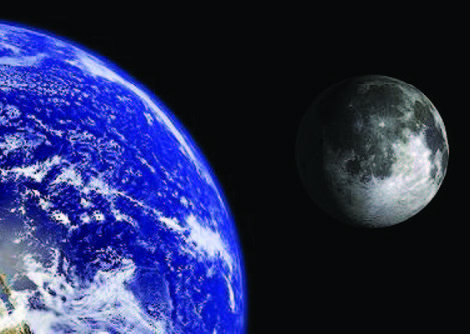
    LONDON (TIP): Unbeknown to most of us here on Earth, a huge asteroid the size of a double-decker bus hurtled past our planet over the weekend. Days after it was spotted by astronomers, the space rock passed within 186,000 miles (300,000 kilometres) of Earth, Space.com reported. And although it may sound like a large distance, the asteroid travelled within the Moon’s orbit, which on average takes the satellite 238, 855 miles (384,399 kilometres) away from Earth.

    The asteroid, known a HL 129, was about 7.6 metres (25 feet) wide and made its closest approach to Earth at 4.13am EDT (8.13am GMT) on Saturday. Astronomers from the Mount Lemmon Survey team first spotted the rock on Wednesday, according to an alert by Minor Plant Center, which is part of the International Astronomical Union. Nasa scientists and researchers across the world keep a constant look-out for potentially dangerous asteroids that could crash into Earth – with deadly consequences.

    Former astronaut Ed Lu said earlier this year that it was only “blind luck” that the planet had not suffered a catastrophic hit from an asteroid. He told Wired.co.uk: “While most large asteroids with the potential to destroy an entire country or continent have been detected, less than 10,000 of the more than a million dangerous asteroids with the potential to destroy an entire major metropolitan area have been found by all existing space or terrestriallyoperated observatories.

    “Because we don’t know where or when the next major impact will occur, the only thing preventing a catastrophe from a ‘city-killer’ sized asteroid has been blind luck.” In 2013 over 1,000 people were injured after an asteroid exploded above the Russian city of Chelyabinsk.

  • NASA SIMULATOR RECREATES PLANET-FORMING SPACE DUST

    NASA SIMULATOR RECREATES PLANET-FORMING SPACE DUST

    WASHINGTON (TIP): Researchers at Nasa’s Ames Research Center in Moffett Field, Californa, has successfully reproduced the processes that occur in the atmosphere of a red giant star and lead to the formation of planet-forming interstellar dust. Using a specialized facility, called the Cosmic Simulation Chamber (COSmIC) designed and built at Ames, scientists now are able to recreate and study in the laboratory dust grains similar to the grains that form in the outer layers of dying stars.

    Dust grains that form around dying stars and are ejected into the interstellar medium lead, after a life cycle spanning millions of years, to the formation of planets and are a key component of the universe’s evolution. Scientists have found the materials that make up the building blocks of the universe are much more complicated than originally anticipated.

    Farid Salama, project leader and a space science researcher at Ames, said that the harsh conditions of space are extremely difficult to reproduce in the laboratory, and have long hindered efforts to interpret and analyze observations from space. He said that using the COSmIC simulator they can now discover clues to questions about the composition and the evolution of the universe, both major objectives of Nasa’s space research program.

    The team started with small hydrocarbon molecules that it expanded in the cold jet spray in COSmIC and exposed to high energy in an electric discharge. They detected and characterized the large molecules that are formed in the gas phase from these precursor molecules with highly sensitive detectors, then collected the individual solid grains formed from these complex molecules and imaged them using Ames’ Scanning Electron Microscope (SEM).

    Ella Sciamma-O’Brien, of the BAER Institute and a research fellow at Ames, said during COSmIC experiments, we are able to form and detect nanoparticles on the order of 10nm size, grains ranging from 100-500 nanometers and aggregates of grains up to 1.5 micrometers in diameter, about a tenth the width of a human hair, and observe their structure with SEM, thus sampling a large size distribution of the grains produced.

  • ‘SUPER PILL’ TO PREVENT HEART ATTACKS

    ‘SUPER PILL’ TO PREVENT HEART ATTACKS

    MELBOURNE (TIP): A daily ‘super pill’ could save millions of lives by preventing heart attacks and strokes, suggests a new study which used data from several countries including India. The largest ever analysis on the use of a polypill in cardiovascular disease shows potential for improvements in patient care, researchers said.

    Almost 1 in 4 patients adhered better to treatment; significant improvements in blood pressure and cholesterol, they said. New data presented for the first time at the World Heart Federation’s World Congress of Cardiology 2014 shows a significant improvement in both patient adherence and risk factor control when patients at high risk of heart attack or stroke receive a polypill, compared to usual care.

    A polypill is a fixed dose combination of commonly used blood pressure and cholesterol lowering medications, along with aspirin, which helps prevent cardiovascular disease (CVD). The Single Pill to Avert Cardiovascular Events project, led by researchers from The George Institute for Global Health, analysed data from 3,140 patients with established CVD or at high risk of CVD in Europe, India and Australasia.

    The results showed a 43% increase in patient adherence to medication at 12 months with the polypill, in addition to corresponding improvements in systolic blood pressure and LDL-cholesterol that were highly statistically significant. The largest benefits were seen among patients not receiving all recommended medications at baseline, which corresponds to most cardiovascular disease patients globally.

    “These results are an important step forward in the polypill journey and management of cardiovascular disease,” said Ruth Webster of the George Institute for Global Health. “An important finding from our analyses is that the greatest benefits from a polypill were for currently untreated individuals,” said Webster. CVD is the number one cause of death globally, killing 17.3 million people each year and it is expected to remain the world’s leading cause of death in the near future, researchers said.

    “These results emphasize the importance of the polypill as a foundation for a global strategy on cardiovascular disease prevention,” professor Salim Yusuf, President-elect of the World Heart Federation said. “It will improve patient access to essential medications at an affordable cost and wide use of the polypill can avoid several millions of premature CVD events,” he said.

  • NOW, BREW COFFEE WHILE ON THE MOVE

    NOW, BREW COFFEE WHILE ON THE MOVE

    LONDON (TIP): Coffee lovers can now get their caffeine fix on the go, thanks to the world’s first disposable coffee machine! The Grower’s Cup system, developed by a Danish designer, works just like a tea bag for coffee and is described as a hybrid between a filter coffee brewer and a French Press.

    The system works by simply pouring hot water into the bag offering a pretty neat solution for drinking coffee indoors, The ‘Huffington Post’ reported. “Our coffee bag is to coffee what the wine bottle is to wine,” claim the makers of the system. To prepare coffee with the machine, ground beans are held in a special filter through which the water pours. Once the bottom of the bag is filled, water is held over the beans.

    The longer you leave it, the stronger the coffee. “It all started one morning when I went to make myself a cup of coffee and realized I had run out of filters for my machine,” said designer Ulrik Rasmussen. “As I slammed the kitchen draw shut I noticed some tea bags and I started thinking about why there wasn’t a similar product for coffee.

    “I cut up a few tea bags and put coffee grounds inside them and found there was some potential for a similar product so I started doing research into it,” said Rasmussen. The disposable bags come in five different types of bean and each bag makes two cups of coffee when using 300ml of water.

  • SOON, GARBAGE TO POWER PLANES

    SOON, GARBAGE TO POWER PLANES

    LONDON (TIP):
    In a world first, British Airways is planning to use garbage to power its flights in an ambitious project which aims to convert municipal waste into 50,000 metric tonnes of jet fuel per year. The project will attempt to convert trash into a dropin fuel for air-planes by 2017. While the world’s first factory to turn garbage into jet fuel will come up in about three years, waste-fuelled transatlantic flights could come soon after.

    Turning garbage into bio-fuel generates twice as much energy as incinerating it for trash, British Airways’ head of environment Jonathan Counsell said. “What we get from that is a very pure, high-quality fuel,” said Counsell. According to Counsell, recent lifecycle analyses indicate that the fuel could reduce greenhouse gas emissions by up to 95% compared to fossil fuels.

    The airline has partnered with Solena Fuels to build a trash-to-jet fuel conversion facility at a former oil refinery just east of London, ‘ClimateWire’ reported. The facility will take the waste that cities already collect and turn it into fuel. Once the waste has been cleaned of any hazardous or recyclable materials, it will be combusted in a low-oxygen environment that produces a synthesis gas of hydrogen and carbon monoxide, a process known as gasification.

    The gas will then be converted to liquid fuel, in a process called Fischer-Tropsch, the report said. Fuelling the London to New York trips with bio-fuel would displace about 2% of the airlines’ consumption at its main hub – Heathrow Airport outside of London. However, British Airways expects to increase its use gradually, in compliance with a United Kingdom aviation industry road map that sets the goal of obtaining 30% of fuels from renewable sources by 2050.

  • Revealed: How our galaxies are connected

    Revealed: How our galaxies are connected

    WASHINGTON (TIP):
    Know how galaxies across the universe are connected? Opening a new chapter in unlocking this mystery, for the first time, astronomers have taken unprecedented images of the intergalactic medium (IGM) — the diffuse gas that connects galaxies. With Cosmic Web Imager — built at California Institute of Technology and deployed on the Hale 200- inch telescope at Palomar Observatory in California — astronomers have obtained first three-dimensional pictures of the IGM.

    “The Cosmic Web Imager will make possible a new understanding of galactic and intergalactic dynamics,” said Christopher Martin, a professor of physics who conceived the Imager. It has already detected one possible spiral-galaxy-inthe- making that is three times the size of our Milky Way.

    The IGM is a network of smaller and larger filaments crisscrossing one another across the vastness of space and back through time to an era when galaxies were first forming and stars were being produced at a rapid rate. Martin describes the diffuse gas of the IGM as “dim matter”, to distinguish it from the bright matter of stars and galaxies, and the dark matter and energy that compose most of the universe.

    Martin and his team have now seen the first glimpse of the city of dim matter. It is not full of skyscrapers and bridges but it is both visually and scientifically exciting, the study said. The objects the Cosmic Web Imager has observed date to approximately 2 billion years after the Big Bang – a time of rapid star formation in galaxies.

  • IN A FIRST, EXPERTS PRODUCE SOLAR JET FUEL FROM WATER AND CARBON DIOXIDE

    IN A FIRST, EXPERTS PRODUCE SOLAR JET FUEL FROM WATER AND CARBON DIOXIDE

    LONDON (TIP):
    An EU-funded research project called Solar Jet has produced the world’s first ‘solar’ jet fuel from water and carbon dioxide. Researchers have successfully demonstrated the entire production chain for renewable kerosene using concentrated light as a hightemperature energy source. The project is still at an experimental stage and just a glassful of jet fuel was produced in lab conditions using simulated sunlight. The four-year Solar-Jet project was launched in June 2011 and is receiving 2.2 million EU funding from the Seventh Framework Programme for Research and Technological Development.

    In the next phase of the project, the partners plan to optimize the solar reactor and assess whether the technology will work on a larger scale and at competitive cost. Finding new, sustainable sources of energy will remain a priority under Horizon 2020, the seven-year EU research and innovation programme launched on Jan 1, 2014.

    European commissioner for Research, Innovation and Science Maire Geoghegan-Quinn said, “This technology means we might one day produce cleaner and plentiful fuel for planes, cars and other forms of transport. This could greatly increase energy security and turn one of the main greenhouse gases responsible for global warming into a useful resource.”

    Concentrated light— simulating sunlight —was used to convert carbon dioxide and water to synthesis gas (syngas ) in a high-temperature solar reactor containing metaloxide based materials developed at ETH Zurich . The syngas (a mixture of hydrogen and carbon monoxide) was then converted into kerosene by Shell.

    Although producing syngas through concentrated solar radiation is still at an early stage of development, the processing of syngas to kerosene is being deployed by companies including Shell on a global scale. Combining the two approaches has the potential to provide secure, sustainable and scalable supplies of aviation fuel as well as diesel and gasoline, or even plastics.

  • Spanish island 1st to run on water & wind power only

    Spanish island 1st to run on water & wind power only

    VALVERDE (TIP):
    The smallest and least known of Spain’s Canary Islands, El Hierro, is making a splash by becoming the first island in the world fully energy selfsufficient through combined water and wind power. A wind farm opening at the end of June will turn into electricity the gusts that rake the steep cliffs and green mountains of the volcanic island off the Atlantic coast of Africa.

    Its five turbines installed at the northeastern tip of El Hierro near the capital Valverde will have a total output of 11.5 megawatts – more than enough power to meet the demand of the island’s roughly 10,000 residents. Although other islands around the world are powered by solar or wind energy, experts say El Hierro is the first to secure a constant supply of electricity by combining wind and water power and with no connection to any outside electricity network.

    Surplus power from the wind turbines will be used to pump fresh water from a reservoir near the harbour to a larger one at volcanic crater located about 700 metres above sea level. When there is little or no wind, the water will be channelled down to the lower reservoir through turbines to generate electricity in turn.

    “This system guarantees us a supply of electricity,” said the director of the Gorona del Viento wind power plant, Juan Manuel Quintero who is supervising final tests before the plant starts functioning in a few weeks. The plant will account for 50% of the island’s electricity demand when it is officially inaugurated at the end of June.

  • A CYBER BUDDY THAT MOTIVATES YOU TO EXERCISE

    A CYBER BUDDY THAT MOTIVATES YOU TO EXERCISE

    WASHINGTON (TIP): A software-generated partner — cyber buddy — can give exercise enthusiasts the extra nudge they need during a workout , a new study has found. The study by Michigan State University researchers is the first to indicate that although a human partner is still a better motivator during exercise, a software-generated partner also can be effective.

    “We wanted to demonstrate that something that isn’t real can still motivate people to give greater effort while exercising than if they had to do it by themselves,” said Deborah Feltz, who led the study with coinvestigator Brian Winn. The implications from the research also could open the door for software and video game companies to create cyber buddy programmes based on sport psychology.

    “Unlike many of the current game designs out there, these results could allow developers to create exercise platforms that incorporate team or partner dynamics that are based on science,” said Feltz. Using “CyBud-X ,” an exercise game specifically developed for Feltz’s research, 120 college-aged participants were given five different isometric plank exercises to do with one of three same-sex partner choices.

    Along with a human partner option, two softwaregenerated buddies were used — one representing what looked to be a nearly human partner and another that looked animated . The participant and partner image were then projected onto a screen via a web camera while exercising. The results showed that a significant motivational gain was observed in all partner conditions.

  • ‘Smart’ device that engineers cells to kill cancer

    ‘Smart’ device that engineers cells to kill cancer

    NEW YORK (TIP): In a path-breaking discovery, biologists have created a new technology for modifying human cells to create therapeutics that could travel the body and selectively target and kill cancer cells without disrupting healthy cells. This device is a protein biosensor that sits on the surface of a cell and can be programmed to sense specific external factors. After detecting these factors, the device sends a signal into the engineered cell’s nucleus to activate a gene expression programme.

    “Till date, there was no way to engineer cells in a manner that allowed them to sense key pieces of information about their environment, which could indicate whether the engineered cell is in healthy tissue or sitting next to a tumour,” explained Joshua Leonard, an assistant professor at Northwestern University’s McCormick school of engineering and applied science. For example, the engineered cell could detect big, soluble protein molecules that indicate that it is next to a tumour.

    “Since this toxic programme would be activated only near tumour cells, such an approach could minimise side effects as well as improve therapeutic benefits,” Leonard added. The biosensor platform is highly modular, enabling the biosensors to be customised to recognise factors of relevance to various patients’ needs. “In that way, you could programme a cell-based therapy to specify which cells it should kill,” Leonard added.

    Doctors could potentially collect immune cells from a patient’s body, engineer the cells using the biosensor platform and put them back into the patient. “From there, the cells would do the work of detecting cancer or the disease they are designed to identify,” the researchers added.

  • A NEW SENSOR TO SPOT DROWSY DRIVERS

    A NEW SENSOR TO SPOT DROWSY DRIVERS

    WASHINGTON (TIP): Researchers have developed a new technology that can detect when drivers are about to nod off behind the wheel. The technology is based on steering wheel movements — which are more variable in drowsy drivers — and offers an affordable and more reliable alternative to currently available video-based driver drowsiness detection systems, researchers said.

    “Video-based systems that use cameras to detect when a car is drifting out of its lane are cumbersome and expensive,” said Hans Van Dongen, research professor at the Washington State University Sleep and Performance Research Center. “They don’t work well on snowcovered or curvy roads, in darkness or when lane markers are faded or missing .

    Our invention provides an inexpensive and user-friendly technology that overcomes these limitations and can help catch fatigue earlier, well before accidents are likely to happen,” said Van Dongen, who developed the technology with postdoctoral research fellow Pia Forsman. In an experiment, 29 participants were on a simulated 10-day night shift schedule that caused moderate levels of fatigue, as assessed by their performance on a widely used alertness test known as the psychomotor vigilance task (PVT).

    During each night shift, participants spent four 30-minute sessions on a high-fidelity driving simulator, which captured data for 87 different metrics related to speed, acceleration , steering, lane position and other factors. Data analysis indicated that the two factors that best predicted fatigue were variability in steering wheel movements and variability in lane position .

    Researchers then showed that data on steering wheel variability can be used to predict variability in lane position early on, making it possible to detect driver drowsiness before the car drifts out of its lane. “We wanted to find out whether there may be a better technique for measuring driver drowsiness before fatigue levels are critical and a crash is imminent,” Van Dongen said.

    “Our invention provides a solid basis for the development of an early detection system for moderate driver drowsiness. It could also be combined with existing systems to extend their functionality in detecting severe driver drowsiness ,” he said. The solution uses inexpensive , easy-to-install parts — including a sensor that measures the position of the steering wheel.

  • GLASSES WITH ANIMATED EYES TO FAKE EMOTIONS

    GLASSES WITH ANIMATED EYES TO FAKE EMOTIONS

    LONDON: Researchers have developed glasses that show computer-generated eye animations in place of the wearer’s real ones and could be used to simulate emotional reactions when users are distracted or busy. The glasses also have special lenses to let the user see out or take a secret nap when they want.

    Hirotaka Osawa from the University of Tsukuba who developed the glasses said they could simulate reactions when users are distracted or busy. The glasses feature two OLED screens, which are controlled by either a smartphone or PC via a Bluetooth wireless connection. This computer is also connected to a camera to take readings from the wider environment.

    On the glasses gyrometer and accelerometer, sensors are fitted to one arm to monitor the user’s behaviour, while a battery on the other arm powers the device. If the user nods, the glasses show a blink, if they shake their head, the eyes blink several times and if they incline their head, the eyes look upwards.

    3D mirror shows what lies under your skin
    Researchers have developed a “digital mirror” that recreates what your body might look like on the inside. For the mirror to work, an individual undergoes a PET scan, X-ray and MRI scan to capture highresolution images of their bones and organs. When the person steps in front of the mirror, a Microsoft Kinect’s motion-capture camera tracks the movement of two dozen different joints, including the knees, elbows and wrists.

    The medical images can be animated with the help of graphical processing units so users can see their body inside out in real time, ‘New Scientist’ reported. Researcher Xavier Maitre, a medical imaging researcher at the University of Paris-South, and colleagues built the digital mirror to explore philosophical questions about how we relate to our body. In an experiment, they left 30 participants alone with the mirror for several minutes to gauge their reactions. In this instance, people were shown pre-recorded data of other individuals of the same sex.

    The team found that about one-third of people were uncomfortable in front of the mirror and reluctant to let others see. In the future, researchers said doctors could use a similar system to help people explore a particular part of their body or prepare for an upcoming operation.

    Other researchers are already exploring how augmented reality can help medicine. Mirracle, another kind of “mirror” developed at the Technical University of Munich in Germany, projects slices of medical imagery directly onto a person’s body.

    Another project — recently featured at the American Association for the Advancement of Science conference in Chicago — can animate MRI data on the computer screen, pinpointing parts of the body that might cause trouble in the future. Maitre and his collaborators want to make the illusion created by the mirror even more life-like by programming the heart to beat and the lungs to move.

  • SCIENTISTS TO TEST ARTIFICIAL BLOOD IN HUMANS

    SCIENTISTS TO TEST ARTIFICIAL BLOOD IN HUMANS

    LONDON (TIP): In a ground-breaking trial, researchers in the UK will test artificial blood made from human stem cells in patients for the first time. The research, planned for 2016, could pave the way for manufacturing of blood on an industrial scale, which could even supersede donated blood as the main supply for patients. “We have made red blood cells, for the first time, that are fit to go in a person’s body. Before now, we haven’t really had that,” said Marc Turner, medical director at the Scottish National Blood Transfusion Service, who is leading the 5 million pounds project at the University of Edinburgh.

    The trial will involve three patients with thalassaemia, a disorder of the red blood cells that requires regular transfusions. They will receive around 5 ml of blood initially to test whether the cells behave normally in the body. Turner stressed that the trial should not be taken as a signal for people to stop donating blood, but speculated that in 20 years, artificial blood could be the norm. Turner has spent several years refining a technique to grow mature red blood cells from induced pluripotent stem (iPS) cells – adult skin or blood cells that have been genetically reprogrammed into a stem cell-like state, ‘The Times’ reported. The iPS cells are cultured in biochemical conditions similar to those in the human body that trigger their transition towards mature red blood cells.

    The team has currently reached an efficiency of 40-50 per cent of initial cells turning into red blood cells, and the process takes about a month. The useable cells can then be separated from immature blood cells and remaining iPS cells using standard blood separation methods, such as centrifuging. Artificial blood would be made from cells taken from someone with the relatively rare universal blood type O-, which can be transfused into almost any patient, researchers said.

  • HAS SATURN GIVEN BIRTH TO NEW SATELLITE?

    HAS SATURN GIVEN BIRTH TO NEW SATELLITE?

    WASHINGTON (TIP): Nasa’s Cassini spacecraft has documented the formation of a small icy object within the rings of Saturn that may be a new moon probably no more than half a mile in diameter. The findings may provide clues to the formation of the Saturn’s known moons and give insight into how earth and other planets in our solar system may have formed and migrated away from the sun.

    Images taken with Cassini’s narrow angle camera on April 15, last year show disturbances at the very edge of Saturn’s A ring – the outermost of the planet’s large, bright rings. One of these disturbances is an arc about 20% brighter than its surroundings, 1,200 kilometres long and 10 kilometres wide. “We have not seen anything like this before,” said Carl Murray of Queen Mary University of London. “We may be looking at the act of birth, where this object is just leaving the rings and heading off to be a moon in its own right,” said Murray. The object, informally named Peggy, is too small to see in images so far. Scientists estimate it is probably no more than a half mile in diameter.

  • NOW, GLASS THAT IS STRONGER THAN STEEL

    NOW, GLASS THAT IS STRONGER THAN STEEL

    NEW YORK (TIP): Imagine glasses that are strong as steel and can be used for producing hard, durable and seamless complex shapes that no other metal processing method can. Scientists at Yale University have devised a dramatically faster way of identifying and characterising complex alloys known as bulk metallic glasses (BMGs), a versatile type of pliable glass that is stronger than steel.

    Using traditional methods, it usually takes a full day to identify a single metal alloy appropriate for making BMGs. The new method allows researchers to screen about 3,000 alloys per day and simultaneously ascertain certain properties, such as melting temperature and malleability. “Instead of fishing with a single hook, we are throwing a big net. This should dramatically hasten the discovery of BMGs and new uses for them,” said Jan Schroers, a professor of mechanical engineering and materials science at Yale University.

    Already used in watch components, golf clubs, and other sporting goods, BMGs also have likely applications in biomedical technology, such as implants and stents, mobile phones and other consumer electronics. According to Schroers, there are an estimated 20 million possible BMG alloys. About 120,000 metallic glasses have been produced and characterized to date. Using standard methods, it would take about 4,000 years to process all possible combinations, Schroers has calculated. The new method could reduce the time to about four years. Ideal BMGs offer plasticity during the manufacturing process, durability, and biocompatibility, along with affordability, Schroers emphasised in the study published in the journal Nature Materials.

  • LIFE MAY HAVE BEGUN NEAR GENTLE SPRINGS ON OCEAN FLOORS, NASA RESEARCH SAYS

    LIFE MAY HAVE BEGUN NEAR GENTLE SPRINGS ON OCEAN FLOORS, NASA RESEARCH SAYS

    NEW DELHI (TIP): A new report by Nasa scientists puts together decades of research to provide first evidence that life on Earth may have started on the sea floor, billions of years ago. In this “water world” theory, life may have begun inside warm, gentle springs on the sea floor, at a time long ago when Earth’s oceans churned across the entire planet.

    This is in contrast to an earlier theory that life may have begun near vents bubbling with hot acidic fluids. The new study comes from researchers at Nasa’s Jet Propulsion Laboratory and the Icy Worlds team at Nasa’s Astrobiology Institute. It is published in the April issue of the journal Astrobiology. The water world theory from Michael Russell and his team at JPL says that the warm, alkaline hydrothermal vents created an imbalance with respect to the surrounding ancient, acidic ocean.

    This imbalance could have provided so-called free energy to drive the emergence of life. In fact, the vents could have created two chemical imbalances. The first was where protons — which are hydrogen ions — were concentrated more on the outside of the vent’s chimneys, also called mineral membranes. The proton gradient could have been tapped for energy — something our own bodies do all the time in cellular structures called mitochondria.

    The second imbalance could have involved an electrical gradient between the hydrothermal fluids and the ocean. Billions of years ago, when Earth was young, its oceans were rich with carbon dioxide. When the carbon dioxide from the ocean and fuels from the vent — hydrogen and methane — met across the chimney wall, electrons may have been transferred. These reactions could have produced more complex carbon-containing, or organic compounds — essential ingredients of life as we know it.

    Like proton gradients, electron transfer processes occur regularly in mitochondria. “Within these vents, we have a geological system that already does one aspect of what life does,” said Laurie Barge, second author of the study at JPL. “Life lives off proton gradients and the transfer of electrons.” As is the case with all advanced life forms, enzymes are the key to making chemical reactions happen. In our ancient oceans, minerals may have acted like enzymes, interacting with chemicals swimming around and driving reactions.

    In the water world theory, two different types of mineral “engines” might have lined the walls of the chimney structures. “These mineral engines may be compared to what’s in modern cars,” said Russell. “They make life ‘go’ like the car engines by consuming fuel and expelling exhaust. DNA and RNA, on the other hand, are more like the car’s computers because they guide processes rather than make them happen.”

    One of the tiny engines is thought to have used a mineral known as green rust, allowing it to take advantage of the proton gradient to produce a phosphatecontaining molecule that stores energy. The other engine is thought to have depended on a rare metal called molybdenum. This metal also is at work in our bodies, in a variety of enzymes. It assists with the transfer of two electrons at a time rather than the usual one, which is useful in driving certain key chemical reactions.

    “We call molybdenum the Douglas Adams element,” said Russell, explaining that the atomic number of molybdenum is 42, which also happens to be the answer to the “ultimate question of life, the universe and everything”” in Adams’ popular book, “The Hitchhiker’s Guide to the Galaxy.” Russell joked, “Forty-two may in fact be one answer to the ultimate question of life!”

  • NASA SAYS WEIRD MARS LIGHTS ARE NOT A SIGN OF LIFE

    NASA SAYS WEIRD MARS LIGHTS ARE NOT A SIGN OF LIFE

    WASHINGTON (TIP): A Nasa robot has snapped pictures showing glints of light on the Martian horizon, which some UFO enthusiasts have seized on as a sign of alien life on the Red Planet. Not so, said the US space agency. More likely, the images of bright spots taken on April 2 and April 3 are a product of the sun’s glare or cosmic rays, Nasa said in a statement.

    In fact, similar glints of light are seen all the time in images taken by the Curiosity rover, a multibillion dollar unmanned vehicle equipped with cameras and drilling instruments that is exploring Mars. “In the thousands of images we’ve received from Curiosity, we see ones with bright spots nearly every week,” said Justin Maki of Nasa’s Jet Propulsion Laboratory in Pasadena, California.

    “These can be caused by cosmic-ray hits or sunlight glinting from rock surfaces, as the most likely explanations.” Furthermore, the “bright spots appear in images from the right-eye camera of the stereo Navcam, but not in images taken within one second of those by the left-eye camera,” the space agency said in a statement. Nasa’s explanation may not dampen enthusiasm among believers in alien life on Mars, such as the website operated by UFO Sightings Daily which said the lights could offer proof of exterrestrial beings.

    “This could indicate there there is intelligent life below the ground and uses light as we do,” the site proclaimed. Nasa’s Curiosity rover landed on the dry, dusty planet in 2012 on a mission to search for signs that life may have once been able to thrive there.

  • NEW GUN FIRES AT 7 TIMES THE SPEED OF SOUND

    NEW GUN FIRES AT 7 TIMES THE SPEED OF SOUND

    WASHINGTON (TIP): The US navy has announced plans to deploy its first ever electromagnetic railgun, a “game changing” device that fires projectiles without explosives over distance of 160 km and at seven times the speed of sound. Railguns use an electromagnetic force known as the Lorenz Force to rapidly accelerate projectiles between a pair of conductive rails, firing them a velocity greater than can be achieved by traditional guns and artillery.

    This increased velocity means that projectiles do not need to have any explosive payload. Instead, the railgun simply fires a solid lump of metal, relying on the speed of its impact to transfer massive amounts of heat and kinetic energy to the target. The navy has said that weapon represents “the future of naval combat” with current prototypes capable of punching through the hull of ship “like a freight train” due to be installed and tested on ships by 2016.

    “The American public has never seen it,” said Rear Admiral Matthew Klunder, chief of naval research, in a telephone press conference. “Frankly , we think it might be the right time for them to know what we’ve been doing behind closed doors in a Star Wars fashion,” he said. “It’s now reality . It’s not science fiction. It’s real and you can look at it.” Because railguns do not require any explosive shells, the price of firing the weapon is massively reduced, with a 10kg projectile costing just $25,000 -1 /100th the cost of a conventional misile.

  • Sneeze produces gas cloud

    Sneeze produces gas cloud

    LONDON (TIP): Researchers have found that a human sneeze produces a gas cloud that keeps potentially infectious droplets aloft over much greater distances than previously realized. The smaller droplets that emerge in a cough or sneeze may travel five to 200 times further than they would if those droplets simply moved as groups of unconnected particles as previous estimates had assumed. The tendency of these droplets to stay airborne resuspended by gas clouds means that ventilation systems may be more prone to transmitting potentially infectious particles than had been suspected.

    Researchers used high-speed imaging of coughs and sneezes as well as laboratory simulations with mathematical modelling to produce a new analysis of coughs and sneezes from a fluid-mechanics perspective. “When you cough or sneeze, you see the droplets or feel them if someone sneezes on you,” says John Bush, a professor of applied mathematics at MIT. “But you don’t see the cloud, the invisible gas phase.

    The influence of this gas cloud is to extend the range of the individual droplets particularly the small ones.” The study found that droplets 100 micrometres or millionths of a meter in diameter travel five times farther than previously estimated while droplets 10 micrometres in diameter travel 200 times farther. Droplets less than 50 micrometres in size can frequently remain airborne long enough to reach ceiling ventilation units.

    A cough or sneeze is a “multiphase turbulent buoyant cloud,” as the researchers term it in the paper because the cloud mixes with surrounding air before its payload of liquid droplets falls out, evaporates into solid residues or both. “The cloud entrains ambient air into it and continues to grow and mix. But as the cloud grows it slows down and so is less able to suspend the droplets within it. You thus cannot model this as isolated droplets moving ballistically,” the scientists added.