Tag: Science & Technology

  • NASA TEAMS UP WITH ISRO TO LAUNCH SATELLITE TO STUDY EARTH

    NASA TEAMS UP WITH ISRO TO LAUNCH SATELLITE TO STUDY EARTH

    AHMEDABAD (TIP): The Jet Propulsion Laboratory of Nasa declared that it would launch a water-related satellite in collaboration with Indian Space Research Organization (ISRO). Isro’s Space Application Centre (SAC) in Ahmedabad is playing a key role in the joint Indo-US scientific mission by helping NASA develop the crucial Synthetic Aperture Radar (SAR). The mission is part of JPL-NASA’s plan to launch in the next seven years a series of satellites related to study water and drought on earth.

    The scientific instrument will not only be mounted as payload on a special satellite but, the SAR is likely to be launched from India in 2019-20. Sources in Isro claim that instrument will employ the advanced sweep-SAR technology which will scan large swathes of land over earth’s surface. There are two spectral band imaging instruments that will be mounted on the SAR mission— the ‘S band’ and the ‘L band’.

    The ‘S’ band segment will be developed by SAC. “The data obtained from the SAR would be useful in various scientific earth studies, like monitoring earth surface deformation, agricultural productivity, biomass studies and soil as well glacial studies. We are developing the ‘S’ Band segment in this mission. Today the entire global community is moving towards collaborative studies to maximize their resources and contribute towards understanding and protecting our home planet,” says SAC director AS Kiran Kumar.

    Apart from SAR, Nasa also plans to launch four additional water-related satellites in the next seven years: The Ice, Cloud, and land Elevation Satellite-2 (ICESat-2); Gravity Recovery and Climate Experiment (GRACE) Follow-on; Surface Water Ocean Topography mission. These missions will help improve short-term weather forecasts and long-term climate change projections, and advance the ability to monitor droughts and predict floods and mitigate their related impacts on people’s lives, claims a press release by JPL.

  • BLOOD TEST TO PREDICT CHANCES OF DEATH

    BLOOD TEST TO PREDICT CHANCES OF DEATH

    LONDON (TIP): Researchers from Finland and Estonia have identified four biomarkers that can help identify people at high risk of dying from any disease within five years. This was done after screening blood samples from over 17,000 healthy people for over 100 different biomolecules. The health status of these study volunteers was followed for several years. The researchers looked for measures in the blood that could reflect who had died within the following 5 years after blood samples were taken.

    “What is especially interesting is these biomarkers reflect the risk for dying from very different types of diseases such as heart disease or cancer. They seem to be signs of a general frailty in the body. Next we aim to study whether some kind of connecting factor between these biomarkers can be identified,” said researcher Johannes Kettunen. In a study published in PLOS Medicine, researchers describe identification of four such biomarkers of death. Of these, albumin was the only one previously linked with mortality.

    All these molecules are normally present in everyone’s blood. The novel biomarkers helped detect individuals at much higher risk of dying during five-year follow-up. The measures were independent of well-known risk factors such as age, smoking, drinking, obesity, blood pressure and cholesterol. The result did not change even when only apparently healthy people were examined. “We believe that in the future these measures can be used to identify people who appear healthy but in fact have serious underlying illnesses and guide them to proper treatment. More studies are, however, needed before these findings can be implemented in clinical practice,” Kettunen said.

  • US NAVY TO UNLEASH STAR WARS-TYPE LASER GUN THIS YEAR

    US NAVY TO UNLEASH STAR WARS-TYPE LASER GUN THIS YEAR

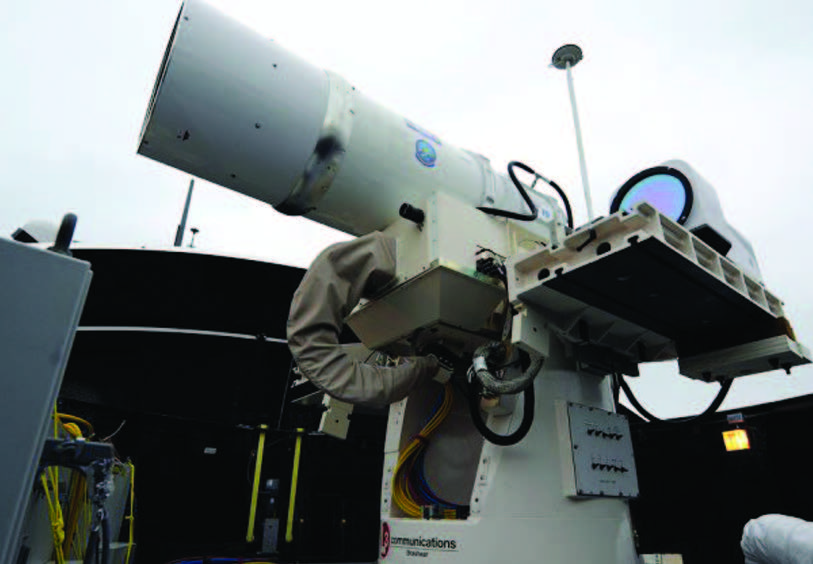
    BATH (TIP): Some of the US navy’s futuristic weapons sound like something out of ‘Star Wars’, with lasers meant to shoot down drones and electric guns that fire projectiles at hypersonic speeds. That future is now. The navy plans to deploy its first laser on a ship later this year, and it aims to test an electromagnetic rail gun prototype on a vessel in two years.

    For the US navy, it’s not so much about the whiz-bang technology as it is about the economics of such weapons. Both costs pennies on the dollar compared with missiles and smart bombs, and the weapons can be fired continuously, unlike missiles and bombs, which eventually run out. “It changes the way we fight,” said Captain Mike Ziv, programme manager for directed energy and electric weapon systems for the Naval Sea Systems Command.

    The technology has evolved to the point that a prototype to be deployed on the USS Ponce this summer can be operated by a single sailor. The solid-state laser weapon system is designed to target what the US navy describes as “asymmetrical threats”. Those include drones, speed boats and swarm boats, all potential threats to warships in the Persian Gulf, where the Ponce is set to be deployed.

    Rail guns, which have been tested on land in Virginia, fire a projectile at six or seven times the speed of sound — enough velocity to cause severe damage. The US navy sees them as replacing or supplementing oldschool guns, firing lethal projectiles from long distances. However, both systems have shortcomings. Lasers lose their effectiveness if it’s raining, if it’s dusty or if there’s turbulence in the atmosphere, and the rail gun needs vast amount of electricity, said Loren Thompson, defence analyst at Lexington Institute.

  • Computer solves 80-year-old puzzle, but who’ll check?

    Computer solves 80-year-old puzzle, but who’ll check?

    LONDON (TIP): A puzzle that has confounded mathematicians for almost a century is closer than ever to being solved, it has emerged. But there’s one slight problem. The calculations which prove a part of what’s known as “Erdos discrepancy problem” have been worked out by a computer. And the amount of data — more than the entire contents of Wikipedia — is so vast that it would be practically impossible to be checked by a human brain.

    The “discrepancy problem” was posed in the 1930s by mathematician Paul Erdos. It revolves around properties of infinite sequences of numbers containing only +1s and -1 s. Patterns in such sequences can be measured by creating finite sub-sequences . Enrico Scalas of University of Sussex explained the premise : “You have a sequence of 1s and -1 s (for instance, generated by tossing a coin) and a constant C. One is looking for a finite subsequence long enough so that sum of elements of the sub-sequence is larger than C.”

    The difficulty lies in proving this. That’s where the ability of computers to perform complex calculations comes in. With this aid, Alexei Lisitsa and Boris Konev of the University of Liverpool showed that an infinite sequence will have a discrepancy (the sum of the numbers in a sub-sequence ) larger than two.

    They took a sequence 1,161 numbers long and the resulting data was a 13GB file. That’s bigger than the estimated 10GB size of Wikipedia’s written contents. It is the start of solving the puzzle – but while computers have helped, they have not yet taken over from humans. Mathematicians were philosophical about being beaten by a machine. Matt Parker, public engagement in maths fellow at Queen Mary University of London, said: “The computer did the heavylifting , but it was the insight and creativity of its human programmers which made it possible.”

  • Nasa satellite data raises hope of reviving Aral Sea

    Nasa satellite data raises hope of reviving Aral Sea

    LONDON (TIP): All is not lost for the fastdisappearing Aral Sea, a saline lake in central Asia. Nasa satellites have discovered large amounts of water – almost half of its capacity – hidden in the central part of the watershed, raising hopes of reviving what was once the fourth largest itit in the worldit.

    The Aral Sea It has lost 90% of its water volume in the last 50 years. The new data says although the long-term water picture for the Aral Sea watershed in Central Asia is bleak, short-term prospects are better than previously thought. Its watershed – the enormous closed basin around the sea – encompasses Uzbekistan and parts of Tajikistan, Turkmenistan, Kyrgyzstan and Kazakhstan. Kirk Zmijewski and Richard Becker of the University of Toledo, Ohio, wanted to find out whether all of the water was gone for good, or whether some of it might have ended up elsewhere in the watershed, behind dams or in aquifers.

    They also wanted to gauge whether decreasing rainfall had contributed to the catastrophic water loss. The researchers used data from Nasa’s Gravity Recovery and Climate Experiment satellites to map monthly changes in mass within the watershed from 2003 to 2012. They mapped the entire Aral Sea watershed and found that each year throughout the decade, the watershed lost an average of 4.6 to 5.4 cubic miles of water or the equivalent of one Lake Mead per year – only about half as much as the rate at which the Aral Sea itself is losing water (5.8 cubic miles or 24 cubic kilometers).

    “That means that roughly half the water lost from the Aral Sea has entirely left the watershed, by evaporation or agricultural uses, but half is upstream within the watershed,” said Becker. Decreasing rainfall in the region has been widely reported, and the researchers wanted to quantify its role in the water loss.Unexpectedly, they also found no change in precipitation since 2002.

  • WHY EINSTEIN CHANGED HIS VIEW ON UNIVERSE

    WHY EINSTEIN CHANGED HIS VIEW ON UNIVERSE

    WASHINGTON (TIP): Scientists have found out why physicist Albert Einstein, who for long believed that the universe was static, changed his mind and accepted the modern cosmological view that the cosmos is expanding. Until 1931, the 20th century genius, Einstein believed that the universe was static rather than expanding.

    An urban legend attributes this change of perspective to when American astronomer Edwin Hubble showed Einstein his observations of red shift in the light emitted by far-away nebulae – today known as galaxies. But the reality is more complex, researchers said. The change in Einstein’s viewpoint, in fact, resulted from a tortuous thought process, said researchers in an article published in the European Physical Journal H. Harry Nussbaumer from the Institute of Astronomy at ETH Zurich, Switzerland, explained how Einstein changed his mind following many encounters with some of the most influential astrophysicists of his generation.

    In 1917 Einstein applied his theory of general relativity to the universe, and suggested a model of a homogenous, static, spatially curved universe. However, this interpretation has one major problem: If gravitation was the only active force, his universe would collapse – an issue Einstein then addressed by introducing the cosmological constant. He then fiercely resisted the view that the universe was expanding, despite his contemporaries’ suggestions that this was the case.

    For example, in 1922, Russian physicist Alexander Friedman showed that Einstein’s equations were viable for dynamical worlds. For instance, in 1927, Georges Lemaitre, a Belgian astrophysicist from the Catholic University of Louvain, concluded that the universe was expanding by combining general relativity with astronomical observations. Yet, Einstein refused to abandon his static universe. However, in an April 1931 report to the Prussian Academy of Sciences, Einstein finally adopted a model of an expanding universe. In 1932, he teamed up with the Dutch theoretical physicist and astronomer, Willem de Sitter, to propose an eternally expanding universe which became the cosmological model generally accepted until the middle of the 1990s.

  • Scientists discover new therapy to cure HIV

    Scientists discover new therapy to cure HIV

    NEW YORK (TIP): Scientists have found a new way to clean the remaining human immunodeficiency virus (HIV) from the bodies of infected patients after they have been treated with antiretroviral therapy.

    Scientists used radioimmunotherapy (RIT) to destroy remaining human immunodeficiency virus (HIV)-infected cells in the blood samples of patients treated with antiretroviral therapy, offering the promise of a strategy for curing HIV infection. Ekaterina Dadachova from Albert Einstein College of Medicine in the Bronx, New York and a team of researchers administered RIT to blood samples from 15 HIV patients treated with highly active antiretroviral therapy (HAART).

    RIT, which has historically been employed to treat cancer, uses monoclonal antibodies – cloned cells that are recruited by the immune system to identify and neutralise antigens. “In RIT, the antibodies bind to the infected cells and kill them by radiation. When HAART and RIT are used together, they kill the virus and the infected cells, respectively,” said Dadachova, the study’s lead author.

    Dadachova’s team paired the monoclonal antibody (mAb2556) designed to target a protein expressed on the surface of HIV-infected cells with the radionuclide Bismuth-213. Researchers found that RIT was able to kill HIV-infected lymphocytes previously treated with HAART, reducing the HIV infection in the blood samples to undetectable levels.

    “The elimination of HIV-infected cells with RIT was profound and specific. The radionuclide we used delivered radiation only to HIVinfected cells without damaging nearby cells,” Dadachova said. An important part of the study tested the ability of the radiolabeled antibody to reach HIV-infected cells in the brain and central nervous system. Using an in vitro human blood brain barrier model, the researchers demonstrated that radiolabeled mAb2556 could cross the blood brain barrier and kill HIV-infected cells without any overt damage to the barrier itself.

  • INTERIM RAILWAY BUDGET: HIGH-SPEED CORRIDOR ACCELERATES

    INTERIM RAILWAY BUDGET: HIGH-SPEED CORRIDOR ACCELERATES

    NEW DELHI (TIP):
    High-speed trains in India could be a reality soon, with Indian Railways (IR) focusing on bringing new technology for modernisation of trains. The first high-speed rail (300-350 km/hour) will likely connect Mumbai and Ahmedabad, the two financial hubs in western India. It is expected to cut travel time between the two cities from the current eight hours to two hours. The railways is also focusing on achieving speeds of 160-200 km/hour on existing tracks.

    A joint feasibility study for the Mumbai-Ahmedabad high-speed corridor, which started in December 2013, is set to be completed in 18 months, minister Mallikarjun Kharge said in his speech on Wednesday. The study is being financed by Indian Railways and Japan International Cooperation Agency. An agreement for the partnership was finalised between the two sides in May 2013. Another business development study for the Mumbai-Ahmedabad corridor, undertaken by the French railways, will be completed by April 2014.

    After a report on the study is presented, IR will decide on the next course of action, as well as the modalities for implementation of the project, Kharge said. The railways is also exploring low-cost options to increase the speed of trains on select existing routes such as Delhi-Agra and Delhi-Chandigarh, to 160-200 km/hour. Earlier, the railways had said a High-Speed Rail Corporation (HSRC), a subsidiary of Rail Vikas Nigam Ltd, was being set up to increase the speed of passenger trains up to 200 km/hour. The High-Speed Rail Authority will be set up soon.

    While the authority will frame policies, it will be up to HSRC to implement these. The Mumbai-Ahmedabad and Delhi-Amritsar routes are two of the seven corridors HSRC plans to take up on a priority basis. For speeds of more than 200 km/hour, dedicated tracks and fencing are needed. Kharge said implementation of the eastern and western dedicated freight corridor projects was recording good progress, with about 1,100 km of civil construction contracts being awarded. In 2014-15, an additional 1,000 km of civil construction contracts are expected to be awarded, besides the those for systems contracts.

  • CAN SMART RIFLE HIT BULL’S EYE?

    CAN SMART RIFLE HIT BULL’S EYE?

    WASHINGTON (TIP):
    The US army has confirmed that is testing new high-tech rifles that incorporate “computer vision and object tracking technologies” that allow “any soldier (to become) an extraordinary marksman”. A spokeswoman confirmed reports that specialist equipmenttesters had purchased six ‘scope and trigger’ kits built by Texas-based start-up TrackingPoint and would be testing them on XM 2010 sniper rifles. TrackingPoint’s technology consists of a scope with an on-board computer and a linked trigger.

    A shooter looking through the scope first ‘tags’ a target before the computer calculates the best place to shoot by measuring 16 different variables, including range, wind, temperature and humidity. A marker on the scope then indicates the correct “firing solution” and locks the trigger until the shooter has correctly aligned the sights with the target.

    Tracking Point stress that there is no automatic firing and that “the only way a round can be launched is through human pull force (on the trigger).” Lt Col Shawn Lucas from the army’s Program Executive Office said that the technology will help train soldiers for “a relatively small investment” and that it offers “significant increase in probability of hit and overall effectiveness by making an investment in advanced fire control.”

  • Lasers fuel hopes of unlimited, clean Nuclear-power

    Lasers fuel hopes of unlimited, clean Nuclear-power

    CALIFORNIA (TIP):
    A milestone has been reached in the 60-year struggle to harness the nuclear reactions that power the Sun in an experiment that could lead to a way of producing an unlimited source of clean and sustainable energy in the form of nuclear fusion. Scientists in California said that they have for the first time managed to release more energy from their nuclear fusion experiment than they put into it, which marks a critical threshold in eventually achieving the goal of a self-sustaining nuclear-fusion reaction.

    Nuclear fusion uses a fuel source derived from water and produces none of the more dangerous and long-lasting isotopes, such as enriched uranium and plutonium, that result from conventional nuclear power plants, which rely on the fission or splitting of atoms rather than their fusion. Researchers involved in the Nuclear Ignition Facility (NIF) at the Lawrence Livermore National Laboratory said that they have used 192 laser beams to compress a tiny fuel pellet less than half the diameter of a human hair in such a way that it triggered the net release of energy by nuclear fusion.

    The fuel, composed of the two hydrogen isotopes tritium and deuterium derived from water, was compressed together under enormous pressures and temperatures for less than a billionth of a second, but this was enough to see more energy coming out of the experiment than went into it. “We are fusing deuterium and tritium, which are isotopes of water, in a way that gets them to run together at high enough speed to overcome their natural electrical repulsion to each other,” said Omar Hurricane of the Livermore laboratory. “We are finally, by harnessing these reactions , getting more energy out of these reactions than we are putting into the deuterium-tritium fuel… We took a step back from what we tried before and in the process took a leap forward,” said Dr Hurricane, who led the NIF study published in the journal Nature.

    There are currently two parallel approaches to nuclear fusion. One uses laser energy to compress fuel pellets – like the NIF experiment – and aims to keep the fuel in place by a process known as inertial confinement. The other approach is to build a complex magnetic “bottle” to hold the hot, electrically charged plasma of the fuel in place. This magnetic confinement is the strategy of the Joint European Torus experiment in Culham, Oxfordshire, and the international ITER nuclear fusion plant under construction at Cadarache in southern France.

    Both approaches aim to gain more energy than is put into the system, and ultimately to a critical stage called “ignition” when the reaction becomes self-sustaining, which would mean that fusion could be exploited practically in power plants as an unlimited source of clean energy. The breakthrough at NIF was made possible by altering the laser pulses focusing on the fuel pellet in such a way that it led to the even compression of the capsule holding the deuterium and tritium, said Debbie Callahan, one of the researchers involved.

  • INDIAN SCIENTISTS CONVERT DISCARDED PLASTIC INTO PETROLEUM PRODUCTS

    INDIAN SCIENTISTS CONVERT DISCARDED PLASTIC INTO PETROLEUM PRODUCTS

    LONDON (TIP):
    In a major breakthrough Indian-origin scientists based in US have successfully converted plastic shopping bags into diesel, natural gas and other useful petroleum products. The conversion produces significantly more energy than it requires and results in transportation fuels like diesel. Other products such as natural gas, naphtha (a solvent), gasoline, waxes and lubricating oils such as engine oil and hydraulic oil also can be obtained from shopping bags. Brajendra Kumar Sharma, a senior research scientist at the Illinois Sustainable Technology Center led the research.

    He said it involved a process called pyrolysis which is essentially heating the bags in an oxygen-free chamber. Sharma said, “Plastic bags make up a sizeable portion of the plastic debris in giant ocean garbage patches that are killing wildlife and littering beaches. Plastic bags have been detected as far north and south as the poles. Over a period of time, this material starts breaking into tiny pieces and is ingested along with plankton by aquatic animals.

    Fish, birds, ocean mammals and other creatures have been found with a lot of plastic particles in their guts,” Sharma said. “Turtles, for example, think that the plastic grocery bags are jellyfish and they try to eat them,” he added. “You can get only 50 to 55% fuel from the distillation of petroleum crude oil,” Sharma said. “But since this plastic is made from petroleum in the first place we can recover almost 80% fuel from it through distillate ion”.

    World Watch Institute says factories around the world churned out 4-5 trillion bags in 2002 ranging from large trash bags to thick shopping totes to flimsy grocery sacks. Previous studies have used pyrolysis to convert plastic bags into crude oil. Sharma’s team took the research further by fractionating the crude oil into different petroleum products and testing the diesel fractions to see if they complied with national standards for ultra-low-sulfur diesel and biodiesel fuels.

    A mixture of two distillate fractions providing an equivalent of US diesel met all of the specifications required after addition of an antioxidant, Sharma said. “This diesel mixture had an equivalent energy content, a higher cetane number (a measure of the combustion quality of diesel requiring compression ignition) and better lubricity than ultra-lowsulfur diesel,” he said. The researchers were able to blend up to 30% of their plastic-derived diesel into regular diesel and found no compatibility problems with biodiesel.

    “It’s perfect,” Sharma said. “We can just use it as a drop-in fuel in the ultra-low-sulphur diesel without the need for any changes.” The first plastic bags were introduced in the United States in 1957. Plastic trash bags started appearing around the world by the late 1960s. North America and Western Europe account for nearly 80% percent of plastic bag use— though the bags are increasingly common in developing countries as well. A quarter of the plastic bags used in wealthy nations are now produced in Asia. Each year Americans throw away some 100 billion polyethylene plastic bags. Only 0.6% of this is recycled. The rest of the bags end up in landfills or escape to the wild, blowing across the landscape and entering waterways.

  • FARTHEST GALAXY CLUSTER FOUND

    FARTHEST GALAXY CLUSTER FOUND

    LONDON (TIP):
    Astronomers have found the farthest galaxy cluster till date – 10 billion light years from earth. Four unknown galaxy clusters each potentially containing thousands of individual galaxies have been discovered. Galaxy clusters are the most massive objects in the universe, containing hundreds to thousands of galaxies, bound together by gravity. In common parlance, this means that the light from the most distant of the four new clusters identified by the team has taken over 10 billion years to reach us. Up to now, the most distant clusters found by astronomers date back to when the universe was 4.5 billion years old.

    This equates to around nine billion light years away. While astronomers have identified many nearby clusters, they need to go further back in time to understand how these structures are formed. This means finding clusters at greater distances from the Earth. An international team of astronomers, led by Imperial College London, used a new way of combining data from the two European Space Agency satellites, Planck and Herschel, to identify more distant galaxy clusters than has previously been possible.

    The Planck satellite scanned the whole sky while the Herschel satellite surveyed certain sections in greater detail. The researchers from the UK, Spain, USA, Canada, Italy and South Africa believe up to 2000 further clusters could be identified using this technique, helping to build a more detailed timeline of how clusters are formed. Lead researcher Dr David Clements, from the department of physics at Imperial College London, explains “The clusters can be identified at such distances because they contain galaxies in which huge amounts of dust and gas are being formed into stars. This process emits light that can be picked up by the satellite surveys.”

  • THE WORLD’S OLDEST COMPUTER TURNS 70

    THE WORLD’S OLDEST COMPUTER TURNS 70

    LONDON (TIP):
    The world’s first electronic computer created by the British to decrypt Adolf Hitler’s secret messages during World War II turned 70 on February 5. Some of Britain’s best known code breakers who operated the ‘Colossus’ gathered at UK’s National Museum of Computing to celebrate seven decades of it’s existence. Designed by British telephone engineer Tommy Flowers, Colossus was built to speed up code-breaking of the complex Lorenz cipher used in communications between Hitler and his generals during World War II. It is widely thought to have shortened the war and saved countless lives. On February 5, 1944 Colossus Mk I worked on its first Lorenzencrypted message.

    By the end of the war, 63 million characters of high-grade German messages had been decrypted by the 550 people working on the 10 functioning colossi during the war. Colossus occupied the size of a living room (7 feet high by 17 feet wide and 11 feet deep), weighed five tons, incorporated 2,500 valves and 10,000 resistors connected by 7 km of wiring. Its existence was kept top secret for 30 years because of the sensitivity surrounding the encryption messages it had helped to break. German teleprinter signals encrypted by Lorenz machines were first found by police looking for possible spy transmissions in 1940 in the UK.

    In August 1941, a procedural error by a German operator enabled Colonel John Tiltman – a top code-breaker decipher a German message. Mathematician Bill Tutte then began working on the case and was able to deduce the complete logical structure of the cipher machine. Code-breakers then began breaking the codes by hand but this was very time consuming. Flowers who was then a post office electronics engineer designed Colossus which helped break codes in a few hours thereby greatly shortening the process and enabling larger numbers of messages to be broken. Tim Reynolds, chair of Britain’s National Museum of Computing said, “The achievements of those who worked at Bletchley Park are humbling.

    Tutte’s ingenuity in deducing out how the Lorenz machine worked without ever having seen it, the skill of those who broke the cipher by hand and Flowers’ design of the world’s first electronic computer Colossus to speed up the code-breaking process are feats almost beyond comprehension.” In honor of the men and women who worked at Bletchley Park during World War II, Tony Sale, co-founder of The National Museum of Computing led a team to rebuild Colossus in 1994. They worked with eight photographs of Colossus taken in 1945. A few circuit diagrams kept by engineers who worked on the original computer were also obtained. On Nov 15, 2007, a rebuilt fully-functioning Colossus Mark II was unveiled to the public.

  • STUDY LINKS SUGAR TO HEART AILMENTS

    STUDY LINKS SUGAR TO HEART AILMENTS

    CHICAGO (TIP): Could too much sugar be deadly? The biggest US study of its kind suggests the answer is yes, at least when it comes to fatal heart problems. It doesn’t take all that much extra sugar, hidden in many processed foods, to substantially raise the risk, the researchers found, and most Americans eat more than the safest amount. Being in the highest risk category in the study means your chance of dying prematurely from heart problems is nearly three times greater than for people who eat only foods with little added sugar.

    For someone who normally eats 2,000 calories daily, even consuming two 340-gram cans of soda substantially increases the risk. For most American adults, sodas and other sugary drinks are the main source of added sugar. Quanhe Yang of the US Centres of Disease Control and Prevention said that it’s the first nationally representative study to examine the issue. Scientists aren’t certain how sugar may contribute to heart problems, but it has been shown to increase blood pressure and levels of unhealthy cholesterol.

  • PLANET DRUNKENLY DANCING AROUND TWO ‘SUNS’ FOUND

    PLANET DRUNKENLY DANCING AROUND TWO ‘SUNS’ FOUND

    NEW DELHI (TIP):
    It doesn’t get weirder than this in the cosmic zoo: a gas planet that is going around two ‘suns’, one orange and the other red, all the time wobbling drunkenly so much that ‘seasons’ would flash past. This strange world was discovered 2300 light years away by Nasa’s planethunting Kepler space telescope. The planet, designated Kepler- 413b, precesses, or wobbles, wildly on its spin axis, much like a child’s top. The tilt of the planet’s spin axis can vary by as much as 30 degrees over 11 years, leading to rapid and erratic changes in seasons. In contrast, Earth’s rotational precession is 23.5 degrees over 26,000 years.

    Researchers are amazed that this far-off planet is precessing on a human timescale. Kepler 413-b is located in the constellation Cygnus. It circles a close pair of orange and red dwarf stars every 66 days. The planet’s orbit around the binary stars appears to wobble, too, because the plane of its orbit is tilted 2.5 degrees with respect to the plane of the star pair’s orbit. As seen from Earth, the wobbling orbit moves up and down continuously. Kepler finds planets by noticing the dimming of a star or stars when a planet transits, or travels in front of them. Normally, planets transit like clockwork.

    Astronomers using Kepler discovered the wobbling when they found an unusual pattern of transiting for Kepler-413b. “Looking at the Kepler data over the course of 1,500 days, we saw three transits in the first 180 days — one transit every 66 days — then we had 800 days with no transits at all. After that, we saw five more transits in a row,” said Veselin Kostov, the principal investigator on the observation. Kostov is affiliated with the Space Telescope Science Institute and Johns Hopkins University in Baltimore, Md. The next transit visible from Earth’s point of view is not predicted to occur until 2020.

    This is because the orbit moves up and down, a result of the wobbling, in such a great degree that it sometimes does not transit the stars as viewed from Earth. Astronomers are still trying to explain why this planet is out of alignment with its stars. There could be other planetary bodies in the system that tilted the orbit. Or, it could be that a third star nearby that is a visual companion may actually be gravitationally bound to the system and exerting an influence.

    “Presumably there are planets out there like this one that we’re not seeing because we’re in the unfavorable period,” said Peter McCullough, a team member with the Space Telescope Science Institute and Johns Hopkins University. “And that’s one of the things that Veselin is researching: Is there a silent majority of things that we’re not seeing?” Even with its changing seasons, Kepler-413b is too warm for life as we know it. Because it orbits so close to the stars, its temperatures are too high for liquid water to exist, making it inhabitable. It also is a super Neptune — a giant gas planet with a mass about 65 times that of Earth — so there is no surface on which to stand.

  • Now, a syringe to help seal gunshot wounds in 15 second

    Now, a syringe to help seal gunshot wounds in 15 second

    WASHINGTON (TIP): A new pocket-sized syringe that can seal gunshot wounds within just 15 seconds has been developed by scientists. The syringe Called XStat, developed by Oregon-based RevMedx, injects specially coated sponges into wounds. The device could boost survival and spare injured soldiers from additional pain by plugging wounds faster and more efficiently than gauze, ‘Popular Science’ reported. “That is what we pictured as the perfect solution: something you could spray in, it would expand, and bleeding stops,” said John Steinbaugh, former US army special operations medic.

    The team used ordinary sponges and cut them into 1cm circles. They then injected the bits of sponge into an animal injury. “The bleeding stopped. Our eyes lit up. We knew we were onto something,” said Steinbaugh. Researchers settled on a sponge made from wood pulp and coated with chitosan, a blood-clotting, antimicrobial substance found in shrimp shells. They added Xshaped markers that make each sponge visible on an x-ray image in order to ensure that no sponges are left inside the body accidentally, the report said. The sponges expand to fill the entire wound cavity in just 15 seconds, creating enough pressure to stop heavy bleeding.

  • WEB GETS NEW DOMAIN ADDRESSES: .GURU, .BIKE

    WEB GETS NEW DOMAIN ADDRESSES: .GURU, .BIKE

    WASHINGTON (TIP): The humble .com is set to receive some competition from a new set of unusual web addresses such as .guru and .singles! Internet users will now be able to register in targeted and specific domains ending in .guru, .bike, .singles, .plumbing and .clothing among others as a US company is offering a wave of new web addresses.

    Donuts Inc will kick off the general availability period for seven new internet domain names, marking the beginning of a new era for the Internet in which users will have unprecedented choice in how they identify and brand themselves online. The new generic top-level domains (gTLDs) – the first of hundreds Donuts will launch this year – are .bike, .clothing, .guru, .holdings, .plumbing, .singles, and .ventures, the company said.

    Anyone can register names in these gTLDs on a first come, firstserved basis from accredited registrars worldwide. According to the company on February 5, .camera, .equipment, .estate, .gallery, .graphics, .lighting and .photography will be open for registration by anyone interested in an online identity connected to these terms. “Starting this week, new, relevant and specific Internet naming options will be available on a scale never before seen,” Donuts co-founder and CEO Paul Stahura said.

    “This is a unique opportunity for businesses, brands, organisations, and individuals to find an online identity that speaks precisely to their products, services and interests,” Stahura said. In addition to this launch, Donuts hit another major milestone when it signed its 105th new gTLD contract with the Internet Corporation for Assigned Names and Numbers ( ICANN).

    “We have ambitious goals as part of our commitment to leading the development and innovation of the new gTLD marketplace,” said company cofounder and Executive Vice President Jonathon Nevett. “Reaching 105 gTLDs under contract is a good landmark, but we won’t be satisfied until all of our remaining contracts are completed and all our gTLDs are fully available to the public ,” said Nevett.

  • Scientists create embryonic-type stem cells without embryos

    Scientists create embryonic-type stem cells without embryos

    LONDON (TIP): In experiments that could open a new era in stem cell biology, scientists have found a cheap and easy way to reprogramme mature cells from mice back into an embryonic-like state that allowed them to generate many types of tissue.

    The research, described as game changer by experts in the field, suggests human cells could in future be reprogrammed by the same technique, offering a simpler way to replace damaged cells or grow new organs for sick and injured people. Chris Mason, chair of regenerative medicine bioprocessing at University College London, who was not involved in the work, said its approach was “the most simple, lowest-cost and quickest method” to generate so-called pluripotent cells — able to develop into many different cell types — from mature cells.

    “If it works in man, this could be the game changer that ultimately makes a wide range of cell therapies available using the patient’s own cells as starting material — the age of personalized medicine would have finally arrived,” he said. The experiments, reported in two papers in the journal Nature on Wednesday, involved scientists from the RIKEN Center for Developmental Biology in Japan and Brigham and Women’s Hospital and Harvard Medical School in the United States.

    Beginning with mature, adult cells, researchers let them multiply and then subjected them to stress “almost to the point of death”, they explained, by exposing them to various events including trauma, low oxygen levels and acidic environments. Within days, the scientists found that the cells survived and recovered from the stressful stimulus by naturally reverting into a state similar to that of an embryonic stem cell.

    These stem cells created by this exposure to stresses — dubbed STAP cells by the researchers — were then able to differentiate and mature into different types of cells and tissue, depending on the environments they were given. “If we can work out the mechanisms by which differentiation states are maintained and lost, it could open up a wide range of possibilities for new research and applications using living cells,” said Haruko Obokata, who lead the work at RIKEN. Stem cells are the body’s master cells and are able to differentiate into all other types of cells.

    Scientists say that, by helping to regenerate tissue, they could offer ways of tackling diseases for which there are currently only limited treatments – including heart disease, Parkinson’s and stroke. There are two main types of stem cells: embryonic ones, harvested from embryos, and adult or iPS cells, which are taken from skin or blood and reprogrammed back into stem cells. Because the harvesting of embryonic stem cells requires the destruction of a human embryo, the technique has been the subject of ethical concerns and protests from pro-life campaigners.

    Dusko Ilic, a reader in stem cell science at Kings College London, said the Nature studies described “a major scientific discovery” and predicted their findings would open “a new era in stem cell biology”. “Whether human cells would respond in a similar way to comparable environmental cues … remains to be shown,” he said in an emailed comment. “I am sure that the group is working on this and I would not be surprised if they succeed even within this calendar year.”

  • WATER TO REPLACE INK IN YOUR PRINTER!

    WATER TO REPLACE INK IN YOUR PRINTER!

    BEIJING (TIP): Imagine a simple printer at your office or home that uses water instead of ink to print reams of papers. Possible, say Chinese researchers.

    But the catch is not in the printer but the paper. According to scientists at Jilin University in Changchun, China, the printed characters last for a day on a special paper that can then be re-used. “Every time you print, it’s fresh,” Sean Zhang, professor of chemistry, was quoted as saying.

    “We are using a commercially available inkjet printer. We just filled the cartridges with water and put it back. It’s like normal printing. The magic is in the paper,” Zhang, a former researcher at Hewlett- Packard Labs in Menlo Park, California, told DiscoveryNews. This method allows the paper to be reused several times and could potentially have cheaper running costs. How did they produce this special paper? The team developed a special coating on the paper that responds to the water.

    They were able to print various Chinese and English characters using blue, magenta gold and purple colours, using water as a key that activates the dye molecule. “The next step is to combine colours to go black,” Zhang added. According to Kira Barton, professor of mechanical engineering at the University of Michigan, “going toward more sustainable techniques of printing is helpful and beneficial”.

  • A TOOL TO TELL HOW MUCH TIME YOU HAVE WASTED ON FB

    A TOOL TO TELL HOW MUCH TIME YOU HAVE WASTED ON FB

    LONDON (TIP): If you’ve ever had sleepless nights wondering how much of your life has been idled away on Facebook, a tool has at last been developed that means you can stop wasting your time.

    Created to coincide with the social media site’s 10th birthday next week, the calculator estimates to the minute how much of the past decade you have spent posting, liking and poking. While the networking website Facebook itself does not release information on individual user log-in times, by accessing data on when you joined the site and how often you’ve posted things to your feed, the tool is able to guess roughly how many days of your life “you’ve wasted” .

    Developed by Time Magazine, it then gives you the option to “brag about it” via Twitter or, naturally, Facebook itself. Though the results may be depressing, they translate to big profits for the company set up Mark Zuckerberg and a few friends on 4 February 2004. Analysts have said that Facebook may have had its best ever quarter in terms of revenues, which for 2013 are forecast to have risen almost 50 per cent to $7.6 billion, according to the Financial Times.

  • DISCOVERED: A RIVER OF HYDROGEN IN SPACE

    DISCOVERED: A RIVER OF HYDROGEN IN SPACE

    WASHINGTON (TIP): Astronomers have discovered a never-beforeseen river of hydrogen flowing through space into a nearby galaxy around 22 million light years from Earth.

    This very faint, very tenuous filament of gas is streaming into the galaxy NGC 6946 and may help explain how certain spiral galaxies keep up their steady pace of star formation, researchers said. “We knew that the fuel for star formation had to come from somewhere.

    So far, however, we’ve detected only about 10% of what would be necessary to explain what we observe in many galaxies,” astronomer DJ Pisano from West Virginia University said. “A leading theory is that rivers of hydrogen – known as cold flows may be ferrying hydrogen through intergalactic space, fuelling star formation.

    But this was too diffused to detect, until now,” he said. Spiral galaxies, like our own Milky Way, typically maintain a rather tranquil but steady pace of star formation. Others, like NGC 6946, which is located approximately 22 million light years from Earth on the border of the constellations Cepheus and Cygnus, are much more active, though less-so than more extreme starburst galaxies. This raises the question of what is fuelling the sustained star formation in this and similar spiral galaxies.

  • Decoded: Why beer turns foamy

    Decoded: Why beer turns foamy

    LONDON (TIP): Spanish scientists have discovered why beer transforms from liquid to foam when one bottle is bumped against another. Scientists at Universidad Carlos III de Madrid ( UC3M) and colleagues got the idea for the research when they observed that the foam of one beer spilled over when somebody jokingly hit the neck of one bottle against the base of another.

    “We all began to propose hypotheses and theories about the cause of the phenomenon, but none of them convinced us, so we decided to take it to the laboratory to do research using controlled experiments in well-defined conditions to analyse which physical phenomena are behind the appearance of that foam,” said Javier Rodriguez, a professor in UC3M’s department of thermal and fluids engineering. The study explained in detail what happens after a bottle receives an impact.

    First, expansion and compression waves appear. These advance inside the liquid and cause the gas cavities (bubbles) to burst at the bottom of the bottle. Afterwards, small balls of foam are formed because the bubbles break into even smaller ones. Finally, given that they weigh less than the liquid surrounding them, these bubbles move to the surface so rapidly that the final result is similar to an explosion. The foam appears because, in carbonated beverages, there is more carbon dioxide (CO2) than the water (the main component) is able to maintain in the solution.

  • SEX WITH GLASS’ APP ADDS SPICE TO LOVEMAKING

    SEX WITH GLASS’ APP ADDS SPICE TO LOVEMAKING

    LONDON (TIP): A new app for Google’s hi-tech wearable computing gadget, Glass, would reportedly change the way people have sex, or more appropriately “view it”. The ‘Sex with Glass’ app has been designed to enhance the wearer’s experience while having sexual intercourse. The app records one’s sexual activity when the wearer says “OK Glass, it’s time” and live streams the video to the partner and vice versa, metro.co.uk reports.

    If one wants to stop seeing what their partner sees, a command “OK Glass, pull out” would be sufficient. The app would then string together all the footage from both the partners and play it back before deleting the video five hours later. According to the report, the Sex with Glass app also allows users to turn down the lights and turn up the music with voice commands apart from providing suggestions for which positions one can use next. Developer of the app, Sherif Maktabi, a design student at London’s Central Saint Martins art college, said that having sex with Google Glass on brings a completely new perspective.

  • ‘123456’ DETHRONES ‘PASSWORD’ AS WORST PASSWORD

    ‘123456’ DETHRONES ‘PASSWORD’ AS WORST PASSWORD

    LONDON (TIP): Internet security firm SplashData has released its list of the worst passwords of 2013. King of terrible passwords, ‘password’, has finally been unseated from its throne. It has been displaced by ‘123456’ as the world’s most popular worst password. This year’s list was influenced by the large number of passwords from Adobe users posted online by security consulting firm Stricture Consulting Group following Adobe’s well-publicized security breach.

    “Seeing passwords like ‘adobe123’ and ‘photoshop’ on this list offers a good reminder not to base your password on the name of the website or application you are accessing,” says Morgan Slain, CEO of SplashData. SplashData’s list of frequently-used passwords shows that many people continue to put themselves at risk by using weak passwords. Some other passwords in the Top 10 include ‘qwerty,’ ‘abc123,’ ‘111111,’ and ‘iloveyou’. SplashData’s top 25 was compiled from files containing millions of stolen passwords posted online during the previous year.

    The company advises consumers or businesses using any of the passwords on the list to change them immediately. SplashData suggests making passwords more secure with these tips: “Use passwords of eight characters or more using mixed characters. But even passwords with common substitutions like ‘dr4mat1c’ can be vulnerable to attackers’ increasingly-sophisticated technology, and random combinations like ‘j%7K&yPx$’ can be difficult to remember.

  • DOWNLOAD 44 FILMS IN A SECOND VIA THIS NET LINK

    DOWNLOAD 44 FILMS IN A SECOND VIA THIS NET LINK

    LONDON (TIP): Scientists in the UK have created the fastest ever real-world internet connection, using commercial-grade fibre optic lines to clock up speeds of 1.4 terabits per second. It’s believed to be the fastest speed test of its kind, and would allow users to hypothetically download 44 high-definition films in a single second. Downloading the entire English version of Wikipedia would take just 0.006s.

    A joint research team from French telecoms company Alcatel-Lucent and BT created the connection using an existing 410km-stretch of fibre optic cable between BT Tower in London and a BT research campus in Suffolk. Using a new protocol named Flexigrid the researchers were able to overlay several transmission channels over the same connection. The resulting ‘Alien Super Channel’ was comprised of seven 200 gigabit per second connections, increasing transmission efficiency by 42.5% when compared to previous efforts.

    The researchers’ use of existing hardware is integral, as it will allow telecoms companies to meet the UK’s ever-increasing demand for faster internet speeds without having to replacing existing optical fibres. However, despite this record recent news from South Korea shows that the UK is still lagging behind other countries when it comes to mobile connections. In Seoul this week mobile operator SK Telecom Co announced plans to roll-out a new 300Mbps by the end of 2014.

    In comparison, UK operator EE currently offers speeds of “up to 60mbps” through their fastest 4G service. Although SK Telecom Co’s new network is slow compared to BT’s ‘Alien Super Channel’ (it would take a whole 22 seconds to download a single HD movie) the announcement is impressive for a commercial subscription. The South Korean goverment also announced a new initiative to introduce a next-generation 5G wireless connection within six years.