Tag: Science & Technology

  • A LONG-LASTING BATTERY THAT RUNS ON SUGAR

    A LONG-LASTING BATTERY THAT RUNS ON SUGAR

    WASHINGTON (TIP): Scientists have developed a new biodegradable battery that runs on sugar and can work for long hours without charging. In as soon as three years, the new battery could be running some of the cell phones, tablets, video games, and the myriad other electronic gadgets that require power, researchers said. The battery developed by a Virginia Tech research team has an unmatched energy density, a development that could replace conventional batteries with ones that are cheaper, refillable, and biodegradable.

    While other sugar batteries have been developed, this one has an energy density an order of magnitude higher than others, allowing it to run longer before needing to be refuelled, Y H Percival Zhang, an associate professor of biological systems engineering in the College of A griculture and Life Sciences and College of Engineering, said.

  • A SPACESUIT THAT SQUEEZES ASTRONAUTS INTO SHAPE

    A SPACESUIT THAT SQUEEZES ASTRONAUTS INTO SHAPE

    WASHINGTON (TIP): Researchers have developed a new spacesuit for astronauts which presses down on its wearer to keep their bones in good health. Researchers at the European Astronaut Centre (EAC) in Germany have designed the new type of suit, called Skinsuit, in order to keep astronauts’ posture in check. Simon Evetts, the lead of the Medical Projects and Technology Team at EAC, said that the Skinsuit exerts force on its wearer from the shoulders towards the feet. “It looks like a tight-fitting Lycra suit you might find at Olympic swimming pools,” he told ‘ABC News’.

    “They’re individually tailored, so that the right amount of force is provided to each astronaut,” he said. The technology simulates the force an astronaut feels on Earth to keep their skeletons healthy. “When we’re on Earth and we walk or run, we put weight on our bones that cause the different cellular processes to signal bone formation to occur,” said International Space Station engineer Mamta Nagaraja. “Without gravity, there’s an imbalance between (bone) formation and resorption, so astronauts lose up to 3% of their bone mass per month,” she said. “We see the greatest bone loss in the hip, wrist and spine. It’s worth trying these types of research-based efforts to counteract bone loss,” she said. Evetts said the suit could even be used for patients in longterm hospital care.

  • Scientist drafts urban nuclear shelter guide

    Scientist drafts urban nuclear shelter guide

    PARIS (TIP): A scientist published a guide to help authorities limit deaths from fallout after a city is hit by a nuclear bomb. Taking cover in existing buildings is widely accepted as a critical first action after a nuclear blast in a major city. But how long people should stay there before moving to better shelter is a more complex question. Buildings that are lightweight or lack a basement are more easily penetrated by radioactive dust. Writing in a British scientific journal, Michael Dillon of the Lawrence Livermore National Laboratory in California, has now come up with a mathematical model for the “optimal shelter exit time” to minimize radiation risk. Based on his calculations, if adequate shelter is 15 minutes away, individuals should remain in their initial, poor-quality shelter no longer than 30 minutes after detonation.

    If, however, the better shelter is only five minutes away, individuals should move there immediately and forego the closer but unsafe buildings altogether, he wrote. Reaching adequate shelter rapidly could save between 10,000 and 100,000 lives from fatal exposure in the event of a single, low-yield detonation, said the study. “These methods are intended to assist emergency planning officials in the development of an optimal low-yield nuclear detonation response strategy,” wrote Dillon. A low-yield blast is described as 0.1- 10 kilotons. One kiloton (kT) is an explosive force equivalent to that of 1,000 metric tonnes of TNT. The US bomb that killed over 200,000 people in Hiroshima was about 15 kT.

  • Human ancestor lived with dinosaurs

    Human ancestor lived with dinosaurs

    WASHINGTON (TIP): Scientists have found that the first placental mammal lived between 88.3 to 91.6 million years ago, suggesting that the ancestor of humans shared the planet with dinosaurs. The study challenges previous research, which on the basis of fossil evidence had theorized that the first placental mammal arose after the dinosaurs died out. Placental mammals today include humans and all other mammals except those that lay eggs or have pouches (marsupials).

    “When dinosaurs died out, many ecological niches became vacant, and placental mammals took over,” study lead author Mario dos Reis at University College London told Discovery News. “The placental ancestor diversified and evolved into the modern mammals we see today, such as rodents, deer, whales, horses, bats, carnivores, monkeys and ultimately humans. If dinosaurs had not died out, then placental mammals may not have had the opportunity to diversify the way they did, and our own species would not have evolved!” added dos Reis. Researchers analysed 36 complete mammal genomes together with information from the mammal fossil record. The results determined placental mammals originated in the Cretaceous period.

  • SOON, A COMPUTER MADE OF ‘INVISIBILITY CLOAK’ MATERIAL

    SOON, A COMPUTER MADE OF ‘INVISIBILITY CLOAK’ MATERIAL

    LONDON (TIP): Scientists have found that materials which make an invisibility cloak a real-life possibility can perform advanced mathematical calculations, paving way for development of a new kind of analogue computer. An international team of researchers has found that so-called metamaterials, which can alter the properties of light waves often to render an object invisible, could perform mathematical operations as well. Nader Engheta, at the University of Pennsylvania, and colleagues decided to explore a different use for metamaterials, one that adapts the old idea of analogue computing.

    Analogue computers were limited in precision by the materials available at the time — for example, anything requiring moving parts for computation was limited by how small those parts could be made. But metamaterials, which rely mainly on light, have no such constraints. Engheta’s team has simulated a metamaterial capable of calculus functions like differentiation and integration, and other fundamental mathematical tools, ‘New Scientist’ reported. The metamaterial computer works because light waves can draw mathematical curves in space, akin to a graph. In calculus, differentiation describes the slope of that curve at various points, while integration gives the area under the curve. The team’s metamaterial block can perform these calculations by modifying the light wave’s profile.

  • Moon’s dark side is turquoise in colour: Experts

    Moon’s dark side is turquoise in colour: Experts

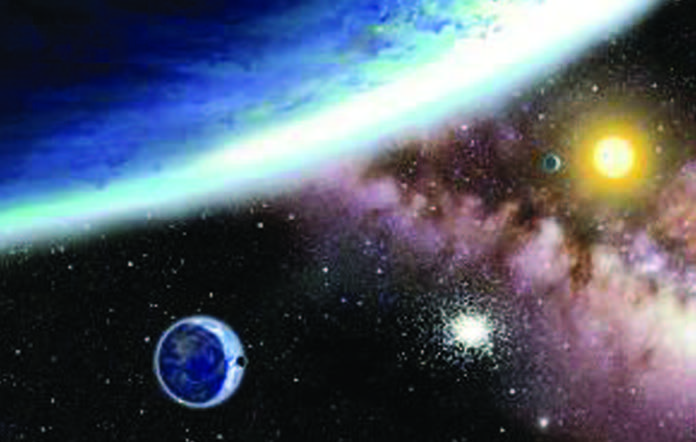
    LONDON (TIP): Astronomers using measurements from a telescope in Hawaii have found that the dark side of the Moon is actually turquoise in colour. Astronomers at the Mauna Loa Observatory in Hawaii discovered that blue light reflected from Earth turns turquoise when it bounces off the Moon. “This is the first accurate colour measurement of the dark side of the Moon,” said Peter Thejll, a senior scientist at the Danish Meteorological Institute in Copenhagen and first author on the study. Researchers installed a telescope and a sensitive camera at the observatory to take measurements of the Moon for two years. The dark side of the Moon is not the same as the far side, which gets as much sunlight as the side facing us.

    The dark side is not lit directly by sunlight, but by light reflected from Earth, ‘The Guardian’ reported. “This is sunshine that struck the Earth, was coloured by the Earth, was reflected up to the Moon, struck the Moon, and then came back to us,” Thejll said. Images of our planet from space show that the planet looks blue. But when this blue light strikes the Moon, the light that’s reflected back is turquoise. “Astronauts standing on the Moon and looking up at the Earth described it as a blue marble,” said Thejll. “Having not been into space myself, I don’t know what they meant exactly, but once that blue light strikes the Moon’s surface, it shifts to a blue-green colour.We can call it turquoise,” he said. To measure the colour of the dark side of the Moon, the researchers first screened out light from the bright side that had been scattered by Earth’s atmosphere.

    This scattered light produces a shifting halo around the Moon and disturbs measurements of the dark side. Astronomers snapped pictures of the Moon through the telescope using two different colour filters. Amid hundreds of images, they found a pair taken of the waning crescent Moon on January 18, 2012 that had exactly the same halo. When they subtracted one image from the other, the halo disappeared and they could measure the true colour of the Moon’s dark side.

  • Lab-made bone marrow may lead to leukaemia cure

    Lab-made bone marrow may lead to leukaemia cure

    LONDON (TIP): Researchers in Germany have created a prototype of human-like bone marrow that could be used to produce blood-producing stem cells to facilitate leukaemia therapy. The breakthrough , by scientists at the Max Planck Institute for Intelligent Systems in Stuttgart , could pave the way for producing artificial stem cells and treatment of leukaemia in 10 to 15 years. The lab-made bone marrow shows all major properties of natural marrow and could facilitate study of interaction between artificial materials and stem cells. This will help ascertain how the behaviour of stem cells is influenced by the artificial materials. Using synthetic polymers , the scientists fashioned a porous structure simulating the sponge-like make-up of bone.

    They added proteinbuilding blocks similar to those found in the bone marrow matrix to anchor cells. Hematopoietic (or bloodproducing ) stem cells, which had been isolated from cord blood, were introduced into the artificial bone marrow. After a few days, the cells were found to reproduce in the artificial bone marrow. Compared to standard cell cultivation methods, more stem cells were found to retain their properties in the lab-made marrow. Blood cells, such as red or white blood cells, are continuously replaced by new ones created by the bloodproducing stem cells found in a specialized niche of the marrow . This makes the stem cells ideal for treatment of blood diseases such as leukaemia . The affected cells of the patient are replaced by healthy hematopoietic stem cells from a donor.

  • NEW DEVICE ALLOWS SCIENTISTS TO OPERATE ON LIVING CELLS

    NEW DEVICE ALLOWS SCIENTISTS TO OPERATE ON LIVING CELLS

    LONDON (TIP): Scientists have developed a device that can take a “biopsy” of a living cell, sampling minute volumes of its contents without killing it. The new tool, called a nanobiopsy, uses a robotic glass nanopipette to pierce the cell membrane and extract a volume of around 50 femtolitres, around one per cent of the cell’s contents. It will allow scientists to take samples repeatedly, to study the progression of disease at a molecular level in an individual cell. It can also be used to deliver material into cells, opening up ways to reprogramme diseased cells.

    “This is like doing surgery on individual cells,” said Dr Paolo Actis, from the department of medicine at Imperial College, London, who developed the technology with colleagues at the University of California, Santa Cruz. “This technology will be extremely useful for research in many areas. You could use it to dynamically study how cancer cells are different from healthy cells, or look at how brain cells are affected by Alzheimer’s disease. The possibilities are immense,” Actis said.

    To get inside the cell, the nanopipette is plunged downwards about one micrometre to pierce the cell membrane. Applying a voltage across the tip makes fluid flow into the pipette. When the pipette is removed from the cell, the membrane remains intact and the cell retains its shape. The device is based on a scanning ion conductance microscope, which uses a robotic nanopipette, about 100 nanometres in diameter, to scan the surface of cells. The nanopipette is filled with an electrolyte solution and the ion current is measured inside the tip.

    When the pipette gets close to a cell membrane, the ion current decreases. This measurement is used to guide the tip across the surface of a sample at a constant distance, producing a picture of the surface. In an initial study published in the journal ACS Nano, the researchers used the nanobiopsy technique to extract and sequence messenger RNA, molecules carrying genetic code transcribed from DNA in the cell’s nucleus. This allowed them to see which genes were being expressed in the cell.

    They were also able to extract whole mitochondria – the power units of the cell. Mitochondria contain their own DNA, and the researchers discovered that the genomes of different mitochondria in the same cell are different.

  • New Nasa satellite to study Earth’s climate

    New Nasa satellite to study Earth’s climate

    WASHINGTON (TIP): Nasa and the Japanese space agency JAXA are teaming up to launch a new weather satellite in February 2014, to improve environmental research and weather forecasts worldwide. On February 28, Nasa and Japan Aerospace Exploration Agency (JAXA) will launch a Japanese H-IIA rocket carrying the Global Precipitation Measurement (GPM) Core Observatory satellite from JAXA’s Tanegashima Space Center. GPM is an international satellite mission that will provide advanced observations of rain and snowfall worldwide, several times a day to enhance understanding of the water and energy cycles that drive Earth’s climate, Nasa said.

    The data provided by the Core Observatory will be used to calibrate precipitation measurements made by an international network of partner satellites to quantify when, where, and how much it rains or snows around the world. “Launching this core observatory and establishing the Global Precipitation Measurement mission is vitally important for environmental research and weather forecasting,” said Michael Freilich, director of Nasa’s Earth Science Division in Washington. “Knowing rain and snow amounts accurately over the whole globe is critical to understanding how weather and climate impact agriculture, fresh water availability, and responses to natural disasters,” said Freilich.

    “We will use data from the GPM mission not only for Earth science research but to improve weather forecasting and respond to meteorological disasters,” said Shizuo Yamamoto, executive director of JAXA. “We would also like to aid other countries in the Asian region suffering from flood disasters by providing data for flood alert systems. Our dual-frequency precipitation radar, developed with unique Japanese technologies, plays a central role in the GPM mission,” said Yamamoto.

  • SCIENTISTS IDENTIFY DRUG TO BLOCK AIDS

    SCIENTISTS IDENTIFY DRUG TO BLOCK AIDS

    WASHINGTON (TIP): Scientists have identified an existing antiinflammatory drug that in laboratory tests blocked the death of immune system’s cells which occurs as an HIV infection leads to AIDS. Researchers are planning a Phase 2 clinical trial to determine if this drug or a similar drug can prevent HIV-infected people from developing AIDS and related conditions.

    Scientists at the Gladstone Institutes identified the precise chain of molecular events in the human body that drives the death of most of the immune system’s CD4 T cells as an HIV infection leads to AIDS. Two separate journal articles, published simultaneously in Nature and Science, detailed the research from the laboratory of Warner C Greene, who directs virology and immunology research at Gladstone, an independent biomedical-research nonprofit based in San Francisco.

    His lab’s Science paper revealed how, during an HIV infection, a protein known as IFI16 senses fragments of HIV DNA in abortively infected immune cells. This triggers the activation of the human enzyme caspase-1 and leads to pyroptosis, a fiery and highly inflammatory form of cell death. As revealed in Nature paper, this repetitive cycle of abortive infection, cell death, inflammation and recruitment of additional CD4 T cells to the infection “hot zone” ultimately destroys the immune system and causes AIDS.

    Nature paper further described laboratory tests in which an existing anti-inflammatory inhibits caspase-1, thereby preventing pyroptosis and breaking the cycle of cell death and inflammation. “Gladstone has made two important discoveries, first by showing how the body’s own immune response to HIV causes CD4 T cell death via a pathway triggering inflammation, and secondly by identifying the host DNA sensor that detects the viral DNA and triggers this death response,” said Robert F Siliciano, a professor of medicine at Johns Hopkins University, and a Howard Hughes Medical Institute investigator.

    Once the scientists discovered how CD4 T cells die they began to investigate how the body senses the fragments of HIV’s DNA in the first place, before alerting the enzyme caspase-1 to launch an immune response in the CD4 T cells. They also identified that reducing the activity of a protein known as IFI16 inhibited pyroptosis. “This identified IFI16 as the DNA sensor, which then sends signals to caspase-1 and triggers pyroptosis,” said Kathryn M Monroe, the Science paper’s other lead author, who completed the research while a postdoctoral fellow at Gladstone.

  • WORLD’S FIRST ARTIFICIAL HEART TRANSPLANT PERFORMED IN FRANCE

    WORLD’S FIRST ARTIFICIAL HEART TRANSPLANT PERFORMED IN FRANCE

    LONDON (TIP): For the first time, an artificial heart that may give patients up to five years of extra life has been successfully implanted in a 75-year-old French man. The artificial heart, designed by French biomedical firm Carmat, is powered by Lithium-ion batteries that can be worn externally. The heart that was put into the patient at Georges Pompidou Hospital in Paris uses a range of “biomaterials”, including bovine tissue, to reduce the likelihood of the body rejecting it, ‘The Telegraph’ reported.

    This device is intended to replace a real heart for as many as five years, unlike previous artificial hearts that were created mainly for temporary use. Doctors said the patient who received the device developed by Dutch-based European Aeronautic Defence and Space Company (EADS) was awake and responding well after the operation. “We are delighted with this first implant, although it is premature to draw conclusions given that a single implant has been performed and that we are in the early post-operative phase,” Marcello Conviti, the chief executive of Carmat, said.

    The heart weighs as little as less than a kilogramme, almost three times as much as an average healthy human heart. The device mimics heart muscle contractions and contains sensors that adapt the blood flow to the patient’s moves, the report said. The heart surfaces that come into contact with human blood are made partly from bovine tissue instead of synthetic materials such as plastic, which can cause blood clots.

  • BREAKTHROUGH IN CURE FOR BLINDNESS

    BREAKTHROUGH IN CURE FOR BLINDNESS

    LONDON (TIP): In a major breakthrough, an inkjet printer in Britain can print eye cells which can be used to cure human blindness. For the first time ever, researchers from UK have used inkjet printing technology to successfully print two types of cells from the retina of adult rats – ganglion cells and glial cells. The breakthrough could lead to the production of artificial tissue grafts made from the variety of cells found in the human retina and may aid in the search to cure blindness.

    In their study, the researchers used a piezoelectric inkjet printer device that ejected the cells through a sub-millimetre diameter nozzle when a specific electrical pulse was applied. They also used high speed video technology to record the printing process with high resolution and optimised their procedures accordingly. “In order for a fluid to print well from an inkjet print head, its properties, such as viscosity and surface tension, need to conform to a fairly narrow range of values. Adding cells to the fluid complicates its properties significantly,” Dr Wen-Kai Hsiao from the Inkjet Research Centre in Cambridge University said. Professor Keith Martin and Dr Barbara Lorber from the John van Geest Centre for Brain Repair, University of Cambridge, said “The loss of nerve cells in the retina is a feature of many blinding eye diseases.

    The retina is an exquisitely organised structure where the precise arrangement of cells in relation to one another is critical for effective visual function”. “Our study has shown, for the first time, that cells derived from the mature central nervous system, the eye, can be printed using a piezoelectric inkjet printer. Although our results are preliminary and much more work is still required, the aim is to develop this technology for use in retinal repair in the future”. The finding could be a big boon for blind people across the world. India is home to the world’s largest number of blind people. Of the 37 million people across the globe who are blind, over 15 million are from India. Once printed, a number of tests were performed on each type of cell to see how many of the cells survived the process and how it affected their ability to survive and grow.

    The cells derived from the retina of the rats were retinal ganglion cells, which transmit information from the eye to certain parts of the brain, and glial cells, which provide support and protection for neurons. “We plan to extend this study to print other cells of the retina and to investigate if light-sensitive photoreceptors can be successfully printed using inkjet technology. In addition, we would like to further develop our printing process to be suitable for commercial, multinozzle print heads,” Professor Martin concluded. At the moment the results are preliminary and provide proof-ofprinciple that an inkjet printer can be used to print two types of cells from the retina of adult rats. This is the first time the technology has been used successfully to print mature central nervous system cells and the results showed that printed cells remained healthy and retained their ability to survive and grow in culture. The ability to arrange cells into highly defined patterns and structures has recently elevated the use of 3D printing in the biomedical sciences to create cellbased structures for use in regenerative medicine.

  • SOON, BOIL WATER IN BLINK OF AN EYE

    SOON, BOIL WATER IN BLINK OF AN EYE

    BERLIN (TIP): Scientists, including one of Indianorigin , have devised a new technique to boil water in less than a trillionth of a second. The theoretical concept, which has not yet been demonstrated in practice , could heat a small amount of water by as much as 600° C in just half a picosecond (a trillionth of a second). That is much less than the proverbial blink of an eye: one picosecond is to a second what one second is to almost 32 millennia.

    This would make the technique the fastest waterheating method on Earth. All it takes for superfast water heating is a concentrated flash of terahertz radiation. Terahertz radiation consists of electromagnetic waves with a frequency between radio waves and infrared. Terahertz flashes can be generated with devices called free-electron lasers that send accelerated electrons on a well defined slalom course. The particles emit electromagnetic waves in each bend that add up to an intense laser like pulse. The terahertz pulse changes the strength of the interaction between water molecules in a very short time, which immediately start to vibrate violently.

  • HERE’S A BRA THAT CAN READ MOOD, CURB OVEREATING

    HERE’S A BRA THAT CAN READ MOOD, CURB OVEREATING

    LONDON (TIP): British scientists have developed the world’s first smart bra that can detect changes in mood with the hope of preventing emotionally-triggered over-eating in women. The bra has been jointly created by the University of Southampton, Microsoft Research and the University of Rochester. Designed by M C Schraefel who is a professor in computer science and human performance from the University of Southampton, the prototype contains removable sensors that monitor heart and skin activity. The data from the prototype device is analyzed by a smartphone app which can highlight when ’emotional eating’ is most likely to occur and offer advice to the wearer .

    The wearable technology monitored electro-dermal activity or EMA (a measure of sweat gland activity), electrocardiogram or EKG (heart rate and respiration) data and movement from an accelerometer and gyroscope integrated in removable conducive pads to provide an idea of the user’s mood. The research found that the prototype could identify emotions with accuracy “significantly better than chance” and “on a par with other affect recognition systems.” Schraefel said, “Emotional state, habitual practices , like snacking in front of the TV or grabbing a cookie when stressed often go undetected by us but they have real effects on our wellbeing . Our work in this project shows that there is potential to design interactive technologies to work with us, to help us develop awareness of our state and offer options we’ve decided we’d rather take to build new practices and support our wellbeing.”

  • Next diamond rush in Antarctica

    Next diamond rush in Antarctica

    OSLO (TIP): A type of rock that often bears diamonds has been found in Antarctica for the first time in a hint of mineral riches in the vast, icy continent that is off limits to mining, scientists said. A 1991 environmental accord banned mining for at least 50 years under the Antarctic Treaty that preserves the continent for scientific research and wildlife, from penguins to seals. Writing in the journal Nature Communications, an Australianled team reported East Antarctic deposits of kimberlite, a rare type of rock named after the South African town of Kimberley famed for a late 19th century diamond rush.

    “These rocks represent the first reported occurrence of genuine kimberlite in Antarctica,” they wrote of the finds around Mount Meredith in the Prince Charles Mountains. No diamonds were found during the geological work that is allowed on the continent. Kimberlite, a volcanic rock from deep below the Earth’s surface, has now been discovered on all continents. Geologists doubted the find could be commercial, largely due to Antarctica’s remoteness, cold and winter darkness. Teal Riley of the British Antarctic Survey said less than 10 percent of deposits of similar kimberlite were economically viable. “It’s a big leap from here to mining,” he told Reuters. Minerals including platinum, gold, copper, iron and coal have previously been found in Antarctica.

    EXTENDED BAN
    The Antarctic Treaty is binding only on its 50 signatories but has the backing of major powers, including the United States and China. Many expect the ban on mining to be extended in 2041. “There is likely to be little opposition to an extension of this prohibition, despite the potential discovery of a new type of Antarctic ‘ice’,” Nature Communications said in a statement. Another expert said it was unclear. “We do not know what the Treaty Parties’ views will be on mining after 2041 or what technologies might exist that could make extraction of Antarctic minerals economically viable,” said Kevin Hughes, of the Scientific Committee on Antarctic Research. Riley said there was a fine line between geological mapping and prospecting with an eye to mining. Nations including Russia, Ukraine and China have been more active in surveying Antarctica in recent years. The kimberlite deposit is also confirmation of how continents drift. The region of East Antarctica was once part of a continent known as Gondwana connected to what is now Africa and India, which also have kimberlite.

  • BREAKTHROUGH IN QUANTUM COMPUTING

    BREAKTHROUGH IN QUANTUM COMPUTING

    Scientists stored information in a quantum computing system for 39 minutes, a massive increase from the previous record of 25 seconds

    Scientists have achieved an “exciting breakthrough” in quantum computing, creating a solid-state memory system made from silicon that was operational at room temperature for 39 minutes. This achievement breaks one of the major barriers to building quantum computers: the need to run the systems at incredibly cold temperatures. The previous record for storing information at room temperature in a quantum computer was just 25 seconds. “This opens up the possibility of truly longterm coherent information storage at room temperature,” said Mike Thewalt of Simon Fraser University in Canada, head of the international team that conducted the research. The results of the experiment were detailed in the journal Science. Whereas current computers store information as “bits” of data – strings of individuals 1s or 0s – quantum computers uses “qubits” which can be both 1s and 0s simultaneously.

    This is thanks to a property of quantum mechanics known “superposition” which means that quantum computers will be able to use a single piece of hardware to perform different calculations at the same time. The difficulty with these systems is their instability, with scientists using cold temperatures (around -269C, just a few degrees above absolute zero, the coldest temperature possible) to combat the qubits’ natural tendency to decay. Even for this most recent breakthrough, scientists still to begin by lowering the temperature of around 10 billion phosphorous ions (the nuclei of which were embedded in pure silicon to provide the medium for the qubits) to just above absolute zero. The temperature of this system was then raised to room temperature (25°C) where the data remained intact for 39 minutes. This may not sound like a long time, but as a single operation on a quantum computer takes just one hundred thousandth of a second, this means that theoretically over 20 million operations could be performed before the qubits data decayed by one per cent. “Having such robust, as well as long-lived, qubits could prove very helpful for anyone trying to build a quantum computer,” said of Oxford University’s Stephanie Simmons, a member of the Department of Materials and an author of the paper.

    Many barriers remain
    However, the scientists involved in the study also stressed the many difficulties ahead for quantum computing. For example, although the scientists in this experiment managed to retrieve the data stored on the system, they still had to return the system to freezing temperatures to do so – – and the original process that encoded the information wasn’t perfect, destroying 63 per cent of the data. Another major hurdle is the ability to encode different types of data. For this experiment the qubits involved all stored just 1s or 0s. For quantum computers to work like conventional computers they will have to store a diverse mixture of 1s and 0s and switch between states. The difference is like that between a flat surface painted with a single color, and a 3D hologram showing a high definition movie. Despite this, scientists are still celebrating this experiment as an “exciting breakthrough”. “This result represents an important step towards realizing quantum devices,” David Awschalom, a professor in Spintronics and Quantum Information, at the University of Chicago told the BBC.

    Fundamentals of quantum computing
    Quantum computing focuses on developing computer technology based on the principles of quantum theory which explains the nature and behavior of energy and matter on the quantum (atomic and subatomic) level.
    A traditional computer uses long strings of “bits” which encode either a zero or a one. A quantum computer, on the other hand, uses quantum bits or qubits.
    A qubit is a quantum system that encodes the zero and the one into two distinguishable quantum states. But, because qubits behave quantumly, scientists capitalize on the phenomena of “superposition” and “entanglement”.
    Superposition is essentially the ability of a quantum system to be in multiple states at the same time.
    Entanglement is an extremely strong correlation that exists between quantum particles – so strong, in fact, that two or more quantum particles can be inextricably linked in unison, even if separated by great distances.
    Whereas a classical computer works with ones and zeros, a quantum computer will have the advantage of using ones, zeros and “superpositions” of ones and zeros.
    Calculating the factors of a very large (say, 500-digit) number, is considered impossible for any classical computer. However, a quantum computer will be able to process a vast number of calculations simultaneously.
    A D-Wave Two™ quantum computer has been installed in the NASA Advanced Supercomputing facility at NASA’s Ames Research Center. When it becomes operational, the system will be the most powerful in the world, with approximately 512 superconducting flux qubits.
    Researchers will use it to investigate quantum approaches to optimization problems in air traffic control, autonomy, robotics, navigation and communication, system diagnostics, pattern recognition, anomaly detection, and mission planning and scheduling

  • A first look inside Google & NASA’s path-breaking lab

    A first look inside Google & NASA’s path-breaking lab

    Back in May, Google announced the launch of their Quantum Artificial Intelligence Lab: a collaboration with NASA to “study how quantum computing might advance machine learning.” Now, after months of secrecy the search giant has released a video offering a tantalizing introduction to the lab and the questions it might one day ask. As the video says “quantum physics puts everything into question”, and if you’re expecting quick answers, then you will be disappointed. Quantum computing is incredibly difficult, incredibly exciting, and incredibly strange. In the most simplistic terms we can think of normal computers as operating only using 1s and 0s in an either/or state.

    Quantum computers still use 1s and 0s but they do so in superposition, meaning that the symbols can be both 1 and 0 at the same time as well as every state in between the two. Rather than using computers that are capable of processing these 1s and 0s with ever speedier processors, a quantum computer would use these super positioned bits (known as qbits) to process calculations simultaneously. The leap in computing power that this would provide is beyond exponential, it’s – well – quantum. Although it seems that even the experts aren’t sure exactly how these computers would work (or how we could ever put them to use – as they say in the video, “really, we don’t know what the best questions are to ask that computer”) it’s thought they might help us with things known as “optimization problems”. Google explained it like this: “Solving such problems can be imagined as trying to find the lowest point on a surface covered in hills and valleys.

    Classical computing might use what’s called “gradient descent”: start at a random spot on the surface, look around for a lower spot to walk down to, and repeat until you can’t walk downhill anymore. But all too often that gets you stuck in a “local minimum” – a valley that isn’t the very lowest point on the surface.” “That’s where quantum computing comes in. It lets you cheat a little, giving you some chance to ‘tunnel” through a ridge to see if there’s a lower valley hidden beyond it. This gives you a much better shot at finding the true lowest point – the optimal solution.” These goals haven’t changed, but the world of quantum computing is still as strange and difficult as ever. “We’re still in the early, early days, but we think quantum computing can help solve some of the world’s most challenging computer science problems,” said the Quantum AI team in a blog post. “We’re particularly interested in how quantum computing can advance machine learning, which can then be applied to virtually any field: from finding the cure for a disease to understanding changes in our climate.”

  • CHINESE COMPUTER RETAINS ‘WORLD’S FASTEST’ TITLE

    CHINESE COMPUTER RETAINS ‘WORLD’S FASTEST’ TITLE

    LONDON (TIP): A computer in the Indian Institute of Tropical Meteorology (Pune) has been declared the 44th fastest machine in the world, capable of 719 trillion calculations per second. In all, 12 Indian computers have made it to the list of the world’s 500 fastest super computers. The world’s fastest computer is capable of 33,863 trillion calculations per second and it was made in China. Tianhe-2 (meaning milky way), developed by China’s National University of Defence Technology, has a performance of 33.86 petaflop/s (quadrillions of calculations per second). In comparison, India’s fastest computer performs at 7.19 petaflop/s (quadrillions of calculations per second). Tianhe-2 ‘s power is almost double the score achieved by the second most powerful machine: the American Titan supercomputer, which clocked 17.59 petaflop/s.

    The list of the world’s fastest supercomputer is compiled every two years by the University of Mannheim in Germany, using a test known as the Linpack benchmark. It measures how fast the computers can solve a special type of linear equation, but does not take account of other factors – such as how fast data can be transferred from one part of the system to another – which can also influence real-time performance. The US still dominates the overall list of fastest supercomputers accounting for 265 of the top 500. It’s followed by Asia (115 systems, down from 118) and Europe (102 machines, down from 112).

  • NASA FINDS GRANITE ON MARS

    NASA FINDS GRANITE ON MARS

    LONDON (TIP): Researchers from the US space agency NASA have said that granite – an igneous rock common on Earth— could be found in abundance on Mars. For years Mars was considered geologically simplistic consisting mostly of one kind of rock in contrast to the diverse geology of Earth. Most of the surface of Mars is covered by dark-coloured volcanic rocks called basalt. Large amounts of a mineral found in granite called feldspar were found in an ancient Martian volcano. Minerals that are common in basalts rich in iron and magnesium are nearly completely absent here.

    The location of the feldspar also provides an explanation for how granite could have formed on Mars. While the magma slowly cools in the subsurface, low density melt separates from dense crystals in a process called fractionation. The cycle is repeated over and over for millennia until granite is formed. Granite or its eruptive equivalent rhyolite is often found on Earth in tectonically active regions. This is unlikely on Mars but the research team concluded that prolonged magmatic activity on Mars can also produce it on a large scale.

    “We’re providing the most compelling evidence to date that Mars has granitic rocks,” said James Wray from the School of Earth and Atmospheric Sciences at the Georgia Institute of Technology. The research supported by the NASA Mars Data Analysis Program bolsters the evidence for granite on Mars by using remote sensing techniques with infrared spectroscopy to survey a large volcano on Mars that was active for billions of years. The volcano is dust-free making it ideal for the study.

    Most volcanoes on Mars are blanketed with dust but this volcano is being sand-blasted by some of the fastest-moving sand dunes on Mars, sweeping away any dust that might fall on the volcano. Earlier this year, the Mars Curiosity rover surprised scientists by discovering soil with a composition similar to granite. No one knew what to make of the discovery because it was limited to one site on Mars.A separate team from the European Southern Observatory and the University of Paris found a similar signature elsewhere on Mars but likened the rocks to anorthosite which is common on the moon.

    “We talk about water on Mars all the time but the history of volcanism on Mars is another thing that we’d like to try to understand,” Wray said. “What kinds of rocks have been forming over the planet’s history? We thought that it was a pretty easy answer, but we’re now joining the emerging chorus saying things may be a little bit more diverse on Mars, as they are on Earth.”

  • Car mechanic invents device to ease childbirth

    Car mechanic invents device to ease childbirth

    NEW YORK (TIP): The idea came to Jorge Odon as he slept. Somehow, he said, his unconscious made the leap from a YouTube video he had just seen on extracting a lost cork from a wine bottle to the realization that the same parlor trick could save a baby stuck in the birth canal. Odon, 59, an Argentine car mechanic, built his first prototype in his kitchen, using a glass jar for a womb, his daughter’s doll for the trapped baby, and a fabric bag and sleeve sewn by his wife as his lifesaving device.

    Unlikely as it seems, the idea that took shape on his counter has won the enthusiastic endorsement of the World Health Organization and major donors, and an American medical technology company has just licensed it for production. With the Odon Device, an attendant slips a plastic bag inside a lubricated plastic sleeve around the head, inflates it to grip the head and pulls the bag until the baby emerges. Doctors say it has enormous potential to save babies in poor countries, and perhaps to reduce cesarean section births in rich ones.

    “This is very exciting,” said Dr Mario Merialdi, the WHO’s chief coordinator for improving maternal and perinatal health and an early champion of the Odon Device. “This critical moment of life is one in which there’s been very little advancement for years.” About 10% of the 137 million births worldwide each year have potentially serious complications, Dr Merialdi said. About 5.6 million babies are stillborn or die quickly, and about 260,000 women die in childbirth. Obstructed labor, which can occur when a baby’s head is too large or an exhausted mother’s contractions stop, is a major factor. In wealthy countries, fetal distress results in a rush to the operating room.

    In poor, rural clinics, Dr Merialdi said, “if the baby doesn’t come out, the woman is on her own.” The current options in those cases are forceps — large, rounded pliers — or suction cups attached to the baby’s scalp. In untrained hands, either can cause hemorrhages, crush the baby’s head or twist its spine. Although more testing is planned on the Odon Device, doctors said it appeared to be safe for midwives with minimal training to use. Along the way, it has won research grants from the United States Agency for International Development and from Grand Challenges Canada.

    “We’ve given out $32 million for 61 different innovations, and this one is the farthest along,” said Dr Peter A. Singer, the chief executive of Grand Challenges Canada. The device will be manufactured by Becton, Dickinson and Company, or BD, of Franklin Lakes, N.J., which is better known for making syringes. “My first reaction, as soon as I saw it, was positive,” said Gary M. Cohen, the company’s executive vice president for global health. It was at the World Economic Forum in Davos, Switzerland, that Dr Merialdi asked him to consider taking it on. “Many inventions get to the prototype stage, but that’s maybe 15% of what needs to be done,” Cohen said. “There’s finalizing the design for manufacture, quality control, the regulatory work and clinical studies.

    Absent that, they don’t see the light of day.” So far, the device has been safety-tested only on 30 Argentine women, all of whom were in hospitals, had given birth before and were in normal labor. “I was glad they asked me, because it was for a good cause,” said Luciana Valle, a kindergarten teacher who was 31 two years ago when her son, Matteo, was one of the first babies extracted with the device. Because Matteo weighed almost nine pounds, “it really helped,” she said in a telephone interview. “His head came out on my second push.” The WHO will now oversee tests on 100 more women in normal labor in China, India and South Africa, and then on 170 women in obstructed labor.

    In a telephone interview from Argentina, Odon described the origins of his idea. He tinkers at his garage, but his previous inventions were car parts. Seven years ago, he said, employees were imitating a video showing that a cork pushed into an empty bottle can be retrieved by inserting a plastic grocery bag, blowing until it surrounds the cork, and drawing it out. That night, he won a dinner bet on it. At 4am, he woke his wife and told her the idea that had just come to him. (His own children were born without problems, he said, but he has an aunt who suffered nerve damage from birth.) His wife, he recalled, “said I was crazy and went back to sleep.” The next morning, a somewhat skeptical friend introduced him to an obstetrician.

    “You can imagine these two guys in suits in a waiting room full of pregnant ladies,” he said. The doctor was encouraging, so he kept working. Polyethylene replaced the bag his wife had sewn, and the jar was replaced by a plastic uterus. With the help of a cousin, Odon met the chief of obstetrics at a major hospital in Buenos Aires. The chief had a friend at the WHO, who knew Dr Merialdi, who, at a 2008 medical conference in Argentina, granted Odon 10 minutes during a coffee break.

  • CHINESE COMPUTER RETAINS ‘WORLD’S FASTEST’ TITLE

    CHINESE COMPUTER RETAINS ‘WORLD’S FASTEST’ TITLE

    LONDON (TIP): A computer in the Indian Institute of Tropical Meteorology (Pune) has been declared the 44th fastest machine in the world, capable of 719 trillion calculations per second. In all, 12 Indian computers have made it to the list of the world’s 500 fastest super computers. The world’s fastest computer is capable of 33,863 trillion calculations per second and it was made in China. Tianhe-2 (meaning milky way), developed by China’s National University of Defence Technology, has a performance of 33.86 petaflop/s (quadrillions of calculations per second).

    In comparison, India’s fastest computer performs at 7.19 petaflop/s (quadrillions of calculations per second). Tianhe-2 ‘s power is almost double the score achieved by the second most powerful machine: the American Titan supercomputer, which clocked 17.59 petaflop/s. The list of the world’s fastest supercomputer is compiled every two years by the University of Mannheim in Germany, using a test known as the Linpack benchmark. It measures how fast the computers can solve a special type of linear equation, but does not take account of other factors – such as how fast data can be transferred from one part of the system to another – which can also influence real-time performance. The US still dominates the overall list of fastest supercomputers accounting for 265 of the top 500. It’s followed by Asia (115 systems, down from 118) and Europe (102 machines, down from 112).

  • NASA FINDS GRANITE ON MARS

    NASA FINDS GRANITE ON MARS

    LONDON (TIP): Researchers from the US space agency NASA have said that granite – an igneous rock common on Earth— could be found in abundance on Mars. For years Mars was considered geologically simplistic consisting mostly of one kind of rock in contrast to the diverse geology of Earth. Most of the surface of Mars is covered by dark-coloured volcanic rocks called basalt. Large amounts of a mineral found in granite called feldspar were found in an ancient Martian volcano.

    Minerals that are common in basalts rich in iron and magnesium are nearly completely absent here. The location of the feldspar also provides an explanation for how granite could have formed on Mars. While the magma slowly cools in the subsurface, low density melt separates from dense crystals in a process called fractionation. The cycle is repeated over and over for millennia until granite is formed. Granite or its eruptive equivalent rhyolite is often found on Earth in tectonically active regions. This is unlikely on Mars but the research team concluded that prolonged magmatic activity on Mars can also produce it on a large scale.

    “We’re providing the most compelling evidence to date that Mars has granitic rocks,” said James Wray from the School of Earth and Atmospheric Sciences at the Georgia Institute of Technology. The research supported by the NASA Mars Data Analysis Program bolsters the evidence for granite on Mars by using remote sensing techniques with infrared spectroscopy to survey a large volcano on Mars that was active for billions of years. The volcano is dust-free making it ideal for the study. Most volcanoes on Mars are blanketed with dust but this volcano is being sand-blasted by some of the fastest-moving sand dunes on Mars, sweeping away any dust that might fall on the volcano.

    Earlier this year, the Mars Curiosity rover surprised scientists by discovering soil with a composition similar to granite. No one knew what to make of the discovery because it was limited to one site on Mars.A separate team from the European Southern Observatory and the University of Paris found a similar signature elsewhere on Mars but likened the rocks to anorthosite which is common on the moon. “We talk about water on Mars all the time but the history of volcanism on Mars is another thing that we’d like to try to understand,” Wray said. “What kinds of rocks have been forming over the planet’s history? We thought that it was a pretty easy answer, but we’re now joining the emerging chorus saying things may be a little bit more diverse on Mars, as they are on Earth.”

  • Car mechanic invents device to ease childbirth

    Car mechanic invents device to ease childbirth

    NEW YORK (TIP): The idea came to Jorge Odon as he slept. Somehow, he said, his unconscious made the leap from a YouTube video he had just seen on extracting a lost cork from a wine bottle to the realization that the same parlor trick could save a baby stuck in the birth canal. Odon, 59, an Argentine car mechanic, built his first prototype in his kitchen, using a glass jar for a womb, his daughter’s doll for the trapped baby, and a fabric bag and sleeve sewn by his wife as his lifesaving device.

    Unlikely as it seems, the idea that took shape on his counter has won the enthusiastic endorsement of the World Health Organization and major donors, and an American medical technology company has just licensed it for production. With the Odon Device, an attendant slips a plastic bag inside a lubricated plastic sleeve around the head, inflates it to grip the head and pulls the bag until the baby emerges. Doctors say it has enormous potential to save babies in poor countries, and perhaps to reduce cesarean section births in rich ones. “This is very exciting,” said Dr Mario Merialdi, the WHO’s chief coordinator for improving maternal and perinatal health and an early champion of the Odon Device.

    “This critical moment of life is one in which there’s been very little advancement for years.” About 10% of the 137 million births worldwide each year have potentially serious complications, Dr Merialdi said. About 5.6 million babies are stillborn or die quickly, and about 260,000 women die in childbirth. Obstructed labor, which can occur when a baby’s head is too large or an exhausted mother’s contractions stop, is a major factor. In wealthy countries, fetal distress results in a rush to the operating room.

    In poor, rural clinics, Dr Merialdi said, “if the baby doesn’t come out, the woman is on her own.” The current options in those cases are forceps — large, rounded pliers — or suction cups attached to the baby’s scalp. In untrained hands, either can cause hemorrhages, crush the baby’s head or twist its spine. Although more testing is planned on the Odon Device, doctors said it appeared to be safe for midwives with minimal training to use. Along the way, it has won research grants from the United States Agency for International Development and from Grand Challenges Canada. “We’ve given out $32 million for 61 different innovations, and this one is the farthest along,” said Dr Peter A. Singer, the chief executive of Grand Challenges Canada.

    The device will be manufactured by Becton, Dickinson and Company, or BD, of Franklin Lakes, N.J., which is better known for making syringes. “My first reaction, as soon as I saw it, was positive,” said Gary M. Cohen, the company’s executive vice president for global health. It was at the World Economic Forum in Davos, Switzerland, that Dr Merialdi asked him to consider taking it on. “Many inventions get to the prototype stage, but that’s maybe 15% of what needs to be done,” Cohen said. “There’s finalizing the design for manufacture, quality control, the regulatory work and clinical studies.

    Absent that, they don’t see the light of day.” So far, the device has been safety-tested only on 30 Argentine women, all of whom were in hospitals, had given birth before and were in normal labor. “I was glad they asked me, because it was for a good cause,” said Luciana Valle, a kindergarten teacher who was 31 two years ago when her son, Matteo, was one of the first babies extracted with the device. Because Matteo weighed almost nine pounds, “it really helped,” she said in a telephone interview. “His head came out on my second push.” The WHO will now oversee tests on 100 more women in normal labor in China, India and South Africa, and then on 170 women in obstructed labor. In a telephone interview from Argentina, Odon described the origins of his idea.

    He tinkers at his garage, but his previous inventions were car parts. Seven years ago, he said, employees were imitating a video showing that a cork pushed into an empty bottle can be retrieved by inserting a plastic grocery bag, blowing until it surrounds the cork, and drawing it out. That night, he won a dinner bet on it. At 4am, he woke his wife and told her the idea that had just come to him. (His own children were born without problems, he said, but he has an aunt who suffered nerve damage from birth.) His wife, he recalled, “said I was crazy and went back to sleep.” The next morning, a somewhat skeptical friend introduced him to an obstetrician. “You can imagine these two guys in suits in a waiting room full of pregnant ladies,” he said.

    The doctor was encouraging, so he kept working. Polyethylene replaced the bag his wife had sewn, and the jar was replaced by a plastic uterus. With the help of a cousin, Odon met the chief of obstetrics at a major hospital in Buenos Aires. The chief had a friend at the WHO, who knew Dr Merialdi, who, at a 2008 medical conference in Argentina, granted Odon 10 minutes during a coffee break.

  • MORE ASTEROID STRIKES ARE LIKELY: SCIENTISTS

    MORE ASTEROID STRIKES ARE LIKELY: SCIENTISTS

    When an asteroid exploded over the Russian city of Chelyabinsk in February, shattering windows for miles and injuring well over 1,000 people, experts said it was a rare event — of a magnitude that might occur only once every 100 to 200 years, on average. But now a team of scientists is suggesting that the Earth is vulnerable to many more Chelyabinsk-size space rocks than was previously thought. In research being published on Wednesday by the journal Nature, they estimate that such strikes could occur as often as every decade or two. The prospect “really makes a lot of people uncomfortable,” said Peter G Brown, a professor of physics and astronomy at the University of Western Ontario and an author of the two studies in Nature. A third paper by other scientists describing the Chelyabinsk explosion was published online this week by the journal Science. The findings are helping to elevate the topic of planetary defense — identifying dangerous asteroids and deflecting them if necessary — from Hollywood fantasy to real-world concern.

    A United Nations committee has been studying the issue for some time, and next month the General Assembly is expected to adopt two of its recommendations: establishing an International Asteroid Warning Network for countries to share information; and calling on the world’s space agencies to set up an advisory group to explore technologies for deflecting an asteroid. Sky surveys have spotted about 95 per cent of the big near-Earth asteroids, those that are at least one kilometer wide, or 0.6 miles, and none are in danger of hitting Earth anytime soon. But those are not the only ones to worry about. “One kilometer is more than just dangerous,” said Edward T. Lu, a former NASA space shuttle astronaut who heads the B612 Foundation, a private effort to launch a space telescope that could find smaller asteroids. “One kilometer is end-ofhuman- civilization kind of dangerous.” The Chelyabinsk asteroid was just 60 feet wide. Speeding around 40,000 miles per hour, it released energy equal to 500,000 tons of TNT. A larger asteroid, perhaps two or three times the diameter of the Chelyabinsk one, exploded over Siberia in 1908 and is estimated to have released energy equivalent to 5 million to 15 million tons of TNT, flattening millions of trees.

    The proposed B612 telescope, to be called Sentinel, is intended to find asteroids about 450 feet wide, although it will also find many that are smaller. Dr Lu said the mission would cost $450 million — $250 million to build the spacecraft and $200 million to operate it for a decade. A 450-foot-wide asteroid, Dr Lu said, would be equivalent to 150 million tons of TNT. “You’re not going to wipe out humanity,” he said, “but if you get unlucky, you could kill 50 million people or you could collapse the world economy for a century, two centuries.” Dr Lu said astronomers had found only 10 to 20 per cent of the near-Earth asteroids of that size. Sentinel would also spot many smaller ones that could still be devastating. “What we’ve been talking about are the ones that would only destroy a major metropolitan area — all of New York City and the surrounding area,” Dr Lu said. He said only about 0.5 per cent of these smaller asteroids, roughly the size of the 1908 one, have been found. Because telescope surveys have counted so few of the small asteroids, Dr Brown and his colleagues instead investigated what has actually hit the Earth. In one of the articles in Nature, they examined United States Air Force data from the 1960s and 1970s and later data from sensors verifying a ban on aboveground nuclear weapons testing.

    The recordings captured the lowfrequency atmospheric rumblings generated by about 60 asteroid explosions. Most came from small asteroids, but their data suggested that the somewhat larger ones hit more frequently than would be expected based on the estimates from sky surveys. That could mean the Earth has been unlucky recently, or that the estimates on the number of Chelyabinsk-size asteroids are too low. “Any one of them individually I think you could dismiss,” Dr Brown said, “but when you take it all together, I think the preponderance of the evidence is there is a much higher number of these tens-of-meters-size objects.” Dr Lu said that was one more reason to launch an asteroid-finding telescope. “There are hints the rate is higher than we think, but we don’t really know yet, and I think we should find out,” he said. “When you find out how many there are, you also find out where the individual ones are. Everything you discover you can either rule out as going to hit us or you say, ‘Hey, we ought to look at this one more carefully.’” Many of the Chelyabinsk-size asteroids would elude detection by Sentinel. Still, the residents of Chelyabinsk would have benefited from a warning on the morning of Feb. 15 to stay away from the window. With a $5 million grant from NASA, University of Hawaii astronomers are setting up telescopes to scan the sky for quickmoving spots of light that could be oncoming asteroids. There would be no opportunity to deflect the asteroid that would hit in days or weeks, but it would give time to warn, and to evacuate. That system is scheduled to go into operation in 2015.

  • NEW MICROBE FOUND INSIDE NASA’S SPACECRAFT PREP ROOM

    NEW MICROBE FOUND INSIDE NASA’S SPACECRAFT PREP ROOM

    NEW DELHI (TIP): Nasa scientists have discovered a strange new microbe living in one of the cleanest rooms in the world: the room where spacecraft are prepared for final launch. The new berry-shaped bug can survive on very little to eat, Nasa’s Jet Propulsion Lab said. It has been found in two places on Earth: spacecraft clean rooms in a Nasa facility at Kennedy Space Center in Florida, and a European Space Agency facility in Kourou, French Guiana in South America. Spacecraft clean rooms need to be kept absolutely clean to prevent any bugs hitching a ride on the spacecraft. Fewer microbes live there than in almost any other environment on Earth. But those which do survive in such a place are really hardy. Not only do they survive drying, chemical cleaning, ultraviolet treatments and lack of nutrients, they often also show elevated resistance to spacecraft sterilization methodologies such as heating and peroxide treatment. So, scientists working in these clean rooms take regular counts of microbes inside and keep a tally. If extraterrestrial life is ever found, it would be readily checked against the census of a few hundred types of microbes detected in spacecraft clean rooms.

    “We want to have a better understanding of these bugs, because the capabilities that adapt them for surviving in clean rooms might also let them survive on a spacecraft,” said microbiologist Parag Vaishampayan of Nasa’s Jet Propulsion Laboratory, Pasadena, California, lead author of the 2013 paper about the microbe. “This particular bug survives with almost no nutrients.” The newly discovered bacteria is so different from any other known bacteria, it has been classified as not only a new species, but also a new genus, the next level of classifying the diversity of life. Its discoverers named it Tersicoccus phoenicis. Tersi is from Latin for clean, like the room. Coccus, from Greek for berry, describes the bacterium’s shape. The phoenicis part is for Nasa’s Phoenix Mars Lander, the spacecraft being prepared for launch in 2007 when the bacterium was first collected by test-swabbing the floor in the Florida clean room. A bacterial DNA database shared by microbiologists worldwide led Vaishampayan to find the match. The South American detection had been listed on the database by a former JPL colleague, Christine Moissl- Eichinger, now with the University of Regensburg in Germany. She is first co-author of the paper published this year in the International Journal of Systematic and Evolutionary Microbiology identifying the new genus.

    The same global database showed no other location where this strain of bacteria has been detected. That did not surprise Vaishampayan. He said, “We find a lot of bugs in clean rooms because we are looking so hard to find them there. The same bug might be in the soil outside the clean room but we wouldn’t necessarily identify it there because it would be hidden by the overwhelming numbers of other bugs.” A teaspoon of typical soil would have thousands more types of microbes and billions more total microbes than an entire cleanroom. More than 99% of bacterial strains, as identified from DNA sequences, have never been cultivated in laboratories, a necessary step for the various types of characterization required to identify a strain as a new species. Microbes that are tolerant of harsh conditions become more evident in clean room environments that remove the rest of the crowd. “Tersicoccus phoenicis might be found in some natural environment with extremely low nutrient levels, such as a cave or desert,” Vaishampayan speculated. This is the case for another species of bacterium (Paenibacillus phoenicis) identified by JPL researchers and currently found in only two places on Earth: a spacecraft clean room in Florida and a bore hole more than 1.3 miles (2.1 kilometers) deep at a Colorado molybdenum mine.