Tag: Science & Technology

  • ISRO GEARS UP TO LAUNCH INDIA’S FIRST MISSION TO MARS ON NOVEMBER 5

    ISRO GEARS UP TO LAUNCH INDIA’S FIRST MISSION TO MARS ON NOVEMBER 5

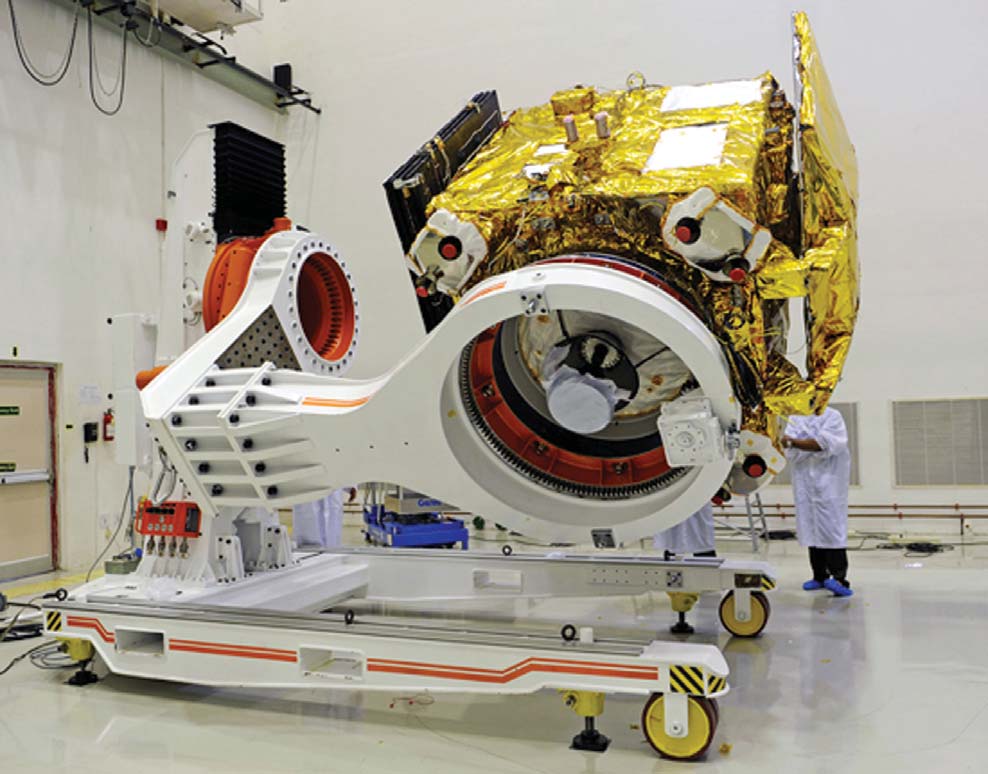
    It’ll be the cheapest ticket to the Red Planet, a world record in the history of Mars exploration. On November 5, when India’s unmanned orbiter mission blasts off from Sriharikota at 3.28pm it’ll carry a Rs 450-crore price tag way below what Nasa, the European Space Agency, Japan and China spent on their journey to Mars. Isro says indigenisation kept costs down. The decision to use the reliable Polar Satellite Launch Vehicle PSLV) helped. The Mars mission aunch will mark the PSLV’s silver jubilee. The Orbiter will ride an advanced variant of the rocket, the PSLV-XL — the rocket type that took India to the moon in 2008. Jeffrey Plescia, a Mars researcher at the Johns Hopkins University, US, says the mission cost is less than 0.01% of India’s annual budget. This flight has another global first. Unlike other Mars missions which had a straight flight trajectory, India’s orbiter will first be placed in an elliptical Earth orbit because of the rocket’s weight constraints. The orbiter with its five instruments will be lifted through six burns of the liquid apogee motor in 25 days, before its transfer to the Mars trajectory for a nearly 300-day journey to the planet, the distance between Earth and Mars — 400mn km. If all goes well the spacecraft will enter the Mars orbit on September 21 next year.

    This critical manoeuvre will be a nerve-wracking exercise for the team at the Indian Deep Space Network at Byalalu near Bangalore and in the city’s telemetry, tracking and command network because most Mars missions have failed at this stage. Globally, the success rate of Mars missions is just 33%. This is why Isro has its fingers crossed, programme director Mylswamy Annadurai says. If this feat is accomplished it’ll be a giant leap in India’s 50-year-old space programme. Former Isro chairman Krishnaswamy Kasturirangan describes the Mars mission as part of India’s planetary exploration strategy. “This mission could lead to international collaboration.” On reaching Mars the spacecraft with a six-month lifespan will operate in the 363 km x 80,000 km orbit. This means its nearest point to the Martian surface will be 363 km, the furthest 80,000 km. Project director Subbiah Arunan explains that the mission’s objective is to check if Mars ever had an environment in which life evolved. It will explore Mars’ surface, topography, minerology and atmosphere. Former Isro chairman UR Rao, who played a key role in picking the instruments, says the methane experiment will help scientists determine its sources. He dismissed a Nasa announcement that its Curiosity rover had failed to detect methane on Mars. “It was said the moon was dry. Our mission Chandrayaan-1 detected water. I’m confident our Mars mission will make some important findings,” he saod. Isro chairman K Radhakrishnan says since the spacecraft will be nearly 400mn km away, signals from the ground station will take around 20 minutes to travel to the craft and vice versa. The spacecraft is thus designed to have onboard autonomy. After it begins its nearly 300-day journey, the liquid apogee motor will shut down. It will restart on its own after 11 months for the Mars orbit insertion. To ensure onboard autonomy 68 software modules were developed, Arunan says.

    MANGALYAAN: FINAL COUNTDOWN
    Aug 2010 Isro forms team headed by V Adimurthy to study mission feasibility. Team gives go-ahead Jul 14, 2012 Isro chairman K Radhakrishnan announces Mars mission in final stages of govt nod Aug 15, 2012 PM Manmohan Singh announces Mars mission during I-day address from Red Fort Aug 5, 2013 Assembly of PSLV begins at Sriharikota marks start of mars Mission launch campaign Oct 2 Mars Orbiter shipped to Sriharikota for launch Oct 28 Oct 22 Launch potsponed to Nov 5. If, for some reason, Isro doesn’t launch now the next opportunity will be in January 2016 and then in 2018

  • ASTRONOMERS DISCOVER THE MOST DISTANT GALAXY

    ASTRONOMERS DISCOVER THE MOST DISTANT GALAXY

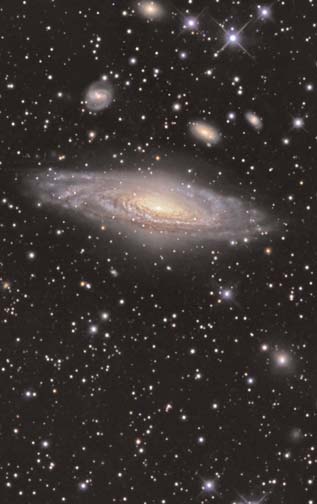
    LONDON (TIP): Astronomers have discovered the most distant galaxy known to man to date. They have also confirmed this galaxy was created within 700 million years after the Big Bang, raising interesting questions about the origins and the evolution of the universe. While the Milky Way creates about one or two Sun-like stars every year or so, the newly discovered galaxy, being called z8_GND_5296, forms about 300 a year and was observed by the researchers as it was 13 billion years ago. That’s the time it took for the galaxy’s light to travel to Earth. A single light year, which is the distance light travels in a year, is nearly six trillion miles. Because the universe has been expanding the whole time, the researchers estimate the galaxy’s present distance to be roughly 30 billion light years away. “Because of its distance we get a glimpse of conditions when the universe was only about 700 million years old — only 5% of its current age of 13.8 billion years,” said Professor Casey Papovich from Texas A&M University. University of California, Riverside astronomers Bahram Mobasher and Naveen Reddy are members of the team that has discovered the galaxy. In collaboration with astronomers at the University of Texas at Austin, Texas A&M University and the National Optical Astronomy Observatories, Mobasher and Reddy identified a very distant galaxy candidate using deep optical and infrared images taken by the Hubble Space Telescope. Follow-up observations of this galaxy by the Keck Telescope in Hawaii confirmed its distance.

    In searching for distant galaxies, the team selected several candidates, based on their colours, from the approximately 100,000 galaxies identified in the Hubble Space Telescope images taken as a part of the CANDELS survey, the largest project ever performed by the Hubble Space Telescope, with a total allocated time of roughly 900 hours. Using colours to sort galaxies is tricky because some nearby objects can masquerade as distant galaxies. Therefore, to measure the distance to these galaxies in a definitive way, astronomers use spectroscopy — specifically, how much the wavelength of a galaxy’s light has shifted towards the red-end of the spectrum as it travels from the galaxy to Earth, due to the expansion of the universe. This phenomenon is called redshift. Since the expansion velocity (redshift) and distances of galaxies are proportional, the redshift gives astronomers a measure of the distance to galaxies. “What makes this galaxy unique, compared to other such discoveries, is the spectroscopic confirmation of its distance,” said Mobasher. Mobasher said because light travels at about 186,000 miles per second, when we look at distant objects, we see them as they appeared in the past. The more distant we push these observations, the farther into the past we can see. “By observing a galaxy that far back in time, we can study the earliest formation of galaxies,” he said. “By comparing properties of galaxies at different distances, we can explore the evolution of galaxies throughout the age of the universe.”

  • Scientists finally unravel mystery of why kettles whistle

    Scientists finally unravel mystery of why kettles whistle

    LONDON (TIP): An Indian aero acoustics scientist has finally worked out why and how a kettle actually whistles – a problem which has puzzled scientists for more than 100 years. A team of British researchers from Cambridge University claim to have solved the conundrum and in the process developed the first accurate model for the whistling mechanism inside a classic stove kettle. Using the knowledge gained from the study, researchers now say they could potentially isolate and stop similar, but far more irritating whistles – such as the noise made when air gets into household plumbing or damaged car exhausts. It may come as a surprise but in all the years that people have been brewing tea, no-one has ever quite been able to work out why kettles whistle. The physical source of the noise and the specific reason for the whistling sound have both remained elusive until now. Two researchers – Dr Anurag Agarwal, a lecturer in aero acoustics at Cambridge and his student Ross Henrywood identified the source of the sound itself and have also been able to pinpoint two separate mechanisms, which not only create the sound but specifically cause a kettle to whistle, rather than making the rushing noise a flow might create in other household items, such as a hairdryer.

    A basic kettle whistle consists of two plates, positioned close together, forming a cavity. Both plates have a hole in the middle, which allows steam to pass through. Although the sound of a kettle is understood to be caused by vibrations made by the build-up of steam trying to escape, scientists have been trying for decades to understand what it is about this process that makes sound. As far back as the 19th century, John William Strutt and author of the foundational text The Theory of Sound, was trying to explain it. In the end, he posited an explanation that Henrywood and Agarwal have proven to be flawed. Henrywood and Agarwal started by making a series of slightly simplified kettle whistles then tested these in a rig in which air was forced through them at various speeds and the sound they produced was recorded. This enabled them to plot the frequency and amplitude of the sound, and the data was then subjected to a nondimensional analysis, effectively a set of calculations using numbers without any units, which allowed them to identify trends in the data. Finally, they used a two-microphone technique to determine frequency inside the spout. Their results showed that, above a particular flow speed, the sound itself is produced by small vortices – regions of swirling flow – which at certain frequencies can produce noise. As steam comes up the kettle’s spout, it meets a hole at the start of the whistle, which is much narrower than the spout itself. This contracts the flow of steam as it enters the whistle and creates a jet of steam passing through it. The steam jet is naturally unstable, like the jet of water from a garden hose that starts to break into droplets after it has travelled a certain distance. As a result, by the time it reaches the end of the whistle, the jet of steam is no longer a pure column, but slightly disturbed.

  • NOW, WALLET THAT RUNS AWAY TO HELP YOU SAVE MONEY

    NOW, WALLET THAT RUNS AWAY TO HELP YOU SAVE MONEY

    NEW YORK (TIP): A Japanese company has developed a crafty wallet to keep your spending in check – if you are short on cash, it rolls away when you reach for it. The “Living Wallet,” developed by a Japanese company, syncs with a bookkeeping smartphone app called Zaim. The product has two modes depending on your cash: Save Mode and Consumption Mode. When you are running short on cash, and you try to reach for it, the wallet will slink away from you or spin around to dodge your hand, ‘New York Daily News’ reported. When you inevitably catch it and open it, the wallet will start yelling and asking for help. The wallet can even call or email your mother to discourage you from making an unnecessary purchase. However, if your bank balance is in the green and you have the extra cash to spend, the wallet will switch to Consumption Mode and encourage spending. According to the product website, there are no plans to sell the Living Wallet to the public.

  • Nasa’s laser communication system transmits data from Moon

    Nasa’s laser communication system transmits data from Moon

    WASHINGTON (TIP): Nasa’s gen-next laser communication system has made history using a pulsed laser beam to transmit data over the 384,633 kilometres between the Moon and Earth. The data transmission was accomplished at a recordbreaking download rate of 622 megabits per second (Mbps) – six times faster than radio communications from the Moon. Lunar Laser Communication Demonstration (LLCD) is Nasa’s first system for two-way communication using a laser instead of radio waves. It has also demonstrated an error-free data upload rate of 20 Mbps transmitted from the primary ground station in New Mexico to the spacecraft currently orbiting the Moon. “LLCD is the first step on our roadmap toward building the next generation of space communication capability,” said Badri Younes, Nasa’s deputy associate administrator for space communications and navigation (SCaN) in Washington. “We are encouraged by the results of the demonstration to this point, and we are confident we are on the right path to introduce this new capability into operational service soon,” Younes said in a statement. Since NASA first ventured into space, it has relied on radio frequency (RF) communication.

    However, RF is reaching its limit as demand for more data capacity continues to increase. The development and deployment of laser communications will enable NASA to extend communication capabilities such as increased image resolution and 3-D video transmission from deep space. LLCD is a short-duration experiment and the precursor to NASA’s long-duration demonstration, the Laser Communications Relay Demonstration (LCRD). LCRD is a part of the agency’s Technology Demonstration Missions Programme, which is working to develop crosscutting technology capable of operating in the rigors of space. It is scheduled to launch in 2017. LLCD is hosted aboard Nasa’s Lunar Atmosphere and Dust Environment Explorer (LADEE), launched in September from Nasa’s Wallops Flight Facility on Wallops Island. LADEE is a 100-day robotic mission to provide data that will help Nasa determine whether dust caused the mysterious glow astronauts observed on the lunar horizon during several Apollo missions. It also will explore the Moon’s atmosphere.

  • ‘SCREEN X’ TECHNOLOGY OFFERS 3D EFFECT WITHOUT SPECIAL GLASSES

    ‘SCREEN X’ TECHNOLOGY OFFERS 3D EFFECT WITHOUT SPECIAL GLASSES

    BUSAN (TIP): A new format that gives movie-goers a panoramic 270 degree view will be rolled out by South Korea’s biggest cinema chain this month, using the walls of theatres as additional screens. Screen X, developed by cinema chain CJ CGV, was on show at the Busan International Film Festival last week in the premiere of a 30-minute spy thriller “The X” , directed by Kim Jee-Woon , a film commissioned to showcase the expanded three-screen format. Kim, who directed this year’s Arnold Schwarzenegger action adventure “The Last Stand” , said the technology brought a more immersive experience to the cinema. He likened it to a “horizontal” version of IMAX, a format that offers greater size and resolution than conventional film. Screen X requires filmmakers to use three cameras to shoot the same scene simultaneously from different angles to create the wider “surround” effect. “The space in front of you is filled up completely,” said Kim.

    “It provides a new depth for viewers.” “The X” showed off the capabilities of the format in a chase sequence and a dream sequence that seemed to envelop the cinema. Audiences at Busan watching “The X” seemed at first confused whether to look left, right or straight ahead before settling in to the experience. “It was really fun. I personally don’t like 3D or 4D films but this made me feel like I was inside the film,” 19- year-old student Jung Gwang-Soo said. CJ CGV, which also has interests in China, Hong Kong and the United States, has been testing the technology on advertisements, but has remained tight-lipped on installation costs — reportedly between $139,300 and $185,800 per screening room, according to Dow Jones Newswires. Installation will not be without logistical challenges, given that the effect is lessened in seats positioned to the sides of the cinema. By the end of October the system will be available in 31 cinemas around South Korea in readiness for a series of planned featurelength productions to be rolled out over the next 12 months.

    While Kim said he was excited to be able to explore the possibilities of the new technology — and freely admitted he was more concerned with effects than plot in his first production with it — other directors showcased technology they believe allows the audience to focus more on the stories they are telling. The Israeli-French production “Ana Arabia” , which looks at life in a Jewish-Arabic community, was one of a number of new films screening in Busan that used advanced steadycameras to enable directors to shoot in one single take. In “Ana Arabia’s” case, that was for 74 constant minutes while the Iranian film “Fish & Cat” managed to a single take of 134 minutes. “Ana Arabia’s” veteran director Amos Gitai said the technology helped filmmakers engage with their audiences through providing a sense of intimacy not available when using multiple cameras and edits.

  • LARGEST FRAGMENT OF METEORITE IN RUSSIA FOUND

    LARGEST FRAGMENT OF METEORITE IN RUSSIA FOUND

    MOSCOW (TIP): Divers have found the largest piece so far of a meteorite which hit Russia’s Chelyabinsk region in February this year, a scholar said. Xinhua quoted Sergei Zamozdra, an associate professor at South Urals State University, as saying that preliminary studies showed the 570-kg fragment came from the Chelyabinsk meteorite. It was recovered from a depth of 20 metres in the Chebarkul Lake, he said. It will be placed at a local museum after undergoing Xrays and other scientific tests. The meteorite exploded over the Chelyabinsk region in central Russia on February 15, injuring more than 1,600 people and damaging property worth about 1 billion roubles ($30 million).

  • AERIAL TECHNOLOGY USED TO FIND DRINKING WATER

    AERIAL TECHNOLOGY USED TO FIND DRINKING WATER

    NEW DELHI (TIP): Water scarcity is endemic in our country. With groundwater irrigation accounting for over 60% of the total area irrigated, it’s important to save this precious resource. Recognising this, the ministry of water resources has, for the first time, started a Rs 41cr pilot project to map aquifers. Expected to be completed by May 2014, it will use specialized choppers to find clean, drinking water. The mapping began recently in Dausa near Jaipur and will cover five more areas. This pilot project is part of a mega one — the National Project on Aquifer Management — to map aquifers all over India and will cover 21 million sq km. It has been taken up during the 12th and 13th Five Year Plans. The project is in conjunction with the Central Ground Water Board and National Geophysical Research Institute (NGRI), Hyderabad, and is funded by World Bank. While the country has enough water, its distribution is uneven, said an official of the ministry of water resources.

    “In order to assess ground water, we need a three-dimensional geometry of aquifers so that we know how much to extract. Eventually, the community and state governments will manage these,” he said. Aquifers, incidentally, are ground water deposits and can be found at a depth of 200-500m. The six areas covered under the pilot project have been selected on the basis of soil types and topography. Dausa, for example, has hard rock with alluvium. “The others places include Chandrabhaga in Nagpur (Deccan basaltic traps), Tumkur in Karnataka (granite), Cuddalore in Tamil Nadu (coastal area), Ramgadh in Jaisalmer (desert environment) and Patna (alluvial soil),” said Shakeel Ahmed, chief scientist at NGRI. The matrix that evolves from this pilot project will be used in the rest of the country. For the first time, aerial geophysical techniques are being used to cover a wide area and even inaccessible ones.

    Using a Danish technology called Skytem, a specialized Eurochopper is hooked below with a 30-m long probe which has a huge frame of 300 square metres. The chopper flies low — 3,500km high — and slowly at a speed of 60-80km per hour so that the frame doesn’t swing too much, said Ahmed. “Through the loop, which is made of fibre optics, electromagnetic currents are sent to the ground and the magnetic field thus generated is measured. This allows us to see the distribution of water, how much there is and at what depth,” says Ahmed. “It’s important to have a chopper which can carry half-a-ton weight under it. It’s especially useful in dry and coastal areas.” This technique, incidentally, has been used to map half of Denmark, informs Lars Jensen, senior field manager, SkyTEM, from Jaipur. “We have also used it in Australia, Malaysia, Antarctica, South Africa and America. We will finish mapping Jaipur within two weeks and cover an area of some 600 square kilometres,” he said.

  • APOCALYPTIC COMET STRUCK EARTH 28 MILLION YEARS AGO

    APOCALYPTIC COMET STRUCK EARTH 28 MILLION YEARS AGO

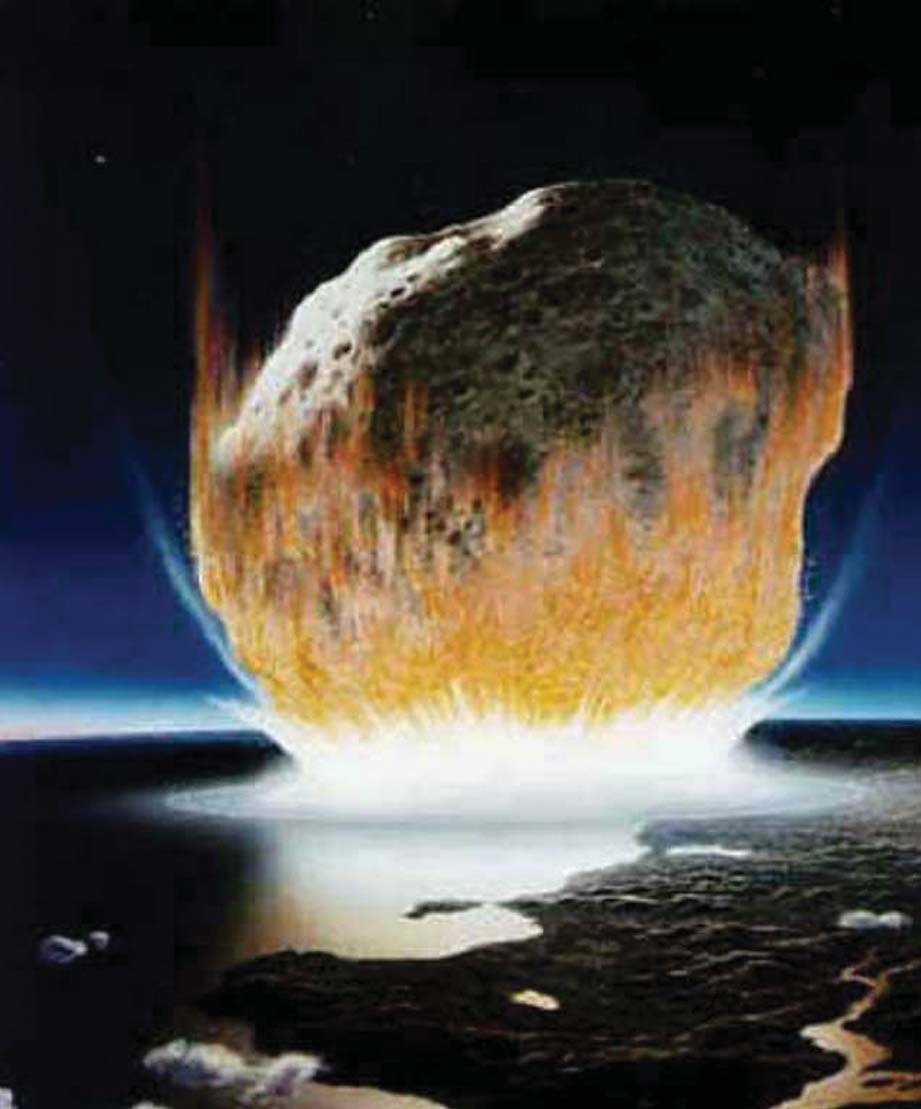
    JOHANNESBURG (TIP): Scientists have found the first-ever comet material on Earth – a black pebble filled with diamonds – left behind when an ‘apocalyptic’ comet exploded over modern-day Egypt, 28 million years ago. The discovery by a team of South African scientists and international collaborators is the first definitive proof of a comet striking Earth and could also help unlock the secrets of the formation of our solar system. The comet exploded, raining down a shock wave of fire which obliterated every life form in its path, and heating up the sand beneath it to a temperature of about 2,000 degrees Celsius, researchers said. It resulted in the formation of a huge amount of yellow silica glass which lies scattered over a 6,000 square kilometre area in the Sahara. A magnificent specimen of the glass, polished by ancient jewellers, is found in 18th dynasty Egyptian pharaoh Tutankhamun’s brooch with its striking yellow-brown scarab. “Comets always visit our skies – they’re these dirty snowballs of ice mixed with dust – but never before in history has material from a comet ever been found on Earth,” said Professor David Block of Wits University.

    Comet fragments have not been found on Earth before except as microscopic sized dust particles in the upper atmosphere and some carbon-rich dust in the Antarctic ice. The research began with a mysterious black pebble found years earlier by an Egyptian geologist in the area of the silica glass. After conducting highly sophisticated chemical analyses on this pebble, the authors came to the conclusion that it represented the very first known hand specimen of a comet nucleus, rather than simply an unusual type of meteorite. Lead author Professor Jan Kramers of the University of Johannesburg describes this as a moment of career defining elation. “It’s a typical scientific euphoria when you eliminate all other options and come to the realisation of what it must be,” he said. The impact of the explosion also produced microscopic diamonds. “Diamonds are produced from carbon bearing material. Normally they form deep in the Earth, where the pressure is high, but you can also generate very high pressure with shock. Part of the comet impacted and the shock of the impact produced the diamonds,” said Kramers. The team have named the diamondbearing pebble “Hypatia” in honour of the first well known female mathematician, astronomer and philosopher, Hypatia of Alexandria. “NASA and ESA ( European Space Agency) spend billions of dollars collecting a few microgrammes of comet material and bringing it back to Earth, and now we’ve got a radical new approach of studying this material, without spending billions of dollars collecting it,” said Kramers.

  • US’s new robot soldiers can gallop at 25kmph

    US’s new robot soldiers can gallop at 25kmph

    WASHINGTON (TIP): US scientists have developed a new fourlegged robot called WildCat that gallops at 25 km/h on flat ground and will aid military and rescue operations. The robot was built by Boston Dynamics, a technology company founded by scientists from the Massachusetts Institute of Technology. A new video shows off the robot’s ability to run on flat surfaces but the machine is expected to eventually be able to run quickly over all types of terrain. WildCat is a free-running version of one of Boston Dynamics’ earlier quadruped creation called Cheetah, a super fast robot that could sprint, on a treadmill at least, up to 45.5 km/h — faster than Usain Bolt, the world’s fastest man. Though WildCat is slower than its predecessor for now, it is untethered. Wildcat is being developed as part of the US Defence Advanced Research Projects Agency’s Maximum Mobility and Manipulation, or M3, programme, which seeks to overcome the current limitations that ground robots face in terms of agility, ‘LiveScience’ reported.

  • EARTH TO BOOST SPEED OF PROBE ON WAY TO JUPITER

    EARTH TO BOOST SPEED OF PROBE ON WAY TO JUPITER

    LOS ANGELES ( TIP) A Nasa spacecraft bound for Jupiter will swing by Earth to get the boost it needs to arrive at the giant gas planet in 2016. Using Earth as a gravitational slingshot is a common trick since there isn’t a rocket that’s powerful enough to catapult a spacecraft directly to the outer solar system. Launched in 2011, the Juno spacecraft zipped past the orbit of Mars and fired its engines to put it on course for a momentum-gathering flyby of Earth. During the manoeuvre, Juno will briefly pass into Earth’s shadow and emerge over India’s east coast. At closest approach, Juno will fly within 350 563 kilometres of the Earth’s surface, passing over the ocean off the coast of South Africa shortly before 12.30pm local time. The rendezvous was designed to bump Juno’s speed from 125,500 kmph relative to the sun to 140,000kmph enough power to cruise beyond the asteroid belt toward its destination.

  • A wi-fi music player controlled by teeth

    A wi-fi music player controlled by teeth

    WASHINGTON (TIP): Researchers are developing a wireless music player that fits the ear like earbuds and can be controlled by biting. The music player ‘Split’ eliminates headphone cords and the need for a pocket to keep the music player. Two years under development by a start-up named Greenwing Audio in Miami Beach, Florida, Split consists of a pair of earbuds with little oblongs sticking out of them. Inside a one-inch stainless steel casing is a small circuit board, a button cell battery, a memory chip, a processor and a few other components necessary to play quality digital audio. The Split earbuds are synchronized to act like one music player, according to ‘Endgadget’. Split uses high-precision crystal clocks and a short, nearfield radio signal to sync the earbuds when activating, or when the track or volume are changed. With no buttons or microphone for voice command, Split uses its accelerometers for control. These are designed to respond when the user bites. One bite changes tracks, and two bites changes the volume.

  • Giant radio telescope in Chile reaches full power

    Giant radio telescope in Chile reaches full power

    WASHINGTON (TIP): A giant radio telescope in Chile has received the last piece of its 66-antenna array, marking the beginning of a new era of discoveries in deep space. The final antenna for the Atacama Large Millimetre/submillimetre Array (ALMA) project has just been handed over to the ALMA Observatory by the European AEM Consortium, which also marks the successful delivery of a total of 25 European antennas, 25 North American antennas and 16 Japanese antennas. By the end of 2013, all 66 ultra-precise millimetre/submillimetre wave radio antennas are expected to be working together as one telescope, in an array that will stretch for up to 16 kilometres across the Chajnantor plateau in the Atacama Desert of northern Chile, ALMA said. This delivery of the last antenna completes the ALMA antenna construction phase and provides all 66 antennas for science use, marking the beginning of a new era of discoveries in astronomy. “This is an important milestone for the ALMA observatory since it enables astronomers in Europe and elsewhere to use the complete ALMA telescope, with its full sensitivity and collecting area,” said Wolfgang Wild, the European ALMA project manager in a statement. ALMA helps astronomers answer important questions about our cosmic origins. The telescope observes the Universe using light with millimetre and submillimetre wavelengths, between infrared light and radio waves in the electromagnetic spectrum.

  • POWERFUL VOLCANOES RAISE NEW QUESTIONS ABOUT ANCIENT MARS

    POWERFUL VOLCANOES RAISE NEW QUESTIONS ABOUT ANCIENT MARS

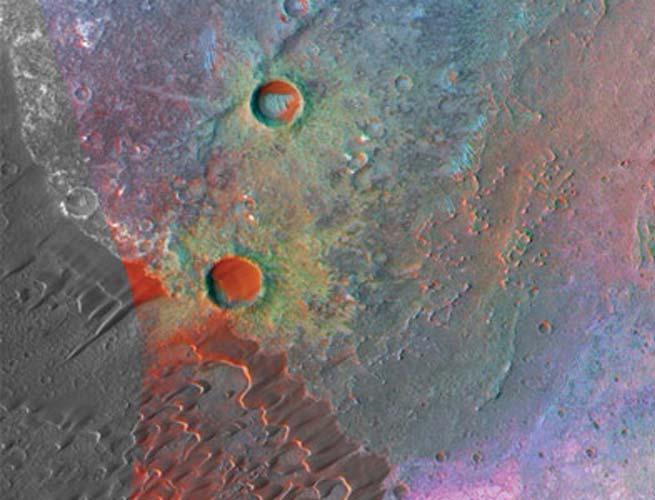
    HOUSTON (TIP): Ancient Mars was home to giant volcanoes capable of eruptions a thousand times more powerful than the one that shook Mount St. Helens in 1980, scientists said. The finding raises fresh questions about conditions on Mars in its early years, a time when scientists believe the planet was much more Earth-like with a thick atmosphere, warmer temperatures and water on its surface. Major volcanic eruptions likely would have triggered climate shifts that toggled Martian temperatures between cold spells when ash blocked sunlight and heat waves when greenhouse gases filled the skies, according to scientists. Supervolcanoes may have made it more difficult for life to evolve on the planet’s surface, but underground steam vents and the release of water into the atmosphere also could have created niches for microbes to thrive, said geologist Joseph Michalski of the Planetary Science Institute in Tucson, Arizona. The discovery of supervolcanoes on Mars comes from analysis of images from a quartet of Mars orbiters over the past 15 years.

    These types of volcanoes, also known as “caldera” volcanoes, are ancient, collapsed structures rather than steep, cone-shaped or domed mountains like Olympus Mons on Mars, a so-called shield volcano that stands nearly three times taller than Mount Everest, the highest peak on Earth. “We know a lot about the volcanic history of Mars over the last 3 billion to 3.5 billion years, but that still leaves about 1 billion years before that over which we don’t really know anything about volcanism,” Michalski told Reuters. Some scientists theorized that the oldest Martian volcanoes had eroded away, but the new findings suggest a different kind of volcano existed long ago. “If early Mars saw a lot more explosive volcanism, then the features that are left from that don’t look like those shield volcanoes. That’s maybe why we didn’t see them,” Michalski said. Scientists say supervolcanoes erupt with about 1,000 times the force of typical volcanoes like Mount St. Helens in Washington state. The eruption of Mount St. Helens in 1980 blasted the top off the mountain, killed 57 people and, according to the U.S. Geological Survey, shot ash, steam, water and debris about 80,000 feet (24,000 meters) into the air. Evidence of past supervolcanoes on Earth has been erased by plate tectonics and other geologic activities.

    Michalski actually was studying Martian impact craters, not looking for volcanoes. “We made the discovery by accident,” he said. “As I went through (the images) of this one region, I found a number of them that were simply not impact craters,” he said. “One was clearly a volcano. … It is quite possible there are many more of these,” Michalski added. Because the emission of gases from volcanoes helps create a planet’s atmosphere, understanding the volcanic history of Mars is crucial to figuring out what the planet – the fourth from the Sun – was like in its early years. Additional evidence may come from NASA’s Mars Curiosity rover, which is heading toward a 3-mile (5-km) high mound of deposits called Mount Sharp. The rover touched down inside a giant impact basin near the planet’s equator in August 2012 to assess if Mars ever had the chemistry and environment to support and preserve microbial life. “There are thousands of layers of rocks in Mount Sharp and they contain a long record of geologic history,” Michalski said. “There could be interlayered rocks that are ash beds, and we predict that and we hope that the rover can test it,” he said.

  • WORLD’S SHARPEST X-RAY BEAM DEVELOPED

    WORLD’S SHARPEST X-RAY BEAM DEVELOPED

    BERLIN (TIP): Scientists have successfully generated the world’s sharpest x-ray beam which is ten thousand times thinner than a strand of hair. This fine beam of x-ray light barely 5 nanometres in diameter, created by researchers led by Professor Tim Salditt from the University of Gottingen, allows focusing on smallest details. “Instead of a common lens, we use a so-called Fresnel lens which consists of several layers,” said coauthor Dr Markus Osterhoff. The central support is a fine tungsten wire with the thickness of only a thousandth of a millimetre. Around the wire, nanometre-thin silicon and tungsten layers are applied in an alternating way. The physicists then cut a thin slice from the coated wire. “This slice has 50 to 60 silicon and tungsten layers, comparable to growth rings of a tree,” said team member Florian Doring. “And the layer thicknesses have to be extremely precise,” Christian Eberl added. The wire slice with a size of only about two thousandth of a millimetre is used as a lens. However, it does not diffract light like a glass lens but scatters it like an optical grid generating a pattern of bright and dark patches. The thickness of the layers is selected in such a way that the bright areas of the diffraction pattern coincide at the same spot.

  • A DIABETES DRUG WHICH DOES NOT HURT YOUR HEART

    A DIABETES DRUG WHICH DOES NOT HURT YOUR HEART

    BARCELONA (TIP): Mankind’s fight with diabetes and its associated medical complications goes back over 3,500 years ago. In fact, the earliest record of diabetes, written on a third dynasty Egyptian papyrus by physician Hesy-Ra , describes it as a “great emptying of the urine” . Medical advances since then have progressed from treating diabetes with “wheat grains, fruit and sweet bee” to a host of integrated drugs, apart from a regimen of diet and exercise. Currently, diabetes (both Type 1 and 2) affects an estimated 371 million people and kills over 4 million annually worldwide. Worryingly, over 63 million of these patients are found to be in India alone. Even more alarming is the correlation between diabetes and cardiovascular (CV) disease. Studies have shown that approximately 50% of diabetics die of a cardiovascular event. As Dr Mark Kearney, professor of cardiovascular and diabetes research at the British Heart Foundation, University of Leeds, said: “If you are a South Asian, you are not only more susceptible to Type 2 diabetes but also to cardiac failure.”

    In fact, the cardiovascular age of a diabetic is pegged at 15 years more than the patient’s biological age. In simple terms, people with diabetes are four times more likely to die of a heart attack or stroke as compared to those who don’t have diabetes. The main outlook in treatment of such patients is not to increase the risk of CV events even further. This is where data from Phase 3 trials in linagliptin, a DPP-4 inhibitor, holds out some sweet news. Boehringer Ingelheim and Eli Lilly and Company recently announced at the annual European Association for the Study of Diabetes meeting that treatment with linagliptin is not associated with increased risk of CV events in the treatment of T2D. Linagliptin (a 5mg tablet, once daily), is the only DPP- 4 inhibitor that does not require dose adjustments in adults with T2D. It is marketed as Trajenta in Europe and Tradjenta in the US. The results from the Phase 3 clinical trials of linagliptin, that covered 6,000 people with T2D in various countries, are even more heartwarming when its efficacy, safety and tolerability levels, especially among elderly patients, are considered.

  • Scientists use lightning to charge cellphone

    Scientists use lightning to charge cellphone

    LONDON (TIP): Thunder power! In a Frankensteinian breakthrough, scientists have for the first time charged a mobile phone using lightning bolt. Famous English author Mary Shelley in her gothic novel ‘Frankenstein’ used lightning to breathe life into the Frankenstein’s monster, some 200 years ago. The ground-breaking, proof-of-concept research by the University of Southampton, UK, into harnessing the power of lightning for personal use, is an industry first. The finding could potentially see consumers tap one of nature’s significant energy sources to charge their devices in a sustainable manner, researchers said. The study was undertaken to investigate how natural power resources could be used to a charge a mobile phone with an energy simulation similar to that of a bolt of lightning.”We were excited by this challenge presented to us by Nokia. Using an alternating current driven by a transformer, over 200,000 volts was sent across a 300mm gap – giving heat and light similar to that of a lightning bolt. The signal was then stepped into a second controlling transformer, allowing us to charge the phone,” Neil Palmer of the University’s Tony Davies High Voltage Laboratory – one of the world’s leading high voltage laboratories – said.

  • FINGER SWEAT CAN REVEAL DEPRESSED PERSON’S SUICIDAL TENDENCIES

    FINGER SWEAT CAN REVEAL DEPRESSED PERSON’S SUICIDAL TENDENCIES

    WASHINGTON (TIP): A simple measurement of the sweat gland activity of a depressed person can nearly accurately determine if they have suicidal propensity, a new research has claimed. Lars-Hakan Thorell, associate professor in experimental psychiatry at Linkoping University, one of the researchers behind the study, said that blood pressure, blood circulation and activity in the sweat glands of the fingers can reveal if a person is suicidal. In the German-Swedish study, 783 depressed inpatients in Germany were tested for hyporeactivity – reduced ability to react to various stimuli.

    A suicidal depressed person reacts differently to environmental changes, compared to a healthy person. The test found that hyporeactivity was present in up to 97 per cent of depressed patients who later committed suicide, compared to just 2 per cent of the depressed patients who were not hyporeactive. But the study also shows there is no relation between the severity of depression and hyporeactivity. Hyporeactivity can be measured by the test person listening to a pattern of tones, while the body’s reactions are measured via sensors on the fingers. The first time they hear a tone, virtually all people react. This is a general orientation reaction which occurs automatically. But when the tone is heard again, the reaction decreases amongst some people: the hyporeactive.

  • CURIOSITY FINDS MORE SIGNS OF WATER ON MARS

    CURIOSITY FINDS MORE SIGNS OF WATER ON MARS

    WASHINGTON (TIP): Nasa’s Curiosity rover has found more evidence of water on ancient Mars during a recent pit stop along the way towards a huge Red Planet mountain. The one-tonne Curiosity rover resumed a trek of many months toward its mountain-slope destination, Mount Sharp. The rover used instruments on its arm to inspect rocks at its first way-point along the route inside Gale Crater. The location, originally chosen on the basis of images taken from Nasa’s Mars Reconnaissance Orbiter, paid off with investigation of targets that bear evidence of ancient wet environments, the US space agency said. “We examined pebbly sandstone deposited by water flowing over the surface, and veins or fractures in the rock,” said Dawn Sumner of University of California, Davis.

    “We know the veins are younger than the sandstone because they cut through it, but they appear to be filled with grains like the sandstone,” said Sumner. This Waypoint 1 site at an outcrop called “Darwin” is the first of up to five waypoint stops planned along the route of about 8.6 kilometers between the “Glenelg” area, where Curiosity worked for the first half of 2013, and an entry point to the lower slope of Mount Sharp, the mission’s main destination. It is about one-fifth of the way along the route. The rover departed Waypoint 1 on September 22 with a westward drive of about 22.8 meters. Curiosity’s science team planned the waypoints to collect information about the geology between Glenelg and Mount Sharp. Researchers want to understand relationships between what the mission already discovered at Glenelg and what it may find in the multiple layers of Mount Sharp.

    Analysis of drilled samples from veined “Yellowknife Bay” rocks in the Glenelg area provided evidence for a past lakebed environment with conditions favorable for microbial life. That means the mission has fulfilled its principal science goal, researchers said. “We want to understand the history of water in Gale Crater,” Sumner said. “Did the water flow that deposited the pebbly sandstone at Waypoint 1 occur at about the same time as the water flow at Yellowknife Bay? If the same fluid flow produced the veins here and the veins at Yellowknife Bay, you would expect the veins to have the same composition,” Sumner said

  • DENSEST GALAXY EVER DISCOVERED

    DENSEST GALAXY EVER DISCOVERED

    WASHINGTON (TIP): Astronomers have discovered the densest galaxy ever to be found – packed with an extraordinary number of stars – about 54 million light years from our own Milky Way. The ultra-compact dwarf galaxy, dubbed M60-UCD1, was found in what’s known as the Virgo cluster of galaxies, researchers said. Imagine the distance between the Sun and the star nearest to it – Alpha Centauri. That’s a distance of about 4 light years. Now, imagine as many as 10,000 of our Suns crammed into that relatively small space. That is about the density of a galaxy discovered by an international team of astronomers led by a Michigan State University faculty member.

    “This galaxy is more massive than any ultra-compact dwarfs of comparable size and is arguably the densest galaxy known in the local universe,” said Jay Strader, MSU assistant professor of physics and astronomy. The galaxy was discovered in the Virgo cluster of galaxies, a collection of galaxies located about 54 million light years from our own Milky Way. What makes M60-UCD1, so remarkable is that about half of its mass is found within a radius of only about 80 light years. This would make the density of stars about 15,000 times greater than found in Earth’s neighbourhood in the Milky Way. “Travelling from one star to another would be a lot easier in M60-UCD1 than it is in our galaxy.

    Since the stars are so much closer in this galaxy, it would take just a fraction of the time,” Strader said. The discovery of ultra-compact galaxies is relatively new – only within the past 10 years or so. Until then, astronomers could see these “things” way off in the distance but assumed they were either single stars or very-distant galaxies. Another intriguing aspect of this galaxy is the presence of a bright X-ray source in its centre. One explanation for this is a giant black hole weighing in at some 10 million times the mass of our Sun. Astronomers are trying to determine if M60-UCD1 and other ultra-compact dwarf galaxies are either born as really jampacked star clusters or if they are galaxies that get smaller because they have stars ripped away from them.

    The possible massive black hole, combined with the high galaxy mass and Sun-like levels of elements found in the stars, favour the latter idea. A giant black hole at the centre of M60- UCD1 helps tip the scales against the scenario where this galaxy was once a star cluster, since such large black holes are not found in these types of objects. The galaxy was discovered using NASA’s Hubble Space Telescope. Follow-up observations were done with NASA’s Chandra X-ray Observatory and groundbased optical telescopes, including the Keck 10-metre telescope in Hawaii.

  • SOON, A SMART PHONE WHICH DOUBLES UP AS A MICROSCOPE

    SOON, A SMART PHONE WHICH DOUBLES UP AS A MICROSCOPE

    LONDON (TIP): Your smart phone may soon be able to double up as a high resolution microscope that can detect even the smallest virus. University of California Los Angeles researchers have created a portable smartphone attachment that can be used to perform sophisticated field testing to detect viruses and bacteria without the need for bulky and expensive microscopes and lab equipment. The device weighs less than half a pound. Using this device which attaches directly to the camera module on a smartphone the team was able to detect single Human Cytomegalovirus (HCMV) particles. HCMV is a common virus that can cause birth defects such as deafness and brain damage and can hasten the death of adults who have received organ implants who are infected with the HIV virus or whose immune systems otherwise have been weakened. A single HCMV particle measures about 150-300 nanometres – a human hair is roughly 100,000 nanometres thick.

    Aydogan Ozcan, a professor of electrical engineering and bioengineering at the UCLA Henry Samueli School of Engineering and Applied Science said “This cell phonebased imaging platform could be used for detection of sub-wavelength objects, including bacteria and viruses and therefore could enable the practice of nanotechnology and biomedical testing in field settings and even in remote and resource-limited environments. These results also constitute the first time that single nanoparticles and viruses have been detected using a cell phone-based, field-portable imaging system”. In a separate experiment, Oscan’s team also detected nanoparticles — specially marked fluorescent beads made of polystyrene — as small as 90- 100 nanometres. To verify these results, researchers used other imaging devices, including a scanning electron microscope and a photon-counting confocal microscope. These experiments confirmed the findings made using the new cell phone-based imaging device. Capturing clear images of objects as tiny as a single virus or a nanoparticle is difficult because the optical signal strength and contrast are very low for objects that are smaller than the wavelength of light. Researchers here detail a fluorescent microscope device fabricated by a 3-D printer that contains a colour filter, an external lens and a laser diode. The diode illuminates fluid or solid samples at a steep angle of roughly 75 degrees. This oblique illumination avoids detection of scattered light that would otherwise interfere with the intended fluorescent image.

  • US MAN GROWS NEW FINGER AFTER HORSE BITE

    US MAN GROWS NEW FINGER AFTER HORSE BITE

    NEW YORK (TIP): A 33-year-old man in US has undergone a ‘miraculous’ medical procedure to grow back his index finger which was chomped down by an overzealous horse while he was feeding the animal. Paul Halpern from Florida managed to save the severed digit and take it to the hospital, but doctors told him there was nothing they could do. Halpern then visited Dr Eugenio Rodriguez, a Deerfield Beach general surgeon who used an innovative procedure called xenograft implantation to regenerate the finger. Xenograft refers to transplantation of cells from one species to another. Rodriguez created a scaffold of Halpern’s missing finger, using tissue from a pig bladder, and attached it to the severed portion. The finger grew into the mold, generating new bone and soft tissue and a new fingernail. According to CBS Miami, Halpern had to apply pulverised pig bladder tissue to his wounded finger each day and cover it with a protective saline sheet. Rodriguez said the powder stimulates stem cells in the finger to regenerate, which causes the growth.

  • US launches unmanned Cygnus cargo ship to International Space Station

    US launches unmanned Cygnus cargo ship to International Space Station

    WASHINGTON (TIP): Orbital Sciences Corp launched the first flight of its unmanned Cygnus cargo ship today to the International Space Station, as Nasa forges ahead with its plan to privatize US space missions. “This is just the beginning of what we can do to support human space flight,” Orbital executive vice president Frank Culbertson, a retired Nasa astronaut, told reporters after Cygnus went into orbit around the Earth. The Cygnus capsule, hitched to Orbital Science’s Antares rocket, blasted off at 10:58 am (1458 GMT) from Nasa’s Wallops Flight Facility off Virginia’s eastern coast, for a Sunday rendezvous with the ISS. At the orbiting outpost, the Exhibition 37 crew watched live video of the blast-off. Nasa released a photo showing Commander Fyodor Yurchikhin and Flight Engineers Karen Nyberg and Luca Parmitano suspended due to the loss of gravity as they gathered around a laptop computer screen in the station’s Destiny laboratory.

    “Congrats @OrbitalSciences — great launch! Excited for Cygnus arrival on Sunday!” Nyberg tweeted using her handle @AstroKarenN. Cygnus separated from the rocket’s second stage about 10 minutes after blast-off to reach Earth’s orbit, marking the success of the launch. It later deployed both of its solar arrays, which will supply power to the spacecraft. The payload separation was successful, a Nasa commentator said on the US space agency’s live television feed. Clapping could be heard at mission control. “That was just a beautiful launch,” a Nasa commentator said. “All going very smoothly with the continuing health of the spacecraft.” Cygnus will ferry about 1,300 pounds (590 kilograms) of food, clothing and other cargo for the crew aboard the space station, which it is scheduled to reach at 1130 GMT Sunday. “Today marks a milestone in our new era of exploration as we expand the capability for making cargo launches to the International Space Station from American shores,” Nasa Administrator Charles Bolden said in a statement. “Orbital’s extraordinary efforts are helping us fulfill the promise of American innovation to maintain our nation’s leadership in space.” Parmitano, with help from Nyberg, will command the station’s 57-foot (17-meter) robotic arm, Canadarm2, to reach out and grapple Cygnus ahead of the docking.

  • BLACK HOLE, NOT BIG BANG, MIGHT HAVE STARTED UNIVERSE

    BLACK HOLE, NOT BIG BANG, MIGHT HAVE STARTED UNIVERSE

    MELBOURNE (TIP): The big bang theory may be a myth, as cosmologists have speculated that the universe was created after a star collapsed into a black hole – a theory that helps to explain why it seems to be expanding in all directions. The big bang theory suggests that the universe was created from a single point in the universe but despite years of research, nobody yet knows what triggered the eruption. It also fails to explain why the Universe has an “almost completely uniform temperature.” Researchers said that there does not seem to have been enough time since the birth of the cosmos for it to have reached temperature equilibrium, News.com.au reported. Astrophysicists from the Perimeter Institute for Theoretical Physics in Waterloo, Canada have released a paper discussing a previous theory out of Germany that posited that the universe is a three-dimensional “membrane” floating through a four-dimensional “bulk universe”.

    A bulk universe is a very complicated concept out of string theory that puts forward the idea that space is a plane of infinite dimensions through which other planes of infinite dimensions float. The team claimed that if the “bulk universe” contained four dimensional stars, some of them could collapse and cause black holes in the same way that stars in our universe do – they turn in supernovae, ejecting their outerlayers while their inner layers collapse into the black hole. Black holes in our universe are spherical in shape and possess some kind of “membrane” that keep them that way. These “membranes” are known as “event horizons”. Anything that passes through this event horizon is done for, because the gravitational pull is so great it makes escape impossible. In our universe only a two dimensional object is capable of becoming an event horizon within a black hole, Nature explained. Whereas in a bulk universe, the event horizon of a four dimensional black hole would have to be three dimensional, known as a “hypersphere”. In a nutshell this means that a star floating through a multidimensional plane got sucked into a black hole, half of it got swallowed up and the other half that survived spawned the creation of the universe. The fact that our universe is expanding in all directions could be a sign simply of cosmic expansion, rather than as the origin of the universe itself, the researchers suggest.

  • NEW NASA SPACECRAFT TO INVESTIGATE MOON MYSTERY

    NEW NASA SPACECRAFT TO INVESTIGATE MOON MYSTERY

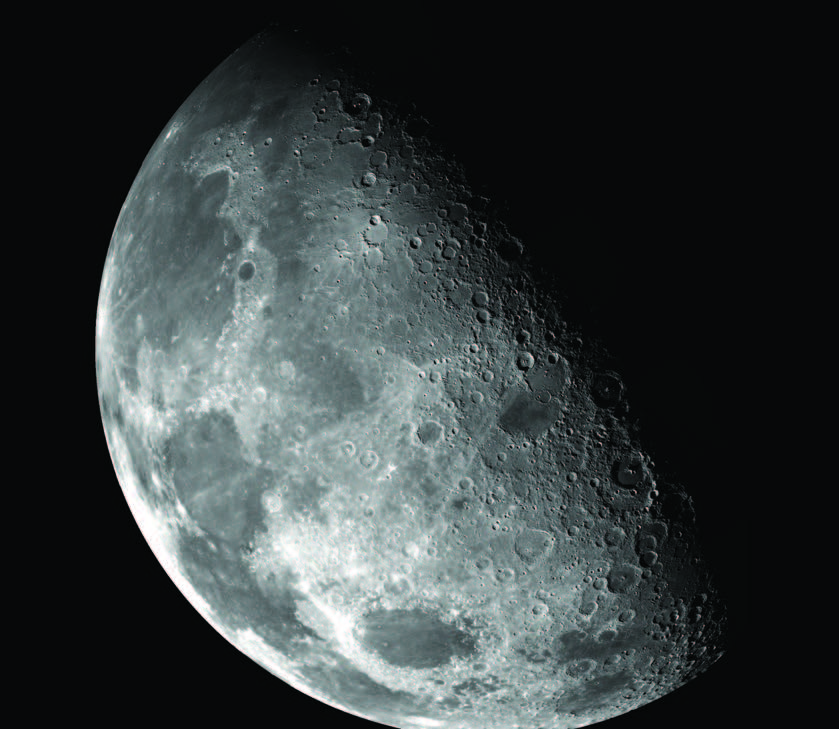
    CAPE CANAVERAL (TIP): More than 40 years after the last Apollo astronauts left the moon, NASA is preparing to launch a small robotic spacecraft to investigate one of their most bizarre discoveries. Crews reported seeing an odd glow on the lunar horizon just before sunrise. The phenomenon, which prompted a notebook sketch by Apollo 17 Commander Eugene Cernan, was unexpected because the airless moon lacked atmosphere for reflecting sunlight. Scientists began to suspect that dust from the lunar surface was being electrically charged and somehow lofted off the ground, a theory that will be tested by the US space agency’s upcoming Lunar Atmosphere and Dust Experiment.

    The spacecraft, known as LADEE, is scheduled to be launched at 11:27 p.m. EDT on Friday (0327 GMT Saturday) from NASA’s Wallops Flight Facility on Wallops Island, Virginia. “Terrestrial dust is like talcum powder. On the moon, it’s very rough. It’s kind of evil. It follows electric field lines, it works its way in equipment. … It’s a very difficult environment to deal with,” said LADEE project manager Butler Hine of NASA’s Ames Research Center in Moffett Field, California. In addition to studying fly-away lunar dust, LADEE will probe the tenuous envelope of gases that surrounds the moon, a veneer so thin it stretches the meaning of the word “atmosphere.” Instead, scientists refer to these environments as exospheres and hope that understanding the moon’s gaseous shell will shed light on similar pockets around Mercury, asteroids and other airless bodies. “LADEE is part of a much broader scientific exploration of the solar system,” said John Grunsfeld, NASA’s associate administrator for science.

    The $280 million mission also includes an experimental laser optical communications system that NASA hopes to incorporate into future planetary probes, including a Mars rover scheduled for launch in 2020. The prototype is based on technology used in terrestrial fiberoptic communications systems, such as Verizon’s FiOS. NASA says the system should be at least six times faster than conventional radio communications. Also, its transmitters and receivers weigh half as much as similar radio communications equipment and use 25 percent less power. “On the Earth, we’ve been using laser communication and fiber optics to power our Internet and everything else for the last couple of decades,” Grunsfeld said. “NASA has really been wanting to make that same technological leap and put it into space.

    This is our chance to do that.” LADEE’s optical communications system, which includes three ground stations in addition to LADEE, will be tested before the probe drops into a low lunar orbit to begin its science mission about 60 days after launch. Just getting to the moon will take LADEE 30 days – 10 times longer than the Apollo missions due to the probe’s relatively low-powered Minotaur 5 launcher. The rocket is comprised of three refurbished intercontinental ballistic missile motors and two commercially provided boosters. The Minotaur 5 configuration will be flying for the first time with LADEE. The use of decommissioned missile components drove the decision to fly from NASA’s Wallops Island facility, one of only a few launch sites permitted to fly refurbished ICBMs under US-Russian arms control agreements.