Tag: Science & Technology

  • Man Spots Lost Pyramids Via Satellite

    Man Spots Lost Pyramids Via Satellite

    WASHINGTON (TIP): Mysterious, pyramid-like structures spotted in the Egyptian desert by an amateur satellite archaeologist may indeed be long-lost pyramids, a new investigation has found. Angela Micol, from North Carolina, made the discovery of the possible pyramid complexes using Google Earth, last year. One site in Upper Egypt, just 19 km from the city of Abu Sidhum along the Nile, featured four mounds.

    The two larger mounds at this site are approximately 76.2 metres in width. Some 144 km north near the Fayum oasis, the second possible pyramid complex revealed a four-sided, truncated mound approximately 150 feet wide and three smaller mounds in a diagonal alignment. Micol told ‘Discovery News’ that peculiar features have been uncovered around the structures during a preliminary ground proofing expedition, revealing cavities and shafts.

    According to Micol, the Egyptian team believes they have identified a temple or habitation site near the site and a row of what may be mastaba tombs adjacent to the mounds.

  • World’s Most Powerful Radio Telescope Sees Birth Of Biggest Ever Star In Milky Way

    World’s Most Powerful Radio Telescope Sees Birth Of Biggest Ever Star In Milky Way

    NEW DELHI (TIP): Using ALMA, the most powerful radio telescope in the world, scientists have for the first time observed details of how a massive star is born within a dark cloud core about 10,000 light years from Earth. ALMA (Atacama Large Millimetre/submillimetre Array) located in Chile was able to penetrate the gigantic cloud of gases thought to be 500 times the mass of the Sun and many times more luminous, and see the star forming in its womb.

    This is the largest star to be seen forming ever. The researchers saw how matter is being dragged into the centre of the gaseous cloud by the gravitational pull of the forming star – or stars – along a number of dense threads or filaments. These threads extend to upto 3.26 light years, that is over 30 trillion kilometers.

    The international research team of British, German, Italian and French astronomers will publish their findings in a forthcoming issue of the journal Astronomy and Astrophysics. “The remarkable observations from ALMA allowed us to get the first really in-depth look at what was going on within this cloud,” said lead author Dr Nicolas Peretto, from Cardiff University.

    “We wanted to see how monster stars form and grow, and we certainly achieved our aim. One of the sources we have found is an absolute giantthe largest protostellar core ever spotted in the Milky Way.” “Even though we already believed that the region was a good candidate for being a massive star-forming cloud, we were not expecting to find such a massive embryonic star at its centre.

    This cloud is expected to form at least one star 100 times more massive than the Sun and up to a million times brighter. Only about one in 10,000 of all the stars in the Milky Way reach that kind of mass.” Different theories exist as to how these massive stars form but the team’s findings lend weight to the idea that the entire cloud core begins to collapse inwards, with material raining in towards the centre to form one or more massive stars.

    Co-author Professor Gary Fuller, from the University of Manchester, said: “Not only are these stars rare, but their births are extremely rapid and childhood short, so finding such a massive object so early in its evolution in our Galaxy is a spectacular result.” “Our observations reveal in superb detail the filamentary network of dust and gas flowing into the central compact region of the cloud and strongly support the theory of global collapse for the formation of massive stars.”

    The University of Manchester hosts the Science and Technology Facilities Council (STFC)- funded support centre for UK astronomers using ALMA, where the observations were processed. Team member Dr Ana Duarte-Cabral, from the Universite de Bordeaux, said: “Matter is drawn into the centre of the cloud from all directions but the filaments are the regions around the star that contain the densest gas and dust and so these distinct patterns are generated.”

    Dr Peretto added: “We managed to get these very detailed observations using only a fraction of ALMA’s ultimate potential. ALMA will definitely revolutionise our knowledge of star formation, solving some current problems, and certainly raising new ones.”

  • NASA SET FOR 2020 MISSION TO MARS

    NASA SET FOR 2020 MISSION TO MARS

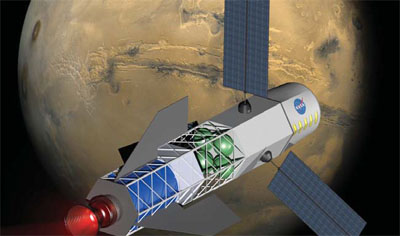
    MUMBAI (TIP): The Mars 2020 rover will play a key role in a human mission to the Red Planet, apart from searching for signs of past life, says Nasa’s “Mars 2020 Science Definition Final Report.” With a 699 Martian days’ life span, the mission, which will incorporate a number of technologies from the Curiosity flight, is slated for lift-off either in July or August 2020 and will reach Mars in January or March 2012.

    The launch vehicle will belong to the Atlas V class. The 154-page report dated July 1, 2013 but released early on Wednesday states that the mission will also have a major part in planning a future sample return mission. Calling it as a worthy successor to Curiosity , the report says that “for the first time, humanity would seek to collect samples with possible evidence of past Martian life for analysis on earth, where cutting edge techniques available now, as well as awaiting future development could be applied to the search.’

    ‘ The four primary objectives of the mission: Explore an astrobiologically relevant ancient environment on Mars to decipher its geological processes and history. Assess the biosignature preservation potential within the selected geological environment and search for potential biosignatures. Demonstrate significant technical progress towards the future return of scientifically selected , welldocumented samples to earth. Provide an opportunity for human exploration compatible with the science payload and within the mission’s payload capacity.

  • Mobile Dead? Try Solar Headphones

    Mobile Dead? Try Solar Headphones

    LONDON (TIP): A pair of headphones that can harness solar power to charge mobile devices when you are on the move has been designed in the United Kingdom. Andrew Anderson, a Glasgow-based designer , launched the OnBeat headphones on crowdfunding site Kickstarter and hopes to have them on sale by early next year. The headphone band is fitted with a flexible solar cell with a charge capacity of 0.55 watts.

    “The headphones have an integrated flexible solar cell that covers the full headband which capture solar energy whilst out and about,” Anderson said on Kickstarter . “The energy is stored in two light-weight Lithium Ion batteries held within the two ear cups for a balanced weight and fit on the head. “For those rainy days we have also developed the headphones to be able to be charged via USB directly from your computer or mains socket,” he said.

    Anderson hopes to raise £200,000 to get the headphones into production. “We are still working on the design and prototype. We need to improve the headphones — people want to know about noise cancellation ,” he told the BBC. He admitted that his father Frank had come up with the idea. “It’s really simple — you would think it had already been done. You can buy solar chargers for phones but the thing is it’s like you’re carrying two phones around,” he said. The idea of using renewable sources to charge devices is proving popular among developers.

    Many inventors have been looking at harnessing the energy generated by walking too. One project seeking crowdfunding via Kickstarter in the US is a shoe insole that can be used to charge batteries . A walk of between 2.5-5 miles is required to charge an average iPhone battery, says the team at Solepower, which developed the prototype at Carnegie Mellon University. “We developed a proof-of-concept prototype for lighting up shoes so students could easily see where they were walking at night,” say its website.

  • For Fast Texting, Australian Businessman Invents Symbol For ‘The’

    For Fast Texting, Australian Businessman Invents Symbol For ‘The’

    MELBOURNE (TIP): An Australian businessman has invented a new letter of the English alphabet to replace the word ‘the’ because he thinks it is more efficient. Paul Mathis from Melbourne has developed the replacement of the word ‘the’ — an upper-case ‘T’ and a lower-case ‘h’ bunched together so they share the upright stem.

    He has also developed an app that puts it in everyone’s hand by allowing users to download an entirely new electronic keyboard with his symbol — which he pronounces “th” . The keyboard also has a row of keys containing the 10 or 15 most frequently typed words in English, ‘The Age’ reported. So far, Mathis who has opened over 20 restaurants and hotels across Australia, has invested about $75,000 in the project.

    “The word ‘and’ is only the fifth-most used word in English and it has its own symbol — the ampersand. Isn’t it time we accorded the same respect to ‘the’ ?” Mathis said. “It is something that might be useful for people? I think so,” he said. Typing the symbol will save time mainly in the context of Twitter. “The main functionality of this is in the texting space,” Mathis said.

    He has faced criticism on Twitter from people who say he is attempting to trademark a symbol that has long been in use as part of the Serbian Cyrillic alphabet (pronounced “tshe” , the letter represents the “ch” sound found in the word “chew” ), the paper reported.

  • 60 BILLION PLANETS IN MILKY WAY COULD SUPPORT LIFE

    60 BILLION PLANETS IN MILKY WAY COULD SUPPORT LIFE

    WASHINGTON (TIP): Scientists have discovered that there are 60 billion potentially habitable planets in the Milky Way alone, twice the number previously thought. These planets in the habitable zone of a parent star may have the ability to sustain liquid water on their surface, researchers say. A new study that calculates the influence of cloud behaviour on climate doubles the number of potentially habitable planets orbiting red dwarfs, the most common type of stars in the universe. This finding means that in the Milky Way galaxy alone, 60 billion planets may be orbiting red dwarf stars in the habitable zone, researchers say. Researchers at the University of Chicago and Northwestern University based their study on rigorous computer simulations of cloud behaviour on alien planets.

    This cloud behaviour dramatically expanded the estimated habitable zone of red dwarfs, which are much smaller and fainter than stars like the Sun. Current data from NASA’s Kepler Mission suggest there is approximately one Earth-size planet in the habitable zone of each red dwarf. The study roughly doubles that estimate. It also suggests new ways for astronomers to test whether planets orbiting red dwarfs have cloud cover. “Most of the planets in the Milky Way orbit red dwarfs,” said Nicolas Cowan, a postdoctoral fellow at Northwestern’s Center for Interdisciplinary Exploration and Research in Astrophysics. “A thermostat that makes such planets more clement means we don’t have to look as far to find a habitable planet,” said Cowan. Cowan, Dorian Abbot and Jun Yang, co-authors on the study provided astronomers with a means of verifying their conclusions with the James Webb Space Telescope. The habitable zone refers to the space around a star where orbiting planets can maintain liquid water at their surface.

    The formula for calculating that zone has remained much the same for decades. But that approach largely neglects clouds, which exert a major climatic influence. “Clouds cause warming, and they cause cooling on Earth,” said Abbot, an assistant professor in geophysical sciences. “They reflect sunlight to cool things off, and they absorb infrared radiation from the surface to make a greenhouse effect. That’s part of what keeps the planet warm enough to sustain life,” said Abbot. A planet orbiting a star like the sun would have to complete an orbit approximately once a year to be far enough away to maintain water on its surface. If you’re orbiting around a low-mass or dwarf star, you have to orbit about once a month, once every two months to receive the same amount of sunlight that we receive from the sun,” Cowan said.

  • NOW, A FLASHLIGHT POWERED BY HEAT FROM YOUR HAND

    NOW, A FLASHLIGHT POWERED BY HEAT FROM YOUR HAND

    WASHINGTON (TIP): A 15-year-old girl in Canada has invented a flashlight that produces light just by using the warmth of your hand. Ann Makosinski, from British Columbia , invented the thermoelectric ‘Hollow Flashlight’ that works via the thermoelectric effect. The thermoelectric effect is the direct conversion of temperature differences to electric voltage and vice-versa . “I’m sure we’ve all had that annoying experience when we desperately need a flashlight, we find one, and the batteries are out,” she told NBC News. “Imagine how much money we would save and the amount of toxins leached into the soil etc reduced if we didn’t use any batteries in flashlights!” she said.

    To create the flashlight, Makosinski measured how much electricity could be generated from the heat of a palm — about 57 milliwatts — and how much she needed to light the LED — about half a milliwatt. Next, she got several Peltier tiles which when warm on one side and cool on the other could generate electricity, and a few other bits necessary to make the current usable by a normal LED. Finally, she mounted the tiles and circuitry onto a hollow aluminum tube; air inside the tube would cool the Peltier tiles, while the warmth of a hand would heat the other side. With a little tweaking of voltages and other components, the invention worked. The light generated is modest, but enough to find your keys or light the page of a book. It worked for around half an hour in her tests at an ambient temperature of about 10°C.

  • Human head transplant is possible

    Human head transplant is possible

    Human head transplants could now be possible using currently available medical techniques, according to an Italian neurosurgeon who thinks he has worked out how it could be done. In a project proposal published by the medical journal Surgical Neurology International , Dr Sergio Canavero outlines his method for the ” Head Anastomosis Venture” — or HEAVEN. The procedure would involve severing the heads of two human patients simultaneously using an “ultra-sharp blade” , cooling and flushing out the “recipient” head before attaching its new body with an advanced polymer “glue” . Dr Canavero suggests that the realigning of head and body could also be achieved using “electrofusion” , in an approach not entirely unlike that of Mary Shelley’s Dr Frankenstein.

    But the Italian, who works for the Turin Advanced Neuromodulation Group and has previously published research on whole-eye transplants , says that his project is no fiction, and bases it on a similar experiment on Rhesus monkeys in the 1970s in which the patient survived for eight days.A few years after this first test 40 years ago, its protagonist Dr Robert White noted that: “What has been accomplished in the animal model — prolonged hypothermic preservation and cephalic transplantation, is fully accomplishable in the human sphere.”In laying out what he says is “the groundwork for the first successful human head transplant” , Dr Canavero admits that his polymer gel reattachment method (known as GEMINI) would not be perfect . But he notes that: “as little as 10% of descending spinal tracts are sufficient for some voluntary control of locomotion in man.”

  • STEM-CELL THERAPY WIPES OUT HIV

    STEM-CELL THERAPY WIPES OUT HIV

    LONDON (TIP): Two HIV-positive patients in the US who underwent bone marrow transplants for cancer have stopped anti-retroviral therapy and still show no detectable sign of the HIV virus, researchers said. The Harvard University researchers stressed it was too early to say the men have been cured, but said it was an encouraging sign that the virus hasn’t rebounded in their blood months after drug treatment ended. The first person reported to be cured of HIV, American Timothy Ray Brown, underwent a stem cell transplant in 2007 to treat his leukemia. He was reported by his German doctors to have been cured of HIV two years later. Brown’s doctors used a donor who had a rare genetic mutation that provides resistance against HIV.

    So far, no one has observed similar results using ordinary donor cells such as those given to the two patients by the Harvard University researchers. The researchers, Timothy Henrich and Daniel Kuritzkes of the Harvard-affiliated Brigham and Women’s Hospital in Boston, announced last year that blood samples taken from the men — who both had blood cancers — showed no traces of the HIV virus eight months after they received bone marrow transplants to replace cancerous blood cells with healthy donor cells.

    The men were still on anti-HIV drugs at the time. The men have both since stopped anti-retroviral therapy — one 15 weeks ago and the other seven weeks ago — and show no signs of the virus, Henrich told an international AIDS conference in Malaysia on Wednesday. “They are doing very well,” Henrich said. “While these results are exciting, they do not yet indicate that the men have been cured. Only time will tell.” The HIV virus may be hiding in other organs such as the liver, spleen or brain and could return months later, he warned. Further testing of the men’s cells, plasma and tissue for at least a year will help give a clearer picture on the full impact of the transplant on HIV persistence, he said. Kuritzkes said the patients will be put back on the drugs if there is a viral rebound.

  • New Record: Electric Car @328.6km/Hour

    New Record: Electric Car @328.6km/Hour

    LONDON (TIP): A British team has set a new world record after its lightweight electric powered car touched the top speed of 328.6 km per hour. Drayson Racing Technologies broke the world land speed record for a lightweight electric car as its Lola B12 69/EV vehicle surpassed the previous top speed of 281.6kph at a Royal Air Force base in Yorkshire. The company’s chief executive Lord Drayson, who was behind the wheel, said the achievement was designed to highlight electronic vehicle technology’s potential.

    The previous 281.6kph record was set by Battery Box General electric in 1974, the ‘BBC News’ reported. “What it, I hope, shows to people is just what the future potential of electric cars is,” Lord Drayson said shortly after his record-breaking time was confirmed. “It is a pointer to the future – the technology that we developed for this car will filter down to the cars we use every day,” he said. In order to qualify for an attempt on the Federation Internationale de l’Automobile’s world electric land speed record, the team had to make its vehicle weigh less than 1,000kg without the driver.

  • Nasa Discovers Ten Thousandth Near-Earth Object In Space

    Nasa Discovers Ten Thousandth Near-Earth Object In Space

    WASHINGTON (TIP): Nasa has discovered the 10,000th near-Earth object (NEO) that could pass close to our planet in the future. The 10,000th near-Earth object, asteroid 2013 MZ5, was first detected on the night of June 18, 2013, using Pan-Starrs-1 telescope in Hawaii, located on the 3,000-meter summit of the Haleakala crater.

    Ninety-eight per cent of all near- Earth objects discovered were first detected by Nasa-supported surveys, the US space agency claimed. “Finding 10,000 near-Earth objects is a significant milestone,” said Lindley Johnson, programme executive for Nasa’s near-Earth Object Observations Programme at Nasa Headquarters, Washington. “But there are at least 10 times that many more to be found before we can be assured we will have found any and all that could impact and do significant harm to the citizens of Earth,” Johnson said.

    Near-Earth objects (NEOs) are asteroids and comets that can approach the Earth’s orbital distance to within about 45 million kilometres. They range in size from as small as a few feet to as large as 41 kilometres for the largest near-Earth asteroid, 1036 Ganymed. Asteroid 2013 MZ5 is approximately 300 meters across.

    Its orbit is well understood and will not approach close enough to Earth to be considered potentially hazardous. “The first near-Earth object was discovered in 1898,” said Don Yeomans, long-time manager of Nasa’s near-Earth Object Program Office at the Jet Propulsion Laboratory in Pasadena. Of the 10,000 discoveries, roughly 10 per cent are larger than six-tenths of one kilometre in size – roughly the size that could produce global consequences should one impact the Earth. However, the Nasa’s NEOO programme has found that none of these larger NEOs currently pose an impact threat and probably only a few dozen more of these large NEOs remain undiscovered.

    The vast majority of NEOs are smaller than one kilometre, with the number of objects of a particular size increasing as their sizes decrease, Nasa said. A NEO hitting Earth would need to be about 30 meters or larger to cause significant devastation in populated areas. Almost 30 per cent of the 460- foot-sized NEOs have been found, but less than one per cent of the 100-footsized NEOs have been detected

  • World’s First Talking Robot-Astronaut Ready To Go To Space

    World’s First Talking Robot-Astronaut Ready To Go To Space

    TOKYO (TIP): In a world first, Japan is set to send a talking robot-astronaut to the International Space Station to conduct the first conversation between a human and a robot in outer space. Kirobo, the robot astronaut, is scheduled to be launched from the Tanegashima Space Center, located in southwestern Japan’s Kagoshima Prefecture, aboard the Kounotori 4 cargo spacecraft to ISS on August 4. Named after a combination of the Japanese word kibo, or “hope”, and the word “robot”, the Kirobo project is part of an experiment that will see the first human-robot conversation held in space, the ‘Japan Daily Press’ reported. Kirobo is about 34 centimetres tall and weighs about one kilogramme, which makes it smaller than most robots that go into space.

    The robot has already undergone several pre-launch tests, including simulations with zero gravity, the report said. During one of the first demonstrations, the robot’s developers asked Kirobo what its dream was. It replied that it “hoped to create a future where humans and robots live together and get along.” Kirobo, the talking robot, was jointly developed by the University of Tokyo, Toyota, and Dentsu Inc.

  • A ‘Switch’ To Curb Alcohol Craving

    A ‘Switch’ To Curb Alcohol Craving

    WASHINGTON (TIP): Researchers have identified and deactivated a brain pathway linked to cravings for alcohol in rats, a finding that could lead to treatment for alcohol abuse. Scientists at the Ernest Gallo Clinic and Research Center at University of California, San Francisco, were able to prevent the addicted animals from seeking alcohol and drinking it, the equivalent of relapse.

    “One of the main causes of relapse is craving, triggered by the memory by certain cues ,” said lead author Segev Barak. The researchers found that just a small drop of alcohol presented to the rats turned on the mTORC1 pathway. The researchers then set out to see if they could prevent reconsolidation of memory of alcohol by inhibiting mTORC1, thus preventing relapse . When mTORC1 was inactivated , there was no relapse to alcohol-seeking next day.

  • Norway Now Closer To Asia

    Norway Now Closer To Asia

    KIRKENES (TIP): The town of Kirkenes in northernmost Norway used to be further away from Asia than virtually any other European port, but it suddenly seems a lot closer. The reason: Global warming. Melting ice has opened up the Northern Sea Route along Russia’s Arctic coastline, changing international trade patterns in profound ways. The travel time between the Japanese port of Yokohama and Hamburg in Germany has been cut by 40%, while fuel expenditure is down by 20%. In 2012, when the ice reached its lowest extent on record, – 3.4 million square kilometers – 46 ships used the new route, compared to only four in 2010, according to Rosatomflot, a Russian operator of icebreakers.

  • COMET IMPACT MAY HAVE PROMPTED LIFE ON EARTH

    COMET IMPACT MAY HAVE PROMPTED LIFE ON EARTH

    NEW YORK (TIP): The impact of comets crashing into earth’s surface may have provided the energy to create molecules that formed the building blocks of life, scientists say. The study was based on a computer model of such an impact’s effect on a comet crystal initially made up of water, carbon dioxide and other simple molecules. “Comets carry very simple molecules in them,” said study coauthor Nir Goldman, a physical chemist at Lawrence Livermore Laboratory in California.

    “When a comet hits a planetary surface, for example, that impact can drive the synthesis of more complicated things that are prebiotic – they’re life-building,” Goldman said. The notion that life-building molecules were carried to earth via comets or asteroids, a hypothesis known as panspermia, has been around for decades. But the idea that the comet impact itself could have created the molecules is newer, LiveScience reported. When the Earth was young, comet bombardments may have brought 10 trillion kilogrammes of carbonbased material to the planet every year, Goldman said.

    That would have provided a rich source for the building blocks of life to form. Goldman and his colleagues used a computer model to simulate a single comet crystal of hundreds of molecules. Comets are mostly “dirty snowballs,” Goldman said, so the simulated crystal started with mostly water molecules, but also included methanol, ammonia, carbon dioxide and carbon monoxide. The researchers then simulated the effects of the crystal hitting the Earth’s surface at various angles, from crashing into it directly to making a glancing blow.

    They followed the chemical changes in the crystal for about 250 picoseconds, about the amount of time the system needed to reach a steady state, where the proportion and type of chemicals in the system is stable. The huge jolt from the impact provided the energy needed to make complicated chemicals. As a follow-up, Goldman and colleagues want to test different initial chemical concentrations in the comet to see how that affects the formation process.

  • QUAKE ‘SOUND’ CAN WARN OF TSUNAMIS

    QUAKE ‘SOUND’ CAN WARN OF TSUNAMIS

    WASHINGTON (TIP): Scientists have developed a new technique that could be applied worldwide to create an early warning system for massive tsunamis triggered by earthquakes. Scientists from Stanford University have identified key acoustic characteristics of the 2011 Japan earthquake that indicated it would cause a large tsunami.

    The same technique could be used to create an early warning system for tsunamis, they believe. On March 11, 2011, a magnitude 9.0 undersea earthquake occurred 64 kms off the shore of Japan. Now, computer simulations by scientists reveal that sound waves in the ocean produced by the quake probably reached land tens of minutes before the tsunami. If correctly interpreted, they could have offered a warning.

  • TELESCOPE BACKS BIG BANG THEORY

    TELESCOPE BACKS BIG BANG THEORY

    WASHINGTON (TIP): The moments just after the Big Bang happened more like the theory predicts, an international team of scientists using the most powerful telescope on Earth has discovered. One of the most important problems in physics and astronomy was the inconsistency between the lithium isotopes previously observed in the oldest stars in our galaxy, which suggested levels about two hundred times more Li-6 and about three to five time less Li-7 than Big Bang nucleosynthesis predicts.

    The team, led by Karin Lind of the University of Cambridge, has proven the decades-old inventory relied on lower quality observational data with analysis using several simplifications that resulted in spurious detections of lithium isotopes. Using observations of ancient stars with W M Keck Observatory’s 10-meter telescope and state-of-the-art models of their atmospheres has shown that there is no conflict between their lithium-6 and lithium-7 content and predictions of the standard theory of Big Bang nucleosynthesis, restoring thus the order in our theory of the early universe.

  • US GETS NEW WAR AGENT: ROBOT BIRD

    US GETS NEW WAR AGENT: ROBOT BIRD

    WASHINGTON (TIP): The US army has developed a realistic robot bird that has even tricked real flocks and hawks to attack it midair, making it a potential unsuspecting future war agent. Robo- Raven was developed in collaboration with a team of University of Maryland researchers, including an Indian-origin scientist. It glides, soars and flaps like a real bird. Its complete individual wing control allows for extreme aerobatics that no other mechanical bird has ever been able to perform, researchers from the US Army Research Laboratory (ARL) claim.

    However, its ability to hide in plain sight and light weight is what excites researchers most. “It already attracts attention from birds in the area which tends to hide its presence,” said John Gerdes, a mechanical engineer with the vehicle technology directorate at Aberdeen Proving Ground. Robo-Raven is much quieter than the helicopter or propeller, so it could get much closer to an adversary without revealing its presence.

    It’s made out of carbon fibre, 3Dprinted lightweight thermalresistant plastic, Mylar foil and foam. The geometrically complex figure is shorter than two feet and weighs less than a can of soda. Gerdes, a doctoral candidate, began building Robo-Raven in 2008 as part of graduate research at the University of Maryland’s Advanced Manufacturing Laboratory that focused on developing a tech demonstrator for manufacturing techniques that morphed into a variety of spinoff research efforts. S K Gupta, a professor in mechanical engineering, began working on flapping-wing robotic birds nearly a decade ago.

    Gupta and his graduate students, along with mechanical engineering professor Hugh Bruck, first successfully demonstrated a flappingwing bird in 2007. This bird used one motor to flap both wings together in simple motions. By 2010, the design had evolved to more than four successive models. The final bird was able to carry a tiny video camera, could be launched from a ground robot that ARL researchers created called the Lynchbot, and could fly in winds up to 10 mph – important breakthroughs for robotic micro-air vehicles that one day could be used for reconnaissance and surveillance.

    Gerdes designed the prototype with Steven Biggs, a technician within ARL’s Autonomous Systems Division, and a group of about six researchers at the University of Maryland. The robot uses a fly-by-wire approach, so a handheld radio is used to control the flight. At this point, the bird isn’t flying with sensors due to a very restricted payload, but advanced research is expected to improve their understanding of how a soldier could use it, the microcontroller and the flight dynamics and ultimately enhance the robot’s flight envelope, the ARL statement said.

  • Scientists To Retrace 100-Year-Old Antarctica Expedition

    Scientists To Retrace 100-Year-Old Antarctica Expedition

    SYDNEY (TIP): Scientists will retrace Sir Douglas Mawson’s 1911-14 expedition to the Antarctica in November, the University of New South Wales (UNSW) announced on June 4. A team of 46 researchers and would-be explorers will set out from Hobart, the capital of Australia’s southern Tasmania island state, for a six-week journey to repeat measurements made by Mawson’s team 100 years ago, including observations of the ocean, wildlife, weather, geology and ice cover, reported Xinhua.

    “Antarctica remains one of the last, great unexplored regions on thr Earth. It is a unique place to monitor the health of our planet. We want to discover just how much has changed since Mawson’s time,” said Chris Turney, professor at the UNSW Climate Change Research Centre. The 1.5 million AU dollars ($1.46 million) privately-funded expedition also aims to recapture and share the excitement of scientific exploration and discovery, using the latest technologies to communicate with school children and the public back home in Australia.

    The researchers will take measurements of the ocean water, visit sub-Antarctic islands where they will collect sediment cores from lakes and peat bogs, and study the wildlife. They will also drill ice cores and take geological samples to study the changing shape of the ice sheet. A drone will survey from the air and some adventurous scientists hope to venture under the ice.

  • Gm Fungi: New Way To Produce Cheap Biofuel

    Gm Fungi: New Way To Produce Cheap Biofuel

    WASHINGTON (TIP): Researchers are manufacturing genetically modified fungi to produce significantly cheaper biofuel. Biofuel is often obtained from starchy plants — but this places fuel production in competition with food production. At the Vienna University of Technology , genetically modified mold fungi are created, which have the ability to break down long cellulose and xylan chains into smaller sugar molecules .

    This could make the production of biofuel a lot cheaper. Lignocellulosic waste such as sawdust or straw can be used to produce biofuel — but only if the long cellulose and xylan chains can be successfully broken down into smaller sugar molecules. To do this, fungi are used which, by means of a specific chemical signal, can be made to produce the necessary enzymes. Because this procedure is, however, very expensive, researchers have been investigating the molecular switch that regulates enzyme production in the fungus.

    As a result, it is now possible to manufacture genetically modified fungi that produce the necessary enzymes fully independently, thus making biofuel production significantly cheaper. Manufacturing biofuel from lignocellulose is therefore a preferable option.

  • Coming Soon: A Camera That Doesn’t Require Flash

    Coming Soon: A Camera That Doesn’t Require Flash

    NEW YORK (TIP): Researchers have developed a cheap imaging camera sensor which is 1,000 times more sensitive to light than those available at present — and could make it possible to click clear and sharp pictures even in dim lighting. The new sensor developed, at Nanyang Technological University in Singapore, is highly sensitive to both visible and infrared light, and could be used in everything, from the family cameras to surveillance and satellite cameras.

    The sensor gets the high photoresponse from its innovative structure. It is made of graphene , a superstrong carbon compound with a honeycomb structure that is as flexible as rubber, more conductive than silicon and which resists heat better than a diamond, Tech- NewsDaily reported. The sensor’s “light-trapping” nanostructures hold onto light-generated electron particles for much longer than conventional sensors. This results in a stronger than usual electric signal, which can be processed into clearer, sharper photographs.

  • Astronomers Spot 15 New Extremely Dark Galaxies

    Astronomers Spot 15 New Extremely Dark Galaxies

    TOKYO (TIP): Scientists using the ALMA telescope have discovered 15 previously unidentified, extremely dark galaxies buried deeply in cosmic dust. Researchers observed a field named “Subaru/XMMNewtown Deep Survey Field,” located in the direction of the constellation Cetus. As a result, they succeeded in finding 15 extremely dark galaxies that were unidentified until now.

    “It is thanks to the high performance of The Atacama Large Millimeter/sub-millimeter Array (ALMA), which is proudly said to be the best in the world, that observations like this have been made possible,” said Bunyo Hatsukade Post-doctoral fellow, Kyoto University. The team successfully measured the number density of galaxies approximately 10 times darker than the millimeter wave research results up to now. The new results agree well with the prediction by the theories of galaxy formation.

  • Indian Scientist Raises Hope Of Creating Artificial Human Liver

    Indian Scientist Raises Hope Of Creating Artificial Human Liver

    LONDON (TIP): In a big leap towards creating an artificial human liver, a scientist of Indian origin from Massachusetts Institute of Technology (MIT) has for the first time managed to keep live liver cells functional outside the body. Dr Sangeeta Bhatia, who is presently professor of health sciences and technology has identified a dozen chemical compounds that can help liver cells not only maintain their normal function while grown in a lab dish but also multiply to produce new tissue.

    The liver is the only major organ in the human body that can regenerate itself if part of it is removed. However, researchers trying to exploit that ability in hopes of producing artificial liver tissue for transplantation have repeatedly been stymied. Mature liver cells, known as hepatocytes, quickly lose their normal function when removed from the body. “It’s a paradox because we know liver cells are capable of growing, but somehow we can’t get them to grow outside the body,” says Bhatia, from MIT’s Koch Institute for Integrative Cancer Research.

    Dr Bhatia, who originally belongs to a Sindhi family in Mumbai said “The main finding is that we identified chemicals that make liver cells grow outside the body. Cells grown this way can help can incorporated into engineered livers that we are building to treat patients with liver disease. The human liver cells (hepatocytes) can also be used for drug testing to improve drug safety”. “We have showed that human liver cells could be used to build engineered liver tissue and that this liver tissue could function once implanted in the body. So far, we are able to do this in mice.

    We need to make them bigger in order to help patients with liver disease.” She added “Tissue engineering has already created artificial skin and cartilage and bone that has helped many millions. Artificial trachea and bladder and blood vessels are also in humans. We will follow the same path that others have laid out for us for the liver”. “The main challenges are to get the liver cells to function like liver cells so they can support the patient, getting enough liver cells for a patient (billions are needed), and ways to implant them so they have enough nutrients through blood vessels (this is called vascularization).

    We think we have made good progress on the functional side begins to address the cell sourcing and vascularization issues,” she added. Bhatia has developed a way to temporarily maintain normal livercell function after those cells are removed from the body, by precisely intermingling them with mouse fibroblast cells. They studied how 12,500 different chemicals affect liver-cell growth and function. The liver has about 500 functions, divided into four general categories: drug detoxification, energy metabolism, protein synthesis and bile production.

    David Thomas from the Broad Institute, measured expression levels of 83 liver enzymes representing some of the most finicky functions to maintain. After screening thousands of liver cells from eight different tissue donors, the researchers identified 12 compounds that helped the cells maintain those functions, promoted liver cell division, or both. Two of those compounds seemed to work especially well in cells from younger donors. Publishing their breakthrough in the journal Nature Chemical Biology, the team says cells grown this way could help researchers develop engineered tissue to treat many of the 500 million people suffering from chronic liver diseases such as hepatitis C.

  • Extremely Active Atlantic Hurricane Season Predicted

    Extremely Active Atlantic Hurricane Season Predicted

    70% CHANCE OF THERE BEING 13 TO 20 NAMED STORMS, 7 TO 11 LIKELY HURRICANES, 3 TO 6 LIKELY MAJOR HURRICANES
    The six-month hurricane season “officially” begins on June 1, though of course, storms follow their “rules”, not human-created ones. The numbers in the 2013 outlook are significantly higher than the seasonal average – 12 named storms, 6 hurricanes and 3 major hurricanes.

    The 2013 Atlantic hurricane season is gearing up to be an extremely active one according to NOAA’s Atlantic Hurricane Season Outlook, which was released May 24. The outlook, issued by NOAA’s Climate Prediction Center, states that there is a 70% chance of there being 13 to 20 named storms this year. Out of these, 7 to 11 will likely become hurricanes, of which 3 to 6 will likely be major hurricanes. By “major hurricanes” the report means Category 3, 4 or 5 storms – winds of 111 mph or more. The six-month hurricane season “officially” begins on June 1, though of course, storms follow their “rules”, not human-created ones.

    The numbers in the 2013 outlook are significantly higher than the seasonal average – 12 named storms, 6 hurricanes and 3 major hurricanes. The prospect of another major storm, such as Hurricane Sandy, striking the US is likely in the back of many people’s minds, especially considering that not much has really been done to improve coastal resiliency since that storm.

    “With the devastation of Sandy fresh in our minds, and another active season predicted, everyone at NOAA is committed to providing life-saving forecasts in the face of these storms and ensuring that Americans are prepared and ready ahead of time.” said Kathryn Sullivan, Ph.D., NOAA acting administrator. “As we saw firsthand with Sandy, it’s important to remember that tropical storm and hurricane impacts are not limited to the coastline. Strong winds, torrential rain, flooding, and tornadoes often threaten inland areas far from where the storm first makes landfall.”

    Larger, and more intense, storms are predicted to occur with increasing frequency in the coming years as result of climate change. Such storms can be devastating on their own, but when you factor in the other associated effects of global climate change, such storms are likely to have a truly profound effect on many people’s lives in the future. With regards to the 2013 hurricane outlook, the primary cause of the extremely active season is the convergence of three separate “climate factors”.

    These factors are: – “A continuation of the atmospheric climate pattern, which includes a strong west African monsoon, that is responsible for the ongoing era of high activity for Atlantic hurricanes that began in 1995.” – “Warmer-than-average water temperatures in the tropical Atlantic Ocean and Caribbean Sea.” – “El Niño is not expected to develop and suppress hurricane formation.” “This year, oceanic and atmospheric conditions in the Atlantic basin are expected to produce more and stronger hurricanes,” said Gerry Bell, Ph.D., lead seasonal hurricane forecaster with NOAA’s Climate Prediction Center.

    “These conditions include weaker wind shear, warmer Atlantic waters and conducive winds patterns coming from Africa.” Something to keep in mind – NOAA’s seasonal hurricane outlook doesn’t predict how many hurricanes will make landfall, simply how many will form. Those predictions can’t be made until the weather patterns that cause hurricane formation are already in action. Such forecasts, for all of the individual storms, will be provided throughout the season by NOAA’s National Hurricane Center.

    “New for this hurricane season are improvements to forecast models, data gathering, and the National Hurricane Center communication procedure for post-tropical cyclones. In July, NOAA plans to bring online a new supercomputer that will run an upgraded Hurricane Weather Research and Forecasting (HWRF) model that provides significantly enhanced depiction of storm structure and improved storm intensity forecast guidance.” “Also this year, Doppler radar data will be transmitted in real time from NOAA’s Hurricane Hunter aircraft.

    This will help forecasters better analyze rapidly evolving storm conditions, and these data could further improve the HWRF model forecasts by 10% to 15%.” “The National Weather Service has also made changes to allow for hurricane warnings to remain in effect, or to be newly issued, for storms like Sandy that have become post-tropical. This flexibility allows forecasters to provide a continuous flow of forecast and warning information for evolving or continuing threats.”

  • THIS FORMULA CAN TURN CEMENT INTO METAL

    THIS FORMULA CAN TURN CEMENT INTO METAL

    WASHINGTON (TIP): Scientists have discovered the formula for turning liquid cement into liquid metal that makes cement a semi-conductor and opens up the possibility of its use in the consumer electronics marketplace for thin films, protective coatings, and computer chips.

    “This new material has lots of applications, including as thin-film resistors used in liquidcrystal displays, basically the flat panel computer monitor that you are probably reading this from at the moment,” said Chris Benmore, a physicist from the US department of energy’s (DOE) Argonne National Laboratory who worked with a team of scientists from Japan, Finland and Germany.

    Benmore and Shinji Kohara from Japan Synchrotron Radiation Research Institute/SPring- 8 led the research effort. This change demonstrates a unique way to make metallic-glass material, which has positive attributes including better resistance to corrosion than traditional metal, less brittleness than traditional glass, conductivity, low energy loss in magnetic fields and fluidity for ease of processing & molding.