Tag: Science & Technology

  • ASTEROID MINING COMPANY WANTS TO PUT YOUR FACE IN SPACE

    ASTEROID MINING COMPANY WANTS TO PUT YOUR FACE IN SPACE

    CAPE CANAVERAL, Fla (TIP): A privately owned asteroid mining firm, backed in part by Google Inc’s founders, launched a crowd-funding project to gauge public interest in a small space telescope that could serve as a backdrop for personal photographs, officials said. Planetary Resources, based in Bellevue, Washington, plans to build and operate telescopes to hunt for asteroids orbiting near Earth and robotic spacecraft to mine them for precious metals, water and other materials.

    It also plans an educational and outreach program to let students, museums, armchair astronomers and virtual travelers share use of a telescope through an initiative on Kickstarter, a website used to raise funds for creative projects. Planetary Resources aims to raise $1 million by June 30 to assess public appetite for participating in a space project.

    It expects to launch its first telescope in 2015. For a pledge of $25, participants can make use of a “space photo booth” by sending a picture to be displayed like a billboard on the side of the telescope with Earth in the background. Its image would then be snapped by a remote camera and transmitted back. Starting at $200, participants can use the telescope to look at an astronomical object.

    The Kickstarter campaign complements the company’s ongoing efforts to design and build its first telescope, called ARKYD. Investors include Google Chief Executive Larry Page and Chairman Eric Schmidt, as well as Ross Perot Jr., chairman of the real estate development firm Hillwood and The Perot Group. “All we are asking is for the public to tell us that they want something,” company co-founder Eric Anderson told reporters during a webcast press conference on Wednesday.

    “We’re not going to spend our time and resources to do something if people don’t want it and really the only way to prove that it’s something people want is to ask them for money,” he said. Planetary Resources is not the first space startup to turn to crowdfunding. Colorado-based Golden Spike, which plans commercial human expeditions to the moon, has launched two initiatives on Indiegogo, another Internet-based funding platform.

    Golden Spike exceeded a $75,000 goal to start a sister firm, called Uwingu, designed to funnel profits into space projects, but fell far short of a $240,000 target for spacesuits for Golden Spike’s first moon run. Hyper-V Technologies of Virginia turned to Kickstarter to raise nearly $73,000 to help develop a plasma jet electric thruster. STAR Systems in Phoenix, Arizona, raised $20,000 for work on a hybrid rocket motor for its suborbital Hermes spaceplane.

    Last year, Washington-based LiftPort ended an $8,000 Kickstarter campaign with more than $100,000 to demonstrate how robots could climb a 1.2-mile (2 km) long tether held aloft by a large helium balloon. The company is working on an alternative space transportation system called a “space elevator” that uses tethers or cables instead of rockets. “I think crowd-funding is a new kind of bike and people are trying and willing to ride it, some successfully, some not as successfully, but I think it’s here to stay,” said Golden Spike founder and planetary scientist Alan Stern.

    “These companies like Kickstarter and Indiegogo and RocketHub, they seem to be some kind of marketing distribution system that lets people with an idea put it out there. Previously people didn’t know how to do that except run an ad in a newspaper. It’s a capability we just didn’t have five years ago,” Stern said.

  • Indian team in running to develop ‘silent’ aircraft

    Indian team in running to develop ‘silent’ aircraft

    LONDON (TIP): A team of three aerospace-engineering students from India has been selected as one the finalists in a contest organised by Airbus to find a future aircraft with near-zero propulsion noise. The team from Chennai’s SRM University, comprising of Anita Mohil, Balakrishnan Solaraju Murali and Michael Thomas along with their academic mentor Sakhtivel Kasinath, is among the five finalists of a global competition organised by aircraft manufacturer Airbus and the United Nations Educational, Scientific and Cultural Organisation ( UNESCO).

    ‘Fly Your Ideas’ – a biennial competition, was launched in 2008 with an aim to challenge students across the globe to develop new ideas for the eco-efficient aviation industry of the future. “SRM University propose to reduce propulsion noise thanks to jet exhaust shape modification using intelligent materials (shape memory alloys). These alloys are energised by harvested electricity generated by advanced thermoelectric materials using engine heat source,” the team said in its entry for the contest.

    The latest edition of Fly Your Ideas contest witnessed 6,000 students from 618 teams across 82 countries take up the challenge. The other finalist teams are from Australia, Brazil, Italy and Malaysia with their entries ranging from use of passenger body heat as an alternative energy source to a more efficient luggage loading and unloading systems.

    All teams will present their ideas to a jury of Airbus and industry experts at Airbus’ headquarters in Toulouse on June 12. The winners will be announced at an exclusive ceremony at UNESCO’s headquarters in Paris on June 14, when the winning team will receive a prize of 30,000 euros and the runners up 15,000 euros.

  • EARTH IN LINE OF LETHAL GAMMA-RAY BURST

    EARTH IN LINE OF LETHAL GAMMA-RAY BURST

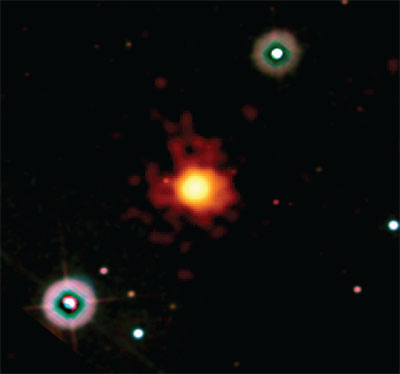
    WASHINGTON (TIP): Earth may be lying within the sights of a potentially lethal gamma-ray burst that can wipe out a quarter of our planet’s protective atmospheric ozone, scientists claim. A Wolf-Rayet star called WR 104, some 8,000 light years away is ripe to undergo a core-collapse supernova of the sort that could generate a seconds-long burst of dangerous gamma-rays.

    “We could see it go supernova anywhere from tomorrow to 500,000 years from now,” said Grant Hill, an astronomer at the WM Keck Observatory in Hawaii . “For all intents and purposes, the gamma-ray burst and optical photons from the supernova would arrive simultaneously,” Hill said. It has been debated whether a GRB from WR 104 — which lies in the direction of our Milky Way’s galactic centre — would actually cross Earth’s path.

    However, Hill said that given the continuing uncertainty about the star’s alignment with our own, such a scenario can’t be ruled out, Forbes.com reported. If such a GRB did hit Earth’s atmosphere, said Adrian Melott, a physicist at the University of Kansas, it would likely cause a 50% increase in solar UVB radiation . This would not only disrupt photosynthesis among marine and freshwater plankton, but also likely precipitate some sort of broader extinction event, Melott said.

    There have been conflicting measurements of the star’s rotational axis and whether WR 104’s polar orientation lies ‘face on’ to Earth’s line of sight or whether it is inclined by as much as 30 to 40 degrees. If the star lies ‘pole on’ to Earth that would mean that we would be directly in the line of fire of such a burst which might travel along a beam as large as 20- degrees in diameter . If indeed, the star’s polar inclination to earth is 30 degrees, then Earth would be untouched. Peter Tuthill, an astronomer at the University of Sydney in Australia, and colleagues, first found WR 104 in 1998.

  • NOW, STAY FRESH WITH A FABRIC THAT DRAINS AWAY SWEAT

    NOW, STAY FRESH WITH A FABRIC THAT DRAINS AWAY SWEAT

    WASHINGTON (TIP): Bioengineers at the University of California, Davis, have invented a waterproof fabric that whisks away sweat using microfluidic technology. The new fabric works like human skin, forming excess sweat into droplets that drain away by themselves, said Tingrui Pan, professor of biomedical engineering at the university.

    One area of research in Pan’s Micro-Nano Innovations Laboratory is a field known as microfluidics, which focuses on making ‘lab on a chip’ devices that use tiny channels to manipulate fluids. Pan and his colleagues are developing such systems for applications like medical diagnostic tests. Graduate students Siyuan Xing and Jia Jiang developed a new textile microfluidic platform using hydrophilic (water-attracting) threads stitched into a highly waterrepellent fabric.

    They were able to create patterns of threads that suck droplets of water from one side of the fabric, propel them along the threads and expel them from the other side. “We intentionally did not use any fancy microfabrication techniques so it is compatible with the textile manufacturing process and very easy to scale up,” said Xing. It’s not just that the threads conduct water through capillary action.

    The water-repellent properties of the surrounding fabric also help drive water down the channels. Unlike conventional fabrics, the waterpumping effect keeps working even when the water-conducting fibres are completely saturated, because of the pressure generated by the surface tension of droplets. The rest of the fabric stays completely dry. By adjusting the pattern of water-conducting fibres and how they are stitched on each side of the fabric, the researchers control where sweat is collected and where it drains away on the outside. The innovation is good news for workout enthusiasts, athletes and clothing manufacturers.

  • NOW, ROBOT ACCEPTS OBJECTS FROM PEOPLE IN A NATURAL WAY

    NOW, ROBOT ACCEPTS OBJECTS FROM PEOPLE IN A NATURAL WAY

    WASHINGTON (TIP): Disney researchers have developed a new humanoid robot that is able to recognise when a person is handing them objects and predicting where to make the hand-off. The robot can receive an object handed to it by a person in a natural way, researchers say. Recognising that a person is handing something and predicting where the human plans to make the handoff is difficult for a robot, but the researchers from Disney Research, Pittsburgh and Karlsruhe Institute of Technology (KIT) solved the problem by using motion capture data with two people to create a database of human motion.

    By rapidly searching the database, the robot can realise what the human is doing and make a reasonable estimate of where he is likely to extend his hand. People handing a coat, a package or a tool to a robot will become commonplace if robots are introduced to the workplace and the home, said Katsu Yamane, senior research scientist. But the technique he developed could apply to any number of situations where a robot needs to synchronise its motion with that of a human, such as in a dance.

    “If a robot just sticks out its hand blindly, or uses motions that look more robotic than human, a person might feel uneasy working with that robot or might question whether it is up to the task,” Yamane said. “We assume human-like motions are more userfriendly because they are familiar,” Yamane said. Human-like motion is often achieved in robots by using motion capture data from people. But that’s usually done in tightly scripted situations, based on a single person’s movements.

    For the general passing scenarios envisioned by Yamane, a sampling of motion from at least two people would be necessary and the robot would have to access that database interactively, so it could adjust its motion as the person handing it a package progressively extended her arm. To enable a robot to access a library of human-tohuman passing motions with the speed necessary for robot-human interaction, the researchers developed a hierarchical data structure.

    Using principal component analysis, the researchers first developed a rough estimate of the distribution of various motion samples. They then grouped samples of similar poses and organized them into a binary-tree structure. With a series of “either/or” decisions, the robot can rapidly search this database, so it can recognize when the person initiates a handing motion and then refine its response as the person follows through.

  • Map signals existence of other universes

    Map signals existence of other universes

    LONDON (TIP): Scientists believe they have for the first time found evidence of the existence of other universes by analyzing data gathered by the European Space Agency’s Planck spacecraft. Theories that our universe could be just one of billions – or perhaps an infinite number – have been discussed for decades but until now, they have not been backed by any evidence. However, a few weeks ago, scientists published a new map of the cosmic microwave background – the ‘radiation’ left behind after the Big Bang that created the universe 13.8 billion years ago.

    The map, based on the Planck’s data, showed anomalies in the background radiation that, some experts say, could only have been caused by the gravitational pull of other universes outside our own. “These anomalies are the first hard evidence for the existence of other universes that we have seen,, ” said Laura Mersini-Houghton , a theoretical physicist at the University of North Carolina at Chapel Hill.

    Mersini- Houghton and her colleague Richard Holman at Carnegie Mellon University published a series of papers from 2005 onwards predicting what Planck would see. In particular, they claimed that the ancient radiation permeating our universe would show anomalies generated by the pull from other universes . The scientists analyzing the Planck data have now published a paper acknowledging the anomalies exist and cannot be explained by conventional means.

    “It may be that the statistical anomalies described in this paper are a hint of more profound physical phenomena that are yet to be revealed,” it said. Planck gathered radiation from when the universe was just 3,70,000 years old – still glowing from the Big Bang. Planck’s data showed the radiation is stronger in one half of the sky than the other. There is also a large ‘cold’ spot where the temperature is below average.

  • Mars Battered By Over 200 Space Rocks Every Year

    Mars Battered By Over 200 Space Rocks Every Year

    MUMBAI (TIP): The red planet has been bombarded by more than 200 small asteroids or bits of comets annually forming craters which are atleast 3.9 metres across, according to Nasa. This has been revealed from images from Nasa’s $720- million Mars Reconnaissance Orbiter (MRO) which was launched on August 12, 2005. The mission’s original life span was for two years, but it has stretched to six. According to Nasa, researchers have identified 248 new impact sites on parts of the Martian surface in the past decade, using images from MRO to determine when the craters appeared. The 200-per-year planetwide estimate is a calculation based on the number found in a systematic survey of a portion of the planet. MRO’s High Resolution Imaging Science Experiment camera took pictures of the fresh craters at sites where before-and-after images by other cameras bracketed when the impacts occurred. This combination provided a new way to make direct measurements of the impact rate on Mars. This will lead to better age estimates of recent features on Mars, some of which may have been the result of climate change, according to Nasa.

  • Meteoroid Impact Triggers Bright Flash On The Moon

    Meteoroid Impact Triggers Bright Flash On The Moon

    CAPE CANAVERAL, Fla. (TIP): An automated telescope monitoring the moon has captured images of an 88- pound (40 kg) rock slamming into the lunar surface, creating a bright flash of light, NASA scientists said. The explosion on March 17 was the biggest seen since NASA began watching the moon for meteoroid impacts about eight years ago. So far, more than 300 strikes have been recorded. “It exploded in a flash nearly 10 times as bright as anything we’ve ever seen before,” Bill Cooke, with NASA’s Meteoroid Environment Office at the Marshall Space Flight Center in Huntsville, Alabama, said in a statement.

    A NASA satellite orbiting the moon is now on a hunt for the newly formed crater, which scientists estimate could be as wide as 66 feet (20 meters). The flash was so bright that anyone looking at the moon at the moment of impact could have seen it without a telescope, NASA said. After reviewing digital recordings made by one of the program’s telescopes, scientists determined the space rock was about 1 foot (0.3 meters) in diameter, and traveling about 56,000 mph (90,123 kph) when it slammed into the moon and exploded with the force of five tons of TNT. That same night, cameras detected an unusually high number of meteors blasting through Earth’s atmosphere as well.

    Most meteors burn up well before reaching the ground. But not always. In February, an asteroid estimated to be about 66 feet (20 meters) in diameter exploded over Chelyabinsk, Russia, damaging buildings and shattering glass, leaving more than 1,500 injured. It was the largest object to strike Earth since 1908. “The Russian fireball was many orders of magnitude larger and possessed 100,000 times more energy,” than the lunar impact, Cooke wrote in an email to Reuters. He believes the lunar impact and the March 17 meteor shower on Earth are related, the result of both bodies traveling together through a region of space sprinkled with small rocks and dust. “We’ll be keeping an eye out for signs of a repeat performance next year when the Earth-moon system passes through the same region of space,” Cooke said.

  • Found: 2.7 Bn-Yr-Old Pockets Of Water

    Found: 2.7 Bn-Yr-Old Pockets Of Water

    LONDON (TIP): Scientists have discovered ancient pockets of water — dating back to at least 2.7 billion years — which contain abundant chemicals that are known to support life, lurking deep underground in Canada. This water could be some of the oldest on the planet and may even contain life. Also, the similarity between the rocks that trapped it and those on Mars raises the hope that comparable lifesustaining water could lie buried beneath the red planet’s surface, scientists believe. Researchers from the universities of Manchester, Lancaster, Toronto and McMaster analysed water pouring out of boreholes from a mine 2.4 km beneath Ontario. They found that the water was rich in dissolved gases, such as, hydrogen, methane and different forms — called isotopes — of noble gases such as helium, neon, argon and xenon. The hydrogen and methane come from the interaction between the rock and water, as well as natural radioactive elements in the rock reacting with the water. These gases could provide energy for microbes that may not have been exposed to the sun for billions of years. The crystalline rocks surrounding the water are thought to be around 2.7 billion years old. Using ground-breaking techniques developed at the University of Manchester, the researchers show that the fluid is at least 1.5 billion years old, but could be significantly older. “We’ve found an interconnected fluid system in the deep Canadian crystalline basement that is billions of years old, and capable of supporting life,” said professor Chris Ballentine of the University of Manchester, co-author of the study, and project director. “Our finding is of huge interest to researchers who want to understand how microbes evolve in isolation, and is central to the whole question of the origin of life, the sustainability of life, and life on other planets,” Ballentine said.

  • Now, Robot Bartender To Serve Cocktails

    Now, Robot Bartender To Serve Cocktails

    LONDON (TIP): Scientists have developed a robot that can act as the perfect bartender – from shaking a martini to slicing a lemon. Makr Shakr consists of three robotic arms which mimic the actions of a bartender. The robots are linked to an app which allows users to create their own cocktails from scratch, BBC News reported. “Makr Shakr is a great example of how digital technologies are changing the interaction between people and products,” said Carlo Ratti, director of the Massachusetts Institute of Technology’s Senseable City Lab, which directed the project. “The system explores the new dynamics of social creation and consumption – ‘design, make and enjoy’ – allowing users to design their own cocktail creations, while digitally controlled machines transform these designs into reality,” Ratti said. The team behind the project hope to create a “bottom-up bar culture”, allowing users to learn from each other by sharing drink recipes and photos.

    The robots’ movements have been modelled on the gestures of Roberto Bolle, a principal dancer with the American Ballet Theatre. Makr Shakr will be serving cocktails to delegates at the Google I/O conference in San Francisco this week.

  • Cluster Of Hydrogen Clouds Found Lurking In Nearby Galaxies

    Cluster Of Hydrogen Clouds Found Lurking In Nearby Galaxies

    WASHINGTON (TIP): Astronomers have discovered a never-before-seen cluster of hydrogen clouds strewn between two nearby galaxies, Andromeda (M31) and Triangulum (M33). The researchers speculate that these rarefied blobs of gas – each about as massive as a dwarf galaxy – condensed out of a vast and as-yet undetected reservoir of hot, ionised gas, which could have accompanied an otherwise invisible band of dark matter.

    The astronomers detected these objects using the National Science Foundation’s Green Bank Telescope (GBT) at the National Radio Astronomy Observatory (NRAO). “We have known for some time that many seemingly empty stretches of the Universe contain vast but diffused patches of hot, ionised hydrogen,” said Spencer Wolfe of West Virginia University in Morgantown.

    “Earlier observations of the area between M31 and M33 suggested the presence of colder, neutral hydrogen, but we couldn’t see any details to determine if it had a definitive structure or represented a new type of cosmic feature. “Now, with high-resolution images from the GBT, we were able to detect discrete concentrations of neutral hydrogen emerging out of what was thought to be a mainly featureless field of gas,” Wolfe said.

    Astronomers are able to observe neutral atomic hydrogen, which is referred to as HI (H and the Roman numeral one), because of the characteristic signal it emits at radio wavelengths, which can be detected by radio telescopes on Earth. Though this material is abundant throughout the cosmos, in the space between galaxies it can be very tenuous and the faint signal it emits can be extremely difficult to detect.

    A little more than a decade ago, astronomers had the first speculative hints that a previously unrecognised reservoir of hydrogen lay between M31 and M33. The signal from this gas, however, was too faint to draw any firm conclusions about its nature, origin, or even certain existence. Last year, preliminary data taken with the GBT confirmed that there was indeed hydrogen gas, and a lot of it, smeared out between the galaxies.

    New and more thorough studies of this region with the GBT revealed that the hydrogen gas was not simply in the form of wispy streamers, as would be expected by the interactions of two galaxies in a gravitational ballet. Instead, a full 50 per cent of the gas was conspicuously clumped together into very discrete and apparently self-gravitating blobs that – apart for their lack of stars – would be dead ringers for dwarf galaxies.

    The GBT was also able to track the motion of these newly discovered clouds, showing that they were travelling through space at velocities similar to M31 and M33.

  • This Flying Car Can Take Off Vertically

    This Flying Car Can Take Off Vertically

    NEW YORK(TIP): Stuck in traffic jam? Use your car’s flying button. Seriously! US scientists have designed a gen-next flying car capable of taking off vertically and flying completely on its own — and it could be on the roads within a decade. An ambitious US engineering company has released images of the flying car, the four-passenger TF-X, and it won’t require a pilot’s licence to operate.

    The Terrafugia TF-X flying car can take off vertically and has a flying range of 805km. Once airborne, the two propellers fold back and propulsion is handled by an engine mounted behind the cockpit, ‘New York Daily News’ reported. Everything from take-off, to flying, and eventual touch-down at the chosen destination will be handled automatically by the Terrafugia.

    The manufacturers claim the TF-X is a plug-in hybrid. Electric motors handle road driving, and assist during takeoff and landing. Terrafugia claims its road-legal and highly automated flying car could be on the road (and in the air) within 8- 12 years.

    The TF-X’s vast array of sensors and GPS monitors make flying to a destination as simple as punching in an address in current satellite-navigation devices. The TF-X calculates the total distance, and determines whether there is suitable fuel range.

  • Streetlamps Out, Glowing Trees To Light Up Roads?

    Streetlamps Out, Glowing Trees To Light Up Roads?

    NEW YORK (TIP): Hoping to give new meaning to the term “natural light,” a small group of biotechnology hobbyists and entrepreneurs has started a project to develop plants that glow, potentially leading the way for trees that can replace electric streetlamps and potted flowers luminous enough to read by.

    The project, which will use a sophisticated form of genetic engineering called synthetic biology, is attracting attention not only for its audacious goal, but for how it is being carried out. Rather than being the work of a corporation or an academic laboratory, it will be done by a small group of hobbyist scientists in one of the growing number of communal laboratories springing up around the nation as biotechnology becomes cheap enough to give rise to a do-it-yourself movement.

    The project is also being financed in a DIY sort of way: It has attracted more than $250,000 in pledges from about 4,500 donors in about two weeks on the website Kickstarter. The effort is not the first of its kind. A university group created a glowing tobacco plant a few years ago by implanting genes from a marine bacterium that emits light. But the light was so dim that it could be perceived only if one observed the plant for at least five minutes in a dark room.

  • Now, Robot That Can ‘Discover’ New Objects On Its Own

    Now, Robot That Can ‘Discover’ New Objects On Its Own

    WASHINGTON (TIP): More than a good eye! Researchers, including an Indian-origin scientist, have developed a new ‘smart’ robot that can analyse and learn about new objects on its own. The two-armed mobile robot called HERB can ‘discover’ more than 100 objects in a home-like laboratory, including items like computer monitors and plants.

    Researchers at Carnegie Mellon University’s Robotics Institute built digital models and images of objects and loaded them into the memory of HERB – the Home-Exploring Robot Butler – so the robot could recognise objects that it needs to manipulate. With the team’s implementation of HerbDisc, the robot could discover these objects on its own. With more time and experience, HerbDisc gradually refines its models of the objects and begins to focus its attention on those that are most relevant to its goal – helping people accomplish tasks of daily living.

    The robot’s ability to discover objects on its own sometimes takes even the researchers by surprise, said Siddhartha Srinivasa, associate professor of robotics and head of the Personal Robotics Lab, where HERB is being developed. In one case, some students left the remains of lunch – a pineapple and a bag of bagels – in the lab when they went home for the evening.

    The next morning, they returned to find that HERB had built digital models of both the pineapple and the bag and had figured out how it could pick up each one. “We didn’t even know that these objects existed, but HERB did,” said Srinivasa, who jointly supervised the research with Martial Hebert, professor of robotics.

    “That was pretty fascinating,” said Hebert. Discovering and understanding objects in places filled with hundreds or thousands of things will be a crucial capability once robots begin working in the home and expanding their role in the workplace.

  • Hubble telescope spies incoming comet ISON

    Hubble telescope spies incoming comet ISON

    CAPE CANAVERAL (TIP): A recently discovered comet, dazzlingly bright even though it is still almost as far away as Jupiter, is racing toward a November rendezvous with the sun, officials said on Tuesday. If it survives the encounter — and that’s a big if — the comet may be visible even in daylight in Earth’s skies at the end of the year. Discovered by amateur astronomers in September 2012, Comet ISON is about to reach the outer edge of the asteroid belt, located some 280 million miles (451 million km) from Earth, said William Cooke, lead scientist at Nasa’s Meteoroid Environment Office at the Marshall Space Flight Center in Huntsville, Alabama. The comet is shedding dust from its nucleus at a rate of more than 112,000 pounds (50,802 kg) per minute, the result of heating by the sun, observations from Nasa’s Swift telescope show. That level of activity is unusual for a comet still so far away from the sun. It could spell its doom. Preliminary measurements made with the Hubble Space Telescope, which captured an image of the comet that was released on Tuesday, indicate Comet ISON’s body is no more than 4 miles (6.4 km) in diameter.

  • First Vaccine To Fight Gut Bacteria In Autistic Kids

    First Vaccine To Fight Gut Bacteria In Autistic Kids

    LONDON (TIP): The world’s first vaccine to help control symptoms of autism has been developed. The vaccine was created by Canada’s University of Guelph researchers for gut bacteria common in autistic children which will help control symptoms of autism. More than 90% of children with autism spectrum disorders suffer from chronic and severe gastrointestinal symptoms of which 75% suffer from diarrhea. The scientists have now developed a carbohydrate-based vaccine against the gut bacteria Clostridium bolteae which is known to play a role in gastrointestinal disorders. The bacteria often shows up in higher numbers in the gastric tracts of autistic children than in those of healthy kids. Researchers Brittany Pequegnat and Guelph chemistry professor Mario Monteiro believe toxins and/or metabolites produced by gut bacteria may be associated with symptoms and severity of autism, especially regressive autism. Publishing their finding in the journal Vaccine, they said, “Little is known about the factors that predispose autistic children to C bolteae. A vaccine would improve current treatment. This is the first vaccine designed to control constipation and diarrhea caused by C bolteae and perhaps control autism-related symptoms associated with this microbe.”

  • Graham Bell’s Voice Heard For First Time In 128 Years

    Graham Bell’s Voice Heard For First Time In 128 Years

    WASHINGTON (TIP): Hear my voice, I’m Graham Bell! Telephone pioneer Alexander Graham Bell’s voice has been identified for the first time on a wax disc recording from 1885, researchers claim. Bell’s voice was recorded on to the disc on April 15, 1885 at his Volta laboratory in Washington. On the wax-disc recording, the inventor of the telephone says: “Hear my voice, Alexander Graham Bell.” The inventions of Bell — most famously the telephone but also the methods of recording sound — have allowed many people to hear each other’s voices for more than 130 years. Until now, no one knew what the inventor himself sounded like. The Smithsonian’s National Museum of American History, through a collaborative project with the Library of Congress and Lawrence Berkeley National Laboratory, has identified Bell’s voice for the first time.

  • Campaigners Call For Ban On ‘Killer Robots’

    Campaigners Call For Ban On ‘Killer Robots’

    LONDON (TIP): Machines with the ability to attack targets without any human intervention must be banned before they are developed for use on the battlefield, campaigners against “killer robots” urged. The weapons, which could be ready for use within the next 20 years, would breach a moral and ethical boundary that should never be crossed, said Nobel Laureate Jody Williams, of the “Campaign To Stop Killer Robots”.

    “If war is reduced to weapons attacking without human beings in control, it is going to be civilians who are going to bear the brunt of warfare,” said Williams, who won the 1997 peace prize for her work on banning landmines. Weapons such as remotely piloted drones are already used by some armed forces and companies are working on developing systems with a greater level of autonomy in flight and operation.

    “We already have a certain amount of autonomy,” said Noel Sharkey, professor of Artificial Intelligence and Robotics at the University of Sheffield. “I think we are already there. If you asked me to go and make an autonomous killer robot today, I could do it. I could have you one here in a few days,” he told reporters. But the technology is a long way off being able to distinguish between a soldier and a civilian. “The idea of a robot being asked to exercise human judgment seems ridiculous to me,” Sharkey told Reuters. “The whole idea of robots in the battlefield muddies the waters of accountability from my perspective as a roboticist,” he added.

    No intention
    The British government has always said it has no intention of developing such technology. “There are no plans to replace skilled military personnel with fully autonomous systems,” a ministry of defense spokesman told Reuters. “Although the Royal Navy does have defensive systems, such as Phalanx, which can be used in an automatic mode to protect personnel and ships from enemy threats like missiles, a human operator oversees the entire engagement,” the spokesman added.

    But the organizers of the Campaign to Stop Killer Robots say Britain’s rejection of fully autonomous weapons is not yet watertight. “We’re concerned that there is a slide towards greater autonomy on the battlefield and unless we draw a clear line in the sand now, we may end up walking into acceptance of fully autonomous weapons,” said Thomas Nash, director of non-governmental organization Article 36.

    Rapid advancements in technology have allowed countries such as the United States, China, Russia, Israel and Germany to move towards systems that will soon give full combat autonomy to machines, according to a report by Human Rights Watch. “We think that these kinds of weapons will not be able to comply with international humanitarian law,” Steve Goose, Human Rights Watch executive director, told Reuters.

  • Found: Genes That Delay Pregnancy

    Found: Genes That Delay Pregnancy

    NEW YORK (TIP): Researchers, led by an Indian-origin scientist, have identified genes which help female mice and some other mammals delay the onset of pregnancy. Unlike in humans, the remarkable ability, known as embryonic diapause, is a temporary state of suspended animation that occurs when environmental conditions are not favourable to the survival of the mother and the newborn. A new study, published in the journal Open Biology, reveals the molecular mechanism responsible for pausing and resuming a pregnancy. After an egg is fertilized, it forms a cluster of cells known as a blastocyst, which implants in the wall of the mother’s uterus, ‘LiveScience’ reported. However, in diapause, the blastocyst is prevented from implanting and preserved in an dormant state until pregnancy resumes. How this process occurred was a mystery till now.

    Researcher Sudhansu Dey, from Cincinnati Children’s Research Foundation, and colleagues were studying the process of embryo implantation in mice when they noticed that a gene called MSX1 was very active just before implantation. They began to suspect that it might play a role in diapause, Dey said. Researchers used hormones to induce pregnancy delays in mice, mink and Tammar wallabies to investigate further. During this delayed state, Dey’s team measured how active the MSX1 gene and other related genes were in generating protein-making instructions. They imaged tissue from the animals to see where the gene was active. Finally, they tested whether these genes were being made into proteins. Researchers found that the MSX genes were more active when pregnancies were delayed, and found this was true for all three animals. The results show that MSX genes, which are part of an ancient family of genes, have been preserved over much of evolutionary time, and play an important role in delaying pregnancy under harsh conditions, Dey said. He wants to know whether the same genes may enable delayed pregnancies in other animals and if it could have implications for humans.

  • WORLD’S FIRST SOLAR PLANE TO FLY ACROSS US

    WORLD’S FIRST SOLAR PLANE TO FLY ACROSS US

    HOUSTON (TIP): A first of its kind ultra-lightweight plane powered completely by the sun is set to fly coast-to-coast this spring. The Solar Impulse plane will stop in Dallas city in Texas during its historic cross-country journey that begins on May 1, its creators announced today. The plane, which requires zero fuel and relies solely on solar panels and battery power, would be the world’s first plane powered purely by solar energy. The two Swiss pilots of the plane, Bertrand Piccard and Andre Borschberg, want to complete a flight from Moffett Field to New York City, after spending 10 years designing it. It is expected to arrive in the Big Apple by early July and will stop in Phoenix (Arizona), Dallas-Ft. Worth, Washington DC and either Nashville (Tennessee), Atlanta (Georgia) or St. Louis along the way. “It carries only one pilot and no passengers, but it carries a lot of message,” Piccard said. “Today we can’t imagine having a solar plane with 200 passengers.

    But in 1903 it was exactly the same,” he said, noting the sense of impossibility that surrounded the first airplane flight that took place that year. “We don’t know what’s going to happen in the future, but we have to start and see where technology takes us,” he said. The US flight is the latest step towards the ultimate goal of Solar Impulse team; that of making a flight around the world by 2015. The plane uses creative engineering and physics to harness the sun’s energy for power even after the sun sets.

    It has a wingspan equivalent to a 747 jetliner, the weight of a stationwagon, and the power needs of a small scooter. The solar panels across its wings harness power from the sun during the day and lithium-polymer batteries store that energy for overnight trips. A carbon-fibre material formed in a honeycomb structure makes up the bulk of the plane, which allows for its feather-weight. In 2010, the Solar Impulse plane completed a 26-hour overnight flight and in 2012 flew from Switzerland to Morocco without any fuel. To fly around the world, the team needs to fly for five days continuously, which the current plane isn’t equipped for.

    They would also need to find more efficient batteries and motors, as well as improve the plane’s reliability, Borschberg said. “You have no time to do maintenance and no possibility to change parts,” he said of an aroundthe- world trip. Piccard is also known for his flying adventures: in 1999 he travelled around the world in a hot air balloon. In its current form, however, the Solar Impulse is far from having any major practical application. The plane travels at a leisurely cruising speed that is lower than the highway speed limit in the United States and can hold just one passenger in a cramped cockpit.

  • 3D PRINTING GIVES UK MAN A ‘NEW’ FACE

    3D PRINTING GIVES UK MAN A ‘NEW’ FACE

    LONDON (TIP): In a first-of-its kind procedure in the UK, doctors have employed a pioneering threedimensional printing technology to create a prosthetic face for a man who had the entire left side of his face removed after suffering from cancer. Restaurant manager Eric Moger, 60, lost almost the entire left side of his face during an emergency surgery to remove the cancer, including his eye, his cheek bone and most of his jaw, leaving a gaping hole where his features used to be. After taking scans of Moger’s left-over skull and using computers to visualize how his face would look like, doctors were able to use a new type of printer that builds up layer upon layer of nylon plastic to produce the exact components needed in the facelift.

    The procedure has transformed the father-of-two’s life, allowing him to drink his first glass of water and taste food for the first time since he underwent the surgery to remove the tumour. Until now he was given food and drink through a tube leading directly into his stomach. “I was amazed at the way it looks,” said Moger, who lives in Essex. “When I had it in my hand, it was like looking at myself in my hands. When I first put it up to my face, I couldn’t believe how good it looked,” Moger said. The three-dimensional printers were first developed by the manufacturing industry to help rapidly produce prototype components. Andrew Dawood, dental surgeon and implant expert, began using 3D printing a couple of years ago to help produce replicas of his patient’s jaw bones so that he could practise various surgical procedures. Moger was referred to him by surgeon Nicholas Kalavresos at University College London Hospital after carrying out the surgery to remove the tumour. Attempts to use plastic surgery to rebuild Moger’s face had failed due to the chemotherapy and radiotherapy he was receiving.

  • Now, your iPhone can double up as a hearing aid

    Now, your iPhone can double up as a hearing aid

    MUMBAI (TIP): Move over bionic ears and hearing devices, i-ears are here. A team from the University of Essex has developed a free mobile application that can turn the iPhone or iPod into a hearing aid. The free-to-download app, the BioAid app can be used by anyone without the need for specific tests. At present, hearing impaired persons have to take up expensives hearing aids or cochlear implants that are very expensive.

    The i-ears are, however, available free for iPhone\Pod users. The Essex university team said that while standard hearing aids amplified some frequencies more than others, their app could compress the loud sounds that can make social situations like going to the pub, cinema or a birthday party intolerable. In a release, the university said that people with hearing impairment often withdrew from public life. Even if they have a hearing aid, the technology is not sophisticated enough to offer a tailor-made solution to their impairment and in many cases people simply stop using them,” it said. The researchers believe that their app will help change the future of hearing devices. “It’s not inconceivable that we’ll wear phones on our wrist in the near future, or even as tiny devices behind the ear. With the BioAid algorithm and wi-fi technology, we could see dispensers able to remotely adjust the settings on a phone-based aid and even monitor use to ensure the user is getting the most out of it,” the researchers said.

  • Now, Contact Lenses To Restore Near Vision

    Now, Contact Lenses To Restore Near Vision

    WASHINGTON (TIP): Scientists claim to have developed new contact lenses that can restore age-related loss of near vision when worn by the user every night. Most people have age-related declines in near vision (presbyopia) requiring bifocals or reading glasses.

    The emerging technique called hyperopic orthokeratology (OK) may provide a new alternative for restoring near vision without the need for glasses, according to a study, For middle-aged patients with presbyopia, wearing OK contact lenses overnight can restore up-close vision in one eye, according to the study by Paul Gifford and Helen A Swarbrick from the University of New South Wales, Sydney. The study included 16 middle-aged patients (43 to 59 years) with agerelated loss of near vision, or presbyopia. Orthokeratology is a clinical technique to correct vision using specially designed rigid contact lenses to manipulate the shape of the cornea. Gifford and Swarbick evaluated a “monocular” technique, with patients wearing a custom-made OK lens in one eye overnight for one week. To preserve normal distance vision, the other eye was left untreated. In all patients, the monocular OK technique was successful in restoring near vision in the treated eye. The improvement was apparent on the first day after overnight OK lens wear, and increased further during the treatment week.

    Eye examination confirmed that the OK lenses altered the shape of the cornea, as they were designed to do. Vision in the untreated eye was unaffected, and all patients retained normal distance vision with that eye, essentially this gives the patient the dequivalent of ‘monovision’ that is usually done with contact lenses or surgery. To retain the correction in near vision, patients had to continue wearing their OK lenses every night. As expected, when patients stopped wearing their OK lens after the treatment week, presbyopia rapidly returned. By about age 45 to 50, most people need bifocals or some other form of vision correction to restore vision for reading and other up-close tasks, according to the study published in the journal Optometry and Vision Science. The new study suggests that overnight OK lenses are a feasible alternative for correction of presbyopia, “sufficient to provide functional near vision correction white retaining good distance visual acuity,” researchers said.

  • Bacteria Could Generate Clean Electricity

    Bacteria Could Generate Clean Electricity

    LONDON (TIP): Bio-batteries have now taken a giant leap towards becoming a reality. British scientists have made an important breakthrough in the quest to generate clean electricity from bacteria.

    Findings published today show that proteins on the surface of the bacteria can produce an electric current by simply touching a mineral surface.

    The study has therefore found for the first time that it is possible for bacteria to lie directly on the surface of a metal or mineral and transfer electrical charge through their cell membranes.

    This means that it is possible to tether bacteria directly to electrodes – bringing scientists a step closer to creating efficient microbial fuel cells or bio-batteries. Researchers from the University of East Anglia are working with a marine bacteria called Shewanella oneidensis.

    They created a synthetic version of this bacteria using just the proteins thought to shuttle the electrons from the inside of the microbe to the rock. They inserted these proteins into the small capsules of lipid membranes such as the ones that make up a bacterial membrane.

    Then they tested how well electrons travelled between an electron donor on the inside and an ironbearing mineral on the outside. Lead researcher Dr Tom Clarke said “We knew that bacteria can transfer electricity into metals and minerals, and that the interaction depends on special proteins on the surface of the bacteria.

    But it was not been clear whether these proteins do this directly or indirectly through an unknown mediator in the environment.” “Our research shows that these proteins can directly touch the mineral surface and produce an electric current, meaning that is possible for the bacteria to lie on the surface of a metal or mineral and conduct electricity through their cell membranes.

    This is the first time that we have been able to actually look at how the components of a bacterial cell membrane are able to interact with different substances, and understand how differences in metal and mineral interactions can occur on the surface of a cell.” Dr Clarke added “These bacteria show great potential as microbial fuel cells, where electricity can be generated from the breakdown of domestic or agricultural waste products.

    Another possibility is to use these bacteria as miniature factories on the surface of an electrode, where chemicals reactions take place inside the cell using electrical power supplied by the electrode through these proteins.”

  • Moon And Asteroids Share ‘Bombardment’ History: Nasa

    Moon And Asteroids Share ‘Bombardment’ History: Nasa

    WASHINGTON (TIP): NASA scientists have discovered that a swarm of high-speed space objects that slammed into the Moon four billion years ago also bombarded the giant asteroid Vesta and many other asteroids.

    Scientists from NASA’s Lunar Science Institute (NLSI) discovered an unexpected link between Vesta and the Moon, and provides new means for studying the early bombardment history of terrestrial planets, according to the study published in the journal Nature Geoscience. “It’s always intriguing when interdisciplinary research changes the way we understand the history of our solar system,” said Yvonne Pendleton, NLSI director. “Although the Moon is located far from Vesta, which is in the main asteroid belt between the orbits of Mars and Jupiter, they seem to share some of the same bombardment history,” Pendleton said in a statement.

    The findings support the theory that the repositioning of gas giant planets like Jupiter and Saturn from their original orbits to their current location destabilised portions of the asteroid belt and triggered a solar system-wide bombardment of asteroids billions of years ago, called the lunar cataclysm.

    The research provides new constraints on the start and duration of the lunar cataclysm, and demonstrates that the cataclysm was an event that affected not only the inner solar system planets, but the asteroid belt as well. The Moon rocks brought back by NASA Apollo astronauts have long been used to study the bombardment history of the Moon. Now the ages derived from meteorite samples have been used to study the collisional history of main belt asteroids.

    In particular, howardite and eucrite meteorites, which are common species found on Earth, have been used to study asteroid Vesta, their parent body.With the aid of computer simulations, researchers determined that meteorites from Vesta recorded high-speed impacts which are now long gone.

    Researchers have linked these two datasets and found that the same population of projectiles responsible for making craters and basins on the moon were also hitting Vesta at very high velocities, enough to leave behind a number of telltale, impact-related ages.

    The team’s interpretation of the howardites and eucrites was augmented by recent close-in observations of Vesta’s surface by NASA’s Dawn spacecraft. “It appears that the asteroidal meteorites show signs of the asteroid belt losing a lot of mass four billion years ago, with the escaped mass beating up on both the surviving main belt asteroids and the Moon at high speeds” said lead author Simone Marchi.