[vc_row][vc_column][vc_custom_heading text=”E-Edition” font_container=”tag:h2|text_align:center” google_fonts=”font_family:Istok%20Web%3Aregular%2Citalic%2C700%2C700italic|font_style:700%20bold%20regular%3A700%3Anormal” css=”” link=”url:https%3A%2F%2Fwww.theindianpanorama.news%2Fwp-content%2Fuploads%2F2025%2F08%2FTIP-August-8-E-Edition.pdf”][vc_single_image image=”192610″ img_size=”full” alignment=”center” onclick=”custom_link” css=”” link=”https://www.theindianpanorama.news/wp-content/uploads/2025/08/TIP-August-8-E-Edition.pdf”][/vc_column][/vc_row][vc_row][vc_column width=”2/3″][vc_custom_heading text=”Lead Stories This Week” google_fonts=”font_family:Istok%20Web%3Aregular%2Citalic%2C700%2C700italic|font_style:700%20bold%20regular%3A700%3Anormal” css=”” link=”url:https%3A%2F%2Fwww.theindianpanorama.news%2F”][vc_wp_posts number=”5″ show_date=”1″][/vc_column][vc_column width=”1/3″][vc_single_image image=”82828″ img_size=”medium” alignment=”center” onclick=”custom_link” css=”” link=”https://www.theindianpanorama.news/advertising-media-kit-portal-indian-panorama/ “][vc_single_image image=”82829″ img_size=”medium” alignment=”center” onclick=”custom_link” css=”” link=”https://www.theindianpanorama.news/advertising-media-kit-portal-indian-panorama/ “][/vc_column][/vc_row]
Tag: Science & Technology
-

Isro launches Nisar: Satellite to reveal earth’s heartbeat
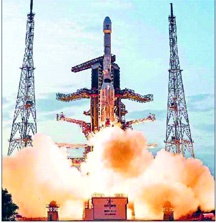
India crossed a milestone in its space and climate ambitions on Wednesday, July 30, with the successful launch of the Nasa-Isro Synthetic Aperture Radar (Nisar) satellite from the Satish Dhawan Space Centre in Sriharikota.
The 2393-kilogram satellite lifted off at 5:40 pm IST aboard Isro’s Geosynchronous Satellite Launch Vehicle (GSLV) into the vacuum of space.
The Nisar mission, a $1.5 billion joint venture between the Indian Space Research Organisation (Isro) and the United States’ National Aeronautics and Space Administration (Nasa), is now set to revolutionise climate monitoring and disaster response, not just for India, but worldwide.
Nisar is the world’s first Earth-mapping satellite equipped with dual-frequency synthetic aperture radar.
This combination of Nasa’s L-band radar and Isro’s S-band radar enables Nisar to capture the faintest shifts on Earth’s surface — whether under forests, clouds, or even in darkness — detecting movements as small as a few millimetres.
The synthetic aperture radar combines multiple measurements, taken as a radar flies overhead, to sharpen the scene below. It works like conventional radar, which uses microwaves to detect distant surfaces and objects, but steps up the data processing to reveal properties and characteristics at high resolution.
Nisar is designed to orbit the planet every 97 minutes, mapping nearly all land and ice surfaces with an unparalleled imaging swath every 12 days.
The implications for India, often at the frontline of climate change impacts and natural disasters, are profound.
Nisar’s freely accessible, near-real-time data will empower Indian researchers, disaster managers, and policymakers to monitor glacier movements in the Himalayas, detect fault-line shifts before earthquakes, track agricultural cycles, and manage water resources more effectively.
With this tool, India is set to improve forecasting for floods, droughts, and landslides, enabling rapid response and informed policy decisions.
This historic mission not only cements India’s position as a leader in space-based climate monitoring but also demonstrates how international collaboration can drive scientific progress for the collective good.
The development of the satellite spanned nearly a decade as the Indian and American space agencies came together for development, launch and now the operations of the satellite.
The S-Band SAR and L-Band SAR were independently developed, integrated, and tested by Isro and JPL/Nasa, respectively. The Integrated Radar Instrument Structure (IRIS), comprising both SAR systems and additional payload elements, was assembled and tested at JPL/NASA before being delivered to Isro.
The mainframe satellite elements and all payloads were then assembled, integrated, and tested at Isro’s U R Rao Satellite Centre (URSC). -

Google to start guessing users’ age using AI, these accounts could face restrictions
Google is getting ready to use AI to estimate how old you are while using YouTube. It will soon stop registering based on what you say and act based on how you behave. Starting August 13, the company will begin testing this new system in the United States, aiming to improve age-related safety features on its platform.
For years, users have been able to simply enter a random birthdate while creating a YouTube account, often choosing an older age to avoid restrictions on certain content. But now, YouTube plans to use AI to look at what kind of videos you watch, how often you engage with them, and your overall activity on the app and use that data to guess whether you are likely under or over 18.
If the system believes you are a minor, it will automatically apply stricter controls on your account. These could include removal of personalised ads, hiding certain video categories like dating or intense fitness content, and limiting access to features like live chats or comments. Even if your account says you are an adult, these changes will be applied if the AI thinks otherwise.
YouTube explained its plan in a short note. “We will use AI to interpret a variety of signals that help us to determine whether a user is over or under 18. These signals include the types of videos a user is searching for, the categories of videos they have watched, or the longevity of the account.”
This means the system will look at more than just individual videos. It will study how long you have had the account, what kind of content you engage with the most, and even how you scroll and click. Over time, it will try to learn and adjust its guess about your age based on your usage patterns.
If an account is mistakenly flagged as underage, YouTube will ask the user to prove their age. This could be done by uploading an official ID, using a credit card, or clicking a selfie for verification. Until the age is verified, certain videos and features will stay restricted.
This change is part of a larger trend across the world. Countries like the UK are already enforcing stricter online age checks under new laws, and similar rules could soon come to the US and other countries. Google appears to be getting ahead of these regulations with its AI-based solution.
The feature will first be tested on a small group of US users. But if it works well, there are chances that it could eventually expand to other regions, including India. For users who have long relied on fake birthdates to bypass age restrictions, this may be the end of that workaround. -

India beats China as top smartphone supplier to the US
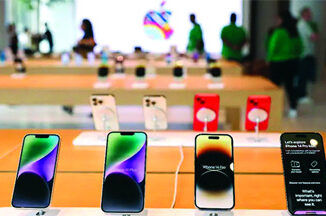
India has become the largest supplier of smartphones to the US for the first time, overtaking China, and it’s Apple that has made this possible. According to new data from research firm Canalys (now part of Omdia), Indian-made smartphone shipments to the US jumped by a massive 240 per cent in the second quarter of 2025. These phones now account for 44 per cent of all smartphones shipped into the US during this period, up from just 13 per cent a year ago. At the same time, China’s share fell sharply to 25 per cent, down from 61 per cent in Q2 2024. The reason? A mix of shifting supply chains, trade tensions, and Apple’s growing dependence on Indian factories to meet US demand.
Apple has been steadily ramping up its manufacturing base in India over the past few years, and that effort is now clearly paying off. “India became the leading manufacturing hub for smartphones sold in the US for the very first time in Q2 2025, largely driven by Apple’s accelerated supply chain shift to India amid an uncertain trade landscape between the US and China,” said Sanyam Chaurasia, Principal Analyst at Canalys.
As the US and China continue to clash over tariffs and trade policies, smartphone companies have started to rethink their manufacturing strategies. For Apple, this has meant making more of its iPhones in India — especially the standard models like the iPhone 16 and iPhone 15 — while still leaning on China for the larger-scale production of Pro models. But that balance seems to be shifting. In fact, Apple has already started assembling some iPhone 16 Pro models in India, though its main Pro production still depends on Chinese factories for now.
Other brands like Samsung and Motorola have also started sending more India-made phones to the US, but their contribution to this shift is smaller in scale compared to Apple’s. Samsung, for instance, still relies heavily on Vietnam for most of its production. Motorola’s supply chain is also largely rooted in China, though it has increased output from Indian facilities in recent months. The bigger picture here is that US smartphone makers are clearly looking to diversify where they get their phones assembled. Canalys analysts say that concerns over tariffs and unpredictable trade rules have forced vendors to front-load inventory (acquiring a large amount of inventory earlier than usual or in advance of anticipated needs) and quickly adjust their sourcing plans. -

Meta makes it easier to block and report suspicious DMs sent to Teen Accounts
Meta has announced new safety features for Teen Accounts on Instagram, including a new option to block and report users directly from their private messages (DMs). The newly added safety features are designed to give teen users on Instagram more context about the accounts they are messaging and help them spot potential scammers, the social media giant said in a blog post published on Wednesday, July 23. A Teen Account on Instagram has enhanced privacy and parental controls. Accounts created by any user under the age of 18 are categorised as Teen Accounts and their profiles are private by default.
Meta said that it will be showing Teen Account holders on Instagram new options to view safety tips and block an account. “They will also be able to see the month and year the account joined Instagram, prominently displayed at the top of new chats,” the company said.
Meta also announced that it is extending some Teen Account protections to adult-managed accounts that primarily feature children. The minimum age to sign up for Instagram is 13 years old. Under-13 users are also allowed on the platform as long as their accounts are managed by adults and the account bio mentions the same.
Now, such adult-managed accounts primarily featuring children will automatically be placed into Instagram’s strictest message settings, with Hidden Words enabled, to prevent unwanted messages and offensive comments.
“We’ll show these accounts a notification at the top of their Instagram Feed, letting them know we’ve updated their safety settings, and prompting them to review their account privacy settings too,” Meta said. The adult-run accounts of under-13 users will not appear in recommendations in order to prevent “potentially suspicious adults” from “finding these accounts in the first place.”
These changes are expected to be rolled out on Instagram in the coming months.
Key figures
Meta further shared new data on the impact of its teen safety features. Over ten lakh Instagram accounts were reported by under-18 users in June this year. Instagram’s new Location Notice that lets users know when they are chatting with someone in another country, was viewed ten lakh times but only 10 per cent of users clicked on the notice to learn more about the steps they could take.
Nearly 1,35,000 Instagram accounts were taken down by the platform for leaving sexualised comments or requesting sexual images from adult-managed accounts featuring children under 13. “We also removed an additional 5,00,000 Facebook and Instagram accounts that were linked to those original accounts,” the company said. -

Google Keep reminders will soon move to Tasks: Here’s what’s changing
In April last year, Google announced that Keep reminders would be automatically saved to Tasks sometime in 2025, but did not share details on when the change would go live. Now, on its support page, the tech giant has confirmed that Keep reminders will integrate with Tasks in the coming months before the end of the year.
And while Google is yet to share the exact date, the company has shared some more details about its plan. According to the tech giant, the upcoming integration will make it easier for users to organise and manage all their to-dos in one place. Google says you can also ask Assistant or Gemini to set a reminder on your device or smart display, which will then be saved as a task in Google Tasks, with the app sending you a reminder when it’s time to complete the task.
If a reminder is based on a location, the location will automatically be added to the task’s details field, but you will no longer get a notification based on that location. In case you are assigned a reminder by someone else, the assigner’s name will be added to the task’s title, but they won’t have access to that reminder.
Also, if you leave a task incomplete, it will show up on your calendar for up to 365 days as a “Pending task” in the all-day section of the calendar. Google will also allow you to manage reminders that are converted to tasks using Assistant commands like “Hey Google, show me my tasks” or “Hey Google, show me my reminders.”
One thing to note here is that you don’t necessarily need the Tasks app installed to use reminders with Google Assistant. Apart from Google Tasks, you can also get task notifications from the Calendar and the Google app. -

First joint satellite of ISRO and NASA to be launched on July 30
Indian Space Research Organisation (ISRO) said that the NASA-ISRO Synthetic Aperture Radar (NISAR), the first joint satellite of ISRO and NASA will be launched on July 30. “NISAR, the first joint satellite of ISRO and NASA will be launched by ISRO’s GSLV-F16 on July 30, 2025, at 1740 hrs IST from Satish Dhawan Space Centre (SDSC SHAR), Sriharikota. GSLV-F16 (launch system) will inject the NISAR satellite into a 743 km Sun-synchronous orbit,” ISRO said. NISAR, weighing 2,392 kg, is a unique Earth observation satellite and the first satellite to observe the earth with a dual frequency Synthetic Aperture Radar (NASA’s L-band and ISRO’s S-band).
NISAR’s large deployable antenna will be used in a unique operating mode known as SweepSAR to provide wide area coverage and fine spatial resolution at the same time. It will observe Earth with a swath of 242 km and high spatial resolution.
The satellite’s ability to see through clouds and light rain, day and night, will enable data users to continuously monitor earthquake- and landslide-prone areas and determine how quickly glaciers and ice sheets are changing. NASA said that NISAR will offer unprecedented coverage of Antarctica, information that will help with studying how the continent’s ice sheet changes over time.
“The satellite will scan the entire globe and provide all weather, day & night data at 12-day interval and enable a wide range of applications. NISAR can detect even small changes in the Earth’s surface such as ground deformation, ice sheet movement and vegetation dynamics. Further applications include sea ice classification, ship detection, shoreline monitoring, storm characterisation, changes in soil moisture, mapping & monitoring of surface water resources and disaster response,” ISRO said.
The NISAR launch is the result of strong technical cooperation between ISRO and NASA technical teams for more than a decade. The idea for NISAR originated with the 2007 National Academy of Sciences decadal survey, which identified the need for greater insight into ecosystems, solid Earth, and cryosphere sciences. -

Samsung fixes major Secure Folder bug, hidden apps no longer at risk
If you’ve ever used a Samsung phone, chances are you’ve relied on the Secure Folder to store sensitive apps, files, or photos away from prying eyes. It’s one of those features you don’t think twice about — until something goes wrong. And earlier this year, something did. A flaw in how Samsung’s Secure Folder worked meant that someone who had your phone in hand could technically peek into what apps and media you had hidden, even if they couldn’t open them. Not ideal. Thankfully, with its latest One UI 8 update, Samsung has patched the issue and improved how Secure Folder behaves under the hood.
According to a report by the Android Authority, the problem wasn’t with the lock or password itself, but rather with how the Secure Folder was set up within Android’s system. It was originally built using Android’s “work profile” — a feature meant for separating work apps and data on a phone. While that setup worked in most cases, it created a blind spot. Some parts of Android, particularly Google’s Photo Picker and Permission Controller, didn’t treat the Secure Folder as a truly private space. That meant they could unintentionally reveal details like which apps were inside or even show certain media files, all without actually unlocking the folder.
Samsung’s fix? Reclassifying the Secure Folder to use Android’s new “private” profile system — a feature that arrived with Android 15 and is part of Google’s broader Private Space initiative. By doing this, Samsung ensures the folder is properly treated as a secure, isolated environment, even by system-level tools that aren’t directly part of One UI. In short, this change makes the Secure Folder truly hidden again, not just locked away, but fully shielded from other parts of the phone unless actively opened by the user.
It’s worth noting that this extra protection only kicks in when you hide the Secure Folder, not just close it. Hiding it encrypts its contents and stops its apps from running or sending notifications — essentially putting the folder in lockdown. So if you’re serious about privacy, make sure to take that extra step.
There is still one downside, though. Samsung hasn’t yet made the Secure Folder play nicely with third-party launchers like Niagara or Nova Launcher. That’s a bit frustrating, especially now that Google has added support for Private Space integration in Android 15. Whether Samsung plans to follow suit is unclear for now.
Still, this update is an important move in the right direction. For anyone who counts on their Secure Folder for an extra layer of privacy, it’s a welcome fix. -

Alien environment on saturn’s biggest moon may support building blocks of life
NASA revealed that cell-like compartments, known as vesicles, could form naturally in the lakes of Saturn’s moon Titan. The lakes on Saturn’s largest moon are filled with liquid hydrocarbons like ethane and methane. These vesicles are vital for the development of protocells, which are simple structures that can support chemical reactions.
Titan’s environment is different from Earth’s as it has extremely low temperatures and a thick atmosphere, containing nitrogen and methane. Scientists believe that it could allow the formation of life forms that are distinct from those on Earth.
According to research published on July 10 in the journal International Journal of Astrobiology, the formation of vesicles on Titan is thought to occur through the interaction of amphiphiles, which are molecules that have both “methane-loving” and “methane-avoiding” properties. These molecules can form bilayer structures that resemble cell membranes.
“The existence of any vesicles on Titan would demonstrate an increase in order and complexity, which are conditions necessary for the origin of life,” Conor Nixon of NASA’s Goddard Space Flight Center said in a statement.
“We’re excited about these new ideas because they can open up new directions in Titan research and may change how we search for life on Titan in the future.”
Scientists believe that vesicles might form on Titan when methane raindrops splash onto the surface of lakes and seas, creating a mist of droplets coated in amphiphiles. These droplets can then settle back onto the lake and form vesicles. -

Google is combining ChromeOS and Android
After years of speculation, Google has finally confirmed that it is working to bring ChromeOS and Android together. In a conversation with TechRadar, Sameer Samat, President of the Android Ecosystem at Google, revealed for the first time that a full merger is in progress. While there’s still no official timeline, this announcement signals a significant shift in how Google approaches software across laptops, tablets, and phones. Here’s everything you need to know about the plan – in five key points.
Sameer Samat, a senior Google executive, has confirmed that the company is working to combine its two operating systems – Android and ChromeOS – into a single unified platform. This is the first time a Google official has openly acknowledged such a move. “We’re going to be combining ChromeOS and Android into a single platform,” Samat said when asked about his interest in cross-device usage, especially among Apple users. His comment confirms long-running rumours dating back to late 2024, when reports first suggested the company was planning a multi-year project to bring the systems together.
Why Google is doing this now
The goal of merging the two systems is to create a more seamless experience across devices, from laptops and tablets to smartphones. By unifying Android and ChromeOS, Google can simplify its software offerings, improve compatibility across form factors, and better compete with Apple’s ecosystem. Samat’s interest in how people use their laptops highlights the company’s focus on everyday productivity and the growing overlap between desktop and mobile computing.
It has already begun, and AI is part of the plan
While the merger is now official, the groundwork was laid months ago. In early 2024, Google began merging parts of the Android kernel into ChromeOS, in a move designed to speed up AI feature rollouts. By aligning the systems at a technical level, Google hopes to bring more advanced AI capabilities, like those seen in Pixel devices, to Chromebooks and Android tablets. The merger now seems like a natural next step in that direction.
What this means for future Chromebooks and Android devices
If all goes as planned, we could soon see Chromebooks that run this new unified OS, with better Android app compatibility and stronger integration with Android phones. A leaked internal project, codenamed “Snowy,” even hints at a Pixel-branded laptop that could debut the new software experience. On the Android side, the upcoming Android 16 update is set to introduce a desktop mode with multi-window multitasking on external screens, further blurring the line between mobile and desktop experiences.
Don’t expect it all to happen at once
While this is a major shift for Google, the transition won’t be immediate. The company hasn’t announced a rollout date, and reports suggest the platform is still in early development. It’s unlikely we’ll hear anything concrete at the rumoured mid-August Pixel 10 launch event. For now, this is a long-term play, but one that could dramatically change how Android and ChromeOS users experience their devices in the years to come. -

Shubhanshu Shukla turns farmer in space; grows methi, moong seeds
In the final leg of his space sojourn, Indian astronaut Shubhanshu Shukla turned into a farmer, taking photos of ‘moong’ and ‘methi’ seeds sprouting in petri dishes and inserting them into a storage freezer on the International Space Station (ISS) as part of a study on how microgravity influences germination and early plant development.
Shukla and his fellow Axiom-4 astronauts have spent 12 days on the orbital lab and they are expected to return to Earth any day after July 10, depending on the weather conditions off the Florida coast.
NASA is yet to announce a date for the undocking of the Axiom-4 mission from the space station. The duration of the Axiom-4 mission docked to the ISS is up to 14 days.
“I am so proud that ISRO has been able to collaborate with national institutions all over the country and come up with some fantastic research which I am doing on the station for all the scientists and researchers. It is exciting and a joy to do this,” Shukla said in an interaction with Axiom Space Chief Scientist Lucie Low on Wednesday.
The sprouts experiment is led by two scientists – Ravikumar Hosamani of the University of Agricultural Sciences, Dharwad and Sudheer Siddapureddy of the Indian Institute of Technology, Dharwad.
Once returned to Earth, the seeds will be cultivated over several generations to examine changes in their genetics, microbial ecosystems and nutritional profiles, a statement from Axiom Space said.
In another experiment, Shukla deployed and stowed microalgae, which are being investigated for their potential to produce food, oxygen and even biofuels. Their resilience and versatility make them ideal for supporting human life on long-duration missions. -
Google Gemini now reads WhatsApp chats unless you change this setting
Last week, a bunch of Android users received an email from Google saying that starting July 7, it is changing how Gemini interacts with some of the apps on their phone. In a vaguely worded email, the tech giant said that “Gemini will soon be able to help you use Phone, Messages, WhatsApp and Utilities on your phone”, even if you have turned off Gemini Apps activity on the device.
On its website, Google says that “Gemini apps give you direct access to Google AI” and that “your chats are saved in your account for up to 72 hours, whether Gemini Apps activity is on or off.” This means that, irrespective of your preference, Google will be storing some of your personal data, which might include the contents of your WhatsApp chats.
While the update does make Gemini more useful, since the AI chatbot can now read your WhatsApp messages and send replies on your behalf, some users who don’t want it to get access to their personal chats might find it intrusive.
How to turn off Gemini app activity?
If you are looking to disable Gemini Apps Activity for all connected apps, simply open Gemini on your Android phone, tap on the profile picture icon from the top right, and click on the option named “Gemini Apps Activity.” This will open a new page, where you will see a toggle that lets you quickly turn off the feature. One thing to note here is that even after you turn off the feature, Google will store your data for up to 72 hours “to maintain safety and security of Gemini apps”. In case you want to prevent Gemini from accessing a certain app’s data, tap on your profile picture in the Gemini app and click on “Apps”. Here, you will be able to choose which apps you want Gemini to be connected to. Alternatively, you can disable the Gemini app on your phone to stop the AI chatbot from tracking anything you do on your device.
IBM rolls out new chips and servers, aims for simplified AI
American technology company International Business Machines (IBM) on Tuesday announced their next generation servers. These will consist of a new system called Power11 and a server line. According to IBM, these are set to have a higher power efficiency compared to rivals, and will simplify AI operations for businesses.
The Power11 is set to be IBM’s first major update to the power chip line since 2020, where the company rolled out the Power10 manufactured by Samsung. It will comprise IBM’s updated power system, which is an integrated package of chips and software. Tom McPherson, general manager of power systems at IBM, said that this integrated package would lead to an improved performance in terms of reliability and security.
The latest offering from IBM closely resembles NVIDIA’s system structure. However, IBM does not view itself as a competitor to NVIDIA, but is instead focusing on the simplification of productive AI for businesses.
The company claims the system will not need any planned down-time for software updates, and will have a total unplanned down-time of below 30 seconds per annum. This translates to an up-time of 99.9999 percent. To achieve this, IBM will use autonomous patching and automated workload movement to carry out maintenance without taking the system offline. The system is also made to detect a ransomware attack and respond, all within a one-minute time frame. This will be achieved using a feature called IBM Power Cyber Vault, which is said to follow the NIST cybersecurity framework. -

Robots can now feel: Scientists create artificial skin with human-like sensations
A team of scientists might have been able to give robots the chance to ‘feel’ sensations and external stimuli. This is through a newly developed electric skin.
The skin, made of a gelatin-based material, is malleable and conducts electricity. When an electrode is connected to it, the skin is able to detect signals from connective pathways, corresponding to specific sensations. This technology allows robots to experience stimuli such as a light tap, changes in temperature, and even pain. It uses a single type of “multi-modal” sensor that is able to detect stimuli for its purpose.
These skins work by first getting physical data from sensors embedded within the “skin”, then converting them into electronic signals. However, this has faced problems. For instance, the signals from various sensors interfere with each other, or the material of the “skin” gets easily damaged due to its soft structure.
With tactile sensing being the next robotics landmark, scientists are in a race to create a model allowing robots to “feel” in a similar way to human skin.
“We’re not quite at the level where the robotic skin is as good as human skin, but we think it’s better than anything else out there at the moment,” Thomas George Thuruthel, the co-author of the study and lecturer in robotics and AI at University College London (UCL), said in a statement.
For the testing phase, the team melted a conductive gelatine-based hydrogel and sculpted it into a human hand shape. The “hand” was then fitted with various electrode configurations with an aim to find the ideal configuration for capturing data from physical interactions.
To test, the scientists put the “hand” through a range of stimuli, ranging from a simple tap with their finger, to more extreme ones such as blasting it with a heat gun and cutting it with a scalpel. Data from each stimulus and electrode configuration was noted by the scientists.
In total, the team claimed to collect over 1.7 million pieces of information from the skin’s 8,60,000-plus conductive pathways. Using this data, they created a machine learning model that recognised touch and could be integrated to a robot system.
The scientists behind this discovery have published their findings in the Science Robotics journal. As per their input, the next step could be the integration of the skin to human prosthetics, which could be improved if a sense of touch can be implemented. Another step could be its addition to the automotive sector and disaster relief, where a sense of touch could be effective. -
Meta adds DM chatting feature to Instagram spinoff Threads on popular demand
Meta is finally rolling out the direct messaging feature for its Instagram spinoff app, Threads. The feature has been one of the most requested by users ever since its launch in 2023. The company has announced that, starting from the first week of July, users around the world will be able to privately message others directly within the Threads app. The feature will finally eliminate the consistent hassle for users of having to switch over to Instagram for private conversations.
For now, Threads will offer only basic DM functionality. Users will be able to initiate one-on-one chats, react using preset emojis, mute conversations, and report spam. In the future, Meta is likely to roll out additional features such as group chats, message filters, and expanded messaging controls, similar to Instagram.
Notably, at present, the feature is limited to users aged 18 and over, and will not be available in Japan, Australia, the UK, or the EU. Threads will only allow messaging between followers or mutual Instagram connections at this stage.
While the feature is certainly much anticipated, it is also raising privacy concerns. Messages on Threads will not be end-to-end encrypted. Unlike WhatsApp or competitors such as X (formerly Twitter), which offer encrypted messaging, Threads DMs are not end-to-end encrypted. A Threads spokesperson, Alec Booker, confirmed to The Verge that “Threads will not support end-to-end encryption for messaging.” However, he emphasised that Threads will “continue evolving DMs on Threads based on feedback from the community.”
Once the feature appears on Threads, users can start a DM by tapping the envelope icon at the bottom of the app. From there, one can compose a new message using the pencil icon in the top-right corner.
Alongside DMs, Threads is also getting a new visual feature called Highlighter. This feature will showcase “unique perspectives that lead to thoughtful conversations” and trending topics within the For You feed. The company says this addition will help users initiate meaningful discussions by highlighting posts that spark engagement and community interest.
Additionally, Meta is testing increased account flexibility. In Europe, users can log in using Facebook or create Threads-only accounts. The company is also exploring options to browse Threads on the web without logging in, aiming to further differentiate the app from its Instagram roots. -

iPhone 17 Pro Max may get the biggest battery jump so far, new leak suggests
In what could be a welcome shift for iPhone fans tired of living near a charger, Apple appears to be gearing up for a meaningful battery boost with next year’s flagship. According to a new leak, the iPhone 17 Pro Max may finally surpass the 5,000mAh barrier — a milestone that would mark a significant leap forward for Apple’s battery technology.
According to the tipster, Instant Digital on Weibo shared that the iPhone 17 Pro Max is expected to get the biggest battery jump. While we’ve seen modest improvements in battery life over the years, this jump, if accurate, would represent one of the most dramatic increases yet in the Pro Max line. To put things in perspective, the current iPhone 16 Pro Max carries a 4,676mAh cell, while its predecessor, the iPhone 15 Pro Max, comes in at 4,422mAh. Reaching 5,000mAh would be the largest battery ever packed into an iPhone.
This isn’t just a numerical upgrade either. For everyday users, that extra capacity could spell real-world freedom: fewer low-battery warnings, more time for snapping photos, endless social media scrolling, longer Netflix binges, and extended gaming sessions, all without desperately searching for a charging cable before bedtime.
Of course, raw battery size isn’t the only metric that matters. Apple has always leaned heavily on its A-series chips and iOS optimisations to squeeze out maximum efficiency. The combination of a beefier battery and Apple’s expected next-gen chip, likely the A19 Bionic, could offer a sweet spot of power and endurance.
It’s also worth noting that larger batteries often go hand-in-hand with larger devices. The Pro Max, already known for its expansive display, is the natural candidate for such an upgrade. That extra chassis space allows Apple’s engineers a bit more wiggle room to fit in a chunkier cell — something standard and even Pro models often miss out on. -
Microsoft claims its AI tool can diagnose complex cases better than doctors
Microsoft claims that it has developed an AI tool that, in a recent experiment, diagnosed patients with four times more accuracy than human doctors.
The technology, called MAI Diagnostic Orchestrator (MAI-DxO), works by combining multiple advanced AI models, including ChatGPT, Google’s Gemini, Anthropic’s Claude, Meta’s Llama, and xAI’s Grok. The system mimics a team of doctors working together, sharing opinions and debating symptoms before reaching a diagnosis.
To test the system, researchers used 304 real-life case studies published in the New England Journal of Medicine. These were turned into a series of patient scenarios, where the AI had to figure out the illness just as a doctor would by analysing symptoms, ordering tests, and narrowing down possibilities step-by-step.
The results were surprising: the AI system correctly diagnosed 80% of the cases, compared to just 20% by a group of human doctors. And it wasn’t just about accuracy. The AI also managed to lower the cost of diagnosis by about 20%, by choosing more affordable tests and avoiding unnecessary procedures.
“This is a genuine step toward medical superintelligence,” said Mustafa Suleyman, CEO of Microsoft AI, highlighting the tool’s potential to transform healthcare decision-making.
According to the company, as demand for healthcare continues to grow, costs are rising at an unsustainable pace, and billions of people face multiple barriers to better health, including inaccurate and delayed diagnoses.
While AI has already been used to help doctors interpret medical scans, this latest development suggests it could take on broader diagnostic roles, possibly becoming a first point of contact for patients in the future.
Experts involved in the project say this could help reduce healthcare costs and speed up access to care. “Our model performs incredibly well—both getting to the diagnosis and doing so cost-effectively,” said Dominic King, a Microsoft vice president.
However, like all AI systems, these tools must be carefully monitored. There are concerns about whether they work equally well across different populations, since much of the training data may be skewed toward certain groups.
“This research is just the first step on a long, exciting journey. We’re excited to keep testing and learning with our healthcare partners in pursuit of better, more accessible care for people everywhere,” Suleyman said. -
Meta AI can now read and summarise your WhatsApp chats privately
WhatsApp will now show you summaries of unread messages created using AI. The feature uses Meta AI to generate short summaries of chats, helping users quickly catch up on unread messages in personal and group chats without scrolling through piles of texts. The feature is currently rolling out to WhatsApp users in the United States, with support for English.
WhatsApp will gradually expand the rollout to more regions and other languages later this year. Private message summaries are also part of Meta’s broader plan to integrate artificial intelligence, through Meta AI, more deeply into the WhatsApp experience. Once available in the app, users will be able to ask Meta AI to summarise the content, rather than opening each chat and reading through a long backlog of messages.
Once prompted, Meta AI will then summarise users’ messages into bullet points, giving a quick overview of what’s going on in the conversation. The feature will be available for both one-on-one and group chats and will be especially useful in high-traffic conversations where messages accumulate quickly.
The Message Summaries feature is powered by Private Processing. According to Meta this method is designed to ensure that neither Meta nor WhatsApp can see the actual content of the messages or the summaries that are generated. Instead, the AI processes the data without transmitting it to external servers or exposing it to company systems.
According to Meta, the summaries are generated in a privacy-preserving environment. Even Meta’s AI models do not retain or learn from the summaries or the messages they process. This means the data is not accessible to Meta or WhatsApp and remains invisible to everyone else in the chat—only the user requesting the summary can see it.
To respect users’ preferences, WhatsApp will also not enable the feature by default. It will be released as an optional feature that must be manually turned on. Users will be able to adjust their settings in Advanced Chat Privacy controls and even specify which chats can be included in AI-powered features like this. -
Google is giving Gemini AI more control over your Android apps
Google is preparing to roll out a major change to how its Gemini AI assistant works with Android smartphones, according to a report by Android Authority. Starting July 7, Gemini will be able to interact more directly with core apps like Phone, Messages, WhatsApp, and other utility apps, regardless of whether a setting called “Gemini Apps Activity” is turned on or off. This update has raised questions among users, especially around privacy and data control.
The news surfaced after some users received an email from Google’s Gemini team. The message mentioned that Gemini will “help you use” certain apps from July 7 onwards. However, the email didn’t clearly explain what “help you use” means. For instance, users are unsure whether this means Gemini will be able to read or send messages, access contacts, check call logs, or control other personal features on the phone.
Another point of confusion is how to turn this off. While the email says users can disable these features from the “Apps settings page,” it does not explain exactly where this page is located or what specific option needs to be turned off. This lack of clarity has left users puzzled, especially since the changes will reportedly be applied even if someone has already disabled Gemini Apps Activity. -

Axiom 4 Mission creates history for 3 countries
Axiom 4 Mission not only has it been a historic moment for India — which is back in space after 41 years — Poland, and Hungary, which have sent astronauts to space for the first time in nearly half a century, it has had symbolic significance for Europe and Asia. The Axiom 4 launch, a commercial human spaceflight mission involving Axiom Space, NASA, and SpaceX, has scripted history in more ways than one. Not only has it been a historic moment for India, Poland, and Hungary, which have sent astronauts to space for the first time in nearly half a century, it has had symbolic significance for Europe and Asia. The four astronauts onboard the SpaceX Crew Dragon capsule are orbiting Earth, notching up speed to be in-sync with the International Space Station – their destination for the next 15 days.
As they whirl around the ‘Pale Blue Dot’ close to 16 times per day, India’s Shubhanshu Shukla, Poland’s Slawosz Uznanski-Wisniewski, and Hungary’s Tibor Kapu see a world that is vastly different from when the last explorers from their countries ventured into Space.
The last time India, Poland, or Hungary sent people to space, their current crop of astronauts had not yet been born – and back then they were called cosmonauts, as they all flew on Soviet missions, with the Iron Curtain still intact, diving Europe in two. Back in the late 1970s and early 1980s, the world was still in the midst of the Cold War.
The last Indian to look down at planet Earth from the dark, enveloping space surrounding it, was Rakesh Sharma, an Indian Air Force pilot who traveled to the Salyut 7 space station in 1984 as part of a Soviet-led initiative to help friendly nations access Space. Similarly, the last Polish person in Space was Miroslaw Hermaszewski, who traveled to the Salyut 6 space station aboard the Soyuz 30 capsule in 1978. While the last Hungarian national in Space was Bertalan Farkasm who also went to the Salyut 6 space station, aboard the Soyuz 36 in 1980.
But this mission, especially for India, is no longer a one-off. India’s space agency, ISRO, sees the Axiom 4 mission as a key stepping stone toward its own maiden crewed mission, planned for 2027 under the Gaganyaan programme, meaning “sky craft”. India also plans to set up its own space station over the next decade.
In his first words after the lift-off, Shubhanshu Shukla said, “What a fantastic ride” in Hindi.”This isn’t just the start of my journey to the International Space Station – it is the beginning of India’s human space programme.” Prime Minister Narendra Modi hailed the successful launch on X, saying, “He carries with him the wishes, hopes and aspirations of 1.4 billion Indians. Wish him and other astronauts all the success!”
For SpaceX too, The Axiom 4 mission was historic in a way, as the mission marks the debut of the fifth and final Crew Dragon vehicle, which was named ‘Grace’ after it reached orbit joining Endeavour, Resilience, Endurance, and Freedom in the active fleet. SpaceX ultimately plans to phase out its current vehicles in the 2030s in favour of ‘Starship’, its giant next-generation rocket currently in development.
The astronauts are scheduled to dock with the International Space Station on Thursday, at approximately 1100 hrs GMT (1630 hrs IST). It will remain docked for two weeks before bring the astronauts back to planet Earth. Praising it, mission commander Peggy Whitson, who is leading the crew, said, “It reflects the elegance with which we move through space against the backdrop of Earth.” She added that “It speaks to the refinement of our mission, the harmony of science and spirit and the unmerited favor we carry with humility.”
SpaceX’s Falcon 9 rocket, which placed the Crew Dragon capsule in low Earth orbit, returned to NASA’s Kennedy Space Center in Florida 8 minutes later. The lift-off happened at 2:31 am local time (0631 hrs GMT, 1201 hrs IST).