Tag: Science & Technology

  • American cows have Indian origins: Scientists

    American cows have Indian origins: Scientists

    NEW DELHI (TIP): Some famous cow breeds of the Americas, including the iconic Texas Longhorn, have descended from Indian ancestors, a new genetic study reveals. Indian cows traveled to East Africa, then mixed with local cattle populations up to the North African coast.

    From there they were picked up and continued to intermingle with Spanish cattle. In 1493, Christopher Columbus took these Indian variants to the Caribbean on his second voyage. Then they spread to Mexico and Texas. The study by scientists of the universities of Texas (Austin) and Missouri (Columbia) was published in the scientific journal Proceedings of the National Academy of Sciences (PNAS) this week. This bizarre journey of the Indian cow’s genes is a reflection of human migration as cows have practically coexisted with human society. Cows were domesticated around 10,000 years ago in two regions – Turkey and India – from a wild species called aurochs which were up to two times larger than current bovines.

    These are respectively called the taurine and indicine types of cows. Aurochs were hunted to extinction by 1627. It was generally assumed that North American cattle were descendants of European cattle brought by settlers. However, certain varieties of cattle like the Texas Longhorn showed distinctive characteristics like being immune to certain ticks (parasitic insects), and quite capable of withstanding tough drought like conditions.

    Obviously, there was more to their ancient past than met the eye. To understand and unravel the origins of American cattle breeds, the scientists analyzed the genetic lineage of three cattle descended from the New World cows: Texas longhorn, Mexican Corriente and Romosinuano cattle from Colombia, and compared them with 55 other cattle breeds. They found that changes in genetic sequences found in the three New World cows were very similar to the ones in Indian breeds.

    Collating historical records, the researchers have suggested that these imported cattle survived in wild herds in their new home for another 450 years. This period, covering about 80 to 200 generations would offer an opportunity for natural selection, that is, survival of the characteristics that are better suited to the new environment, at the cost of unsuited characteristics. There have been later ‘imports’ of the Indian breeds in the Americas, the researchers admit. They were introduced to North America via Jamaica by the 1860s. In the mid-1900s, Indian cattle were imported into Brazil, and now there are “naturalized” Brazilian indicine (Nelore) and indicine/taurine hybrid (Canchim) breeds.

  • Now, A Device  To Predict  Heart Attacks

    Now, A Device To Predict Heart Attacks

    LONDON (TIP): Scientists claim to have developed a tiny under-the-skin implant which can predict a heart attack in advance by several hours. The device, developed by Swiss scientists, is just 1.4cm long, and can check up to five different substances in the blood around the clock and transmit the results to a doctor’s computer. The sensors target proteins, sugar and organic acids in the blood that provide vital health information. For patients with chronic illnesses, such as cancer or diabetes, the device could provide continuous monitoring and sound an alert before symptoms emerge. Scientists believe the implant will be especially useful as a chemotherapy aid. Currently doctors rely on occasional blood tests to assess a cancer patient’s tolerance of a particular treatment dosage. However, it is difficult to tailor the ideal dose for an individual patient.

    The inventors said the tiny “labon-a-chip” could be used to give an early warning of a heart attack, or monitor cancer patients having chemotherapy . Giovanni de Micheli of the Ecole Polytechnique Federale de Lausanne said the chip can be “programmed” by coating it with chemicals which react with substances that doctors want to monitor, Sky News reported. “It comes in contact with fluids in the body. The sensors react to the presence of particular compounds in the fluids and send the data outside,” Micheli said.

    A patch on the surface of the skin powers the chip and transmits the information via Bluetooth to a smartphone or a tablet, which then relays it on to the doctor. Sandro Carrara, another of the inventors, said the chip had huge potential . “This device can predict a heart attack in advance by several hours thanks to the metabolites released by the heart when it is suffering,” he said. The prototype is being unveiled at DATE 13, (Design Automation & Test in Europe) Europe’s largest electronics conference. The scientists hope the device will be commercially available within four years.

  • Voyager 1 Still In Our Solar System: Nasa

    Voyager 1 Still In Our Solar System: Nasa

    WASHINGTON (TIP): Voyager 1 spacecraft has not yet left the solar system or reached interstellar space, Nasa scientists have clarified, amid reports that the spacecraft has exited our solar system. “The Voyager team is aware of reports that Nasa’s Voyager 1 has left the solar system,” said Edward Stone, Voyager project scientist based at the California Institute of Technology, Pasadena, California. “It is the consensus of the Voyager science team that Voyager 1 has not yet left the solar system or reached interstellar space,” Stone said in a statement. “In December 2012, the Voyager science team reported that Voyager 1 is within a new region called ‘the magnetic highway’ where energetic particles changed dramatically. “A change in the direction of the magnetic field is the last critical indicator of reaching interstellar space and that change of direction has not yet been observed,” Stone said. The news of Voyager 1 exiting our solar system spread like wildfire in the scientific community after American Geophysical Union (AGU) issued a press release saying that a new study suggests that Voyager 1 has left our solar system. After Nasa’s released its official statement, AGU has issued a revised press release changing the headline to indicate that Voyager 1 had entered a new region of space rather than exited the solar system.

    On August 25, 2012, Nasa’s Voyager 1 spacecraft measured drastic changes in radiation levels. “Within just a few days, the heliospheric intensity of trapped radiation decreased, and the cosmic ray intensity went up as you would expect if it exited the heliosphere,” said study author Bill Webber, professor emeritus of astronomy at New Mexico State University in the AGU statement. “It appears that [Voyager 1] has exited the main solar modulation region, revealing [hydrogen] and [helium] spectra characteristic of those to be expected in the local interstellar medium,” the authors wrote. Webber noted that scientists are continuing to debate whether Voyager 1 has reached interstellar space or entered a separate, undefined region beyond the solar system. “It’s outside the normal heliosphere, I would say that. We’re in a new region. And everything we’re measuring is different and exciting,” Webber said. Voyager 1 spacecraft was launched by Nasa on September 5, 1977 to study the outer Solar System and interstellar medium.

  • Curiosity is repaired, gets back to work

    Curiosity is repaired, gets back to work

    MUMBAI (TIP): Curiosity has resumed science investigations and returned to active status following two days in a precautionary standby status, “safe mode,” Nasa announced on Wednesday. The next steps will include checking the rover’s active B-side computer, by commanding a preliminary free-space move of the arm. The B-side computer was provided information last week about the position of the robotic arm, which was last moved by the redundant A-side. The rover was switched from the A-side to the B-side on February 28 in response to a memory glitch.

  • Large Asteroid Heading  To Earth? Pray, Nasa Says

    Large Asteroid Heading To Earth? Pray, Nasa Says

    CAPE CANAVERAL, Fla (TIP): Nasa chief Charles Bolden has advice on how to handle a large asteroid headed toward New York City: Pray. That’s about all the United States – or anyone for that matter – could do at this point about unknown asteroids and meteors that may be on a collision course with Earth, Bolden told lawmakers at a U.S. House of Representatives Science Committee hearing. An asteroid estimated to be have been about 55 feet (17 meters) in diameter exploded on Feb. 15 over Chelyabinsk, Russia, generating shock waves that shattered windows and damaged buildings. More than 1,500 people were injured.

    Later that day, a larger, unrelated asteroid discovered last year passed about 17,200 miles (27,681 km) from Earth, closer than the network of television and weather satellites that ring the planet. The events “serve as evidence that we live in an active solar system with potentially hazardous objects passing through our neighborhood with surprising frequency,” said Representative Eddie Bernice Johnson, a Texas Democrat. “We were fortunate that the events of last month were simply an interesting coincidence rather than a catastrophe,” said Committee Chairman Lamar Smith, a Texas Republican, who called the hearing to learn what is being done and how much money is needed to better protect the planet.

    Nasa has found and is tracking about 95 percent of the largest objects flying near Earth, those that are .62 miles (1 km) or larger in diameter. “An asteroid of that size, a kilometer or bigger, could plausibly end civilization,” White House science advisor John Holdren told legislators at the same hearing. But only about 10 percent of an estimated 10,000 potential “city-killer” asteroids, those with a diameter of about 165 feet (50 meters) have been found, Holdren added.

    On average, objects of that size are estimated to hit Earth about once every 1,000 years. “From the information we have, we don’t know of an asteroid that will threaten the population of the United States,” Bolden said. “But if it’s coming in three weeks, pray.” In addition to stepping up its monitoring efforts and building international partnerships, Nasa is looking at developing technologies to divert an object that may be on a collision course with Earth. “The odds of a near-Earth object strike causing massive casualties and destruction of infrastructure are very small, but the potential consequences of such an event are so large it makes sense to takes the risk seriously,” Holdren said.

  • Robot Cheetah Can Outpace The Real One

    Robot Cheetah Can Outpace The Real One

    WASHINGTON (TIP): A “cheetah” robot designed by MIT researchers may soon outpace its animal counterparts in running efficiency. In treadmill tests, the researchers have found that the robot – about the size and weight of an actual cheetah – wastes very little energy as it trots continuously for up to an hour and a half at 8kph. The key to the robot’s streamlined stride is its lightweight electric motors, set into its shoulders, that produce high torque with very little heat wasted.

    These can be programmed to quickly adjust the robot’s leg stiffness and damping ratio – or cushioning – in response to outside forces such as a push, or a change in terrain. The researchers will present the efficiency results and design principles for their electric motor at the International Conference on Robotics and Automation in May. Sangbae Kim from Massachusetts Institute of Technology’s department of mechanical engineering, says achieving energy-efficiency in legged robots has proven extremely difficult.

  • Ancient Mars May Have Supported Life: Scientists

    Ancient Mars May Have Supported Life: Scientists

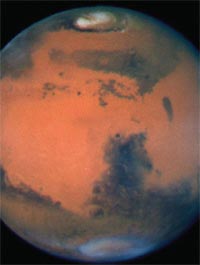
    MUMBAI (TIP): The 2.5 billion dollar Curiosity mission has attained a major breakthrough with the sixwheeled one tonne rover finally establishing that ancient Mars could have supported life in the form living microbes, a Nasa announcement said. The announcement said that scientists identified sulphur, nitrogen, hydrogen, oxygen,phosphorusand carbon which are some of the key chemical ingredients for life. These were found in the powder Curiosity drilled in February out of a sedimentary rock near an ancient stream bed in Gale Crater of the Red Planet. It may be recalled that there was considerable speculation that a scientific meeting at San Fransisco sometime back would result in an announcement that the environment of Mars had once supported microbial life. But at a media briefing the scientists did not provide any specific answers to this question.

    However, on Tuesday lead scientist for Nasa’s Mars Exploration Programme, Michael Meyer was quoted as saying: “A fundamental question for this mission is whether Mars could have supported a habitable environment. From what we know now, the answer is yes.” According to Nasa, clues to this habitable environment came from the data returned by Curiosity’s Sample Analysis at Mars and Chemistry and Minerology instruments.

    The data indicated that the Yellowknife Bent river system or an intermittently wet lake bed that could have provided chemical energy and other favourable conditions for microbes. The rock is made up of a fine-grained mudstone containing clay minerals, sulphate minerals and other chemicals. This ancient wet environment, unlike some others on Mars was not harshly oxidising, acidic or extremely salty, Nasa stated.

    Nasa said that scientists were surprised to find a mixture of oxidised, less oxidised, and even nonoxidised chemicals, providing an energy gradient of the sort many microbes on earth exploit to live. “This partial oxidation was first hinted at when the drill cuttings were revealed to be gray, rather than red. Principal investigator, Paul Mahaffy has been quoted as saying that ‘the range of chemical ingredients we have identified in sample is impressive and it suggests pairings such as sulphates and sulphides that indicate a possible chemical energy source of micro-organisms.’ “We have characterised a very ancient, strangely new ‘gray Mars’ where conditions once were favourable for life,” said John Grotzinger, project scientist for the Mars Science Laboratory.

  • Star System Third Closest To Sun Found

    Star System Third Closest To Sun Found

    WASHINGTON (TIP): In a first-of-its-kind discovery in nearly a century, Nasa scientists have found the third-closest star system to the Sun – located only 6.5 light-years away. The pair of newly found stars is the closest star system discovered since 1916. Both stars in the new binary system discovered by Nasa’s wide-field infrared survey explorer (WISE) are “brown dwarfs”, which are stars that are too small in mass to ever become hot enough to ignite hydrogen fusion.

    As a result, they are very cool and dim, resembling a giant planet like Jupiter more than a bright star like the Sun. “The distance to this brown dwarf pair is 6.5 lightyears – so close that Earth’s television transmissions from 2006 are now arriving there,” said Kevin Luhman, an associate professor of astronomy and astrophysics at Penn State University, University Park, and a researcher in Penn State’s Center for Exoplanets and Habitable Worlds. “It will be an excellent hunting ground for planets because the system is very close to Earth, which makes it a lot easier to see any planets orbiting either of the brown dwarfs,” Luhman said. It is only slightly farther away than the secondclosest star, Barnard’s star, which was discovered 6 light-years from the Sun in 1916.

  • A ‘black box’ to warn you before car breaks down

    A ‘black box’ to warn you before car breaks down

    LONDON (TIP): A new ‘black box’ device that warns car drivers of an impending breakdown in advance through a phone call, text or email is to be launched in UK. The automated system to be introduced by by the RAC motoring organisation means that drivers will receive a phone call, text or email telling them there’s a fault with their car. The matchbox-sized device slots into the car’s computer system and transmits data before and after a journey, the ‘Daily Express’ reported.

    In case the car breaks down or has an accident, the RAC Advance it will automatically alert a patrolman with its location and the nature of the problem. The system updates computers at RAC headquarters with information about how the car is running. If a fault is detected, drivers receive a phone call, text or email.

    The black box device detects engine and gearbox problems, checks batteries, alternators, brake wear, throttles and filters. The device has been incorporated in all 1,700 RAC patrol vehicles and it will be available to all RAC members this year with the cost added to subscriptions. “Offering peace of mind in a box, RAC Advance will revolutionise how we deal with our members,” RAC technical director David Bizley said.

  • Ice melt may allow ships to sail across Arctic by 2050

    Ice melt may allow ships to sail across Arctic by 2050

    LOS ANGELES (TIP): The Arctic sea ice cover, melting rapidly due to global warming, will be so thin by 2050 that ships will be able to sail directly across the North Pole for the first time, experts have predicted. Researchers said it could also lead to unprecedented geo-political tensions between countries that have territorial claims in the region. Global warming will make these frigid routes much more accessible than ever imagined by melting an unprecedented amount of sea ice during the late summer, a University of California — Los Angeles (UCLA) research shows. “Nobody’s ever talked about shipping over the top of the North Pole.

    This is an entirely unexpected possibility,” said lead researcher Laurence C Smith, a professor of geography. “The development is both exciting from an economic development point of view and worrisome in terms of safety, both for the Arctic environment and for the ships themselves,” Smith said. The findings, which explore accessibility during the Arctic’s most navigable month of the year, September, appear in the journal Proceedings.

    The first thorough assessment of trans-Arctic shipping potential as global temperatures continue to rise, the study is based on independent climate forecasts for the years 2040 to 2059. By mid-century , even ordinary shipping vessels will be able to navigate previously inaccessible parts of the Arctic Ocean, and they will not need icebreakers to blaze their path as they do today, the researchers found. “We’re talking about a future in which open-water vessels will, at least during some years, be able to navigate unescorted through the Arctic, which at the moment is inconceivable,” said coauthor Scott R Stephenson.

    The Arctic ice sheet is expected to thin to the point that polar icebreakers will be able to navigate between the Pacific and Atlantic oceans by making a straight shot over the North Pole, Smith and Stephenson predict. The route directly over the North Pole is 20% shorter than today’s most-trafficked Arctic shipping lane, the Northern Sea Route. For vessels travelling between Rotterdam in the Netherlands and Yokohama, Japan, the Northern Sea Route is approximately 40% shorter than the traditional route through the Suez Canal.

    Even the fabled and notoriously treacherous Northwest Passage, which traces Canada’s coastline and offers the most direct route from Asia to eastern Canada and northeasternmost part of the US, is expected to become more viable for Polar Class 6 vessels. Today, the Northwest Passage is theoretically navigable only one out of seven years, the researchers said.

  • A ‘Pacemaker’ In Brain May Help Cure Anorexia

    A ‘Pacemaker’ In Brain May Help Cure Anorexia

    LONDON (TIP): Till now, pacemakers helped your heart run like a well-oiled machine or prevented an epileptic fit. But in a first-of-its-kind breakthrough, scientists will announce on Thursday that a pacemaker for the brain can help cure severely anorexic patients. According to a new research published in the Lancet on March 7, scientists have used a neurosurgical implant safely in six patients with severe anorexia. The implant greatly improved their mood, weight and desire to eat. The technique – known as deep brain stimulation (DBS) – involves a device similar to a pacemaker being implanted into the brain. Anorexia is an eating disorder and is among the most common psychiatric disorders in young women aged between 15 and 19 years.

    It has one of the highest mortality rates of any psychiatric disorder. Increasingly in India, teenage girls are becoming obsessed about losing weight and therefore severely limit their food intake or starve to feel more in control. Treatment usually focuses on behavioural change, but up to 20% of patients derive no benefit from the available treatment and are at risk of dying prematurely from the disease.

    Atleast half of the patients who took part in the study showed improvements in mood and Body Mass Index, leading researchers to hope that larger trials will confirm the effectiveness of the technique in treating anorexic patients. Researchers based at the Krembil Neuroscience Centre and University Health Network in Canada used Magnetic Resonance Imaging (MRI) to identify a specific area of the brain – a bundle of white matter below the corpus callosum, the thick bundle of nerve fibres which divides the left and right sides of the brain – which has previously been used for DBS in patients with depression. Once the target area had been identified, electrodes were implanted into the area and connected to a pulse generator, which was implanted under the skin.

    The device was activated 10 days after it had been implanted, with the researchers carefully measuring acute changes in the patients’ mood and anxiety levels to determine the correct level of stimulation. According to Dr Andres Lozano, neurosurgeon and one of the lead researchers, the results are particularly encouraging because they seem to point to a genuine therapeutic effect, rather than a placebo or hungerincreasing effect. He explained, “The initial weight loss argues against a primary effect of DBS on hunger, appetite or metabolic rate.

    It also suggests that there is little in the way of a placebo-related benefit to the surgery.” He added, “The finding of improvements in mood and anxiety in patients who were still underweight is especially striking, in view of the well known poor response of underweight patients to conventional pharmacotherapies or psychotherapies.”

  • Fossils Show Ancient Camels’ Arctic Links

    Fossils Show Ancient Camels’ Arctic Links

    LONDON (TIP): Think of the frozen arctic and you would imagine sea lions, penguins or polar bears. But how about a camel? British and Canadian researchers have discovered the first evidence of an extinct giant camel in the high Arctic. The three-and-a-half-million-yearold fossil has been unearthed on Ellsmere Island making it the furthest North a camel has ever been found. This ancient beast was three metres tall at the hump and about a third higher than the present day living camel species.

    The researchers say it’s a very important discovery. “These bones represent the first evidence of camels living in the High Arctic region. It extends the previous range of camels in North America northward by about 1,200 km and suggests that the lineage that gave rise to modern camels may have been originally adapted to living in an Arctic forest environment.” Scientists from University of Manchester used collagen fingerprinting from bone fragments to access the animal. They extracted minute amounts of collagen, the dominant protein found in bone, from the fossils.

    Using chemical markers for the peptides that make up the collagen, a collagen profile for the fossil bones was developed. The team then compared the profile to 37 modern mammal species, as well as that of a fossil camel found in the Yukon. He found that the collagen profile for the High Arctic camel was almost an identical match to the modern day Dromedary as well as the Ice-Age Yukon giant camel. The collagen information, combined with the anatomical data, demonstrated that the bone fragments belonged to a giant camel as the bone is roughly 30% larger than the same bone in a living camel species.

  • Black Hole Spinning At Speed Of Light

    Black Hole Spinning At Speed Of Light

    WASHINGTON (TIP): The outer reaches of a ‘supermassive’ black hole, more than two million miles across, or eight times the earth-moon distance, is spinning at nearly the speed of light. The gigantic object is at the centre of the spiral galaxy NGC 1365. Astronomers measured its jawdropping spin rate using new data from the Nuclear Spectroscopic Telescope Array, or NuSTAR, and the European Space Agency’s XMMNewton X-ray satellites. “This is the first time anyone has accurately measured the spin of a supermassive black hole,” Guido Risaliti of the Harvard-Smithsonian Centre for Astrophysics (CfA) and INAF – Arcetri Observatory, who led the study, was reported as saying by the journal Nature. Astronomers want to know the black hole’s spin for several reasons.

    The first is physical – only two numbers define a black hole: mass and spin. By learning those two numbers, you learn everything there is to know about the black hole.Most importantly, the black hole’s spin gives clues to its past and by extension the evolution of its host galaxy. “The black hole’s spin is a memory, a record, of the past history of the galaxy as a whole,” explained Risaliti, according to the Harvard-Smithsonian statement. Although the black hole in NGC 1365 is currently as massive as several million suns, it wasn’t born that big.

    It grew over billions of years by accreting stars and gas, and by merging with other black holes. Similarly, if the black hole grew randomly by pulling in matter from all directions, its spin would be low. Since its spin is so close to the maximum possible, the black hole in NGC 1365 must have grown through “ordered accretion” rather than multiple random events. Studying a supermassive black hole also allows theorists to test Einstein’s theory of general relativity in extreme conditions. Relativity describes how gravity affects the structure of space-time, and nowhere is space-time more distorted than in the immediate vicinity of a black hole.

  • E-Glasses To Hit Market This Year

    E-Glasses To Hit Market This Year

    LONG BEACH, CALIFORNIA: Gadget fans and gizmo addicts , keep an eye out for next big thingamabob. Soon you can have it keep an eye out for you. Google’s Sergei Brin let the world have a sneak peek at it on Wednesday, wearing the device that has acquired an almost mythical status since it was rumoured to be in the works some months back. It’s the Google Glass or Google Goggles, a hands-free , voiceactivated , augmented-reality headset from Google, which enables the world (or internet ) to just hang out on your spectacle frame. To take a picture while you’re wearing Google Glass, all you have to do is say “take picture” . That’s just the start.

    It can browse the internet, pull up maps, give you news, weather, and read email with voice commands… Revealing his vision, literally , Brin told the TED2013 conference that the new device would enable people to connect with information without disconnecting from people — like they do now when they have to look down into a smartphone or tablet. Google Glass, is a “spectacular” piece of equipment that has gearheads all agog. Just a few pieces are out and about, and Brin said a “few early, bleeding-edge adopters are applying to get them” by tweeting to #ifihadglass. Brin expects the device to be in the market by the yearend at $1,500 a piece.

  • India First To Put Smartphone In Space

    India First To Put Smartphone In Space

    LONDON (TIP): India has successfully launched the world’s first smartphone — loaded with a number of experimental ‘Apps’ , some serious and some just for fun — into the orbit. The University of Surrey’s Surrey Space Centre (SSC) said on Tuesday that the STRaND-1 , a nano-satellite carrying a smartphone, has successfully been launched into space from India. STRaND-1 is a training and demonstration mission, designed to test commercial offthe-shelf technologies in space. The Apps on board STRaND-1 were developed by winners of a facebook competition held last year. iTesa for example will record the magnitude of the magnetic field around the phone during orbit. Used as a precursor to further scientific studies, such as detecting Alfven waves (magnetic oscillations in our upper atmosphere ), the iTEsa app could provide proof of principle.

    The Scream in Space app was developed by Cambridge University Space Flight and will make full use of the smartphone’s speakers. Testing the theory ‘in space no-one can hear you scream, made popular in the 1979 film ‘Alien’ , the app will play videos of the best screams while in orbit and screams will be recorded using the smartphone’s own microphone . The STRAND Data app will show satellite telemetry on the smartphone’s display which can be imaged by an additional camera on-board . This will enable new graphical telemetry to interpret trends.

    The 360 app will take images using the smartphone’s camera and use the technology onboard the spacecraft to establish STRaND-1 ‘s position. The public will be able to request their own unique satellite image of Earth through the website, where images can be seen on a map showing where they have been acquired. Professor Sir Martin Sweeting, SSC director said, “STRaND-1 mission is a fantastic achievement.” STRaND-1 is a training and demonstration mission weighing 4.3 kg launched into a 785km Sunsynchronous orbit on ISRO’s PSLV launcher. Sir Martin added, “This launch is SSC’s first with Isro, and I am looking forward to exploring opportunities for further launches and a wider collaboration on space projects in the future.”

  • Asteroid Apophis may strike Earth in 2068

    Asteroid Apophis may strike Earth in 2068

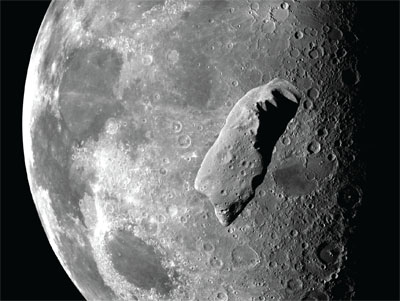
    WASHINGTON (TIP): A 325-meter asteroid that will safely fly by the Earth in 2029 and 2036, may strike the planet in the year 2068, scientists have warned. However, the chances of 99942 Apophis striking the Earth are slim with impact odds being about 2.3 in a million, the article published on Nasa’s website said.

    The near-Earth asteroid has been the focus of considerable attention after it was discovered in December 2004 to have a significant probability of Earth impact in April 2029. While the 2029 potential impact was ruled out through the measurement of archival telescope images, the possibility of a potential impact in the years after 2029 continues to prove difficult to rule out. Based on optical and radar position measurements made in 2004-2012, the asteroid will pass the Earth in 2029 at an altitude of 31,900km, give or take 750km. The altitude is close enough for the Earth’s gravity to deflect the asteroid onto a trajectory that brings it back to an Earth impact during its next flyby.

  • Scientist Develops Harry Potter-Style ‘Invisibility Cloak’

    Scientist Develops Harry Potter-Style ‘Invisibility Cloak’

    NEW YORK (TIP): A Singapore-based scientist has developed a Harry Potterstyle ‘invisibility cloak’ which can shield objects behind it. Baile Zhang of Singapore’s Nanyang Technological University showed off his ‘magical’ device earlier this week at TED2013 conference in Long Beach, California.

    Despite being branded a cloak, the gadget is actually a box: two pieces of calcite, a natural carbonate mineral that can bend light and suppress shadows around objects, pieced together, New York Daily News reported. But it shares the same principles as the robe donned by the famous movie wizard, said Zhang. In the Potter movies and books, the invisibility cloak completely shields the wearer from sight and cannot be worn out by time or spells. 31-year-old Zhang told BoingBoing his latest creation, first dreamed up in 2010, was developed “more as a hobby than a serious breakthrough”. In a video posted to YouTube Zhang demonstrates the device’s ability to make things disappear. He passes a rolled-up Post-it note, in front of a patterned background, by the box. When the note is behind the cloak, neither can be seen.

  • Smallest Planet Discovered Orbiting Another Star

    Smallest Planet Discovered Orbiting Another Star

    NEW DELHI (TIP): NASA scientists have discovered the smallest planet yet found going around a star similar to our Sun. It is only one third the size of Earth, slightly larger than our Moon. Located 210 light years away in the constellation Lyra, this system has two more planets.

    The moon-size planet called Kepler- 37b, and its two companion planets were found by scientists with NASA’s Kepler mission, which is designed to find Earth-sized planets in or near the “habitable zone,” the region in a planetary system where liquid water might exist on the surface of an orbiting planet. However, while the star in Kepler-37 may be similar to our sun, the system appears quite unlike the solar system in which we live. Astronomers think Kepler-37b does not have an atmosphere and cannot support life as we know it.

    The tiny planet almost certainly is rocky in composition. Kepler-37c, the closer neighboring planet, is slightly smaller than Venus, measuring almost threequarters the size of Earth. Kepler-37d, the farther planet, is twice the size of Earth. The discovery of such a tiny planet highlights the great advances in technology. The first exoplanets found to orbit a normal star were giants. As technologies have advanced, smaller and smaller planets have been found, and Kepler has shown that even Earth-size exoplanets are common. “Even Kepler can only detect such a tiny world around the brightest stars it observes,” said Jack Lissauer, a planetary scientist at NASA’s Ames Research Center in a statement. “The fact we’ve discovered tiny Kepler-37b suggests such little planets are common, and more planetary wonders await as we continue to gather and analyze additional data.” Kepler-37’s host star belongs to the same class as our sun, although it is slightly cooler and smaller. All three planets orbit the star at less than the distance Mercury is to the sun, suggesting they are very hot, inhospitable worlds.

    Kepler-37b orbits every 13 days at less than one-third Mercury’s distance from the sun. The estimated surface temperature of this smoldering planet, at more than 800 degrees Fahrenheit (700 degrees Kelvin), would be hot enough to melt the zinc in a penny. Kepler-37c and Kepler-37d, orbit every 21 days and 40 days, respectively. “We uncovered a planet smaller than any in our solar system orbiting one of the few stars that is both bright and quiet, where signal detection was possible,” said Thomas Barclay, Kepler scientist at the Bay Area Environmental Research Institute in Sonoma, Calif., and lead author of the new study published in the journal Nature. “This discovery shows close-in planets can be smaller, as well as much larger, than planets orbiting our sun.” The research team used data from NASA’s Kepler space telescope, which simultaneously and continuously measures the brightness of more than 150,000 stars every 30 minutes. When a planet candidate transits, or passes, in front of the star from the spacecraft’s vantage point, a percentage of light from the star is blocked. This causes a dip in the brightness of the starlight that reveals the transiting planet’s size relative to its star.

    The size of the star must be known in order to measure the planet’s size accurately. To learn more about the properties of the star Kepler-37, scientists examined sound waves generated by the boiling motion beneath the surface of the star. They probed the interior structure of Kepler-37’s star just as geologists use seismic waves generated by earthquakes to probe the interior structure of Earth. The science is called asteroseismology.

    The sound waves travel into the star and bring information back up to the surface. The waves cause oscillations that Kepler observes as a rapid flickering of the star’s brightness. Like bells in a steeple, small stars ring at high tones while larger stars boom in lower tones. The barely discernible, high-frequency oscillations in the brightness of small stars are the most difficult to measure. This is why most objects previously subjected to asteroseismic analysis are larger than the sun.

  • Smart Robot That Can Learn Languages

    Smart Robot That Can Learn Languages

    LONDON (TIP): Scientists have incorporated an artificial brain in a humanoid robot, enabling it to understand what is being said and even anticipate the end of a sentences. The ‘simplified’ artificial brain system has allowed the robot to learn, and subsequently understand, new sentences containing a new grammatical structure. This technological prowess was made possible by the development of a “simplified artificial brain” that reproduces certain types of so-called “recurrent” connections observed in the human brain.

    The artificial brain system enables the robot to learn, and subsequently understand, new sentences containing a new grammatical structure. It can link two sentences together and even predict how a sentence will end before it is uttered, according to the research published in the journal PLoS One.

    Inserm and CNRS researchers and the Universite Claude Bernard Lyon 1 have succeeded in developing an “artificial neuronal network” constructed on the basis of a fundamental principle of the workings of the human brain. In a video demonstration, a researcher asked the iCub robot to point to a guitar then asking it to move a violin to the left.

    Before performing the task, the robot repeated the sentence and explained that it has fully understood what it has been asked to do. For researchers, the contribution that this makes to research into certain diseases is of major importance.

    This system can be used to understand better the way in which the brain processes language. “We know that when an unexpected word occurs in a sentence, the brain reacts in a particular way. These reactions could hitherto be recorded by sensors placed on the scalp,” explains researcher Peter Ford Dominey. The model developed by Dr Xavier Hinaut and Dr Peter Ford Dominey makes it possible to identify the source of these responses in the brain.

    If this model, based on the organization of the cerebral cortex, is accurate, it could contribute to possible linguistic malfunctions in Parkinson’s disease. This research has another important implication, that of contributing to the ability of robots to learn a language one day.

  • Scientists Discover Youngest Black Hole In Our Galaxy

    Scientists Discover Youngest Black Hole In Our Galaxy

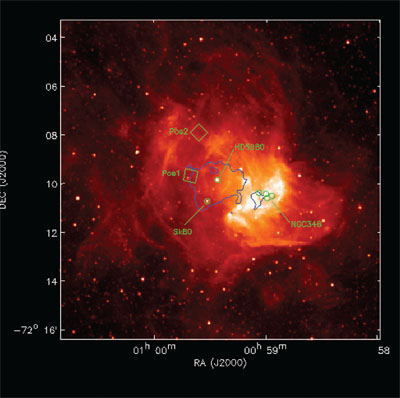
    WASHINGTON (TIP): Nasa scientists have spotted the youngest black hole yet in the Milky Way galaxy, which is just 1000-years-old and only 26,000 light-years away from Earth. New data from Nasa’s Chandra Xray Observatory suggested a highly distorted supernova remnant may contain the most recent black hole formed in the Milky Way galaxy. The remnant, called W49B, appears to be the product of a rare explosion in which matter is ejected at high speeds along the poles of a rotating star, Nasa said in a statement. “W49B is the first of its kind to be discovered in the galaxy.

    It appears its parent star ended its life in a way that most others don’t,” said Laura Lopez, who led the study at the Massachusetts Institute of Technology. Usually when a massive star runs out of fuel, the central region of the star collapses, triggering a chain of events that quickly culminate in a supernova explosion. Most of these explosions are generally symmetrical, with the stellar material blasting away more or less evenly in all directions. However, in the W49B supernova, material near the poles of the doomed rotating star was ejected at a much higher speed than material emanating from its equator.

    Jets shooting away from the star’s poles mainly shaped the supernova explosion and its aftermath. The remnant now glows brightly in X-rays and other wavelengths, offering the evidence for a peculiar explosion. By tracing the distribution and amounts of different elements in the stellar debris field, researchers were able to compare the Chandra data to theoretical models of how a star explodes. For example, they found iron in only half of the remnant while other elements such as sulfur and silicon were spread throughout.

    This matches predictions for an asymmetric explosion. “In addition to its unusual signature of elements, W49B also is much more elongated and elliptical than most other remnants,” said coauthor Enrico Ramirez-Ruiz of the University of California at Santa Cruz. “This is seen in X-rays and several other wavelengths and points to an unusual demise for this star,” Ramirez-Ruiz said. The authors examined what sort of compact object the supernova explosion left behind. Most of the time, massive stars that collapse into supernovas leave a dense, spinning core called a neutron star. Astronomers often can detect neutron stars through their X-ray or radio pulses, although sometimes an X-ray source is seen without pulsations.

    A careful search of the Chandra data revealed no evidence for a neutron star. The lack of such evidence implies a black hole may have formed. “It’s a bit circumstantial, but we have intriguing evidence the W49B supernova also created a black hole,” said co-author Daniel Castro, also of MIT.

  • Wisconsin Scientists Help Search For Alien Life

    Wisconsin Scientists Help Search For Alien Life

    MADISON (TIP): Scientists at the University of Wisconsin-Madison are helping search for evidence of alien life not by looking into outer space, but by studying some rocks right here on Earth.

    Some of the rocks are up to 3.5 billion years old. The scientists are looking for crucial information to understand how life might have arisen elsewhere in the universe and guide the search for life on Mars one day. “There’s a story always hidden in rocks,” said geoscientist Clark Johnson, the lead investigator for the Wisconsin Astrobiology Research Consortium. “… It’s up to (geologists) to be clever enough to find the tools that we need to interrogate those rocks to find what story they preserve.” The project is funded through NASA, which provided a $7 million, five-year grant that started in January. It was the group’s second five-year, $7 million grant.

    The consortium includes about 50 staff, students and post-doctoral fellows from 24 institutions in five countries. About 25 of the participants are at UW-Madison. The consortium has been tasked with finding footprints of biological activity, or biosignatures, which are substances such as elements or isotopes that show evidence of ancient life.

    The scientists are looking for microscopic signs of life, including microbes, which are bacteria, and other tiny, one-celled organisms that are much more adaptable than more complex organisms.

    The team is also sending microbes into Earth’s orbit on the International Space Station to see how they react to radiation and a space environment.

    In the process, they are learning more about Earth’s history. They’ve found new details of microbial life that dates back 2 billion to 3 billion years, before the planet’s atmosphere contained oxygen.

    They’ve found that microbes then relied more on iron than sunlight for energy. Eventually their work will be used to interpret data brought back from Mars by the six-wheel spacecraft Curiosity, which landed in August on a two-year mission to determine whether the environment was ever favorable for microbial life.

    Their work will also be used to prepare for future Mars missions. “It may be that planets spent a long time in a microbial life condition and then only rarely evolved to advanced multicellular complex life,” Johnson said. “That’s one of the hypothesis we would test.” Edward Goolish, acting director at the NASA Astrobiology Institute, said the project supports one of NASA’s major goals to find life or the potential for life elsewhere.

    The project’s results will provide a quantitative understanding of how life is preserved, he said. “At the same time (Johnson’s team is) contributing an immense amount to the understanding of life on Earth, which is equally important to astrobiology and science in general,” he said.

  • Doctors ‘Freeze’ Baby To Save His Life

    Doctors ‘Freeze’ Baby To Save His Life

    LONDON (TIP): In a pioneering treatment, UK doctors have given a new lease of life to a baby suffering from a fatal heart condition by ‘freezing’ his body for four days. Edward Ives was born with a condition called supra ventricular tachycardia (SVT), which causes the heart to race dangerously fast with just a five per cent chance of survival.

    The baby survived, thanks to the ‘miraculous’ treatment at University College London Hospital, in which doctors dropped his core temperature by almost four degrees Centigrade, ‘The Telegraph’ reported. Edward’s heart was pumping at over 300 beats per minute at the time of his birth last August, double the normal rate of 160.

    Doctors wrapped the boy in a blanket of cold gel which dropped his temperature from 37 to 33.3 degree C, to slow his metabolism, to prevent damage to vital organs such as the brain. After two days they slowly raised his temperature – but his heart rate rose again so they chilled him for a further two days. “It was horrible to see him lying there freezing in nothing but a nappy. He was heavily sedated so didn’t move much, and he was cold to touch – it looked like he was dead, said his mother Claire Ives. “All I wanted to do was scoop him up and give him a warm cuddle. I just had to keep reminding myself that it was saving his life,” she said. During his treatment, Edward also received shocks from a defibrillator five times, to return his heart from a potentially fatal rhythm to a safer one.

    On the fourth day, his heart started slowing to more normal levels, after which the medics slowly increased the temperature by one degree every 24 hours. “As soon as his heart started beating normally everything began to improve. He had been really puffy because his kidneys weren’t working, but all of a sudden he looked like a normal baby again,” Ives said. A month later Ives and her husband Phillip were finally allowed to take him home.

  • Chaos ahead of us as solar ‘megastorm’ is brewing?

    Chaos ahead of us as solar ‘megastorm’ is brewing?

    LONDON (TIP): A solar ‘megastorm’ , expected to hit Earth in the near future, could knock out the planet’s communication satellites, cause power cuts and disrupt crucial navigation aids and aircraft avionics , experts have warned. The extreme space storm is caused by the Sun ejecting billions of tonnes of highlyenergetic matter travelling at 1609344 kilometres per hour. However, engineers say it is impossible to predict more than about 30 minutes before it actually happens, The Independent reported.

    Such solar superstorms are estimated to occur once every 100 or 200 years, with the last one hitting the Earth in 1859. Although none has occurred in the space age, we are far more vulnerable now than a century ago because of the ubiquity of modern electronics , engineers said. “The general consensus is that a solar superstorm is inevitable , a matter not of ‘if ‘ but ‘when?’,” says a report into extreme space weather by a group of experts at the Royal Academy of Engineering in London. There have been a number of “near misses” in the past half century, when an explosive “coronal mass ejection” of energetic matter from the Sun narrowly bypassed the Earth. A relatively minor solar storm in 1989 knocked out several key electrical transformers in the Canadian national grid, causing major power blackouts

  • Avoid overdose of paracetamol to cut death risk

    Avoid overdose of paracetamol to cut death risk

    LONDON (TIP): The number of deaths and liver transplants, due to overdose of paracetamol — a drug commonly popped by Indians for fever and cough, has fallen by a whopping 43% in England and Wales, thanks to an UK legislation to make pack sizes smaller. In September 1998, a new legislation was introduced by the UK government which restricted pack sizes to a maximum of 32 tablets through pharmacy-sales and 16 for nonpharmacy sales.

    The first results of that intervention, to be announced on Friday in the British Medical Journal shows that the number of registrations at liver units for paracetamol-induced liver transplantation in England and Wales following the legislation was 482 fewer than expected: a 61% reduction .

    This resulted in an overall decrease of 43% in the 11 years post-legislation period in deaths due to overdose of paracetamol. Lead author professor Keith Hawton, University of Oxford Centre for Suicide Research , said in many countries , self poisoning with paracetamol (acetaminophen) is a common method of suicide and nonfatal self harm, it is responsible for many accidental deaths, and is a frequent cause of hepatotoxicity and liver unit admissions.

    He further said, “The 43% reduction in deaths in the UK over 11 years was equivalent to 765 fewer deaths with a suicide or open verdict, or 990 fewer deaths if accidental poisoning verdicts were included. The 61% reduction in registrations at liver units represented 482 fewer registrations.” India in 2011 also brought in legislation and put a cap on the prescription formulations of paracetamol combo drugs. The drug controller general of India said it should not exceed 325 mg in each tablet or capsule.

    Earlier the drug was sold to the strength of 500 mg overthecounter . India is yet to ascertain what impact that legislation had. But the UK now wants to follow the India model as it continues to see a considerable number of deaths each year due to paracetamol poisoning — at an average of 121 per year.

    The researchers therefore suggest further measures may be required to limit this death toll including stronger enforcement of the legislation, further reduction in pack sizes and possibly a reduction in paracetamol content of tablets. Hawton said, “Another measure to reduce deaths might be to decrease the paracetamol content of tablets from 500 mg to 325 mg in prescribed compound preparations.”

  • To fight germs, Australia bans kids from blowing out candles on b’day cakes

    To fight germs, Australia bans kids from blowing out candles on b’day cakes

    MELBOURNE (TIP): The iconic tradition of blowing out candles on birthday cakes may soon be passe — at least for Aussie kids! Australian children are to be banned from blowing out candles together on birthday cakes — because they could be puffing germs onto one another.

    In what is seen as an attempt to “bubble wrap” children, youngsters attending birthday parties will be told to take along individual cup cakes on which to place single candles. Australian doctors have warned the strict new hygiene guidelines for childcare, by National Health and Medical Research Council (NHMRC), go too far, News.com.au said.

    The NHMRC is urging childcare centres to stand up to parents who insist on sending a sick child to daycare — even if they have a medical certificate. The daycare staff will now have to wash toys, doorknobs, floors and cushion covers every day. “Children love to blow out their candles while their friends are singing ‘Happy birthday’ ,” NHMRC says. “To prevent the spread of germs when the child blows out candles, parents should either provide a separate cupcake, with a candle if they wish, and (either ) enough cupcakes for all the other children (or) a large cake that can be cut and shared,” it says.