Tag: Science & Technology

  • Here’s Rex: World’s first bionic man is worth $1m

    Here’s Rex: World’s first bionic man is worth $1m

    LONDON (TIP): Man has once again played God. The world’s first bionic man Rex, created using nearly $1 million-worth of state-of-the-art limbs and organs — synthetic blood from Sheffield University, prosthetic legs and ankle from MIT, retinas from Oxford University, artificial kidneys, pancreas and spleens from University College London and artificial lungs from Swansea was unveiled at London’s Science Museum on Thursday.

    A mixture of Robocop and Frankenstein, Rex — who has the face of a man is 6.5-feet tall with striking brown eyes. He was jointly built with the help of over 18 companies and universities and for the first time gives tangible hope that replacing body parts with man-made alternatives can finally be possible. Rex, the work of by UK roboticists Richard Walker and Matthew Godden with the support of the Wellcome Trust, will be displayed at London’s Science Museum from February 7-March 11. In the two centuries since Mary Shelley’s Dr Frankenstein brought a ‘monster’ to life, the subject has fascinated science fiction in books, comics, film and TV.

    Now research on advanced prosthetic arms and legs, as well as artificial eyes, hearts, lungs — and even hybrids between computer chips and living brains — means that scientists are finally able to replace body parts and even improve on human abilities. The project involves Bertolt Meyer, a social psychologist from Switzerland who has a bionic hand himself. He met scientists working at the cutting edge of research to find out just how far this new technology can go. “I’ve looked around for new bionic technologies for a very long time and I think that until six years ago nothing much was happening.

    And then suddenly now we get this explosion of innovation,” says Bertolt. “I think we are now at a point where we can build a body that is great and beautiful in its own special way.” Bertolt has had prosthetic hands since he was a child. His new £30,000 bionic hand, which can grasp and twist, is the most advanced on the market. But technology is moving so fast that Bertolt’s bionic hand could soon be obsolete. A far more advanced arm is being developed, the product of more than $100 million-worth of research into bionic limbs, funded by the US military.

  • Ozone Thinning Affects Ocean Circulation

    Ozone Thinning Affects Ocean Circulation

    WASHINGTON (TIP): A gap in the Antarctic ozone layer has impacted the way the waters in the southern oceans mix, with the potential to alter the amount of atmospheric CO2 and possibly affect climate change, warn scientists. Darryn W. Waugh, from the John Hopkins Kriegar School of Arts and Sciences, said: “This may sound entirely academic, but believe me, it’s not.

    This matters because the southern oceans play an important role in the uptake of heat and carbon dioxide, so any changes in southern ocean circulation have the potential to change the global climate.” Waugh’s team used measurements taken from the early 1990s to the mid-to-late 2000s of the amount of a chemical compound known as “chlorofluorocarbon-12,” or CFC-12, in the southern oceans, the journal Science reports.

    CFC-12 was first produced commercially in the 1930s and its concentration in the atmosphere increased rapidly until the 1990s when it was phased out by the Montreal Protocol on substances that deplete the ozone layer. Prior to the Montreal Protocol, CFC-12 was used in products such as aerosol hairsprays and refrigerants and in air conditioning systems, according to a Johns Hopkins’ statement.

    From those ocean measurements, Waugh’s team was able to infer changes in how rapidly surface waters have mixed into the depths of the southern oceans. Because they knew that concentrations of CFCs at the ocean surface increased in tandem with those in the atmosphere, they were able to surmise that the higher the concentration of CFC-12 deeper in the ocean, the more recently those waters were at the surface.

  • 10m-Year-Old Star Still Giving Birth To Planets

    10m-Year-Old Star Still Giving Birth To Planets

    WASHINGTON (TIP): Scientists have discovered that an old star — 176 light years away from Earth — thought to be past its prime may still be creating new planets. The disk of material surrounding the surprising star called TW Hydrae may be massive enough to make even more planets than we have in our own solar system, Nasa said in a statement.

    The findings were made using the European Space Agency’s Herschel Space Telescope, a mission in which Nasa is a participant. At roughly 10 million years old and 176 light years away, TW Hydrae is relatively close to Earth by astronomical standards.

    It is relatively young but, in theory, it is past the age at which giant planets already may have formed. “We didn’t expect to see so much gas around this star,” said lead researcher Edwin Bergin of the University of Michigan in Ann Arbor. “Typically stars of this age have cleared out their surrounding material, but this star still has enough mass to make the equivalent of 50 Jupiters,” Bergin said. In addition to revealing the peculiar state of the star, the findings also demonstrate a new, more precise method for weighing planet-forming disks. The new method can directly probe the gas that typically goes into making planets.

  • 3d Printer To Help Build Moon Base?

    3d Printer To Help Build Moon Base?

    LONDON (TIP): The European Space Agency (ESA) plans to set up a base on Moon by using a 3D printer to build it from lunar materials, scientists say. Industrial partners including renowned architects Foster + Partners have joined with ESA to test the feasibility of 3D printing using lunar soil, the space agency said. ‘Terrestrial 3D printing technology has produced entire structures.

    Our industrial team investigated if it could similarly be employed to build a lunar habitat,” said Laurent Pambaguian, who heads the project for ESA. Foster + Partners devised a weight-bearing ‘catenary” dome design with a cellular structured wall to shield against micro-meteoroids and space radiation, incorporating a pressurized infl atable to shelter astronauts. A hollow closed-cell structure — reminiscent of bird bones — provides a good combination of strength and weight.

    The base’s design was guided in turn by the properties of 3D-printed lunar soil, with a 1.5 tonne building block produced as a demonstration. The UK’s Monolite supplied the D-Shape printer, with a mobile printing array of nozzles on a 6m frame to spray a binding solution onto a sand-like building material. ‘First, we needed to mix the simulated lunar material with magnesium oxide. This turns it into ‘paper”,” said Monolite founder Enrico Dini. ‘Then for our structural ‘ink’ we apply a binding salt which converts material to a stone-like solid.

  • Breakthrough: First Digital Atlas Of Brain

    Breakthrough: First Digital Atlas Of Brain

    LONDON (TIP): Understanding the most complex human organ — the brain, has now become a lot simpler. In a major breakthrough, scientists at Berkeley Lab has made it possible to get a front row view into how the brain develops and functions and pinpoint which part of the organ is playing truant during neurological disorders like autism, epilepsy and schizophrenia.

    The scientists have created the world’s fi rst genome-wide digital atlas of gene enhancers in the brain — the switches that tell genes when and where they need to be switched on or off.

    This atlas completely documents the cerebrum — the region that is of critical importance for cognition, motor functions and emotion identifies and locates thousands of gene-regulating elements which are the underlying causes of neurological disorders. Axel Visel, a geneticist with Berkeley Lab’s genomics division says, ‘Understanding how the brain functions and malfunctions in neurological disorders, remains one of the most daunting challenges in contemporary science. We’ve created a digital atlas of gene enhancers in the human brain.

    This atlas will enable other scientists to study in more detail how individual genes are regulated during development of the brain and how genetic mutations may impact human neurological disorders.” Visel added, ‘Enhancers are short pieces of DNA in the human genome — they are not actual genes, so they do not give rise to proteins. Instead, they are switches that tell the actual genes when to become active and make a protein. Each cell type in our body has different sets of these enhancers switched on or off, and collectively they help to orchestrate the activities of our 20,000 genes in each single cell.”

  • Water Flow On Mars Hints At Ancient Life

    Water Flow On Mars Hints At Ancient Life

    WASHINGTON (TIP): Narrow ridges found in Martian craters may actually be fossilized remnants of underground cracks through which water once flowed on the red planet, a new study claims. Water flowing beneath the surface of ancient Mars suggests life may once have been possible on the Red planet, according to a new analysis by researchers from Brown University.

    The study, published in the journal Geophysical Research Letters, bolsters the idea that the subsurface environment on Mars once had an active hydrology and could be a good place to search for evidence of past life. The study conducted by Lee Saper and Jack Mustard suggest the ridges, many of them hundreds of metres in length and a few metres wide, had been noted in previous research, but how they had formed was not known.

    Saper and Mustard thought they might once have been faults and fractures that formed underground when impact events rattled the planet’s crust.Water, if present in the subsurface, would have circulated through the cracks, slowly filling them in with mineral deposits, which would have been harder than the surrounding rocks. As those surrounding rocks eroded away over millions of years, the seams of mineral-hardened material would remain in place, forming the ridges seen today.

  • Cooling Down Of Universe Follows Big Bang Theory

    Cooling Down Of Universe Follows Big Bang Theory

    MELBOURNE (TIP): Astronomers have made the most precise measurement ever of how the universe has cooled down during its 13.77 billion year history just as predicted in Big Bang theory. They studied molecules in clouds of gas in a galaxy 7.2 billion light years away — so far that its light has taken half the age of the universe to reach us. Using the Australia Telescope Compact Array, a team from Sweden, France, Germany and Australia has measured how warm the Universe was when it was half its current age. “This is the most precise measurement ever made of how the Universe has cooled down during its 13.77 billion year history,” said Robert Braun, chief scientist at CSIRO Astronomy and Space Science in a statement.

    Because light takes time to travel, when we look out into space we see the Universe as it was in the past — as it was when light left the galaxies we are looking at. So to look back half-way into the Universe’s history, we need to look halfway across the Universe. The astronomers studied gas in an unnamed galaxy 7.2 billion light-years away. The only thing keeping this gas warm is the cosmic background radiation — the glow left over from the Big Bang. By chance, there is another powerful galaxy, a quasar called PKS 1830-211 , lying behind the unnamed galaxy

  • Minerals From Asteroids To Fuel Future Spacecraft?

    Minerals From Asteroids To Fuel Future Spacecraft?

    WASHINGTON (TIP): A US company plans to mine asteroids for metals, useful ores and minerals as they hurtle past the Earth using the first rockprospecting spacecraft by 2015. Deep Space Industries says it wants to start sending miniature scout probes, dubbed “Fireflies” , on one-way missions to near-Earth asteroids as soon as 2015. Company CEO David Gump said larger probes , “Dragonflies” , that will bring back 50- to 100-pound samples from prospective targets could be on their way by 2016, CNN reported. The goal is to extract metals, water and compounds that can be used to make spacecraft fuel from the chunks of rock that float within about 50 million kilometres of Earth.

    Gump said the ability to produce fuel in space would be a boon for Nasa, as the space agency shifts its focus toward exploring deeper into the solar system. As much as 90% of the weight of a prospective months-long Mars mission could be fuel — and it costs between $5,000 and $10,000 per pound to put anything into space. “If Nasa can launch just the hardware and tank up in orbit, where the fuel is cheap, that means we could get to the Red Planet a lot sooner than we currently expect,” Gump said. It could also allow commercial satellite companies to extend the life of hardware that’s now written off when fuel for manoeuvring thrusters runs out. The announcement comes nine months after the unveiling of a similar project by Planetary Resources , a company backed by investors such as filmmaker James Cameron and Google executives Larry Page and Eric Schmidt.

    Meteorite may hold evidence of ‘alien life’
    Alump of rock which crash-landed on Earth in a meteorite shower may hold evidence of ‘alien life’ within it, a UK scientist has claimed. The twoinch wide lump of space rock, that fell in Sri Lanka in December, is pitted with microscopic seaweed fossils similar to those found on Earth, said Chandra Wickramasinghe, a former head of Cardiff University’s Centre for Astrobiology who is also known for his controversial theories that life on Earth ‘seeded’ from the outer space. “Our provisional assessment is that it was part of a comet. The stones look extremely unusual, and have a porous structure, with a lower density than anything we have on Earth,” he said.

  • Digital Storage: Shakespeare’s Sonnets Encoded In Dna

    Digital Storage: Shakespeare’s Sonnets Encoded In Dna

    LONDON (TIP): A genetic storage device has been used to ‘download’ all 154 of Shakespeare’s sonnets on to strands of synthetic DNA, in a breakthrough which could solve the problem of storing the ever-growing mountain of data. Scientists were able to decode the information and reproduce the words of the Bard with complete accuracy. The new method by researchers at the EMBLEuropean Bioinformatics Institute (EMBL-EBI ), published in the journal Nature, makes it possible to store at least 100 million hours of high-definition video in about a cup of DNA.

    The technique made it possible to store a 26 second excerpt from Martin Luther King’s ‘I Have A Dream’ speech and a photo of the European Molecular Biology Laboratory where the work took place. Researchers were also able to turn a copy of Watson and Crick’s paper describing the nature of DNA into genetic code. There is a lot of digital information in the world — about three zettabytes’ worth (3000 billion billion bytes) — and the constant influx of new digital content poses a real challenge for archivists. Hard disks are expensive and require a constant supply of electricity, while even the best “no-power” archiving materials such as magnetic tape degrade within a decade.

    This is a growing problem in the life sciences, where massive volumes of data — including DNA sequences — make up the fabric of the scientific record. “We already know that DNA is a robust way to store information because we can extract it from bones of woolly mammoths , which date back tens of thousands of years, and make sense of it,” said Nick Goldman of EMBL-EBI . “It’s also incredibly small, dense and does not need any power for storage, so shipping and keeping it is easy,” Goldman said in a statement. Reading DNA is fairly straightforward, but writing it has until now been a major hurdle to making DNA storage a reality . The new method required synthesising DNA from the encoded information which was done by a California-based company.

  • Stress Makes Women Look Oldest At 3.30pm Every Wednesday

    Stress Makes Women Look Oldest At 3.30pm Every Wednesday

    LONDON (TIP): Women look their oldest at 3.30pm every Wednesday because it’s the day when energy levels plummet, work stress is at a peak and the effects of any weekend late nights finally kick in, according to a new study. The research, carried out by the tanning brand, St Tropez, revealed that one in ten women find Wednesday the most stressful day in a typical week. Two thirds experience a “slump in energy levels” midafternoon every Wednesday, the Telegraph reported. This forces a quarter of women to reach for a sugary snack on a bid to boost their mood and energy.

    But the next day, Thursday, is the day they are most likely to have sex, according to the study. Sex gives them a youthful rosy glow, which could explain why women feel so happy on a Friday — the day named as the happiest day by 60% of women. Another reason why women look their eldest mid-week could be a boozy treat at the weekend. Nichola Joss, St Tropez skin expert explained that it can take up to 72 hours for the visible effects of alcohol to show, so the effects of drinking on the weekend may not present themselves until Wednesday afternoon.

  • In Space, A Room That Can Be Folded Like A Shirt

    In Space, A Room That Can Be Folded Like A Shirt

    NORTH LAS VEGAS (TIP): An inflatable space pod to be attached to the International Space Station in a couple of years will be like no other piece of the station. Instead of metal, its walls will be made of floppy cloth, making it easier to launch (and then inflate). Nasa said it had signed a $17.8 million contract with Bigelow Aerospace to build the module, which could reach the space station as soon as 2015.

    That is a bargain-basement price compared with most equipment the US and other countries send into space, and the Bigelow agreement could serve as a model for how Nasa puts together missions at lower costs by using a Kmart strategy: buying offtheshelf pieces instead of developing its own designs. “This programme starts a relationship that we think, and we hope, is going to be meaningful between Nasa and ourselves,” Robert T Bigelow, the chief executive of Bigelow Aerospace, said at a news conference here at the company’s headquarters.

    Low-Earth orbit, he said, is the “first target,” but larger modules could be used for stations in deep space or for habitats on the Moon. “We have ambitions to get to the Moon someday, to have a base there,” Bigelow said.The fold-up , blow-up approach solves the conundrum of how to build something voluminous that can be packed into the narrow payload confines of a rocket.

    The soft sides of the module , called the Bigelow Expandable Activity Module, or Beam, will allow it to be scrunched like a Tshirt in a suitcase. At the space station, it will be attached to an air lock and then inflated like a balloon and expanded by a factor of 10 to its full size — about 13 feet long and 10 feet in diameter, with about 560 cubic feet of space inside.

    At least initially, it will remain empty as Nasa gathers data about its characteristics, including temperature and protection against micrometeorites. The balloonlike structure is carefully designed not to pop.

    The fabric walls will consist of several layers including Vectran , a bulletresistant material. Even if punctured by a highspeed meteorite, the fabric does not tear. A hole in a metal structure in space, by comparison, can cause explosive decompression as air rushes out. When the Beam module reaches the space station, astronauts might go to it to seek solitude: engineers expect it will be the quietest spot there.

    The fabric walls absorb sound vibrations instead of transmitting them. Beam revives a concept that Nasa developed more than a decade ago for an inflatable four-story crew quarters on the space station. Congress halted the work as the station’s construction costs grew sharply.

    Bigelow licensed the technology from Nasa and set up his factory in North Las Vegas, investing over $250 million of his own money. The company has already launched two unmanned prototypes into orbit, showing that they can remain inflated for years.

  • Curiosity Set To Drill First Martian Rock

    Curiosity Set To Drill First Martian Rock

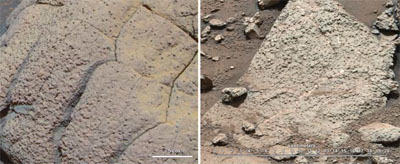
    LOS ANGELES (TIP): Nasa’s Curiosity rover is preparing to drill the Martian surface and is driving towards a flat rock with pale veins that may hold clues to a wet history on the Red Planet. It’s the most highly anticipated milestone since the sixwheel, nuclear-powered rover landed near the Martian equator five months ago on its two-year prime mission, investigating whether the planet ever offered an environment favourable for microbial life.

    If the rock meets rover engineers’ approval when Curiosity rolls up to it in coming days, it will become the first to be drilled for a sample during the mission, Nasa said. “Drilling into a rock to collect a sample will be this mission’s most challenging activity since the landing. It has never been done on Mars,” said Mars science laboratory project manager Richard Cook. “The drill hardware interacts energetically with Martian material we don’t control. We won’t be surprised if some steps in the process don’t go exactly as planned the first time through,” Cook said in a Nasa statement. Curiosity first will gather powdered samples from inside the rock and use those to scrub the drill. Then the rover will drill and ingest more samples from this rock, which it will analyse for information about its mineral and chemical composition.

  • Indian Researcher Bags Award For Alzheimer’s Drug

    Indian Researcher Bags Award For Alzheimer’s Drug

    LONDON (TIP): London-based Indian researcher Mahaveer Golechha has been selected for an award for his work on a drug to cure Alzheimer’s . The 27-year-old will be travelling to San Francisco to receive the Alzheimer’s Drug Discovery Foundation’s ‘Young Investigator Scholarship Award’ at the 7th Annual Drug Discovery for Neurodegeneration Conference to be held next month. “I feel very proud that I have proved world class research in the area of medicine can be done in India,” Dr Golechha said on Thursday. He has been recognized for his outstanding research on ‘naringin’ , a bioflavonoid found in grape fruits and citrus fruits.

    In his study, he found that naringin possesses significant “anti-Alzheimer activity” and will form the basis of further research to develop as a cure for the degenerative disease in old age, which worsens as it progresses. “Alzheimer’s disease is a neurodegenerative disorder that generally affects the elderly population. Till date the treatment was symptomatic but naringin will act at pathological level and have lesser side effects,” he said. “I hope this award creates further avenues for budding scientists in my country to be recognized for their work and facilitated to follow their dreams,” said Golechha, who completed his Master’s and PhD from the All India Institute of Medical Sciences in New Delhi, where he was involved in research on Alzheimer’s and epilepsy. His work on naringin has also been included for a poster presentation at the San Francisco conference.

  • India’s First Dinosaur Fossil Rediscovered

    India’s First Dinosaur Fossil Rediscovered

    MUMBAI (TIP): More than a century after it went missing, the fossil of what has been regarded as India’s first recorded dinosaur has been rediscovered in Kolkata, according to a top scientific journal. The recovery of Titanosaurus Indicus, or the Indian Tital reptile, was possible due to a collaborative programme between the Geological Survey of India (GSI) and the University of Michigan, according to the latest issue of Current Science (Vol. 104, No. 1, Jan. 10, 2013, Pg. No. 34), brought out by the Bangalore-based Indian Academy of Sciences. The missing dinosaur, untraceable for nearly a century, was finally found at the GSI headquarters in Kolkata, says the magazine. The fossil was originally discovered by WH Sleeman in the Jabalpur area of central India in 1828. However, it was only half a century later – in 1877 – that its importance came to light as a new genus and species of sauropod dinosaur known as Taitanosaurus Indicus, first identified by Richard Lydekker.

    At that time, the world had identified only 115 dinosaur species or less than 10 percent of the 1,401 species known by 2004. Passing safely through many hands for over half a century, it suddenly went missing though a cast of the specimen was in London’s Natural History Museum. Later, in the early 1900s, many more discoveries of dinosaur fossils were made by scientists such as Charles Metley and Durgasankar Bhattacharji around the original site in Jabalpur excavated by Sleeman.

    The magazine says there are many Indian dinosaur specimens that are missing, including both large and small specimens of sauropod and theropod dinosaurs. Prime among the missing specimens include the head and skeletal parts of the stocky-limbed large Theropod Lametasaurus Indicus, Indosaurus Matleyi, Indosuchus Raptorius, parts of Jainosaurus Septentrionalis and the small Noasaurid Theropod Laevisuchus Indicus and many Theropod limb bones.

  • Floating Ice On Saturn’s Moon Titan May Harbour ‘Exotic Life’

    Floating Ice On Saturn’s Moon Titan May Harbour ‘Exotic Life’

    WASHINGTON (TIP): Nasa scientists have discovered blocks of hydrocarbon ice in seas and lakes on Saturn’s moon Titan that may host exotic forms of life.

    A new study by scientists on Nasa’s Cassini mission found that blocks of hydrocarbon ice might decorate the surface of existing lakes and seas of liquid hydrocarbon on Titan. “One of the most intriguing questions about these lakes and seas is whether they might host an exotic form of life,” said Jonathan Lunine of Cornell University, coauthor of the study. “And the formation of floating hydrocarbon ice will provide an opportunity for interesting chemistry along the boundary between liquid and solid, a boundary that may have been important in the origin of terrestrial life,” Lunine said in a statement.

    Titan is the only other body besides Earth in our solar system with stable bodies of liquid on its surface. While our planet’s cycle of precipitation and evaporation involves water, Titan’s cycle involves hydrocarbons like ethane and methane . Ethane and methane are organic molecules, which scientists think can be building blocks for the more complex chemistry from which life arose. Up to this point, Cassini scientists assumed that Titan lakes would not have floating ice, because solid methane is denser than liquid methane and would sink.

    Aliens living on moons like Avatar’s Pandora?
    Moons similar to the one depicted in Hollywood flick ‘Avatar’ may be among the most common places to find alien life, scientists believe. Astronomers came to the conclusion after identifying up to 15 new planets orbiting the life-friendly ‘habitable zones’ of stars. All are giant gaseous worlds similar in size to Jupiter or Neptune. While such planets would not themselves be suitable for Earth-like life, they could be circled by moons on which there are forests, oceans and living creatures, researchers now believe, the ‘Daily Mail’ reported. Pandora, the fictional moon in James Cameron’s movie ‘Avatar’ , is just such a world. So far only one of the 15 newly discovered objects has been confirmed as an exoplanet with 99.9% certainty. The rest still fall into the category of ‘candidate’ planets while further evidence is collected. The confirmed planet, known as PH2 b, orbits a sunlike star in the constellation Cygnus several hundred light years away.

  • Here’s A Drug To Reverse Permanent Deafness

    Here’s A Drug To Reverse Permanent Deafness

    LONDON (TIP):Harvard scientists have developed a drug which they claim can cure permanent deafness by stimulating the inner ear. The drug, codenamed LY411575, works by triggering the regeneration of sensory hair cells. Until now it has not been possible to restore the cells once they have been lost due to factors such as loud noise exposure, infection and toxic drugs, the Daily Mail said. This type of deafness, often suffered by rock musicians and DJs, is generally assumed to be irreversible. Scientists succeeded in partially restoring hearing to mice that had been deafened by loud noise and believe the research could lead to effective treatments for in humans. The new approach involves reprogramming inner ear cells by inhibiting a protein, Notch. Previous research shows Notch signals help prevent stem cells in the cochlea transforming themselves into new sensory hair cells.

  • Nasa’s Kepler Mission Discovers

    Nasa’s Kepler Mission Discovers

    NEW DELHI (TIP): It is no longer a question of will we find a true Earth analogue, but a question of when, says Steve Howell, project scientist at the NASA mission that is searching for new planets orbiting other stars. On Monday, NASA announced that its Kepler space telescope had discovered 461 new planet candidates. With this addition, the number of potential planets discovered so far has gone up to 2,740 orbiting 2,036 stars. That’s a 20 percent increase since data was released in February last year. Four of the potential new planets revealed are less than twice the size of Earth and orbit in their sun’s “habitable zone,” the region in the planetary system where liquid water might exist on the surface of a planet, NASA said in a statement. Just like our Solar System, 43 percent of Kepler’s planet candidates are observed to have neighbor planets.

    The new data increase the number of stars discovered to have more than one planet candidate from 365 to 467. “The large number of multicandidate systems being found by Kepler implies that a substantial fraction of exoplanets reside in flat multi-planet systems,” said Jack Lissauer, planetary scientist at NASA’s Ames Research Center in Moffett Field, Calif. “This is consistent with what we know about our own planetary neighborhood.” The Kepler space telescope identifies planet candidates by repeatedly measuring the change in brightness of more than 150,000 stars in search of planets that pass in front of, or “transit,” their host star. At least three transits are required to verify a signal as a potential planet.

    Scientists analyzed more than 13,000 transit-like signals to eliminate known spacecraft instrumentation and astrophysical false positives, phenomena that masquerade as planetary candidates, to identify the potential new planets. Candidates require additional follow-up observations and analyses to be confirmed as planets. At the beginning of 2012, 33 candidates in the Kepler data had been confirmed as planets. Today, there are 105. Kepler space telescope, named after the 17th century German astronomer Johannes Kepler was launched in March 2009. It is fixedly looking at a view that covers about 145,000 stars in the neighborhood of the Solar System, within the Milky Way.

  • Insulin breakthrough could see end to needles

    Insulin breakthrough could see end to needles

    SYDNEY (TIP): Breakthrough research mapping how insulin works at a molecular level could lead to new diabetes treatments and end daily needle jabs, helping hundreds of millions of suffers, scientists said. A joint US-Australian team said it has been able to lay out for the first time in atomic detail how the insulin hormone binds to the surface of cells, triggering the passage of glucose from the bloodstream to be stored as energy.

    Lead researcher Mike Lawrence said the discovery, more than 20 years in the making and using powerful xray beams, would unlock new and more effective kinds of diabetes medication. “Until now we have not been able to see how these molecules interact with cells,” said Lawrence, from the Walter and Eliza Hall Institute of Medical Research in Melbourne. “We can now exploit this knowledge to design new insulin medications with improved properties, which is very exciting.” Lawrence said the team’s study, published in the latest edition of Nature, had revealed a “molecular handshake” between the insulin and its receptor on the surface of cells. “Both insulin and its receptor undergo rearrangement as they interact — a piece of insulin folds out and key pieces within the receptor move to engage the insulin hormone,” he said of the “unusual” binding method.

    Understanding how insulin attaches to cells was key to developing “novel” treatments of diabetes, a chronic condition in which the pancreas does not produce enough insulin or the body cannot use it properly. “The generation of new types of insulin have been limited by our inability to see how insulin docks into its receptor in the body,” Lawrence said. “This discovery could conceivably lead to new types of insulin that could be given in ways other than injection, or an insulin that has improved properties or longer activity so that it doesn’t need to be taken as often.” Importantly, Lawrence said the discovery could also have ramifications for the treatment of diabetes in developing nations, allowing for the creation of more stable insulins that do not need refrigeration. It could also have applications in the treatment of cancer and Alzheimer’s, with insulin playing a role in both diseases, he added.

  • Scientists Predict Huge Earthquakes In The Himalayas

    Scientists Predict Huge Earthquakes In The Himalayas

    SINGAPORE (TIP): Scientists have warned of moregreat earthquakes – of the magnitude 8 to 8.5 – in theHimalayas, especially in areas with their surface yet tobe broken by a temblor.A research team led by Nanyang TechnologicalUniversity (NTU) has discovered that massiveearthquakes in the range of 8 to 8.5 magnitudes on theRichter scale have left clear ground scars in the centralHimalayas.

    This ground-breaking discovery has huge implicationsfor the area along the front of the Himalayan Mountains,researchers said in a statement.Paul Tapponnier, a leading neotectonics scientist, saidthat the existence of such devastating quakes in the pastmeans that quakes of the same magnitude could happenagain in the region in future, especially in areas whichhave yet to have their surface broken by a temblor.The study showed that in 1255 and 1934, two greatearthquakes ruptured the surface of the earth in theHimalayas.

    This runs contrary to what scientists havepreviously thought.Massive earthquakes are not unknown in theHimalayas, as quakes in 1897, 1905, 1934 and 1950 all hadmagnitudes between 7.8 and 8.9, each causingtremendous damage. But they were previously thoughtnot to have broken the earth’s surface – classified as blindquakes – which are much more difficult to track.However, Tapponnier said that by combining new highresolution imagery and state of the art datingtechniques, they could show that the 1934 earthquake didindeed rupture the surface, breaking the ground over alength of more than 150 kilometres, essentially south ofthe part of the range that harbours Mount Everest.

    This break formed along the main fault in Nepal thatcurrently marks the boundary between the Indian andAsian tectonic plates – also known as the Main FrontalThrust (MFT) fault.Using radiocarbon dating of offset river sedimentsand collapsed hill-slope deposits, the researchersmanaged to separate several episodes of tectonicmovement on this major fault and pin the dates of thetwo quakes, about 7 centuries apart.Tapponnier warns that the long interval between thetwo recently discovered earthquake ruptures does notmean people should be complacent, thinking that thereis still time before the next major earthquake happens inthe region.

  • Amazing Solar ‘Wink’ Tells Doomsday Prediction Was Fallacy

    Amazing Solar ‘Wink’ Tells Doomsday Prediction Was Fallacy

    LONDON (TIP): NASA engineers were amazed after clicking a latest picture of the Sun which appeared to be “winking at them”. The image, which actually reveals sunspots caused by intense magnetic activity, was taken on December 22, just a few minutes after the Mayan doomsday prophecy proved to be wrong. Eruptions of magnetic activity on the solar surface appear to make the Sun ‘wink’ at the time many believed the world would end passed, the ‘Daily Mail’ reported.

    The picture, which was taken by NASA’s Solar Dynamics Observatory (SDO), has echoes of the famous image from the 1902 French film ‘A Trip To The Moon’, which is regarded as the first science fiction movie. “Despite reports of an ancient Maya prophecy, a mysterious planet on a collision course with Earth, or a reverse in Earth’s rotation, we’re still here,” NASA spokesperson said.

    “The Mayan connection was a misconception from the very beginning,” said Dr John Carlson, director of the Center for Archaeoastronomy. “The Maya calendar did not end on December 21, 2012, and there were no Maya prophecies foretelling the end of the world on that date,” he said. The mesmerising pictures show the energy thrown off by the Sun in wavelengths invisible to the human eye such as X-rays and ultraviolet light. The pictures have allowed scientists with new understanding of how the Sun works.

  • Soon, A Robot Helper To Do Daily Chores At Home

    Soon, A Robot Helper To Do Daily Chores At Home

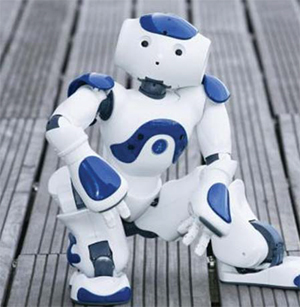
    LONDON (TIP): Scientists are designing a new ambitious robotic humanoid helper with artificial muscles to help people with everyday tasks. Engineers at the University of Zurich’s Artificial Intelligence Lab hope that 1.2 metre tall Roboy, designed to look like a child, will help the sick and elderly by acting as a mechanical helper.

    The research team is developing radical artificial ‘tendons’ to help the robot move, the ‘Daily Mail’ reported. They have already signed up 15 project partners and over 40 engineers, and hope to fund the project using a combination of commercial partners and crowd-funding. Researchers hope Roboy will become a blueprint for ‘service robots’ that work alongside humans. “Service robots are machines that are, to a certain extent, able to execute services independently for the convenience of human beings. Since they share their ‘living space’ with people, userfriendliness and safety are of great importance,” researchers said. The project will use artificial tendons to develop Roboy within nine months. Roboy will be unveiled in March 2013 at the Robots on Tour event in Zurich.

  • Now, ‘smart closet’ to help you dress up

    Now, ‘smart closet’ to help you dress up

    NEW YORK (TIP): Researchers are developing a ‘smart closet’ that has the artificial intelligence to suggest occasion-based and colour-appropriate outfits. The Magic Closet is a computer programme, under development at the National University of Singapore and the Chinese Academy of Science. The motioncontrolled programme suggests suitable outfits for different occasions, Tech- News Daily reported. Although the Magic Closet is a lab project, it’s almost ready for store shelves, Si Liu and Shuicheng Yan, computer scientists at the National University of Singapore , wrote to the website. “The Magic Closet can be used as a mobile personalized clothes management app. It can also be used as a plug-in system in online shops (eg, amazon.com, ebay.com) to help customers to choose suitable clothes,” they said.

  • New Space Suits For Advanced Cosmic Ventures

    New Space Suits For Advanced Cosmic Ventures

    WASHINGTON (TIP): Nasa has developed a new gen-next spacesuit, for its advanced space ventures including the manned Mars mission, that can supply oxygen and protect the astronaut from extreme temperatures. The new space suit is called the “Z-1 Prototype Spacesuit and Portable Life Support System ( PLSS) 2.0”. Nasa’s current space suits, designed in 1992, were made for crews aboard the space shuttle fleet and those spending time at the International Space Station ( ISS). However, with the space shuttle fleet’s recent retirement and the country’s goals to go to Mars, an asteroid, and beyond, Nasa has recognized that it may be time to create more robust and technologically-equipped suits for astronauts. It is a rear-entry space suit that can do pretty much anything the actual spaceship does, from supplying oxygen , removing carbon dioxide , and protecting the astronaut from extreme heat or cold, the Daily Tech reported .

    The suit is made up of many hard elements on top of its fabric, and becomes flexible when inflated. There is a hatch and life support pack on the back of the suit, wheich allows the astronaut to attach to the spacecraft or a rover.

    It also has urethane-coated nylon and polyester layers to ‘maintain pressure’ and allows for greater flexibility in the limbs and torso. Astronauts get into the suit through a suitport, which is the combined hatch and life support pack. An airlock is not required to get in and out of the suit, meaning they can get in and out of the suit faster.

    This is because the suit operates at the same pressure as the spacecraft. The suit also packs a water membrane evaporation cooler that cools it through the same method as sweating instead of current techniques , which consists of a sublimator that only works in a hard vacuum.

  • Chew on this: Mealworms could be next best food

    Chew on this: Mealworms could be next best food

    LONDON (TIP): Edible insect protein from mealworms may prove to be a more sustainable alternative to foods like milk and chicken, according to researchers. Researchers compared the environmental impact of meat production on a Beetle larvae or mealworms farm to traditional animal farms using three parameters: Land usage, energy needs, and greenhouse gas emissions.

    They found mealworms produce more edible protein than traditional farms for chicken, pork, beef or milk, for the same amount of land used. Research led by Dennis Oonincx from the University of Wageningen, Netherlands, found that from the start of the process to the point that the meat left the farm, mealworms scored better than the other foods. Mealworm farms required less land and similar amounts of energy per unit of edible protein produced. Previous work by the team has already shown that mealworms themselves produce less greenhouse gases than other animals grown for meat. In this new study, the researchers elaborate on the sustainability of insect proteins as a food by showing that growing mealworms for animal protein requires less land and generate fewer greenhouse gas emissions than chicken, pork, beef or milk.

  • Detected: 5 new planets close to Earth, 1 habitable

    Detected: 5 new planets close to Earth, 1 habitable

    MELBOURNE (TIP): Scientists using an intragalactic speed gun have detected five new planets, relatively close to Earth, and one of them is orbiting a star’s habitable zone, where conditions are suitable for life. It would take only 12 years to reach the planets when travelling at the speed of light. Scientists analysing about 6,000 measurements of the star Tau Ceti’s velocity, believe that slight inconsistencies in its speed and direction are being caused by the gravitational pull of other celestial bodies, The Australian reported. “We believe the star is going very slightly backwards and forwards and shows the evidence for doing that at five different periods,” said professor Chris Tinney of the University of New South Wales. “We think five different planets are going around that star tugging on it making it move backwards and forwards,” Tinney said.

    An international team of researchers from Australia, Chile, the UK and the US believe one of the five planets orbiting Tau Ceti is within the star’s habitable zone, where conditions are suitable for life. The planet in the habitable zone has a mass about five times that of Earth, making it the smallest known planet orbiting in the “Goldilocks” zone — where conditions are just right — of any Sun-like star.

    Experts closing in on dark matter?
    Scientists could be closing on to unravel the mystery behind the dark matter, who claim they may solve the puzzle soon by using exquisite techniques to tighten the constraints. A colloquium brought together over 100 cosmologists, particle physicists and observational astrophysicists in the hunt to determine what is dark matter.