Tag: Science & Technology

  • Airtel, Jio to bring SpaceX’s Starlink to India

    Airtel, Jio to bring SpaceX’s Starlink to India

    After Airtel announced y that it was signing a deal with Elon Musk’s SpaceX to bring Starlink to India, Reliance Jio made a similar announcement early on Wednesday morning. Airtel and Jio are teaming up with SpaceX to bring Starlink’s satellite internet to India, which will allow them to provide their services in the most remote areas of the country. Notably, the deal for both Airtel and Jio depends on SpaceX getting the required approvals to sell Starlink in India. If that happens, Jio and Airtel will offer Starlink services and equipment through its stores and online platforms. But, when will the rollout happen? How are Jio and Airtel planning to offer Starlink services? Here everything is explained.
    Airtel and Jio partner with SpaceX
    Bharti Airtel and Reliance Jio have signed agreements with SpaceX to bring Starlink satellite internet services to India. Both deals hinge on SpaceX receiving the necessary regulatory approvals from the Indian government to operate Starlink commercially. The deal with the two top network providers in India marks a significant step towards expanding high-speed broadband coverage in the country, particularly in remote and underserved areas.
    Airtel’s strategy for integrating Starlink
    Airtel has announced that it will explore ways to collaborate with SpaceX, potentially selling Starlink hardware in its stores and offering its services to businesses. Airtel also plans to leverage Starlink’s capabilities to connect rural schools, healthcare centres, and remote regions where traditional internet infrastructure is limited. Airtel also intends to integrate Starlink into its existing network and explore how SpaceX can use Airtel’s telecom infrastructure in India.
    Jio’s plan to offer Starlink services
    Reliance Jio has also partnered with SpaceX to offer Starlink services through its retail stores and online platforms once regulatory approvals are secured. Jio aims to integrate Starlink into its broadband portfolio, which currently includes JioFiber and JioAirFiber. The partnership will help Jio strengthen its internet services, particularly in areas where traditional broadband is challenging to deploy. Additionally, Jio will be responsible for the installation, activation, and customer support for Starlink users in India.
    Impact on India’s digital infrastructure
    The partnerships with Airtel and Jio signal growing competition in the satellite broadband sector in India. Both companies aim to expand high-speed internet access to previously unreachable locations. Airtel already collaborates with Eutelsat OneWeb for satellite internet services, and adding Starlink to its portfolio will further improve its internet coverage. Jio, which handles the highest mobile data traffic in India, will be able to make use of the Starlink deal to improve broadband reliability and accessibility.

  • Nasa launches Spherex and Punch to unravel Sun and stars

    SpaceX launched two significant Nasa missions to explore the Sun and the wider cosmos. SPHEREx and PUNCH launched aboard a Falcon 9 rocket from Vandenberg Space Force Base in California. Initially scheduled for February 28, the launch had faced several delays due to weather conditions and technical challenges. SPHEREx, the Spectro-Photometer for the History of the Universe, Epoch of Reionization, and Ices Explorer, aims to identify the essential components for life in the Milky Way galaxy. This near-infrared observatory will survey the entire sky, observing over 450 million galaxies and more than 100 million stars. By doing so, scientists hope to uncover the source of the early universe’s inflation and search for organic molecules throughout the universe.
    The PUNCH mission, or Polarimeter to Unify the Corona and Heliosphere, consists of four small satellites designed to investigate the Sun’s inner heliosphere.
    These satellites will provide three-dimensional observations of how the Sun’s corona becomes solar wind, offering insights into solar eruptions and their impact on Earth’s magnetic field.
    Both missions are heading to a Sun-synchronous orbit around Earth’s poles, ensuring consistent orientation relative to the Sun throughout the year. This dual launch marks a cost-effective approach, as both spacecraft share the same orbit.
    The successful deployment of these missions significantly enhance our understanding of the universe and the Sun’s influence on Earth’s environment.
    The scientific community eagerly awaits the results from SPHEREx and PUNCH, which promises to unveil new insights into the cosmos and our solar system.

  • Microsoft replacing Remote Desktop app with Windows App

    Microsoft replacing Remote Desktop app with Windows App

    On March 10, Microsoft announced that effective May 27, 2025, it will discontinue support for its Remote Desktop app available through the Microsoft Store, and replace it with a more advanced Windows App. Microsoft is currently recommending that users who have connected the app to Windows 365, Azure Virtual Desktop, or Microsoft Dev Box transition to the new app for uninterrupted access.
    However, for those who only use the Remote Desktop Connection app to connect to remote desktops, Microsoft recommends continuing to use the same app until these services are fully available on the Windows App. Users will also be able to manually download and install the Remote Desktop client standalone installer, particularly enterprise customers who rely on this service to deploy remote desktop clients.
    Any requests made after May 27, 2025, to connect to the aforementioned services will be blocked. Microsoft is also advising users to manually uninstall the Remote Desktop app after transitioning to the new Windows App to avoid confusion.
    Compared to the Remote Desktop app, the new Windows App, launched in September 2024, offers a unified interface for accessing multiple Windows services, including Cloud PCs and virtual desktops.
    The app also introduces new capabilities such as a customisable home screen, multi-monitor support, dynamic display resolution, device redirection, Microsoft Teams optimisation, and seamless account switching.
    How to download the new Windows App
    The Windows App can be downloaded from the Microsoft Store or via the official Microsoft website. In cases where Remote Desktop services are required and Windows App does not yet support them, Microsoft recommends using Remote Desktop Connection or RemoteApp and Desktop Connection as interim solutions.
    Users are also encouraged to check the list of known issues and limitations in the Windows App, as Microsoft is actively working to address feature gaps. Additionally, guidance on uninstalling the Remote Desktop app has been made available.
    IT administrators are urged to prepare their organisations for the transition by updating internal documentation, informing end users, and ensuring smooth adoption of the Windows App. With the deadline approaching, Microsoft has advised all users in its blog post to act promptly to avoid disruptions to their remote working experience.

  • March 7 New York & Dallas E – Edition

    [vc_row][vc_column][vc_custom_heading text=”E-Edition” font_container=”tag:h2|text_align:center” google_fonts=”font_family:Istok%20Web%3Aregular%2Citalic%2C700%2C700italic|font_style:700%20bold%20regular%3A700%3Anormal” css=”” link=”url:https%3A%2F%2Fwww.theindianpanorama.news%2Fwp-content%2Fuploads%2F2025%2F03%2FTIP-March-7-E-Edition.pdf”][vc_single_image image=”180298″ img_size=”full” alignment=”center” onclick=”custom_link” css=”” link=”https://www.theindianpanorama.news/wp-content/uploads/2025/03/TIP-March-7-E-Edition.pdf”][/vc_column][/vc_row][vc_row][vc_column width=”2/3″][vc_custom_heading text=”Lead Stories This Week” google_fonts=”font_family:Istok%20Web%3Aregular%2Citalic%2C700%2C700italic|font_style:700%20bold%20regular%3A700%3Anormal” css=”” link=”url:https%3A%2F%2Fwww.theindianpanorama.news%2F”][vc_wp_posts number=”5″ show_date=”1″][/vc_column][vc_column width=”1/3″][vc_single_image image=”82828″ img_size=”medium” alignment=”center” onclick=”custom_link” css=”” link=” https://www.theindianpanorama.news/advertising-media-kit-portal-indian-panorama/”][vc_single_image image=”82829″ img_size=”medium” alignment=”center” onclick=”custom_link” css=”” link=” https://www.theindianpanorama.news/advertising-media-kit-portal-indian-panorama/”][/vc_column][/vc_row]

  • iOS 18.4 beta 2 brings a host of upgrades, including Visual Intelligence for old iPhones

    iOS 18.4 beta 2 brings a host of upgrades, including Visual Intelligence for old iPhones

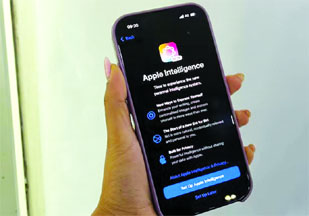
    Apple has rolled out iOS 18.4 beta 2 for developer testers, and it’s packed with a range of new updates and improvements. While the update is still in its testing phase, it already gives eager testers to try out the latest features of iOS 18.4, ahead of its April release. Some of the key highlights of the latest beta version include Visual Intelligence support for some older iPhones, the ability to customise Priority Notifications, new toggles in the Control Center and more. Here’s a look at what’s new in the iOS 18.4 beta 2 release.
    Visual Intelligence comes to older iPhones
    One of the standout features in iOS 18.4 beta 2 is the arrival of Visual Intelligence on the iPhone 15 Pro and iPhone 15 Pro Max. This feature, which was initially exclusive to the iPhone 16 lineup, allows users to perform visual searches using AI, connected to Google and ChatGPT. Previously, Visual Intelligence could only be accessed through the Camera Control button on the iPhone 16 models. However, with the iPhone 16e lacking a Camera Control button, Apple adapted the feature to work via the Action button and Control Center. Now, this functionality has been extended to the iPhone 15 Pro series as well.
    Priority Notifications get more customisable
    Another notable addition in this beta is the ability to customise Priority Notifications. Introduced in iOS 18.4 beta 1, Priority Notifications use AI to highlight your most important alerts. Now, with beta 2, users can choose which apps are eligible for prioritisation. In the Settings app, you’ll find a list of all installed apps, allowing you to decide which ones should have their notifications prioritised. This gives users more control over how they manage their alerts, ensuring that only the most relevant ones take centre stage.
    Control Center gets smarter
    The Control Center has also received some attention in this update. Apple has added new toggles for quicker access to Apple Intelligence and Siri features. These include options like Talk to Siri, Type to Siri, and Visual Intelligence. The Type to Siri toggle isn’t entirely new — it was introduced in iOS 18.1 last year — but its inclusion in the Control Center makes it more convenient to use. These toggles are available on all iPhone 15 Pro and iPhone 16 models.
    New emoji and Shortcuts actions
    Emoji enthusiasts will be pleased to know that iOS 18.4 beta 2 introduces seven new emojis, including a face with bags under the eyes, a fingerprint, a leafless tree, and even a harp. While the rise of Genmoji in the iOS ecosystem might make default emoji feel less relevant, these new additions still bring a bit of fun to messaging.
    For those who rely on Shortcuts, there’s good news too. Apple has added a slew of new Shortcuts actions to its native apps, including Books, News, Safari, and Maps. These actions lay the groundwork for more advanced Siri capabilities, such as in-app actions and personal context, which could be rolled out in future updates.
    Apple Vision Pro app, EV routing updates
    iOS 18.4 also introduces a new Apple Vision Pro app, designed to help Vision Pro users discover content, spatial experiences, and tips for using their devices. Additionally, Apple Maps is set to improve its EV routing feature in the US, particularly for Ford drivers. The update will allow Apple Maps to recognise that certain Ford vehicles can charge at Tesla NACS stations, not just CCS stations, making it easier for electric vehicle owners to plan their journeys.

  • Five facts about ‘Ghost Riders in the Sky’

    Five facts about ‘Ghost Riders in the Sky’

    Firefly Aerospace’s Blue Ghost lander successfully touched down near Mons Latreille, a volcanic feature within Mare Crisium, a large basin in the Moon’s northeastern quadrant.
    As part of NASA’s Commercial Lunar Payload Services (CLPS) initiative, Blue Ghost Mission 1 delivered 10 scientific and technological instruments to the lunar surface.
    With NASA’s backing and support from the Artemis program, private companies are taking on a bigger role in lunar exploration, aiming to develop a sustainable lunar market.
    Firefly became the second private company to achieve a soft Moon landing, following Houston-based Intuitive Machines, whose Odysseus lander made an uneven but successful touchdown last year. Previously, only five nations—the Soviet Union, the U.S., China, India, and Japan—had accomplished soft lunar landings.
    Mare Crisium, once an ancient asteroid impact site, formed around 3 billion years ago when volcanic eruptions filled the basin with basaltic lava. Firefly’s payloads gathered crucial data on the Moon’s regolith, geophysical properties, and interactions between solar wind and Earth’s magnetic field.
    Interesting facts
    – Journey and landing: Launched on January 15, Blue Ghost spent around 45 days travelling to the Moon, conducting system health checks and initiating scientific operations. It successfully landed in Mare Crisium on Sunday and will operate its payloads for a full lunar day (14 Earth days).
    – Eclipse and lunar sunset observations: On March 14, Firefly will capture high-definition images of a total eclipse, where Earth blocked sunlight from reaching the Moon. On March 16, Blue Ghost will record the lunar sunset, gathering data on how solar activity causes lunar dust to levitate, a phenomenon first observed by Apollo 17 astronaut Eugene Cernan.
    – Scientific contributions: Blue Ghost’s payloads will contribute to lunar research through groundbreaking experiments, including testing regolith collection, Global Navigation Satellite System capabilities, radiation-resistant computing, and lunar dust mitigation. These studies aimed to support future lunar missions and provide insights into space weather’s effects on Earth.
    – Design and stability: Standing 2 metres tall and 3.5 meters wide, Blue Ghost was engineered for stability with shock-absorbing feet, a low centre of mass, and a broad footprint. It incorporated flight-proven technologies from Firefly’s launch and orbital vehicles, ensuring cost efficiency and reliability.
    – Final descent and landing: In its last hour of descent, Blue Ghost used vision-based terrain navigation and hazard avoidance to assess its position, identifying craters, slopes, and rocks before selecting a safe landing spot. Its Reaction Control System (RCS) thrusters fired as needed, ensuring a controlled and smooth landing. Source: HT

  • Skype’s final call set for May as Microsoft prioritises Teams

    Skype’s final call set for May as Microsoft prioritises Teams

    Skype will ring for the last time on May 5 as owner Microsoft retires the two-decade-old internet calling service that redefined how people connect across borders.
    Shutting down Skype will help Microsoft focus on its homegrown Teams service by simplifying its communication offerings, the software giant said. Founded in 2003, Skype’s audio and video calls quickly disrupted the landline industry in the early 2000s and made the company a household name boasting hundreds of millions of users at its peak. But the platform has struggled to keep up with easier-to-use and more reliable rivals such as Zoom and Salesforce’s Slack in recent years.
    The decline was partly because Skype’s underlying technology was not suited for the smartphone era.

  • Google Claims Its AI Tool Can Beat Math Olympiad Gold Medalists

    Google Claims Its AI Tool Can Beat Math Olympiad Gold Medalists

    Google has developed an artificial intelligence (AI) math system that can outwit human gold medalists at the International Mathematical Olympiad (IMO). AlphaGeometry2, the AI problem solver is capable of solving 84 per cent of geometry problems posed in the IMO where the gold-medal winners can only solve 81.8 per cent of the problems on average. IMO problems are known for their difficulty, and solving them requires a deep understanding of mathematical concepts — something which the AI models had not been able to achieve up until now.
    Engineered by DeepMind, AlphaGeometry managed to perform at the level of silver medallists in January last year when it was unveiled. However, a year later, Google claims the performance of its upgraded system had surpassed the level of average gold-medalists.
    To enhance the system’s abilities, the California-based company said it extended the original AlphaGeometry language to tackle harder problems involving movements of objects, and problems containing linear equations of angles, ratios, and distances.
    “This, together with other additions, has markedly improved the coverage rate of the AlphaGeometry language on IMO 2000-2024 geometry problems from 66 per cent to 88 per cent.”
    Using its state-of-the-art Gemini AI tool, Google also improved the search process of AlphaGeometry2 to make it better at language modelling.
    “The team also introduced the ability for the AI to reason by moving geometric objects around a plane – allowing it to move a point along a line to change the height of a triangle, for instance – and for it to solve linear equations.”
    Despite achieving an incredible 84 per cent efficiency rate in solving tricky math problems, Google said there is still room for improvement.
    “Our domain language does not allow talking about variable number of points, non-linear equations and problems involving inequalities, which must be addressed in order to fully solve geometry,” Google explained.

  • Meta reportedly in talks to build a massive AI data centre campus that would cost over $200 billion

    Meta reportedly in talks to build a massive AI data centre campus that would cost over $200 billion

    Meta is reportedly exploring plans to build a massive data centre campus to support its artificial intelligence projects, with costs potentially exceeding $200 billion, according to The Information. The company is said to be considering locations in Louisiana, Wyoming, and Texas, with senior executives visiting potential sites this month. Meta has been transparent about its growing commitment to the development of AI. However, a Meta spokesperson dismissed the report, stating that the company’s data centre plans and spending have already been disclosed and that anything beyond that is “pure speculation.”
    Last month, Meta CEO Mark Zuckerberg revealed plans to invest up to $65 billion in 2025 to expand AI infrastructure. In comparison, Microsoft is set to spend around $80 billion in fiscal 2025 on data centres, while Amazon expects its 2025 investment to surpass the $75 billion estimated for 2024.
    The report comes days after Apple announced that it will invest $500 billion in the US. That will cover its partnerships with thousands of suppliers nationwide, direct employment, Apple Intelligence infrastructure, data centers, corporate offices, and Apple TV+ productions across 20 states. Apple plans to expand its data center capacity in North Carolina, Iowa, Oregon, Arizona, and Nevada.
    Last month, OpenAI, along with SoftBank, launched a new company called the Stargate Project, which is aimed at “building a new AI infrastructure” through an ambitious investment of $500 billion over the next four years. OpenAI announced that the Stargate Project will begin deploying an initial $100 billion immediately to build AI data centres for OpenAI in the United States.
    Microsoft also made a similar commitment earlier this year in India. Microsoft Chairman and CEO Satya Nadella announced a $3 billion investment in India over the next two years towards AI and cloud infrastructure and training initiatives. The announcement was made during Nadella’s visit to India in January.

  • Scientists call for open access to X’s data for academic research

    Scientists call for open access to X’s data for academic research

    Researchers are calling for free access to social media platform X’s data for academic analyses, insights from which can help understand trends in political engagement.
    Efforts of a research group from Saarland University, Germany, were halted abruptly when X’s owner Elon Musk blocked free access to X’s data for academic research purposes in June 2023. The US-based entrepreneur acquired the platform, then known as Twitter, in October 2022.
    The team wanted to know whether Twitter prioritised tweets from politicians from the right of the political spectrum between 2021 and 2023.
    “It is simply not acceptable that access to these vast amounts of data is either unaffordable or provided so selectively that no meaningful analyses can be conducted,” lead researcher Ingmar Weber, a professor of artificial intelligence (AI) and chair for societal computing at Saarland University, said.
    The researchers called for implementation of legislation to ensure that academic researchers can regain access to social network data.
    Over a period of two years, before the abrupt end, the team analysed tweets from 6,550 Twitter accounts associated with about 8,600 politicians from twelve countries known to have the highest user activity on X, including India, Argentina, Germany and the US.
    The findings, published in the Journal of Quantitative Description: Digital Media, revealed no significant difference between the dissemination of content from left-leaning or right-leaning politicians across the countries analysed.
    However, the team observed a considerable increase in the number of likes, a slight increase in the likes-per-retweet ratio and a significant reduction in the number of retweets post Musk acquisition.
    “We believe that this is because early followers of a Twitter account are more politically engaged and tend to support content more actively. But as the political message gets spread to a broader audience, it becomes more likely that the number of likes will go up, while the retweet rate declines,” study author and computer scientist Brahmani Nutakki, a PhD scholar at Saarland University, said.
    However, the team faced challenges while analysing data, many of which were related to changes introduced between November 2022 and June 2023 following Musk’s takeover — one of them being the removal of rules prohibiting hateful conduct. The rules were aimed at preventing attacks on individuals. “Changes to Twitter’s functionality also resulted in changes in the user population, which made it difficult for us to attribute the changes we observed to a single specific cause,” Nutakki said.
    Further, “political content on the platform reached a wider audience following these changes,” according to the study’s findings.
    “In the period before June 2023, we found no evidence of a significant difference in engagement patterns between users on the left and those on the right of the political spectrum,” Weber said.
    While there are media reports of instances such as posts of Republican politicians receiving greater engagement than those made by Democrats or hate content spiking, an academic analysis of X’s data is needed for “continuous scrutiny”.
    “These worrying changes to social media platforms such as Twitter/X are jeopardising the democratic structures in many countries and require continuous scrutiny by academic researchers,” Weber said.

  • February 28 New York & Dallas E – Edition

    [vc_row][vc_column][vc_custom_heading text=”E-Edition” font_container=”tag:h2|text_align:center” google_fonts=”font_family:Istok%20Web%3Aregular%2Citalic%2C700%2C700italic|font_style:700%20bold%20regular%3A700%3Anormal” css=”” link=”url:https%3A%2F%2Fwww.theindianpanorama.news%2Fwp-content%2Fuploads%2F2025%2F02%2FTIP-February-28-E-Edition.pdf”][vc_single_image image=”179676″ img_size=”full” alignment=”center” onclick=”custom_link” css=”” link=”https://www.theindianpanorama.news/wp-content/uploads/2025/02/TIP-February-28-E-Edition.pdf”][/vc_column][/vc_row][vc_row][vc_column width=”2/3″][vc_custom_heading text=”Lead Stories This Week” google_fonts=”font_family:Istok%20Web%3Aregular%2Citalic%2C700%2C700italic|font_style:700%20bold%20regular%3A700%3Anormal” css=”” link=”url:https%3A%2F%2Fwww.theindianpanorama.news%2F”][vc_wp_posts number=”5″ show_date=”1″][/vc_column][vc_column width=”1/3″][vc_single_image image=”82828″ img_size=”medium” alignment=”center” onclick=”custom_link” css=”” link=”https://www.theindianpanorama.news/advertising-media-kit-portal-indian-panorama/ “][vc_single_image image=”82829″ img_size=”medium” alignment=”center” onclick=”custom_link” css=”” link=”https://www.theindianpanorama.news/advertising-media-kit-portal-indian-panorama/ “][/vc_column][/vc_row]

  • February 21 New York & Dallas E – Edition

    [vc_row][vc_column][vc_custom_heading text=”E-Edition” font_container=”tag:h2|text_align:center” google_fonts=”font_family:Istok%20Web%3Aregular%2Citalic%2C700%2C700italic|font_style:700%20bold%20regular%3A700%3Anormal” css=”” link=”url:https%3A%2F%2Fwww.theindianpanorama.news%2Fwp-content%2Fuploads%2F2025%2F02%2FTIP-February-21-E-Edition-1.pdf”][vc_single_image image=”179544″ img_size=”full” alignment=”center” onclick=”custom_link” css=”” link=”https://www.theindianpanorama.news/wp-content/uploads/2025/02/TIP-February-21-E-Edition-1.pdf”][/vc_column][/vc_row][vc_row][vc_column width=”2/3″][vc_custom_heading text=”Lead Stories This Week” google_fonts=”font_family:Istok%20Web%3Aregular%2Citalic%2C700%2C700italic|font_style:700%20bold%20regular%3A700%3Anormal” css=”” link=”url:https%3A%2F%2Fwww.theindianpanorama.news%2F”][vc_wp_posts number=”5″ show_date=”1″][/vc_column][vc_column width=”1/3″][vc_single_image image=”82828″ img_size=”medium” alignment=”center” onclick=”custom_link” css=”” link=” https://www.theindianpanorama.news/advertising-media-kit-portal-indian-panorama/ “][vc_single_image image=”82829″ img_size=”medium” alignment=”center” onclick=”custom_link” css=”” link=” https://www.theindianpanorama.news/advertising-media-kit-portal-indian-panorama/ “][/vc_column][/vc_row]

  • iPhone 17 Air likely to get this feature that iPhone 17 Pro models may miss out on

    iPhone 17 Air likely to get this feature that iPhone 17 Pro models may miss out on

    iPhone 17 Air has become the most talked about smartphone as people are eagerly waiting to get their hands on the ultra-thin iPhone. Not only slimness, but several design properties may excite buyers during the launch. In a recent leak, we came across the iPhone 17 Air renders which revealed the newly designed camera bar and gave us an overall look at what Apple may announce. Now, a new report suggests that all iPhone 17 models could come with different materials, but only the iPhone 17 Air could feature a titanium frame. Here’s what we know about the upcoming iPhone 17 lineup.
    Over the past few years, Apple has been experimenting with the smartphone’s design, material, weight, and other factors to make the sturdy and look premium. For two generations, Apple has introduced a titanium frame for the Pro models, but this will likely change with the iPhone 17 lineup. According to a MacRumors report, the iPhone 17, iPhone 17 Pro, and iPhone 17 Pro Max will likely feature an aluminium frame. Whereas, the iPhone 17 Air may come with a titanium frame. This move has been made to support Apple’s carbon neutrality goal and aluminium has a lower carbon footprint. Therefore, the iPhone 17 series could also become Apple’s first carbon-neutral smartphone.
    This year, iPhone 17 models have been in the limelight for several design changes. However, with several leaks, it’s quite confusing how Apple plans to bring its new flagship models into the market by maintaining the cost, premium quality, lightweight design, and others.
    Apart from the iPhone 17 series design, the smartphone is slated for a major fast-charging downgrade according to another MacRumors report. It is suggested that iPhone 17, iPhone 17 Air, iPhone 17 Pro, and iPhone 17 Pro Max will likely support 35W wired charging speeds. For the iPhone 16 series, the smartphone peaked at 30 to 37W charging speed. However, this may change with the upcoming new generation models.
    Therefore, we will have to wait until September 2025 to confirm what the iPhone 17 series has in store for users.

  • Sunita Williams braces for life on Earth: Even lifting a pencil will be a workout

    Sunita Williams braces for life on Earth: Even lifting a pencil will be a workout

    As astronaut Sunita Williams prepares to return from her extended mission aboard the International Space Station (ISS), she faces the daunting challenge of readjusting to Earth’s gravity.
    Williams, who has spent over eight months in microgravity, will experience significant physical changes upon her return, as gravity begins to “punish” her body after months of living in weightlessness.
    Butch Wilmore, a fellow astronaut, stuck in space with Williams revealed how gravity will be the biggest challenge when the two astronauts return home.
    “Gravity is really tough, and that’s what we feel when we get back,” he explained. “Gravity starts pulling everything to lower extremities; fluids will be pulled down, and even lifting a pencil will feel like a workout,” Willmore said in an interview on CNN.
    This sudden shift will lead to discomfort and a feeling of heaviness as the body readjusts to gravitational forces.
    Williams echoed these sentiments, acknowledging that adapting to life on land will be challenging.
    “It’s gonna be a little bit hard to adapt,” she said. “It’s a day-for-day process when you get your fast-twitch muscle action back.” The astronauts are aware that within 24 hours of returning, they will begin to lose the unique sensations of weightlessness that they have come to enjoy during their time in space.
    Extended stays in microgravity lead to various physiological changes, including muscle atrophy and bone density loss. Astronauts can lose up to 1% of their bone mass per month due to the lack of weight-bearing activities.
    As Williams prepares for her return, she is likely to undergo a rigorous rehabilitation program aimed at regaining strength and bone density.
    Additionally, fluids in the body redistribute in space, causing what astronauts describe as “puffy faces” and thinner limbs. Upon returning to Earth, these fluids will shift back to their normal distribution, potentially leading to temporary discomfort as the body readjusts.
    Despite these challenges, both Williams and Wilmore remain optimistic about their return. They have previously adapted quickly after extended missions and hope for a similar experience this time. “Floating in space is a lot of fun; I like my crazy hair,” Wilmore remarked, reflecting on the joys of life aboard the ISS. The two astronauts will board SpaceX’s Dragon spacecraft and undock for ride home on March 19.

  • Is AI making us stupider?

    There is only so much thinking most of us can do in our heads. Try dividing 16,951 by 67 without reaching for a pen and paper. Or a calculator. Try doing the weekly shopping without a list on the back of last week’s receipt. Or on your phone.
    By relying on these devices to help make our lives easier, are we making ourselves smarter or dumber? Have we traded efficiency gains for inching ever closer to idiocy as a species?
    This question is especially important to consider with regard to generative artificial intelligence (AI) technology such as ChatGPT, an AI chatbot owned by tech company OpenAI, which at the time of writing is used by 300 million people each week.
    According to a recent paper by a team of researchers from Microsoft and Carnegie Mellon University in the United States, the answer might be yes. But there’s more to the story.
    The researchers assessed how users perceive the effect of generative AI on their own critical thinking.
    Generally speaking, critical thinking has to do with thinking well.
    One way we do this is by judging our own thinking processes against established norms and methods of good reasoning. These norms include values such as precision, clarity, accuracy, breadth, depth, relevance, significance and cogency of arguments.
    Other factors that can affect quality of thinking include the influence of our existing world views, cognitive biases, and reliance on incomplete or inaccurate mental models.
    The authors of the recent study adopt a definition of critical thinking developed by American educational psychologist Benjamin Bloom and colleagues in 1956. It’s not really a definition at all. Rather it’s a hierarchical way to categorise cognitive skills, including recall of information, comprehension, application, analysis, synthesis and evaluation.
    The authors state they prefer this categorisation, also known as a “taxonomy”, because it’s simple and easy to apply. However, since it was devised it has fallen out of favour and has been discredited by Robert Marzano and indeed by Bloom himself.
    In particular, it assumes there is a hierarchy of cognitive skills in which so-called “higher-order” skills are built upon “lower-order” skills.

  • 65 percent of Indians use AI, more than double the global average: Microsoft

    A Microsoft study, reflecting the rapid adoption of Artificial Intelligence (AI) in India, has found that 65 per cent of surveyed Indians have used AI—more than double the global average.
    Microsoft on Tuesday unveiled the Global Online Safety Survey, which studies the growing influence of AI. The survey is based on responses from 15,000 teenagers (13-17) and adults that was conducted in 15 countries between July 19 and August 9, 2024.
    “65 per cent of respondents have used AI (+26 per cent from 2023). This is more than double the global average of 31 per cent in the same time period.
    “India is most excited about using AI for translations, answering questions, increasing efficiency at work and helping students with schoolwork,” the report said. The report showed that millennials (people aged 25-44) lead adoption, with 84 per cent reporting usage. Indian parents are more aware of their children’s digital challenges, showing increased awareness compared to the previous year, it said.
    However, India also has some reservations about AI, including concerns about online abuse, deepfakes, scams, and AI hallucinations, mirroring global trends. Online abuse was among the top worries regarding AI.

  • Earth’s inner core is shifting and it’s messing with time itself

    While we continue to live our lives, the length of the day on Earth is quietly being altered by a mysterious force that is the most powerful phenomenon on the planet. The changes are to be blamed on Earth’s inner core, which is going through a structural change, as discovered by scientists from the University of Southern California.
    The team noticed changes at the planet’s centre and the findings shed light on the role that topographical activity plays in rotational changes in the inner core — including changes that have minutely altered the length of a day. “We didn’t set out to define the physical nature of the inner core. What we ended up discovering is evidence that the near surface of Earth’s inner core undergoes structural change,” John Vidale, principal investigator of the study said. Earth has four main layers: the solid inner core; the liquid outer core, which generates the magnetic field; the viscous mantle, with convection currents driving plate tectonics; and the thin, solid crust, where life exists and geological activity occurs.

  • How to block your phone from tracking your location

    How to block your phone from tracking your location

    Smartphones are useful tools for everyday life, but they’re privy to nearly everything about you, including all the places you’ve been — if you let them.
    When you use a map app to find the new restaurant your friend recommended, or your phone’s browser to check the price of something you saw while window shopping, you could be unwittingly allowing your phone to track your location and share that information with others.
    Phones use various signals to find your location, including cell tower pings, Wi-Fi access points, Bluetooth and GPS.
    Sometimes your phone needs to know your location to provide a useful service, like telling the Uber driver where to pick you up. But in other cases, there’s little justification for tracking your whereabouts, which then can be exploited by apps, ad services or even hackers.
    “From fitness tracking to navigation, every location ping potentially reveals details about our routines and movements – which could be risky in the wrong hands,” said Darren Guccione, CEO of Keeper Security.
    “Users should turn on location tracking only when necessary, such as during navigation, emergencies or sharing updates with trusted contacts, and disable it immediately afterward.”
    Experts warn location data could be used to track people who visit abortion clinics. Or “a disgruntled ex could use location sharing to stalk someone, or a current, abusive partner could force you into location sharing as a means of control,” said David Ruiz, senior privacy advocate at cybersecurity company Malwarebytes.

    Tips to make sure location tracking is kept to a minimum: App permissions
    Head to your phone’s control panel to check permissions. iPhone users can go to the Privacy & Security tab, and then to Location Services to check settings for individual apps. It’s not a good idea to let apps always use your location in the background, according to cybersecurity experts. Instead, get the app to either ask first before using your location, use it only while you’ve got the app open, or even never let it use your location.
    While you’re in Location Services, you might notice little arrows that indicate which apps have used your location. Purple means recently, while grey indicates the past 24 hours.
    It’s a little different for Android phones because there are so many different versions by various device manufacturers. In general, go to settings, and then tap the Location icon, which lets you turn it on or off for all apps.
    To tweak settings for individual apps, tap App location permissions, where you’ll get choices similar to those in iOS.
    iPhone privacy
    Apple has other tools to cut down on third-party tracking that might include location information. On the iPhone’s Privacy & Security setting, under the Tracking tab, there’s a toggle to Allow Apps to Request to Track. With this switched off, any new app requests will be automatically denied and they will also be stopped from accessing your phone’s ad identifier.
    Advertising ID
    Privacy experts recommend blocking your Google or Apple device’s in-house ad identifier, which enables third-party tracking on most devices for better ad targeting.
    On iPhones, go to the Privacy setting then scroll down to Apple Advertising, and then switch off Personalized Ads. On newer Android phones, go to the Privacy setting, then to Ads, where you can tap Delete Advertising ID.
    Pinpoint or general
    Whether you use Android or iOS, they both have settings to allow precisely pinpointing your location by combining wireless signals with data from onboard sensors such as the gyroscope, accelerometer and barometer. This helps to estimate the phone’s position if, for example, you’re inside a building blocking a GPS signal.
    One reason to use this function is to show someone you’re meeting exactly where you are. Google says its signals are randomized so they can’t be associated with a specific person or account. In any case, you might not want every app to know this, so you can tell your phone to only share its general location.
    On Android phones, turn off the Location Accuracy setting for all apps. On iPhones, switch it on or off for individual apps.
    Your Google account
    Along with app permissions for your device, it’s also a good idea to check your Google account. Google was forced to be more transparent about its location tracking practices after a 2018 Associated Press story that found the company continued to track people’s location data even after they opted out of such tracking by disabling a feature the company called “location history.” Go to myaccount.google.com and then to the Data & Privacy section, where you’ll find the Location History controls. Under recent changes, the history will be deleted after three months, though you can change that default setting.
    Browsers
    Popular smartphone web browsers like Safari or Chrome could give away your location, so try using one that that doesn’t store information about you, like DuckDuckGo, Firefox Focus or Ecosia.
    If a privacy-focused browser needs to access your location through your IP address, they will ask first. It will also let you easily delete your cookies and other web browsing data.
    Find my device
    Phones or tablets can also be tracked with Apple’s Find My or Google’s Find My Device features for recovering lost devices. You can turn this feature off if you think someone has gained access to your Apple or Google account.
    Block the signal. Some cybersecurity websites recommend using airplane mode, but it doesn’t always shut off all signals so you shouldn’t rely on it.
    A signal-blocking Faraday pouch would be a better bet, but be sure to test it to make sure it’s actually jamming all signals. And, keep in mind, you’ll need to take the device out of the bag to use it.

  • February 14 New York & Dallas E – Edition

    [vc_row][vc_column][vc_custom_heading text=”E-Edition” font_container=”tag:h2|text_align:center” google_fonts=”font_family:Istok%20Web%3Aregular%2Citalic%2C700%2C700italic|font_style:700%20bold%20regular%3A700%3Anormal” css=”” link=”url:https%3A%2F%2Fwww.theindianpanorama.news%2Fwp-content%2Fuploads%2F2025%2F02%2FTIP-February-14-E-Edition.pdf”][vc_single_image image=”178957″ img_size=”full” alignment=”center” onclick=”custom_link” css=”” link=”https://www.theindianpanorama.news/wp-content/uploads/2025/02/TIP-February-14-E-Edition.pdf”][/vc_column][/vc_row][vc_row][vc_column width=”2/3″][vc_custom_heading text=”Lead Stories This Week” google_fonts=”font_family:Istok%20Web%3Aregular%2Citalic%2C700%2C700italic|font_style:700%20bold%20regular%3A700%3Anormal” css=”” link=”url:https%3A%2F%2Fwww.theindianpanorama.news%2F”][vc_wp_posts number=”5″ show_date=”1″][/vc_column][vc_column width=”1/3″][vc_single_image image=”82828″ img_size=”medium” alignment=”center” onclick=”custom_link” css=”” link=”https://www.theindianpanorama.news/advertising-media-kit-portal-indian-panorama/ “][vc_single_image image=”82829″ img_size=”medium” alignment=”center” onclick=”custom_link” css=”” link=”https://www.theindianpanorama.news/advertising-media-kit-portal-indian-panorama/ “][/vc_column][/vc_row]

  • February 7 New York & Dallas E – Edition

    [vc_row][vc_column][vc_custom_heading text=”E-Edition” font_container=”tag:h2|text_align:center” google_fonts=”font_family:Istok%20Web%3Aregular%2Citalic%2C700%2C700italic|font_style:700%20bold%20regular%3A700%3Anormal” css=”” link=”url:https%3A%2F%2Fwww.theindianpanorama.news%2Fwp-content%2Fuploads%2F2025%2F02%2FTIP-February-7-E-Edition.pdf”][vc_single_image image=”178698″ img_size=”full” alignment=”center” onclick=”custom_link” css=”” link=”https://www.theindianpanorama.news/wp-content/uploads/2025/02/TIP-February-7-E-Edition.pdf”][/vc_column][/vc_row][vc_row][vc_column width=”2/3″][vc_custom_heading text=”Lead Stories This Week” google_fonts=”font_family:Istok%20Web%3Aregular%2Citalic%2C700%2C700italic|font_style:700%20bold%20regular%3A700%3Anormal” css=”” link=”url:https%3A%2F%2Fwww.theindianpanorama.news%2F”][vc_wp_posts number=”5″ show_date=”1″][/vc_column][vc_column width=”1/3″][vc_single_image image=”82828″ img_size=”medium” alignment=”center” onclick=”custom_link” css=”” link=”https://www.theindianpanorama.news/advertising-media-kit-portal-indian-panorama/ “][vc_single_image image=”82829″ img_size=”medium” alignment=”center” onclick=”custom_link” css=”” link=”https://www.theindianpanorama.news/advertising-media-kit-portal-indian-panorama/ “][/vc_column][/vc_row]

  • Alibaba Launches New AI Model; Claims It Can Beat DeepSeek, ChatGPT, Llama

    Alibaba Launches New AI Model; Claims It Can Beat DeepSeek, ChatGPT, Llama

    Alibaba has launched a new version of its AI model, Qwen2.5 Max, claiming it performed better than DeepSeek’s AI, OpenAI’s GPT-4o and Meta’s Llama. The Chinese tech company’s cloud division claimed in a statement that “Qwen 2.5-Max outperforms … almost across the board GPT-4o, DeepSeek-V3 and Llama-3.1-405B,” referring to the advanced open-source AI models from OpenAI and Meta.
    The announcement comes on the heels of the shockwaves DeepSeek’s AI models have sent in the global AI landscape. The release of DeepSeek’s AI assistant, powered by the DeepSeek-V3 model on January 10, and its R1 model on January 20, rattled Silicon Valley, causing tech stocks to drop.
    DeepSeek-V3, which it says is as good as OpenAI’s GPT-4o but much cheaper. Alibaba’s introduction of Qwen 2.5 Max appears to be a direct response to the rise of DeepSeek, which recently released another model, R1, causing a stir.
    DeepSeek, founded just 20 months ago in Hangzhou, Alibaba’s home city, has emerged as a major player in the field of AI, drawing attention for its low-cost, high-performance models. The startup has forced established players like Alibaba, Tencent, and Baidu to enhance their AI systems to keep pace with the competition.
    As part of the ongoing AI price war, these companies have slashed prices to capture a larger share of the market.
    Last year, DeepSeek’s release of its V2 model sparked a price war within China’s AI market. The model, priced at just 1 yuan (Rs 11) per 1 million tokens processed, was open-source and significantly cheaper than most competitors. This pricing strategy led Alibaba’s cloud division to slash its prices by up to 97 per cent on certain models.
    The rising competition has forced the industry’s biggest players to re-evaluate their strategies. OpenAI CEO Sam Altman recently acknowledged DeepSeek’s success, calling its progress “impressive.” He also hinted that OpenAI was working on even more advanced models in the future.
    OpenAI Alleges Its AI Models Were Used to Build DeepSeek-R1: Report
    OpenAI has reportedly claimed that DeepSeek might have distilled its artificial intelligence (AI) models to build the R1 model. As per the report, the San Francisco-based AI firm stated that it has evidence that some users were using its AI models’ outputs for a competitor, which is suspected to be DeepSeek. Notably, the Chinese company released the open-source DeepSeek-R1 AI model last week and hosted it on GitHub and Hugging Face. The reasoning-focused model surpassed the capabilities of the ChatGPT-maker’s o1 AI models in several benchmarks.
    According to a Financial Times report, OpenAI claimed that its proprietary AI models were used to train DeepSeek’s models. The company told the publication that it had seen evidence of distillation from several accounts using the OpenAI application programming interface (API). The AI firm and its cloud partner Microsoft investigated the issue and blocked their access.

  • Elon Musk’s X will launch its first digital wallet this year

    Elon Musk’s X will launch its first digital wallet this year

    Elon Musk owned social media platform, X (formerly Twitter) will soon introduce financial services on its app. X has recently announced its partnership with Visa, signalling its first digital wallet. The company will use Visa Direct, Visa’s real-time money transfer solution, to fund X Money’s wallet, link to a debit card for payments to other users, and enable seamless transfers back to your bank account.
    In a post, X CEO Linda Yaccarino stated that X Money is scheduled to launch later this year. This X-Visa partnership will allow secure and instant funding to users’ X Wallet via Visa Direct, she added. It will also connect debit cards, allowing person-to-person payments.
    X Money will also give users an option to instantly transfer funds to your bank account. Yaccarino claims that this is the “first of many big announcements about X Money this year”.
    The thought of adding financial services to X was communicated right after Musk took over. With this partnership, it looks like the services will arrive in the US first and then expand to the rest of the world. But as per previous reports, this service will be available to selected states first.
    App researchers have repeatedly discovered code related to X Money, highlighting features such as the ability to load funds into a wallet on the platform and make payments to other users.
    The X Money service is set to launch in the first quarter, with additional partnerships in the works. According to the CNBC report, one of the initial use cases for X Money will be to enable creators on the platform to receive payments and store funds independently.
    X Payments LLC is licensed in 41 states and registered with the Financial Crimes Enforcement Network (FinCEN), according to its website.
    In the recent affair, Musk has been reportedly sending emails to its X employees, signalling that the platform is struggling financially. According to a report by Wall Street Journal, he admitted that X is “barely breaking even,” citing stagnant user growth and underwhelming revenue.
    He added, “Our user growth is stagnant, revenue is unimpressive, and we’re barely breaking even.”
    Musk acquired the social media platform, previously called Twitter, in a $44 billion deal in late 2022. Since then, he has implemented several changes, such as eliminating the free verification program, launching a paid membership option, and rebranding the company as X.

  • AI helps discover 123 new craters on Mars

    Artificial Intelligence has just helped astronomers discover a new crater on the surface of Mars that has revealed a long-hidden secret. New findings reveal that meteoroids striking Mars produce seismic signals that can reach deeper than previously known. The details are the result of joint work by Nasa Mars Reconnaissance Orbiter (MRO) and the now-dead InSight lander, which had its ears to the ground listening for aftershocks.
    In a series of two papers, published in Geophysical Research Letters (GRL), scientists observed how seismic waves from those quakes change as they travel through the planet’s crust, mantle, and core. Scientists have now got a glimpse into Mars’ interior, as well as a better understanding of how all rocky worlds form, including Earth and its Moon.
    “We used to think the energy detected from the vast majority of seismic events was stuck travelling within the Martian crust. This finding shows a deeper, faster path — call it a seismic highway — through the mantle, allowing quakes to reach more distant regions of the planet,” InSight team member Constantinos Charalambous said.
    The meteor crash was detected in Cerberus Fossae, an especially quake-prone region of Mars that is 1,640 kilometres away from the InSight lander. The impact crater is 71 feet in diameter and much farther from InSight than scientists expected, based on the quake’s seismic energy.
    Nasa said that the Martian crust has unique properties thought to dampen seismic waves produced by impacts, and researchers’ analysis of the Cerberus Fossae impact led them to conclude that the waves it produced took a more direct route through the planet’s mantle.

  • January 24 New York & Dallas E – Edition

    [vc_row][vc_column][vc_custom_heading text=”E-Edition” font_container=”tag:h2|text_align:center” google_fonts=”font_family:Istok%20Web%3Aregular%2Citalic%2C700%2C700italic|font_style:700%20bold%20regular%3A700%3Anormal” css=”” link=”url:https%3A%2F%2Fwww.theindianpanorama.news%2Fwp-content%2Fuploads%2F2025%2F01%2FTIP-January-24-E-Edition.pdf”][vc_single_image image=”178272″ img_size=”full” alignment=”center” onclick=”custom_link” css=”” link=”https://www.theindianpanorama.news/wp-content/uploads/2025/01/TIP-January-24-E-Edition.pdf”][/vc_column][/vc_row][vc_row][vc_column width=”2/3″][vc_custom_heading text=”Lead Stories This Week” google_fonts=”font_family:Istok%20Web%3Aregular%2Citalic%2C700%2C700italic|font_style:700%20bold%20regular%3A700%3Anormal” css=”” link=”url:https%3A%2F%2Fwww.theindianpanorama.news%2F”][vc_wp_posts number=”5″ show_date=”1″][/vc_column][vc_column width=”1/3″][vc_single_image image=”82828″ img_size=”medium” alignment=”center” onclick=”custom_link” css=”” link=”https://www.theindianpanorama.news/advertising-media-kit-portal-indian-panorama/ “][vc_single_image image=”82829″ img_size=”medium” alignment=”center” onclick=”custom_link” css=”” link=”https://www.theindianpanorama.news/advertising-media-kit-portal-indian-panorama/ “][/vc_column][/vc_row]

  • Don’t rely on social media users for fact-checking

    In the wake of Donald Trump’s election victory, Meta chief executive Mark Zuckerberg fired the fact-checking team for his company’s social media platforms. At the same time, he reversed Facebook’s turn away from political content. The decision is widely viewed as placating an incoming president with a known penchant for mangling the truth.
    Meta will replace its fact-checkers with the “community notes” model used by X, the platform owned by avid Trump supporter Elon Musk. This model relies on users to add corrections to false or misleading posts.
    Musk has described this model as “citizen journalism, where you hear from the people. It’s by the people, for the people.”
    For such an approach to work, both citizen journalists and their readers need to value good-faith deliberation, accuracy and accountability. But our new research shows social media users may not be the best crowd to source in this regard.
    Our research
    Working with Essential Media, our team wanted to know what social media users think of common civic values. People who relied on newspapers, online news aggregators, and non-commercial TV all scored significantly higher than those who relied on social media and commercial broadcasting.
    The survey also found that as the number of different media sources people use daily increased, so too did their civic values score. This research does not indicate whether platforms foster lower civic values or simply cater to them.
    But it does raise concerns about social media becoming an increasingly important source of political information in democratic societies like Australia.
    Why measure values?
    The point of the civic values scale we developed is to highlight the fact that the values people bring to news about the world are as important as the news content.
    For example, most people in the United States have likely heard about the violence of the attack on the Capitol protesting Trump’s loss in 2020.
    That Trump and his supporters can recast this violent riot as “a day of love” is not the result of a lack of information.
    It is, rather, a symptom of people’s lack of trust in media and government institutions and their unwillingness to confront facts that challenge their views.
    In other words, it is not enough to provide people with accurate information. What counts is the mindset they bring to that information.
    No place for debate
    Critics have long been concerned that social media platforms do not serve democracy well, privileging sensationalism and virality over thoughtful and accurate posts. As the critical theorist Judith Butler put it: the quickness of social media allows for forms of vitriol that do not exactly support thoughtful debate.
    Sociologist Zeynep Tufekci said social media is less about meaningful engagement than bonding with like-minded people and mocking perceived opponents. She notes, “belonging is stronger than facts”. Her observation is likely familiar to anyone who has tried to engage in a politically charged discussion on social media. Source: PTI