Tag: SCO

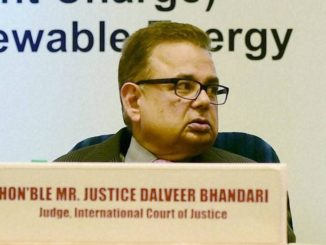
  • Indian judge votes against Russia in world court for invading Ukraine

    Indian judge votes against Russia in world court for invading Ukraine

    WASHINGTON, D.C. (TIP): The United States on Wednesday, March 16,  welcomed an International Court of Justice order that asked Russia to immediately suspend its military operations in Ukraine. Describing it as a significant ruling, State Department Spokesperson Ned Price said that the ICJ “clearly and unequivocally” ordered Russia to immediately suspend its military operations. “The Russian Federation shall immediately suspend military operations that it commenced on 24 February on the territory of Ukraine,” presiding judge Joan Donoghue told the International Court of Justice, pending the final decision in the case.

    India’s judge, Justice Dalveer Bhandari, voted against Russia. The court order was supported by 13 judges while two voted against it. This includes Vice-President Kirill Gevorgian from Russia and Judge Xue Hanqin from China.

    “We welcome the court order and call on the Russian Federation to comply with the order, immediately cease its military operations in Ukraine, and to establish unhindered humanitarian access in Ukraine,” Price said. In its ruling, the court – which plays a vital role in peaceful settlement of disputes under the UN Charter – stressed the need for States to act in conformity with their obligations under international law, including the laws of war, Price said. “And the Court expressed deep concern about the extreme vulnerability of the civilian population of Ukraine, the numerous civilian deaths and injuries that have resulted from the Kremlin’s actions, and the significant material damage, including the destruction of buildings and infrastructure,” he said.

    The Court further noted its profound concern with the Russian government’s use of force and emphasized the Court’s acute awareness of “the extent of the human tragedy that is taking place in Ukraine as well as the “continuing loss of life and human suffering”.

    The Court also observed that it did not possess any evidence substantiating Russia’s claims that genocide had been committed by Ukraine in the Donbas region, he said. Judge Xue Hanqin from China opposed the order.

    Ukraine’s contention that the Russian Federation’s allegation of genocide against Ukraine is just “an excuse for Russia’s unlawful aggression” raises doubt that this is a genuine case about genocide,” she wrote in her dissent note. “It appears that the acts complained of by Ukraine namely Russia’s recognition of the independence of the Luhansk and Donetsk regions of Ukraine and Russia’s military operations in Ukraine cannot be directly addressed by the interpretation and application of the provisions of the Genocide Convention, as the issues they have raised are concerned with the questions of recognition and use of force in international law,” she said. Meanwhile, India’s   Ministry of External Affairs on Thursday, March 17,  said judges at the International Court of Justice vote in their individual capacity, a day after Indian judge Dalveer Bhandari voted against Russia at the United Nations’ highest court.

    (With inputs from PTI)

  • Fragmenting World Order, United Nations

    Fragmenting World Order, United Nations

    The impact of the Ukraine war on global interconnectedness is a cause for worry in the post-World War order

    By Suhasini Haidar

    Nearly three weeks into the Russian war on Ukraine, the cost to India is still to be counted. While some are focusing on how India’s refusal to criticize Russia’s actions, and the string of abstentions at the United Nations, would affect its relations with the West and its Quad partners (the United States, Australia and Japan), others are watching the economic costs that the unprecedented sanctions of the U.S. and the European Union will have on Indian trade, energy and defense purchases. However, the outcome that should worry New Delhi and other like-minded countries the most, apart from the devastating consequences for the Ukrainian nation, is the impact the Ukraine crisis is having on the global world order, which is fragmenting in every respect of global interconnectedness — in terms of international cooperation, security, military use, economic order, and even cultural ties.

    The UN and Security Council

    To begin with, the global order has broken down and events in Ukraine have exposed the United Nations and the Security Council for their complete ineffectiveness. Russia’s actions in Ukraine may, in terms of refusing to seek an international mandate, seem no different from the war by the United States in Iraq in 2003, Israel’s bombing of Lebanon in 2006 and the Saudi-coalition’s attacks of Yemen in 2015. But Ukraine is in fact a bigger blow to the post-World War order than any other. The direct missile strikes and bombing of Ukrainian cities every day, exacting both military and civilian casualties, and the creation of millions of refugees, run counter to every line of the UN Charter preamble, i.e., “to save succeeding generations from the scourge of war…”, “to practice tolerance and live together in peace with one another as good neighbors”, as well as Articles 1 and 2 of the ‘Purposes and Principles’ of the United Nations (Chapter 1).

    The fact that Russian President Vladimir Putin broadcast his decision to “launch military operations” on Ukraine at the same time the Russian envoy to the United Nations was presiding over a UN Security Council discussion on the Ukraine crisis, speaks volumes for the respect the P-5 member felt for the proceedings. A vote of the international commons, or the UN General Assembly (UNGA), that decried Moscow’s actions, was brushed off in a way that was even easier than when the U.S. did when it lost the UNGA vote in 2017 over its decision to move the U.S. Embassy to Jerusalem.

    Meanwhile, in their responses, other P-5 members such as the United States, the United Kingdom and France did not seek to strengthen the global order either, imposing sanctions unilaterally rather than attempting to bring them to the UN. Clearly, Russia would have vetoed any punitive measures, but that should not have stopped the attempt. Nor are the surge in weapons transfers to Ukraine a vote of confidence in the UN’s power to effect a truce.

    Whither nuclear safeguards

    The next point is Russian recklessness with regard to nuclear safety in a country that has suffered the worst impacts of poor safety and planning following the 1986 Chernobyl disaster (when Ukraine was part of the Soviet Union), which is a challenge to the global nuclear order. Russian military’s moves to target areas near Chernobyl and shell buildings near the Zaporizhzhia nuclear power plant ( also Europe’s largest), show an alarming nonchalance towards safeguards in place over several decades, after the U.S.’s detonation of atomic bombs over Hiroshima and Nagasaki in 1945 led to the establishment of the International Atomic Energy Agency (IAEA) in 1956. The world must also consider the cost to the nuclear non-proliferation regime’s credibility: Ukraine and Libya that willingly gave up nuclear programs have been invaded, while regimes such as Iran and North Korea can defy the global order because they have held on to their nuclear deterrents. There are also the covenants agreed upon during the global war on terrorism, which have been degraded, with the use of non-state actors in the Ukraine crisis. For years, pro-Russia armed militia operated in the Donbas regions, challenging the writ of the government in Kyiv. With the arrival of Russian troops, the Ukrainian President, Volodymyr Zelensky, has invited all foreign fighters who are volunteering to support his forces to the country. This seeks to mirror the “International Brigades” in the Spanish Civil War of the 1930s, comprising foreign volunteers from about 50 countries against forces of Spanish military ruler Francisco Franco.

    However, the role of foreign fighters has taken on a more sinister meaning after 2001 and al Qaeda, when western recruits joined the Islamic State to fight Syrian President Assad’s forces. British Foreign Secretary Liz Truss’s recent statement that she would “absolutely support” British veterans and volunteers joining the Ukraine war against Russia has since been reversed by the British Foreign Office, and it is hoped that other countries around the world, including India, make firm efforts towards preventing such “non-state actors” from joining a foreign war.

    Economic actions

    Economic sanctions by the U.S., the U.K. and the European Union (EU) also point to a fragmentation of the global financial order. While analysts have pointed out that the sanctions announced so far do not include some of Russia’s biggest banks such as Sberbank and Gazprombank and energy agencies (in order to avoid the disruption of oil and gas from Russia), the intent to cut Russia out of all monetary and financial systems remains. From the eviction of Russia from SWIFT payments, to the cancellation of Mastercard, Visa, American Express and Paypal, to the sanctioning of specific Russian businesses and oligarchs and pressure on Western businesses (McDonalds, Coca-Cola, Pepsi, etc.) operating in Russia to shut down, the arbitrary and unilateral nature of western sanctions rub against the international financial order set up under the World Trade Organization (that replaced the General Agreement on Tariffs and Trade, or GATT).

    The obvious fallout of this “economic cancel culture” will, without doubt, be a reaction — a pushback from Russia and an exploration of alternative trading arrangements with countries such as China, India and much of the Eastern Hemisphere which continue to trade with Moscow. For the S-400 missile defense deal, for example, New Delhi used a rupee-rouble mechanism and banks that were immunized from the U.S.’s CAATSA sanctions (or Countering America’s Adversaries Through Sanctions Act) for advance payments. Russian banks will now use the Chinese “UnionPay” for online transactions. Gradually, the world may see a “non-dollar” system emerge which would run banking, fintech and credit systems separately from the “dollar world”.

    Isolation by culture

    Finally, there is the western objective, to “isolate” Russia, socially and culturally, that rails against the global liberal order. While several governments including the U.S., the U.K. and Germany have persistently said that their quarrel is not with Russian citizens but with their leadership, it is clear that most of their actions will hurt the average Russian citizen. The EU’s ban of all Russian-owned, Russian-controlled or Russian-registered planes from EU airspace, and Aeroflot’s cancellation of international routes, will ensure that travel to and from Russia is severely curtailed. Some of this isolation of its citizens will work to the favor of an increasingly authoritarian Kremlin. Mr. Putin’s response to the banning of Russian channels in Europe and its allies has been to use the western media ban as a pretext to ban opposition-friendly Russian channels as well. The “isolation” extends to art and music: in the past two weeks the Munich Philharmonic fired its chief conductor and New York’s Metropolitan Opera let a Russian soprano, Anna Netrebko, go because they would not criticize the war. The Bolshoi Ballet’s performances in London and Madrid were similarly cancelled. The perils of this comprehensive boycott of Russia are not without historical precedent. Speaking to his Parliament this week, Mr. Zelensky invoked British Prime Minister Winston Churchill’s “Fight to the End” speech, delivered at the House of Commons in June 1940, to speak about Ukraine’s commitment to fight Russia. European onlookers would do well to also remember Churchill’s other famous speech, “The Sinews of Peace”, delivered in the United States in 1946, when he first referred to the “Iron curtain coming down” between Soviet Russia and Western Europe. “The safety of the world requires a new unity in Europe, from which no nation should be permanently outcast,” Churchill had warned, although his words went in vain, and the world suffered the consequences of the Cold War for the next four decades.

    New Delhi needs to ponder

    The events over the past two weeks, set in motion by Russia’s declaration of war on Ukraine, have no doubt reversed many of the ideas of 1945 and 1990, fragmenting the international order established with the UN, ushering in an era of deglobalization and bringing down another Iron Curtain. India’s abstentionist responses and its desire not to be critical of any of the actions taken by the big powers might keep Indians safe in the short term. But in the long term, it is only those nations that move proactively to uphold, strengthen and reinvent the global order that will make the world a safer place, even as this war that promises few winners rages on.

    (Source: The Hindu)

  • Russia says air defense systems for Ukraine would destabilize situation

    Russia says air defense systems for Ukraine would destabilize situation

    MOSCOW (TIP): Russia’s foreign ministry said on Thursday, March 17  that giving Ukraine air defense systems, as requested by Ukraine’s president in the U.S. Congress a day earlier, would be a destabilizing factor that would not bring peace to the country, a Reuters report says. Ukrainian President Volodymyr Zelenskiy urged American lawmakers on Wednesday, March 16,  to do more to protect his country from Russia’s invasion, pushing for the imposition of a no-fly zone and asking for aircraft and defensive systems.

    “Such deliveries … would be a destabilizing factor which will definitely not bring peace to Ukraine,” foreign ministry spokeswoman Maria Zakharova told a news briefing. “In the long term, they could have much more dangerous consequences,” she added.

    The United States and its allies want to avoid NATO being drawn into the Ukraine conflict, but they have supplied Kyiv with military aid since Russia invaded Ukraine on Feb. 24. Moscow calls its offensive in Ukraine a “special operation” to destroy its southern neighbor’s military capabilities and capture what it regards as dangerous nationalists.Slovakia’s Prime Minister Eduard Heger on Sunday said NATO could discuss sending his country’s Soviet-made S-300 air defense system to Ukraine.

    (Agencies)

  • India’s envoy to UN Tirumurty  gets extension

    India’s envoy to UN Tirumurty gets extension

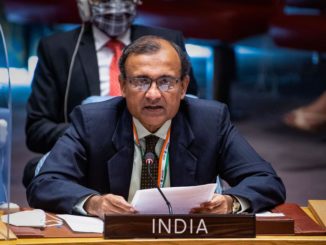
    UNITED NATIONS (TIP): Amidst the ongoing crisis in Ukraine, the government has decided to extend the tenure of India’s envoy to the United Nations T.S. Tirumurti for three months. According to an announcement by the appointments committee of the Cabinet, Mr. Tirumurti, who was due to retire on March 31, will now remain in the position at the rank of Secretary to the government from April 1 to June 30, 2022. At least two officials aware of the decision said the extension was granted due to the government’s desire to keep a “steady hand” and “ensure continuity” in India’s presence at the United Nations Security Council during a crucial period with the Russian war in Ukraine, where India is completing its two-year tenure this year. Another official also cited a precedent, as India’s former UN envoy Hardeep Puri (now Union Minister for Petroleum and Housing) had been given a year’s extension by the previous UPA government led by then Prime Minister Manmohan Singh. At the time, India had completed a year in its two-year tenure at the UN Security Council (2011-2013), and Mr. Puri’s tenure was extended, so as to maintain continuity in India’s position at the UNSC. However, it is unclear why Mr. Tirumurti’s tenure has not been extended till December, when India’s current term at the UNSC will end. An official said the extension appeared to have been made in a “phased manner” and that a further extension could not be ruled out, if required.

    Mr. Tirumurti, a 1985-batch IFS officer assumed the UN Permanent Representative post in May 2020 and has been a prominent voice on issues including the COVID-19 pandemic, the Taliban takeover in Afghanistan, Russian war in Ukraine, and more recently, for a strong speech criticizing a UN resolution adopting an “International day to combat Islamophobia”, which, he said, “elevated phobia against one religion” while ignoring other “non-Abrahamic” religions. In the past month, he has articulated India’s position on the Ukraine conflict, where despite considerable pressure from the U.S. and European allies, the government has refused to vote for any resolution criticizing Russia’s actions and abstained from three votes at the UNSC and two at the UN General Assembly on resolutions brought by them. In the next few days, the UNSC is also expected to vote on a resolution brought by Russia on humanitarian issues pertaining to Ukraine’s eastern provinces which are under Russian control, and India’s vote and the UN envoy’s Explanation of vote (EoV) will be watched closely.

    During its present tenure at the UNSC, India has been asked to head two important committees, the Taliban Sanctions Committee and Counterterrorism Committee, which Mr. Tirumurti has chaired, and he also happened to be President of the UNSC in August 2021, during the Taliban takeover of Kabul, when an Indian-drafted UNSC resolution 2953 was adopted. India will again assume the rotating presidency of the UNSC for the month of December 2022.

  • Germans offer up 300,000 private homes for refugees from Ukraine

    Germans offer up 300,000 private homes for refugees from Ukraine

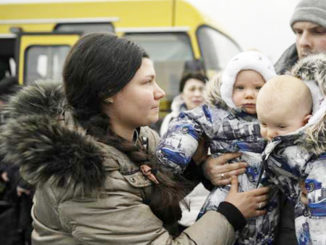
    Berlin (TIP): Germans have offered up 300,000 private homes to house refugees from Ukraine following Russia’s invasion of the country, Germany’s interior ministry said on March 10. The ministry is cooperating with the non-profit gut.org AG and home rental company AirbnbInc’s non-profit arm Airbnb.org to assign refugees to housing offers, it said on March 10. More than 2.3 million people have fled from Ukraine since the invasion, according to the United Nations Refugee Agency (UNHCR). Most are women and children, as able-bodied men have been ordered by the Kyiv government to stay home to fight. As of Wednesday, just over 80,000 Ukrainian refugees had been registered in Germany, with more arriving every day. Many of them arrive in Berlin by train or bus, which has prompted the German capital to set up temporary accommodation at its shuttered Tegel airport to house up to 3,000 people. From there, refugees would be distributed to longer-term homes, in Berlin or elsewhere in Germany.

    Reuters

  • Russia rejects Ukraine charge of genocide as invasion enters third week

    Russia rejects Ukraine charge of genocide as invasion enters third week

    Lviv (TIP): Russia’s war in Ukraine entered the third week on March 10 with none of its stated objectives reached despite thousands of people killed, more than two million made refugees, and thousands forced to cower in besieged cities under relentless bombardment.

    Ukraine said Russia was carrying out “genocide” by bombing a children’s hospital in the city of Mariupol. Russia said the reports were “fake news” as the building was a former maternity hospital that had long been taken over by troops.

    Moscow’s stated objectives of crushing the Ukrainian military and ousting the pro-West elected government of President VolodymyrZelenskyy remained out of reach, with Zelenskyy unshaken and Western military aid pouring across the Polish and Romanian borders. The UK Defence Ministry said on Thursday that a large Russian column northwest of Kyiv had made little progress in over a week and was suffering continued losses. It added that as casualties mount, Russian President Vladimir Putin would have to draw from across the armed forces to replace the losses.

    Putin has said the advance by his forces in Ukraine was going according to plan and to schedule. Russia calls its incursion a “special operation” to disarm its neighbour and dislodge leaders it calls “neo-Nazis.”

    Western-led sanctions designed to cut the Russian economy and government from international financial markets were also beginning to bite, with the Russian share market and rouble plunging and ordinary Russians rushing to hoard cash.

    ‘Hospital bombed’

    Zelenskyy accused Russia of carrying out “genocide” after Ukrainian officials said Russian aircraft bombed a children’s hospital on Wednesday, burying patients in rubble despite a ceasefire deal for people to flee Mariupol.

    “What kind of country is this, the Russian Federation, which is afraid of hospitals, is afraid of maternity hospitals, and destroys them?” Zelenskyy said in a televised address late on Wednesday.

    The attack, which authorities said injured women in labour and left children in the wreckage, underscored U.S. warnings that the biggest assault on a European state since 1945 could become increasingly attritional after Russia’s early failures.

  • Amid closure of airspace in many European countries, around a dozen Russian aircraft stranded in Switzerland

    Amid closure of airspace in many European countries, around a dozen Russian aircraft stranded in Switzerland

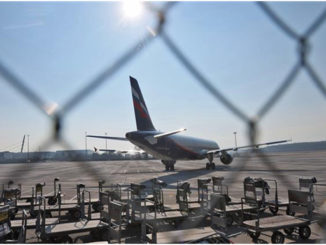
    Zurich (TIP): Around a dozen Russian aircraft are stranded at Swiss airports by the closure of airspace in many European countries to punish Moscow for its invasion of Ukraine, Switzerland’s civil aviation authority estimated on March 9.

    “I expect that it will be around a dozen aircraft in Switzerland,” a spokesperson for the Federal Office of Civil Aviation said. This included EuroAirport near Basel, which straddles the Swiss-French border.

    There were two aircraft in Geneva, including an Aeroflot passenger jet, and none in Zurich, he said, adding that not all airports had responded to his survey. Swiss broadcaster SRF said its investigation had found private aircraft believed to belong to Russian oligarchs were on the ground at EuroAirport. It said one of the aircraft was believed to belong to Chelsea Football Club owner Roman Abramovich, and had flown to Basel from London at the end of February. Another was thought to belong to billionaire Viktor Vekselberg, it said.

    Neither could be reached for immediate comment on the report. The airport declined comment.

    Switzerland adopted European Union sanctions against Russia and closed its airspace to Russian aircraft and airlines on Feb 28. Abramovich and Vekselberg are not personally sanctioned in Switzerland but would still be affected by the airspace closure.

    Russia’s super-rich oligarchs have been the focus of Western pressure following the invasion of Ukraine, due to their links to the Kremlin.

    Moscow says its actions are a “special operation” aimed at disarming Ukraine and removing leaders it casts as dangerous.  Reuters

  • UK PM Johnson invites world leaders to build coalition against Russian President Putin

    UK PM Johnson invites world leaders to build coalition against Russian President Putin

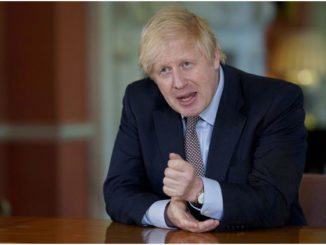
    London (TIP): British Prime Minister Boris Johnson hosts Canadian Prime Minister Justin Trudeau and Dutch PM Mark Rutte at Downing Street in London on March 7, as the trio visit a Royal Air Force (RAF) base to meet members of the UK armed forces.

    Downing Street said it marks the start of a week of “focused engagement” with world leaders to mobilise a global outcry at the “atrocities of Russian aggression” into practical support for Ukraine.

    The three prime ministers will convene for separate bilateral meetings and a joint trilateral meeting to discuss the next steps to counter attacks ordered by Russian President Vladimir Putin on Ukrainian cities. “In the time since Russia’s illegal and brutal assault we have seen the world stand up tall in solidarity with the indomitable people of Ukraine,” said Johnson.

    “UK aid is already reaching those who need it most, delivering essential supplies and medical support. While only Putin can fully end the suffering in Ukraine, today’s new funding will continue to help those facing the deteriorating humanitarian situation,” he said.

    It comes as the UK said it has allocated an additional USD 100 million directly to the Ukrainian government budget to mitigate financial pressures created by Russia’s unprovoked and illegal invasion.

    This grant could be used to support public sector salaries, allowing critical state functions to keep operating, as well as to support social safety nets and pensions for the Ukrainian people. The grant will be provided through the World Bank Multi-Donor Trust Fund, established last week to support the Ukrainian government.

    It is said to be on top of the UK training 22,000 soldiers, supplying 2,000 anti-tank missiles, providing 100 million pounds for economic reform and energy independence, and providing 120 million pounds of humanitarian aid including 25 million pounds of match funding to the Disasters Emergency Committee (DEC) appeal.

    The move comes as the UK Parliament is for a vote on Monday on the government’s amendments to the Economic Crime (Transparency and Enforcement) Bill, which fast-tracks action against Russian oligarchs close to the Kremlin and with UK assets.

    The UK Foreign, Commonwealth and Development Office (FCDO) said that streamlining current legislation will allow the government to move faster and harder when sanctioning billionaires and businesses associated with the Russian government.

    “These amendments give us the chance to bring even more crippling sanctions against Putin and his regime,” said UK Foreign Secretary Liz Truss. “The UK has already led the way by bringing in the largest and strongest package of sanctions in history in response to illegal and unprovoked Russian aggression against Ukraine,” she said.

    The UK has imposed what it brands as the “largest sanctions package in history” on Russia for its invasion of Ukraine.

    Most recently, this included a full asset freeze and travel ban imposed against AlisherUsmanov and Igor Shuvalov, two of Russia’s leading oligarchs with significant interests in the UK and close links to the Kremlin. The sanctions also cover Russian President Putin, Sergey Lavrov and more than 300 individuals and entities at the heart of Putin’s regime, and Belarus.(PTI)

  • Ukraine crisis: Last batch of Indian students heads back, Putin stays defiant

    Ukraine crisis: Last batch of Indian students heads back, Putin stays defiant

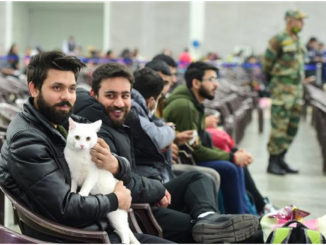
    New Delhi (TIP)- Covering hundreds of miles across Ukraine by bus and rail to Poland, the last remaining batch of Indian students from Sumy are on their way home. India operated three flights on Thursday to bring the batch of about 600 students back with the first flight for first, second and third-year students. The second flight is for fourth and fifth-year students and the third for students with pets, fifth and sixth-year students and for any Indians who may have been left behind. They are expected to reach India in the early hours of Friday. The Indians had to change buses midway and were then offered a free train ride by the Ukrainians for the Poland border.

    Meanwhile, Russian President Vladimir Putin remained defiant despite the US claiming that Moscow was in shock over the weight of sanctions. Putin said the sanctions would rebound against the West and Russia would solve its problems and emerge stronger.

    “These sanctions would have been imposed in any case. There are some questions, problems and difficulties, but in the past we have overcome them and we will overcome them now. In the end, this will all lead to an increase in our independence, self-sufficiency and our sovereignty,” Putin added.

                    Source: TNS

  • An unnecessary war and its grave portents

    An unnecessary war and its grave portents

    By M.K. Narayanan

    As of now, Ukraine has become a pawn between Russia and the West. The war over Ukraine is, furthermore, a reflection of the prevailing myopia of current leaders who seem doomed to repeat past follies.

    Russia’s attack on Ukraine, which began from the third week of February, shows no sign of ending. It has, in the meantime, led to a humanitarian crisis of gigantic proportions. The number of refugees streaming into countries adjoining Ukraine has revived memories and images of the vast numbers who sought refuge in Europe following the wars in Syria, Iraq and North Africa at the turn of the century. No one would have anticipated that a similar situation would arise just a few years later in Europe. The number of refugees has already approached, and possibly even crossed, the two million mark; and this is apart from the several thousands who have been killed inside Ukraine. It is a vivid demonstration of the callousness of human nature, more so considering the underlying cause of the conflict. It is most surprising that nothing concrete is being done by powerful nations in Europe and across the world to try and end the conflict through a process of reconciliation and negotiation. What the conflict, though, has exposed is the irrelevance of the United Nations in dealing with situations of this kind — becoming in many ways a modern day variant of the ill-fated League of Nations created at the end of the First World War.

    The primary concern of European nations and the United States appears to be the economic impact of the conflict — rather than the human costs involved – consequent on the ongoing war in Ukraine. The International Monetary Fund has already issued a warning of the serious global impact of the war, which includes a surge in energy and commodity prices, and being taken seriously by the U.S., almost all European nations and many countries across the globe. Leading western economists have been pontificating on the economic consequences of the war, and the ways and the means to reduce its impact. Similar concerns about the human costs of this unnecessary war are nowhere to be found. Least of all to be found are suggestions on how best to end the conflict, or at least bring about a truce to reduce the human toll that keeps steadily rising.

    It may appear tendentious to think that there are leading elements in the West who believe that by waging a prolonged ‘sanctions war’ against Russia of the kind currently being pursued — rather than seeking a compromise by which to end the genocide in Ukraine — an option had become available to checkmate Russia, which under Russian President Vladimir Putin was posing a threat to the West. Russia deserves to be rightfully condemned for being in violation of the United Nations Charter and invading Ukraine.

    There are, however, far more efficacious means to checkmate Russian moves than persisting with a prolonged period of ever widening economic sanctions aimed at crippling Russia’s economy. This may be an ideal way to achieve a ‘regime change’ in Moscow, getting citizens to rise against the regime due to the shortages and other restrictions imposed by a ‘sanctions’ regimen. It is, however, not the best way to end a conflict in the shortest possible time, and avert a greater human tragedy that a prolonged conflict entails. Sanctions, no doubt, do and will affect Russia and its economy, but it has had little impact on Russia’s war effort. Meanwhile, Ukraine, or more particularly the citizens and the residents of Ukraine, are innocent victims of the tussle between the West and Russia.

    For the present, each new sanction only strengthens Russia’s determination to compel Ukraine to cut its links with the West. No country within the North Atlantic Treaty Organization (NATO), or even those outside it, is at present willing to send forces in support of Ukraine. Waiting for the eventual collapse of the Russian state while leaving Ukraine and its citizens to the not-so-tender mercies of the Russian juggernaut is tantamount to becoming an accessory to genocide. While concerns that the conflict in Ukraine may lead to a nuclear conflict do appear exaggerated, what is taking place is a tragedy of a kind that should not befall any nation.

    There are, no doubt, certain special circumstances that make the problem inherently difficult and complicated. Ukraine, for instance, is not just another country as far as Russia is concerned. It was part of the erstwhile Soviet Union till 1991, and even at the time there were inherent tensions in the relationship. Ukraine in turn has long struggled with ethno-linguistic tensions encompassing western and central Ukraine and the Russian-speaking Eastern Ukraine. Western Ukraine is also largely Catholic while the east is largely Russian Orthodox. Even after its split from Russia in 1991, Ukraine has had problems in maintaining a semblance of neutrality between Russia and the West.

    Aggravating the situation is the fact that Ukraine was, in a sense, a child of a series of ‘Color Revolutions’ that shook parts of the Russian Empire in 1991 — when Russian influence was at its lowest ebb after the Second World War. Matters got further aggravated when a pro-Russian President of Ukraine — who was elected in a relatively fair election — was ousted and had to flee the country. Following this, Russia intervened and annexed Crimea and took aggressive measures to reinforce Russian influence in Donetsk and Luhansk, regions of eastern Ukraine which have large Russian populations.

    The ties between Russia and Ukraine are thus in a sense both historical and political. The declared ambition of NATO is to deter Soviet expansionism and, hence, any nation becoming a part of NATO is deemed by Russia to be anti-Russia. Russia has, from time to time, made it apparent that under no circumstances would it countenance NATO membership for Ukraine, and that this would be perceived as a hostile act towards Russia.

    As of now, Ukraine has become a pawn between Russia and the West. The war over Ukraine is, furthermore, a reflection of the prevailing myopia of current leaders who seem doomed to repeat past follies. An extension of NATO by the inclusion of Ukraine at this time — a country with a complex history and polyglot composition — was hardly a compelling necessity at this juncture, but badly misreading the situation (for even as far back as 2007 at the Munich Security Conference where I was the Indian delegate, Mr. Putin had made it amply clear that ‘NATO extension… represents a serious provocation that reduces the level of mutual trust’). Since then, Mr. Putin has given no indication whatsoever of any change in his attitude on this issue.

    This misreading of Mr. Putin’s personality has been a cardinal error, and Ukraine is paying a very heavy price. Ukraine’s President Volodymyr Zelensky, who openly flaunts his pro-West inclination, is hardly a match for President Putin in terms of strategy and tactics.

    While Mr. Zelensky employs grandstanding as a strategy, Mr. Putin is a born fighter. Anyone who has had an opportunity to interact closely with Mr. Putin would never have attempted to challenge him in the manner that Mr. Zelensky has been doing these past few weeks. Currently, an unlikely hero to his fellow countrymen, he could well go down in history as someone who has caused the ruin of Ukraine. Had he had played his cards properly, he could have prevented the situation from reaching the present impasse and still maintained Ukraine’s independence. To say the least, this is extremely unfortunate for Ukraine, and much of the world as well. A change of tack is clearly called for. At this time, the cardinal objective should be to save human lives and the existence of Ukraine. Ukraine’s ambitions to join NATO, which are in any case a distant dream, need to be put on the back burner. For the present, any extension of NATO further to the east should be given up, and, instead, an effort made to rebuild some of the bridges that existed between Russia and the rest of Europe at the beginning of this century. Alongside this, the West should hit the ‘pause button’ on initiating ‘Color Revolutions’ which have led to more conflicts than peace in Europe or elsewhere. More than anything else, leaders of nations and countries need to understand and assimilate the lessons of history, to avoid the kind of critical mistakes that have been evident during the current Russia-Ukraine crisis and war.

    (M.K. Narayanan is a former Director, Intelligence Bureau, a former National Security Adviser and a former Governor of West Bengal)

  • US VP Harris in Poland calls for probe into war crimes

    US VP Harris in Poland calls for probe into war crimes

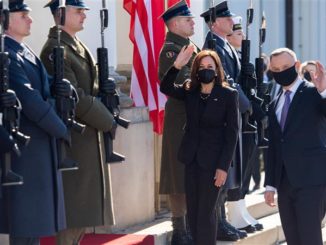
    WARSAW (TIP): There should be an investigation into Russia’s conduct in the war in Ukraine, US Vice President Kamala Harris said on Thursday, March 10,  during a visit to the Polish capital Warsaw, as she condemned what she said were “atrocities of unimaginable proportions”, says an AP report. There should be an investigation and we should all be watching. The eyes of the world are on this war and what Russia has done in terms of aggression and atrocities. Kamala Harris, US Vice President said. Speaking alongside Polish President Andrzej Duda at a press conference in Warsaw, where she is demonstrating US support for NATO’s eastern flank allies, Harris expressed outrage over the bombing Wednesday, March 9,  of the maternity hospital and scenes of bloodied pregnant women being evacuated, as well as other attacks on civilians. She stopped short of directly accusing Russia of having committed war crimes. “Absolutely there should be an investigation and we should all be watching, and I have no question that the eyes of the world are on this war and what Russia has done in terms of this aggression and these atrocities,” she told a news conference. Russia calls its actions in Ukraine a special military operation to disarm its neighbor.

    (With input from agencies)

  • Formula One terminates contract with Russian GP following Ukraine invasion

    Formula One will no longer race in Russia after the sport terminated its contract with the promoter of the Russian Grand Prix, it said on Thursday, in response to the country’s invasion of neighbouring Ukraine. The event, which was set to move to a new track outside St Petersburg next year from its current Sochi Olympic park venue, had a contract until 2025. The sport announced the cancellation of the 2022 race, originally scheduled for Sept 25, last week. “Formula One can confirm it has terminated its contract with the Russian Grand Prix promoter meaning Russia will not have a race in the future,” a statement from the sport’s commercial rights holder, which decides the calendar, said. Formula One’s move to effectively pull out of Russia comes after the sport’s governing body, the FIA, on Tuesday condemned the country’s invasion of Ukraine but said Russian and Belarusian drivers could still take part in its competitions in a neutral capacity. British federation Motorsport UK on Wednesday banned Russian and Belarusian license holders from racing in the country.

  • China’s Congress to focus on boosting slowing economy

    China’s Congress to focus on boosting slowing economy

    BEIJING (TIP): A property downturn, slowing economy and war in Ukraine loom large over this week’s annual convening of China’s legislature, with policymakers expected to focus on shoring up faltering growth. The rubber-stamp parliament starting March 4 in Beijing gathers some 3,000 members of the National People’s Congress (NPC) for highly choreographed meetings over bills, budgets and personnel changes. The ruling Communist Party uses the opportunity to tout its achievements while also setting the country’s economic blueprint and GDP target for the year ahead. Much of the NPC’s agenda is unknown until during — or even after — the multi-day meeting, with many sessions taking place behind closed doors. But this year, concerns are bound to centre on the country’s sluggish economic growth, partly down to a crunch in the crucial property sector — which makes up as much as a quarter of national output. Stringent “zero-Covid” measures including harsh lockdowns and closed borders have also been a major blow to manufacturing hubs, tourist centres and port cities. Meanwhile, the Russian invasion of Ukraine has raised the prospect of spiking food and oil prices, with fears over supplies of crucial commodities from the region being affected. Commerce Minister Wang Wentao admitted to journalists this week that China’s economy faces “huge” pressure this year.

    GDP and stability

    Beijing traditionally announces its new economic growth target at Premier Li Keqiang’s annual “state of the nation” speech at the NPC, followed by his rare -but heavily stage-managed – press conference. China’s GDP growth slowed sharply in the final months of 2021 despite an earlier pandemic bounceback, as it grappled with tepid domestic demand and a property downturn. The country’s communist leaders have long based their legitimacy on the argument that their model of government represents economic growth and continuity for China’s massive population. But as much of the rest of the world now reopens, China is increasingly out of step, as continued Covid-19 restrictions weigh on consumer confidence. Maintaining stability will be crucial as the Communist Party gears up for a pivotal meeting this fall the -20th party congress -that is expected to easily secure President Xi Jinping a third term. In 2020, there was no GDP target set at all, and last year Li announced a modest goal of “above six percent”. Amid the unpredictability, analysts expect Beijing to announce a similarly open and attainable target this year. “We expect the growth target to be set at ‘above five percent’,” UOB economist Ho Woei Chen said in a recent report, adding that pace would match the past two years’ average of 5.1 percent. Iris Pang, ING’s chief economist for Greater China, expected the range could be higher after the country easily exceeded last year’s target. And infrastructure would probably form a key part of the government’s support for the economy, predicted ANZ Research senior China strategist Zhaopeng Xing. He expected “double-digit growth in infrastructure investment” in the first quarter, on top of tax cuts and the central bank’s earlier interest rate cuts. (AFP)

  • Russia’s offer to foreign firms: stay, leave or hand over the keys

    Russia’s offer to foreign firms: stay, leave or hand over the keys

    Moscow (TIP): Companies and investors across the world faced Russian dilemmas on March 4 as they weighed up an offer from Moscow to fast-track their exits from the country and allow them to hand over holdings to local managers until they return. The options offered by First Deputy Prime Minister Andrei Belousov came one week since Russia’s invasion of Ukraine and a day after French bank SocieteGenerale warned that it could be stripped of its Russian operations, which sent a chill through companies seeking to stay put in the country. Belousov outlined three alternatives for foreign firms. “The company continues to work fully in Russia,” he said in a statement. “Foreign shareholders transfer their share to be managed by Russian partners and can return to the market later,” he added, and: “The company permanently terminates operations in Russia, closes production and dismisses employees.” No route comes without risks. Those staying on could face a backlash in Western markets where the public have rallied to Ukraine’s cause, those transferring shares could be handing over the keys with few guarantees, while those quitting may face a big loss at best, or might have to sell for a nominal sum. Russia’s invasion has prompted the United States and Europe to impose sweeping sanctions, affecting everything from global payments systems to a range of hi-tech products, which make doing business in Russia increasingly complex and precarious. For ordinary Russians, it means deep economic pain. Some multinationals such as energy majors BP and Shell have already said they are quitting, while others have held off signing off from Russia for now. TotalEnergies has said it would stay but would not invest more. IKEA announced plans to close stores on Thursday but said it would pay its 15,000 Russian staff for at least three months.Italian tyre maker Pirelli said on Friday it was constantly monitoring developments through a specially constituted “crisis committee”, adding it did not expect to halt either of its two Russian plants. Its rival, Finland’s NokianTyres, said last week it was shifting production of some product lines out of Russia. But there are no easy fixes even for those looking for the exit, when there are limited trading counterparties. (Reuters)

  • Ukraine claims 3 soliders killed, 2 wounded in Russian attack on nuclear plant

    Ukraine claims 3 soliders killed, 2 wounded in Russian attack on nuclear plant

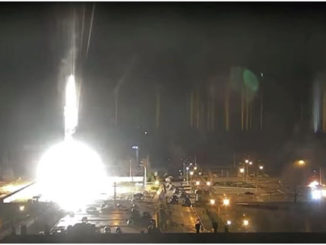
    Kyiv (TIP): Russian troops are shelling Europe’s largest nuclear power station in Ukraine.  “We demand that they stop the heavy weapons fire,” AndriyTuz, spokesperson for the plant in Enerhodar, said in a video posted on Telegram. “There is a real threat of nuclear danger in the biggest atomic energy station in Europe.”    The plant accounts for about one quarter of Ukraine’s power generation. Tuz told Ukrainian television that shells were falling directly on the Zaporizhzhia plant and had set fire to one of the facility’s six reactors. That reactor is under renovation and not operating, but there is nuclear fuel inside, he said. Firefighters cannot get near the fire because they are being shot at, Tuz said. A live-streamed security camera linked from the homepage of the nuclear power plant showed what appeared to be armouredvehicles rolling into the facility’s parking lot and shining spotlights on the building where the camera was mounted. There are then what appear to be bright muzzle flashes from vehicles and then nearly simultaneous explosions in the surrounding buildings. Smoke then rises and drifts across the frame. (AP)

  • 4,000 luxury cars like Lamborghinis, Bentleys sink in the Atlantic Ocean as the cargo ship catches fire

    4,000 luxury cars like Lamborghinis, Bentleys sink in the Atlantic Ocean as the cargo ship catches fire

    NEW YORK (TIP): Nearly 4,000 luxury cars like Porsches, Lamborghinis, Bentleys and Volkswagen — along with several high-end electric vehicles — have sunk aboard a cargo ship in the Atlantic that caught fire last month.Felicity Ace ship was carrying both electric and non-electric vehicles, and a fire broke out on the ship as it was travelling from Germany to the US, reports Insider.While it’s unclear exactly what started the fire, captain Joao Mendes Cabecas of the port of Hortas said lithium-ion batteries in EVs aboard the ship caught fire.

    A salvage team was able to board the ship over the last weekend but to no avail. The ship management company, MOL Ship Management Singapore, said the ship sank about 253 miles off the coast of the Azores, an archipelago in the mid-Atlantic that’s an autonomous region of Portugal. All 22 crew members were evacuated from the ship and were safe. “The 22 crew members did not need medical assistance on arrival, having been taken to a local hotel. The owner of the ship ‘Felicity Ace’ is in contact with the logistic agent in order to draw up a plan for the towing of the ship,” the navy had said. The Felicity Ace ship was heading from Germany to a port in Rhode Island, the US, when it issued distress signals this week. According to Importinfo.com, the electric vehicles may have been Audi E-tronSportbacks.

    (Source: IANS)

  • 4 Russian fighter jets violate Swedish airspace

     Russia (TIP): The Swedish Armed Forces said that four Russian fighter aircraft have violated the country’s airspace. In a statement, the Forces said that it conducted an operation with JAS 39 Gripen aircraft of the rapid readiness unit, which documented and photographed the incident. “This demonstrates that our readiness is good. We were on site to secure the territorial integrity and Sweden’s borders. We have complete control of the situation”, said Air Force Commander Carl-Johan Edstrom. The Swedish airspace was violated by two Russian SU 27 and two Russian SU 24. The incident was brief and took place east of Gotland, out at sea. “With the current situation as backdrop, we take this incident very seriously. Russia’s conduct is unprofessional and irresponsible”, says Air Force Commander Edstrom. IANS

  • More than 200 gunmen killed in Nigeria security operation

    Kaduna (TIP): At least 200 gunmen were killed in the past three days in Nigeria’s central-northern state of Niger during a security operation to clear armed gangs from the area, a state commissioner said on March 3. Gunmen have terrorised citizens in the north and northwest of the country and have gained notoriety for kidnapping hundreds of students and villagers for ransom and killing dozens. The Niger regional commissioner in charge of internal security, Emmanuel Umar, said some leaders of the armed gangs, known locally as bandits, were among those killed during an operation led by the army and volunteers from local vigilante groups and community leaders. In a statement, Umar said 60 motorbikes, which the gangs use to raid villages, weapons and cattle, were recovered from gunmen operating from camps deep inside the vast forests in the state. An army spokesman did not immediately respond to questions. At least four Nigerian security personnel were killed when their patrol vehicle detonated a landmine in Niger last month, and gunmen killed an unknown number of people. Niger regional authorities said last year that Islamist militants had established a presence in one locality for the first time. Last month, President MuhammaduBuhari said the military had begun a major offensive against militants there. Reuters

  • Sydney braces for flash floods as rain disaster moves south

    Sydney braces for flash floods as rain disaster moves south

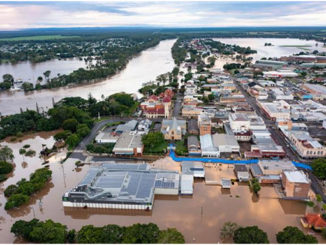
    Sydney (TIP): Sydney was preparing on March 2 for dangerous flash flooding as population centers farther north began a massive cleanup operation after record floods that have claimed at least 14 lives along Australia’s east coast in recent days.

    The torrential rain — as much as 20 centimeters (8 inches) — is forecast for Australia’s largest city and surrounding areas late March 2 and early March 3, Australia’s Bureau of Meteorology said. “In the Sydney area, we have minor to major flood warnings current,” meteorologist Dean Narramore said. In the New South Wales town of Lismore, 600 kilometers (370 miles) north of Sydney, a fourth death was confirmed on Wednesday as floodwaters drain from homes and searchers knock on doors.

    The body of a man, aged in his 70s, was found ion a flooded apartment, a police statement said.  A man’s body had been found floating in a main street earlier on Wednesday. The population of 28,000 people was inundated when Wilsons River peaked Monday afternoon at its highest level since records began in 1880. Authorities expect the death toll to rise in Lismore and its surrounding areas.

    Dozens of suburbs remain flooded in Brisbane, Australia’s third-most populous city 750 kilometers (470 miles) north of Sydney, after the river that snakes through its center peaked on Monday. The Queensland state capital had  received 80% of its average annual rainfall within a few days. The cleanup effort is underway and 8,000 volunteers had enlisted for what is known as the Mud Army, which helps those who were inundated. Queensland has accounted for nine of the deaths from the flooding disaster that has resulted from a low-pressure system that is moving south.   (AP)

  • US stance on Russia’s security interests hypocritical: Bernie Sanders

    MOSCOW (TIP): Independent US Senator Bernie Sanders recently called out the US for being “hypocritical” in not accepting Russia’s argument of “spheres of influence.” For the last 200 years, recalled Sanders in the US Senate, America had operated under the Monroe Doctrine which gave it the right to intervene against any country that might threaten its alleged interests. Under this doctrine, the US undermined and overthrew at least a dozen governments. In 1962, it came to the brink of a nuclear war with the Soviet Union in response to the placement of Soviet missiles in Cuba, which the Kennedy administration saw as an unacceptable threat to US’ national security. In 2018, Donald Trump’s Secretary of State Rex Tillerson called the Monroe Doctrine “relevant today as it was the day it was written”. In 2019, former Trump National Security Adviser John Bolton declared “the Monroe Doctrine is alive and well”. “To put it simply, even if Russia was not ruled by a corrupt authoritarian leader like Vladimir Putin, Russia, like the US, would still have an interest in the security policies of its neighbours. Does anyone really believe that the United States would not have something to say if, for example, Mexico was to form a military alliance with a US adversary?” asked Sanders. (TNS)

  • ‘Will be 10 times larger than Chernobyl’, Ukraine warns Russia on nuclear-plant attack

    Kiev (TIP): Ukrainian Foreign Minister DmytroKuleba on Friday warned against Russian troops firing at the Zaporizhzhia nuclear power plant, which is the largest in Europe, saying that if it blows up then the disaster would be “10 times larger” than Chernobyl. In a tweet early March 4 morning, the Minister said: “Russian army is firing from all sides upon Zaporizhzhia NPP, the largest nuclear power plant in Europe. Fire has already broke out.

    “If it blows up, it will be 10 times larger than Chernobyl! Russians must immediately cease fire, allow firefighters, establish a security zone.”  Citing Ukrainian officials, the International Atomic Energy Agency (IAEA) said that there has not been any change in the radiation levels at plant site in the wake of the fire.

    The IAEA also said that the fire has not affected “essential” equipment and personnel at the nuclear power plane were “taking mitigatory actions”. The global nuclear organisation further said that it is consulting with Ukraine “and others with a view to provide maximum possible assistance to the country as it seeks to maintain nuclear safety and security in the current difficult circumstances”.

    But in the wake of the “serious situation” at the plant, IAEA Director General Rafael Grossi has warned Ukrainian Prime Minister Denys Shmygal and the country’s nuclear regulator and operator of the severe danger if the reactors were hit by the ongoing Russian firing. Ukraine currently has four active nuclear plants, including Zaporizhzhia which reportedly accounts for some 25 per cent of the country’s power, the BC reported. It also deals with nuclear waste at sites like Chernobyl, which is now under Russian control. The latest developments come on the ninth day of Russia’s continuous military assault on Ukraine. Since the Russian invasion began on February 24, intense shelling and bombing has continued across Ukraine, including capital Kiev and the second largest city of Kharkiv. On Wednesday, Russian troops seized the port town of Kherson, a provincial capital home to about 250,000 people, making it the first major Ukrainian city to fall. Ukraine has so far reported over 2,000 civilian casualties and UN estimates have revealed that over one million people have fled to neighbouring countries such as Poland, Romania, Slovakia, Hungary and Moldova.

    At least 160,000 others are currently displaced within Ukraine. Meanwhile, the European Union believes that figure could climb to seven million, and that 18 million Ukrainians will be affected by the war. (AP)

  • Crypto gains currency as Russia-Ukraine conflict escalates

    Crypto gains currency as Russia-Ukraine conflict escalates

    New Delhi (TIP)-Although several countries have banned cryptocurrency, the decentralised money has become a mainstream component of the global financial system. This means that it will inevitably become a part of international conflict, for better or worse and as Russian armies enter Ukraine, this is on full show.As the war with Russia rages on, Ukrainian officials urged netizens on Twitter to send cryptocurrency. Since then, according to reports, cryptocurrency investors have given the Ukrainian government and a foundation backing the country’s military, more than $22 million in digital assets.

    The turmoil in Ukraine has brought the burgeoning industry under increased attention, with politicians and regulators concerned that the cryptocurrencies could be used by Russian firms and government officials to circumvent sanctions. However, as more traditional crowdfunding techniques face challenges, cryptocurrency has created a way for investors all across the world to quickly shift funds to Ukrainian soldiers. In the case of crypto donations, Ukraine’s Vice Prime Minister Mykhailo Fedorov on February 26 shared wallet addresses on Twitter, urging people to “Stand with the people of Ukraine”, while adding that “now accepting cryptocurrency donations. Bitcoin, Ethereum and USDT”. Later, in the same Twitter thread, he wrote: “The people of Ukraine fighting for our freedom are forever grateful to Gavin Wood @gavofyork for the generous donation of $5M of @Polkadot $DOT as promised publicly. Thank you from all of us here in Ukraine working for a peaceful future.”

    As of now, some reports have claimed that Ukraine has received at least $11 million through anonymous Bitcoin donations.

    Separately, Come Back Alive, a Kyiv-based organisation that raises funds to arm and train Ukrainian military men, had a page taken down by the crowdfunding platform Patreon, which stated that the page had broken its rules prohibiting support of military activities. But now the organisation is getting funds from a crypto collective called UkraineDAO, which was formed last week by some crypto enthusiasts.

    According to a report it was said Come Back Alive had pledged to use the funds to provide medical assistance to war victims rather than armed soldiers.

    Additionally, it was also reported that Since Kremlin launched its attacks on the neighbouring country, cryptocurrency donations to Ukrainian volunteer and hacktivists groups have increased dramatically.

    Sam Bankman-Fried, the billionaire CEO of crypto exchange FTX US, revealed in a tweet that they had given $25 to each Ukrainian on their platform.

    These activities highlight the fact that at this time of crisis, donors who might have otherwise given their money to huge charities have turned to cryptocurrencies as an alternative.

    But in a separate scenario, cryptocurrency exchanges have refused Ukraine’s request to suspend all Russian accounts.

    As reported recently, major cryptocurrency exchanges such as Coinbase and Binance have refused to comply with Ukraine’s request to freeze all Russian accounts, claiming that doing so would damage people and go against their values.      Source: News18

  • Oil surges to $111/barrel as Russian supply woes rise

    London (TIP)-Oil prices surged on Wednesday, March 2,  as supply disruption fears mounted following hefty sanctions on Russian banks amid the intensifying Ukraine conflict, while traders scrambled to seek alternative oil sources in an already tight market.

    Brent crude futures rose by more than $8, touching a peak of $113.02 a barrel, the highest since June 2014, before easing to $111.17, up by $6.20 or 5.9% by 0950 GMT.

    US West Texas Intermediate (WTI) crude futures also jumped more than $8 a barrel, hitting the highest since August 2013 before losing some steam to trade up $5.86 or 5.7% to $109.27 a barrel.

    “Due to limited diversification options, any disruption to Russia’s energy exports will result in another energy crisis in Europe,” said Kaho Yu, principal Asia analyst at risk consultancy Verisk Maplecroft.

    “Although the US has called for a global oil reserve release, oil prices are likely to remain above $100 unless significant alternative supplies enter the market.” Russian oil exports account for around 8% of global supply.

    Exxon Mobil on Tuesday said it would exit Russia oil and gas operations as a result of Moscow’s invasion of Ukraine. The decision will see the firm pull out of managing large production facilities on Sakhalin Island in Russia’s Far East.

    While Western powers have not imposed sanctions on energy exports directly, US traders at hubs in New York and the US Gulf are shunning Russian crude.           Source: Reuters

  • INDIAN DIASPORA COUNCIL CONDEMNS THE RUSSIAN ATTACKS ON UKRAINE

    INDIAN DIASPORA COUNCIL CONDEMNS THE RUSSIAN ATTACKS ON UKRAINE

    NEW YORK (TIP): The Indian Diaspora Council International (IDC) joins in solidarity with others globally in its unequivocal condemnation of the unprovoked Russian invasion and attack of Ukraine, a sovereign country, resulting in unwarranted deaths, destruction and displacement of countless innocent citizens fleeing from their homes. IDC considers the invasion and attack by Russia to be unjustified, reckless and inhuman, without regard for the lives of innocent civilians. IDC supports the peaceful resolution of disputes and urges Russia and the international community to bring this war to a quick and peaceful resolution.

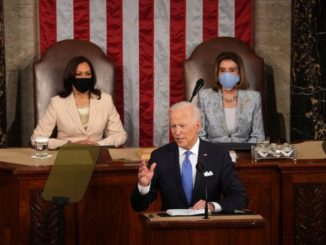
  • Key takeaways from Biden’s 2022 State of the Union speech

    Key takeaways from Biden’s 2022 State of the Union speech

    WASHINGTON , D.C. (TIP): Only a little more than a week ago, President Joe Biden’s first State of the Union address was focused largely inward, looking at the economic and public health woes besetting the U.S. But Russia’s invasion of Ukraine and the war that has ensued changed all that, says an AP Report. The speech and the war in Ukraine gave Biden both the platform and the urgent reason to talk about the fight between democracy and autocracy not as an abstraction but as an urgent reality.

    Biden has repeatedly talked about the battle of between the values of liberal democracies and autocrats like Russian President Vladimir Putin as the greatest foreign policy test facing the world.

    But Russia’s invasion of Ukraine — and the surprising unity that U.S. and European allies have shown in response — gave the president a chance to speak about the issue in a visceral way to a global audience. “In the battle between democracy and autocracy, democracies are rising to the moment, and the world is clearly choosing the side of peace and security,” Biden said “This is a real test. It’s going to take time. So let us continue to draw inspiration from the iron will of the Ukrainian people. “

    He celebrated the West for coming together on hard-hitting sanctions that are “choking off Russia’s access to technology that will sap its economic strength and weaken its military for years to come” he announced news sanctions to close off U.S. air space to all Russian flights. and he paid tribute to Ukrainian people for “fighting back with pure courage.”

    Biden found himself caught in the middle of culture wars for much of his first year in office. With his State of the Union, the president who has made his long career in politics living in the ideological middle — had moments where he sought to pivot to the center.

    He dismissed those on the left of his party who have advocated for reducing funding of police in the midst of national reckoning on policing in Black communities. “We should all agree: The answer is not to defund the police. The answer is to fund the police with the resources and training they need to protect our communities.”

    After months of Republicans beating him up on immigration, he allowed that “we need to secure the border and fix the immigration system.” But he also called on Republicans — and the American public — to look at the issue in a pragmatic way, alluding to the country’s worker shorter as the nation emerges for coronavirus pandemic.

    “It’s not only the right thing to do — it’s the economically smart thing to do,” Biden said. Even as he appeals to the higher ideals of democracy, Biden believes that many Americans would process the war through prices at the pump instead of geopolitical risks.

    It’s a jarring contrast in priorities as Ukrainians beg the U.S. and its allies for weapons to protect themselves, while the U.S. and Europe are focused first and foremost on energy costs in their own economies that are generally experiencing growth instead of an existential threat. “I’m taking robust action to make sure the pain of our sanctions is targeted at Russia’s economy — and I will use every tool at our disposal to protect American businesses and consumers,” Biden said as he announced the planned release of another 30 million barrels of oil from the U.S. petroleum reserve. Gasoline prices are averaging $3.61 a gallon, according to AAA. But most of that increase occurred over the past year, rather than the machinations of Russia. It’s a sign that Biden sees his own political fortunes resting on family budgets and reducing inflation, perhaps even more than a land war in Europe.

    Biden almost said it — the motto that disappeared with his political agenda: “Build Back Better.” Or, BBB. West Virginia Sen. Joe Manchin, the decisive Democratic vote in the evenly split Senate, has pronounced BBB dead with nary a eulogy.

    Biden in outlining his agenda said instead, “I call it building a better America.” So, what does that look like? It looks a lot like his prior agenda, except it’s been slimmed down.

    Capping prescription drug prices stays in the mix. So do anti-climate change policies — which are now being portrayed as ways to lower energy costs for families. Financial support to limit childcare costs is still in, though the expanded child tax credit from the coronavirus relief package is out. Universal pre-kindergarten remains a priority, but the primary goal of all of these policies is no longer to win the future as Biden once claimed. It’s all about reducing inflation, the problem dogging Biden’s popularity in the here and now.

    Biden said the country has moved beyond the pandemic, even if it still needs to stay vigilant against mutations. His big argument is that the country can’t change its past divides, though it must address the pandemic with a united front.

    He noted that most of the country can now be mask-free. Most Americans are vaccinated, and more vaccines are available if needed. Schools are open and workers can return to offices. “COVID-19 need no longer control our lives,” said Biden, echoing statements he made last July 4 when the disease similarly appeared to be in the rear-view mirror.

    The difference this time compared to the summer of 2020 is not only the increase in vaccinations but the lessons from the omicron and delta waves that caused infections and deaths to accelerate.

    His remarks include variations on the word “job” more than a dozen times as it applied to people working. Inflation netted half a dozen mentions and forms of the word “price” in terms of costs charged were mentioned 10 times. “Pandemic” was mentioned eight times and COVID-19 appeared a dozen times.He tried to highlight partisan unity by deploying the phrase “Democrats and Republicans” three times. Russia’s invasion of Ukraine (20 mentions) supplanted China as a geopolitical rival, as China got just two mentions. And there was a clear villain: Putin was named 12 times. As Russian invasion of Ukraine grinds on, lawmakers showed their support for Ukrainians with their sartorial choices of blue and yellow. House Speaker Nancy Pelosi wore a blue suit adorned with a lapel pin of Ukraine and U.S. flags. Rep. Eric Swalwell made do with a blue scarf.

    Sen. Mitt Romney of Utah, who appeared to have a large paper Ukraine flag pinned to his suit, had a bit of wardrobe malfunction. (His Ukraine flag fell off as he waded through the packed aisle to make his way to his seat.)

    Many lawmakers — and guests — also had small Ukrainian flags. In a sign of support for the Ukrainian people, the First Lady Jill Biden has an embroidered appliqué of a sunflower, the national flower of Ukraine, sewn to the sleeve of her dress near her wrist.