Tag: Senator Bob Menendez

  • We will adjudicate 1 million visas in India this year, says U.S. official

    We will adjudicate 1 million visas in India this year, says U.S. official

    WASHIINGTON D.C. (TIP): Describing India as an important partner with whom the United States enjoyed strong people-to-people ties, top U.S. lawmakers have urged the Biden administration to address the visa waiting-period issue in the country on a priority basis. Senator Bob Menendez, Chairman of the Senate Foreign Relations Committee; and Congressman Michael Waltz, Co-Chair of the House India Caucus, during two separate Congressional hearings on Consular Affairs Budget asked top State Department officials why people in India were facing waiting periods of up to 600 days for approval of visa applications.

    “The United States enjoys strong people to people ties with India. India is now part of the Quad. We are constantly engaging it in geo-strategic interests that we have. New Jersey is home to a great number of Indian Americans and their families. I appreciate and applaud the department’s heightened focus towards reducing wait times for first-time B1-B2 applicants in India,” Menendez said.

    “But despite that progress this past year, India continues to face the longest wait times globally with average wait times for an appointment for the first time B1-B2 applicant ranging between 450 and 600 days. Could you please speak to me as to why that is the case? Why does it take up to 600 days for an adjudication?” Menendez asked during a hearing at the Senate Foreign Relations Committee.

    “I’m the co-chair of the U.S.-India Caucus. I think it’s one of the most consequential economic diplomatic security relationships we have in the 21st Century. However, one of the consistent and painful complaints that I receive from Indian-Americans and from our Indian colleagues is the wait time, despite the fact that in India, I believe you have the second or third most consular affairs officers,” Congressman Waltz said during a hearing by the House Foreign Relations Committee.

    “The data that I have is that the average waiting period in Mumbai, India, was 587 calendar days. With our trade over $150 billion with the consequential relationship with Prime Minister Narendra Modi [who came] for a state dinner and visit just this month, what are we doing to fix this? Have you looked at any India-specific policy fast–tracks or issues?” he asked. He said that the delay in visa would impact the business relationship.

    “Have you looked at even perhaps a Quad umbrella or bubble for some of these critical business relationships. My state just in Florida, it’s estimated that $8 billion in trade conferences, events and visitors — that’s 250,000 jobs — are affected by these delays. So what are we doing to fix it?” Waltz asked.

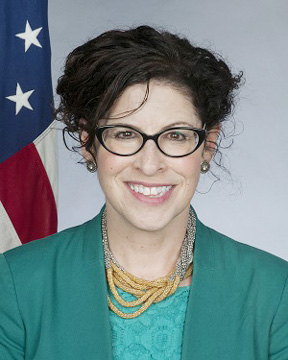
    Assistant Secretary of State for Consular Affairs Rena Bitter told the lawmakers at the two different Congressional hearings that the State Department was working hard on it and had taken several steps to address this issue.

    “India is a place where we have historically had high demand for visas and there’s just a tremendous amount of pent-up demand. One of the things about India is that every post is unique, but they also had a really devastating bout with Covid 19 quite late and so that their ability to meet the pent-up demand lasted quite a bit longer,” she said. The visa wait times have been reduced by about two-thirds.

    “We have opened appointments for Indian nationals, dedicated appointments in other posts for specific appointments and in all other categories. I’m sure you’re aware of this and you’ve mentioned it, wait times are pre-pandemic levels better.” she said.

    “We will adjudicate 1 million visas in India this year. Our productivity there is extraordinarily high,” Bitter said.

    In the House Congressional hearing Bitter said the US has opened appointments for Indian applicants at other posts that are dedicated just to Indians to make sure that they are able to get their travel needs met.

    “We surge staff to India. We reduced wait times by about two thirds at the beginning of the year and we’ll continue to focus on it. We’re very aware of these issues,” she said.
    (Source: PTI)

  • US Citizenship Act of 2021introduced in Congress

    US Citizenship Act of 2021introduced in Congress

    Proposal for a path to citizenship to 11 million undocumented migrants

    The legislation would benefit hundreds and thousands of Indian IT professionals and their families

     WASHINGTON (TIP): Lawmakers and White House officials unveiled sweeping immigration legislation Thursday, February 18, including a proposal for a path to citizenship for roughly 11 million migrants living without legal status in the USA. “We’re here today because last November, 80 million Americans voted against Donald Trump and against everything he stood for. They voted to restore common sense, compassion and competence in our government, and part of that mandate is fixing our immigration system,” Sen. Bob Menendez, D-N.J., said in a virtual news conference.The plan is based on the comprehensive immigration legislation proposal President Joe Biden introduced on his first day in office. A bicameral US Citizenship Act of 2021 proposing a pathway to citizenship to 11 million undocumented workers, elimination of per-country quota for employment-based green cards and work authorization for dependents of H-1B foreign workers, was introduced in the Congress, February 18. The bill, if passed by both the chambers of the Congress – House of Representatives and the Senate – and signed into law by President Joe Biden would bring citizenship to millions of foreign nationals, including undocumented whether they came legally or illegally.

    The legislation would also benefit hundreds and thousands of Indian IT professionals and their families.

    Authors of the bill – Senator Bob Menendez (D-NJ) and Congresswoman Linda Sánchez (D– Calif)- told reporters that the US Citizenship Act of 2021 established a moral and economic imperative and a vision of immigration reform that is expansive and inclusive.

    It grows the economy by making changes to the employment-based immigration system, eliminating per-country caps, making it easier for STEM advanced degree holders from US universities to stay, improving access to green cards for workers in lower-wage industries, giving dependents of H-1B holders work authorization, and preventing children of H-1B holders from aging out of the system.

    “I am the daughter of immigrant parents from Mexico. I have dedicated my career to building an immigration system that lets people live without fear, and a system that gives immigrants – like my parents – who sought a better life and contribute to our nation a fair opportunity to thrive,” Sanchez said.

    “Immigrants contribute greatly to our country and society. They own businesses, pay taxes and teach our children. They are our coworkers, neighbors and friends,” said Menendez.

    “We have a historic opportunity to finally enact bold immigration reform that leaves no one behind, addresses root causes of migration, and safeguards our country’s national security. We have a moral and economic imperative to get this done once and for all,” he said.

    The ruling Democrats have a majority in both the House and Senate. However, in the upper chamber, they need support of 10 Republicans to get the legislation through the Congress before it can be signed into law.

    The Democratic leadership and the White House hope that they will get the necessary support in the interest of millions of non-citizens living in the country. (With inputs from PTI and other agencies)