Tag: September 11

  • September 11, 2001 – The Day That Changed America Forever

    September 11, 2001 – The Day That Changed America Forever

    On the morning of September 11, 2001, the United States experienced the deadliest terrorist attack in its history, an event that not only claimed thousands of lives but also altered the nation’s sense of security and reshaped global politics. What began as an ordinary Tuesday morning ended as a defining moment of the 21st century.

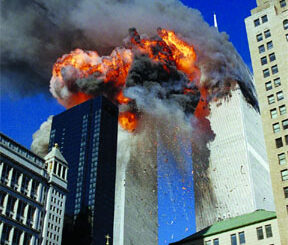
    – At 8:46 a.m. Eastern Time, American Airlines Flight 11 slammed into the North Tower of the World Trade Center in New York City. Seventeen minutes later, at 9:03 a.m., United Airlines Flight 175 struck the South Tower. Millions watched live as both skyscrapers burned before collapsing in a matter of hours.
    – At 9:37 a.m., American Airlines Flight 77 crashed into the Pentagon in Arlington, Virginia, tearing a massive hole into the U.S. Department of Defense headquarters. A fourth plane, United Airlines Flight 93, believed to be headed toward either the White House or the U.S. Capitol, never reached its target. Passengers fought back against the hijackers, forcing the aircraft to crash into a field in Shanksville, Pennsylvania, at 10:03 a.m.
    September 11 attacks, series of airline hijackings and suicide attacks committed in 2001 by 19 militants associated with the Islamic extremist group al-Qaeda against targets in the United States, the deadliest terrorist attacks on American soil in U.S. history. The attacks against New York City and Washington, D.C., caused extensive death and destruction and triggered an enormous U.S. effort to combat terrorism. Some 2,750 people were killed in New York, 184 at the Pentagon, and 40 in Pennsylvania (where one of the hijacked planes crashed into the ground after the passengers attempted to retake the plane); all 19 terrorists died. Police and fire departments in New York were especially hard-hit: hundreds rushed to the scene of the attacks, and more than 400 police officers and firefighters were killed.
    The plot
    Flight paths on September 11, 2001: The routes of the four U.S. planes hijacked during the terrorist attacks of September 11, 2001.
    The September 11 attacks were precipitated in large part because Osama bin Laden, the leader of the militant Islamic organization al-Qaeda, held naive beliefs about the United States in the run-up to the attacks.
    Abu Walid al-Masri, an Egyptian who was a bin Laden associate in Afghanistan in the 1980s and ’90s, explained that, in the years prior to the attacks, bin Laden became increasingly convinced that America was weak. “He believed that the United States was much weaker than some of those around him thought,” Masri remembered, and “as evidence he referred to what happened to the United States in Beirut when the bombing of the Marines base led them to flee from Lebanon,” referring to the destruction of the marine barracks there in 1983, which killed 241 American servicemen. Bin Laden believed that the United States was a “paper tiger,” a belief shaped not just by America’s departure from Lebanon following the marine barracks bombing but also by the withdrawal of American forces from Somalia in 1993, following the deaths of 18 U.S. servicemen in Mogadishu, and the American pullout from Vietnam in the 1970s.
    Khalid Sheikh Mohammed
    The key operational planner of the September 11 attacks was Khalid Sheikh Mohammed (often referred to simply as “KSM” in the later 9/11 Commission Report and in the media), who had spent his youth in Kuwait. Khalid Sheikh Mohammed became active in the Muslim Brotherhood, which he joined at age 16, and then went to the United States to attend college, receiving a degree from North Carolina Agricultural and Technical State University in 1986. Afterward he traveled to Pakistan and then Afghanistan to wage jihad against the Soviet Union, which had launched an invasion against Afghanistan in 1979.
    According to Yosri Fouda, a journalist at the Arabic-language cable television channel Al Jazeera who interviewed him in 2002, Khalid Sheikh Mohammed planned to blow up some dozen American planes in Asia during the mid-1990s, a plot (known as “Bojinka”) that failed, “but the dream of Khalid Sheikh Mohammed never faded. And I think by putting his hand in the hands of bin Laden, he realized that now he stood a chance of bringing about his long awaited dream.”
    In 1996 Khalid Sheikh Mohammed met bin Laden in Tora Bora, Afghanistan. The 9-11 Commission (formally the National Commission on Terrorist Attacks Upon the United States), set up in 2002 by U.S. Pres. George W. Bush and the U.S. Congress to investigate the attacks of 2001, explained that it was then that Khalid Sheikh Mohammed “presented a proposal for an operation that would involve training pilots who would crash planes into buildings in the United States.” Khalid Sheikh Mohammed dreamed up the tactical innovation of using hijacked planes to attack the United States, al-Qaeda provided the personnel, money, and logistical support to execute the operation, and bin Laden wove the attacks on New York and Washington into a larger strategic framework of attacking the “far enemy”—the United States—in order to bring about regime change across the Middle East.
    The September 11 plot demonstrated that al-Qaeda was an organization of global reach. The plot played out across the globe with planning meetings in Malaysia, operatives taking flight lessons in the United States, coordination by plot leaders based in Hamburg, Germany, money transfers from Dubai, and recruitment of suicide operatives from countries around the Middle East—all activities that were ultimately overseen by al-Qaeda’s leaders in Afghanistan.
    Key parts of the September 11 plot took shape in Hamburg. Four of the key pilots and planners in the “Hamburg cell” who would take operational control of the September 11 attacks, including the lead hijacker Mohammed Atta, had a chance meeting on a train in Germany in 1999 with an Islamist militant who struck up a conversation with them about fighting jihad in the Russian republic of Chechnya. The militant put the Hamburg cell in touch with an al-Qaeda operative living in Germany who explained that it was difficult to get to Chechnya at that time, because many travelers were being detained in Georgia. He recommended they go to Afghanistan instead.
    Although Afghanistan was critical to the rise of al-Qaeda, it was the experience that some of the plotters acquired in the West that made them simultaneously more zealous and better equipped to carry out the attacks. Three of the four plotters who would pilot the hijacked planes on September 11 and one of the key planners, Ramzi Binalshibh, became more radical while living in Hamburg. Some combination of perceived or real discrimination, alienation, and homesickness seems to have turned them all in a more militant direction. Increasingly cutting themselves off from the outside world, they gradually radicalized each other, and eventually the friends decided to wage battle in bin Laden’s global jihad, setting off for Afghanistan in 1999 in search of al-Qaeda.

    Atta and the other members of the Hamburg group arrived in Afghanistan in 1999 right at the moment that the September 11 plot was beginning to take shape. Bin Laden and his military commander Muhammad Atef realized that Atta and his fellow Western-educated jihadists were far better suited to lead the attacks on Washington and New York than the men they had already recruited, leading bin Laden to appoint Atta to head the operation.
    The hijackers, most of whom were from Saudi Arabia, established themselves in the United States, many well in advance of the attacks. They traveled in small groups, and some of them received commercial flight training.
    Throughout his stay in the United States, Atta kept Binalshibh updated on the plot’s progress via e-mail. To cloak his activities, Atta wrote the messages as if he were writing to his girlfriend “Jenny,” using innocuous code to inform Binalshibh that they were almost complete in their training and readiness for the attacks. Atta wrote in one message, “The first semester commences in three weeks…Nineteen certificates for private education and four exams.” The referenced 19 “certificates” were code that identified the 19 al-Qaeda hijackers, while the four “exams” identified the targets of the attacks.
    In the early morning of August 29, 2001, Atta called Binalshibh and said he had a riddle that he was trying to solve: “Two sticks, a dash and a cake with a stick down—what is it?” After considering the question, Binalshibh realized that Atta was telling him that the attacks would occur in two weeks—the two sticks being the number 11 and the cake with a stick down a 9. Putting it together, it meant that the attacks would occur on 11-9, or 11 September (in most countries the day precedes the month in numeric dates, but in the United States the month precedes the day; hence, it was 9-11 in the United States). On September 5 Binalshibh left Germany for Pakistan. Once there he sent a messenger to Afghanistan to inform bin Laden about both the day of the attack and its scope.
    The attacks
    On September 11, 2001, groups of attackers boarded four domestic aircraft at three East Coast airports, and soon after takeoff they disabled the crews, some of whom may have been stabbed with box cutters the hijackers were secreting. The hijackers then took control of the aircraft, all large and bound for the West Coast with full loads of fuel. At 8:46 AM the first plane, American Airlines flight 11, which had originated from Boston, was piloted into the north tower of the World Trade Center in New York City. Most observers construed this initially to be an accident involving a small commuter plane. The second plane, United Airlines flight 175, also from Boston, struck the south tower 17 minutes later. At this point there was no doubt that the United States was under attack. Each structure was badly damaged by the impact and erupted into flames. Office workers who were trapped above the points of impact in some cases leapt to their deaths rather than face the infernos now raging inside the towers. The third plane, American Airlines flight 77, taking off from Dulles Airport near Washington, D.C., struck the southwest side of the Pentagon (just outside the city) at 9:37 AM, touching off a fire in that section of the structure. Minutes later the Federal Aviation Authority ordered a nationwide ground stop, and within the next hour (at 10:03 AM) the fourth aircraft, United Airlines flight 93 from Newark, New Jersey, crashed near Shanksville in the Pennsylvania countryside after its passengers—informed of events via cellular phone—attempted to overpower their assailants.
    At 9:59 AM the World Trade Center’s heavily damaged south tower collapsed, and the north tower fell 29 minutes later. Clouds of smoke and debris quickly filled the streets of Lower Manhattan. Office workers and residents ran in panic as they tried to outpace the billowing debris clouds. A number of other buildings adjacent to the twin towers suffered serious damage, and several subsequently fell. Fires at the World Trade Center site smoldered for more than three months.
    Rescue operations began almost immediately as the country and the world sought to come to grips with the enormity of the losses. Nearly 3,000 people had perished: some 2,750 people in New York, 184 at the Pentagon, and 40 in Pennsylvania; all 19 terrorists also died. Included in the total in New York City were more than 400 police officers and firefighters, who lost their lives after rushing to the scene and into the towers.
    On the morning of September 11, President Bush had been visiting a second-grade classroom in Sarasota, Florida, when he was informed that a plane had flown into the World Trade Center. A little later Andrew Card, his chief of staff, whispered in the president’s right ear: “A second plane hit the second tower. America is under attack.” To keep the president out of harm’s way, Bush subsequently hopscotched across the country on Air Force One, landing in Washington, D.C., the evening of the attacks. At 8:30 PM Bush addressed the nation from the Oval Office in a speech that laid out a key doctrine of his administration’s future foreign policy: “We will make no distinction between the terrorists who committed these acts and those who harbor them.”
    On September 14 Bush visited “Ground Zero,” the smoking pile of debris of what remained of the World Trade Center and the thousands who had perished there. Standing on top of a wrecked fire truck, Bush grabbed a bullhorn to address the rescue workers working feverishly to find any survivors. When one of the workers said that he could not hear what the president was saying, Bush made one of the most memorable remarks of his presidency:
    Bush’s robust response to the attacks drove his poll ratings from 55 percent favourable before September 11 to 90 percent in the days after, the highest ever recorded for a president.
    Bush’s robust response to the attacks drove his poll ratings from 55 percent favourable before September 11 to 90 percent in the days after, the highest ever recorded for a president.
    The aftermath
    The emotional distress caused by the attacks-particularly the collapse of the twin towers, New York City’s most visible landmark-was overwhelming. Unlike the relatively isolated site of the Pearl Harbor attack of 1941, to which the September 11 events were soon compared, the World Trade Center lay at the heart of one of the world’s largest cities. Hundreds of thousands of people witnessed the attacks firsthand (many onlookers photographed events or recorded them with video cameras), and millions watched the tragedy unfold live on television. In the days that followed September 11, the footage of the attacks was replayed in the media countless times, as were the scenes of throngs of people, stricken with grief, gathering at “Ground Zero”-as the site where the towers once stood came to be commonly known-some with photos of missing loved ones, seeking some hint of their fate.
    Moreover, world markets were badly shaken. The towers were at the heart of New York’s financial district, and damage to Lower Manhattan’s infrastructure, combined with fears of stock market panic, kept New York markets closed for four trading days. Markets afterward suffered record losses. The attacks also stranded tens of thousands of people throughout the United States, as U.S. airspace remained closed for commercial aviation until September 13, and normal service, with more rigid security measures, did not resume for several days.
    The September 11 attacks were an enormous tactical success for al-Qaeda. The strikes were well coordinated and hit multiple targets in the heart of the enemy, and the attacks were magnified by being broadcast around the world to an audience of untold millions. The September 11 “propaganda of the deed” took place in the media capital of the world, which ensured the widest possible coverage of the event. Not since television viewers had watched the abduction and murder of Israeli athletes during the Munich Olympics in 1972 had a massive global audience witnessed a terrorist attack unfold in real time. If al-Qaeda had been a largely unknown organization before September 11, in the days after it became a household name.
    After the attacks of September 11, countries allied with the United States rallied to its support, perhaps best symbolized by the French newspaper Le Monde’s headline, “We are all Americans now.” Even in Iran thousands gathered in the capital, Tehran, for a candlelight vigil.
    Evidence gathered by the United States soon convinced most governments that the Islamic militant group al-Qaeda was responsible for the attacks. The group had been implicated in previous terrorist strikes against Americans, and bin Laden had made numerous anti-American statements. Al-Qaeda was headquartered in Afghanistan and had forged a close relationship with that country’s ruling Taliban militia, which subsequently refused U.S. demands to extradite bin Laden and to terminate al-Qaeda activity there.
    For the first time in its history, the North Atlantic Treaty Organization (NATO) invoked Article 5, allowing its members to respond collectively in self-defense, and on October 7 the U.S. and allied military forces launched an attack against Afghanistan (see Afghanistan War). Within months thousands of militants were killed or captured, and Taliban and al-Qaeda leaders were driven into hiding. In addition, the U.S. government exerted great effort to track down other al-Qaeda agents and sympathizers throughout the world and made combating terrorism the focus of U.S. foreign policy. Meanwhile, security measures within the United States were tightened considerably at such places as airports, government buildings, and sports venues. To help facilitate the domestic response, Congress quickly passed the USA PATRIOT Act (the Uniting and Strengthening America by Providing Appropriate Tools Required to Intercept and Obstruct Terrorism Act of 2001), which significantly but temporarily expanded the search and surveillance powers of the Federal Bureau of Investigation (FBI) and other law-enforcement agencies. Additionally, a cabinet-level Department of Homeland Security was established.
    Despite their success in causing widespread destruction and death, the September 11 attacks were a strategic failure for al-Qaeda. Following September 11, al-Qaeda—whose name in Arabic means “the base”—lost the best base it ever had in Afghanistan. Later some in al-Qaeda’s leadership—including those who, like Egyptian Saif al-Adel, had initially opposed the attacks—tried to spin the Western intervention in Afghanistan as a victory for al-Qaeda. Al-Adel, one of the group’s military commanders, explained in an interview four years later that the strikes on New York and Washington were part of a far-reaching and visionary plan to provoke the United States into some ill-advised actions:
    Such strikes will force the person to carry out random acts and provoke him to make serious and sometimes fatal mistakes.…The first reaction was the invasion of Afghanistan.
    But there is not a shred of evidence that in the weeks before September 11 al-Qaeda’s leaders made any plans for an American invasion of Afghanistan. Instead, they prepared only for possible U.S. cruise missile attacks or air strikes by evacuating their training camps. Also, the overthrow of the Taliban hardly constituted an American “mistake”—the first and only regime in the modern Muslim world that ruled according to al-Qaeda’s rigid precepts was toppled, and with it was lost an entire country that al-Qaeda had once enjoyed as a safe haven. And in the wake of the fall of the Taliban, al-Qaeda was unable to recover anything like the status it once had as a terrorist organization with considerable sway over Afghanistan.
    Bin Laden disastrously misjudged the possible U.S. responses to the September 11 attacks, which he believed would take one of two forms: an eventual retreat from the Middle East along the lines of the U.S. pullout from Somalia in 1993 or another ineffectual round of cruise missile attacks similar to those that followed al-Qaeda’s bombings of American embassies in Kenya and Tanzania in 1998. Neither of these two scenarios happened. The U.S. campaign against the Taliban was conducted with pinpoint strikes from American airpower, tens of thousands of Northern Alliance forces (a loose coalition of mujahideen militias that maintained control of a small section of northern Afghanistan), and more than 300 U.S. Special Forces soldiers on the ground working with 110 officers from the Central Intelligence Agency (CIA). In November, just two months after the September 11 attacks, the Taliban fell to the Northern Alliance and the United States. Still, it was just the beginning of what would become the longest war in U.S. history, as the United States tried to prevent the return of the Taliban and their al-Qaeda allies.
    In December 2001, faced with the problem of where to house prisoners as the Taliban fell, the administration decided to hold them at Guantánamo Bay, which the U.S. had been leasing from Cuba since 1903. As Secretary of Defense Donald Rumsfeld put it on December 27, 2001, “I would characterize Guantánamo Bay, Cuba, as the least worst place we could have selected.” Guantánamo was attractive to administration officials because they believed it placed the detainees outside the reach of American laws, such as the right to appeal their imprisonment, yet it was only 90 miles (145 km) off the coast of Florida, making it accessible to the various agencies that would need to travel there to extract information from what was believed to be a population of hundreds of dangerous terrorists. Eventually, some 800 prisoners would be held there, although the prison population was reduced to less than 175 by the time of the 10th anniversary of the September 11 attacks.
    In his State of the Union speech on January 29, 2002, President Bush laid out a new doctrine of preemptive war, which went well beyond the long-established principle that the United States would go to war to prevent an adversary launching an attack that imminently threatened the country. Bush declared:
    I will not wait on events while dangers gather. I will not stand by as peril draws closer and closer. The United States of America will not permit the world’s most dangerous regimes to threaten us with the world’s most destructive weapons.
    Bush identified those dangerous regimes as an “axis of evil” that included Iran, Iraq, and North Korea. At the graduation ceremony for West Point cadets on June 1, 2002, Bush elaborated on his preemptive war doctrine, saying to the assembled soon-to-be graduates and their families, “If we wait for threats to fully materialize, we will have waited too long.” Bush believed that there would be a “demonstration effect” in destroying Saddam Hussein’s regime in Iraq that would deter groups like al-Qaeda or indeed anyone else who might be inclined to attack the United States. Undersecretary of Defense Douglas J. Feith later explained,
    What we did after 9/11 was look broadly at the international terrorist network from which the next attack on the United States might come. And we did not focus narrowly only on the people who were specifically responsible for 9/11. Our main goal was preventing the next attack.
    Thus, though there was no evidence that Saddam Hussein’s government in Iraq had collaborated with al-Qaeda in the September 11 attacks, the United States prepared for conflict against Iraq in its global war against terror, broadly defined.
    On March 19, 2003, on the eve of the invasion of Iraq, President Bush issued the order for war:
    For the peace of the world and the benefit and freedom of the Iraqi people, I hereby give the order to execute Operation Iraqi Freedom. May God bless the troops.
    On March 20 the American-led invasion of Iraq began. Within three weeks U.S. forces controlled Baghdad, and the famous pictures of the massive statue of Saddam Hussein being toppled from its plinth were broadcast around the world.
    The September 11 commission and its findings
    In 2002 President Bush had appointed a commission to look into the September 11 attacks, and two years later it issued its final report. The commission found that the key pre-September 11 failure at the CIA was its not adding to the State Department’s “watch list” two of the “muscle” hijackers (who were trained to restrain the passengers on the plane), the suspected al-Qaeda militants Nawaf al-Hazmi and Khalid al-Mihdhar. The CIA had been tracking Hazmi and Mihdhar since they attended a terrorist summit meeting in Kuala Lumpur, Malaysia, on January 5, 2000. The failure to watch-list the two al-Qaeda suspects with the Department of State meant that they entered the United States under their real names with ease. On January 15, 2000, 10 days after the Malaysian meeting, Hazmi and Mihdhar flew into Los Angeles. The CIA also did not alert the FBI about the identities of the suspected terrorists, which could have helped the bureau locate them once they were inside the United States. According to the commission, this was the failure of not just a few employees at the CIA but a large number of CIA officers and analysts. Some 50 to 60 CIA employees read cables about the two al-Qaeda suspects without taking any action. Some of those officers knew that one of the al-Qaeda suspects had a visa for the United States, and by May 2001 some knew that the other suspect had flown to Los Angeles.
    The soon-to-be hijackers would not have been difficult to find in California if their names had been known to law enforcement. Under their real names they rented an apartment, obtained driver’s licenses, opened bank accounts, purchased a car, and took flight lessons at a local school; Mihdhar even listed his name in the local phone directory.
    It was only on August 24, 2001, as a result of questions raised by a CIA officer on assignment at the FBI, that the two al-Qaeda suspects were watch-listed and their names communicated to the FBI. Even then the FBI sent out only a “Routine” notice requesting an investigation of Mihdhar. A few weeks later Hazmi and Mihdhar were two of the hijackers on the American Airlines flight that plunged into the Pentagon.
    The CIA inspector general concluded that “informing the FBI and good operational follow-through by CIA and FBI might have resulted in surveillance of both al-Mihdhar and al-Hazmi. Surveillance, in turn, would have had the potential to yield information on flight training, financing, and links to others who were complicit in the 9/11 attacks.”
    The key failure at the FBI was the handling of the Zacarias Moussaoui case. Moussaoui, a French citizen of Moroccan descent, was attending flight school in the summer of 2001 in Minnesota, where he attracted attention from instructors because he had little knowledge of flying and did not behave like a typical aviation student. The flight school contacted the FBI, and on August 16 Moussaoui was arrested on a visa overstay charge. Although Moussaoui was not the “20th hijacker,” as was widely reported later, he had received money from one of the September 11 coordinators, Ramzi Binalshibh, and by his own account was going to take part in a second wave of al-Qaeda attacks following the assaults on New York and Washington.
    The FBI agent in Minneapolis who handled Moussaoui’s case believed that he might have been planning to hijack a plane, and the agent was also concerned that Moussaoui had traveled to Pakistan, which was a red flag as militants often used the country as a transit point to travel to terrorist training camps in Afghanistan. On August 23 (or 24, according to some reports) CIA director George Tenet was told about the case in a briefing titled “Islamic Extremist Learns to Fly.” But FBI headquarters determined that there was not sufficient “probable cause” of a crime for the Minneapolis office to conduct a search of Moussaoui’s computer hard drive and belongings. Such a search would have turned up his connection to Binalshibh, according to Republican Sen. Charles Grassley, a leading member of the Senate Judiciary Committee, which has oversight of the FBI. The 9-11 Commission also concluded that “a maximum U.S. effort to investigate Moussaoui conceivably could have unearthed his connection to Binalshibh.”
    The hunt for bin Laden
    In September 2001 President Bush announced that he wanted Osama bin Laden captured—dead or alive—and a $25 million bounty was eventually issued for information leading to the killing or capture of bin Laden. Bin Laden evaded capture, however, including in December 2001, when he was tracked by U.S. forces to the mountains of Tora Bora in eastern Afghanistan. Bin Laden’s trail subsequently went cold, and he was thought to be living somewhere in the Afghanistan-Pakistan tribal regions.
    U.S. intelligence eventually located him in Pakistan, living in the garrison city of Abbottabad, and in the early morning hours of May 2, 2011, on orders from U.S. Pres. Barack Obama, a small team of U.S. Navy SEALs assaulted his compound and shot and killed the al-Qaeda leader.

  • The multifaceted persona of Swami Vivekananda

    The multifaceted persona of Swami Vivekananda

    By Amarjit Singh Anand

    Vivekananda, original name Narendranath Datta, Datta also spelled Dutt, (born January 12, 1863, Calcutta [now Kolkata]—died July 4, 1902, near Calcutta), Hindu spiritual leader and reformer in India who attempted to combine Indian spirituality with Western material progress, maintaining that the two supplemented and complemented one another. His Absolute was a person’s own higher self; to labor for the benefit of humanity was the noblest endeavor. -Encyclopedia Britannica

    Early Life and Education

     The Young Vivekananda 

    Born Narendranath Dutta, into an affluent Bengali family in Calcutta, Vivekananda was one of the eight children of Vishwanath Dutta and Bhuvaneshwari Devi. He was born on January 12, 1863, on the occasion of Makar Sankranti. Father Vishwanath was a successful attorney with considerable influence in society. Narendranath’s mother Bhuvaneshwari was a woman endowed with a strong, God-fearing mind who had a great impact on her son. As a young boy, Narendranath displayed sharp intellect. His mischievous nature belied his interest in music, both instrumental as well as vocal. He excelled in his studies as well, first at the Metropolitan institution, and later at the Presidency College in Calcutta. By the time he graduated from the college, he had acquired a vast knowledge of different subjects. He was active in sports, gymnastics, wrestling and body building. He was an avid reader and read up on almost everything under the sun. He perused the Hindu scriptures like the Bhagvad Gita and the Upanishads on one hand, while on the other hand he studied western philosophy, history and spirituality by David Hume, Johann Gottlieb Fichte and Herbert Spencer.

    He did his schooling at Ishwar Chandra Vidyasagar’s Metropolitan Institution (1871). Then he attended Presidency University (Kolkata) and General Assembly’s Institution (Scottish Church College, Kolkata). Swami Vivekananda died at an early age of 39 years on July 4, 1902, due to rupture in the blood vessel of his brain. His disciples say that he attained Mahasamadhi (the act of consciously and intentionally leaving one’s body at the moment of death) while meditating.

    Swamiji was never married, as He considered all women to be the manifestation of the Divine Mother of the Universe. All women were his Mother in that sense. When Swami Vivekananda went to America, a woman expressed his desire to marry him. When Swami Vivekananda asked the woman about the reason for her intention. Then the woman said she was very fascinated with the wisdom of Swamiji and wished for such a wise child from him. On this, Swamiji told the woman that since she is fascinated only by his wisdom, there is no problem. Swami Vivekananda said “I understand your wish. It will take a long time to get married and bring a child into this world and then to know whether he is intelligent or not. There is no guarantee that this would happen. Instead, I can give you a suggestion to fulfill your wish immediately. You accept me as your child. In this way, you will become my mother and thus your desire to have a wise child like me will also be fulfilled”.

    Spiritual Crisis and Relationship with Ramkrishna Paramhansa

    Although Narendranath’s mother was a devout woman and he had grown up in a religious atmosphere at home, he underwent a deep spiritual crisis at the start of his youth. His well-studied knowledge led him to question the existence of God and for some time he believed in Agnosticism. Yet he could not completely ignore the existence of a Supreme Being. He became associated with Brahmo Movement led by Keshab Chandra Sen, for some time. The Bramho Samaj recognized one God unlike the idol-worshipping, superstition-ridden Hinduism. The host of philosophical questions regarding the existence of God roiling through his mind remained unanswered. During this spiritual crisis, Vivekananda first heard about Sri Ramakrishna from William Hastie, the Principal of the Scottish Church College.

    Earlier, to satisfy his intellectual quest for God, Narendranath visited prominent spiritual leaders from all religions, asking them a single question, “Have you seen God?” Each time he came away without a satisfying answer. He put forward the same question to Sri Ramkrishna at his residence in Dakshinewar Kali Temple compounds. Without a moment’s hesitation, Sri Ramakrishna replied: “Yes, I have. I see God as clearly as I see you, only in a much deeper sense.” Vivekananda, initially unimpressed by the simplicity of Ramkrishna, was astonished with Ramakrishna’s reply. Ramakrishna gradually won over this argumentative young man with his patience and love. The more Narendranath visited Dakshineshwar, the more his questions were answered.

    Spiritual Awakening

    In 1884, Naredranath underwent a considerable financial distress due to the death of his father as he had to support his mother and younger siblings. He asked Ramakrishna to pray to the Goddess for the financial welfare of his family. On Ramakrishna’s suggestion he himself went to the temple to pray. But once he faced the Goddess he could not ask for money and wealth, instead he asked for ‘Vivek’ (conscience) and ‘Bairagya’ (reclusion). That day marked the complete spiritual awakening of Narendranath and he found himself drawn to an ascetic way of life.

    Life of a Monk

     Vivekananda, the monk 

    During the middle of 1885, Ramakrishna, who had been suffering from throat cancer, fell seriously ill. In September 1885, Sri Ramakrishna was moved to Shyampukur in Culcutta, and a few months later Narendranath took a rented villa at Cossipore. Here, he formed a group of young people who were ardent followers of Sri Ramakrishna and together they nursed their Guru with devoted care. On 16 August 1886, Sri Ramakrishna gave up his mortal body. After the demise of Sri Ramakrishna, around fifteen of his disciples including Narendranath began to live together in a dilapidated building at Baranagar in North Calcutta, which was named Ramakrishna Math, the monastic order of Ramakrishna. Here, in 1887, they formally renounced all ties to the world and took vows of monkhood. The brotherhood rechristened themselves and Narendranath emerged as Vivekananda meaning “the bliss of discerning wisdom”. The brotherhood lived on alms donated voluntarily by patrons during holy begging or ‘madhukari’, performed yoga and meditation. Vivekananda left the Math in 1886 and went on a tour of India on foot as a ‘Parivrajak’. He travelled the breadth of the country, absorbing much of the social, cultural and religious aspects of the people he came in contact with. He witnessed the adversities of life that the common people faced, their ailments, and vowed to dedicate his life to bring relief to these suffering. Vivekananda says “knowing God is a deep human necessity. Those who deny this fact have been proven wrong. Therefore, so long as there is fear of death in the world, there shall be faith in God. The concept of God is a fundamental element in the human constitution. In the Vedanta, Sat-chit-ananda (Existence-Knowledge-Bliss) is the highest concept of God”.

    Swami Vivekananda was a Hindu monk, a spiritual leader and reformer in India who attempted to combine Indian spirituality with Western material progress, maintaining that the two supplemented and complemented one another. To him, The Absolute was a person’s own higher self; and to labor for the benefit of humanity was the noblest endeavor. Born on January 12, 1863 in Calcutta, he died July 4, 1902 near Calcutta). His original name was Narendranath Datta.

    Swami Vivekananda on The Philosophy of Life.

    He was a youth icon who was well respected even by much older wiser people. He says everyone has a philosophy to apply in their life. Due to lack of proper education and consequent ignorance about whether such chosen philosophy is good or not, many people go astray. Many are not inquisitive and so remain content with their situations, howsoever crude or selfish. Then, some philosophies may not be adaptable in modern times and some may be too far-fetched, thereby unattainable.The majority set sensual pleasures as their goal. Some would do anything to gain position, power, name, fame, and so on because they think these are the greatest objectives to attain. Each group has a set of arguments to justify their views. However, we are shown by sages and saints that the path to express our infinite possibilities and reach a state that is universally valued and respected. Swamiji says “The lives of Buddha, Mahavira, Christ, Sri Ramakrishna, and many other great persons have demonstrated this truth”.

    While conducting a ‘Bhakti-Yoga’ class in New York, on 20th of January 1896, Swamiji narrated the incidents pertaining to Guru Nanak Sahebji whereby Guruji emphasized upon the paramount significance of mindful honest prayer, when the Guru visited the Arabic world and exposed the hypocrisy during the prayer service led by preachers.

    Swami Vivekananda and his 1893 Lecture

    https://www.artic.edu/swami-vivekananda-and-his-1893-speech

     Swami Vivekananda in Chicago in 1893 with the handwritten words “one infinite pure and holy—beyond  thought   beyond qualities I bow down to thee” 

    Swami Vivekananda burst upon the global stage because of his famed speech on September 11, 1893, at the first World Parliament of Religions in Chicago. In his groundbreaking speech to the 1893 World’s Parliament of Religions, he introduced Hinduism to America and called for religious tolerance and an end to fanaticism. He was the chief disciple of the 19th-century mystic Ramakrishna and the founder of Ramakrishna Mission. Swami Vivekananda is also considered a key figure in the introduction of Vedanta and Yoga to the West and is credited with raising the profile of Hinduism to that of a world religion. 

    Speech delivered by Swami Vivekananda

     Swami Vivekananda at the first World Parliament of Religions in Chicagoon September 11, 1893,

    Sisters and Brothers of America, it fills my heart with joy unspeakable to rise in response to the warm and cordial welcome which you have given us. I thank you in the name of the most ancient order of monks in the world, I thank you in the name of the mother of religions, and I thank you in the name of millions and millions of Hindu people of all classes and sects.

    My thanks, also, to some of the speakers on this platform who, referring to the delegates from the Orient, have told you that these men from far-off nations may well claim the honor of bearing to different lands the idea of toleration. I am proud to belong to a religion which has taught the world both tolerance and universal acceptance. We believe not only in universal toleration, but we accept all religions as true. I am proud to belong to a nation which has sheltered the persecuted and the refugees of all religions and all nations of the earth. I am proud to tell you that we have gathered in our bosom the purest remnant of the Israelites, who came to Southern India and took refuge with us in the very year in which their holy temple was shat­tered to pieces by Roman tyranny. I am proud to belong to the religion which has sheltered and is still fostering the remnant of the grand Zoroastrian nation. I will quote to you, brethren, a few lines from a hymn which I remember to have repeated from my earliest boyhood, which is every day repeated by millions of human beings: “As the different streams having their sources in different paths which men take through different tendencies, various though they appear, crooked or straight, all lead to Thee.”

    The present convention, which is one of the most august assemblies ever held, is in itself a vindication, a declaration to the world of the wonderful doctrine preached in the Gita: “Whosoever comes to Me, through whatsoever form, I reach him; all men are struggling through paths which in the end lead to me.” Sectarianism, bigotry, and its horrible descen­dant, fanaticism, have long possessed this beautiful earth. They have filled the earth with vio­lence, drenched it often and often with human blood, destroyed civilization and sent whole nations to despair. Had it not been for these horrible demons, human society would be far more advanced than it is now. But their time is come; and I fervently hope that the bell that tolled this morning in honor of this convention may be the death-knell of all fanaticism, of all persecutions with the sword or with the pen, and of all uncharitable feelings between persons wending their way to the same goal.

     New Path to Perfection

    Great saints and prophets have taught that becoming divine or perfect is the highest goal of human life. All have declared that humankind is heir to immortal life, infinite knowledge, love, and bliss. Though this is very much true according to the Indian ethos, it is also echoed by other great personalities, as Christ says: “Be ye therefore perfect, as your Father which is in heaven is perfect”.

    This goal of perfection is attained gradually after realizing the futility of lower goals such as sense enjoyment and socioeconomic power. We see that people once addicted to sensual pleasures become, by middle age, disillusioned and disappointed with those so-called pleasures. Similar is the case with those who run after wealth and power. Therefore, the wise ones counsel us against the pursuit of temporal goals: “Be spiritual; realize that you are divine and you will attain the highest perfection by knowing that you are spiritually immortal, possessing infinite knowledge and bliss.’ They also declare that this goal is achievable and open to everyone. They boldly proclaim that there is no other way to blessedness than consciously choosing and struggling to actualize our real nature. And this spiritual struggle is described in the Upanishads: ‘As difficult as impassable as a razor’s edge,’ and ‘this soul is not attained by the weak”. This struggle is more adventurous, thrilling, and inspiring than the conquest of external nature.

    Guided by his Master Sri Ramakrishna, he traversed this difficult path of discipline and prolonged struggles, and showed us its validity. Swamiji expressed this through a unique philosophy of life that promised us peace and happiness in temporal life, as well as lasting spiritual peace and joy.

      Swami Vivekananda in Kashmir  

    Swamiji wanted his monastic brothers to educate the masses of India in secular and spiritual matters. He writes in a famous letter of 1894 from the US to his brother disciples at the Alambazar monastery: ‘I am giving you a new idea. If you can work it out, then I shall know you are men and will be of service. … get together a number of poor, indigent folk … teach them astronomy, geography, etc., and preach Sri Ramakrishna to them.’ 4 Centuries of suppression and exploitation had rendered people helpless. Now, instead of depending on petty rulers and kings or the British to do something, Swamiji wanted the regeneration of India for the people and by the people. He first wanted to eradicate poverty through technical and other secular education, which had to go along with the instilling of spiritual culture, the backbone of India since ancient times. Swami Vivekananda speaks about teaching history, geography, astronomy, and modern social sciences in order to awaken the Indian masses. He knew that individual happiness rests on the happiness of others, and awakening people was the first step towards an all-round national development. His ‘new idea’ was far ahead of even the much later communist movements in some parts of the world, which failed because they could not understand the spiritual dimension of the human being. His novel idea was initially not well received by his own brother disciples! But Swami Vivekananda, a born leader, was charting a new path for humanity while spiritually extending the old ideal of ‘bahujana hitaya bahujana sukhaya; for the good of the many, for the happiness of the many’. In a poignant letter written to the Maharaja of Mysore he says: ‘My noble Prince, this life is short, the vanities of the world are transient, but they alone live who live for others, the rest are more dead than alive’. Spiritual life, in the hands of Swamiji, was made proactive and practical through service of the Atmaa in all.

    Swamiji wanted a healthy exchange of ideas between the East and the West. Western technology must be used to uplift the poor masses, and values cherished by the orient for thousands of years taught to the West in exchange. He spoke of mass education going from door to door using the magic lantern, maps, charts, and so on. Today primary education in India, after all these years, is a right and a reality. Unfortunately, the gap between the rich and the poor has not been bridged, but a big start has been made for the poor to rise and stop being exploited. We also need to effectively use all the technological developments such as electronic media, computers, and the Internet to bring the masses into the mainstream. Swamiji was always positive and modern in his approach, and his followers will also have to be so. Distance education can be used to ‘reach the unreached’, even in remote forest and hill tribes and communities.

     Spiritual Awakening:Need of the Hour

     The Spiritual Vivekananda 

    Swamiji wanted to eradicate poverty, but he wanted even more the eradication, through spiritual awakening, of selfishness, disunity, jealousy, and corruption, which can happen. These stumbling blocks of human progress could be neutralized by propagating the character, teachings, and religion of Sri Ramakrishna, who preached the divinity of humankind, of the universe, and the harmony of all religions. ‘This’, Swamiji said, ‘is the only spiritual practice, the only worship, this verily is the means, and this the goal’.

    Swamiji’s call for a national consciousness was unique. In his essay ‘Aryans and Tamilians’, he showed the essential unity of the nation and refuted the Aryan invasion theory. He said that the whole of India was of one race only, called Aryan in the North and Dravidian in the South, both originating from the race that inhabited India from prehistoric times.Next, he wanted to arouse the dormant spiritual consciousness of the nation through the repropagation of moksha, spiritual freedom, and the temporal ideal of intellectual and economic development based on dharma. He wanted everyone to strive for one’s self-realization through service, renunciation, and sacrifice. This path would lead to concentration, meditation, and realization, which the rishis of old attained through years of tapasya, austerities. Therefore, Swamiji exhorted: ‘They had hundreds of Rishis in ancient India. We will have millions—we are going to have, and the sooner every one of you believes in this, the better for India and the better for the world’. Sainthood, that is, the ideal of an all-round development of the personality can be attained by keeping before us the fourfold goals of human life: righteousness (dharma) wealth (artha) sensual pleasure (kaam) and emancipation (moksh). This quest can transform the powers of the body and the mind into healthy channels of expression, helping thus to reduce distortions arising from selfishness.

    Dharma, Artha, and Kama : Artha and Kama are interconnected. Wealth enables one to enjoy pleasures through the senses; pleasures in turn create the need for more wealth. Thus, a circle is created of wealth leading to enjoyment, and thirst for more enjoyment leading to more wealth. But the thirst for enjoyment has to be controlled for the following two reasons: (i) The senses have their limitations and therefore overstretching them brings in diseases and premature death; and (ii) sense enjoyment invariably leads to possessiveness and selfishness affecting others’ freedom. Therefore, these clashes and struggles would not be conducive to happiness.

     Who is to control this thirst for enjoyments? The individual has to do it through his or her own conscience. There is no other way. Dharma should form the basis for the acquisition of wealth and enjoyment. The modern argument that there is no need for dharma or values in procuring wealth or enjoyment seems absolutely shallow. Besides, one soon learns the harsh truth that wealth and enjoyment destroys oneself. The Bhagavadgita says that God incarnates again and again to guide humanity along the lines of a new dharma to suit a new age. Such an avatara has come again in the form of Sri Ramakrishna. In a glorious tribute to his Master, Swamiji declares: ‘Sri Ramakrishna, the fulfilment of the Indian sages, the sage for the time, one whose teaching is just now, in the present time, most beneficial. And mark the divine power working behind the man. The son of a poor priest, born in an out-of-the-way village unknown and unthought of, today is worshipped literally by thousands in Europe and America, and tomorrow will be worshipped by thousands more. Who knows the plans of the Lord!’.

    By glorification of the human being, Swamiji reiterates that one’s caste is not a barrier for the highest secular or religious achievement. This is also the message of the Mahabharata, which says that neither birth, sacraments, ancestry, or studies make a person dvija, twice born, but character and conduct alone does. Swamiji describes how we can achieve happiness in this world: ‘Man thinks foolishly that he can make himself happy, and after years of struggle finds out at last that true happiness consists in killing selfishness’ (1.84). This happiness can be at the physical, mental, moral, or spiritual level, the durability and intensity increasing at each succeeding level. This happiness is directly proportional to freedom, and spiritual joy is the highest because it gives freedom.

    Food, Education, and Happiness : Food is an important aspect of human happiness. Swamiji advises us: ‘Certain regulations as to food are necessary; we must use that food which brings us the purest mind’. But fanaticism regarding choice of food—vegetarian, non-vegetarian, vegan, or ‘vegetarian’—should be eschewed. The food that one is habituated to from one’s childhood should be good for that aspirant, though after an increase of spirituality that too changes accordingly. Education plays a vital role in making a person happy. Hence Swamiji often called good education ‘man-making’, because it promoted a person’s all-round growth: physical, intellectual, emotional, moral, and spiritual. He defined education as ‘the manifestation of perfection already in man’.An educated person should develop a strong will power, which comes from the power of knowledge and emotions coming together. This will power should guide one along the right path, to work efficiently, and achieve the maximum with a minimal expenditure of energy. Education should make people good-natured, kind, philanthropicand courageous to fight for just causes.

     As the whole of creation has issued out of the supreme Soul, and the jiva is a part of this supreme Soul, a person has the knowledge of everything ‘hidden within one’s mind’. Education is ‘uncovering’ this dormant knowledge. This concept of education, as an inside-out manifestation, gives everyone the opportunity and hope to reach very high, provided one struggles hard enough. Proper education develops an enlightened society in which, necessarily, the majority have to be householders. Swamiji speaks about how men and women can live happily in their families: ‘The householder is the basis, the prop, of the whole society. A good householder is expected to earn well and spend well. Swamiji calls this a ‘worship’, equivalent to a monastic’s spiritual practices, because behind both is the same virtue of self-surrender and self-sacrifice, prompted by the feeling of devotion to God and to all that is his. Again, the householder has to be a person of character. Swamiji says: ‘Chastity is the first virtue in man or woman’. The husband should look upon all other women as his mother, daughter, or sister. The wife has the greater responsibility of bringing back a wayward husband through the power of her love and chastity.

    A householder should behave towards his or her family members as a ‘nurse’ in a rich man’s house, believing that all of them are not one’s own but really God’s! A householder, to his enemies, must be a hero; he must resist them and never talk of non-resistance. To his friends and relatives he should be gentle. He should eschew bad habits like gambling, company of the wicked, and soon and struggle to earn a good name. The householder’s life is a training in selflessness, service, sacrifice, and renunciation, to become ‘a sannyasin without a garb’ and quickly attain moksha.

    Ethics : Morality in both individual life and social life is mostly based on fear of societal censure. But Vivekananda gave a new theory of ethics and new principle of morality based on the intrinsic purity and oneness of the Atman.Ethics, according to Vivekananda was nothing but a code of conduct that helps a man to be a good citizen. He said we should be pure because purity is our real nature, our true divine Self or Atman.Similarly, we should love and serve our neighbors because we are all one in the Supreme Spirit known as Paramatma or Brahman.

    Religion : One of the most significant contributions of Swami Vivekananda to the modern world is his interpretation of religion as a universal experience of transcendent Reality, common to all humanity.This universal conception frees religion from the hold of superstitions, dogmatism, priest craft and intolerance.He believed that every religion offered a pathway to the eternal supreme – supreme freedom, supreme knowledge, supreme happiness.This can be accomplished by realizing one’s Aatma as part of Paramaatma.

    Education : Swami Vivekananda laid the greatest emphasis on education for the regeneration of our motherland.According to him, a nation is advanced in proportion as education is spread among the masses.He said that our process of education should be such that it helps the students to manifest their innate knowledge and power.He advocated a man-making character-building education.He said that education must make the students self-reliant and help them face the challenges of life. He was highly critical of the so-called educated who do not care for the poor and downtrodden.

    He was in complete agreement with the methods and results of modern science. He did not discard reason in favor of faith. He recognized intuition or inspiration as a higher faculty than reason. But the truth derived from intuition had to be explained and systematized by reason.

    Though growth of Nationalism is attributed to the Western influence but Swami Vivekananda’s nationalism is deeply rooted in Indian spirituality and morality.His nationalism is based on Humanism and Universalism, the two cardinal features of Indian spiritual culture.Unlike western nationalism which is secular in nature, Swami Vivekananda’s nationalism is based on religion which is life blood of the Indian people.The basis of his nationalism are:deep concern for masses, freedom and equality through which one expresses self, spiritual integration of the world on the basis of universal brotherhood. “Karmyoga” a system of ethics to attain freedom both political and spiritual through selfless service.His writings and speeches established motherland as the only deity to be worshiped in the mind and heart of countrymen.

    Youth Icon A Message to Youth 

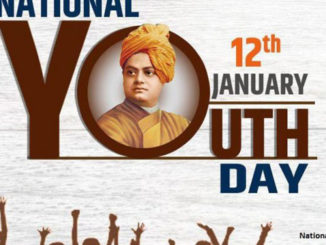
    Swamiji believed that if our youth is determined, there can be nothing impossible for them to achieve in the world. He urged youth to have dedication to the cause to attain success. Pursuing a challenge with utmost dedication is really the road to success, for our youth. His birthday on January 12 is celebrated as National Youth Day and the week commencing from that day is known as the National Youth Week. As part of National Youth Week celebrations, the Government of India holds the National Youth Festival every year. The youth festival aims to propagate the concept of national integration, spirit of communal harmony, brotherhood, courage and adventure amongst the youth by exhibiting their cultural prowess in a common platform.

    Swami Vivekananda belonged to the 19th century, yet his message and his life are more relevant today than in the past and perhaps, will be more relevant in future. Persons like Swami Vivekananda do not cease to exist with their physical death – their influence and their thought, the work which they initiate, go on gaining momentum as years pass by, and ultimately, reach a fulfilment which they envisaged.

    (Amarjit Singh Anand is a thinker and writer. He is a regular contributor to The Indian Panorama. He can be reached at amar1ujagar1pritam@gmail.com)