Tag: SGPC

  • Operation Bluestar And Punjab

    Operation Bluestar And Punjab

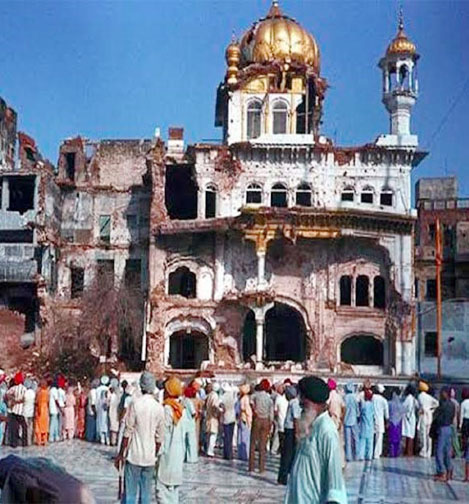
    Thoughts on the 39th anniversary of Operation Blue star: The game is for power not for Punjab

    By Prabhjot Singh

    Thirty-nine years after the traumatic Operation Blue Star, Punjabis in general and Sikhs in particular, continue to ponder what makes all ruling parties at the Centre to betray

    them. All agitations in this border State have ended in trading of power without anything being said about its long-standing demands, be it territorial rights, dams and water works, prime

    institutions and its people. Sikhs have been in the habit of hawking newspaper headlines for reasons that extend beyond the geographic boundaries of their motherland for whose independence they made nearly 80 per cent of the total sacrifices. Of late some of the world leaders while eulogizing the contributions this minute minority community has made in the Corona pandemic went to the extent of saying that there should be a gurdwara – Sikh temple –everywhere to look after the suffering humanity.

    It is that institution of gurdwara that has been making the Sikh community seek answers from the Central Government in India in general and the national political parties in particular.

    Questions about the attack on their sancta sanctorum have either been ignored or they remained mired in controversies. The Sikhs, a global community, have every reason to nurse a grouse both against the Congress – for engineering attack on their sancta sanctorum besides depriving the State of its rightful territorial and rivers water rights – and the Bharatiya Janata Party (BJP) for not assuaging their hurt psyche without taking any action to mitigate it.

    Wreaked by two politics-engineered partitions, this once affluent State continues to struggle to get its long-standing demands, including territorial sovereignty and rightful claim over its rivers waters, met. While the first partition in 1947 played havoc with the life and property of this border province, the second partition took away whatever little progress or gains it had made since independence. All major projects, including its capital, dams and water works and institutions, were taken away and brought under control of the Centre.

    It is all the more agonizing for the Sikhs when they look back at the history. Before the 1947 partition, says historian Research Professor Rajmohan Gandhi, the then British rulers tried to appease all major communities of northern India – the majority Hindu community and the minorities Muslims and the Sikhs. Though he did not say in many words that while the Hindus got India and the Muslims Pakistan, the Sikhs had to swallow false promises.

    After partition, their agitation for a Sikh Homeland ended in a truncated State they got which was without a capital, most of its dams and water works and many Punjabi speaking areas.

    While they were still trying to come out of the trauma of the two partitions, came the Operation Blue star. Whatever are the causes or reasons behind the “Dharam Yudh” morcha that made the Sikhs launch a struggle to get autonomy for States after adopting the Sri Anandpur Sahib resolution of August 1977.

    Agreed, violence has no place in any civilized society in general and liberal democracies in particular, Punjab has never been at peace with itself for a continuous period of 30 or more years. To be precise, Sikhs have always been at war, if not with the powers at the Centre then among themselves. And even in their struggle, political, religious or social, they have always pioneered a number of initiatives, both in and outside India. It is here where the role of journalists, as members of the fourth estate, becomes crucial in highlighting injustices done to the State or its people, Journalists are eyes and ears of a society as they play a critical role in preserving democracy. They are mandated to act as watchdogs in liberal democracies as while weaving their stories, they not only understand the importance or significance of Rule of Law but also keep the public good above everything else. While judging a journalist or his or her work, especially in the context of Punjab, it is important to understand the trying circumstances in which they worked. The State had the longest spell of President’s rule besides promulgation of draconian laws to contain militancy. A State that was once acknowledged as the sword arm or sports arm of the country besides serving as the food bowl of the country is now tottering at the brink.

    Some experienced journalists, both from within and outside the country, would invariably use objectivity and verification combined with storytelling skills to make a subject both credible and newsworthy. But journalists from Punjab remain suspects in the eyes of the Centre. Punjab has had more spells of curfew than any other State in the country. It is not to suggest that what a journalist writes has general acceptance.

    Objectivity itself is subjective. Like everything else, criticism of journalistic works often has political dividends. Increasing attacks by politicians on the credibility of a journalist or a media house have often been part of a conscious strategy to weaken both the accountability and credibility of journalism in general and a journalist in particular.

    Of late, we all have been a witness to a collapse of the notion that politically relevant facts can be discerned by news professionals, reiterating the general belief that journalists are no more apolitical leaving their readers uncertain about ingesting the messages communicated to them as credible. These changing perceptions and thoughts apart, there are old timers who are continuing to discharge their role as torchbearers. They religiously follow professional ethics and discharge their duties as ears and eyes of the society they represent. A couple of years ago, I reviewed a book by one of my friends, Jagtar Singh, for The Tribune, an institution with which remained associated for 37 years.

    As a veteran journalist and columnist, Jagtar Singh, remained an eyewitness from the very beginning of the fight for Sikh Homeland, to the present. His latest book “The Khalistan Struggle: Rivers on Fire” is the story of militant struggle in the border state of Punjab. It tells students of history as to what sparked this struggle, which were the people in the beginning and how this discourse shaped up as a fight for a separate Sikh state.

    Not only this, several other books about the Sikh religio-political discourse in synergy of both the peaceful and militant struggle from the earlier days, have taken up only selective militant actions, as these were the incidents as these shaped the discourse at crucial moments.

    For Sikhs, it is not only their emotive bondage with the institution of gurdwara in general and the sanctum sanctorum in particular but has acted as a catalyst to prove to the world that the Sikh gurdwara which the Indian defense forces attacked with mortar, grenades and guns in 1984, are the shelter homes for those in distress.

    And these spiritual centers-cum-shelter homes do not discriminate with beneficiaries on the grounds of their ethnicity, color, creed, religion or language. No Sikh would ever take or accept any attack on its place of worship.

    Most of those who have done work or written essays on developments in Punjab since 1947 have documented their works well. However, a few important revelations made in the book, including one about the assassination of the then Prime Minister Indira Gandhi, need corroboration. The author says that the names of all those who gunned down Indira Gandhi and those who were part of the design to kill her were in public domain. At least three more people besides all those known names were part of the plan to avenge Operation Bluster.

    This revelation has not been substantiated as he mentions that one of the three names – Manbir Singh Chaheru – purchased a plot in Mohali for Bimal Kaur Khalsa, wife of Delhi Police Sub Inspector Beant Singh, one of the two assassins of Indira Gandhi. It appears to be a post-action (assassination) association that brought Bimal Khalsa in contact with Manbir Chaheru and Damdami Taksal. All said and done, it was the religious hurt that made Beant and Satwant kill Indira Gandhi. The revelation cannot be dismissed, as corroboratory evidence may have remained unexplored.

    Incidentally, I covered most of the militant actions, including assassinations of Indira Gandhi and Beant Singh, besides Operation Bluestar, Kapuri Morcha and the Dharam Yudh morcha.

    Coming to the emotive issue of rivers waters, it has been proved that the State Assembly never ratified none of these awards. The assembly took up the issue twice, first during the Akali Government of Surjit Singh Barnala that annulled the 1981 award, and the second by the Congress Government of Capt Amarinder Singh that set aside all water agreements. It may sound strange that none of these Legislative pronouncements could become effective. The issue has been once again thrown open by the Apex Court necessitating the Centre to get back to the rigmarole of holding meetings with the Chief Ministers of Punjab and Haryana. When the Barnala government annulled the 1981 award (Indira-Darbara award), the State Assembly simultaneously endorsed the Rajiv-Longowal accord that mandated the setting up of a Tribunal to resolve the water sharing problem. And the Tribunal so set up – Eradi Tribunal – after submitting its interim report in 1987, failed to give its final report even after

    24 years costing the state exchequer several crores. When we talk of Punjab Rivers’ waters issue, reference to Riparian principle or law becomes imminent. Going by Encyclopaedia Britannica, “In property right doctrine pertaining to properties adjacent to a waterway that

    (a) governs the use of surface water and

    (b) gives all owners of land contiguous to streams, lakes, and ponds equal rights to the water, whether the right is exercised or not.

    The riparian right is un-usufructuary, meaning that the landowner does not own the water itself but instead enjoys a right to use the water and its surface”.

    Going by the basic philosophy of the Riparian Law or principle, the actual rights rest with the people who live adjacent to waterways. Intriguingly, in the case of Punjab, the actual beneficiaries were uprooted and the State or the center claimed ownership rights over the waters. And select powerful people, holding high positions both in the state and the center, forget about the water awards without ever getting to the beneficiaries, the people, for their endorsement.

    Now coming back to the Operation Blue star, after 39 years, there is no credible or authentic version of the whole unfortunate episode that reveals actual drills of the operation, exact total casualties, the fate of the archives, artifacts, books and documents that were there in the SGPC museum damaged during the attack on Golden Temple as a part of Operation Blue star.

    Complicity of other powers, including the British government, in the events leading to the Operation Blue star, is still to be told. The only conclusion that can be safely drawn is that the people of Punjab have suffered immensely. And their agony continues unabated.

    (Prabhjot Singh is a veteran journalist with over three decades of experience of 14 years with Reuters News and 30 years with The Tribune Group, covering a wide spectrum of subjects and stories. He has covered Punjab and Sikh affairs for more than three decades besides covering seven Olympics and several major sporting events and hosting TV shows.)

  • Third blast near Golden Temple in a week, 5 arrested

    Third blast near Golden Temple in a week, 5 arrested

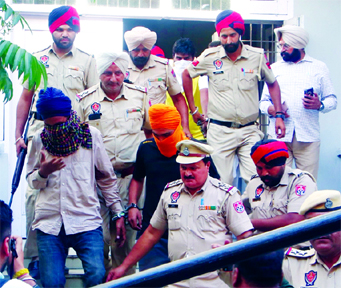
    Amritsar (TIP)- The Punjab Police on Thursday, May 11, said they have solved the cases of low-intensity explosions in Amritsar with the arrest of five people hours after another blast near a community kitchen of the Golden Temple, Sikhism’s holiest shrine. In a tweet, Punjab Police chief Gaurav Yadav said a press conference will be held in Amritsar in this regard. He added the Punjab Police are committed to maintaining peace and harmony in Punjab as per chief minister Bhagwant Mann’s directions.
    May 11’s blast was the third such explosion in five days. The scene of the third blast is around 1.5 km from the earlier two explosions.
    Police commissioner Naunihal Singh rushed to the spot for an investigation and to seal the scene as the third explosive went off.
    The Punjab Police earlier claimed to have tightened the security around the Golden Temple as they held flag marches with the support of paramilitary forces. Singh said they detained suspects and were questioning them. “The investigation is on and the media will be briefed later.”
    The first two blasts rocked the busy Heritage Street leading to the Golden Temple. The first blast took place around 11:30pm on Saturday while the second blast on Monday morning.
    Yadav earlier said that the terror angle cannot be ruled out.
    Harjinder Singh Dhami, the head of the Shiromani Gurdwara Parbandhak Committee (SGPC) that manages Sikh places of worship, said the security personnel of the gurdwara caught three suspects, including a couple who were staying in Guru Ramdas Serai (inn), based on CCTV footage. He added the three were responsible for the fresh explosion. “The three were handed over to the police later.”
    People aware of the matter said the couple from Gurdaspur was staying in the inn of the Golden Temple from where they allegedly threw a bomb on Thursday. Police said they have recovered some handwritten pages from the possession of the accused.
    Dhami accused the government of negligence in handling the matter and taking it lightly. “…had the government taken the previous two explosions seriously, the third explosion would not have taken place.”
    He said a scanner will be installed for the devotees entering the Golden Temple and appealed to devotees to carry only necessary things while visiting the shrine.
    Dhami appreciated SGPC employees for catching the suspects with the help of technology within hours of the third blast. He asked pilgrims to visit the shrine without fear as the situation is entirely peaceful.


  • Sikh History This Week- may 5, 2023, to may 11, 2023

    5th May

    1723 Jassa Singh Ramgarhia was born. Ramgarhia, son of Giani Bhagwan Singh of Saedbaegh village, Lahore. He was an accomplished scholar of weaponry and an effortfull individual. He together with Nand Singh Sanghani constructed the “Ram Rahuni” from scratch. When the Adinabaeg general blew up the Ram Rahuni, Jassa Singh re-erected it and named it “Ram Gadh”. Henceforth, he came to be known as Jassa Singh Ramgarihia. And his group also was popularly known as Ramgarihias. Just like other Sikh misls, the Ramgarihia misl established its rule and served the GurSikh Panth.
    1739 Sikhs attacked Nadar on his return trip to Persia and rescued a large booty and thousands of captive Hindu women.
    1834 Peshawar conquered and Khalsa raj extended Raj upto Jamraud, Afghanistan. Kanwar Naunihal Singh and Sardar Hari Singh Nalwa conquered Peshawar and extended the territory of Khalsa Raj upto Jamraud (Afghanistan). Further this territory was named Sumaergadh.
    1948 Patiala and East Punjab States Union (PEPSU) was formed. EAST PUNJAB STATES: Patiala, Nabha, Jind, Faridkot, and Malerkotla were the Sikh states in the East Punjab before the integration of Indian States in 1948. The first four were the Sikh states under the sovereignty of Maharaja Ranjit Singh and were brought under British protection by the 1809 treaty of Amritsar. Patiala, Nabha, and Jind, also known as Phulkian states, share a common ancestor Phul, who was descendent of Baryam. The Emperor, in 1526, had granted Baryam, the office of revenue collection for the waste country south-west of Delhi. Emperor Shah Jahan continued Phul in this office. From his eldest son descended the families of Nabha and Jind while from his second son the Patiala family. The Faridkot family, founded in the middle 16th century sprang from the same stock as the Phulkians chiefs.

    6th May


    1897 First year classess of Khalsa College were held in Amritsar. The first year classes of Khalsa College were held in the newly and partly built building in Amritsar, near the present Guru Nanak Dev University campus.
    1930 Firing at the Sees Ganj, Delhi.


    The police fired on Gurudwara Sees Ganj, Delhi. Congress workers had entered the Gurdwara premises and were throwing brickbats on police. In retaliation, the police fired, when the bullets hit Guru Granth Sahib. This caused widespread resentment among the Sikhs. The SGPC launched a campaign for boycott and picketing of foreign cloth shops in protest against this firing. Though Kharak Singh sought to maintain a distinct identity of the Sees Ganj agitation, it certainly gave strength to the Civil Disobedience Movement. Sikhs contributions to this movement was disproportionately large.

    7th May
    1665 Guru Tegh Bahadhur visited Kiratpur.
    1845 Baba Bir Singh of Naurangabad was assassinated at the hands of the treacherous dogra Raja Hira Singh. He was a great Sikh saint of Khalsa Raj period. BHAI BIR SINGH was born on Saun Sudhi 3 Sunmat 1825, in village Gugobuha (near Amritsar) to father Sewa Singh and mother Matta Dharam Kaur. During his youth, he served in the forces of Maharaja Ranjit Singh.
    1923 Maharaja Ripudaman Singh of Nabha deposed by the British.

    8th May

    1705: Battle of Muktsar and Martyrdom of Chaali Muktey.
    1839: Khalsa forces captured Kandhar and established Shah Sujaul Mulak as the ruler.
    9th May
    1915 Bhai Sahib Randhir Singh arrested for participation in an unsuccessful attempt to attack Ferozepur Fort.
    1988 Indian government killed numreous innocent GurSikhs at Sri Darbar Sahib.
    10th May
    1479 Prakash Utsav, Third Patshah, Guru Amar Das Ji.


    1887 Maharaja Dalip Singh sought help of Russian ruler Alexander III to fight against the British government.
    1924 6th Jatha of 500 Akalis, led by Prem Singh of Kokri, started its march to Jaito.
    1930 Master Tara Singh arrested for marching in support of atrocities against Pathans.
    1955 Agitation launched against the imposition of ban on the slogan Punjabi Suba Zindabad was launched. 10,000 courted arrests. This is known as a small agitation for Punjabi Suba.
    1984 Giani Pratap Singh, Jathedar Sri Akal Takhat is murdered.

    11th May


    1835 Dost Mohd. agitated over Sikh occupation of Peshawar in 1834 made war preparation but left battle field at Attock. Dost Mohd., agitated over Sikh occupation of Peshawar, wrote to Maharaja Ranjit Singh to hand over Peshawar or be prepared to face a war. Ranjit Singh sent an equally strong rejoinder. Dost Mohd. made a religious issue to incite fellow tribals against Sikhs and made elaborate preparations. Maharaja Ranjit Singh sent a large force under Hari Singh Nalwa but also played the diplomatic game of breaking away minor tribal chiefs with money and allurements. Gulab Singh and Avitable were sent to Kohat and Venfura joined Maharaja Ranjit Singh at Attock. Dost Mohd. realising his weakness left the field with bag and baggage during night on this day.

    1922 Sunder Singh Makhsuspuri and Arjan Singh of Sundh were arrested and Kishan Singh Gargaj narrowly escaped.
    1981 Akali party passed resolution Sikhs are a Nation. The Akali Party passes the resolution Sikhs are a Nation. On Mar. 25, 1981 the SGPC unanimously passed the resolution Sikhs are a nation. With the passing of such a resolution by the Sikh Parliament and with the ratification of this resolution by the Jathedar of the Akal Takht on April 21, 1981, the issue stood finally decided by the whole of the Sikh nation. On May 11, 1981, the Akali Party also passed a resolution to that effect.

  • Sikh History This Week- March 24, 2023, to March 30, 2023

    24th March
    1664 Guru Har Krishan Ji visited Aurangzeb’s court. This is the time Guru Sahib visited Aurangzeb’s court, when Ram Rai emphatically declared that the decision of his father in selecting his younger brother as his sucessor to the pontificate of Guru Nanak was based on cogent reasons, and that he was now under the command of the new Guru.
    1847 The British being aware of the Sikh’s emotional and sentimental attachment to Golden Temple and other shrines, issued special instructions to the British subjects to be careful in maintaining the sanctity of the shrines.
    1922 Meeting at Rajowal by Kishan Singh Gargaj group to devise ways and means of reforming the toadies
    1945 Master Tara Singh denounces the Acharyae Formula.
    25th March
    1830 Baba Ratta Ji Nirankari was born.
    1921 13th Sikh Education Confernce was held in Hoshiarpur that and lasted until Mar. 27. This conference saw the rise of miltant Akalis who advocated non-cooperation with the British government and were deeply inspired by Master Mota Singh. They met sperately and created disturbances in the conference as well as worked on a sperate program. They were equally patriotic believing in the militant traditions of the Nihangs.
    1921 The militant Akalis hatched a conspiracy to murder the officials respobsinle for the Nanakana carnage. 1972 Mohan Singh Tur became President of Akali Party. 1981 The SGPC unanimously passed the resolution “Sikhs are a Nation.” With the passing of such a resolution by the Sikh Parliament and with the ratification of this resolution by the Jathedar of the Akal Takht on April 21, 1981, the issue stood finally decided by the whole of the Sikh nation. On May 11, 1981, the Akali Party also passed a resolution to that effect.
    1986 Surjit S. Barnala himself ordered firing at the Sikhs who were observing holy festival at Anandpur Sahib, killing several Sikhs.

    26th March

    1644 Gur Gadhi Diwas, Guru Har Rai Sahib Ji (1644).
    1746 The forces of Yahiha Khan and Lakhapat Rai seized and set fire to the Kahnuwaan forest. 7,000 Singh were martyred here while another 3,000 were taken to Lahore and martyred there.
    1746 Matta Sunder kaur Ji sent a mace of Kalgidhar to honor Jassa Singh Ahluwalia.
    1748 Raja Amar Singh of Patiala was born. He was a thorough gentleman.
    1923 Amar Singh, granthi of Kot Fatuhi, is arrested

    27th March
    1843 Raja Suchet Singh murdered. Raja Suchet Singh was brother of Raja Dhiyan Singh Dogra and Gulab Singh Jammu. He was a popular propenent of Sikh Raj. Sher-e-Punjab, Maharaja Ranjit Singh, personally bestowed the honor Raja on Suchet Singh.
    1923 Hazara Singh Sirbrah of Behbalpur is murdered.
    1924 The 4th shahihi jatha of 500 valiant Akali satyagrahies, led by Sardar Puran Singh Bahowal, marched from Anandpur Sahib to Gangsar, Jaito.

    28th March


    1552 Gur Gadhi Diwas, Sri Guru Amar Das Sahib.
    1620 Guru Hargobind Ji had to marry Nanaki despite his refusal. This was an unfortunate upshot of the jubilation in Sikh community caused by Guru Sahib’s release from seven years of incarceration. Within a few months two brides were pledged to him by their parents. Under the customs prevalent at that time, on Guru Hargobind’s refusal, those girls would have remained unmarried throughout their life. So he had to marry Nanaki on March 28, 1620, and Mehrai also called Marwahi on July 10, 1620. The first incident occurred too close to his release. Taken aback at the second incident, he announced that no one should pledge his daughter to him in future.
    1965 SGPC resolves at its general meeting to establish Punjabi Suba.

    29th March

    1552 Second Patshahi, Guru Angad Dev Ji departed this planet from Khadur Sahib. He served as Guru for 12 years and none months. Today is the actual date of joti jot, though its is observed on a different date by Guru Khalsa Panth.
    1552 Third Patshahi, Guru Amar Das Ji ascended to Guruship of Sikhsism. Amardas was influenced to Sikhims by Bibi Amro, daughter of Guru Angad Dev Ji. She was married to Amardas’s nephew. Bibi Amro was a very pious woman. She would get up early in the morning, take a bath and start reciting the hymns of Guru Nanak. One day Amardasheard Bibi Amro sing Guru Nanak’s Jap Ji and pauris of Asa-di-var. He was touched by the divinity and peity of the hymns. He learnt those gymns from her and started reciting them every morning.
    1699 Baisakhi day, Guru Gobind created the Khalsa order at Anandpur Sahib. Earlier Hukamnamahs were sent to Sikhs all over Hindustan and beyond to vist Anandpur. The people were asked to visit with their hair unshorn. The hill chiefs, who, according to one account, were taken into confidence about Guru’s program, were present in strength. He Abolished the corrupt and debased institution of ‘masands’. Created a small regular army and fortified Anandpurs with a ring of smaller fortresses around it.
    1748 The Sikhs assembled at Amritsar on Baisakhi day and by a gurmatta, decided to form Dal Khalsa by reorganization of over 60 arms jathas, bands, into eleven associatios (misls) under the overall command of’ Jassa Singh Ahluwalia. Nawab Kapur Singh because of his age sought retirement from active overall leadership.
    1922 Akali Dal renamed as “Shiromani Akali Dal”.
    1940 The Khalsa National Party at its meeting in Lahore, under Sunder Singh Majithia, saw danger in the division of India into Hindu and Muslim independent states, and said that the Sikhs would not tolerate for a single day the unadultrated communal rule of any community. As a logical sequence, it asked for restoration of Sikh sovereignty of Punjab, which was held in trust by the British during the minority reign of Maharaja Dalip Singh.
    1981 SGPC adopted the motion “Sikhs are a Nation”. When the Presdient Gurcharan Singh Tohra, was asked the question that the SGPC was turning political, he answered “On October 10, 1946, Ishar Singh Mahjaiol, had moved in the house a resolution for the creation of a Sikh State. The resolution was seconded by Sardar Swaran Singh. The “Sikhs Are a Nation” proposal was part of S. Ganga Singh Dhillon’s speech at 54th All India Sikh Educational Conference that took place on March 13, 14, and 15, 1981. In his presidential address, S. Ganga Singh Dhillon wrote: “SIKHS ARE A NATION We all are born equal, with a human right to preserve our religious and cultural heritage, improve our economic inheritance and freedom to mould our destiny.

    30th March

    1664 Patshahi Eighth, Guru Harkrishan Ji, left this planet for heavenly abode from Delhi. He was eight years of age, when he took over on himself the sufferings and sins of the people of Delhi. As a result, he left for heavenly abode. Today is the actual date of joti joot, though it is observed differently by Guru Khalsa Panth.

  • Sikh History This Week- January 20, 2023, to January 26, 2023

    20th January

    1706       Guru Gobind Singh Sahib reached Talwandi, where he set camp, outside the village, is the location of Gurduara Damdamaa Sahib. Dam damaa means breathing place. That is take a breather after the many battles he had been through.

    1841       After Gulab Singh left Lahore, Sher Singh occupied the fort. Dhian Singh became the Wazir. The Sandalwalia Sardars, hostile to the ruling group, started entering into intrigues.

    1926       The British Government announced the judgement in Babbar Akali case. As a result, 5 Babbar Akalis were ordered to the hanged, 11 were sentenced to life imprisonment, and 38 were imprisoned four years. Approximately 90 religious, high spirited, daring fighters formed the Babbar Akali group. They had promised freedom to the masses and vigorously fought the British, especially in the Duaba and Malwa regions.

    1986       Sentences handed in the case of Indian Airline hijacking.

    21st January

    1831       The King of England sent valuable gifts to Maharaja Ranjit Singh as a gesture of friendship. The gifts were really meant to be a bate of friendship! The British had encroched into his territory and came all the way to the other side of river Satluj and finally attacked the Sikh kingdom as soon as he breatherd his last, after buying all the Dogras. What followed afterwards is a history!

    1846       Budhowal battle was fought and won by the Sikh troops against the East India Company. Sikhs defeated Harry Smith at Budhowal and captured his baggage. Sikhs also attacked and burned down large part of Ludhiana cantonement. HArry Smith fought a minor skirmish with Ranjodh Singh at Atwal.

    22nd January

    1848 Mool Raj, Governor of Multan, revolted against the British but was defeated.

    MOOL RAJ: During Maharaja Ranjit Singh’s reign, Mool Raj was an efficient and loyal Governor of Multan, He was the son of Diwan Sawanmal Chaupadhae and appointed Governor by the Lahore darbar. During his reign, two British officers were killed by the Lahore forces. As a result, the British Resident of Lahore, John Lawrence, wanted to dismiss Mool Raj. On account of his loyalty to the kingdom of Ranjit Singh, he revolted against the British East India Company who were forcibly annexing Ranjit Singh’s Punjab. He put up a brave defense of the fort of Multan but was defeated on this day. The British arrested and imprisoned him in Calcutta jail, where he died in 1850.

    1849 Multan fell to the British.

    1986 The additional session judge announced his judgement in the case of Indira Gandhi’s murder. Satwant Singh and Kehar Singh were to be hanged. The sentence was carried out on Jan. 6, 1989. Indira Gandhi was gunned down at her resident on Oct. 31, 1984.’ as a retribution for her role in operation Bluestar, during which the Indian Army attacked and desecrated Sri Harimandir Sahib, Amritsar.

    23rd January

    1923 Dhanna Singh Behbalpur joins the Babbar Akali Jatha.

    1923 Second attempt to kill Arjan Singh Patwari of Haripur also ends in a fiasco. He was alledged to be responsible for Master Mota Singh’s arrest.

    1948 Dr. B.R. Ambedkar suggested the Sikhs to struggle for a Punjabi speaking state.

    1960 Sirdar Tirath Singh accepted shahadat in Delhi, in connection with the Punjabi Subha morcha.

    24th January

    1849       Chatter Singh joined with Sher Singh against the British while the British forces spared from Multan battle joined their forces.

    1923       Pragpur is raided to arrest Kishan Singh Garhgaj.

    1928       Raghbir Singh RajaSasi formed the Central Sikh Association.

    1943       Maharaja Ripudaman Singh of Nabha passed away at Kadia-Kunal.

    Among the 12 Sikh misls, Nabha reign represented the major branch of Phullkiyan misl. The Nabha family began with Gurdit Singh, the eldest son of Chaudhary Tilok Singh, who in turn was the eldest son of Baba Phull. As a result, Nabha is also known as Chaudhary da Garh (house of Chaudhary).

    1960       129 members of the SGPC and over 100,000 GurSikhs took a vow to lay lives for Punjabi Suba.

    1993       Kesri Nishan hoisted at The Hague.

    25th January

    1921       Morcha of Taran Taran marked the beginning of Gurudwara Reform Movement. Hazara Singh became the first martyr of the movement.

    1922       Karam Singh of Daulatpur arranged diwan at Nawansehar.

    1936       The Nankana Sahib Committee established the Guru Nanak Prachar Trust.

    26th January

    1720       Nadir Shah attacked, ransacked, and looted Delhi.

    Pandits and Brahmins suffered extensively under Aurangzeb, Bahadhur Shah, Forkhshayer, Nadar Abdali, etc. and Guru’s Sikhs rescued their daughters, sacrificed their own lifes for saving their Dharam. Then these decepers used to honor the Sikhs as “saintly rulers.”

    1921       Sikhs assume control of Sri Darbar Sahib, Taran Taran.

    1950       Republic day of India. But the Sikh Nation’s aspirations remain unfulfilled.

    1986       The Sarbat Khalsa, gathered together at Akal Takht Sahib, Amritsar resolved to establish a sovereign State, Khalistan and elected a Panthic Committee to co-ordinate the movement for national independence.

    1986       Work was initiated to dismantle Akal Takht constructed under government’s forcible “Kar Sewa” after Bluestar Operation. This work was carried out by Baba Santa Singh, who was excummunicated from the Panth for his cooperation.

  • SGPC facilitates evacuation of distressed Afghan minorities

    SGPC facilitates evacuation of distressed Afghan minorities

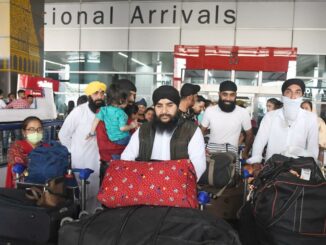
    NEW DELHI (TIP): The Shiromani Gurdwara Parbandhak Committee (SGPC) continues to facilitate the transfer of Afghan Hindus and Sikhs to India in coordination with the Indian World Forum and the Centre. A special flight from Kabul arrived in Delhi on Thursday, July 14. Twenty-one Afghan Sikhs, along with an infant who has been facilitated without a visa, arrived in Delhi. The SGPC has assisted them with airfare and will also provide financial aid to those seeking rehabilitation in the country. SGPC officials and Afghan-Hindu and -Sikh community leaders were present at the airport to receive them. After their arrival, they proceeded towards Gurdwara Sri Guru Arjan Dev in the city. About 130 Afghan-Hindus and -Sikhs are still there in Afghanistan and about 60 applications remain pending with the government.

    (Source: TNS)

  • Gurbani telecast from Golden Temple: SGPC fails to comply with Akal Takht directive

    Gurbani telecast from Golden Temple: SGPC fails to comply with Akal Takht directive

    AMRITSAR (TIP): The SGPC has failed to comply with the directions of the Akal Takht to prepare its Information Technology (IT) wing to facilitate world-wide live telecast of Gurbani from the Golden Temple ‘within a stipulated time’. Akal Takht Officiating Jathedar Giani Harpreet Singh had ordered the SGPC to work on the modalities of launching its channel, and written directions were issued on April 8. In response, the SGPC had sought a week to equip its IT wing as cameras, wiring and other relevant infrastructure were to be arranged, but to no avail.

    Irked, some SGPC members submitted a complaint with the Takht Secretariat over non-compliance of its directions. A complainant, SGPC executive member Gurpreet Singh Randhawa, said contrary to Takht’s directions, neither could the SGPC start its IT’s web channel nor take steps to stop the controversial private channel from broadcasting Gurbani. Takht had ordered the SGPC to make stopgap arrangements by equipping its existing web channel being run by the IT wing to telecast the Gurbani. Even CM Bhagwant Mann had offered to bear the cost of setting up the infrastructure. Rejecting the offer, SGPC chief Harjinder Singh Dhami had termed it politically motivated. Dhami said a five-member panel was formed to study the feasibility of launching a channel. “It had conducted two meetings. Since it required raising of technical infrastructure, the panel is working on it. It will also look into legal aspects as the SGPC is in a pact with the channel on telecast rights till February 2023. As soon as we receive its report, we will table it in the executive and take further action,” he said.

    (Source: TNS)

  • Indian-originMP Tanmanjeet Singh Dhesi honored for raising farmers’ issue in British Parliament

    Indian-originMP Tanmanjeet Singh Dhesi honored for raising farmers’ issue in British Parliament

    PHAGWARA , INDIA (TIP): Various farmers unions honored Tanmanjeet Singh Dhesi, MP from Slough, UK, at an event in Mauli village, Phagwara, on Friday, April 8,  for raising the farmers’ issue vociferously on the floor of the British Parliament during debates and questions during ‘Kisan Andolan’. At this special programme organized by Bharatiya Kisan Union (Doaba), farmer leaders and supporters of the Sanyukt Kisan Morcha gathered in large numbers to show their appreciation for those who had shown solidarity during the largest protest on the planet. Dhesi spoke at length on the NRI support for the Indian farmers and the daily information updates he had received from many, especially his uncle Paramjit Singh Raipur, member SGPC, from Adampur. Dhesi said he had organized an initiative by drafting a letter which was signed by 36 MPs to the UK Foreign Minister so as to raise the human rights issue of the peacefully protesting farmers with the Indian Foreign Minister, which he duly did. Interacting with farmer leaders, he said he had penned another letter to UK Prime Minister Boris Johnson, signed by over 100 British MPs, to ensure that farmers were not mistreated by the authorities, when footage of the tear gas and lathicharge became viral. In his address, Dhesi raised various NRI issues, such as the need to have more direct flights from the UK to Amritsar and Chandigarh. UK MP also highlighted other ongoing work that he was leading on, involving constructing a memorial in central London for Sikh soldiers who served during the World Wars and promoting the marital art gatka by holding annual UK Gatka Championships for seven years.

  • SGPC says suppression of religious freedom will not be tolerated

    SGPC says suppression of religious freedom will not be tolerated

    AMRITSAR / NEW YORK (TIP): Head of Shiromani Gurdwara Parbandhak Committee writes to Karnataka CM opposing objection to Sikh girl wearing turban to Bengaluru college. The Shiromani Gurdwara Parbandhak Committee (SGPC), the body responsible for the management of gurdwaras, on Thursday , February 24, objected to the action of a college in Bengaluru, which has reportedly asked an ‘ amritdhari’ (initiated) Sikh girl to remove her turban to attend the college.

    SGPC president Harjinder Singh Dhami has written a letter in this regard to Karnataka Chief Minister Basavaraj Bommai, asking him to ensure the preservation of the religious freedom of Sikhs in the State and also reminding him of the contribution of Sikhs to India.

    “It cannot be tolerated to force Sikhs to remove their turban in their own country. It is an unconstitutional decision that will never be accepted. Turban is very important in Sikh faith, and it is an integral part of Sikh dress. Forcing anybody to remove the dastar (turban) is in violation of Sikh traditions and principles,” Mr. Dhami wrote.

    “The questions are being raised on the turban of Sikhs in India, where turban-wearing Sikhs have served as the President, Prime Minister, Chief Justice and Army Chief. Sikhs all over the world wear a turban and are working on various top positions, whereas, in their own country India, turbans are being challenged,” the letter adds. Mr. Dhami said that the suppression of Sikhs’ religious freedom can never be in the interest of the country. The SGPC president has also demanded the intervention of Prime Minister Narendra Modi in the matter, and the issuance of instructions to every State to uphold the religious freedom of the people. Mr. Dhami said that the Sikh community would never tolerate any act of suppression of their religious freedom and they would strongly oppose it.

    (Source: PTI)

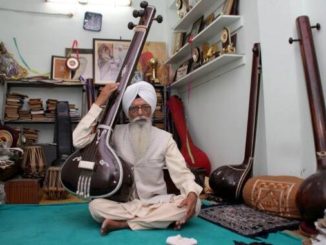
  • Gurmat Sangeet legend Prof Kartar Singh passes away

    Gurmat Sangeet legend Prof Kartar Singh passes away

    LUDHIANA/NEW YORK TIP): Padma Shri awardee Gurmat Sangeet legend Prof Kartar Singh (94) passed away in Ludhiana on January 2, 2022, according to a belated report.

    Prof Kartar Singh won several prestigious honors for his contribution to Gurbani, which he had been practicing since the age of 13 and was specialized in the popular classical music form of ‘tanti saaz’. He was one of the few ‘Gurmat Sangeet’ legends, who pursued music teaching.

    He was a recipient of the Sangeet Natak Akademi Award, the highest Indian recognition given to practicing artists, and the Tagore Ratna Award. He also won the Punjab government’s Shiromani Ragi Award and the Punjabi University’s Gurmat Sangeet Senior fellowship.

    Kartar Singh was given the Sikh Lifetime Achievement Award in London in 2011 and nominated to the Top 100 Global Sikhs by the Sikh Directory in the United Kingdom. He wrote five books on Gurmat music, with a total of over 40,000 copies, published by the SGPC. Two of his books are under publication.

    Born at Ghummanke village in Lahore on April 3, 1928, Kartar Singh completed graduation and post-graduation in music (vocal and instrumental) from Panjab University, Chandigarh.

    On December 20, Ludhiana deputy commissioner Varinder Kumar Sharma handed over the Padma Shri award to Kartar Singh at the Dayanand Medical College & Hospital (DMCH), Ludhiana, as health issues had prevented him from attending the function in Delhi. Kartar Singh is survived by his daughters Manjit Kaur and Sukhbir Kaur, sons Amarjit Singh and Amritpal Singh, daughter-in law Amarjit Kaur, and grandchildren.The staff at The  Indian Panorama condole Major Ahluwalia’s demise and pray for eternal peace to the departed soul.

  • Sikh’s Ninth Master “Guru” Tegh Bahadur’s 400th anniversary: SGPC to telecast live

    Sikh’s Ninth Master “Guru” Tegh Bahadur’s 400th anniversary: SGPC to telecast live

    NEW YORK /AMRITSAR (TIP): The 400th Parkash Purb centenary celebrations were scheduled to be celebrated at Bhai Gurdas Ji Nagar, New Amritsar. But due to rise in Covid cases, these ceremonies will now be held at the Diwan Hall of Gurdwara Sri Manji Sahib at Golden Temple complex, said SGPC President Bibi Jagir Kaur, addressing media persons in Amritsar, April 21, 2021.

    Ms Kaur said, “There was a lot of enthusiasm among the sangat for the centenary celebrations but considering the prevailing situation due to the pandemic, no large gathering could be allowed. A series of events, scheduled at Gurdwara Guru Ka Mahal, the birthplace of ninth Guru in Amritsar, would be telecast live through various platforms so that the sangat all over the globe could get connected with the historic day celebration while sitting in their homes”, she said.

    During the centenary celebrations, the requisite web links would be provided to the channels for live telecast of the events scheduled from April 29 to May 1. “It would be open for any channel who wishes to do the live coverage”, she said. She said the decision was taken after holding discussion with the government officials. To cater the Covid patients exclusively, the SGPC has spared Sri Guru Ram Das Charitable Hospital at Chattiwind Gate. A total of 100 beds have been provided here and corona vaccination facility is also being provided free of cost. The SGPC has made arrangements for vaccination at Sri Guru Ram Das Medical College Vallah, Sri Guru Ram Das Charitable Hospital Amritsar, Baba Buddha Ji Hospital Bir Sahib and at Fuhara Chowk Amritsar.

    “Despite crisis being faced by the SGPC, it could never step down from performing its duties towards humanity. Our doctors and allied teams have been on job round the clock to treat Covid patients”, she said. Lately, the state government has recognized the services of SGPC-run Sri Guru Ram Das Medical College and included its image among the best medical treatment hospitals in the newspapers.

    However, showing concern over the shortage of oxygen cylinders and vaccines, she said “There is a shortage of oxygen supply for the treatment of Covid patients. Similarly, the availability of vaccine was inadequate. The SGPC had already deposited money in advance for the vaccine. The government should make steadfast mechanism to ensure uninterrupted supply of oxygen and vaccines. The matter has also been taken up with the Chief Secretary of Punjab”, she said.

    (With inputs from Tribune, Chandigarh)