Bollywood superstar Shah Rukh Khan on Sunday credited late filmmaker and frequent collaborator Yash Chopra for bringing him to the 77th Locarno Film Festival in Switzerland, where he was honoured with the gala’s prestigious Pardo alla Carriera award-Locarno Tourism award.
A day after he became the Indian film personality to receive the award for his contribution to cinema, the 58-year-old sat down for a Q&A session with Giona A Nazzaro, the artistic director of the Locarno Film Festival. It was his late mother, Shah Rukh said, who took him to a cinema hall to watch a film for the first time. “In school, Hindi (language) was not my strongest point. My mom said, ‘I’ll take you to a movie hall to watch a film if you get 10 on 10 in Hindi dictation’. I think I copied one answer from a friend, but I did get 10 on 10, and then my mother took me to watch a film in a theatre for the first time,” he said.
Coincidentally, the film was Chopra’s 1973 thriller “Joshila”, added the actor.
“It was called ‘Joshila’, which was of the director with whom I did maximum number for my films later on in my life. So life is connected. Mr. Yash Chopra, it was his film. I’m sitting here in Locarno, Switzerland because of him, because of that movie I saw.”
Veteran filmmaker Chopra directed Shah Rukh in “Darr”, “Dil To Pagal Hai”, “Veer-Zaara”, and his swansong “Jab Tak Hai Jaan”.
Chopra shot his mega hit directorials “Chandni” and “Darr” in Switzerland. His son Aditya Chopra also filmed his directorial debut “Dilwale Dulhania Le Jayenge”, starring Shah Rukh and Kajol, in the picturesque locales of the European country.
In 2016, a bronze statue of Chopra was installed by the Switzerland government as a tribute, near the Congress Centre in Interlaken, a popular tourist spot.
Shah Rukh, who was last seen in 2023’s “Dunki”, said after his parents died he wanted to leave New Delhi, his hometown, and come to Mumbai.
“I thought, I’ll get some roles. Then I thought I’d work in front of television, then I came into films, so I got little bits and pieces roles. And then one thing led to the other.
“I came to Mumbai for a year in 1990 and I said, ‘I’ll work for a year, earn Rs 1 lakh, buy myself a house, and then go back and become a scientist or a mass communication journalist. And, I hadn’t gone back yet,” he added.
Tag: Shah Rukh Khan
-

I’m sitting in Locarno because of Yash Chopra: Shah Rukh Khan
-

Amitabh Bachchan confirms son Abhishek Bachchan will star with Shah Rukh Khan in King
Amitabh Bachchan has confirmed that Abhishek Bachchan’s next project will be with Shah Rukh Khan, in the film King. Abhishek will play the antagonist in the film, directed by Sujoy Ghosh. It will star Shah Rukh’s daughter Suhana Khan. Amitabh took to his X (previously Twitter) account to share a fan who posted an exclusive report that Abhishek will be playing a negative role in Shah Rukh Khan’s King. The fan page wrote, “Those Who have seen Abhishek Sir’s in Breathe into the Shadows, Raavan and BB, Will know what level of Performance as a negative role he can give. Never ever doubt him. @juniorbachchan”
Meanwhile, Amitabh wrote in the caption, “all the best Abhishek .. It is TIME !!!”
The first report of Abhishek’s casting in King was shared by Peeping Moon on Monday. It added that Abhishek will “play a sophisticated villain facing off against Shah Rukh’s mafia persona.” The film will be produced by Pathaan director Siddharth Anand. Abhishek and Shah Rukh had previously worked in Farah Khan’s Happy New Year.
The source also added, “Abhishek is an actor whose full potential has yet to be fully realized. He has the ability to astonish audiences when given complex roles. King presents him in an out-and-out negative role for the first time in such a large-scale commercial movie, and he is sure to make a significant impact with his performance. The Jr. Bachchan was surprised when he was offered this role but accepted it immediately, intrigued by the depth of his character. It’s a special role, and Siddharth Anand has grand plans to present Abhishek in a manner audiences have never seen before.”
Suhana will be playing a young girl coming to terms with a life-altering situation. The film will also mark her theatrical debut. She made her acting debut with Zoya Akhtar’s coming-of-age period film The Archies on Netflix India last year. -
SRK ‘begs’ Mani Ratnam for a movie
Shah Rukh Khan and Mani Ratnam had worked together in the 1998 film Dil Se. At the CNN-News18 Indian Of The Year 2023 event on Wednesday, January 10, the two spoke about collaborating on a project again. Trying to convince Mani Ratnam to cast him in a film, Shah Rukh said he was ready to do Chaiyya Chaiyya on top of a plane if the filmmaker asked him.
Shah Rukh Khan told Mani Ratnam, “I’m requesting you, I’m begging you and I’m telling you every time to do a film with me. I swear, this time, I’ll dance on top of the plane for Chaiyya Chaiyya if you tell me… And, good evening Suhasini (Mani Ratnam’s wife). I told you that time to tell him ‘Shah Rukh, Shah Rukh’ before he sleeps.” When asked if he’ll make another film with the actor, the director said he would do so ‘when he (Shah Rukh) buys a plane…”
Boasting about the box office success of all his films in 2023, including the blockbusters Pathaan and Jawan, Shah Rukh Khan told Mani Ratnam in his cheeky way, “Mani, let me just tell you, the way my films are doing… this plane is not faraway.” In response, the filmmaker joked, “I’ll bring it down to earth, don’t worry.”
Sharing a clip of their interaction at the event a fan tweeted, “Shah Rukh Khan’s pitch to Mani Ratnam for another film after Dil Se is so wholesome. SRK said he will dance to Chaiyya Chaiyya on top of a plane this time.”
Directed by Mani Ratnam, Dil Se was a love story set against the backdrop of insurgency in northeast. Shah Rukh Khan-starrer Dil Se featured several songs, of which Chhaiya Chhaiya was one of the most iconic. It was composed by AR Rahman and penned by Gulzar. Chaiyya Chaiyya was sung by Sukhwinder Singh and Sapna Awasthi, and choreographed by Farah Khan. She had won the Filmfare Award for best choreography for the song that year. -

Shah Rukh Khan top on IMDb list of 2023’s most popular Indian stars
IMDb has announced its list of the year’s most popular Indian stars, with Shah Rukh Khan landing in first place. Khan has had quite a year, leading two major blockbusters, Jawan and Pathaan, which are respectively the No. 2 and 3 biggest Hindi movies ever worldwide. IMDb determines the star rankings by page views worldwide. Scroll down for the full list. Also making the cut high on the list are Alia Bhatt and Deepika Padukone. Bhatt, whose credits include Oscar winner RRR, this year starred in Netflix’s Heart of Stone with Gal Gadot and Jamie Dornan, and Karan Johar’s Rocky Aur Rani Kii Prem Kahaani.
Bhatt commented, “I thank my audience for bringing me to the position that I am at. While I hope to continue entertaining them, I am filled with only love and gratitude. I also promise to keep working hard and bringing more inspiring stories and characters on screen.”
Veteran actress Padukone was seen this year with Shah Rukh Khan in both Jawan and Pathaan. On deck, she has Siddharth Anand’s Fighter also starring Hrithik Roshan, and Rohit Shetty’s Singham Again with Akshay Kumar. -

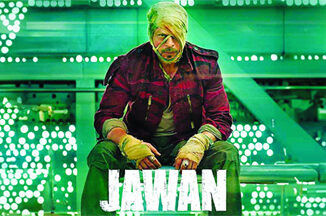
Jawan trailer: Shah Rukh Khan hijacks trains, fights for the country, wants ‘Alia Bhatt’
Jawan trailer is out. Trailer for Shah Rukh Khan’s eagerly-awaited film dropped days before its release. The video shared by the cast and crew gives the best look yet at the action film, which marks the first collaboration between Shah Rukh and Nayanthara. The film, which has been directed by filmmaker Atlee Kumar, is Shah Rukh’s second release of the year after the blockbuster hit Pathaan, which was released in January.
Shah Rukh Khan plays a former soldier in the movie and operates a team of six women as they pull off different heists around the country. They hijack a metro and Nayanthara’s police officer is put in charge of the case. She asks him what he wants when he names ‘Alia Bhatt’.
However, it looks like Shah Rukh was also married to Nayanthara in the past as they share some romantic moments in a couple of scenes. Deepika Padukone makes a fierce special appearance and beats Shah Rukh in a wrestling match. Vijay Sethupathi is seen in different avatars but appears to play the ‘fourth largest arms dealer in the world.’ Alongside Shah Rukh and Nayanthara, Jawan features Vijay Sethupathi, Sanya Malhotra, Priyamani, Girija Oak, Sanjeeta Bhattacharya, Ridhi Dogra and Sunil Grover, among others. Directed by Atlee and produced by Shah Rukh and Gauri Khan’s Red Chillies Entertainment, Jawan also features Deepika Padukone’s cameo appearance. Jawan releases in Hindi, Tamil and Telugu languages on September 7, 2023. Advance bookings for the film in various parts of the world promise a huge opening for the Shah Rukh Khan film. Recently, Shah Rukh had shared a motion poster of himself, in which he was seen in his different Jawan looks. In one look, he was bespectacled, in another he was bald. The actor was partially masked in one of the looks, and he looked intensely into the camera in another.
Ever since the film’s prevue, and its songs such as Zinda Banda and Chaleya were released, fans have been trending Jawan on social media. Recently, during an #AskSRK session on Twitter ox X, Shah Rukh was asked about Jawan’s trailer.
A fan had asked him when Jawan’s trailer would be released, writing, “Wanted to know when the trailer of Jawan will launch sir? We fans have been waiting patiently for this. Shah Rukh had replied, “Have it ready now… can’t decide should I put a new song or the trailer….???”
Source: HT -

Aryan Khan case: Wankhede abused his position, says NCB probe
New Delhi/Mumbai (TIP)- The NCB’s inquiry team has alleged that its former zonal director Sameer Wankhede abused his position while probing the drugs-on-cruise case involving Shah Rukh Khan’s son Aryan. The NCB’s findings have been taken on record as part of the CBI’s FIR against Wankhede and three other NCB officials, who initially investigated the case.
The NCB has found several alleged service rule violations by Wankhede, including misreporting of foreign travel expenses and dealings in luxury watches. The inquiry team, in its report, has found irregularities against Indian Revenue Services officer Wankhede and his team on two counts — alleged irregularities in the conduct of the drugs-on-cruise raids and violations under the Central Civil Services (CCS) Rules.
Wankhede has, however, denied the allegations. He had approached the Central Administrative Tribunal (CAT) and recently the Bombay High Court to quash the CBI FIR against him, saying the SET chief — NCB Deputy Director General Gyaneshwar Singh — was “acting as judge of his own cause and conduct” as he was his reporting boss during the investigation of the case.
Meanwhile, Wankhede, accused of demanding bribe from Shah Rukh Khan for not implicating his son, has claimed in his petition that the superstar praised the officer’s “integrity” and pleaded with him to be kind to Aryan.
As per Wankhede’s petition before the Bombay High Court seeking to quash the FIR registered against him by the CBI for bribery, Khan deplored the political involvement in the case. As per the transcript provided in the petition, in one of the messages, the actor said, “God bless you. I have to come personally whenever you say and give a hug to you. Let me please know whenever it’s convenient for you. Really, I have always had the highest regard for your uprightness and now it has increased manifolds. Big respect.” “Please show some kindness … I can only plead and beg you as a father. Please,” the superstar said in another chat, as per the petition. -
Wankhede shocker: NCB needs to put its own house in order
The charges against Indian Revenue Service officer Sameer Wankhede are piling up. According to the FIR registered by the CBI last week, Wankhede and his accomplices allegedly demanded Rs 25 crore as bribe for not framing Bollywood superstar Shah Rukh Khan’s son Aryan Khan in the 2021 drugs-on-cruise case. The FIR mentions that the Narcotics Control Bureau (NCB) team which raided the cruise ship allowed the supplier and the persons who were in possession of drugs to go scot-free. The tainted officer, who served as the NCB’s Zonal Director in Mumbai, is also on the probe agency’s radar for possessing assets disproportionate to his known sources of income, besides making a misleading declaration of expenditure incurred on his foreign visits.
The CBI booked Wankhede and the others following an investigation by a Special Enquiry Team (SET), headed by a Deputy Director General of the NCB. The SET report laid bare the officer’s brazen attempt to extort crores of rupees from Aryan’s family. The sordid saga has dented the credibility of the NCB, the nodal agency that enforces drug laws in India and works in coordination with international bodies such as the United Nations Office on Drugs and Crime. Several questions need to be answered: Did Wankhede’s superiors turn a blind eye to his excesses? Or were some of them in league with him? Who were the politicians whose patronage emboldened him to commit the offences?
The NCB, tasked with the ‘detection and disruption’ of organized drug trafficking groups, cannot do its job effectively if it shows laxity in weeding out erring officers. A deeper probe into the Wankhede case is a must so that course correction can be done. Sending a strong message of zero tolerance for corruption can deter domestic and international drug cartels. Also, the bureau must give precedence to catching the big fish. Getting its priorities right can help the NCB make a significant difference on the ground.
(Tribune India) -
I enjoy doing romantic films with Shah Rukh Khan, says Rani Mukerji
Sony Entertainment Television’s singing reality show Indian Idol 13 celebrated Rani Mukerji in the ‘dream finale’ episode in the presence of the actress herself. Making an appearance for the first time on the show, Rani not only promoted her upcoming film, Mrs. Chatterjee V/s Norway, but also enjoyed the performances by the top seven contestants. Bidipta Singh from Kolkata impressed everyone by singing Tumhi Dekho Na and Chup Chup Ke from the movies Kabhi Alvida Na Kehna and Bunty Aur Babli, respectively. Rani said, “I’ve done a variety of films but my favourite genre is romance. I enjoy doing romantic films with my hero; the one and only Shah Rukh Khan. The first song you sang, Tumhi Dekho Na, is one of my career’s best. We had filmed Kabhi Alvida Na Kehna in New York, and I remember that it was extremely cold in September.”
-
The soaring success of Pathaan is set to change the face of Indian cinema

Pathaan poster By Murtaza Ali Khan
After a long smear campaign that tried to put it down, the highly-anticipated Shah Rukh Khan starrer Pathaan has finally hit the theatres the world over. For the fans of Shah Rukh Khan, it is nothing less than a carnival. They are coming to the theatres in huge numbers which is reflected by the long queues that can be seen outside the theatres everywhere. All this has resulted in a huge opening for Pathaan (with the domestic collection crossing the 55-crore mark on Day 1, making it the biggest opener ever for Indian cinema).The total India collection on Day 2 was 70.50 crore nett (82.94 crore gross). It thus became the first Hindi film to breach the 70 crore nett collection on a single day. Meanwhile, overseas collection was also incredible as it collected 30.70 crore gross.
‘Pathaan’ created more history on its second day when it beat its own record for the highest day ever which it set on the opening day — Rs. 55 crore in Hindi format + Rs. 2 crore in dubbed formats — amounting to a total of Rs. 57 crore nett on Day 1.

Shah Rukh Khan in a still from Pathaan. Pathaan is a paean to the unsung heroes of India who day in and day out put their lives on the line in order to protect the glory of the motherland by guarding it against its countless enemies and forces that are trying to weaken it. These are spies, soldiers on covert operations, members of the intelligence network, whose sacrifices often go unnoticed. The Siddharth Anand-directed Pathaan in its unique own way takes us on a whirlwind global adventure with these selfless soldiers committed to the highest ideals of duty and sacrifice.

Shah Rukh Khan and Deepika Padukone in a still from Pathaan. In terms of massy cinematic entertainment, Pathaan has everything that anyone can ask or hope for: adrenaline-pumping action, non-stop thrill and adventure, endless twists and turns, exotic locations, a-list actors at the top of their game, cutting edge CGI and VFX, and jaw-dropping stunts. Also, both the film’s songs are already chartbusters. The time-tested pairing of SRK and Deepika Padukone is another major crowd puller. Not to mention, John Abraham’s return to playing antagonistic badass characters after a long hiatus. Also, watch out for a surprise cameo from someone very special.

The mad rush to watch Pathaan at a Cinema Hall. The soaring success of Pathaan is set change the face of Indian cinema. It will encourage more filmmakers to make big budget action extravaganzas and multi-starrers shot across very many different locations across the world, not unlike the James Bond, Fast and Furious, and Mission: Impossible films. Also, the birth of the YRF Spy Universe is set to usher in a new era of franchise-based storytelling unpinned by not just sequels but also crossovers and spinoffs. Henceforth, whenever we look at the Hindi cinema, it will always be marked by the following dichotomy: Bollywood before Pathaan and Bollywood after Pathaan.
(Murtaza Ali Khan is an Indian Film & TV Critic / Journalist who has been covering the world of entertainment for over 10 years. He tweets at @MurtazaCritic and can be mailed at: murtaza.jmi@gmail.com)
-

Pathaan gets a UA certificate after 10 cuts
Pathaan featuring Shah Rukh Khan, Deepika Padukone, and John Abraham has been embroiled in controversies ever since glimpses of it started showing up online. From leaked pictures to their song releases, there has been a mix of good and bad responses, nevertheless, the excitement around it has stayed intact. Now the latest news suggests that Pathaan has been given a UA certificate post certain cuts in the films. This includes the close-up shots of Deepika Padukone which were deemed inappropriate along with the dialogues. Three cuts have been made in the Besharam Rang song that were too bold for the viewers. Whether the saffron outfit that wreaked havoc on viewers has been removed or not was mentioned in the report. Words such as RAW have been replaced with subtler terms like “Humare” and “Langde Lulle” with “Toote Foote.” Other words such as “Mrs. Bharatmata”, “Ashok Chakra”, and “scotch” were replaced with “Veer Puraskar”, “SBU” and “drink’ respectively. Also, any reference to Russia is also reported to have been eradicated.
Meanwhile, protesters tore down posters of Pathaan in Ahmedabad. In a video shared by the Bajrang Dal Gujarat on Twitter, people were seen shouting slogans as they tore posters and even huge cut-outs of Pathaan’s star cast. The incident took place at Alpha One mall in Vastrapur, Ahmedabad where members of Bajrang Dal created a ruckus.
-
75 Years of Indian Cinema: A Walk Down the Memory Lane

By Murtaza Ali Khan Coinciding with 75 years of Independence, noted film critic Murtaza Ali Khan scanned for The Indian Panorama the 75 years of Indian Cinema. The article here will give readers a fairly good idea of the beginnings and the growth of Indian Cinema, the impact of government policies, the contribution of the Indian Diaspora, the influence of the NRI film makers, the difference the rise of web and the OTT platforms made to mainstream Indian Cinema, and the contribution of certain film makers. The author has also dwelt on the historical phases in the Indian cinema’s 75-year journey. Please send in your comments to murtaza.jmi@gmail.com – EDITOR

Satyajit Ray behind the camera. (Photo: courtesy Ray Society) Storytelling is undeniably one of the most powerful tools known to mankind. It also happens to be one of the oldest art forms. Storytelling is not merely a means of indulgence but also a great source of learning. Since times immemorial, storytellers have spun yarns with the hope of delighting mankind. Be it the Iliad and the Odyssey of Homer, the Jataka tales, the Mahabharata of Vyasa, the One Thousand and One Nights, or the plays of Shakespeare, each of these sprawling sagas, above all, has proven to be a consummate manifestation of the human expression. Storytelling shares an intimate relationship with performing arts. As far as India is concerned, the history of performing arts can be traced back to Bharatmuni’s Natya Shastra, which describes art as the search for truth. Human life too is a pursuit for truth and happiness. It is this connection that makes life and art inseparable. While discussing art in the context of the 20th and the 21st centuries, it is essential to explore cinema as a mass medium of storytelling that’s often looked upon as the definitive art form that seamlessly combines elements of storytelling, performing arts, and science.
Post-Independence, Indian cinema started evolving at a breakneck pace. While the film industry did suffer huge losses in terms of actors, writers, and technicians who decided to move to Pakistan, the industry greatly gained from the nation building campaigns helmed by Jawaharlal Nehru. For, many of these campaigns revolved around film stars whose mass appeal was leveraged upon by Nehru to give impetus to what came to be known as the Nehruvian idea of India. There is no denying that we have come a long way as a nation over the last 75 years: from bullock carts to jeeps to airplanes to space to the internet. As far as cinematic storytelling is concerned, OTT is the new buzz word, even as the jury is still out on whether cinema the way we know it would survive or not. So, let’s take a look at the journey of cinema since independence.
The origins of the cinematic medium
At the turn of the 19th century, cinema became a phenomenon across Europe thanks to the exploits of the Lumière brothers who conducted private screenings of projected motion pictures in the world’s major cities such as Paris, London, New York, Montreal, and Buenos Aires. It was in July 1896 that the Lumière films finally got screened in Bombay (now Mumbai). A couple of years later, an Indian photographer named Hiralal Sen made India’s first short film, A Dancing Scene, from the scenes of a stage show, The Flower of Persia. It was followed up by H S Bhatavdekar’s The Wrestlers (1899) – a recording of a wrestling match at the Hanging Gardens in Mumbai – which was also India’s first documentary film. In 1912, Dadasaheb Torne made a silent film titled Shree Pundalik – a photographic recording of a popular Marathi play.
A year later in 1913, Dadasaheb Phalke made India’s first feature-length motion picture – a silent film in Marathi titled Raja Harishchandra. Phalke, who is often referred to as the Father of Indian Cinema, had mastered the art of integrating centuries old narrative techniques, borrowed from the indigenous epics, with the emerging technique of making motion pictures. In 1916, R Nataraja Mudaliar made Keechaka Vadham, the first silent film in Tamil. Bangla motion pictures soon followed. The year 1931 proved to be a landmark for Indian cinema as it marked the end of the silent era with Ardeshir Irani making India’s first sound film Alam Ara, made in Hindi/Urdu.

A Still from India’s First Feature Film Raja Harishchandra. Unfortunately, there is no surviving print of the same. And that’s what brings to me to this wonderful documentary by Shivendra Singh Dungarpur called Celluloid Man about the erstwhile director of the Nation Film Archive of India (NFAI), P K Nair who devoting his life collecting and preserving films. Of course, in the documentary we learn how Ardeshir Irani’s son disposed off the Alam Ara reels himself, after extracting silver from them. It would be due to the efforts of Nair that prints of Raja Harishchandra could be retrieved from Phalke’s daughter kept in Phalke’s Nasik house in a wooden box. Sometimes Nair world look for films in cowsheds and godowns. Of course, now we are becoming more aware about the importance of film preservation. The National Museum of Indian Cinema (NMIC) was inaugurated by the Indian Prime Minister. Narendra Modi on 19th January, 2019 at the Films Division Complex, Pedder Road, Mumbai.The Museum is open to the public from Tuesday to Sunday (11 AM to 6 PM) and is closed on Mondays and Public Holidays. It is housed in two buildings – the New Museum Building and the 19th century heritage building, Gulshan Mahal. The Museum showcases history of India Cinema and has ample artefacts, digital elements including kiosks, interactive digital screens, information-based screen interfaces, etc. It is frequently visited by leading personalities from the world of cinema. Film properties and costumes, vintage equipment, posters, copies of important films, promotional leaflets, soundtracks, trailers, transparencies, old cinema magazines, statistics covering film making & distribution etc. are displayed in a systematic manner depicting the history of Indian cinema in a chronological manner. NMIC not only provides a store house of information to the laymen, but also help filmmakers, students, enthusiasts and critics to know and evaluate the development of cinema as a medium of artistic expression.
Independence and further
On 15 August 1947 India became independent from the British Empire. The early commercial success of Phalke’s films not only paved the way for more such motion pictures but also set the ball rolling for cinema as a commercial art form. In the years to come, cinema in India evolved further as a potent art form capable of mirroring socio-political and economic issues plaguing India with films like Achhut Kanya (1936) and Sujata (1959). Hindi cinema gained international visibility with Chetan Anand’s Neecha Nagar (1946) and Bimal Roy’s Do Bigha Zamin (1953), which won the Grand Prix and Prix International awards at the Cannes Film Festival in 1946 and 1954, respectively.
Nehruvian socialism and post-independence Hindi cinema

(L to R): Madhubala, Nargis, and Meena Kumari National Award-winning film critic, M K Raghavendra, highlights in his book, The Politics of Hindi Cinema in the New Millennium: Bollywood and the Anglophone Indian Nation, how Hindi cinema, post-independence, played a big part in helping Indians imagine themselves as an entity binding them together – the Indian nation. Evidently, the first couple of decades after independence saw the influence of Nehruvian socialism on Hindi cinema. It is sometimes argued that popular films of the 1950s failed to capture the prevalent reality of the times owing to the filmmakers’ compulsion to fortify the nationalistic myths created by the newly appointed Jawaharlal Nehru government. However, if one tries to closely examine some of the most important films made during this period such as Raj Kapoor’s Awaara (1951), Bimal Roy’s Do Bigha Zamin (1953), Mehboob Khan’s Mother India (1957), and Guru Dutt’s Pyaasa (1957), it becomes evident that the Hindi films of this period were not always in harmony with Nehru’s vision of India. But, it is also true that other important films from this era like Andaz (1949), Naya Daur (1957), and Howrah Bridge (1958) did succeed in depicting the dichotomy associated with Nehru’s ideals of modern India – the good side of modernity shown through the doctors, engineers, etc. and the bad side through the caricatures of the gamblers, cabaret dancers, etc.
Guru Dutt
Vasanth Kumar Shivashankar Padukone, better known as Guru Dutt, is lauded for his artistry, notably his usage of close-up shots, lighting, and depictions of melancholia. He is often referred to as the Orson Welles of Indian cinema. He directed a total of 8 Hindi films, several of which have gained a cult following internationally. This includes Pyaasa (1957), which made its way onto Time magazine’s 100 Greatest Movies list, as well as Kaagaz Ke Phool (1959), Chaudhvin Ka Chand (1960), and Sahib Bibi Aur Ghulam (1962), all of which are frequently listed among the greatest films in Hindi cinema.
Raj Kapoor
Raj Kapoor is often described as the Charlie Chaplin of Indian cinema. He was greatly inspired by Charlie Chaplin and played characters based on The Tramp in films such as Awaara (1951) and Shree 420 (1955). The song ‘Awara Hoon’ (which translates to I am a Vagabond/Tramp) from his movie Awaara becoming an anthem for protest against oppression in so many places across the globe: In China, in Soviet Union, In Middle East. It’s popularity led to creation of localized versions of the songs in Greece, Turkey, Romania, Soviet Union, and China. It is still considered a timeless song in South Asia, Balkans, Russia, and Central Asia.
Speaking of the leading ladies, Suraiya, Madhubala, Meena Kumari, Nargis, Wahida Rehman, Vyjayanthimala, Nanda, Nutan, Hema Malini, Rekha, Sridevi, Madhuri Dixit, Kajol, Aishwarya Rai, Vidya Balan, Deepika Padukone, Kangana Ranaut, and Alia Bhatt are amongst the most important Bollywood actresses to have graced the silver screen.

Indian cinema’s leading men Dilip Kumar, Raj Kapoor, and Dev Anand with India’s First Prime Minister Pandit Jawaharlal Nehru Indian cinema beyond Nehru
While these trends continued, Hindi cinema never eschewed from capturing the nerve of the important historical events in post-colonial India such as highlighting the gloomy reality of the Sino-Indian war, the euphoria associated with green revolution of the mid-1960s, Indira Gandhi’s meteoric rise in the late 1960s, her growing populism in the 1970s and her crushing defeat in the 1977 general elections following the 21 dark months of Emergency, emergence of regional conflicts during the 1980s like the Khalistan movement, and the economic liberalization during the early 1990s under the prime minister ship of P V Narasimha Rao, ushering in a new era of globalization.
Satyajit Ray and Indian Neo-Realism
Bengali filmmaker Satyajit Ray, the father of Indian neo-realistic cinema, is widely regarded as one of the greatest auteurs of the 20th century. It wouldn’t be a hyperbole to call Satyajit Ray the most consummate filmmaker of all time, for when it came to the different aspects of filmmaking, he himself practically took care of everything: be it casting, scripting, direction, music, cinematography, art direction, editing, or marketing and publicity. An alumnus of Nobel Laureate Rabindranath Tagore’s Visva-Bharati University at Santiniketan, Ray was born in a Calcutta based Bengali family noted for their long legacy of art and literature. It was in Santiniketan that Ray, under great painters like Nandalal Bose and Benode Behari Mukherjee, fell in love with the Oriental art. However, Satyajit Ray’s love for cinema and Indie filmmaking was sparked by his interaction with the legendary French filmmaker Jean Renoir who had come to Calcutta to scout locations for his forthcoming movie. After establishing Calcutta Film Society in 1947, Ray embarked on a six-month-long trip to Europe, as part of his job assignment in an advertising agency, during which he religiously explored the different facets of cinema, watching as many as 100 international films including Vittorio de Sica’s neorealistic masterpiece Bicycle Thieves (1948). Greatly inspired by the concept of realistic cinema that promoted a whole new degree of realism through the use of an amateur cast in place of a professionally trained one and real shooting locations instead of the custom-built sets and studios, Ray was more determined than ever to start a new chapter in Indian Cinema.
After facing many hardships including a major financial crunch, Ray finally managed to complete his adaptation of Bibhutibhushan Bandyopadhya’s celebrated novel Pather Panchali in 1955. The movie was presented with several international awards, including Best Human Documentary at the 1956 Cannes film festival. Just like Akira Kurosawa had managed with Rashomon in 1950, Ray succeeded in introducing the Indian Cinema to the whole world with Pather Panchali. Pather Panchali is the first part of Ray’s now world renowned The Apu Trilogy—the other two being Aparajito [The Unvanquished,1956] and Apur Sansar [The World of Apu, 1959]—that chronicles the troubled, poverty-stricken life (from childhood to maturity) of the movie’s protagonist, Apu, in the backdrop of the early 20th century Bengal. During the next few decades, Satyajit Ray continued with his merry ways making influential movies like Jalsaghar [The Music Room, 1958], Postmaster (1961), Abhijan [The Expedition, 1962], Mahanagar [The Big City, 1963], Charulata (1964), Days and Nights in the Forest (1969), and Pikoo [Pikoo’s Diary, Short, 1980] that dealt with the cultural, religious and socio-economic ambiguities of the Indian middle class. In the 70s, Ray went on to make the Calcutta trilogy: Pratidwandi [The Adversary, 1970], Seemabaddha [Company Limited, 1971] and Jana Aranya [The Middleman, 1975]. In 1977, Ray made his first Hindi film named Shatranj Ke Khiladi [The Chess Players], an adaptation of a story by the famous Hindi novelist Munshi Premchand. In 1980, Satyajit Ray made Hirok Rajar Deshe [The Kingdom of Diamonds], a political allegory written in the backdrop of Emergency to castigate the totalitarian political regime under Mrs. Indira Gandhi. During his long and illustrious career, Ray was a beneficiary of a multitude of meritorious awards, national and international, including the Bharat Ratna (Republic of India’s highest civilian award) and an Academy Honorary Award (an Oscar for his lifetime contribution to cinema) in 1992. Such has been the extent of influence of Ray’s multifaceted humanistic works that even today the global audience relates to the Indian Cinema mostly through the means of his oeuvre.
Ritwik Ghatak
Satyajit Ray’s contemporary, Ritwik Ghatak is best known for his films such as Nagarik (1952), Ajantrik (1955), Madhumati (1958), Meghe Dhaka Tara (1960), Subarnarekha (1965), and Titash Ekti Nadir Naam (1973), among others.
Ghatak’s cinema is primarily remembered for its meticulous depiction of social reality, partition and feminism. Ghatak moved briefly to Pune in 1966, where he taught at the Film and Television Institute of India (FTII). His students included filmmakers Mani Kaul, Kumar Shahani, Adoor Gopalkrishnan, Saeed Akhtar Mirza, andJohn Abraham. Although his stint teaching film at FTII was brief, his students who would go on to become noted filmmaker themselves such as Mani Kaul, John Abraham, and especially Kumar Shahani, carried Ghatak’s ideas and theories, which were elaborated upon in his book ‘Cinema and I,’ which was described by Satyajit Ray as a book that covers all aspects of filmmaking. As opposed to Ray who succeeded in creating an audience outside India during their lifetime, Ghatak and his films were appreciated primarily within India. But, it has changed in the recent decades as Ghatak’s work continues to get discovered globally.
Mrinal Sen
Along with Satyajit Ray and Ritwik Ghatak, Mrinal Sen pioneered the parallel cinema movement in India, as a counterpoint to the mainstream fare of Hindi cinema. Sen’s cinema is primarily known for its artistic depiction of social reality.
Sen is one of the very few filmmakers to have won an award or recognition at all the major cinematic forums. In addition to a barrage of National Awards, Mrinal Sen’s immensely thought-provoking films have been recognized at Cannes Film Festival (Jury Prize for Kharij, 1983), Berlin International Film Festival (Grand Jury Prize for Akaler Sandhane, 1981), Venice Film Festival (Honourable Mention for Ek Din Achanak, 1989), Montreal World Film Festival (Special Prize of the Jury for Khandhar, 1984), Moscow International Film Festival (Silver Prize for Chorus, 1975), Cairo International Film Festival (Silver Pyramid for Best Director for Aamaar Bhuvan, 2002), Chicago International Film Festival (Gold Hugo for Khandhar, 1984), etc.
In 1981, the Government of India awarded him with the Padma Bhushan. In 1985, President Francois Mitterrand, the President of France awarded him the Commandeur de Ordre des Arts et des Lettres the highest civilian honor conferred by that country. In 2005, he was conferred with the Dadasaheb Phalke Award. In 2000, President Vladimir Putin of the Russian federation honored him with the Order of Friendship.
Regarded by many as Sen’s greatest film, Bhuvan Shome’s sardonic humor and its realistic depiction of rural India made it a landmark of Indian cinema. In his Calcutta trilogy, Sen explored the civil unrest in contemporary Calcutta through stylistic experiments and fragmented narratives. Sen examined middle-class morality in his films Ek Din Pratidin and Kharij.
A recipient of countless national and international film awards, Sen was instrumental in drawing youth to theatre as a member of the Indian People’s Theatre Association. Unlike his contemporaries, Sen succeeded in breaking the language barrier by making films in languages other than Bangla. Some of his prominent films are in Oriya and Telugu, as well as in Hindi. Sen is regarded as the pioneer of political cinema in India. Before Sen, filmmakers usually stayed away from politics, thinking it to be a taboo subject. But Sen never eschewed from depicting the unrest, angst and deprivation of the Indian society. And perhaps that’s what inspired his successors to make films heavily laced with socio-political commentary.
Tapan Sinha
Tapan Sinha was one of the most prominent Indian film directors of his time forming a legendary quartet with Satyajit Ray, Ritwik Ghatak and Mrinal Sen. He was primarily a Bengali filmmaker who worked both in Hindi cinema and Bengali cinema, directing films like Kabuliwala (1957), Louha-Kapat, Sagina Mahato (1970), Apanjan (1968), Kshudhita Pashan and children’s film Safed Haathi (1978) and Aaj Ka Robinhood.
Amitabh Bachchan and the Rise of the Angry Young Man

Amitabh Bachchan in a still from Yash Chopra’s DeewaarAmitabh Bachchan While during the late ’60s and early ’70s Hindi cinema witnessed the dominance of romantic movies with actors like Dev Anand, Rajesh Khanna, Shashi Kapoor, Dharmendra and actresses like Sharmila Tagore and Asha Parekh becoming household names, by the mid-1970s a new kind of hero emerged who was not identified by his chocolate boy image but by his rugged machismo. Popularly described as the ‘Angry Young Man’, this new protagonist actually represented the anger and frustration of an entire generation exploited by those in power. For, this was a period of political, social, and economic upheaval in India with the issues of poverty, unemployment, and political violence plaguing the common man more than ever.
While Amitabh Bachchan made this character his own (with the grand success of films like Zanjeer, Deewaar, and Sholay) through the ’70s and the ’80s, actors like Anil Kapoor and Sunny Deol carried the mantle forward into the ’90s. The ’70s and ’80s also marked the advent of the Indian New Wave or Parallel Cinema with films like Ankur (1973), Nishant (1975), Manthan (1976), and Saaransh (1984). Mrinal Sen’s Bhuvan Shome (1969) is widely considered as the starting point of this movement. Shyam Benegal, Mani Kaul, Ketan Mehta, and Govind Nihalani are some of the prominent names of the Indian New Wave.
The ‘90s and the Khan Trio

Kajol and Shah Rukh Khan in Dilwale Dulhaniya Le Jayenge. The late ’80s and the ’90s witnessed commercial Hindi cinema go from strength to strength with blockbusters like Mr. India (1987), Tezaab (1988), Qayamat Se Qayamat Tak (1988), Maine Pyar Kiya (1989), Khiladi (1992), Darr (1993), Mohra (1994), Hum Aapke Hain Koun..! (1994), Karan Arjun (1995), Dilwale Dulhaniya Le Jayenge (1995), Raja Hindustani (1996), Dil To Pagal Hai (1997), Kuch Hota Hai (1998), Pyaar To Hona Hi Tha (1998), and Mann (1999) setting new box office records. Many of these films starred Anil Kapoor, Shah Rukh Khan, Salman Khan, Akshay Kumar, Aamir Khan, Ajay Devgan, Madhuri Dixit, Karisma Kapoor, and Kajol.

Kangana Ranaut and R. Madhavan in Anand L. Rai’s Tanu Weds Manu At the turn of the 21st century, parallel cinema underwent a revival of sorts with the arrival of filmmakers like Ram Gopal Varma, Madhur Bhandarkar, and Anurag Kashyap, whose cinema mainly dealt with depiction of organized crime. The success of Satya (1998), Chandni Bar (2001), Company (2002), Black Friday (2004), and Sarkar (2005) proves beyond doubt the changing tastes of the Hindi film audiences during this phase.
The growing influence of the Indian Diaspora on Bollywood filmmakers
If we study Hindi cinema closely, we observe that the 1990s proved to be the tipping point with Nehruvian socialism making way for economic liberalization in India. As the Indian economy gradually opened up to the world, the Hindi cinema underwent an Anglicization of sorts owing to the growing influence of the Indian Diaspora – a trend that is best demonstrated by films like Dilwale Dulhania Le Jayenge (1995), Pardes (1997), Kabhi Khushi Kabhie Gham (2001), and Namastey London (2007). During this period, Bollywood started catering more and more to the English-speaking Indians. The trend perpetuated with the multiplex boom.
Subsequently, filmmakers like Vishal Bhardwaj, Anurag Kashyap, and Tigmanshu Dhulia made efforts to bring about a change to this trend by making films such as Matru Ki Bijlee Ka Mandola (2013), Gangs of Wasseypur (2012), Paan Singh Tomar (2012), etc.
Bollywood and the 100 Crore Club
During this phase, Hindi cinema continued to take new leaps in terms of revenue generation but there appeared to be a stagnation of sorts in terms of creative thinking. The success of a Hindi film started depending on whether it entered the ‘100 Crore Club’ or not. Even the most successful films would run only for a few weeks as opposed to the ‘Jubilee Era’, when success was measured in terms of the number of weeks a movie ran in the theatres: 25 weeks (Silver Jubilee), 50 weeks (Golden Jubilee), or 75 weeks (Platinum Jubilee).
Hindi cinema and the Hindi heartland

Manoj Bajpayee as Bhikhu Mhatre in Ram Gopal Varma’s Satya Building on the trend that was started by the likes of Anurag Kashyap, Tigmanshu Dhulia, Vishal Bhardwaj, and Aanand L. Rai, Hindi films subsequently started focusing consciously on stories based in the Hindi heartland. The diaspora no longer remained the primary target of Hindi filmmakers and as a result as the industry witnessed a surge in the number of films that are set in north-central India which enjoys a Hindi-speaking majority. But, a lot of the mainstream Hindi films since Lagaan (2001) seemed to lack the impetus needed to march in the global arena. It is true that there have been Hindi films like Miss Lovely (2012), Titli (2014), and Masaan (2015) which have made it to the Un Certain Regard Section at Cannes.
The rise of web and the OTT platforms
Speaking of the audiences, the rise of various OTT platforms has had a dramatic impact on the nature of content produced. Today, we have audiences with such diverse tastes that content creators are forced to create content targeted at different segments of audiences. The COVID-19 pandemic has further given a fillip to OTT platforms. With cinemas indefinitely shut down more and more viewers are forced to shift to one or more of these platforms for their daily dose of entertainment. This has also given rise to what is described as binge-watching. But before we try and examine this in detail, it is first important to decipher the nuances of binge-watching. For the uninitiated, binge-watching is a way of consuming content all in one go as opposed to consuming it in serialized weekly installments. It’s an effective way to watch plot-heavy shows. Now that we have a basic understanding of this novelty we will try and analyze its various aspects. For years cinema has been enjoying an undisputed status over its poor cousin television. While one agrees with the classification of cinema and television as two different mediums it cannot be denied that with the advent of new age content the line between the two is fast fading. In fact, today we can easily look at the majority of binge-worthy international television / web series as 8 or 10 hour films and that’s primarily because of the topnotch production values and the cinematic grammar associated with them.

A still from SonyLiv show Rocket Boys The advent of streaming services like Netflix and Amazon Prime has given rise to Indian original shows like Delhi Crime, The Family Man, Special Ops, Sacred Games, Scam 1992, Rocket Boys, Mirzapur, Apharan ,Inside Edge, Panchayat, Undekhi, Aashram, and Kota Factory, among others. The rapid emergence of binge-worthy content is proving to be a real game changer for the Indian entertainment industry at large. This is in stark contrast to some of the daily soaps we have grown accustomed to watching on Indian television over the years. But there is an interesting flip side to this trend. Often the viewer is in such a hurry to finish off a season that he / she often ends up overlooking some important details. Perhaps, this is a price that most viewers are willing to pay.
The emergence of binge culture is not just impacting the end consumers it is also pushing the artists to expand their horizons. The rise of binge culture poses a big challenge for the artists to make themselves platform agnostic. Putting together an 8 to 10 hours of quality content for every season requires a different level of creative commitment. However, at the same time, it provides them with a wonderful opportunity to reinvent themselves as per the changing needs of time. Now, India’s entertainment industry has a great scope for embracing new trends, the rise of binge culture is bound to have a strong impact on cinema viewing in the longer run once normalcy returns post-pandemic. While the opinions surrounding binge culture may widely vary, even the staunchest critics wouldn’t deny that the rise of new platforms like Netflix has led to greater accessibility, reach, and creative freedom.
The contribution of NRI filmmakers to Indian cinema

A still from Tirlok Malik’s Khushiyaan While discussing Indian cinema post-independence one would be remiss to overlook the contributions of NRI filmmakers whose multifaceted work offers a unique blend of cinema that binds the Indian Diaspora with the general populace. Emmy-nominated Indian-American filmmakerTirlok Malik is best known for making films about Indian immigrants in the US. Malik’s filmmaking journey started with his pioneering work Lonely in America (1990) which he wrote and produced while also acting in it. The film was shown in over 70 countries and screened at several leading festivals all across the globe. Since then he has made several other films about issues pertaining to the Indian diaspora such as Love Lust and Marriage, On Golden Years, and Khushiyaan which he shot in India with an ensemble cast that featured the likes of Jasbir Jassi, Tisca Chopra, Kulbhushan Kharbanda, and Rama Vij. Many internationally acclaimed filmmakers have also contributed wholeheartedly to the growth and development of Indian cinema in the global arena—most notably Mira Nair (Salaam Bombay!, Kama Sutra: A Tale of Love, Monsoon Wedding, The Namesake, The Reluctant Fundamentalist, A Suitable Boy), Deepa Mehta (Fire, Earth, Midnight’s Children, Leila), and Gurinder Chadha (Bend it Like Beckham, Bride and Prejudice, Viceroy’s House, Beecham House). Also, filmmakers Raj & DK deserve a special mention here as they too started their filmmaking journey outside India with their 2003 film Flavors about Indian immigrants living in America. In the recent years, Raj & DK have emerged as two of the most sought-after filmmakers in India. Their Amazon Prime Video web show The Family Man starring Manoj Bajpayee in the role of an Indian intelligence officer named Srikant Tiwari has emerged one of the most popular shows in the Indian web space.
The journey of Indian cinema since 1947 has had its share of ebbs and flows and the path forward is laden with difficulties and challenges. While there are opportunities galore, there are also many obstacles. Amit Khanna, the writer, director, and producer who has been an integral part of the Hindi film industry for the last five decades, recollects how he convinced his filmmaker friends to join him for a meeting he had set up with Federation of Indian Chambers of Commerce & Industry (FICCI) during the early ‘90s which proved to be instrumental in helping Bollywood get an industry status. “After our studio system got dismantled around WWII, it took us almost five decades to once again get a little organized and corporatize things. I remember when I took my close friends such as Yash Chopra, Manmohan Shetty, Ramesh Sippy and others to a meeting with FICCI they all questioned the rationale behind it. Then over time the people realized the importance of the corporate connect. Back then I was the lone voice pushing for institutional financing and recognition as an industry. Through repeated representations with the government and relentless efforts we finally succeeded in securing the industry status that paved the way for the entry of the larger corporate players while some of the smaller ones also started getting institutionalized as funding became a lot more transparent,” explains Khanna who began his career as an executive producer with actor-producer Dev Anand’s Navketan Films in 1971. “In the ‘70s the video came in and kind of disturbed the equilibrium. There was a lot of resistance from producers and distributors against video. Also, there was a video piracy which continued well into the ‘80s. From a peak cinema screen count of 13,000 the number went down drastically by the ‘90s to less than 9,000. It was only towards the end of the 90s with the multiplex boom that things changed,” recollects Khanna.
Award-winning filmmaker and author Dr. Bhuvan Lall feels that the rich diversity that the Indian cinema continues to enjoy is seen nowhere else in the world. “A healthy cinema culture with regional flavors can only exist in a democratic setup where the artists are free to speak. India is a striking example of the largest producer of content on earth today. There is no denying that despite all the problems that we face as a country, our film industry is totally secular, totally based on Indian ethos, and capable of producing a vast array of content ranging from realism to fantasy. Here people love to say what they want to say. In any other country this is not possible as the population size doesn’t allow it. At the end of the day, you need to have a market for such diverse content and most countries in the world don’t enjoy the same luxury,” explains Lall.
Noted Indian critic Ajit Rai, however,feels that European audiences need to know more about Indian cinema, especially beyond the works of Satyajit Ray. In the past, most of our commercial films to have tasted global success outside of the Indian Diaspora actually had a strong melodramatic appeal which greatly worked to their advantage,” opines Rai whose book on the Hinduja Family and the Indian Cinema titled ‘Hindujas and Bollywood,’ which tells the untold story of the global journey of over 1200 Hindi films as undertaken by the Hinduja brothers, starting with the 1950s, establishing Bollywood as a global brand, was launched in London, back in July 2022.
(Murtaza Ali Khan is an Indian Film & TV Critic / Journalist who has been covering the world of entertainment for over 10 years. He tweets at @MurtazaCritic and can be mailed at: murtaza.jmi@gmail.com).
-

Deepika Padukone’s costumes in ‘Besharam Rang’ sparks row
Shah Rukh Khan and Deepika Padukone’s new song ‘Besharam Rang’ from their upcoming film ‘Pathaan’ has brewed a fresh controversy. The first track from the film, which has been the talk of the town ever since it was released, is trending, and this time, not for the right reasons!
Taking to his Twitter account, Madhya Pradesh Home Minister Narottam Mishra has made his objections to the song clear. Sharing a video of himself speaking to local media the minister tweeted saying that he is not sure if the film will be allowed to be released in Madhya Pradesh. He has objected to the choice of outfits in the song and the colour saffron of the costumes donned by Deepika in some of the song sequences.
Narottam Mishra tweeted in Hindi, “The costumes in the song at first glance are objectionable. Actress Deepika Padukone who supports ‘Tukde Tukde gang’ is in the song of the film #Pathan. The costumes are highly objectionable and the song has been shot with a dirty mindset. The scenes and costumes of the songs should be corrected, otherwise, we will consider whether or not to allow the film to be released in Madhya Pradesh.”
Composed by Vishal-Sheykhar with lyrics by Kumaar, the peppy track showcases the sizzling chemistry between Shah Rukh Khan and Deepika Padukone.
Deepika’s sizzling moves and SRK’s hot look, undoubtedly, won many hearts however, now that trouble has knocked on their doors, it remains to be seen how the makers respond to it. ‘Pathaan’ is scheduled to hit theatres on January 25, 2023.
Source: ANI
-

SRK, Kajol recreate ‘DDLJ’ moment at Red Sea Film Festival
Shah Rukh Khan and Kajol, one of the most loved on-screen jodis in Bollywood, stole everyone’s attention at the ongoing Red Sea Film Festival. On Thurday December 1, night, Shah Rukh and Kajol attended the film festival as their blockbuster ‘Dilwale Dulhania Le Jayenge’ was the opening film. Several pictures and videos from the first day of the festival have surfaced online, and undoubtedly it’s a treat for SRK and Kajol’s fans to see the duo gracing the stage with their charming presence. In one of the clips, SRK is seen singing ‘Tujhe dekha toh’ song from ‘DDLJ’ for Kajol. He also delivered his famous dialogue from ‘Baazigar’ for the film’s leading lady. Both actors were twinning in black for the special screening of their film. SRK also received a special honour at the Red Sea Film Festival.
“I am truly honoured to receive this award from the Red Sea International Film Festival. It’s wonderful to be here among my fans from Saudi and the region who have always been huge supporters of my films. I’m looking forward to celebrating the region’s talent and being a part of this exciting film community. Film is a unifier because it transits shared human experiences across cultures. You like a film because it stirs your emotions, be it in whatever language or culture it is from. And Thank God for subtitles. It brings all that is human to the fore and it shows perhaps better than any other art, how despite the immense diversity of the world we live in, our basic pursuits and emotions are the same,” he said after receiving the award.
“Cinema celebrates diversity. It doesn’t stop short of fully exploring differences. And doing so, in the most beautiful fashion, it teaches us to not be afraid of those differences,” SRK added.
Apart from Shah Rukh and Kajol, AR Rahman and Priyanka Chopra were also amongst the other attendees at the opening ceremony of the film festival. Source: ANI
-

Veteran actor Arun Bali dies at 79
Veteran actor Arun Bali, best known for his work on TV show “Swabhimaan” and blockbuster hit “3 Idiots”, died on Friday morning at his residence in suburban Mumbai. He was 79. Bali’s son Ankush said his father was suffering with Myasthenia gravis, an autoimmune disease caused by communication failure between nerves and muscles, for which he was admitted to a hospital early this year. Ankush said his father was responding well to the treatment but passed away at around 4.30 am.
“My father left us. He was suffering from Myasthenia gravis. He had mood swings for two-three days. He told the caretaker he wanted to go to the washroom and after coming out he told him he wanted to sit down and he never got up then,” he told PTI. Bali made his acting debut with noted filmmaker Lekh Tandon’s TV show “Doosra Keval” as superstar Shah Rukh Khan’s uncle and went on to work in TV shows such as period drama “Chanakya”, “Swabhimaan”, “Des Mein Niklla Hoga Chand”, “Kumkum – Ek Pyara Sa Bandhan”, and “P.O.W. – Bandi Yuddh Ke”.
Some of his popular films include “Saugandh”, “Raju Ban Gaya Gentleman”, “Khalnayak”, “Satya”, “Hey Ram”, “Lage Raho Munna Bhai”, “3 Idiots”, “Ready”, “Barfi”, “Manmarziyaan”, “Kedarnath”, “Samrat Prithviraj”, and “Laal Singh Chaddha”.
His last film “Goodbye”, also featuring Amitabh Bachchan and Rashmika Mandanna, released on Friday. Source: PTI
-

Taapsee Pannu on bagging a Rajkumar Hirani film with Shah Rukh Khan
Taapsee Pannu’s happiness and excitement knew no bounds after she bagged a Rajkumar Hirani film co-starring Shah Rukh Khan. “It is probably that the biggest ever I could have got,” exclaims the actor, adding “It’s too good to be true. I never even thought that I’ll eventually someday reach this, forget about so soon. So, I myself wasn’t announcing or talking about it because I just didn’t want to jinx it in any way.”
Asked about her first reaction on knowing that she’s going to star in such a big project, Pannu says, “There’s no shying away from accepting that I don’t know if it can get bigger than this ever for me. Hence, the disbelief of being a part of it was lingering one till the time I reported on set and the first day of shoot was done.”
Pannu reveals that not just her, even her sister, Shagun, kept asking even after the first day of the shoot was done that whether she was still on board the film. “Each time I went for the meeting with Raju sir, or reading or any conversation I had with him on phone, every time I came back home, she asked me, ‘Tu abhi bhi hai na film mein?’ My parents, however, didn’t give me any noticeable reaction, also maybe they’ve also understood that till the time it happens, let’s not celebrate too early.” Source: HT
-

‘Sorry, promise to be mindful’: Akshay Kumar on tobacco firm advt
Actor Akshay Kumar has apologised to fans and well-wishers after people on social media trolled him for appearing in an ad for Vimal Elaichi. Many pointed out the ad could be seen as the actor promoting a tobacco product. From amused to offended, the voices are varied. Most Twitter users said that Akshay Kumar, known for fitness, was endorsing a product owned by what is essentially a gutka brand.
“I’m sorry,” the actor tweeted.
“I would like to apologise to you, all my fans and well-wishers. Your reaction over the past few days has deeply affected me. While I have not and will not endorse tobacco, I respect the outpouring of your feelings in light of my association with Vimal Elaichi. With all humility, I step back,” Akshay Kumar tweeted.
“I have decided to contribute the entire endorsement fee towards a worthy cause. The brand might continue airing the ads till the legal duration of the contract that is binding upon me, but I promise to be extremely mindful in making my future choices. In return, I shall forever continue to ask for your love and wishes,” he said.
The actor, however, did not mention what’s the duration of the contract for the Vimal Elaichi ad. Some social media users had posted an older video of Akshay Kumar speaking about how he would not do a gutka ad. In the clip, he said while he has been offered several such ads, he would not feature in them as he believed in the concept of a “healthy India”. The Vimal Elaichi ad has two more stars – Shah Rukh Khan and Ajay Devgn – embracing the tagline “Bolo Zubaan Kesari” in a foreign location with swanky cars around them.
-

Indian American filmmaker Karam Gill making big in Hollywood
LOS ANGELES (TIP): Changes are afoot in Hollywood as American sitcoms continue to emerge out of an era where brown faces were shown in blink-and-you-miss appearances as taxi drivers, nerds and doctors.Now encouragingly, a host of Indian-origin talents are making considerable difference behind the scenes in the fast-diversifying American entertainment industry. Recently Indian American Karam Gill was listed in the Forbes 30 under 30 list of 2022 under the Hollywood and Entertainment category. All of 25, Karam Gill grew up in Los Angeles idolizing musicians like Snoop Dogg, Warren G. Not a surprise then that he made his debut with a documentary about the icons.
Gill was noticed in the notoriously uppity American entertainment circle for his 2017 debut documentary ‘G-Funk’ that traces the gripping journey of hip-hop stars Snoop Dogg, Nate Dogg and Warren G. The documentary not only beautifully documents the rise of these music stars, but also depicts hip-hop and rap music gaining global attention.
G-Funk went on to receive critical acclaim soon after it premiered at the South by Southwest Film Festival. Soon becoming a festival circuit favorite the documentary was acquired by YouTube originals in 2018. This certainly isn’t Gills’ first laurel. Back in 2017 he was listed among Variety’s Top 10 Documentary Filmmakers to Watch. Gill has also founded a creative agency titled MGX Creatives and is a creative director for Marshmello, the popular EDM artist. Marshmello’s Biba music video that gained huge popularity in India also because Bollywood star Shah Rukh Khan featured in it, had creative inputs from Gill. Gill along with his co-founder has also worked on Marshmello documentary, part of which is shot in India. So, as Hollywood and American entertainment continues to get more diversity, faces like Gill are a welcome addition.
-
Shah Rukh Khan hints at resuming ‘Pathan’ shoot
Bollywood superstar Shah Rukh Khan on Friday treated fans with his charming selfie and also informed them that he’d soon be resuming work. The actor wished “safe and healthy days” to those returning to their jobs. “They say time is measured in days, months and beards… Time now for a trim and get back to work I guess…Wishing everyone who is getting back to a bit of normalcy…safe and healthy days and months of work ahead….love u all,” he wrote.
Responding to the clip, SRK said Hiddleston was too “kind” to shower him with so much love. “You are kind, God of Mischief… hope there’s no mischief behind this claim though,” Khan wrote referring to Hiddleston’s MCU character of Loki aka God of Mischief.
The 55-year-old actor said he is looking forward to binge-watch the English actor’s latest series “Loki”, which started streaming in India on Disney + Hotstar Premium on Wednesday, June 16.
-

ANUSHKA SAYS SHE INSTANTLY SAID YES TO JAB HARRY MET SEJAL
Actress Anushka Sharma said she wanted to work with filmmaker Imtiaz Ali since a long time and thats why she instantly agreed to be part of forthcoming film ‘Jab Harry Met Sejal’. “The first film he (Ali) offered to me, I instantly said yes to it, which is ‘Jab Harry Met Sejal’. In fact, I have been wanting to work with Imtiaz for the longest time,” Anushka said in a statement.
“So, yes, this (‘Jab Harry Met Sejal’) is something I always wanted to do with Imtiaz and this just seemed like a film which I would really enjoy having a great time, so this is the one film,” she added. ‘Jab Harry Met Sejal’ features Anushka with Bollywood superstar Shah Rukh Khan. The film is slated for release on August 4.
’Shah Rukh can even romance a microphone’
Anushka Sharma, who will be seen opposite Shah Rukh Khan in their upcoming ‘Jab Harry Met Sejal’ say romancing the superstar was quite easy and that he can even romance a microphone.
Both of them came along with music director Pritam and film director Imtiaz Ali for the launch of the new song “Hawayeina” on Wednesday. Asked about how was it romancing Shah Rukh third time, on-screen, Anushka said: “Extremely easy! There is a genuineness in his eyes that we all can see – that reflects on-screen. In my opinion, he even can romance a microphone.”
To this, Shah Rukh replied: “As long as you are holding the mic, darling!” The evening started with a live performance by Pritam where he sang the song live and went on to show it on the big screen.
Two of the songs of the film ‘Radha’ and ‘Beech Beech Mein’ has already been released and gained popularity. Asked what is his favourite genre of films, Shah Rukh, who is known for his romantic films but in an earlier interview had said that he is not a fan of love stories, said: “No no, I think that was misinterpreted. I like a love story also but I like comedy more.”
-

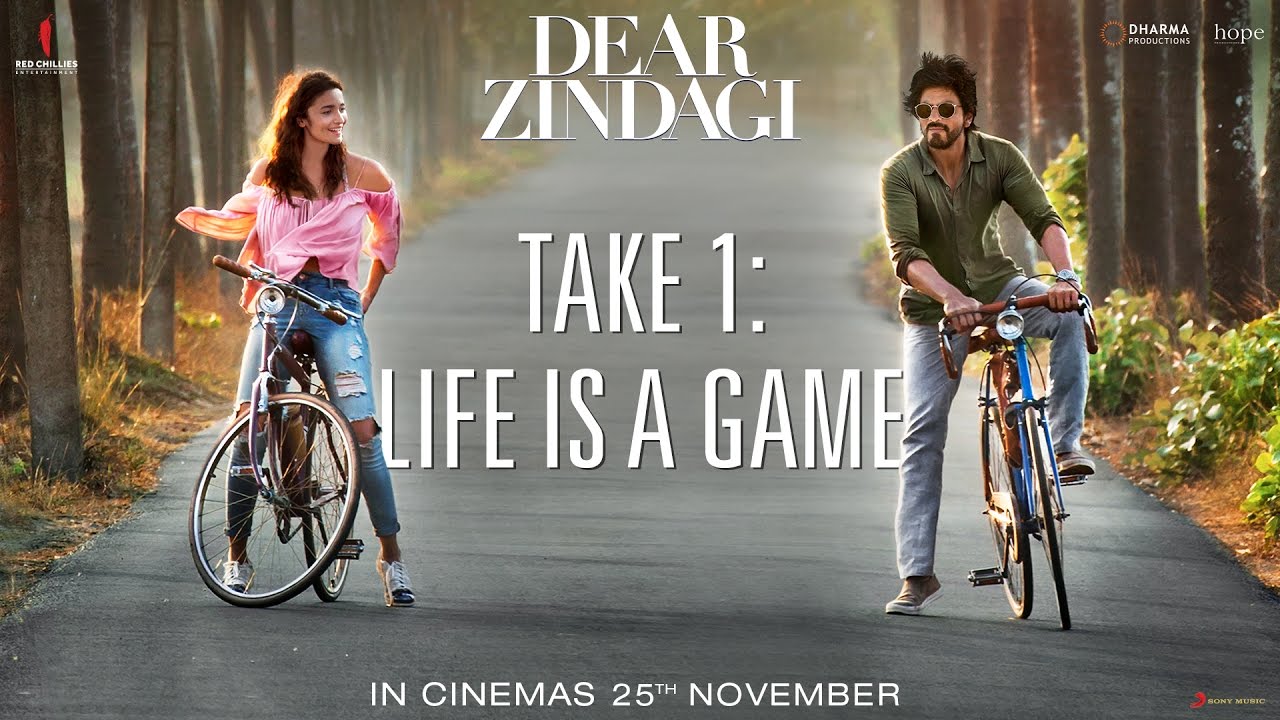
Dear Zindagi – MOVIE REVIEW
STORY: Kaira (Alia) is an astute cinematographer who is bohemian in her approach to life. Enter Dr Jehangir Khan (Shah Rukh), a top-notch therapist, who helps her lay her innermost demons to rest.
REVIEW: In a scene from the film, Alia who is heartbroken, bites into a green chilli. As her eyes cloud over, she looks at her best buddy Fatima (Ira Dubey) and says — “the chilli is pungent.’’ Tears, silly fears and frailties all part of the life process. So brave it we must. This kind of sums up the life lesson writer-director Gauri Shinde’s second directorial film imparts.But unlike her first film English Vinglish that hit the bullseye subtly, here the message is hammered. Of course some of the writing has merit. There are funny and clever one-liners. There are numerous analogies drawn to explain the innumerable relationships one encounters in today’s fast-fleeting urban life. Some of this makes you chuckle, some of it makes you cry. So far so good. However, the first half of the film meanders, making you restless. Frankly, things actually begin to look up just before intermission when SRK, without his trademark outstretched arms, makes an appearance.
As said earlier, the protagonist played by Alia flits like a butterfly from Raghuvendra (Kunal) to Sid
(Angad) and later to Rumi (Ali). And there is a backstory to show why she is so messed up. Honestly, her angst bites to some degree but not entirely.
To analyse why she is the way she is, Alia makes an appointment with SRK a DD (dimaag ka doctor) in Goa. It is on his couch that she is able to voice her fears. As he meticulously picks up the pieces of her past and
‘pieces’ her together, the film allows the viewer too to confront some of their own anxieties. So it isn’t all in vain.
Feisty Alia, one of the better actors of the current generation, turns in a nicely nuanced performance. And SRK in his sober-avatar possessing infinite gyaan tempts you to seek out a therapist. If you’re in the mood to do some soul-searching this weekend, this film could do it for you.
-

Awards that divide | Being on the right side of the government
Awards go up in public esteem if given on merit, and decline if extraneous considerations prevail.
Of all the Padma awardees this year the most controversial is the choice of veteran actor Anupam Kher. That his wife is a BJP MP can be ignored. What cannot be forgotten and forgiven is his doublespeak. In 2010 he said, “Awards in our country have become a mockery of our system. There is no authenticity left in any one of them. Be it films, national or now Padma.” After getting a Republic Day award this year, he tweeted: “Happy, Humbled & Honoured to share that I have been awarded The PADMA BHUSHAN by the Govt. of India. Greatest news of my life:) #JaiHind” (sic).
Anupam Kher is a hugely talented actor who fully deserves the award. But the timing is wrong. Getting awarded soon after leading a pro-BJP drive to counter the political fallout of the nationwide debate on intolerance and the return of awards by distinguished citizens from various fields reduces the significance of the honour. The impression has gained ground that he has been rewarded for the political services he has rendered rather than for his acting talent. The Modi government could have escaped the charge of politicisation of awards had it also chosen one of its critics in the intolerance debate – be it Shah Rukh Khan, Aamir Khan or Karan Johar instead of say Madhur Bhandarkar, the maker of “Calendar Girls”. A once secular, highly professional film industry stands divided today – those who see India as a tolerant nation under Modi and those who do not. The “Incredible India” campaign has been taken away from Aamir Khan and handed over to Amitabh Bachchan and Priyanka Chopra.
Whether newspaper owners, journalists, retired bureaucrats and CAGs should accept awards is debatable. There are some who do not feel any sense of guilt in being partial towards a politician or a party, or flaunting their political connections and lobbying for favours, while others – and their number is shrinking – maintain a distance from politicians and governments in a bid to remain independent and objective.
-

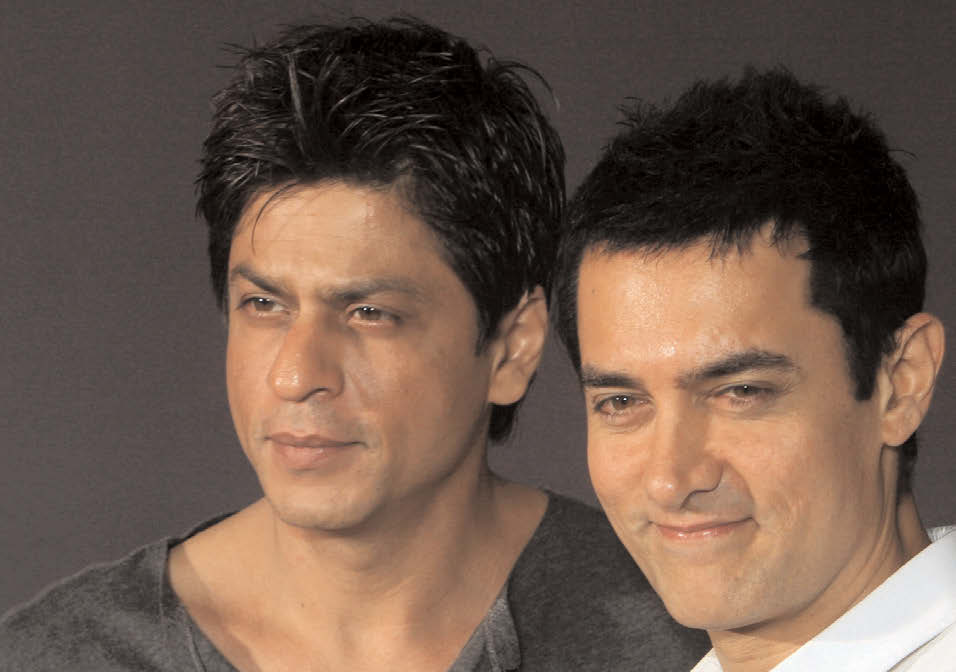
Shah Rukh, Aamir’s security downgraded by Mumbai Police
MUMBAI (TIP): MumbaiPolice have trimmed or withdrawn the security cover of 40 Bollywood celebrities including Aamir Khan and Shah Rukh Khan in what it called a “routine” procedure. Senior officials said the step was taken after an assessment review which revealed the Bollywood celebs were no longer facing a threat.
Shah Rukh and Aamir’s security was heightened after the Bollywood stars commented on “rising intolerance” in India. They were given armed protocol and vehicles after right-wing organisations protested their comments, Indian Express reported.
While Aamir had said his wife, Kiran Rao, wondered whether they should leave India in the face of rising intolerance, Shah Rukh had said not being secular was the worst crime as a patriot.
However, after the assessment, the Khans will now get only two armed constables shadowing them in two shifts, the daily reported.
Security has been fully withdrawn from filmmaker Vidhu Vinod Chopra, director Rajkumar Hirani, director Farah Khan and producer siblings Ali and Karim Morani.
The officials said reviewing security cover of celebrities is a routine practice and there is nothing new in it. They also pointed out that the move was aimed at trimming unwanted security cover. Only 15 Bollywood celebs will get security cover from the Mumbai Police including actors Amitabh Bachchan, Akshay Kumar and producer Mahesh Bhatt.