Tag: Shaheed Diwas

  • Shaheed Diwas: Remembering Bhagat Singh, Sukhdev and Rajguru

    Shaheed Diwas: Remembering Bhagat Singh, Sukhdev and Rajguru

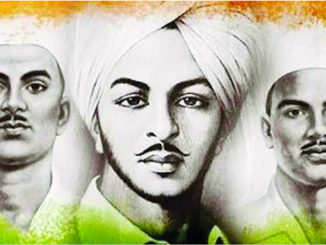
    Shaheed Diwas or Martyrs’ Day is observed on March 23 every year throughout the country. It marks the death anniversary of young freedom fighters Bhagat Singh, Sukhdev Thapar and Shivaram Rajguru. On March 23 in 1931, the three were hanged to death by Britishers. The sons of India were sentenced to death in the Lahore conspiracy case and ordered to be hanged on March 24, 1931. However, the schedule was moved forward by 11 hours and they were hanged on March 23, 1931 at 7:30 pm.

    After Lala Lajpat Rai’s death in November 1928, Bhagat Singh, Rajguru, Sukhdev and others vowed to take revenge. Rai was a prominent leader of India’s freedom movement who had inspired many young Indians to join the quest for freedom.

    In order to teach the ruthless Britishers a lesson, the three planned to execute James A Scott. Scott was the Superintendent of Police during the British rule and was infamous for his cruelty.

    It was Scott who had ordered the police to lathi charge the protesters and personally assaulted Rai, causing life threatening injuries. The plan was to send a message to the British forces that we will not bow down anymore and are capable of taking action.

    However, it was John P Saunders, an Assistant Superintendent of Police, who was killed by mistake. The three freedom fighters were charged for murder of Saunders.

    Bhagat Singh, Rajguru and Sukhdev were only 23 years old when they were hanged for executing Saunders. Their contribution in the freedom struggle is immense and will continue to inspire generations to fight for their rights.

    Bhagat Singh

    Bhagat Singh was born on September 27, 1907, in the village of Banga near Lyallpur district in Punjab, British India. He was an Indian freedom fighter who is considered to be one of the most influential revolutionaries of the Indian independence movement. Bhagat Singh joined the Hindustan Republican Association (HRA) at a young age and became involved in revolutionary activities. He participated in several acts of sabotage against British institutions, including an attempt to bomb the Central Legislative Assembly in Delhi. In 1929, he and two other activists were convicted of assassinating John Saunders, a British police officer. Singh was executed by hanging on March 23, 1931, at Lahore jail at the age of 23. Despite his short life, Bhagat Singh left a lasting legacy in the struggle for Indian independence. He is revered by many as a martyr and symbol of resistance to British colonialism in India. His example continues to inspire new generations of activists worldwide.

    Bhagat Singh had a great impact on the Indian independence movement due to his participation in various activities that led India towards its freedom from colonial rule. His involvement with revolutionary groups resulted in him being jailed for various crimes, but he continued his activism even behind bars through writing and publishing newspapers aimed at spreading nationalist sentiments among people all over India. He was executed by hanging when he was 23 years old after leading an unsuccessful plot to kill a British police officer who ordered a lathi charge on Lala Lajpat Rai, who was protesting colonial policies at the time. This murder had a major impact on Indian society and brought Bhagat Singh to national attention as a revolutionary hero of India’s independence movement.

    Rajguru

    Shivaram Rajguru (1908-1931) was a great Indian freedom fighter who played a major role in the India’s struggle for Independence. He is amongst those great Indian revolutionaries who sacrificed their lives for the freedom of country. His full name was Hari Shivaram Rajguru and was born into a Deshastha Brahmin family. Since his childhood days, he had witnessed the brutal atrocities that the Imperial British Raj inflicted on India and her people. This instilled within him a strong urge to join hands with the revolutionaries in a bid for India’s freedom struggle.

    In the days of the Indian Freedom Movement, the Hindustan Socialist Republican Army (HSRA) was an active force working against the British. Their main motive was to strike fear into the heart of the British regime. They simultaneously spread awareness amongst the people. They made them take notice of the growing domestic uprising when they dealt crucial blows with attacks like in the Lahore Conspiracy Case (December 18, 1928) and the bombing of the Central Assembly Hall in New Delhi (April 8, 1929).

    The protest against the Simon Commission in October 1928 saw the British police lathi-charge the protestors, severely injuring veteran leader Lala Lajpat Rai. Owing to the excessive beating, Lala succumbed to his injuries, which thus instilled revenge in the hearts of the revolutionaries. On December 18, 1928, in Ferozepur, Lahore, a planned retaliation was enforced that led to the assassination of Deputy Superintendent of Police, J.P. Saunders. Shivaram Rajguru, along with Sukhdev Thapar, was accomplice of the legendary Bhagat Singh who spearheaded the attack. Rajguru then went into hiding in Nagpur. Whilst taking shelter in the house of an RSS worker, he even met Dr. K. B. Hedgewar. On his travel to Pune, however, Shivaram was finally arrested. Bhagat Singh, Shivaram Rajguru and Sukhdev Thapar were then convicted of their crime and sentenced to death.

    Sukhdev

    Sukhdev was a famous Indian revolutionary who played a major role in the India’s struggle for Independence. He is amongst those great Indian freedom fighters who sacrificed their lives for the freedom of their country. His full name is Sukhdev Thapar and he was born on 15th May, 1907.

    His ancestral house is in Naughara Mohalla of Ludhiana city, Punjab, India. His father’s name was Ram Lal. Since his childhood days, Sukhdev had witnessed the brutal atrocities that the Imperial British Raj had inflicted on India, which then led him to join the revolutionaries, vowing to set India free from the shackles of British dominion.

    Sukhdev Thapar was a member of the Hindustan Socialist Republican Association (HSRA), and organized revolutionary cells in Punjab and other areas of North India. A devoted leader, he even went on to educate the youth at the National College in Lahore, greatly inspiring them about India’s glorious past. He along with other renowned revolutionaries started the ‘Naujawan Bharat Sabha’ at Lahore that was an organization involved in various activities, mainly gearing the youth for the freedom struggle and putting an end to communalism. Sukhdev himself took active part in several revolutionary activities like the ‘Prison hunger strike’ in 1929; however, he would always be remembered in the chronicles of the Indian Freedom Movement for his daring yet courageous attacks in the Lahore Conspiracy Case (18th December, 1928), that shook the very foundation of the British Government. Sukhdev was the accomplice of Bhagat Singh and Shivaram Rajguru, who were involved in the assassination of Deputy Superintendent of Police, J.P. Saunders in 1928, thus avenging the death of veteran leader, Lala Lajpat Rai, owing to excessive police beating in the Conspiracy case. After the Central Assembly Hall bombings in New Delhi (8th April, 1929), Sukhdev and his accomplices were arrested and convicted of their crime, facing the death sentence as verdict.

  • ndian Consulate Launches India@75 at GOPIO-Manhattan’s Shaheed Diwas Celebrations

    ndian Consulate Launches India@75 at GOPIO-Manhattan’s Shaheed Diwas Celebrations

    Organizers and speakers at the Shaheed Diwas: Top Row, from l. to r. Chitranjan Belwariar, Dr. Thomas Abraham, Siddharth Jain (Sid Jain) and Dr. Asha Samant. Middle Row: From l. to r. Deputy Consul General of India Shatrughna Sinha, Consul General of India Randhir Kumar Jaiswal, Dr. Maya Chadda and Dr. Bhuvan Lall. Bottom Row, from l. to r.: Prof. Anita Bose Pfaff, Anoop Bhargava and Lord Rami Ranger.
    A screen of participants at the Shaheed Diwas Celebration on the Zoom. 

    NEW YORK (TIP):  If India and the people of Indian origin living around the world enjoy freedom, liberty, equality and success, it’s due to the sacrifices, vision and foresight of men and women who dedicated their lives at the cause of freedom, fighting for independence from the 200-years of British Rule. There are millions who dedicated their lives, while there are some whose leadership and bravery inspired millions of others to fight for freedom. Shaheed Diwas or Martyrs’ Day is observed on six days across India which includes January 30th and March 23rd each year to remember the sacrifices of brave freedom fighters who devoted their entire lives to help us enjoy freedom. Global Organization of People of Indian Origin (GOPIO) along with the Consulate General of India in New York jointly organized and honored the martyrs during a virtual celebration of Shaheed Diwas 2021, which is the 90th death anniversary of three courageous youngsters on March 23rd, 2021. The celebrations touched many hearts as the hundreds of participants heard personal stories shared by family members of some of these brave men and women, who fought valiantly and gave up their lives at the altar of freedom for our motherland, India. Netaji Subhas Chandra Bose’s daughter Dr. Anita Bose Pfaff (Germany), Lord Rami Ranger (UK), Dr. Maya Chadda (USA) and Historian/Author Dr. Bhuvan Lall (India).


    India’s Consul General Ambassador Randhir Kumar Jaiswal launched India@75, a yearlong Celebration commemorating the 75th Anniversary of India’s Independence and called upon the Indian Diaspora to join him in celebrating India’s freedom till August 15th, 2022. Shatrughna Sinha, Deputy Consul General in New York felicitated the community.


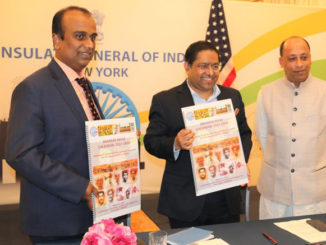
    Ambassador Jaiswal and DCG Shatrughna Sinha released the Shaheed Diwas Calendar presented by Siddharth Jain (Sid Jain) of GOPIO-Manhattan, for the year 2021-2022.  Ambassador Jaiswal while reviewing the calendar cited that it recognized contributions of Patriots of India. Ambassador Jaiswal further added on the Calendar as “A collector’s delight and dream”, where one can read about the freedom fighters and their heroic activities.


    Consul General Jaiswal, in his address, commended GOPIO Manhattan for organizing the event and several others, honoring India and Indians. “Today is the Red Letter Day in the history of India,” the Indian diplomat with over three decades of diplomatic services around the world, told the hundreds of community leaders from around several continents who joined the celebration. “We honor today the legendary freedom fighters, recalling their bravery and love for our motherland.” Describing today’s celebrations as unique, Ambassador Jaiswal recalled the founding of the Ghadar Party by Lala Har Dayal over a century ago. “I humbly bow before their legendary sacrifices, which are inspiring us all.”


    Netaji Subhas Chandra Bose’s Daughter, retired Prof. Dr. Anita Bose Pfaff shared with the audience experiences from her own personal life, as she was growing up seeing her father, travelling across India to Europe to South East Asia, garnering support from Western and Asian nations, creating an army to fight the British power. Stating that her dad was one of the most hated by the British, she narrated about the many coup attempts by the British to assassinate him. Calling him a Leftist radical, Dr. Anita Bose Pfaff said, “He had joined the freedom movement at a very young age. Joined the non-violent movement led by Gandhi initially. He was imprisoned and lost his health in prison. He risked his life disguising himself and escaping the prison and joined and led the Independence Movement abroad by aligning with Germany, Soviet Union and Japan, creating an Indian National Army (INA) to fight the British”. While Mr. Bose died in a plane crash, while trying to defeat the British, she said, “There is good reason to call him a martyr, because he died in the process of fighting for freedom. India was his sole love, and he was willing to put his life for the freedom of India. It’s justifiable to call him a martyr.”


    Lord Rami Ranger, Member of the House of Lords, London, a self-made businessman and chairman of Sunmark Group, an international marketing and distribution company. He is also chairman and managing director of Sea Air and Land Forwarding Ltd. He is the Joint Chairman of Conservatives Friends of India in the British Parliament. Lord Ranger’s father Shaheed Sardar Nanak Singh stood for the unity of India and was assassinated by a mob in Gujranwala (in Pakistan) in 1947. “My father was assassinated at age 42 when I was not even born,” he said, sharing about the circumstances that led to his father’s martyrdom.


    Describing that it is remarkable, India and the Diaspora are “paying tributes to those who made us what we are today. They demonstrated that their love for India was more than that for their love for their families. We cannot forget their sacrifices. We remember all those who made it possible for us today to celebrate our freedom. They are always martyrs and will live forever.”


    Lord Ranger praised Indians, who “are contributing a great deal around the world. If we are not a free nation, we could not do so, contributing to the world. We are shaping the destiny of the people of so many nations. India is the most sought-after nation by people from around the world. We must stay united and fight together to preserve our freedom. Learn from history.”


    Dr. Maya Chadda, Professor of Political Science, William Paterson University, Wayne, New Jersey. Member of Council of Foreign Relations. Dr. Chadda is an author of over half a dozen books. Her father, who was a linguist, had spent most of his time with Gandhiji in his Ashram. Dr. Chadda described at length about her works on Gandhian thoughts focusing on Satyagraha as a strategy of war. Sharing from her personal experiences, she shared with the audience about how her dad went to the Ashram at a very young age and his kids were born and grew up at the ashram, where he spent most of his life. Her dad was part of the editorial staff of Gandhi ji’s educational movement by newspapers to spread his message. “We were a Gandhian family throughout our lives. They were all dreamers, who dreamt of a unified India with freedom. They inspired mass support that led to the freedom movement, with ability to move the nation and win their support,” she said.


    Dr. Bhuvan Lall, Film Producer, Entrepreneur, Speaker, Scriptwriter and Columnist, New Delhi, India. Author of The Man India Missed The Most – Subhash Chandra Bose & The Great Indian Genius – Har Dayal, eloquently told the story of the brilliant Lala Har Dayal, who spoke 9 languages and memorized 5,000 books at the very young age of 28-years.  Har Dayal gave up his Government of India scholarship to St. John’s College at Oxford and became a supporter of the Indian revolutionary movement in 1907. He traveled through France and Germany, disseminating anti-British propaganda and lauding Western science and political philosophy as holding the key to a successful anticolonial struggle.


    In 1913 Lala Har Dayal formed the Ghadar Party to organize a rebellion against the British government of India. He fled to Switzerland and then to Berlin, where he tried to foment an anti-British rising in northwestern India. After the German defeat in World War I, Har Dayal settled in Stockholm as a professor of Indian Philosophy and wrote Forty-Four Months in Germany and Turkey. He moved to the USA in the late 1920s and became a Professor of Sanskrit at the University of California, Berkeley.


    Dr. Thomas Abraham, Chairman of GOPIO International, in his remarks gave an introduction to the objectives of the birth of GOPIO. “Connecting the Diaspora with our motherland” and celebrating the major festivals of India.” GOPIO-Manhattan has hosted some extraordinary events, especially during the Covid pandemic.


    Shivender Sofat, President of GOPIO-Manhattan, in his passionate address, shared about the sacrifices of Freedom Fighters. “This is part of a series of events to pay homage to martyrs of India,” he said. “It was planned in 2019, but today, we are fortunate to have this virtually connecting all of us from around the world for this solemn event.” While referring to the different paths used by the freedom fighters, he said, “They all had one goal: freedom for our motherland. Our real homage to the martyrs is to work towards by preserving the ideals of the martyrs.” He led the audience from around the world to salute India and the Martyrs in one voice, as they all called out “Inquilab Zindabad.”


    Emcee of the event, Anoop Bhargava introduced the importance of Martyr’s Day. On March 23 in 1931, three brave men, Bhagat Singh, Sukhdev Thapar, and Shivaram Rajguru were hanged to death by Britishers, for fighting for freedom from British rule in India.


    The two hours long celebration was combined with patriotic songs sung live by singers from the USA and Canada. Mohita, a High School Sophomore, led the audience with the American National Anthem. The Indian National Anthem was rendered by Leena Damle, a graphic designer. Vande Mataram, a patriotic song, was sung by Pallavi Verma Belwarior. Ishan Tangirala, an 8th grader sang the Patriotic song Mera Rang De Basanti Chola. Hitesh Jain of Vancouver, BC sang Sarforshi Ki Tamanna, lyrics of which were penned by Shri Ram Prasad Bismil, a Martyr, paying tributes to the martyrs.


    GOPIO International Coordinator-at-Large Dr. Asha Samant and Prof. Ponisseril Somasundaran from Columbia University also shared their personal experiences with the freedom movement with moving anecdotes that made a lasting impact on the audience. Prof Somasundaran was choked with emotion when he shared his father’s involvement with Mahatma Gandhi in the Salt Satyagraha. Prof. Somasundaran’s father was honored by the Govt. of Indian with Tamara Patra for his service to the nation.


    The program ended with a conclusionary remarks and vote of thanks by GOPIO-Manhattan Executive Vice President Prof. Rajasekhar Vangapaty, who was a co-organizer of the program with Shivender Sofat and Siddharth Jain.

    (Based on a Press release issued by Shivender Sofat))