
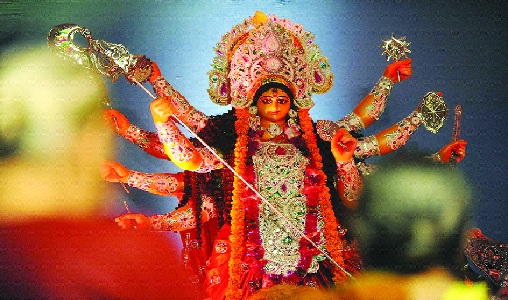

Sharad Navratri, the nine-night festival dedicated to the divine feminine, will begin on October 11, 2026, and culminate on October 19, with Vijayadashami falling on October 20. The festival brings together prayer, fasting, ritual, music and community celebrations while inviting devotees to reflect on the deeper meaning of strength, compassion, wisdom and spiritual renewal.
Every year, as the autumn season sets in, India comes alive with the energy of Sharad Navratri. Homes are cleaned and decorated, temples glow with lamps, devotional songs fill the air and communities gather for Garba, Dandiya and Durga Puja celebrations. Yet beyond the color and spectacle lies a deeply spiritual festival centred on Shakti – the divine feminine power that sustains, protects and transforms the universe.
Navratri literally means “nine nights”. During these nine days, devotees worship the nine manifestations of Goddess Durga, collectively known as the Navadurga. Each form represents a distinctive quality of the divine – from courage and penance to motherhood, wisdom, destruction of evil and spiritual fulfillment.
The 2026 festival begins with Ghatasthapana and the worship of Goddess Shailputri on October 11. The nine-day observance concludes on October 19, while Vijayadashami or Dussehra will be celebrated on October 20.
The sacred beginning: Ghatasthapana
The first day of Navratri marks the invocation of the Goddess through Ghatasthapana, or Kalash Sthapana. A sacred pot filled with water and adorned with mango leaves and a coconut is installed as part of the ritual. In many homes, barley seeds are also sown in a decorated vessel. Their growth over the nine days becomes a symbol of life, prosperity and renewal.
Devotees begin their day with a bath, prayers and meditation before performing the puja. Flowers, fruits and other offerings are presented to the Goddess, while sacred texts and hymns are recited. The atmosphere of Navratri encourages devotees to turn inward, observe discipline and devote time to prayer and contemplation.
The festival’s emphasis on austerity is particularly evident in the practice of fasting. Many devotees abstain from grains and certain spices and instead consume fruits, potatoes, sweet potatoes, buckwheat, water chestnut flour, sabudana and makhana. Rock salt, or sendha namak, is commonly used in fasting meals. But fasting is not merely viewed as dietary restriction. At its heart is the idea of self-control and purification – an opportunity to step away from excess and concentrate on spiritual discipline.
Nine forms, nine dimensions of Shakti
The nine days of Navratri are devoted to nine manifestations of Goddess Durga. Together, they portray different dimensions of feminine power.
Day 1 – Maa Shailputri
The first day is dedicated to Shailputri, meaning the daughter of the mountains. Depicted riding a white bull and carrying a trident and lotus, she represents the beginning of the spiritual journey and the grounded, nurturing aspect of the divine feminine.
Day 2 – Maa Brahmacharini
The second day honours Brahmacharini, the embodiment of devotion, penance and perseverance. She carries a rudraksha mala and kamandalu. Her form reminds devotees of the strength that comes from patience, discipline and dedication.
Day 3 – Maa Chandraghanta
On the third day, devotees worship Chandraghanta, the warrior form of Durga associated with courage and divine protection. She is depicted with multiple arms carrying weapons and other sacred objects and is shown riding a tiger.
Day 4 – Maa Kushmanda
The fourth day belongs to Kushmanda, associated with the creative power of the universe. Her eight-armed form represents Mahashakti, the supreme creative energy. She is traditionally depicted riding a lion.
Day 5 – Maa Skandamata
The fifth day celebrates Skandamata, the maternal manifestation of the Goddess. She is depicted holding her son Kartikeya while seated on a lion. Her worship highlights motherhood, compassion and protection.
Day 6 – Maa Katyayani
The sixth day is dedicated to Katyayani, the warrior Goddess. Armed with weapons and mounted on a lion, she represents courage, strength and the determination to confront evil.
Day 7 – Maa Kaalratri
The seventh day invokes Kaalratri, the fierce form of Durga associated with the destruction of darkness and evil. Her formidable appearance symbolises the power to overcome fear and remove negativity.
Day 8 – Maa Mahagauri
The eighth day, Ashtami, is devoted to Mahagauri, traditionally associated with purity, beauty and spiritual renewal. She is depicted in a serene form, riding a white bull and blessing her devotees.
Day 9 – Maa Siddhidatri
The final day honours Siddhidatri, the Goddess associated with spiritual accomplishment and perfection. Seated on a lotus, she represents the culmination of the devotee’s journey towards higher consciousness and divine fulfilment.
In the 2026 calendar, Ashtami and Navami observances coincide on October 19 in the cited Panchang calendar, making it an especially significant day of worship.
From prayer to celebration
Navratri’s spiritual character does not exclude celebration. Instead, devotion and cultural expression become intertwined.
In Gujarat, the nights are marked by energetic Garba and Dandiya, with devotees gathering in colourful traditional attire. In West Bengal and other eastern regions, the period is closely associated with Durga Puja, elaborate pandals and artistic depictions of Goddess Durga. Northern India observes the period through fasting, devotional gatherings and Ramlila, culminating in Dussehra. Across different regions, the customs may vary, but the central theme remains the triumph of righteousness over evil.
The festival therefore becomes a remarkable expression of India’s cultural diversity. The same divine story is experienced through different languages, foods, rituals, music and artistic traditions.
Kanya Puja: Celebrating the feminine
One of the most significant observances associated with Ashtami and Navami is Kanya Puja, in which young girls are traditionally worshipped as manifestations of the Goddess.
Their feet are washed and they are offered food as a sacred gesture of respect. The meal commonly includes preparations such as puri, halwa and chickpea curry.
The ritual carries a powerful symbolic message: the divine feminine is not confined to an image in a temple but is recognised in living human beings. It places reverence for feminine energy at the heart of the celebration.
Ayudha Puja and the dignity of work
In several communities, the festival also includes Ayudha or Astra Puja, during which tools, vehicles, instruments and equipment are worshipped. The practice reflects an important philosophy – that the objects through which people earn their livelihood deserve respect. Whether the tool is a farmer’s implement, a craftsperson’s equipment, a musician’s instrument or a modern machine, it becomes part of the ritual of gratitude.
The tradition also connects Navratri with learning. In some communities, children begin their formal education during the festival with prayers to Goddess Saraswati, the embodiment of knowledge and wisdom.
The discipline of fasting
Fasting remains one of the most visible practices of Navratri. For many devotees, it involves abstaining from grains, regular table salt and selected foods while eating specially prepared vrat dishes.
Sabudana, makhana, buckwheat flour and water chestnut flour feature prominently in fasting cuisine. Sabudana vada, kuttu puri, potato preparations, sweet potato dishes and makhana-based foods are among popular choices.
Yet the deeper purpose of the fast is restraint. By simplifying food and daily habits, devotees seek to create space for prayer, reflection and spiritual discipline.
The deeper meaning of Navratri
At its core, Navratri is a celebration of the victory of good over evil. The Goddess represents the force that confronts darkness and restores balance.
But the battle can also be understood symbolically. The nine nights offer an opportunity to confront the negative forces within oneself – fear, anger, greed, ego and distraction – and replace them with courage, discipline, compassion and wisdom. The festival thus becomes an annual moment of renewal.
Its rituals encourage devotees to pause amid the demands of everyday life. Its fasts promote restraint. Its prayers encourage introspection. Its celebrations create community. And its stories remind people that righteousness requires both inner strength and the courage to act.
Festival that unites tradition & modern life
Navratri has travelled far beyond temples and traditional homes. Indian communities around the world now celebrate the festival through cultural associations, public Garba events, devotional gatherings and community programs.
Its appeal lies partly in this ability to evolve without losing its central message. Traditional rituals coexist with contemporary celebrations, while younger generations discover their heritage through music, dance, food and storytelling. For the Indian diaspora, Navratri can become more than a religious observance – it can be a bridge to language, family traditions and cultural memory.
Nine nights of reflection
As Sharad Navratri arrives in 2026, its familiar sights and sounds will once again fill homes and communities with festive energy. But behind the lamps, colours and celebrations lies a quieter invitation: to discover strength within, overcome negativity and renew one’s commitment to a life guided by faith and righteousness.


Be the first to comment