Tag: Sharad Pawar

  • A nexus that left the police red-faced

    A nexus that left the police red-faced

    Ex-minister Deshmukh must explain why he did not object to the reinstatement of a tainted cop

    By Julio Ribeiro

    I was surprised to receive a book written by Maharashtra’s former Home Minister Anil Deshmukh. I had heard tales of how transfers of police personnel at all levels were effected through political pressure during his tenure. He faced stiff competition from an IPS officer (now retired), Param Bir Singh. The good name of the Mumbai city police came under threat while they were in office.

    The Maha Vikas Aghadi (MVA) — comprising the Uddhav Thackeray-led Shiv Sena, the Nationalist Congress Party (NCP-Sharad Pawar) and the Congress — ruled Maharashtra from November 2019 to June 2022. The ruling alliance chose a wrong man as the Commissioner of Police (CP), Mumbai. Simultaneously, Pawar picked Deshmukh as the minister supervising the working of the police force. It was a deadly combination that was bound to cause an explosion sooner than later. And it did.

    On February 25, 2021, a Scorpio car, laden with 20 gelatin sticks — but mercifully without a detonator — was found parked near Mukesh Ambani’s residence (Antilia) on Altamount Road, an upmarket residential area of the city. The car was traced to Mansukh Hiren, a friend of then CP Param Bir’s ‘blue-eyed boy’ Sachin Vaze, who was an assistant police inspector (API) in the Crime Branch. It was established by the Anti-Terrorism Squad (ATS) of the state police and the National Investigation Agency (NIA) that Vaze had been seen in that Scorpio on earlier occasions.

    Another car, an Innova, belonging to the Crime Branch, was specially allotted to Vaze. That was also seen in the vicinity of the Ambani house at the same time. It was apparent that the Crime Branch’s intelligence unit, headed by Vaze, was involved in the planting of the Scorpio outside Ambani’s home for reasons that remain undisclosed to this date.

    Vaze had been suspended as he was facing a murder charge. His visiting cards projected him as an ‘encounter specialist’; his associates in the private security business used to distribute these cards among potential customers. Vaze had served under inspector Pradeep Sharma, the doyen of ‘encounter specialists’, in the early years of his service in the police. Sharma and Vaze were in touch with each other and also with the IPS officer who has been targeted by Deshmukh in his book, Diary of a Home Minister.

    The officer had been the CP of the neighboring city of Thane. His image in the eyes of Thane’s residents left much to be desired. His image in the eyes of his own men, whom he was chosen to lead, was even worse.

    This officer had tried desperately for the Mumbai police chief’s post when his tenure as the Thane CP ended. Two excellent officers, DD Padsalgikar and SK Jaiswal, were sent back from Central deputation. The BJP-led Central Government had correctly assessed the risk of installing a wrong man as the chief of the Mumbai Police.

    When the MVA government was sworn in and the Home portfolio was allotted to the NCP, Mumbai residents were saddled with a choice that puzzled them. How did the appointee avoid the eagle eye of Pawar? The officer himself let it be known that Pawar had interviewed him and advised him to not let down a much-respected force and sully its good name.

    Deshmukh’s account of his post-Antilia relations with the CP is a defense of himself in the case registered against him by the CBI and then the NIA on the allegations made by his friend-turned-foe after the latter was removed from the top post. The minister was accused by the CP of summoning Vaze and demanding Rs 100 crore a month as his share of the illegal collections that Vaze was reportedly making from bar owners and others.

    The former Home Minister does not explain in his book why and how the CP was chosen. He must answer that question because the decline in the police’s performance began from there. Further, he does not explain why he, as Home Minister, did not object to the reinstatement of Vaze in service despite the latter facing a murder charge. He also does not explain how a hands-on minister like him did not advise the CP to follow protocol procedures and ensure that Vaze reported to senior officers in the Crime Branch and not to the CP directly. The intelligence unit is supposed to be headed by a senior inspector. How was an API made the head of that important unit? Why did the CP summon the ACP in charge of the social services (SS) unit and tell him to involve Vaze in his work? The SS unit of the Crime Branch deals with the city’s brothels!

    The discovery of explosives in a car near Ambani’s house was itself an indicator that things were going wrong for the city police. No API, even a swashbuckler like Vaze, could have dared to carry out such a project without the CP’s knowledge. If the latter insists that he knew nothing of the plan, that admission alone would disqualify him from holding high office.

    The subsequent murder of Hiren conclusively showed that the menace of encounter specialists should be buried once and for all. That burial had been effected by Anami Roy, who was the CP two decades ago. City residents were breathing easier till Vaze was inducted into the Crime Branch and given powers that were well beyond his rank. Did the minister not know about the rumblings in the police because Vaze operated as the CP’s alter ego?

    The almost unanimous opinion in Mumbai’s police force was that the Home Minister and the CP were in league. After the Scorpio fiasco, the latter got off the hook by teaming up with the BJP, then in the Opposition.

    The image of Mumbai’s city police suffered considerably from the games that politicians played. And this is what should alarm the city’s residents. Deshmukh’s defense of the part he played in the episode, as reflected in his book, is as he intended it to be — his defense. The facts against the ex-CP that he has disclosed need to be tested also, but in a court of law.

    (Julio Ribeiro is a Former Ambassador & DGP, Punjab)

  • As fight for NCP continues, Sharad Pawar launches mission to rebuild party

    As fight for NCP continues, Sharad Pawar launches mission to rebuild party

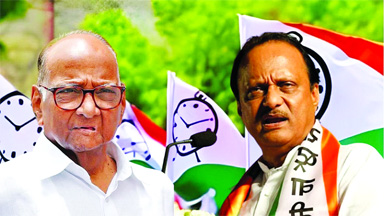
    New Delhi (TIP)- Amid a power struggle with his nephew Ajit Pawar, who revolted against his leadership and joined Shiv Sena-BJP government in Maharashtra, NCP patriarch Sharad Pawar will launch his statewide tour from Nashik to shore up support.
    Sharad Pawar, 82, will launch what he calls his mission to rebuild the party from the ground up. He will visit Nashik, Pune, Solapur and some parts of the Vidarbha region — constituencies of Chagan Bhujbal, Dhananjay Mundem and other rebel NCP MLAs.
    Deputy Chief Minister Devendra Fadnavis last evening met with Chief Minister Eknath Shinde for the second day in a row amid reports that Shiv Sena legislators had been reportedly upset after the NCP faction led by Ajit Pawar joined the state government. Ajit Pawar’s remark that he “wants to be the Chief Minister” had also created a flutter in political circles. Ajit Pawar currently shares the Deputy Chief Minister post with Fadnavis in the government led by Shinde.
    Fadnavis said that cabinet expansion will take place soon after another ally, Ajit Pawar, joined the ruling coalition in Maharashtra. He asserted that his party doesn’t engineer splits in other parties, but never stops those who want to come along. “The BJP does not break other parties, but there will be no opposition to those who believe in Modi’s leadership and want to come along, ” Fadnavis said.
    Shiv Sena (UBT) leader Aaditya Thackeray has claimed that Eknath Shinde has been asked to resign. “I have heard that Eknath Shinde has been asked to resign and there might be some change in the government,” he told media.
    Recently, Sanjay Raut had claimed that about 20 MLAs from Mr Shinde’s group were in touch with his party since NCP leader Ajit Pawar joined the state government. “Since Ajit Pawar and other NCP leaders joined the government, 17-18 MLAs from the Shinde camp have contacted us,” Sanjay Raut said.
    Eknath Shinde, however, stressed that Ajit Pawar’s entry into the ruling coalition posed no threat to him. “With our government now made up of three parties, the strength of our MLAs is more than 200. Our government is only getting stronger. We have the support of PM Modi and Amit Shah,” said the Chief Minister.
    Senior NCP leader Praful Patel yesterday said that Ajit Pawar was unanimously appointed as party president on June 30 – days before Ajit Pawar’s shock move of crossing over to the ruling alliance and taking oath as Maharashtra’s Deputy Chief Minister.
    “The decisions taken by the Sharad Pawar group, expelling or disqualifying leaders of the Ajit Pawar faction, were illegal and not applicable,” he told the media.
    Ajit Pawar says his faction is the real NCP and has claimed the party name and symbol from the Election Commission. So far, he appears to have the support of 32 MLAs. Sharad Pawar has the support of 14. But he needs 36 MLAs, a two-thirds majority of the party’s 53 legislators, before the poll body considers his claim.

  • Yatra lends purpose to Rahul’s political journey

    Yatra lends purpose to Rahul’s political journey

     In Indian electoral politics, alliances are formed on the basis of strengths rather than weaknesses of the participants. The aura of success surrounding Rahul’s Bharat Jodo Yatra is set to provide him with moral authority to play a pivotal role. In addition, in Sonia Gandhi, Rahul has a reserve bench of sorts; the former party chief can act as a line of communication with many non-NDA allies, including the Left, to keep the mahagathbandhan going. 

    This year, the Congress faces a litmus test in Karnataka, Madhya Pradesh, Rajasthan and Chhattisgarh. If it can win these states, the grand old party would emerge as a serious challenger for the 2024 General Election.

    By Rashid Kidwai

    There are many quotes that have been attributed to Mahatma Gandhi. In the Congress party office at 24, Akbar Road, one of them reads, “Kabhi kabhi hum apne virodhiyon ke karan aage badhte hain.” (At times, we move ahead due to our opponents). Then there is another one saying, “Pehle woh aap par dhyan nahin denge, phir who aap par hasenge, phir aapse ladengen, aur tab aap jeet jayenge.”(First they would not pay any attention to you, then they would mock you and then they would fight with you. You would win once these stages are completed).

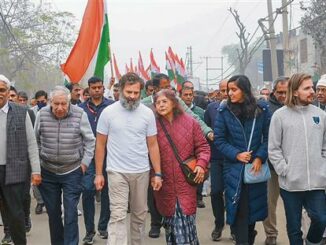
    In the context of Rahul Gandhi’s ongoing abstract, yet arduous, Bharat Jodo Yatra, these quotes ring a bell, bringing some relevance and hope for the Congress leader.

    There is a broader and growing consensus of sorts among Rahul’s detractors and well-wishers that finally, the Gandhi scion is showing signs of purpose, perseverance and hope in his political journey that began in 2004.

    Politically, the yatra may or may not be a game-changer, but it has succeeded in establishing Rahul as a credible politician who can walk the talk, intermingle with the masses and get support from a range of politicians and celebrities — from MK Stalin, Aaditya Thackeray, Supriya Sule and Farooq Abdullah to Raghuram Rajan, AS Dulat, Swara Bhaskar and Kamal Haasan.

    More importantly, the BJP’s stringent criticism, Union Health Minister Mansukh Mandaviya’s ‘appeal’ to suspend the yatra over Covid concerns, and the outrage over Rahul’s comments on China allegedly entering Indian territory have helped him become a singular dissenting voice.

    When the yatra began from Kanyakumari, Rahul’s popularity ratings were at an all-time low. The Congress organization was in a shambles and the leadership issue was far from settled. While the yatra was on the Kerala-Karnataka border, Rajasthan Chief Minister Ashok Gehlot, at that time tipped to be the next AICC president, stunned friends and foes alike by showing defiance, a throwback to the bygone era of Devaraj Urs, Arjun Singh and other party chief ministers.

    But throughout the Congress organizational election process, Rahul stayed away and focused on the yatra. The Assembly polls of Himachal Pradesh and Gujarat offered a mixed bag as the Congress went on to win HP. It was a surprise for those predicting the Congress’ death. The ‘corpse’ is, in fact, very much alive and kicking.

    This year, the Congress faces a litmus test in Karnataka, Madhya Pradesh, Rajasthan and Chhattisgarh. If it can win these states, the grand old party would emerge as a serious challenger for the 2024 General Election.

    We need to remember that the fortunes of the Congress and other non-BJP parties are closely linked to the 2024 Lok Sabha polls where the non-BJP, non-NDA Opposition and the Congress-UPA partners will have to target the ‘half of half’, i.e. half of the 272 Lok Sabha seats on their own — a challenging but not unmanageable number in the 2024 battle.

    There are four crucial states of West Bengal, Bihar, Maharashtra and Karnataka where the BJP-NDA had done exceedingly well in 2019 but the subsequent political developments have unfolded a new scenario. In West Bengal, for example, the BJP had won 18 Lok Sabha seats out of 42, while in Bihar, the alliance with the JD(U) had resulted in its netting 39 out of 40 parliamentary seats. In Karnataka, the BJP had won 25 out of 28 seats, while in Maharashtra, the alliance with the undivided Shiv Sena  had resulted in the NDA allies winning 42 out of 48 seats. Imagine a situation if the BJP’s strength from these four states gets reduced to half. A simple majority of 272 would become a distant dream and prospects of a khichdi government a reality.

    The Congress, in order to be a contender, has to win 100 or more Lok Sabha seats from states such as Kerala, Chhattisgarh, Maharashtra, Rajasthan, Madhya Pradesh, Assam, Karnataka, Uttarakhand, Himachal Pradesh and a few others where the grand old party has been in direct contest with the BJP or traditionally has a strong presence.

    Next year’s parliamentary polls are set to be contested in contrasting styles. If Team Modi is set to make full use of the Prime Minister’s personal ratings, big-ticket projects, Covid-19 handling in the context of the massive vaccination programme, achievements on the diplomatic front and reliance on emotive issues like the Ram Temple, the Congress and its potential allies are prepared to take the battle to the states where regional players are expected to hold sway.

    So, if the parties led by Mamata Banerjee, Nitish Kumar, Uddhav Thackeray, Sharad Pawar, MK Stalin, Naveen Patnaik, HD Kumaraswamy, Chandrababu Naidu and Akhilesh Yadav together manage to hold on to a chunk of the parliamentary seats, the Congress has the task of doing well in most of the Hindi-belt states and the Northeast.

    In Indian electoral politics, alliances are formed on the basis of strengths rather than weaknesses of the participants. The aura of success surrounding Rahul’s Bharat Jodo Yatra is set to provide him with moral authority to play a pivotal role. In addition, in Sonia Gandhi, Rahul has a reserve bench of sorts; the former party chief can act as a line of communication with many non-NDA allies, including the Left, to keep the mahagathbandhan going.

    (Rashid Kidwai is a Senior Journalist and Author)

  • With an Eye on 2024, 19 Opposition parties decide to hold nationwide protest

    With an Eye on 2024, 19 Opposition parties decide to hold nationwide protest

    NEW DELHI (TIP): Leaders of 19 Opposition parties, on August 20,2021 announced a joint agitation plan from September 20 to 30 after Congress president Sonia Gandhi urged them to rise above political compulsions to defeat the BJP in the 2024 Lok Sabha elections.

    It’s time to rise above political compulsions — Sonia Gandhi, Congress

    All secular, democratic forces must join hands — Sharad Pawar, NCP

    Mamata proposes core committee to steer fight against BJP

    Tejaswi Yadav seeks ‘driving seat’ for regional parties

    In a signed statement, Opposition stalwarts, including NCP’s Sharad Pawar, TMC’s Mamata Banerjee, DMK’s MK Stalin, Shiv Sena’s Uddhav Thackeray and JMM’s Hemant Soren, called upon the people of India to defend “the secular, democratic, republican order with all their might”.

    11 demands

    • Augment production and ensure free vaccination
    • Give Rs7,500 a month to families outside income tax bracket
    • Reduce prices of fuel
    • Repeal three farm laws & guarantee MSP to farmers
    • Pegasus probe under SC
    • Release political prisoners, including those in Bhima Koregaon case, anti-CAA protests
    • Restore J&K’s full statehood
    • Stop, reverse privatization
    • Revive MSMEs
    • Expand MGNREGA

    Jabs for teachers, pupils

    “Save India today, so that we can change it for a better tomorrow,” they said listing 11 demands, including restoration of full statehood and elections in Jammu and Kashmir, repeal of three farm laws and institution of an SC-led inquiry into the Pegasus snooping row.

    The statement followed a major Opposition outreach in which Sonia Gandhi said, “Our ultimate goal is the 2024 Lok Sabha poll for which we have to begin planning systematically with the single-minded objective of giving to our country a government that believes in the values of the freedom movement and in the principles and provisions of our Constitution. This is a challenge, but together we can and must rise to it because there is simply no alternative to working cohesively together. We all have our compulsions, but clearly, a time has come when the interests of our nation demand that we rise above them.”

    Bengal CM Mamata Banerjee proposed the formation of a core group of Opposition leaders to chalk out joint programs. The like-minded parties “needed to unite to defeat the BJP”, she said.

    The meeting was attended by leaders of the TMC, NCP, DMK, Shiv Sena, JMM, CPI, CPM, NC, RJD, AIUDF, VCK, Loktantrik Janta Dal, JDS, RLD, RSP, Kerala Congress Mani, PDP and IUML. The BSP, AAP and SP skipped the event, but the Congress claimed SP chief Akhilesh Yadav had intimated about his absence.

    In the meeting, symbolically organized on the birth anniversary of her husband and late Prime Minister Rajiv Gandhi, Sonia blamed the government for the recent Parliament washout.

    (Agencies)