Tag: Shehbaz Sharif

  • The ‘Donroe doctrine’, a broken international order

    The ‘Donroe doctrine’, a broken international order

    It is a mixed bag as far as the global outlook for 2026 is concerned, marked by an updated version of the U.S.’s ‘shock and awe’ tactics

    By M K Narayanan

    The new year began with a stark reminder that the over 200-year-old ‘Monroe Doctrine’ is not merely alive but has been given a fresh dimension, in keeping with the personality of United States President Donald Trump. In a swift operation as 2026 unfolded, U.S. airborne troops abducted Venezuelan President Nicolás Maduro and his wife and incarcerated them in the U.S. on charges of undermining the security of the U.S. This action is being sanctified as the new ‘Donroe Doctrine’.

    Actions under the Trump administration

    Protests worldwide against the U.S.’s action in violating the sovereignty of Venezuela have, however, been rather muted. This seems to convey the belief that the post-1945 international order is dead, and what exists now is a ‘free for all’ in the global commons. Voices are also being heard ‘sotto voce’, that the latest action by the U.S. might well become a prelude for similar actions by nations such as China and Russia to lay claim to countries and regions falling within their zone of influence — China’s claim to Taiwan being one.

    The action carried out has been characterized by Mr Trump himself as a modern version of the (1823) Monroe Doctrine, viz., that the U.S. is the sole guarantor of security in the Western Hemisphere and would not brook any interference by powers outside the Hemisphere. A careful reading of President Trump’s latest U.S. National Security Strategy, or NSS (November 2025) — which unequivocally states that after years of neglect, the U.S. expects to reassert its pre-eminence in the Western Hemisphere, denying non-Hemispheric competitors the ability to position forces or threaten U.S. vital assets in the Hemisphere — would suggest that the Venezuelan operation was a carefully thought through maneuver, and an updated 21st century version of ‘US shock and awe’ tactics. There is even an implicit threat of actions similar to Venezuela against Cuba, Colombia and Mexico. There is again an implicit reference to taking control of Greenland which is viewed by the U.S. as a security necessity.

    From a U.S. perspective, it would seem that 2026 could see significant changes in different regions of the globe. Europe, for instance, which has come in for sharp criticism in the NSS document, has been excoriated on the ground that it had lost most, if not all, its sheen, alongside the suggestion that the U.S. could help Europe regain its former greatness if it backed patriotic European parties and ‘genuine democracy’. The NSS document wants Europe to assume ‘primary responsibility for its own defense’, alongside a veiled reference to achieving strategic stability with Russia.

    Going beyond Mr. Trump’s NSS, realistically speaking, it would seem that the conflict in Ukraine, which appears stalemated at present, could move toward resolution, but which could be unsatisfactory to both sets of antagonists. The alternative, according to U.S. policymakers, appears to be that otherwise, it could lead to further escalation, alongside fears that it would engulf more regions of Europe.

    The situation closer to India

    The situation in West Asia, it would seem, is beginning to resemble the proverbial curate’s egg, good in parts. Israel’s pogrom has come to an end for the present, but peace in the regime remains highly elusive. The situation in Gaza, in particular, remains highly sensitive and violence seems for the most part just round the corner.

    Meantime, the growing violence and unrest that have engulfed Iran and the Khamenei regime is acting as a catalyst for a fresh round of conflict in and across the region. Iran is witnessing widespread internal violence, and the declared that it is “fighting on four fronts, viz., an economic war, a psychological war, a military war against the US and Israel, and ‘a war on terrorism’”. The West has responded with warnings of imposing additional sanctions on Iran. Implicit in all this, is that both Israel and the U.S. see an opportunity to complete the unfinished conflict of 2025, and ensure that it reaches a ‘satisfactory conclusion’ in undermining the Khamenei regime in Iran.

    Northwest Asia, specially Afghanistan, is meanwhile, set to confront more troubles this year. The Tehreek-e-Taliban and other Afghan terrorist groups appear, of late, to have gained a fresh lease of life, and this spells problems for Pakistan as well. The Afghanistan-Pakistan border will, hence, continue to remain troubled during much of this year. So, 2026 is again, not likely to be a good year for democracy in Pakistan, with the military taking firmer control of the country’s affairs and Field Marshal Asim Munir eclipsing the importance of Prime Minister Shehbaz Sharif, striking another blow to the country’s democratic trajectory. However, Pakistan does appear to have gained a fresh lease of life, with the U.S. embracing it as an ally, promising a fresh tranche of state-of-the-art weapons, and in some ways being perceived as ‘the most favored nation of the US’ in this part of the world. Meantime, uncertainty about the future of democracy will continue to prevail in the highly troubled state of Bangladesh, notwithstanding the promise of fresh elections and restoration of an elected government.

    For China, 2025 seemed like a good year. While China-U.S. rivalry appeared to intensify, Beijing successfully withstood the tariff barrage unleashed by Mr. Trump, and even seemed to turn it to its advantage. China raised the value of its manufacturing and also demonstrated its hold over global supply chains.

    China’s restrictions on rare earth exports in the tussle with the U.S., seemed to enhance its ability to not only withstand U.S. pressures but also to convert the situation in its favor. While there were few opportunities for a trial of strength in the Pacific, China’s growing presence in Southeast Asia is adding to China’s importance in Asian and world affairs. It is increasingly becoming apparent as well that the Eastern Pacific is no longer a U.S. bailiwick. China’s presence in the Indian Ocean is also growing and represents not only a major threat to nations bordering the Indian Ocean but, more importantly, also a challenge to U.S. supremacy here.

    Notes for New Delhi

    As 2026 progresses, India appears to stand at the crossroads, unsure as to where it stands. There has been no letup in Mr. Trump’s tirade against India for continuing to import subsidized Russian oil, notwithstanding the fact that India is inclined to side with the U.S. on most matters. An implicit coldness in India-U.S. relations seems to be affecting India’s relations with many other countries, resulting in New Delhi’s relative isolation when it comes to conflict zones such as West Asia. Mr. Trump’s public endorsement of Field Marshal Munir and the lifting of restrictions on arms supplies to Pakistan is also not helping. Despite this, there have been some positive developments with regard to an expansion of India-U.S. cooperation in some areas. Several mini-lateral initiatives, such as the I2U2 (India, Israel, the U.S., the UAE) and the India–Middle East–Europe Economic Corridor appear to be progressing.

    As of now, Washington’s foreign policy calculus and Beijing’s disinterested approach to India are putting India at a disadvantage in political and economic terms, especially the latter. China’s tactical advantage in trade and tariff disputes leaves little room or scope for India to hedge against U.S. threats to further raise tariffs on trade, thus aggravating current anxieties. For India, there is again little room for comfort in the fact that China’s economic growth has not picked up of late, or that its domestic consumption remains stagnant. All this is notwithstanding an improvement in India-China ties following the Tianjin meeting of Prime Minister Modi and President Xi Jinping in 2025. A further stabilization of India-China ties does not, however, appear likely in 2026.

    Overall, 2026 may not have any great prospects for India. It may not, however, face any major terror attack during the year, but terrorism will remain an ever-present reality. West Asia having just undergone a sustained military campaign by Israel may be spared major terror attacks, but the upheaval in Iran and the attempt by Israel and the U.S. to wade into troubled waters could instigate some terror attacks. The Islamic State and al Qaeda seem better positioned in Africa as of now, but this is no reason to let one’s guard down, as, overall, more attacks by insurgent and terrorist entities can be anticipated in Asia, West Asia and Africa. Terrorism could, hence, be regarded as a critical national security threat during 2026.

    (M.K. Narayanan is a former Director, Intelligence Bureau, a former National Security Adviser, and a former Governor of West Bengal)

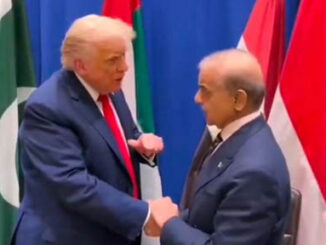
  • Pakistan PM Sharif, Field Marshal Munir meet Trump at White House

    Pakistan PM Sharif, Field Marshal Munir meet Trump at White House

    WASHINGTON, D.C. (TIP): Pakistani Prime Minister Shehbaz Sharif and Field Marshal Asim Munir met US President Donald Trump in the White House.
    Sharif is in the US for the 80th session of the United Nations General Assembly. He made a brief visit to the US capital from New York for the meeting with Trump on Thursday, September 25. It was the Pakistani PM’s first visit to the White House.
    Munir, who was hosted by Trump for lunch at the White House early this summer, accompanied Sharif for the meeting, which was also attended by Secretary of State Marco Rubio.
    Sharif met Trump in New York on the margins of the UNGA session on Tuesday, September 23, when the US president held a multilateral meeting with leaders from Arab nations and others, including Egypt, Indonesia, Pakistan, Qatar, Saudi Arabia and Turkiye.
    Sharif arrived at the White House around 4.52 pm and was greeted by senior administration officials. Trump signed several executive orders and was speaking to reporters when Sharif and Munir arrived at the White House.
    The Pakistani PM’s motorcade was seen leaving the White House around 6.18 pm, according to the White House pool.
    In his remarks to reporters after signing the executive orders, Trump again said that he has stopped seven wars.
    “In fact, we have a great leader coming, the prime minister of Pakistan coming, and the field marshal (of) Pakistan. Field marshal is a very great guy and so is the prime minister, both. And they’re coming, and they may be in this room right now, I don’t know, because we’re late, and I said maybe they’d like to join. They actually may be somewhere in the beautiful Oval Office,” Trump said.
    Trump has said on multiple occasions that he ended the recent conflict between India and Pakistan. He repeated the claim in his address to world leaders at the UNGA. Pakistan has nominated Trump for the 2026 Nobel Peace Prize, in “recognition of his decisive diplomatic intervention and pivotal leadership during the recent India-Pakistan crisis”.
    The last Pakistani prime minister to visit the White House was Imran Khan, who met Trump in July 2019 on an “official working visit”. Before him, Sharif’s brother and then Pakistani prime minister Nawaz Sharif visited the White House in 2015.
    The two countries have reached a trade agreement that entails a 19 per cent tariff on Pakistani imports and will allow Washington to help develop Pakistan’s oil reserves. US goods and services trade with Pakistan totaled an estimated USD 10.1 billion in 2024, up 6.3 per cent (USD 523.0 million) from 2023.
    The US’ total goods trade (exports plus imports) with Pakistan was an estimated USD 7.2 billion in 2024. US goods exports to Pakistan in 2024 were USD 2.1 billion, up 3.3 per cent (USD 67.2 million) from 2023.
    US goods imports from Pakistan in 2024 totaled USD 5.1 billion, up 4.8 per cent (USD 233.9 million) from 2023. The US goods trade deficit with Pakistan was USD 3 billion in 2024, a 5.9 per cent increase (USD 166.7 million) from 2023.

  • Pak-Saudi defense pact and its implications for India

    Pak-Saudi defense pact and its implications for India

    By Prabhu Dayal

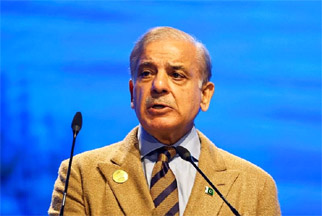
    On September 17, 2025, Saudi Crown Prince Mohammed bin Salman and Pakistani Prime Minister Shehbaz Sharif signed a Strategic Mutual Defense Agreement in Riyadh. The pact formalizes their alliance with a collective defense clause, stating that “any aggression against either country shall be considered an aggression against both”. It was signed less than two weeks after an Israeli strike on Doha, which left Gulf States wary of US security guarantees.

    The agreement upgrades the long-standing defense cooperation between Islamabad and Riyadh, institutionalizing a historically close security relationship rooted in shared faith and strategic interests. For decades, Pakistan has provided security support, including training and deploying troops to Saudi Arabia. The strengthened defense ties follow Saudi Arabia’s significant financial support to Pakistan’s struggling economy, including multi-billion dollar loans.

    A Saudi-Pak joint statement said that “Building on a partnership extending nearly eight decades, and grounded in bonds of brotherhood, Islamic solidarity and shared strategic interests, the two sides signed the Strategic Mutual Defense Agreement”.

    From Pakistan’s viewpoint, by securing a collective defense agreement with a wealthy and influential Gulf ally, it gains a strategic boost which could be perceived as bolstering Islamabad’s position, especially at a time of high tension with India. The pact’s collective defense clause, stating that “any aggression against either country shall be considered an aggression against both,” adds a new and complex dimension to the India-Pakistan rivalry. While Saudi Arabia has not historically intervened militarily in India-Pakistan conflicts, the official language raises concerns that Pakistan might be emboldened, potentially complicating India’s response to future acts of terrorism originating from Pakistan.

    The mutual defense pact between Pakistan and Saudi Arabia has implications for India, impacting regional security dynamics, diplomacy and India’s growing relationship with Saudi Arabia. The pact introduces a new layer of complexity to the India-Pakistan security dynamics. In the event of a future conflict, Pakistan could attempt to portray any Indian military action as an act of aggression against Saudi Arabia as well, potentially leveraging the collective defense language of the pact.

    Thus, India’s primary concern is that the deal could embolden Pakistan and alter the regional balance of power. India has so far maintained a cautious and measured diplomatic posture. The ministry of external affairs stated that it would study the pact and protect India’s national interests, but avoided a stronger reaction.

    What is the importance of this pact for Saudi Arabia? Analysts have long speculated that in exchange for financial support, Pakistan could extend a “nuclear umbrella” to Saudi Arabia, which is non-nuclear but has expressed interest in developing nuclear capabilities if Iran does. The new pact, while not explicitly referencing nuclear arms, renews this speculation and alters the strategic calculus for West Asia.

    Thus, Saudi interest in the pact is due to Pakistan’s status as a nuclear power. The symbolic significance of Saudi Arabia aligning with a nuclear-armed state could affect the strategic calculations of regional players. Some reports indicate that discussions included nuclear technology and delivery systems, though no official confirmation has been made. By formalizing the alliance with the only Muslim-majority nuclear power, Saudi Arabia has reasserted its standing in the Islamic world during a period of increased criticism over Israel’s actions.

    The agreement shows that Riyadh continues to see significant value in its partnership with Islamabad. The mutual defense pact formalizes and upgrades a security relationship, sending a strong signal to regional rivals Iran and Israel that Saudi Arabia has additional security options beyond its traditional partnerships such as the one with the US. The agreement aims to “strengthen joint deterrence against any aggression” and deepen defense cooperation across various fields. A senior Saudi official did not specify whether the pact includes Pakistan’s nuclear arsenal but noted that the deal “encompasses all military means,” cultivating deliberate ambiguity.

    India has steadily deepened ties with Gulf States, including Saudi Arabia, while Pakistan’s economic reliance on Saudi financial aid has grown. The defense pact signals that Riyadh continues to see significant value in its partnership with Pakistan, challenging the narrative that Islamabad was becoming isolated in its extended neighborhood.

    Saudi Arabia is an important trading partner for India, with bilateral trade far outweighing its trade with Pakistan. Saudi officials have been quick to reassure India that their partnership is “more robust than ever,” signaling a desire to avoid jeopardizing the strong economic relationship with India. A recent visit by Prime Minister Narendra Modi to Riyadh in April 2025 and the expansion of the Strategic Partnership Council demonstrate a continued focus on strengthening ties across investment, energy, and defense.

    New Delhi has been steadily strengthening its strategic and economic ties with Riyadh, with trade and defense cooperation expanding significantly. The new defense pact with Pakistan, however, adds a layer of complexity to this growing relationship. While Saudi officials have stressed that ties with India are robust, the defense agreement introduces a new complication to Riyadh’s delicate balancing act between New Delhi and Islamabad.

    Saudi officials may reassure India that this lucrative relationship will not be jeopardized by the new agreement with Pakistan. They will convey to us that Saudi Arabia will remain committed to safeguarding its relationship with India. Despite this, the pact could complicate India’s ability to retaliate against Pakistan without the risk of drawing in Saudi Arabia.

    India will have to closely watch how the pact is implemented and what operational meaning is given to the collective defense clause. The ultimate impact will depend on Riyadh’s specific actions, not just the symbolism of the agreement. There can be no doubt that the agreement presents a diplomatic challenge to India and could impact its ties with Riyadh. The agreement shifts the regional balance of power by formally tying a nuclear-armed Pakistan to the Gulf’s security architecture.

    While India’s core military deterrence against Pakistan is not expected to be affected, the pact complicates India’s foreign policy challenges by formalizing a long-standing alliance between these two key regional powers. By securing formal Saudi backing, Pakistan may feel emboldened to take a harder line on issues like Kashmir, terrorism, and water rights. This could complicate India’s security calculations, especially following the April 2025 Pahalgam attack, and potentially undermine India’s doctrine of punitive deterrence. If Saudi financial aid or oil subsidies flow towards Pakistan’s military, it could help modernize the Pakistani armed forces, creating a better-equipped adversary for India. Thus, the challenge for India is to ensure that Riyadh’s economic engagement with New Delhi will prevent the defense pact with Pakistan from directly targeting Indian security interests.

    ( Prabhu Dayal is a former ambassador)
    (The article was originally published in The Hindustan Times)

  • US stands strong with India against terrorism, PM Modi has our full support: State Department

    US stands strong with India against terrorism, PM Modi has our full support: State Department

    WASHINGTON, D.C. (TIP): The United States stands strong with India against terrorism and Prime Minister Narendra Modi “has our full support”, the State Department said underlining that Secretary of State Marco Rubio has urged India and Pakistan to work towards a responsible resolution that maintains long-term peace and regional stability in South Asia.

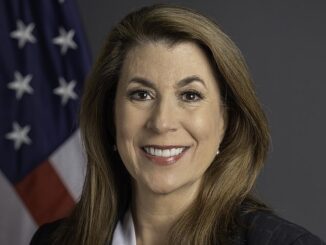
    State Department Spokesperson Tammy Bruce said at a press briefing on Thursday that Washington is “monitoring closely” the situation between India and Pakistan amid rising tensions. Secretary of State Marco Rubio spoke separately with External Affairs Minister S Jaishankar and Pakistani Prime Minister Shehbaz Sharif on Wednesday, April 30.

    “As the President articulated to Prime Minister Modi last week, the United States stands strong with India against terrorism, and Prime Minister Modi has our full support,” Bruce said.

    Rubio “encouraged both countries to work towards a responsible resolution that maintains long-term peace and regional stability in South Asia. We continue to be in touch with the governments of both countries, as I mentioned, at multiple levels,” Bruce added.

    “This government is in constant communication. We are asking for a responsible resolution from both parties. And beyond that, there’s nothing I can give you, any other details,” she said.

    (Source: PTI)

  • Pakistani PM Sharif in Beijing for talks with President Xi to seek more investments, elevate ties

    Pakistani PM Sharif in Beijing for talks with President Xi to seek more investments, elevate ties

    Beijing (TIP): Visiting Pakistani Prime Minister Shehbaz Sharif has reached Beijing for talks with Chinese President Xi Jinping and other leaders to elevate all-weather bilateral ties and prospects of more aid and investments to bail out his cash-strapped country from the current economic crisis.
    Sharif, on a five-day official visit to China since June 4, toured the southern high-tech city of Shenzhen on June 4 and addressed the investors meeting.
    During his stay here, Sharif will meet Xi, Premier Li Qiang and other leaders, Pakistan’s state-run APP news agency reported.
    He will also attend a Pakistan-China Friendship and Business event and have meetings with the CEOs of leading Chinese companies working on the China–Pakistan Economic Corridor (CPEC) projects.
    Several MoUs between the two countries on cooperation in various fields are likely to be signed, the report said.
    Cash-strapped Pakistan’s economy is facing severe headwinds, and it has formally requested the International Monetary Fund (IMF) for the next bailout package between USD 6 billion and USD 8 billion with the possibility of augmentation through climate financing.
    In his address to the investors meeting in Shenzhen, Sharif assured full security to the Chinese personnel from the recurring terrorist attacks targeting them.
    The 72-year-old leader embarked on his first visit to China after he took over as prime minister for the second term after his Pakistan Muslim League-Nawaz (PML-N) party-led coalition government assumed power in March.
    Addressing the Pakistan-China Business Forum, Sharif assured all-out facilitation to Chinese investors and security of Chinese individuals, projects, and investments in Pakistan.
    He said his government had taken various measures to ensure fool-proof security to protect the lives of Chinese workers in Pakistan.
    “I will spare no effort to protect the lives of Chinese workers and assure and guarantee that we will provide them security more than our children. This will never happen again,” he said.
    Referring to the March terrorist attack in Besham in Pakistan, in which five Chinese personnel and their Pakistani driver were killed, he said it was one of the saddest days of his life when the whole nation felt saddened.
    The latest was the March suicide attack in Dasu in which five Chinese nationals and a Pakistan driver were killed. Pakistan paid USD 2.58 million as compensation to the families of those killed in the attack.
    The CPEC, which connects Gwadar Port in Pakistan’s Balochistan with China’s Xinjiang province, is the flagship project of China’s ambitious Belt and Road Initiative (BRI). The BRI is seen as an attempt by China to further its influence abroad with infrastructure projects funded by Chinese investments across the world. (PTI)

  • Pakistan PM Sharif convenes NSC meet amid faultlines between judiciary, government

    Pakistan PM Sharif convenes NSC meet amid faultlines between judiciary, government

    ISLAMABAD (TIP): Pakistan Prime Minister Shehbaz Sharif has convened a meeting of the National Security Council (NSC) for April 7, amid the widening chasm between the judiciary and the federal government over holding polls in the country’s politically crucial Punjab province.
    Pakistan’s parliament on April 6 passed a resolution rejecting the country’s Supreme Court’s decision about the Punjab elections delaying the case and demanding a full court to decide on this vexing issue.
    A three-member bench of the apex court led by Chief Justice Umar Ata Bandial on Tuesday fixed May 14 as the new date for elections to the Punjab Assembly, as it quashed the Election Commission of Pakistan’s decision to extend the polls date from April 10 to October 8.
    The top civil and military leadership will participate in the NSC meeting while the heads of the country’s intelligence agencies will brief the participants on the national security situation, according to The Express Tribune newspaper.
    The meeting is scheduled to take place at 11 am on Friday at the Prime Minister’s House, the report said.
    The NSC is a federal institutional and consultative body chaired by the Prime Minister of Pakistan as its chairman.
    It is a principal forum that is mandated for considering national security and foreign policy matters with the senior national security advisers and Cabinet ministers.
    In the latest development, the National Assembly or the lower house passed a resolution to reject the decision of the apex court.
    The resolution was moved by lawmaker Khalid Magsi of the Balochistan Awami Party which is part of the ruling coalition and was adopted by the lower house.
    It called upon Prime Minister Sharif and the federal cabinet not to implement this judgment as it is contrary to the Constitution.
    The resolution came after Sharif addressing the cabinet meeting on Wednesday described the apex court’s decision as a mockery of the Constitution and law, and added that it could not be implemented.
    His idea was supported by the National Assembly, showing the bitter divide over the date of the election in Punjab where the assembly was dissolved on January 13 and the polls should be held within 90 days.
    The federal government asserts that it has the power to delay the polls and hold them with the general elections in the country after August this year.
    However, former prime minister Imran Khan’s Pakistan Tehreek-e-Insaf party has been pushing for early polls and demanding that instead of delaying the elections in the Punjab province, the national assembly should be dissolved and general elections called in the country. (PTI)

  • Pakistan government orders Foreign Office to slash missions abroad as part of austerity measures: Report

    Pakistan government orders Foreign Office to slash missions abroad as part of austerity measures: Report

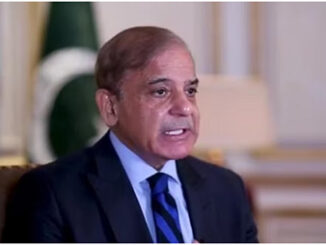
    ISLAMABAD (TIP): Pakistan Prime Minister Shehbaz Sharif has ordered the foreign ministry to slash the number of missions abroad and reduce their offices, staff and initiate other measures to cut down expenditures of the debt-ridden nation by 15 per cent, a media report said on February 22.
    In a directive titled “Rationalisation of Foreign Mission Abroad” issued by the Prime Minister’s Office (PMO) on Tuesday, Sharif also demanded a well-considered proposal/plan from the foreign ministry in concern to the matter within two weeks positively, The News International newspaper reported.
    The move to slash the missions abroad was recommended by the National Austerity Committee (NAC), which was constituted by Prime Minister Sharif to suggest austerity measures for the country in the wake of the current financial crisis it is witnessing. “In view of the ongoing economic constraints and the consequent need for fiscal consolidation and control of external deficit, the prime minister was pleased to constitute NAC,” the report said.
    “The committee has recommended, inter-alia, that the expenditure on Pakistan Missions abroad may be reduced by 15 per cent. This may be achieved by curtailing the number of Foreign Missions, reduction in the number of officers and staff posted there and other suitable measures,” the report added.
    The move came as there has been increasing frustration among the political-cum-technocratic members of the federal cabinet for reluctance on the part of the government not to implement the recommendations given by the NAC which was constituted by the premier himself but so far no action got implemented in Pakistan has a chronic balance of payments problem which was exacerbated in the last year, with the country’s forex reserves declining to critical levels. As of February 10, the central bank had only USD 3.2 billion in reserves, enough to cover barely three weeks of imports. To stem dollar outflows, the government has imposed restrictions, allowing imports of only essential food items and medicines until a bailout is agreed upon with the International Monetary Fund (IMF), which is seen as essential for the country to stave off default.
    Sharif’s government is hellbent on implementing measures to cut down on its expenditures by increasing taxes on the public and bringing down government expenses.
    Although Finance Minister Ishaq Dar in his mini budget speeches reiterated the government’s commitment to undertaking austerity steps by the Prime Minister within weeks, there was a perception that the government undertook all tough measures by hiking electricity, and gas tariffs and imposing Rs 170 billion additional tax burden there was no hurry for cutting down wasteful expenditures, the report said. (PTI)

  • UAE to roll over $2 bn loan: Pak PM office

    Islamabad (TIP): The United Arab Emirates (UAE) on January 12 agreed to extend an existing loan of $2 billion and provide an additional loan of $1 billion to help cash-strapped Pakistan tackle its economic woes, including the fast-depleting foreign exchange reserves.

    Prime Minister Shehbaz Sharif’s Office made the announcement after his meeting with UAE President Sheikh Mohammed bin Zayed Al Nahyan in Abu Dhabi. The two leaders discussed bilateral relations and explored ways to further strengthen these ties, especially in the fields of trade, investment and energy. They also had an exchange of views on regional and international issues of mutual interest.

    While on one hand, the government supply of subsidised wheat has nearly stopped altogether, the prices of other essentials have skyrocketed on the other. Stores and grocery shops are running out of kitchen staples. The shortage of wheat flour has led to an increase in the prices of bread and bakery items too.

    The desperate situation has triggered chaos and some clashes among people were also seen in the region in the past few days. The locals blamed the government for the situation. “We will continue to protest till our demands are met. The scope of this protest can also increase, it can go from one district to another. We can protest in the entire PoK region. If the poor people yearn for bread, we are not responsible for it. It is the responsibility of the government,” said a protester in Muzaffarabad. /ANI

  • PM Modi’s mother Heeraben passes away; cremated in Gandhinagar

    PM Modi’s mother Heeraben passes away; cremated in Gandhinagar

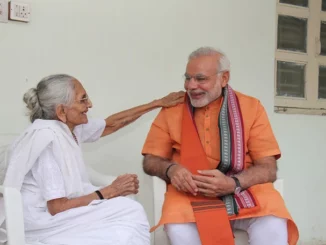
    NEW DELHI (TIP): The mortal remains of Prime Minister Narendra Modi’s mother Heeraben, who passed away here early on Friday, December 30, were consigned to flames in Gandhinagar.

    Heeraba passed away at UN Mehta Institute of Cardiology and Research Centre in Ahmedabad in the wee hours on Friday, December 30. She was 99 and was admitted to the hospital on Wednesday, December 28.

    The hospital said in a statement that she breathed her last at 3.30 am during treatment at the institute. The PM’s last meeting with his mother before she was hospitalized was on the eve of the Gujarat polls on December 4 when he went to seek her blessings in Gandhinagar. Paying tributes to his mother, the PM tweeted, “A splendid century long life has come to an end. In my mother, I saw the trinity—of a hermit, an ascetic and a life devoted to ideals.”

    Heeraba is survived by five sons—PM Modi and brothers Soma Bhai, Amrutbhai, Prahladbhai and Pankajbhai, and daughter Vasantiben. The PM and his brothers lit the pyre at their mother’s last rites in Gandhinagar. Earlier, the PM reached Ahmedabad from Delhi and went straight to the house of brother Pankaj Modi at Raysan village on Gandhinagar outskirts where the mortal remains of Heeraba were kept. After carrying the mortal remains for some distance, the PM boarded the mortuary van to accompany his mother on her last journey to the cremation ground.

    President Droupadi Murmu led the tributes to Heeraba, hailing her simple and compassionate life.

    Pakistan PM Shehbaz Sharif, Japanese PM Fumio Kishida and Israeli PM Benjamin Netanyahu also paid tributes.

    “Prime Minister Narendra Modi’s mother Heeraba’s 100 years of struggle are a symbol of Indian ideals. Shri Modi imbibed the spirit of ‘#Matradevobhav’ (Mother is God) and the values of Heeraba in his life. I pray for the peace of the holy soul (sic),” the President said. A prayer meeting in the memory of Heeraba would be held later at Vadnagar, the family’s native place. Born in Mehsana, she led an active life and often made headlines. She was seen standing in a queue to withdraw cash from an ATM after PM Modi declared demonetization in 2016. She also made news when she accepted the Covid vaccine and was a regular voter. —

    Condolences poured in from leaders across the world.

    My deepest condolences. May her soul rest in peace. — Fumio Kishida, Japanese PM

    May she rest in peace and may you find solace in her memory and the rich heritage she bequeathed to you and many others. — Benjamin Netanyahu, Israel PM

    There is no greater loss than losing one’s mother. My condolences to Prime Minister Narendra Modi. — Shehbaz Sharif, Pak PM. We have seen how instrumental her role was in every aspect of your life as a mother, motivator and mentor. — Sheikh Hasina, B’desh PM.

  • Money laundering: Pakistan PM Shehbaz Sharif, son file acquittal pleas

    Lahore (TIP): The indictment of Pakistan Prime Minister Shehbaz Sharif and his son and former Punjab Chief Minister Hamza Shehbaz was delayed on september 5 in a multi-million dollars money laundering case after they filed fresh petitions, seeking their acquittal. As the special court of Federal Investigation Agency (FIA) was to indict the father and son in PKR 14 billion money laundering case, their counsel told the court that their clients had filed a petition for their acquittal. Talking to reporters after the hearing, the counsel said since the 70-year-old Premier and his 48-year-old son had filed for their acquittal, the court proceedings for their indictment couldn’t be held. (PTI)

  • Pak PM Shehbaz Sharif expresses desire for peaceful ties with India, Kashmir issue resolution

    Pak PM Shehbaz Sharif expresses desire for peaceful ties with India, Kashmir issue resolution

    ISLAMABAD (TIP): Pakistan Prime Minister Shehbaz Sharif has expressed his desire for peaceful relations with India based on the principles of “equity, justice and mutual respect” and the resolution of the Kashmir issue, according to a media report on Friday, August 19. Sharif also urged the international community to play a “facilitative role” to ensure durable peace and stability in South Asia, it said, amidst a chill in Indo-Pak bilateral ties over the Kashmir issue and cross border terrorism emanating from Pakistan.

    Sharif expressed these views during a meeting with the newly appointed Australian High Comm­issioner to Pakistan, Neil Hawkins, on Thursday, August 18, the Dawn Newspaper quoted the Prime Minister’s Office (PMO) as saying. “Pakistan desires peaceful ties with India, based on the principles of equity, justice and mutual respect. In this context, a just and peaceful resolution of the Jammu and Kashmir dispute in accordance with the relevant UNSC resolutions and the wishes of the Kashmiri people, was indispensable,” Sharif said.

    “The international community has to play a facilitative role in this regard, as it was essential for durable peace and stability in South Asia,” he said. India has repeatedly told Pakistan that it desires normal unneighborly relations with Islamabad in an environment free of terror, hostility, and violence. India has said the onus is on Pakistan to create an environment free of terror and hostility.

    Sharif’s remarks came days after India decided to allow non-locals who are living ordinarily in Jammu and Kashmir to be able to register their names in the voting list and cast their ballot in the elections in the union territory.

    Before the abrogation of Article 370, only the permanent residents of Jammu and Kashmir as defined by the state subject law were entitled to get voting rights. In a related development, the Foreign Office on Friday said it categorically rejects India’s announcement of permitting even temporary residents, including outside workforce and security personnel, to register as ‘voters’ in Jammu and Kashmir.

    It is an “Indian design to influence the outcome of ‘so-called’ elections” in Jammu and Kashmir and deliberate attempts “of pre-poll rigging and overt manipulation”, the Pakistan Foreign Office said in a statement.

    It also asked the international community to take immediate cognizance of the Indian attempts at effecting “illegal demographic changes” in Kashmir. Jammu and Kashmir Chief Electoral Officer Hirdesh Kumar on Wednesday, August 17,  had announced that the Union Territory is likely to get around 25 lakh additional voters, including outsiders, after the special summary revision of electoral rolls being held for the first time after the abrogation of Article 370. The bilateral ties between the two neighbors deteriorated further after India announced withdrawing the special powers of Jammu and Kashmir and bifurcation of the state into two union territories in August 2019.

    India has repeatedly told Pakistan that Jammu and Kashmir “was, is and shall forever” remain an integral part of the country. It also advised Pakistan to accept the reality and stop all anti-India propaganda.

  • Pak PM Shehbaz Sharif leaves for Saudi Arabia on his maiden three-day official visit

    Pak PM Shehbaz Sharif leaves for Saudi Arabia on his maiden three-day official visit

    Islamabad (TIP): Pakistan Prime Minister Shehbaz Sharif on April 28 left for Saudi Arabia on his maiden three-day official visit abroad during which he will hold wide-ranging discussions with the top Saudi leadership, with particular focus on advancing economic, trade and investment ties. The 70-year-old leader was sworn in as Pakistan’s 23rd prime minister on April 11 after his predecessor Imran Khan was ousted in a no-confidence vote.

    Sharif, who has been invited for the trip by Crown Prince Mohammed bin Salman, is accompanied by a high-level delegation including key members of the Cabinet.

    “Today I am embarking on a visit to Saudi Arabia to renew & reaffirm our bonds of brotherhood & friendship. I will have wide-ranging discussions with Saudi leadership. KSA is one of our greatest friends & as Custodian of the Two Holy Places, has a special place in all our hearts,” Sharif tweeted.

    Separately, his office issued a video message of the prime minister. The video, played on all TV channels, showed Sharif making a commitment to take the ties with the kingdom to new heights.

    On Wednesday, the Foreign Office said that Prime Minister Sharif will have bilateral interaction with the Saudi leadership during the visit, with particular focus on advancing economic, trade and investment ties and creation of greater opportunities for the Pakistani workforce in Saudi Arabia.

    “This would be the Prime Minister’s first visit abroad after assuming Office earlier this month. The Prime Minister will be accompanied by a high-level delegation, including key members of the Cabinet,” it said.

    The two sides will also exchange views on a range of regional and international issues of mutual interest.

    The bilateral relationship is complemented by close mutual collaboration at regional and international fora. Saudi Arabia is a member of the Jeddah-based Organisation of Islamic Cooperation contact group on Kashmir.

    In December 2021, Pakistan had taken a USD 3 billion loan from Saudi Arabia on very tough conditions after its official gross foreign exchange reserves dipped below USD 16 billion. Saudi had also approved oil on deferred payment equal to USD 1.2 billion annually.

    Citing sources, The News reported that Pakistan has decided to seek an additional package of USD 3.2 billion from Saudi Arabia to jack up the total facility to USD 7.4 billion from the existing USD 4.2 billion during the current visit of Prime Minister Sharif, in order to avert further depletion of foreign currency reserves.

    “We are going to request the Kingdom of Saudi Arabia to increase the amount of the deposit from USD 3 billion to USD 5 billion and double the Saudi Oil Facility (SOF) from USD 1.2 billion to USD 2.4 billion, so the total package could be increased up to USD 7.4 billion during the visit of premier Sharif,” a source said.

    “We are requesting for deferred payment facility and enhancing the credit extended for forex support,” the paper quoted one of the top officials of the Finance Division as saying. Cash-strapped Pakistan is passing through a phase of political and economic uncertainty, and the newly-formed Sharif government is struggling to deal with spiralling inflation and an economy that simply refuses to rebound. Earlier this week, Pakistan and the IMF agreed to extend the stalled bailout package by up to one year and increase the loan size from the existing USD 6 billion to USD 8 billion, giving a breathing space to the Sharif government. In his first address to the parliament soon after election as the prime minister of the country, Sharif had highlighted special ties with Saudi Arabia. Saudi King Salman and Crown Prince Mohammad bin Salman earlier sent congratulatory messages to Shehbaz on becoming Pakistan’s new prime minister and wished him success. On the sidelines of the visit, Sharif would also visit Mecca to perform Umrah pilgrimage. Minister for Information and Broadcasting Marriyum Aurangzeb earlier said that Prime Minister Sharif will travel to Saudi Arabia on a commercial flight at his own expense. “Even during his 10 years as CM Punjab during 2008-18, he always travelled commercially and at his own expense,” she added. (PTI)

  • Shehbaz Sharif takes oath as new PM of Pakistan

    Shehbaz Sharif takes oath as new PM of Pakistan

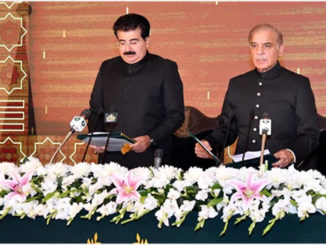
    Islamabad (TIP): Shehbaz Sharif was sworn-in as the new Prime Minister of Pakistan on April 11, bringing to an end the political uncertainty that had gripped the country since a no-confidence motion was introduced against his predecessor Imran Khan on March 8. Senate Chairman SadiqSanjrani administered oath of office to 70-year-old Shehbaz in President ArifAlvi’s absence, who went on ‘sick’ leave ahead of the PML-N leader’s inauguration.

    Earlier, Sharif was elected unopposed as the Prime Minister by Parliament after rival candidate Shah MahmoodQureshi announced that his Pakistan Tehreek-e-Insaf party will boycott the voting and staged a walkout.

    Shehbaz Sharif said he wants good relations with India, but it can’t be achieved without resolution of Kashmir issue.

    The newly-elected Prime Minister termed ousted premier Imran Khan’s ‘foreign conspiracy’ claims as “drama”, saying he will resign and go home if it is proved. Addressing Parliament after his election as the country’s 23rd Prime Minister, Shehbaz said that good has prevailed over evil.

    “Pakistan’s National Security Committee would be briefed on a controversial letter related to the so-called foreign conspiracy,” he said, terming Khan’s ‘foreign conspiracy’ claims as “drama”.

    Khan had alleged that the US was involved in a conspiracy to topple his government.

    “I will resign and go home if conspiracy is proved in letter controversy,” Shehbaz said.

    Shehbaz, 70, was elected unopposed as the new Prime Minister of Pakistan by Parliament after rival candidate Shah MahmoodQureshi announced that his Pakistan Tehreek-e-Insaf party will boycott the voting and staged a walkout.

    Shehbaz, the younger brother of former three-time prime minister Nawaz Sharif, received 174 votes — two more than the simple majority of 172.

    He has served as chief minister of the country’s most populous and politically crucial Punjab province thrice.

    Former president and Pakistan Peoples Party (PPP) co-chair Asif Ali Zardari had proposed Shehbaz’s name for prime minister’s position in a joint opposition’s meeting to replace Imran Khan through a no-confidence motion.

    The process of electing the new leader of the House began on Sunday after prime minister Imran Khan was removed from office through the no-confidence vote, becoming the first premier in the country’s history to be sent home after losing the trust of the House.

    Pakistan has struggled with political instability since its formation in 1947 with multiple regime changes and military coups. No prime minister has ever completed a full five-year term. PTI

  • US congratulates new Pakistan PM Shehbaz Sharif, says values relationship with Islamabad

    US congratulates new Pakistan PM Shehbaz Sharif, says values relationship with Islamabad

    WASHINGTON (TIP): The United States has congratulated Pakistan’s new Prime Minister Shehbaz Sharif and said it values the relationship between the two countries and is looking forward to continuing the long-standing cooperation, signaling Washington’s intent to improve ties with Islamabad under the new regime.

    Pakistan’s relations with the US have been lukewarm, especially under the Biden administration. The ties touched a new low after former prime minister Imran Khan, who was ousted last week through a Parliament vote, accused the US of conspiring to dislodge his government. The US government has bluntly denied the allegations multiple times.

    “Pakistan has been an important partner on wide-ranging mutual interests for nearly 75 years and we value our relationship,” Secretary of State Antony Blinken said in a statement on Wednesday. “The United States congratulates newly-elected Pakistani Prime Minister Shehbaz Sharif and we look forward to continuing our long-standing cooperation with Pakistan’s government,” he said. Blinken said the US views a strong, prosperous and democratic Pakistan as essential for the interests of both the countries.

    However, President Joe Biden is yet to make a customary call to Prime Minister Sharif, 70, since his appointment on Monday. Biden had not made any such call to former premier Khan also till his last day in office on Sunday.