Tag: Sheikh Mujibur Rahman

  • Delhi-Dhaka ties move beyond symbolism, seek to power growth and connectivity

    Delhi-Dhaka ties move beyond symbolism, seek to power growth and connectivity

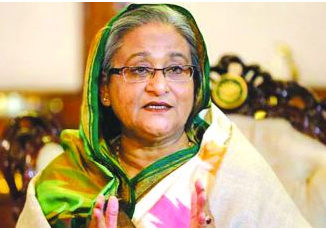
    New Delhi (TIP): Prime Minister Narendra Modi laid the foundation for his neighbourhood visit well before he took oath on May 26, 2014 when he asked Ajit Doval, the then director of Delhi-based think tank Vivekananda International Foundation, to request leaders of Saarc countries to attend the swearing-in ceremony at the Rashtrapati Bhavan forecourt. Prime Minister Sheikh Hasina couldn’t make it. She had a scheduled visit to Japan at that time and conveyed through her interlocutors that Bangladesh Parliament Speaker Shirin Sharmin Chaudhury would represent Dhaka at the event. As PM Modi landed in Dhaka on Friday to begin a two-day visit to remember ‘Bangabandhu’ Sheikh Mujibur Rahman, the father of the nation of Bangladesh, and celebrate the golden jubilee of the 1971 liberation war, India’s ties with Bangladesh has gone way beyond symbolism. It is part of an integrated vision of PM Modi for the development of eastern India, particularly the North-East with the help and support of Bangladesh. What started with a historical 2015 Land Boundary Agreement (LBA) to settle legacy issues with Bangladesh has developed into a close partnership with India making it a priority to supply Covid-19 vaccine to Dhaka under the “Vaccine Maitri” initiative. PM Modi has made it clear to all that Bangladesh, like Bhutan, Nepal and Myanmar, occupy a special place in Indian diplomacy and all help should be extended to them for mutual growth and security. Since 2014, the bilateral relationship with Dhaka has achieved the following milestones:

    –              Land Boundary Agreement

    –              Restoration of pre-1965 rail links with India. Five out of six have been completed.

    –              Reviving the protocol on inland water and trade transit.

    –              Agreement on the use of Chittagong and Mongla ports for trade and transit.

    –              Building of the Maitree Bridge on the Feni river.

    –              Agreement to export power including building a transmission line from Berhampur in India to Bheramara in Bangladesh

    –              Supply of diesel to Bangladesh from Numaligarh refinery.

    While Bangladesh is the key to connectivity to north-eastern India, it also fits into the calculus of trans- Asian highways that will link India to Vietnam by road and could become an economic engine for growth in Myanmar, Thailand, Cambodia, Laos and Vietnam.

    The development and growth of India’s eastern flank will not only contribute to its GDP with tourism holding a vast potential in North-East but also politically stabilise the region with the Bharatiya Janata Party is a major political force on the eastern front.

    The development of ties with immediate neighbours is also a priority with PM Modi, now that legacy issues like Article 370 and 35 A have been resolved and Kashmir is no longer the permanent stick for adversaries to beat India. When PM Modi becomes the first foreign leader to visit the Bangabandhu mausoleum at Tungipara tomorrow, he will be taking the next steps to cement ties with Dhaka under Sheikh Hasina’s leadership.          Source: HT

  • 14 sentenced to death for bid to kill Hasina

    14 sentenced to death for bid to kill Hasina

    Dhaka (TIP): Hasina has in the past survived several assassination attempts with the first in 1975 when a military coup killed her Father and Bangladesh’s founder Bangabandhu Sheikh Mujibur Rahman along with most of his family members. The PM and her younger sister Sheikh Rehana survived the carnage as they were on a visit to Germany. Hasina miraculously survived a grenade attack when she was addressing an anti-terrorism rally in 2004. The attack claimed 24 lives and injured some 500 others.

    Fourteen Islamist militants were on Tuesday given death sentence by a Bangladeshi court here for attempting to kill Prime Minister Sheikh Hasina in 2000. Judge Abu Zafar Md Kamruzzaman of Dhaka’s Speedy Trial tribunal-1 pronounced the verdict as nine of them were brought to the court from jail to face the trial in person. The remaining five convicts are on the run. They were tried in absentia and defended by state-appointed lawyers.

    “The verdict will be executed by a firing squad to set an example, unless the law barred it,” the judge said. Otherwise, the convicts could be hanged in line with the prevailing practice, following mandatory review of the death sentences by the High Court Division of the Supreme Court under the Bangladesh law, the judge said.

    Under the Bangladesh law, the death sentences would require to be endorsed by the High Court following an automatic death reference hearing. The convicts are allowed to file an appeal as well.

    For the five convicts who are at large, the judge ordered the verdict to be executed after their arrest or surrender. All convicts are operatives of outlawed Harkatul Jihad Bangladesh (HuJI-B).

    HuJI-B’s chief Mufti Abdul Hannan, who was found to be the mastermind of the plot, too was indicted in the case but his name was dropped from the trial as he was executed in 2017 in another case involving attempted assassination of the then Bangladeshi-origin British High Commissioner. The convicts had hatched the plot to kill Hasina by planting a high-powered 76 kilogram bomb near a ground in her constituency in Kotalipara area in southwestern Gopalganj district where she was supposed to address an election rally in July 2000.

    However, security agencies detected the device ahead of the rally at the spot where the premier’s helicopter was set to land. Days later, another device weighing 40 kilograms was detected from a nearby spot. In 2017, 10 militants were sentenced to death and nine others jailed for 20 years each by a court in the case. PTI

  • The creation of Bangladesh

    The creation of Bangladesh

    SPECIAL on 50th anniversary of Bangladesh’s Independence.

    India must also recall the political and diplomatic successes of 1971 under Indira

    By Vivek Katju

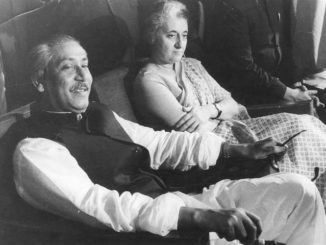
    PM Modi will participate in the 50th anniversary of Bangladesh’s independence on March 26 in Dhaka as the guest of honor. This is only fitting because of the role played by India under the leadership of PM Indira Gandhi in assisting Bangladesh in its war of independence in 1971 to end West Pakistani colonialism. The focus in Dhaka will be on the courage and resilience of the Bangladeshi people who overcame the genocidal onslaught of the Pakistani army against its then co-nationals. It will also be on Sheikh Mujibur Rehman whose birth centenary Bangladesh is currently celebrating. He embodied the aspirations of the then East Pakistani people for equality within Pakistan, and as that prospect became remote, for throwing off the West Pakistani yoke.

    Amidst all the celebrations, will Indira Gandhi’s leadership be recalled, and if so, to what extent and in what terms? Also, later in the year, as India marks the golden jubilee of its victory in the 1971 War, how will it honor the leader who led the country with skill and iron determination to victory against very great odds? Her later mistakes cannot take away her 1971 achievement.

    Whenever people look back to the events of 1971, their attention is claimed by the success of the Indian Army or shifts to the controversies generated by the Simla Agreement of July 1972. Consequently, the political and diplomatic successes of 1971, which provided the foundation for military achievements, have fallen into the crevices of public memory. However, Indian diplomacy leading to the Simla Agreement and Indira Gandhi’s specific role in its conclusion is evaluated—and certainly criticism can be levelled on many aspects of the agreement and the assumptions that led to it— should be segregated from the political and diplomatic management of 1971. But first, how should the events of 1971 be evaluated in strategic terms, both on account of their challenges and opportunities? After the trauma of the Partition with its attendant dislocation, the next strategic challenge the country faced was in 1965 when Pakistan sought to wrest J&K. Did the extended 1971 drama pose a greater threat to the nation’s interests as compared to the 1965 Pakistani aggression? Since 1971, has the country been confronted by an overall threat that can compare to that difficult year? Howsoever strategic experts view these different situations, there is little doubt that 1971 was a supremely difficult year which required flawless coordination of all aspects of national power. These included military and diplomatic and also political to ensure unity and social cohesion as the country navigated the enormous obstacles that came its way.

    Indira Gandhi’s government achieved the integration of all these diverse elements to convert challenges into opportunities. Indian actions led to basic changes in the map of the Indian subcontinent. The independence of Bangladesh also eroded the view that religion by itself can be a lasting glue for nationalism, thereby destroying the two-nation theory.

    The December 1970 Pakistani election shocked the Pakistan army and West Pakistan political elite because Sheikh Mujib’s party, the Awami League, secured 167 of the 169 seats of East Pakistan and had sufficient numbers to form the federal government. The army led by the then dictator and President Gen Yahya Khan and the West Pakistan political leaders were determined to prevent this from happening, for they feared that Mujib would end their domination by insisting on provincial autonomy and the end of exploitation of the country’s eastern wing. When negotiations failed, the army began an unrestrained massacre of the Bangladeshi people on the night of March 25, 1971. It especially targeted the Hindu population. Refugees started to pour into India, and by the time armed hostilities began in December, around one crore had come into India. It was an intolerable strain.

    India had gone through political turmoil with a split in the Congress in 1969 and elections called by Indira Gandhi were held in March, which she swept. She was sworn in as PM for a fresh term, only around 10 days before the Pakistan army’s crackdown in Bangladesh. As the refugees began to cross over, people demanded military intervention to stop the slaughter. The military made it clear that it would take months to prepare and would prefer to wait till November, when the weather would permit quick and decisive action to liberate Bangladesh. Diplomatic work was also necessary to prepare the ground for the intervention, especially as it became clear that the US was against the break-up of Pakistan.

    India’s diplomatic efforts were directed at cultivating western liberal opinion, which, when facts were brought to its attention, was appalled at the Pakistani action. But western governments and Islamic countries remained unmoved, for they wanted the preservation of Pakistan’s territorial integrity. President Richard Nixon and his NSA, Henry Kissinger, remained hostile to India. China, too, made threatening noises. The top leaderships of both countries were personally grateful to Yahya Khan for his role in enabling their initial contacts in secrecy.

    In this international situation, India took the precaution of securing Soviet support through a friendship treaty which implicitly ensured its support against aggression. Indira Gandhi did not let India’s commitment to non-alignment to inhibit the demands of realism. She also gave full support and shelter to Bangladeshi leaders who set up a government in exile, and also the Mukti Bahini that launched a resistance campaign.

    Indira Gandhi’s speech in Parliament, announcing the surrender of Pakistani forces and declaring ‘Dhaka is the free capital of a free country’, is one of the shining moments of the Republic’s history, as is the iconic photograph of Pakistan General, AAK Niazi, signing the instrument of surrender.

    (The author is a former secretary, Ministry of External Affairs, Government of India)