Tag: Shiv Sena

  • India votes for political stability, development and good governance

    India votes for political stability, development and good governance

    The days of political instability in India should be over, with the people of India clearly preferring the BJP to lead the country. India has chosen, after almost three decades, a government that can function without pulls and pressures, which in other words means, political blackmail, to which the nation has been a helpless witness during the last two decades.

    In a house of 543, where a party needed 272 to have a simple majority, BJP has got 282 seats, 10 more than required to form a government on its own. With its alliance partners in the NDA-Shiv Sena, TDP, SAD, LJP and others, it commands an imposing majority, with 336 seats. It could well lead to an Indian Renaissance. Indubitably, there has been a “tectonic shift in the Indian politics”.

    How one could, otherwise, explain the total decimation of the Congress and its allies in the UPA and the meteoric rise of the BJP. Indians have been waiting for the promised millennium but found, to their chagrin that it was an endless wait for Godot. Their patience was running out. Promises and pledges were made to be broken, not kept, seemed to be the belief of the ruling UPA.

    The result: 44 seats for the Congress Party and a total of 59 for the UPA. The impatience of the people with the government that was steeped in corruption led to protests against corruption and misgovernance. Indians cannot in their honesty deny that the movement against corruption and for a Lok Pal Bill launched by Anna Hazare dented the Congress image.

    Arvind Kejriwal, taking a more hostile opposition to the corruption in the UPA government, launched a frontal attack on the UPA government and the Congress leaders and exposed a number of corruption cases. These movements enjoyed people’s support. The image of the Congress party and its allies in the UPA got sullied, with people openly expressing their disapproval of the functioning of the government.

    Look at the Delhi assembly elections. The Congress party was nearly routed, with just 8 seats, after having ruled the state for 15 years, trailing behind BJP (32) and the fledgling AAP (28). Apart from the exposure of the Congress led UPA government corruption and misdeeds, what hurt it the most was its inability to control inflation. The common man suffered from ever increasing prices which made his life miserable.

    The regular backbreaking price rise of essential commodities made him think of a change. See how Delhites fell to the AAP promises of cheaper water and electricity supply and gave a few months old political party, the massive support to rule. It was another matter that AAP government could not last.

    Other factors that contributed to people’s disenchantment with the Congress party included growing unemployment, failure of law and order machinery to protect the honor of women, and the ruling party’s attitude of indifference towards people’s problems. People wanted a change. As when one medication does not work, one tries another hoping it will work; so, the people of India, oppressed by the ruling party’s indifference to their woes, decided to go in for a change.

    Their vote for the BJP is, in fact, a voteagainst nonperformanceand misperformance of the UPA government. BJP, today, is in a position to deliver. With its comfortable majority, it can shape its policies, without being pressurized, as in a coalition. Narendra Modi has been harping on development during election campaign which he so successfully led from the front. Mr. India would like to get a slice of it.

    If he does not, he knows what to do. History repeats itself. Not long ago, a Kejriwal in Delhi was a cynosure of the common man’s eye and a few months later, he was dumped because he could not deliver. It has happened with the Congress Party. It could as well happen with the BJP. Indians are looking for results from the BJP. They are not going to wait long. First of all, they would like the government to control the killing price rise. Next, they would like to see the law and order machinery protect their lives and property. They want a judicial system which does them justice.

    They would like to be rid of everyday harassment in government offices where everybody seems to be out to reach in to their pockets. They would like to be treated with respect due to a human being. For long, India has followed the colonial system in many ways.

    One, which is more disturbing and destabilizing, is the large presence of the privileged and the non-privileged sections of society. The feudal system which the laws ended a long time ago is still going strong. The mai baap, sarkar, huzoor, VIP culture is doing no good to the nation. And then, we do not want to give up status symbols. One fails to understand why a lawmaker or an official of the government requires security and a fleet of vehicles.

    Who pays for it? Why should the people of India pay for the idiotic notions of the privileged few? Modi’s charisma has worked with the people of India and we would hope it works with the governments of the world. The Modi government must ensure cordial relations with neighbors and friendly nations. In particular, relations with USA, China and Pakistan will need extra care and attention. Over the years, India has diligently built up certain alliances which will need to be strengthened.

    In international relations, change of government does not mean abrupt changes in alliances. It may be remembered that such alliances exist between nations, not between governments. Indians are glad to see a star politician in Modi. They would be happier to see a statesman in Modi. Only time will tell whether or not Modi can graduate from a politician in to a statesman. One hopes, BJP will live up to the expectations of people of India who have placed their trust in the party’s promise of giving good governance – “Sushashan”.

  • Phase 5: Voter turnouts higher than 2009 poll figures

    Phase 5: Voter turnouts higher than 2009 poll figures

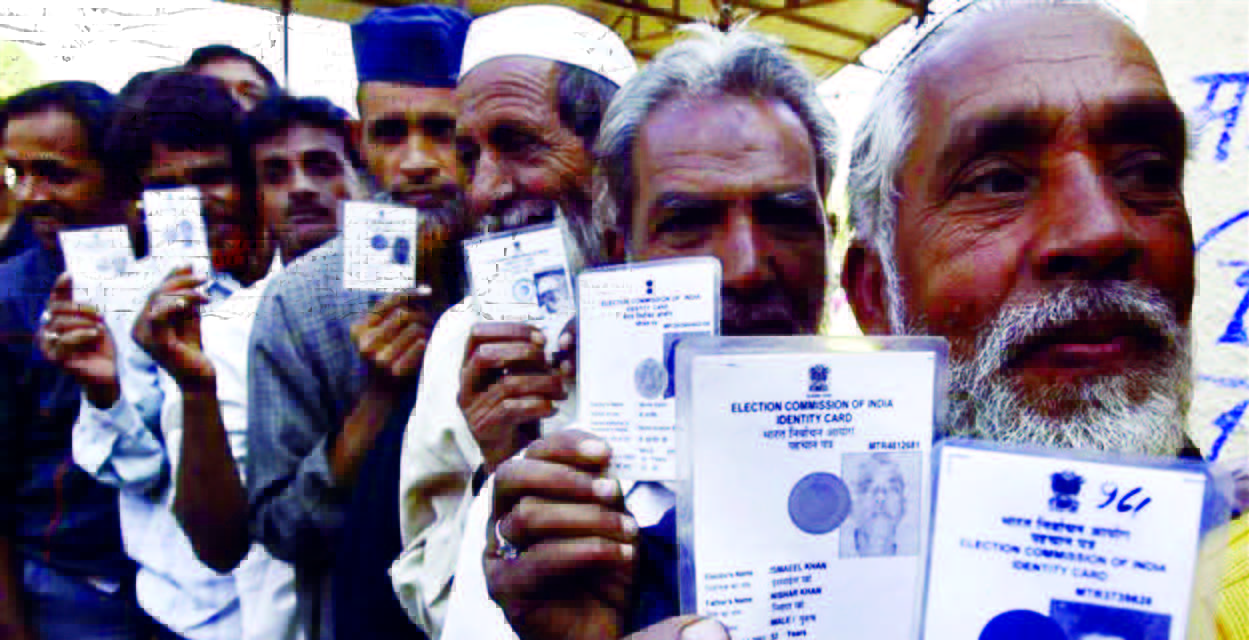
    NEW DELHI (TIP): Voter turnouts higher than the 2009 poll figures marked the fifth and biggest round of Lok Sabha elections covering 121 seats across 12 states amidst largely peaceful balloting on April 17. A good turnout is considered a strong sign of antiincumbency, a cause of worry for the Congress. While the Election Commission was yet to announce the final voting figures late on Thursday, nearly 65% of the eligible electors cast their ballot across the 12 states.

    The highest turnout of 81.57% was recorded in four constituencies in West Bengal, which has a total of 39 seats, while the lowest was recorded in Madhya Pradesh at 54%. While 80.6% had voted in the four seats in West Bengal in the 2009 general elections, the Madhya Pradesh figure stood at 46%. “After this phase, a large section of India has already voted,” said BJP’s prime ministerial candidate Narendra Modi. “People have voted in the heat and have voted for a strong government.”

    He added that the long queues of first-time and women voters “are positive steps”. In the key battleground state of Karnataka, where polling was held in the all the 28 seats, the voting percentage was 66% and in the 11 seats of Uttar Pradesh, electorally the most important state with 80 seats in the Lower House, the turnout was 62.52%, up from 2009’s 54.2%. A good show for Congress in Karnataka could help it check the BJP’s perceived surge nationally. In the previous Lok Sabha poll in the state, the BJP had won 18 seats in the state but is struggling this time. Maoists struck in Jharkhand, exploding a land mine at Bokaro in Giridih constituency and injuring four paramilitary troopers.

    They also blew up a school building and a rail track. Allegations of voter intimidation came from parts of Bihar and West Bengal. The Election Commission ordered repolling in nine polling stations in Bihar. Thursday’s election covered a vast part of the Indian landscape — from Jammu and Kashmir in the north to Karnataka in the south, from Maharashtra along the west coast to West Bengal in the east. Polling took place in all 28 Lok Sabha seats in Karnataka, 20 of the 25 in Rajasthan, 19 of the 48 in Maharashtra, 11 seats each in Odisha and Uttar Pradesh, 10 in Madhya Pradesh, seven in Bihar, six in Jharkhand, four in West Bengal, three in Chhattisgarh and one seat each in Manipur and Jammu and Kashmir.

    Simultaneous balloting was held for 77 of the 147 assembly seats in Odisha and two assembly bypolls in West Bengal. The BJP claimed it was confident of winning most seats contested on April 17. “We are sure of winning all 25 seats (in Rajasthan),” chief minister Vasundhara Raje said in Jaipur. Former central minister Ananth Kumar voiced confidence about the BJP’s ability to do well in Karnataka, where it is the main opposition party to the ruling Congress. Central ministers Sushilkumar Shinde and Jyotiraditya Scindia brushed aside the BJP’s claims. “There is no Modi wave,” Scindia said after voting in Guna in Madhya Pradesh. Shinde said in Sholapur: “There is no Modi wave here, only Shinde wave.”

    With Thursday’s round, polling has been completed in 232 of the 543 seats in the Lok Sabha. Thursday was important both for the BJP and the Congress, which held 40 and 36 of the Lok Sabha seats that went to the polls, as well as the Janata Dal-United, Jharkhand Mukti Morcha, Janata Dal-Secular, Shiv Sena, Maharashtra Navnirman Sena, Aam Aadmi Party, Biju Janata Dal, Samajwadi Party, Bahujan Samaj Party and Trinamool Congress. Around 70% votes — up from the 2009 figure of 44.9% — were polled in Jammu and Kashmir’s Udhampur seat where elections passed off peacefully. In Bihar, where polls were held in seven Lok Sabha constituencies, 56% voting was recorded as compared to 39.3% during 2009 Lok Sabha elections.

    Polling in Odisha saw 70% people vote as compared to 66.28% in 2009. In Chhattisgarh, 63.44% polling was reported. Polling in another important state, Maharashtra, which has a total of 48 seats, 19 constituencies which went to poll on Thursday saw a turnout of 61.7%. Prominent candidates in the fray included Ananth Kumar and Nandan Nilekani (Bangalore South), Jaswant Singh (Barmer), Sachin Pilot (Ajmer), Ashok Chavan (Nanded), Misha Bharti (Pataliputra), Supriya Sule (Baramati), BS Yeddyurappa (Shimoga), Ghulam Nabi Azad (Udhampur), Maneka Gandhi (Pilibhit), Shatrughan Sinha (Patna Sahib), M Veerappa Moily (Chikkaballapur), Sushilkumar Shinde (Solapur), V Balakrishnan (Banglaore Central), and SS Ahluwalia and Bhaichung Bhutia (Darjeeling).

    About 1.37 million staff oversaw the polling, watched over by hundreds of thousands of police and paramilitary personnel. April 17 saw the largest number of Lok Sabha seats in contention on any one day since the staggered balloting started April 7. Four more rounds of voting are due until May 12. The result will be declared May 16.

  • BJP stands by Uddhav, dumps Raj

    BJP stands by Uddhav, dumps Raj

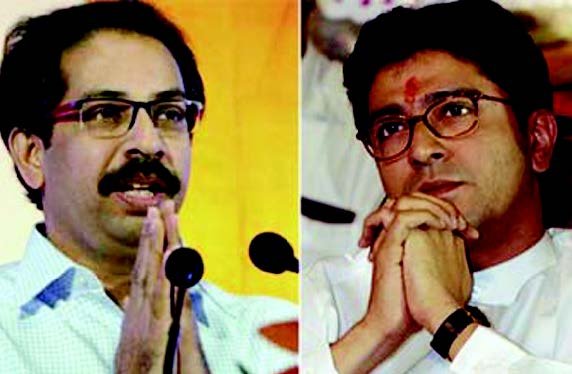
    PUNE (TIP): Unimpressed by Raj Thackeray’s support for its prime ministerial candidate Narendra Modi, the state BJP unit has decided to take on the Maharashtra Navnirman Sena (MNS) in the Lok Sabha elections. State BJP president Devendra Fadnavis said that the BJP leaders will campaign for Shiv Sena’s candidates to ensure the MNS’s defeat.

    “We stand by our alliance partner Shiv Sena. We are doing all to win every seat in the state. The MNS has opened a front against our alliance partner and we are going to resist every attack on the Sena. Our leaders will campaign for the Sena candidates and appeal to voters to defeat the MNS,” Fadnavis added. He said there was no confusion and though Raj has announced that his MPs will support Modi, they would are going to campaign against MNS candidates. Allegations about colluding with the MNS have been in the air. Fadnavis said there is no covert or overt understanding with the MNS.

    “The BJP values its old alliance partner Shiv Sena and there is no question of any understanding with the MNS. We are contesting the election as an alliance and it is our duty to abide by it,” he added. Senior BJP leader Gopinath Munde, speaking to local media persons in his hometown of Beed, said, “I had met Raj Thackeray and wanted him in our alliance. But things did not work out and the chapter was closed. There is no point in raking up the issue again.

    We are confident that the alliance will win the maximum seats in the state.” Munde said he would address a series of rallies with Uddhav across the state. The BJP’s support for Uddhav comes against Raj’s appeal to his party workers to “target Shiv Sena”. During his public rally in Pune on Monday, Raj announced a dozen public rallies to explain his stand on Shiv Sena and Uddhav. “I need to clarify that I was not against joining the BJP-Sena alliance. But Uddhav never wanted me in. I plan to reveal more such facts in the next few days,” Raj had said.

    City unit told to get its act together
    The BJP’s state president Devendra Fadnavis said he had asked the city unit leaders to set aside their differences and campaign for the party candidate Anil Shirole. “We don’t want to lose any seat because of infighting. We cannot afford any bickering at this moment. All party workers will work for Anil Shirole and we are confident of winning the Pune seat,” said Fadnavis. He added that MLA Girish Bapat and his supporters were actively campaigning for Shirole and senior state leaders would address public rallies in the city. Nitin Gadkari supporter Bapat had sought party nomination, but finally Munde supporter Shirole succeeded to fetch the ticket. Unhappy with the decision, Bapat and supporters had publically expressed unhappiness over the party’s decision.

    Mistry, Modi’s opponent in Vadodara, arrested
    VADODARA (TIP): Congress’s Vadodara candidate Madhusudan Mistry, who removed posters of the BJP prime ministerial candidate Narendra Modi, was on April 3 arrested by cops on charges of vandalism.Mistry, the Congress candidate was earlier detained for vandalism. Mistry, along with 100-odd Congress workers tried to remove posters of his rival and BJP’s prime ministerial candidate, Narendra Modi, in Vadodara.After detention, an unrepentant Mistry said he had no regrets for his action and said that he would continue to protest against Modi.

    Will your jijaji be India’s chowkidaar? Modi asks Rahul Gandhi
    KURUKSHETRA (TIP): Bharatiya Janata Party prime ministerial candidate Narendra Modi took on Congress vice president Rahul Gandhi in a rally in Kurukshetra in Haryana. Referring to Rahul’s brother-in-law Robert Vadra’s controversial land deals in Haryana, Modi attacked the Gandhi scion, calling him shehzada. He was quoted by NDTV as saying, “I had said the country needs a chowkidaar and I will serve you like a chowkidaar.

    Shehzada said the country needs 125 crore countrymen as chowkidaars. I ask him, will his jijaji (brotherin- law) be a chowkidaar too? Will he guard land?” In 2012, Vadra was accused by Arvind Kejriwal, an anticorruption crusader, of taking an interest-free loan of Rs 65 crores and heavy bargains on land from DLF Limited in exchange for political favours.Congress’ principal opponents, the Bharatiya Janata Party raked up the issue in the parliament and demanded a probe into the matter. In response to the controversies surrounding the deals, the Congress came in strong defence of Vadra, criticising the BJPfor targeting its president Sonia Gandhi’s family.

  • Shinde claim on Dawood punctured

    Shinde claim on Dawood punctured

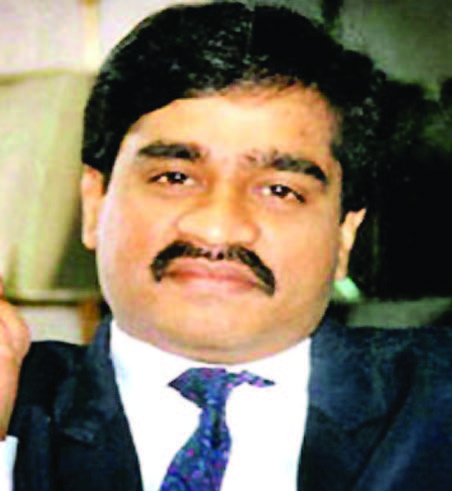
    NEW DELHI (TIP): In a huge embarrassment to Union Home Minister Sushilkumar Shinde, who had earlier said the US agencies were helping India nab Dawood Ibrahim, Minister of State for Home Mullappally Ramachandran claimed that the ministry had made no formal request seeking the US aid so far. “No such formal request has been made by this ministry to the US government,” Ramachandran informed the Rajya Sabha in a written reply.

    The Centre’s response came in reply to a question of Shiv Sena member Anil Desai, who asked if it was true that the government had requested the US government to track down the wanted terrorist. Shinde has been publically claiming that efforts to arrest Dawood are being made along with US agencies. Dawood is believed to be living in Pakistan since 1993 when he fled to that country after the serial blasts in Mumbai for which he is wanted.

    “As per our information, Dawood is in Pakistan. When I went to America last year to discuss inland security, I met the attorney general who looks after the FBI,” Union Home Minister Sushilkumar Shinde had said on January 10. Adding that there is coordination between the two countries he had said, “I talked to him and we decided that we would pass whatever information we have on Dawood among each other. We decided we will make joint efforts.”

    Even former home secretary R. K. Singh has contested Shinde’s claim in the past, saying that the US agencies didn’t talk about Dawood during his US visit. After Shinde took over as the Union home minister, security agencies successfully have managed to bring back to India at least four big terrorists. Other than the arrests of Abdul Karim Tunda, who is wanted in several bomb blasts cases, and a top Indian Mujahideen commander Yasin Bhatkal last year, India convinced Saudi Arabia to deport key plotter of 26/ 11 Mumbai attack Sayed Zabiuddin Ansari alias Abu Jundal and LeT operative Fasih Mahmood in 2012. Jundal – an accused in Ahmedabad Railway Station blast case, Auran gabad arms haul case and German bakery blast case – was deported from Saudi Arabia in June 2012.

    Fasih Mahmood, an LeT operative from Bihar, was allegedly involved in Chinnaswamy Stadium blast in Bangalore and a terror attack at Jama Masjid. US intel agencies have been tracking Dawood’s activities over the years. According to the US, Dawood maintains close links with al- Qaeda. As a result, the US declared him as a global terrorist.

  • MAHARASHTRA CM AGREES TO SHUT 22 TOLL PLAZAS, RAJ THACKERAY KEEPS UP THREAT

    MAHARASHTRA CM AGREES TO SHUT 22 TOLL PLAZAS, RAJ THACKERAY KEEPS UP THREAT

    MUMBAI (TIP): MNS chief Raj Thackeray on February 13 wangled a promise from CM Prithviraj Chavan to shut down 22 toll plazas immediately and unveil a new policy before the poll model code of conduct starts in the first week of March. After several more assurances in a two-hour meeting, Thackeray said he was calling off his morcha scheduled for February 21, but kept up the heat on the government by exhorting citizens not to pay toll till the new policy. The CM admitted serious irregularities in toll collection and said a new policy awaits the cabinet’s nod.

    ST buses would be exempted from toll, he added, and offered the same hope for BEST, which could reduce fares. A comprehensive policy submitted to the government suggested several people-friendly measures like toll booths only beyond 5km from civic limits, time-bound projects, calculation of toll on road length, etc. After Feb 13 meeting, officials said other than withdrawal of 22 toll booths which are recovering less than Rs 10 crore by paying Rs 124 crore, the state is checking if it could eliminate 20-25 more toll booths by spending another Rs 350-400 crore. It would be discussed at a cabinet meeting soon. “The state can spend a maximum Rs 500-600 crore to buy back toll booths in the interest of the angry people. Around 80 major toll booths will have to be retained as buying them out would be an unaffordable burden on the state,” said a senior official.

    Thackeray offered his suggestion to the government to ease toll pain: divert the Rs 100 crore meant for a mammoth statue of Chhatrapati Shivaji in the Arabian Sea. The meeting on Thursday took place as the CM had invited Thackeray for talks at Sahyadri, the state-owned guest house at Malabar Hill, following which the MNS leader had called off a rasta roko in Mumbai on Wednesday. Thackeray was accompanied by party legislators and a battery of toll experts led by the fiesty Sanjay Shirodkar. PWD minister Chhagan Bhujbal and MSRDC minister Jaydutt Kshirsagar submitted their viewpoints on toll before Chavan spoke.

    The meeting drew disparaging comments from other parties. “This is Raj Thackeray’s face-saving exercise,” said a BJP functionary. Both the Shiv Sena and the BJP have described the entire sequence of events of the last four days as “match-fixing” between Chavan and Thackeray. Asked about the success of his party’s agitation, Thackeray said: “Anna Hazare had also written to the government against toll. But since our party’s first agitation, 65 toll booths have been shut. This means the government understands our language, and not that of Hazare’s.”

    At the meeting, Chavan unveiled some more measures to provide relief to travellers and to make toll collection more transparent. He announced exemption to ST buses from toll. “We have written to the Centre… We have fine-tuned a new formula under which the state will claim 75% share from additional toll collection, while the private contractor will get 25%. There is need for greater coordination between the public works department, the national highway authority and the Maharashtra State Road Development Corporation,” the CM said.

    The MNS delegation pointed out that the Khed-Shivapuri toll booth on the Pune-Kolhapur road had recovered toll from 19 lakh vehicles in three years and was supposed to be closed by January 26 this year. But it was still in operation. Chavan said an independent decision would be taken on booths where recovery has been completed following a heavy rise in the number of vehicles. The CM asked people to come up with evidence against toll posts recovering money beyond their mandate and assured action.

    He added that future toll projects would be mandatorily based on electronic vehicle count to help decide transparently when recovery should end. Also, private toll contractors will have to acquire land to set up user facilities along the state highways. Toll expert Shirodkar suggested measures like traffic sampling, internal audit and linking toll with the wholesale price index to streamline toll collection.

  • Winds of Change

    Winds of Change

    November, 2013 gave a clear idea of which way the political wind in India was blowing. The rout of Congress in Delhi and Rajasthan; and its rejection by the electorate in Madhya Pradesh and Chhattisgarh indicated the loss of popularity of the party.

    Without going in to details of causes for the decline in popularity of a party that had managed to rule the center for almost 10 years at a stretch, it can now be said that the grand old party is tottering. The latest India Today Group’s Mood of the Nation opinion poll indicates huge losses for the Congress led UPA.

    The BJP led National Democratic Alliance (NDA) has been found to make significant gains. The projections are it could win 200-odd seats if the general elections were held in January 2014, the findings of the poll say. The opinion poll gives the Congress-led United Progressive Alliance (UPA) only around 100 seats, down by over 150 seats in the current Lok Sabha.

    It also underlines the significance of a possible Third Front in the forthcoming Lok Sabha election as the non-UPA, non- NDA parties and Independents are expected to win 220- odd seats. The NDA thus crosses the 200-mark for the first time since 2010. Both, the NDA and the likely Third Front, gain substantially in numbers and vote share at the cost of the Congress led UPA. The opinion poll suggests that the NDA’s vote share of 34 per cent will be significantly more than the UPA’s 23.

    However, the others will have the maximum vote share of 43 per cent. The scenario is frightening. The BJP emerges as the single largest party and yet it will not be able to form a government on its own. With its alliance partners, Shiv Sena, SAD and a few others, too, that form NDA, a government led by BJP does not appear in sight. The “others” are disparate groups. They cannot be expected to cobble together a government even though they will together be the largest group, according to the results of the poll. What happens then? Horse trading and unholy alliances will prevail. What happens then? Another round of misrule. Another five years of suffering for the common man. The writing is on the wall.

  • Not In The Race For Prime Minister : RAJNATH SINGH

    Not In The Race For Prime Minister : RAJNATH SINGH

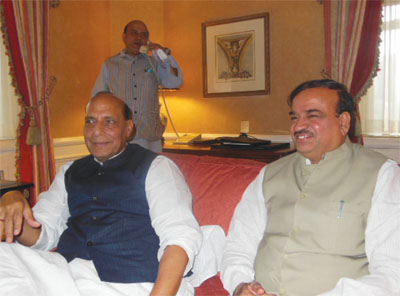
    NEW YORK (TIP): The Bharatiya Janata Party President Rajnath Singh on Saturday, July 20, categorically denied that he is in the race for Prime Minister of India if BJP returns to power at the Center. “I am more interested in getting the BJP back into power in Center and packing off the corruption-ridden bad governance of the Congress in my tenure as President of the party,” he said addressing a news conference of Indian-American media at Hotel Waldorf Astoria in Manhattan.

    On the question of party president not being projected as Prime Ministerial candidate in the Lok Sabha elections, he said it is not necessary that the two positions be placed in the hands of one person. “It’s not necessary that party president should also be a crowd puller and a prime ministerial candidate. I have an assignment to do for my party. I have a job to deliver – that is victory of the party in the 2014 elections.”

    “Seven months before the elections, I have nominated Gujarat Chief Minister Narendra Modi as chairman of the party campaign committee. What is unusual in that? We have nominated Modi like other parties do and why read between lines. I have named him as campaign head in view of his image, popularity and commitment to the party,” he said. He said Modi is certainly the most popular and the tallest leader of India.

    He is a crowd puller not only in Gujarat but also in Tamil Nadu, Andhra Pradesh, Uttar Pradesh and Bihar – from North to South, East to West. He is one single leader with a national appeal. His popularity will help the party in the elections. On the issue of visa rejection issue of Narendra Modi, he said he would take up the issue with the US lawmakers in Washington.

    “I will appeal to the US government to clear the US visa to the Gujarat Chief Minister.” People of India have now realized that BJP is the only solution after comparing the performance-oriented BJP led NDA Government and corruption-ridden inefficient Congress UPA dispensation, he said. The performances of several BJP-ruled states like Gujarat, Madhya Pradesh, Chhattisgarh are there for the people to see and if these states can provide 24 hour power supply, clean and efficient government, fillip to industries compared to poor performance of many Congressruled State governments what would people prefer? People have made up their mind, he said.

    Detailing steps taken by the BJP to face the national elections in 2014, he said the party had brought changes in organizational level by forming polling booth committees in every booth. “We have formed a committee consisting of 10 to 15 party men at grassroots level to strengthen the organization at village level,” he said Congress ruled for 10 long years at national level and what are their achievements other than wholesale corruption and compromise in national and international security, he asked.

    Indian voters are now realized that when the Center can’t guarantee growth rate of five percent or less, the growth rate in Gujarat, Madhya Pradesh and Chhattisgarh are approximately 10 percent. No one can fool Indian voters any more, he said. On the recent debacle of the party in Karnataka and setbacks in other states, the BJP President said assembly elections and municipal elections are different from parliament elections where people vote for a stable government.

    Voters are intelligent enough to compare the two governments and Congress will be out of power soon. They have ruled for 10 long years and now its time to give them rest, he said “We are confident that the failure of the Congress government will help BJP return to power in the center. Any political party that aspires to come to power should give good governance and satisfy the needs of the people.

    If they fail in this front, they will be out of power.” There is wholesale failure on economic front, compromise on internal and external security and diplomatic fronts as well. People are demanding a change very badly. If people want any change, the only choice is BJP who can provide an alternative to this government, he said. On allies deserting the party, he said BJP will try to get a clear majority in Lok Sabha polls but at the same time will not forget its allies – old and new.

    “Despite a clear majority in sight, we want our allies to participate in the government at the center. Now we have Shiv Sena and Shiromani Akali Dal and may get some nearer to the elections. There is also a possibility of post poll alliance with like minded parties if there is a need,” he said. In the coming Lok Sabha elections, Congress will be routed in Andhra Pradesh due to its ambiguity on Telengana issue.

    The BJP is the only national party that favors separate Telengana and it was passed as a resolution in our national executive committee meeting, he said. There is no ambiguity in the BJP unlike the Congress camp in the matter and BJP is in favor of Telengana. But it’s not in favor of bifurcation of UP and other states as Telengana issue is a totally different one. On the question of poll promises, he said BJP would rather go in for developmental debate than Ram Janma Bhoomi issue. “Ram temple was not a major poll issue anytime.

    It was at best a national issue but not an election issue,” he added. BJP government will consider instituting an inquiry commission to go into the corruption and scandals of the Congress government and will provide transparent and honest government with people’s interest as uppermost, he said. Ananth Kumar, party general secretary and chairman of Parliamentary Foreign Affairs Committee who is accompanying Rajnath Singh on the US tour, said the four member BJP delegation will meet members of the US Senate and House Representatives from both sides of the aisle – Democratic Party and the Republicans especially members of the Congressional Caucus of Indians and Indian Americans at the Capitol Hill.

    Ananth Kumar said Rajnath’s visit to the US is a two track outreach program – to outreach the Indian Diaspora to assess the mood of three million Indian-Americans across the nation who occupy important and powerful positions besides being opinion makers; and to meet with India Caucus Congressmen to impress on them that a change is sweeping in India on the heels of Lok Sabha elections.

    The other two members of the delegation are Dr. Sudhanshu Trivedi, party spokesman and advisor to the BJP President and Vijay Jolly, BJP national convener for Overseas Affairs and a former Delhi MLA. Jolly said the visit was to re-connect the Party President with the Indian-American Diaspora that plays a leading role in fostering friendship between the two countries. “We want to work closely with Non Resident Indians.” BJP – both as a government and party – will work with mainstream American and Indian-American business community on economic and investment matters.

    clearly is of the view that India and the US have a close correlation in internal and external security and they are strategic partners being natural allies, he said. Jolly said the Overseas Friends of BJP in the US has over 7000 members across the US and project a positive image of the party among Indian-Americans and policy makers. The Foreign Affairs Committee of the party will address the concerns of Indian Diaspora and include in them in the BJP parivar by assigning a major role in the ensuing elections.

    Rajnath Singh said it was NDA government under Vajpayee that gave voting rights to Non-Resident Indians and introduced Overseas Citizens Card (OCI) and Persons of Indian Origin (PIO) card. It was under Vajpayee’s leadership that the first Pravasi Bharatiya Divas was held in 2003 in New Delhi to bring all the Non- Resident and Diaspora Indians to work for the welfare of India. “All these were made possible due to the visionary leadership of Vajpayee and only the BJP has done a lot for NRIs and PIOs.”

    On the spate of killing of Hindu and BJP leaders in Tamil Nadu, he said he would appeal to Tamil Nadu Chief Minister to give protection to party leaders. “I appeal to Jayalalithaa to help stop the killing of Hindu and BJP leaders in Tamil Nadu. We will try to build pressure on state government so that it takes it seriously to put an end to such killings.”

  • Tracking violence and terror Worrying communal tendencies

    Tracking violence and terror Worrying communal tendencies

    Justice Verma and his two colleagues on the commission set up to examine laws dealing with sexual abuse and terror have served the nation well in making a thorough examination of the subject in its widest amplitude and coming up with a range of pertinent observations and recommendations. This elaborate report was prepared in just 29 days with exemplary speed without falling short on data, analysis and findings. It now remains for the government and Parliament to match this dedication and legislate a new legal framework without the endless delays and side-interventions that have marked the working of the commissions headed by Liberhan and Nanavaty. The main recommendations have been widely discussed and one should now expect the Centre to take counsel with the states and introduce and pass a new framework law in one or more enactments that honors and protects the girl child and women of India from rape, molestation, neglect and patriarchal discrimination. The legislation should, hopefully, find backing from all parties and social groups and be enacted not later than in the monsoon session. Among the matters examined by the commission are police reforms which are fundamental to every aspect of law and order and criminal justice. Evidence of the police’s participation in the recent Dhule riot in which Muslims were targeted by them, shows how deep the rot has spread. Unfortunately, there has been limited progress in implementing police reform despite the Supreme Court’s directive on the subject. The opposition comes from across the political spectrum. All political parties are determined to retain the police and intelligence agencies as handmaids to serve their partisan agendas rather than as efficient and effective instruments for ensuring a safe and orderly society, and as the bedrock of the criminal justice system. This aspect of the Verma report should not be fobbed off yet another time as parties continue to play their dirty little games. One other matter merits emphasis. There are a plethora of laws on the statute book and many matters could be ameliorated or resolved if only they were strictly and promptly implemented. Delay leads to evasion, immunity and impunity. Influential and moneyed persons are differentially treated. A lecherous politician like Narayan Dutt Tiwari or a convicted criminal like O.P. Chautala have sought consideration on grounds of age and status. These demands are accepted only at the cost of the hallowed principle of equality before law. Unequal justice is an injustice and justifies criminality in angry young minds because of the outrage it breeds as some are placed above and beyond the rigors of the law. The Trinamool Congress is fast becoming addicted to violence and bluster against all dissidents, internal or external. A dehorsed Nitin Gadkari, charged with financial misconduct, has claimed that the income tax investigations against the Purthi group of companies with which he is associated was timed to sabotage his reelection as BJP president! Further, he has warned the officials who have merely done their duty to beware the wrath of the BJP when it is returned to power in 2014.This is taking resort to threats and blackmail. Meanwhile, the Home Minister, Sushilkumar Shinde, has stirred an avoidable controversy by charging the RSS and the BJP with training and unleashing Hindu terror. He was referring to bombing incidents in Malegaon, Ajmer, Hyderabad and elsewhere in 2007 when people like Swami Asseemanand, Sunil Joshi, Sandeep Dange and others bearing “Hindu” names were apprehended.

    The cases are pending and nothing has been conclusively proven though strong circumstantial evidence has surfaced. The RSS and the BJP have reacted strongly against the use of the phrase “Hindu terror”, arguing that terrorists cannot be labeled by faith.

    This is true, though “saffron” is more commonly used to denote Hindu right-wing connections. The BJP has threatened to prevent Parliament’s functioning unless Shinde apologizes or is sacked. The Congress has dissociated itself from the phrase “Hindu terror” but has otherwise defended Shinde.

    The fact is that it was the Parivar that first used the phrase “Muslim terror” with glee. Men like Narendra Modi openly spoke of “Miah” misdeeds and declared that while not all Muslims were not terrorists, all terrorists so far apprehended were Muslim. The RSS and the BJP, therefore, protest too much, though it is true that all sides should eschew associating terrorism with faith.

    Be that as it may, obstructing Parliament yet again would be irresponsibly to punish the nation for Shinde’s faux pas and once again stall important and urgent legislation and hold the country to ransom. The marked communal tendencies that are surfacing in the country are most worrying, The Sachar Committee’s recommendations have been tardily implemented and open discrimination against the community persists.

    After being given a state funeral out of fear of Shiv Sena hooliganism, permission to build a memorial to him in Shivaji Park in Mumbai is being mooted after a first refusal. Communal elements of all hues once again targeted the Jaipur Literary Festival on frivolous grounds while in Chennai, the release of Kamal Haasan’s new film, “Viswaroopam”, has been stayed on the ground of alleged anti-Muslim bias that could cause law and order problems. Once again, a film passed by the Film Censor Board is being censored by groups alleging hurt sentiment though it has been released elsewhere without disturbing the peace. Appeasement of communalism only encourages the same.

    Externally, the sentencing of David Coleman Headley, a US-Pakistan double agent, to only 35 years in prison in the US for his central role in staking the killing fields for the 26/11 attack in Mumbai in close collaboration with the Lashkar-e- Taiba and Hafiz Saeed has come as a grave disappointment. Even the trial judge stated that Headley deserved the death sentence but was saved from that only because of his plea bargain with the US authorities who milked him for some very damaging information of the sequence of events but not fully shared with India. Requests by Delhi for his further interrogation by Indian sleuths or extradition to India have been turned down by Washington. The US war on terror is obviously selective at the expense of Indian lives.

    And now comes another confession by a Pakistani Corps Commander, Lt-Gen Shahid Aziz, in 1998 that it was Musharraf who planned and pushed the utterly deceitful Kargil war that resulted in “total disaster”. No Mujahideen were involved but only Pakistani troops who crossed the LoC. This is no new revelation but only a further confirmation of the history of malicious lies and crass denials that Pakistan has repeatedly lived off since 1947.

    No wonder that President Mukherjee said in his Republic Day address that while India seeks friendship with Pakistan, Islamabad should not take this friendship for granted. Let the Pakistan government respond to this latest piece of “literature” as the Pakistan High Commissioner, Salman Bashir, would so elegantly phrase it.

  • India Rejects Pakistan demand for UN probe

    India Rejects Pakistan demand for UN probe

    NEW DELHI (TIP): India has rejected Pakistan’s demand that the UN be asked to probe allegations that Pakistani troops killed and beheaded two Indian soldiers in Jammu and Kashmir as Indian political parties called for “tough” action against Pakistan. “That (Pakistan’s) demand is rejected out of hand. We will not internationalize the issue nor go to the United Nations,” Finance Minister P. Chidambaram told reporters after a cabinet meeting.

    He said the cabinet committee on security was briefed about the January 8 killings near the Line of Control (LoC). “Our report is that the Indian forces did not violate the ceasefire (in place in LoC since 203),” he said. In Islamabad, Pakistan Foreign Minister Hina Rabbani Khar reiterated the demand for a third party enquiry into ceasefire violations on the LoC. Khar, addressing a news conference, said Islamabad abides by the 2003 ceasefire. She added that Pakistan has also contacted UN Military Observer Group for India and Pakistan (UNMOGIP) to probe the killing of one of its soldiers Jan 6 in alleged firing by Indian troops. She had a day ago denied the killing of Indian soldiers was a “tit-for-tat” reaction.

    According to Radio Pakistan, a Pakistani soldier was killed when “Indian troops resorted to unprovoked firing at Tatta Pani Sector in Kotli on January 10”. Hamid Mir of Geo TV said in a tweet: ‘Tatta Pani sector of Kashmir became another battlefield, one Pakistani soldier Havaldar Mohyudin martyred by Indian shelling.’ Home Minister Sushilkumar Shinde said the heightened border tensions will not to come in the way of a liberalized visa agreement between India and Pakistan. ‘The visa agreement (inked last year) will be carried out as scheduled, there is no rethink on it,’ Shinde told reporters. National Security Advisor Shivshankar Menon noted that ceasefire violations by Pakistan on the LoC had increased last year. ‘There has been an increase in ceasefire violations by Pakistan and in infiltration attempts in 2012 over 2011.’ The opposition Bharatiya Janata Party said it would organize nation-wide protests Friday over the killings of the two soldiers. ‘People are very angry over this matter,’ BJP spokesperson Nirmala Sitaraman said, adding: ‘We hold the Pakistan government and army accountable for breaking the ceasefire.’ ‘We should give proof, name and shame Pakistan for having done this… we can’t afford to have our goodwill misused,’ she added.

    BJP leader Sushma Swaraj said the party would support the UPA government if it takes ‘tough’ decisions against Pakistan for the killings. Shiv Sena executive president Uddhav Thackeray demanded that India should ‘take revenge’ against Pakistan for the brutal killing of the two soldiers.

    Bahujan Samaj Party (BSP) chief Mayawati asked the government to take ‘strong action’ to ensure that such brutalities are not repeated and that India-Pakistan relations did not suffer. The US has asked India and Pakistan to talk to each other to improve relations. ‘We’re urging both sides to take steps to end the violence.

    We continue to strongly support any efforts to improve relations between the two countries,’ State Department spokesperson Victoria Nuland told reporters in Washington. The UNMOGIP has asked India and Pakistan to respect the ceasefire and de-escalate tensions. The UNMOGIP said it has received an official complaint from the Pakistan Army to probe the Jan 6 killing of a Pakistani soldier. But Martin Nesirky, spokesman for Secretary-General Ban Ki-moon, said no official complaint had been from India or Pakistan on the second ‘alleged incident’ of Jan 8 for a probe.

    Indian Army sources have denied a media report linking the current border skirmishes to an elderly Kashmiri woman crossing into Pakistani Kashmir to be with her children. The sources also denied the Indian Army had transgressed the LoC on Jan 6, and said soldiers had only carried out ‘controlled retaliation’ in response to a ceasefire violation by Pakistan.

  • The World Is Not The Same Without Them

    The World Is Not The Same Without Them

    With legendary musicians- Mehdi Hassan, Pandit RaviShankar, actors- Rajesh Khanna, Dara Singh, AK Hangal,Joy Mukerjee, filmmaker Yash Chopra and ace comedianJaspal Bhatti transcending to heaven, the world of artsand entertainment was left bereaved. Hindi Cinema lostits first superstar Rajesh Khanna and actor-wrestler DaraSingh to prolonged illness, while Hangal succumbed to oldage. Yash Chopra breathed his last after contractingdengue, a few days after celebrating his 80th birthday.

    BAL THACKERAY: THE TIGER IS DEAD
    Shiv Sena chief Bal Thackeray passed away onNovember 17. Lakhs of mourners joined the Shiv Senafounder’s grieving family to bid him a tearful farewell. Asevident during several times in his life, the Thackerayphenomenon was in evidence once again in death as hebrought Mumbai to a complete halt.

    VILASRAO DESHMUKH: MASS LEADERDIES
    A mass leader, Union minister Vilarao Deshmukh wasgiven a tearful adieu by tens of thousands of grievingpeople at his native village from where he began hispolitical journey as an obscure sarpanch four decadesago.

    IK GUJRAL PASSES AWAY
    Former Prime Minister Inder Kumar Gujral passedaway on November 30. He was 92. Gujral, who wasadmitted to the hospital on November 19 with a lunginfection, had been on dialysis for over a year. The PrimeMinister of the country for the year between 1997 and1998, he is best known for his ‘Gujral Doctrine’ thatproposed closer ties with India and her neighbours.

    PONTY CHADHA MURDERED
    Ponty Chadha was shot dead on November 17 in acontroversial shootout with brother Hardeep. The moversand shakers of politics, business and tinsel town paidtheir last respects to the liquor baron – It was the finalvalidation of Ponty’s massive clout and the larger-thanlifepersona he created single-handedly.

    YASH CHOPRA: KING OF ROMANCE NO MORE
    Noted director, screenwriter and producer YashChopra passed away at the age of 80. In a career spanningfive decades,Indian cinema’s ‘king of romance’ neverfailed to amaze the audience with his movies. His deathhas left a void in the industry which will never be filled.Chopra is also remembered for making the careers ofmany Bollywood actors, including Amitabh Bachchanand Shah Rukh Khan

    PANDIT RAVI SHANKAR: SITARMAESTRO DIESLegendary musician Pandit Ravi Shankar passed awayon December 12 at the age of 92. The sitar maestroenjoyed worldwide popularity and was known for his indepthunderstanding of various styles and schools of music.

    JASPAL BHATTI DIES IN ROAD ACCIDENT
    Noted comedian and filmmaker Jaspal Bhatti, 57, diedin a road accident near Shahkot in the early hours onOctober 25, 2012. Bhatti along with his son Jasraj whowas on the wheel, and two others was coming toJalandhar from Bathinda for the promotion of his newfilm ‘Power Cut’ when the car hit a tree on the roadside.

    RAJESH KHANNA: A SUPERSTARPASSES AWAY
    Actor Rajesh Khanna passed away after a prolonged illness in Mumbai on July 18. The first superstar ofIndian film industry, he gave many memorable hits likeAnand, Kati Patang, Aradhana, Amar Prem, Safar,Bawarchi etc.

    THE WORLD IS NOT THESAME WITHOUT THEMDR VERGHESE KURIEN: INDIA’SMILKMAN NO MORE
    Dr Verghese Kurien did not like drinking milk, but asfather of the White Revolution, he made India into anation of milk drinkers . Often called India’s best knownmilkman, Kurien passed away on September 9. In the sixdecades he spent in Anand, he ensured India istransformed from a milk-deficient country into one ofthe world’s biggest milk producers.DARA SINGHThe original action hero of Indian cinema, Dara Singhpassed away on July 12, 2012. He was keeping unwell for along time. His most popular role was of Hanuman in theepic TV series Ramayan.

    MEHDI HASSAN
    The popular Pakistani singer and Ghazal maestroMehdi Hassan passed away on June 13, 2012. Thecelebrated singer had also lent his voice to many songs inIndian films.

    JOY MUKHEJEE
    Yesteryear actor Joy Mukhejee known for his romanticroles in films like Love in Tokyo, Shagird, Ek BarMuskurado and Phir Wahi Dil Laaya Hoon passed awayon March 9, 2012. Mukherjee’s neice Kajol attended hisfuneral.

    ACHALA SACHDEV
    Senior actress Achala Sachdev, popularly known as the’Zohra Jabeen’ of Bollywood (after her popular song ‘AeMeri Zohra Jabeen’ in Waqt) passed away on April 30,2012.Former Union Minister K C Pant, an eminent publicfigure and an able administrator, passed away at the ageof 81. He had served under late Prime Ministers IndiraGandhi and Rajiv Gandhi and switched to BJP in the late1990s. The son of Govind Ballabh Pant, a former UttarPradesh Chief Minister and Union Minister under latePrime Minister Jawaharlal Nehru, Pant held theportfolios of Defence, Finance, Energy and Steel amongothers. Pant also played the role of negotiator during theseparate Telangana agitation in the 1970s and wasinstrumental in reaching of an agreement called `MulkiRules` that gave prominence to recruitment of locals andended the agitation.

  • 2012-The Year That Was

    2012-The Year That Was

    THE RISE OF ARVIND KEJRIWAL
    Activist-turned-politician Arvind Kejriwal launchedhis party ‘Aam Aadmi Party’ this December. AAP’sdeclared manifesto to provide – for the first time in 65years of independence – a totally graft-free government.Crucially, none of the party’s agenda spells out howreforms, essential to a middle class seeking jobs andgrowth, can be harnessed for the best possible socioeconomicdevelopment.

    ANNA HAZARE-ARVIND KEJRIWAL PARTWAYS; AAP LAUNCHED
    While Gandhian Anna Hazare captured theimagination of the nation in 2011 by taking on thegovernment over the Jan Lokpal Bill issue bill,Team Anna hogged the limelight in 2012 due to itsbreakup. Anna and his key members, ArvindKejriwal, Kiran Bedi, Prashant Bhushan and otherscame back one last time in August this year toprotest at Jantar Mantar. However, the responseboth by the general public and the government wastepid.Subsequently, Team Anna promised to provide a’political alternative’ to the nation but soon after thisthe veteran social activist announced that his teamwas being disbanded. Whereas Anna was of theopinion that they should remain outside the systemto fight the system, ex-IRS officer Kejriwal felt that tochange the system one had to embark on the politicalcourse. With diametrically opposite views, a split wasinevitable.Finally on November 26, Arvind Kejriwal and his teamformed the Aam Aadmi Party (AAP) in the presence ofthousands of supporters. Kejriwal was appointed thenational convener, Pankaj Gupta the national secretaryand Krishna Kanth the national treasurer.

    CABINET RESHUFFLE
    Prime Minister Manmohan Singh’s “last reshuffle” ofhis ministerial team on October 28, before the 2014general elections, carried the first unmistakable stamp ofRahul Gandhi’s ascendancy in the Congress party. Thechanges appeared to mark the beginning of anothergenerational shift in the 127-year-old party. The reshuffleis also an effort to put the party in battle mode for the2014 polls.

    COALGATE
    At Rs 1.86 lakh crore, the coal mining scam is beingbilled as the ‘mother of all scams’. The scandalconcerning the government’s allocation of the nation’scoal deposits to public sector entities (PSEs) and privatecompanies led to repeated disruptions in Parliament withthe opposition even gunning for Prime MinisterManmohan Singh’s resignation. Meanwhile, the UPA’smanagers have hit out at the CAG and rebutted hischarges.

    PRANAB MUKHERJEE DONSPRESIDENT’S HAT
    The ‘Chanakya’ of Indian politics, Pranab Mukherjee,took over as the 13th President of India on July 25, 2012.Mukherjee wasn’t in the race initially to succeed PratibhaPatil at Raisina Hill. However, on June 15 this year his namewas announced as UPA’s Presidential candidate. VicePresident Hamid Ansari was among the other candidatesthe Congress mulled. However, the coming together of thetwo ‘M’s Mulayam Singh Yadav and Mamata Banerjee andtheir decision to name Prime Minister Manmohan Singh,former president APJ Abdul Kalam and former Lok Sabhaspeaker Somnath Chhatterjee as their Presidential choicesupset Congress’ plan. Mulayam Singh later broke ranks withMamata Banerjee and decided to go with the UPA candidateamid voices growing in favour of Pranab Mukherjee. TheBSP and several other parties also lent their support toPranabda, including JD(U) and Shiv Sena of the oppositionNational Democratic Alliance. Later, Mamata swallowed hersense of humiliation and decided to back the UPA candidatelater. Later in the year, the Supreme Court dismissed thepetition of PA Sangma, the Presidential candidate of theNDA, who had challenged Pranab’s election as presidentclaiming the former finance minister held an office of profit(chairman of the Indian statistical institute) on the day hefiled the nomination papers for the Presidential Elections.Mukherjee had rejected the allegations.

    BHARTIYA JANATA PARTY’S CUP OFWOES
    While the Congress-led UPA government at the Centrewas bogged down by issues of price rise, inflation andcoalgate, the main Opposition, the BJP had its owntroubles to deal with. The party saw its nationalpresident Nitin Gadkari embroiled in a major scandalwhich has almost rendered his second term as the party’schief untenable. After dubious funding was suspected inGadkari’s Purti Power and Sugar Ltd, the governmentdecided to probe the allegations.Gadkari faced more trouble after its Rajya Sabha MPRam Jethmalani took everyone by surprise by demandinghis resignation over the slew of allegations of corruptionagainst him. This after the maverick lawyer had openlypitched for Narendra Modi as BJP’s prime ministerialcandidate. BJP’s parliamentary board subsequentlysuspended Jethmalani from party’s primary membershipbut not before the damage was done.The BJP found its southern bastion breached afterformer chief minister BS Yeddyurappa launched theKarnataka Janata Party (KJP).

    TROUBLESOME YEAR FOR UPAGOVERNMENT
    The year 2012 would be remembered as one of the mostdifficult years for the Congress-led UPA government (in fact,the entire tenure of the UPA-2 has been mired incontroversies over corruption scams, policy paralysis etc).After keeping it in cold storage for long, the UPAgovernment re-launched a bid to bring in 51% foreign directinvestment (FDI) in multi-brand retail, amid accusations ofpolicy paralysis in the government. Though the governmentthis time modified the policy and allowed the states to taketheir decision on allowing FDI in multi-brand retail,Mamata Banerjee quit anyway. She has been one of the mostvocal voices against FDI in retail, saying the decision willhurt farmers and small retailers. The decision also led tomajor uproar in Parliament’s Winter Session and had to beput to vote. The UPA triumphed in both the Houses, thanksto direct and indirect support from the BSP and SP.However, the two allies who support the UPA from outsidegot involved in a fierce battle in the Rajya Sabha over theQuota in Promotions Bill. While BSP chief Mayawati forcedthe government to table the Bill in the Upper House, the SPwarned it would not let the House function if the Bill wastabled.During the year, the tussle between the Comptroller andAuditor General (CAG) of India and the UPA governmentcontinued, mainly over the report on the coal blocksallocation. After pegging the 2G scam presumptive loss at amassive Rs 1.76 lakh crore, the coal blocks allocation scam,which came to be popularly known as Coalgate, waspresumed to have caused a loss of Rs 1.86 lakh crore by theCAG. Since the coal blocks were mainly allotted during theperiod when PM Manmohan Singh held the coal portfolio,he too came under the direct attack of the Opposition. Whilethe government denied any scam and refuted the loss figure,an inter-ministerial panel which reviewed the allocationsdid recommend scrapping of several allotments both toprivate players and PSUs, over various reasons includingfavouritism and delay in execution of projects. PMManmohan Singh also came under attack from theinternational media, after the prestigious TIME magazinedubbed him as an underachiever over the policy paralysisthat was bogging his government. The major pro-economicreforms that the UPA government initiated in the later partof the year were seen as a move to rebut those allegations.In the middle of the year, the northeastern state of Assam,mainly Kokrajhar, witnessed fierce clashes between theethnic Bodos and the immigrant Bengali-speaking Muslims.The clashes started on the issue of land encroachment andled to nearly 100 deaths. Nearly five lakh people weredisplaced in the violence that raged during July-Septemberperiod.While the clashes were quelled following deploymentof the Army and Central paramilitary forces, Novemberalso reported fresh violence and deaths.

  • Sc Blow To Govt In High-Profile Cases, Death To Ajmal Kasab

    Sc Blow To Govt In High-Profile Cases, Death To Ajmal Kasab

    NEW DELHI (TIP): Judgements giving a body blow to the government in the highprofile Vodafone tax case and scrapping of 2G spectrum licences hogged the limelight in the Supreme Court which in 2012 also brought the curtains down on the 26/11 case by sending the lone surviving Pakistani terrorist Ajmal Kasab to the gallows.

    The 25-year-old Kasab’s nearly four-yearlong legal battle for life ended on August 29 and 84 days after the verdict he was hanged on November 21 for the crime of “unprecedented enormity” planned in Pakistan. While the day-to-day hearing in Kasab’s case was being watched, the then Army Chief V K Singh in an unprecedented move dragged the government to the top court where he lost his battle on the age row, forcing him to withdraw his petition.

    The apex court told Gen Singh that he cannot resile on his commitment that he would abide by the government decision to treat his date of birth as May 10, 1950 and rejected the contention of “prejudice” and “perversity”. However, before the age row, the year began on a bad note for the government which lost its tax case of Rs 11,000 crore against telecom major Vodafone and the apex court scrapping the 2G spectrum licences allocated during the tenure of A Raja as telecom minister. The government’s woes did not end here as its pleas for review of the Vodafone and 2G verdict fell flat.

    After failing to get any relief in the spectrum case, the Centre came out with Presidential Reference to overcome the direction in the 2G verdict that all natural resources have to be allotted through the route of “auction”. There was some solace for the government when on September 29, a fivejudge Constitution Bench came out with the opinion that auction is not the only method for allocating natural resources to private companies and made it clear that its 2G verdict was confined to spectrum and not to other resources.

    The 2G spectrum case also gave some anxious moments to Union Minister P Chidambaram after Janata Party chief Subramanian Swamy dragged him for his alleged involvement in the multi-crore rupee scam. Chidambaram finally got a clean chit from the apex court which also rejected the review petition against its verdict. The scam in the coal block allocation and government’s decision allowing FDI in retail were also dragged to the apex court which, though refused to interfere with the policy matter, put some searching questions to government on FDI and asked it to take corrective steps to remove legal hassles. However, the petitions alleging large scale irregularities in coal block allocation are pending in the apex court. Amid these developments, the UPA-II government survived a scare when the Supreme Court by a majority verdict of 3 to 2 dismissed the petition filed by former Lok Sabha Speaker P A Sangma challenging the election of senior Congress leader Pranab Mukherjee as the President.

    However, there was another reason for the Rashtrapati Bhavan to worry as President’s Secretary Omita Paul, who was advisor to Mukherjee when he was the Finance Minister, was impleaded as respondent in the petition seeking CBI probe into the appointment of U K Sinha as the chairman of SEBI. Market regulator SEBI was making news throughout the year by acting tough against the Sahara Group of companies which received a major setback when the Supreme Court directed two of its companies to refund around Rs 24,000 crore to their investors in three months with 15 per cent annual interest. However, desperate efforts brought some relief to the companies — Sahara India Real Estate Corporation (SIREC) and Sahara Housing Investment Corporation (SHIC) — as a Bench headed by Chief Justice Altamas Kabir modified the directions of another Bench by allowing them to comply with the August 31 order by first week of February. While the hearing was on in the SEBISahara matter, an unprecedented turn of event took place when the apex court decided to lay down guidelines for media for reporting the sub-judice matter following the alleged leakage of documents relating to the case.

    The then Chief Justice of India S H Kapadia’s decision was opposed by media houses which argued that such exercise would lead to infringement of fundamental right to freedom of expression and tantamount to encroaching the legislative domain. After a marathon hearing, a five-judge Constitution Bench refrained itself from laying down broad guidelines and evolved a principle of postponement for reporting the sub-judice matter which could be considered if any of the aggrieved parties sought such direction. The infringement of fundamental right to expression was well manifested when the apex court severely criticised Mumbai Police for booking two young girls under the controversial provision of cyber law for their posts on Facebook against the bandh after the death of Shiv Sena chief Bal Thackeray. Among the political heavy weights who hogged the limelight in the apex court in the year gone by were two former chief ministers of Uttar Pradesh.

    While BSP chief Mayawati got a relief in the assets case, her rival and Samajwadi Party supremo Mulayam Singh Yadav was not so lucky as in the fag end of the year, the court gave a body blow to him and his Chief Minister son Akhilesh Yadav by asking the CBI to continue with its probe against them in the wealth case. So was the case of former Karnataka chief minister B S Yeddyuruppa, who has been subjected to CBI probe along with his some former colleague in the illegal mining cases in Bellary, Tumkur and Chitradurga districts of the state. Some of the big business houses like companies associated with the Jindal Group and Adani’s are also under the CBI scanner.

    In Andhra Pradesh, rebel Congress leader Jagan Mohan Reddy, facing CBI probe in several cases including the disproportionate assets case failed to get relief from the Supreme Court which rejected his bail plea. However, as Gujarat went to the polls, CBI and NGO headed by social activist Teesta Setalvad left no stone unturned to vigorously pursue some of the cases arising out of the 2002 riots and encounter killings in the state involving Chief Minister Narendra Modi’s close aide and former minister Amit Shah. While there was no direct case against Modi in the apex court, the probe into the Tulsiram Prajapati murder case, an offshoot of the Sohrabuddin Sheikh fake encounter case involving Shah, was handed over to the CBI and trial shifted outside the state but with a relief to Modi’s aide, who was allowed to enter the state after two years to campaign and contest the polls which he eventually won.

    Congress general secretary Rahul Gandhi also had to battle in the Supreme Court which provided him relief by throwing out a petition by a former Samajwadi Party MLA from Madhya Pradesh, who had dragged him in a false rape case. Among the terror cases, while the apex court concluded the marathon hearing on the Mumbai blasts case of 1993 involving Bollywood actor Sanjay Dutt, it also granted bail to Syed Mohammed Kazmi, the lone arrested accused for the terror attack on Israeli diplomat here in February.

    Besides Kasab and Israeli diplomat terror case, other matter which had the international ramification was the acquittal of Pakistani microbiologist Mohammed Khalil Chishti of the murder charge in a 20-year-old criminal case with a direction to the authorities to complete all the “formalities” for his “smooth return” to his country.

    The case relating to the murder of fishermen in Kerala by Italian marines also reached the Supreme Court which reserved its verdict to quash the case against them. An inter-state legal battle which kept the apex court busy was the Cauvery water dispute between Karnataka and Tamil Nadu in which only interim orders were passed from time-to-time and the matter is still pending.

    Other matters which hogged the limelight in the apex court was its direction to the government to lift the subsidy in a phased manner granted for Haj pilgrimage and restrict the number of VIPs in it. The dwindling tiger population also drew the attention of the top court which after totally banning tourism in the core sector of tiger sanctuaries modified its order by allowing it in 20 per cent area in accordance with the guidelines prepared by the National Tiger Conservation Authority.

  • Govt, BJP Spar Over Grant Of Visa To Miandad

    Govt, BJP Spar Over Grant Of Visa To Miandad

    NEW DELHI (tip): The government and main Opposition BJP — backed by ally Shiv Sena — sparred over the Union home ministry’s decision to grant visa to former Pakistani cricket captain Javed Miandad, who has family ties with the UN-designated global terrorist Dawood Ibrahim. Miandad’s son Junaid is married to Mahrukh, daughter of Dawood, who is wanted in India in connection with the 1993 Mumbai bomb blasts case. Foreign minister Salman Khurshid defended the decision, saying the visa was granted by the MHA while following the right procedures. “It is a decision taken by the ministry of home affairs and the government.

    What are the circumstances, what is considered when an approval is given… what goes into it, is an internal government matter,” Khurshid told reporters in Bangalore. He was responding to a question about the opposition to the grant of visa to Miandad, an official of the Pakistan Cricket Board (PCB), for the India- Pakistan ODI to be played here on January 6. Due to Miandad’s family ties with Dawood, India’s most wanted terrorist, there had been reports before a series in 2005 that any requests for a visa by Miandad could be turned down by the Indian government. “It is the job of MHA.

    They have taken a decision. No Pakistani visa gets cleared without MHA clearance. Inputs from all agencies are taken into consideration. It is an internal procedure,” Khurshid said. On Shiv Sena’s objections over grant of visa, he said, “Opposition only questions. Proper procedures have been gone through in this. Any law of prudence which had to be followed, it was followed, I am sure law will take care”. Criticizing the government’s decision, BJP vice-president Mukhtar Abbas Naqvi said, “This country loves the game of cricket but does not love terrorists. Dawood has been the mastermind of several terror acts. Pakistan has refused to hand him over to India despite several efforts. India should not allow any relative of Dawood to come to India”.

    BJP maintained that Islamabad should hand over Dawood before Miandad is allowed to visit India. “Pakistan today is a factory of terror and manufactures terrorists who work against India,” Naqvi said. BJP MP Kirti Azad, who had played for India, asked why the government had allowed Miandad to visit the country after seven years when Indian government had refused to give him visa since 2005. “Will Dawood Ibrahim’s relative come and the Indian government question him?…..giving him visa and playing cricket, how do they think it will improve relations?” Azad asked.

    Shiv Sena, which had opposed renewing of cricketing ties with Pakistan, said the whole country should condemn the move. “He’s a relative of Dawood and you lay out a red carpet for him…. The whole country should oppose it. Pakistan has spread terrorism whether it is in Delhi, Mumbai or Kashmir,” Sena MP Sanjay Raut said. “He is a well known cricketer. His visa application papers were in order and valid and that is why the government has decided to give him visa,” the minister of state for home R P N Singh told reporters on January 3. When asked if Miandad was not on India’s “negative list”, Singh said “no, nothing like that”. “He was given visa when his visa papers were found valid,” he said.

  • Pawar re-inducted as Maharashtra Deputy CM

    Pawar re-inducted as Maharashtra Deputy CM

    Pawar had quit the cabinet in September after his name figured in allegations of irregularities
    worth Rs 20,000 crore in irrigation projects

    MUMBAI (TIP): Nationalist Congress Party (NCP) leader Ajit Pawar was re-inducted as Maharashtra deputy chief minister, just 10 weeks after he quit over alleged links to a corruption scandal. Pawar was sworn in at the Raj Bhavan on Friday morning. Pawar, nephew of NCP chief and union Agriculture Minister Sharad Pawar, had quit the cabinet on September 25 after his name figured in allegations of irregularities worth Rs 20,000 crore in irrigation projects during the time he was water resources minister from 1999- 2009. However, he got a clean chit after the state government’s much awaited white paper on the irrigation department on November 30.

    Voicing their protest against Pawar being made deputy chief minister again, the opposition Shiv Sena-Bharatiya Janata Party said he should face a special investigation team (SIT) probe and rejoin only if he was cleared by that. According to Eknath Khadse, leader of opposition in the assembly, Chief Minister Prithviraj Chavan, from the Congress, was under pressure from the NCP and that was the reason he was re-inducted. ‘If Pawar has guts, he should be ready for an SIT probe. If proved innocent, he can rejoin the cabinet with respect,’ Khadse said. Terming the exercise ‘an eyewash’ and a ‘high voltage drama’, Shiv Sena spokesperson Sanjay Raut said the government was fooling the people and it was still not clear if Pawar was innocent.

    Threatening to disrupt proceedings of the winter session next month in Nagpur, Raut also said the party would move a noconfidence motion in the state assembly. Pawar’s abrupt resignation had created a political storm in the state and was quickly followed by all the remaining 19 NCP ministers in the state cabinet also offering to quit, plunging the ruling Democratic Front government in a crisis. However, they were pacified by party chief Sharad Pawar. Ajit Pawar has spent the past 10 weeks intensively touring the state amid bitter acrimony between the two coalition partners, Congress and NCP.

  • Balasaheb Keshav Thackeray The Tiger Of Maharastra

    Balasaheb Keshav Thackeray The Tiger Of Maharastra

    In over 40 years since he plunged into social life, there was never an occasion for which Hindu Hriday Samrat (the King of Hindu Hearts) Bal Thackeray lacked an opinion. Whether it was on national politics, arts, sports or any other issue, he always had something witty or vitriolic to say and excelled in bringing the country’s financial capital to a standstill whenever needed. Born Bal Keshav Thackeray, to writer and political leader Keshav Sitaram Thackeray, on 23 January 1926 he perhaps had an early exposure to the regional politics of the time as his father was an integral part of the Samayukta Maharashtra movement to form the state of Maharashtra with Mumbai as its capital. He never matriculated from high school but knew how to wield the language more effectively than most, initially using them to greatest effect in his cartoons. Working as a cartoonist with the Free Press Journal in the 1950s, Thackeray signed his cartoons as ‘Mava’ and continued with the publication until he left to join another newspaper News Day. The paper didn’t survive very long and left without a job he started the weekly Marmikin 1960, along with his younger brother Shrikant, also a cartoonist. Often vitriolic, Marmik espoused the cause of the Maharashtrian people and in 1966, as his influence rose in the state by leaps, Thackeray founded the Shiv Sena, which claimed to be a revival of the army of Maratha king Shivaji. His first rally was held on Dussehra on 30 October 1966 in Shivaji Park in central Mumbai, close to his family home. He may have been slightly built, but his words were strong and incisive, making his first rally a grand success, which set the foundation for the growth of the Shiv Sena, symbolised by the fierce roaring tiger that he had drawn himself. The Shiv Sena did not claim to have an interest in politics, Thackeray said and in his rallies he said he wanted his Maharashtrian audience to realise how they were being deprived of their rights and what they could do about it.

    He raised social issues that affected the common middle class Maharashtrian man like the unemployment of the youth, discrimination in employment and erosion of pride that the community had at one time in history. He based his first campaign on the unemployment of the Maharashtrian youth, blaming south Indians for filling up posts that they could have been open to educated local youth.

    It was the politics of entitlement that the Sena preached and it found an eager audience in the form of unemployed educated Marathi youth and men stuck in jobs that seemed to lead nowhere.

    South Indian restuarants faced the brunt of the campaign with Shiv Sena activists targeting them. Gyan Prakash in his book Mumbai Fables describing the Shiv Sena pramukh (head) explains why Thackeray appealed to a disgruntled Maharashtrian community in the city that they had come to with dreams of glamour and had to settle for much less: Only forty years old when he founded the Shiv Sena, Thackeray presented himself as a fearless youthful leader of a new type, one able to bend feckless bureaucrats, the older generation, the elites, and evil enemies to the force of his will. Unlike most political leaders he did not advocate asceticism and sacrifice. He expressed feelings that most disaffected young men may have felt but dared not articulate.

    Openly advocating material acquisition and pleasure, he absolved “them from their feelings of guilt for failing to support their families or for their attractions to the hedonistic pursuits of life.” The Shiv Sena took to politics soon enough with a pitched battle against the Communist Party, which had until its arrival, dominated unions in the city and held sway over the functioning of Mumbai’s biggest industry, the textile mills. Initially the Shiv Sena was content to back a Congress candidate against a Communist one, but soon after the party stepped into active politics taking on the communist parties. Thackeray shrugged off claims of being an alternate front for the Congress and instead continued to build the party through shakhas (branches) in each area of Mumbai, a political strategy adopted from the RSS. In a nation where politicians claimed to follow the philosophies of Mahatma publicly, the Sena never shied away from violence and always endorsed action over thought and words. In 1969 when Thackeray was arrested for allegedly organising protests against the then deputy Prime Minister Morarji Desai, the city was thrown into chaos by rioting activists who were silenced only by a statement from their leader. However, it also meant that Thackeray would never again do anything that would result in him getting arrested or being thrown into jail. It was perhaps an unwritten rule in Maharashtra’s politics that he was not to be arrested in order to maintain the peace with the Shiv Sena. He was arrested on one other occasion but was quickly granted bail before the situation went out of hand in Mumbai. In keeping with his right wing philosophy, Thackeray also took on the Muslim community in Mumbai within years of forming the Shiv Sena.

    In the 1960s and early 1970s, Bhiwandi, a suburb near the edge of the city that housed powerlooms, was his first target for its high Muslim population mainly powerloom workers who had come from states like Uttar Pradesh. The Sena in the 1970s was largely muted barring a few agitations and despite its anti-government stance, the Shiv Sena and Thackeray remained silent throughout the period of the Emergency.

    It was in the 1980s through electoral victories in municipal elections the Sena grew in strength and the tiger was ready to pounce when the opportunity arose in the 1990s in the form of the Babri Masjid riots and subsequent 1993 serial blasts. Following the Babri Masjid riots and riots erupting in parts of the country, Thackeray wrote scathing editorials in his newspaper ‘Saamna’, making veiled calls for action against the Muslim community and in the bloodbath that followed in the city, many blamed him for instigating violence. The Srikrishna report which probed the riots recommended action against Thackeray, but coming while the BJP-Shiv Sena government was in power, nothing of any consequence was done. Subsequent governments also never followed up on it.

    The Shiv Sena which had allied with the BJP in the 1980s, swept into power in 1995 aided by a pro-Hindutva sentiment and Thackeray, despite never contesting elections, held the remote control to the Manohar Joshi-led state government. The easiest way to circumvent the government became Thackeray’s endorsement.

    An Enron power plant, that subsequently had to be shut down, and a Michael Jackson concert in the city were perhaps classic examples of the Shiv Sena leader contorting his own stand in order to finally favour those who sought it. Thackeray always loved to jump into matters pertaining to culture

    From films to art, Thackeray introduced a culture of intolerance towards anything that he deemed against ‘Indian culture’ or offended his sensibilities. The hounding of artist MF Hussain into an exile from which he never returned, a campaign against Valentines Day, a ‘chaddi’ march to the erstwhile friend Dilip Kumar’s house to object to him accepting an award from Pakistan and bringing down the shutters of theatres screening films like ‘Fire’ were among the Sena’s notable achievements in this regard. Despite being the editor of two newspapers, he also didn’t care much for criticism from fellow journalists and scribes writing critical pieces on him faced violent attacks by Shiv Sainiks.

    In some cases even carrying the statements of opposing leaders was enough to invite the party’s ire. However, the period when his party was at its peak was also perhaps the time of great personal tumult for the leader. He lost his wife Meena in 1995 and his son Bindhumadhav in a road accident in 1996. Bindumadhav was perhaps the heir apparent until his demise. His second son Jaidev broke away from the Shiv Sena and remained estranged from his family, despite staying a few buildings away from the family residence.

    His youngest son Uddhav chose to stay away from politics and was rarely seen, but there was a bright beacon in the form of his nephew Raj, who ran the Shiv Udyog Sena. Political stewards managed the state and its politics but none were ever bigger than Thackeray in stature or power. Finally when Uddhav decided he was ready for politics he was heralded in as the future head of the Shiv Sena. However, this resulted in the nephew, who had waited in the wings for years to take centre stage, to take flight and he formed his own political party, that embraced a similar ideology and manner of functioning to the Shiv Sena.

    Thackeray, who was an ardent critic of the Nehru-Gandhi dynasty and used their example to criticise dynastic politics, perhaps might have noted the irony of the situation when his grandson Aditya was also roped in to run the party’s youth wing. Raj wasn’t the only one to leave the Sena disgruntled. Regional leaders rose, battled for control of the party and finally would leave when they failed to get the power they desired. Thackeray and the Sena preferred to let them go rather with their vote bases than let them rise above the family.

    In the early 2000s, deteriorating health forced Thackeray onto the sidelines as his son Uddhav took over the operations of the party and was rarely seen in public barring public rallies. Always fond of his cigars and alcohol, Thackeray even had to give them up as his health deteriorated.

    Despite his worsening health and campaigning across the state in an attempt to revive the party, the Sena failed to achieve the heights it achieved in the 1990s. In his last few years, a frail Thackeray only appeared for the Shiv Sena’s annual rally in Shivaji Park, to hurl a few barbs at his enemies and to appeal for more support for his son. He restricted himself to editorials and interviews in his own paper ‘Saamna’ until his last days, sometimes raising a titter or mild outrage with his comments. But for the man whose words brought the city that never slept to a grinding halt while he sat on his throne in Bandra, it was indeed a tame ending.

  • Bal Thackeray dead – Maharashtra : Political Parties in mourning

    Bal Thackeray dead – Maharashtra : Political Parties in mourning

    Mumbai: ‘Owner of Mumbai’, Balasaheb Thackeray, has breathed his last on Saturday 3:30 PM here at his residence ‘Matoshree’ in suburban Bandra. Various political personalities made a beeline to ‘Matoshree’ to pay their last tribute to the late Shiv Sena chief Bal Thackeray, who had been critical for the last two weeks.

    Senior party leaders and Bal Thackeray’s nephew Raj Thackeray, along with family members and other political leaders, rushed to ‘Matoshree’ following the veteran leader’s death. “Maharashtra has lost a veteran, experienced leader….He was a politician, cartoonist, editor, organiser as well as art-lover and orator,” Chief Minister PrithvirajChavan said.Prime Minister Manmohan Singh has cancelled the dinner for BJP leaders to be held today while condoling the death of Bal Thackeray.

    On behalf of the entire Congress party PM said, “Thackeray had a key role to play in politics.”

    Gujarat Chief Minister Narendra Modi said Thackeray was a strong patriot and a good cartoonist who carved an identity of his own in Maharashtra. “He had great affection towards me and was a guide for me,” Modi said, offering his condolences.

    Leader of the Opposition in the LokSabhaSushmaSwaraj has termed the divine soul as a ‘lion’ and also paid him homage by saying “terribly pained to hear lion is dead.”

    Union Home Minister SushilkumarShinde said that Thackeray, as cartoonist, arrived on the scene like a storm after the collapse of communists in Mumbai, and took forward the legacy of his reformist father, ‘Prabodhankar’ Thackeray.

    Shinde said he knew Thackeray for over four decades, and always felt he will survive the current bout of illness.

    “He considered King Shivaji his idol. He worked for the people all his life. We took inspiration from him while governing in Maharashtra,” said BJP chief NitinGadkari, who served as a PWD minister in the saffron alliance government in the state between 1995-1999.

  • Bal Thackeray remains critical but stable, keeps Mumbai’s heart pounding

    Bal Thackeray remains critical but stable, keeps Mumbai’s heart pounding

    MUMBAI (TIP): Sporadic updates on Bal Thackeray’s deteriorating health kept Mumbai on tenterhooks all through Wednesday night and Thursday even as hundreds of Shiv Sena supporters began arriving from various parts of the state to keep a vigil outside his residence in Bandra. CM Prithviraj Chavan reviewed security arrangements and the Centre deployed paramilitary forces for a contingency plan.

    Around 11pm on Thursday, Uddhav Thackeray, Sena CEO and Bal Thackeray’s son, came out of Matoshree, the Thackeray residence accompanied by son Aditya and told supporters his father is recovering and “we will leave no stone unturned to bring him back. There is power in prayers and he needs your prayers”. He again asked them to remain calm. Earlier, sporadic incidents of stonethrowing and vandalism were reported from some areas, but the police were quick to round up suspects and douse the tension. However, most autos and taxis stayed off the roads, leaving commuters stranded, especially in the Sena’s pocketboroughs in Bandra, Vile Parle, Dadar, Matunga and Bhandup. Taxis refused to ply at the airports, inconveniencing fliers. Passengers also found it difficult to book fleet cabs. Four incidents of stone-pelting at buses — two at Lalbaug, one at Andheri and the other at Sion — were reported. No one was injured. BEST operated 30% fewer buses than usual.

    hops and restaurants in the traditional Sena strongholds of Dadar, Parel and parts of Matunga and Mahim remained shut, partly on account of a holiday for Bhau Bheej, but as much due to apprehensions that Sena cadres may turn violent in reaction to news of their 86- year-old leader’s precarious condition. A pub in Andheri (W) was vandalized and its employees attacked allegedly by Sena activists on Wednesday night for not shutting down.

  • MNS threatens Asha Bhosale show  ‘Sur-Kshetra’, but singer to go ahead

    MNS threatens Asha Bhosale show ‘Sur-Kshetra’, but singer to go ahead

    MUMBAI (TIP):
    The Maharashtra Navnirman Sena has threatened to disrupt Sur-Kshetra, a music show in which eight vocalists from Pakistan and an equal number of Indian singers are scheduled to participate.

    The MNS’s film wing, the Chitrapat Karmachari Sena, on Thursday wrote to the channel on which Sur-Kshetra will be aired from September 8, and to noted playback singer Asha Bhosale, who is on the show’s grand jury, spelling out its views. “We respect art. But Pakistan did not reciprocate this sentiment when it summarily banned Salman Khan’s Ek Tha Tiger recently. We will not allow any shoot of the channel if it goes ahead with the show involving Pakistani artistes,” said the letter.

    Buoyed by Raj Thackeray’s recent morcha condemning the mob rampage at Azad Maidan on August 11 and the Supreme Court’s latest verdict confirming Ajmal Kasab’s death penalty, the MNS has begun to flex its muscles to earn a niche in Mumbai politics, say party watchers. “Pakistan has been inflicting injuries on India by plotting terrorist attacks. There is no need to undertake such a show on TV,” said Ameya Khopkar, chief of the Chitrapat Karmachari Sena. “If the show goes on air, we will deal with the situation in a manner befitting the MNS,” he warned.
    Tight security was arranged at the suburban hotel where the channel held a press conference on Thursday in the run-up to the show. Bhosale held hectic consultations with the MNS functionaries as well as senior MNS functionary Shalini Thackeray, urging them to call off the stir. “The show aims to promote peace and harmony between two neighbouring countries,” she stated. The press conference was held nearly three hours behind schedule, following high tension at the hotel.

    Later, addressing mediapersons, the veteran singer tried to defuse the crisis by declaring her “love and affection” for MNS chief Raj Thackeray. “I will always love Raj even if he abuses me…I know he loves my songs,” she said, adding that she also loved Maharashtra. However, despite these statements, Bhosale refused to be cowed down and confirmed her participation in Sur-Kshetra. “I am a simple woman who believes in humanity and in spreading love and understanding through music,” she said. “I am a singer and not a politician. I know I am working with good people.”
    After the 26/11 terror attack, many Pakistani actors disappeared from the Indian scene. Comedians like Kashif and Shakeel Siddiqui and a TV show participant Zaheer Abbas had to leave India immediately after the attack. However, despite the Shiv Sena’s and MNS’s constant protests against Pakistani actors in TV shows and films, producers continue to work with them. Nearly half a dozen Pakistani actors like Meera, Veena Malik, Ali Zafar, Imran Abbas and Humiama Malik are acting in Hindi films. Some music directors fly to Dubai and record songs with singers Rahat Fateh Ali Khan and Atif Aslam.