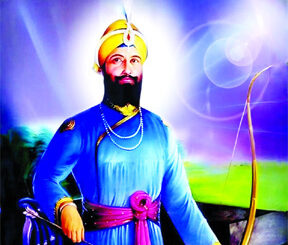
Guru Gobind Singh Ji, the tenth Sikh Guru, stands as one of history’s rare figures who seamlessly combined saintliness, poetic brilliance, and fearless leadership. While he is widely celebrated for founding the Khalsa and leading Sikhs in defense of righteousness, his literary genius as a poet remains equally remarkable. His poetry reflects a fusion of devotion, heroism, philosophy, and moral guidance, offering inspiration not only to Sikhs but to readers across faiths and generations.
Early Literary Genius
From a young age, Guru Gobind Singh demonstrated an extraordinary aptitude for language and literature. Fluent in Persian, Sanskrit, Braj, and Punjabi, he composed verses that were both sophisticated and accessible, conveying spiritual depth and ethical guidance. Even as a child, he combined creative expression with philosophical insight, laying the foundation for a body of work that would inspire courage, devotion, and moral clarity throughout his life. His early exposure to sacred texts, history, and martial training shaped a literary style that merged intellectual rigor with spiritual sensitivity.
Major Literary Works
Guru Gobind Singh’s poetic oeuvre is vast and diverse, encompassing hymns, epic poetry, philosophical treatises, and letters. Each work reflects his unique ability to communicate profound truths through lyrical expression.
– Jaap Sahib is a hymn of divine praise, composed in 199 stanzas, celebrating God’s omnipotence, omnipresence, and justice. It combines metaphysical depth with devotional fervor and is recited daily by Sikhs worldwide to cultivate courage and faith.
– Akal Ustat focuses on the eternal and all-encompassing nature of God, integrating mystical insight with poetic beauty. It encourages humility and devotion while emphasizing that spiritual realization is inseparable from righteous action.
– Bachittar Natak blends autobiography, epic narrative, and philosophical reflection. Through this work, Guru Gobind Singh recounts his life, spiritual visions, and heroic endeavors, providing moral and ethical lessons alongside accounts of bravery.
– The Zafarnama, a poetic letter addressed to Emperor Aurangzeb, exemplifies his ability to use poetry as a tool of moral persuasion and diplomacy. Written in elegant Persian verse, it challenges tyranny with reasoned courage, blending rhetorical brilliance with philosophical depth.
Other works, such as Chandi di Var, celebrate divine heroism and courage, while selections from Shabad Hazare and Charitropakhyan explore human psychology, ethics, and spirituality. Together, these writings form a rich tapestry of devotion, courage, and wisdom.
Themes in His Poetry
Several recurring themes define Guru Gobind Singh’s poetic vision. Devotion and spirituality permeate his work, emphasizing remembrance of God and ethical living. Courage and valor are central, celebrating heroism while reinforcing the moral imperative to act against injustice. Equality and social justice appear throughout, rejecting caste discrimination and advocating for human dignity. Guru Gobind Singh also explores moral philosophy, addressing virtue, honesty, and righteousness, and demonstrates that art can serve as a medium for teaching, inspiring, and guiding communities.
Literary Style and Craftsmanship
Guru Gobind Singh’s poetry is remarkable for its multilingual richness, vivid imagery, and rhetorical brilliance. He blends Persian sophistication with Sanskrit and Punjabi clarity, creating verses that are both lyrically beautiful and philosophically profound. His use of metaphor, allegory, and narrative storytelling makes complex spiritual and ethical concepts accessible. Many works, such as Chandi di Var, were intended to be recited or sung, giving them a musical and devotional quality that reinforces their spiritual and motivational impact.
Influence and Legacy
The influence of Guru Gobind Singh’s poetry is profound. His compositions provide spiritual inspiration, guiding Sikhs in daily devotion, ethical conduct, and courageous action. They also offer cultural and literary significance, shaping Sikh literature, music, and identity. Beyond Sikhism, his poetry communicates universal values: fearlessness, devotion, equality, self-discipline, and service, offering lessons for leaders, poets, and ordinary individuals alike.
Famous Quotes from His Poetry
“In the midst of darkness, be the flame of courage.”
“Those who have no faith in their words have no faith in their soul.”
“Through devotion, discipline, and courage, one can conquer fear and live with honor.”
“Righteous action is the highest form of devotion.”
These lines encapsulate the fusion of spiritual depth, moral guidance, and heroic inspiration that characterizes his literary legacy.
Poetry as Leadership
Guru Gobind Singh used poetry not just for devotion but as a tool of leadership and education. His heroic verses motivated warriors before battle, his philosophical passages guided moral conduct, and his letters, like the Zafarnama, challenged injustice with reasoned argument and poetic elegance. In doing so, he demonstrated that literature can inspire courage, cultivate ethics, and unite communities.
Guru Gobind Singh Ji, as a poet, exemplifies the integration of art, spirituality, and action. His literary genius complements his roles as a saint and warrior, offering timeless guidance for living with courage, devotion, and ethical integrity. Through his poetry, he continues to inspire generations to be fearless, righteous, and devoted, securing his place not only in Sikh history but in the broader canon of spiritual and literary achievement.
Legacy – Eternal Light of the Tenth Guru
Guru Gobind Singh’s life continues to shape Sikh identity and philosophy. He left the Sikhs a spiritual and martial framework, with the Guru Granth Sahib as the eternal Guru and the Khalsa as living embodiment of his ideals.
Today, Anandpur Sahib, Patna Sahib, and Nanded remain sacred pilgrimage sites, and his writings continue to guide millions toward courage, equality, and devotion. His vision of a fearless, just, and spiritually grounded society remains relevant across generations, making him not only a Sikh leader but a global symbol of integrity, valor, and wisdom.
Tag: Sikh History
-

The poet warrior: Guru Gobind Singh’s verse and valor
-

Battles & defense of Faith – Courage against all odds
Guru Gobind Singh’s leadership was not confined to spiritual guidance; he led the Sikhs in multiple defensive battles to protect religious freedom and human dignity. His strategic brilliance was evident in Bhangani (1688), Nadaun (1691), Guler (1696), Chamkaur (1704), and Muktsar (1705).
These battles were not about conquest, but defense of righteousness, ensuring that the Sikh community could practice its faith freely. The Siege of Chamkaur is particularly legendary: Guru Gobind Singh, with just 40 warriors, faced thousands of Mughal soldiers. His two elder sons sacrificed their lives, yet the Guru held the fort, demonstrating extraordinary valor, resilience, and faith in God.
Through his leadership, Guru Gobind Singh taught that true courage arises from moral conviction, and that defending the weak and upholding justice is a sacred duty.
The Saint-Soldier – Merging
Spirituality and Valor
Guru Gobind Singh epitomized the Saint-Soldier ideal, integrating deep spirituality with martial prowess. His writings, including Jaap Sahib, Akal Ustat, and Zafarnama, combine poetry, theology, and philosophical insight, encouraging Sikhs to lead righteous lives while being prepared to fight injustice.
He emphasized Miri-Piri, the balance of temporal and spiritual power, teaching that worldly responsibilities and spiritual growth are intertwined. The Khalsa became the embodiment of this principle, inspiring generations to be both morally upright and courageous defenders of faith.
Teachings of Guru Gobind Singh: Courage, Devotion, and Righteous Living
Guru Gobind Singh Ji, the tenth Sikh Guru, was a unique combination of saint, poet, and warrior. His life was a symphony of devotion, courage, moral integrity, and leadership. The principles he articulated were not abstract ideals-they were practical guides for living a purposeful, righteous life. His teachings form the cornerstone of Sikh philosophy, but their universal appeal transcends religion, offering lessons in spirituality, ethics, courage, and service for humanity at large.
_Fearlessness and Courage – The Foundation of a Saint-Soldier
Guru Gobind Singh’s vision of the Khalsa was rooted in the principle of fearlessness. He believed that faith without courage is incomplete, and spiritual growth requires the ability to confront injustice and adversity with steadfast resolve.
The Baisakhi of 1699, when he created the Khalsa, was a powerful manifestation of this principle. The five men who stepped forward for initiation exemplified complete courage, surrendering personal safety for the cause of righteousness.
The Siege of Chamkaur (1704), where he defended Anandpur with just forty warriors against a massive Mughal army, illustrates his teachings in action: courage, strategic acumen, and unwavering faith.
His poetry in Jaap Sahib repeatedly exhorts the devotee to “be fearless, like the lion, in the face of tyranny.”
Fearlessness, according to Guru Gobind Singh, is not recklessness; it is disciplined courage guided by ethics and devotion. Every Sikh is taught to internalize this principle, applying it to life challenges, moral choices, and societal responsibility.
Equality and Social Justice – Upholding Human Dignity
A hallmark of Guru Gobind Singh’s teachings was the emphasis on equality and justice. In a society rife with caste discrimination, gender inequality, and religious persecution, he stood for the dignity and rights of all human beings.
By instituting the Panj Pyare, he rejected caste hierarchies, emphasizing that spiritual worth is not determined by birth but by character and devotion.
His life exemplified defending the oppressed. He not only led his followers in battles for religious freedom but also advocated for universal respect and fairness.
His writings encourage Sikhs to actively combat injustice, demonstrating that spirituality and social responsibility are inseparable.
This teaching resonates even today, emphasizing that true faith must manifest in ethical action and protection of human rights.
Devotion to God – The Core of Spiritual Life
At the heart of Guru Gobind Singh’s philosophy is unwavering devotion to God (Waheguru). He taught that spiritual life is not limited to ritual but requires living in constant remembrance of the Divine, cultivating purity of mind, body, and action. His compositions, including Jaap Sahib, Akal Ustat, and Bachittar Natak, are replete with praise for God’s infinite power, wisdom, and justice.
He emphasized direct, personal connection with the Divine, teaching that faith is not inherited but realized through disciplined practice, meditation, and righteous living. Devotion, in his view, is inseparable from moral courage: true worship requires action in the world.
Self-Discipline and Moral Integrity – The Backbone of Character
Guru Gobind Singh believed that self-discipline is essential for spiritual and worldly success. Physical fitness, mental sharpness, and ethical conduct are all intertwined in his teachings.
Daily discipline included prayer, meditation, physical training, and study.
He emphasized truthfulness, honesty, humility, and compassion as the foundations of character.
The Khalsa was trained to live a life of regulated conduct, balancing spiritual practice with the demands of leadership, service, and community defense.
Self-discipline, for Guru Gobind Singh, was not mere personal restraint; it was preparation for moral and physical responsibility, enabling one to act decisively when confronted with injustice.
Sacrifice and Service (Seva) – The Measure of Devotion
Service to humanity, or seva, was central to Guru Gobind Singh’s vision. Spiritual devotion, he taught, is incomplete unless it translates into selfless action for the benefit of others.
His own life was a model of sacrifice. From witnessing his father’s martyrdom to losing four sons in the struggle for justice, he demonstrated that principle comes before personal gain.
Seva extends beyond ritual; it includes protecting the oppressed, feeding the hungry, educating the community, and fighting tyranny.
The Guru emphasized that such service is both a spiritual practice and a civic duty, creating a compassionate, responsible society.
Education, Knowledge, and Wisdom
Guru Gobind Singh stressed the importance of knowledge as a companion to valor and faith. An educated mind, he taught, strengthens spiritual insight and enhances leadership.
He himself was multilingual, proficient in Persian, Sanskrit, Braj, and Punjabi, and composed literary works of immense depth.
Education was not limited to academic learning; it included understanding scripture, philosophy, history, and martial skills.
He believed that intellectual growth empowers moral action, ensuring that courage is guided by wisdom rather than impulse.
The Warrior Ethos – Protecting Justice
While he preached peace and devotion, Guru Gobind Singh recognized that defending righteousness sometimes requires armed action.
The Khalsa identity embodies this principle: a disciplined, spiritual community trained to protect truth, freedom, and the weak.
He distinguished between aggression and defense, teaching that warfare is a duty only in the service of justice.
His life demonstrates that spirituality and martial skill are complementary, enabling individuals to uphold ethical principles in a hostile world.
Universal Values – Lessons Beyond Religion
Guru Gobind Singh’s teachings are timeless and universal: courage, devotion, equality, self-discipline, service, and education are values that transcend faith. Leaders and thinkers across India and the world have recognized his wisdom. His message encourages all individuals to live ethically, act courageously, and serve humanity, offering a framework for personal excellence and societal betterment.
Quotes Reflecting Guru’s Teachings
“Fear God, do your duty, and keep your word.”
“In the midst of darkness, be the flame of courage.”
“Those who have no faith in their words have no faith in their soul.”
“True worship lies in righteous action and fearless living.”
Each quote reflects a fusion of spiritual devotion, ethical responsibility, and moral courage, guiding Sikhs and non-Sikhs alike toward principled living. -

Sikh History This Week- 19th December to 25th December
19th December
1924 Babbar Sada Singh PinDori accepted shahadat in Jail.
1967 Punjabi Bill passed by the Punjab Assembly.20th December
1520 Guru Nanak Ji visited Baghdad, Iraq.
1704 Guru Gobind Singh Ji evacauted Anadpur Sahib.
1920 Gurudwara Panja Sahib management came under the Panthic controls.
21st December
1704 Sikhs blocked the advances of the joint Hindu-Moghul army near Sirsa (Ropar district) so that Guru Gobind Singh Ji could reach some safer zone.
1838 Ranjit Singh suffered a stroke and severe attack of paralysis. Remained critical for several days. Speech and sight virtually gone.22nd December

1666 Parkash Utsav, Patshahi Tenth, Guru Gobind Singh Ji. Guru Gobind Singh, born as Gobind Das or Gobind Rai, was the tenth Sikh Guru, a spiritual master, warrior, poet and philosopher. When his father, Guru Tegh Bahadur was executed by Aurangzeb, Guru Gobind Singh was formally installed as the leader of the Sikhs at the age of nine, becoming the tenth and final human Sikh Guru. Among his notable contributions to Sikhism are founding the Sikh warrior community called Khalsa in 1699 and introducing the Five Ks, the five articles of faith that Khalsa Sikhs wear at all times. Guru Gobind Singh is credited with the Dasam Granth whose hymns are a sacred part of Sikh prayers and Khalsa rituals.
1704 SHAHEEDHI, Wadhae Sahibjadhae, Sakka Chamkaur.
1899 Birth of freedom fighter Sardar Udam Singh.23rd December

1667 Birth of Mata Sudari Ji.
1704 Martydom of Bhai Jaita.24th December
1805 Fateh Singh Ahluwalia sought understanding between General Lake and Jaswant Rai Hulkar.
1921 Kishan Singh Garhgaj attended diwans at Chamjkaur Sahib and Sirhind during Dec. 24-28 and delivered fiercy speeches.25th December
1850 Lord Dalhousie visits Fatehgarh to meet Maharaja Dalip Singh.
1922 First meeting of Babbars is held at Jassowal to decide the reformation of the Jholichuks.
1922 Special issue of “Babbar Akali Doaba” newspaper on Kalghidhar. -
Sikh History This Week- July 11 to July 17
11th July

1675 Guru Tegh Bahadhur left Anadpur Sahib for Delhi to help save Hindu dharma from total extinction.Kashmiri Pandits, led by Kirpa Das of Mattan (Martand), reached Chak Nanki, Kahlur (old name of Anadpur Sahib). He appealed to Guru Tegh Bahadhur for his help in against the prosecution of Kashmiri Pandits by Aurangzeb’s forces and resulting extinction of hindu dharma. After appointing Gobind Rai as the next Guru, Guru Tegh Bahadhur left for Delhi on July 11, 1675. After Guruji’s martyrdom, Pandit Kirpa Das stayed back and became Kirpa Singh after taking amort in 1699 and died fighting at Chamkaut along with the two elder sahibjadas of Guru Gobind Singh Ji. When Guru Tegh Bahadhur sacrificed himself to save the Kashmiri Pandits from extinction in 1675, Guru Gobind Singh put his stamp on this truth by proclaiming “The Lord (Guru Tegh Bahadhur) protected the sacred thread and the frontal mark of the Hindus: He performed a great deed in the age of Kalyug.”12th July
1675 Guru Tegh Bahadur along with leading personages of his Darbar, Dewan Mati Das, Sati Das, and Dayal Das, were taken into custody at village Malikpur Ranghran, Pargana Ghanaula near Ropar. At the time Furu was camping with his three companions on his way to Delhi. They were sent to Sirhind where they remained for four months before being sent to Delhi on receipt of formal orders from Aurangzeb. During this period Aurangzeb remained at Hasan Abdal.13th July
1631 Mata Damodari, wife of Guru Hargobind passed away at Darauli Bhai, now in Faridkot district. Her marriage with Guru Hargobind gave birth to Baba Gurditta in 1613 and Bibi Viro in 1613. A small shrine on the outskirts of the village marks the site where the cremation took place.14th July

1920 The British government issued a communique, expressing its intentions to withdraw from the management of the Golden Temple and make alternative arrangements in concultation with Sikh members of the reformed Legislative Council. This was actually done to put off the matter by a year. However, the government’s procastination provoked the reformists to step up their campaign for immediate resignation of Arur Singh, the government’s appointed Sarbarh. Demoralised at government’s tactics, Arur Singh appeared before the reformers at the Jalianwala Bagh Diwan with folded hands. He asked for forgiveness and announced his resignation. This convinced the authorities who now regarded it as a “decided victory for the party of reformers.”
1948 Deputy Prime Minister of India, Vallabhbhai Patel, eliminated the Sikh rulers and established the Patiala and East Punjab States Union, PEPSU. EAST PUNJAB STATES: Patiala, Nabha, Jind, Faridkot, and Malerkotla were the Sikh states in the East Punjab before the integration of Indian States in 1948. The first four were the Sikh states under the sovereignty of Maharaja Ranjit Singh and were brought under British protection by the 1809 treaty of Amritsar. Patiala, Nabha, and Jind, also known as Phulkian states, share a common ancestor Phul, who was descendent of Baryam. The Emperor, in 1526, had granted Baryam, the office of revenue collection for the waste country south-west of Delhi. Emperor Shah Jahan continued Phul in this office. From his eldest son descended the families of Nabha and Jind while from his second son the Patiala family. The Faridkot family, founded in the middle 16th century sprang from the same stock as the Phulkians chiefs. The remaining two states were Kapurthala and Malerkotla. The Kapurthala rulers belonged to the Ahluwalia family. The real founder of this family was Raja Jessa Singh, a contemporary of Nadir Shah. The malerkotla rulers were Sherwani Afghans who traced their descent from Sheikh Sadruddin who had received 68 villages near Ludhiana in marriage gifts when he married the daughter of Sultan Bahlol Lodi.
1973 Bhai Sahib Harbhajan Singh Yogi met with the Archbishop of Canterbury to protest English laws which discriminate against Sikhs, particularly the law requiring motorcycle helmets.15th July
1775 Sikhs, under the leadership of Jai Singh, establish complete control over PahadGanj and JaiSinghPura, Delhi.
1923 Bishan Singh Sandhara assaulted by the Babbar Akalis.
1932 Rattan Singh Babbar of Rakkar killed in an encounter with the police.
1934 Gandhi reiterated to the Khalsa darbar deputation that “no constitution would be acceptable to the Congress which did not satisfy the Sikhs.” He added, “Similarly, the Congress would not reject what the Mussalmans wanted, nor could it accept what Hindus or Sikhs reject.”
1948 The Patiala and East Punjab States Union, PEPSU, was inaugurated.16th July
1984 1st Shahedi Jatha, under the leadership of Dr. Rajinder Kaur, marched for the liberation of Sri Harimandir Sahib. This jatha was arrested near Sri Harimandir Sahib.

1985 Harchand Singh Longowal wrote a letter to Rajiv Gandhi to find a solution to the Punjab problem. -
Sikh History This Week- 23rd May To 29th May
1606 Jahangir received false reports on Guru Arjan’s blessing Khusrau.
1848 Maharani Jind Kaur exiled and sent to Banaras prison.

1914 Guru Nanak Jahaz (Koma gata Maru) reached Vancouver port, Canada. However, it was forced to return to India. KOMA GATA MARU: Punjabis traveling to foreign land in search of better jobs were being discriminated against at the begining of 20th century. The Canadian government had issued prohibition against their entry and the British ships had refused to accept any Punjabi travelers. The Canadian law stated, for the purpose of preventing immigration from india and other countries, that only those passengers could land in Canada who travelled on a through ticket without any break in journey from their land of birth. However, no company provided such a service between the Indian and Canadian ports. As a result, many Punjabis were stranded for months in Hong Kong, unable to get tickets for their final destination, Canada.24th May

1606 Guru Arjan Dev reached Lahore for martyrdom in protection of the Dharam. For 6 days he suffrede emmense tortures. At the time of martyrdom, Sai Mia Meer and a priest from Puratgal, Saint Jaerom Jaevier witnessed the martyrdom.
1710 Baba Banda Singh Bahadur enters Sirhind city.
1960 Master Tara Singh and hundreds of Sikhs arrested.25th May

1606 GUR GADHI, Patshahi Sixth, Guru Har Gobind Ji. Pattshahi sixth, Guru Har Gobind Sahib Ji, ascended to Guruship of GurSikhism. Just after the martyrdom of Guru Arjan Dev, Baba Budha anointed Hargobind as the sixth Guru of the Sikhs. Guru Arjan had sent to Hargobind, five paisas and a coconut through a messenger. baba Budha put those in front of Hargobind and applied a ’tilak’ (saffron mark) on his forehead, bowed to him and declared him to be the next Guru of the Sikhs. The Guru then asked baba Budha to adorn him with a sword. Baba Budha who had not handled a sword before, tied it on the wrong side of the Guru. On realising his mistake he wanted to move it to the right side, but the Guru said not to remove that sword, but instead to put another one on the right side, which Baba Budha did. Thus the Guru wore two swords simultaneously. He declared that one sword represented ‘Piri’ (spirituality) or Bhakti) while the other represented ‘Miri’ (Temporality or Shakti). He told his followers that in the Guru’s house spiritual and temporal powers would be combined. He declared that his rosary would be the sword-belt and he would wear the emblem of royality on his turban. Further he instructed the Sikhs to keep a sword and a horse and always recite the name of God from their lips.
1675 Kashmiri Panditsi, led by Kirpa Ram, arrive in Anandpur Sahib to ask Guru Tegh Bahadhur for help in preserving Hindu dharam.26th May

1886 Maharaja Dalip Singh reentered Sikh faith. He received Khande Di Pahul (Amrit) on May 26, 1886 at Aden. Earlier, on On March 8, 1853, Maharaja Dalip Singh was formally admitted into the Christian Church with water brought from Ganges nearby at his own private dwelling house. The service was conducted by the Rev. M.W. Jay, with Dr. John S. Login, Mrs. Login, Colonel Alexander and Mr. Guise signing the Baptism register as witnesses.
1960 Morcha initiated for seeking Punjabi Subha.
1984 The last meeting was held between Akalis and Indira Gandhi.The last meeting was held between Akalis and Indira Gandhi regime. Several such meetings preceded this meeting. However, by now it became abundantly clear that this was in fact a drama. The government had planned an attack on Darbar Sahib for several months. Russian KGB and even British Intelligence was guiding the invasion of Darbar Sahib.
1988 The President of India issued an ordinance banning the Sikh fundamentals of Miri-Piri (Cohesive oneness of Religion and Politics). An integral part of the Sikh religion Miri-Piri is the most fundamental to Sikh religion. This ordinance (which later became law) meant that the Sikhs shall have to adopt only that part of their religion which the Hindu majority will allow. This was the final blow to the Sikh nation which made the professing of their religion under the subjugation of the Hindu regime.
1996 Atal Bihari Vajpayee, in his capacity as Prime Minister of India, visited Sri Harmandir Sahib, Amritsar and apologized to the Sikhs for the following two abominations committed by the Government of India.27th May
1710 Baba Banda Singh Bahadur announces the establishment of Sikh rule in a heavy Diwan organized in Sirhind city.
1921 The Governor of Punjab arrested Sardul Singh Caveesher for spearheading the non-cooperation resolution at SGPC meeting of May 11, 1921. This meeting was really a confrontation that once again demonstrated the majority of the radicals in the SGPC.28th May
1922 A meeting is called at Kaulgarh by Karam Singh Gargaj group to reform the Jholichuks.
1948 SGPC came under the control of Congress Sikhs.29th May
1606 Martyrdom, Fifth Patshah, Guru Arjan Dev Ji.
Guru Arjan Dev (1563-1606) Guru Arjan, the ‘Prince of Martyrs’ and the ‘Prophet of Peace’, proffered his precious life to nurture the glory that was to be the Sikh Panth. The Fifth Master’s life was marked by divine bliss and sublime sacrifices, born of a sweet acceptance of God’s Will. Gifted with a quintessential poetic afflatus, and immeasurable imaginative sympathies, the Guru gave the movement of Sikhism a definite direction, perspective and program. He made the new faith coeval or coextensive with the whole gamut of existence and raised its exquisite edifice on values for which there is neither death nor change.
Guru Arjan Dev adorned the sacred throne of Guru Nanak from Sept. 1, 1581 to May 30, 1606. Born at Goindwal on April 15, 1563, he was the youngest and noblest son of Guru Ram Das and Mata Bibi Bhani. On 23 Hadh sunmat 1636, he married Ganga Devi, daughter of Krishan Chand of Mau village. He had an innate poetic sensibility which was exquisitely displayed in the epistles that he sent to his father from Lahore. They are deeply expressive of the pangs of separation and the exuberance of Love. The Fourth Master’s decision to make Guru Arjan his spiritual heir was bitterly opposed by Prithvi Chand who contended that being the eldest son, he alone was entitled to the Guruship. Thus, he could never reconcile himself to his younger brother’s installation as Guru. Under Guru Arjan Dev the Sikh movement registered great progress. In sunmat 1645, he cemented the Santokhsar sarovar. Further, the Guru not only completed the construction of the Sarovars started at ‘Guru Ka Chak’ by his predecessor but also constructed two more Sarovars. He had the Harmandar built in the middle of Amritsar Sarovar and invited a celebrated Muslim divine, Mian Mir, to lay its foundation stone in sunmat 1645. Remarkable for its architectural and aesthetic beauty and unique in its conception, the temple with its four doors symbolizes the inborn equality of all mankind. -

CONTINUITY OF THE SIKH PHILOSOPHY
- By Prof. Balwinder Pal Singh
Guru Gobind Singh is an ideal and should be an idol for the young generation of today. All pessimism will vanish, and instead robust optimism will fill the youth should they imbibe the ideals and values of the Guru. Let them give up their weakness for intoxicants and have faith in their innate energy to countenance any challenge and overcome any obstacle. Let them follow the Guru’s progressive humanism empowered with spirituality and sacrifice. Let them derive strength and courage from the tenth Guru who expressed all optimism and positive attitudes for the victory of the forces of righteousness over evil and repression.
Historically, it was on Vaisakhi day of 1699 A.D. When the tenth Master Guru Gobind Singh created Khalsa Panth out of the Sikh Sangat (GUR SANGAT KINI KHALSA). The creation of Khalsa is a virtual culmination of the process of human resource development started by the first Master Guru Nanak. That’s why the Sikhs call their Gurus: First Nanak, second Nanak and so on to salute them and to recall their heritage.
There has been some misconception among non-Sikhs, in particular,and to some extent, among the Sikhs also that the philosophy of the tenth Guru was different from that of the first and the subsequent Gurus. This impression is taken from the paintings of these Gurus. These show the difference between armed and unarmed personalities. The sixth, the seventh, the ninth and the tenth Guru waged an armed struggle against tyranny and repression. These were the battles for Dharma and not for any material or personal gains.
Sikhism is a revealed religion founded by Guru Nanak Dev (1469 – 1539 A.D). The basic principles of Sikhism remained unchanged and intact from its very inception to its culmination in the hands of the tenth Guru. Guru Nanak raised his voice of protest against state repression, social injustice, religious hypocrisy and economic corruption. He traversed various corners of the world to spread his message of humanism. He rejected all divisions based on caste, creed and color. Gurbani was the main source of spiritual power and awareness, and a practical approach was followed in respect of social and political issues. Up to the fifth Guru, Sikh culture and institutions were developed in a phased manner. The compilation and emergence of the “Adi Granth” was the greatest historical development in the hands of Guru Arjan Dev. The Sixth Guru, Sri Hargobind Sahib took to arms to protect Dharma from State repression. He established the institution of MEERI-PEERI (Saint-Soldier). In his times, nobody who was not pure and religious could join his army. A high moral standard was required of anybody aspiring to be a soldier in Guru Hargobind’s army. Thus, right from the day of Guru Nanak, the emphasis has been on righteousness and purity of personal conduct.
After the supreme martyrdom of Guru Tegh Bahadur, Guru Gobind Singh raised his voice fearlessly against injustice and tyranny of the Mughal King, Aurangzeb. This reaction was not the result of nay personal grudge or enmity, it was based on the principle which is the cornerstone of Sikhism-to fight against injustice. Infect, GuruGobind Singh had himself suggested to his father to sacrifice himself for protecting Hindu religion and the Kashmiri Pandits. Like Guru Hargobind, Guru Gobind Singh, too, proved that Bhakti and Shakti are complimentary and not contradictory to each other.
Bhai Gurdas Singh, a renowned contemporary Sikh scholar describes Guru Gobind Singh thus:
‘Behold, there manifests the incomparable Man, the Hero unsurpassed, Glory be to Gobind Singh, Master Disciple” Prof. Jaswant Singh writes about the tenth Guru: “Rarely is found a person in the history of mankind who had left such a deep imprint on the life” and character of people within a brief span of forty-two years. He continues to move millions of men and women not only in India, the great subcontinent of Asia but the entire world; such a unique person was Guru Gobind Singh.”
The images of God as portrayed by Guru Gobind Singh is the same as painted by Guru Nanak Devji. The Mool Mantra of Japji Sahib and the first stanza of Jaap Sahib (Poetic work of the tenth Guru) provide an interesting study from this point of view.
The Almighty of Guru Gobind Singh is the “True Lord of All, has neither distinguishing signs nor marks, no one can discern him, the moveless being and beyond limitations, and is manifested as the light of the Spirit, the Lord God of a myriad Indiras and is proclaimed the King of kings, of the gods, man and demons………………………….”
Guru Gobind Singh gave the message of equality and fraternity i.e., Fatherhood of God and brotherhood of mankind. He said, “Some are of the Shia persuasion and some of Imam Shafai, mankind is all of one race”. Guru Gobind Singh goes beyond the shores of India when he seeks blessings of God for the welfare of aliens also alongside the welfare of countrymen, be they Marathas, Moghuls, Telugus, Bhillas, Bangash or Bengalis.
The eminent historian, Cunningham states that though the last apostle of the Sikhs did not see his own ends accomplished, he effectively raised the dormant energy of a vanquished people and filled them with a lofty although fitful longing for social freedom and national ascendancy, the true adjunct of that parity of worship which had been preached by Nanak.
Guru Gobind Singh not only patronized the Sikh institution of sacrifice, but he also actually sacrificed his whole family. Guru Gobind Singh is an ideal and should be an idol for the young generation of today. All pessimism will vanish, and instead robust optimism will fill the youth should they imbibe the ideals and values of the Guru. Let them give up their weakness for intoxicants and have faith in their innate energy to countenance any challenge and overcome any obstacle. Let them follow the Guru’s progressive humanism empowered with spirituality and sacrifice. Let them derive strength and courage from the tenth Guru who expressed all optimism and positive attitudes for the victory of the forces of righteousness over evil and repression.
Sikh Culture and religion are a rich heritage to be protected and glorified. The mission of Guru Nanak-Gobind Singh is cosmic. May the almighty Akal Purakh bestow His blessings on all human beings, particularly the young generation of the Sikhs and fill them with tremendous strength and will to establish the kingdom of God on earth.
(The author, an educationist, is Editor of SADA VIRSA SADA GAURAV)
(Reprinted from Punjab Beat) -

Key warriors in Sikh history: Guardians of faith and freedom
Sikh history is marked not only by spiritual enlightenment but also by heroic resistance against oppression. Rooted in the teachings of the Gurus, especially Guru Hargobind Sahib Ji and Guru Gobind Singh Ji, the concept of the Sant-Sipahi—the Saint-Soldier—emerged as an ideal for all Sikhs. A true Sikh must be deeply spiritual, yet also courageous enough to fight tyranny and defend the weak.From the early Mughal period to British colonial times, countless Sikh warriors stood as beacons of valor, sacrifice, and justice, often in the face of overwhelming odds. Below are some of the most revered warriors in Sikh history.
Maharaja Ranjit Singh
The only ruler of a united Sikh Empire, Ranjit Singh is more commonly known as Shere-e Panjab (the lion of Panjab) equally famed for contributing to the rise and fall of Sikh power.
Ranjit Singh was born in 1780 to Mahan Singh Sukerchakia, the leader of one of Panjab’s leading Misls (conferederacies). His youth was spent fighting Afghan invaders, local rajas and other Sikh Misls in order to gain power in Panjab, in fact, he joined his father in his first battle aged just 10. A bout of smallpox at an early age disfigured his face and he lost the sight of one eye, but by the age of 12 he had risen to leadership of his Misl. By his teens, the young leader began drinking alcohol, a habit that would increasingly lead to alcoholism in his older age and contribute to illnesses that would take his and his son’s life and leave a power vacuum after his death.
Ranjit Singh was constantly waging battles in his youth and in 1797, at the age of only 17 he fought against invading Afghans and killed their leader, Shah Zaman. Victories over rival Misls left him in command of the one of the strongest military forces in Panjab. By the age of 21, Ranjit Singh, together with Sada Kaur of the Kanheya Misl jointly entered Lahore and Ranjit Singh was crowned Maharaja of Panjab by defeating the Bhangi Misl.
His first decade was spent consolidating his power by either signing treaties of peace with other Sikh chiefs (as with the Ahluwalia or Kanheya Misls) or conquering their territories by force (as with the Bhangi Misl). However he also showed the intelligence that would serve him well. After the Marathas were defeated by the British, one of their leaders, Jaswant Rao Holkar entered Panjab to ask for Sikh help to attack the British. Ranjit Singh, along with Fateh Singh Ahluwalia entered a British camp in disguise to estimate British power. Taken aback by the power of English weaponry and resources, the young Ranjit Singh refused Holkar any assistance until he felt the Sikhs were in a better position to fight.
After subduing his rivals, he began an expansionist policy that saw the height of centralised Sikh power. After centuries of being the gateway of invasions to India, Ranjit Singh reversed the history of Panjab and built an empire that extended from India into present day Pakistan, Afghanistan, China and Nepal. An astute strategist, he solidified his southern boundary with the British and increased the strength and prestige of his nation which reached its extent by the time he died in 1839.
In 1818 the Maharaja conquered Multan, and a year later Kashmir also fell to his forces. and by 1834 he had taken Peshawar, a city on the border with Afghanistan. Whilst some of his forces battled the Chinese in north, others ensured the integrity of the border in the south with the British where many Sikhs had chosen to stay under British protection than fall under the dominion of Ranjit Singh, these Sikhs would eventually be the nail in the Empire (Sarkar Khaksa) Ranjit Singh built up during his life.
Ranjit Singh modernised the Sikh Army, bringing in Europeans to build an army modelled on that of Napolean in France. Jean Francois Allard, Jean Baptiste Ventura (Italy) and Claude Auguste Court are some of the most famous names, however American, Spanish and Dutch soldiers are also documented to have been employed by the Sarkar Khalsa. The country was also the only one in Asia at the time capable of producing its own modern war munitions and had become completely self sufficient in weaponry.
Rani Sada Kaur
The first of three female warriors on my list, Sada Kaur was responsible for the rise of the Sikh Empire through her battlefield bravery and strategic foresight.
After the Afghan ruler, Ahmed Shah Abdali’s invasions of India had receeded, the Sikhs not having an external enemy began fighting with each other. The era of the Sikh Confederacy, or Misls was characterised by a number of competing Sikh kingdoms that would come together when presented with an external enemy, but would go back to intra Sikh fighting once any danger receeded. Sada Kaur took the leadership of the Kanheya Misl following the death of her husband in a battle against the Sukerchakia Misl and the death of her father-in-law the famous Jai Singh Kanheya. At her disposal, Sada Kaur had over 10,000 cavalry and other sizeable resources. In what is widely regarded as one of the most farsighted decisions supporting Sikh growth, she arranged for the marriage of her daughter, Mahitab Kaur Kanheya with the son of the Sukherchakia Misl, Ranjit Singh. Sada Kaur then pushed her troops to support Ranjit Singh in his quest to become the premier Sikh chief, She also realised that anyone that wanted to control Panjab first had to control the capital Lahore and pushed Ranjit Singh to enter the city.
Sada Kaur and Ranjit Singh entered Lahore together as joint rulers, however Sada had Ranjit Singh crowned Maharaja of Panjab. Sada Kaur joined Ranjit Singh in a number of battles against rival Sikh chiefs until he was unquestionably the dominant leader of the Sikh nation.
Baghel Singh Karora Singhia
Despite being the only Sikh to conquer Delhi, very few people know about the extraordinary life of Baghel Singh Dhaliwal. Born in 1730 to humble origins, Baghel Singh joined Sardar Karor Singh of the Karora Singhia Misl during the age of the Sikh Confederacy in the 1750s. In 1764, Baghel Singh was one of the Sikhs caught up in the Wada Ghallughara (the Great Holocaust) where two thirds of the entire Sikh population in existence at the time was wiped out in a campaign led by Ahmed Shah Abdali. Baghel Singh fought day and night over a period of weeks protecting a slow moving baggage train of Sikh civilians while the Afghan invaders would constantly break through the cordon of Sikh fighters, slaughter thousands of women, children and the elderly and then disperse. Even Sikh historians noted the effectiveness of Afghan attacks and their Muslim soldiery.
Showing great leadership potential, bravery on the battlefield and an excellent understanding of politics, Baghel Singh succeeeded Karor Singh to become the leader of his Misl in 1765 and according to Mughal comentator Syed Ahmad Latif, he had 12000 men under his command.
Jassa Singh Ramgarhia
Jassa Singh Ramgarhia (1723 – 1803) was a prominent Sikh leader during the period of the Sikh Confederacy. He became the Misldar (Chief/Leader) of the Ramgarhia Army (misl). This period was an interlude, lasting roughly from the time of the death of Banda Singh Bahadur in 1716 to the founding of the Sikh Empire in 1801. The period is also sometimes described as the Age of the Misls.
Jassa Singh Ramgarhia is not to be confused with Jassa Singh Ahluwalia; both were prominent Misldars of separate powerful Sikh army groups, called Misls. Ramgarhia’s father was called Giani Bhagwan Singh.
The Ramgarhia Misl
In 1716 Ahmed Shah Durrani left Lahore, Adina Beg the Afghan Governor of Punjab was hunting for the heads of the sikhs, they dispersed and scattered in all directions. Jassa Singh and others in the band took refuge in the mud fort of Ram Rauni near Amritsar where they were surrounded and attacked during the ensuing period. In 1758 Adina Beg died and there was a power vacuum in Punjab and those who escaped from the fort of Ram Rauni assumed the name of Ramgarhias and Jassa Singh became its head. The Misal (Confederacy) was called Ramgarhia.
The main concentration of the Misl was in and around the Riarki area of Amritsar, Gurdaspur and Batala (in Majha). The Ramgarhia constructed and fortified the mud fortress of Ram Rauni just outside Amritsar. It was named in honour of the founder of the city, the fourth Sikh Guru, Guru Ram Das. His Misl contained more than 10000 cavalry who were always on the move, helping the Dal Khalsa whenever the Mughals or Afghans attacked. Whilst the Mughal administration controlled the cities, it was the Sikhs who were in control of the villages. Twenty years earlier, Banda Bahadur had wreaked havoc on the Mughal administration by abolishing all taxes and the Zamindari system. Now only a “dasvand” (10% of income) was levied on the Sikhs – as protection tax to pay for the armies.
Sepoy Gurmukh Singh
Sikh history is filled with famous last stands, but one of the best documented was the last stand at the Battle of Saragarhi by 21 Sikhs of the British Indian Army.
Following 1849, British Indian soliders, in particular Purbiyas (east Indians) were promoted to high civilian posts in Panjab. To add further insult to Sikh injury, these Indian soliders would constantly remind the Sikhs that they had defeated the Khalsa Army. The Sikhs felt that the treachory of their leaders coupled with superior British Arms were the cause of their downfall and they began to resent the foreign Indian Purbiyas.
When the Mutiny happened in 1857, the Sikhs decided to side with the British against the Indians and help put down the rebellion. For their support, the British, who were hesitant to raise soldiers from the fiercely independent Sikhs, began to employ Khalsa soldiers in large numbers. Within decades, Sikhs made the backbone of the British Indian Army, making up a quarter of the Indian Army officers despite being less than 2% of the population.
The Battle of Saragarhi took place on the North-West Frontier Province, the volatile border area between British India and Afghanistan, an area formerly controlled by Maharaja Ranjit Singh and the Sikhs. Despite British suzerainty, the tribal Afghans would attack the area from time to time. To counter this, the British decided to consolidate a series of forts that Ranjit Singh had built in the area nearly 75 years earlier. On 12 September 1897, 10,000 Afghan tribesmen decided to attack a signalling post at the village of Saragarhi to ensure communications would be lost between the forts, therefore ensuring local army units would be isolated and defeated.
The Sikhs were led by Ishar Singh, and the battle is very well recorded due to the presence of Gurmukh Singh who signalled the events using a heliograph to the British. At 9am he signalled that the post was under attack and in response the British replied that they would not be able to send reinforcements the same day. At this point Ishar Singh decided the Singhs would continue the ancient Sikh tradition of dying on the battlefield. Bhagawan Singh was the first casuality and by midday the British had estimated that the Saragarhi signalling post was under attack by 10,000-14,000 Afghans. After making two strong attempts to breach the post, but being repulsed by the Singhs on both occasions, the Afghans began making promises of safety and riches to entice the Singhs to leave the post. The 21 Sikhs rejected all offers. Later that afternoon, the Afghans finally managed to breach the walls and the Singhs met them with fierce hand to hand combat. Ishar Singh ordered all his men into the inner layer of defences while he provided cover, falling on the field after ensuring the safety of his men.
As Singhs started falling around him, Gurmukh Singh communicated to the British that he was the last of the 21 alive. He signed off by communcating that he was going to join the battle. From his communication of the battle, and the bodies the British found the next day, Gurmukh Singh is stated to have killed 20 Afghans by himself, the tribesmen having to set fire to the post to finally kill him.
The Afghans finally took control of the signalling post, but the defence put up by the Sikhs meant they had lost too much time and reinforcements soon arrived to drive the tribesmen away. The British were astounded to see the scene that they arrived to, Fallen Sikhs in the signalling post still clutching their swords and guns, and the bodies of approximately 600 Afghan tribesmen scattered around them.
The battle is compared to that at Thermopylae where 300 Spartans fought to the death against the invading Persians. In this instance, just 21 Singhs held off 10,000 Afghans and like the Spartans, and Singhs before them, they all chose to fight to the death.
Deep Kaur
Deep Kaur is the second female warrior on my list and one who’s actions are needed in a country where sexual abuse of women has reached epidemic levels. Living in northern India, her husband had joined a group of Singhs who went to visit the 10th Guru. Deep Kaur had remained at home to protect the house as her family were the only Sikhs in a relatively hostile area. Having a change of heart she left to join her husband and visit the 10th Guru for herself, however, after travelling a short while on the outskirts of the village she came across a contingent of Mughal solders (Turkish mercenaries according to some sources).
At first trying to conceal herself off the main road, she was discovered by the group of 6 soliders. Various witnesses describe the leader of the group making sexual advances towards Deep Kaur, after spurning his advances, he finally decided to force himself on her. As he pulled her close to him, she pulled out her dagger and stabbed him in the stomach.. She then snatched his sword and began stabbing at the other soliders. Two more fell although not after they had mortally wounded the warrior princess.
At this juncture, a passing Jatha of Singhs heard the commotion and rode over on their horses, frightening the remaining Mughal soliders into flight. On arriving at the scene, they saw a dying Deep Kaur surrounded by the bodies of Mughal soliders. The dying Deep Kaur was then taken by the Singhs to the Guru’s court where the Guru bowed down to Deep Kaur in a sign of respect.
Jassa Singh Ahluwalia
Forty years before Ranjit Singh was made Maharaja of Panjab, Jassa Singh Ahluwalia conquered the provincial capital of Lahore and was bestowed the title Sultan-ul-Quam, the leader of the nation.
Jassa Singh spent his entire life during the darkest period of Sikh history, born in 1718, two years following the collapse of Banda Bahadurs Sikh state and dying in 1783, just under 20 years before Ranjit Singh’s Sikh state. It was under Jassa Singh’s leadership that the Sikhs managed to get through the difficult 18th century and its a testament to his leadership that they came out stronger than they entered.
Reclaiming the honour of Golden Temple
Sikhs were under great pressure because of government violence against them. They became enraged when they found that Massa Rangar, the official in charge of the Amritsar region, drank alcohol and smoked in the Golden Temple. Two Sikhs, Sukha Singh and Mehtab Singh, came disguised as revenue collectors and cut off his head. It was a signal to the government that the Sikhs would never tolerate any disrespect to their sacred Harimandar Sahib.
The Governor of Lahore sent military squads to kill the Sikhs. When Jaspat Rai, brother of Lakhpat Rai, the Dewan (premier) of Lahore, faced the Sikhs in a battle, one of the Sikhs held the tail of his elephant and got on his back from behind. With a quick move, he chopped off his head, giving another blow to the government’s image.
Lakhpat Rai, after this incident, committed himself to destroying the Sikhs. In 1746, a new wave of violence was started against them with all of the resources available to the government. The army was sent to destroy the Sikhs. All of the village officials were ordered to cooperate in the expedition. About 15,000 Sikhs including Jassa Singh and other important leaders were camping in riverbeds in the Gurdaspur district (Kahnuwan tract). Local people were forcibly employed to search for the Sikhs to be killed by the army. An estimated 7,000 to 10,000 Sikhs were thus murdered. Those Sikhs who were arrested alive were taken to Lahore, tortured and executed near the Horse Market. There now stands a Gurdwara called Shaheed Ganj. Even the Sikhs living in peace in the city were arrested without any reason. They were also butchered. This first massacre of 1746 is known as the Chhota Ghalughara (the small massacre) of the Sikhs.
Formation of the Dal Khalsa and the Misls
Until 1745, the Sikh forces were divided into 65 jathas(bands). Sardar Nawab Kapur Singh reorganised them into eleven bands, each of with its own name, flag and leader. These Armies or jathas, which came to known later on as Misls (literally “equal”, also “an example”) together were, however, given the name of the Dal Khalsa (or the Army of the Khalsa). Sardar Jassa Singh Ahluwalia was nominated as the Supreme Commander of the Sikh Confederacy in addition to being Sardar of the Ahluwalia Army (misl). Nawab Kapur Singh appointed him as his successor on the eve of his death in 1753. Elated at his successful helmsmanship, the Khalsa honoured Jassa Singh with the title of Sultan-ul-Qaum (King of the nation), when they captured Lahore in 1761. He has been credited for rebuilding the present day holy Harmandir Sahib, in the year 1764, which was destroyed, during the Afghan Invasions.
Mai Bhago
Not much is known about early life of the highest ranking female warrior on my list, but her later life is well documented.
Her father, Malo Shah, was a part of the Akaal Sena created by Guru Hargobind and passed on his Shaster Vidhya (knowledge of weaponry and fighting) to his daughter a young age.
In 1704 a large Mughal force attacked the 10th Guru, Gobind Singh at Anandpur. After defeating the expeditionary unit led by Saiyad and Ramjan Khan, the Mughals returned under Wazir and Zaberdast Khan in May to kill or capture the Guru. They began laying a protracted siege. During the siege, many of the Guru’s followers began to doubt their leader, openly rebelling. In response, the Guru told his followers that they were free to leave after signing a document stating that he was no longer their Guru and they were no longer his Sikhs. After consultation, 40 Sikhs from the Majha area agreed to sign the document and escaped from the siege. According to Max Arthur Macauliffe, a noted British historian, the number of Sikhs that left the Guru was actually considerably more, however the Singhs from Majha formed a significant core of the Guru’s army.
Following the Battle of Anandpur, Battle of Sirsa and the Battle of Chamkaur in 1704, the Mughal Army relentlessly pursued the Guru across Panjab. Meanwhile, the 40 Sikhs had returned to their native villages. On hearing the Guru’s plight, the wife of Nidhan Singh Patti, Mai Bhago told her husband to take care of the household as she would go fight for the Guru’s cause. Donning her armour and taking their horse, she began to gather the women of the local village together. Feeling ashamed, the 40 Sikhs had a change of heart and decided to follow the warrior princess into battle.
With the Guru continously pursued, the 40 Sikhs decided to assist the Guru and fight a rearguard action to stall the Mughal advance. in 1705, Mai Bhago led the 40 Sikhs into battle at Muktsar. The battle was fierce, but the Sikhs put together a historic last stand, fighting to the last man. Following the battle, the Guru returned to the field and saw the bodies of dead and dying Singhs. As the Guru cradled the body of one Mahan Singh he asked for a dying wish which the Guru promised he would grant. Mahan Singh asked the Guru to tear up the document of desertion they had signed at the siege of Anandpur. Gobind Singh, on finding the document ripped it up and called Mahan Singh his Sikh. With this the 40 Sikhs from Majha became the 40 liberated ones.
Mai Bhago, although injured, survived the battle. The effect she had on Sikh history is incredible. The battle had brought the Guru considerable time and for the first time in over a year, the Guru was no longer pursued by the Imperial forces. From here the Guru was able to proceed to Nanded, relatively unmolested and so begin the next phase of his mission. Mai Bhago took up service in the Guru’s bodyguard retinue and lived to an old age.
Hari Singh Nalwa
There is a case to be made that in terms of their generalship on the battlefield, Hari Singh is the greatest Sikh on this list. Hari Singh Nalwa was the commander-in-chief of the Sikh Empire (Sarkar Khalsa) under Maharaja Ranjit Singh. The Times of London wrote an article in 1881 where they not only noted his battlefield prowess but also his success as an administrator and foresight. The article went onto state that “had he had the money and resources of available to European states, it would have been entirely possible that he could have reached the border of Europe.”
Despite reaching lofty heights, Hari Singh Nalwa had humble beginnings. Born in 1791 as Hari Singh Uppal, the youngster, like so many others on this list, lost his father at an early age. In 1804 his mother sent him to the court of Maharaja Ranjit Singh to resolve a property dispute. While there Hari Singh explained that his father and grandfather had both fought under Ranjit Singh’s Sukerchak Misl for both his father Maha Singh and his grandfather Charat Singh. The Maharaja decided the arbitration in Hari Singh’s favour and impressed by his skill as a musketeer gave him a job as a personal attendant. Hari Singh’s climb to fame began later that year during a hunt where his party was attacked by a tiger. In one of the most famous stories in Sikh history, Hari Singh killed the tiger by ripping it apart using his hands, this earned him the nickname Baagh Maar, or Tiger Killer. As his reputation grew from the story, he was commissioned as a Sardar and given 800 horses and footmen under his command.
Hari Singh led his first independant contingent into battle in 1807 at Kasur under the leadership of the Maharaja, Jodh Singh Ramgharia and Akali Phula Singh Nihang. Hari Singh’s performance was rewarded by a jagir (land based revenue) and his fame continued to grow. A year later Hari Singh led his first command of an army at the Battle of Sialkot where the 17 year old defeated Jiwan Singh.
The young Hari Singh fought numerous battles over the coming years in Attock, Kashmir and Mahmudkot. During the Battle of Multan in 1818, Hari Singh Nalwa led a division of Sikhs against Muzzaffar Khan. The Muslim ruler put up one of the strongest fights the Sikhs had encountered and although instrumental in the victory, Hari Singh Nalwa was badly burnt from a firepot thrown from the fort, putting him out of action for a number of months. However, he was fully recovered by 1819 to lead the reaguard of the Sikh conquest of Kashmir. The victory ended 5 centuries of Muslim rule and the cities of Lahore and Amritsar were lit up in celebration for three nights.
The conquest of Kashmir ushered in a decade of rapid Sikh conquest, and Hari Singh Nalwa was involved in or led most of the major battles. The 1827 Battle of Saidu was one of the most comprehensive. Sayed Bareli had proclaimed himelf to be a messenger of the Prophet Muhammed tellling all his tribesmen that he would deliver the Muslims from Sikh rule As local Muslim rulers began to heed his call, he eventually managed to command an army of over 15,000 Muslims, ready to raise Jihad against the Sikhs. On 23 February, the Sikhs under Hari Singh and Budh Singh Sandhanwalia met the self proclaimed messenger in battle and routed his army. They then pursued the enemy for 6 miles, plundering and pillaging as they went. By 1834 the Sikhs occupied Peshawar. At this point Hari Singh’s reputation had become so widespread that Afghan women used to scare their children to sleep by mentioning that if they stayed awake “Hari Singh and his Sikhs would get them”.
Banda Singh Bahadur
Banda Singh Bahadur (1670-1716) was a Sikh military leader who fought against the Mughal Empire. He was born as Lachhman Das, later becoming Madho Das before Guru Gobind Singh bestowed upon him the name Banda Singh Bahadur. He is remembered for leading the Khalsa army and establishing Sikh rule in parts of Punjab, particularly after the death of Guru Gobind Singh.
Early Life and Transformation:
– Banda Singh Bahadur was born into a Minhas Rajput family in 1670.
– He initially lived a life of worldly pleasures, including hunting, but a transformative incident led him to renounce the world and become a Bairagi Sadhu.
– He then journeyed to Nanded, where he established an ashram and became a well-known figure known for his ascetic practices.
– In 1708, he was visited by Guru Gobind Singh, who bestowed upon him the name Banda Singh Bahadur and appointed him as the commander-in-chief of the Khalsa army.
Military Leadership and Reforms:
– Armed with Guru Gobind Singh’s blessing and authority, Banda Singh Bahadur began his struggle against the Mughal Empire, leading the Khalsa army.
– His first major action was the capture of Samana, a Mughal provincial capital, in November 1709.
– He established Sikh rule in parts of Punjab and introduced significant reforms, including the abolition of the oppressive zamindari system and the granting of property rights to the tillers of the land.
– He also introduced Nanak Shahi coins, reflecting his commitment to Sikh values.
Capture and Martyrdom:
– Banda Singh Bahadur’s defiance of the Mughal Empire led to his capture and imprisonment in Delhi.
– He and his followers were subjected to brutal torture and execution by the Mughals, with many being martyred publicly.
– Banda Singh Bahadur himself was tortured to death with red-hot irons in 1716, remaining steadfast in his faith.
Baba Deep Singh
After 19 incredible stories, what does it take to be first on this list? Not much, just cheating death, fighting whilst fatally wounded and changing the course of Sikh and Indian history.
He is the most celebrated Sikh warrior and in the period following Guru Gobind Singh’s death is considered the greatest Sikh. His death gave rise to Sikh rule and his story has been noted as a personal inspiration for at least 8 individuals on this list. He is considered the founder of the Damdami Taksaal, a centre of scholastic and weaponry learning, a leader of a Nihang Misl that was named after his death, and considered one of the greatest Akali Nihang Singhs in their celebrated history.
Born as Deep Singh Sandhu in 1682, the young Sikh took Amrit in the presence of Guru Gobind Singh within a year of the establishment of the Khalsa, some sources state he actually took Amrit in 1699 at the founding of the Khalsa. His younger years were spent in the court of Guru Gobind Singh where he learned hunting, weaponry and other martial skills as well as reading, writing and understanding Gurbani under the tutelage of Bhai Mani Singh. He eventually mastered a number of languages including Gurmukhi, Persian and Arabic. His aptitude for learning was rewarded in 1705 when he was summoned by Guru Gobind Singh to make copies of Guru Granth Sahib at Takht Sri Damdama with Mani Singh.
Despite becoming a prolific scholar, Deep Singh continued practising his martial skills, joining Banda Singh Bahadur in two battles; Sadhaura and Sirhind. When Nawab Kapur Singh split the Sikh forces into 12 Misls in 1733, Deep Singh was given leadership of one of the Misls and this meant he was involved in the skirmishes with both Nadir Shah of Persia and Ahmed Shah Abdali of Afghanistan. It was during the latter’s invasion of India in 1757 that Deep Singh took his place in Sikh history. -

Guru Gobind Singh Ji : The Saint Soldier
Guru Gobind Singh, (1666–1708) the 10th and last master of the Sikhs, was born on 7th day of the month of POH, samvat 1723, (22nd December, 1666 AD ) at Patna Sahib in Bihar. Guru ji was a great revolutionary whose greatest achievement was the creation of the Khalsa Panth on Baisakhi Day of 1699 at Anandpur Sahib in Punjab. Guru ji was a linguistic familiar with many languages Iike, Persian, Arabic, Sanskrit as well as his native Punjabi. Guru ji codified Sikh law,wrote martial poetry and music ,fought many battles and won.
Guru ji wrote the renowned holy Granth called the Dasam Granth..The noted prayers included in this Granth are Jaap Sahib, Chandi Di Vaar, Tav-Prasad Savaiye, Zafarnamah, Bachittar Natak, Akal Ustat, Chaupai Sahib and more.
Guru Gobind Singh Sahib Ji was a revolutionary prophet who practiced his spiritual ideals to counter the forces of tyranny and injustice. Tyranny in all its forms – social, political, and religious was to be countered and annihilated. A state which could not provide basic human rights, social justice, equality and religious freedom was to be opposed.
Guru Gobind Singh Ji’s contributions not only shaped Sikhism into a vibrant, sovereign, and spiritual tradition, but also inspired resistance against tyranny and uplifted the downtrodden. His establishment of the Khalsa in 1699 and his declaration of Guru Granth Sahib Ji as the eternal Guru remain the two most defining moments in Sikh history.
Early Life of Guru Gobind Singh Ji
– Birth Name: Gobind Rai
– Born: December 22, 1666 (7 Poh, Samvat 1723), Patna Sahib, Bihar
– Father: Guru Tegh Bahadur Ji (9th Sikh Guru)
– Mother: Mata Gujri Ji
Childhood in Patna and Anandpur Sahib
Guru Gobind Singh Ji was born in Patna Sahib, where his early years were marked by brilliance in language, philosophy, and martial training. His family later moved to Anandpur Sahib, which became the center of Sikh learning and resistance under his leadership.
Martyrdom of Guru Tegh Bahadur Ji
In 1675, Guru Tegh Bahadur Ji was publicly executed in Delhi by Mughal Emperor Aurangzeb for defending the religious rights of Kashmiri Hindus. At the young age of nine, Guru Gobind Rai was formally anointed as the Tenth Guru, taking on an enormous spiritual and social responsibility.
Leadership and Transformation of the Sikh Community
From the age of nine onward, Guru Gobind Singh Ji led the Sikh Panth with vision, strength, and purpose, shaping it into a resilient and sovereign spiritual order.
Creation of the Khalsa (1699)
On Vaisakhi Day in 1699, Guru Gobind Singh Ji summoned thousands of Sikhs at Anandpur Sahib. Through a dramatic call for sacrifice, he created the Khalsa Panth, a community of initiated warrior-saints who embodied the virtues of:
– Spiritual devotion (bhakti)
– Martial courage (shakti)
– Equality, justice, and righteousness
The Khalsa was required to uphold the Five Ks (Kakaars) and live by a strict code of conduct, known as the Rehat Maryada.
“When all other means fail, it is righteous to draw the sword.”
-Guru Gobind Singh Ji
This transformation empowered the Sikhs to resist religious persecution, caste oppression, and political tyranny.
Teachings and Philosophy
Guru Gobind Singh Ji’s teachings combine devotion, discipline, and dharam yudh (righteous warfare). He emphasized internal purity, service to humanity, and unwavering faith in One God.
1. God is One and Formless
Guru Ji reinforced the belief in Ik Onkar-the One Universal Creator. He rejected idol worship and rituals, calling instead for:
– Meditation (Simran)
– Honest living (Kirat Karni)
– Sharing with others (Vand Chakna)
2. Equality of All
He denounced the caste system, declared all human beings equal, and promoted gender equality.
“Manas ki jaat sabhe ek pehchaanbo” – Recognize the whole human race as one.
3. The Ideal Saint-Soldier
Guru Gobind Singh Ji conceptualized the ideal Sikh as a Saint-Soldier (Sant-Sipahi)-a person of high spiritual awareness, humility, and martial readiness to fight for justice, never out of anger or greed.
4. Fearlessness and Self-Sacrifice
He emphasized the cultivation of Nirbhau (fearlessness) and Nirvair (without hatred). His own life, and the sacrifices of his family, are unparalleled in Indian history.
Literary Genius and Writings
Guru Gobind Singh Ji was a scholar of Persian, Braj, Sanskrit, and Punjabi, and composed an extensive body of spiritual and philosophical literature.
Major Works
– Jaap Sahib – A poetic composition praising the attributes of God
– Akal Ustat – Hymns in praise of the Timeless One
– Chandi di Var – Heroic ballads of the divine feminine (Chandi/Devi)
– Zafarnama – A Persian epistle to Aurangzeb, criticizing his tyranny and dishonesty
These texts form a part of the Dasam Granth, a collection of Guru Gobind Singh Ji’s writings.
Personal Sacrifices and Battles
Family Martyrdom
Guru Gobind Singh Ji’s life was marked by immense personal loss:
– His father, Guru Tegh Bahadur Ji – Beheaded for defending religious freedom
His four sons:
– Sahibzadas Ajit Singh and Jujhar Singh – Martyred in the Battle of Chamkaur
– Sahibzadas Zorawar Singh and Fateh Singh – Bricked alive by the Mughals in Sirhind
– His mother, Mata Gujri Ji – Passed away in captivity upon hearing of her grandsons’ death
Despite these tragedies, Guru Ji remained steadfast in faith, mission, and purpose.
Key Battles
He fought several defensive wars against the Mughal and Hill Rajput rulers, including:
– Battle of Bhangani (1688)
– Battle of Chamkaur (1704)
– Battle of Muktsar (1705)
These battles were fought not for power, but for dharma (righteousness) and freedom of belief.
Declaration of the Guru Granth Sahib as the Eternal Guru
Before his passing in 1708, Guru Gobind Singh Ji abolished the line of human Gurus and declared the Guru Granth Sahib Ji as the eternal, living Guru of the Sikhs:
“Sabh Sikhan ko hukam hai, Guru manyo Granth.”
This ensured that the Word of God, not a person, would guide the Panth forever.
Martyrdom at Nanded
Guru Gobind Singh Ji passed away on October 7, 1708, in Hazur Sahib, Nanded (Maharashtra), after being attacked by an assassin. Even in his final moments, he remained composed, instructing the Sikhs to uphold the Khalsa and revere the Guru Granth Sahib.
Legacy of Guru Gobind Singh Ji
– Founder of the Khalsa Panth
He gave Sikhs a unique identity and unified purpose-to be selfless, courageous, disciplined, and God-fearing.
– Champion of Human Rights and Freedom
– Guru Gobind Singh Ji’s message resonates universally: stand for the oppressed, live truthfully, and never bow before injustice.
– He was not only a warrior but also a visionary poet and philosopher. His writings inspired generations to live lives of spiritual and ethical excellence. -
Sikh History This Week- 10 January to 16 January
10th January
1770 Sikhs attack Delhi from Panipat side.
1943 Harbans Singh Babbar of Sirhala was arrested.11th January

1666: Guru Tegh Bahadur Ji released from prison.
1843: A friendship treaty was signed between Maharaja Sher Singh and Amir Dost Mohamed Khan, ruler of Kabul. This treat was signed during Mohamed Khan’s visit to Lahore.12th January
1758 Baba Aalla Singh attacked Abdul Samand Khan of Sirhind and reached a mutual agreement.
1797 Shah Zaman lost 20,000 soldiers against Sikhs in a battle in Amritsar during his 3rd invassion. In a reckless hand-to-hand fighting at Amritsar, Shah Zaman lost 20,000 of his choicest solidiers against 15,000 Sikhs. During his 3rd invassion, Shah Zaman reached Peshawar in Nov. 1796 and entered Lahore in Jan. 1797. Sikh Sardars vacated Lahore and assembled at Amritsar to face Shah Zaman. Shah Zaman was defeated at Amritsar and returned to Lahore. The Sikhs pusued the retreating Afghans upto the outskirts of Lahore. Ranjit Singh with his 9000 troops was made responsible for security of the holy city. This marked the begining of the rise of Ranjit Singh. Sikhs cut off his supply lines and forced Shah Zaman to returned back.
1922 British government announced its decision to finally withdraw from the management of the Drabar Sahib at Amritsar. The British government announced its decision to finally withdraw from the management of Sri Darbar Sahib at Amritsar and leave the administration in the hands of the Sikh community. The government had mistakingly belived that the Sikh community wanted to use the Gurudwara resources for political purposes. Despite its intense efforts, it found no Sikh willing to accept the office of Sarbrah at its hands. Finally, the government was left with no option but to negotiate with the SGPC, conceding the demands of Baba Kharak Singh, the uncrowned King of the Sikhs.
1922 The Akalis under Mula Singh Bahowal took control of Anandpur Sahib.
1922 The militant Akalis under Kishan Singh Garhgaj helped capture the Gurudwara of Kiratpur Sahib. Akalis forcibly captured the Kirtapur Gurdwara, despite the SGPC’s disapproval of such measures. The Akalis were helped by the Chakravarti Jatha under the leadership of Kishan Singh Garhgaj.
1923 Letters of the solidiers published in Babbar Akalis Doaba newspaper. These letters expressed the gist of their talks with District Commissioner of Jalandhar.
1982 Harsimran Singh, Chief organizer of Dal Khalsa, arrested. Harsimran Singh, Mukh Panch (chief Organiser) of the Dal Khalsa was arrested from Mohali near Chandigarh. The Dal Khalsa leaders believed that that was possible because of a conspiracy by some member of the Organisation. Harsimran Singh was tortured by the police and forced to read out a written statement if he wanted to save his life. The police told him that they had the permission of the Government to kill him in a fake encounter near the Indo-Pakistan border. Such atrocities were perpetrated on various Sikhs arrested during that period.
13th January
1588: Foundation stone of Sri Darbar Sahib, Amritsar, laid by Sain Mia Mir.
Foundation stone of Sri Harmandir Sahib, Amritsar, was laid down by the renowned Sufi Saint of Qadiry order, Mir Mohamed Khan, popularly known as Hazarat Mian Mir of Lahore. Sri Harimandir Sahib, unlike any other place of worship, was built at a lower level than the surrounding area. It has doors on all four sides, signifying both humanity and universalism and that it was open to people of all the denominations.
1761: Janam Din Akali Phula Singh Ji.
PHULA SINGH AKALI was son of Siha village (Bangar) resident Eshwar Singh. After being introduced to amrit through Nihangh Singh (of Naena Singh Shaheedhi misl), he assumed the name Phula Singh. He was one of the precious flowers of Kalgidhar’s Akali garden. He led the Akali movement in restoration of our Gurudwaras and general improvement of the whole Panth. He traveled extensively in pursuit of Gurudwara reforms. However, he maintained his residence in Amritsar. Even today there is a “burgh” and an establishment, named after him, in Amritsar. Akali Phula Singh helped Maharaja Ranjit Singh fight and successfully win numerous wars. He was so true to his faith and strong in his principles that he did not hesitate in pointing Maharaja Ranjit Singh’s lapses in public forums. Further he actively sought appropriate punishment (Tankha) for such lapses.
1764: Conquest of Sirhind by the Khalsa Dal.
Sirhind was attacked and successfully conquered by the Khalsa Dal. The city was plundered and the walls of the fort were pulled down. Sirhind is the place where the younger sahibzadas, Baba Zorawar Singh Ji and Fateh Singh Ji, were bricked alive at this place. Ahmed Shah Abdali’s proclation to blow up Sri Harminder Sahib was answered by the total demolition of Sirhind.
1849: Battle of ChellianWala fought between Khalsa Army and East India Company resulting in tremendous loss of lives on both sides.
1913: Walls of the Gurudwara RakabGanj forcibly demolished by the British Government.
1974: Harbhajan Singh Yogi was honored with the title of “Bhai Sahib” at Sri Akal Takhat, Amritsar. He had been honored for his contributions for the American Sikh movement that accounted for 500,000 of American decent.
14th January
1553: Guru Amar Das visits Kurukshetra.
The solar eclipse of “Abijit Nakshatra (recurring after about 25 years) brought Guru Amar Das and his Sikhs to Kurukshetra for preaching Guru Nanak’s mission to the vast multitude. It led to discussions with yogis, naked ascetics, sanyasis and the followers of all the six schools of Hindu philosophy. The earlier solar eclipse had taken Guru Nanak to Kurukshetra, known as a big centre for pilgrimage on such an occasion.

1705: Mela Maaghi (Muktsar) in remembrance of 40 Muktas.
Mela is observed every year at Muktsar. Guru Gobind Singh cast off the blue dress that he used for his escape at Dhilmi. He then moved on to Talwandi and was at Rohi when a group of 40 Sikhs from Majha, accompanied by Mata Bhag Kaur, visited him. They were visiting to convey their condolences at the death of his four sons and his mother, and also to offer their services to mediate a compromise between the Guru and the Mughal authorities. However, the Guru put them on the defensive by narrating the series of Mughal atrocities from Guru Arjan’s martyrdom through Guru Hargobind’s incarceration for several years at Gawalior, Guru Tegh Bahadhur’s martyrdom to the laying of the seige of Anandpur.
1761: Abdali destoyed Panipat but the Sikhs faced him in Goindwal and rescued their honor.
15th January
1350: Bhagat Namdev Ji passed away. Annual mela observations are held in village Ghumaan, district Gurdaspur.16th January
1766: Sirdar Chadat Singh Sukarchakia killed Hameed Khan and captured Gujrawala.
1841: Chand Kaur defended Lahore against Sher Singh’s attack with the help of Gulab Singh. Fort was well defended by Gulab Singh and Gardner. Dhian Singh returned to Lahore. Sher Singh lost about 5000 men. And Gulab Singh left fort and Lahore and carried away great wealth.
1923: First abortive attempt is made to kill Arjan Singh Patwari of Haripur. He was alledged to be responsible for Master Mota Singh’s arrest. -
Sikh History This Week- December 30, 2022, to January 5, 2023
30th December
1734 Mata Sahib Kaur sent a Hukamnama for Bhai Mann Singh Ji.

1922 Second meeting of Babbars at Jassowal, Dec. 20-31, to decide the reformation of the Jholichuks.
31st December
1612 Guru Hargobind left Amritsar for Delhi where he was taken into and sent to Gwalior.

1925 Haji Mohamad Maskeen offered a “Choar” for Sri Darbar Sahib.
1929 Congress Convention at Amritsar ignored by the Sikhs.
1958 Gurudwara Amendment Bill passed.
1st January
1806 Maharaja Ranjit Singh, under the advise of Kapurthala’s Sardar Fateh Singh Ahluwalia, signed a friendship treaty with the British. The signatories to this treaty were Maharaja Ranjit Singh, Fateh Singh, and Lord Lake. Under the treaty Maharaja Ranjit Singh accepted not to help Holkar and British agreed to respect territories of Lahore Darbar. Jaswant Rao Holkar left Amritsar disappointed.

1806 The Marathas and the Sikhs were the only people who offered stiff resistance to the British and the Afghans. While the Maharaja Ranjeet Singh was consolidating his powers, many political events were taking place around him. On the one hand he had to mediate a quarrel between the cheifs of Patiala and Nabha and on the other hand he had to save the face of Jawant Rao Holkar, the Maratha (Marhatta) chief, who had set his sights on whole India.
The British had clashed with the Marathas and had inflicted heavy defeats upon them. They had first taken over Delhi and Agra, defeated Scindia (a Marhatta chief), and driven out the remaining Marhatta chief Jaswant Rao Holkar.
Holkar and his Rohilla ally, Amir Khan, after having failed to obtain any support from the Malwa cheifs, moved to Amritsar. They were being followed by the British commandar, Lord Lake. He had been persuing Holkar and encamped himself on the banks of Beas. While Holkar appealed to Maharaja Ranjeet Singh for help in driving the British back, the British commander made it known to the Maharaja that doing so would extend the Anglo-Marathan hostilities to his domain (Punjab). It created a big problem for the Maharaja. The Sikh Maharaja could not afford to make his state the theatre of war between the Marhattas and the British. That is why he offered to mediate in this treaty.
The Sikh signatories guaranteed that the Holkar’s army would leave and they will have nothing to do with them. They allowed Holkar to take whatever possessions he had and recross the Sutlej without being harrased.
This was a smart political move on the part of Maharaja Ranjeet Singh. It saved his kingdom from unnecessary bloodshed. It also saved the British face. They really did not want to fight the Sikh ruler.
2nd January
1741 Sukha Singh of Mari Kambo and Mehtab Singh of Mirankot entered Harimandir Sahib, Amritsar. They were disguised as Muslims. While Sukha Singh kept guard, Mehtab Singh beheaded Massa Raangadh and escaped together. Massa Rangadh had committed the heinous crime of converting Harimandir Sahib into a dancing hall where he smoked and wined. He was the garrision commander of Madiyala. He took control of Sri Harmandir Sahib as the land was prior property of Rangadhs. Mehtab Singh was later arrested and crushed to death after unspeakable torture on wheels.
SRI DARBAR SAHIB also known as Harminder Sahib and Golden Temple was constructed by Guru Arjun in the middle of an sacred water tank (sarowar).
In sunmat 1621, with Guru Amar Das’s permission, Guru Ram Das started the digging of a tank (Taal) near villages Tugh, Gumtala, and Sultanwind. This digging was completed by Guru Arjun Dev in sunmat 1645 and named “Santoksar”.
Simultaneously, with Guru Amar Das’s permission, a village was established nearby and named “Guru Ka Chaak”. Guru Sahib’s residence in this village were popularly known as “Guru Kae Mahal”. To the west of these residences, next to the tree known as “DukhBhanjani Baeri”, the digging of a tank was started in 1634. However, this digging remained incomplete and was eventually completed by Guru Arjun Dev after he ascended to the Gur Gadhi. Guru Arjun Dev vigorously pushed all of the projects initiated by Guru Ram Das. He invited business people, scholars, and skilled people from all over, to come and settle around this area and establish new markets. As a result this area came to known as “Ramdas Pur”. Bhai Sallo is especially noted for his hard work in establishing and populating this area. His contributions are extremely noteworthy.
In sunmat 1643, the construction of permanent sarowar began and its name changed to “Amritsar”. As a result the surrounding city also adopted the “Amritsar” name. On magh 1, sunmat 1645, Guru Arjun Dev Patshah asked Sain Mian Meer to lay the foundation stone of Harminder Sahib. The foundation stone was laid right in the middle of the sarowar and upon completion of its construction, Sri Guru Granth Sahib’s prakash was established in sunmat 1661.
3rd January
1961 Master Tara Singh was released from jail, where he was confined in connection with Punjabi Suba agitation. Master Tara Singh was born on 24 June, 1885, in Haryal in Rawalpindi district of North Western Province of undivided India. His mother, Moolan Devi, was a pious lady and his father, Bakshi Gopi Chand, was a patwari of the village and was a well known and respected person. Tara Singh’s original name was Nanak Chand. In 1902 Nanak Chand embraced Sikhism and came to be called Tara Singh.4th January
1909 Baba Ratta Singh Ji Nirankari passed away. Barsi celebrations are observed every year.
NIRANKARI: a particular branch of GurSikh faith, established by Bhai Dayal Singh Ji. A Saehajdhari Sikh resident of Peshwar, GurSahai Ji, had a son named RamSahai Ji who married Ladhaki, daughter of Vasakha Singh (treasurer for the tenth Guru). Bhai Dayal Singh was born from this marriage on 15 Vaisakh sunmat 1840 (1783).
5th January
Prakash Utsav (birthday), Tenth Patshah, Guru Gobind Singh Ji.
o