

11th July
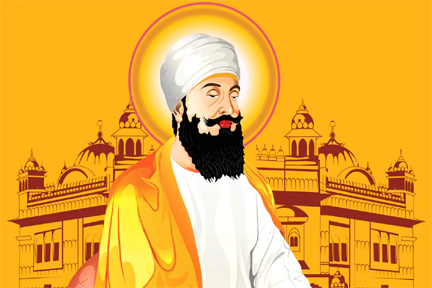
1675 Guru Tegh Bahadhur left Anadpur Sahib for Delhi to help save Hindu dharma from total extinction.Kashmiri Pandits, led by Kirpa Das of Mattan (Martand), reached Chak Nanki, Kahlur (old name of Anadpur Sahib). He appealed to Guru Tegh Bahadhur for his help in against the prosecution of Kashmiri Pandits by Aurangzeb’s forces and resulting extinction of hindu dharma. After appointing Gobind Rai as the next Guru, Guru Tegh Bahadhur left for Delhi on July 11, 1675. After Guruji’s martyrdom, Pandit Kirpa Das stayed back and became Kirpa Singh after taking amort in 1699 and died fighting at Chamkaut along with the two elder sahibjadas of Guru Gobind Singh Ji. When Guru Tegh Bahadhur sacrificed himself to save the Kashmiri Pandits from extinction in 1675, Guru Gobind Singh put his stamp on this truth by proclaiming “The Lord (Guru Tegh Bahadhur) protected the sacred thread and the frontal mark of the Hindus: He performed a great deed in the age of Kalyug.”
12th July
1675 Guru Tegh Bahadur along with leading personages of his Darbar, Dewan Mati Das, Sati Das, and Dayal Das, were taken into custody at village Malikpur Ranghran, Pargana Ghanaula near Ropar. At the time Furu was camping with his three companions on his way to Delhi. They were sent to Sirhind where they remained for four months before being sent to Delhi on receipt of formal orders from Aurangzeb. During this period Aurangzeb remained at Hasan Abdal.
13th July
1631 Mata Damodari, wife of Guru Hargobind passed away at Darauli Bhai, now in Faridkot district. Her marriage with Guru Hargobind gave birth to Baba Gurditta in 1613 and Bibi Viro in 1613. A small shrine on the outskirts of the village marks the site where the cremation took place.
14th July

1920 The British government issued a communique, expressing its intentions to withdraw from the management of the Golden Temple and make alternative arrangements in concultation with Sikh members of the reformed Legislative Council. This was actually done to put off the matter by a year. However, the government’s procastination provoked the reformists to step up their campaign for immediate resignation of Arur Singh, the government’s appointed Sarbarh. Demoralised at government’s tactics, Arur Singh appeared before the reformers at the Jalianwala Bagh Diwan with folded hands. He asked for forgiveness and announced his resignation. This convinced the authorities who now regarded it as a “decided victory for the party of reformers.”
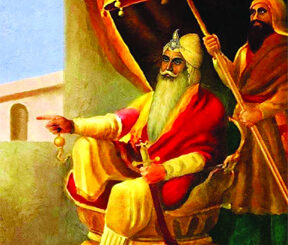
1948 Deputy Prime Minister of India, Vallabhbhai Patel, eliminated the Sikh rulers and established the Patiala and East Punjab States Union, PEPSU. EAST PUNJAB STATES: Patiala, Nabha, Jind, Faridkot, and Malerkotla were the Sikh states in the East Punjab before the integration of Indian States in 1948. The first four were the Sikh states under the sovereignty of Maharaja Ranjit Singh and were brought under British protection by the 1809 treaty of Amritsar. Patiala, Nabha, and Jind, also known as Phulkian states, share a common ancestor Phul, who was descendent of Baryam. The Emperor, in 1526, had granted Baryam, the office of revenue collection for the waste country south-west of Delhi. Emperor Shah Jahan continued Phul in this office. From his eldest son descended the families of Nabha and Jind while from his second son the Patiala family. The Faridkot family, founded in the middle 16th century sprang from the same stock as the Phulkians chiefs. The remaining two states were Kapurthala and Malerkotla. The Kapurthala rulers belonged to the Ahluwalia family. The real founder of this family was Raja Jessa Singh, a contemporary of Nadir Shah. The malerkotla rulers were Sherwani Afghans who traced their descent from Sheikh Sadruddin who had received 68 villages near Ludhiana in marriage gifts when he married the daughter of Sultan Bahlol Lodi.
1973 Bhai Sahib Harbhajan Singh Yogi met with the Archbishop of Canterbury to protest English laws which discriminate against Sikhs, particularly the law requiring motorcycle helmets.
15th July
1775 Sikhs, under the leadership of Jai Singh, establish complete control over PahadGanj and JaiSinghPura, Delhi.
1923 Bishan Singh Sandhara assaulted by the Babbar Akalis.
1932 Rattan Singh Babbar of Rakkar killed in an encounter with the police.
1934 Gandhi reiterated to the Khalsa darbar deputation that “no constitution would be acceptable to the Congress which did not satisfy the Sikhs.” He added, “Similarly, the Congress would not reject what the Mussalmans wanted, nor could it accept what Hindus or Sikhs reject.”
1948 The Patiala and East Punjab States Union, PEPSU, was inaugurated.
16th July
1984 1st Shahedi Jatha, under the leadership of Dr. Rajinder Kaur, marched for the liberation of Sri Harimandir Sahib. This jatha was arrested near Sri Harimandir Sahib.
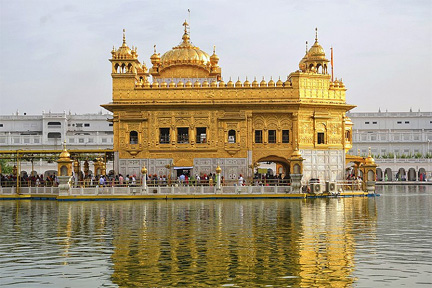
1985 Harchand Singh Longowal wrote a letter to Rajiv Gandhi to find a solution to the Punjab problem.

Be the first to comment