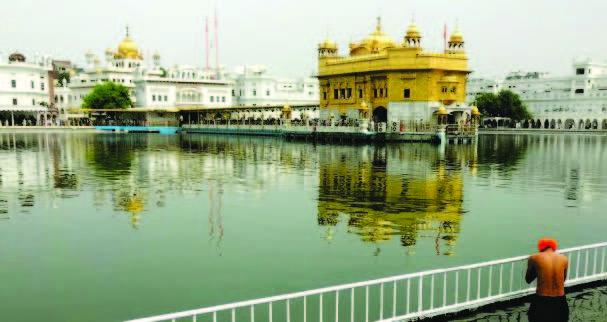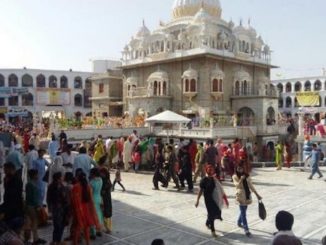
HASAN ABDAL, PAKISTAN(TIP): A fire broke out at the Gurdwara Panja Sahib in the Pakistani city of Hasan Abdal on Wednesday, October 16, Sajjad Azhar, a freelance journalist who has extensively covered the news of the place said.
The incident occurred on Wednesday evening when sparks from the ongoing welding work at the Gurudwara caused the blankets kept in the vicinity to catch fire, Adnan Anjum Raja, the Assistant Commissioner of Hasan Abdal, informed. The fire was soon put out and caused minor damage to the gurudwara. Construction work is underway at the Panja Sahib ahead of the opening of the Kartarpur corridor, when Sikhs from all across the world would visit the Gurdwara on the 550th birth anniversary of Guru Nanak Dev Ji.
NEW DELHI(TIP): India has issued a demarche to the UK protesting a meeting convened on August 12 in London by separatist organization Sikhs For Justice (SFJ).
The SFJ that claims to be an international advocacy group has offered to sponsor youth and political activists from Punjab to travel to London for the August meeting.
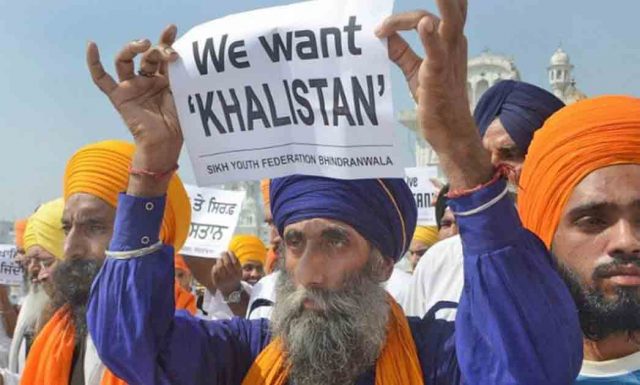
The meeting at Trafalgar Square is aimed at shaping up the “London Declaration on Referendum 2020” campaign seeking a separate Khalistan.
India has lodged its protest through diplomatic channels against the proposed “anti-India activity”. “We have taken it up with UK and have issued a demarche. We expect UK will not allow such anti-India activities to be carried out in UK,” said MEA spokesperson Raveesh Kumar.
India’s official response comes a day after the British High Commission spokesperson in Delhi defended the right of people in the UK “to gather together and to demonstrate their views, provided that they do so within the law”.
“However, will not tolerate any groups who spread hate or deliberately raise community fears and tensions by bringing disorder and violence to our towns and cities and the police have comprehensive powers to deal with such activities,” the British High Commission spokesperson told The Tribune in a cautious statement.
Khalistan remains a sensitive issue in bilateral ties between the two countries. In April, India had lodged a protest with the UK after the Tricolour was burnt by Khalistani elements at Parliament Square, while PM Narendra Modi was addressing a diaspora event in Westminster.
“Majority of the Sikh community have good relations with India and with the country where they stay. The rest are fringe elements,” underlined Raveesh Kumar on Thursday.
According to its legal adviser based in New York, the SFJ plans to provide sponsorship letters to participants from Punjab and also arrange free stay for them from August 10 to 14. It plans to unveil a declaration advocating for “Sikhs’ right to self-determination for the independence of Punjab” at the Trafalgar meeting.
Separatist group Sikhs For Justice plans to sponsor Punjab youth and political activists to travel to London for August 12 meet aimed at shaping up the “London Declaration on Referendum 2020” campaign seeking Khalistan
Non-profit Organization Hopes to Tie 10,000 Turbans to Educate About Sikhism
NEW YORK CITY, NY(TIP): Turban is a quintessential part of Sikh identity and represents the most pertinent element of the Sikh Faith that teaches them that all people are equal irrespective of caste, religion, country, thus signifying equal status. Turban gives Strength and identity to a Sikh and induces the courage to face all odds, always ready to help and serve mankind.
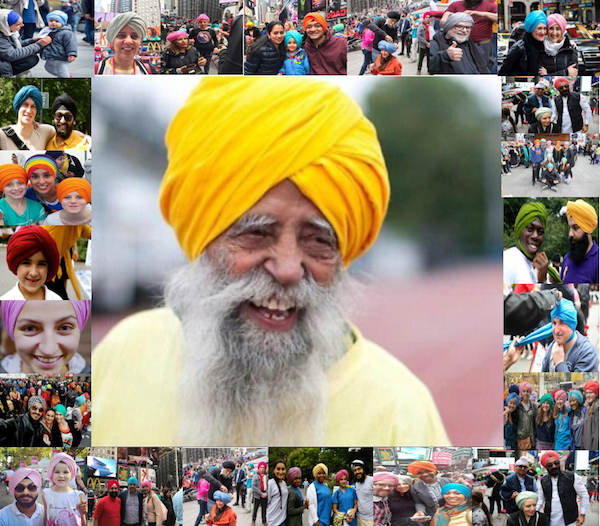
The Sikhs of New York will present Turban Day April 7th from 11am until 4 p.m. in Times Square as part of the annual mid-April celebration of Vaisakhi, which is commemorated by millions of Sikhs annually.
While the Nonprofit organization, this year in its 6th Turban day, aims to tie 10,000 turbans, and make a mark in Guinness World Record. More the thousands will be educated about the Sikh Turban on ground and millions through Social media.
More than 1400, Volunteers from around the world, will be travelling to New York to take part in the event and will be tying turbans to Americans and Non-Sikhs, not only celebrate the centuries old birth of Sikhism, but also promote awareness of the continued misplaced violence targeted at people who practice the religion.
“Last year we were overwhelmed with the support from the community with 880+ volunteers travelling from different parts of US, Canada and UK helping to tie 8,000 Turbans. This year, our target is to tie 10,000 Turbans and attempt a Guinness World Record,” said Chanpreet Singh, the organization’s founder. “We started Turban Day in 2013 at Baruch College to promote and educate people about the Sikh religion and identity. We are spreading awareness about the Sikh turban and culture. The turban is the crown of each Sikh and represents pride and valor. Turban Day provides an opportunity for those that do not wear a turban to experience a turban and learn about its significance first hand.”
The organization will be attempting a world record for the world’s largest Turban tying event in 8 hours starting at 9am on Saturday.
Apart from tying Turbans, The cultural presentations at the free event include yoga by SJ Khalsa of Kundalini Yoga East in New York City, who promotes a healthy lifestyle. Featured performances will include Dr. Zeus, a well-known music producer travelling from the UK, as well as singing and Bhangra dancing.
About Sikhs of New York
With a collective effort from the communities of New York, New Jersey and Connecticut, the Sikhs of New York aims to bring a modern approach to re-establishing the Sikh identity in the United States. A blend of traditions, cultures and beliefs together represents the ideology of Sikhs of NY. For more information, please visit www.sikhsofny.org.
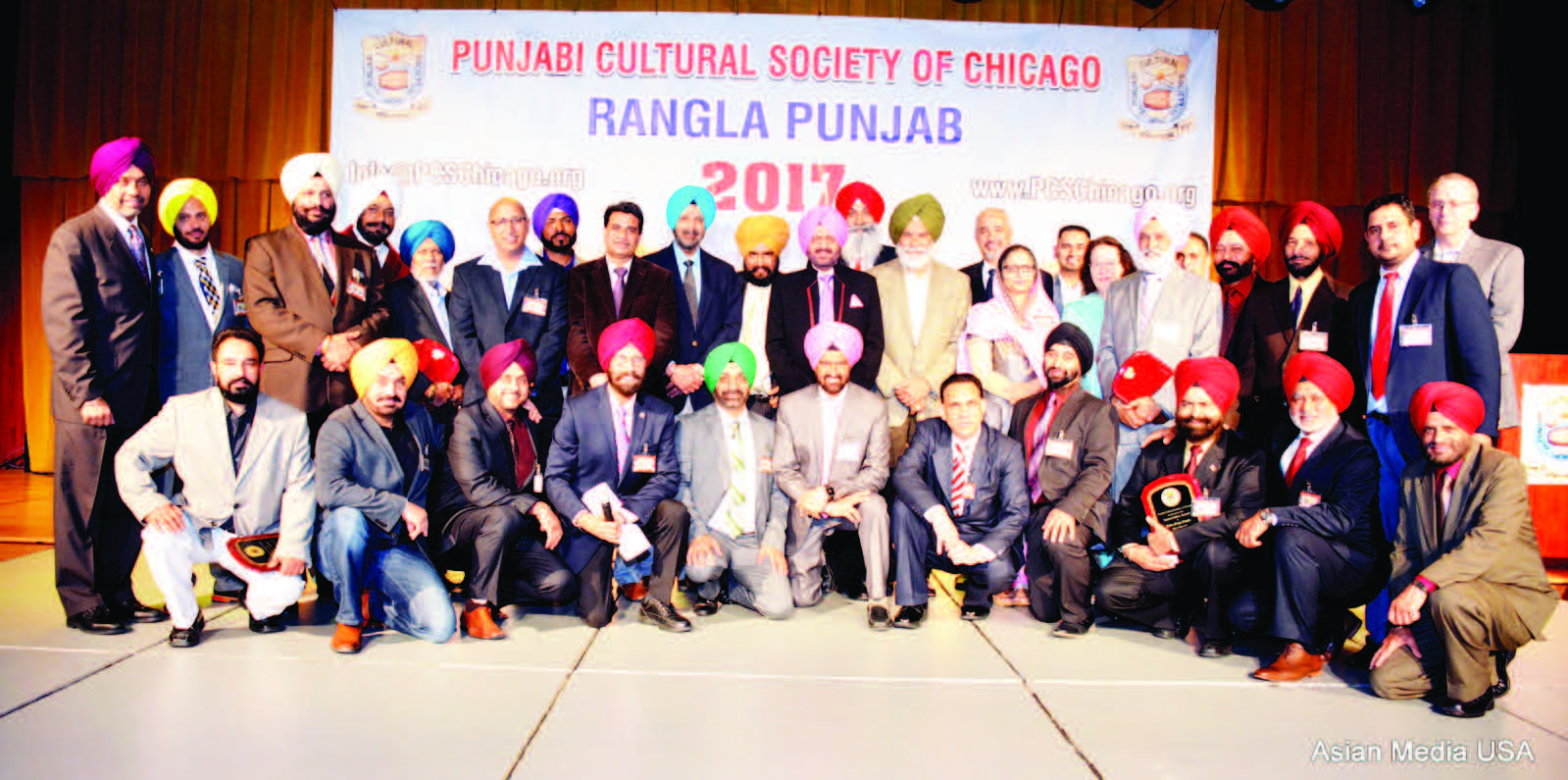
CHICAGO, IL (TIP): The most awaited cultural program of the year, Rangla Punjab, 2017 organized by the Punjabi Cultural Society of Chicago was celebrated with a lot of zeal and fanfare by participants of all ages, with an electrified Chicago audience at Meadows Clubs, Rolling meadows, IL. The energy of the hall was palpable and the enthusiasm of the participants was contagious. Vaisakhi marks the foundation day of Khalsa panth or Sikh order by the tenth Sikh Guru, Sri Gobind Singh. In 1699 the tenth guru, Sri Guru Gobind Singh, chose Vaisakhi as the occasion to transform the Sikhs into a family of soldier saints, known as the Khalsa Panth.
This memorable program encompassed a rare record-breaking number and variety of performances, with participants from Chicagoland as well as teams from neighboring states of Wisconsin and Indiana. The evening started with Shabad coordinated by Mr. Amardev Singh Bandesha followed by colorful dancing and singing performances that enthralled the crowd. The lineup of the cultural program performances was amazing and full of variety. The cultural program was very well anchored by four Emcees; Raskirath Singh, Parvinder Singh Nanua, Mona Bhalla and Paul Singh Lail. There were over thirty beautiful performances from all age groups.
Chicago Giddha, popular folk dance of women in Punjab region of India
The cultural bonanza was celebrated by Chicago with unencumbered enthusiasm shown through the number of attendees and participants alike; children as young as 4-year-old, through teenagers and adults put on a memorable show. Bhangra and Giddah along with the signature drum beats and ‘boli’s’, electrified the audience and they participated by howling and clapping along the lively beats. The colorful atmosphere shone through the authentic outfits worn by the young and old alike – seemingly transported everyone to the meandering streets of Punjab. As an Emcee reminisced about growing up in Punjab, the atmosphere was brought alive by the participants and their grand attires with great attention to detail.
Kaum Punzabi Bhangra Dance
Mr. Rajinder Singh Mago, one of the event organizers, introduced the dignitaries and distinguished guests to the audience. The chief guest Mr. Darshan Singh Dhaliwal of Dhaliwal Enterprises along with Mr. Sukhmel S. Atwal presented mementoes to the sponsors of the program Onkar Singh Sangha (Allstate Insurance), Dr. Bhupinder Singh Saini and Dr. Narinder S. Grewal. Grand sponsor Dr. Bhupinder Singh Saini congratulated everyone on the auspicious event of Vaisakhi. He credited PCS for keeping the Punjabi heritage alive through such celebrations far across the oceans that keep Punjabis connected with their culture. Dr. Saini, while making mention of the efforts and resources needed for such events said, “These things do not come cheap. I assure the organizers of my continuous support to this great cause.” Dr. Saini got sentimental while expressing his love and gratitude for his father who was also present there. The guests of honor for the evening was the Consulate General of India Ms. Neeta Bhushan represented by Mr. D. B. Bhati (Consul). Mr. Bhati addressed the audience and congratulated PCS for the grand event. Consulate General of Pakistan Faisal Niaz Tirmizi also graced the evening.
The Meadows Club hall became the microcosm of the Punjabi culture and entertainment; it felt as if we were sitting in Punjab amidst all the kaleidoscopic view of its heritage surrounding us. From the authentic props to the intricately designed bhangra and Gidah garbs, the event proved to be a hit once again. Parents’ eyes cherished the moments their children dressed in dance costumes performed on stage. Truly everyone was transported through time and space where one could smell the fragrance of corn and wheat being harvested from the villages of the mighty Punjab. The writer of this passages reminisced about her own childhood at this program; it was that powerful of an atmosphere. Gidah was performed by, to name a few, Bollywood Arts Academy, Shaukana Chicago Diyan, Milwaukee Gidah and Chicago Gidah Girls and so on. Bhangra teams included all age groups like Navi Paneeri, Punjabi Kaum, Warriors Bhangra and many more. Chicago’s renowned singers Mahijit Virdi, Mona Bhalla, Maddy Singh and Ashley Singh made everyone dance to their melodies.
Punjabi music reverberated in the Meadows club hall as gaily-dressed men and women sang and danced to celebrate the festival. The essence of Punjab was reflected in the hall, with kudos to Punjabi Cultural Society of Chicago for putting up a grand show and bringing the community together for this memorable event. Truly, Chicagoland will be waiting with bated breath for the next Rangla Punjab from Punjabi Cultural Society of Chicago in 2018.
TORONTO (TIP): The announcement of the 2018 Parliament was made in Toronto on Tuesday, May 2, 2017 and was attended by Dr. Satpal Singh (Trustee of SCIR), Ajit Singh Sahota (World Sikh Organization -Canada), Manjit Singh Parmar (Ontario Sikhs and Gurdwara Council), and Dr. Tarunjit Singh Butalia (Trustee of the Parliament of the World’s Religions and of SCIR).
Toronto Mayor John Tory with Dr. Satpal Singh, Convener of 2018 Parliament Sikh Task Force of SCIR
Toronto Mayor John Tory addressed the gathering at City Hall and highlighted the Khalsa Day parade held 2 days earlier at the same location with Canadian Prime Minister Justin Trudeau joining over 80,000 Sikhs for Vaisakhi celebrations. Mayor Tory shared that any and all are welcome to share a meal at langars held at Sikh Gurdwaras across Toronto.
SCIR coordinated the Sikh participation and presentations at the 2015 Salt Lake City Parliament of the World’s Religions. In view of the upcoming Parliament, SCIR has established a 2018 Parliament Sikh Task Force. The charge of the Parliament Sikh Task Force is to coordinate and implement the active participation of the worldwide Sikh community at the upcoming parliament through:
significant international Sikh presence and engagement,
presentations at plenary and parallel sessions focused on interfaith and intrafaith issues, and
Guru ka Langar, if possible, at the parliament to be led by the local Sikh community.
The task force members include Sikh representatives from Canada, US, and across the world. Dr. Satpal Singh, Trustee of SCIR, serves as Convener of the Task Force. Suggestions and queries about Sikh participation in the upcoming parliament can be emailed to satpalub@gmail.com.
More than 10,000 people are expected to participate in the 2018 Parliament and in the coming 18 months the Parliament Sikh Task Force will work with the Parliament to share our perspective and priorities.
The Parliament of the World’s Religions was created to cultivate harmony among the world’s religious and spiritual communities and foster their engagement with the world and its guiding institutions in order to achieve a just, peaceful and sustainable world. More information about the 2018 Parliament of the World’s Religions along with online registration is at available https://parliamentofreligions.org/parliament/2018-toronto/toronto-2018.
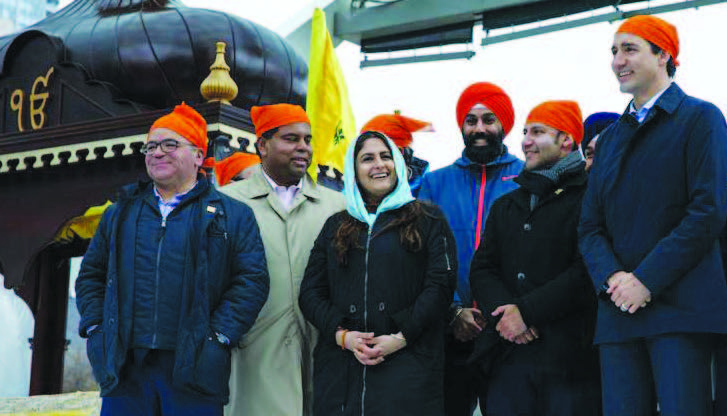
NEW DELHI/ TORONTO (TIP): While vitriolic attacks on Punjab chief minister Captain Amarinder Singh at the annual nagar kirtan in Vancouver riled the Indian government, there is consternation over Canadian Prime Minister Justin Trudeau’s presence at a Toronto event that featured Khalistani flags and posters of Jarnail Singh Bhindranwale.
The Toronto nagar kirtan on Sunday also celebrated the carrying of a motion in the Ontario assembly last month that described the 1984 anti-Sikh riots as “genocide”.
A senior Indian official described Trudeau’s presence at the Khalsa Day event as “surely a matter of concern”.
Trudeau was the first Canadian prime minister to attend the event since Paul Martin in 2005. Trudeau’s predecessor Stephen Harper had stayed away in previous years.
Bhindranwale, an extremist leader who was at the forefront of the Khalistan movement in the 1980s, was killed when the Indian Army carried out Operation Blue Star in June 1984 to remove extremists who were holed up in the Golden Temple in Amritsar.
Though defence minister Arun Jaitley had expressed India’s concerns about the Ontario assembly motion to his Canadian counterpart Harjit Sajjan last month, the organisers of the nagar kirtan in Toronto honoured Harinder Malhi, Liberal member of the provincial parliament or MPP (equivalent to an MLA), who moved the motion, during the event.
The organisers, Ontario Sikhs and Gurdwara Council, also felicitated New Democratic Party MPP Jagmeet Singh, who had moved a similar motion in 2016 that was defeated.
These developments have boosted the morale of pro-Khalistan groups in Canada. For instance, Sukhminder Singh Hansra, president of the Shiromani Akali Dal (A) Canada, said in response to an emailed query: “I am glad that the organisers who represent a larger segment of the Sikh community have reminded the world of the peaceful struggle for Khalistan.”
Hansra further said: “In Toronto, all floats are prepared by the organisers, at least two floats were dedicated to the events of 1984, including flags and banners of Khalistan. I along with many others walked with these floats with Khalistani flags.”
He described the honouring of the two lawmakers as “the highlight of the nagar kirtan” in Toronto.
The Toronto celebration came in the wake of the event in Vancouver on April 22 where the Amarinder Singh was attacked in a speech.
While the Indian government has notified Ottawa of its concern, Canada has consistently maintained that such a protest, as long as it remains peaceful, is part of freedom of expression.
NEW DELHI (TIP): Britain on May 4 assured India that it would make efforts to rein in pro-Khalistan elements operating on its soil and also agreed to share information relating to them with Indian agencies.
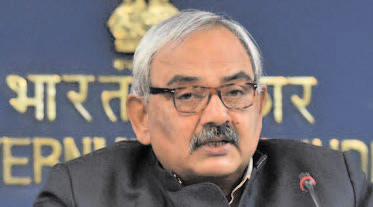
Sharing details of the deliberations at the first “Home Affairs Dialogue” meeting here, Union Home Secretary Rajiv Mehrishi and UK’s Second Permanent Secretary, Home Office, Patsy Wilkinson, Adviser in the Ministry of Home Affairs Ashok Prasad said: “We discussed the issue of Khalistani militants based in the UK and they have promised to look into it.”
Though Prasad refused to divulge details, which the Indian side shared with its UK counterparts, sources in the ministry indicated based on “our intelligence input”, the British officials were informed about how “some Sikh groups living in that country are trying to revive the Khalistan movement by providing terror training to the youth and funding hate propaganda against India”. Meanwhile, the major portion of the day-long deliberations revolved around the twin issue of “extradition and deportation” of respective citizens residing in each other’s territories. “On the issue of deportation, both sides agreed to work on identification framework, which both sides will sign in July as a memorandum of understanding (MoU), including on cybercrime and counter-terrorism,” a senior MHA official said.
Mehrishi and Wilkinson agreed to expedite the processes of extraditing fugitives of the two countries, residing in each other’s territories, but Prasad said no specific name was discussed during the meeting.
Sources, however, confirmed India “alluded” to a dozen Indian fugitives, including businessman Vijay Mallya, wanted in a Rs 9,000-crore bank default case involving his defunct Kingfisher Airlines.
Professor Emeritus at the PU, is a Prof Harkishan Singh is a well-known pharmaceutical academic, medicinal chemist and renowned science historian
Prof Harkishan Singh is a well-known pharmaceutical academic, prominent medicinal chemist and renowned science historian.
On being asked for his reaction on the announcement of Padma Shri to him, 89-year-old Prof Harkishan Singh said, “I am pleased to receive this honor, but I was not working for awards. It is my passion to research and invent something fruitful for society.”
Prof Harkishan Singh is a renowned personality in the pharmacy industry not because of his books on research but for his rarest accomplishments, including the discovery of a clinically useful drug, Chandonium Iodide (HS-310), which was later named by the World Health Organisation (WHO) as Candocuronium Iodide. Candocuronium is the only drug discovered by any Indian University till date.
Over 350 publications, 18 books and 14 patents are testimony to the outcome of his work. He mentored over 50 doctoral and master theses too.
One of his sons, Harry S Panaser who is settled in New Jersey State of USA said he was pleased that his father was selected by government of India for one of the highest civilian awards of India and added that his father was never after any awards and honors. All he wanted was to work to his ability to contribute his bit to humanity.
Professor Harkishan Singh was born on 25 November, 1928. He is a well-recognized pharmaceutical academic, medicinal chemistry researcher and science historian. He has experience of over half a century to his credit. He has worked at the Banaras Hindu University, University of Saugar, and the Panjab University in India, and abroad at the University of Maryland, University of Mississippi and the University of London.
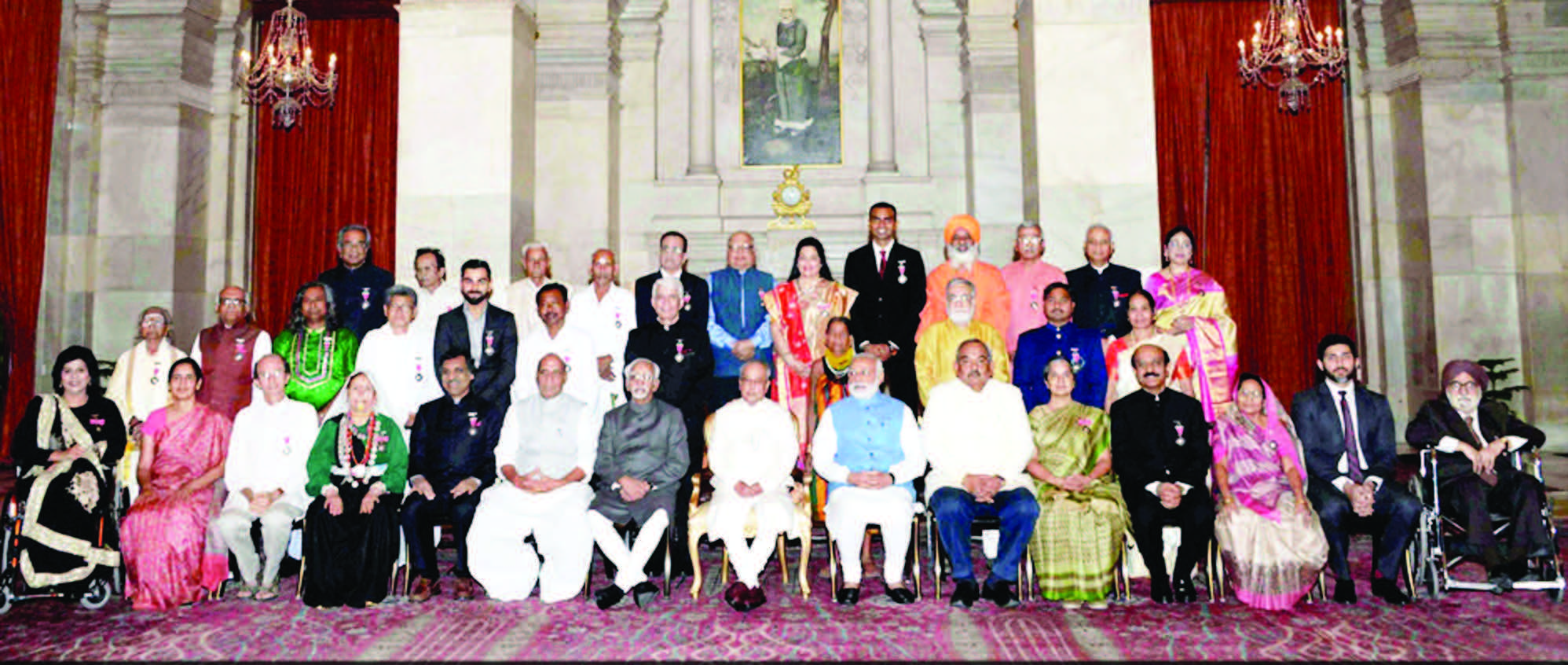
Prof. Harkishan Singh is one of the Padma awardees who were conferred the honor by the President of India, Pranab Mukherjee at Rashtrapati Bhavan on March 30, 2017
His scientific research has been in organic chemistry, medicinal chemistry and natural products. Nearly 50 master and doctoral theses have been completed under his supervision. There have been published 125 original scientific research papers. 14 patents have been obtained. His research group has been successful in designing a clinically useful drug candocuronium iodide (INN) (chandonium iodide, HS-310), which is a synthetic azasteroid. Dr Singh has lectured on his research at several of the institutions and conferences in India, United States of America, Canada, United Kingdom and China. He delivered invited lectures at the Harvard School of Medicine and at the International Symposium on Molecular Structure sponsored by the International Union of Crystallography at Beijing.
As a science historian Professor Singh has examined the history of pharmaceutical developments in India of the nineteenth and twentieth centuries. His history research studies have been on pharmacopoeias and formularies, pharmaceutical education, pharmacy practice, biographies of pharmaceutical luminaries, and pharmaceutical journalism. He has published over fifty articles.
In addition to his scientific and history research papers, Dr Singh has authored and/or coauthored twelve books and nearly two dozen of review articles, including several book chapters. He has written extensively on educational, scientific, historical and professional issues. All told his total publications come well to over 300.
Prof. Singh (seated) with family. L to R: Alicia, Dr Manjeet, Ajooni Kaur and H S Panaser
Professor Singh has been on many academic, scientific, professional and governmental bodies. He was a member of the Committee on Education in Medicinal Chemistry of the International Union of Pure and Applied Chemistry, which prepared the Report on the International Education of Medicinal Chemists (IUPAC Technical Reports Number 13; 1974).
His affiliations with several scientific and professional organizations include emeritus membership of the American Chemical Society, life memberships of the Indian Pharmaceutical Association and Association of Pharmaceutical Teachers of India, and memberships of the American Institute of History of Pharmacy and British Society for History of Pharmacy.
Dr Manjeet Kaur, H S Panaser, Dr. Amarjit Singh, IAS with Prof Harkishan Singh
Professor Harkishan Singh is recipient of several scientific and professional awards and recognitions. He has been a National Fellow of the University Grants Commission, New Delhi. He has been General President of the Indian Pharmaceutical Congress. He received Eminent Pharmacist Award of the Indian Pharmaceutical Association. Dr Singh’s standing as historian has been recognized through his election to the Academie Internationale d’Histoire de la Pharacie. The University of the Sciences in Philadelphia conferred upon Professor Harkishan Singh the degree of Doctor of Science (Honoris Causa) in recognition of his distinguished academic career and outstanding contributions to scientific research in organic and medicinal chemistry and the history of pharmacy.
The Indian Panorama has a special reason to celebrate the honor to Prof. Harkishan Singh. The Chief Editor Prof. Indrajit Singh Saluja shares with Dr. Singh an association with Banaras Hindu University (BHU), where he studied for two years, and with Panjab University, Chandigarh, where he was a Member of Languages Faculty for a couple of years.
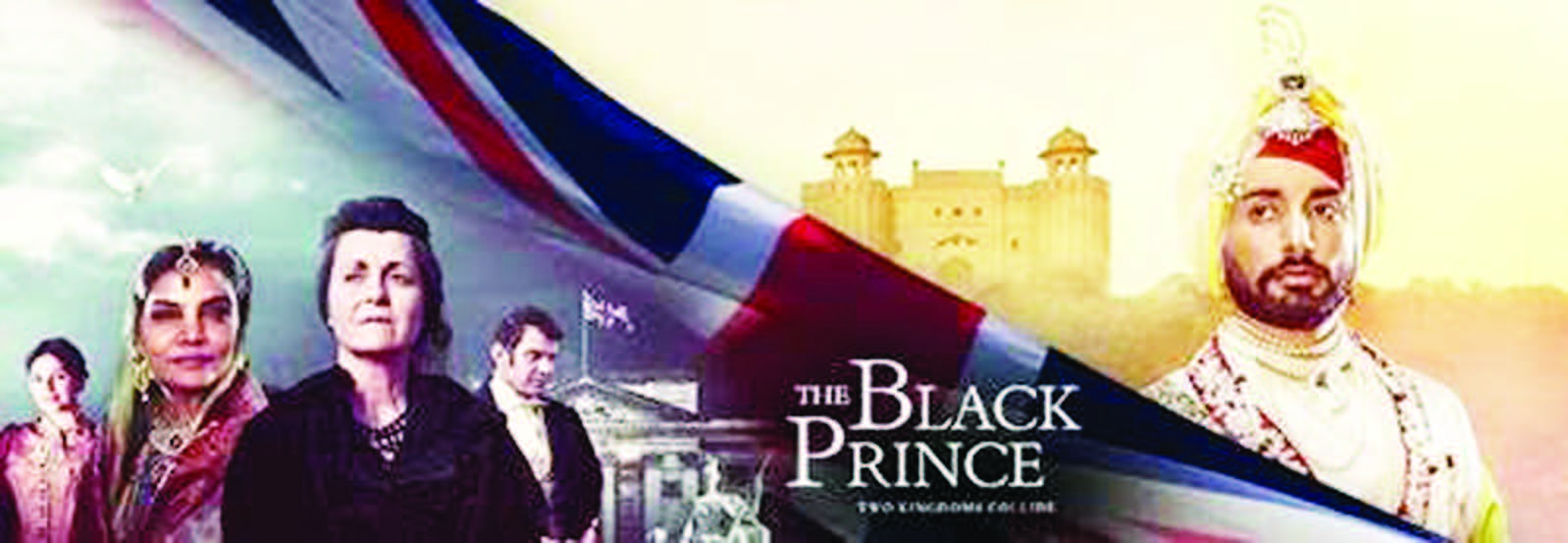
LONDON/ HOUSTON (TIP): THE BLACK PRINCE, a historical drama based upon the true story of MaharajaDuleep Singh, the boy who became king of Punjab shortly before it was annexed to the British empire, was awarded the Special Jury Remi Award, May 2, at the 50th annual WorldFest International Film Festival in Houston. The event’s Gold Remi was also awarded to the film’s Natalie O’Connor for achievement in Art Direction.
Maharaja Duleep Singh was exiled by the British to a privileged life in England when he was only 15 years old, and was shortly thereafter converted to Christianity. Reuniting with his long-lost mother after more than a decade, Duleep begins a daring journey of self-discovery in order to reclaim his faith and the kingdom that is rightfully his. His struggle inspired Sikhs to continue their fight for freedom until India regained its independence from British Imperialism in 1947, and the Sikh kingdom was divided into India and Pakistan.
Produced by Brillstein Entertainment (12 Years a Slave), THE BLACK PRINCE was written and directed by Hollywood filmmaker Kavi Raz and filmed widely across the U.K. and India.
Satinder Sartaaj plays Duleep Singh and Amanda Root, Queen Victoria
Acclaimed singer-poet Satinder Sartaaj marks his acting debut in THE BLACK PRINCE, and is joined by an esteemed cast of British acting stalwarts including Jason Flemyng (Lock, Stock and Two Smoking Barrels, Snatch) as Dr. Login, the foster parent for the Maharaja, English stage and screen actress Amanda Root (The Iron Lady), who portrays Queen Victoria, and veteran Indian actress Shabana Azmi (City of Joy), as Maharani Jindan, the exiled king’s mother. The film also features Keith Duffy, David Essex, Canadian actor Rup Magon and Sophie Stevens in supporting roles.
“This powerful chapter of Indian history has been poorly documented but it is a chapter that needs to be re-examined. When I received the opportunity to be part of this wonderful journey and to share this amazing but tragic story with the world, I made a promise that I share the epic nature of the life of the boy king of the mighty Kingdom of Punjab, but I would also share something of myself as well-my heart and my soul-what moves and inspires me,” said writer-director Kavi Raz upon receiving the Special Jury Remi Award. “It’s the history of my ancestors, of a land where I find my roots firmly and deeply planted.”
WorldFest Houston is the world’s largest independent film festival. The 2017 event concluded last night with the participation of 74 countries. Out of 500 feature film submissions, a total of 63 films were selected for presentation.
THE BLACK PRINCE made separate debuts at the CineQuest Film Festival in San Jose, California and the Manchester Film Festival in England, both in March of this year. The film will next be unveiled at the Bentonville Film Festival in Arkansas and at the International Film Festival of South Asian films (IFFSA) in Toronto in May.
THE BLACK PRINCE releases in cinemas on 21st July, in the English, Punjabi and Hindi languages.
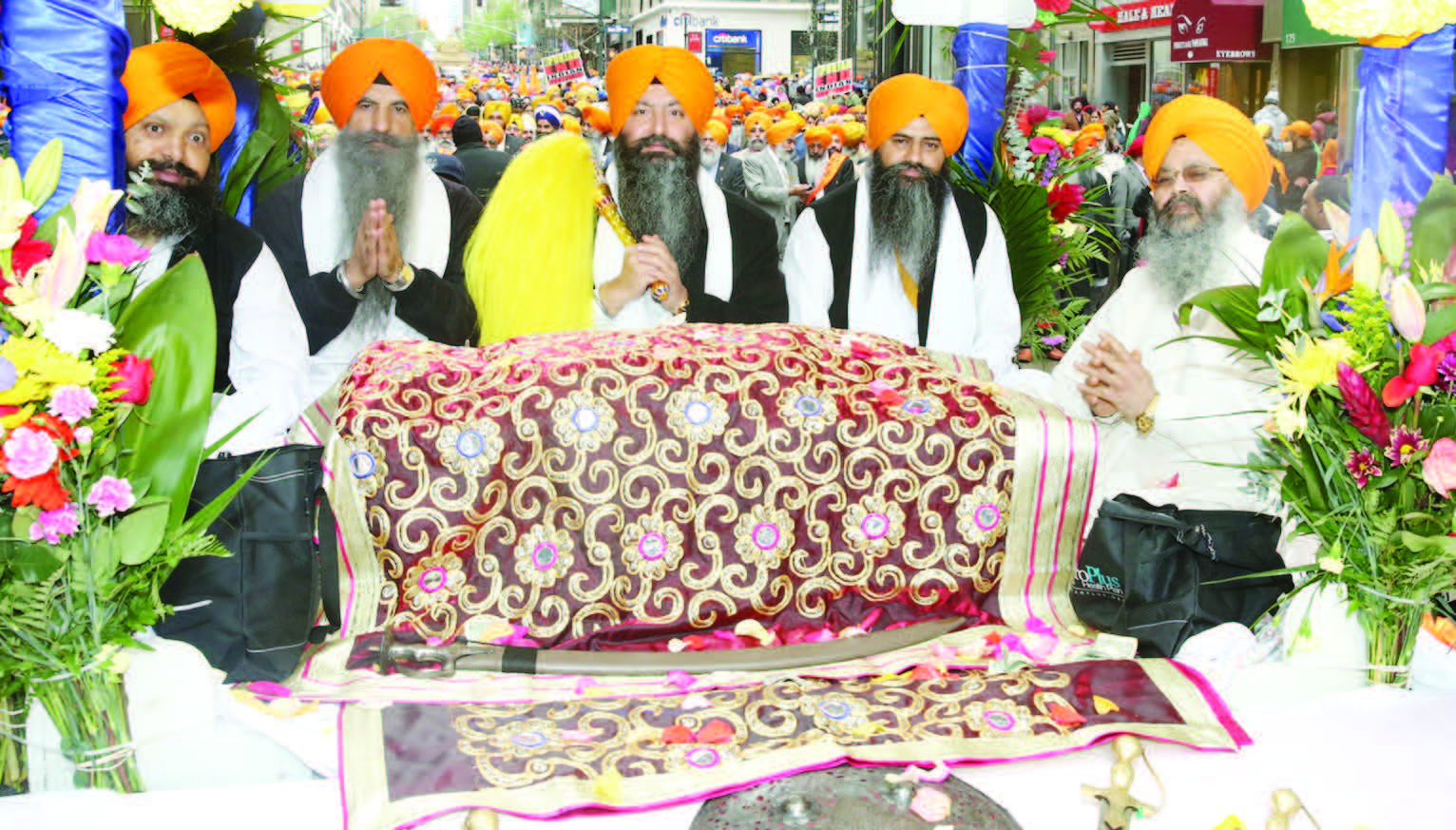
NEW YORK (TIP): Despite some showers, Sikh men, women and children in thousands thronged New York City to participate in the annual Sikh Day Parade, April 22. It is a day of the birth of Khalsa, the pure Sikhs. It was on the day of Vaisakhi in 1699 that the Tenth Master of the Sikhs, Shri Guru Gobind Singh Ji created Khalsa, the pure among the Sikhs. The Master(Guru) enjoined upon his Sikhs to fight for basic human rights and against all kinds of injustice, oppression and tyranny. Which made them a martial community. During the British rule of India, the Sikh soldiers were recognized for their valor and the most Victoria Crosses, the highest gallantry award were won by them. In independent India, Sikhs have proved time and again they were the sword arm of the country.
The Sikhs number more than 25 million and are present in every part of the world. Their adventurous spirit has taken them far and wide in search of greener pastures. They created a great impression of themselves as honest and hardworking people. Many Sikhs have won laurels in various fields in countries across the world. The Sikh religion-Sikhism is one of the five major religions of the world. Sikhs believe in unity of mankind and seek good of all.
On or around the day of Vaisakhi, which usually falls in the middle of April, Sikhs organize parades and prayers to celebrate their birth. In New York, as elsewhere, every year, thousands of Sikhs gather to celebrate the day.
The huge crowds, following their Guru, at the Parade in Manhattan on April 22.
Unconfirmed estimates suggested presence of over 25000 Sikh men, women and children in the parade this year. Over the years, the size of parade has grown, with non-Sikhs also joining in the parade.
The Sikh Day Parade is more a religious affair than a mere social gathering. That is why, the parade is led by the Living Guru of the Sikhs- The Holy Guru Granth Sahib in whose presence a perfect decorum and an atmosphere of spirituality is maintained.
A display of Sikh martial arts
On display at the parade were Sikh history, culture and traditions, as also the Sikhs’holy places. Various forms of Sikh martial art were displayed by the young and not so young.
Many bands, including the NYPD band participated. NYPD Desi officers also were part of a contingent.
A conference was a part of the celebrations where community leaders spoke about their religion and the community. A few politicians and officials also attended the parade and the conference.
A community kitchen (Langar) proved to be a great attraction, with people enjoying many delectable dishes absolutely free. Sikhs are the only community in the world who have the unique tradition of langar. In every Sikh temple, food is provided free to everyone without any discrimination on any basis.The park at 23rd Street was a great place for people to sit in and enjoy the food which was served free to all.
Sikhs focus their lives around their relationship with God, and being a part of the Sikh community. The Sikh ideal combines action and belief. To live a good life a person should do good deeds as well as meditating on God.
There is only one God
God is without form, or gender
Everyone has direct access to God
Everyone is equal before God
A good life is lived as part of a community, by living honestly and caring for others
Empty religious rituals and superstitions have no value
God and the cycle of life
Sikhs believe that human beings spend their time in a cycle of birth, life, and rebirth. They share this belief with followers of other Indian religious traditions such as Hinduism, Buddhism and Jainism.
The quality of each particular life depends on the law of Karma. Karma sets the quality of a life according to how well or badly a person behaved in their previous life. The only way out of this cycle, which all faiths regard as painful, is to achieve a total knowledge of and union with God.
The God of grace
Sikh spirituality is centred round this need to understand and experience God, and eventually become one with God.
To do this a person must switch the focus of their attention from themselves to God. They get this state, which is called mukti (liberation), through the grace of God. That means it’s something God does to human beings, and not something that human beings can earn. However, God shows people through holy books, and by the examples of saints, the best ways to get close to him.
Sikhs believe that God can’t be understood properly by human beings, but he can be experienced through love, worship, and contemplation.
Sikhs look for God both inside themselves and in the world around them. They do this to help themselves achieve liberation and union with God.
Getting close to God
When a Sikh wants to see God, they look both at the created world and into their own heart and soul.
Their aim is to see the divine order that God has given to everything, and through it to understand the nature of God.
Most human beings can’t see the true reality of God because they are blinded by their own self-centred pride (Sikhs call it haumain) and concern for physical things.
God inside us
Sikhs believe that God is inside every person, no matter how wicked they appear, and so everyone is capable of change.
God beyond ourselves
Sikhs believe that God’s message can be found in several ways outside ourselves.
The message is written in the whole of creation; look at it with open eyes and see the truth of God, for creation is the visible message of God
Sikhs believe that most of us misunderstand the universe. We think that it exists on its own, when it really exists because God wills it to exist, and is a portrait of God’s own nature
The message has been shown to us by the Gurus in their lives and in their words.
The message is set down in the teachings of scripture
Living a good life in this world
Sikhs don’t think it pleases God if people pay no attention to others and simply devote themselves slavishly to religion.
Sikhism doesn’t ask people to turn away from ordinary life to get closer to God. In fact it demands that they use ordinary life as a way to get closer to God.
A Sikh serves God by serving (seva) other people every day. By devoting their lives to service they get rid of their own ego and pride. Many Sikhs carry out chores in the Gurdwara as their service to the community. These range from working in the kitchen to cleaning the floor. The Langar, or free food kitchen, is a community act of service.
Sikhs also regard caring for the poor or sick as an important duty of service.
The three duties
The three duties that a Sikh must carry out can be summed up in three words; Pray, Work, Give.
Nam japna Keeping God in mind at all times.
Kirt Karna Earning an honest living. Since God is truth, a Sikh seeks to live honestly. This doesn’t just mean avoiding crime; Sikhs avoid gambling, begging, or working in the alcohol or tobacco industries.
Vand Chhakna (Literally, sharing one’s earnings with others) Giving to charity and caring for others.
The five vices Sikhs try to avoid the five vices that make people self-centred, and build barriers against God in their lives.
Lust
Covetousness and greed
Attachment to things of this world
Anger
Pride
If a person can overcome these vices they are on the road to liberation.
Five Sikh Symbols
The Five Ks are the five items of dress and physical appearance given to Sikhs by Guru Gobind Singh when he gathered together the first members of the Khalsa on Vaisakhi day in 1699. These symbols give Sikhs a unique identity signifying discipline and spirituality. However, these items cannot be reduced to just symbols and must be worn in their full form.
Kesh
Uncut hair, which is kept covered by a turban, or dastaar.
Kesh are a traditional symbol of holiness in India, and the turban is a symbol of leadership.
The dastaar is worn by men and some women to cover their long hair.
Kirpan
A ceremonial sword, symbolizing readiness to protect the weak, and defend against injustice and persecution.
The kirpan is normally worn with a cloth shoulder strap called a gatra.
The kirpan exemplifies the warrior character of a Sikh.
Kara
A steel bracelet, symbolizing strength and integrity.
Steel is symbolic of strength yet resilient under stress. In the same way, the human soul must become as strong and unbreakable as steel which has been tempered in the furnace.
Kangha
A small wooden comb, symbolizing cleanliness and order.
The kangha is used to keep the hair clean and is normally tucked neatly in one’s uncut hair.
As a Sikh combs their hair daily, he or she should also comb their mind with the Guru’s wisdom.
Kachhera
Cotton boxer shorts, symbolizing self-control and chastity; prohibition of adultery.
EDISON, NJ (TIP): The upscale neighborhood in North Edison, NJ, was full of life on a bright and sunny Sunday, when hundreds of Indian-Americans gathered at the decorated house of J. Bakshi to celebrate the joyful festival of Vaisakhi.
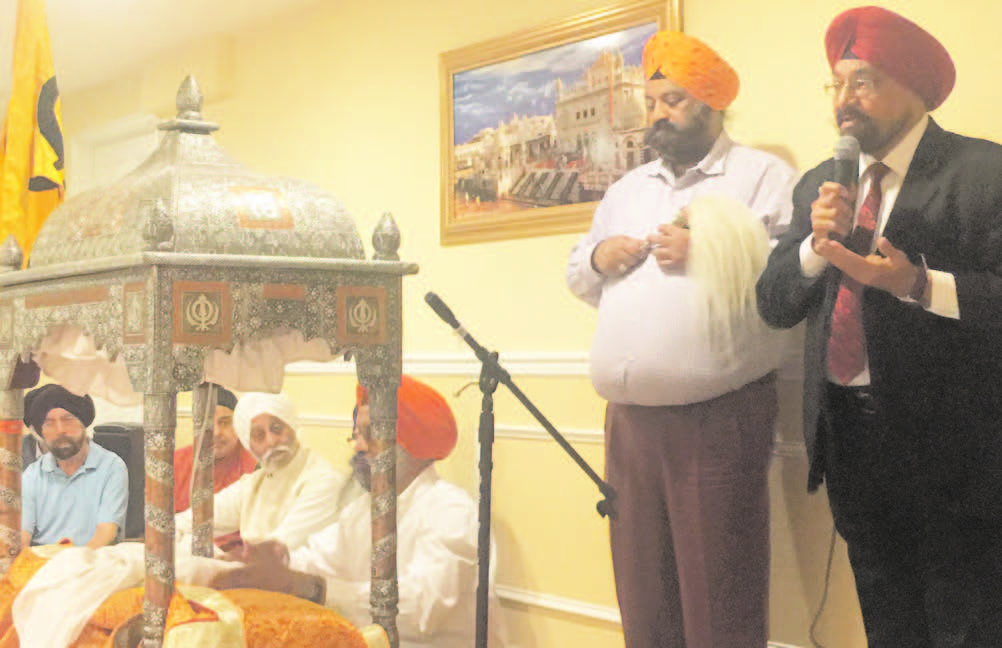
The event was hosted by J. Bakshi, the owner of Nanak sweets, who opened his door for neighbors and friends. The event started with Kirtan in which everyone participated. Men, women and children bowed before the holy book to pay their respects and wor-shipped the Guru Granth Sahib seated in a colorful canopy in the hall.
As the Kirtan was over, Bakshi invited Professor Saluja to present two documentary movies produced and directed by Saluja as a tribute to the Khalsa faith and the Vaisakhi festival.
Explaining his passion for serving the Indian American community, Prof Saluja said that he produced the movies to make viewers proud of their heritage.
The first film, a documentary on Guru Govind Singh, the tenth guru of the Sikh panth, who fought to save his religion and faith.
In 1699 the tenth guru, Guru Govind Singh, chose Vaisakhi as the occasion to transform the Sikhs into a family of soldier saints, known as the Khalsa Panth. Guru Govind Singh founded the Khalsa in front of thousands at Anandpur Sahib. During the Vaisakhi festival Guru Govind Singh came out of a tent carrying a sword. He challenged any Sikh who was prepared to give his life to come into the tent. The Guru returned alone with his sword covered in blood. He then requested another volunteer and repeated the same ac-tion four times until five men disappeared into the tent. The crowd was very concerned until they saw five men return wearing turbans with the Guru. These five men became known as the Panj Piare, or ‘Beloved Five’.
Saluja commented that members of the proud Khalsa community fought for the freedom of India and continued to lead the nation in all fields from defense to art and sciences.
The second film traces the background of Vaisakhi celebration coinciding with the onset of Spring that fills people with joy and happiness. Vaisakhi, also spelled Baisakhi, is one of the most important dates in the Sikh calendar. It is the Sikh New Year festival that commemorates 1699, the year Sikhism was born as a collective faith.
The festival is celebrated in all parts of India as the New Year’s Day for Hindus in Tamil Nadu, Kerala, Odisha, West Bengal, Assam, Bihar, Uttarakhand, Uttar Pradesh, Hima-chal Pradesh, Haryana, Punjab. The significance of Vaisakhi is similar in all parts of India and known by many names. Hindus take bath in the Ganges and other sacred rivers as they believe that river goddess Ganges descended to earth on Vaisakhi. People visit tem-ples, meet friends and party over festive foods.
Vaisakhi coincides with the festival of ‘Vishu’ celebrated in Kerala a day after Vaisakhi. The celebration is full of glitz as it includes decorations with colorful flowers, grains and fruits. People visit their friends and families and offer gifts to friends and loved ones, and alms to the needy.
A view of the sangat
In West Bengal Vaisakhi is celebrated as Pohela Boishakh and Bahag Bihu in Assam. In-troducing his films Saluja reminded the audience that the festival brings home the mes-sage of unity, peace and pride for all people of Indian origin. “So many of our ancestors made sacrifices to give us our freedom to enjoy that is our duty to preserve our unity and culture. By remembering and following the paths our ancestors showed us we can live in peace, freedom and strengthen our culture and heritage for the new generations.
A community feast called ‘Langar’ was hosted by Bakshi for his guests.
Mayor de Blasio and Indian Consulate express concern
NEW YORK (TIP): A drunken passenger roughed up a Sikh cabbie and snatched the turban off his head in an assault the NYPD is investigating as a possible hate crime.
Harkirat Singh, 25, said the theft of his religious garb was the culmination of a scary encounter early Sunday with a belligerent boozehound and his three buddies that has made him too scared to drive another night shift.
“I’m so afraid. I don’t want to work,” Singh told the Daily News at his home in Ozone Park, Queens. “It’s an insult on my religion, also,” he said. “An insult of my faith. It’s horrible.”
Butcher leaves black deliveryman paranoid after handing him nooseThe immigrant from Punjab, India, said he picked up three men and a woman – all in their 20s – around 5 a.m. at the corner of Eighth Ave. and 30th St., a few blocks south of Madison Square Garden.
The quartet said they wanted to go to E. 165th St. and Jerome Ave. in the Bronx. When the yellow taxi reached that intersection, the passengers complained that Singh took them to the wrong destination – but the drunks couldn’t give the cabbie a straight answer about where to go next, he said.
Harkirat Singh, a Sikh taxi driver, was assaulted, called names and robbed of his religious turban in the Bronx while trying to collect a fare. (TODD MAISEL/NEW YORK DAILY NEWS)
“The girl’s saying, ‘Take the right.’ The Spanish guy’s saying, ‘Take the left.’ So, at that time, I was confused,” Singh said. They began hurling slurs and banging on the plastic partition in his cab, Singh recalled. Gay couple rattled after brick-throwing teens spewed slurs in NYC
“They’re using bad words, also. They said, ‘Ali Baba, f–k you,’” said Singh, who moved to the U.S. three years ago.
He pulled over and told the group to pay $41.76 and to find another cab. The woman coughed up the cash after Singh called 911 – but then one of the men got back into the cab.
Singh said the man who got back into the cab tried to smash the meter. Then he punched Singh
in the arm, the cabbie said. “After that, he picked off my turban from my head,” he said. “He wanted to snatch my phone also…It was too horrible.”
Police sources described the suspect as a clean-shaven white Hispanic man in his 20s, around 5-foot-9 and weighing 160 lbs. He was wearing red shoes and blue jeans. He had short hair.
Terrified and crying, Singh says he pleaded with the man to calm down.
“Why are you doing this, brother? We can sit. We can talk,” he recalled telling the unruly passenger.
“At that time, I’m so afraid – they can do anything to me. They’re gonna kill me.” With cops en route, the group made a run for it – with Singh’s turban, which is a primary symbol of the faith.
Singh said he’d been wearing a turban since he was 6. The theft occurred just hours after thousands of Sikhs flocked to Times Square for the annual celebration of Vaisakhi also dubbed Turban Day.
Police say they’re only seeking one suspect, though they’d like to speak to the other three passengers. Singh did not require a medical attention but filed a report with police. He was able to snap a photo of two of the passengers.
New York Mayor Bill de Blasio ? @NYCMayor tweeted: Harkirat Singh – You are welcome here. What happened to you was wrong. You did the right thing by calling the NYPD. https://twitter.com/ nydailynews/status/ 854105456104673281 …
9:23 PM – 17 Apr 2017 – Harpreet Singh Toor, the chairman of public policy and external affairs at The Sikh Cultural Society, said the theft reflected prejudice against Sikhs, who often are the butt of anti-Muslim bias despite following a different faith. “I used to get mad – now I laugh at it, because if we are still ignorant about other faiths…who will make those people understand?” he asked.
Consulate General of India in New York learnt about the incident and an official said it was a serious matter, if it were a case of hate crime. The Consulate is in touch with New York Police Department to get more information on the incident, the official said.
Sikh community leaders HS Toor, Master Mohinder Singh and Himat Singh Sarpanch expressed concern at the incident and demanded immediate arrest of the culprits.
The Vancouver Vaisakhi celebration brought tens of thousands of British Columbians to the same temple Saturday —including B.C.’s Liberal and NDP leaders, who first crossed paths after kicking off their campaigns earlier this week.
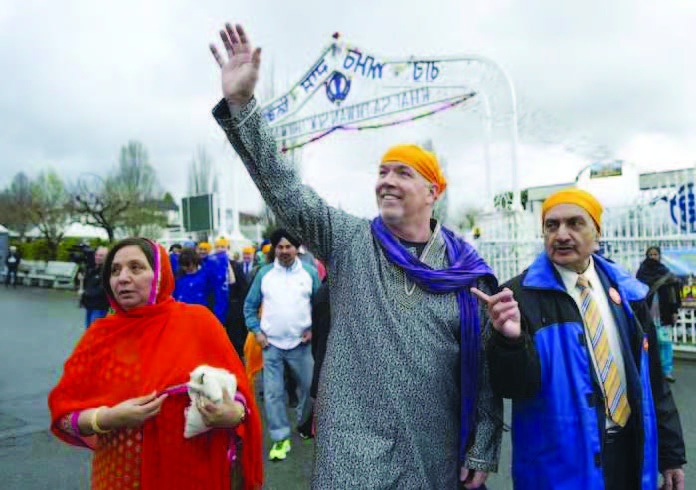
B.C. Liberal Leader Christy Clark and B.C. NDP Leader John Horgan both attended the celebration and parade in South Vancouver, flanked by local candidates and supporters from the Sikh community.
With their branded tour buses parked across the street, both leaders and staff kept their distance from each other, but supporters wearing Liberal or NDP buttons mingled at the event.
Vaisakhi, which fell on Friday this year, marks the birth of the Khalsa – the Sikh brotherhood – and pays tribute to the start of the Punjabi harvest.
Malkiat Dhami, president of the Khalsa Diwan Society, said the event has grown beyond a celebration for B.C.’s Indo-Canadian community and said organizers are noticing more non-Indo-Canadian people revelling in its festival atmosphere and tasty food.
Christy Clark joins the tens of thousands of Vaisakhi revellers. Photo Courtesy:JASON PAYNE / PNG
Dhami couldn’t confirm attendance by Saturday afternoon, but said it felt like the crowd was even bigger than the approximately 125,000-150,000 people who showed up last year. He praised the hard work of volunteers and organizers who helped the event thrive in its 39th year.
Asked whether the presence of Clark and Horgan changed the nature of this year’s celebration, Dhami said politicians always like to come, no matter what party or level of government.“Sometimes people are mistaken— they say, ‘Maybe it’s an election year,’” Dhami said.“It gives them the platform to say whatever they want to say to the congregation. They’re seeking help from the people. It’s good for them, it’s good for us.”
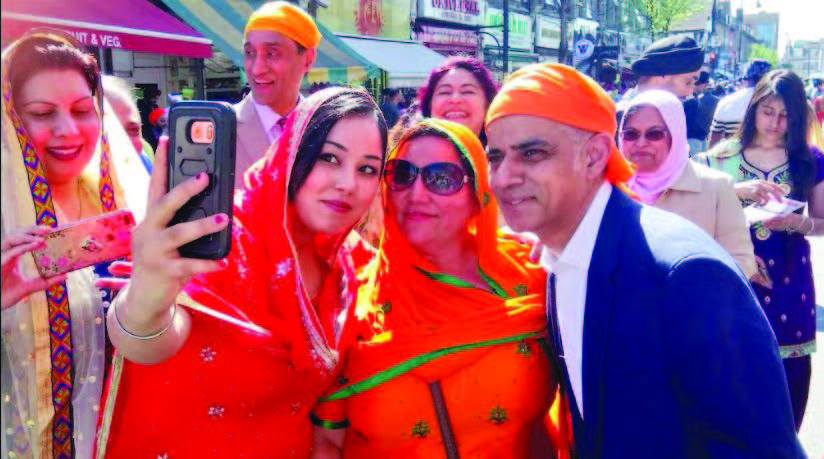
Sadiq Khan Becomes First London Mayor to Celebrate #Vaisakhi
Crowds gathered in Southall to watch the annual Vaisakhi parade, which started and ended at the Sri Guru Singh Sabha Southall Gurdwara on Havelock Road.
Mayor of London Sadiq Khan was in attendance and tweeted: ‘Londoners don’t just tolerate our diversity, we celebrate it! Brilliant to be back in Southall alongside thousands at Vaisakhi celebrations.’
It is thought to be the first time a London Mayor has ever visited the event, known as Nagar Kirtan, to mark Vaisakhi.
With the sun beaming down, hundreds of people stopped by the many food stalls offering free drinks and Indian snacks (langar) while hyms were sung and various different dances took place.
Other MPs including Southall MP Virendra Sharma and Feltham and Heston MP Seema Malhotra were in attendance.
St John Ambulance and London Ambulance Service cycle responders were also present to keep everyone safe.
The Sikh festival of Vaisakhi celebrates the birth of the Khalsa but is often mistaken for being a harvest festival or the Sikh New Year.
In April 1699 the 10th Sikh Guru, Guru Gobind Singh Ji tested thousands of Sikhs and the first five to pass his test were initiated into a new order called the Khalsa.
May says UK will need Sikh values of equality, respect
UK Prime Minister Theresa May on April 13 said Britain needs Sikh values of equality and respect more than ever as the country forges a “new and ambitious role” in the world post Brexit.
Greeting the Sikh community on the occasion of Baisakhi, May said Sikhs have set an example for all.
“I send my best wishes to everyone in Britain and around the world celebrating Baisakhi -one of the most important dates in the Sikh calendar and a time when families and friends come together to commemorate the birth of the Khalsa,” she said in a video message released by Downing Street.
She said Sikhs in the country consistently follow the pillars of their faith, which sets an example to all.
Praising Sikh values of equality and respect, of fairness and helping those less fortunate, the British prime minister said these values Britain needs more than ever as it forges a “new, ambitious, role” in the world.
“I am determined to build a country that works for everyone; a country where no matter who you are, you can achieve your goals – and the Sikh community is a vital part of that mission. So as the dancing and the festivals begin, at home and abroad, I would like to thank you for all that you do and to wish you a very happy,” she said.
She noted: “As Sikhs across the globe take part in spectacular processions and neighbourhoods and gurdwaras burst forth with colour, I would like to take this opportunity to celebrate the immense contribution British Sikhs make to our country.
“Whether it’s in the fields of business, the armed forces or the charitable sector, you consistently follow the pillars of your faith and in so doing set an example to us all,” she said.
This year, the Indian High Commission in London has tied up with gurdwaras across London and other British Punjabi organisations to launch Baisakhi festivities on a grand scale.
The event, to be held in north-west London on April 30, has been conceived as a grand mela complete with shabad kirtan and folk music to bring the Indian community together.
“Come with your families and friends to celebrate, enjoy and be part of the best of Sikh culture,” according to a statement by the High Commission.
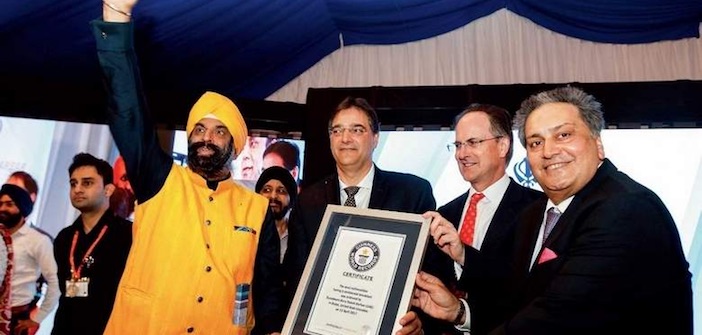
A gurdwara in Dubai broke the world record for serving free breakfast to the maximum number of people from diverse nationalities.
Gurdwara Guru Nanak Darbar entered the Guinness World Record on Thursday for serving continental breakfast titled ‘Breakfast for Diversity’ to 600 persons from 101 countries in an hour-long event in Jebel Ali.
The Khaleej Times reported that schoolchildren, government officials and diplomats attended the event while Indian ambassador to the UAE Navdeep Singh Suri was the chief guest. People from different parts of the city flocked to the Jebel Ali Gardens and filled a temporary tent made for hosting the marathon breakfast event.
The officials from the Guinness Book of World Records confirmed that the gurdwara broke the previous record of 55 nationalities having a continental breakfast, organised by Nutella at the Milan Expo in Italy in 2015.
The gurdwara, which is known for serving free meals to all visitors through its community kitchen, caters to over 50,000 Sikh devotees in the United Arab Emirates.
“Sikhism has always embraced diversity as it has been part of our faith and belief that we are all human beings to be treated with respect,” Surender Kandhari, chairman of the Gurdwara Guru Nanak Darbar, told the daily. “The gurdwara has been spearheading charity and volunteer work not only for the Indian community but for the entire UAE community as well. We feel blessed to give in any form, as this is our selfless service to the society,” he said.
The iconic Times Square in New York was seeped in the colours and tradition of the Sikh culture as members of the community tied turbans to thousands of New Yorkers and tourists to spread awareness about the Sikh identity amid a spike in hate crimes against them in the country.
Non-profit group ‘The Sikhs of New York’ organised the ‘Turban Day’ at Times Square yesterday, with its volunteers tying colourful turbans to close to 8,000 Americans and tourists hailing from different nationalities and ethnicities. The four-hour event, held as part of Vaisakhi celebrations, was aimed at spreading awareness among Americans and other nationalities about the Sikh religion and its articles of faith, especially the turban, which has often been misconceived and misidentified as being associated with terrorism particularly in the years since the 9/11 terror attacks.
During the event, a proclamation by Congressman Gregory Meeks of the 5th Congressional District of New York declared April 15, 2017 as ‘Turban Day’, lauding The Sikhs of New York for its dedication in educating other communities about the Sikh faith.
The organisation’s founder Chanpreet Singh told PTI Turban Day was started in 2013 at Baruch College to promote and educate people about the Sikh religion and identity.
“We are spreading awareness about the Sikh turban and culture. The turban is the crown of each Sikh and represents pride and valour. Turban Day provides an opportunity for those that do not wear a turban to experience a turban and learn about its significance first hand,” he said.
Turban Day Celebrated At Times Square In New York. Photo: Keertan.org
Mr Singh added that he had personally experienced hate during his school years and wanted to take the initiative to educate Americans that “Sikh values are American Values”.
He said by inviting people from other nationalities to wear the turban, the event also aims to encourage them to avoid discrimination and speak out against hate crimes targeting Sikhs in America going forward.
More than 1,400 Sikhs from India on Friday celebrated the Baisakhi Festival in Hassan Abdal, a town in Pakistan’s Punjab province, famous for one of the most sacred sites of Sikhism.
The officials of Evacuee Trust Property Board (ETPB) and Pakistan Sikh Gurdwara Parbhandik Committee also took part in the festivities.
ETPB Chairman Siddiqul Farooq inaugurated the festival. Speaking on the occasion he said the board would continue facilitating the visiting Yatrees.
He said the ETPB is establishing the Guru Nanak University in Nankana Sahib and Ghandara University in Taxila.
“The federal Higher Education Commission has allocated Rs 1bn for each project and construction work will soon begin,” he said and reiterated that the people of both countries want peace.
Baisakhi is an ancient festival dating back to the 17th century, also marks the beginning of a new solar year and harvest season. It is one of the most significant holidays in the Sikh calendar, commemorating the establishment of the Khalsa at Anandpur Sahib in 1699 by the 10th Sikh Guru, Guru Gobind Singh.
Devotees at Panja Sahib.#
To mark the celebrations, devotees, irrespective of Sikh religion, throng at Gurdwara Punja Sahib Hassan Abdal. The celebrations start when devotees with flowers and offerings in their hands, proceed towards the Gurdawaras and temples before dawn.
The Indian Sikhs visited Gurdwara Janamesthan Nankana Sahib, Gurdwara Sacha Soda in Farooqabad, Gurdawara Kartarpur Narowal and Gurdwara Dera Sahib Lahore.
What could be more unfortunate than to find the Sikh Gurdwara managers taking to violence in the presence of Guru Granth Sahib! The fight which broke off between two groups at Gurdwara Sikh Cultural Society in Richmond Hill, New York on April 16 could not have been more ill-timed.
It was a day of celebrations. One, Vaisakhi which fell on April 13, was formally being celebrated by the congregation. Also, it was the birth anniversary of Shri Guru Arjan Dev Ji, the fifth Guru of the Sikhs, who is credited with having collected Gurbani in the form of Granth Sahib.
The congregation was there to celebrate the two historic occasions when some Sikhs chose to come to blows right in the presence of Shri Guru Granth Sahib Who is considered by the Sikhs to be a Living Guru who guides and protects. Besides, there were around a thousand men, women and children who witnessed turbans flying in the air and some leaders of the community who the congregation otherwise held in great esteem, thinking they were doing a service to Guru Sahib and to the community, engaging in shameful fights.
Everyone obviously wondered why they were fighting. It is too well known that there are privileges and benefits, gains and profits associated with holding a position in the management of a gurdwara. And those who eye them and do not get an opportunity to be on the management, look for opportunities to create conditions which they think, might benefit them. So, it was in this case.
Then there are occasions to promote one socially and politically. Sikh Day Parade is one such occasion. There are always differences among various groups when it comes to sharing the limelight. Those in power would like to keep their opponents away. And those not in power would claim they be treated with respect and allowed a fair share in organizing and participating in the parade.
Thus, it was a clash of egos which resulted in the unfortunate and shameful fight between the two groups in the presence of Guru Granth Sahib and the Sangat. The worst which happened was that the police came in to the Diwan Hall in the presence of Shri Guru Granth Sahib in shoes and bareheaded, which the Sikhs have always resented in every part of the world, viewing it as an insult to their Guru.
Those who picked up a fight in the presence of Guru Sahib are responsible for desecration of the holy place. The least they need to do, without anybody telling them, is to seek public forgiveness from Guru Sahib and from the Sangat. Their conduct was unbecoming of a Sikh, reprehensible and unpardonable.
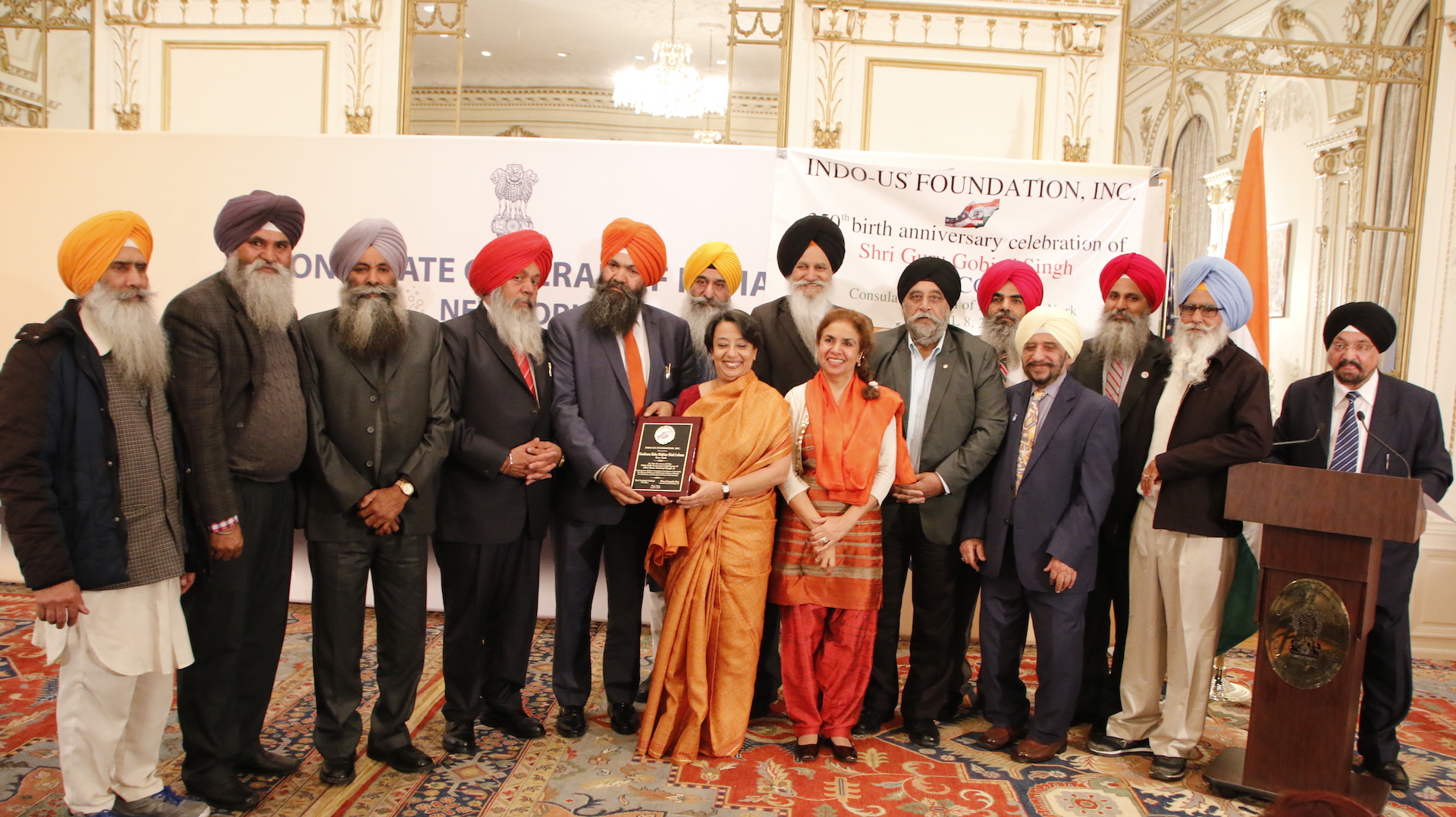
NEW YORK (TIP): The Indian American community and their friends from the mainstream came together to celebrate the 350th birth anniversary of the Tenth Master of the Sikhs, Shri Guru Gobind Singh.
It was for the first time that the birthday of a Sikh Master was celebrated at the Indian Consulate in New York.
Welcoming the gathering, the Consul General Riva Ganguly Das characterized Guru Gobind Singh who created Khalsa as the savior of the people against the tyranny of the rulers of the time. She recalled that as a young girl in Delhi she would often visit with her parents Gurdwara Bangla Sahib and Gurdwara Sisganj Sahib and listen to Gurbani which she found extremely soothing. She said she learnt about the wonderful traditions of the Sikhs from her visits to gurdwaras and from her readings on Sikhism.
Consul General Das, who is a Bengali, said Guru Rabiindra Nath Tagore, one of the greatest writers who was the first Indian to be honored with a Nobel Prize, the greatest name among Bengali writers, and one of the greatest sons of India, was influenced by Guru Nanak and wrote a couple of poems dedicated to the First Sikh Guru.
Consul General spoke appreciably of the great contribution of the Sikh community in India and abroad and said she was delighted to host the 350th birth anniversary celebration of Guru Gobind Singh at the Consulate. She added that she looked forward to many such events being organized to focus on Sikhs.
Ambassador Das chose to heap her praise on Prof. Indrajit S Saluja, President of Indo-US Foundation for organizing the event.
Welcoming the guest speaker, Dr. Nikky Guninder Kaur Singh, the endowed Crawford Professor of Religious Studies at Colby College, Waterville, Maine, the Consul General said Dr. Singh was a great scholar and an authority on religions and that it was a momentous occasion to have her at the Consulate to speak about the great Sikh Guru.
Earlier, welcoming the Consul General Prof. Indrajit S Saluja said Ambassador Das, in just over a year, had taken significant steps to streamline working at the Consulate, with the result that the image of the Consulate was refurbished. The consular services improved. Prof. Saluja attributed the rising approval rating of the consular services to the efforts made by the Consul General who has been traveling extensively in all 10 States under her jurisdiction and reaching out to people, under the “Consulate at your doorstep” program. Another significant step she had taken was to reach out to administration and politicians which helped not only in strengthening of relations between the administration and the Indian Community but also in strengthening of relations between the US and India.
Dr. Nikky Guninder Kaur Singh spoke at length about the personality and philosophy of Guru Gobind Singh and took questions.
Dr. Singh enlightened the audience on four aspects of the great Guru.
A young Sikh boy presented a bouquet on behalf of the community to Dr. Nikky Guninder Kaur Singh
Consul General Das presents a plaque to Guest speaker Dr. Nikky Guninder Kaur Singh
Dr. Nikky Guninder Kaur Singh presented a plaque to Air India Regional Manager USA Vandana Sharma
Consul General presents a plaque to Gurdwara Baba Makhan Shah Lobana
Dr. Nikky Guninder Kaur Singh presented a plaque to Mrs. and Jatinder Singh Bakshi of Singh & Singh Distribution. Dr. Hetal Gor is seen to the right of Dr. Singh
Consul General presents a plaque to Mr. Sunil Sharma, CE of Bank of India
Malini Shah presented Citation from New York City Council to Consul General Das and Dr. Nikky Guninder Kaur Singh
Malini Shah presents a Citation from New York City Council to Prof. Indrajit S Saluja
Consul General presents a plaque to Balwant Hothi, Technical Head of PTC TV
A view of the audience
A young girl in Sikh traditional dress presented a bouquet on behalf of the community to Consul General Riva Ganguly Das
Prof. Indrajit S Saluja, President of Indo-US Foundation introduced the program and the Consul General
Dr. Nikky Guninder Kaur Singh spoke on four aspects of Guru Gobind Singh
“Guru Gobind Singh was an epoch maker”: Consul General Riva Ganguly Das
Universalism
With the founder Guru Nanak as his matrix, Professor Nikky-Guninder underscored Guru Gobind Singh’s vison of the Divine One. She cited verses from the Jaap Sahib carrying forward the first Guru’s Japji in breathtaking speed. Countless ways are envisioned by Guru Gobind Singh only to underscore the absolute singularity of the Ultimate Reality: anek hain phir ek hain.
Pluralism
Dr. Nikky-Guninder reminded us that for Guru Gobind Singh pluralism went beyond mere diversity and tolerance. The Guru acknowledged diversity as a mere consequence of different regions and climates — niare desan ke bhes ko prabhao hai. But we humans are ultimately alike — ekai nain ekai kan ekai deh ekai ban (Akal Ustat: 86). The Guru powerfully makes the plea that humans recognize (pahicanbo) that they all belong to the same one caste. Birth and biology justify human equality. He does not want his people to be afraid of one another; he does not intend for people to merely tolerate one another with different colored eyes or complexions or accents or texture of hair. We can hear an urgency in Guru Gobind Singh’s tone as he voices the two imperatives “pahicanbo” (recognize) and “janbo” (know).
manas ki jat sabai ekai pahicanbo….
ek hi sarup sabai ekai jot janbo (Akal Ustat, 85)
Recognize: humanity is the only caste….
Know: we are all of the same body, the same light.
Guru Gobind Singh imposed a moral obligation that people actively learn about others and recognize our fundamental humanity, which we desperately need to do in our dangerously divided and polarized world.
Activism
The visionary Guru was also an ardent activist. He was a phenomenal leader who fought battles against political and social oppression. But all his actions were inspired by the doctrine of the Divine One and his belief in the collective humanity.
His momentous creation of the Khalsa in 1699 was to free his Sikhs from their stifling past and provide them with a liberating new present. The Five Beloved had come to Anandpur from different regions of India and they belonged to different social classes. But by sipping the amrit from the same bowl prepared by the Guru, they pledged their allegiance to fight against political oppression and social injustice for the sake of liberty and equality of humanity. In Sikh memory, the Guru also revoked the oppressive patriarchal lineage by giving the surname “Singh” (meaning “lion”) to the men, and “Kaur” (meaning princess) to the women. In the new family of the Khalsa everyone was to share the same name and worth. Their sense of identity was strengthened by the five external markers of their faith, the five k-s.
His passing of Guruship to the sacred book is yet another unparalleled accomplishment. With his boundless humanity and divinity, the Guru made the historical and spiritual past perpetually present. The Guru Granth Sahib is the physical presence that bonds the Sikhs metaphysically with the Divine One, historically with their ten Gurus, and socially with their community. The spiritual and moral legacy of the glorious Guru resonates vibrantly in the everyday social, political, economic, and cultural life of the Sikhs.
Poetic Genius
Dr. Nikky-Guninder analyzed the poetic genius of the Tenth Guru. In the tradition of his spiritual predecessors, the Tenth Guru lyrically expressed the themes of love and equality, and a strictly ethical and moral code of conduct. Deprecating idolatry and superstitious beliefs and practices, he evoked the Singular Divine. Injustice was challenged through both word and deed. Poetry became the medium to impart a new orientation to his subjugated community. The fusion of the devotional and the martial was the most important feature of the philosophy of Guru Gobind Singh, and of his career as a spiritual leader and harbinger of a revolutionary impulse.
What was kindled by the Tenth Sikh Guru some 350 years ago in India, must be kept alive in the new millennium and in the new world.
Dr. Nikky-Guninder thanked the Consul General and her Sikh community for hosting the significant event in the Big Apple, and especially Dr. Indrajit Singh Saluja for his meticulous organization. Memories have a future. Our future is shaped by our past. By holding on to our rich past let us today enjoy the wonderful resources of our global society, let us together – Hindu, Muslim, Jew, and Christian, let us together —white, black, brown and yellow, let us together —men and women, old and young, let us together create a truly just and egalitarian future. Our fundamental principle should be love. In the experience of love, all the toxic stuff that clogs our arteries– hate, prejudice, stereotyping, hostility — dissolves. As the visionary Guru Gobind Singh says, jinni prem kio tinu hi prabh paiao – those who love, find the beloved.
A major attraction was screening of two documentaries, one on the life of Guru Gobind Singh, and, another on Vaisakhi. Both the documentaries were produced by Prof. Indrajit S Saluja. The audience was pleased and impressed with the documentaries.
The Bhangra group “Soormay” gave a scintillating Bhangra performance. The young students from St. John’s University created a nostalgic vision of Punjab where Bhangra is a must at every happy occasion. The dance simply soars the spirit and fills even the dead with life.
Those honored the occasion included Consul General Riva Ganguly Das, Dr. Nikky Guninder Kaur, Gurdwara Baba Makhan Shah Lobana, Bank of India, Air India, India Tourism, Singh & Singh Distribution and Balwant Hothi. Each was presented a plaque by Indo-US Foundation headed by Prof. Indrajit S Saluja.
Harpreet Singh Toor who represented Assembly Member David Weprin presented citations from NY State Assembly to Consul General Das and Dr. Nikky Singh.
Malini Shah who represented NY City Council Member Paul Vallone presented citations to the Consul General, Dr. Nikky Singh and Prof. Indrajit S Saluja
The event was co-hosted by the Consulate General of India and Indo-US Foundation, with cooperation from Gurdwara Baba Makhan Shah Lobana, Bank of India, Singh & Singh Distribution, Air India and India Tourism.
About Dr. Nikky – Guninder Kaur Singh
Dr. Nikky-Guninder Kaur Singh is the endowed Crawford Professor of Religious Studies at Colby College. Her interests focus on Sikh scripture. Dr. Nikky-Guninder has published several books and numerous articles. She is the author of the Birth of the Khalsa published by the State University of New York Press in 2005. She also authored Of Sacred and Secular Desire (2012), which is a translation of Punjabi poets — Sikh, Hindu, and Sufi. To name some of Dr. Singh’s other books: Sikhism (IB Tauris: 2011), Cosmic Symphony (2008), The Name of My Beloved (Penguin, 2001), The Feminine Principle in the Sikh Vision of the Transcendent (Cambridge University Press, 1993), Metaphysics and Physics of the Guru Granth Sahib (Sterling 1981). Her views have also been aired on television and radio in America, Canada, England, Ireland, Australia, India, and Bangladesh. She serves as a trustee for the American Institute of Indian Studies, and is on the editorial board of several journals including the History of Religions, the Journal of the American Academy of Religion, and Sikh Formations. She came to America as a young teenager to attend a girls’ prep school in Virginia, got her BA from Wellesley College, her Masters from the University of Pennsylvania, and her PhD from Temple University. Professor Nikky-Guninder is currently working on translations from the Guru Granth Sahib for Harvard University Press.
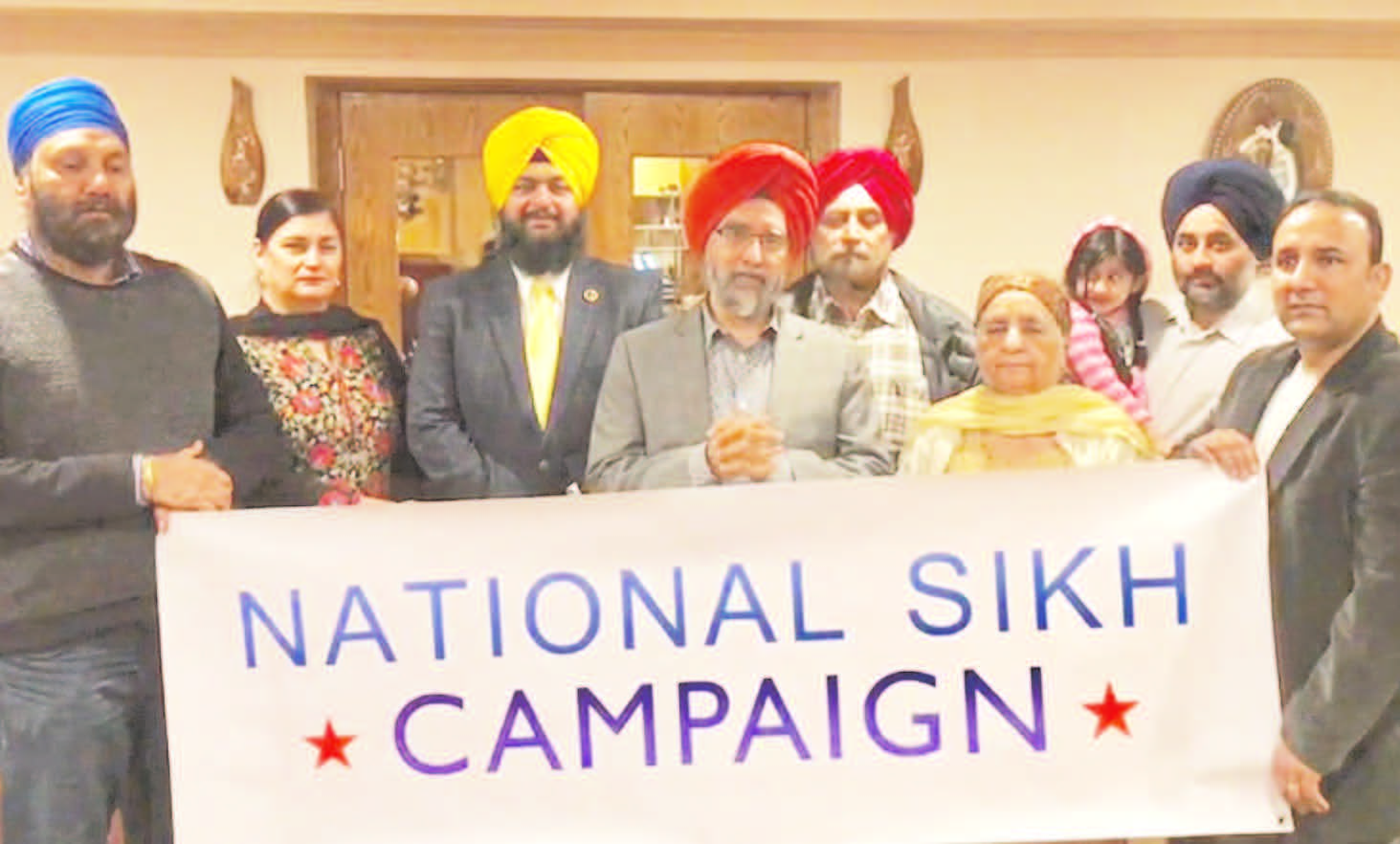
NEW YORK (TIP): “National Sikh Campaign” is a project with 1.3 million dollars led by Dr. Rajwant Singh Based in Washington D.C to raise awareness among fellow Americans about Sikhism.
“As we all know if change in political scenario the hate crimes have increased by 20%on Sikhs and other communities”, said Mr. Singh.
National Sikh campaigns is started with the aim to have TV advertisement on CNN and Fox TV networks about Sikhism in which they focus on basic Sikh values and how Sikh values are the same as American values.
This is help fellow Americans to understand the fact that Sikhs are important part of American Fabric.
Swaranjit Singh Khalsa who is also serving in “Commission of City Plan of Norwich” said “This Campaign is a need of the time and this is first time community is coming together and doing this project in a professional manner”.
On the occasion, famous singer “DavinderPal Singh ” was also present and performed with his band.
Pritpal Singh From Salt Lake City , Uttampal Singh, Swaranjit Singh Khalsa, Kulwant Singh Samra,Malkit Singh Sekhon, Manmohan Singh Bharara,Harpal Singh Chawla,Hargurpreet Singh, Guruninder Singh Dhaliwal, Kanwalpreet Singh, Avtar Singh, Veer Singh, Kulbir Singh,Purshotam Singh, Amarjit Singh, Maninder Singh Arora and Satnam Singh donated very generously.
Presidents of various Gurudwara sahib and members of community also took pledge that raise the money in their congregations to support the campaign and reach their fundraising goal.
Overall program was success and it provided platform for Sikh community of Connecticut to come together and do project based on common goals.
Dr.Rajwant Singh Thanked all the Community Members and also told them that ads will be running on CNN from April 14th 2017.
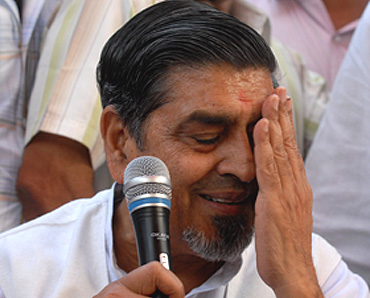
NEW DELHI (TIP): Congress leader Jagdish Tytler, who has been given a clean chit by the CBI in a 1984 anti-Sikh riots case, today told a court he was not ready to undergo a lie-detection test as it amounted to cruelty.
Tytler’s counsel said the CBI had not given any reason for conducting it and the agency’s plea for the test was a “gross misuse of law”, filed with “malafide intention”.
Additional Chief Metropolitan Magistrate Shivali Sharma listed the matter for April 18 for further arguments on the CBI’s plea for permission to conduct the test on Tytler and arms dealer Abhishek Verma. The move came in pursuance to the court’s December 4, 2015, order that a lie-detection test may be conducted, if required.
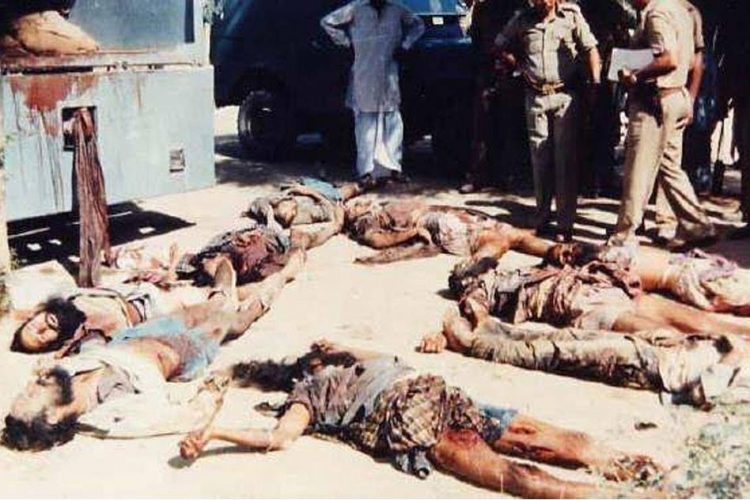
Meanwhile, the CBI filed a status report in a sealed cover regarding its further probe. The case pertains to riots at Gurdwara Pulbangash in north Delhi where three people were killed on November 1, 1984. Tytler has been given a clean chit by the CBI thrice, but the agency has been directed to further investigate the matter.
NEW DELHI (TIP): The Centre-appointed Special Investigation Team (SIT) has filed chargesheets in only four of the 59 anti-Sikh riot cases taken up for further probe. Almost 3,000 people were killed, most of them in Delhi, in the riots that broke out after the assassination of then PM Indira Gandhi on October 31, 1984.
In a status report filed in the Supreme Court, the Ministry of Home Affairs (MHA) has said while 38 cases have been closed, 17 are under investigation. “It is being ensured that the investigation is carried out expeditiously and thoroughly,” the report, filed on the directions of the apex court, says. The MHA, which extended the SIT tenure till August 11 this year, has written to the Delhi Government and the Delhi High Court for designating a single court to hear the cases. The SIT has been notified as a police station with jurisdiction over the entire Delhi.
Also, of the 293 cases taken up for scrutiny, 199 have been closed with preliminary enquiries (PEs) held in 35 cases. “A large number of representations related to these cases were received from the Delhi Sikh Gurdwara Management Committee and private persons/bodies, which are being examined by the SIT,” says the report. The SIT has recorded statements of more than 1,000 witnesses, including one from New York.
WASHINGTON (TIP): Suhag Shukla, Executive Director, Legal Counsel, and co-founder of the Hindu American Foundation (HAF), and Sapreet Kaur, Executive Director of Sikh Coalition have been named among twelve “faith leaders to watch in 2017” by the Center for American Progress.
CAP says, “Shukla has positioned HAF as a strong voice in the national debate about the separation of church and state, consistently speaking out about issues of Hinduphobia and the rights of religious minorities. Prioritizing legal advocacy, HAF regularly weighs in on cases related to religious discrimination and accommodations. Educating the Hindu American community on their rights regarding religious liberty is a core part of this work.”
About Kaur CAP says, “Since starting as the Sikh Coalition’s executive director in 2009, Sapreet Kaur has transformed the organization into a large and visible civil rights organization that provides legal defense and advocates on issues of hate crimes, racial and religious profiling, safe schools, employment discrimination, and religious liberty.
@sikh_coalition national ED Sapreet Kaur
Shedding a light on the lesser-recognized faith, in 2013, Kaur was the first Sikh to speak at a Presidential Inaugural Prayer Service. In 2016, Kaur and her team launched the groundbreaking Sikh Project, a collection of photographs of diverse Sikh Americans that complicates the narrative and sparks conversation about what it means to be American.”
Other faith leaders recognized by CAP include: Amani Al-Khatahtbeh (MuslimGirl), April Baskin (Audacious Hospitality), Rev. Susan Chorley (Unitarian Universalist Urban Ministry/Exhale), Rev. Michael Curry (Episcopal Church), Rev. John C Dorhauer (United Church of Christ), Rev. Cedric Harmon (Many Voices: A Black Church Movement for Gay & Transgender Justice), Tamar Manasseh (Mothers Against Senseless Killing), the North Carolina clergy advocating for transgender rights, Pastors for Texas Children, and Rev. Allyson Robinson (the first openly transgender Baptist minister).
NEW YORK (TIP): The Sikh Coalition filed a lawsuit on December 27 in the U.S. District Court for the Middle District of Tennessee on behalf of Dr. Jaswinder Pal Singh. The suit alleges that Dr. Singh – an observant Sikh physician and father who keeps a religiously mandated turban and beard – was denied a neurology job after the employer and recruiter inquired into his religious appearance.
The suit further alleges that as part of the 2014 hiring process, the employer, Premier Medical Group, P.C., and its recruiter, Arthur Marshall, Inc., expressed interest and concern about the way Dr. Singh looked. Although in phone interviews the recruiter praised Dr. Singh’s credentials, he was abruptly denied further interviews after he submitted photographs of himself, along with additional information on Sikhs and Sikhism. The job then remained vacant.
“It was very clear to me that I was denied employment because of my ethnic background and religious appearance,” said Dr. Singh. “I contacted the Sikh Coalition because nobody is better at holding companies accountable for their discrimination.”
In 2015, the Sikh Coalition represented Dr. Singh in filing a charge of discrimination with the Equal Employment Opportunity Commission (EEOC). After the EEOC issued a right to sue notice, we established a legal partnership with the reputable Tennessee plaintiff attorney, Douglas B. Janney III., to file the anti-discrimination lawsuit against the employer, Premier Medical Group, and its recruiter, Arthur Marshall.
“Whether you are a doctor in Tennessee or a truck driver in California, we will always protect and defend your right to practice your faith fearlessly,” said Sikh Coalition Legal Director, Harsimran Kaur.
In November 2016, the Sikh Coalition announced a massive legal victory on behalf of four Sikh truck drivers who were denied jobs by one of the largest trucking companies in America. This new lawsuit, on behalf of Dr. Singh, seeks to secure a court order requiring that both defendants implement anti-discrimination policies, practices and training to ensure that they do not discriminate against any future applicants.
“No Sikh in any job or profession should ever be denied employment because of their religion,” said Dr. Singh. “By speaking out and taking action, I know that we will continue to hold employers directly accountable.”
Signup to our Newsletter!
Don’t miss out on all the happenings around the world