Tag: Sikkim

  • Sikkim: Himalayan jewel of nature, spirituality and sustainable travel

    Sikkim: Himalayan jewel of nature, spirituality and sustainable travel

    Tucked away in the eastern Himalayas, Sikkim is one of India’s most enchanting destinations-small in size, yet vast in natural beauty, cultural depth, and spiritual calm. With snow-capped peaks, emerald valleys, pristine lakes, ancient monasteries, and a deeply eco-conscious way of life, Sikkim offers a travel experience that feels both intimate and transformative. It is not merely a place to visit, but a landscape to feel, absorb, and remember.
    A Land Sculpted by Nature
    Sikkim’s geography is dramatic and breathtaking. Dominated by the mighty Mount Kanchenjunga, the third-highest peak in the world, the state unfolds in layers of alpine forests, rhododendron-covered hills, glacial lakes, and cascading waterfalls. From subtropical lowlands to icy high-altitude deserts, the diversity of terrain within a few hundred kilometers is astonishing.
    Places like Yumthang Valley, often called the “Valley of Flowers,” burst into colour during spring, while Gurudongmar Lake, one of the highest lakes in the world, stuns visitors with its icy blue stillness. Rivers such as the Teesta and Rangeet carve their way through the mountains, adding rhythm and life to the landscape.
    Gangtok: The Cultural Heart
    The capital city Gangtok blends tradition with modernity effortlessly. Clean, organised, and surprisingly cosmopolitan, it offers panoramic views of the Himalayas alongside bustling markets, cafés, and cultural centres. The MG Marg promenade is the city’s social hub, lined with shops, eateries, and a relaxed mountain vibe. Gangtok is also home to significant spiritual sites such as the Enchey Monastery and the Namgyal Institute of Tibetology, which preserves rare manuscripts, thangkas, and artefacts that chronicle Tibetan Buddhism and Sikkim’s royal past.
    Monasteries and Spiritual Heritage
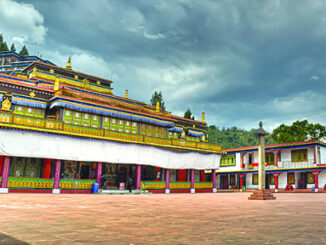
    Sikkim is deeply rooted in Buddhist traditions, and its monasteries are both spiritual sanctuaries and architectural marvels. The iconic Rumtek Monastery, seat of the Karmapa lineage, stands as a symbol of Tibetan Buddhism outside Tibet. Pemayangtse Monastery, one of the oldest and most sacred in Sikkim, offers sweeping views of the Himalayas and a profound sense of peace.
    Prayer flags fluttering in the wind, the rhythmic chanting of monks, and the scent of incense lend Sikkim a meditative atmosphere that appeals to spiritual seekers and travellers alike.
    North Sikkim: Raw, Remote, and Majestic
    North Sikkim represents the state in its most untouched form. Snowbound villages like Lachen and Lachung serve as gateways to surreal landscapes. Here, nature dominates, and human presence feels humbling. Roads wind through rugged terrain, opening up to frozen lakes, high mountain passes, and endless skies. This region is ideal for travelers seeking solitude, adventure, and a deeper connection with the natural world.
    Adventure and Eco-Tourism
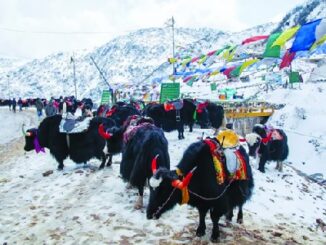
    Sikkim is a paradise for adventure enthusiasts. Trekking routes such as the Goecha La Trek offer close-up views of Kanchenjunga and pass through forests, meadows, and glacial terrain. River rafting on the Teesta, mountain biking, paragliding, and yak safaris add excitement for thrill-seekers.
    Equally important is Sikkim’s commitment to sustainable tourism. As India’s first fully organic state, Sikkim prioritises environmental protection, bans plastic bags in many areas, and promotes eco-friendly travel practices. Homestays, community tourism, and responsible trekking are encouraged to preserve the fragile Himalayan ecosystem.
    A Mosaic of Cultures and Festivals
    Sikkim’s population is a harmonious blend of Lepchas, Bhutias, and Nepalis, each contributing to the state’s rich cultural fabric. This diversity is reflected in local customs, architecture, music, and festivals.
    Celebrations such as Losar, Saga Dawa, Pang Lhabsol, and Dasain are marked with vibrant rituals, masked dances, and communal feasts. These festivals offer visitors a rare glimpse into Sikkim’s living traditions and spiritual worldview.
    Cuisine: Simple, Warm, and Soulful
    Sikkimese cuisine mirrors its climate and culture-comforting, wholesome, and flavourful. Dishes like momos, thukpa, phagshapa, gundruk, and sel roti are staples, often prepared with locally sourced, organic ingredients. Fermented foods and warm soups are common, reflecting the region’s Himalayan heritage. Food in Sikkim is not about extravagance but nourishment, hospitality, and balance.

  • Sikkim: The hidden jewel of the Himalayas

    Sikkim: The hidden jewel of the Himalayas

    In the northeast of India, nestled between Nepal, Bhutan, and Tibet, lies one of the most mesmerizing yet underexplored states of the country-Sikkim. With its snow-capped peaks, lush green valleys, Buddhist monasteries, glacial lakes, and vibrant cultural tapestry, Sikkim is an exquisite blend of nature, spirituality, adventure, and sustainable living. This tiny Himalayan paradise, despite being India’s second smallest state, offers experiences far larger than its size.

    Whether you’re a trekking enthusiast, a nature lover, a seeker of peace, or a cultural explorer, Sikkim promises a journey like no other.

    Nature’s Wonderland

    From the subtropical forests of the south to the alpine meadows of the north, Sikkim is a land of astounding ecological diversity. Kanchenjunga, the world’s third-highest mountain at 8,586 meters, is not just a spectacular backdrop-it’s a spiritual guardian, revered by the locals. The entire state seems to revolve around this sacred peak, and every glimpse of it feels like a blessing.

    Gurudongmar Lake

    Located at a height of 17100 feet above sea level, Gurudongmar Lake in Sikkim is the second-highest lake in India. Needless to say, with an altitude of such magnitude, the lake defies all description. Located just about 5 km south of the Indo-China border and about 190 kilometers from the capital city of Gangtok, the lake has a massive shore length of about 5.34 kilometers and a surface area of about 118 hectares. The lake is considered to be a holy lake by both Sikhs, Hindus, and Buddhists and believed to have some divine power. The lake also provides a beautiful view of Mount Siniolchu and Khanchendzonga among other snow-capped mountains. It acts as a source to the river Teesta. Reaching Sikkim Gurudongmar Lake takes around 8-9 hours by road from Gangtok to reach Gurudongmar Lake. The Gurudongmar Lake in Sikkim is located en route Lachen, a small town in North Sikkim. A night stay at Lachen is recommended before heading for the lake. It takes around 3-4 hours to reach the lake from Lachen.

    Tsomgo Lake

    The Tsomgo Lake, also popular as the Changu Lake, is a water body made of a glacier making it one of the best places to visit in Gangtok. Located at the altitude of 12310 feet, the Tsomgo Lake is one of Sikkim’s prime tourist attractions. The lake is located 38 km from Gangtok, en route to the Nathula Pass. This is one of India’s highest altitude lakes and it’s known for its natural beauty. The sight of the surrounding snow cover hills reflecting on the Tsomgo Lake is one memory that you can cherish forever. The lake is about 1 km long and it’s shaped like an egg.

    Nathula Pass

    Nathula Pass is located at a height of 14140 feet and this is the best place to be for the trekking enthusiasts when visiting Sikkim. The border trade market, Sherathang, is a popular place where tourists can buy different kinds of Tibetan items at a cheap price. This Sikkim point of interest is famous among travelers. Near to that, there is a tiny place called Kupup. It always stays under clouds, which surely will be a nice experience for you. The view from the Nathula Pass is remarkable too.

    Kanchenjunga Base Camp

    Located at the height of almost 14,000ft above sea level, the Kanchenjunga Base camp is one of the best Sikkim tourist places and a heaven for all the adventurers. Together forming one of the most beautiful parts of the Himalayas, the Kanchenjunga range is one of the most picturesque regions of Sikkim, and all that can be seen in utmost clarity and mightiness from the base camp.

    The real adventure for people is to see the third highest mountain in the world up close to here, and that is why this place is worth the visit at least once in a lifetime.

    Yumthang Valley of Flowers

    The undulating meadows, the grazing yaks by the banks of wild Teesta river and the many hot springs amid the towering mountain peaks position Yumthang valley among the top places to visit in Sikkim. The valley of flowers is carpeted at a height of more than 11,000 feet above sea level at around 128 kilometres from Gangtok. You can book one of our Gangtok Tours from a vivid choice of packages we have for you so that you don’t miss out the best of Gangtok.

    Come to visit the valley in late February to march when the Losar festival is celebrated by the locals. During the month of April and June, the Rhododendrons bloom and envelop the valley in full glory.

    Goechala

    Standing at a height of about 4,940 m above sea level, the high mountain pass of Goechala (Goecha La) is one of the best places to visit in Sikkim. Being in the proximity of some of the highest mountains of the Himalayas, the pass is an amazing destination for all the trekkers visiting Sikkim. The best thing about this place is the beautiful view of Mt. Kanchenjunga’s southeast face.

    The view from the pass is so breathtakingly beautiful that it was featured on the back of the 100 Rupee note of India. Acting as the base of the summit for Kanchenjunga, this place is a must visit for the beauty of it.

    Green Lake

    Fix your eyes to the jade-green lake surrounded by snow-covered glaciers and mountains. Green Lake is still an unexplored and unhindered destination in Sikkim. It serves as a base to the those willing to climb Mount Kanchenjunga and Zemu glacier.

    Starting from Thangu village, the trek to Green lake passes through the magnificent  Kanchenjunga National Park and also brings forth the scenery of the confluence of the Zemu Chu and Lachen Chu which are two very significant rivers of the region.

    From Gangtok, you drive to Lachen via Mangan and then Thangu to start your trek. Keep your eyes open for wildlife, especially for the rarely found Red Panda in the region.

  • Sikkim: A Paradise in the Himalayas

    Sikkim: A Paradise in the Himalayas

    Sikkim, the enchanting northeastern state of India, is a paradise for nature lovers, adventure seekers, and spiritual travelers. Nestled in the lap of the mighty Himalayas, Sikkim is known for its breathtaking landscapes, vibrant culture, and warm hospitality. Whether you are looking for serene monasteries, snow-capped mountains, or lush green valleys, Sikkim has something for everyone.
    Best Places to Visit in Sikkim
    Gangtok – The Heart of Sikkim
    Gangtok, the capital city of Sikkim, is a bustling town that offers a mix of modernity and tradition. It is known for its stunning views of the Kanchenjunga range, vibrant markets, and Buddhist monasteries. Popular attractions include:
    – MG Marg – A lively shopping street perfect for a leisurely walk, offering local delicacies, handicrafts, and souvenirs.
    – Tsomgo Lake – A glacial lake surrounded by snow-clad mountains, known for changing colors with seasons and yak rides.
    – Rumtek Monastery – One of the most significant monasteries in Sikkim, showcasing ancient Tibetan architecture and Buddhist relics.
    – Nathula Pass – A high-altitude pass connecting India and China, requiring a special permit to visit and offering breathtaking views.
    – Ganesh Tok and Hanuman Tok – Viewpoints providing panoramic views of the city and surrounding mountains.
    Pelling – Gateway to Kanchenjunga
    Pelling is a serene hill station known for its breathtaking views of the Kanchenjunga peak. Some must-visit places in Pelling include:
    – Pemayangtse Monastery – A 17th-century monastery offering peace and spirituality, adorned with ancient artifacts.
    – Rabdentse Ruins – The remnants of Sikkim’s ancient capital, offering a historical insight and mesmerizing scenery.
    – Khecheopalri Lake – A sacred lake believed to fulfill wishes, surrounded by dense forests and prayer flags.
    – Singshore Bridge – One of the highest suspension bridges in India, offering spectacular valley views and adventure opportunities.
    – Rimbi Waterfalls and Kanchenjunga Falls – Beautiful waterfalls that serve as perfect spots for relaxation and photography.
    Lachung, Lachen, and Yumthang
    Valley – The Snowy Wonderland
    Located in North Sikkim, these picturesque villages and valleys are famous for their natural beauty:
    – Lachung – A charming village known for the Lachung Monastery, apple orchards, and pristine mountain scenery.
    – Lachen – The base for the scenic Gurudongmar Lake, one of the highest lakes in the world, known for its crystal-clear waters.
    – Yumthang Valley – Also called the “Valley of Flowers,” famous for its rhododendron blooms in summer and hot springs in winter.
    – Zero Point – A mesmerizing high-altitude destination covered in snow for most of the year.
    Zuluk – The Offbeat Himalayan Retreat
    Zuluk is a hidden gem in East Sikkim, offering mesmerizing views of the Silk Route and the snow-capped Himalayas. The winding roads and the Thambi Viewpoint provide spectacular sunrise views, making it a haven for photographers and adventure lovers.
    Ravangla – A Spiritual Getaway
    Ravangla, a small town in South Sikkim, is a perfect place for peace lovers. Attractions include:
    – Buddha Park – Featuring a grand statue of Lord Buddha with a panoramic Himalayan backdrop and serene ambiance.
    – Ralang Monastery – A significant Buddhist site showcasing traditional Tibetan architecture and vibrant festivals.
    – Tathagata Tsal – A well-maintained Buddhist complex with meditation areas and scenic landscapes.
    Namchi – Land of Pilgrimage
    Namchi is known for its religious significance and stunning landscapes. Top attractions include:
    – Char Dham – A pilgrimage site with replicas of four famous Hindu temples, attracting devotees from all over India.
    n Samdruptse Hill – Home to a towering statue of Guru Padmasambhava, the patron saint of Sikkim, offering spiritual solace.
    – Temi Tea Garden – The only tea estate in Sikkim, known for producing high-quality organic tea with breathtaking views of tea plantations.
    Yuksom – The Historical Capital
    Yuksom, the first capital of Sikkim, is a historical town and the starting point for the Goechala Trek. Other attractions include:
    – Dubdi Monastery – The oldest monastery in Sikkim, offering a tranquil environment and historic significance.
    – Norbugang Coronation Throne – A significant historical site marking the coronation of Sikkim’s first king, Phuntsog Namgyal.
    – Tashiding Monastery – One of the holiest monasteries in Sikkim, known for its spiritual vibes and ancient scriptures.
    Best Time to Visit Sikkim
    Sikkim can be visited throughout the year, but the best time depends on the experience you seek:
    – March to May – Ideal for springtime and blooming flowers, perfect for nature lovers and photographers.
    – October to December – Best for clear mountain views and pleasant weather, offering spectacular sunrise and sunset vistas.
    – January to February – Perfect for snowfall lovers, especially in North Sikkim, with opportunities for snow trekking and skiing.
    – June to September – The monsoon season brings lush greenery but also landslides, making travel challenging.
    How to Reach Sikkim
    – By Air – The nearest airport is Pakyong Airport, around 35 km from Gangtok, or Bagdogra Airport in West Bengal, which offers better connectivity.
    – By Rail – The nearest railway station is New Jalpaiguri (NJP) in West Bengal, well-connected to major Indian cities.
    – By Road – Sikkim is well connected by road from Siliguri, Darjeeling, and Kalimpong, with scenic drives through the mountains.

  • Sikkim: the land of paradise

    Sikkim: the land of paradise

    Sikkim is the second smallest state in India, and is wedged between Tibet, Nepal, Bhutan, and West Bengal, but encompasses an astounding range of pristine natural beauty of the Himalayas. A traveller’s guide to Sikkim explores the stunning beauty of this Himalayas hill town. The Sikkimese call their land ‘Ney Mayal Lyang’ that translates to ‘heaven.’
    Sikkim is located in the north eastern part of India, but is not a part of the Seven Sister states. The state is famous for dazzling waterfalls, virgin forests, Tibetan style Buddhist Gompas, alpine meadows, rhododendron flowers and more. Kanchenjunga (also Kanchendzonga) at 8598 m is the third highest peak in the world, and lies in Sikkim.
    More than 60 percent of the former Himalayan Kingdom of Sikkim is mountainous, and there are sizeable numbers of 6000 m peaks on the eastern and western borders of the state. Sikkim has an impressive literacy rate of more than 70 percent. It was merged with India in 1975, and is a prosperous state today.
    Weather in most parts of Sikkim is pleasant throughout the year (except in higher altitudes), and that makes it a favourite of holidaymakers from the Indian plains in the summer months. Bengalis throng the tourist towns of Sikkim during their holiday season of Durga Puja in October-November. The state abounds in a variety of flora and fauna, and lucky ones may also sight the endangered red panda.
    PELLING
    Pelling lies in West Sikkim, perched at an altitude of 2100 m and is approximately 120 km away from Gangtok. At first glance Pelling looks like a cluster of concrete hotels, but there are unparalleled views of the snowy peaks. Sunrise over the Kanchenjunga is Pelling’s biggest charm. With plenty of budget accommodation options, it also makes for a great base to explore other parts of West Sikkim. Chief sights in and around Pelling are Pemangyatse Monastery, built more than 300 years ago, which is beautifully located amid green gardens; a huge Buddha statue and statues of reincarnations of Padmasambhava; and Pemangyatse Monastery, famous for the Chaam dances (masked dances) held in February/March.
    Interestingly, the ruins of Sikkim’s ancient capital at Rabdentse, is located at a short distance from Pelling. Rabdentse is a lovely spot accessed by a short walk through a dense forest. The views are spectacular after the walk that arrives at the ruins which are located on top of a ridge with clouds on the other side. The ruins are maintained by ASI these days.
    Also, the second oldest monastery in Sikkim, SangaCholing Monastery, is a bit farther away than Pemangyatse. The steep trail will take no more than one hour from Pelling and is a great delight. Views from top of the monastery are astounding and great for photography enthusiasts.
    YUKSOM
    The historic little town of Yuksom was the first capital of Sikkim when three Lamas converged from different directions and crowned the first Chogyal (King) in 1641. There is still a stone throne that marks the coronation spot, and is known as Norbugang Chorten, the site is called Norbugang Park. Yuksom has the charming feel of a hamlet; it is lower in altitude than Pelling and is situated in a valley.
    If you are coming to Yuksom (Also Yuksam) from Pelling, then a short detour will bring you to Rimbi Waterfalls which is quite a sight in the monsoon. Just 9 km before Yuksom, you will cross the Kanchenjunga Waterfall, which is a majestic waterfall falling from a great height. There is a small pond known by the name of Kathok Lake in Yuksom, a short walk will bring you to a ridge where once stood a palace of the King of Sikkim. There are also two new colourful Gompas above Yuksom, but the most beautiful monastery is the 1701 built Dubdi Monastery. The path to Dubdi Monastery is lined with prayer flags and is located amid lush greenery.
    There are no views of the mountains as such from Yuksom, yet it is this place you may remember long after your Sikkim holiday is over. There are quite a number of hotels and homestays in Yuksom. Yuksom’s chief claim to fame is that it is the starting point for the treks to Dzongri and Goecha La (4940 m), for splendid views of the Kanchenjunga.
    RUMTEK MONASTERY
    Undoubtedly, this is Sikkim’s most famous monastery, and every visitor to Sikkim is likely to visit the Rumtek Monastery, even in a 3-4 day trip to Sikkim. Rumtek Village is 24 km away from Gangtok (Sikkim’s capital), and the monastery is the headquarters of the Black Hat Sect (one of the oldest sects of Tibetan Buddhism).
    There are two buildings of Rumtek Monastery, one is relatively newer (built in 1966), and the older Rumtek Monastery was founded in 1740 by the fourth Chogyal of Sikkim. A path leads to a shrine called Golden Stupa, it is a chorten made of silver and gold, and studded with precious stones such as turquoise, amber and coral. It is recommended to attend the morning prayers at Rumtek Monastery.
    The Old Rumtek Monastery is around 2 kms away from the newer one, and the path is surrounded by white prayer flags. The exterior of the monastery is in a light shade of blue, and is built in traditional Sikkimese alpine style, with latticed wooden windows.
    Presence of armed personnel comes as a rude shock in the heavily guarded complex; there have been disputes over the future Rinpoche of this monastery resulting in a tense situation. There is a wide range of accommodation available in Rumtek; from home-stays, hotels, guesthouses to boutique stays.
    NATHU LA
    The road climbs around 18 km higher from the spectacular road that continues from Tsomgo Lake to the nearly 4200 m Nathu La (La is pass in Tibetan). It is always windy and cold at this altitude. There is a sizeable army presence due to the Chinese border on the other side of the pass. It is advised to not spend more than 30 minutes – 1 hour at the top of the pass to avoid the risk of Acute Mountain Sickness (AMS). A visit to the Nathu La pass is out of bounds for foreigners.
    You could then heads towards North Sikkim, which is perhaps the prettiest region in all of Sikkim. North Sikkim is higher in altitude than other regions, and is an area of unspoilt natural beauty, framed by snow-capped Himalayan peaks. A permit is required to visit North Sikkim. Although it is widely believed that a package tour is necessary to explore North Sikkim, in reality it is not so. A unique social system called Dzumsa prevails in North Sikkim, and Pipon (a village headman) is an influential person. Source: Happytrips

  • Sikkim: Where nature smiles

    Sikkim: Where nature smiles

    Sikkim situated in the Eastern Himalayan region with an area of 7,096 sq km and altitude ranging from 300m to 8,586m above sea level is a wonderland blessed with natural abundance from icy cold deserts, flowering alpine meadows, to lush green forests and emerald mountain lakes. The crowning glory of this wonderland is undoubtedly the magnificent Mt. Khangchendzonga (8,586m), the third highest mountain of the world. The mountain is not merely a physical entity but the abode of guardian deity whose benign watchfulness ensures peace and prosperity of the land.

    It is possible to move from the sub-tropical heat of the lower valleys to the cold of the rugged mountain slopes that ascend up to the areas of perpetual snow in a matter of few hours. Such a steep rise in altitude over a very short distance, allows the land to host a robust natural heritage and wealth. The snow-capped mountain ranges, lush thick forests, plunging mountain valleys flush with rich flora and fauna, picture perfect villages, groves of rhododendrons, hot –springs, waterfalls, perennial streams and grand rivers Teesta and Rangit all contribute to shape Sikkim as a magical, mystical wonderland.

    Keeping in tune with the natural diversity, Sikkim has an equally rich and diverse demographic structure with myriad of communities and religions and intricately knit colourful cultures, the basic connecting factor being the warm, welcoming nature of the people everywhere. The phrase “Atithi Devo Bhava” finds its true meaning in Sikkim. Diverse rituals, songs, dances, traditional dresses, folklores and legends fill up the cultural canvas of the State. The chimes of bells in the temples and the flutter of prayer flags in the monasteries create a feeling of righteousness and healing of spirit and soul. Feel rejuvenated, energised and spirituality enlightened in this holy land. Nature is revealed in its entire splendour in the serene lakes, cascading rivers and pristine waterfalls. Sacred lakes, waterfalls and hot water springs dot the mountainous landscape. Sikkim has a spectacular diversity of natural habitats and wildlife within a small geographic area of just 7,096 Sq. Km. From the river valleys and verdant forests to alpine meadows with rainbow of flowers blooming in monsoon; to the ice barren high glaciers and cold deserts – the vistas are endless and captivating for a visitor who is taken aback by such splendour.

    DESTINATIONS GANGTOK

    With magnificent views of the Kanchenjunga peak, uniqueness and vibrancy in colours of culture and tradition infused into the stunning sceneries and just the right dash of subtle city life is one of the most popular tourist destinations in the area. The name meaning hilltop, Gangtok can be safely said to be one of the most beautiful hill stations in the country.

    YUMTHANG

    Situated at a height of 11,800 feet, Yumthang is also known as the ‘Valley of Flowers’. It is considered a paradise for nature lovers due to its magnificent blend of rich flora and rare fauna coupled with its breathtaking scenic beauty. The best season to visit is spring, where the entire landscape is filled with colours of Primulas and Rhododendrons making Yumthang immensely popular among tourists. The Shingba Rhododendron Sanctuary cannot be missed especially with its 24 species of Rhododendron flowers.The hot spring located on the right side of Yumthang River is also a popular tourist attraction. Apart from the beautiful landscape, the valley is surrounded by Silver Fir and Pine trees, as well as cascading waterfalls and streams.

    CHUNGTHANG

    A small town on way to Yumthang in Sikkim, stands at the confluence of the rivers Lachen Chu and Lachung Chu. The North Sikkim highway bifurcates from here with one road leading to Lachen and the other to Lachung. Chungthang Valley is believed to be a holy place which has been blessed by Guru Padmasambhava, the patron saint of Sikkim. There is a rock here which to this day bears the hand and footprints of Saint Padmasambhava. From a small opening in the rock there is continuous flow of mineral water. There is a small patch of land here from which grows paddy every year. The nature defying miracle is believed to be the blessing of Guru Padmasambhava who sprinkled a handful of grain on the spot that has sprouted paddy ever since. Chungthang is a good place to halt before one takes off for the more alpine regions of Lachen, Lachung and the Yumthang Valley. Chungthang is mired in myths and legends, one such being that this is the place from where the word ‘Demazong’ [the hidden valley of rice, as Sikkim is known] first originated.

    LACHUNG

    Lachung, about 118kms from Gangtok in North Sikkim, is situated at an altitude of 8,858 ft. Also known as the ‘Small Pass’, Lachung is embraced by snow capped mountain peaks, breathtaking waterfalls, sparkling streams and apple orchards, also peaches and apricots. The market of this city is filled with handicrafts such as exquisitely woven rugs and blankets that make this town ideal for shopping sprees. The residents of Lachung who are mostly Bhutias call themselves Lachungpas.

    PELLING

    Pelling, a beautiful town in the West District of Sikkim, is becoming the second biggest tourist destination in Sikkim after Gangtok. The main attraction of the place is the breathtaking sight of the Khangchendzonga and the neighbouring peaks. The famous Pemayangtse monastery is less than a kilometre from here and is a major tourist spot. It also provides sites for mountain biking, rock climbing, village tours, meditation, educational studies and several other activities. The scenic town of Pelling is a perfect holiday destination for all nature lovers.