Tag: South Asia

  • Exiled leader Hasina denounces upcoming Bangladesh election after party ban

    Exiled leader Hasina denounces upcoming Bangladesh election after party ban

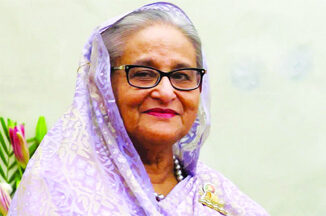
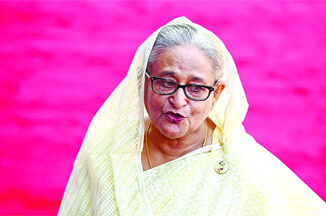
    New Delhi (TIP)- Bangladesh’s toppled leader Sheikh Hasina has denounced her country’s election next month after her party was barred from participating in the polls, raising fears of wider political division and possible unrest.
    In a message published by The Associated Press news agency on Thursday, Jan 29, Hasina said “a government born of exclusion cannot unite a divided nation.”
    Hasina, who was sentenced to death in absentia for her crackdown on a student uprising in 2024 that killed hundreds of people and led to the fall of her 15-year government, has been sharpening her critique of the interim government of Nobel Peace winner Muhammad Yunus in recent days, as the election that will shape the nation’s next chapter looms.
    “Each time political participation is denied to a significant portion of the population, it deepens resentment, delegitimises institutions and creates the conditions for future instability,” the former leader, who is living in exile in India, warned in her email to the AP.
    She also claimed that the current Bangladesh government deliberately disenfranchised millions of her supporters by excluding her party – the former governing Awami League – from the election. More than 127 million people in Bangladesh are eligible to vote in the February 12 election, widely seen as the country’s most consequential in decades and the first since Hasina’s removal from power after the mass uprising.
    Yunus’s government is overseeing the process, with voters also weighing a proposed constitutional referendum on sweeping political reforms.
    Campaigning started last week, with rallies in the capital, Dhaka, and elsewhere. Yunus returned to Bangladesh and took over three days after Hasina fled to India on August 5, 2024, following weeks of violent unrest.

  • Pakistan security forces kill 5 TTP terrorists in Khyber Pakhtunkhwa

    Pakistan’s security forces killed five terrorists belonging to the banned Tehreek-e-Taliban Pakistan (TTP) in a joint operation in northwestern Khyber Pakhtunkhwa province, police said.
    Three civilians, including two women, were also killed and several others were injured during the operation, which lasted around ten hours, local police confirmed late night.
    The operation was carried out jointly by security forces and police in Domel tehsil of restive Bannu district, during which five terrorists, including a TTP commander, were killed, it added. The slain commander was identified as Zewaran alias Al-Badri, who was wanted in several cases. The security forces targeted the terrorists’ hideouts with more than 25 quadcopter strikes, while a heavy exchange of fire continued throughout the clashes.

  • Pakistan-Bangladesh direct flights resume after 14 years

    Direct air connectivity between Pakistan and Bangladesh resumed after 14 years, with Biman Bangladesh Airlines operating its inaugural Dhaka-Karachi flight, Dawn reported.
    The Pakistan Airports Authority (PAA) said in a statement that the Bangladeshi carrier landed at Karachi’s Jinnah International Airport on Thursday, Jan 29, night, after more than a decade and received a traditional water cannon salute on arrival.
    Flight tracking data cited by Dawn showed that Biman Bangladesh Airlines flight BG341 arrived in Karachi at 11.03 pm after departing Dhaka’s Hazrat Shahjalal International Airport at 8.15 pm.
    Speaking to reporters at the airport, Sindh Governor Kamran Tessori said cooperation with Bangladesh would extend beyond aviation to other sectors.
    Earlier, Pakistan’s High Commission in Dhaka said the “fully packed” inaugural flight departed Hazrat Shahjalal International Airport and was seen off by Bangladesh Civil Aviation and Tourism Adviser Sheikh Bashiruddin, Pakistan High Commissioner to Bangladesh Imran Haider and other officials, Dawn reported.
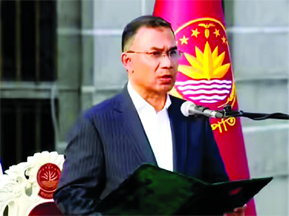
    Addressing the inaugural ceremony, Bangladesh’s adviser for civil aviation and tourism said the Dhaka-Karachi route was aimed at “enhancing connectivity, promoting tourism and strengthening people-to-people links”. The statement quoted him as saying, “Bangladesh Airlines will gradually increase flight frequency and reduce airfares to make travel affordable for the people.”

  • Pakistan’s military undergoing major transformation: Asim Munir

    Pakistan’s military undergoing major transformation: Asim Munir

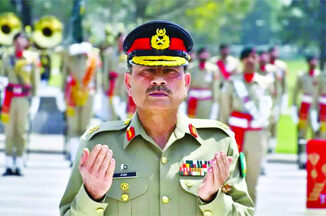
    Islamabad (TIP)- Pakistan’s military is undergoing a major transformation in multiple domains, Chief of Defence Forces Field Marshal Asim Munir said on Jan 29, reaffirming that they remain fully prepared to defend the country’s territorial integrity against all threats.
    Munir made the remarks during a visit to Bahawalpur Garrison, where he was briefed on various operational, training and administrative aspects of the Corps, with a special focus on preparations for multi-domain warfare, according to a statement issued by the army.
    While addressing the troops, Munir lauded their high morale, professional competence and operational preparedness. Munir, who is also the army chief, reaffirmed that the armed forces remain fully prepared to defend Pakistan’s sovereignty and territorial integrity against all threats, emphasising the need to maintain optimum readiness to meet the requirements of future battlefield and security challenges.
    “COAS & CDF highlighted that Pakistan Armed Forces are undergoing major transformation in multiple domains,” the army said. “In future, technological manoeuvres will replace physical manoeuvres and will fundamentally alter the way offensive and defensive operations are undertaken. Therefore, the Pakistan Armed Forces are embracing and absorbing technology at a rapid pace.
    In this process innovation, indigenisation and adaptation shall remain fundamental,” he said. Munir also witnessed a high-intensity Field Exercise “Steadfast Resolve,” at Khairpur Tamewali, encompassing integration of niche technologies like unmanned aerial systems, advanced surveillance assets, Electronic Warfare assets and modern command-and-control mechanisms. Earlier, he inaugurated the ROHI eSkills Learning Hub (STP) aimed at promoting digital skills and learning opportunities for students, particularly from southern Punjab and across the country.
    He also visited the EME Regional Workshop, where he was briefed on the maintenance regime to sustain modern platforms through advanced technologies, indigenisation and other combat support measures. Chief of Defence Forces Field Marshal Asim Munir.
    ‘Hybrid’ Confession: PM Sharif Admits Military Is Pak’s True Economic Engine
    In a stunning departure from traditional diplomatic rhetoric, Pakistan Prime Minister Shehbaz Sharif has openly admitted that a “hybrid regime” is the engine driving the country’s current survival. Addressing a gathering of eminent exporters and business leaders in Islamabad on Friday, the Prime Minister credited the military leadership—specifically Field Marshal Syed Asim Munir—for bailing out the civilian government and steering the nation away from the precipice of economic default.
    The Prime Minister’s remarks come in the wake of a significant constitutional overhaul in late 2025, which saw General Asim Munir elevated to the rank of Field Marshal and appointed as the country’s first Chief of Defence Forces (CDF). This new role grants him overarching control over all three branches of the military and the nuclear command, effectively institutionalising the military’s role in civil governance.
    “I can say without hesitation that without the help of Field Marshal Syed Asim Munir, many of our most pressing problems could not have been solved,” Sharif stated. He specifically lauded the military’s “one-hundred-per-cent role” in eliminating petrol smuggling and stabilising the sugar industry. By describing the current setup as a “partnership”, Sharif essentially acknowledged that the civilian administration now operates in a subservient, though collaborative, role to the military high command.
    The most provocative segment of the Prime Minister’s speech was directed at New Delhi. Vowing to transform Pakistan into a global economic power, Sharif claimed that the unprecedented level of civil-military unity would soon leave India “astonished” and “puzzled”.

  • Indus Waters Treaty suspension created unprecedented crisis: Pak envoy at UN

    Indus Waters Treaty suspension created unprecedented crisis: Pak envoy at UN

    United Nations (TIP)- Pakistan has sought to project India’s decision to hold the Indus Waters Treaty (IWT) in abeyance as an “unprecedented crisis” for its water security, raising the issue at the United Nations months after New Delhi took the step in the aftermath of the Pahalgam terror attack carried out by Pakistan-backed terrorists.
    Addressing the Global Water Bankruptcy Policy Roundtable at the UN, Pakistan’s Acting Permanent Representative Ambassador Usman Jadoon said India’s decision last April to put the 1960 treaty in abeyance had impacted downstream water security and regional stability.
    India had announced the move following the Pahalgam terror attack that killed 26 civilians, triggering a series of diplomatic and strategic measures against Pakistan. The decision to suspend participation in the decades-old treaty was framed by New Delhi as part of a broader response to cross-border terrorism emanating from Pakistan.In his statement, Jadoon claimed that India’s action, followed by what he described as disruptions in downstream flows and withholding of hydrological data, had created a crisis for Pakistan’s water security. He asserted that the treaty remained legally intact and did not permit unilateral suspension, while accusing India of “weaponising” water.
    Indian officials have underlined that the Indus Waters Treaty cannot be insulated from sustained acts of terrorism and hostile conduct, and that the April decision followed years of Pakistan’s refusal to address India’s concerns, even as New Delhi remained bound by a treaty that allocates a disproportionate share of waters to Pakistan.
    Signed in 1960, the IWT allocates the western rivers — Indus, Jhelum and Chenab — to Pakistan and the eastern rivers —Ravi, Beas and Sutlej — to India, while allowing each side specified uses of rivers allocated to the other. Under the treaty framework, India is entitled to about 20 per cent of the waters of the Indus River System, with the remaining 80 per cent flowing to Pakistan. Source: TNS

  • 5 killed, 10 injured in suicide blast at wedding in Pakistan

    At least five people were killed and ten injured in a suicide blast during wedding celebrations at the residence of a peace committee member in Pakistan’s northwestern Khyber Pakhtunkhwa province on Friday, January 23, night.
    District Police Officer Dera Ismail Khan district, Sajjad Ahmed Sahibzada, confirmed that it was a suicide bombing that occurred during a wedding celebration at the residence of the peace committee chief Noor Alam Mehsud near Qureshi morr.
    The guests were reportedly dancing when the attack happened. The blast caused the room’s roof to collapse, hampering rescue operations and making it difficult to reach those trapped under the debris.
    An emergency had been declared at the District Headquarter Hospital.
    In a statement, Khyber Pakhtunkhwa Rescue 1122 spokesperson Bilal Ahmed Faizi said five bodies and 10 injured had been taken to the hospital.
    He said that seven ambulances, a fire vehicle and a disaster vehicle reached the site of the incident soon after it was reported, adding that a rescue operation was underway.
    Authorities cordoned off the area and launched an investigation into the incident. Initial reports said peace committee leader Waheedullah Mehsud, alias Jigri Mehsud, was among the dead.
    Khyber Pakhtunkhwa Chief Minister Sohail Afridi strongly condemned the blast and sought a report from the KP inspector general of police. He said that those responsible would be brought to justice.
    Earlier this month, armed assailants had killed four members of a peace committee in KP’s Bannu district.

  • Motherland bleeding: Hasina seeks ouster of Yunus-led govt

    Motherland bleeding: Hasina seeks ouster of Yunus-led govt

    New Delhi (TIP)- Bangladesh’s ousted Prime Minister Sheikh Hasina on Friday, January 23, warned that her country faces the threat of its territory and resources being “bartered away” to foreign interests, and called on citizens to unite and overthrow the interim government led by Mohammad Yunus.
    In a veiled reference to growing foreign influence, including from the US, China and Pakistan, Hasina said, “Dangerously, there is a treacherous plot to barter away the territory and resources of Bangladesh to foreign interests.”
    Her recorded audio message, delivered in English, was played at an event titled ‘Save Democracy in Bangladesh’ in New Delhi. Invoking the 1971 Liberation War, she exhorted supporters to “overthrow the foreign-serving puppet regime of Yunus”. Hasina, who was removed from power following mass protests in August 2024, accused Yunus of being a “murderous fascist, money launderer, plunderer and a corrupt, power-hungry traitor” who has “bled the nation dry”.
    She alleged that under the Yunus administration, violence, torture and sexual assault against women had gone unchecked, religious minorities faced persecution and “mob terror, mass looting, armed robbery and extortion” had become widespread — referring in particular to recent targeted attacks on the Hindu community.
    “Bangladesh today stands at the edge of an abyss, battered and bleeding, navigating one of the most perilous chapters in its history,” Hasina said, describing recent developments as a “monstrous onslaught” by extremist communal forces and foreign perpetrators that had trampled the rights of women and minorities.
    Calling the country “a vast prison, an execution ground and a valley of death,” she accused Yunus of orchestrating her ouster through a “meticulously engineered conspiracy”.
    Hasina said Yunus’ “false promises” had been replaced by chaos, violence, hatred and corruption. Elections are scheduled for February 12, though the Awami League has been barred from contesting. She issued a five-point call: removal of the “illegal” Yunus administration to restore democracy; an end to street violence; guarantees for the safety of religious minorities, women and vulnerable groups; an end to politically motivated legal action against journalists and opposition members; and a UN-led impartial investigation into events of the past year.

  • India to bring back diplomats’ families In Bangladesh amid security concerns

    India has decided to withdraw the families and dependents of Indian officials posted in Bangladesh amid the security concerns following the increasing activities of extremist elements in the country.
    The move comes weeks before parliamentary elections are to be held in Bangladesh.
    “Given the security situation, as a precautionary measure, we have advised the dependents of our officials in the high commission and other posts to return to India,” sources said. They further clarified that the mission and all posts in Bangladesh continue to remain open and operational.
    A “non-family” posting is one of the most stringent security measures. These are generally imposed in a country or location deemed unstable or hazardous. There is no clarity on when the families of the officials are expected to withdraw and whether they will return to India.
    Apart from the high commission in Dhaka, India has diplomatic posts in Chattogram, Khulna, Rajshahi, and Sylhet.
    India-Bangladesh relations have been strained ever since the interim government headed by Muhammad Yunus came to power in 2024, following the collapse of the Sheikh Hasina regime. Both sides have increased security at their missions amid recent protests. Violence against Hindus in Bangladesh has also seen a spike ever since the death of student leader Sharif Osman Hadi on December 12.
    India raised concerns over the violence and called on Bangladesh to firmly deal with communal incidents in the country.
    “We continue to witness a disturbing pattern of recurring attacks on minorities as well as their homes and businesses by extremists,” External Affairs Ministry Spokesperson Randhir Jaiswal said.
    New Delhi highlighted the “troubling tendency” of Bangladesh to attribute such violence to personal rivalries, political differences, or extraneous reasons. Flagging this, Jaiswal said that “such disregard only emboldens the perpetrators” and further causes fear and insecurity among minorities. “We have repeatedly addressed this issue in earlier briefings and continue to see a disturbing pattern of recurring attacks on minorities, their homes, and businesses by extremists in Bangladesh,” he added.

  • ‘Hope processing of immigrant visas will resume soon’: Pakistan as US visa suspension hits 75 nations

    ‘Hope processing of immigrant visas will resume soon’: Pakistan as US visa suspension hits 75 nations

    Islamabad (TIP)- Pakistan on Thursday, Jan 15, said it expects the United States to resume immigrant visa processing “soon” for its citizens, framing Washington’s move to pause applications as part of an internal policy review rather than a permanent clampdown. The pause, announced by the Trump administration on Wednesday, affects immigrant visa processing for applicants from 75 countries, including Pakistan, as part of a broader effort targeting foreigners deemed likely to rely on public benefits in the US.
    Responding to the decision, Foreign Office spokesperson Tahir Andrabi said Islamabad is seeking clarity from Washington and remains hopeful of an early restart. “We are in touch with the US authorities to ascertain further details. This is evolving news that we are following,” he said at his weekly press briefing.
    While no timeline has been given for restoring services, Andrabi reiterated Pakistan’s expectation that the disruption would be temporary. “We understand that this is an internal ongoing process of review of US immigration policies and system, and hope that the routine processing of immigrant visas will resume soon,” he said.
    The suspension could upend travel, study and employment plans for thousands of Pakistanis who apply for US visas each year, officials said.
    Andrabi also addressed wider regional developments, saying Pakistan is closely monitoring rising tensions between Iran and the United States. He said Pakistan attaches “great importance” to Iran as a neighbouring country and a key member of the international community, and expressed hope that peace and stability would prevail.
    Reaffirming Islamabad’s support for diplomatic efforts, Andrabi said Pakistan backs “all efforts aimed at the peaceful resolution of the situation,” adding that a stable Iran free from domestic unrest is in Pakistan’s interest. He also voiced confidence that the Iranian nation would overcome current challenges and emerge stronger.
    Separately, Andrabi urged India to refrain from what he called “baseless” allegations against Pakistan and instead focus on “growing extremism” within its own territory.

  • Pak security forces kill 13 terrorists in overnight raids in Khyber Pakhtunkhwa

    Pakistan’s security forces said they struck twice during the night in the country’s restive northwest, killing 13 terrorists in separate intelligence-led operations as Islamabad presses. In a statement issued on Thursday, Jan 15, the military’s media wing, the Inter-Services Public Relations, said the operations were carried out in Khyber Pakhtunkhwa during the intervening night of January 13 and 14, according to a news agency PTI.
    “Thirteen khawarij belonging to Fitna Al Khawarij were killed in two separate engagements in Khyber Pakhtunkhwa province,” the Inter-Services Public Relations (ISPR) said, using the term employed by Pakistani authorities for militants of the Tehreek-e-Taliban Pakistan. According to the statement, eight terrorists were killed in an intelligence-based operation in the Bannu district after security forces acted on reports of their presence. In a second operation in the Kurram district, five more terrorists were “neutralised.” “Sanitisation operations are being conducted to eliminate any other terrorist found in the area,” the ISPR said. The latest actions follow another operation earlier this week in Balochistan’s Kalat district, where four militants were killed, underscoring the scale of Pakistan’s ongoing counterterror campaign. Despite sustained military pressure, terrorist violence has surged.
    Taliban rule faces threat of collapse in Afghanistan
    The internal situation within Afghanistan’s Taliban regime appears increasingly fragile, with signs that the government’s unity is under serious strain. A leaked audio clip, cited in a recent BBC report, has brought long-suspected internal divisions into the open, raising concerns about the stability of the Taliban government.According to the report, the Taliban is now divided into two main factions. One is led by Supreme Leader Hibatullah Akhundzada, who operates largely from Kandahar and advocates a hardline, isolationist vision of an Islamic Emirate. The other faction, centered in Kabul and led by Interior Minister Sirajuddin Haqqani, supports strict Islamic rule but also favors limited engagement with the international community, economic revival, and at least some access to education for girls and women. The leaked audio features Akhundzada warning Taliban fighters that internal clashes within the government could lead to the collapse of the Islamic Emirate.

  • India isolated, Bangladesh with us: Lashkar terrorist resurfaces, boasts on camera

    India isolated, Bangladesh with us: Lashkar terrorist resurfaces, boasts on camera

    Islamabad (TIP)- Lashkar-e-Taiba (LeT) commander Hafiz Abdur Rauf, who led funeral prayers for slain terrorists in Muridke in the presence of Pakistani Army officers following the destruction of hideouts during Operation Sindoor, has resurfaced and made sweeping claims that global alignments have shifted in Pakistan’s favor.
    A US-designated terrorist and close associate of LeT founder Hafiz Saeed, Rauf asserted that Turkey and Bangladesh are now backing Islamabad.
    “Until yesterday, we were alone, and the whole world was with India. Today, the situation has changed. Turkey is with Pakistan, Bangladesh’s army chief was in Islamabad. Now, the whole world is leaning towards Pakistan,” he said, adding that a “new era of the Mujahideen” has begun, in which Pakistan is winning.
    Last year, when images of the LeT commander leading the funeral prayers went viral on social media, Pakistan Army dismissed he was a terrorist and instead described him as a “cleric” and “family man.” In his new video, the terrorist also claimed that India had “learned its lesson and would not dare to attack Pakistan for the next 50 years.”
    In an inflammatory statement, the Pakistan-based terrorist said events in Bahawalpur and Muridke on May 6 and 7 had run their course, but alleged that Pakistan delivered a decisive response on May 10 “with the help of Allah,” leaving India unable to even “look at Pakistan.”
    Security analysts note that the statements appear aimed at propaganda and morale-building, coming from the same terrorist commander who was seen frightened and distressed in the immediate aftermath of Operation Sindoor. The Pakistan-based terrorist’s fresh warning comes a month after he was seen in a video delivering an inflammatory speech in which he openly called for attacks on India, including a provocative threat that “Delhi will be made a bride.”

  • Pakistan air force chief meets Saudi military leadership discusses ways to expand military ties

    Pakistan air force chief meets Saudi military leadership discusses ways to expand military ties

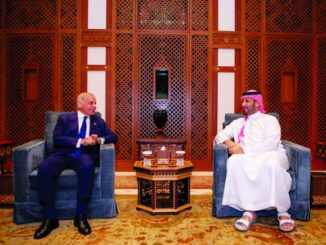
    Islamabad (TIP)- Pakistan’s air chief met Saudi Arabia’s top air force commander and discussed opportunities to expand military cooperation between the two longtime allies, the military said here on Thursday.
    Pakistan Air Force (PAF) Chief, Air Chief Marshal Zaheer Ahmed Baber Sidhu, this week visited the Gulf Kingdom, where he met Commander of the Royal Saudi Air Force Lt Gen Turki bin Bander bin Abdulaziz and Chief of the General Staff General Fayiadh bin Hameed Al-Rowaily.
    According to a statement by the Pakistan military on Thursday, bilateral cooperation, regional security dynamics and future defence collaboration were discussed during the meetings.
    It said that the Saudi defence leadership praised the robust bond of fraternity between the two brotherly nations and commended the close, enduring cooperation that exists between their respective Air Forces.
    “Acknowledging the growing significance of Multi Domain Operations in addressing the complexities of modern warfare, the military leadership of the Kingdom of Saudi Arabia conveyed strong interest in leveraging Pakistan Air Force’s rich operational experience through enhanced joint training and operational collaboration,” the statement said.
    “They also appreciated Pakistan’s constructive role in promoting regional peace and stability,” it added.
    “Both sides expressed satisfaction over the existing level of cooperation and agreed to further enhance engagement through joint training, operational collaboration and exchange of professional expertise,” the statement said.
    Sidhu highlighted the historic, time-tested and fraternal relations between Pakistan and Saudi Arabia, founded on shared religious values, mutual respect and strategic alignment.
    He reiterated his unwavering commitment to enhancing existing ties in the realm of military-to-military cooperation through bilateral and multilateral exercises. He underscored the profound transformation of the PAF in recent years, with particular emphasis on its evolution into a robust Multi-Domain Force.
    Sidhu emphasised that this enhanced capability, seamlessly integrating space, electronic warfare, cyber, niche technologies and artificial intelligence domains, was decisively manifested during the May conflict in 2025, reflecting PAF’s operational prowess, adaptability and combat effectiveness, the statement said.
    It further said that his visit “underscores the depth of the enduring strategic partnership between Pakistan and the Kingdom of Saudi Arabia and reflects the shared commitment of both nations to further strengthen cooperation in the defence and aviation sectors”.

  • Pakistan bows to China, lets Beijing set up security posts on its soil

    Pakistan bows to China, lets Beijing set up security posts on its soil

    Islamabad (TIP)- Pakistan has quietly conceded unprecedented security space to China, agreeing to allow the establishment of Chinese-controlled “security posts” inside its territory amid mounting pressure from Beijing over repeated attacks on Chinese nationals. According to senior security sources cited by CNN-News18, the move marks a significant erosion of Pakistan’s sovereignty and reflects Islamabad’s deepening strategic dependence on China as it struggles to control militant violence on its own soil.
    The decision follows sustained Chinese anger over Pakistan’s failure to protect workers and assets linked to the China-Pakistan Economic Corridor, despite years of military deployment. Nearly 90 Chinese citizens have been killed in Pakistan since 2014, exposing what Beijing sees as a chronic security breakdown. With Islamabad unable to guarantee safety, China has now pushed its way deeper into Pakistan’s internal security architecture.
    China pushes for inner security posts inside Pakistan
    Sources told CNN-News18 that Pakistan’s commitments were finalised during a recent China-Pakistan Strategic Dialogue in Beijing, where Chinese officials raised sharp concerns over continuing militant attacks on Chinese engineers, technicians, and construction workers.
    During the visit, Pakistan’s Interior Minister Mohsin Naqvi reportedly signed a confidential agreement with China’s Ministry of Public Security. Under this arrangement, Pakistan has agreed to allow the creation of Chinese “inner-posts” or security nodes located close to Chinese personnel and assets, going well beyond conventional perimeter protection.
    Islamabad has also agreed to expand Special Protection Units that will operate exclusively for Chinese nationals. These SPUs are being deployed across Islamabad, Lahore, Karachi, Quetta, Sukkur, Peshawar, Gwadar, and Gilgit-Baltistan, supplementing the military forces already guarding major CPEC projects.
    Sources say Beijing has been blunt in its assessment that Pakistan’s existing security framework has failed. China has therefore demanded layered, localised protection closer to Chinese sites, along with joint police training, deeper intelligence sharing, and a coordinated counter-terrorism mechanism involving both countries’ security agencies.
    Pakistan’s Deputy Prime Minister Ishaq Dar and Interior Minister Naqvi have assured Chinese officials that Islamabad is taking “strong measures at all levels” to plug security gaps. Both sides have also agreed to conduct joint security reviews every 90 days, effectively institutionalising Chinese oversight of Pakistan’s internal security arrangements.
    Beijing’s non-negotiable terms and Pakistan’s vulnerability
    Despite pumping nearly $60 billion into Pakistan’s infrastructure, China remains deeply dissatisfied with the security environment. Sources told CNN-News18 that Beijing placed just two non-negotiable demands before Islamabad.
    The first is absolute security for Chinese nationals operating in Pakistan. The second is a one-window operational system that allows Chinese investments, logistics, and financial flows to bypass Pakistan’s slow and opaque bureaucracy.
    For Pakistan, the concessions underline its growing inability to say no to its primary economic lifeline. Analysts say the expanding Chinese security footprint raises uncomfortable questions about transparency, civilian oversight, and how much control Islamabad is willing to surrender in exchange for financial survival.
    The developments carry serious implications for India. The expansion of Chinese security infrastructure in Pakistan, particularly in Gilgit-Baltistan, brings Chinese personnel closer to India’s sensitive northern frontiers. It also deepens China’s physical presence in territories that India considers illegally occupied by Pakistan.
    More importantly, the growing integration of Chinese and Pakistani security mechanisms strengthens the strategic nexus between Beijing and Islamabad. This risks turning Pakistan into a forward operating zone for Chinese interests in South Asia, with potential spillover effects for regional stability.

  • Another BNP leader Azizur Rahman Musabbir shot dead in Dhaka

    Former Swechchhasebak Dal leader Azizur Rahman Musabbir was shot dead by unidentified assailants in Bangladesh’s capital Dhaka on Tuesday, January 6, night, police and party sources said, in the latest incident of political violence ahead of elections.The killing comes amid increasing violence in Bangladesh, with the model code of conduct in force ahead of voting scheduled for February 12. Just days ago, a Jubo Dal leader was shot in a separate incident. Earlier, on December 12, Osman Hadi, a prominent anti-India leader, was also shot dead.
    Musabbir, who previously served as general secretary of Dhaka Metropolitan North Swechchhasebak Dal, the volunteer wing of the Bangladesh Nationalist Party, was targeted in the Dhaka’s Karwan Bazaar area around 8.30 pm (local time).
    Police said the attack took place near the Super Star Hotel, close to the Bashundhara City Shopping Complex, a crowded commercial zone in central Dhaka. According to initial accounts, assailants opened fire at close range, killing Musabbir at the scene.
    Another person was wounded in the shooting and rushed to hospital for treatment. Authorities said the injured individual’s condition was stable.
    Additional Deputy Commissioner of Tejgaon Division of the Dhaka Metropolitan Police, Fazlul Karim, confirmed to local media that two people were shot in an alley beside Star Kabab in Karwan Bazaar. Musabbir later succumbed to his injuries at a private hospital in the Panthapath area, Karim said, adding that he had suffered a gunshot wound to the abdomen.

  • Looking Ahead: Western World wants the best and leave the rest while tightening immigration controls

    Looking Ahead: Western World wants the best and leave the rest while tightening immigration controls

    By Prabhjot Singh

    TORONTO (TIP): “Poaching the best and ignoring the rest” appears to be the new immigration mantra of the developed and flourishing West that it wants to portray and implement in 2026. Conveying a strong message to the nations overflowing with manpower resources, both raw and skilled, the elite group of nations—most sought after by prospective immigrants—has been gradually barricading the borders to minimize the “infiltration.” To cap it, member nations of this group have set in motion both legal and inhumane deportation processes to get rid of what they call “dead wood,” as most of their ageing sections of society have met their requirements of the workforce.

    When the new Liberal government, led by Mark Carney, assumed office in April this year and presented its maiden budget in November, it clearly indicated that it would “look for the best of brains” to head new groups of scientific research. Bowing to the pressures, the Liberal government not only scaled down immigration levels but also introduced drastic cuts to the intake of international students. This major shift in the immigration rigmarole spells doom for hundreds of thousands of youngsters who want or aspire to make one of the developed Western nations their new home. Those with no skills find the immigration doors closed for them for now.

    Donald Trump, soon after starting his second term in office in January of the outgoing year, started sending through full loads of US Air Force aircraft, bereft of basic passenger facilities, with immigration seekers without proper documents to the countries of their origin, including India. And the process has been continuing unabated since then. Hundreds of thousands have already been sent home unceremoniously. Aircraft loads of “unwanted immigrants” are even now leaving the shores of various North American ports for destinations in South Asia, Africa, and other parts of the world regularly. Incidentally, those being deported exclude the brain doctors, engineers, and scientists.

    It is not only the closure of a channel that was taking a lot of loads off the governments of developing nations, but it has now started rebuilding the pressure on shrinking job opportunities and resources in these immigration feeder nations. While their best talent would be leaving the shores of the country, they would be left with numbers that they would find extremely difficult to adjust to under the tightening global economic norms.

    The brain drain would continue unabated, thus putting additional pressure on these fund- and resource-starved nations. Producing a doctor with six to eight years in a government medical institution in India costs the state a minimum of Rs 20 lakh. The same is the case with an engineer or IT specialist groomed at a government institution; the money spent by the state is no less than that of a doctor. And once these young, bright doctors, engineers, and IT experts step out of their institutions, the developed nations are out poaching for them. Instead of repaying the society that spent on their training and grooming, they leave their homelands, lured by green pastures overseas.

    The result is obvious. Their home turfs suffer from a shortage of doctors, engineers, technocrats, and other professionals. A simple case to illustrate this dilemma is the acute shortage of mental health officers in the country. Despite directions from the Apex Court that each district in the country must have a mental hospital, not even 20 per cent of districts in the country have such a facility. There is an acute shortage of super specialists in a country like India. Many medical colleges fake figures to show specialists and super specialists on their faculties, while in fact their services are requisitioned mostly from the private sector at the time of inspections.

    It is not health care. Other areas, especially information technology, science and research, engineering, and related areas, would continue to be impacted by the changed immigration policies of Western nations.

    Other than these technical or scientific “brains,” countries like India are also facing an acute shortage of middle-rung officers in their defense forces. One foremost reason is that pay packages are perhaps not as attractive as their counterparts’ pass-outs from IITs. Then some of the perks associated with jobs in the defense sector have been spiked so much that their added attractions have vanished in recent years. Even a lifetime career in the defense forces is not guaranteed under the Agnipath Yojana. Intriguingly, some of the able-bodied youth, looking for green pastures overseas and shirking jobs in uniform at home, were forced to join the armed forces overseas, as it happened in the case of Russia.

    There is an urgent need for a fresh look at the immigration policies of the nations with abundant manpower or human resources. A country like India needs to regulate its brain drain as well as the outflow of its raw human resources. It also comes with a need to audit the education and healthcare infrastructure in the country. India, for example, can market both its education and health care potentials as a retort to the Western world.

    Otherwise, developing economies would continue to lose their best to the West and keep the rest for their own use.

    (Please print the detailed intro of Prabhjot here)

  • Pak court sentences journalists to life over links to 2023 protests after Imran Khan’s arrest

    Pak court sentences journalists to life over links to 2023 protests after Imran Khan’s arrest

    Islamabad (TIP)- An anti-terrorism court in Pakistan has sentenced seven people — including journalists, YouTubers and former military officials — to two life terms each over cases linked to the violence that followed the 2023 arrest of former Prime Minister Imran Khan. The verdict relates to the nationwide unrest on May 9, when Khan’s detention triggered large-scale protests by supporters of his Pakistan Tehreek-i-Insaf party. Protestors torched army installations and vandalised state property in several cities, prompting a sweeping crackdown by authorities.
    Those convicted include YouTuber Adil Raja; journalists Wajahat Saeed Khan, Sabir Shakir and Shaheen Sehbai; television anchor Haider Raza Mehdi; analyst Moeed Pirzada; and former army official Akbar Hussain. Cases were registered at Islamabad’s Ramna and Aabpara police stations.
    Prosecutors accused the seven of engaging in what they termed “digital terrorism against state institutions”, alleging they used online platforms to incite violence and unrest during and after the protests, according to news agency PTI.
    Islamabad-based Anti-Terrorism Court Judge Tahir Abbas Sipra announced the verdicts after reserving judgment earlier. As all the accused were abroad and did not return to face trial, the proceedings were conducted in absentia under Pakistan’s anti-terrorism laws. The court sentenced each convict to rigorous life imprisonment on two counts: waging or attempting to wage war against Pakistan, and criminal conspiracy. Each was also fined 500,000 Pakistani rupees per offence. In addition to the life terms, the court also imposed a combined 35 years of further imprisonment under other legal provisions and an additional fine of 1.5 million rupees on each individual. Failure to pay any of the fines would result in an extra six months in prison, according to the court orders.
    Each judgment noted that the convicts have the right to appeal before the Islamabad High Court within seven days.
    Among those sentenced are three former army officials — Raja, Mehdi and Hussain — with Raja and Mehdi also active as YouTubers. The remaining convicts are journalists known for views sympathetic to Imran Khan. All left Pakistan after his government was removed from power and did not return to contest the charges.

  • Pakistan archaeologists discover ancient coins and decorative stones at Unesco site near Taxila

    Pakistan archaeologists discover ancient coins and decorative stones at Unesco site near Taxila

    Rawalpindi (TIP)- Pakistani archaeologists have uncovered rare decorative stones and ancient coins during excavations at a UNESCO-listed site near the historic city of Taxila, offering fresh insight into the earliest urban settlement of the vast ancient civilisation.
    The finds were made at the ancient Bhir Mound, where experts discovered decorative stones dating back to the 6th century BC along with coins from the 2nd century AD.
    According to Dawn, officials described the discovery as the most significant at the site in the past decade.
    The report said archaeologists recovered fragments of metamorphic decorative stone identified as lapis lazuli, along with rare bronze coins attributed to the Kushan dynasty, significantly advancing the material understanding of ancient Gandhara.
    Aasim Dogar, deputy director of the Punjab Department of Archaeology and head of the excavation team, confirmed the preliminary assessment of the artefacts. “The decorative stones are lapis lazuli, a prized semi-precious stone, while the coins belong to the Kushan period,” Dogar said.
    The excavation team sought specialised forensic support to date the metal artefacts. Dogar said detailed numismatic analysis carried out by experts from the University of Peshawar confirmed that the coins bear the image of Emperor Vasudeva, whom historians recognise as the last of the ‘great Kushan rulers’ to govern the region.
    Dogar explained that the obverse side of the recovered coins depicts Vasudeva, while the reverse shows a female religious deity. He described this imagery as a defining feature of Kushan-era religious pluralism, which frequently integrated diverse theological traditions.
    The artefacts were unearthed on the northern side of the site, specifically in the B-2 trench — one of 16 trenches currently under excavation. Dogar said surrounding evidence indicates that the area functioned as a residential zone.
    The latest discoveries reinforce the view that Taxila reached the height of its political, cultural, and economic prominence during Kushan rule, particularly between the 1st and 3rd centuries AD. “Under emperors such as Kanishka the Great, Taxila emerged as a major administrative, commercial, and intellectual centre,” Dogar said.
    He added that extensive Kushan patronage of Buddhism during this period resulted in the construction of stupas, monasteries, and large religious complexes. The era also witnessed the flourishing of Gandharan art — a unique fusion of Greek, Roman, Persian, and Indian influences — with Taxila at its centre.
    Malik Tahir Suleman, a leading numismatist, told Dawn that Kushan coins are among the most important historical sources for studying ancient South and Central Asia.

  • Family of Hindu man attacked in Bangladesh in shock

    The family of Khokon Chandra Das on Friday recounted the horrors of the brutal attack on him, saying that the motive of the mob behind the attack was unclear as he was a peaceful man.
    Das is currently undergoing treatment in Dhaka after suffering 30 per cent burns in the attack.
    His wife, Seema Das, was inconsolable as she spoke to ANI. Carrying her infant in her arms, she lamented how Das was caught hold off by miscreants as he was about to enter the house and was attacked.
    “My husband, who is a businessman, was entering the house when he was attacked by a mob with gasoline and was set on fire. He is a patient man who leads a peaceful life. He has no enmity with anyone, and we are unable to understand the motive behind the attack,” she said.
    Anjana Rani Das, the sister of the victim, said that Das was left bloodied after he was attacked with sticks on his head. “The attack occurred at 8.30 pm. The crowd hit him on the head and poured gasoline on him before setting him on fire. He tried to jump in the water while crying for help,” she said, recounting the gruesome attack.
    Sourabh Das, nephew of Khokon Das, told ANI that he rushed to the hospital soon after knowing of the attack and his uncle was critical.
    “I reached the hospital as soon as I got the call about my uncle being attacked. The police reached the scene and is investigating the matter. My uncle’s face and hands were burnt,” he said.
    Pranto Das, another nephew of the victim, demanded thorough investigation into the attack.

  • Looking ahead: Challenges galore for those seeking immigration

    Looking ahead: Challenges galore for those seeking immigration

    By Prabhjot Singh

    TORONTO (TIP): “Poaching the best and ignoring the rest” appears to be the new immigration mantra of the developed and flourishing West that it wants to portray and implement in 2026. Conveying a strong message to the nations overflowing with manpower resources, both raw and skilled, the elite group of nations—most sought after by prospective immigrants—has been gradually barricading the borders to minimize the “infiltration.” To cap it, member nations of this group have set in motion both legal and inhumane deportation processes to get rid of what they call “dead wood,” as most of their ageing sections of society have met their requirements of the workforce.

    When the new Liberal government, led by Mark Carney, assumed office in April this year and presented its maiden budget in November, it clearly indicated that it would “look for the best of brains” to head new groups of scientific research. Bowing to the pressures, the Liberal government not only scaled down immigration levels but also introduced drastic cuts to the intake of international students. This major shift in the immigration rigmarole spells doom for hundreds of thousands of youngsters who want or aspire to make one of the developed Western nations their new home. Those with no skills find the immigration doors closed for them for now.

    Donald Trump, soon after starting his second term in office in January of the outgoing year, started sending through full loads of US Air Force aircraft, bereft of basic passenger facilities, with immigration seekers without proper documents to the countries of their origin, including India. And the process has been continuing unabated since then. Hundreds of thousands have already been sent home unceremoniously. Aircraft loads of “unwanted immigrants” are even now leaving the shores of various North American ports for destinations in South Asia, Africa, and other parts of the world regularly. Incidentally, those being deported exclude the brain doctors, engineers, and scientists.

    It is not only the closure of a channel that was taking a lot of loads off the governments of developing nations, but it has now started rebuilding the pressure on shrinking job opportunities and resources in these immigration feeder nations. While their best talent would be leaving the shores of the country, they would be left with numbers that they would find extremely difficult to adjust to under the tightening global economic norms.

    The brain drain would continue unabated, thus putting additional pressure on these fund- and resource-starved nations. Producing a doctor with six to eight years in a government medical institution in India costs the state a minimum of Rs 20 lakh. The same is the case with an engineer or IT specialist groomed at a government institution; the money spent by the state is no less than that of a doctor. And once these young, bright doctors, engineers, and IT experts step out of their institutions, the developed nations are out poaching for them. Instead of repaying the society that spent on their training and grooming, they leave their homelands, lured by green pastures overseas.

    The result is obvious. Their home turfs suffer from a shortage of doctors, engineers, technocrats, and other professionals. A simple case to illustrate this dilemma is the acute shortage of mental health officers in the country. Despite directions from the Apex Court that each district in the country must have a mental hospital, not even 20 per cent of districts in the country have such a facility. There is an acute shortage of super specialists in a country like India. Many medical colleges fake figures to show specialists and super specialists on their faculties, while in fact their services are requisitioned mostly from the private sector at the time of inspections.

    It is not health care. Other areas, especially information technology, science and research, engineering, and related areas, would continue to be impacted by the changed immigration policies of Western nations.

    Other than these technical or scientific “brains,” countries like India are also facing an acute shortage of middle-rung officers in their defense forces. One foremost reason is that pay packages are perhaps not as attractive as their counterparts’ pass-outs from IITs. Then some of the perks associated with jobs in the defense sector have been spiked so much that their added attractions have vanished in recent years. Even a lifetime career in the defense forces is not guaranteed under the Agnipath Yojana. Intriguingly, some of the able-bodied youth, looking for green pastures overseas and shirking jobs in uniform at home, were forced to join the armed forces overseas, as it happened in the case of Russia.

    There is an urgent need for a fresh look at the immigration policies of the nations abundant with manpower or human resources. A country like India needs to regulate its brain drain as well as the outflow of its raw human resources. It also comes with a need to audit the education and healthcare infrastructure in the country. India, for example, can market both its education and health care potentials as a retort to the Western world.

    Otherwise, developing economies would continue to lose the best to the West and keep the rest for their own use.

    (Prabhjot Singh is a Toronto based senior journalist. He writes on sports, politics and culture. He can be reached at prabhjot416@gmail.com)

  • Bangladesh ramps up rhetoric, Indian agencies push back

    Bangladesh on Dec 28 sharpened its rhetoric against India, with Dhaka accusing New Delhi of spreading a “misleading narrative” on the condition of minorities in the country and the Bangladeshi police claiming that suspects in the murder of radical student leader Sharif Osman Hadi had fled to Meghalaya, an allegation rejected by security agencies in the northeastern state.
    The neighbouring country’s foreign ministry, in a statement, contended there was a “selective and unfair bias” in certain quarters in India whereby “isolated incidents are amplified, misrepresented and propagated to incite common Indians against Bangladesh, its diplomatic missions and other establishments in India”. The spreading of “misleading narratives” has the potential to undermine “good neighbourly relations and mutual trust”, it said.
    The statement came days after ministry of external affairs (MEA) spokesperson Randhir Jaiswal flagged “unremitting hostility against minorities in Bangladesh” in the wake of the December 18 lynching of Dipu Chandra Das, who was beaten to death by a mob after being accused of blasphemy. Bangladesh’s foreign ministry said Jaiswal’s comments “do not reflect the facts” and rejected “inaccurate, exaggerated, or motivated narratives that misrepresent Bangladesh’s longstanding tradition of communal harmony”.

  • Was advised to hide in bunker during Op Sindoor: Pak Prez Zardari

    Was advised to hide in bunker during Op Sindoor: Pak Prez Zardari

    Islamabad (TIP)- Pakistan President Asif Ali Zardari has revealed that he was advised to “hide in a bunker” when India launched Operation Sindoor in May.
    Zardari made the revelation while speaking at an event in Larkana, Sindh province, to mark the 18th death anniversary of his wife and former Prime Minister Benazir Bhutto, who was assassinated in a gun and bomb attack in Rawalpindi on December 27, 2007.
    “My military secretary came to me and said, ‘Sir, the war has started. Let’s go to a bunker.’ I had actually told him four days earlier that a war was going to happen… I said, ‘If martyrdom is to come, it will come here. Leaders don’t die in bunkers. They die on the battlefield. They don’t die sitting in bunkers’,” he said on Saturday.
    India launched Operation Sindoor on May 7, targeting terror infrastructure in Pakistan and Pakistan-occupied Kashmir in retaliation for the Pahalgam attack that killed 26 civilians. The strikes triggered four days of intense clashes between the two countries and ended with an understanding to stop the military actions on May 10.
    “Pakistan desires peace but remains fully prepared to defend itself,” Zardari said, while making claims about what he called Pakistan’s “decisive stance” during the four-day conflict.
    President Zardari also praised army chief Asim Munir for what he called a “befitting reply to India” in the armed conflict in May.
    Meanwhile, Pakistan’s Deputy Prime Minister Ishaq Dar has admitted that India attacked its Nur Khan airbase in the early hours of May 10, in possibly a first-time admission eight months after the conflict.
    Dar also said Islamabad did not request mediation between Pakistan and India during the May conflict but claimed that US Secretary of State Marco Rubio and Saudi Foreign Minister Prince Faisal bin Farhan expressed a desire to speak with New Delhi.
    “As many as 79 of 80 drones sent by India were intercepted within 36 hours. India then made the mistake of attacking the Nur Khan airbase in the early hours of May 10, prompting Pakistan’s retaliatory operation,” Dar, who is also the foreign minister, said while outlining Pakistan’s diplomatic engagements in 2025.
    Dar said that on May 10, US Secretary of State Rubio called him at around 8.17 am, in which he conveyed that India was ready for a ceasefire and asked whether Pakistan would agree. “I said we never wanted to go to war,” Dar added.
    He further said Saudi Foreign Minister Prince Faisal later contacted him seeking permission to speak with India and “subsequently confirmed that a ceasefire had been agreed.”

  • Khaleda Zia dies at 80: Widowed by a coup, she went on to rule Bangladesh twice

    Khaleda Zia dies at 80: Widowed by a coup, she went on to rule Bangladesh twice

    Khaleda Zia, Bangladesh’s first female prime minister and one of its most formidable political figures, died on Tuesday, December 30, 2025, after days of battling an illness. She was 80. Her party announced the tragic news of demise on its social media page, saying she passed away at around 6 am this morning, right after the Fajr prayers.
    “We pray for the forgiveness of her soul and request everyone to offer prayers for her departed soul,” the BNP said in a post on its Facebook page.
    Khaleda Zia, born in Jalpaiguri, then part of the undivided Dinajpur district of British India, went on to make history in 1991 when she became Bangladesh’s first woman prime minister. The daughter of Iskandar and Taiyaba Majumder, she led the country after the restoration of parliamentary democracy and served a second term from 2001 to 2006.
    She is survived by her elder son, Tarique Rahman, along with his wife Zubaida Rahman and their daughter Zaima Rahman. Tarique returned to Bangladesh on December 25 after spending 17 years in exile and is currently the BNP’s acting chairman. He is also a frontrunner in upcoming Bangladesh elections. Her younger son, Arafat Rahman Koko, passed away several years ago in Malaysia.
    However, her political journey began not by choice but by tragedy. She entered public life after the assassination of her husband, Ziaur Rahman, who served as Bangladesh’s president from 1977 to 1981 and founded the BNP in 1978. Rahman was killed in a military coup in 1981.
    In the years that followed, Zia emerged as a key figure in the movement against military rule. She played a central role in mobilising opposition to the regime of military dictator Hussain Muhammad Ershad, who was finally ousted in 1990.
    Her principal political rival through much of her career was Sheikh Hasina, leader of the Awami League. The two women dominated Bangladesh’s politics for decades, with their rivalry shaping elections, governments, and street politics alike.
    Zia had been unwell for years, with her health steadily deteriorating. She frequently travelled abroad for medical treatment and, most recently, had returned to Dhaka in May this year after undergoing care in the United Kingdom.
    According to her doctors cited by Reuters news agency, Zia had been battling multiple health issues, including advanced cirrhosis of the liver, arthritis, diabetes, and chest and heart-related problems.
    Her failing health had also shaped the final phase of her political life. In 2018, she was jailed following a corruption conviction, a case she said was politically motivated. Two years later, in 2020, the Awami League government led by her long-time rival Sheikh Hasina suspended her prison sentence on medical grounds, placing her under house arrest and barring her from travelling abroad or taking part in politics.
    It was only after Hasina’s ouster from power that those restrictions eased. In early January this year, Bangladesh’s interim government allowed Zia to travel overseas for treatment, after her earlier requests had reportedly been rejected at least 18 times by the Awami league.
    Even after stepping back from active politics due to illness, Zia remained entangled in legal battles. She consistently described the corruption cases against her as politically driven.
    In January 2025, the Supreme Court acquitted her in the last remaining corruption case. The verdict would have cleared the way for her to contest the general election scheduled for February.

  • Protests in Bangladesh as India cites security concerns

    Protests in Bangladesh as India cites security concerns

    Dhaka (TIP)- Bangladesh police on Dec 17 stopped protesters from marching towards an Indian diplomatic mission, a day after India’s foreign ministry conveyed its concerns over the “deteriorating” security environment in the country. Ties between the two countries have been frosty since former prime minister Sheikh Hasina fled to India following a student-led uprising last year.
    Dhaka has repeatedly asked for her extradition so that she could stand trial for her alleged crimes, with Delhi responding that it was examining the requests. On Dec 17, dozens of demonstrators began marching towards the assistant Indian high commissioner office in Rajshahi district which borders India. Miftahul Jannat, one of the protesters, said the plan was to carry out a sit-in, demanding the “repatriation of all the killers including Sheikh Hasina”.
    The protest was stalled by the police, who said they “listened to their demands and promised to forward them to the authorities”.
    “We are not aware of any further plans (for demonstrations) and hope the issue will be resolved peacefully,” Nashid Farhad, a senior officer with the Rajshahi Metropolitan Police, told AFP.
    On Wednesday, a group of protesters tried to march towards the Indian High Commission in Dhaka.
    India’s foreign ministry on Wednesday summoned Bangladesh’s top diplomat in New Delhi to convey its concerns about the actions of some “extremist elements”.
    In a statement, the ministry also said it expected the interim government under Muhammad Yunus to “ensure the safety of missions and posts in Bangladesh in keeping with its diplomatic obligations”.
    Hasina, 78, was sentenced to death in absentia by a Bangladesh court last month for crimes against humanity.
    The country of 170 million people goes to the polls on February 12, with Hasina’s former ruling party, the Awami League, banned from running.

  • Asim Munir’s US challenge as Trump pushes Pak to send troops to Gaza

    Asim Munir’s US challenge as Trump pushes Pak to send troops to Gaza

    Islamabad (TIP)- Field Marshal Asim Munir, Pakistan’s all-powerful defence chief, is reportedly looking at the toughest test of his expanding stronghold on Islamabad as the United States pushes the South Asian nation to send troops to Gaza. Munir is facing a two-edged sword, as contributing Pakistani troops to the Gaza stabilisation force could spark a domestic backlash, but backing away from the request could annoy US President Donald Trump, according to experts.
    Munir is expected to fly to Washington to meet with Trump in the coming weeks, news agency Reuters reported. This will be the third meeting between Trump and Munir in six months that will likely focus on the Gaza force, two sources told Reuters, one of whom is closely involved in Munir’s economic outreach to the US.
    Trump’s proposed 20-point Gaza plan calls for troops from Muslim-majority nations to oversee a transition period following the withdrawal of Israeli forces for reconstruction and economic recovery in the war-torn Palestinian territory. Gaza has been devastated by more than two years of war between Israeli forces and Hamas.
    But many nations are wary of the mission to demilitarise Gaza’s Islamist group Hamas, which could drag them into the conflict and enrage their pro-Palestinian and anti-Israeli populations. Experts told Reuters that the move risks pulling foreign troops deeper into the conflict and could inflame pro-Palestinian and anti-Israeli public opinion at home.
    Pressure On Asim Munir
    But the situation is more precarious for Munir, as he has built a close relationship with the mercurial Trump to repair years of mistrust between Washington and Islamabad. In June, he was rewarded with a White House lunch – the first time a US president hosted Pakistan’s army chief alone, without civilian officials – and he couldn’t risk annoying him
    “Not contributing (to the Gaza stabilisation force) could annoy Trump, which is no small matter for a Pakistani state that appears quite keen to remain in his good graces – in great part to secure US investment and security aid,” Michael Kugelman, Senior Fellow, South Asia at the Washington-based Atlantic Council, told Reuters.
    Pakistan is the world’s only Muslim country with nuclear weapons and has a battle-hardened military, having gone to war with its neighbours several times over the years. It has also tackled insurgencies in its far-flung regions and is currently embroiled in a bruising battle with Islamist terrorists who it says are operating from Afghanistan.
    Pakistan’s military strength means “there is a greater pressure on Munir to deliver his capacity,” said author and defence analyst Ayesha Siddiqa.
    Pakistani Foreign Minister Ishaq Dar said last month that Islamabad could consider contributing troops for peacekeeping, but disarming Hamas “is not our job.”
    Asim Munir’s Rise To Power
    Munir was appointed chief of the defence forces earlier this month to head the air force and navy, with a job extension until 2030. He will retain his field marshal title forever, as well as enjoy lifetime immunity from any criminal prosecution under the constitutional amendments that Pakistan’s civilian government pushed through parliament late last month.
    “Few people in Pakistan enjoy the luxury of being able to take risks more than Munir. He has unbridled power, now constitutionally protected,” Kugelman added.
    “Ultimately, it will be Munir’s rules, and his rules only.”

  • Nepal’s ousted PM Oli re-elected as party leader

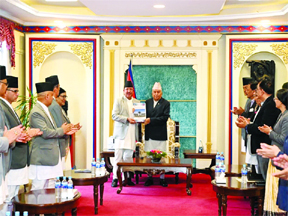
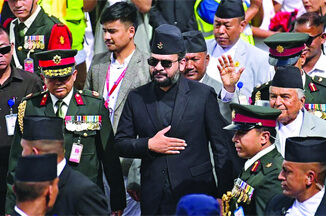
    Members of ousted Nepali prime minister KP Sharma Oli’s political party voted for him to retain leadership of the organisation on Thursday, meaning he will oversee its preparations for national elections next year.
    Members of the Communist Party of Nepal – Unified Marxist Leninist (CPN-UML) cast their ballots during a two-day general convention in the capital Kathmandu, which Oli won by a landslide.
    The 73-year-old political veteran’s success comes after he stepped down as prime minister during a September youth-led uprising that toppled his government.
    Nepal will hold elections in March with a caretaker administration running the country in the meantime.
    Oli bagged nearly three times more votes than his nearest competitor, Ishwar Pokhrel, securing 1,663 votes compared to Pokhrel’s 564, Rajendra Gautam, the head of the party’s publicity department, told AFP.
    Oli, often known by his initials “KP”, has carefully crafted an image as his party’s supreme leader, with life-size cutouts and banners of “KP Ba (father), we love you” seen at some of his rallies.
    “I am happy he won,” Tara Maya Thapa Magar, 45, who came from Gandaki province in western Nepal to participate in the convention, told AFP.
    The four-time prime minister quit office shortly after angry protesters set fire to his house and hundreds of other buildings, including the parliament and courts, during the September protests.
    Oli wrote in his resignation letter that he hoped him stepping down would help “towards a political solution and resolution of the problems”.
    At least 77 people were killed during the unrest that was triggered by anger over a brief government ban on social media, building on public frustration after years of economic stagnation and allegations of entrenched political corruption.
    “The incident that occurred is due to international interference. It is only through Oli’s leadership that we can overcome this setback and make the country prosperous,” said Magar.
    After Oli’s ouster, 73-year-old former chief justice Sushila Karki was appointed interim prime minister to lead the Himalayan nation until the March 5 elections.
    The government has imposed a travel ban on Oli, as well as several other former top officials, as a government commission investigates his role in the deadly crackdown on protesters.