Tag: South Asia

  • Can’t progress without maintaining close friendly relations with India: Nepal’s CPN-UML

    Can’t progress without maintaining close friendly relations with India: Nepal’s CPN-UML

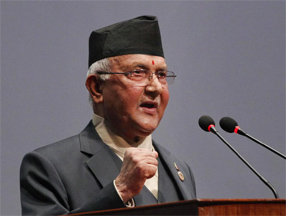
    KATHMANDU (TIP): The Communist Party of Nepal-Unified Marxist Leninist (CPN-UML) on July 11 said the landlocked Himalayan nation can attain economic prosperity only by maintaining close friendly relations with India, asserting that it will not allow any activity directed against the southern neighbour from the Nepalese soil.
    The remarks by a senior leader of the party led by former prime minister KP Sharma Oli came on the eve of a confidence vote in Parliament, which may see him return as the politically fragile Himalayan nation’s premier once again. “CPN-UML doesn’t believe that Nepal can progress or the interest of Nepalese people could be promoted by pursuing anti-India policy,” Dr Rajan Bhattarai, the Foreign Affairs Department chief and Standing Committee member of the CPN-UML, told PTI in an interview.
    He said the party’s chairman Oli wants to take Nepal-India relations to a new height as per the demand of the 21st century.
    “We believe that we can attract more foreign investment, promote trade, and attain economic prosperity only by maintaining close friendly relations with India,” he said.
    “We consider India as an important neighbour, and we won’t allow any activity directed against India from our soil.”
    Oli is known for his pro-China stance, and it would be interesting to see how he maintains ties of equi-proximity with both neighbours if he becomes prime minister after toppling Prime Minister Pushpa Kamal Dahal “Prachanda” after Friday’s floor test in the House of Representatives.
    “Our party has a clear view in not allowing any activity directed against another neighbour by taking the side of one neighbour,” Bhattarai told PTI.
    Although there are some problems in bilateral relations due to some provisions of the 1950 treaty, border dispute, inundation of land in the border areas and the growing trade deficit, the CPN-UML wants to resolve them through dialogue, he said.
    “We can resolve all our problems by sitting together and holding talks in a friendly manner,” he added.
    Ties between the two countries came under severe strain in 2020 after Kathmandu published a new political map that showed the three Indian territories—Limpiyadhura, Kalapani and Lipulekh—as part of Nepal.
    Then Prime Minister Oli attempted to use the issue to fend off increasing domestic pressure and challenge his leadership.
    In the past, Oli had publicly criticised India for allegedly interfering in Nepal’s internal affairs.
    Land-locked Nepal relies heavily on India for the transportation of goods and services.
    Nepal is also important for India in the context of its overall strategic interests in the region, and the leaders of the two countries have often noted the age-old ‘Roti Beti’ relationship.
    Nepal shares a border of over 1,850 km with five Indian states: Sikkim, West Bengal, Bihar, Uttar Pradesh, and Uttarakhand.
    “It is our firm belief that a stable, prosperous, peaceful, and developed Nepal will also be in the interest of India,” Bhattarai said.
    “However, we would also like to make it clear that our relations will be based on non-intervention in internal affairs and promoting national interest.”(PTI)

  • 14 dead as jeep falls from mountain road into ravine in Pakistan-occupied Kashmir

    Muzaffarabad (TIP): A jeep fell from a mountain road into a ravine in the disputed Himalayan region of Kashmir on July 10, killing 14 people and injuring two others, officials said.
    The incident happened in the Neelam Valley, government administrator Nadeem Janjua said.
    Rescuers had transported the dead and injured to a hospital while the cause of the accident is still to be determined, Janjua said.
    Kashmir is divided between neighbouring India and Pakistan, with both claiming the entire territory.
    Road accidents are common in Pakistan mainly because of to poor road infrastructure and poor enforcement of traffic laws and safety standards.
    Last month, a van fell into a river in the same district, killing 16 people, mostly children. (AP)

  • 65 missing after landslide sweeps away two buses in Nepal

    KATHMANDU (TIP): As many as 65 people were believed missing in Nepal after two buses were swept by a landslide triggered off the highway and into a swollen river on July 9, officials said.
    The two buses with 63 passengers, and two drivers went missing in the Trishuli river in the landslides at Simaltal area along the Narayanghat-Mugling road in Chitwan district.
    Rescuers were trying to locate the bus and and help with rescue the passengers but the continuous rain was making rescue efforts difficult.
    “As per the preliminary information both the buses were carrying a total of 63 people including the bus drivers. The landslide swept the buses at around 3:30 am. We are at the incident site and a search operation is underway. Incessant rain is hampering our efforts to search for the missing buses,” Indradev Yadav, Chief District Officer, Chitwan confirmed to ANI.
    The route leading to the accident area was also blocked in several places by landslides, said government administrator Khima Nanada Bhusal.
    One bus had 24 people while the other had 42 but more could have boarded the bus while on the route, Bhusal said.
    Expressing grief over the disappearance of the bus in the Trishuli River, Prime Minister Pushpa Kamal Dahal Prachanda has issued directives for immediate search and rescue operations. Further details are awaited.(Agencies)

  • 60 Indian nationals arrested in Sri Lanka for cyber crime operations

    COLOMBO (TIP): At least 60 Indian nationals part of a group engaged in online financial scams have been arrested by Sri Lanka’s Criminal Investigations Department. They were arrested on June 30 from the Colombo suburbs of Madiwela and Battaramulla and from the western coastal town of Negombo. According to Police Spokesman SSP Nihal Thalduwa, the CID conducted simultaneous raids in these mentioned areas, leading to the seizure of 135 mobile phones and 57 laptops.
    The crackdown follows a complaint from a victim who was lured into a WhatsApp group promising cash for social media interactions.
    Further investigation revealed a scheme where victims were coerced into making deposits after initial payments. In Peradeniya, a father-son duo admitted to aiding the fraudsters, Daily Mirror Lanka newspaper reported.
    Key evidence uncovered during a luxury house raid in Negombo led to the initial arrest of 13 suspects and the seizure of 57 phones and computers.
    Subsequent operations in Negombo yielded 19 additional arrests, exposing international links in Dubai and Afghanistan. (PTI)

  • Veteran Sri Lankan politician & Tamil leader Sampanthan passes away

    COLOMBO (TIP): R Sampanthan, a veteran Sri Lankan politician and a moderate Tamil leader, passed away on July 3 while receiving treatment in a hospital, the Tamil National Alliance has announced. Sampanthan, 91, led the Tamil National Alliance (TNA) from 2004 and became only the second Tamil to become the main opposition leader in the Sinhala-majority country.
    He was ailing for a long time and was missing the current parliamentary sessions for a long time.
    He was a moderate Tamil who had been leading the political movement to achieve a negotiated political settlement to the Tamil demand for political autonomy. The Tamils put forward their demand for autonomy since gaining independence from Britain in 1948, which, from the mid-70s, turned into a bloody armed conflict.
    He took office as the leader of the opposition in 2015 and was actively involved in the process of drafting a new Constitution until 2019.
    A brilliant lawyer, Sampanthan entered Parliament for the first time in 1977 from the eastern port district of Trincomalee.(PTI)

  • Pakistan’s Chief Justice Qazi Faez Isa comes to Election Commission’s rescue on reserved seats

    ISLAMABAD (TIP): Amidst a legal tussle over the reserved seats in Pakistan’s legislatures, Chief Justice Qazi Faez Isa has ruled that the election commission is not a subordinate institution to the Supreme Court or the government but an independent authority with a constitutional role to conduct elections. He was heading a full court of the Supreme Court (SC) hearing on July 1 on a set of appeals by the Sunni Ittehad Council (SIC) against the denial of reserved seats to women and non-Muslim candidates, the Dawn newspaper reported on Tuesday. The top judge said the Supreme Court can only exercise its jurisdiction if it is convinced that the commission has gone beyond its constitutional role, pointing out that ideally, all institutions should function within their own prescribed domain.
    The Supreme Court ordered the Election Commission of Pakistan (ECP) to do a calculation by applying the formula of allotting reserved seats among political parties based on the election results of 2018 by excluding, as well as including, independents to understand the difference, the report said. (PTI)

  • Won’t quit, would rather face confidence vote: Nepal PM Prachanda

    KATHMANDU (TIP): Embattled Nepal Prime Minister Pushpa Kamal Dahal ‘Prachanda’ has decided not to resign from the post despite an agreement reached between the country’s largest parties – Nepali Congress and CPN-UML – to form a new coalition government. In a meeting of the Communist Party of Nepal (Maoist Centre) office-bearers held in Baluwatar on July 1, Prime Minister Prachanda said he would rather face a vote of confidence in Parliament than resign from the post, the party Secretary Ganesh Shah told PTI. “The Prime Minister has decided to seek a vote of confidence,” said Shah.
    Prachanda, 69, has won three votes of confidence in Parliament during his one-and-a-half-year term.
    The development came after Nepali Congress President Sher Bahadur Deuba and the Communist Party of Nepal-Unified Marxist Leninist (CPN-UML) inked a midnight power-sharing deal to form a new ‘national consensus government’ to replace the Prachanda-led coalition government.
    Nepali Congress, the largest party in the House of Representatives (HoR) has 89 seats at present, while CPN-UML has 78 seats.
    The combined strength of the two large parties is 167, which is sufficient for a majority of 138 seats in the 275-member HoR.
    Deuba, 78 and Oli, 72, agreed to share the Prime Ministerial position on a rotation basis for the rest of the term of the Parliament.
    Meanwhile, the talks between Prime Minister Prachanda and CPN-UML chief Oli to save the current coalition also failed, according to Maoist sources.
    Quoting Prachanda, Shah said that a conspiracy has been hatched to topple the coalition government and create instability in the country.
    “The conspiracy came at a time when the government focused on ending corruption and introducing good governance,” he said.
    As per the constitutional provision, the prime minister will have 30 days to seek a vote of confidence in the House of Representatives, which would give Prachanda some time for political manoeuvring. “We will engage in discussions with various parties, including the Rashtriya Swatantra Party (RSP), Nepali Congress, and CPN-UML, so as to save the coalition,” Prachanda was quoted as saying.
    Nepali Congress President Deuba briefed party officials about the agreement with the CPN-UML during a meeting of office bearers at his residence in Budhanilkantha on Tuesday morning, according to party sources. (PTI)

  • Pak court acquits ex-PM Imran Khan in protest case related to Toshakhana scam

    Pak court acquits ex-PM Imran Khan in protest case related to Toshakhana scam

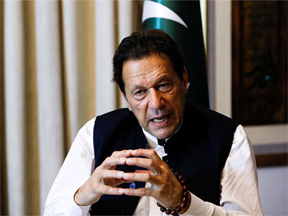
    ISLAMABAD (TIP): A Pakistani court on July 3 acquitted former prime minister Imran Khan and several senior party colleagues in a case registered against them for protesting against the jailed premier’s disqualification by the election commission in the Toshakhana corruption case. Other leaders who have been exonerated in the case by the district and sessions court here are Shah Mahmood Qureshi, Sheikh Rasheed, Asad Qaiser, Shehryar Afridi, Faisal Javed, Raja Khurram Nawaz and Ali Nawaz Awan.
    Judicial Magistrate Yasir Mehmood pronounced the verdict, which was reserved last week on the petitions seeking acquittal, during the hearing on Wednesday, the Geo News reported.
    The case was registered against the 71-year-old Pakistan Tehreek-e-Insaf (PTI) founder Khan and other politicians at Aabpara Police Station for protesting against the Election Commission of Pakistan’s (ECP) Toshakhana corruption verdict in 2022, which disqualified him from holding office for a limited time.
    The Toshakhana is a department under the administrative control of the Cabinet Division and stores precious gifts given to rulers, parliamentarians, bureaucrats, and officials by heads of other governments and states and foreign dignitaries.
    The Toshakhana issue over the sale of state gifts received by the former cricketer-turned-politician became a major issue in national politics after the ECP disqualified Khan for making ?false statements and incorrect declaration?.
    Khan had earlier contended that recent amendments to the Elections Act 2017 limit the ECP’s jurisdiction in deciding the qualification or disqualification of a member based on a court conviction.
    He had accused the ECP of acting with unlawful zeal and haste to exclude him from the February 8 general elections rather than ensuring fair and free elections.
    On August 5 last year, Khan was sentenced to three years in imprisonment and fined Rs 100,000 in the Toshakhana corruption case, a conviction later suspended by the Islamabad High Court.
    Khan has been facing a slew of charges ranging from corruption to terrorism since his removal as the premier in 2022.
    The PTI founder has been in jail since last August and was convicted in some cases ahead of a nationwide election earlier this year.
    He is also fighting dozens of other cases.
    The only hurdle keeping him behind bars is the iddat or the un-Islamic marriage case, whose proceedings are underway, and the judge expects the case to be wrapped up within this month, according to the Geo TV report. (PTI)

  • Pakistan PM Shehbaz Sharif calls for united front against terrorism amid resurgence of Taliban militancy

    Pakistan PM Shehbaz Sharif calls for united front against terrorism amid resurgence of Taliban militancy

    Islamabad (TIP) : Pakistan Prime Minister Shehbaz Sharif said on June 23 that fighting terrorism was a collective responsibility of all institutions, as the country battled a resurgent Taliban militancy.
    Addressing the apex committee meeting of National Action Plan (NAP), he said provinces should also play their role in combating insurgency in the country.
    The apex committee is its highest body overseeing the implementation of measures to eradicate militancy from the country.
    “The responsibility of fighting against terrorism is the collective duty and the primary obligation of all state institutions. It’s not about you and me, it’s about us. We have to trample it together,” Sharif said.
    The 20-point NAP agenda to eliminate terrorism was adopted by the government and approved by the opposition parties in the wake of Peshawar school attack on December 16, 2014.
    The prime minister said Pakistan has been facing terrorism for the last two-and-a-half decades and it has become complicated due to the involvement of crime, drugs, smuggling, extremism and religious terrorism.
    The apex committee meeting was held as Pakistan faced an uptick in the acts of terrorism in recent years. According to an annual security report issued by the Centre for Research and Security Studies, Pakistan witnessed 1,524 violence-related fatalities and 1,463 injuries from 789 terror attacks and counter-terror operations in 2023, marking a record six-year high.
    The latest wave of terrorism is led by the Pakistan Tehreek-i-Taliban (TTP), which according to Pakistan officials, has sanctuaries in Afghanistan.
    Sharif acknowledged that some provinces had made progress in tackling militancy, but “it is my belief that we have all too easily left this matter to our armed forces” and both the provinces and federal government have left it for the army.
    “This is that dangerous practice that has become a custom in the past years that this is the army’s job and its officers have to do this,” he said.
    Sharif said provinces were paying a price but the overall sense is that the army has to fight against terrorism. He said it would not eliminate terrorism from the country.
    “We cannot even hope for strong stability without a complete system or a whole-of-the-government approach. This does not only refer to all agencies and ministries but the federal and provincial governments and all institutions,” he said.
    Sharif asked the political and religious leadership to be clear that this battle was for Pakistan’s survival and “we are not fighting someone else’s battle”.
    The premier also said that the rule of law and stability were important for growth and development in the country. “A soft state can never gain the trust of investors,” he said, adding that a strong and healthy economy could not be envisioned in an unstable state gripped by terrorism. (PTI)

  • ‘Let’s sit down and talk’: Pak PM to Imran

    Islamabad (TIP): Pakistan Prime Minister Shehbaz Sharif on June 26 extended an olive branch to his predecessor and political rival Imran Khan, offering to hold talks with him if was facing “troubles” in jail. “If their [PTI] founder is facing troubles [in jail], then I reiterate: come, let’s sit down and talk,” Sharif said in the National Assembly. “Let us sit together to take the country ahead. Let us talk…” (PTI)

  • Ex-Bangladesh PM Khaleda Zia on ‘deathbed’

    Dhaka (TIP): Accusing PM Sheikh Hasina of a “personal political vendetta” against her political rival Khaleda Zia, a leader from her party BNP today claimed she is on her “deathbed” as she has been deprived of advance medical treatment abroad.
    A report in The Daily Star said Zia, 78, was rushed to a hospital here around 3:30 am on June 23 as she fell ill. Hasina’s action is a result of “personal political vendetta,” BNP leader Mirza Fakhrul Islam Alamgir alleged. (PTI)

  • Sri Lanka survived economic crisis because of India’s support: President

    Sri Lanka survived economic crisis because of India’s support: President

    Male (TIP): Maldives police have arrested two serving ministers for allegedly performing black magic on President Mohamed Muizzu, local media reported on June 27. Shamnaz Saleem, who was a state minister at the Environment Ministry, her ex-husband Adam Rameez, who was serving as a minister at the President’s Office, and two others were arrested, local media said quoting the police, who, however, declined to share any information about the reasons or the alleged performance of black magic.
    “Shamnaz, alongside two other individuals, was arrested on Sunday. All three of them have been remanded in custody for seven days. She was suspended from her post on Wednesday as per the Environment Ministry,” news portal Sun.mv reported, adding Rameez too has been suspended on Thursday.
    Both Shamnaz and Rameez have worked with Muizzu as members of the Male City Council. (PTI)

  • At least nine Rohingyas killed in landslides at Cox’s Bazar refugee camps

    Cox’s Bazar (TIP): At least nine Rohingyas were killed in landslides caused by heavy torrential rain in Ukhiya refugee camps of Cox’s Bazar June 19 morning, The Daily Star reported.
    Quoting Mohammad Samsudduza, additional refugee relief and repatriation commissioner, The Daily Star that the landslides took place in camp no. 9 and 10.
    “Nine bodies were recovered,” he said, adding that they are working to evacuate Rohingyas living in risky hilly areas.
    Around 1.2 million Rohingyas, most of them fled to Bangladesh facing atrocity by the Myanmar junta forces in 2017, have been living in 33 camps of Ukhiya and Teknaf of Cox’s Bazar, the report said. Cox’s Bazar has been witnessing heavy rainfall since June 18.

  • Five family members of Malaysian man who attacked police station face terrorism charges

    KUALA LUMPUR (TIP): The father of a Malaysian man who attacked a police station and killed two police officers last month was charged on June 19 with inciting terrorism in his family. His Singaporean wife and three other children were also brought to court to face charges.
    Radin Imran Radin Mohd Yassin, 62, faces four charges including promoting terrorist acts by allegedly instilling the violent ideology of the Islamic State group in his family, including his 21-year-old son Radin Luqman, who was killed by police in the attack.
    Radin Luqman stormed the police station in southern Johor state near Singapore in the early hours of May 17 with a machete. He hacked a police constable to death and then used the officer’s weapon to kill another. He wounded a third officer before being shot dead. Police initially said the man could have been planning to take firearms from the station.
    The incident sparked concerns of a wider security threat but government officials said the man and his family were reclusive, and that the attacker was believed to have acted on his own.
    Radin Imran, who is unemployed, was also accused of supporting terrorist acts by keeping four homemade air rifles in his home for Islamic State activities, according to charge sheets seen by The Associated Press.
    He also allegedly pledged allegiance in 2014 to Islamic State’s then-leader, Abu Bakr al-Baghdadi, who was killed in a U.S. raid in Syria in 2019. A book linked to the Islamic State was found in his possession.
    His eldest son, Radin Romyullah, 34, faces two separate charges of pledging loyalty to Abu Bakar and of possessing an external hard drive containing materials related to the Islamic State, the charge sheets showed. Both father and son face life imprisonment, which in Malaysia is up to 40 years, and a fine.
    Radin Imran’s Singaporean wife, Rosna Jantan, 59, and two daughters aged 19 and 23 each face a vague charge related to the omission of information related to the spread of terrorism. No details were given.
    Local media said the five were brought to a court in Johor under heavy security. The Star newspaper said no plea was recorded but the five, who were not represented by lawyers, said they understood the charges against them. The next hearing in the case will be on July 31. (AP)

  • Pak journalist shot dead in restive Khyber Pakhtunkhwa province

    PESHAWAR (TIP): A Pakistani journalist was gunned down on June 18 by unknown gunmen in the restive Khyber Pakhtunkhwa province in the country’s northwest, according to a tribal journalist association.
    Khalil Jibran, associated with Pashto News Channel ‘Khyber News’ was shot dead by shooters near his home in the Mazrina Sultankhel area of the Khyber district.
    Another person, identified as Sajid, was injured in the shooting.
    The attackers managed to flee from the scene after killing the journalist.
    Police contingents were on their way to the shooting site, according to sources.
    The Mazrina area of the tribal district is a hotbed of militants.
    Family sources confirmed Jibran’s killing, and a senior journalist alleged that it was a case of targeted killing. (PTI)

  • A Muslim mob in Pakistan torches a police station and lynches a man after accusing him of blasphemy

    A Muslim mob in Pakistan torches a police station and lynches a man after accusing him of blasphemy

    PESHAWAR, Pakistan (TIIP): A Muslim mob in northwestern Pakistan on June 20 broke into a police station, snatched a man who was held there and then lynched him over allegations that he had desecrated Islam’s holy book, the Quran.
    The attackers also torched the station in Madyan, a town in Khyber Pakhtunkhwa province, and burned police vehicles parked there, according to local police official Rahim Ullah.
    The slain man, Mohammad Ismail, was a tourist who was staying at a hotel in the town when some locals turned on him and accused him of blasphemy.
    Ullah said police officers took the man to the station for his protection but the mob swelled and pursued them. The mob then attacked the station, snatched Ismail, beat him to death and then burned his body and left it on the road.
    Additional police forces have arrived in Madyan to bring the situation under control, Ullah said.
    It wasn’t immediately known if any of the attackers were arrested.
    Attacks on people accused of blasphemy are common in this conservative Islamic nation where charges of blasphemy can carry the death sentence. International and national rights groups say blasphemy accusations have often been used to intimidate religious minorities and settle personal scores.
    Last month, a mob in Pakistan’s eastern Punjab province attacked a Christian man, Nazir Masih, 72, after accusing him of desecrating pages of Quran. He later died at a hospital. (AP)

  • Nepal suspends sales of antibiotic injection manufactured by Indian company citing ‘health risks’

    Kathmandu (TIP): The sales and distribution of Biotax 1gm, manufactured by an Indian firm, has been banned in Nepal due to “health risks.”
    The Department of Drug Administration suspended the antibiotic injection since it was not in compliance with the production specifications, The Kathmandu Post reported.
    Biotax 1gm injection is an antibiotic medicine used to treat bacterial infections, including those of the brain, lungs, ear, urinary tract, skin, soft tissues, bones and joints, blood, and heart. It is also used to prevent infections during surgery.
    The injection is manufactured by Zydus Healthcare Ltd.
    “We have directed the manufacturing company, importers and distributors to immediately suspend sales, import and distribution of the said medicine, until further notice,” said Pramod KC, spokesperson at the department. “Some serious issues have been detected in the said antibiotic. Decisions about further actions will be taken once the investigation is completed,” he was quoted as saying by The Kathmandu Post.
    According to the department, which carried out the testing in its own laboratory, BIOTAX-1gm batch F300460 is not safe for use and could risk patients’ lives. (AP)

  • Japan’s ‘beat poet’ Kazuko Shiraishi, pioneer of modern performance poetry, dies at 93

    TOKYO (TIP): Kazuko Shiraishi, a leading name in modern Japanese “beat” poetry, known for her dramatic readings, at times with jazz music, has died. She was 93.
    Shiraishi, whom American poet and translator Kenneth Rexroth dubbed “the Allen Ginsberg of Japan,” died of heart failure on June 14, Shichosha, a Tokyo publisher of her works, said on June 19.
    Shiraishi shot to fame when she was just 20, freshly graduated from Waseda University in Tokyo, with her “Tamago no Furu Machi,” translated as “The Town that Rains Eggs” — a surrealist portrayal of Japan’s wartime destruction.
    With her trademark long black hair and theatrical delivery, she defied historical stereotypes of the silent, non-assertive Japanese woman.
    “I have never been anything like pink,” Shiraishi wrote in her poem.
    It ends: “The road / where the child became a girl / and finally heads for dawn / is broken.”
    Shiraishi counted Joan Miro, Salvador Dali and John Coltrane among her influences. She was a pioneer in performance poetry, featured at poetry festivals around the world. She read her works with the music of jazz greats like Sam Rivers and Buster Williams, and even a free-verse homage to the spirit of Coltrane.
    Born in Vancouver, Canada, she moved back to Japan as a child. While a teen, she joined an avant-garde poetry group.
    Shiraishi’s personality and poems, which were sometimes bizarre or erotic, defied Japan’s historical rule-bound forms of literature like haiku and tanka, instead taking a modern, unexplored path.
    Rexroth was instrumental in getting Shiraishi’s works translated into English, including collections such as “My Floating Mother, City” in 2009 and “Seasons of Sacred Lust” in 1978.
    Over the years, her work has been widely translated into dozens of languages. She was also a translator of literature, including works by Ginsberg.
    In 1973, Paul Engle invited her to spend a year as a guest writer at the International Writing Program at the University of Iowa, an experience that broadened her artistic scope and helped her gain her poetic voice.
    “In the poems of Kazuko Shiraishi, East and West connect and unite fortuitously,” wrote German writer Gunter Kunert. “It refutes Kipling’s dictum that East is East and West is West and never the twain shall meet. In Kazuko Shiraishi’s poems this meeting has already happened.” (AP)

  • 6 Indian tourists injured in jeep mishap in Nepal

    Kathmandu (TIP): Six Indian tourists, mostly senior citizens, were injured when the jeep they were travelling in overturned near a lake in Nepal’s Chitwan district on June 2, officials said. The accident took place near Darai Lake at Khaireni. The tourists were heading towards Chitwan National Park for a jungle safari, said Kedarnath Panta, chairperson of ward number 12, Khaireni municipality. Chitwan National Park, 250 km south of Kathmandu, is famous for one-horned rhinos and Bengal Tigers. All those who sustained injuries hail from the Bendali Thana area in Mumbai and most of them are above 60, police said. They are identified as Ramchandra Yadav, Sudesh Shanker Khadia, Pankaj Gupteshwor, Vaishali Gupteshwor, Sushmita Sudesh Khadia and Vijaya More. The injured are undergoing treatment at hospitals in Bharatpur and Ratnanagar, police said, adding that they have taken the jeep driver, a Nepalese, into custody. (PTI)

  • Nepal government recalls 11 envoys, including from India, USA and UK

    KATHMANDU (TIP): Nepal government has recalled ambassadors from 11 countries, including those serving in India and the US and appointed under the Nepali Congress’ quota, three months after Prime Minister Pushpa Kamal Dahal ‘Prachanda’ terminated his alliance with the party and joined hands with KP Sharma Oli. Despite strong reservations from Deputy Prime Minister and Minister for Foreign Affairs Narayan Kaji Shrestha, the government on June 6 recalled these ambassadors, including Nepal’s envoy to India Shankar Sharma, The Kathmandu Post newspaper reported. (PTI)

  • Pakistan elected as UNSC non-permanent member

    United Nations (TIP): Pakistan, Somalia, Denmark, Greece and Panama on June 6 were elected as non-permanent members of the UN Security Council for a two-year term, starting January 1, 2025. They were elected by a secret ballot in the UN General Assembly. In the two seats for African and Asia-Pacific States, Somalia got 179 votes and Pakistan received 182 votes. Among the Latin American and Caribbean States, Panama got 183 votes, while in the Western European and other States, Denmark got 184 votes and Greece got 182 votes. “Proud moment as Pakistan receives a resounding 182 votes and is elected to the UNSC,” Pakistan PM Shehbaz Sharif posted on X. (PTI)

  • Top leaders of Bangladesh, Sri Lanka, Maldives, 4 other nations likely to attend Modi’s oath ceremony

    New Delhi (TIP): Top leaders of Bangladesh, Sri Lanka, the Maldives, Bhutan, Nepal, Mauritius and Seychelles are likely to attend the swearing-in ceremony of Prime Minister Narendra Modi over the weekend, authoritative sources said on June 6.
    It is learnt that India has already sent invites to Bangladesh Prime Minister Sheikh Hasina, Sri Lankan President Ranil Wickremesinghe and some other leaders of the countries chosen to grace the ceremony.
    Nepalese Prime Minister Pushpa Kamal Dahal ‘Prachanda’, Maldivian President Mohamed Muizzu, Bhutanese Prime Minister Tshering Tobgay, Prime Minister of Mauritius Pravind Jugnauth and President of Seychelles Wavel Ramkalawan are among the leaders being invited to Modi’s swearing-in ceremony.
    Modi is all set to take charge as the prime minister for a historic third consecutive term with the Bharatiya Janata Party-led National Democratic Alliance (NDA) winning 293 seats in the Lok Sabha polls.
    The guest list of foreign leaders for Modi’s swearing-in ceremony was primarily guided by New Delhi’s “Neighbourhood First Policy” and its strategic focus on island nations considered important in the Indian Ocean region, it is learnt.
    Modi is likely to take oath on June 9.
    The invitation to Muizzu assumes significance as it came amid frosty ties between the two countries.
    The ties between India and the Maldives came under severe strain since November last year when Muizzu, known for his pro-China leanings, took charge as Maldivian president.
    Within hours of his oath, he had demanded the withdrawal of Indian military personnel from his country. The Indian military personnel were replaced by civilians earlier this month.
    The media division of President Wickremesinghe’s office on Wednesday said Modi invited him to the swearing-in ceremony during a phone conversation. It said Wickremesinghe accepted the invite.
    “During the conversation, Prime Minister @narendramodi invited President Wickremesinghe to his swearing-in ceremony, which President @RW_UNP accepted,” it said on X.
    Modi also had a phone conversation with Hasina on Wednesday. In the phone conversation, Modi invited Hasina to attend his swearing-in ceremony and she accepted it, diplomatic sources said.
    Modi held separate phone conversations with Prachanda as well as Jugnauth.
    On Thursday, Bhutanese PM Tobgay called up Modi and congratulated him on the victory of the NDA.
    “Prime Minister Tobgay appreciated Prime Minister Modi’s visionary leadership in the last decade, and conveyed his warm wishes for his successful third term,” an Indian readout said.
    “The prime minister thanked prime minister Tobgay for the warm felicitations. The prime minister conveyed that India accords the highest priority to its exemplary partnership with Bhutan,” it said.
    It said India-Bhutan partnership is characterized by utmost trust, goodwill, and mutual understanding at all levels and is reinforced by robust people to people linkages and close economic and development partnership. (PTI)

  • Pakistani PM Sharif in Beijing for talks with President Xi to seek more investments, elevate ties

    Pakistani PM Sharif in Beijing for talks with President Xi to seek more investments, elevate ties

    Beijing (TIP): Visiting Pakistani Prime Minister Shehbaz Sharif has reached Beijing for talks with Chinese President Xi Jinping and other leaders to elevate all-weather bilateral ties and prospects of more aid and investments to bail out his cash-strapped country from the current economic crisis.
    Sharif, on a five-day official visit to China since June 4, toured the southern high-tech city of Shenzhen on June 4 and addressed the investors meeting.
    During his stay here, Sharif will meet Xi, Premier Li Qiang and other leaders, Pakistan’s state-run APP news agency reported.
    He will also attend a Pakistan-China Friendship and Business event and have meetings with the CEOs of leading Chinese companies working on the China–Pakistan Economic Corridor (CPEC) projects.
    Several MoUs between the two countries on cooperation in various fields are likely to be signed, the report said.
    Cash-strapped Pakistan’s economy is facing severe headwinds, and it has formally requested the International Monetary Fund (IMF) for the next bailout package between USD 6 billion and USD 8 billion with the possibility of augmentation through climate financing.
    In his address to the investors meeting in Shenzhen, Sharif assured full security to the Chinese personnel from the recurring terrorist attacks targeting them.
    The 72-year-old leader embarked on his first visit to China after he took over as prime minister for the second term after his Pakistan Muslim League-Nawaz (PML-N) party-led coalition government assumed power in March.
    Addressing the Pakistan-China Business Forum, Sharif assured all-out facilitation to Chinese investors and security of Chinese individuals, projects, and investments in Pakistan.
    He said his government had taken various measures to ensure fool-proof security to protect the lives of Chinese workers in Pakistan.
    “I will spare no effort to protect the lives of Chinese workers and assure and guarantee that we will provide them security more than our children. This will never happen again,” he said.
    Referring to the March terrorist attack in Besham in Pakistan, in which five Chinese personnel and their Pakistani driver were killed, he said it was one of the saddest days of his life when the whole nation felt saddened.
    The latest was the March suicide attack in Dasu in which five Chinese nationals and a Pakistan driver were killed. Pakistan paid USD 2.58 million as compensation to the families of those killed in the attack.
    The CPEC, which connects Gwadar Port in Pakistan’s Balochistan with China’s Xinjiang province, is the flagship project of China’s ambitious Belt and Road Initiative (BRI). The BRI is seen as an attempt by China to further its influence abroad with infrastructure projects funded by Chinese investments across the world. (PTI)

  • Bangladesh launches massive evacuation as cyclone Remal approaches from Bay of Bengal

    Dhaka (TIP): Bangladesh on May 27 launched an intensified evacuation campaign in vulnerable areas as it prepares for severe cyclonic storm ‘Remal’ forecast to make landfall by evening or midnight with a potential high tidal surge and heavy rainfall in the country’s coastal districts of Satkhira and Cox’s Bazar.
    According to the latest cyclone warning bulletin, ‘Remal’ is likely to move in a northerly direction and may cross Sagar island of West Bengal-Khepupara coast near Mongla by evening or midnight, the BSS news agency reported.
    “A large-scale evacuation has already started. All vulnerable people are presumed to be moved to safer places at the shortest possible time,” Director General of the Department of Disaster Management Mizanur Rahman was quoted as saying by the BSS. On Saturday, State Minister for Disaster Management and Relief Md Mohibur Rahman said that the authorities have kept ready the cyclone centres and taken all types of preparations to tackle it.
    “The district administration has turned social, educational and religious institutions to makeshift shelters alongside 4,000 designated cyclone shelters in coastal districts to accommodate a large number of people including the most vulnerable ones living in remote areas,” Mohibur said.
    “A total of 78,000 volunteers from the Cyclone Preparedness Program (CPP) have been kept ready to deal with cyclone ‘Remal’ in the coastal district,” he said.
    Around 4,000 cyclone shelter centres have been readied in the coastal districts, equipped with adequate dry food supplies. Some 8,600 Red Crescent volunteers and others joined a campaign asking people at risk to move to safety alongside the government officials while the district administration mobilised transports to carry them to the cyclone shelters, the minister said.
    Leaves of officials of all ministries, divisions and subordinate offices have been cancelled to tackle the possible aftermath of Cyclone Remal, the Daily Star newspaper reported.
    The Chattogram Port Authority has suspended all operations in the port as cyclone Remal heads towards the coast, it said. According to the Dhaka Tribune newspaper, flight operations at the Chittagong airport have been suspended for eight hours.
    On Sunday morning, the Bangladesh Meteorological Department asked the Chittagong and Cox’s Bazar ports to hoist great danger signal no 9, the paper said. The coastal districts — Khulna, Satkhira, Bagerhat, Pirojpur, Jhalakathi, Barguna, Bhola, and Patuakhali will also be under great danger signal number 10. Cyclone Remal has now intensified into a severe cyclonic storm. (PTI)

  • Pakistan arrests 140 suspects for alleged involvement in attacks on Christians in Punjab province

    Pakistan arrests 140 suspects for alleged involvement in attacks on Christians in Punjab province

    Lahore (TIP): Pakistan’s Punjab police on May 29 claimed to have arrested a total of 140 suspects involved in attacking members of the Christian minority, their properties and police personnel on the issue of alleged desecration of the Quran.
    A charged mob led by radical Islamist Tehreek-e-Labbaik Pakistan (TLP) activists last week attacked the Christian community in Mujahid Colony in the Sargodha district of Punjab, some 200 km from Lahore, that left two Christians and 10 policemen injured.
    The mob burned and ransacked the homes and properties of the Christians.
    According to Punjab police spokesperson Mubashir Hussain, some 140 suspects involved in the Sargodha incident have been taken into custody so far. “They are arrested in light of video and CCTV footage. It has been ensured that no innocent is rounded up,” he said and added many of them have been sent to jail on judicial remand.
    Police booked over 450 people under terrorism and other charges.
    According to the FIR, a mob surrounded the residence and shoe factory of Nazir Masih alias Lazar Masih (an elderly Christian), accusing him of desecration of the Quran.
    The enraged mob set fire to the shoe factory, some shops and a couple of houses. “The mob also brutally torched Masih but the timely arrival of a heavy contingent of police saved the lives of Masih and 10 other members of the Christian community,” the FIR said. It says some pages of the holy Quran were reported to have been found outside the shoe factory of Masih. This instigated the locals. Although the family of Masih denied desecration of the Quran the mob wanted to lynch him.
    “The enraged mob pelted stones at police personnel when they resorted to baton charge to disperse it. At least 10 policemen, including officers, have been injured,” as per the FIR.
    According to the residents’ accounts recorded by a team led by Cecil & Iris Chaudhry Foundation (CICF), the blasphemy charges brought up against Lazar Masih were a “consequence of a festering resentment between Lazar’s family and the local Muslim community over a drainage issue.”
    Masih’s nephew, Irfan Gill also confirmed that the former’s grandsons were often drawn into a fight by the local Muslims over the same issue.
    “On May 22, three days prior to the incident of May 25, the provocation was dispensed by Ayub, a neighbour working as a dairyman. Two of Masih’s grandsons somehow got involved in a fight with Ayub and ended up going to the local police station to file a complaint against the dairyman,” CICF said.
    Three days later, the Mujahid Colony’s loudspeakers were resounding with charges of blasphemy against Masih.
    Last year, at least 24 churches and over 80 houses belonging to Christians in Jaranwala tehsil of Faisalabad district, some 130 km from the provincial capital, were burnt down by a mob enraged over reports that two Christians had desecrated the Quran. (PTI)