Tag: South Asia

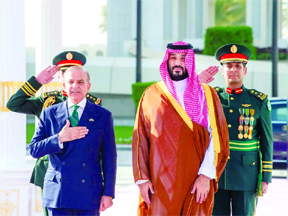
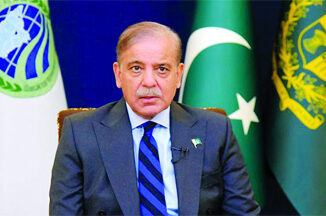
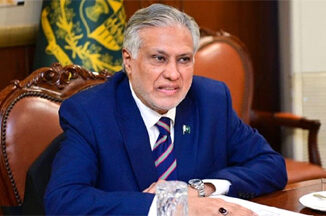
  • Pakistan ready for dialogue with India to discuss Kashmir, all other pending issues: FM Ishaq Dar

    Islamabad (TIP)- Pakistan was ready for a comprehensive dialogue with India to discuss Kashmir and all other pending issues, Foreign Minister Ishaq Dar said on Aug 22.
    “Talks, whenever held, will be not just on Kashmir but on all issues,” Dar said while talking to journalists outside parliament in Islamabad, where he was asked about talks with India.
    India has made it clear that it will only have a dialogue with Pakistan on the return of Pakistan-occupied Kashmir and the issue of terrorism.
    Dar, who is also the Deputy Prime Minister, emphasised that Pakistan had made it clear from the outset that discussions with India would not take place on any single-point agenda.
    He said Pakistan had not requested any mediation but was offered a meeting at a neutral venue. “We were told to sit down at a neutral location, and I said if that is the case, we are willing to meet,” he claimed. Dar said he received a call from the US for a ceasefire with India.
    “I received a call from the US for a ceasefire,” Dar said. “I had made it clear that Pakistan did not want a war.”
    India carried out precision strikes under ‘Operation Sindoor’ on terror infrastructure early on May 7 in response to the April 22 Pahalgam terror attack.
    Following the Indian action, Pakistan tried to attack Indian military bases on May 8, 9 and 10. The Indian forces launched a fierce counter-attack on several Pakistani military installations.
    India and Pakistan reached an understanding on May 10 to end the conflict after four days of intense cross-border drone and missile strikes.
    Dar said the ceasefire agreement with India is holding. Responding to a question, Dar said the US Secretary of State’s visit to Pakistan has not yet been scheduled.

  • Lanka ex-Prez arrested for misusing state funds

    Lanka ex-Prez arrested for misusing state funds

    Sri Lanka’s former president Ranil Wickremesinghe was arrested on Friday for allegedly misusing the state funds during his tenure as head of state, police said. Wickremesinghe, 76, was arrested at the Criminal Investigation Department (CID) headquarters, where he was summoned to record a statement in connection with an investigation into the alleged misuse of government funds, police said. Later, the veteran opposition leader was produced before a magistrates’ court in Colombo. Wickremesinghe, who served as president from 2022 to 2024, has been accused of using state funds to travel to England to attend a convocation ceremony of his wife, Prof Maithree, in September 2023. Wickremesinghe is the first former president to be arrested in Sri Lanka, it added.

  • Pakistan: Rights body reveals rise in violence against religious minorities

    Pakistan: Rights body reveals rise in violence against religious minorities

    Islamabad (TIP)- The Human Rights Commission of Pakistan (HRCP) in its latest report has revealed a disturbing rise in violence against religious minorities over the past year, local media reported on August 21.
    In its latest report, ‘Streets of Fear: Freedom of Religion or Belief in 2024/25’, the HRCP highlighted incidents of targetted killings, the demolition of places of worship, the forced conversion and marriage of underage Hindu and Christian girls and a rise in hate speech. The report warned that the trends pose serious threats to religious freedom in Pakistan, The Express Tribune reported.
    The report sounded alarm over two cases of extrajudicial killings by police, terming them “deeply chilling”. In two cases, law enforcement officers shot the two individuals who were accused of blasphemy and had requested protection from violent mobs. The rights body stated that such incidents demonstrate the need for police reforms and stronger accountability mechanisms.
    Earlier in July, the HRCP raised serious concerns over the continued persecution of religious minorities in Pakistan. The rights body highlighted that a Christian man in Sargodha district of Pakistan’s Punjab province was lynched by a violent mob, following accusations of blasphemy, while the Ahmadiyya community withdrew from the electoral process entirely in the region, citing systemic discrimination and lack of safety.
    Additionally, the HRCP mentioned that Punjab continued to account for the highest number of child abuse cases in the country.
    “Between January and June 2024 alone, the province reported 78 per cent of the 1,630 cases nationwide, alongside 2,506 incidents of sexual abuse, 2,189 kidnappings, 457 cases of child trafficking, and 455 instances of physical abuse. The death of 11-year-old Ayesha, a domestic worker in Faisalabad, and similar incidents in Sargodha and Lahore exposed the violence faced by underage working children in private homes,” it stated.
    The human rights organisation in its State of Human Rights in 2024 report detailed a surge in sexual violence against women, including those with mental disabilities, domestic abuse resulting in fatalities, involving pregnant women, and honour killings, which continued throughout the year in Punjab. In a case involving an alleged rape at a private college in Lahore, the HRCP noted a failure by the authorities to gather conclusive evidence that the incident had occurred.
    Highlighting the challenges faced by women in politics, the HRCP stated that “women Members of the Provincial Assembly (MPA) staged a walkout over inappropriate gestures” in the Punjab Assembly, while the allocation of reserved seats for women and minorities faced legal setbacks.

  • Pak FM to visit Bangladesh on Aug 23 amid warming ties

    Pak FM to visit Bangladesh on Aug 23 amid warming ties

    Islamabad (TIP)- Pakistan’s Foreign Minister Ishaq Dar is set to visit Bangladesh on August 23 as the two countries saw a warming up of bilateral relations after former prime minister Sheikh Hasina’s ouster from office last year.
    Dar, who is also the Deputy Prime Minister, was earlier set to visit Bangladesh in April this year, but the visit was postponed due to tension with India in the wake of the Pahalgam terror attack and subsequent conflict between India and Pakistan.
    According to official sources, Dar is now set to visit Dhaka on August 23.
    The details of the visit, however, have not been shared as yet, but he is expected to meet his counterpart Touhid Hossain, as well as the Chief Adviser of the Interim government, Muhammad Yunus.
    Ties between Pakistan and Bangladesh had plummeted during Hasina’s regime, but took a sharp upward turn as she was ousted from power on August 5 last year following a massive student-led protest.
    Last month, the two countries agreed to grant visa-free entry to holders of diplomatic and official passports from the other side.
    The deal was reached during a meeting between Interior Minister Mohsin Naqvi and Bangladesh’s Home Minister Jahangir Alam Chowdhury.
    Foreign Secretary Amna Baloch had visited Dhaka in April for Foreign Office Consultations after a 15-year break in diplomatic engagement with Bangladesh.
    In February, both countries started direct government-to-government trade after decades of troubled relations, with imports of 50,000 tonnes of rice.
    Direct private trade between the two countries restarted in November 2024 when a container ship sailed from Karachi to Chittagong.

  • UN probe finds evidence of ‘systematic torture’ in Myanmar

    United Nations investigators say they have gathered evidence of systematic torture in Myanmar’s detention facilities, identifying senior figures among those responsible.
    The Independent Investigative Mechanism for Myanmar (IIMM), set up in 2018 to examine potential breaches of international law, said on Tuesday that detainees had endured beatings, electric shocks, strangulation and fingernail removal with pliers. “We have uncovered significant evidence, including eyewitness testimony, showing systematic torture in Myanmar detention facilities,” Nicholas Koumjian, head of the mechanism, said in a statement accompanying its 16-page report. The UN team said some prisoners died as a result of the torture. It also documented the abuse of children, often detained unlawfully as proxies for their missing parents.
    According to the report, the UN team has made more than two dozen formal requests for information and access to the country, all of which have gone unanswered. Myanmar’s military authorities did not respond to media requests for comment.
    The military has repeatedly denied committing atrocities, saying it is maintaining peace and security while blaming “terrorists” for unrest.
    The findings cover a year that ended on June 30 and draw on information from more than 1,300 sources, including hundreds of witness accounts, forensic analysis, photographs and documents.
    The IIMM said it identified high-ranking commanders among the perpetrators but declined to name them to avoid alerting those under investigation.
    The report also found that both government forces and armed opposition groups had committed summary executions. Officials from neither side of Myanmar’s conflict were available to comment.
    The latest turmoil in Myanmar began when a 2021 military coup ousted an elected civilian government, sparking a nationwide conflict. The UN estimates tens of thousands of people have been detained in efforts to crush dissent and bolster the military’s ranks.
    Last month, the leader of the military government, Min Aung Hlaing, ended a four-year state of emergency and appointed himself acting president before planned elections. The IIMM’s mandate covers abuses in Myanmar dating back to 2011, including the military’s 2017 campaign against the mostly Muslim Rohingya, which forced hundreds of thousands of members of the ethnic minority to flee to Bangladesh, and postcoup atrocities against multiple communities.

  • Pakistan to create Army Rocket Force after Op Sindoor setback

    Pakistan to create Army Rocket Force after Op Sindoor setback

    Islamabad (TIP)- Pakistan, which was made to bite the dust by Indian armed forces in Operation Sindoor, has announced the creation of a new military force to supervise missile combat capabilities in a conventional conflict. Pakistan’s move on a dedicated command for missiles and rockets, modelled on China’s People’s Liberation Army Rocket Force (PLARF), is being seen as an apparent move to match India’s onslaught.
    During the four-day mini-war in May, aerial warfare prevailed. Drones, missiles, and loitering munitions were all used by both sides. Pakistan’s Chinese-made PL-15 and India’s indigenous BrahMos, Akash systems, and even the Russian S-400 were deployed. Pakistan’s missiles largely turned into duds, as almost all were intercepted and destroyed by Indian air defence using several missile systems.
    Pakistan’s Prime Minister, Shehbaz Sharif, on the eve of its Independence Day, late Wednesday (August 13, 2025), announced the creation of the Army Rocket Force at a ceremony held in Islamabad to commemorate the military confrontation with India, reported news agency Reuters.
    “It will be equipped with modern technology,” Sharif said, according to a statement from Islamabad. He added that the force will prove to be a milestone in strengthening the combat capability of Pakistan’s army.
    Sharif, however, did not provide any further details.
    A senior Pakistani security official told news agency Reuters that the new force will house a dedicated command, which will be exclusive to the handling and deployment of missiles in any event of a conventional war.
    “It is obvious that it is meant for India,” he said.
    Pakistan’s Army Rocket Force Command (ARFC) will be “modelled explicitly after China’s People’s Liberation Army Rocket Force (PLARF)”, noted Group Captain MJ Augustine (retired) in his report in the Eurasian Times.
    The PLARF, previously known as the Second Artillery Corps, serves as China’s strategic and tactical missile force. As the fourth branch of the People’s Liberation Army (PLA), the PLARF manages China’s land-based missile arsenal, including ballistic, hypersonic, and cruise missiles, both nuclear and conventional.
    Group Captain MJ Augustine (retired) explained how Pakistan’s new force being modelled after the one in China, also strengthens the Islamabad-Beijing axis. During Operation Sindoor, China provided Pakistan with real-time intelligence, satellite surveillance, and advanced military hardware. This collaboration, including the use of Chinese-supplied J-10 aircraft and AI-driven systems like CENTAIC, revealed the deep strategic nexus, with China using Pakistan as a testing ground for its military technology.
    At the regional level, the ARFC reinforces the China-Pakistan alliance, often referred to as an “all-weather friendship”. Modelled after China’s PLARF, which oversees the country’s extensive missile arsenal for both conventional and nuclear purposes, Pakistan’s force gains from Chinese technology transfers, according to the veteran.
    During Operation Sindoor, India demonstrated a decisive advantage over Pakistan in both missile interception and offensive air power.
    Indian defence systems proved highly effective in neutralising incoming threats, intercepting Pakistani missiles with precision and minimising potential damage. A night before the ceasefire, India intercepted and shot down Pakistan’s Fatah-1 missile over Haryana’s Sirsa. Its debris were found near Khaja Khera village.
    At the same time, the Indian Air Force launched a fierce and coordinated assault, striking multiple high-value and sensitive targets deep within Pakistani territory. These included PAF’s Nur Khan airbase, key communication hubs, and strategic infrastructure, disrupting Pakistan’s operational capabilities.
    The combination of technological superiority, advanced missile defence systems, and aggressive aerial tactics left Pakistan struggling to mount an effective counteroffensive.
    Rattled by this, Pakistan has seemingly responded by creating its new military unit – the Army Rocket Force.

  • Bangladesh arrests senior professor, analyst Nazmul Ahsan Kalimullah

    Dhaka (TIP): The Detective Branch (DB) of Bangladesh Police on Thursday arrested senior professor, writer, and analyst Nazmul Ahsan Kalimullah on charges of corruption, police said.
    When Nazmul Ahsan Kalimullah was produced before the court, the court ordered him to be sent to jail, a lawyer said.
    Nazmul Ahsan Kalimullah is a professor in the Public Administration Department at Dhaka University. He is also the former Vice Chancellor of Begum Rokeya University in Rangpur. He is known as a political commentator, writer, and election monitor. The Bangladesh Anti-Corruption Commission (ACC) filed a case against him, the lawyer said.
    Earlier this year, on February 7, Nazmul Ahsan Kalimullah, Professor, Department of Public Administration, University of Dhaka, had admitted that Islamist groups in Bangladesh have got more freedom after Sheikh Hasina left the country. (ANI)

  • Three killed, 13 injured in blast in Pakistan’s Khyber Pakhtunkhwa

    PAKISTAN (TIP): At least three people were killed and 13 others, including three police personnel, injured in a bomb blast in northwestern Pakistan’s Khyber Pakhtunkhwa on Thursday, police said.
    District Police Officer Tahir Shah said the improvised explosive device (IED) blast occurred close to a police patrol vehicle near a taxi stand in Wana tehsil in South Waziristan district.
    At least two people were killed on the spot and another succumbed to his injuries at a hospital. Tahir said security forces have been deployed in the area following the blast and subsequent firing.
    The injured were shifted to Wana Headquarters Hospital.
    Pakistan has seen a sharp rise in terrorist attacks, especially in Khyber Pakhtunkhwa and Balochistan provinces, since the Tehreek-e-Taliban Pakistan (TTP) called off its ceasefire with the government in November 2022. (PTI)

  • Nepal law minister denies any move to legalise polygamy amid criticism over draft proposal

    Kathmandu (TIP): Nepal’s Minister for Law, Justice, and Parliamentary Affairs, Ajay Kumar Chaurasiya, on Wednesday assured lawmakers that no bill, including those relating to polygamy, will be presented in Parliament.
    Addressing the parliamentary session, the law minister emphasised that bills promoting polygamy, which negatively impact social values and norms, will not be tabled.
    “I want to express my commitment that no bill which adversely affects society or contradicts social values and norms, such as polygamy, will be tabled in this esteemed House,” Chaurasiya said.
    The minister also expressed concern over public confusion and outrage caused by speculative interpretations circulating in the media and on social networks.
    “Various interpretations based on assumptions in certain media outlets and social media regarding proposals aimed at addressing some challenges in the implementation of the Criminal Code and other statutes have created misunderstanding and anger among the general public,” he said.
    Chaurasiya clarified that the bill was published while the draft was still under consideration at the Cabinet’s Bill Committee. Lawmakers had raised concerns over these premature reports, drawing the ministry’s attention.
    The recently proposed amendment to Section 175 of Nepal’s Criminal Code, intended to exempt polygamous unions from being automatically void if the second partner becomes pregnant or gives birth, has sparked significant legal, ethical, and constitutional concerns.
    While the amendment claims to protect women and children involved in extra-marital relationships, critics argue it legitimises deception, violates the first spouse’s legal rights, and risks reintroducing polygamy, a practice Nepal has worked hard to criminalise.
    Section 175 of the Criminal Code currently prohibits anyone from entering a second marriage while the first marital relationship remains valid. Enforced from Bhadra 1, 2075 (August 17, 2018), it upholds monogamous marriage and ensures that individuals are not harmed by clandestine parallel familial arrangements. (ANI)

  • Sri Lanka arrests Rajapaksa ex-minister for alleged corruption

    Sri Lanka arrests Rajapaksa ex-minister for alleged corruption

    COLOMBO (TIP): Sri Lanka’s anti-corruption authorities arrested a member of the once-powerful Rajapaksa family on Wednesday, accusing him of illegally claiming reparations for property loss when his presidential uncle was toppled three years ago. The Commission to Investigate Allegations of Bribery or Corruption (CIABOC) said it had taken Shasheendra Rajapaksa, a former minister and nephew of two presidents, Mahinda and Gotabaya, into custody. Shasheendra becomes the first Rajapaksa to be arrested since the leftist government of President Anura Kumara Dissanayake came to power in September, promising to investigate corruption.
    “Mr. Rajapaksa is charged with corruption for coercing state officials into paying him compensation for damage to a property he claimed was his,” CIABOC said in a statement.
    “However, this asset is located on state-owned land. He misused state land, claimed compensation he was not entitled to, and committed the offence of corruption.”
    Sri Lanka faced its worst economic crisis in 2022 when it declared its first sovereign default on $46 billion in external debt.
    Months of consumer goods shortages sparked widespread civil unrest, culminating in the ousting of then-president Gotabaya Rajapaksa.
    Two of Shasheendra’s cousins, Namal and Yoshitha, both sons of former president Mahinda Rajapaksa, are facing money laundering charges.
    Yoshitha has told investigators that he raised a large sum of money from a bag of gems gifted by an elderly grand-aunt, who has since stated that she could not recall who originally gave her the gems.
    Mahinda’s brother-in-law, Nishantha Wickramasinghe, has been charged with causing losses to the state while head of the national carrier, SriLankan Airlines.
    Another brother of Mahinda, Basil Rajapaksa, who also served as a minister, is facing money laundering charges. (AFP)

  • Pakistan denies reports that Army chief Asim Munir plans to become next President

    Pakistan denies reports that Army chief Asim Munir plans to become next President

    ISLAMABAD (TIP): The Pakistan Army has denied as “baseless” the rumours that Army chief Asim Munir plans to become the next president. The army’s response came following rumours and a wave of disinformation on social media during the previous weeks that Munir plans to replace President Asif Ali Zardari.
    Army spokesperson Lt Gen Ahmed Sharif Chaudhry, in an interview with The Economist, made it clear that the army chief has no interest in the presidency and no such proposal is under consideration, the state-run PTV posted on social media on Wednesday. “Talks about Field Marshal Asim Munir becoming the president of Pakistan are completely baseless,” he said. On July 10, Interior Minister Mohsin Naqvi rejected rumours regarding the possible ouster of President Zardari and termed it a “malicious campaign.”
    He said that President Zardari “enjoys a strong and respectful relationship with the leadership of the armed forces.”
    Naqvi stressed that Munir’s “sole focus” was Pakistan’s strength and stability, and “nothing else.” (PTI)

  • Bangladesh mourns 31 dead in jet crash as students protest to demand accountability

    DHAKA (TIP): Hundreds of students protested near the site of the crash of a Bangladesh air force training jet into a school in the nation’s capital, demanding accountability, compensation for victims’ families and the halt of training flights. The death toll from the crash rose to 31 on Tuesday, including at least 25 students, a teacher who died from burn injuries she sustained while helping others get out of the burning building, and the pilot of the training aircraft.
    Firefighters further secured the site in Dhaka’s densely populated Uttara neighborhood while the military launched an investigation. The country’s civil aviation authority was not involved in the investigation directly.
    Bangladesh declared Tuesday a day of national mourning, with the flags flying at half-staff across the country.
    Monday’s crash at the Milestone School and College caused a fire that gutted the two-story school building. Officials said 171 people, mostly students and many with burns, were rescued and carried away in helicopters, ambulances, motorized rickshaws and in the arms of firefighters and parents.
    The protesting students demanded “accurate” publication of identities of the dead and injured, compensation for their families, and an immediate halt to the use of “outdated and unsafe” training aircraft by the Bangladesh air force. They chanted slogans and accused security officials of beating them and manhandling teachers on Monday.
    The students became furious after two senior government advisers arrived at the scene, forcing them to take cover for six hours inside the school campus before additional security forces arrived and escorted them out.
    Elsewhere in Dhaka, scores of students were injured after police charged them with batons. The students earlier broke through security barricades and entered the Bangladesh Secretariat complex, the country’s administrative headquarters, and security officials used stun grenades and tear gas to disperse them. They demanded the resignation of the education adviser who, they said, delayed announcing that public exams were being canceled during Tuesday’s mourning. (AP)

  • Pakistan open to ‘meaningful dialogue’ with India: PM Shehbaz Sharif

    Pakistan open to ‘meaningful dialogue’ with India: PM Shehbaz Sharif

    Islamabad (TIP): Prime Minister Shehbaz Sharif on Wednesday reiterated Pakistan’s willingness to engage in a “meaningful dialogue” with India to resolve all outstanding issues.
    His remarks came during a meeting with British High Commissioner Jane Marriott at the Prime Minister’s House, according to an official statement.
    The two leaders discussed regional developments in South Asia and the Middle East, as well as ongoing bilateral cooperation between Pakistan and the United Kingdom.
    “The Prime Minister expressed appreciation for the UK’s role in helping de-escalate tensions during the recent Pakistan-India standoff, and reaffirmed Pakistan’s readiness for a meaningful dialogue with India on all unresolved matters,” the statement read.
    Tensions flared after India launched Operation Sindoor on May 7, targeting terrorist infrastructure in Pakistan-controlled territories in response to the Pahalgam terror attack. The strikes led to four days of clashes, which ended on May 10 following an understanding to halt military actions.
    India, however, has maintained that any dialogue with Pakistan must be limited to the issues of terrorism and the return of Pakistan-occupied Kashmir.
    On the topic of Pakistan-UK relations, PM Sharif said the positive momentum in bilateral ties and welcomed recent trade talks that, he said, could lead to mutually beneficial opportunities.
    He also praised the UK government’s decision to resume Pakistan International Airlines (PIA) flights to and from the UK, describing it as a step that would ease travel challenges for the British Pakistani community and boost people-to-people exchanges.
    (With inputs from agencies)

  • Gunmen kill 9 bus passengers from Pakistan’s Punjab in Balochistan

    Gunmen kill 9 bus passengers from Pakistan’s Punjab in Balochistan

    Karachi (TIP)- Insurgents shot and killed nine passengers from Punjab after offloading them from a passenger bus in Pakistan’s restive Balochistan province on Friday, July 11, according to authorities.

    The incident took place on the national highway in Zhob area of the province, said Zhob Assistant Commissioner Naveed Alam. The armed insurgents checked ID cards of passengers and offloaded nine of them from the bus going from Quetta to Lahore, and shot them dead.

    All nine belonged to different parts of the Punjab province, Alam said.

    “We have moved the nine bodies to the hospital for post-mortem and burial procedures,” he said.

    This is not the first time that insurgents have targeted people belonging to the Punjab province and passenger buses plying on different highways in Balochistan.

    No group claimed responsibility for the attack, but in the past, ethnic Baloch terrorist groups carried out such targeted attacks against the people of Punjab.

    Meanwhile, insurgents also carried out three other terrorist attacks in Quetta, Loralai and Mastung, but spokesperson for the Balochistan government Shahid Rind claimed security forces repulsed these attacks.

    Unconfirmed reports in the Balochistan media claimed that insurgents had struck at several places in the province during the night and engaged security forces by attacking check posts, government installations, police stations, banks and communication towers. While Rind confirmed the attacks, he said there were no reports of casualties in any of them. Bordering Iran and Afghanistan, Balochistan is home to a long-running violent insurgency. Baloch insurgent groups frequently carry out attacks targeting security personnel, government projects and the USD 60 billion China-Pakistan Economic Corridor projects in this oil- and mineral-rich province. In March, five people working on long body trailers were shot dead in the Kalmat area near Gwadar port, while in February, insurgents offloaded seven passengers belonging to the Punjab province and killed them on the spot in the Barkhan area.

  • ‘Clearly odd’: Bangladesh interim government scraps Hasina-era ‘sir’ rule for women officials

    ‘Clearly odd’: Bangladesh interim government scraps Hasina-era ‘sir’ rule for women officials

    Dhaka (TIP)- Bangladesh’s interim government on Thursday, July 10, officially revoked a long-standing directive from the Sheikh Hasina administration that required public officials to address her and other senior women officials as “sir.” The order, in effect for nearly 16 years, was deemed ‘inappropriate’ by the Yunus- led government. The decision was announced by chief adviser of the government of Bangladesh in a post on X, following a meeting of the advisory council in Dhaka. “During Sheikh Hasina’s nearly 16-year-long autocratic rule, a directive was reportedly issued requiring public officials to address her as ‘sir,’” the post read.

    “This practice extended to other high-ranking women officials, who were and still are being called ‘sir,’ which is clearly odd,” it added. The rule had drawn criticism over the years for undermining gender norms and appearing out of touch with social conventions.

    To establish a more respectful and culturally appropriate form of address for senior officials, the government has formed a review committee. The panel will be co-led by energy, road and railway adviser Dr M Fouzul Kabir Khan and environment and water resources adviser Syeda Rizwana Hasan.

    Alongside the cancellation of this directive, the interim government also discussed scrapping several other outdated protocol rules issued by the previous cabinet.

  • Tibetan glacial lake drainage triggers deadly flood in Nepal, climate body says

    The deadly flood in Nepal’s Bhote Koshi River that killed at least nine people and left more than two dozen missing this week was triggered by the draining of a supraglacial lake in the Tibet region of China, a regional climate monitoring body said on July 9. At least 19 people, including six Chinese workers at the Beijing-aided Inland Container Depot, remain missing in Nepal after the July 8 floods that also washed away the ‘Friendship Bridge’ that links Nepal and China.

    China’s official Xinhua news agency has said 11 people were unaccounted for on the Chinese side of the mountainous border region. The Kathmandu-based International Centre for Integrated Mountain Development (ICIMOD) said satellite imagery showed the flood originated from the draining of the lake north of Nepal’s Langtang Himal range.

    “This is based on the preliminary analysis based on the available satellite images,” Mr Sudan Maharjan, a remote sensing analyst and expert of glaciers at ICIMOD, told Reuters.

    A supraglacial lake is formed on the surface of glaciers, particularly in debris-covered areas. It often begins as small meltwater ponds that gradually expand and sometimes merge to form a larger supraglacial lake, experts say.

  • Bangladesh witnessed 2,442 communal violence incidents in 330 days: Minority body

    Dhaka (TIP)- Bangladesh witnessed 2,442 incidents of communal violence over a span of 330 days from August 4 last year, when political unrest peaked, leading to the ouster of prime minister Sheikh Hasina’s Awami League government, a minority advocacy group in the country said on Thursday.

    “Most of these violent incidents happened between August 4 and August 20 last year,” the Bangladesh Hindu Buddhist Christian Unity Council said in a statement released at a press conference at the National Press Club here. The minority communities faced 2,442 incidents of communal violence over a span of 330 days from August 4, 2024, it said. The nature of violence ranged from murders and sexual assaults, including gang rapes, to attacks on places of worship, seizing homes and businesses, arrests on charges of alleged defamation of religion, and forced removals of minorities from organisations, the statement said.

    Victims included men, women, and adolescents belonging to minority groups.

    The perpetrators have largely evaded justice, with the interim government “refusing to acknowledge” the incidents and “dismissing them as politically motivated,” the statement said.

    A senior Council leader, Narmal Rosario, said the ongoing reform initiatives by the interim government have repeatedly excluded minority communities, “which is the most frustrating factor for us”.

    “We want to walk together with all,” he emphasised.

    Another leader, Nimchandra Bhoumik, said, “The division (within the society) was not a pleasant matter for anyone.”

    “The government, in fact, ignores the incidents of repression of minorities. We demand proper justice,” acting general secretary of the council, Manindra Kumar Nath, said.

    As per the 2022 census, Hindus are the largest minority community in Bangladesh at 7.95% of the total population, followed by Buddhists (0.61%), Christians (0.30%), and others (0.12%).

  • Punish Pahalgam attackers without delay, Quad tells Pakistan

    Punish Pahalgam attackers without delay, Quad tells Pakistan

    ISLAMABAD / US (TIP): Amid sustained pressure by India on recognising cross-border terrorism emanating from Pakistan, the Quad has condemned the Pahalgam terror attack and called for acting against the perpetrators, organisers and financiers of the April 22 massacre without any delay.
    The foreign ministers of the four-nation grouping–India, US, Japan and Australia are its members–met in Washington on Tuesday to firm up a broad agenda for the bloc’s annual summit in India later this year.
    In its joint statement, the Quad did not mention Pakistan but made it amply clear where it was hinting. The statement used the words “cross-border terrorism” and followed it up by condemning the Pahalgam attack.
    The statement, which was posted by the US State Department on its website, said, “We condemn in strongest terms the terrorist attack in Pahalgam, which claimed the lives of 25 Indian nationals and a Nepali citizen.”
    Blaming Pakistan for aiding, abetting, financing and providing logistical support for the attack, India carried our airstrikes to dismantle the terror infrastructure in Pakistan and Pakistan-occupied Kashmir under Operation Sindoor.
    “We unequivocally condemn all acts of terrorism and violent extremism in all its forms and manifestations, including cross-border terrorism, and renew our commitment to counterterrorism cooperation,” the statement said.
    The Quad urged all UN member states, in accordance with their obligations under international law and relevant UN Security Council (UNSC) resolutions, to cooperate actively with all relevant authorities in this regard.
    US Secretary of State Marco Rubio, External Affairs Minister S Jaishankar, Australian and Japanese Foreign Ministers, Penny Wong and Takeshi Iwaya, respectively, were at the event.
    Pakistan is a UN member and now heads the UNSC for a fixed term as a non-permanent member of the association. The UNSC, in a resolution on April 25, mentioned the Pahalgam attack and underlined the need to hold the perpetrators, organisers, financiers and sponsors of the reprehensible act of terrorism accountable and bring them to justice. (tns)

  • Ousted Bangladesh PM Sheikh Hasina sentenced to six months in contempt case

    Ousted Bangladesh PM Sheikh Hasina sentenced to six months in contempt case

    NEW DELHI (TIP): In an escalation of legal action against Bangladesh’s ousted Prime Minister Sheikh Hasina, a three-member bench of the International Crimes Tribunal (ICT) on Wednesday sentenced her to six months in prison for contempt of court. This marks the first time that the Awami League leader has been sentenced in any case.
    The verdict, delivered by ICT Chairman Justice Md Golam Mortaza Mozumder, marks the first conviction against the former Prime Minister since her removal from office in August 2024 following a student-led uprising. The tribunal ruled that Hasina’s recent remarks made in exile had “undermined the dignity and authority” of the court.
    The prosecution filed a complaint against former Prime Minister Sheikh Hasina over a phone call in which Hasina allegedly claimed she had a “license to kill” 227 people. After repeated failures to appear before the tribunal, public notices were issued for her summoning.
    Ironically, the ICT was established by Hasina herself in 2008 to prosecute those accused of war crimes during the 1971 Liberation War. But since her ouster and subsequent escape from Dhaka, the tribunal has undergone sweeping changes under the interim government led by Chief Adviser Mohammed Yunus that include the appointment of new judges and prosecutors.
    The contempt verdict comes just a day after prosecutors filed five charges of crimes against humanity against Hasina, including abetment, incitement, complicity, and conspiracy related to mass killings during the July–August 2024 unrest. Hasina denied all charges, calling them politically motivated.
    In a statement issued from London, the now-banned Awami League, which Hasina continues, slammed the ruling as a “show trial,” accusing the interim government of turning the ICT into a political tool.
    “With the selective appointment of loyal prosecutors and denial of legal rights to detainees, the regime has weaponized the judicial process,” the party said. It alleged the trial was “rigged” to silence dissent and claimed that thousands have been falsely implicated in murder cases and detained without due process.
    The Awami League also condemned the ban on its operations, and alleged a “blanket indemnity” had been granted to pro-Yunus forces accused of killing police and unleashing violence during the transition of power.
    Further accusing the interim regime of courtroom intimidation, the party said judges were removed under pressure from Yunus-backed mobs, while lawyers and detainees were assaulted in court with impunity. It also expressed alarm that lawyers who had previously defended 1971 war criminals were now serving as prosecutors in Hasina’s trial. (ANI)

  • Tibetans in exile wonder, will the next Dalai Lama be as charismatic as this one?

    DHARAMSHALA (TIP): The Dalai Lama has announced that he intends to reincarnate, paving the way for a successor to take on a mantle stretching back 500 years after his death. But as he approaches his 90th birthday, that news hasn’t eased the worries of Tibetan Buddhists who wonder: What will happen when this Dalai Lama is gone?
    For decades, the 14th Dalai Lama has been more than a spiritual leader. He has sustained a nation in exile and managed to build a community that’s kept the Tibetan culture and identity alive.
    He is the China -reviled spokesperson for a Tibetan homeland that many, like him, can see only from afar. He has received a Nobel Peace Prize and been courted by royalty, politicians and Hollywood stars, helping him draw global attention and support for Tibet.
    When his death comes, it will pitch the global Tibetan community into uncertainty, perhaps for years. His successor will have to be found through the traditional process of reincarnation. China, whose troops took control of Tibet in 1950, says it will reject anyone chosen without Beijing’s consent.
    Tibetans in India’s Himalayan town of Dharamshala, the Dalai Lama’s home in exile, and scattered around the world fear a new onslaught on their cultural and religious identity.
    “The absence of His Holiness would be a huge setback for the Tibetans,” said Penpa Tsering, the head of the democratically elected Tibetan government-in-exile. “The responsibility lies on us as to how we carry forward the legacy of His Holiness.”
    The Dalai Lama has become one of the world’s most recognizable figures while leading a Tibetan diaspora through their struggle for autonomy and opposition of China’s control of Tibet. He has not named a successor, but he says they will be born in the “free world” — outside China.
    Previous Dalai Lamas have been identified by senior monastic disciples, under strict religious rituals meant to identify their predecessor’s reincarnation. Monks interpret signs, consult oracles and send search committees to Tibetan households looking for a child who exhibits the qualities of the Dalai Lama.
    All of this takes years of effort, leaving a leadership vacuum. Years of religious education and training are needed before the identified successor grows up and takes up full responsibilities as spiritual leader.
    China has already sought to elevate other spiritual figures, particularly Tibetan Buddhism’s No. 2 figure, the Panchen Lama, whose legitimacy is highly contested by many Tibetans at home and in exile. (AP)

  • Bangladesh restores Jamaat-e-Islami registration

    DHAKA (TIP): The Bangladesh Election Commission has reinstated the registration and symbol – ‘daripalla’ (weighing scales) – of the hardline Jamaat-e-Islami (JeI) party, several leaders of which had been tried and convicted for genocide, rape and other atrocities against civilians during the 1971 Liberation War. With the poll panel’s latest decision, JeI will now be able to contest the national election. The commission on Tuesday published a gazette notification to cancel its earlier notification, issued on Oct 28, 2018, that revoked JeI’s registration.
    Hasina counsel removed
    The Bangladesh International Crimes Tribunal removed the state-appointed counsel for former PM Hasina, amid a row over his social media post last year demanding for her execution. The tribunal passed the order after advocate Aminul Gani Tipu withdrew from the post citing “conflict of interest”.
    B’desh ex-CEC arrested
    Former Bangladesh chief election commissioner (CEC) Kazi Habibul Awal was arrested here on Wednesday for “election manipulation” during the Sheikh Hasina regime, days after his predecessor K M Nurul Huda was taken into custody on the same charge. (TNN)

  • Malaysia arrests 36 Bangladeshis for trying to import IS terror

    Malayasia (TIP): The Malaysian Royal Police arrested 36 Bangladesh nationals this week on charges of being involved in a “radical militant movement” founded on extremist beliefs and terror ideology. “The Special Branch team’s intelligence and coordinated action revealed that this group brought in extremist beliefs based on the Islamic State (IS) ideology into the country,” said Malaysian home minister Saifuddin Nasution Ismail in a statement Friday.
    The group created recruitment cells within their community, and were embroiled in collecting funds for terror activities, indoctrination and other subversive acts, he said. Five of those arrested are directly incriminated under the Penal Code’s Chapter VIA of this country’s law, which covers offences relating to terrorism. (TNN)

  • Tibetans face up to uncertain future as Dalai Lama turns 90

    Tibetans face up to uncertain future as Dalai Lama turns 90

    DEHRADUN (TIP): Tibetans in exile celebrate the 90th birthday of spiritual leader the Dalai Lama next week, an occasion overshadowed by uncertainty about the future of the role and what it means for their movement.
    The charismatic Nobel Peace Prize-winning Buddhist — who Tibetans say is the 14th reincarnation of the 600-year-old post — will reveal if there will be another Dalai Lama after him.
    The inevitable change ahead brings wider concerns for Tibetans over the struggle to keep their identity alive after generations in exile, following a failed 1959 uprising against Chinese rule. There is widespread support among Tibetans in exile for the Dalai Lama role to remain, said Dawa Tashi, once jailed in Tibet for his criticism of Beijing.
    The Dalai Lama has said the institution will continue only if there is popular demand. “I strongly believe the reincarnation of the 14th Dalai Lama will continue,” said Tashi, of the India-based Tibetan Centre for Human Rights and Democracy.
    “This hope is not only shared by Tibetans inside and outside Tibet, but by thousands who are connected to the Dalai Lama across the world,” he told AFP.
    The leader, who turns 90 on July 6, and thousands of other Tibetans have lived in exile in India since Chinese troops crushed the uprising in the Tibetan capital Lhasa.
    The Dalai Lama has been lauded by his followers for his tireless campaign for greater autonomy for Tibet, a vast high-altitude plateau in China about the size of South Africa.
    ‘Vested political interests’
    The Dalai Lama handed over political authority in 2011 to an exiled government chosen democratically by 130,000 Tibetans globally. At the same time, he warned that the future of his spiritual post faced an “obvious risk of vested political interests misusing the reincarnation system.”
    Many Tibetans in exile fear China will name a successor to bolster its control over Tibet.
    The Dalai Lama has said that if there is a successor it will come from the “free world” outside China’s control.
    The Dalai Lama has long said he does not seek full independence for Tibet.
    Beijing says the territory is an integral part of China and that the Dalai Lama “has no right to represent the Tibetan people”.
    Whatever the Dalai Lama decides about his role, “the freedom movement must continue regardless”, said Kunga Tashi, a 23-year-old Tibetan software engineer in India’s tech hub Bengaluru.
    “The Chinese government and even Tibetans still equate the Dalai Lama with the freedom struggle,” he said. “And that is why his reincarnation feels like a turning point.”
    ‘Continuity of the institution’
    The Dalai Lama, recognised worldwide in his red robes and wide smile, lives an austere monastic life in India’s Himalayan hill town of McLeod Ganj. He has said he wants to live until 113.
    Penpa Tsering, the sikyong or head of the government which is also based in McLeod Ganj, said that senior Buddhist elders, or lamas, will meet the Dalai Lama on July 2.
    The same day they will open the grand meeting of religious leaders, during which a video message by the Dalai Lama will be broadcast.
    No details of its message have been released.
    The Dalai Lama’s translator of nearly four decades, Thupten Jinpa, believes that “the continuity of the institution will remain”, meaning that, in time, there “will be a new Dalai Lama”.
    “Today, many young Tibetans prioritise personal success over collective struggle,” said Geshema Tenzin Kunsel, a nun in her 50s from Dolma Ling Nunnery, near McLeod Ganj.
    “In his absence, I fear what our future might look like.”
    ‘Shape our own destiny’
    Tibetans who spoke to AFP say they will keep up their campaign no matter what happens in the coming weeks.
    “While we haven’t yet achieved our goal of returning to a free Tibet, we’ve come further than anyone could have imagined — and that’s because of His Holiness (the Dalai Lama),” said Sonam Topgyal, 26, a university student in New Delhi.
    Nepal-based Sakina Batt, 35, a former civil servant with the Tibetan administration, is part of Tibet’s minority Muslim population.
    She too believes that the reincarnation process should “continue as it has for generations, preserving its sacred tradition without interruption”.
    But she also said that it depended on the people, not just one leader.
    “The future of Tibetans depends on unity and resilience,” she said. “It’s ultimately up to us to shape our own destiny.” (AFP)

  • ‘Very normal’: Pakistan confirms China sharing intel on India after Operation Sindoor; says still on alert mode

    ‘Very normal’: Pakistan confirms China sharing intel on India after Operation Sindoor; says still on alert mode

    lahore / NEW DELHI (TIP): Pakistan defence minister Khawaja Asif on Thursday admitted that China was sharing intelligence inputs on India with Islamabad following Operation Sindoor and the heightened tensions that ensued.
    In an interview with Arab News, Asif said it was common for friendly nations to share intelligence gathered via satellites or other means and “China also has disputes with India”.
    “These days, countries that are close to each other do share intelligence. It’s very normal if we are sharing any information we have,” Asif said.”It’s very normal if we are sharing any information that could pose a threat to us or the Chinese, because the Chinese also have issues with India. So I think it’s very natural to share intelligence gathered through satellites or other means,” he added. The defence minister also stated that Pakistan has remained on high alert following the recent “short conflict” with India.
    “Pakistan, since our conflict or this short war with India, has been on alert. We have not lowered our guards. I can confirm that we’ve maintained this alert status for over a month now,” Asif said.
    “The conflict is over, there is a ceasefire, and we hope things remain calm,” he added.
    This comes more than a month after India and Pakistan agreed to an immediate ceasefire following escalated cross-border tensions in the wake of the Pahalgam attack and Operation Sindoor.
    While Pakistan accepted the ceasefire without conditions, India has continued to enforce several punitive measures against its neighbour.
    The ceasefire resulted from direct engagement between Indian and Pakistani officials, with Islamabad agreeing to terms with “no preconditions, no postconditions, and no links to other issues.” (TOI)

  • Nepal’s ex-PM Madhav Kumar Nepal booked in land scam case

    Kathmandu (TIP) : Former Nepali Prime Minister and leader of the opposition Madhav Kumar Nepal has been charged with corruption by the anti-graft agency in connection with an alleged land scam. It is the first time that a former Prime Minister has been booked for corruption in the Himalayan nation. The anti-graft agency, Commission for Investigation of Abuse of Authority (CIAA), on Thursday afternoon registered a case against Nepal along with 94 others on the land scam, court officials confirmed to ANI. “CIAA registered the case at the Special Court on Thursday against Nepal and other defendants,” a Special Court official confirmed to ANI.
    This is the first time that a Nepali Prime Minister has been charged in a corruption case in the nation’s history. The case involves alleged misappropriation of land acquired for a private company under government exemptions for land ownership ceiling.
    As per the charges, the anti-graft agency has demanded NRs 186 million from the former Prime Minister.
    Madhav Kumar Nepal, now the chairman of CPN-Unified Socialist (CPN-US), while in power on February 1, 2010, had approved the purchase of 815 ropani (1 ropani equals 0.0509 hectares) of land in Banepa, Kavre, under the ceiling exemption for purposes including yoga centres, Ayurvedic institutes, and the herbal industry.
    The decision was made through a meeting of the council of ministers led by then Prime Minister Madhav Kumar Nepal.
    The same cabinet meeting also approved the purchase of land under ceiling exemption: 75 bighas (1 bigha equals 0.677 hectares) in Dang, 300 ropanis in Lamjung, 250 ropanis in Syangja, 15 bighas in Chitwan, 25 bighas in Dhanusha, 150 ropanis in the Kathmandu Valley, and 40 bighas in the Bara-Parsa area within five years.
    After receiving Cabinet approval, the private company’s Nepal Chief purchased 593 ropanis, 5 annas, and 3 paisas of land in the areas of Nasikasthan, Sanga, Mahendrajyoti, and Chalal Ganeshsthan in Banepa.
    The decision-making process to grant approval for purchasing land under the ceiling exemption involved then Prime Minister Madhav Kumar Nepal, then Land Reform Minister Dambar Shrestha, then Chief Secretary Madhav Ghimire, then Secretary Chhabiraj Pant, along with other high-ranking officials and employees.
    Within a month of receiving approval to purchase land under the ceiling exemption, on February 19, 2010, the company’s Chief submitted an application to the then Land Reform Minister Shrestha seeking permission to sell the land acquired under the exemption. (ANI)