Tag: South Asia

  • Plaint filed in Int’l Crimes Tribunal against Sheikh Hasina

    Plaint filed in Int’l Crimes Tribunal against Sheikh Hasina

    Dhaka (TIP): A complaint was filed on August 20 with Bangladesh’s International Crimes Tribunal (ICT) against deposed premier Sheikh Hasina and 26 others, including former ministers of her cabinet, for committing alleged genocide and crimes against humanity.
    Md Abul Hasan, the father of Shahriar Hasan Alvi, who was killed during the recent anti-discrimination students’ movement, filed the complaint against 27 people, including 76-year-old Hasina and her cohorts and 500 unnamed others with the investigation agency of the ICT, state-run BSS news agency reported.
    The other prominent accused in the complaints are former ministers Obaidul Quader, Rashed Khan Menon, Hasanul Huq Inu and former inspector general of police Abdullah Al Mamun, it said.
    Hasina fled to India on August 5 after resigning from her post amidst unprecedented anti-government student-led protests. — PTI

  • UN team in B’desh to talk modalities of rights probe

    UN team in B’desh to talk modalities of rights probe

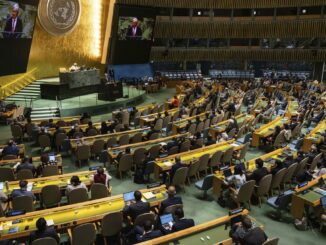
    Dhaka (TIP): A United Nations team will meet Bangladesh’s interim government and other stakeholders from August 22 to discuss the process to investigate alleged human rights violations during the recent deadly violence in the country, officials said.
    About 300 people, many of them university and college students, were killed during protests before the events spiralled into demonstrations to oust long-serving former PM Sheikh Hasina.
    The UN office in Bangladesh said in a media advisory that the team from the UN High Commissioner for Human Rights will be visiting Dhaka from September 22-29.
    “The purpose of this visit is to understand their priorities for assistance in promoting human rights,” said the media advisory, adding Bangladesh’s interim government had requested the UN to probe the killings during the protests.
    Kamala Harris remembers her mother as she accepts Democratic Party’s nomination’
    “It is important to note that this visit is not an investigation, but rather it will focus on discussing the process for investigating human rights violations in light of the recent violence and unrest.” (Reuters)

  • 7 die in Nepal landslides; 4 of family buried alive in Bajhang district

    Kathmandu (TIP): Seven persons were killed in separate incidents of landslides that were triggered by incessant rain in the western part of Nepal in the last 24 hours, police said on August 20.
    Four members of a family were buried alive in the Bajhang district as a landslide swept a house in the Bungal municipality-10 on Sunday night, according to the police.
    Those killed included 50-year-old Kali Dhami, her daughter-in-law and two grandchildren aged six and three, said the police. Meanwhile, six members of the family managed to escape nature’s fury.
    In another incident, a landslide buried a temporary shelter in Majha gaon of the Nalgad municipality-2 in Jajarkot district on Monday, killing three members of a family.
    According to the police, the family had been living in the temporary shelter after their house had collapsed in the earthquake last year. More than 1,800 people have lost their lives in a decade, owing to the monsoon’s fury in the Himalayan nation. (PTI)

  • Sri Lanka announces visa-free access to Indians, nationals from 34 other countries for 6 months

    Colombo (TIP): The Sri Lankan government has announced visa-free access to citizens from 35 countries, including India, the UK and the US to the island nation for six months, media reports said on August 21. The Cabinet made the decision which will be in effect from October 1, 2024, the Daily Mirror newspaper reported quoting Adviser to the Ministry of Tourism, Harin Fernando.
    The policy is for six months, Fernando said. Countries on the list include India, the UK, China, the US, Germany, the Netherlands, Belgium, Spain, Australia, Denmark, Poland, Kazakhstan, Saudi Arabia, the UAE, Nepal, Indonesia, Russia, and Thailand.
    Other countries include Malaysia, Japan, France, Canada, the Czech Republic, Italy, Switzerland, Austria, Israel, Belarus, Iran, Sweden, South Korea, Qatar, Oman, Bahrain and New Zealand.
    Earlier, controversy surrounded increased fees for on-arrival visas in Sri Lanka, which were being handled by a foreign company.
    Visitors from India, China, Russia, Japan, Malaysia, Thailand, and Indonesia received tourist visas free of charge to Sri Lanka. (PTI)

  • Pakistani YouTuber arrested for fanning ‘religious hatred’, ‘defaming institutions’

    Pakistani YouTuber arrested for fanning ‘religious hatred’, ‘defaming institutions’

    Lahore (TIP): A staunch critic of the Pakistan Army and YouTuber has been arrested in the Punjab province of Pakistan for allegedly fanning ‘religious hatred’ and ‘defaming institutions’, especially the military, on social media, authorities said on August 22. The arrest of Orya Maqbool Jan, a known political commentator, comes a week after intelligence agencies allegedly abducted another YouTuber and comedian for criticising the Shehbaz Sharif-led government.
    The Federal Investigation Agency (FIA) cybercrime wing said it raided Jan’s residence in Lahore on Thursday and arrested him for stoking religious hatred against an ‘important personality’ and institutions.
    Jan, a columnist, poet, playwright and former civil servant, has a following of over a million subscribers on his YouTube channel. Last year he was detained by intelligence agencies for several days for openly criticising the role of the powerful military in politics and for supporting jailed former prime minister Imran Khan.
    Following the arrest of Khan, the founder supremo of the Pakistan-Tehreek-e-Insaf (PTI) party last August, a number of journalists and YouTubers in the country faced arrests, violence and threats amid mass protests.
    Earlier last week, another Pakistani YouTuber and comedian Aun Ali Khosa was allegedly abducted by intelligence agencies for singing a song critical of the Shehbaz Sharif government and its backers. He, however, had returned home, his lawyer said on Monday.
    Khosa was among the three other social media activists from Khan’s PTI, who had recently been picked up, allegedly by intelligence agencies. The other two were Naeem Ahmad Yasin and Arsalan Akbar and their families have claimed they are ‘missing’. (PTI)

  • Bangladesh President orders release of jailed ex-PM Khaleda Zia

    Bangladesh President orders release of jailed ex-PM Khaleda Zia

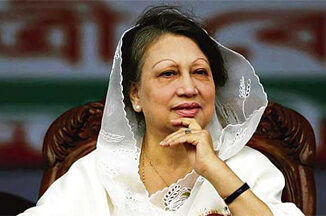
    Dhaka (TIP): Amid the political unrest in Bangladesh that saw Sheikh Hasina resign as the Prime Minister and flee the country on August 5, President Mohammed Shahabuddin chaired a meeting at the Bangabhaban in Dhaka to discuss the formation of an interim government with the chiefs of the three armed forces, leaders of various political parties, and civil society representatives. The meeting also unanimously decided to release BNP chairperson Begum Khaleda Zia immediately.
    The President’s press team said in a statement that the meeting led by Shahabuddin “decided unanimously to free Bangladesh Nationalist Party (BNP) chairperson Begum Khaleda Zia immediately”.
    At the meeting, a condolence resolution was also taken in memory of those killed in the anti-quota movement and prayers were sought for forgiveness and peace for the departed souls.
    The meeting decided to form an interim government, urging everyone to exercise patience and tolerance in controlling the law and order situation in the country. It also decided to take strict action to stop looting and violent activities.
    Besides, it was decided to release all the people detained during the anti-discrimination movement. A consensus was also reached at the meeting that no community should be harmed in any way. Earlier, as Hasina left for India, Bangladesh Army Chief General Waker-Uz-Zaman confirmed the news of her resignation and said that an interim government will be formed soon to run the country.
    It was reported that over 100 people were killed and more than 1,000 injured in the clashes that took place between police and the protesters on Sunday.
    “With yesterday’s count, the death toll in anti-government protests crossed 300 in just three weeks, making it the bloodiest period in the history of Bangladesh’s civil movement,” the country’s leading daily ‘The Daily Star’ reported.
    The student-led non-cooperation movement put immense pressure on the government led by Prime Minister Hasina over the past many weeks.
    The students had been protesting against a 30 per cent reservation in government jobs for relatives of freedom fighters who wrested independence for Bangladesh from Pakistan in a bloody civil war in 1971 in which, according to Dhaka officials, three million people were killed in the genocide by Pakistani troops and their supporters.
    After the Supreme Court slashed the reservations to 5 per cent, student leaders put the protests on hold, but the demonstrations flared up again because the students said the government ignored their call to release all their leaders, making the resignation of PM Hasina their primary demand. (IANS)

  • Death toll from 6 weeks of monsoon rains jumps to 154 in Pakistan

    Death toll from 6 weeks of monsoon rains jumps to 154 in Pakistan

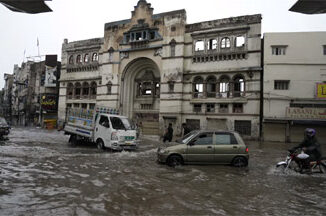
    ISLAMABAD (TIP): The death toll from nearly six weeks of monsoon rains and floods across Pakistan has risen to 154, officials said August 8, as downpours continued in much of the country, inundating some villages.
    More than 1,500 homes have been damaged since July 1, when the monsoon rains began, the National Disaster Management Authority said. Orchards in remote areas of the southwestern Baluchistan province were damaged, and rains flooded many streets in the eastern city of Lahore.
    The Pakistan-administered portion of the disputed Himalayan region of Kashmir has also been battered by rains, causing landslides.
    Many of the 154 deaths occurred in the eastern Punjab and northwestern Khyber Pakhtunkhwa provinces, according to the disaster agency and provincial authorities.
    Currently, more than 2,000 people are in relief camps in rain-affected areas in the southern Sindh province, officials said.
    On Thursday, the aid group International Rescue Committee said it is preparing to scale up its response in Pakistan with looming rains posing a threat to the lives and livelihoods of millions.
    “Our priority is to ensure that affected communities receive timely and adequate support to prevent this humanitarian crisis from deepening,” the group’s director in Pakistan, Shabnam Baloch, said in a statement.
    Pakistan is in the middle of the annual monsoon season, which runs from July through September. Scientists and weather forecasters blame climate change for heavy rains in recent years.
    So far this year, Pakistan has received less rain than in 2022, when climate-induced downpours swelled rivers and inundated at one point one-third of the country, killing 1,739 people and causing $30 billion in damage. (AP)

  • Ouster of Bangladesh ally a diplomatic dilemma for India

    NEW DELHI (TIP): The ouster of Bangladesh’s autocratic premier sparked celebrations in Dhaka this week but alarm in neighbouring India, which backed Sheikh Hasina to counter rival China and quash Islamist alternatives, analysts say.
    It has created a diplomatic dilemma for the regional powerhouse.
    Hasina, 76, quit as prime minister in the face of a student-led uprising on Monday and fled by helicopter to longtime ally New Delhi.
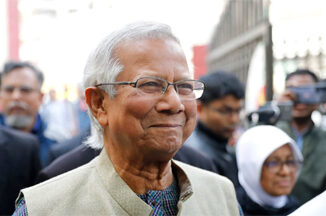
    Indian Prime Minister Narendra Modi was among the first to offer his “best wishes” after Bangladesh’s newly sworn-in interim leader Muhammad Yunus took power on August 8, saying New Delhi was “committed” to working with Dhaka.
    But China was also swift to welcome Dhaka’s new authorities, saying it “attaches importance to the development” of relations. With Hasina’s rivals in control in Dhaka, India’s support for the old government has come back to bite.
    “From the point of view of Bangladeshis, India has been on the wrong side for a couple of years now,” said International Crisis Group analyst Thomas Kean.
    “The Indian government absolutely did not want to see a change in Dhaka, and had made that very clear for years that they didn’t see any alternative to Hasina and the Awami League.”
    Bangladesh is almost entirely encircled by India, with a deeply intertwined history long before they were partitioned out of the Indian subcontinent in 1947. But while India’s 1.4 billion population and dominating economy overshadows Bangladesh — with a population of 170 million — Hasina also courted China. (AFP)

  • Sri Lanka Navy arrests 33 fishermen from Pamban, seizes four boats

    RAMANATHAPURAM (TIP): The Sri Lankan Navy seized four country boats and arrested as many as 33 Indian fishermen hailing from the Pamban region for alleged violation of the IMBL here on August 8. According to official sources, the arrested fishermen were escorted to Thalai Mannar and will be handed over to Puthalam fisheries officials for further proceedings.
    Speaking to TNIE, Rayappan, a leader of country boat fishermen association in Pamban, condemned the Lankan Navy’s act and added, “We had raised these issues with the external affairs minister the other day, and were assured of proper action. However, now, our fishermen have been arrested by Sri Lanka again. Immediate action must be taken to ensure their release.”

  • Pakistani woman saving money for her hernia surgery dies by suicide after she gets inflated electricity bill

    Gujranwala (TIP): A 65-year-old woman, Razia Bibi suffering from a hernia, committed suicide after using her treatment money to pay an unexpected electricity bill, ARY News reported. She had carefully set aside funds for her treatment, but the sudden bill left her with no other option, leading to a tragic sequence of events. She had diligently saved money for her hernia operation. However, when faced with an unexpected electricity bill of Pakistani currency (PKR) 10,000, she had no choice but to use her medical savings to settle the payment, as per ARY News.
    Following this, the son of Razia Bibi stated that his mother had gone out to buy medicine but was deeply distressed over the financial setback, overcome by despair, she jumped into a nearby drain, as per the police officials. “I met traders and industrialists here in the past week and they lamented, ‘we are at our limits and cannot run our factories anymore,’” Rehman said, as reported by Dawn. He highlighted the broader economic impact, pointing out that the closure of a single factory results in thousands of people losing their jobs. (ANI)

  • Pilot in Nepal crash survived as cockpit split from aircraft

    Kathmandu (TIP): Captain Manish Raj Shakya, the lone survivor of a deadly plane crash in Nepal that killed 18 people, was saved after the aircraft’s cockpit was sheared off by a freight container seconds before the rest of the aircraft went up in flames, a report said on August 1.
    Airport Security Office Ram Dutt Joshi said: “We rescued Shakya from inside the container.” Doctors said the pilot was “free from danger” and can speak. He can also consume liquid food.
    Meanwhile, Nepalese authorities on Thursday recovered the black box of the aircraft that crashed here a day before and handed it over to a probe team formed to inquire into the tragic accident that killed 18 persons, including a child. (PTI)

  • Mobile Internet restored in Bangladesh

    Dhaka (TIP) : The mobile Internet connection was restored in Bangladesh on July 28, 10 days after it was restricted by authorities across the country to stop the spread of fake news on social media amidst the deadly nationwide violence over reforms in the quota system in government jobs. Minister of State for Information and Communication Technology Zunaid Ahmed Palak announced that 5GB Internet will be given for free to all users for three days after the connection is restored, the Dhaka Tribune newspaper reported. (PTI)

  • Bangladesh bans BNP ally Jamaat under anti-terrorism law

    Dhaka (TIP): Bangladesh on August 2 banned the Jamaat-e-Islami and its student wing Islami Chhatra Shibir under anti-terrorism law following nationwide unrest over the quota system for government jobs, accusing the fundamentalist party of instigating protests that left at least 150 people dead. A notification issued by the Public Security Division of the Ministry of Home Affairs confirmed the ban on the Islamist party, a key ally of former prime minister Khaleda Zia’s Bangladesh Nationalist Party. The ban on Jamaat, Chhatra Shibir and other associated groups came through an executive order under the Anti-Terrorism Act.
    “They (Jamaat-Shibir and BNP) just used the students as their shield,” PM Sheikh Hasina said on Thursday when Italian Ambassador Antonio Alessandro called on her at her here. (PTI)

  • 150 people killed in student unrest, says Bangladesh govt; announces nationwide mourning

    150 people killed in student unrest, says Bangladesh govt; announces nationwide mourning

    DHAKA (TIP): For the first time, the Bangladesh government on July 29 officially acknowledged that 150 people were killed across the country during the students’ unrest over the quota system.
    Violence gripped Bangladesh recently and the government called in the army to quell protests against job quotas.
    The protests, which started in universities and colleges earlier this month, quickly turned into a more widespread agitation against Prime Minister Sheikh Hasina and her government.
    The unrest has left several thousand people, including policemen, wounded and major government installations damaged.
    “The government has decided that a nationwide mourning will be observed tomorrow…People have been urged to wear black badges to mourn the deaths (during the violence),” Cabinet Secretary Mahbub Hossain told a media briefing after a meeting chaired by Hasina at the Prime Minister’s Office (PMO).
    He said mosques, temples, pagodas and churches across the country were also urged to offer prayers for the departed souls and the wounded people.
    The top bureaucrat said Home Minister Asaduzzaman Khan Kamal presented a report at the meeting about the overall situation and confirmed 150 deaths in clashes across the country.
    The announcement came on a day when the military and paramilitary troops patrolled the streets of the capital Dhaka while police in riot gear enforced a strict vigil as a faction of the protesting students overnight called a new round of protests.
    The group called the new protest after six of their coordinators announced the withdrawal of the demonstrations, which the protestors said was obtained under duress in police custody.
    The six student leaders in an appearance before the media overnight announced the withdrawal of the street demonstrations as their demand for reforms in the quota system was met by the government following a Supreme Court order.
    “We have mobilised forces to prevent fresh violence,” a police official said.
    Witnesses and live TV footage showed the security forces guarding major points in the capital with military and police armoured personnel carriers patrolling the streets alongside the paramilitary Border Guard Bangladesh.
    The protests subsided after the apex Appellate Division of unitary Bangladesh’s Supreme Court on July 21 ordered a massive quota reform, keeping only seven per cent of reserve posts instead of the existing 56 per cent.
    The government subsequently issued a Gazette notification in line with the order saying 93 per cent of jobs would be open to candidates on merit.
    “Our main demand for logical reforms to the government job quota system has been met,” student coordinator Nahid Islam on Sunday said in a video message, calling for educational institutions to re-open. (PTI)

  • 30 killed, 145 injured in clashes between two tribes in Pakistan

    Peshawar (TIP) : At least 30 people were killed and 145 others injured in armed clashes between two tribes fighting over a piece of land in Pakistan’s restive tribal district in northwest, officials said on July 28.
    Officials said that heavy clashes started five days ago in Boshera village in Upper Kurram district, which has witnessed deadly conflicts among tribes and religious groups as well as sectarian clashes and militant attacks in the past. Police said the tribal clashes left 30 people dead and 145 others injured in the last five days in Khyber Pakhtunkhwa’s Kurram district, bordering Afghanistan. Officials with the help of tribal elders, military leadership, police and district administration have brokered a truce between Shia and Sunni tribes in Boshera, Malikhel and Dandar areas a short while ago, police said.
    However, firing is still continuing in some other parts of the district. An official said efforts were being made to reach a ceasefire in the remaining areas too.
    Clashes broke out between the two tribes over a land dispute four days ago. The clashes spread to other areas such as Peewar, Tangi, Balishkhel and Khaar Kalay. (PTI)

  • Hezbollah says top commander Shukr was in Beirut building hit by Israel

    BEIRUT (TIP): Hezbollah said July 31 that senior military commander Fuad Shukr was inside a south Beirut building hit by Israel the previous day but that his fate remained unknown. The strike, which was followed by another, hours later, which killed Hamas political leader Ismail Haniyeh in Tehran, triggered fears the war in Gaza could escalate into a region-wide conflict. The Israeli military said its Tuesday strike had “eliminated” Shukr, a top Hezbollah commander it blamed for carrying out a weekend rocket attack on the annexed Golan Heights that killed 12 children in a Druze Arab town. Hezbollah said in a statement that “the great jihadist commander brother Fuad Shukr (Hajj Mohsen) was present” in the building targeted by “the Zionist enemy”. Rescue teams “have been working since the incident happened… to remove the rubble… and we are still waiting for the results of this operation regarding the fate of the great commander and other citizens. (AP)

  • Bangladesh eases nationwide curfew amid ongoing student protests

    Bangladesh eases nationwide curfew amid ongoing student protests

    DHAKA (TIP): Bangladesh further eased a nationwide curfew on July 25 as students weighed the future of their protest campaign against civil service hiring rules that sparked days of deadly unrest last week. Last week’s violence killed at least 191 people including several police officers, according to an AFP count of victims reported by police and hospitals during some of the worst unrest of Prime Minister Sheikh Hasina’s tenure. Thousands of troops are still patrolling cities and a nationwide internet shutdown remains largely in effect, but clashes have subsided since protest leaders announced a temporary halt to new demonstrations.
    Hasina’s government ordered another relaxation to the curfew it imposed at the height of the unrest, allowing free movement for seven hours between 10:00 am and 5:00 pm.
    Streets in the capital Dhaka, a sprawling megacity of 20 million people, were choked with commuter traffic in the morning, days after ferocious clashes between police and protesters had left them almost deserted.
    Banks, government offices and the country’s economically vital garment factories had already reopened on Wednesday after all being shuttered last week.
    Student leaders were set to meet later Thursday to decide whether or not to again extend their protest moratorium, which is due to expire on Friday.
    Students Against Discrimination, the group responsible for organising this month’s rallies, said it expected a number of concessions from the government.
    “We demand an apology from Prime Minister Sheikh Hasina to the nation for the mass murder of students,” Asif Mahmud, one of the group’s coordinators, told AFP.
    “We also want the sacking of the home minister and education minister.”
    Mahmud added that the estimated toll in the unrest was understated, with his group working on its own list of confirmed deaths. Police have arrested at least 2,500 people since the violence began last week, according to an AFP tally.
    Protests began after the June reintroduction of a scheme reserving more than half of government jobs for certain candidates, including nearly a third for descendants of veterans from Bangladesh’s independence war.
    With around 18 million young people in Bangladesh out of work, according to government figures, the move deeply upset graduates facing an acute jobs crisis.
    Critics say the quota is used to stack public jobs with loyalists to Hasina’s Awami League.
    The Supreme Court cut the number of reserved jobs on Sunday but fell short of protesters’ demands to scrap the quotas entirely.
    Hasina, 76, has ruled the country since 2009 and won her fourth consecutive election in January after a vote without genuine opposition. Her government is also accused by rights groups of misusing state institutions to entrench its hold on power and stamp out dissent, including the extrajudicial killing of opposition activists. (AFP)

  • Japan resumes funding Sri Lanka after debt restructure

    Japan resumes funding Sri Lanka after debt restructure

    COLOMBO (TIP): Japan will resume funding stalled infrastructure projects in Sri Lanka, including the expansion of the main international airport, government officials said July 24, after the bankrupt island nation successfully restructured its foreign debt.
    Bilateral lenders including Japan had cut project funding when Sri Lanka defaulted on its $46 billion in foreign borrowings two years ago during an unprecedented economic crisis.
    “Japan is the first country to resume financing for the suspended projects,” its ambassador to Sri Lanka Hideaki Mizukoshi told reporters.
    A Sri Lankan finance ministry official said Japan will in the coming weeks release the first tranche of about $75 million for 11 projects suspended after Colombo’s sovereign default, including the Colombo airport expansion. Japan’s loan portfolio in Sri Lanka is estimated at $2.3 billion with another $1.1 billion committed for ongoing projects and is to be disbursed in the next five years, Sri Lankan officials said.
    The ambassador said Tokyo was satisfied that bilateral debt restructuring had been done in a fair manner with “comparability of treatment” for all creditors.
    Japan is the second largest bilateral creditor to Sri Lanka after China.
    Colombo clinched a restructuring deal four weeks ago with its bilateral lenders covering up to $10 billion in debt, a critical step towards recovery after its 2022 financial crash.
    A collapse in foreign exchange reserves at the time left Sri Lanka unable to import food, fuel and other essentials, leading to months of widespread shortages.
    Public anger culminated in a huge crowd storming the home of then-president Gotabaya Rajapaksa, forcing him to temporarily flee abroad, from where he resigned.
    His successor Ranil Wickremesinghe sealed a $2.9 billion International Monetary Fund rescue package. He has also hiked taxes and cut generous public subsidies to help restore the nation’s ruined finances. (AFP)

  • Heavy rains kill at least 35 in eastern Afghanistan: official

    KABUL (TIP): At least 35 people were killed and 230 injured on July 17 after heavy rain in eastern Afghanistan, a local official said. “On Monday evening, rain caused by thunderstorms killed 35 people and injured 230 others in Jalalabad and certain districts of Nangarhar” province, Quraishi Badloon, head of the department of information and culture, told AFP. The casualties were caused by heavy storms and rains that collapsed trees, walls and roofs of people’s houses, Badloon said. “There is a possibility that casualties might rise,” he went on, adding that the wounded as well as victims’ bodies were brought to Nangarhar regional hospital and Fatima-tul-Zahra hospital. Images shared by Badloon’s department showed medical personnel wearing white and blue uniforms giving treatment to the wounded.
    “We share the grief of the families of the victims,” said Zabihullah Mujahid, a spokesman for the Taliban government.
    “The relevant institutions of the Islamic Emirate have been directed to go to the affected areas as soon as possible,” Mujahid wrote on X, adding they would provide shelter, food and medicine to displaced families.
    The tragedy comes after flash floods killed hundreds of people in Afghanistan in May and swamped agricultural lands in the country, where 80 percent of the population depends on farming to survive. Among the poorest countries in the world, Afghanistan is particularly exposed to the effects of climate change. (AFP)

  • Pakistan government to ban jailed ex-PM Imran Khan’s party, says information minister

    ISLAMABAD (TIP): The Pakistan government will ban jailed former prime minister Imran Khan’s Pakistan Tehreek-e-Insaf party for its alleged involvement in anti-state activities, it was announced on July 17.
    Information Minister Attaullah Tarar announced that the federal government has decided to ban the Pakistan Tehreek-e-Insaf (PTI), alleging that the former ruling party was involved in anti-state activities, The News International reported. Khan, 71, has been lodged at the Adiala Jail in Rawalpindi on account of multiple cases against him. Tarar said that clear evidence was available to impose restrictions on the Pakistan Tehreek-e-Insaf (PTI), and the government would initiate proceedings against the party.
    The government’s decision comes on the heels of relief given to the PTI by the Supreme Court in the reserved seats case as well as to Khan in the illegal marriage case. (PTI)

  • 40 dead as heavy rains pound eastern Afghanistan, destroying houses and cutting power

    ISLAMABAD (TIP): Heavy rains in eastern Afghanistan have killed at least 40 people and injured nearly 350 others, Taliban officials said July 17. Among the dead in Monday’s storm were five members of the same family when the roof of their house collapsed in Surkh Rod district, according to provincial spokesperson Sediqullah Quraishi.Four other family members were injured.
    Sharafat Zaman Amar, a spokesperson for the Public Health Ministry, said the 347 injured people had been brought for treatment to the regional hospital in Nangarhar from Jalalabad, the capital of Nangarhar province, and nearby districts.
    About 400 houses and 60 electricity poles were destroyed across Nangarhar, Quraishi said.Power was cut in many areas and there were limited communications in Jalalabad city, he said. The damage was still being assessed.
    Abdul Wali, 43, said much of the damage occurred within an hour. “The winds were so strong that they blew everything into the air. That was followed by heavy rain,” he said. His 4-year-old daughter received minor injuries, he said. Aid organizations rushed supplies and mobile teams. (TIP)

  • Bangladesh students reject PM’s olive branch after deadly protests

    DHAKA (TIP): Bangladesh students vowed on July 18 to continue nationwide protests against civil service hiring rules, rebuffing an olive branch from Prime Minister Sheikh Hasina who pledged justice for seven killed in the demonstrations.
    Hasina’s government has ordered schools and universities to close indefinitely and stepped up efforts to contain weeks of rallies demanding equal access to public sector jobs.
    Riot police have fired tear gas and rubber bullets to disperse crowds while protesters and students allied to the premier’s ruling Awami League have battled on the streets with bricks and bamboo rods.
    Hasina condemned the “murder” of protesters in a televised address to the nation and vowed that those responsible will be punished regardless of their political affiliation.
    But Students Against Discrimination, the main group behind this month’s rallies, said her words were insincere and urged supporters to press on.
    “It did not reflect the murders and mayhem carried out by her party activists,” Asif Mahmud, one of the coordinators of the protests, told AFP.
    The group called on Bangladeshis to observe a nationwide shutdown on July 18, by keeping shops closed and staying at home ahead of fresh protests planned for later in the day.
    The call was widely observed in the capital Dhaka, with barely any vehicles seen on the city’s usually traffic-choked roads.
    Dhaka residents reported widespread mobile internet outages on Thursday, two days after internet providers cut off access to Facebook — the protest campaign’s key organising tool.
    Police on July 18 announced the death of a seventh protester the previous evening, conceding that police weaponry had killed the 18-year-old.
    “He was hit by rubber bullets,” police inspector Bacchu Mia told AFP. “He was brought to the hospital but died before he was admitted.”
    More than 500 others were injured in clashes around the country on Wednesday, while six people were killed on Tuesday. Hasina’s speech did not assign responsibility for the deaths, but descriptions from hospital authorities and students given to AFP earlier suggest at least some of the victims died when police used supposedly non-lethal weapons on demonstrations.
    Rights group Amnesty International said video evidence from clashes this week showed that Bangladeshi security forces had used unlawful force. (AFP)

  • Nepal PM Oli to seek vote of confidence on July 21: Report

    Nepal PM Oli to seek vote of confidence on July 21: Report

    KATHMANDU (TIP): Nepal’s newly appointed Prime Minister K P Sharma Oli will take a vote of confidence in Parliament on July 21, as required by the Constitution, a media report quoted the chief whip of his party as saying on July 17. The 72-year-old veteran leader was sworn in on Monday as the Himalayan nation’s prime minister for the fourth time.Prime Minister Oli decided to take a vote of confidence on Sunday, MyRepublica news portal reported, quoting Communist Party of Nepal-Unified Marxist Leninist (CPN-UML) Chief Whip Mahesh Bertaula. According to Nepal’s Constitution, Oli needs to secure a vote of confidence from Parliament within 30 days of appointment, which he is likely to secure easily, as the minimum number to form a government in the 275-strong House of Representatives (HoR) is just 138.
    The leader of Nepal’s largest communist party was appointed as prime minister on Sunday by President Ram Chandra Paudel to lead the coalition government with the Nepali Congress (NC), the largest party in Parliament, apart from other smaller parties.
    Oli succeeds Pushpa Kamal Dahal ‘Prachanda,’ who lost the vote of confidence in the HoR last week, leading to the formation of the new government.
    The CPN-UML Chairman now leads the new coalition government that faces the daunting challenge of providing political stability in the Himalayan nation.
    Nepal has faced frequent political turmoil as the country has seen 14 governments in the past 16 years after the introduction of the Republican system.
    Within hours of Oli’s swearing-in, three advocates — Deepak Adhikari, Khagendra Prasad Chapagain and Shailendra Kumar Gupta ? filed a writ petition in the Supreme Court of Nepal challenging his appointment arguing that it was unconstitutional and sought its annulment.
    The advocates argued that the president should call for forming a new government under Article 76 (3) if a government formed as per Article 76 (2) fails the floor test in the House of Representatives. The apex court has set July 21 as the date for a preliminary hearing in the case — the same day Oli will take the floor test in the Parliament. (PTI)

  • Bangladesh suspends job quotas after student protests

    DHAKA (TIP): Bangladesh’s top court on July 10 temporarily suspended quotas for coveted government jobs after thousands of students staged nationwide protests against what they call a discriminatory system, lawyers said.
    The quota system reserves more than half of well-paid and massively over-subscribed civil service posts, totalling hundreds of thousands of government jobs, for specific groups including children of liberation heroes.
    Students launched protests earlier this month, demanding a merit-based system, with demonstrations on Wednesday blocking highways and railway lines.
    “Our only demand is that the government abolish the quota system,” said student protest leader Rasel Ahmed, from Chittagong University.
    “We will not return to classrooms until our demand is met,” Ahmed told AFP.
    The quota system was abolished in 2018 after weeks of protests, but reinstated in June by Dhaka’s High Court, sparking fury from students.
    The Supreme Court on Wednesday suspended that order for a month, said lawyer Shah Monjurul Hoque, who represents two students seeking to end the quota system. (AP)

  • Sri Lanka to end constitutional ambiguity on presidential term

    COLUMBO (TIP): The Sri Lankan Cabinet has approved a move to amend the Constitution giving clarity to terms of both the president and Parliament, restricting it to five years only, the government announced on July 10. The dispute about the president’s term arose as the independent election commission was preparing to announce the poll date for the next presidential election. The terms for both posts are already five years as per the 19th Amendment since 2015. However, the problem was over Article 83, which said the term could be extended to six from five with a referendum. A petitioner approached the Supreme Court asking it to define if the terms were five or six years.
    Earlier this week, the Supreme Court rejected the petition which sought a ruling on the seeming ambiguity between 30(2) and 83 in the Constitution, which means, it will be five years only. The amendment to be introduced now seeks to resolve the issue arising from Article 83 (b) that reads, ???extend the term of office of the president or the duration of parliament as the case may be? to over five years from the present six.
    The election commission chief RMAL Ratnayake, who held preliminary arrangements with the police and the government printer, on Tuesday said that the date for the presidential polls could be announced by the end of the month.
    The Commission had previously announced that the election would be held between September 16 and October 17.