
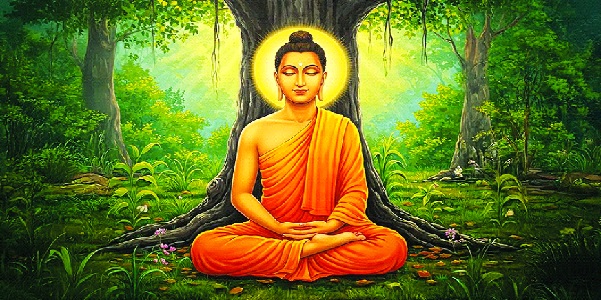

Buddha Purnima, also known as Vesak or Buddha Jayanti, stands as one of the most sacred observances in the Buddhist world. Celebrated on the full moon day (Purnima) of the Vaisakha month (April-May), this auspicious occasion commemorates not one, but three pivotal events in the life of Gautama Buddha-his birth, enlightenment, and ultimate liberation (Mahaparinirvana). The day radiates profound spiritual significance, inviting humanity to reflect upon the timeless teachings of compassion, mindfulness, and the path to inner awakening. This year, Buddha Purnima falls on May 1, Friday.
Origin and Historical Context
The origins of Buddha Purnima trace back over 2,500 years to ancient India, where the life and teachings of the Buddha transformed spiritual thought across Asia and beyond. The festival is observed by followers of Buddhism, as well as by seekers of wisdom across cultures.
The celebration was formally institutionalized during the reign of Emperor Ashoka in the 3rd century BCE. After embracing Buddhism, Ashoka promoted the observance of Buddha’s life events and helped spread his teachings throughout his vast empire and into regions such as Sri Lanka, Central Asia, and Southeast Asia.
Siddhartha Gautam was born in Kapilavastu of Nepal in 623 BC.
The Legend of Buddha’s Birth
According to Buddhist tradition, Queen Maya, the mother of the Buddha, experienced a divine dream in which a white elephant entered her womb-symbolizing purity and the descent of a great soul. Soon after, she gave birth to Prince Siddhartha in the serene gardens of Lumbini.
It is believed that the infant Siddhartha took seven steps immediately after birth, and at each step, a lotus flower bloomed. He declared, “I am the foremost in the world,” signifying his destined spiritual greatness. Born into the royal Shakya clan, he was named Siddhartha Gautama.
Astrologers predicted that the prince would either become a great king or a spiritual teacher. His father, King Suddhodana, shielded him from the harsh realities of life in hopes of steering him toward kingship.
Great Renunciation and Quest for Truth
Despite a life of luxury, Siddhartha was deeply moved upon encountering the “Four Sights”-an old man, a sick person, a corpse, and an ascetic. These experiences awakened in him the realization of suffering (dukkha) inherent in human existence.
At the age of 29, he renounced his princely life in an event known as the Great Renunciation. For years, he practiced severe austerities and meditative disciplines, seeking the ultimate truth. Eventually, he realized that extreme asceticism was not the path to enlightenment, leading him to adopt the Middle Way-a balanced approach between indulgence and self-denial.
Enlightenment Under the Bodhi Tree
Siddhartha attained enlightenment at the age of 35 while meditating beneath the sacred Bodhi Tree in Bodh Gaya. After a night of profound meditation, he realized the nature of existence, the causes of suffering, and the path to liberation. From that moment, he became the Buddha-the “Awakened One.”
His enlightenment revealed the fundamental truths of life, later articulated as the Four Noble Truths and the Eightfold Path-core principles that guide Buddhist philosophy and practice.
Teachings of the Buddha
The teachings of the Buddha are not dogmatic doctrines but practical insights into the nature of reality and human suffering. His message is universal, transcending boundaries of caste, creed, and nationality.
The Four Noble Truths
– Life is marked by suffering (dukkha).
– Suffering arises from desire (tanha).
– The cessation of suffering (nirvana) is attainable.
– The path to end suffering is the Eightfold Path.
The Noble Eightfold Path
This path provides a comprehensive guide to ethical and mental development:
– Right Understanding
– Right Intention
– Right Speech
– Right Action
– Right Livelihood
– Right Effort
– Right Mindfulness
– Right Concentration
Core Philosophical Concepts
– Impermanence (Anicca): All things are transient.
– Non-self (Anatta): There is no permanent, unchanging self.
– Suffering (Dukkha): Attachment leads to suffering.
The Buddha emphasized compassion (karuna), loving-kindness (metta), and mindfulness as essential virtues for a harmonious life.
Mahaparinirvana: The Final Liberation
At the age of 80, the Buddha attained Mahaparinirvana in Kushinagar. This event signifies the complete release from the cycle of birth and death (samsara). Unlike ordinary death, nirvana represents the extinguishing of all desires and the realization of ultimate peace. Buddha Purnima uniquely commemorates this final liberation alongside his birth and enlightenment, making it a day of profound reflection on the entire journey of spiritual awakening.
Spiritual Significance of Buddha Purnima
Buddha Purnima is more than a festival-it is a spiritual mirror for humanity. It reminds individuals to:
– Cultivate inner peace through meditation and self-awareness
– Practice compassion and non-violence
– Detach from material desires
– Seek wisdom and truth
Devotees visit monasteries, offer prayers, chant sacred texts, and perform acts of charity. Many release birds or animals as symbols of liberation and kindness.
A Universal Message for Humanity
In an age marked by restlessness and conflict, the message of the Buddha resonates with timeless relevance. His teachings offer a path not only to personal enlightenment but also to collective harmony. Buddha Purnima calls upon humanity to awaken-to see clearly, live ethically, and act compassionately. It is a reminder that enlightenment is not reserved for a select few but is a possibility inherent in every human being.
“Peace comes from within. Do not seek it without.” – Gautama Buddha
On this sacred full moon, the light of wisdom and compassion continues to illuminate the path for millions across the world, guiding them toward a life of balance, awareness, and ultimate liberation.
Be the first to comment