Tag: Sri Lanka

  • Prime Minister Modi’s foreign visits from 2021-24 cost the nation USD 34,114,449 (Rs 295 cr)’;  USD 7,746,345 (Rs 67 cr ) on trips to 5 countries in 2025: Govt data

    Prime Minister Modi’s foreign visits from 2021-24 cost the nation USD 34,114,449 (Rs 295 cr)’; USD 7,746,345 (Rs 67 cr ) on trips to 5 countries in 2025: Govt data

    NEW DELHI (TIP): Over Rs 67 crore (USD 7,746,345) was incurred on Prime Minister Narendra Modi’s visit to five countries, including the US and France, in 2025, while the total expenditure figures related to his foreign trips from 2021 till 2024 stood at nearly Rs 295 crore (USD 34,114,449) , according to data shared by the government, says a PTI report.

    As per the country-wise and year-wise data, the corresponding figures for Modi’s visits to Mauritius, Cyprus, Canada and Croatia, and Ghana, Trinidad & Tobago, Argentina, Brazil and Namibia this year were not available.

    For these visits, the column for ‘total expenditure’ in the data shared by Minister of State for External Affairs Kirti Vardhan Singh on Thursday, in his written response to a query by TMC MP Derek O’Brien in Rajya Sabha, said, “Bills under settlement. Total expenditure is not yet available.” Of these visits, the costliest one was to France, which incurred over Rs 25 crore (USD 2,890,009) , while the one Modi undertook to the US in June 2023 incurred over Rs 22 crore (USD 2,542,900) .

    On March 20, the ministry had shared data in in Rajya Sabha, according to which nearly Rs 258 crore ( USD 29,821,291) was incurred on 38 foreign visits of Modi between May 2022 and December 2024.

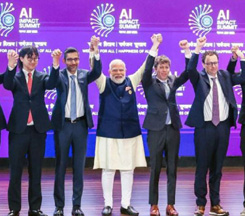
    In 2025, Modi had travelled to France and the US from February 10-13. In Paris, he held bilateral talks with President Emmanuel Macron and attended an AI Summit, while in the US he met and held talks with President Donald Trump, among other engagements.

    According to the data shared, the country-wise figures for these five countries Modi visited in 2025 are–Rs 25,59,82,902 (France); Rs 16,54,84,302 (US); Rs 4,92,81,208 (Thailand); Rs 4,46,21,690 (Sri Lanka) and Rs 15,54,03,792.47 (Saudi Arabia).

    The cumulative figures for the preceding four years are–about Rs 109 crore (2024) spanning 16 countries, including Russia, Ukraine, the US and Brazil; nearly 93 crore (2023); Rs 55.82 crore (2022) and about Rs 36 crore (2021).

    In 2021, Modi visited Bangladesh (Rs 1,00,71,288–total expenditure); the US (Rs 19,63,27,806); Italy (Rs 6,90,49,376); and the UK (Rs 8,57,41,408). His trips in 2022 included visits to Germany (Rs 9,44,41,562); Denmark (Rs 5,47,46,921); France (Rs 1,95,03,918); Nepal (Rs 80,01,483) and Japan (Rs 8,68,99,372), it said. For Modi’s 2023 visit to Egypt, the expenditure on advertising and broadcasting was Rs 11.90 lakh, according to the data.

  • Punjab cadre IPS officer Parag Jain to head R&AW, played key role in Op Sindoor

    Punjab cadre IPS officer Parag Jain to head R&AW, played key role in Op Sindoor

    NEW DELHI (TIP): Senior Indian Police Service (IPS) officer Parag Jain, widely known for his expertise in intelligence gathering and affairs related to India’s neighborhood, has been appointed as the new head of the country’s external intelligence agency, the Research and Analysis Wing (R&AW), officials said on Saturday.

    Jain is a 1989-batch IPS officer of Punjab cadre. He will succeed Ravi Sinha, who completes his tenure on June 30.

    Sinha is a 1988 batch IPS officer of Chhattisgarh cadre. Jain is currently heading the Aviation Research Centre, which played a vital role during ‘Operation Sindoor’ by collecting intelligence on the Pakistani armed forces.

    Jain has previously served as Senior Superintendent of Police (SSP), Chandigarh, and has represented India in Canada and Sri Lanka. He has also been posted in Jammu and Kashmir, where he played an important role in the Centre’s counter-terrorism strategy in the strife-torn Union Territory.

  • Sri Lanka seizes largest cocaine haul at main airport

    Sri Lanka seizes largest cocaine haul at main airport

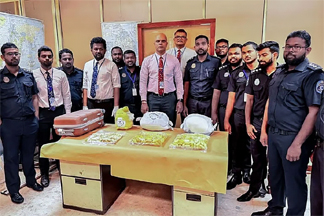
    COLOMBO (TIP): Sri Lanka’s customs authorities arrested on Friday a woman and seized the largest haul of cocaine ever detected at the country’s main international airport, an official said. The unnamed 38-year-old Thai woman was carrying nearly 10 kilogrammes (22 pounds) of cocaine stuffed into three soft toys, Customs Additional Director-General Seevali Arukgoda said. “This is the biggest attempt at cocaine smuggling stopped by Sri Lanka Customs at the airport,” Arukgoda said in a statement.
    Customs officials at Bandaranaike International Airport posed for photos with the cocaine, which had been neatly stuffed into just over 500 plastic capsules, with an estimated street value of $1.72 million. The seizure follows three other hauls this month totalling nearly 60 kilogrammes of synthetic cannabis.Three foreign nationals —- from Britain, India, and Thailand — were arrested in separate cases.
    The Briton, identified as Charlotte May Lee, 21, a former cabin crew member from London, was produced before a magistrate on Friday and further remanded until June 13, court officials said.
    She was arrested on May 12 when officials discovered that her two suitcases were packed with 46 kilogrammes of kush, a synthetic drug.
    All four suspects, including the Thai woman arrested on Friday, could face life imprisonment if convicted.
    Sri Lankan authorities have previously seized large quantities of heroin off the country’s shores, suggesting the island is being used as a transit hub for narcotics destined for other locations.
    In October, a Sri Lankan court sentenced 10 Iranian men to life imprisonment after they pleaded guilty to smuggling more than 111 kilogrammes of heroin. In 2023, nine Iranians received life sentences in a separate drug smuggling case.
    Sri Lanka’s largest single seizure of narcotics occurred in December 2016, when Customs found 800 kilogramme (1,760 pounds) of cocaine in a transhipment container of timber addressed to a company in neighbouring India. (AP)

  • How India flexed its global power muscles in 2024

    How India flexed its global power muscles in 2024

    India’s foreign policy in 2024 showcased a bold stance, with India asserting its influence not only in its immediate neighbourhood but also on the global stage. External Affairs Minister S. Jaishankar in December highlighted a decade-long shift toward prioritizing economic diplomacy, a trend that continued to define India’s strategic engagements this year.
    As per Jaishankar, India’s foreign policy today is based on three principles. “Active engagement with countries, nation’s interests first under any circumstance and humanitarian approach with ethics”.
    Here’s how India flexed its global power muscles in 2024:
    India stares down China
    It took India and China 21 rounds of Corp Commander-level talks on disengagement to end the military impasse that plagued the relationship for five years. While military disengagement had been achieved earlier at four points, the same remained elusive in Depsang and Demchok, the two friction points.
    China maintained that the impasse in these areas were legacy issues that predated the 2020 standoff and should not be allowed to block resumption of normal bilateral exchanges. However, India too steadfastly maintained there couldn’t be any progress in ties till the time disengagement is completed in the remaining areas, calling it an essential basis for peace in the border areas.
    Patient and persevering diplomacy helped clinch the disengagement agreement with China, Jaishankar said.
    Both the countries agreed to return to the patrolling agreements along the Line of Actual Control (LAC) in eastern Ladakh that were in place before the Galwan clashes in 2020 after several negotiations.
    Chabahar port powerplay
    India’s agreement with Iran in May to manage the strategic Chabahar Port for the next decade marked a significant milestone, as it was the first time India assumed management of a port overseas and that too amid Iran’s tensions with the US and Israel. This move underscores Prime Minister Narendra Modi’s emphasis on using strategic ports to bolster regional connectivity and influence.
    Chabahar port is a vital link in India’s efforts to enhance connectivity with Afghanistan, Central Asia, and the broader Eurasian region. It also serves as a counterbalance to Pakistan’s Gwadar Port and China’s expansive Belt and Road Initiative.
    The pact with Iran was signed despite the looming threat of US sanctions. Although the sanctions were never imposed, External Affairs Minister S. Jaishankar addressed concerns raised by the US about the “potential risk” to companies involved in the India-Iran joint venture. Jaishankar stressed that India would “work at” explaining Chabahar’s importance as a project serving the region’s broader interests.
    Maldives comes back
    India’s relationship with Maldives faced turbulence after Mohamed Muizzu, known for his pro-China and anti-India stance, assumed office as president. Mere hours after his swearing-in, Muizzu demanded the withdrawal of Indian military personnel stationed to operate three aviation platforms gifted by India. Following negotiations, the Indian military personnel were replaced with civilian operators.
    Tensions escalated further when three Maldivian deputy ministers made controversial remarks about India and Prime Minister Modi on social media. The Maldivian Foreign Ministry swiftly distanced itself from the comments, leading to the suspension of the three junior ministers.
    Amid these strained ties, President Muizzu made his first bilateral visit to India in October, as Maldives grappled with an economic crisis. The financial challenges facing his country were likely a key topic in discussions with India. Before the visit, Muizzu adopted a conciliatory tone, stating that he has never opposed India and acknowledging that New Delhi was aware of Maldives’ financial difficulties and willing to assist.
    Sri Lanka sides with India
    Sri Lankan President Anura Kumara Dissanayake on his inaugural foreign visit since taking office in September assured Prime Minister Modi that Sri Lanka would not permit its territory to be “used in any way that is detrimental to the interest of India.
    The assurance from Sri Lankan president came at a crucial point as China is intensifying its presence in the Indian Ocean region, particularly targeting Indian interests.
    China’s control over Hambantota Port, acquired through Sri Lanka’s debt default, has enabled Beijing to station vessels like the Yuan Wang 5, a 25,000-tonne satellite and missile tracking ship. This development concerns India due to Sri Lanka’s geographical proximity.
    Despite India’s initial objections in August 2022, Sri Lanka eventually permitted Chinese vessels to dock for ‘replenishment’ at Hambantota. Meanwhile, Chinese surveillance vessels keep on patrolling the Indian Ocean region and using the Hambantota port.
    China secured a 99-year lease on Hambantota port after Sri Lanka struggled with loan repayments. The $1.7 billion project, with phase one completed in 2010, required annual payments of $100 million, which Colombo failed to meet.
    The Canadian challenge
    India in October this year expelled six Canadian diplomats and announced withdrawing its high commissioner and other targeted officials from Canada after strongly dismissing Ottawa’s allegations linking the envoy to a probe into the killing of Sikh extremist Hardeep Singh Nijjar, in a major downturn in already frosty ties between the two nations. India’s decision to recall High Commissioner Sanjay Verma and some other diplomats came shortly after the Canadian Charge d’Affaires Stewart Wheelers was summoned to the Ministry of External Affairs (MEA). Wheelers was bluntly told that baseless “targeting” of the Indian envoy and other officials was “completely unacceptable”.
    India is not neutral in Russia-Ukraine war
    Despite opposition of the West, India has managed to find a middle way on the Russia-Ukraine conflict while also constantly underlining its strong relations with Russia. During the BRICS summit in October, when Prime Minister Modi visited Russia, President Vladimir Putin remarked that he believed Modi would understand his comments without translation, highlighting the strong relationship between the two nations. Modi responded with a hearty laugh. India’s approach to the Russia-Ukraine conflict has been shaped by its steadfast commitment to peace, dialogue, and diplomacy. This year, Modi visited Ukraine and met with President Volodymyr Zelenskyy, reaffirming India’s stance. During the meeting, Modi emphasized that India has never been neutral in the conflict but has consistently sided with peace.
    India’s role in the conflict has drawn international attention. Italian Prime Minister Giorgia Meloni, after her meeting with Zelenskyy, pointed out the potential roles India and China could play in resolving the crisis. Following his visit to Kyiv, Modi telephoned Putin to share his perspectives. Apart from the BRICS summit visit, Modi visited Russia in July, holding extensive talks with President Putin. While India has not proposed a peace formula like those of Brazil or China, it has maintained contact with all stakeholders, advocating for negotiations and emphasizing the importance of Russia’s involvement in peace summits for a sustainable resolution to the conflict.
    Diplomatic win in Qatar
    In a significant diplomatic win for India in February, eight former Indian Navy personnel, who were initially sentenced to death in Qatar on charges of spying, were released, marking a crucial turn of events in a case that had garnered international attention and led Modi critics to make it a test case for his global diplomatic clout.
    India’s diplomatic efforts led to the commutation of the capital punishment to extended prison terms for the eight veterans, who had been facing severe charges in Qatar. This decision came after sustained diplomatic intervention by India, showcasing the effectiveness of bilateral engagements in resolving complex legal matters. Expressing gratitude for the release of the Indian nationals, the Indian government welcomed the decision made by the Amir of the State of Qatar to facilitate their return. The swift resolution of this sensitive issue underscores the significance of diplomatic dialogue and cooperation between nations in addressing challenges faced by their citizens abroad.

  • Odisha: A journey through history, culture, tradition and architecture

    Odisha: A journey through history, culture, tradition and architecture

    Odisha’s history, culture, tradition, and architecture are intertwined in a rich tapestry that reflects its ancient glory and resilience. From the grandeur of the Kalinga Empire to the magnificence of the Jagannath Temple and the artistic finesse of Odissi dance, the state stands as a testament to India’s diverse heritage. Odisha’s political history, marked by conquests, colonial rule, and modern progress, adds depth to its narrative. As a land of spirituality, art, and history, Odisha continues to inspire and captivate people from all over the world, earning its rightful place as the cultural soul of India.

    Odisha, located on the eastern coast of India, is a land of timeless heritage, magnificent architecture, rich cultural traditions, and a fascinating political history. Known as the “soul of India,” Odisha has been a cradle of civilization, art, and spirituality. With its ancient temples, vibrant festivals, and storied past, the state beckons travelers, historians, and cultural enthusiasts alike. This article explores Odisha’s glorious history, cultural riches, architectural marvels, and political evolution over the centuries.
    Ancient History of Odisha
    Early Human Settlements
    The history of Odisha dates back to prehistoric times, with evidence of human settlements as early as the Stone Age. Excavations at sites like Kuliana and Mayurbhanj indicate that the region was inhabited by early human societies practicing rudimentary agriculture and crafting tools.
    Kalinga: The Ancient Name of Odisha
    In ancient history, Odisha was known as Kalinga. It gained prominence as a powerful kingdom that played a significant role in Indian politics, trade, and culture.
    The Kalinga region stretched across modern Odisha and parts of Andhra Pradesh. The first recorded mention of Kalinga appears in Mahabharata and Jain texts.
    The Kalinga War (261 BCE)
    One of the most defining moments in Odisha’s history was the Kalinga War fought between the Mauryan emperor Ashoka and the Kalinga kingdom in 261 BCE. The war was brutal, with massive casualties. However, its aftermath marked a turning point in Indian history. The devastation of the war led Ashoka to embrace Buddhism, promoting peace, compassion, and non-violence. The war’s significance is captured in Ashoka’s inscriptions at Dhauli and Jaugada.
    Maritime Trade and Cultural Exchange
    During ancient times, Odisha’s coastline facilitated extensive maritime trade with Southeast Asian countries like Java, Sumatra, Bali, and Sri Lanka. Traders and sailors from Kalinga established cultural and commercial ties, leading to the spread of Indian art, architecture, and religion, especially Buddhism and Hinduism.
    Rich Cultural Heritage
    Odisha’s culture is a harmonious blend of tradition, spirituality, art, and festivals, which have been preserved for thousands of years.
    Performing Arts
    Odissi Dance
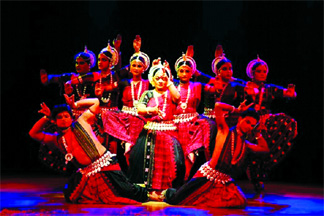
    Odisha is the birthplace of Odissi, one of the eight classical dance forms of India. With its roots in ancient temple rituals, Odissi is characterized by graceful movements, expressive gestures, and intricate footwork. Dancers use mudras (hand gestures) to convey stories from Hindu mythology.
    Folk Dances
    Odisha boasts a variety of folk dances like Chhau, Sambalpuri, and Ghumura, each reflecting local traditions and cultural vibrancy. The Chhau dance, particularly from Mayurbhanj, combines martial arts and folk elements.
    Music
    Odisha has a rich musical tradition rooted in Odissi Sangeet, which is a form of classical music. The music, often accompanied by instruments like the veena, mardala, and bansuri, complements Odissi dance performances and devotional songs.
    Festivals
    Odisha’s festivals are colorful and deeply rooted in spirituality:
    Rath Yatra
    The annual chariot festival at the Jagannath Temple in Puri is one of the largest religious gatherings in the world.
    Durga Puja
    Celebrated with grandeur across the state, Durga Puja marks the victory of good over evil.
    Bali Yatra
    This festival commemorates Odisha’s ancient maritime connections and is celebrated on the banks of the Mahanadi River.
    Makar Sankranti and Nuakhai
    These harvest festivals celebrate agrarian traditions and community bonding.
    Handicrafts and Textiles
    Odisha’s artisans are renowned for their craftsmanship:
    Pattachitra
    Traditional scroll paintings depicting mythological themes and intricate designs.
    Applique Work
    Pipili appliqué craft, often seen during temple festivals, involves colorful fabric cutouts stitched onto cloth.
    Ikat Weaving
    Odisha’s handwoven Ikat sarees from Sambalpur and Sonepur are globally acclaimed.
    Stone Carving
    The art of stone carving, seen in Odisha’s temples, continues to thrive.
    Architectural Marvels
    Odisha is home to some of India’s most impressive architectural treasures. The state’s architecture reflects its religious and cultural history, particularly influenced by Hindu, Jain, and Buddhist traditions.
    Temples of Odisha
    The temples of Odisha are a testament to the state’s rich architectural heritage. Built primarily during the Kalinga period, these temples follow the Kalinga style of architecture, characterized by curvilinear spires, intricate carvings, and spacious courtyards.
    Lingaraj Temple (Bhubaneswar)
    Built in the 11th century, this temple is dedicated to Lord Shiva and represents the zenith of Kalinga architecture. The sanctum, tower, and carvings display exceptional craftsmanship.
    Jagannath Temple (Puri)
    One of the Char Dhams of Hindu pilgrimage, the Jagannath Temple is dedicated to Lord Jagannath (a form of Vishnu). Its massive structure and annual Rath Yatra attract millions of devotees.
    Konark Sun Temple
    A UNESCO World Heritage Site, the Konark Sun Temple is shaped like a colossal chariot with intricately carved stone wheels, pillars, and sculptures. Built in the 13th century by King Narasimhadeva I, it remains a masterpiece of Kalinga architecture.
    Mukteshwar Temple
    Known as the “Gem of Odisha Architecture,” this 10th-century temple is renowned for its exquisite carvings and arched gateway.
    Buddhist Monasteries and Stupas
    Odisha has a rich Buddhist heritage reflected in its ancient stupas and monasteries:
    Ratnagiri, Udayagiri, and Lalitgiri
    Known as the Diamond Triangle of Odisha, these sites contain remains of stupas, monasteries, and sculptures from the Buddhist era (7th-12th centuries CE).
    Dhauli
    The site where Ashoka embraced Buddhism after the Kalinga War, Dhauli houses the Shanti Stupa (Peace Pagoda).
    Forts and Palaces
    Barabati Fort
    Located in Cuttack, this 14th-century fort was a prominent military stronghold during the medieval period.
    Chilika Lake and Kalijai Temple
    Though not an architectural site, the Kalijai Temple on Chilika Lake is a significant cultural landmark.
    Political History of Odisha
    Odisha’s political history is marked by the rise and fall of powerful dynasties, colonial domination, and post-independence development.
    Ancient Dynasties
    Mauryas and Ashoka
    The Mauryan conquest of Kalinga marked a significant chapter in Odisha’s history.
    Mahameghavahana Dynasty
    Under King Kharavela (1st century BCE), Odisha witnessed a resurgence of Jainism and territorial expansion. Kharavela’s Hathigumpha inscription at Udayagiri provides insights into his reign.
    Medieval Period
    Somavamshi Dynasty
    Between the 9th and 12th centuries, the Somavamshis established their rule in Odisha, contributing to temple construction.
    Ganga Dynasty
    The Ganga rulers, particularly King Anantavarman Chodaganga Deva, ushered in a golden era of Odisha’s art and architecture. The Jagannath Temple was built during this period.
    Eastern Ganga Dynasty
    The Ganga rulers continued their legacy, with the construction of the Konark Sun Temple marking the pinnacle of their achievements.
    Surya Vamsi Gajapati Dynasty
    In the 15th century, the Gajapati kings ruled Odisha with great prowess, expanding their influence to neighboring regions.
    Colonial Rule
    In the 16th century, Odisha came under Mughal rule and later the Marathas in the 18th century. In 1803, the British East India Company annexed Odisha, marking the beginning of colonial exploitation. The region became part of the Bengal Presidency until it gained separate identity as Odisha Province in 1936.
    Modern Odisha
    Post-independence, Odisha became a state of the Indian Union on April 1, 1936, celebrated as Utkal Divas. Since then, Odisha has made significant strides in socio-economic development while preserving its cultural heritage.
    BJP term in Odisha
    The Bharatiya Janata Party (BJP) assumed power in Odisha on June 12, 2024, marking a significant shift after five consecutive terms under the Biju Janata Dal (BJD).
    Since 1946, Odisha has had 14 chief ministers. Serving from 2000 till 2024, Naveen Patnaik of the Biju Janata Dal was the longest-serving chief minister in Odisha’s history. The current Chief Minister of Odisha since 12 June 2024 is Mohan Charan Majhi of the Bharatiya Janata Party.
    In collaboration with the state government, the 18th Pravasi Bharatiya Divas (PBD) Convention is scheduled to take place in Bhubaneswar from January 8 to 10, 2025. Prime Minister Narendra Modi is set to inaugurate the event, which will focus on the theme “Diaspora’s contribution to a Viksit Bharat.” The convention aims to engage the Indian diaspora in India’s development journey.
    The BJP government in Odisha has been proactive in implementing policies to enhance the state’s growth trajectory. Prime Minister Modi has acknowledged these efforts, emphasizing the government’s commitment to development.
    Additionally, the new administration has initiated investigations into alleged corruption during the previous BJD regime. Chief Minister Mohan Charan Majhi has pledged to probe all corruption cases from the BJD’s tenure, aiming to ensure transparency and accountability in governance.
    The BJP’s rise to power in Odisha signifies a transformative period, with the government focusing on development, anti-corruption measures, and strengthening ties with the Indian diaspora through events like the upcoming PBD Convention.

  • Sri Lanka’s navy rescues 102 Rohingya refugees found adrift aboard a fishing trawler

    COLOMBO, Sri Lanka (TIP): Sri Lanka’s navy rescued more than 100 people believed to be Rohingya refugees who were found adrift aboard a fishing trawler off the island nation, a navy spokesman said on December 20. Navy spokesman Gayan Wickramasuriya said fishermen had spotted the refugees, including 25 children and 30 women, off Sri Lanka’s northern coast on Thursday. Navy vessels then escorted the trawler to naval base on Sri Lanka’s east coast where they were given medical care, food and water.
    Wickramasuriya said the navy hasn’t yet confirmed whether the refugees are Rohingya because of communication difficulties. But the navy believes the group to be from Myanmar.
    The rescue mirrored a similar incident in 2022 when the Sri Lankan navy picked up 100 Rohingya refugees who were also found adrift aboard a fishing boat inside Sri Lankan waters.
    Hundreds of thousands of the predominantly Muslim Rohingya have fled Myanmar amid widespread discrimination. Most are denied citizenship.
    About 1 million Rohingya live in Bangladesh as refugees. Most of them had fled a brutal counterinsurgency campaign in 2017 by Myanmar’s security forces, who were accused of committing mass rapes and killings. Thousands have been trying to flee Bangladesh’s overcrowded camps to neighboring countries with Indonesia seeing a spike in refugee numbers since November which prompted it to call on the international community for help. Rohingya arriving in Aceh face some hostility from some fellow Muslims.
    Returning safely to Myanmar is virtually impossible because the military that attacked them overthrew Myanmar’s democratically elected government in 2021. No country has offered them any large-scale resettlement opportunities. (AP)

  • Diwali in US gains official holiday status in Pennsylvania, Texas, New York

    Diwali in US gains official holiday status in Pennsylvania, Texas, New York

    NEW YORK (TIP): As the glow of Diwali approaches, this festival of lights is gaining unprecedented recognition in the United States, showcasing the nation’s commitment to celebrating cultural diversity. With states like Pennsylvania leading the initiative, Diwali is being officially acknowledged, reflecting its growing significance in American society.

    In a historic move, Pennsylvania has become the first state in the US to officially declare Diwali as a public holiday. This decision underscores the state’s commitment to inclusivity and cultural appreciation. The recognition of Diwali not only honors the festival’s significance but also celebrates the diverse communities that partake in its festivities.

    Following Pennsylvania’s lead, Texas has also announced Diwali as an official public holiday. The state’s lively celebrations reflect the importance of the festival, inviting residents to engage in activities that promote hope and goodwill. Texas’s acknowledgment of Diwali exemplifies the growing appreciation for diverse cultural practices across the nation.

    New Jersey has joined the ranks of states celebrating Diwali, showcasing a commitment to fostering cultural diversity. The recognition of this festival of lights in New Jersey highlights the state’s dedication to creating an inclusive environment for its residents and embracing the rich tapestry of cultures that contribute to its identity.

    In New York, known for its cultural diversity, Diwali has been embraced as an official holiday. This recognition allows communities from various backgrounds to come together in joyous celebrations, fostering cultural exchange and unity. New York’s vibrant Diwali events reflect the importance of the festival in bringing people together to share in the spirit of togetherness.

    The celebration of Diwali extends beyond the United States, with numerous countries recognizing it as a public holiday.

    Nations such as Fiji, Malaysia, Mauritius, Nepal, Sri Lanka, Singapore, South Africa, and Trinidad and Tobago honor the festival’s significance and the universal values it represents, showcasing its global appeal and message of light triumphing over darkness.

  • Russia backs Sri Lankan government over Online Safety Bill; calls matter purely internal

    Russia backs Sri Lankan government over Online Safety Bill; calls matter purely internal

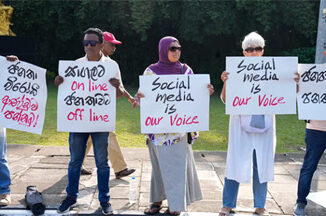
    COLOMBO (TIP): Russia has backed the Sri Lankan government’s decision to adopt the controversial Online Safety Bill, saying that the matter was purely an internal matter for the island nation and any kind of interference over it will be unacceptable. Sri Lankan Parliament on January 24 approved with amendments the controversial Online Safety Bill that seeks to regulate online content amid criticism from the opposition that claimed it will stifle freedom of speech. The new legislation would lead to the establishment of the Online Safety Commission which is empowered to make punitive rulings on offenses.
    A false statement online would be liable, if convicted, to imprisonment for a term not exceeding five years or to a fine not exceeding five hundred thousand Sri Lankan rupees.
    In a statement, Russian Ambassador in Sri Lanka Levan Dzhagaryan said that Russia was closely following the situation about the Online Safety Bill in the country. His comments came in the backdrop of the US envoy here saying that she was concerned about the potential impact of the bill.
    “We are following the situation with the Online Safety Bill in Sri Lanka, which has been adopted by the Parliamentary majority in all readings recently.
    We also take notice of all comments and reactions on this legislature both from the domestic political sphere and among the foreign powers accredited in this country, “he said.
    He also said that it is a purely internal issue of Sri Lanka.
    “We suppose that regulations of the online sphere are solely domestic issues of the Republic of Sri Lanka. In this regard we want to highlight that in our point of view, any interference into this internal issue from aside by the foreign powers is irrelevant and unacceptable,” he said. By contrast the US Ambassador in Colombo Julie Chung said that the US was concerned about the potential impact of the bill.
    In a post on X, Chung said: “The US remains concerned about the potential impact of Sri Lanka’s online safety bill. She said the bill jeopardised democratic values. The US urges Sri Lanka to prioritise transparency and ensure any legislation does not stifle the voices of its people,”she said.
    The Sri Lankan Opposition, which called the bill as undemocratic as it would hamper freedom of expression, has vowed to repeal it when in power.
    Human Rights Watch condemned the bill as one which clamped free expression of public views in Sri Lanka’s election year. The Asian Internet Coalition said the bill was a blow to Sri Lanka’s efforts to bolster the digital economy. The government was accused of rushing through the bill without sufficient public debate. (PTI)

  • Guru Nanak: The eternal traveler

    Guru Nanak: The eternal traveler

    By Navtej Sarna

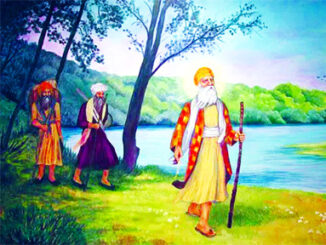
    In a unique example of spiritual wanderlust, Guru Nanak spent more than 20 years on the road, spreading his message of love, compassion and equality of man. At a time when there were no quick or sophisticated means of travel, he undertook four long journeys, called udasis, signifying detachment. Though scholars have laid out detailed routes that he may have used, concrete evidence of the exact order of his travels is difficult to find. Indications of the places he visited as well as his experiences are contained in the janam-sakhis, written some decades after his passing. Some details can also be discerned from Guru Nanak’s own hymns as well as in the writings of Bhai Gurdas, the scholar and amanuensis who first inscribed the Adi Granth in Guru Arjan’s presence. Bhai Gurdas’s poetic vision describes Nanak’s immense travels thus: Babe tare char chak/ nau khand prithvi sacha dhoa (The Baba traversed the nine regions of the earth, as far as the land stretched).
    It is believed that Guru Nanak certainly travelled as far as Assam in the east, present-day Sri Lanka in the south, Mount Kailash in the north and Mecca-Medina in the west. Some speculative accounts take Nanak even further afield. His mission took him to snowy heights and across burning deserts, through little villages and mighty capitals, among the ordinary as well as learned, to fairs, festivals, to temples, mosques, khanaqahs. These travels gave him an opportunity to observe the workings of the religions of the day in actual practice and to debate and discuss these matters of the spirit with sages and seers and also to dispel ignorance and blind ritualism, of which there was no dearth. Bhai Gurdas puts it thus: Dithe Hindu Turaki sabhi pir paikambari kaumi katele/ Andhi andhe khuhe thele (I saw Hindus and Muslims, holy men of all kinds/ The blind pushing the blind into a well).
    Today, gurudwaras and shrines mark Nanak’s travels to these far-flung places; local legends further establish the fact that the Guru indeed travelled extensively. Nanak was accompanied by Mardana on his travels, who carried and played the rabab, and also became an interesting protagonist of the many sakhis that are attached to these travels. One cycle of janam-sakhis and several illustrations show another companion, Bhai Bala.
    According to some sources, Guru Nanak dressed in strange clothes that could not be identified with any sect and symbolised the universality of his message. He wore a loose long shirt of a Muslim dervish but of brownish-red colour of the Hindu sanyasi. Around his waist he wore a white cloth belt like a fakir. A short turban Babe bhek banaia udasi ki riti chalai/ Charhia sodhan dharth lukai (The Baba donned robes, and in the tradition of detachment/ Went to put humanity on the right path) partly covered a qalandar’s conical cap in the manner of Sufi wanderers. His slippers were often of two different colours and designs. Sometimes it is said he wore a garland of human bones around his neck. As Bhai Gurdas wrote: Guru Nanak’s first journey took him to the east, as far as Assam and Dhaka. On the way, he visited places of pilgrimage, including Haridwar, Ayodhya, Varanasi, Kedarnath, Badrinath and Gaya. The janam-sakhis tell several tales of his discourses with learned yogis.
    He also visited the Jagannath temple in Puri in Orissa. This temple is known for its annual procession when the idol is mounted on a huge chariot and the multitudes that gather vie with each other for the privilege of pulling the chariot. Here is one version of what happened there: when Guru Nanak and Mardana camped near the temple, their hymns and music attracted several devotees on their way to the temple, annoying the priests. One day, the chief priest came to Nanak and invited him to join the aarti (evening prayer) in the temple and Guru Nanak readily accompanied him. It was a beautiful ceremony, conducted at dusk. The priest placed earthen lamps filled with ghee on a bejeweled salver decorated with flower petals and sweet incense. They lit the wicks and swung the salver pendulum-like in front of the image while the congregation sang hymns, blew conches and tolled the bells. Nanak sat unmoved through the ceremony, and when the priests expressed their anger and surprise, he responded with a song now part of the Granth Sahib.
    The song describes the celestial aarti in which the sky, the sun, the moon, the stars, the wind, the forests and the unstruck music pay obeisance to the great Creator. This, according to Nanak, was the true aarti that could be offered to God:
    The sky the salver, the sun and moon the lamps, The stars studding the heavens are the pearls
    The fragrance of sandal is the incense Fanned by the winds, all for thee The great forests are the flowers
    What a beautiful aarti is being performed For you, O destroyer of fear.
    The second journey took Guru Nanak south, to present-day Sri Lanka. He was accompanied by two Jat followers: Saido and Gheho.
    The third udasi of Guru Nanak was to the north. He travelled widely in the Himalayas—several scholars have traced his steps to Himachal Pradesh, J&K, Uttar Pradesh, Sikkim, Ladakh and even Nepal and Tibet. The central event of this northern udasi is the visit to Mt Sumer, recorded in all the janam-sakhis and also by Bhai Gurdas—Mt Sumer is said to be none other than Mt Kailash, the abode of Shiv and Parvati. There took place his meeting with 84 siddhas, among them the ancient souls Goraknath, Machendranath and Charpat Nath, or perhaps their spiritual successors, who had meditated long and deep and possessed great power and wisdom.
    In Bhai Gurdas’s version of the meeting, the siddhas express amazement at seeing Nanak: O youthful one! What power brings you to these heights? Who is that you worship? And Guru Nanak replied: the eternal Lord alone.
    The siddhas ask him how the world below fared. Guru Nanak made no secret of what he felt. He said darkness, sin and injustice had taken over the world. Corruption was rampant; the fence itself had begun to eat the crop.
    Sidh chhapi baithe parabati kaunu jagat kau par utara (The wise siddhas have escaped into the remote caves and mountains—who will then redeem the world?)
    Guru Nanak had several meetings with siddhas and yogis, in particular with those of the kanphata (split-eared) sect. His discourse with these holy men, in question-and-answer form, is contained in his Siddha
    Gosht, comprised of 73 verses in the Granth Sahib. The entire discourse is conducted in a spirit of humility, intellectual inquiry and tolerance. In this discourse, the siddhas argue that it was not possible to be part of the world and follow the path of meditation and spirituality. Nanak replied that one had to be as a lotus or a duck—to stay in the water but still remain dry. One had to be part of the world and yet be unaffected by it through meditation on His name. The fourth udasi took Guru Nanak to the west and to Islamic countries and important centres such as Mecca and Baghdad. It is said that he dressed in a blue robe in the manner of a Haji and carried a book, a staff and a small carpet for saying his prayers.
    Phir Baba gaia Baghdad no bahari kia asthana/ Ik baba akal rupu duja rababi Mardana (Then Baba went to Baghdad and camped outside the city/ He himself one with the Timeless, and his rabab player Mardana).
    Baghdad was then a great centre of Islamic learning, art and culture. On the outskirts of the city, in a graveyard, Mardana strummed the strings of his rabab in holy melody and Nanak sang hymns. When this was reported to the Pir-e-dastgir of Baghdad as being against the teachings of Islam, he came out to meet Nanak and inquired: Puchhia phirikai Dastgir kaun phakir kis ka ghariana (What faith do you belong to, and what sect of fakirs do you come from)? Mardana replied: Nanak kal vich aia rab phakir iko pahichana/ Dharth akash chahudis jana (Nanak has come to this world in kalyug/ He has rejected all fakirs except the Supreme Being, who is all pervasive—in the heavens, the earth and all four directions).
    During his stay in Baghdad, the Guru also met another pir known as Bahlol who had several discourses with him. Finally, Bahlol and his son became followers of Nanak, who then stayed there for about four months. A shrine in Baghdad, also known as the tomb of Bahlol, marks the visit of Guru Nanak and his association with Bahlol.
    After these four long journeys, Guru Nanak settled down at Kartarpur on the banks of the river Ravi. He discarded his travelling robes and put on the garb of a householder. It was time to give practical shape to his ideals and to show that true salvation lies in righteous living in this world, not in renunciation. A community of men of all faiths and callings, high and low, gathered around him. Several important traditions, including those of spiritual gatherings to listen to the praise of the Creator and the langar, or communal kitchen, were born here. It was here too that Guru Nanak gave up his body in 1539 after anointing Lehna, or Guru Angad, as his spiritual successor. (Navtej Sarna is a former ambassador of India to the US and author of several books, including The Book of Nanak)
    Source: India Today

  • For an expanse of blue, with air so clean 

    For an expanse of blue, with air so clean 

    On International Day of Clean Air for Blue Skies (September 7), there is urgent need to address risks posed by pollution

    • By Benno Boer, Srishti Kumar, Neha Midha

    “The world is not just grappling with climate change, but also with another silent killer — air pollution. Global health statistics reveal a disturbing scenario with lung cancer claiming 10 million deaths worldwide in 2020, as stated in the World Health Organization (WHO) factsheet published in 2023. This could soar by another 3.2 million by 2050 according to a report, ‘Mapping of global, regional and national incidence, mortality and mortality-to-incidence ratio of lung cancer in 2020 and 2050’, by the Indian National Institute of Health. South Asia, home to two billion people, is also home to nine of the world’s 10 most polluted cities, including Delhi, where the air quality continues to pose a perilous long-term threat putting its inhabitants at risk each day. While policy measures have led to statistical improvements in the Air Quality Index (AQI), the health risks associated with Delhi’s polluted air persist. Delhi is knocked to its knees every winter facing hazardous levels of air pollution.”

    Youngsters around the world are taking charge of environmental advocacy, running marathons, and tracking real time data of air quality, creating environmental awareness. But the absence of a specific Sustainable Development Goal (SDG) for ‘Clean Air to Breathe’ indicates a lack of global attention.

    Dr. Benno Boer

    According to UN Secretary-General António Guterres, the earth has entered the era of global boiling. Scorching heatwaves, devastating floods and erratic weather patterns are stark reminders for an urgent need to address the triple-planetary crisis of biodiversity loss, climate change and pollution.

    The world is not just grappling with climate change, but also with another silent killer — air pollution. Global health statistics reveal a disturbing scenario with lung cancer claiming 10 million deaths worldwide in 2020, as stated in the World Health Organization (WHO) factsheet published in 2023. This could soar by another 3.2 million by 2050 according to a report, ‘Mapping of global, regional and national incidence, mortality and mortality-to-incidence ratio of lung cancer in 2020 and 2050’, by the Indian National Institute of Health. South Asia, home to two billion people, is also home to nine of the world’s 10 most polluted cities, including Delhi, where the air quality continues to pose a perilous long-term threat putting its inhabitants at risk each day. While policy measures have led to statistical improvements in the Air Quality Index (AQI), the health risks associated with Delhi’s polluted air persist. Delhi is knocked to its knees every winter facing hazardous levels of air pollution.

    Lung cancer, cardiovascular disorders, respiratory ailments, and mental health issues continue to destroy lives. Delhi’s air, a lethal mix of SO2 (sulphur dioxide) and NOX (nitrogen oxides), along with high particulate matter concentrations (2.5 or even 10µg/m3), carbon monoxide and ozone, deprive over 30 million residents of their human right to breathe clean air.

    The air pollution toll is troublesome especially for immunocompromised individuals, pregnant women, children, and the elderly. As per a Lancet Report, 1.67 million pollution-related deaths were attributed to air pollution in India in 2019, accounting for a staggering 17.8% of the total deaths in the country.

    Efforts to combat this crisis are already being made. State governments, research institutions, and NGOs are pioneering solutions such as the PUSA Decomposer, developed by the Indian Agricultural Research Institute (IARI), employing biotechnology to address agricultural pollution. State-level policies such as GRAP 3 (Graded Rapid Action Plan), monitoring air quality in hotspots, and establishing Green War Rooms, have shown some potential. Many innovative startups involving young entrepreneurs are turning agricultural waste into valuable products.

    Viable solutions

    Acknowledging the existence of air pollution remains the primary step towards solutions. Next comes a debate on viable solutions and actions, many of which are already known. Eventually, these best practices need to be implemented. Without implementation, the best laid out plans will not lead to any improvement. Globally, cities such as Ljubljana (Slovenia), Accra (Ghana), Seville (Spain), Bogota (Colombia), Medellin (Colombia), epitomize the power of prioritizing human health and environmental sustainability. Car-free zones, green spaces, smart urban designs, electrified public transportation, nature-based solutions, and innovative biotechnology demonstrate positive results. China’s shift to clean energy and e-mobility after battling severe pollution, Indonesia’s project on ‘Carbon Efficient Farming’ assessing biomass to reduce CO2 emissions, Thailand and Vietnam undertaking measures to reduce open straw burning, are all gleams of hope.

    UNESCO’s initiatives to combat air pollution include implementing an internal carbon tax on all flight tickets, and investing in emission reduction measures. The World Air Quality Project allows residents to make informed decisions by real time Air Quality data. In collaboration with UNEP, environmentally conscious practices have been introduced such as digital working via the ‘Virtual Meetings’ project. Clean-Air-For-Schools is spreading education among all for clean air. Other laudable activities include switching to electric vehicles, replacing lighting systems to greener LED arrangements, implementing solar powered offices, protecting historical sites by developing strategies to curb air pollution, and effective green solutions ( urban forests, parks, green corridors).

    Youngsters around the world are taking charge of environmental advocacy, running marathons, and tracking real time data of air quality, creating environmental awareness. But the absence of a specific Sustainable Development Goal (SDG) for ‘Clean Air to Breathe’ indicates a lack of global attention.

    However, in 2019, laying emphasis on the interest of the international community for clean air, and the need to improve air quality, the UN General Assembly decided to designate September 7 as the International Day of Clean Air for Blue Skies. Nevertheless, clean air remains a long stride in many mega-cities and other places. We hope that a concerted action to systematically improve the air quality including in Delhi will receive priority attention. The problem has been caused by people, so it should be people who will find and apply solutions, supported by innovative adequate air quality policies and action plans. As we inhale the consequences of our actions, the ultimate question beckons: are we the torchbearers of change for the future of our planet or will we be silent bystanders who let pollution script a tragic ending?

    (Benno Böer is the Chief of the Natural Sciences Unit, UNESCO Multisectoral Regional Office for Bangladesh, Bhutan, India, Maldives, Nepal and Sri Lanka. Neha Midha is the National Programme Officer, UNESCO Multisectoral Regional Office for Bangladesh, Bhutan, India, Maldives, Nepal and Sri Lanka. Srishti Kumar is a UNESCO Natural Sciences Intern. UNESCO is a member of Team UN in India, together helping deliver on the Sustainable Development Goals)

  • Rumours that Indian rupee can be used as legal tender refuted by Sri Lanka’s central bank

    Rumours that Indian rupee can be used as legal tender refuted by Sri Lanka’s central bank

    Colombo (TIP): The Central Bank of Sri Lanka (CBSL) issued an official clarification on August 2 refuting rumours that the Indian rupee could be used as legal tender in the island nation.
    “The CBSL wishes to clarify certain misrepresentations of facts currently circulating in the public domain on the Indian Rupee (INR). While we have officially authorised the INR as a designated foreign currency, it doesn’t make the INR legal tender in Sri Lanka for domestic payments/settlements,” said a notice issued by the CBSL on Wednesday.
    The bank further stated that the Sri Lankan public should not be misled by the misrepresentation of facts circulating in the public domain on the INR.
    The CBSL also said that from time to time, they designate foreign currencies to facilitate trade.
    “Under the provisions of the Banking Act and the Foreign Exchange Act, there are 16 designated foreign currencies in used in Sri Lanka. The INR became a part of the list in August 2022,” said the CBSL.
    The bank reiterated that the legal tender in Sri Lanka for domestic payments and settlements will remain the Sri Lankan Rupee (LKR).
    Trade between India and Sri Lanka has grown rapidly after the Indo-Sri Lanka Free Trade Agreement came into effect in March 2000.
    India has traditionally been among Sri Lanka’s largest trade partners. In 2020, India was Sri Lanka’s 2nd largest trading partner with the bilateral merchandise trade amounting to about $ 3.6 billion. (ENS)

  • India, Japan are natural partners’: Jaishankar at event with Hayashi

    India, Japan are natural partners’: Jaishankar at event with Hayashi

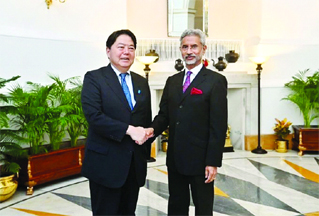
    New Delhi (TIP)- Japan’s foreign minister Yoshimasa Hayashi on Friday, July 28, held up India as an “indispensable” partner for achieving a free and open Indo-Pacific, while his Indian counterpart S Jaishankar said the two sides are “natural partners” for taking on challenges in areas ranging from the economy to emerging technologies. The two ministers were speaking at the second India-Japan Forum organised by the external affairs ministry. India was the first stop on Hayashi’s three-nation tour, which will also take him to Sri Lanka and the Maldives. During talks on Thursday, Jaishankar and Hayashi discussed ways to step up Japanese investments in India and deepen defence cooperation.
    Building on the “Free and Open Indo-Pacific (FOIP)” vision unveiled by Japanese Prime Minister Fumio Kishida during a visit to New Delhi in March this year, Hayashi said Japan intends to deepen cooperation with India in all areas. Japan and India are also working closely together under their presidencies of the G7 and the G20 respectively, he said.
    Pointing to Kishida announcing the new FOIP plan in New Delhi, he said: “This fact itself is a reflection of the critical importance Japan places on India, as your nation is an indispensable partner in achieving FOIP.”
    Hayashi added: “At a time when there are many pressing challenges, including Russia’s aggression against Ukraine, Japan and India fully share the necessity to lead the world to cooperation, rather than to division and confrontation.”
    Lauding the Indian G20 presidency’s focus on the Global South, Hayashi said the call to uphold a rules-based international order may sound like a slogan if there isn’t an adequate commitment to address challenges facing developing countries. At the same time, he noted that food security has deteriorated because of Russia’s aggression against Ukraine.
    Hayashi said India and Japan have made progress in new initiatives in areas such as cyber and space, while discussions are underway for “substantial cooperation” in defence equipment and technology.
    In his speech, Jaishankar highlighted key challenges confronting the world, including artificial intelligence, building reliable supply chains, ensuring trust and transparency in the digital domain, and upholding democratic values.
    Jaishankar said India and Japan are natural partners for jointly addressing these challenges. “I would say today whether it is the future of the international order, strategy, economics, technology, culture or indeed whether it’s history or geography, I think India and Japan have a lot going for each other,” he said.
    Hayashi also spoke about Japan’s plans to revise its “Development Cooperation Charter”, the basic document for development cooperation. “Under this revised charter, we will continue to undertake efforts to build quality infrastructure in India, including high-speed rail and urban transportation,” he said.
    When a Japanese reporter pointed out that a bilateral partnership is tested by a war or a crisis and asked how the two sides would collaborate in case of a war in the Taiwan Strait or a conflict on the India-China border, Jaishankar replied: “I fundamentally disagree with your question because I think it is actually peacetime cooperation which is when you are tested, because if you don’t work every day to build a relationship and to put in place capabilities, comfort and structures, then when something more severe comes – if I can’t handle a good day, how will I handle a difficult day.” Source: HT

  • Sri Lanka can’t afford to hold snap Presidential election this year due to economic crisis

    COLOMBO (TIP): Sri Lanka is not in the position to hold a snap presidential election this year because of the ongoing economic crisis and the government’s focus is on debt restructuring, Cabinet Spokesman Bandula Gunawardena said on June 15.
    “No election would be possible this year as the state finances have not improved,” Gunawardena said while responding to speculation that the government might opt to hold a snap presidential election.
    He said the government’s focus, for now, is centred on successfully ending the process of debt restructuring.
    Former prime minister Ranil Wickremesinghe was elected as the President of Sri Lanka by the Parliament to serve the remainder of ex-president Gotabaya Rajapaksa’s term, which was supposed to end in November 2024.
    The IMF extended a nearly USD 3 billion bailout facility to debt-ridden Sri Lanka to help stabilise the country’s economy after it was jolted by a devastating economic crisis last year. (PTI)

  • Sri Lanka decries Canadian PM Trudeau’s ‘Tamil Genocide’ comment on 14th War Heroes Day

    Colombo (TIP) : Sri Lanka has summoned the Canadian High Commissioner here and registered a strong protest over Canadian Prime Minister Justin Trudeau’s “Tamil Genocide” comment on the 14th anniversary of the end of the brutal civil war in the island nation.
    The bitterly-fought conflict, which began in 1983, came to an end on May 18, 2009, with Sri Lanka’s military killing the supremo of Liberation Tigers of Tamil Eelam (LTTE) Velupillai Prabakaran.
    LTTE fought an armed conflict for a separate homeland for the minority Tamils. On Thursday, Canadian Prime Minister Trudeau said tens of thousands of Tamils lost their lives, including at the massacre in Mullivaikal, with many more missing, injured, or displaced.
    Peace can’t be taken for granted
    The stories of Tamil-Canadians affected by the conflict serve as an enduring reminder that human rights, peace and democracy cannot be taken for granted. — Justin Trudeau, Canadian Prime Minister “Our thoughts are with the victims, survivors, and their loved ones, who continue to live with the pain caused by this senseless violence,” Trudeau said.
    “The stories of Tamil-Canadians affected by the conflict — including many I have met over the years in communities across the country — serve as an enduring reminder that human rights, peace, and democracy cannot be taken for granted,” Trudeau said.
    “That’s why Parliament last year unanimously adopted the motion to make May 18 Tamil Genocide Remembrance Day. Canada will not stop advocating for the rights of the victims and survivors of this conflict, as well as for all in Sri Lanka who continue to face hardship,” he added. Sri Lanka’s Ministry of Foreign Affairs rejected Trudeau’s statements, asserting that they contained outrageous claims of genocide relating to past conflicts in the country. Subsequently, the foreign ministry summoned Canadian High Commissioner in Colombo Eric Walsh and registered a strong protest over Trudeau’s remarks.
    “Such irresponsible and polarising pronouncements by the leader of a nation breeds disharmony and hatred both in Canada and Sri Lanka, instead of promoting peace and reconciliation,” the foreign ministry said. (PTI)

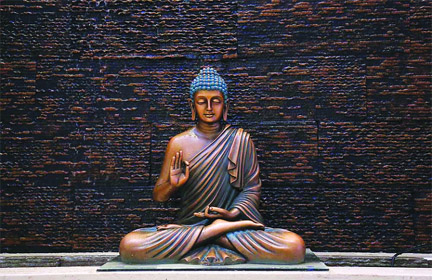
  • Buddha Purnima

    Buddha Purnima

    Also known as Buddha Jayanti or Vaisakhi Buddha Purnima or Vesak, the festival of Buddha Purnima is based on the Asian lunisolar calendar and marks the birth of Gautama Buddha. It is celebrated with great fervour in India, Sri Lanka, Nepal, Bhutan, Tibet and numerous other South East Asian countries including Thailand, Tibet, China, Korea, Laos, Vietnam, Mongolia, Cambodia and Indonesia.
    he birthday of Gautam Buddha, the founder of Buddhism, is celebrated as Buddha Purnima across the world since he was born as Prince Siddhartha Gautama on the Purnima Tithi (full moon day) in 563 BC in Lumbini (modern day Nepal). In Hinduism, Buddha is considered as the ninth avatar of Lord Vishnu hence, this day is commemorated by Buddhists and Hindus all over the world.
    In Theravada Buddhism, it is also observed as the day when Buddha, born as Prince Siddhartha Gautama (c. 563-483 BCE) attained Nirvana (salvation) under the Mahabodhi tree at Bodh Gaya, Bihar, as well as his death anniversary. Gautama Buddha preached Dharma (duty), non violence, harmony and kindness. He left his worldly possessions and princedom at the age of 30 to lead a life searching for the truth, seeking penance in the hopes of liberating himself from suffering (duhkha).
    Devotees of Buddha visit temples, light candles and incense sticks, pray and offer sweets and fruits before the statue of Lord Buddha. Sermons on the life and teachings of Buddha are held and attended by followers all over. People usually dress in white, do not consume non-vegetarian food and distribute kheer, as according to Buddhist lore, on this day a woman named Sujata had offered Buddha a bowl of milk porridge.
    Many followers also free caged birds on this day as a symbol of empathy and compassion for all living beings, one of the most important teachings of Lord Buddha. In India, a large fair takes place in Sarnath, Uttar Pradesh, a major Buddhist pilgrimage site where Buddha is said to have delivered his first sermon after attaining enlightenment.
    Celebrations around the world
    Japan
    The festival in Japan is based on a different legend that says, a dragon appeared in the sky on Buddha’s birthday and poured soma over him, which is a Vedic ritual drink. In the modern arena, Japan celebrates Vesak by pouring amacha, a sweet tea on statues.
    Nepal
    Nepal is home to Lumbini-birthplace of Buddha, and Swayambhu-the holy temple for Buddhists also known as the Monkey Temple. The main door of Swayambhu is opened only on this day; hence, people from all over Kathmandu valley are stimulated by the event. Pilgrims across the world gather in thousands to celebrate Buddha’s birthday at his birthplace.
    Sri Lanka
    Sri Lanka celebrates Vesak for about one week! During this time, the selling of alcohol and fresh meat is prohibited with abattoirs also being closed. The celebrations here include giving of alms and erection of pandals wherein each pandal illustrates a story from the Jataka Tales. Food stalls are set up by Buddhist devotees that provide eatables and drinks to passersby. Also birds, insects and animals are released by the thousands in what is known as a ‘symbolic act of liberation’; of giving freedom to those who are in captivity, imprisoned, or tortured against their will.
    Apart from these, other Asian countries like Korea, Vietnam, Malaysia, Indonesia, and Singapore also participate in processions and prayers by monks and make this day a true symbol of spirituality.
    What Do People Do?
    Many Buddhists visit temples on Vesak to listen to monks give talks and recite ancient verses. Devout Buddhists may spend all day in one or more temples. Some temples display a small statue of Buddha as a baby. The statue is placed in a basin filled with water and decorated with flowers. Visitors to the temple pour water over the statue. This symbolizes a pure and new beginning.
    Many Buddhists pay special attention to Buddha’s teachings during Vesak. They may wear white robes and only eat vegetarian food on and around Vesak. Many people also give money, food or goods to organizations that help the poor, the elderly and those who are sick. Caged animals are bought and set free to display care for all living creatures, as preached by Buddha.
    Government offices, post offices and banks are closed in India on Vesak. Stores and other businesses and organizations may be closed or have reduced opening hours. Transport is usually unaffected as many locals travel for religious celebrations.
    Background
    Gautama Buddha was a spiritual teacher in India. Many scholars are uncertain when he lived. It is believed that Buddha was born at some time between sixth and fourth centuries BCE. Opinions among scholars are generally divided between those who place Buddha’s death about 480 BCE and those who place it as much as a century later.
    Buddha was an influential spiritual teacher during and after his lifetime. Many Buddhists see him as the Supreme Buddha. Festivals to honor Buddha were held for many centuries. The decision to celebrate Vesak as the Buddha’s birthday was formalized at the first conference of the World Fellowship of Buddhists. This conference was held in Colombo, Sri Lanka, in May, 1950. The date was fixed as the day of the full moon in May. Different Buddhist communities may celebrate Vesak on different dates in years when there are two full moons in May. This is because the Buddhist lunar calendar can be interpreted in different ways.
    Symbols
    The dharmacakra or dharma wheel is a symbol often seen during Vesak. It is a wooden wheel with eight spokes. The wheel represents Buddha’s teaching on the path to enlightenment. The eight spokes symbolize the noble eightfold path of Buddhism.

  • Sri Lanka, India to begin passenger ferry service by April end

    COLOMBO (TIP): The much-delayed passenger ferry service between Sri Lanka and India is set to start by the end of April, Civil Aviation Minister Nimal Siripala de Silva said on March 26.
    “On April 29, the ferry service between Karaikal and Kankesanthurai in port in Jaffna district would begin. Each passenger would be allowed a 100 kg baggage allowance at a very concessionary rate,” the minister said.
    De Silva said the opportunity would be open to any passenger ferry operator of both countries to run the service.
    A passenger terminal is being built by the Sri Lanka Navy at Kankesanthurai.
    The service would be a four-hour-long voyage, the Aviation Ministry here said. (PTI)

  • China may play spoilsport

    China may play spoilsport

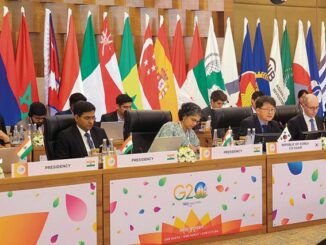
    • India prepares to host G20, SCO summits amidst regional rivalries

     “The G20 Summit will be bringing together leaders of countries which constitute two-thirds of the world’s population, while providing 90% of global GDP and 80% of global trade. The year 2023 is set to become the most complex and busy period in India’s diplomatic history. It is also going to be a period when the country’s logistical and organizational strengths will be tested. The forthcoming summits will test our ability in bringing countries together in a constructive and harmonious cooperation at the highest level. The summits are coming in the wake of tensions arising from the military standoff in Arunachal Pradesh.

    The issue of special interest will be whether Xi Jinping will participate in the forthcoming summits in the background of the current state of Sino-Indian ties.”

    By G Parthasarathy

    India’s foreign policy and national security establishments are going to be deeply tied up this year in meetings with members of the Shanghai Cooperation Organisation (SCO) and the G20 grouping. They will have to meticulously prepare for the summit meetings which India will be hosting later this year. The SCO includes eight members, six ‘Dialogue Partners’, and four ‘Observer States’. The G20 Summit will be bringing together leaders of countries which constitute two-thirds of the world’s population, while providing 90% of global GDP and 80% of global trade. The year 2023 is set to become the most complex and busy period in India’s diplomatic history. It is also going to be a period when the country’s logistical and organizational strengths will be tested. The forthcoming summits will test our ability in bringing countries together in a constructive and harmonious cooperation at the highest level. The summits are coming in the wake of tensions arising from the military standoff in Arunachal Pradesh.

    The issue of special interest will be whether Xi Jinping will participate in the forthcoming summits in the background of the current state of Sino-Indian ties.

    There are a few points that New Delhi should bear in mind. It will enjoy unstinted support in the conferences from virtually all members of the G20 and Quad. Both Pakistan and China will be present in the SCO. Pakistan is now engrossed in dealing with its collapsing economy. It also has serious problems with Taliban-ruled Afghanistan, and its own jihadis, the Tehreek-e-Taliban, across its 2,600 km border with Afghanistan and Iran. Given Afghanistan’s strategic location abutting Central Asia, China is keen to secure access to its mineral resources and keep in touch with its radical Islamist Taliban regime, especially in the light of its own tensions with its disaffected Uighur Muslims.

    Chinese President Xi Jinping has displayed continuing hostility towards India. China is focusing attention on the joint production of its much-touted JF-17 fighter aircraft in Pakistan and in strengthening the Pakistan navy. The Gwadar Port in Balochistan has a growing Chinese presence, but Pakistan has more serious problems to deal with, with its dwindling foreign exchange resources. In the meantime, the IMF is insisting on stringent conditions before international assistance can flow in. Even Saudi Arabia and the UAE, which have always been more than generous in bailing out Pakistan, are now making it clear that they will open their purse strings only after Pakistan fully meets IMF conditionalities. Across the world, many governments are recognizing that the economic mess that Pakistan is now in flows from its own blunders.

    There has, meanwhile, been a growing feeling in India that much of the tensions with China flow from deliberate actions of the Xi Jinping government, despite India having rolled out the red carpet during his India visit. It has been interesting to see a comprehensive assessment of India’s policies by Liu Zongyi of the Shanghai Institute of International Studies. Liu is one of China’s most prominent experts on South Asian studies. He has visited both India and Pakistan. In a recent article, which has received due attention in academic circles in our eastern neighborhood, he has bluntly spelt out what China thinks about India and its policies. Senior scholars in China do not speak out of turn. They are a convenient medium to convey the thinking of the country’s Communist Party and government.

    His study, titled ‘India’s Rising Great Power Strategy’, is multifaceted. On India’s domestic political issues, it alludes to the ascendancy of ‘Hindu nationalism’. On economic issues, he describes the ‘Make in India’ strategy as an effort to take over China’s place in the global supply chain. India’s strategy, according to him, will be to target China by building bases in Indian Ocean states, advancing the integration of India’s armed forces and improving border infrastructure, including in the Andaman and Nicobar Islands. It also includes building military bases by India in small Indian Ocean islands.

    In his conclusion, he notes: ‘Thus, the biggest divide between India and China is no longer related to border issues. In fact, border issues have now been instrumentalized. For the Indians, the biggest issue between India and China is the battle for the regional and global order. It is a geopolitical conflict, because India is a country that places a lot of emphasis on the idea of spheres of influence.’ Regarding India hosting the G20 and Quad summits, he notes: ‘Ultimately, the G20 Summit cannot be a success without China’s active participation. Even though the West lavishes praise on India, and even though India presents itself as the so-called poster child of developing countries, and the leader of the South, it will most certainly not succeed without China’s support.’ One cannot think of this as anything but a warning, bordering on threat.

    Liu betrays an obsession with the growth of India-US relations. He avers that it is India’s strategy to work with the US to undermine and counter China’s Belt and Road Initiative to prevent the emergence of a ‘China led’ regional order. This is accompanied by his strong justification of recent Chinese military intrusions in Ladakh and Arunachal Pradesh. Liu expresses serious concerns about India’s relations with the US and its involvement in groupings like Quad and I2U2. He conveniently forgets how China has been deliberately seeking to undermine India’s relations with neighbors across South Asia, notably with Sri Lanka, Bangladesh, Nepal and the Maldives. He even forgets the impact of China’s continuing and growing military relations with Rawalpindi, including its transfer of nuclear weapons and missile capabilities to Pakistan.

    Under these circumstances, the issue of special interest in the coming months will be whether Xi Jinping will participate in the forthcoming summits in the background of the current state of Sino-Indian relations, and the widespread concerns in India about his assertive policies.

    (The author is Chancellor, Jammu Central University & Former High Commissioner to Pakistan)

  • Ukraine War, Chinese Protest, Imran Khan’s Ouster; top global Events in 2022

    The year 2022 has been a tumultuous one, with many uprisings, new faces coming to prominence and dictators losing hold of power. It has been a year of economic shockers, from the West to the East. Needless to say, it has been a year of clashes and of new alliances.

    This year saw a significant rise of leaders like Ukraine President Zelensky, French President Macron and Chinese leader Xi Jinping. On the other hand, prominent international leaders, considered to have clout, including former US President Trump and Brazilian President Bolsonaro lost their power.

    There were several prominent events which shaped 2022 in their own ways. To name a few, the Ukraine War, Sri Lankan Economic crisis and the unprecedented protests in China defined the year in their unusual ways.

    UKRAINE WAR

    The Russian invasion of Ukraine, which began earlier this year in February, has entered its 300th day this month, proving to be a tough challenge for both Russia and Ukraine. Russian President Vladimir Putin, who began a blitzkrieg assault on Kyiv taking over the eastern and southern part of the country, is now facing challenge to keep the war going amid reports of ailing health and internal strife.

    So far, over 100,000 Russian and 100,000 Ukrainian soldiers have been killed or injured in the war in Ukraine. For the Ukrainians, this winter is going to be tough with Russian attacks on Ukrainian power plans and consecutive Russian missile attacks. However, the war has shaped the hero out of Ukraine’s President Zelensky, who not only stood against the Russian aggression, but also managed to forge a western unity.

    SRI LANKAN CRISIS

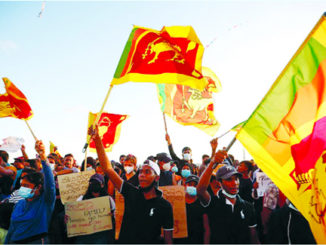
    The Sri Lanka protests which started in April had led to the ouster of President Gotabaya Rajapaksa and two-time President and former Prime Minister Mahinda Rajapaksa. The Sri Lankan crisis, which started as a protest in Colombo, spread across the country with the people demanding reforms in the government.

    Ranil Wickremesinghe was elected President through a parliamentary vote, in which the Rajapaksas’ party backed him in July. The government blamed the Covid pandemic, which badly affected Sri Lanka’s tourist trade, and later led to a shortage of fuel and foreign dollars. However, many experts blame President Rajapaksa’s poor economic mismanagement.

    The country continues to remain under crisis with Colombo anticipating the IMF loan to secure the country’s economy.

    OUSTER OF IMRAN KHAN

    Former Pakistan Prime Minister Imran Khan, who came to power in 2018, is the only Pakistani Prime Minister to be ousted in a no-confidence vote in Parliament earlier this year.

    Khan was ousted from power in April after losing a no-confidence vote in his leadership, which he alleged was part of a US-led conspiracy targeting him because of his independent foreign policy decisions on Russia, China, and Afghanistan.

    Since he lost the vote in Parliament, Khan has mobilized mass rallies across the country, whipping up crowds with claims that he was a victim of a conspiracy by his successor, Prime Minister Shahbaz Sharif, and the United States.

    IRAN PROTESTS

    Iran has been rattled by protests over opposition to the mandatory hijab law as thousands of common citizens have taken to the streets.

    Iran has been rocked by protests since September 16, with the death of 22-year-old Mahsa Amini, who died after being detained by the morality police. The protests have since morphed into one of the most serious challenges to Iran’s theocracy installed by the 1979 Islamic Revolution.

    So far, the country’s police have arrested renowned actresses, footballers, actors and influencers for supporting the protests. It has also executed two protestors for participation in the protests.

    RARE PROTEST IN CHINA

    China saw two major developments this year- Xi Jinping becoming President for the third time and rare protests weeks after against tough anti-Covid restrictions.

    In November, thousands of people took to the streets in several major cities across China, including Beijing and Shanghai, to call for an end to lockdowns and greater political freedoms, in a wave of protests not seen since pro-democracy rallies in 1989 were crushed.

    Despite heavy crackdown, surveillance and censorship, the protests expanded into calls for broader political freedom and left a major negative impact on the reputation of Xi and the Party.

    US MIDTERM ELECTIONS

    The midterm elections in the US, which is usually seen as a mandate against the ruling government, failed to make a Republican sweep as the Democrats gained razor-thin control of the Senate, while the Republicans got a narrow margin against the dems in the House of Representatives.

    However, the misterms was special in the sense that it rained down on the ambitions of former President Donald Trump, who was looking forward to run for the second term, his “Make America Great Again” movement and the broader Republican agenda.

    A silver lining which came out of the midterm elections for the Republicans has been the victory of Florida Governor Ron DeSantis. DeSantis is seen as the possible challenger to Trump and a possible source of revival for the GOP.

    Surging inflation, ongoing strikes, economic crisis and war in Europe: the new UK Prime Minister Rishi Sunak faces these major challenges. Sunak came to Power after his predecessor Truss resigned after just 44 days in power.

    After 12 years in power, the Conservative party is more divided than ever. Earlier this year, Boris Johnson had resigned as PM in July after losing the confidence of some 60 ministers.

    Sunak has become the fifth Tory prime minister since 2016 — following David Cameron, Theresa May, Johnson and Truss. The challenges continue to mount for Sunak, who hopes to get his country out of the economic and political mess.

    BOLSONARO’S EXIT

    Brazilian President Jair Bolsonaro, lost election in October in a nail-biting presidential vote count against Luiz Inacio Lula da Silva.

    Almost from the start of his controversial mandate in 2019, Bolsonaro racked up accusations and investigations for everything from spreading disinformation to crimes against humanity. He survived more than 150 impeachment bids — a record.

    Most of these were over his flawed management of the coronavirus pandemic, which claimed the lives of more than 685,000 people in Brazil — the world’s second-highest toll after the United States.

    On January 1, 2023, Bolsonaro’s arch-rival, leftist ex-president Luiz Inacio Lula da Silva will take over the reins once more and Bolsonaro loses his presidential immunity.

    COP27 SUMMIT

    The UN COP27 climate summit in Egypt had some success and some failures. While the summit achieved a landmark deal on funding to help vulnerable countries cope with devastating climate impacts, the talks stalled on key issues and failed to secure commitments to stop greenhouse gas emissions.

    Though the participating nations agreed to contribute to the cost of the harm an overheated planet causes to developing nations, but they concluded the talks without doing anything more to address the burning of fossil fuels, which is the primary cause of these catastrophes.

  • Jay Mandal

    More worried today than in last 50 years

    (As told by Jay Mandal to Priyanka Khanna)

    Asked to put my thoughts together about India, my home country, and global affairs – I simply could not get myself to see the silver lining.

    Those who know me, know that I am rarely downcast. And when I managed to circumvent the world on a rickety bicycle, traversing the length and breadth of 154 countries back in 1970s  and 1980s, I developed a deep sense of hopefulness for the human race. So often I had no place to sleep in the 17 years that I rode my cycle solo but somehow, I always found food and water to sustain me even in God forsaken places.

    And I did grow more hopeful than most people when I was helped by perfect strangers on countless occasions, survived accidents, even facing wild elephants in southern Africa that few feel were survivable, besides facing the full fury of nature during my cycling days. So, when I ended my tour and began covering Indian and global affairs from my base in New York, I did so through my lenses and with the heart of a survivor.

    But after spending the year 2021 waiting for the promised recovery post the COVID-19 pandemic, the year 2022 made me truly sad. Starting from revelations of how deep corruption is steeped in the State where I come from – West Bengal – to Russia’s war on Ukraine, the state of women in Afghanistan, Iran and so many other places, to the lack of specific actions against Climate Change – which is already a reality and not a possibility – left me wondering if I have seen any similarly bad phase while chronologizing global and Indian affairs over the last five decades.

    I have covered the UN and the White House here in the US just as well as I have witnessed history in the making at 7 Racecourse in Lutyens’ Delhi for half-a-century, but I haven’t heard so much collective bad news from all corners of the world in such a short time.

    What bewilders me more is that the pandemic showed us the importance of working together swiftly to contain a contagious pathogen. Yet, the hope that coming out of 2020 we will learn lessons and work more closely together seems dashed. Yes, there is a lot of good that is happening as well but on the whole I feel this year we had more misses than hits.

    Beyond the more obvious attention-grabbing headlines, this year saw collapse of entire economies  right at India’s southern Island Nation of Sri Lanka as well as global tensions raising over Algeria, Belarus, Morocco, Turkey, Taiwan, South China Sea, Korean peninsula, Gaza, Iran’s nuclear programme, the opening up of Arctic routes, the escalation of tensions in India’s own backyard with Pakistan and China and of course the ongoing global trade wars.

    While India has actually done very well on many fronts in 2022, did well on Sri Lanka front, is now on at the helms of the influential G20 and is set to become the most populous country in the world in 2023, I am entering 2023 worrisome and apprehensive. My only hope really is that this too shall pass so I end by wishing for more consensuses in Indian and global affairs.

    (Jay Mandal is a Veteran photo-journalist and world Traveler)

  • SOUTH ASIAN HOUSE PARTNERS WITH SXSW @ 2023 FEST

    Founders of SAH
    (Left to Right) – Jitin Hingorani, Monika Samtani, Rohi Mirza Pandya & Kirtana Banskota. (Photo: Satwic Mudigulam)

    By Mabel Pais

    South Asian House (SAH), for the first time, partners with South By South West® (SXSW®) Film Fest 2023, a Festival held for 37 years. SAH will convene at Fourth and Co. in the iconic Warehouse District of downtown Austin, six blocks from SXSW® event headquarters.

    There will be two full days of programming on March 11 and 12, 2023 of this innovative initiative to highlight, recognize, and appreciate South Asians from seven countries – India, Nepal, Pakistan, Bangladesh, Sri Lanka, Bhutan, and Maldives – as well as accomplished members of the diaspora.

    Programs will range from panel discussions on women in film, business tech, and climate change to curated sets of live and electronic music to a Reel Deal session, Comedy Hour, Industry Leadership Sessions, Mental Health Corner, Queer/Dalit Visual Art NFTs, and Desi Drag Brunch to a red carpet, awards ceremony on Oscar® Sunday recognizing South Asian Trailblazers in Cinema.

    The initiative is the brainchild of veteran producers, curators, and programmers Rohi Mirza Pandya (Box Office Guru Media & Desipina), Monika Samtani (Ms. Media & The Fem Word), Jitin Hingorani (Jingo Media & DFW South Asian Film Festival), and Kirtana Banskota (Banskota Productions & Nepal America Film Society).

    Follow @southasianhouse on Instagram or sign up to receive updates through the website, southasianhouse.com.

    (Mabel Pais writes on The Arts and Entertainment, Social Issues, Health & Wellness, Cuisine and Spirituality)

  • Sri Lanka’s Shehan Karunatilaka wins Booker Prize for afterlife thriller

    Sri Lanka’s Shehan Karunatilaka wins Booker Prize for afterlife thriller

    LONDON (TIP): Sri Lankan author Shehan Karunatilaka has been named the winner of the 2022 Booker Prize for his second novel ‘The Seven Moons of Maali Almeida’, described by judges as a whodunnit and a race against time, full of ghosts, gags and deep humanity. Karunatilaka, 47, became only the second Sri Lankan born to win the prestigious GBP 50,000 literary prize at a ceremony in London on Monday, October 17 night, after Michael Ondaatje who won for ‘The English Patient’ in 1992. ‘The Seven Moons of Maali Almeida’ tells the story of the photographer of its title, who in 1990 wakes up dead in what seems like a celestial visa office. With no idea who killed him, Maali has seven moons to contact the people he loves most and leads them to a hidden cache of photos of civil war atrocities that will rock Sri Lanka. “What the judges particularly admired and enjoyed in ‘The Seven Moons of Maali Almeida’ was the ambition of its scope, and the hilarious audacity of its narrative techniques,” said Neil MacGregor, Chair of the 2022 Booker judges.

    “This is a metaphysical thriller, an afterlife noir that dissolves the boundaries not just of different genres, but of life and death, body and spirit, east and west. It is an entirely serious philosophical romp that takes the reader to ‘the world’s dark heart’ — the murderous horrors of civil war Sri Lanka. And once there, the reader also discovers the tenderness and beauty, the love and loyalty, and the pursuit of an ideal that justifies every human life,” he said.

    Karunatilaka, who was born in Galle in 1975 and grew up in Colombo, says that Sri Lankans specialize in “gallows humor” and make jokes in the face of crises as a coping mechanism. His debut novel from 2011, ‘Chinaman’, won the Commonwealth Prize. ‘The Seven Moons of Maali Almeida’, published by the independent press Sort of Books, explores life after death in a noir investigation set amid the murderous mayhem of a Sri Lanka beset by civil war. In 1990 Colombo, war photographer Maali Almeida is dead, and has no idea who killed him. He has seven moons to try and contact the man and woman he loves most and lead them to a hidden trove of shocking photos.

    Karunatilaka and this year’s other shortlisted authors, NoViolet Bulawayo, Percival Everett, Claire Keegan and Elizabeth Strout, were all in attendance at the Roundhouse in London, with Alan Garner attending virtually.The first fully in-person event since 2019 brought together Booker writers past and present with a diverse range of readers and celebrated talent from across the cultural spectrum. This year’s judging panel included academic and broadcaster Shahidha Bari; historian Helen Castor; novelist and critic M. John Harrison; and novelist, poet and professor Alain Mabanckou. “This year’s Booker judges have formed an incredible team. At their final meeting they were sad to disband, and to be separated from the books that had kept them company,” said Gaby Wood, Director of the Booker Prize Foundation.

    “The 170 novels they read originated in many parts of the globe. ‘We’re going to show that you can find a diamond anywhere in the world,’ said one of the judges.

    Finally, their longlist of 13 undiminished in spirit, they settled on a single gem: a book they were excited to press into the hands of readers everywhere,” she said. Camilla made one of her first public appearances since she became Queen Consort and singer Dua Lipa delivered a rousing speech.

    “I often wonder if authors realize just how many gifts they give us. Touring commitments take me all over the globe and life is often hectic. Sometimes, just to survive, I need to adopt a tough exterior. And at these times, it is books that soften me,” said the pop star. Karunatilaka’s GBP 50,000 prize money and newly designed trophy were presented to him by last year’s winner Damon Galgut, along with a designer-bound edition of his book and the GBP 2,500 given to each shortlisted author. As the winner, the Sri Lankan author can expect instant international recognition and a dramatic increase in global sales.

    (Source: PTI)

  • Sri Lankan police give ultimatum to protestors to vacate main protest site and adjacent areas

    Colombo (TIP):  The Sri Lankan police on August 4 set an August 5 deadline for the protesters to remove all illegal tents and camps at Galle Face, the epicentre of protests here against the previous Rajapaksa regime, or face legal action. All those who are illegally occupying Galle Face near the presidential office and adjacent areas must vacate before 5 PM on Friday, August 5, said the statement from Sri Lanka Police.

    The statement said the site belongs to the Urban Development Authority and those who do not comply with the instructions will be dealt with as per the law. The protesters have been occupying the area, including the gate of the presidential secretariat, since April 9, forcing former GotabayaRajapaksa to resign as the president. After the resignation of Rajapaksa on July 14 and the appointment of his successor RanilWickremesinghe, the protesters were forcibly evicted from the presidential secretariat and the gate on Jul 22, drawing widespread international condemnation. Making his policy speech at the ceremonial sitting in Parliament on Wednesday, Wickremesinghe requested the peaceful protesters to refrain from remaining at unauthorised sites to protest. (PTI)

  • Sri Lanka opposition, protesters vow to continue anti-government campaign

    Colombo (TIP): Sri Lanka’s main opposition party joined anti-government protesters on May 13 in rejecting the appointment of a new prime minister, and insisted the president resign because of the country’s disastrous economic crisis. President GotabayaRajapaksa appointed veteran opposition politician RanilWickremesinghe as prime minister late on Thursday, but the comments signalled it was not likely to resolve the political and economic disarray in the strategic Indian Ocean island nation.

    A week of violent clashes between protesters and government supporters across the country has left 9 people dead and over 300 injured. The president’s elder brother, MahindaRajapaksa, quit as prime minister on Monday as violence spiralled and is in hiding in a military base.

    The rest of the cabinet had quit earlier.

    “It is clear the (new) prime minister is remote controlled by the president,” said EranWickramaratne, a parliamentarian and senior member of the main opposition party, the Samagi Jana Balawegaya. “This country wants the Rajapaksas to go home. We are committed to that goal.”

    (Reuters)

  • Cash-strapped Sri Lanka hit by record inflation

    Cash-strapped Sri Lanka hit by record inflation

    Colombo (TIP)- Crisis-hit Sri Lanka’s inflation hit a record high for the sixth consecutive month, official data showed on Friday as the government asked the IMF for an urgent bailout. The broad-based National Consumer Price Index (NCPI) rose 21.5 per cent year-on-year in March, more than four times the 5.1 per cent inflation of a year earlier.

    Food inflation in March stood at 29.5 per cent, according to the latest data from the Department of Census and Statistics. The figures are likely to rise further: the state-run oil company has subsequently raised the price of diesel, commonly used in public transport, by 64.2 percent. The worsening economic crisis has led to clashes at nationwide demonstrations calling on President Gotabaya Rajapaksa to step down over mismanagement and corruption. Sri Lanka asked the International Monetary Fund this week for emergency assistance, but was told that the South Asian nation’s $51 billion external debt was “unsustainable” and must be “restructured” before any help.

    “When the IMF determines that a country’s debt is not sustainable, the country needs to take steps to restore debt sustainability prior to IMF lending,” the Fund’s country director Masahiro Nozaki said in a statement on Wednesday.

    “Approval of an IMF-supported program for Sri Lanka would require adequate assurances that debt sustainability will be restored.”

    The government has announced a default on its foreign debt and said precious foreign exchange will be reserved to finance essential food and medicines.

    Police clashed with protesters in central Sri Lanka on Tuesday, killing one of them and wounding nearly 30.

    At least eight people have also died waiting in long lines for fuel in the past six weeks.

    The country’s foreign exchange shortage has led to a slowing down of imports, including essentials.

    Shops have rationed the quantity of rice, milk powder, sugar, lentils and tinned fish sold to consumers.

    Sri Lanka’s economy has collapsed since the onset of the pandemic, with a nosedive in tourism revenue as well as foreign worker remittances. Meanwhile, Sri Lanka has paid for two Russian cargoes to SUEK AG’s Singapore unit through a telegraphic transfer, two senior government officials told Reuters, in a move that is likely to help ease the island nation’s crippling power shortage. Demonstrations have been held across the South Asian island country of 22 million people for weeks with the public angry over the government’s mishandling of the economy that has led to shortages of essentials and prolonged power cuts. Sri Lanka has been struggling to pay for critical imports including fuel and food due to paltry forex reserves, while many Russian firms are struggling to complete transactions because foreign banks are wary of doing business with them after Western nations imposed sanctions on Russia over its invasion of Ukraine. Government officials scrambled for days to facilitate payment for the cargoes which were stranded on the coast without unloading due to non-payment of dues, a top power ministry official said.

  • India in history this Week- December 3 to December 9, 2021

    India in history this Week- December 3 to December 9, 2021

    03 DECEMBER

    1844       The first President of the country Dr. Rajendra Prasad was born.

    1751       Battle of Arnie in India (Second Carnatic War): A British East India Company-led army under Robert Clive defeats a very large Franco-Indian army under the command of Rana Sahib at Archana.

    1796       Baji Rao II was made the Peshwa of the Maratha Empire. He was the last Peshwa of the Maratha Empire.

    1889       The youngest hanged revolutionary, Khudiram Bose, was born in the independence movement.

    1915       A magnitude 6.5 earthquake in Bhutan and Arunachal Pradesh killed 170 people and destroyed many homes.

    1971       The Emergency came into force in the country after the war between India and Pakistan started.

    1979       Hockey magician Major Dhyanchand  died.

    2004       India and Pakistan agreed to restore rail connectivity between Munabav and Khokhrapar after 40 years.

    2011       Film actor Dev Anand died.

    1984       Leaking toxic gas from the Union Carbide factory in Bhopal killed at least 3000 people and caused several thousands of physical deformities.

    1959       India and Nepal signed the agreement of Gandak Irrigation and Power Project.

    1967       India’s first rocket (Rohini RH 75) was launched from Thumba.

    2008       Chief Minister of Maharashtra Vilasrao Deshmukh resigned from his post on the day after the terrorist incident of 23 November in Mumbai.

    04 DECEMBER

    2008       Renowned historian Romila Thapar was chosen for the Cluj honor.

    1888       Birth of historian Ramesh Chandra Majumdar.

    1860       Agustino Lawrenceo of Margao, Goa, received a doctorate in chemistry from the University of Paris. He became the first Indian to pursue a doctorate from a foreign university.

    1899       For the first time, the vaccine of typhoid was used to protect humans from this disease.

    1919       The twelfth Prime Minister of India, Indra Kumar Gujral was born.

    1910       Ramaswamy Venkataraman, the eighth president of India, was born.

    1971       The Indian Navy attacked the Pakistani Navy and Karachi.

    05 DECEMBER

    1955       The STD service that provides long distance telephone calls to every home came into existence on this day in 1955.

    1971       India recognized Bangladesh as a country.

    1895       The birth of Josh Malihabadi, the famous Urdu poet of India and Pakistan.

    1941       Famous Indian female painter Amrita Shergill died in Lahore. Many of his artworks were appreciated worldwide.

    1969       The birth of Anjali Bhagwat, the famous shooter who has illuminated the name of India in the world in shooting.

    1998       Russia agrees to give ‘Krivak class’ multi-purpose warship to Indian Navy.

    1999       Yukta Mukhi took the title of Miss World to her name.

    1657       Shah Jahan’s younger son Murad proclaimed himself king.

    1943       Japanese airplane bombed Kolkata.

    1950       Freedom fighter, poet, yogi and philosopher Arvind Ghosh died in Puducherry.

    1950       Sikkim became a protected state of India.

    06 DECEMBER

    1732       Warren Hastings, the first Governor General of the East India Company, was born.

    1907       The first incident of dacoity related to India’s freedom struggle took place at Chingaripota railway station.

    1992       Babri Masjid in Ayodhya was demolished by fierce Hindu kar sevaks. After this, riots broke out in many states of India.

    1907       The first incident of dacoity related to India’s freedom struggle took place at Chingaripota railway station.

    1956       Bahujan political leader and constitution builder Babasaheb Bhimrao Ambedkar died.

    1987       MiG-29 joined the Indian Air Force, renamed ‘Baz’.

    07 DECEMBER

    1949       Indian Armed Forces Flag Day is celebrated.

    1782       Hyder Ali, the ruler of Mysore died.

    1825       The first steam-powered ship ‘Enterprise reached Kolkata.

    1856       The ‘Hindu widow’ was officially married for the first time in the country.

    1995       India launched communication satellite INSAT-2C.

    2003       Raman Singh holds the post of Chief Minister of Chhattisgarh.

    2008       Indian golfer Jeev Milkha Singh won the Japan Tour title.

    2016       Famous Indian actor, comedian, political satirist, playwright, film director and advocate Cho Ramaswamy passed away.

    08 DECEMBER

    1875       The great liberal leader Tej Bahadur Sapru was born in Aligarh.

    1879       The great revolutionary Yatindra Nath Mukherjee aka Barrier Jatin was born.

    1900       Pandit Uday Shankar, born dancer and dance director of modern dance of India, was born.

    2002       Gomutra was patented by the United States after India’s traditional bio-wealth, neem, turmeric and berries.

    2005       The Red Cross and Red Crescent Society accepted a red crystal of diamond shape in the white background as a new additional symbol.

    1967       The first submarine INS Kalwari was inducted into the Indian Navy.

    1990       Uday Shankar, the famous Indian classical dance dancer, dance director and ballet producer was born.

    1947       Parmanand, the great revolutionary brother of the Indian freedom struggle, died.

    09 DECEMBER

    1946       The first meeting of the Constituent Assembly that made the country’s highest law was on this day.

    1946       UPA Chairperson Sonia Gandhi was born.

    1971       During the Liberation War, the Indian Army had pierced the air campaign Meghna Heli Bridge.

    1484       The great poet and saint Surdas was born.

    1758       The thirteen-month-long war of Madras began in India. This was the most dangerous war between Britain and France in India.

    1898       Belur Math was established in Kolkata.

    2001       United National Party leader Ranil Vikram Singhe was sworn in as the Prime Minister of Sri Lanka.

    1825       Rao Tula Ram, a prominent hero of the Sepoy Mutiny was born.