Tag: Sri Lanka

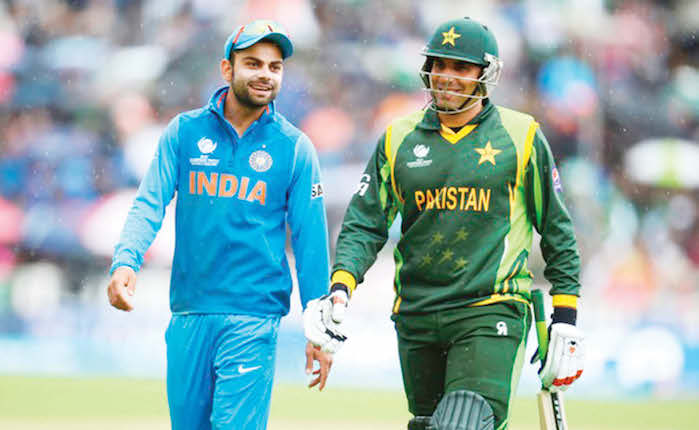
  • Centre unlikely to give nod to Indo-Pak cricket series in Sri Lanka

    Centre unlikely to give nod to Indo-Pak cricket series in Sri Lanka

    NEW DELHI (TIP): The government continues to sit tight over BCCI’s proposal seeking nod for resumption of cricketing ties with Pakistan in Sri Lanka next month, amid indications of serious reservations about the cricket body’s plan.

    “They have jumped the gun,” a senior government leader said, adding that revival of cricketing ties with the hostile neighbour may not necessarily be in accord with popular mood at a time when Pakistan continues with its support to terror activities.

    The reluctance should put paid to early restoration of cricketing contact because India’s schedule has no window to accommodate Pakistan beyond December.

    While the BCCI appeared to be out of step with the government’s tough approach towards Pakistan since the latter reneged on the commitment it made at Ufa in Russia earlier this year to discuss terrorism, the step up in attacks have been a further setback.

    Authorities here are convinced that the attack on the Army camp this week was part of a larger plan by terror groups and their patrons in Pakistan army and the ISI to carry out big strikes. “They want to go after big civilian targets,” a senior government functionary said while indicating that the BCCI proposal may not fly with the political leadership at this juncture.

    “One terror attack when cricket is on and the very set, not just political opponents, who are egging you on to play cricket will be attacking you for sending a wrong message to Pakistan,” the functionary said.

  • SUBIR GOKARN IS EXECUTIVE DIRECTOR AT IMF

    SUBIR GOKARN IS EXECUTIVE DIRECTOR AT IMF

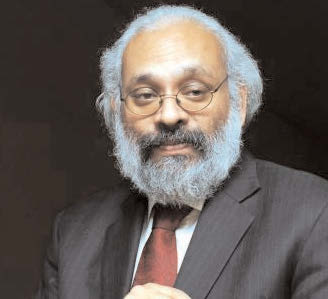
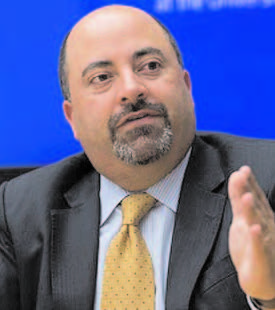
    NEW DELHI: Former RBI Deputy Governor Subir Gokarn was on November 12 appointed as an Executive Director on the board of the International Monetary Fund (IMF).

    Gokarn will represent India, Bangladesh, Sri Lanka and Bhutan on the Washington-based IMF’s Executive Board, which is responsible for conducting the day-to-day business of the multilateral institution.

    The name of 56-year-old economist was cleared by Appointments Committee of Cabinet headed by Prime Minister Narendra Modi, as per an order issued by the Department of Personnel and Training.

    On the IMF Executive Board, Gokarn will replace Rakesh Mohan, whose three year tenure ends this month. The order did not mention the tenure for Gokarn.

    Mohan has also been a Deputy Governor at RBI. The current RBI Governor Raghuram Rajan has incidentally been Chief Economist at IMF.

    The Board is composed of 24 Directors, who are appointed or elected by member countries or by groups of countries, and the Managing Director, who serves as its Chairman. The Board meets several times each week and carries out its work largely on the basis of papers prepared by IMF management and staff.

    The grouping of India, Bangladesh, Sri Lanka and Bhutan would be represented by Gokarn with a total casting vote of 2.8 per cent. This includes more than 2.3 per cent for India.

    The US, Japan, Germany, France and UK are among the major countries with individual representatives, while the highest vote is for the US at 16.74 per cent. Other countries with individual representatives on the Board include China, Russia and Saudi Arabia.

    Rated as one of the finest economists, Gokarn has in past served as Deputy Governor of the Reserve Bank of India, Chief Economist of global rating agency Standard and Poor’s (S&P) and head of CRISIL’s Research and Information business and also a nominee Board Member of the State Bank Of India.

    He was appointed Deputy Governor of RBI in 2009 for a term of three years and had a distinction of being the youngest Deputy Governors of the central bank at that time.

  • No amnesty for fasting Lankan Tamil prisoners: Govt

    No amnesty for fasting Lankan Tamil prisoners: Govt

    COLOMBO (TIP): There will be no common amnesty for over 200 prisoners, mostly Tamils, who staged a hunger strike in jails throughout the country, the Sri Lankan government said on Oct 26.

    The prisoners went on a six-day protest hunger strike demanding swift procedural action including a common amnesty.

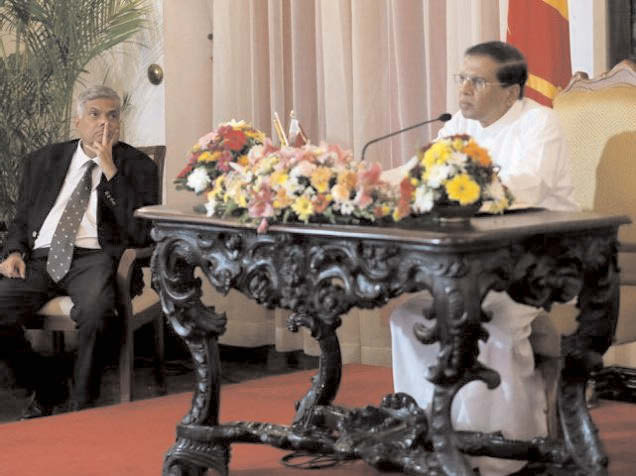
    “There was a meeting held on Monday with the patronage of Prime Minister Ranil Wickremesinghe. A few decisions were taken. The Prime Minister said it was not possible to grant a common amnesty,” said Minister of National Dialogue Mano Ganesan.

    “But the bail procedure could be expedited. Those who are having their cases and those under police action could be granted bail. The officials have been advised to look at this process,” Ganesan said.

    The Tamil prisoners claim that they have been held for a long time with no charges being made against them.

    The protesting inmates ended the strike following an assurance from President Maithripala Sirisena that action would be in place to grant them redress by November 7.

    Sri Lanka has put through the legal process over 8,000 members of the LTTE who had surrendered to government troops during the last stages of the civil war that ended in May, 2009.

    Those in prisons are those who had been arrested for suspected links with the LTTE. The legal procedures related to them have been delayed due to the large backlog of cases.

  • RAMESHWARAM: THE TEMPLE CITY

    RAMESHWARAM: THE TEMPLE CITY

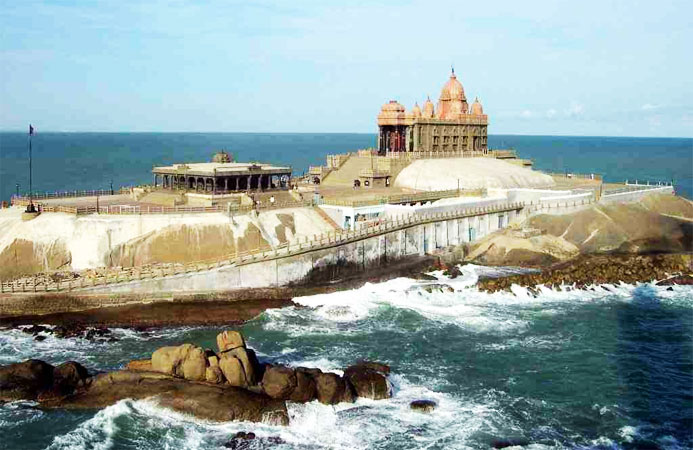
    Rameshwaram is called the temple city of Tamilnadu. Located at the South-Eastern corner of the state this city is the is the foremost religious city for both Vaishnavaites and Shaivites pilgrims.

    Rameshvaram is one city that has a brief mention in the ancient Hindu mythology. According to Ramayana, before going to Lanka Lord Rama performed Shiv puja here for victory. And it was later that at the same place Rameshwaram temple was built.

    Know an interesting mystical tale associated with Rameswaram Tamil Nadu with Rameshwaram tourism. The pious land has witnessed a significant event related to Lord Rama. Legend says that after Lord Rama’s triumph over the demon king Ravana in the war at Sri Lanka, he performed a thank giving rituals to Lord Shiva on this very majestic land of Rameswaram Tamil Nadu.

    RAMESHWARAMPLACES TO VISIT

    Dotted with some really nice travel destinations, Rameshwaram tourism is a real treat for the travelers to see. Lets have a look at the famous travel places to see here.

    Ramanathaswamy Temple 

    Ramanathaswamy Temple – was built in the 12 century AD and is a fine specimen of late Dravidian architecture

    World over it is know for its amazing sculpted pillars and corridors with elaborative design, carving and style.

    According to legends Lord Rama sanctified this place by offering prayers to Lord Shiva after his victory over demon ruler Ravana.

    Only Hindu pilgrims have permission to enter the Ramanathaswamy temple premises.

    Kothandaramaswamy temple

    Located just 8 km away from Rameshwaram temple, Dhanushkodi the place got its name after Lord Rama’s bow ‘Dhanush’.

    Kothandaramaswamy is home to Kothandaramaswamy temple which was completely destroyed in 1964 by the terrible cyclones.

    The temple has many beautiful statues of Lord Rama, Sita, Hanuman, Lakshmana and Vibhishana.

    Adam’s Bridge 

    Adam bridge is a chain of natural reefs, islets and sandbanks, that connects India with Sri Lanka.

    According to legends, this series of steeping stones was used by Hanuman when he was chasing Ravana while resuing Sita.

    Gandhamadana Parvatam 

    Gandhamadana Parvatam is an ideal location to enjoy the natural view of the island along with Ramanathaswamy temple.

    The footprint that are seen here are believed to be of Lord Rama.

    Beach Attractions

    Being an island city (and a famous attraction of Tamilnadu tourism), Rameshwaram is surrounded by the Arabian sea giving this place its pristine beauty. The picture perfect beaches and the colorful sandy beaches make this place one of its kind and ideal for water sports. Try out scuba diving here or just relax under the sun sipping coconut water.

    Rameshwaram tourism offers info on best nearby destination to the pious city. Several fascinating excursion destinations can be explored on your tour to Rameshwaram. Erwadi tucked 24 km from the city, is popular for the tomb of saint Ibrahim Syed Aulia. Another worth visiting nearby place id Ramanathapuram, renowned for its magnificent Ram Vilas Palace of Sethupati Rajas. Also Take a tour to Uthirakosamangai, known for the ancient Shiva temple.

    How To Reach 

    BY AIR: Madurai is the nearest airport at a distance of 163 km

    RAMESHWARAM BridgeBY TRAIN: The rail network connects the city to and from Madurai, Chennai, Thanjavur and Trichy. Island of Rameshvaram is connected with mainland of Mandapam with 2 km long Indira Gandhi bridge
    BY ROAD: The city is well connected by road to main cities like Chennai, Trichy, Thiruvallur, Tanjore, Kanyakumari and Pondicherry. Tourists can also hire jeeps, auto rickshaws and even cycle rickshaws for sightseeing tour of the city.

  • SRI LANKA PRESIDENT CALLS ALL-PARTY MEET ON UN RESOLUTION

    SRI LANKA PRESIDENT CALLS ALL-PARTY MEET ON UN RESOLUTION

    COLOMBO (TIP): Sri Lankan President Maithripala Sirisena has called an all-party meeting to discuss the latest UNHRC resolution over the alleged rights abuses committed during the 26-year-old civil war with the Tamil Tigers.

    Some 21 political parties are expected to take part in this evening’s meeting, also to be attended by the Prime Minister Ranil Wickremesinghe, presidential sources said.

    The UNHRC resolution co-sponsored by Sri Lanka and drafted by the US has called for a domestic internal inquiry involving foreign expertise over the alleged human rights violations during the war that ended in 2009.

    Nationalist groups have called the resolution a betrayal.

    The Sirisena government sees the resolution as its triumph as having been able to prevent an international warcrimes investigation, which might have led to a trial of prominent figures including former president Mahinda Rajapaksa.

    It was under Rajapaksa’s tenure that the Sri Lankan forces defeated the Liberation Tigers of Tamil Eelam, the separatist group that waged armed insurgency against the government.

    The UN has estimated that 40,000 people died, many of them civilians, during the civil war.

    The objective of the all-party-meet could be to seek the view of the parties on the resolution.

    “If the President’s idea is to tell us that the resolution poses no threat to our sovereignty we will use this chance to bring to his attention the peril faced by the nation,” said Udaya Gammanpila, an opposition member of parliament from the ultra nationalist Pivithuru Hela Urumaya (PHU).

    The Opposition held a public rally earlier this week, faulting the government for “succumbing to dictates of the US” on the resolution.

    Sri Lanka has opted for a local mechanism even after the UN rights chief prescribed a hybrid court to carry out prosecutions.

  • China’s Ocean Hegemony and Implications for India

    China’s Ocean Hegemony and Implications for India

    The fifth generation of CCP leadership under Xi Jinping has de facto abandoned the Deng doctrine of keeping low profile internationally. China has become more ambitious of becoming a superpower and has been extending its sovereignty claims on the land and the sea. As a rising hegemon, China has started to challenge the existing international strategic order. China has been in the news recently for building artificial islands with air-landing strips in the South China Sea. It has demanded 12 nautical miles exclusive economic zone around these artificial, man-made reefs. China is a signatory to the law of the Seas (UNCLOS). Chinese attempts to claim the bulk of the South China Sea goes against both the letter and the spirit of the law of the sea. Beijing will invoke its EEZ for its own economic benefits while denying the same rights to other claimants. Brushing aside the ASEAN Code of Conduct in the SCS, China claims sovereignty over all of the SCS which is disputed by Vietnam, the Philippines, Malaysia, Brunei and Taiwan.

    For the last several years, Chinese official media has been harping on safeguarding China’s “Ocean Sovereignty”. The PLA navy’s goal is to have a “Thousand Ships Navy”. This stated “TSN” Goal is to further Chinese supremacy in the Indo-Pacific region and exploit the mineral & hydrocarbon wealth in the international sea-beds. PLAN has been entrusted to fight future wars for China’s security as per the former President Hu Jintao. On December 6th 2011, while addressing the PLA Navy, Hu Jintao pronounced that PLAN should make “extended preparations for warfare in order to make greater contributions to safeguard national security”. China unilaterally declared an air-defense identification zone in the East China Sea in November 2013. Recently, a Chinese admiral declared similar intentions of setting up an air defense identification zone in the future above the disputed areas of the South China Sea if Beijing thought it was facing a strategic threat.

    China has created not only facts on the ground but also facts on the Ocean in a very predictable manner of claiming sovereignty with the “Chinese Characteristics”. China always makes maximalist claims against other countries, disputes sovereignty, and alters the facts on the grounds of medieval history or economic reasons, bullies the smaller adversaries into submission, demands mutual concessions while later on sending its armed forces. China has constructed a couple of lighthouses in the South China Sea to provide a fig-leaf for its naked hegemony and sea-resources grabbing activities. China has successfully converted the South China Sea into a virtual private lake affecting the freedom of navigation for the entire world. India has vital maritime interests in the South China Sea. 55% of Indian maritime trade passes through the South China Sea. China has objected vehemently to ONGC’s oil drilling in collaboration with Vietnam in the South China Sea and PLAN ships have started to harass the Indian drilling rigs.

    Once the heat of the South China Sea is gone and Beijing has de facto acquired the marine resources of the South China Sea, the dragon will spread its strategic tentacles into the Indian Ocean. Warning bells are already ringing in the Indian Ocean. PLAN started its naval forays in Indian Ocean up to the Gulf of Aden in 2010 under the garb of anti-piracy operations to control Somali pirates. China’s string of pearl initiative got absorbed in the 21st Century Maritime Silk Road. China did acquire significant naval facilities in Hambantota, Chittagong, Maldives, and listening & communication facilities in the Coco Islands in Myanmar besides building the naval port in Gwadar. Incidentally, India has gifted the Coco islands to Myanmar in Nehru’s realm. Gwadar port was offered to India by Oman but Nehru declined and Pakistan became the owner and the beneficiary. China also acquired naval facilities for recuperation and re-fueling in Seychelles in December 2011. China has already signed an agreement with the UN backed International Seabed Authority to gain exclusive rights to explore poly-metallic sulfide ore deposits in 10,000 square-kilometers of international seabed in Indian Ocean for 15 years. China has been sending nuclear powered submarines to Sri Lanka and Pakistan. Pakistan will receive eight Chinese nuclear powered submarines effectively neutralizing the Indian second strike capabilities in case of a nuclear attack on India. China plans to buy an island from the Maldives for $ 1 billion under the current Maldivian Government of President Abdulla Yameen.

    China’s response to Malabar naval exercises in 2007 when trilateral format included Japan was very negative leading to non-invitation to Japan later on after 2007. India plans to invite Japan in the upcoming Malabar exercises and Chinese reaction would be worth watching. China remains very paranoid about the US “Pivot to Asia” doctrine. Chinese paranoia about the Asian Quadrilateral led to Australia pulling out of that mechanism for maritime cooperation in the Indo-Pacific.

    China had sent trial balloons to US for a G2 condominium by which US will take over the Atlantic Ocean whereas China will have rights over the Pacific Ocean. Unlike Tibet, Indo-Pacific is too important to be given to China on a platter. As a trading nation with vital economic and maritime interests, India will have to safeguard the sea-lanes of communication, ensure freedom of navigation and take the strategic ownership of her maritime interests.

    China’s foreign exchange reserves were at the peak of almost $4 trillion in June 2014. Despite a recent decline in Chinese economy, China’s foreign exchange reserves totaled $3.514 trillion at the end of September 2015. China still has the largest foreign exchange reserves in the world. China will continue to extend its strategic footprints under the much enlarged One Belt, One Road (OBOR) project because it has plenty of spare cash. China also proposes to use the Beijing sponsored AIIB as the financing arm for the OBOR which will ultimately require $ 1.4 trillion in investments. China has already sanctioned$46 billion on China-Pakistan Economic corridor as part of the OBOR connectivity without taking India’s sensitivities about CPEC passing through the POK. While India has cooperated with China in the BCIM (Bangladesh, China, India, and Myanmar) Corridor project, the GOI has been deliberately silent about any synergistic cooperation with the 21st Century Maritime Silk Road project.

    read-more

  • Indian-American  Sameer Lalwani Appointed in U.S. Think Tank

    Indian-American Sameer Lalwani Appointed in U.S. Think Tank

    WASHINGTON (TIP): The Stimson Centre announced the appointment of Sameer Lalwani as Deputy Director for its South Asia program.

    Mr Lalwani’s research will focus on crisis management, nuclear security, and national security decision making in South Asia, a press statement adding that he will help devise Stimson’s online open courses on nuclear-related issues.

    “I look forward to joining Michael and the Center’s extremely talented team,” Mr Lalwani said.

    Sameer Lalwani is Deputy Director for Stimson’s South Asia program. From 2014-15, Lalwani was a Stanton Nuclear Security Postdoctoral Fellow at the RAND Corporation. He completed his Ph.D. in political science at MIT and remains a Research Affiliate at MIT’s Center for International Studies. His research interests include grand strategy, counterinsurgency, civil-military relations, ethnic conflict, nuclear security, and the national security politics of South Asia and the Middle East. Sameer has conducted field research in Pakistan, India, Kashmir, Sri Lanka, and the British archives. His work has been published through RAND, Oxford University Press, the Journal of Strategic Studies, Foreign Affairs, Foreign Policy, The National Interest, CTC Sentinel, the Los Angeles Times, the New York Times, and a number of other outlets. Previously he was a fellow at George Washington University’s Institute for Security and Conflict Studies, a member of the CNAS Next Gen National Security Leaders Program, a participant in the CSIS Nuclear Scholars Initiative, and a policy analyst with the New America Foundation. He holds B.A. in political science from University of California, Berkeley.

    Founded in 1989, Stimson builds effective security solutions through pragmatic research and innovative analysis.

  • US announces additional funding for demining in Sri Lanka

    US announces additional funding for demining in Sri Lanka

    COLOMBO (TIP): The US on Thursday announced an additional USD 1.745 million for demining activities in Sri Lanka’s Tamil-dominated former war zone.

    The additional fund was announced after a meeting between the US Ambassador in Sri Lanka, Atul Keshap, and minister of rehabilitation, resettlement and Hindu religious affairs D M Swaminathan.

    In total, the United States has dedicated over USD 43 million for demining assistance in Sri Lanka since 1993.

    “I support Minister Swaminathan’s vision of making Sri Lanka mine-impact free by 2020,” Keshap said.

    “As the world’s largest donor of global demining efforts, the United States is committed to addressing the land mine problem in Sri Lanka,” he said in a statement.

    The two also discussed ongoing demining work in northern and eastern Sri Lanka.

    “The United States will continue to work with President Sirisena, Prime Minister Wickremesinghe, minister Swaminathan, and the people of Sri Lanka to help clear the remaining areas,” Keshap said.

  • Sri Lanka likely to dodge international probe into war crimes

    Sri Lanka likely to dodge international probe into war crimes

    COLOMBO (TIP): Sri Lanka appears set to avoid an international inquiry into atrocities committed during its lengthy civil war if a new UN resolution is adopted next week.

    Colombo has lobbied successfully for a watering-down of an earlier motion demanding foreign involvement in any probe into human rights abuses during the 37-year conflict.

    The draft resolution, which is likely to pass unanimously next week, refers to the importance of having foreign experts involved in a potential investigation, but does not make the condition mandatory.

    The initiative was tabled at the UN Human Rights Council in Geneva late Thursday, a week after the publication of a long-awaited UN report that laid bare the horrific barbarity committed by both the army and the separatist Tamil Tiger rebels in the bitter 37-year war.

    The report said Sri Lanka’s criminal justice system was “not yet ready or equipped” to conduct an independent and credible investigation and called for a hybrid special court to include international judges, prosecutors, lawyers and investigators.

    But Sri Lanka has resisted a foreign inquiry, which many members of the island’s Sinhalese majority consider an infringement of sovereignty. The main minority Tamil party the Tamil National Alliance (TNA) said the resolution, initiated by the US and co-sponsored by Sri Lanka, was the “product of a difficult consensus”.

    “We are acutely aware that some of the language used in the interests of a consensus will not satisfy all victims of the conflict whom we represent and who have reposed their trust in the TNA.

    “However, we are of the view that the draft provides a constructive starting point for what will inevitably be a long road to reconciliation,” the TNA said in a statement.

    The resolution allows Sri Lanka to draw on foreign funding and expertise for a credible domestic investigative mechanism.

    Washington dropped its opposition to a domestic-only probe last month, and US Secretary of State John Kerry described the draft resolution as an important step towards a “credible transitional justice process” after the decades-log civil war. “The United States will remain steadfast in our commitment to walk with Sri Lanka as it takes these important but challenging steps,” he said in a statement issued by the US embassy in Colombo.

    Sri Lanka’s former president Mahinda Rajapakse had been at loggerheads with the US, other Western nations and India, which had censured Colombo over its rights record and failure to ensure accountability for the killings of tens of thousands of civilians.

  • Two Indian American Teens Awarded Gloria Barron ‘Young Heroes’

    Two Indian American Teens Awarded Gloria Barron ‘Young Heroes’

    Two Indian American teens Sonali Ranaweera, 14, of California, and Deepika Kurup, 17, of New Hampshire were among the awardees for the Gloria Barron Prize for Young Heroes – 2015.

    The Gloria Barron Prize for Young Heroes announced its 2015 winners as it marks fifteen years of recognizing outstanding youth. The Barron Prize celebrates inspiring, public-spirited young people from diverse backgrounds all across North America. Established in 2001 by author T.A. Barron, the Barron Prize annually honors 25 outstanding young leaders ages 8 to 18 who have made a significant positive impact on people, their communities, and the environment. The top fifteen winners each receive $5,000 to support their service work or higher education.

    Deepika_HeadDeepika Kurup has invented a practical, low cost, and sustainable method to purify contaminated water. Her solar-powered device destroys bacteria in wastewater within 15 minutes of filtration and exposure to sunlight. Because it is completely solar powered and its materials do not become depleted, the device can easily be used in developing countries and can be scaled-up for large water purification systems. She has two patents pending and in 2012, was named America’s Top Young Scientist as the national winner of the Discovery Education 3M Young Scientist Challenge.

    Deepika_ActionDeepika was inspired to begin her work three years ago following a trip to India to visit her grandparents, where she saw children collecting and drinking polluted water from nearby streams. She learned that worldwide, many children spend more time collecting water than attending school and that 4,000 children die each day from water-related diseases. Convinced that she could create an easy way to filter water, she began conducting research at the University of Massachusetts in Lowell, where an engineering professor supervised her work, which combines materials science, photochemistry, and biology. Deepika is committed to educating children about the importance of clean water and has spoken to groups and schools around the world. “My work has taught me to be persistent and not give up, and I feel it’s made me a more enlightened and humble person,” says Deepika.

    Sonali_HeadshotSonali Ranaweera created Recycling4Smiles and has raised over $40,000 by redeeming recyclable cans and bottles to fund 44 cleft lip surgeries. She has also funded dental care for over 1,000 rural children in Sri Lanka and has provided school supplies, clothing, and school lunches for hundreds of children in need around the world.

    Sonali_Action
    Sonali launched her project as an 11-year-old, when she received $100 from her parents at Christmastime with the stipulation she use it to make a difference in someone’s life. She decided to raise an additional $150 in order to fund one cleft lip surgery through Smile Train, and to do so by collecting and redeeming recyclables, which she was learning about in her sixth grade science class. When she easily met her first goal, she set her next at $2,000. Three years later, she has collected and redeemed well over a half-million recyclables. Outfitted in long rubber gloves and with help from her brother and friends, Sonali collects, sorts, and redeems 2,000 cans and bottles in order to raise each $100. She regularly collects recyclables from a number of businesses and receives bag upon bag of bottles and cans on her doorstep. “I’ve learned that you can make a difference in the lives of others and help our earth without needing to have a lot of money or power,” says Sonali. “Nothing is impossible if you are dedicated to a cause.”

  • UN seeks special court on Sri Lankan war crimes

    UN seeks special court on Sri Lankan war crimes

    GENEVA (TIP): The United Nations commissioner for human rights, Zeid Raad al-Hussein, on September 15 called for the creation of a special court to investigate the war crimes committed during Sri Lanka’s 25-year-long insurgency in which between 80,000 to 100,000 people were killed.

    Hussein outlined horrific abuses during the conflict, including torture, executions, and sexual abuse by the Sri Lankan Armed Forces, as well as suicide attacks, assassinations and recruitment of child soldiers by the LTTE. Presenting a 270-page report focu sing on the period from 2002 to 2011, Zeid called for the creation of a “hybrid special court” that would include foreign judges and investigators.

    The report recommends a range of measures to develop a comprehensive transitional justice policy to address the human rights violations of the past 30 years and prevent their recurrence.

    These hybrid special court will prove the war crimes and crimes against humanity , with the integration of international judges, prosecutors, lawyers and investigators, as an essential step towards justice. This cannot be done by a domestic court as the report states that the Lankan criminal justice system is not capable of handling such types of crimes, an absence of victim and witness protection, which is topped by the distor tion and corruption of Sri Lanka’s security sector and justice system by decades of conflict and impunity .

    Presenting the report, Zeid hoped that the report will be consequential and end impunity for crimes. He calls for soul searching among the Sri Lankans for reconciliation.Not only have war crimes and crimes against humanity have apparently been committed by state actors but also by the LTTE and other groups.

    Over the years there have been denials and cover-ups. Investigations have not been tardy and those who pushed for justice met reprisals. There is anger, sceptisim, and mistrust by the victims at the repeated failure of successive domestic inquiries to bring justice. The new Lanka government has acknowledged the report and given encouraging signs, according to the High Commission of Human Rights.

    Lankan troops blamed for killing French aid workers 

    The United Nations on Wednesday pointed the finger at Sri Lankan forces over the killing of 17 French charity workers on the island nine years ago, despite repeated denials by the military. A UN war crimes report on Sri Lanka said the 2006 attack against Action Against Hunger (ACF) staff was “the most significant case of humanitarian workers killed” in the country. “Based on the information (the investigation), there are reasonable grounds to believe that members of the security forces committed the extrajudicial executions of the ACF staff,” the report said. It is the first time a UN body has placed blame for the aid workers’ deaths on Sri Lankan forces.

  • Moving towards accountability

    Accountability for past excesses is not easily achieved in post-conflict societies, but its need and relevance cannot be brushed aside. Fostering peace and reconciliation among formerly feuding sections of society, and finding constitutional solutions to core political issues are often the final objectives. However, transformative and substantive justice requires establishing the truth about past crimes perpetrated as part of a deliberate policy. The human rights investigation report on Sri Lanka, submitted to the UN Human Rights Council by the High Commissioner for Human Rights, seeks to address the crucial question of accountability in the island nation for the “horrific crimes” committed by all parties to the conflict that ended in 2009. The report proposes a special hybrid court that will integrate international judges, prosecutors and investigators with domestic resources. It concludes that many of the instances established may amount to war crimes or crimes against humanity. The report records unlawful killings, disappearances, deliberate bombardment of hospitals, and other crimes by the security forces. It also records the killing of civilians by the Liberation Tigers of Tamil Eelam, its forced recruitment of adults and children, and preventing civilians from leaving the conflict zone. The report marks a major step towards independently establishing “system crimes” – showing a pattern of conduct on the part of
    “perpetrators working within an hierarchical command structure”.

    The report recognizes the present national unity government’s efforts to engage the Office of the High Commissioner for Human Rights. Sri Lanka’s brief response does not contain any explicit reference to the proposed hybrid court, but only a promise of reconciliation and non-recurrence of violations. Colombo now has a unique opportunity to demonstrate its commitment to durable peace and reconciliation by accepting the recommendations, especially the one relating to enacting special legislation to establish ad hoc hybrid courts. The process will not be easy. The political will of the Sirisena-Wickremesinghe government will come under test, as there may be forces opposed to any non-domestic mechanism. India will also be looking at the process closely, the South Asian region being new to such a trans-national inquiry. However, it should not be forgotten that the Sri Lankan conflict always had an international dimension, with many countries involved in supporting both war and peace. The new proposal strikes a necessary balance between the clamor for an international probe and the need to involve domestic institutions. It is time to render justice to the victims of what was South Asia’s longest war.

  • For the first time in decades, Tamil lawmaker becomes Sri Lanka’s opposition leader

    COLOMBO (TIP): Sri Lanka’s Parliament on September 3 recognized an ethnic Tamil lawmaker as the opposition leader for the first time in decades in what is seen a positive step toward postwar reconciliation with the minority community.

    Speaker Karu Jayasuriya announced that Rajavarothayam Sampanthan, leader of the Tamil National Alliance, was the official opposition leader.

    It is the second time an ethnic Tamil has been opposition leader. Appapillai Amirthalingam became opposition leader in 1977 but resigned five years later after refusing to swear that he would not promote a separate state for Tamils.

    A separatist civil war broke out soon after and continued until it was crushed by the island nation’s military in 2009.

    According to a conservative estimate by the United Nations about 80,000 to 100,000 people were killed in the conflict, but the actual toll is thought to be much higher.

    The TNA emerged as the third-largest party in the 225-member Parliament in last month’s election but a decision by the first two parties led by Prime Minister Ranil Wickremesinghe and President Maithripala Sirisena, respectively, to form a consensus government made the TNA the largest opposition party.

    The TNA was earlier backed by the defeated Tamil Tiger rebels and was accused of being their mouthpiece in Parliament. However, since the rebels’ defeat the party has renounced separatism and said it would accept regional autonomy based on a federal model.

    Sampanthan’s appointment despite early opposition by some ethnic Sinhalese leaders is seen a reassurance to the Tamil community of their place in national politics. Tamils have long complained of discrimination in education, government jobs and governance.

    Since his surprise win in a presidential election in January Sirisena has taken a number of steps, including releasing military-occupied private lands to their owners in the Tamil majority north and moving the military out of police and administrative functions, to promote reconciliation.

    The steps have helped improve Sri Lanka’s image internationally. The United Nations Human Rights Council will release a report on war crimes allegations later this month. But the United States, which earlier was at the forefront calling for an international investigation into the allegations, has promised to present a “collaborative resolution” with Sri Lanka to the council supporting Colombo’s move to conduct a local investigation.

  • Wickremesinghe to be sworn-in as Sri Lanka’s new PM

    Wickremesinghe to be sworn-in as Sri Lanka’s new PM

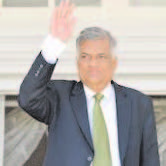
    COLOMBO (TIP): Incumbent Ranil Wickremesinghe will be sworn-in as Sri Lanka’s new Prime Minister on August 20, returning to the office for a fourth term after his party won the closely contested general election.

    Wickremesinghe’s United National Party (UNP) coalition won 106 seats in Monday’s parliamentary election, just 7 short of a simple majority in the 225-member assembly but enough to form a government.

    “We will also form the Cabinet thereafter,” former finance minister Ravi Karunanayake said.

    He was certain to receive the majority support from Rajapaksa’s United People’s Freedom Alliance (UPFA) which has 95 seats. The minority Tamil National Alliance swept the ethnic Tamil-majority Northern and Eastern provinces with 16 seats.

    66-year-old veteran reformist was handpicked by President Maithripala Sirisena to lead a minority government after the ouster of longtime president Mahinda Rajapaksa in January.

    A group of Sirisena supporters is likely to join a broad-based national unity government led by Wickremesinghe.

    Wickremesinghe became prime minister for the first time in May 1993, when a suicide bomber assassinated president Ranasinghe Premadasa. He got his second chance in 2002, when he was credited with pulling the country out of recession.

    Addressing a gathering today, Wickremesinghe said he will continue the mandate for good governance given in parliamentary polls and work together with all parties in a national government for 2-3 years.

    “The parliamentary elections of August 17 confirms the January 8 revolution,” he said, referring to the presidential election held in January which ousted the former President Mahinda Rajapaksa. “We can’t turn back.” Wickremesinghe, a nephew of Sri Lanka’s first executive president, said he will build a consensus on the new government’s national policy.

    “I have got a mandate to put before parliament our plan so that we could arrive at a consensus and build a national framework within which we will do our policy,” he said.

    “This new approach requires all parties to work together, either in the government holding ministerial positions or in parliament through the oversight committees,” he added. “We will also be having district development co-ordination boards headed by the MP to carry out the decentralised development and the bodies which will have civil society without politicians, the ‘grama rajya’ committees which will cluster the villages as well as the advisory councils which will consist of civil society,” he said.

  • The 68th Anniversary of India’s Independence

    The 68th Anniversary of India’s Independence

    India’s Independence Day belongs to all Indians and all people who wish India well. As an American proud of my Indian ancestry, and my name unchanged, I am more than merely delighted that these United States and India have found a durable rhythmic tune, geopolitical and strategic in nature, bound by common notes and dreams of our bilateral citizenry in their enlightened self-interest-based pursuit of happiness guaranteed by separated powers regimes.

    2015 is special for many reasons. We overcame the unexpected bilateral pain that became known as the Devyani incident with Hours of Immunity successfully negotiated by FM Salman Khurshid with Secretary John Kerry, to then witness PM Modi rock Madison Square Garden. Later, as I wished, President Barack Obama held a Chai Summit in India. But, then it got better. President Obama did for Indian-Americans and India what he did for Chinese-Americans and China – as he had appointed Gov. Gary Locke as our ambassador to China in 2011, in the past year he appointed Senate Leader Harry Reid’s right hand Richard Rahul Verma as our ambassador to India. For good measure, he also appointed talented diplomat Atul Keshap as our ambassador to Sri Lanka. Recently, Nisha Desai Biswal, Assistant Secretary of State for Central and South Asia, visited India’s Consulate General in New York to personally plant eternal-goodwill where Devyani used to be DCG. Such an act serves to repair even frayed feelings and is worthy geometrically – as there is an implied promise that all will be well between our two nations.

    That India produced a man such as Dr. Kalam – who rose to be India’s 11th President – an Indian Muslim – and who was so loved by Indians and who so loved India – seems to me to be a clarion call for all good people everywhere to stand up to religious oppression everywhere with humility-based good deeds that serve their nation above all else, and with respect for all faiths. Earlier, the world experienced the slaughter and splatter of precious ink at Charlie Hebdo – the home of cherished Voltaire who prodded many a monarch to better serve the public good – and Paris became Ground Zero for unity of all nations’ leaders walking arm-in-arm seeking tolerance of free speech as a “core” right and obligation of global citizenship. Dr. Kalam, methinks, singlehandedly well honored Mahatma Gandhi’s love for Muslim Indians, Christian Indians, Buddhist Indians, Jewish Indians and inter alia, Hindu Indians.

    68 years ago Pandit Jawaharlal Nehru rose to say these immortal words:

    “Long years ago we made a tryst with destiny, and now the time comes when we shall redeem our pledge, not wholly or in full measure, but very substantially. At the stroke of the midnight hour, when the world sleeps, India will awake to life and freedom. A moment comes, which comes but rarely in history, when we step out from the old to the new, when an age ends, and when the soul of a nation, long suppressed, finds utterance.”

    Dr. Kalam answered India’s Tryst With Destiny – excellence with humility, nation above religion, peace above war. India belongs to everyday Indians who recall the sacrifices made by so many to be a free nation, and live their lives as homage to those who sacrificed so much.

    That Indian Tea played a starring role in the Boston Tea party of 1773, and today India and United States find themselves in a vortex that cannot be denied – of unity of interest – one may be forgiven to say it was so decreed even by natural law without the need of being a Calvinist. May we continue to be worthy of God’s grace at the stroke of the midnight hour and every hour thereafter.”

    Ravi Batra

    Also Read: theindianpanorama.news/guest-comments-blog-news-tip/independence-day-greetings-from-the-law-firm-of-ravi-batra-15-august-2015-45203/#.Vc3UHnjOHBJ

  • Indian-American Atul Keshap Confirmed as US Envoy to Sri Lanka and Maldives

    Indian-American Atul Keshap Confirmed as US Envoy to Sri Lanka and Maldives

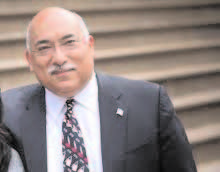
    WASHINGTON (TIP): Indian-American Atul Keshap has been confirmed as the US Ambassador to Sri Lanka and Maldives, becoming the second Indian-origin diplomat to be posted to the region after Richard Rahul Verma.

    Mr. Keshap, 44, a former official at the US Embassy in India, was confirmed, August 5, by the US senate as the country’s envoy which would be his first Ambassadorial posting.

    He is currently working as Deputy Assistant Secretary of State in South and Central Asian Affairs Bureau of State Department. He joined the Foreign Service in 1994. Mr Keshap and Dr Verma, the US envoy to India, both trace their origin to Punjab.

    He was the deputy political counselor at the US Embassy in New Delhi from 2005 to 2008.

    Mr Keshap also served as special assistant for the Middle East, North Africa, and South Asia for the under Secretary of state for political affairs.

    In 2003, he moved to the White House as director for North African and Middle

    Eastern regional affairs on the staff of the National Security Council. He was also the director for UN Human Rights in the Bureau of International Organization Affairs from 2008 to 2010.

    His father, Keshap Chander Sen, was a UN development economist working in Nigeria. His mother, Zoe Calvert, had been in the US Foreign Service when she met and married Sen in London. She had also served at the US embassy in India.

    “My parents’ service and my upbringing instilled in me a firm dedication and commitment to American values, and led me to a career in the Foreign Service,” Mr Keshap said in his confirmation hearing on June 23.

    He had said since January, Sri Lanka has made progress on challenging issues, from fighting corruption and media censorship, to beginning the long process of healing after decades of war.

    “We want to help the Sri Lankan people strengthen democracy, civil society and human rights, including media freedom and freedom of religion,” he said.

    “We want to help build a lasting peace and fellowship among Sri Lanka’s ethnic and religious communities, including credible justice, accountability and reconciliation that can facilitate closure for those who suffered and lost loved ones during the war,” he added.

    He said that Maldives faces challenges with youth unemployment, rising extremism, and social unrest.

    “We want a better relationship with Maldives, so that we can deepen cooperation. And we want to help it return to the democratic path on which it courageously embarked a few years ago, and look forward to strengthening our relationship when that happens,” Mr Keshap added.

  • Given the Time, India can be a Regional Security Provider

    Given the Time, India can be a Regional Security Provider

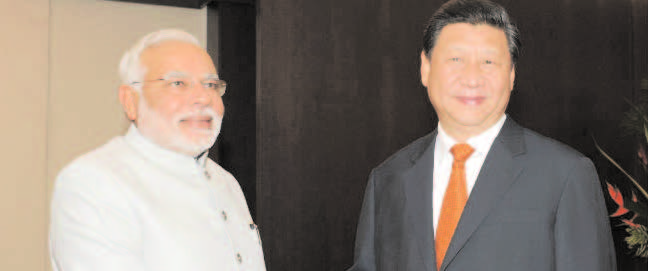
    Despite the cordial meetings between PM Modi and President Xi’s and their  photo ops on the sidelines of the BRICS and SCO summits, India has been drawing the red line with China on its concerns. Official briefings have disclosed clear communiques from India on the issue of China blocking India’s move in the United Nations to question Pakistan on the release of 26/11 attack mastermind Zaki-ur Rehman Lakhvi as well as China’s economic corridor in PoK.

    Only last month the news of Chinese submarines docking in Karachi, had rattled New Delhi. Almost a deja-vu reaction to the Chinese subs making an appearance in Sri Lanka last year. China’s statements that the Indian Ocean is not India’s backyard have only added to Indian anxiety. Not surprisingly, visits in June with US Defense Secretary Ashton Carter, who arrived at an Indian naval base, followed by a trilateral with Australia and Japan on regional security issues have focused on adventurism in the Indian Ocean Region and aggression in the South China Sea.

    There is a growing clamor for India to take up the role of a regional security provider in Asia in the wake of what is being termed as Chinese expansionism. Its was not surprising that both -the renewed India – US Defense Framework Agreement and trilateral discussions, put a strong emphasis on maritime security, and strengthening of India’s defense capabilities to fulfill this ambition. It is a  role that India is eager to take up but, in reality, has a long way to go to achieve in terms of resources and capacity.

    PM Modi’s administration has succeeded in renewing expectations from India, with his first year in office dedicated to revamping the look east policy to act east. The fundamental shift is India’s willingness to work with the U.S. and Asia-Pacific countries on regional security coalitions and shedding of timidity to call China out.

    However, while New Delhi has walked the tightrope to ensure that its strategic choices are not perceived as binary (between the US and China), it is imperative to underline that India’s resource build up is still a work in progress and jumping the gun in terms of expectations will not bode well for India’s long term vision.

    So , beyond the hype it is important to assess how India conceptualizes its own role in Asian security. What roles does it envisage for itself ? The answer perhaps lies in understanding the larger blueprint within which India is calibrating its strategy.

    Conceptually, India’s strategic approach has been rooted in three broad trends : One, revitalizing India’s strategic partnerships with major powers and being recognized as an able contributor to Asian security. Two, reclaiming the south Asian neighborhood to boost India’s role as a regional power. And three, a renewed thrust on economic diplomacy independent of strategic compulsions.

    No longer wanting to sit on the fence, India is looking to play a role in shaping the regional architecture, by increasing economic integration,
    (ASEAN, EAS, RCEP etc), building strategic partnerships and deepening defense cooperation (US, Japan, Vietnam, ASEAN, Australia) with a special emphasis on maritime security. But is all of this easier said than done?

    Realistically, the grand posturing aside, this is a tall order considering the challenges India faces. For one, many a skeptic will tell you that if India can’t even manage its own neighborhood how can it claim to extend its influence in the Asia Pacific?

    An uneasy neighborhood with constant complaints of neglect and lack of leadership from India have been an open secret. Despite PM Modi’s recent efforts, Chinese entrenchment in South Asia – from the ‘One Belt One Road’ initiative to the deepening military ties, is a glaring reality. While this is no zero game of influence, reclaiming the neighborhood would be a pre-requisite to India’s ambitions of a larger role in the great game for Asia. This is no easy task.

    A re-energized look east policy, can only take off if the gaping lacuna in the development of North East India and almost absent physical connectivity with East Asia are fixed. A reputation of slow delivery on projects and the mismatch of political aspirations and resource capacity to deliver are hard truths India has to face up to. The ‘Make in India’ campaign is looking to reverse this but the plans will need time to fructify.

    Even the much celebrated relationship with the US has fallen victim in the past to a lack of momentum and strategic mistrust. Maintaining robust Indo-US ties is imperative to give India a foot in the door of Asian geopolitics. Joint collaborations in defense and technology have to really come through for India to live up to the hype. Till then expectations will only burden India.

    As India gradually rises to its role as a regional balancer in Asia, it is important for India to tell the world to give it time to set its own house in order. New Delhi still has a long way to go in assuring these states of its reliability, not only as an economic and political partner but also as a provider of regional security. The political will is clear, it is time for the commitments to come through. Till then managing China, while building up India’s capacity is the way forward. The hype can wait.

    Shruti PandalaiAuthor | Shruti Pandalai (The author is a Research Analyst & OSD Outreach with Institute for Defence Studies and Analyses. She can be reached at shrutipandalai@gmail.com)
  • New hope for Harbhajan’s flickering career

    New hope for Harbhajan’s flickering career

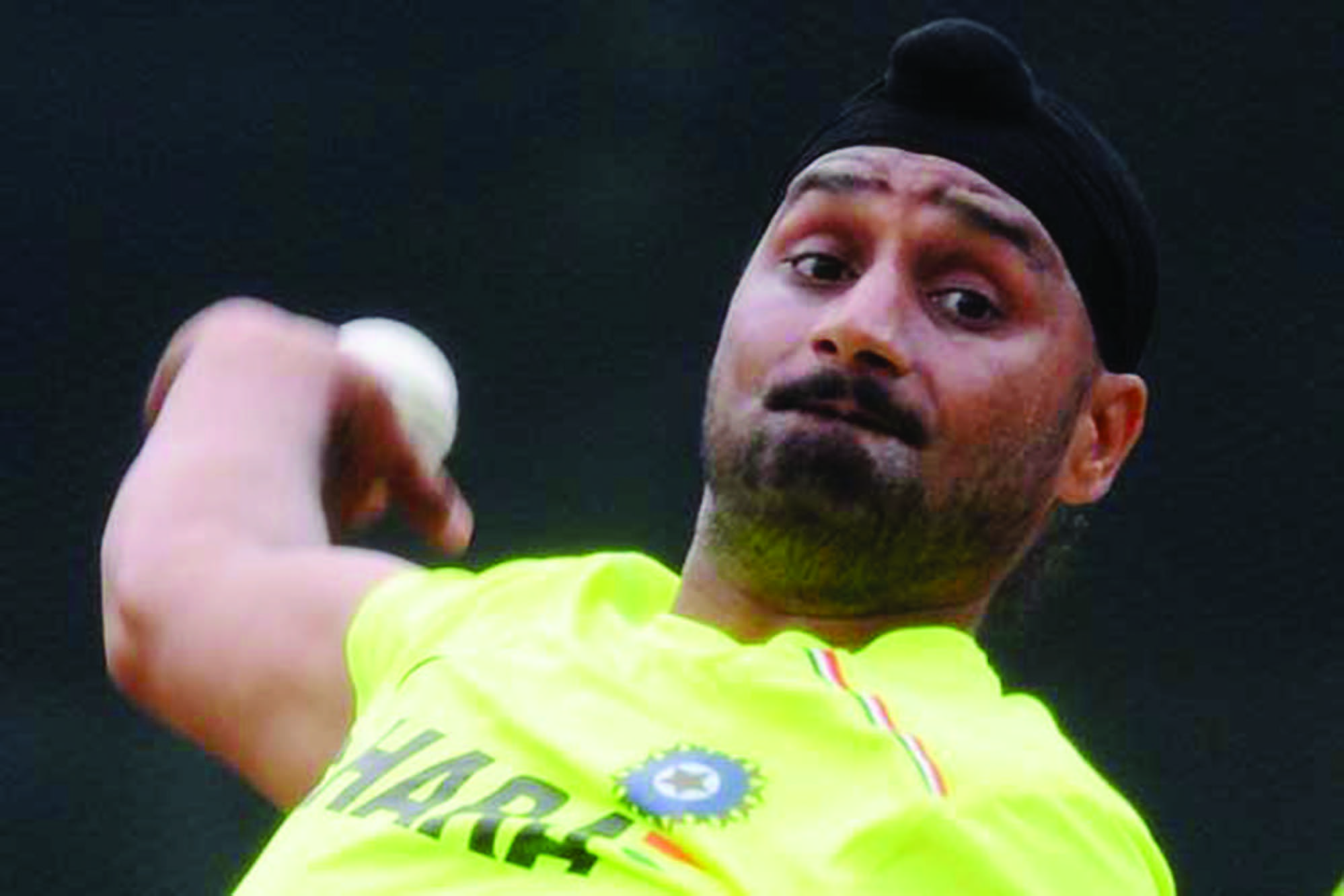
    NEW DELHI (TIP): When Harbhajan Singh was included in the Indian team for the one-off Test against Bangladesh in June, national selector Sandeep Patil had stated that they felt a second offspinner was needed considering the Bangladesh batting line-up comprises six left-handers. Interestingly, he was not picked for the ODI leg of the tour as the selectors opted for Ravindra Jadeja and Axar Patel. The offspinner did a decent job in the one-off Test claiming three wickets for 75 runs and in the process surpassed Wasim Akram in the list of highest wicket-takers in Tests to take the ninth spot.

    Most would have thought the one-off Test to be Harbhajan’s final hurrah at the international stage, but the selectors opted in favour of Bhajji once again, this time picking him in the depleted Indian team for the limited-over Zimbabwe tour. With Ravichandran Ashwin rested, Jadeja dropped and Karn Sharma injured, Harbhajan will most definitely feature in every game against Zimbabwe. At 35, this opportunity is a new lease of life for a flickering career for one of India’s most successful bowlers.

    Harbhajan has been very vocal about his desire to don the Indian colours again and he has stated that he sees himself servicing his country for another five years. However, that desire was not seen in the domestic circuit, where Harbhajan played only three first-class matches in last season’s Ranji Trophy taking six wickets with a best of 3 for 51. But, he impressed in the Indian Premier League picking up 18 wickets in 15 matches for Mumbai Indians, which eventually led to his comeback in Bangladesh.

    Harbhajan has not played an ODI since June, 2011 and with Jadeja’s stock dipping and Axar not able to impress much in the given opportunities; it looks like the selectors had no option but to go back to Harbhajan. India spin department has been quite thin for a long while and with Pragyan Ojha out of the selectors’ radar completely and Amit Mishra not putting any definite performances, Harbhajan finds himself in a happy position.

    IPL 2015 was a second coming for Harbhajan as he bowled slower through the air and was willing to flight the ball, something he had failed to achieve since 2011. He got rich dividends for his new found form that could possibly extend his career for at least two more years, until the Indian domestic set up unearths a new talent.

    India have been focussed on producing and nurturing fast bowlers and giving young bowlers a go for quite a while now, but getting Harbhajan in the mix of things does hint slight change in the mindset. Dhoni’s comments on identifying the type of fast bowlers the Indian team needs after the ODI series loss to Bangladesh was indicative of the changing thought process that they are done experimenting with rookies and are striving to get a settled bowling unit.

    The Zimbabwe tour will most likely determine whether Harbhajan will accompany Ashwin as the second spinner for the tour of Sri Lanka due to start in August and subsequently the Australia series early next year. Karn Sharma had the golden opportunity to assert his bid for the second spinner’s slot, but untimely injury has pushed him back. Mishra too would have to put in a good show for India A in Australia to get himself in the reckoning. But until then, it is Harbhajan Singh’s time and he will aim to make the most of his second chance.

  • Putting India Emphatically on Global Map – Part 2

    Putting India Emphatically on Global Map – Part 2

    Continued from Putting India Emphatically on Global Map – Part 1

    It defies logic that a country that is considered as our most serious adversary and whose policies in our region has done us incalculable strategic harm should have been accepted as India’s strategic partner during Manmohan Singh’s time. Such a concession that clouds realities serves China’s purpose and once given cannot be reversed. Pursuant to discussions already held during the tenure of the previous government, the Chinese announced during Xi’s visit the establishment of two industrial parks in India, one in Gujarat and the other in Maharashtra, and the “endeavour to realise” an investment of US $ 20 billion in the next five years in various industrial and infrastructure development projects in India, including in the railways sector. The Chinese Prime Minister’s statement just before Modi goes to China on May 14 that China is looking for preferential policies and investment facilitation for its businesses to make this investment suggests that the promised investment may not materialise in a hurry. While the decision during Xi’s visit to continue defence contacts is useful in order to obtain an insight into PLA’s thinking and capacities at first hand, the agreement, carried forward from Manmohan Singh’s time, to explore possibilities of civilian nuclear cooperation puzzles because this helps to legitimise China’s nuclear cooperation with Pakistan.

    Even as Modi has been making his overall interest in forging stronger ties with China clear, he has not shied away from allusions to Chinese expansionism, not only on Indian soil but also during his visit to Japan. During his own visit to US in September 2014 and President Obama’s visit to India in January 2015, the joint statements issued have language on South China Sea and Asia-Pacific which is China-directed. A stand alone US-India Joint Vision for Asia Pacific and the Indian Ocean Region issued during Obama’s Delhi visit was a departure from previous Indian reticence to show convergence with the US on China-related issues. India has now indirectly accepted a link between its Act East policy and US rebalance towards Asia. The Chinese have officially chosen to overlook these statements as they would want to wean away India from too strong a US embrace. During Sushma Swaraj’s call on Xi during her visit to China in February 2015 she seems to have pushed for an early resolution of the border issue, with out-of-the-box thinking between the two strong leaders that lead their respective countries today. Turning the Chinese formulation on its head, she called for leaving a resolved border issue for future generations.

    It is not clear what the External Affairs Minister had in mind when she advocated
    “out-of-the-box” thinking, as such an approach can recoil on us. That China has no intention to look at any out-of-the-box solution has been made clear by the unusual vehemence of its reaction to Modi’s visit to Arunachal Pradesh in February 2015 to inaugurate two development projects on the anniversary of the state’s formation in 1987. The pressure will be on us to do out-of-the-box thinking as it is we who suggested this approach. China is making clear that it considers Arunachal Pradesh not “disputed territory” but China’s sovereign territory. This intemperate Chinese reaction came despite Modi’s visit to China in May. The 18th round of talks between the Special Representatives (SRs) on the boundary question has taken place without any significant result, which is not surprising in view of China’s position on the border. The Chinese PM has recited the mantra a few days ago of settling the boundary issue “as early as possible” and has referred to “the historical responsibility that falls on both governments” to resolve the issue, which means nothing in practical terms. As against this, India has chosen to remain silent on the China-Pakistan Economic Corridor (CPEC) which will traverse territory that is legally Indian, and which even the 1963 China-Pakistan border agreement recognises as territory whose legal status has not been finally settled. The CPEC cannot be built if China were to respect its own position with regard to “disputed” territories which it applies aggressively to Arunachal Pradesh. Why we are hesitant to put China under pressure on this subject is another puzzle.

    Modi’s visit to Seychelles, Mauritius and Sri Lanka in March 2015 signified heightened attention to our critical interests in the Indian Ocean area. The bulk of our trade- 77% by value and 90% by volume- is seaborne. Modi was the first Indian Prime Minister to visit Seychelles in 34 years, which demonstrates our neglect of the Indian Ocean area at high political level and Modi’s strategic sense in making political amends. During his visit Modi focused on maritime security with agreement on a Coastal Surveillance Radar Project and the supply of another Dornier aircraft. In Mauritius, Modi signed an agreement on the development of Agalega Island and also attended the commissioning of the Barracuda, a 1300 tonne Indian-built patrol vessel ship for the country’s National Coast Guard, with more such vessels to follow. According to Sushma Swaraj, Modi’s visit to Seychelles and Mauritius was intended to integrate these two countries in our trilateral maritime cooperation with Sri Lanka and Maldives.

    In Pakistan’s case, Modi too seems unsure of the policy he should follow- whether he should wait for Pakistan to change its conduct before engaging it or engage it nevertheless in the hope that its conduct will change for the better in the future. Modi announced FS level talks with Pakistan when Nawaz Sharif visited Delhi for the swearing-in ceremony, even though Pakistan had made no moves to control the activities of Hafiz Saeed and the jihadi groups in Pakistan.

    The Pakistani argument that Nawaz Sharif was bold in visiting India for the occasion and that he has not been politically rewarded for it is a bogus one. He had a choice to attend or not attend, and it was no favour to India that he did. Indeed he did a favour to himself as Pakistan would have voluntarily isolated itself. The FS level talks were cancelled when just before they were to be held when the Pakistan High Commissioner met the Hurriyet leaders in Delhi. Pakistan’s argument that we over-reacted is again dishonest because it wanted to retrieve the ground it thought it had lost when Nawaz Sharif did not meet the Hurriyet leaders in March 2014.

    Modi ordered a robust response to Pakistani cease-fire violations across the LOC and the international border during the year, which suggested less tolerance of Pakistan’s provocative conduct. We have also been stating that talks and terrorism cannot go together. Yet, in a repetition of a wavering approach, the government sent the FS to Islamabad in March 2015 on a so-called “SAARC Yatra”. Pakistan responded by releasing the mastermind of the Mumbai attack, Lakhvi, on bail and followed it up by several provocative statements on recent demonstrations by pro-Pakistani separatists in Srinagar, without any real response from our side. Surprisingly, in an internal political document involving the BJP and the PDP in J&K, we agreed to include a reference to engaging Pakistan in a dialogue as part of a common minimum programme, undermining our diplomacy with Pakistan in the process.

    Pakistan believes that it is US intervention that spurred India to take the initiative to send the FS to Pakistan, which is why it feels it can remain intransigent. Pakistan chose to make the bilateral agenda even more contentious after the visit by the FS by raising not only the Kashmir cause, but also Indian involvement in Balochistan and FATA. On our side, we raised the issue of cross border terrorism, the Mumbai terror trial and LOC violations, with only negative statements on these issues by Pakistan. Since then the Pakistani army chief has accused India of abetting terrorism in Pakistan. The huge gulf in our respective positions will not enable us to “find common ground and narrow differences” in further rounds of dialogue, about which the Pakistani High Commissioner in Delhi is now publicly sceptical.

    Even though one is used to Pakistan’s pathological hostility towards India, the tantrums that Nawaz Sharif’s Foreign Policy Adviser, Sartaj Aziz, threw after President Obama’s successful visit to India were unconscionable. He objected to US support for India’s permanent seat in the UNSC and to its membership of the Nuclear Suppliers Group (NSG). He castigated the Indo-US nuclear deal, projecting it as directed against Pakistan and threatened to take all necessary steps to safeguard Pakistan’s security- in other words, to continue to expand its nuclear arsenal.

    Chinese President Xi’s April 2015 visit to Pakistan risks to entrench Pakistan in all its negative attitudes towards India. The huge investments China intends making through POK constitutes a major security threat to India. China is boosting a militarily dominated, terrorist infested, jihadi riven country marked by sectarian conflict and one that is fast expanding its nuclear arsenal, including the development of tactical nuclear weapons, without much reaction from the West. President Ashraf Ghani’s assumption of power in Afghanistan and his tilt towards Pakistan and China, as well as the West’s support for accommodating the Taliban in Afghanistan with Pakistan’s help will further bolster Pakistan’s negative strategic policies directed at India. Ghani’s delayed visit to India in April 2015 has not helped to clarify the scenario in Afghanistan for us, as no change of course in Ghani’s policies can be expected unless Pakistan compels him to do by overplaying its hand in his country. Modi is right in biding his time in Afghanistan and not expressing any undue anxiety about developments there while continuing our policies of assistance so that the goodwill we have earned there is nurtured.

    Prime Minister Modi, belying expectations, moved rapidly and decisively towards the US on assuming office. He blindsided political analysts by putting aside his personal feelings at having been denied a visa to visit the US for nine years for violating the US law on religious freedoms.

  • Indian team for Zimbabwe announced; Ajinkya Rahane named captain

    Indian team for Zimbabwe announced; Ajinkya Rahane named captain

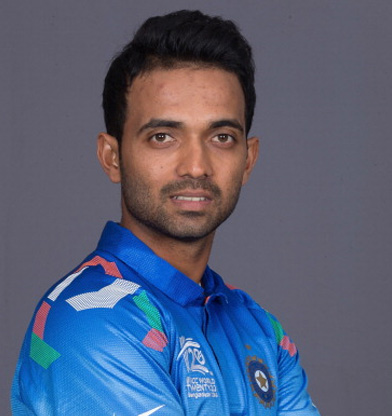
    New Delhi: Veteran off-spinner Harbhajan Singh staged a comeback to the ODI squad after a gap of four years as a second-string team was on Monday named for next month’s tour of Zimbabwe with the selectors opting to rest most of the senior players.

    Batsman Robin Uthappa also made a return to the ODI side, while paceman Sandeep Sharma and leg-spinner Karan Sharma were included in the team to be captained by Ajinkya Rahane.

    The selection panel headed by Sandeep Patil decided to give a break to Dhoni, Kohli, Shikhar Dhawan, Suresh Raina, R Ashwin, Rohit Sharma and Umesh Yadav while recalling veteran offspinner Harbhajan Singh and others. All-rounder Ravindra Jadeja was dropped.

    Also making a comeback to the 15-member squad are Murali Vijay, Manoj Tiwary, Kedar Jadhav, Robin Uthappa, Karn Sharma. Uncapped Karnataka batsman Manish Pandey and paceman Sandeep Sharma were also included.

    There is no specialist wicketkeeper. Uthappa, Rayudu and also Jadhav have been part-time stumpers and one of them will take the big gloves in Dhoni’s absence.

    “We had picked the best possible team that played at the World Cup and keeping the future series in mind, whether it is Sri Lanka, or South Africa home series, T20 World Cup or the Australia series, we have decided to rest a few players, who need urgent rest,” he said.

    India had stunningly lost 1-2 to Bangladesh in the short series earlier this month.

    The team comprises three specialist spinners in Harbhajan, Axar Patel and Karan Sharma, while the pace department will be spearheaded by Bhuvneshwar Kumar with Mohit, Sandeep Sharma and Stuart Binny for company.

    “We cannot say on long term basis but looking at Harbhajan’s performance in the last series, we feel that he deserves a chance on this tour,” Patil said about Harbhajan, who returned to the Test side in the tour of Bangladesh.

    “The selectors’ job is to pick the best possible combination. The rest is left to the team management. Once we select the team, it is left to the captain to make up the playing XI,” he added.

    The batting will largely rest on Rahane, Vijay, Rayudu, Tiwary, Manish Pandey and Kedar Jadhav.

    “It is a good team and picking youngsters is the way forward,” BCCI Secretary Anurag Thakur said.

    Most of the senior players like regular ODI skipper Mahendra Singh Dhoni, Test captain Virat Kohli, opener Shikhar Dhawan, Rohit Sharma and off-spinner R. Ashwin, have been rested for the series.

    On Rahane being handed the captaincy Patil said, “We are happy with the way his career is shaping up. He has been the most consistent batsman for India and we want to see his other aspects. So, we have given him this opportunity and we will keep backing him.”

    India are scheduled to play three ODIs in Harare (July 10, 12 and 14) followed by a couple of Twenty20 Internationals (July 17 and 19).

    Squad:

    India: Ajinkya Rahane (c), Murali Vijay, Ambati Rayudu, Manoj Tiwary, Kedar Jadhav, Robin Uthappa, Manish Pandey, Harbhajan Singh, Axar Patel, Karan Sharma, Dhawal Kulkarni, Stuart Binny, Bhuvneshwar Kumar, Mohit Sharma, Sandeep Sharma.

  • India ranks 143rd on global peace index topped by Iceland

    India ranks 143rd on global peace index topped by Iceland

    India ranks a lowly 143rd on a global peace index, lagging way behind the likes of Bhutan, Nepal, Sri Lanka and Bangladesh with Iceland emerging as the most peaceful nation in the world.

    According to the nonprofit Institute for Economics and Peace, Iceland, the thinly populated island in the midst of the North Atlantic has retained its place as the most peaceful country in the world.

    The institute released its Global Peace Index for 2015 recently, which ranks 162 nations around the globe based on factors like the level of violent crime, involvement in conflicts and the degree of militarisation. The nations are given a score on that basis. The more the score, the less peaceful the country is.

    India is ranked at 143 on the index with a score of 2.504. “The number of casualties from internal conflict also rose in India where a Maoist insurgency stills runs rife. The downgrade in India’s score is tempered, however, by an improvement in political stability. The world’s second most populous country witnessed an historic election in 2014 as the Bharatiya Janata Party secured India’s first one-party majority since the mid-1980s,” the report said.

    Six out of the top 10 most peaceful countries were European, with Denmark and Austria holding the second and third spots.

    “Europe maintained its position as the most peaceful region in the world, supported by a lack of domestic and external conflicts,” the report said.

    Pakistan fares badly ranked at 154 with its score deteriorating on the back of a worsening of its perceptions of criminality, as a result, the country remains second from the bottom in South Asia.

    “The country’s dire domestic security situation continues to be hampered by the presence of Islamist militant groups. Even though the number of deaths from internal conflict did not worsen significantly over the past twelve months, Pakistan suffered a handful of high-profile incidents — most notably the separate attacks on Jinnah International Airport and an army-run school in Peshawar,” the report said.

    Afghanistan remains the most lowly ranked in South Asia at 160. Bhutan (18), Nepal (62), Bangladesh (84) and Sri Lanka (114) are all ranked above India, Pakistan and Afghanistan.
    US is also ranked at a lowly 94 scoring badly in terms of militarisation, homicides and fear of violence. China is ranked 124.

    Syria and Iraq where the Islamic State terror group has taken over large swathes of land are at the bottom of the table as the least peaceful countries.

  • Nepal to hold donor conference on post-quake reconstruction

    KATHMANDU (TIP): External Affairs Minister Sushma Swaraj will be among a host of leaders who will attend an international donor conference here for reconstruction efforts following the devastating earthquake that hit Nepal in April.

    The International Conference on Nepal’s Reconstruction (ICNR) 2015 is scheduled to take place here on June 25 to raise international assistance for rebuilding the country ravaged by the April 25 earthquake and its aftershocks.

    Besides Swaraj, foreign ministers from China and Norway, finance ministers from Bhutan and Bangladesh and disaster management minister from Sri Lanka have confirmed their participation in the international conference, Nepalese finance minister Ram Shara Mahat said today.

    Nepal had initially invited PM Narendra Modi to attend the conference. President of the Manila-based Asian Development Bank, vice-president of the World Bank, president of Japan International Technical Cooperation (JAICA), commissioner of the European Union and the UN deputy general secretary of the United Nations have also confirmed their participation.

  • Keen to work with Tamil diaspora for reconciliation, says Sri Lanka foreign minister

    COLOMBO (TIP): Sri Lanka is keen to engage all diaspora groups including Tamils in reconciliation efforts, foreign minister Mangala Samaraweera has said stressing the new government does not want the country to return to another bloody conflict.

    Responding to opposition criticism of the recent talks held in London with the diaspora, Samaraweera said the government considered it is a vital need to engage with diaspora groups, especially those who hold extremist views.

  • 3 Indians Win Queen’s Young Leaders Award

    3 Indians Win Queen’s Young Leaders Award

    Three Indians, including two women, have won an inaugural award set up by Queen Elizabeth II to recognise exceptional youths who are transforming the lives of others and making a difference in their communities from across the Commonwealth nations.

    The British monarch will present the awards to Ashwini Angadi, Akshay Jadhao and Devika Malik from India among 60 others at a gala ceremony in Buckingham Palace on June 22.

    Angadi is a visually impaired student, Jadhao is a para-athelete and Malik is a educationist in rural areas. The Queen’s Young Leaders Award, launched by Prince William and Harry last year, has been organised by the Queen Elizabeth Diamond Jubilee Trust to recognise young people from across the 53 countries of the Commonwealth who are “taking the lead in transforming the lives of others and making a lasting difference in their communities”.

    “This is a very special award in that it is the first of its kind to be named after the Queen. Her Majesty is extremely passionate about the Commonwealth and this award was set up to encourage and inspire the next generation of leaders in those countries,” Samantha Cohen, assistant private secretary to the Queen, said at a royal briefing in the South Drawing Room of Buckingham Palace.

    A rigorous selection criteria was put in place by the Diamond Jubilee Trust and its partners – Comic Relief and the Royal Commonwealth Society – to pick out from hundreds of entries by 18-29 year olds from across the world.

    “We wanted to reach far and wide and not just be limited to the urban areas. Social media played a very important role in getting the word out,” said Dr Astrid Bonfield, Chief Executive of the Queen Elizabeth Diamond Jubilee Trust.

    “We are looking for the unsung heroes who are already doing incredible things and can make some valuable connections to carry on doing amazing things,” said Bonfield.

    Angadi has been awarded for using her own experiences as a visually impaired student to lobby for more braille and audio books.

    The 26-year-old now runs Belaku Academy in Bengaluru, offering education to disabled students from rural areas. Jadhao, 27, won for his efforts in launching education and skills courses in the rural farming region of Vidarbha.

    The third winner from India is international para-athlete, 24-year-old Devika Malik, who has been recognised for her Wheeling Happiness Foundation, which promoting inclusion, raising funds for disabled people and promoting better accessibility and equality for those with disabilities.

    They will be among 60 winners, including one each from Pakistan and Bangladesh and two from Sri Lanka, to represent the Indian Sub-continent on the palace grounds later this month.

  • DIP IN WOMEN TOURISTS VISITING INDIA

    NEW DELHI (TIP): India’s total foreign tourist arrivals jumped last year but the number of foreign women travelling to the country slipped during the same period amid concerns about safety of women following the December 2012 gangrape.

    Tourism ministry statistics show the main countries that logged a decline in female foreign tourists were Germany, Bangladesh and the Russian Federation while the number of women from Sri Lanka, the US, Canada, UK and Malaysia increased during this period.

    The number of foreign tourists increased 10% in 2014 over the previous year while foreign female tourists slipped to 40.8% from 41.2% in the same period.

    India’s tourism industry took a hit after the 2012 gangrape made international headlines, prompting the government to introduce a host of security measures such as a travel advisory with tips for foreign tourists, including suggestions on dressing in line with the country’s traditional culture. The country’s global image as a safe destination suffered following a series of sexual attacks on foreign women in recent years. “Some parts of India, particularly the smaller towns and villages, still have traditional dressing. Dress codes for some religious places can include covering your head, being barefoot,” says a 13-page booklet given to foreign tourists at the immigration counter.

    According to sources, the tourism ministry is also working on a plan to hand a GPS-enabled SIMs to foreign travellers when they land in India.

    “Safety of women foreign travellers is a matter of serious concern for us. We are taking several steps. We have started helpline numbers in two languages which we propose to make multilingual,” tourism minister Mahesh Sharma said.

    “India’s culture, including that of dressing, is different from the West. We are not imposing anything on anyone. This is simply advice.”