Tag: Sri Lanka

  • World Twenty20: Chance to check combination as India take on Sri Lanka

    World Twenty20: Chance to check combination as India take on Sri Lanka

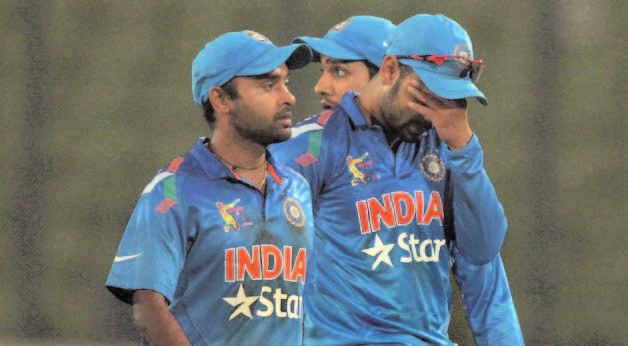
    MIRPUR (TIP): Their confidence at its lowest ebb after continuous failures, a beleaguered India would look to pick up the pieces and make a fresh start when they take on an upbeat Sri Lanka in their first warm-up game of the ICC World Twenty20 on Monday.

    While the tournament proper will begin for India on March 21 against arch-rivals Pakistan, the two warm-up ties will provide captain Mahendra Singh Dhoni with a chance to sort out his playing combination before the real action begins. The warm-up tie gives the team a chance to try out all 15 players in the squad. Therefore while all the batsmen can expect to get a hit in match situation, the bowlers will also get an opportunity to prove their worth to the skipper.

    Also the fact that Indian players, smarting from disastrous tours of South Africa and New Zealand besides the failed Asia Cup campaign, will be playing competitive T20 after five months will also help them adapt quickly having last played a T20 international in October against Australia. The result of the match is of little consequence as various combinations are expected to be tried out. The most interesting aspect will be the opening combination in this format. Sikhar Dhawan and Rohit Sharma are a regular opening pair in ODIs. But Rohit’s initial struggle against white kookaburra in the 50-over format is well documented.

    T20 would not give the Mumbaikar enough time to settle down. Ajinkya Rahane, who has successfully opened for Rajasthan Royals in the Indian Premier League, might just partner Dhawan in such a scenario. If the last match of the Asia Cup against Afghanistan is an indicator, then Rahane has a bright chance of opening the batting for India. Yuvraj Singh, one of India’s proven matchwinners, will be making a comeback along with Suresh Raina, who is also returning to the national team after being dumped from the Asia Cup squad on grounds of indifferent form. But Raina has been one among India’s better T20 batsmen — the only one from the country to score an international T20 century.

    Skipper Dhoni, having recovered from a side strain, would like a couple of good knocks under his belt while Virat Kohli would also aim to get into the groove before Pakistan come calling. The warm up match against Sri Lanka will certainly give both the left-handers the much needed confidence they had lost due to string of poor scores in earlier international matches. The likes of Ambati Rayudu and Stuart Binny will aim to keep their captain interested for a place in the side. A quickfire 50 off 30 balls from Rayudu or a couple of wickets and a cameo from Binny might prompt the team management to think differently although they haven’t shown any inclination towards being flexible with team combination.

    “We might not have played a lot of T20 internationals but the IPL exposure will certainly help us.We need to play as a unit in order to do well,” team’s premier batsman Virat Kohli told the mediapersons during an open session at the team hotel yesterday. India’s bowling certainly is their problem area in the slam-bang version of the game. India do not have bowlers who have enough variations to keep the batsman guessing in the back 10 of a T20 game. Mohammed Shami is India’s strike bowler but he has proved to be quite expensive in the death overs as far as ODIs are concerned.


    14

    Bhuvneshwar Kumar and Mohit Sharma have also never been a problem for top-class international batsman. This brings the focus on Varun Aaron — India’s fastest bowler at the moment. While there’s no denying that Aaron has the pace, he is inconsistent and it has already been proved in the few IPL matches that he has played for the Delhi Daredevils. A lot will depend on how well Ravichandran Ashwin and Ravindra Jadeja bowl on slowish tracks.With both being more than capable batsmen, they are an automatic choice in the playing XI. Sri Lanka will be very upbeat, having won the Asia Cup and the impasse on Players’ Payment issue with Sri Lanka Cricket (SLC) on the verge of end. Young Dinesh Chandimal will have some of the greatest players of modern era like Mahela Jayawardene, Kumar Sangakkara to teach him a few tricks on the leadership issues. Lasith Malinga, who has been a terror for the batsmen in IPL, will be again asking questions to the Indian willow wielders. In all a victory will boost the fledgling confidence of an Indian team that has been on the wane for some time now.

  • Sri Lanka family finds mass grave in garden

    Sri Lanka family finds mass grave in garden

    COLOMBO (TIP): A Sri Lankan family has stumbled upon the remains of at least nine bodies buried in the garden of their home, police said Saturday, the latest mass grave to be discovered in the country’s former war zone.

    The family made the grisly find on Friday while clearing out their garden in the town of Puthukkudiririppu in the northern district of Mullaittivu, police spokesman Ajith Rohana said.

    “Remains of nine people had been found so far and the skeletal remains were taken for analysis by the judicial medical officer in the area,” Rohana told reporters.The discovery comes just days after officials raised the number of bodies found in December in an unmarked mass grave in the adjoining district of Mannar to 80.

  • 80 bodies found in mass grave in former LTTE stronghold

    80 bodies found in mass grave in former LTTE stronghold

    COLOMBO (TIP): Eighty skeletal remains have been dug out of a mass grave in a former LTTE stronghold in Sri Lanka, fuelling speculation that the bodies are of Tamil civilians who disappeared during the war with the rebels.

    “We have collected some 80 skeletal remains and removed them for safe keeping,” said Dhananjaya Waidyaratne, a judicial medical officer. Excavations resumed on Monday after a short break since the first four skeletal remains were discovered on December 21 by construction workers in Thirukatheeswaram area of Mannar district, Waidyaratne said.

    After a magisterial inquiry, forensic medicine officials were deployed in the area. Officials earlier said women and children were among those buried in the grave. Officials said further tests are needed to establish how and when the people died. Tamil leaders have said the victims could be members of the local Tamil community. Mannar, which has a sizable Tamil population, witnessed many battles between government troops and the LTTE during the civil war.

    This was the first discovery of a mass grave in the northeast since the army crushed Tamil Tiger rebels in 2009 following a decades-long war for a separate homeland for ethnic minority Tamils. The Sri Lankan government ruled out the possibility that its soldiers could have been involved in the killing of those found in the grave, saying the Mannar area had long been a Tamil rebel stronghold.

    “With regard to the recovery of skeletal remains in Mannar it has been revealed that the area had been occupied by the LTTE for 30 years except during the period 1988/89 when it was occupied by the Indian Peace Keeping Force. Till the area was liberated in 2008 it was not under the control of the government of Sri Lanka,” an official statement said.

    The mass grave figured in the government’s response to UN human rights chief Navi Pillay’s report on Sri Lanka which is expected to be submitted at the UN human rights council’s session next month. The report is being seen as a preamble to the next US-backed resolution against Sri Lanka on alleged rights abuses. Another mass grave found in the central district of Matale is also being investigated. The opposition JVP or the People’s Liberation Front has claimed that the bodies were of its cadres who were allegedly executed during a crackdown by the state during 1987-90.

  • UN seeks foreign probe of Sri Lanka war crimes: Report

    UN seeks foreign probe of Sri Lanka war crimes: Report

    COLOMBO (TIP): The United Nations’ human rights chief has recommended an international investigation into war crimes committed in Sri Lanka during the final stages of its Tamil separatist conflict, a report said on Sunday.

    The local Sunday Times newspaper in Sri Lanka said Navi Pillay has asked the UN Human Rights Council (UNHRC) to set up independent probe, saying that Colombo “consistently failed to establish the truth” and ensure accountability for the atrocities, despite repeated calls.

    “Establish an international inquiry mechanism to further investigate the alleged violations of international human rights and humanitarian law and monitor any domestic accountability process,” the Sunday Times quoted Pillay as saying. The newspaper quoted from Pillay’s report to next month’s UNHRC sessions in Geneva, an advance copy of which had been given to Colombo for its observations.

    It accused Sri Lanka of failing to probe rights abuses and continuing to violate democratic freedoms. There was no immediate comment from the Sri Lankan foreign ministry, but Colombo has repeatedly said that its troops did not commit any war crimes.

    However, it has asked for more time to ensure ethnic reconciliation between majority Sinhalese and minority ethnic Tamils. Pillay’s recommendations noted fresh emerging evidence of what took place during the final stages of the ethnic war that ended in May 2009 with the crushing of the top leadership of the Liberation Tigers of Tamil Eelam (LTTE) in a no-holds-barred offensive.

  • 50 bodies discovered in Sri Lanka mass grave

    50 bodies discovered in Sri Lanka mass grave

    COLOMBO (TIP): Skeletal remains of at least 50 people have been dug out from a mass grave discovered in northeastern Sri Lanka, amid speculation that the remains were of Tamil civilians who had disappeared during the war with the LTTE.

    Police spokesman and Senior Superintendent Ajith Rohana said further digging will be continued with the deployment of a team from the crime investigation department to assist in investigations. Three more skulls were found on Monday, Rohana said. With this, the total skeletal remains discovered stand at 50.

    A team of forensic experts led by Judicial Medical Officer Dhananjaya Waidyaratne earlier stated that bodies had been buried in several layers at the site. The state water entity’s workers had stumbled upon the grave as they dug the ground to lay water supply connections late December last year in Thirukatheeswaram area in Mannar district.

  • Sri Lanka refuses visa to top US official

    Sri Lanka refuses visa to top US official

    COLOMBO (TIP): The Sri Lankan government has refused to issue a visa to US ambassador at large for women’s issues, Catherine Russell, forcing her to cancel a high-level visit scheduled for Feb 10-11.

    “It is regrettable that the government of Sri Lanka has refused to grant a visa to Ambassador Catherine Russell for this trip,” Xinhua cited local media on Tuesday as quoting a US embassy spokesman. Ambassador Russell had planned to spend a day in Colombo and a day in Jaffna.

    Her agenda had included meetings with government officials, the Women’s Parliamentary Caucus as well as with women’s organisations from around Sri Lanka. Her visa application was officially submitted on Jan 27 and rejected Jan 31. The US official, who is a high-ranking, former senior White House aide, will be travelling in the region over the next week.

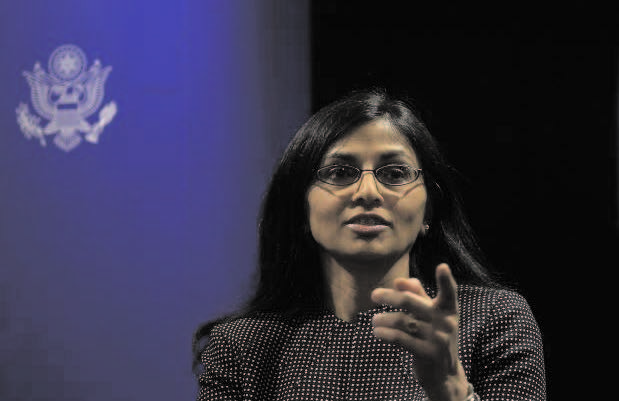
    Authoritative sources said the US embassy now expects to connect Sri Lankan civil society, parliamentarians, women’s groups and other representatives with her via video conference. Her objective is reportedly to raise their concerns about the issues women in Sri Lanka. The Sri Lankan government is seething over remarks made in Colombo by US assistant secretary of state for south and central Asian affairs Nisha Biswal.

    Addressing the media at the end of an official visit last week, she said frustration and scepticism among the US and international community about Sri Lanka’s lack of progress in investigating the final days of the war have led to increasing calls for an international investigation.

    “Patience is wearing thin,” she warned. Sri Lanka’s ministry of external affairs in Colombo hit back, saying the US had a desire to believe the worst of Sri Lanka. “There is a lack of objectivity in recognising the substantial progress in addressing the challenges during the brief span of four-and-a-half years since the end of an armed conflict of 30 years,” its statement said.

    “Therefore, ‘patience wearing thin’ is a misnomer.” “It is the trajectory of the democratically elected government of Sri Lanka to ensure the best for its people,” the ministry asserted. “Statements during the last few days are indicative of a desire to believe the worst and to work to a preconceived political agenda.” The rejection of Ambassador Russell’s visa, however, preceded Biswal’s press conference Feb 1.

  • Thousands protest against government in Sri Lanka

    Thousands protest against government in Sri Lanka

    COLOMBO: Thousands of protesters from opposition parties, human rights groups, trade unions and media groups marched on Monday in Sri Lanka’s capital in a rare show of dissent against the government.

    They held separate marches in Colombo, shouting slogans which accused authorities of corruption and mismanagement, and later came together for joint rally. Tissa Attanayake, an opposition lawmaker, said law and order has broken down in the country and the government has politicized judicial institutions.

    The demonstrators also protested attacks on journalists who have been critical of the government, holding banners that read “Stop Suppressing Media.” Government spokesman Keheliya Rambukwella rejected the accusations, saying, “This is a democratic country and everyone has the right to demonstrate and protest.” He said investigations of attacks on journalists were continuing. President Mahinda Rajapaksa has used his party’s overwhelming majority in Parliament and gained through the popularity of winning a civil war against ethnic Tamil rebels to expand his power.

    He abolished a two-term presidential limit, scrapped independent commissions and took over their power to appoint top judges and police. His party also voted last year to oust the country’s first female chief justice, and Rajapaksa appointed his own aide to that position. Sunil Jayasekara, convener of the Free Media Movement, said his group joined the protest to highlight high-profile attacks on media institutions and journalists that have occurred in January in recent years.

    During that month in the past five years, an outspoken editor was killed, a private television station was attacked, an online journalist went missing and his office was set on fire. Jayasekara said his group is not satisfied with the investigations of those attacks, in which no suspects have been arrested. More than 80 journalists have fled Sri Lanka since 2005. The government has been accused of failing to properly investigate a series of attacks on journalists who were viewed as critical of the administration.

  • Challenges in Indo-Pacific Region

    Challenges in Indo-Pacific Region

    INDIA MUST PLAY A PROACTIVE ROLE FOR LONG-TERM SECURITY AND STABILITY

    It would be in India’s interest to readily join cooperative efforts aimed at maintaining stability. India has acquired robust military intervention capabilities and is formulating a suitable doctrine for intervention”, says the author.

    The security environment in the Indo- Pacific region has been vitiated by territorial disputes on land in the South China Sea and the East China Sea as well as terrorism, the proliferation of small arms and piracy in the Malacca Strait. Freedom of navigation on the high seas is of critical importance for the economies of most Asian countries.

    Maintaining peace and stability and ensuring the unfettered flow of trade and energy supplies through the sea lanes of communications will pose major challenges for the Asian powers as well as the United States. Only cooperative security architecture can provide long-term stability and mutual reassurance. Through its forward military presence and its abiding military alliances, the US has played a key role in providing stability in the Indo-Pacific region through many decades of turbulence during and after the cold war.

    The US is now re-balancing or ‘pivoting’ from the Euro-Atlantic zone to the Indo-Pacific in tune with its changing geo-strategic priorities and the rise of emerging powers. It is also simultaneously downsizing its forces and will need new strategic partners to help it maintain order and stability. According to Rory Medcalf, Senior Fellow, Brookings Institution, Washington, “the choreography of this geopolitical interplay will depend on the quality of leadership and decisionmaking in Beijing, New Delhi and Washington.”

    As C Raja Mohan has averred in his book “Samudra Manthan: Sino-Indian Rivalry in the Indo-Pacific”, the major powers in the region, including Australia, China, India, Indonesia, Japan and the US, need to work creatively to frame acceptable rules for the commons in the Indo-Pacific. Unless such realization comes about, subterranean tensions will continue to hamper stability. China has so far been ambivalent in seeking to join a cooperative framework and has preferred to stand apart. It has failed to realize that its growing trade and massive dependence on energy imports through the Indian Ocean make it imperative for it to join the efforts being made to establish such a framework.

    It would be in India’s interest to readily join cooperative efforts aimed at maintaining stability. India has acquired robust military intervention capabilities and is formulating a suitable doctrine for intervention. Though India has a pacifist strategic culture rather than a proactive one that nips emerging challenges in the bud through pre-emption, it has not hesitated to intervene militarily when its national interests warranted intervention, both internally and beyond the shores. The Army was asked to forcibly integrate the states of Goa, Hyderabad and Junagadh into the Indian Union soon after Independence as part of the nation-building process. The Indian armed forces created the new nation of Bangladesh after the Pakistan army conducted genocide in East Pakistan in 1971.

    India intervened in the Maldives and Sri Lanka at the behest of the governments of these countries and was ready to do so in Mauritius in 1983 when the threat to the government there passed. India had airlifted 150,000 civilian workers from Iraq through Jordan during Gulf War I in what became known as the largest airlift after the Berlin airlift. Also, almost 5,000 civilian workers were evacuated by ship from Lebanon in 2006. After the 2004 South-East Asian tsunami, 72 naval ships had set sail within three days to join the international rescue and relief operations even though India’s eastern sea board had itself suffered extensive loss of life and damage. India’s limited military presence overseas has been mostly benign.

    According to Shyam Saran, a former Foreign Secretary, “…most South-East Asian countries and Japan welcome a larger presence of Indian naval assets in the region.” As part of the Indo-US defense cooperation, joint patrolling of the SLOCs in the Indian Ocean is already being undertaken up to the western mouth of the Malacca Strait as part of joint naval exercises. Other military exercises have led to a broad understanding of each other’s military capabilities and limitations and many interoperability challenges have been ironed out. The Indian Army has designated one infantry division as a rapid reaction division, with an amphibious brigade, an air assault brigade and an infantry brigade. The Army also has an independent parachute brigade that can be deployed at short notice.

    The Indian Navy now possesses the INS Jalashva (USS Trenton) that can carry one infantry battalion with full operational loads and is in the process of acquiring additional landing ships. Besides long-range fighter-bomber aircraft with air-to-air refueling capability like the SU-30MKI, the Indian Air Force has acquired fairly substantive strategic airlift capabilities, including six C-130 Super Hercules aircraft for the Special Forces. A permanent corps-level tri-Service planning HQ with all-weather reconnaissance and surveillance capabilities needs to be set up under the aegis of the HQ Integrated Defense Staff to monitor emerging situations on a regular basis and act as a control HQ for intervention operations.

    In future, India may undertake joint military operations in its area of strategic interest if the country’s major national interests are at stake. Such a campaign may take the form of an intervention under the UN flag – something that India would prefer – or even a “coalition of the willing” in a contingency in which India’s vital national interests are threatened. There will naturally be several caveats to such cooperation as India will not join any military alliance. It will also be necessary to work with other strategic partners and friendly countries in India’s extended neighborhood and with organizations like the Gulf Cooperation Council (GCC), the ASEAN Regional Forum (ARF) and, when possible, even the Shanghai Cooperation Organization (SCO). The aim should be to establish consultative mechanisms through diplomatic channels for the exchange of ideas, and conduct joint training and reconnaissance. Small-scale joint military exercises with likely coalition partners help eliminate interoperability and command and control challenges and enable strategic partners to operate together during crises.

  • FOREIGN RELATIONS OF INDIA

    FOREIGN RELATIONS OF INDIA

    India has formal diplomatic relations with most nations; it is the world’s second most populous country, the world’s mostpopulous democracy and one of the fastest growing major economies. With the world’s seventh largest military expenditure, ninth largest economy by nominal rates and third largest by purchasing power parity, India is a regional power, a nascent great power and a potential superpower.

    India’s growing international influence gives it a prominent voice in global affairs. The Economist magazine argues, however, that underinvestment in diplomacy and a lack of strategic vision have minimised India’s influence in the world. India is a newly industrialised country, it has a long history of collaboration with several countries and is considered one of the leaders of the developing world along with China, Brazil, Russia and South Africa (the BRICS countries). India was one of the founding members of several international organisations, most notably the United Nations, the Asian Development Bank, G20 industrial nations and the founder of the Non-aligned movement.


    32
    India has often represented the interests of developing countries at various international platforms. Shown here is Prime Minister Manmohan Singh with Dmitry Medvedev, Hu Jintao and Luiz Inácio Lula da Silva during BRIC summit

    India has also played an important and influential role in other international organisations like East Asia Summit, World Trade Organisation, International Monetary Fund (IMF), G8+5 and IBSA Dialogue Forum. Regionally, India is a part of SAARC and BIMSTEC. India has taken part in several UN peacekeeping missions and in 2007, it was the secondlargest troop contributor to the United Nations.[12] India is currently seeking a permanent seat in the UN Security Council, along with the G4 nations. India’s relations with the world have evolved since the British Raj (1857–1947), when the British Empire monopolised external and defence relations. When India gained independence in 1947, few Indians had experience in making or conducting foreign policy. However, the country’s oldest political party, the Indian National Congress, had established a small foreign department in 1925 to make overseas contacts and to publicise its freedom struggle.

    From the late 1920s on, Jawaharlal Nehru, who had a longstanding interest in world affairs among independence leaders, formulated the Congress stance on international issues. As a member of the interim government in 1946, Nehru articulated India’s approach to the world. India’s international influence varied over the years after independence. Indian prestige and moral authority were high in the 1950s and facilitated the acquisition of developmental assistance from both East and West. Although the prestige stemmed from India’s nonaligned stance, the nation was unable to prevent Cold War politics from becoming intertwined with interstate relations in South Asia.


    33

    In the 1960s and 1970s India’s international position among developed and developing countries faded in the course of wars with China and Pakistan, disputes with other countries in South Asia, and India’s attempt to balance Pakistan’s support from the United States and China by signing the Indo- Soviet Treaty of Friendship and Cooperation in August 1971. Although India obtained substantial Soviet military and economic aid, which helped to strengthen the nation, India’s influence was undercut regionally and internationally by the perception that its friendship with the Soviet Union prevented a more forthright condemnation of the Soviet presence in Afghanistan. In the late 1980s, India improved relations with the United States, other developed countries, and China while continuing close ties with the Soviet Union. Relations with its South Asian neighbours, especially Pakistan, Sri Lanka, and Nepal, occupied much of the energies of the Ministry of External Affairs.

    In the 1990s, India’s economic problems and the demise of the bipolar world political system forced India to reassess its foreign policy and adjust its foreign relations. Previous policies proved inadequate to cope with the serious domestic and international problems facing India. The end of the Cold War gutted the core meaning of nonalignment and left Indian foreign policy without significant direction. The hard, pragmatic considerations of the early 1990s were still viewed within the nonaligned framework of the past, but the disintegration of the Soviet Union removed much of India’s international leverage, for which relations with Russia and the other post-Soviet states could not compensate. After the dissolution of the Soviet Union, India improved its relations with the United States, Canada, France, Japan and Germany. In 1992, India established formal diplomatic relations with Israel and this relationship grew during the tenures of the Bharatiya Janata Party (BJP) government and the subsequent UPA (United Progressive Alliance) governments.

    In the mid-1990s, India attracted the world attention towards the Pakistan-backed terrorism in Kashmir. The Kargil War resulted in a major diplomatic victory for India. The United States and European Union recognised the fact that Pakistani military had illegally infiltrated into Indian territory and pressured Pakistan to withdraw from Kargil. Several anti-India militant groups based in Pakistan were labeled as terrorist groups by the United States and European Union. India has often represented the interests of developing countries at various international platforms. Shown here are Prime Minister Manmohan Singh with Dmitry Medvedev, Hu Jintao and Luiz Inácio Lula da Silva during BRIC summit in June, 2009. In 1998, India tested nuclear weapons for the second time which resulted in several US, Japanese and European sanctions on India.

    India’s then-defence minister, George Fernandes, said that India’s nuclear programme was necessary as it provided a deterrence to potential Chinese nuclear threat. Most of the sanctions imposed on India were removed by 2001. After the 11 September attacks in 2001, Indian intelligence agencies provided the U.S. with significant information on Al-Qaeda and related groups’ activities in Pakistan and Afghanistan. India’s extensive contribution to the War on Terror, coupled with a surge in its economy, has helped India’s diplomatic relations with several countries. Over the past three years, India has held numerous joint military exercises with U.S. and European nations that have resulted in a strengthened U.S.-India and E.U.-India bilateral relationship. India’s bilateral trade with Europe and United States has more than doubled in the last five years.

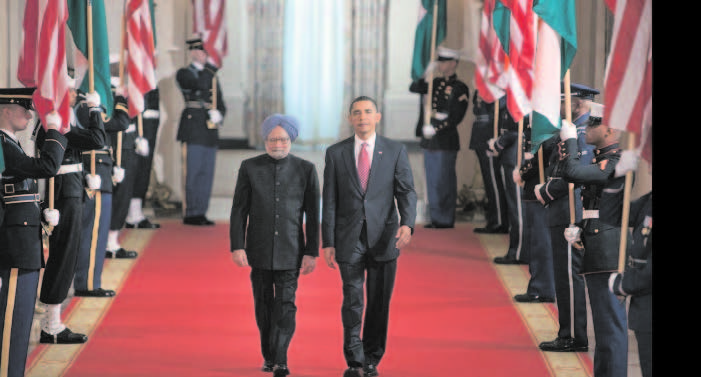
    India has been pushing for reforms in the UN and WTO with mixed results. India’s candidature for a permanent seat at the UN Security Council is currently backed by several countries including France, Russia,[50] the United Germany, Japan, Brazil, Australia and UAE. In 2004, the United States signed a nuclear co-operation agreement with India even though the latter is not a part of the Nuclear Non- Proliferation Treaty. The US argued that India’s strong nuclear non-proliferation record made it an exception, however this has not persuaded other Nuclear Suppliers Group members to sign similar deals with India. During a state visit to India in November 2010, US president Barack Obama announced US support for India’s bid for permanent membership to UN Security Council as well as India’s entry to Nuclear Suppliers Group, Wassenaar Arrangement, Australia Group and Missile Technology Control Regime.

  • GAINING INDEPENDENCE FROM ILLITERACY

    GAINING INDEPENDENCE FROM ILLITERACY

    Statistics mentioned above indicate that while progress has been made, measures have been far from adequate. We therefore need to upgrade our education system so that illiteracy can be completely uprooted from India. No matter how hard we try to fight the problem, it simply seems to persist.

    That even after 66 years of independence we have to lay stress on this issue is a shamebut at least it’s better than brushing it under the carpet. India, the land of Vedas, where we have learnt over the years that culture flourishes with literature, is one of the nations with highest illiteracy rates. Even underdeveloped countries like Sri Lanka, Myanmar, Vietnam and Thailand have achieved higher literacy levels in shorter time.

    In his India Development Report 2002, Kirit S. Parikh pointed out, “With a literacy rate of 65, we have 296 million illiterates, age seven years and above, as per the 2001 census. The number of illiterates today exceeds the population of the country of around 270 million at Independence, age seven and above.” Our society faces several challenges in the form of poverty, unemployment, child labour, female feticide, overpopulation etc. But all of them evolve from illiteracy which is actually the mother of most our problems. A high literacy rate can contribute to valuable social and economic participation by the people which will go a long way in human development and poverty eradication.

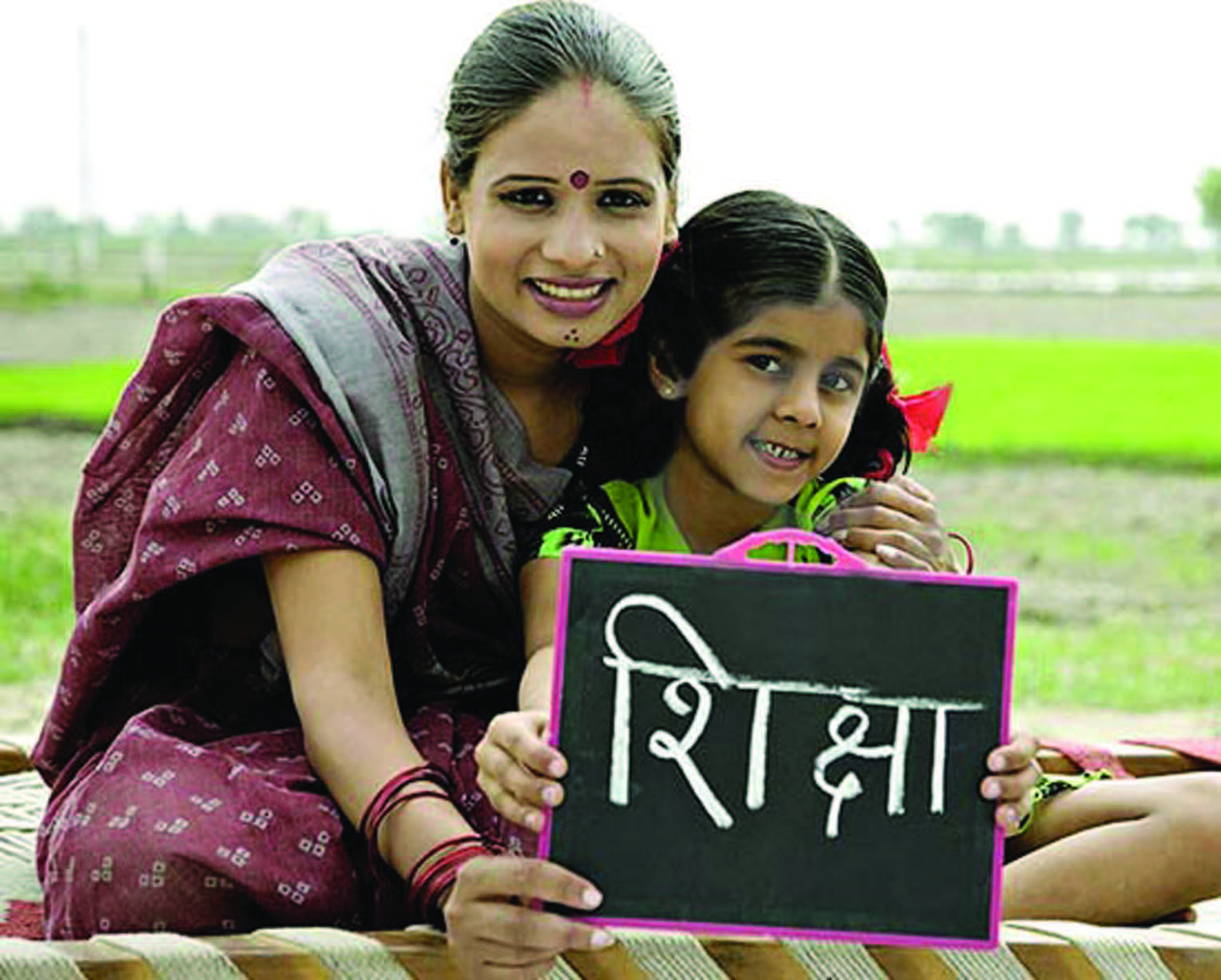
    Spread of education is necessary for modernization, urbanization, industrialization, communication and commerce. You name an issue and literacy will be a prerequisite for its solution. Illiteracy in India can be easily characterized by the wide gaps between the urban and rural populations. The urban population is more educated and therefore desires a life of comfort and luxury. On the other hand, the rural population depends on agriculture for their survival. They are the food providers of our country, who work for basic necessities and thus feel no need for education in their lives. Children in rural areas drop out of schools for a variety of reasons: some leave because of a sheer lack of interest; others quit so that they can work in fields or elsewhere, while some have no other choice due to inaccessibility and lack of school teachers.

    In villages, a large percentage of the dropouts are females. Forced by their parents, they are limited to performing household chores. They are married at a very early age and are taught since birth that what is important for them is their family and the looking after the house. Education is not even a secondary item on their to-do lists. Inadequate number of teachers and their absence in schools across the country is another roadblock towards complete literacy. A large number of teachers refuse to teach in rural areas and those who do, are usually under-qualified. Many teachers lack the necessary enthusiasm because of their meagre salaries. In one of his research papers, Nobel laureate Amartya Sen has mentioned, ‘Absenteeism of comparatively well-paid teachers, particularly where bulk of the students come from scheduled castes and tribes, poses a major problem.

    Students are circumstantially forced to go in for private tuitions. Sometimes the very institutions that were created to overcome disparities and barriers tend to act as reactionary influences in reinforcing inequality.’ Lack of infrastructure like buildings, benches, books etc is a widespread problem too. Some schools are located in warehouses while others in small thatched rooms which are of little use during rains. Many rural schools operate without electricity. The distribution of government funds is another major hindrance in the reform of our educational system. According to World Bank, ‘30 % of the total educational funding goes toward higher educational institutions.’ What with announcements of quota in higher education and an increase in the number of IIMs & IITs, the government clearly cares little for primary education. Even private institutions are seen to be a hindrance in the progress of children. In such schools, the children from poor households are seen as lowly, below average and thus not fit to sit and study with the children of upper caste or class.

    Untouchability has been abolished but this new rift between rich and poor students continues to take its toll on the country’s fortunes. Our education system is more or less a remnant of the long gone colonial system of the British Empire. No emphasis is ever laid on vocational courses, which can provide many job opportunities. “We are bumbling along with this out modeled system of elementary education, which is a real shame,” says Krishna Kumar, director of the Central Institute of Education in New Delhi. Reservation is yet another problem. Though it exists in other countries as well, reservation in India has a totally different approach. Our government grants reservations on the basis of caste when the correct basis of granting quotas must be the economic standards of the people. As a result, even better off backward caste students seek to get an entry in venerable institutions like the AIIMS through petty quotas. Quality be damned, seems to be the motto of such policies.

    Amidst this gloom, a recent welcome measure has been the passage of the Right to Education bill, during this session of Parliament. Its guidelines are like this: – Compulsory education for children between 6-14 yrs – Rs 10,000 fine if any child prevented from going school – No selection and screening process to choose preference over candidates – No physical punishments – States need to plan techniques to monitor advancements in the program – Roping in private schools to keep 25% seats reserved at entry level – Banning capitation fees It is a commitment that has taken decades to get fulfilled, but more efforts will be needed to implement it properly. As we have seen all these years, only directions and guidelines cannot resolve any crisis in the country. Various organizations and schemes have been fighting this problem.

    In 2003, the Magsaysay Award was awarded to Shantha Sinha in recognition of her work to end child labour, a major reason for illiteracy. The Supreme Court, in 1993, ruled that children had a fundamental right to free education. The Sarva Siksha Abhiyan launched in 2001 was to ensure that all children in the age group 6–14 years attend school and complete eight years of schooling by 2010. District Primary Education Programme launched in 1994 has so far started more than 160,000 new schools, including almost 84,000 alternative schools. The National Literacy Mission, launched in 1988 aimed at attaining a literacy rate of 75% by 2007. India is developing but at a very slow rate and one of the main reasons is the low level of literacy.

    Literacy enables a person to think rationally- for himself and others around him. A literate person is aware of all his fundamental rights and duties. It is a kind of panacea to fight problems like communalism, terrorism and under development. Not only the government, but also every literate citizen should contribute in battling the demon of illiteracy. Each one should teach one if we are to become a superpower. Mahatma Gandhi once said, ‘Be the change you want to see in the world.’ So let us enlighten the world by bringing this change into our and everybody’s lives.

    EDUCATION AS A DRIVER OF GROWTH
    India’s need for an enormous skilled work force that can drive its growth story forward is now a well accepted fact. But developing and honing these skills is where the real challenge lies. The first-ever Education Investment Conclave, 2013, in London, backed by India Inc, explored some of the complex issues linked with meeting the country’s educational demands. India is poised for its much-talked-about demographic dividend to kick in, which roughly translates into a requirement of around 200 million graduates and 500 million skilled people by 2022 – by which time nearly 25 per cent of the global work force will come out of the country.

    The Literacy rate of India has shown as improvement of almost 9 percent. It has gone up to 74.04% in 2011 from 65.38% in 2001, thus showing an increase of 9 percent in the last 10 years. It consists of male literacy rate 82.14% and female literacy rate is 65.46%. Kerala with 93.9% literacy rate is the top state in India. Lakshadweep and Mizoram are at second and third position with 92.3% and 91.06% literacy rate respectively. Bihar with 63.08% literacy rate is the last in terms of literacy rate in India. The Government of India has taken several measures to improve the literacy rate in villages and towns of India. State Governments has been directed to ensure and improve literacy rate in districts and villages

  • CREED GUIDING MATURE REPUBLIC

    CREED GUIDING MATURE REPUBLIC

    Modern societies emerge out of their primitive forms. As India enters its 65th year as a republic, it is not what it used to be for the past several centuries: ruled by kings and nawabs, brutalised by Hindu orthodoxies of caste and sati, or dependent on agriculture.

    “India has changed more in last six decades than in six previous centuries,” said president Pranab Mukherjee on the eve of the Republic Day last year, adding: “It will change more in the next ten years than in the previous sixty.” The motor of change is democracy, or the republic’s politics reaffirmed every five years through the conscious act of voting.

    Democracy refers to demokratia—a political system that began in 5th to 4th centuries BC when the people (demos) of Athens revolted against the dynasties of tyrants and established their own kratos (rule). Over past decades, democracy in India has emerged as a revolt against caste and other social inequalities, empowering millions of dalits, minorities and women.


    19

    India still subjugates its women, but it will change as more than a million women, elected to political nurseries of panchayati raj, are about to alter the balance of gender relations. The Indian republic is a Greek city state in microcosm, whose citizens interact with philosophical concepts every day, acquiring new understandings of liberty and rationality. As it matures, it inculcates egalitarian ideals in its citizens who in turn guard demokratia, the republic’s dharma, or creed. The egalitarian Indian defends the order, defeating Indira Gandhi after the Emergency when democracy appeared to be failing, or producing an Aam Aadmi Party when corruption of an industrial scale emerged.

    The republic is nurtured from below. It just gave Kashmiri secessionists a recurring opportunity to prove their worth through the ballot option of NOTA, none of the above. In primitive societies, consensus emanated from similarities of beliefs and identities; in modern India consensus is derived from differences and moderated by media, political parties, voters, and the judiciary. The voter is the sane oracle, inaugurating an era of coalition politics in 1989 and shifting the polity towards federalism, in tune with the diversity of India. From the post-Emergency rise of anti-Congress parties to the AAP, the republic births new parties. It secures the confidence of minorities.

    According to a BJP research, India has seen the emergence of “smaller Muslim parties” that are determining outcomes in states from Assam to Kerala. Indian polity is ripe where any new party could transform into a countrywide behemoth by practising simple politics: electing leaders through organisational polls. There is space for all, as no party has got 50 per cent votes. In some way, parties are dying, or being obscured, eclipsed and forgotten. The Congress is forgotten in UP, Bihar, West Bengal, Delhi and many states; the BJP was reduced to irrelevance as a national opposition until Narendra Modi rose from below; the Rashtriya Janata Dal was dumped; and demokratia caught up with communists in West Bengal in 2011. It happens due to parties’ failure to abide by the republic’s dharma: more politics, more democracy. Politics has its own independent dignity.

    More parties could thrive if their funds were audited and if they held polls to elect party leaders or used secret ballot to elect chief ministers or Prime Minister. If the Congress practised politics, US-style primaries to elect party leaders could herald a revolution. Among democracies, some are religious states such as Britain whose societies are overwhelmingly secular; some are secular states like the US and India whose societies are predominantly religious. Religious neutrality, established first by Akbar, characterises the Indian state. The founders—Gandhi, Nehru and Ambedkar— wrote an array of liberties into the Constitution: equality of rights, multi-party elections, free press, individual freedoms, rule of law, independent judiciary, etcetera. Speaking at Oxford in 2005, Prime Minister Manmohan Singh noted that the founders were “greatly influenced by the ideas associated with the age of Enlightenment in Europe.”

    The political and religious freedoms Indians enjoy would not be possible if the British hadn’t arrived in India. Democracy is defined as the majority rule, but the majority is of the people, not of communities. For those who feed pessimism among minorities, the day is not far when India will see a Muslim prime minister, as religion will become irrelevant. For now, a Muslim politician is yet to be born who could read the republic’s political mind, the way Barack Obama read the American mind. There are reasons: Muslims must shed the fear of the BJP; the politics of secularism and reservation must be defeated by effective policing and through job creation by people. Primitive societies were dependent on agriculture.

    In a modern nation, while the agricultural output grows, its share in the gross domestic product must decline, accompanied by growth in knowledge sectors like biotechnology and financial services. Once seen by the West as the land of snake charmers, India is transformed into an information technology destination today. However, it is an inward-looking mystical civilisation, failing to grasp notions of power. India contemplated sending troops to Iraq in 2003, but succumbed to a perennial weakness to comprehend its place in the international state system. There were military roles in Bangladesh, Sri Lanka and Maldives that indicate India could exercise hard power abroad. Amid problems, the republic is maturing, aided by the Supreme Court which forced candidates to declare assets and criminal antecedents, disqualified elected representatives upon conviction in criminal cases, and enshrined negative voting through NOTA.

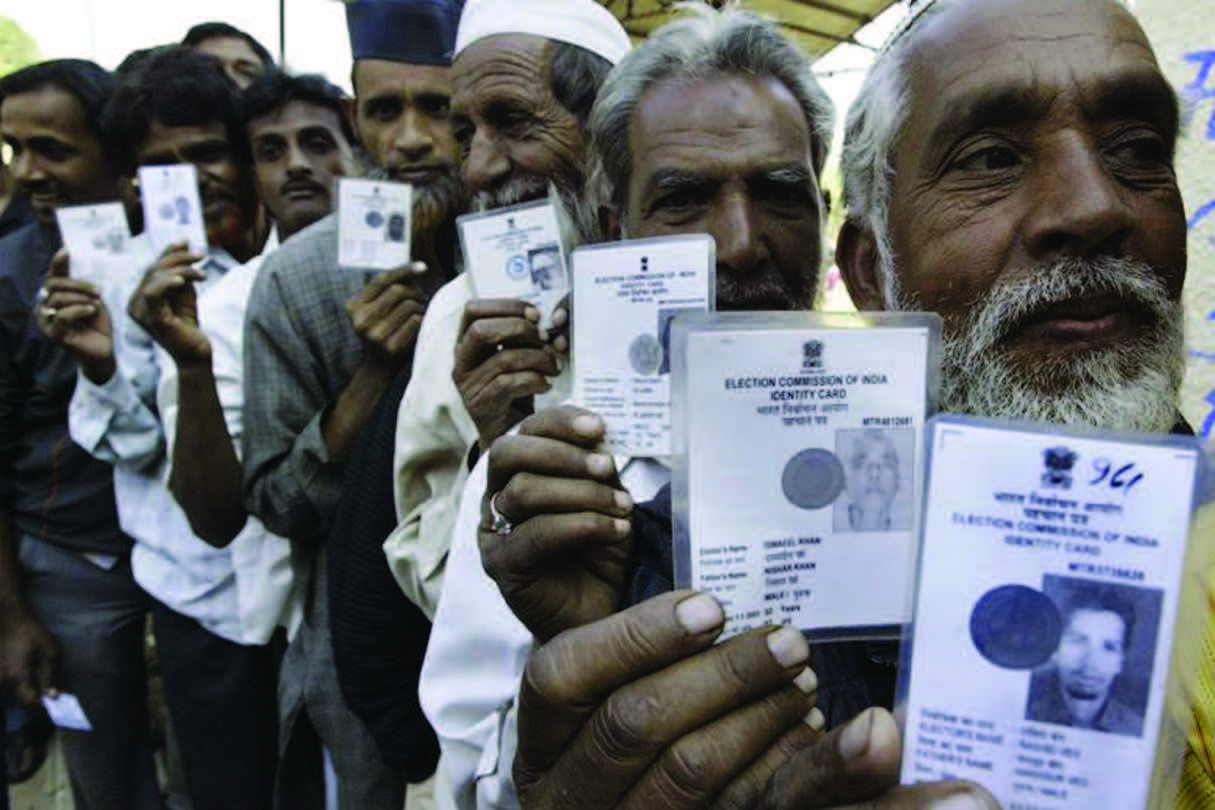
    If T N Seshan alone could retrieve autonomy of the election commission, it appears the Central Bureau of Investigation and other government institutions could cease being the ruling party’s mistress. At the heart of the country’s politics is the sane oracle, the voter: the elderly who walk to polling booths, tribesmen who defy Naxalites to vote, women who stand with men, youth who secure their aspirations in ballots. Of 790 million voters, 120 million are 18-23-yearolds, the first-time voters who must establish a relationship with people, not leaders, to secure the republic for their next generations. (The writer, Tufail Ahmad, is director of South Asia Studies Project at the Middle East Media Research Institute, Washington DC.)

  • UK GOVT ORDERS PROBE INTO ‘BRITISH HAND’ IN OPERATION BLUE STAR

    UK GOVT ORDERS PROBE INTO ‘BRITISH HAND’ IN OPERATION BLUE STAR

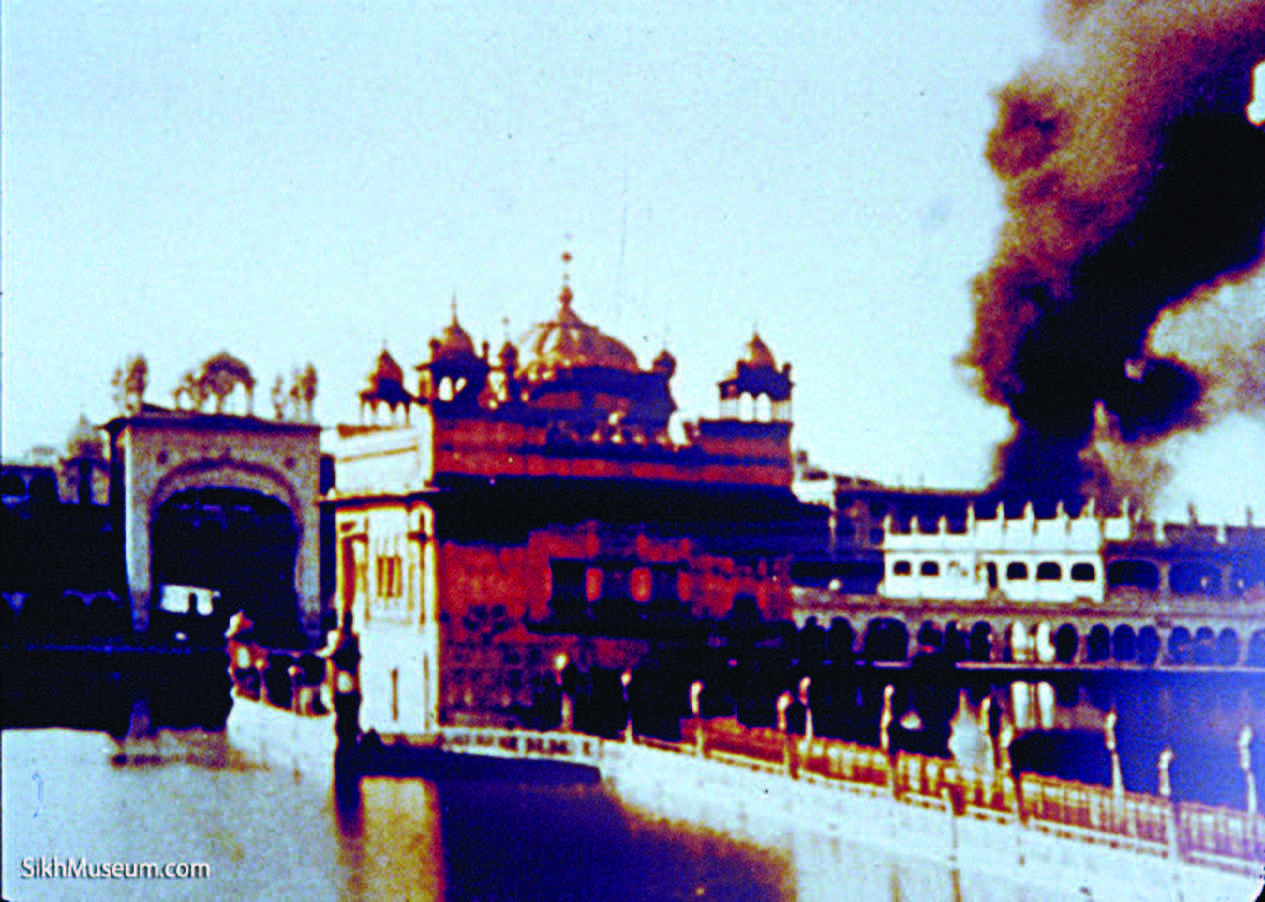
    NEW DELHI (TIP): Three decades after the Army stormed the Golden Temple, freshly declassified British documents show that the UK gave military advice to India on retaking the temporal seat of Sikhs, kicking off political storms in both London and New Delhi. The British government has ordered an inquiry into the revelations and the BJP has demanded an explanation. Intelligence officials involved in operations against Sikh extremists in Punjab during the period and military commanders who led Operation Blue Star have denied using any British plan. They said as far as they were concerned, the entire operation was planned and executed by the Indian Army. Lt Gen K S Brar, who headed the 1984 military operation, said he was not aware of any such British involvement. “As far as I am concerned, Operation Blue Star was planned and executed by Indian Army commanders.

    There was no involvement of anyone from the British government,” he told a TV channel. The bloody and heavily criticized operation led to the assassination of then PM Indira Gandhi in October 1984, which was followed by anti- Sikh riots that saw hundreds being butchered. The revelation is contained in a series of letters declassified recently by the National Archives of UK after the 30-year secrecy rule. In an official communication dated February 23, 1984 titled ‘Sikh Community’, an official with the foreign secretary told the private secretary to the home secretary that “the foreign secretary wishes him to be made aware of some background which could increase the possibility of repercussions among the Sikh communities in this country”. “The Indian authorities recently sought British advice over a plan to remove Sikh extremists from the Golden Temple in Amritsar.

    The foreign secretary decided to respond favourably to the Indian request and, with the prime minister’s agreement, a SAD (probably misspelling SAS) officer has visited India and drawn up a plan which has been approved by Mrs Gandhi. The foreign secretary believes that the Indian government may put the plan into operation shortly,” the letter said. The letter went on to say that the visit of the British special forces officer from SAS was kept a secret in both London and New Delhi. It also expressed apprehension that if the British advice were to emerge in public, it could increase tension in the Indian community in Britain. However, there is no evidence in any of the communication if the British plan was finally used for the June 1984 operation.

    In London, the UK government said it will investigate its involvement. “These events led to a tragic loss of life and we understand the very legitimate concerns that these papers will raise. The prime minister has asked the cabinet secretary to look into this case urgently and establish the facts,” a UK government spokesperson said in a statement. Labour lawmaker Tom Watson said the documents suggest that “Margaret Thatcher made a decision in secret without telling the British parliament to provide military planning support to the government of India in the buildup to the raid on the Golden Temple”.

    ‘Thatcher backed Indira after Operation Bluestar’
    Former Prime Minister Margaret Thatcher fully supported Indira Gandhi’s efforts to apply the ‘healing touch’ in the aftermath of Operation Bluestar in 1984 and assured her of steps to deal with pro-Khalistan elements operating in Britain at the time. Gandhi wrote to Thatcher on 9 and 14 June 1984 (Operation Bluestar ended on 10 June). The letters were about Sri Lanka and developments in trouble-torn Punjab. Her 14 June letter to Thatcher was specifically about Punjab.

    In her reply, Thatcher wrote on 30 June 1984: “These have been anxious weeks for you, involving difficult decisions. I have followed closely your efforts to restore calm there, and I very much hope that the ‘healing touch’ for which you have called will open the way to a peaceful and prosperous future for that troubled region”. Thatcher’s reply sent by telegram to New Delhi is among several documents de-classified and released by National Archives here.

    They include controversial documents of February 1984 that suggest that India sought, and Thatcher agreed to provide, advice from Britain’s special forces to flush out Sikh militants from the Golden Temple. Thatcher’s 30 June letter to Gandhi reflects the close relationship between the two leaders. Gandhi had raised concerns in her letter about pro-Khalistan elements operating from Britain and the effect of their activities on the tense situation in India.

  • United States seeks probe into Sri Lankan war crimes

    United States seeks probe into Sri Lankan war crimes

    COLOMBO (TIP): The US on Sunday pressed Sri Lanka to probe alleged rights abuses by its army through independent and credible investigations after a top American diplomat recorded eyewitness accounts of serious “abuses” during the final stages of the civil war with the LTTE. The US ambassador at large at the office of global criminal justice, Stephen J Rapp, concluded his week-long visit to Sri Lanka during which tweets from the US mission here carried photos of alleged sites in the north where people were killed due to Lankan military shelling in the 2009 war. Rapp had listened to eyewitness accounts of rights abuses “including those that occurred at the end of the war”, a statement from the US embassy said here.

    Sri Lankan military had defeated the Tamil Tiger rebels in May 2009. Colombo has resisted calls to probe claims that over 40,000 ethnic minority Tamils were killed by the military during the final phase of the civil war. ” … the government of the US encourages the government of Sri Lanka to seek the truth through independent and credible investigations, and where relevant, have prosecutions,” it said. Rapp called on foreign minister GL Peiris on Friday. Sri Lanka has denied charges that around 40,000 ethnic Tamil civilians were killed by the army during the final push that crushed the LTTE.

    The Lankan military has denied US accusations levelled through photographs during Rapp’s visit which came ahead of the March sessions of the UN human rights council in Geneva. The US has told Lanka that it could introduce a third successive resolution over rights accountability and reconciliation with the Tamil minority at the Council. Two previous resolutions, both US-moved, were supported by India. Rapp’s visit met with a protest opposite the US embassy. A nationalist group slammed the US for interfering in the country’s internal affairs. A protest was sparked when Rapp told the main Tamil party TNA that the March resolution would push for an international war crimes investigation.

  • Christmas Celebrated around the World

    Christmas Celebrated around the World

    NEW YORK (TIP):
    Christmas Eve was marked by festivities and preparations around the world today. The faithful prepared for midnight services in places both traditional and unusual. At the Vatican, worshipers filled Saint Peter’s Basilica for Pope Francis’s first Christmas midnight mass as pontiff. Thousands more gathered outside in St. Peter’s Square. He was assisted by more than 300 cardinals, bishops and priests. In his homily, Pope Francis urged people to lead humble lives. “If our heart is closed, if we are dominated by pride, deceit, and the constant pursuit of self interest, then darkness falls within and around us,” he said.

    In a break with tradition, Pope Francis himself performed a task usually given to an aide. He carried a figurine of the baby Jesus to the altar at the start of the mass. The statue of Jesus was then placed in the manger of a life-size nativity scene behind the altar. Pope Francis offered a Christmas wish for a better world, praying for protection for Christians under attack, battered women and trafficked children, peace in the Middle East and Africa, and dignity for refugees fleeing misery and conflict around the globe. Francis delivered the traditional ”Urbi et Orbi” (Latin for ”to the city and to the world”) speech from the central balcony of St. Peter’s Basilica to 70,000 cheering tourists, pilgrims and Romans in the square below.

    He said he was joining all those hoping ”for a better world.” In his first Christmas message since being elected pontiff in March, he asked for all to share in the song of Christmas angels, ”for every man or woman … who hopes for a better world, who cares for others,” humbly. Among places ravaged by conflict, Francis singled out Syria, which saw its third Christmas during civil war; South Sudan; the Central African Republic; Nigeria; and Iraq. In Iraq on Wednesday, militants targeted Christians in two attacks, including a bomb that exploded near a church during Christmas Mass in Baghdad.

    The separate bombings killed dozens of people. The Vatican has been trying to raise concern in the world for persecution and attacks on Christians in parts of the Middle East and Africa. ”Lord of life, protect all who are persecuted in your name,” Francis said. pope also prayed that God ”bless the land where you chose to come into the world and grant a favorable outcome to the peace talks between Israelis and Palestinians.” Francis then explained his concept of peace. ”True peace is not a balancing of opposing forces. It’s not a lovely facade which conceals conflicts and divisions,” the pope said. ”Peace calls for daily commitment,” Francis said, reading the pages of his speech.

    Francis also spoke about the lives of everyday people, especially those struggling for a better life. In Bethlehem, parades filled the streets, as Christian pilgrims and tourists from around the world poured into Manger Square, considered the birthplace of Jesus. Decorations and holiday lights adorned the West Bank for the evening’s celebrations. And in Afghanistan, U.S. troops in Kabul marked the 13th Christmas Eve for American forces in Afghanistan with candles and hymns. In India which has a sizeable Christian population, Christmas was celebrated with zeal and enthusiasm.

    The faithful attended midnight mass in churches while a general atmosphere of celebration was witnessed in all major cities. Santa Claus has been a major attraction, as always. In the Philippines, survivors of last month’s catastrophic typhoon erected giant Christmas lanterns across the devastation in Tacloban. People in other towns sang and danced to holiday songs as they remembered lost loved ones.

    Devyani Khobragade had…
    December 12 for allegedly presenting fraudulent documents to the United States State Department in support of a visa application for an Indian national employed as a babysitter at housekeeper at Khobragade’s home in Manhattan? As it now turns out, diplomat Devyani Khobragade was accredited as an advisor to the Permanent Mission of India to the UN, allowing her full immunity from personal arrest or detention, when she was picked up from her children’s school by US authorities. India Government sources said Khobragade was accredited advisor to the Indian mission to the UN on August 26, 2013 to help the mission with work related to the General Assembly, and her accreditation was valid until December 31.

    The sources claimed the Convention on the Privileges and Immunities of the United Nations Article 4 Section 11A specifies “immunities from personal arrest or detention and from the seizure of their personal baggage” of all representatives of members to the United Nations. Section 16 of the same Article specifies that the expression “Representative” shall be deemed to include all delegates, deputy delegates, advisors, technical experts and secretaries of delegations. She was accredited as advisor on August 26 and was transferred to the permanent mission after the arrest and is currently holding the position of counselor. Because she was attached to the permanent mission only temporarily (until December 31), the State Department was not required to issue its own identity card and it is possible that they may not have known about Khobragade’s status.

    Sources said this was all the more reason for the State Department to have informed India about the move to arrest Khobragade. As the diplomat was working as acting consul general, the US ought to have notified India about her arrest under the Vienna Convention on Consular Relations. The MEA joint secretary who handles the US desk, Vikram Doraiswamy, was in that country on the day Khobragade was arrested, but he wasn’t informed about it. The alacrity with which the US “evacuated” Khobragade’s domestic help Sangeeta Richard’s family, two days before the diplomat’s arrest, rattled New Delhi. Bharara later justified this in a statement saying the Justice Department was “compelled” to make sure that victim, witnesses and their families “are safe and secure while cases are pending”.

    As the case now unravels fast, several US officials, especially those who handled Khobragade’s arrest,may have opened themselves to claims for damages and liability. The government has also discovered that the amount of $4,500 quoted by Bharara as salary promised to Sangeeta by Khobragade was actually just a mention of the employer’s salary on the help’s visa application form. The State Department’s own guidelines on diplomatic and consular immunity emphasize that law enforcement officials need to be sensitive because short-term official visitors from other States to the United Nations or to international conferences convened by the UN may enjoy full diplomatic immunity equivalent to that afforded to diplomatic agents.

    “Owing to the temporary nature of their visit, such officials will normally not have the usual official identity documents recognizable in the United States. Law enforcement officials (particularly in New York) should be sensitive to the existence of this situation and always coordinate with the US authorities indicated in the list of Useful Phone Numbers if confronted with an apparent offender appearing to fall into this category’,” it states. A diplomat’s daughter, Krittika Biswas, had last year filed a lawsuit in a NYC court seeking $1.5 million as damages for her wrongful arrest.

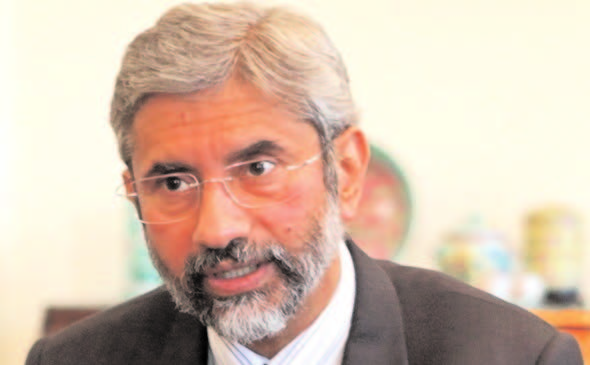
    Ambassador Dr. S.Jaishankar…
    Rao who has since retired. Dr. Jaishankar comes to Washington, DC with more than three decades of diplomatic experience. Joining the Indian Foreign Service in 1977, Dr. Jaishankar has represented India’s interests and fostered friendly working relationships in countries around the world. Dr. Jaishankar’s first postings abroad were as Third and Second Secretary (Political) at the Embassy of India in Moscow from 1979 to 1981. From 1981 to 1985, he served as Under Secretary (Americas) and Policy Planning in the Ministry of External Affairs.

    He then spent three years from 1985 to 1988 as First Secretary handling political affairs at the Indian Embassy in Washington, DC, followed by two years as First Secretary and Political Advisor to the Indian Peace Keeping Force (IPKF) in Sri Lanka. In 1990, Dr. Jaishankar became Commercial Counsellor in Budapest. After three years in that position, he returned to India where he served first as Director of East Europe Division of the Ministry of External Affairs, and then as Press Secretary for the President of India. Following this service in India, Dr. Jaishankar went abroad again – to Tokyo in 1996 as Deputy Chief of Mission. In the year 2000, he was appointed the Ambassador of India to Czech Republic and served in Prague till 2004.

    Upon completing his time as Ambassador in Prague, Dr. Jaishankar returned once again to India, where he led the Americas Division in the Ministry of External Affairs. After three years heading the division, he again left India in 2007 to serve as High Commissioner to Singapore for two years. Most recently, Dr. Jaishankar was the Ambassador of India to China from 2009 to 2013. Dr. Jaishankar holds a Ph.D. and M.Phil in International Relations and a M.A. in Political Science. He is a member of the International Institute for Strategic Studies in London. Dr. Jaishankar is married to Kyoko Jaishankar and has two sons and a daughter.

  • Ambassador Dr. S. Jaishankar presents credentials to the US State Department

    Ambassador Dr. S. Jaishankar presents credentials to the US State Department

    WASHINGTON (TIP): Dr. S. Jaishankar, Ambassador of India to the United States, presented a copy of his credentials to the US State Department on 26th December, 2013. Ambassador Jaishankar met with Under Secretary for Political Affairs, Wendy Sherman, and Under Secretary for Management, Patrick F. Kennedy. Ambassador Jaishankar has succeeded Nirupama Rao who has since retired. Dr. Jaishankar comes to Washington, DC with more than three decades of diplomatic experience. Joining the Indian Foreign Service in 1977, Dr. Jaishankar has represented India’s interests and fostered friendly working relationships in countries around the world.

    Dr. Jaishankar’s first postings abroad were as Third and Second Secretary (Political) at the Embassy of India in Moscow from 1979 to 1981. From 1981 to 1985, he served as Under Secretary (Americas) and Policy Planning in the Ministry of External Affairs. He then spent three years from 1985 to 1988 as First Secretary handling political affairs at the Indian Embassy in Washington, DC, followed by two years as First Secretary and Political Advisor to the Indian Peace Keeping Force (IPKF) in Sri Lanka. In 1990, Dr. Jaishankar became Commercial Counsellor in Budapest. After three years in that position, he returned to India where he served first as Director of East Europe Division of the Ministry of External Affairs, and then as Press Secretary for the President of India.

    Following this service in India, Dr. Jaishankar went abroad again – to Tokyo in 1996 as Deputy Chief of Mission. In the year 2000, he was appointed the Ambassador of India to Czech Republic and served in Prague till 2004. Upon completing his time as Ambassador in Prague, Dr. Jaishankar returned once again to India, where he led the Americas Division in the Ministry of External Affairs. After three years heading the division, he again left India in 2007 to serve as High Commissioner to Singapore for two years. Most recently, Dr. Jaishankar was the Ambassador of India to China from 2009 to 2013. Dr. Jaishankar holds a Ph.D. and M.Phil in International Relations and a M.A. in Political Science. He is a member of the International Institute for Strategic Studies in London. Dr. Jaishankar is married to Kyoko Jaishankar and has two sons and a daughter.

  • FAREWELL SACHIN

    FAREWELL SACHIN

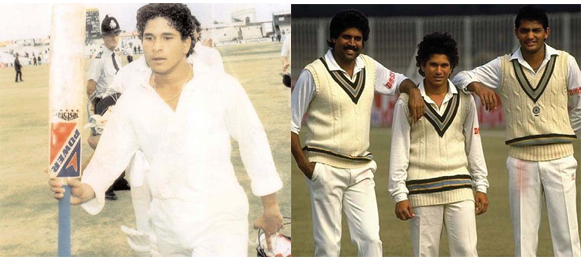
    A time line of Sachin Tendulkar’s 24-year-old illustrious career:

    Feb 23-25, 1988: Tendulkar (14) and Vinod Kambli (16) compile a 664-run unbroken partnership for Shardashram Vidya Mandir against St Xavier’s at Azad Maidan, Mumbai. Kambli remains ubeaten on 349 not out and Tendulkar scores 326 not out. It remains the highest partnership recorded in any form of cricket, until in November 2006. Dec 11, 1988: Makes First-Class debut at the age of 15 and scores an unebaten century against Gujarat at the Wankhede Stadium. Becomes youngest Indian to make a hundred on First-Class debut. Nov 15, 1989: Makes his Test debut in Karachi against Pakistan at the age of 16. Makes 15 on debut. Dec 14, 1989: Suffers a bloody nose in the last Test in Sialkot after being hit by Waqar Younis. Makes 57 in the innings. August 14, 1990: At the of 17 years and 112 days, becomes the then secondyoungest to score a Test century. He scores 119 not out against England at Old Trafford which helped India to get a draw.


    19

    April, 1992: Signs up for Yorkshire and becomes the first overseas signing for the English county. Nov 27-28, 1992: Becomes the youngest player to score 1,000 Test runs at the age of 19 years and 217 days after he scores 111 in India’s 227 in Johannesburg. Feb 11-12, 1993: Gets his first Test century (165) at home against England. Nov 24, 1993: The world saw the first glimpse of Tendulkar as a matchwinning bowler. Bowls India to sensational last-ball win against South Africa in the Hero Cup semi-final. South Africa needing six runs to win off the last over, Tendulkar gave them just three, and India a victory. March 27, 1994: Opens the innings for the first time in an ODI against the New Zealand. Scores 82 off 49 balls. October 1995: Becomes the richest cricketer in the world after he signs up a five-year contract worth Rs 31.5 crore with WorldTel. Feb-March, 1996: Plays his first World Cup at home and scores 523 runs at an average 87.16 and becomes the highest scorer. Aug 8, 1996: Becomes the Indian captain at the age of 23. Jan 2, 1998: Sacked from captaincy after a 15-month stint during which India won just three of 17 Tests. Feb-March, 1998:

    In the best of his form against Australia in a home Test series and also gets his maiden double hundred. He also scored two hundreds and a fifty in the three-Test series that India won 2-1. July 28, 1999: Gets back his captaincy after Mohammad Azharuddin is sacked for India’s failure to reach the semi-finals of the World Cup in England. March 20, 2001: Scores a thrilling century in the deciding Test in Chennai and denies Australia the “final frontier”. March 31, 2001: Becomes the first payer to score 10,000 runs in ODIs en route to his 139 against Australia in Indore. Nov 19, 2001: Fined by match referee Mike Denness for ball tampering. The decision was later overturned after an outcry by the Indian cricket board. Aug 22-23, 2002: Surpassed Don Bradman’s tally of 29 Test centuries. Misses double century by seven at Headingley, but India win by an innings and 46 runs. February-March, 2003: Scores 673 runs at 61.18 in the World Cup and also takes India to sniffing distance of winning the crown. His 98 against Pakistan was one of the best knocks played by Indians at World Cup. Australia are the champions, but Tendulkar is named the Man of the Series. Aug, 2003: Is presented with a Ferrari 360 Modena for going past Bradman’s 29 Test centuries.

    Jan 2-4, 2004: Scores 241 in Sydney, one of his best, even as Australia manage to hold on for a draw, and the series ends 1-1. Aug, 2004: Suffers from tennis elbow during the Videocon Cup in Holland. Misses the Champions Trophy in England, and then the first two home Tests against Australia. March 16, 2005: Scores 52 against Pakistan and becomes the fifth man to score 10,000 Test runs. Dec 10, 2005: Becomes the highest centurion in Test cricket as he overtakes Sunil Gavaskar’s 34 en route to his 109 against Sri Lanka in Delhi. March 19, 2006: Is booed at the Wankhede Stadium after he was dismissed for duck in 33 minutes against England in Mumbai. March, 2006: Again goes under the knife. This time for surgery on his right shoulder in England. May, 2007: For the first time in his career, Tendulkar is rested for the three-ODI series in Bangladesh. Jan 4, 2008: Scores an unbeaten 154, against a major Test playing nation in two years and 19 Tests, against Australia at the Sydney Cricket Ground. March 2, 2008: Sachin scores his first ODI century in Australia, in first of the CB Series final. Oct 17, 2008: Surpasses Brian Lara’s record of most Test runs against Australia at Mohali. Nov 5, 2009: Gets to 17,000 runs during his 175 off 141 balls in a 351-run chase against Australia in Hyderabad.

    India fall short by 19 runs. Feb 24, 2010: Becomes the first player in the history of the game to score 200 in a single innings in a One-Day International. He took 147 deliveries to power India to 401 and a 153-run win against South Africa. Oct 2010: Tendulkar bags his first ICC award, the Sir Garfield Sobers Trophy. Dec 19, 2010: Gets his 50th Test hundred against a difficult South African attack in Centurion. April 2, 2011: Realises his childhood dream of winning the World Cup that too at his home town of Mumbai and at the Wankhede. India beat Sri Lanka to win the World Cup for the second time. March 16, 2012: Gets the 100th international century, scoring 114 in an Asia Cup match against Bangladesh in Mirpur. But India lost the match. The century came after 34 innings and more than a year after scoring his 99th international hundred. Dec 23, 2012: Just minutes before the selectors were set to name the squad for the ODI series against Pakistan, Tendulkar announces his retirement from the format. Tendulkar finished with 18,426 ODI runs and 49 hundreds, well clear of any other batsman. Oct 10, 2013: Tendulkar announces his retirement from Test cricket.

  • Sri Lanka rights abuse allegations divide Commonwealth

    Sri Lanka rights abuse allegations divide Commonwealth

    COLOMBO (TIP):THE heads of government of the 53 nations of the Commonwealth come together every two years for a summit. This time, several have decided to stay away, to boycott the gathering in Sri Lanka. The prime ministers of Canada, India and Mauritius say they cannot take part. Their basic complaint: Sri Lanka’s President, Mahinda Rajapaksa, should not have been allowed to host the Commonwealth and then take over for the next two years as chairperson of an organisation committed to values of democracy and human rights which he is accused of flouting. Other leaders are still coming, despite pressure on them to join the boycott.

    So Britain’s Prime Minister, David Cameron, has flown in from neighbouring India, although his counterpart, India’s Manmohan Singh, has pulled out. Mr Cameron says it’s better to engage and ask tough questions rather than risk making the Commonwealth irrelevant as an organisation. The case against Sri Lanka’s government stems partly from allegations against the security forces of war crimes, including the killing of civilians, rape and sexual violence against women, particularly during the final months in 2009 of a civil war against Tamil separatists. Critics also say there is considerable evidence of abuses both then and more recently, including the abduction or “disappearance” of opponents and the murder of journalists. The government in Colombo rejects all these allegations, a denial repeated to me in a BBC interview by the country’s minister of mass media and information, as Commonwealth leaders arrived in the country.

    Test of will

    “We wanted zero civilian casualties,” said the minister, Keheliya Rambukwella, who is the government’s spokesman. He added that it was well documented that the Tamil Tigers or LTTE, whom he called “terrorists”, “used civilians as human shields”. The minister also rejected demands from Britain’s prime minister. David Cameron is calling for an end to the intimidation of journalists and human rights defenders, action to stamp out torture, demilitarisation of the north and reconciliation between communities. Mr Cameron says there needs to be a thorough investigation into alleged war crimes, and that if it does not happen rapidly, then an international independent investigation will be needed.

    The Sri Lankan government accuses him of colonialism, of trying to dictate to a sovereign nation and of abusing his invitation to come to Colombo to discuss the issues on the formal agenda of this summit. But that agenda includes debate over what should replace the United Nations Millennium Development Goals when they expire in 2015. That may allow any leader in the room to raise a whole host of human rights concerns, precisely because they are central to many people’s belief that you cannot eradicate poverty without at the same time upholding rights, including the freedom to make political choices and freedom of speech. Some people ask whether or not anyone would notice if the Commonwealth disappeared.

    Supporters argue its achievements are often ignored. They point to a strong set of rules on democracy and elections: Commonwealth observer missions often play a significant role in limiting or preventing ballot-rigging. Military takeovers are punished. Thirty years ago many Commonwealth countries were ruled by men in uniform. Not any more. The Commonwealth is also much more than a club of political leaders. Its grassroots organisations, bringing together civil society groups around the globe, or professional associations exchanging best practice, or promoting trade are often more effective than gatherings of the political elite.

    Small states also value the collective political weight they can sometimes exert via the Commonwealth in a world where their voices might otherwise be drowned out. Critics, on the other hand, assemble lists of Commonwealth failings. Many have to do with promises made by leaders and then broken. Other charges involve rules which are not rigorously enforced. The current controversy over the decision to meet in Colombo is seized on by the critics as further evidence the Commonwealth is all too flexible when it comes to sticking to its principles. This year’s new Commonwealth Charter commits leaders to uphold these principles.

    So this summit will be seen by many as a test of the Commonwealth’s real commitment to values and a test of its collective will.

  • Sri Lanka rights abuse allegations divide Commonwealth

    Sri Lanka rights abuse allegations divide Commonwealth

    COLOMBO (TIP):THE heads of government of the 53 nations of the Commonwealth come together every two years for a summit. This time, several have decided to stay away, to boycott the gathering in Sri Lanka. The prime ministers of Canada, India and Mauritius say they cannot take part. Their basic complaint: Sri Lanka’s President, Mahinda Rajapaksa, should not have been allowed to host the Commonwealth and then take over for the next two years as chairperson of an organisation committed to values of democracy and human rights which he is accused of flouting. Other leaders are still coming, despite pressure on them to join the boycott. So Britain’s Prime Minister, David Cameron, has flown in from neighbouring India, although his counterpart, India’s Manmohan Singh, has pulled out. Mr Cameron says it’s better to engage and ask tough questions rather than risk making the Commonwealth irrelevant as an organisation. The case against Sri Lanka’s government stems partly from allegations against the security forces of war crimes, including the killing of civilians, rape and sexual violence against women, particularly during the final months in 2009 of a civil war against Tamil separatists. Critics also say there is considerable evidence of abuses both then and more recently, including the abduction or “disappearance” of opponents and the murder of journalists. The government in Colombo rejects all these allegations, a denial repeated to me in a BBC interview by the country’s minister of mass media and information, as Commonwealth leaders arrived in the country.

    Test of will
    “We wanted zero civilian casualties,” said the minister, Keheliya Rambukwella, who is the government’s spokesman. He added that it was well documented that the Tamil Tigers or LTTE, whom he called “terrorists”, “used civilians as human shields”. The minister also rejected demands from Britain’s prime minister. David Cameron is calling for an end to the intimidation of journalists and human rights defenders, action to stamp out torture, demilitarisation of the north and reconciliation between communities. Mr Cameron says there needs to be a thorough investigation into alleged war crimes, and that if it does not happen rapidly, then an international independent investigation will be needed. The Sri Lankan government accuses him of colonialism, of trying to dictate to a sovereign nation and of abusing his invitation to come to Colombo to discuss the issues on the formal agenda of this summit. But that agenda includes debate over what should replace the United Nations Millennium Development Goals when they expire in 2015. That may allow any leader in the room to raise a whole host of human rights concerns, precisely because they are central to many people’s belief that you cannot eradicate poverty without at the same time upholding rights, including the freedom to make political choices and freedom of speech. Some people ask whether or not anyone would notice if the Commonwealth disappeared.

    Supporters argue its achievements are often ignored. They point to a strong set of rules on democracy and elections: Commonwealth observer missions often play a significant role in limiting or preventing ballot-rigging. Military takeovers are punished. Thirty years ago many Commonwealth countries were ruled by men in uniform. Not any more. The Commonwealth is also much more than a club of political leaders. Its grassroots organisations, bringing together civil society groups around the globe, or professional associations exchanging best practice, or promoting trade are often more effective than gatherings of the political elite. Small states also value the collective political weight they can sometimes exert via the Commonwealth in a world where their voices might otherwise be drowned out. Critics, on the other hand, assemble lists of Commonwealth failings. Many have to do with promises made by leaders and then broken. Other charges involve rules which are not rigorously enforced. The current controversy over the decision to meet in Colombo is seized on by the critics as further evidence the Commonwealth is all too flexible when it comes to sticking to its principles. This year’s new Commonwealth Charter commits leaders to uphold these principles. So this summit will be seen by many as a test of the Commonwealth’s real commitment to values and a test of its collective will.

  • CELEBRATIONS AROUND THE WORLD

    CELEBRATIONS AROUND THE WORLD

    Diwali is also celebrated outside of India mainly in Guyana, Fiji, Malaysia, Nepal, Mauritius, Myanmar, Singapore, Sri Lanka, Trinidad & Tobago, Britain, Indonesia, Japan, Thailand, Africa, Australia and the US among the Hindus across the world.

    Britain
    The Indians are the second largest ethnic minority in Britain. To get rid of the feeling of missing their homeland, especially during festival times, the Indians here celebrate most of the festivals. The occasion is marked by visit to the local temple to worship the shrine of Lakshmi, which they have made for Diwali. Eating special sweets, burning of incense sticks, lighting the home and surroundings and the blowing of the conch shell follows the prayer session in the Lakshmi temple. The festival here is celebrated according to the Hindu solar calendar hence it falls in the months of October-November, amongst the cold, damp and windy months in Britain. Still the enthusiasm of the festival celebration makes the task of leaving small lamps on windowsills or by open doorways possible ignoring the chill. The lamps and diyas play their part in maintaining the atmosphere of Diwali at home.

    Guyana
    Guyana, formerly known as British Guiana, is located on the northeast coast of South America. Guyana is 82,978 square miles in area and has a population of about 7,70,000. Hindus constitute 33% of Guyana’s total population. The Co-operative Republic of Guyana in Southern America celebrates Diwali according to the Hindu Solar calendar. The day of the festival is declared as a national holiday in the official calendar of Guyana. The tradition of celebrating the festival is believed to have been brought to Guyana in the year 1853 by the first indentured people from India.

    The legends related to the festival are similar to that of India. The celebration of the festival includes, distribution of sweets, illuminating the inside and outside of the house, exchange of greetings, cleaning of houses and wearing of new clothes. The celebrations hold special significance for the people of Guyana. The distribution of sweet signifies the importance of serving and sharing whereas exchange of greeting cards denotes the goodwill of each other.

    The sweets distributed mainly consist of pera, barfi, and kheer. The tradition of wearing new cloth for the people of Guyana is significant especially in this festival. They believe that wearing new cloth is the symbol of healthy souls in healthy bodies. Cleaning of their homes and keeping them well illuminated in and outside is a practice meant to illuminate the road for Goddess Lakshmi so that while goddess Lakshmi visits their home she faces no problem of light as the Diwali night is regarded as the darkest night of the year.

    Indonesia
    The name Indonesia came from two Greek words: “Indos” meaning Indian and “Nesos” meaning islands. The majority of population follows Islam. Hindus constituent about 2% of Indonesia’s total population. However, the Indonesian island of Bali is famous for celebrating the festival of Diwali, as a majority of the population here is that of Indians. It is one of the most revered festivals of the locals here. The celebration and rituals of the festival is mostly similar to that celebrated by their counterparts in India.

    Malaysia
    Fascinating in its diversity, Malaysia has many mesmerizing charms and attractions. With a population of about 20 million, comprising of a harmonious multi-ethnic mix of Malays, Malaysia promises a colorful potpourri of cultural traditions. Most are based on the various religious practices, beliefs and traditions influencing the costumes, festivals, ceremonies and rituals. The Hindu community of Malaysia constitutes about 8% of its total population .The community celebrates Diwali as a symbol of triumph of good over evil. The Malaysian people call Diwali as Hari Diwali.

    This festival is celebrated during the 7th month of the Hindu solar calendar. The south Indian traditional of oil bath precedes the festivities. The celebration includes visits to temples and prayers at household altars. Small lamps made from clay and filled with coconut oil and wicks are a common sight to signify the victory of Lord Rama, the hero of the Hindu epic Ramayana, over the demon king Ravana. Diwali is celebrated almost all over the Malaysia except in Sarawak & Federal Territory of Labuan.

    Mauritius
    Mauritius is an island in the Indian Ocean that lies to the east of Madagascar. This beautiful landmass is full of picturesque landscapes and enchanting spots. Mauritius accounts a 63% of Indian majority of which 80% follow Hinduism. Hence, celebration of almost all the Hindu festivals in this island is a common phenomenon. In Mauritius, Diwali celebration is an age-old tradition. It holds special significance for the natives, who believe that Diwali has been celebrated even long before the return of Lord Rama from 14 years of exile and his coronation as the king. The festival is marked by lightening of earthen lamps in rows making images out of the rows. Lakshmi is worshiped as the goddess of wealth and crackers are burnt to scare away evil spirits.

    Nepal
    Nepal is a landlocked country nestled in the foothills of the Himalayas. Nepal, a multi-ethnic and multi-lingual society is the only Hindu Kingdom of the world. Diwali is celebrated here with the usual Hindu festivities and rituals. Diwali in Nepal is known as Tihar. Just like most places in India Diwali is celebrated here to honor the goddess of wealth and god of prosperity Lakshmi and Ganesh respectively. The festival of light falls in the months of October or November on the day of Amavasya – the darkest day of the year. The festival here continues for five days. Every day has its special significance. The first day is dedicated to cows as they cook rice and feed the cows believing that goddess Lakshmi comes on cows. The second day is for Dogs as the Vahana of Bhairava.

    Preparation of delicious food especially meant for the dog is a typical characteristic of the day. Lights and lamps are lit to illuminate the entire surrounding and some of the specialty items are prepared to mark the third day of the festival. Fireworks, Lamps and crackers are widely used. The fourth day is dedicated to Yama, the Hindu God of Death. He is prayed for long life. The fifth final day is Bhhaya Dooj dedicated for the brothers who are wished long life and prosperity by their sisters.

    South Africa
    South Africa is located at the southern tip of the continent of Africa. It is a mix of cultures and has one of the largest immigrant Indian communities in the world. The country has almost one million immigrant Indians. Most of these Indian immigrants are concentrated in the eastern regions of Natal and Transvaal of the country. About 65% of Hindus, 15% of Muslims and 20% of Christians live in this area. Due to the majority of the Hindu population, a number of Hindu festivals are celebrated here. Diwali also holds an important place in the festival calendar of the region. The celebration is more or less same to that in India. Most of the Hindus here are from Gujarat and Tamil Nadu and continue to follow their regional variations of Hinduism.

    Trinidad & Tobago
    Trinidad is the most southern of the Caribbean islands, lying only seven miles off the Venezuelan coast, is one of the most exciting, colorful islands of the West Indies. Considered as the land of the Humming Bird, Trinidad and Tobago has a good number of Indian population. For that reason, Hindu festivals, customs, traditions and observances forms an integral part of the society, which comprises the unique beauty of the twin island state. The Diwali celebration has a unique flavor here in the Caribbean island nation. Here 43 per cent of the 1.3 million populations are ethnic Indians. The Diwali celebrations are usually marked as an occasion to unify the nation that consists of Hindus, Muslims, Christians, Indo-Trinidadians and Afro- Trinidadians.

    The festival day is regarded as a national holiday. The festival is also marked by scores of functions besides the usual rituals of the festivity. The functions and celebrations also have an official imprint as the Ministers of the Government also participate in the celebrations sometimes. The belief behind the festival is same as of India, which is, prevalence of good over evil. The celebrations continue for over a week and the headquarters of the National Council of Indian Culture at Diwali Nagar becomes the focal point.

    America
    Diwali is one of the biggest Hindu festivals celebrated among many people and communities in the United States. Many schools, community groups, Hindu associations, Indian organizations and corporate businesses get involved in celebrating Diwali. Politicians, including governors and past presidents, previously made public announcements expressing their greetings and well wishes to Hindus on Diwali. Many Indian stores sell jewelry and traditional outfits, such as chiffon saris, as well as statues of Hindu deities and incent sticks used in prayer around this time of the year. Many women and girls use mehendi, which is a temporary henna decoration, on their palms. It is also common to wear fine jewelry and silk outfits to celebrate this joyous festival.

  • I KNEW THERE WILL BE A TIME WHEN THE RUNS WILL FLOW: ROHIT

    I KNEW THERE WILL BE A TIME WHEN THE RUNS WILL FLOW: ROHIT

    KOLKATA (TIP): In less than a week, Rohit Sharma has joined most of India’s batting elite. In Bangalore, he said hello to Sachin Tendulkar and Virender Sehwag in the ODI double-century club, hitting 16 sixes in the innings. Five days later, in Kolkata, he took 165 deliveries before he even lofted the ball in the air, and joined Sourav Ganguly, Sehwag, Gundappa Vishwanath, Mohammad Azharuddin and recently Shikhar Dhawan as those with a century on Test debut. What makes this innings really special is that he has been yearning for the chance in Tests for a few years now, coming close – he was once listed to play in 2010 but injured himself moments before the toss – but not getting to put that white India shirt on.

    However, he couldn’t say what satisfied him more: the Bangalore double or this century on debut when India were struggling at 82 for 4 in response to West Indies’ 234. “I cannot really say,” Rohit said. “That was a 200, really special. And this is even more special because it’s a Test hundred on debut. See, anywhere you get a hundred, it’s very special. And on top of that if your team wins, that’s like the icing on the cake.We’ve got to wait another three days to see what happens in the game. Both these innings are very close to my heart.With that innings in Bangalore we won the series, and here… let’s hope that we can get into a good position tomorrow, and then I’d be more happy.

    ” This has been an exceptional year for Rohit. He has led Mumbai Indians to the IPL and Champions League T20 titles, has transformed his career by opening in ODIs, and now has had a dream Test debut. This time last year he was licking his wounds from a disastrous ODI series in Sri Lanka, which somehow cost him the Test place that should have been his after the retirements of Rahul Dravid and VVS Laxman. How did he turn the corner? “Being a sportsman, there is a lot of inspiration to take from so many sportspersons from around the world,” Rohit said. “You look at Michael Hussey, he made his debut when he was 30. There are a lot of other cricketers who had to wait for their opportunity. I’m no different, I’m one of them. I knew once I got an opportunity, I’d try and make the most of it.

    I never wanted to put my head down, I believe that if you have the ability, the talent, if you know you can do it, there is no need to worry about anything. “There was this phase when things were not going my way. But I never put my head down, I just wanted to focus because I knew there will be a time when the runs will flow. I just waited, waited… kept working on my game very hard. Yes, today I’m really happy with what’s happened.” This was not a freebie century from 400 from 4. Rohit had to fight hard for every single of his initial runs. India were struggling, the ball was turning, and West Indies were on top when Virat Kohli was the fifth man out. “See, they were bowling quite well when we lost five early wickets,” Rohit said. “We wanted to build partnerships then, but they were bowling very well so we just thought we’ve got to respect these bowlers who were bowling in tandem.

    The five-ten overs of Shillingford and the bowler at the other end were very important, so we just thought that we needed to stick there, and that once we get in, we can capitalise later when the bowlers get tired. That’s exactly what happened at the end of the day.” He spoke about the innings with the same maturity that he played it with. “They were varying their pace so when I and MS [Dhoni] were batting runs were not really coming so easily,” Rohit said. “So we just had a plan of negotiating these overs and as I said, we had to stick [to] whatever we’d decided and then capitalise when the day was coming to an end. I knew this exactly because the outfield here is very fast so you just need to play your normal cricket. After MS got out, me and Ashwin had a really good partnership.

    At Eden Gardens, if you just can manage those few initial overs, thereafter it becomes… I wouldn’t say easy but you get a lot of runscoring opportunities.” And Rohit knows from personal experience. He made his first-class debut here and scored a century. He started captaining Mumbai Indians here, and won the IPL final here. The same maturity was evident when he was asked to talk about the earlier nearmisses. “Whenever it happens, you’ve got to be proud, you’ve got to take that,” Rohit said. “I was really disappointed with what happened in 2010, but now I just wanted to focus on what was happening at the moment, so my focus was on this Test match, and I was really happy.

  • The Essence of Diwali

    The Essence of Diwali

    The DFW Indian Cultural Society’s mega event-the Diwali Mela- is being organized on November 2 at Cotton Bowl. It will be the 8th super mela in a row. As our tribute to the grand event, we bring to our readers an article on Diwali specially written for The Indian Panorama by Mike Ghouse, a noted literateur and journalist. Read on.


    img8

    Diwali is the Indian festival of lights and is celebrated on a large scale throughout India and the Indian Diaspora. It is also celebrated in Nepal, Sri Lanka, Myanmar, Bangladesh, Malaysia, Singapore, Guyana, West Indies, Fiji, and of course, here in the United States. Thanks to the Gupta’s for placing Dallas on the World Map of Diwali Celebrations.

    I believe it is one of the biggest celebrations in the United States, if not the biggest in the western Hemisphere. Ramesh Gupta initiated the event eight years ago, fully supported, encouraged and funded by the Dallas billionaire couple Satish and Yasmin Gupta.

    DFW Indian Cultural Society (DFW ICS) made its debut on the Dallas scene with the very first “Diwali Mela 2006”, which drew over 38,000 people to Texas Stadium. . Attendance has been increasing every year and is currently at an impressive figure of over 70,000. Diwali Mela has become an annual signature event for DFW IC


    img10
    The inauguration of an earlier Diwali Mela

    DFW ICS has a strong commitment to the community which is reflected in the variety projects that it has undertaken, such as organizing the Diwali Mela, entertainment programs, sponsoring the Medical Clinics in Plano and Lewisville, for the uninsured and has recognized the contribution of teachers to the community by giving cash rewards.

    DFW ICS has supported multiple non-profit organizations throughout metropolis. Under the leadership of Satish Gupta, DFW ICS is moving forward by organizing various programs and dedicating itself to serving the needs of the communities in the Dallas Fort Worth area


    img9
    Huge gathering in Cotton Bowl

    Nearly 50,000 people attend the event. First it was held in Texas Stadium, former home of the Dallas Cowboys and now it is held at the Cotton Bowl Stadium in Fair Park, Dallas, where college football is played and home to Texas State Fair. There is nothing like it.

    Satish Gupta, president of the organizations writes this information on their website, http://www.dfwdiwalimela.com/, “This year again we have decided to pack all the fun for children, youth, adults and seniors. From Ram Leela and Bollywood singers to spectacular fireworks, elephant rides to slides, Cultural dances to mouth watering Indian food, all packed in one of the biggest Carnival of its kind in America. There will be three elephants and two camels available for the rides this year! We bring all this to you at a very minimal cost to you.”


    img11
    The moving spirit behind the Diwali Mela, Satish Gupta, President of DFW Indian Cultural Society

    “The large number of people the Carnival attracted in the past years is a testimony to its success. The number of attendees keeps growing and it presents an important platform for a quick reach to the Asian Community of Dallas Fort worth and the nearby cities of Texas.

    We would like to thank all our Sponsors who support us in this huge task. The purpose of this message is to request you to come with your family and friends and make the event a grand success. Your participation will go a long way in promoting our culture to the kids and youths of our community.” Diwali is spelled differently, and is called by many names.

    There is Divali among others, and Deepavali, meaning the festival of lights. Although Diwali is a Hindu tradition, people of all faiths participate in celebrations – Hindus, Jains, Muslims, Sikhs, Christians, Buddhists, Zoroastrians and others. People decorate their homes with lights and Rangoli, i.e., colorful drawing in the front yard of the home, sidewalks, even roads in India with colorful powders or colorful pieces of chalk.

    Women and Children look forward to express their artistic talent in this season. Their surroundings filled with colorful lights to enliven the day, to mark the dawn of a new era in one’s life. My childhood is filled with good memories of Diwali; the sparklers, the food and everything joyous you can imagine.

    A few years ago, Jyoti and Nishi Bhatia, former President of DFW Hindu Temple and President of Dallas Hindi Association respectively, asked me to speak about Diwali in a dinner gathering to a group of people from different faiths and cultures, and I cherished it, I love talking about Diwali, as its essence reflects the ideals of pluralism, and symbolizes hope and positive energy, victory of good over evil; a new beginning.

    It is indeed seeing the light at the end of tunnel. Diwali Celebration is a part of the epic Ramayana, and the Ram Lila is played out all night long in towns across India. I grew up watching it in front of my house, and my friends played different roles in the show. Indeed, one of my former relatives played Hanuman’s role.


    img12
    Ramayan being enacted

    It was a challenge for me to teach Ramayana to a group of people who knew nothing about it. It turned out to be a successful program. I prepared the nearly all white audience that I will be narrating the story through the power point and along will be reinforcing the names and roles of the key persons in the story and will ask them for feed back at the end.

    Friends, I cannot tell you the joy, the Bhatias and I felt when each one of them answered the questions from the story. They got it! It is a powerful story and takes about 30 minutes to narrate. The epic is filled with educative tales, edifying poems, and fables. It is probably through their constant retelling in the villages over centuries that Hinduism is most efficiently disseminated from generation to generation


    img13
    Ravana’s effigy is set on fire

    Whenever a society rots with adharma (wrong path), where no one cares about the other, lying, stealing and dishonesty become rampant, Lord Krishna says, I will emerge among you and restore the righteousness and trust in the society to function smoothly.

    Zarathustra, Moses, Jesus, Buddha, Muhammad, Krishna, Nanak, Mahavira, Confucius, Tao and others served the same purpose… it is almost like the laws of physics ; water finds its own level, and righteousness finds its own existence. Rama is one such incarnation who reestablished the moral code for social conduct and proper relation of mankind to divinity. He was truthful and a just king. Diwali symbolizes hope and positive energy

    ● People wear new clothes
    ● Share sweets as a symbol of happiness
    ● Renew the relationships
    ● Strengthen the bonds It signifies a new beginning, starting out fresh.
    ● for most businesses it is the new financial year
    ● An inventory of assets is taken
    ● An assessment of family and relationship
    ● Last harvest for the farmers
    ● New things are bought

    President Obama in his message last Diwali said it perfectly,
    “Many who observe this holiday will light the Diya, or lamp, which symbolizes the triumph of light over darkness and knowledge over ignorance.

    As that lamp is lit, we should all recommit ourselves to bring light to any place still facing darkness. Earlier this year, we were reminded of the evil that exists in the world when a gunman walked into the Sikh Gurdwara in Oak Creek, Wisconsin and opened fire.

    In the wake of that horrible tragedy, we saw the resilience of a community that drew strength from their faith and a sense of solidarity with their neighbors, Sikh and non-Sikh alike. We also saw compassion and love, in the heroic actions of the first responders and the outpouring of support from people across the country. Out of a day of sadness, we were reminded that the beauty of America remains our diversity, and our right to religious freedom. To those celebrating Diwali, I wish you, your families and loved ones Happy Diwali and Saal Mubarak.”


    img14

    Today, on this blessed day, we have a blank slate to start, let’s plan on filling it with doing good things for ourselves, to our family, friends, community, nation and the world until next Diwali. What are good things? Words and actions that bring peace, Mukti, salvation, Moksha, nirvana, Nijaat and freedom to us, yes us.

    There is so much of joy waiting to be had. If we can remove hatred and anger towards others, forgive others and ask for forgiveness (Michami Dukadam is a beautiful phrase the Jain’s use), then a blissful year is sure to come for each one of you and me.
    ● May this Diwali purge your heart, mind and soul from hate, malice, anger and ill-will;
    ● May this Diwali open your hearts and minds towards fellow being;
    ● May this Diwali brighten your life, and may this Diwali mark the dawn of a new era; Muslims are a big part of Diwali as well, and innumerable poets have written poetries and songs about Diwali.

    Here is my effort, I wrote this seven years ago on the occasion when Diwali and Ramadan were celebrated around the same time.

    A meri diwali hai, a meri eid hai donon may khushi hi khushi hai Diwali say naya saal shuru hota hai Ramzan ek naya insaan banata hai Diwali may ek baat ka hisab hota hai Ramzan may her baat ka review hota hai Diwali nayay saal ke liye clean slate deta hai Ramzan pichlay saal ki slate clean karta hai Baat hi baat may, my nay a sher likh diya Sahir Diwali aur Ramzan say subka acha hi hota hai Shubh kamnaein | Diwali Mubarak | Blessed Diwali. Happy Diwali to you my friends, may this Diwali bring happiness, serenity and peace to you. Amen!

  • CELEBRATIONS AROUND THE WORLD

    CELEBRATIONS AROUND THE WORLD

    Diwali is also celebrated outside of India mainly in Guyana, Fiji, Malaysia, Nepal, Mauritius, Myanmar, Singapore, Sri Lanka, Trinidad & Tobago, Britain, Indonesia, Japan, Thailand, Africa, Australia and the US among the Hindus across the world.

    Britain
    The Indians are the second largest ethnic minority in Britain. To get rid of the feeling of missing their homeland, especially during festival times, the Indians here celebrate most of the festivals. The occasion is marked by visit to the local temple to worship the shrine of Lakshmi, which they have made for Diwali. Eating special sweets, burning of incense sticks, lighting the home and surroundings and the blowing of the conch shell follows the prayer session in the Lakshmi temple. The festival here is celebrated according to the Hindu solar calendar hence it falls in the months of October-November, amongst the cold, damp and windy months in Britain. Still the enthusiasm of the festival celebration makes the task of leaving small lamps on windowsills or by open doorways possible ignoring the chill. The lamps and diyas play their part in maintaining the atmosphere of Diwali at home.

    Guyana
    Guyana, formerly known as British Guiana, is located on the northeast coast of South America. Guyana is 82,978 square miles in area and has a population of about 7,70,000. Hindus constitute 33% of Guyana’s total population. The Co-operative Republic of Guyana in Southern America celebrates Diwali according to the Hindu Solar calendar. The day of the festival is declared as a national holiday in the official calendar of Guyana. The tradition of celebrating the festival is believed to have been brought to Guyana in the year 1853 by the first indentured people from India. The legends related to the festival are similar to that of India. The celebration of the festival includes, distribution of sweets, illuminating the inside and outside of the house, exchange of greetings, cleaning of houses and wearing of new clothes. The celebrations hold special significance for the people of Guyana. The distribution of sweet signifies the importance of serving and sharing whereas exchange of greeting cards denotes the goodwill of each other. The sweets distributed mainly consist of pera, barfi, and kheer. The tradition of wearing new cloth for the people of Guyana is significant especially in this festival. They believe that wearing new cloth is the symbol of healthy souls in healthy bodies. Cleaning of their homes and keeping them well illuminated in and outside is a practice meant to illuminate the road for Goddess Lakshmi so that while goddess Lakshmi visits their home she faces no problem of light as the Diwali night is regarded as the darkest night of the year.

    Indonesia
    The name Indonesia came from two Greek words: “Indos” meaning Indian and “Nesos” meaning islands. The majority of population follows Islam. Hindus constituent about 2% of Indonesia’s total population. However, the Indonesian island of Bali is famous for celebrating the festival of Diwali, as a majority of the population here is that of Indians. It is one of the most revered festivals of the locals here. The celebration and rituals of the festival is mostly similar to that celebrated by their counterparts in India.

    Malaysia
    Fascinating in its diversity, Malaysia has many mesmerizing charms and attractions. With a population of about 20 million, comprising of a harmonious multi-ethnic mix of Malays, Malaysia promises a colorful potpourri of cultural traditions. Most are based on the various religious practices, beliefs and traditions influencing the costumes, festivals, ceremonies and rituals. The Hindu community of Malaysia constitutes about 8% of its total population .The community celebrates Diwali as a symbol of triumph of good over evil. The Malaysian people call Diwali as Hari Diwali. This festival is celebrated during the 7th month of the Hindu solar calendar. The south Indian traditional of oil bath precedes the festivities. The celebration includes visits to temples and prayers at household altars. Small lamps made from clay and filled with coconut oil and wicks are a common sight to signify the victory of Lord Rama, the hero of the Hindu epic Ramayana, over the demon king Ravana. Diwali is celebrated almost all over the Malaysia except in Sarawak & Federal Territory of Labuan.

    Mauritius
    Mauritius is an island in the Indian Ocean that lies to the east of Madagascar. This beautiful landmass is full of picturesque landscapes and enchanting spots. Mauritius accounts a 63% of Indian majority of which 80% follow Hinduism. Hence, celebration of almost all the Hindu festivals in this island is a common phenomenon. In Mauritius, Diwali celebration is an age-old tradition. It holds special significance for the natives, who believe that Diwali has been celebrated even long before the return of Lord Rama from 14 years of exile and his coronation as the king. The festival is marked by lightening of earthen lamps in rows making images out of the rows. Lakshmi is worshiped as the goddess of wealth and crackers are burnt to scare away evil spirits.

    Nepal
    Nepal is a landlocked country nestled in the foothills of the Himalayas. Nepal, a multi-ethnic and multi-lingual society is the only Hindu Kingdom of the world. Diwali is celebrated here with the usual Hindu festivities and rituals. Diwali in Nepal is known as Tihar. Just like most places in India Diwali is celebrated here to honor the goddess of wealth and god of prosperity Lakshmi and Ganesh respectively. The festival of light falls in the months of October or November on the day of Amavasya – the darkest day of the year. The festival here continues for five days. Every day has its special significance. The first day is dedicated to cows as they cook rice and feed the cows believing that goddess Lakshmi comes on cows. The second day is for Dogs as the Vahana of Bhairava. Preparation of delicious food especially meant for the dog is a typical characteristic of the day. Lights and lamps are lit to illuminate the entire surrounding and some of the specialty items are prepared to mark the third day of the festival. Fireworks, Lamps and crackers are widely used. The fourth day is dedicated to Yama, the Hindu God of Death. He is prayed for long life. The fifth final day is Bhhaya Dooj dedicated for the brothers who are wished long life and prosperity by their sisters.

    South Africa
    South Africa is located at the southern tip of the continent of Africa. It is a mix of cultures and has one of the largest immigrant Indian communities in the world. The country has almost one million immigrant Indians. Most of these Indian immigrants are concentrated in the eastern regions of Natal and Transvaal of the country. About 65% of Hindus, 15% of Muslims and 20% of Christians live in this area. Due to the majority of the Hindu population, a number of Hindu festivals are celebrated here. Diwali also holds an important place in the festival calendar of the region. The celebration is more or less same to that in India. Most of the Hindus here are from Gujarat and Tamil Nadu and continue to follow their regional variations of Hinduism.

    Trinidad & Tobago
    Trinidad is the most southern of the Caribbean islands, lying only seven miles off the Venezuelan coast, is one of the most exciting, colorful islands of the West Indies. Considered as the land of the Humming Bird, Trinidad and Tobago has a good number of Indian population. For that reason, Hindu festivals, customs, traditions and observances forms an integral part of the society, which comprises the unique beauty of the twin island state. The Diwali celebration has a unique flavor here in the Caribbean island nation. Here 43 per cent of the 1.3 million populations are ethnic Indians. The Diwali celebrations are usually marked as an occasion to unify the nation that consists of Hindus, Muslims, Christians, Indo-Trinidadians and Afro- Trinidadians. The festival day is regarded as a national holiday. The festival is also marked by scores of functions besides the usual rituals of the festivity. The functions and celebrations also have an official imprint as the Ministers of the Government also participate in the celebrations sometimes. The belief behind the festival is same as of India, which is, prevalence of good over evil. The celebrations continue for over a week and the headquarters of the National Council of Indian Culture at Diwali Nagar becomes the focal point.

    America
    Diwali is one of the biggest Hindu festivals celebrated among many people and communities in the United States. Many schools, community groups, Hindu associations, Indian organizations and corporate businesses get involved in celebrating Diwali. Politicians, including governors and past presidents, previously made public announcements expressing their greetings and well wishes to Hindus on Diwali. Many Indian stores sell jewelry and traditional outfits, such as chiffon saris, as well as statues of Hindu deities and incent sticks used in prayer around this time of the year. Many women and girls use mehendi, which is a temporary henna decoration, on their palms. It is also common to wear fine jewelry and silk outfits to celebrate this joyous festival.

  • Rajapaksa party likely to make some inroads in the north Sri Lanka

    Rajapaksa party likely to make some inroads in the north Sri Lanka

    JAFFNA (TIP): Despite the Mahinda Rajapaksa regime in Sri Lanka being seen as responsible for war crimes and mass displacement of Tamils in the north, the ruling party’s prospects of winning some seats are bright. There are many who think that Jaffna and surrounding areas risk being neglected again by the government if Rajapaksa’s party, the UPFA, is kept out of the provincial council. Kanagaratnam Sudha, a voter in Jaffna district, said she would prefer to vote for the ruling alliance candidate. “To get the benefits from the government we need to vote for the ruling party,” she said. Political analysts here say that the UPFA was likely to win five to seven seats in the largely Tamil-dominated region. “Their vote share will definitely increase this time. They will try to stop TNA from getting the mandatory twothirds majority in the council,” a TNA sympathiser said. The UPFA will secure a victory in the north as people here have begun to realise the truth that the government has offered them unprecedented development within a short period after the civil war ended. “This is something no other country has ever been able to achieve,” UPFA chief candidate for Jaffna district S Thavaraja told TOI. He said many former LTTE youths have expressed their willingness to support the UPFA saying that they had been misguided by the rebel outfit. “The government is pumping in a massive amount of money in the north for infrastructure and other development programmes. The A9 national highway and train facility to Kilinochchi and other government measures received a huge response from the common people,” said Thavarajah.

  • S JAISHANKAR NAMED AMBASSADOR TO US

    S JAISHANKAR NAMED AMBASSADOR TO US

    NEW DELHI (TIP): India’s envoy to China Subrahmanyam Jaishankar has been appointed as the next Ambassador to the US and his position in Beijing will be taken by Ashok K Kantha. Both Jaishankar and Kantha are from 1977-batch IFS. Significantly, both appointments come ahead of Prime Minister Manmohan Singh’s visit to these countries. Singh is leaving for the US on September 25 and is expected to visit China next month. Both the diplomats are expected to take up their respective assignment shortly, Ministry of External Affairs said today. Jaishankar will replace Nirupama Rao. Ashok Kantha is currently Secretary (East) in the MEA and has served in Malaysia and Sri Lanka among other postings. The country’s envoy to Beijing since August 2009, Jaishankar’s name was making rounds for the position of Foreign Secretary after Ranjan Mathai. However, the Prime Minister opted for the seniority and appointed Sujatha Singh as the Foreign Secretary.

  • Lanka to put Pak imports under lens

    Lanka to put Pak imports under lens

    NEW DELHI (TIP): A Sri Lankan ruling coalition party, Jathika Hela Urumaya (JHU), has called for a thorough check of all imports from Pakistan to the island nation after 250 kg of heroin was seized by narcotics and Customs officials. The largest ever drug haul in south Asia, the consignment had arrived in a container from Pakistan to Orugodwatta where it was seized. The JHU has asked the government to get to the bottom of the drug cartel operating in Sri Lanka %and its links with Pakistan and Afghanistan. The heroin was concealed in tins of grease. At least two persons, including a Pakistani national, were arrested in connection with the seizure. The party said in a statement that many banned goods were being smuggled into Sri Lanka from Pakistan “through a local Muslim channel”. According to an AP report, Sri Lankan authorities have seized large quantities of heroin and other drugs shipped from Pakistan in recent years, including 55 kg of heroin concealed in fake potatoes in 2010. According to a report in Lanka C News, the consignment had been sent to a Pakistani national from his compatriot in Karachi. “There had been several instances that drugs had been tried to smuggle into the country by Muslim nationals,” said the report. Led by Buddhist monks, JHU is known for its Sinhala nationalism.