Tag: Sri Lanka

  • Sri Lankan minister criticizes UN human rights chief

    Sri Lankan minister criticizes UN human rights chief

    COLOMBO (TIP): A Sri Lankan cabinet minister has questioned the impartiality of visiting United Nations human rights chief Navi Pillay, accusing her of supporting ethnic Tamil separatists because of her own Tamil background. Pillay is a South African of Indian Tamil origin. She is visiting Sri Lanka to review its progress in investigating alleged abuses during a civil war between government troops and Tamil rebels. Housing minister Wimal Weerawansa said Pillay would prepare an “extremist and unjust report” that is unfair to Sri Lanka because of her ethnicity. He accused Pillay of holding secret meetings with activist groups outside her official schedule. Pillay’s spokesman said she is conducting her mission as she would in any country. Pillay is to present her findings to the UN Human Rights Council next month.

  • Upbeat Moneydart plans to operate in 50 states of United States by 2014

    Upbeat Moneydart plans to operate in 50 states of United States by 2014

    WOODBRIDGE , NJ (TIP): UAE Exchange, an Abu Dhabi based financial services company,which operates its money transfer business in USA under its wholly owned subsidiary Moneydart Global Services, is aggressively pushing forward to expanding its operations in all 50 states of USA by the next year. Moneydart Global Services Chief Operating Officer Y. Sudhir Kumar Shetty and Promoth Manghat, its Global Operations Vice-President,who are currently visiting USA to study the market, told media persons here that Moneydart made impressive gains in spite of recession in United States and downturn in world economy. “We are a trusted name in the world market of fund remittance in major currencies of the world”, he claimed.

    Addressing media persons at company’s US headquarters in Woodbridge, NJ, Shetty unveiled Moneydart App,which can be easily uploaded on Android and other Smartphone operating systems. “The new App will meet the needs of our customers who preferred to complete their transaction using their mobile phones twenty four hours a day without visiting a branch”, said Shetty. According to Promoth Manghat, Moneydart is the only money transfer company,which acquired a SWIFT membership,which is normally given to banks. “Using our SWIFT membership we plan to launch our Business 2 Business product in North America. This service will benefit businesses that require wire transfer in more than one currency. He said that Moneydart’s online portal money2anywhere.com facilitated moneytransfer to a bank account and allows beneficiaries to pick up from our branches. He added that Moneydart’s ‘FLASHremit’ service was helping customers in India, Pakistan, Philippines, Bangladesh, Indonesia and Sri Lanka for money transfer within minutes. Moneydart’s Regional Head for Americas, Ajit Paul said his company was committed to various community activities and helping a number of community organizations conducting cultural and social activities

  • INDIA CELEBRATES 66TH ANNIVERSARY OF INDEPENDENCE

    INDIA CELEBRATES 66TH ANNIVERSARY OF INDEPENDENCE

    Independent India is 66 years old today, as is Pakistan. Both countries got their Independence from British rule on August 14/15, 1947. Pakistan celebrates August 14 as its Independence Day. Mohammed Ali Jinnah was Pakistan’s first Governor- General and the main driving force for the formation of that country. Jawaharlal Nehru was India’s first Prime Minister but Mahatma Gandhi is considered the father of the nation.

    Both Jinnah and Gandhi died soon after their countries’ independence, but Nehru remained to guide India. In Pakistan, an elected government has recently given way to another democratically-elected, an unprecedented devolution for Pakistan, bedeviled as it has been with coups and long bouts of military rule. Indeed, a disastrous army dictatorship, that of the bumbling General Yahya Khan, led to a humiliating defeat at the hands of India, the break-up of Pakistan and the creation of Bangladesh.

    Fortunately, India has not broken up, though the doomsayers predicted that it would, since it was much more diverse than Pakistan, with more languages, communities and faiths that threatened to pull it apart. Pakistan imagined that religion was the glue that would bind it together. It was wrong. India’s democracy proved to be a much stronger binding force than religion. First, there was the revolt of the Nagas in the northeast who wanted an independent Nagaland.

    Despite the continuing unrest in the region, many former rebels have become elected leaders. Similarly, in Tamil Nadu, in the south, there was a powerful separatist movement, the demands of which were much more radical than those of the Bengalis in East Pakistan. Yet, the Tamil separatists moderated their demands once they were elected to power – and got them – whereas East Pakistan was forced to rise up in revolt when it was denied its representative rights.

    Democracy has kept India united; the lack of it broke up Pakistan. India has, of course, had other serious divisive threats, mainly in Punjab and the State of Jammu and Kashmir. In Punjab, Indira Gandhi made a fatal error by sending in troops into Amritsar’s Golden Temple, the holiest shrine of the Sikhs. Her advisers told her that the army would clear the Sikh militants, who were holed up in the shrine, in no time at all with little loss of life.

    And she would be seen as upholding the unity of the country against terrorists. Her advisers were grievously wrong. It took the army two days and nights to defeat the heavily-armed and well-trained terrorists. Hundreds of Sikh militants, soldiers and innocent pilgrims (who were caught in the crossfire) were killed in the fighting (the exact toll has never been released by the Indian authorities). Indira Gandhi paid for the blunder with her life, when two of her Sikh bodyguards gunned her down in her garden.

    Eventually, the traumatized Sikh community returned to the mainstream, the election of a Sikh, the gentle and upright Dr Manmohan Singh, as Prime Minister being symbolic of the change. Again, democracy had provided the healing touch and rescued India. Meanwhile, Kashmir had also gone up in flames, thanks partly due to a rigged election and corrupt misgovernance. Kashmir remains one of India’s major unresolved problems and the main sticking point in better ties between India and Pakistan.

    So, is India’s glass half full, or half empty? The empty part relates to insufficient progress in two main areas: Education and health. India’s literacy rate is still only a little over 70 per cent, which means that over 300 million Indians, mostly girls, cannot read or write. And the expectancy of life – the surest indicator of health – is still less than 70 years. Countries like China, Indonesia and even Sri Lanka, which were behind India in these social parameters six decades ago, have done better than India.

    Where the glass is half full is in the rapid economic growth India has made in the past two decades, next only to China’s, creating a middle class of around 300 million Indians. India has become a giant in the information and technology (IT) areas and a major base for outsourcing jobs and skills for major western multinational companies. Indian companies like the Tatas and Birlas have also successfully ventured abroad. A quarter century ago, India did not figure among the nations that mattered in the world.

    It now matters and Indians can justifiably be proud of that. Major challenges remain, but they can hold their heads up high, in India and abroad. The same, sadly, cannot be said for Pakistan. However, with a stable democratic government in power and the army in the background, it may be about to finally turn the corner. On August 15, 1947, Jawaharlal Nehru made perhaps his most eloquent speech. He spoke about his nation stepping out “from the old to the new” and of India’s “tryst with destiny”. That tryst still needs to be fulfilled.

  • A PICTORIAL HISTORY OF INDEPENDENT INDIA

    A PICTORIAL HISTORY OF INDEPENDENT INDIA

    A chronology of key events
    India has been home to several ancient civilisations and empires, some dating back to more than 2,000 BC. Culture and religions have flourished over the millennia, and foreign influence has ebbed and flowed. 1947 – End of British rule and partition of sub-continent into mainly Hindu India and Muslim-majority state of Pakistan.

    1947-48 – Hundreds of thousands die in widespread communal bloodshed after partition.
    1948 – Mahatma Gandhi assassinated by Hindu extremist.
    1948 – War with Pakistan over disputed territory of Kashmir.
    1951-52 – Congress Party wins first general elections under leadership of Jawaharlal Nehru. Regional tensions 1962 – India loses brief border war with China.
    1964 – Death of Prime Minister Jawaharlal Nehru.
    1965 – Second war with Pakistan over Kashmir.
    1966 – Nehru’s daughter Indira Gandhi becomes prime minister.
    1971 – Third war with Pakistan over creation of Bangladesh, formerly East Pakistan.
    1971 – Twenty-year treaty of friendship signed with Soviet Union.
    1974 – India explodes first nuclear device in underground test. Democratic strains
    1975 – Indira Gandhi declares state of emergency after being found guilty of electoral malpractice.
    1975-1977 – Nearly 1,000 political opponents imprisoned and programme of compulsory birth control introduced. 1977 – Indira Gandhi’s Congress Party loses general elections. 1980 – Indira Gandhi returns to power heading Congress party splinter group, Congress (Indira).
    1984 – Troops storm Golden Temple – Sikhs’ most holy shrine – to flush out Sikh militants pressing for self-rule.
    1984 – Indira Gandhi assassinated by Sikh bodyguards, following which her son, Rajiv, takes over.
    1984 December – Gas leak at Union Carbide pesticides plant in Bhopal. Thousands are killed immediately, many more subsequently die or are left disabled.
    1987 – India deploys troops for peacekeeping operation in Sri Lanka’s ethnic conflict.
    1989 – Falling public support leads to Congress defeat in general election.
    1990 – Indian troops withdrawn from Sri Lanka.
    1990 – Muslim separatist groups begin campaign of violence in Kashmir.
    1991 – Rajiv Gandhi assassinated by suicide bomber sympathetic to Sri Lanka’s Tamil Tigers.
    1991 – Economic reform programme begun by Prime Minister PV Narasimha Rao.
    1992 – Hindu extremists demolish mosque in Ayodhya, triggering widespread Hindu-Muslim violence. BJP to the fore
    1996 – Congress suffers worst ever electoral defeat as Hindu nationalist BJP emerges as largest single party. 1998 – BJP forms coalition government under Prime Minister Atal Behari Vajpayee.
    1998 – India carries out nuclear tests, leading to widespread international condemnation.
    1999 February – Vajpayee makes historic bus trip to Pakistan to meet Premier Nawaz Sharif and to sign bilateral Lahore peace declaration.
    1999 May – Tension in Kashmir leads to brief war with Pakistan-backed forces in the icy heights around Kargil in Indian-held Kashmir.
    1999 October – Cyclone devastates eastern state of Orissa, leaving at least 10,000 dead.
    2000 May – India marks the birth of its billionth citizen.
    2000 – US President Bill Clinton makes a groundbreaking visit to improve ties.
    2001 January – Massive earthquakes hit the western state of Gujarat, leaving at least 30,000 dead. 2001 April – 16 Indian and three Bangladeshi soldiers are killed in border clashes. A high-powered rocket is launched, propelling India into the club of countries able to fire big satellites deep into space.
    2001 July – Vajpayee meets Pakistani President Pervez Musharraf in the first summit between the two neighbours in more than two years. It ends without a breakthrough because of differences over Kashmir.

    2001 September – US lifts sanctions which it imposed against India and Pakistan after they staged nuclear tests in 1998. The move is seen as a reward for their support for the US-led anti-terror campaign. Kashmir tensions rise
    2001 October – India fires on Pakistani military posts in 1984 – Indira Gandhi assassinated by Sikh bodyguards, following which her son, Rajiv, takes over.

    1984 December – Gas leak at Union Carbide pesticides plant in Bhopal. Thousands are killed immediately, many more subsequently die or are left disabled.
    1987 – India deploys troops for peacekeeping operation in Sri Lanka’s ethnic conflict.
    1989 – Falling public support leads to Congress defeat in general election.
    1990 – Indian troops withdrawn from Sri Lanka.
    1990 – Muslim separatist groups begin campaign of violence in Kashmir.
    1991 – Rajiv Gandhi assassinated by suicide bomber sympathetic to Sri Lanka’s Tamil Tigers.
    1991 – Economic reform programme begun by Prime Minister PV Narasimha Rao.
    1992 – Hindu extremists demolish mosque in Ayodhya, triggering widespread Hindu- Muslim violence. BJP to the fore
    1996 – Congress suffers worst ever electoral defeat as Hindu nationalist BJP emerges as largest single party. 1998 – BJP forms coalition government under Prime Minister Atal Behari Vajpayee.
    1998 – India carries out nuclear tests, leading to widespread international condemnation. 1999 February –

    Vajpayee makes historic bus trip to Pakistan to meet Premier Nawaz Sharif and to sign bilateral Lahore peace declaration.
    1999 May – Tension in Kashmir leads to brief war with Pakistan-backed forces in the icy heights around Kargil in Indian-held Kashmir.
    1999 October – Cyclone devastates eastern state of Orissa, leaving at least 10,000 dead. 2000 May – India marks the birth of its billionth citizen.
    2000 – US President Bill Clinton makes a groundbreaking visit to improve ties. 2001 January – Massive earthquakes hit the western state of Gujarat, leaving at least 30,000 dead.
    2001 April – 16 Indian and three Bangladeshi soldiers are killed in border clashes. A high-powered rocket is launched, propelling India into the club of countries able to fire big satellites deep into space.
    2001 July – Vajpayee meets Pakistani President Pervez Musharraf in the first summit between the two neighbours in more than two years. It ends without a breakthrough because of differences over Kashmir.
    2001 September – US lifts sanctions which it imposed against India and Pakistan after they staged nuclear tests in 1998. The move is seen as a reward for their support for the US-led anti-terror campaign.

    Kashmir tensions rise
    2001 October – India fires on Pakistani military posts in the heaviest firing along the dividing line of control in Kashmir for almost a year.
    2001 December – Suicide squad attacks parliament in New Delhi, killing several police. The five gunmen die in the assault.
    2001 December – India imposes sanctions against Pakistan, to force it to take action against two Kashmir militant groups blamed for the suicide attack on parliament. Pakistan retaliates with similar sanctions, and bans the groups in January.
    2001 December – India, Pakistan mass troops on common border amid mounting fears of a looming war.
    2002 January – India successfully test-fires a nuclear-capable ballistic missile – the Agni – off its eastern coast.
    2002 February – Inter-religious bloodshed breaks out after 59 Hindu pilgrims returning from Ayodhya are killed in a train fire in Godhra, Gujarat. More than 1,000 people, mainly Muslims, die in subsequent violence. Police and officials blamed the fire on a Muslim mob, but a 2005 government investigation said it was an accident. In 2012 a court convicts 32 people over the Naroda Patiya riots in Ahmedabad. 2002 May – Pakistan test-fires three medium-range surface-to-surface Ghauri missiles, which are capable of carrying nuclear warheads.War of words between Indian and Pakistani leaders intensifies. Actual war seems imminent.

    2002 June – UK, US urge their citizens to leave India and Pakistan, while maintaining diplomatic offensive to avert war.
    2002 July – Retired scientist and architect of India’s missile programme APJ Abdul Kalam is elected president.
    2003 August – At least 50 people are killed in two simultaneous bomb blasts in Bombay. Kashmir ceasefire 2003 November – India matches Pakistan’s declaration of a Kashmir ceasefire. 2003 December – India, Pakistan agree to resume direct air links and to allow overflights.
    2004 January – Groundbreaking meeting held between government and moderate Kashmir separatists.
    2004 May – Surprise victory for Congress Party in general elections. Manmohan Singh is sworn in as prime minister.
    2004 September – India, along with Brazil, Germany and Japan, launches an application for a permanent seat on the UN Security Council.

    2005 7 April – Bus services, the first in 60 years, operate between Srinagar in Indianadministered Kashmir and Muzaffarabad in Pakistani-administered Kashmir.
    2006 February – India’s largest-ever rural jobs scheme is launched, aimed at lifting around 60 million families out of poverty. Nuclear deal 2006 March – US and India sign a nuclear agreement during a visit by US President George W Bush.

    The US gives India access to civilian nuclear technology while India agrees to greater scrutiny for its nuclear programme.
    2006 November – Hu Jintao makes the first visit to India by a Chinese president in a decade.
    2006 December – US President George W Bush approves a controversial law allowing India to buy US nuclear reactors and fuel for the first time in 30 years.
    2007 March – Maoist rebels in Chhattisgarh state kill more than 50 policemen in a dawn attack.
    2007 April – India’s first commercial space rocket is launched, carrying an Italian satellite.
    2007 May – At least nine people are killed in a bomb explosion at the main mosque in Hyderabad. Several others are killed in subsequent rioting.
    2007 May – Government announces its strongest economic growth figures for 20 years – 9.4% in the year to March. First woman president 2007 July – Pratibha Patil becomes first woman to be elected president of India. 2008 July – Congress-led coalition survives vote of confidence brought after left-wing parties withdraw their support over controversial nuclear cooperation deal with US. After the vote, several left-wing and regional parties form new alliance to oppose government, saying it has been tainted by corruption. India successfully launches its first mission to the moon, the unmanned lunar probe Chandrayaan-1. Mumbai attacks

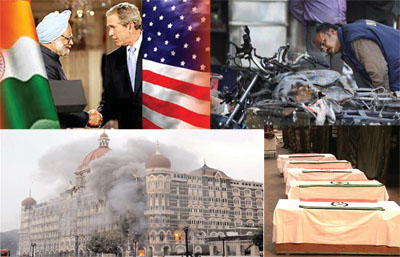
    2008 November – Nearly 200 people are killed and hundreds injured in a series of coordinated attacks by gunmen on the main tourist and business area of India’s financial capital Mumbai. India blames militants from Pakistan for the attacks and demands that Islamabad act against those responsible.
    2009 May – Resounding general election victory gives governing Congress-led alliance of PM Manmohan Singh an enhanced position in parliament, only 11 seats short of an absolute majority.
    2009 December – The government says it will allow a new state, Telangana, to be carved out of part of the southern state of Andhra Pradesh. Violent protests for and against break out.
    2010 May – The solve surviving gunman of the 2008 Mumbai attacks, Ajmal Amir Qasab, is convicted of murder, waging war on India and possessing explosives. 2010 June – A court in Bhopal sentences eight Indians to two years each in jail for “death by negligence” over the 1984 Union Carbide gas plant leak. Thousands died in this, the world’s worst industrial accident.
    Ayodha ruling 2010 September – Allahabad High Court rules that disputed holy site of Ayodhya should be divided between Hindus and Muslims; the destruction of a mosque on the site by Hindu extremists in 1992 led to rioting in which about 2,000 people died.
    2011 March – Results of 2011 census put India’s population at 1.21bn, an increase of 181 million over ten years.
    2011 August – Prominent social activist Anna Hazare stages 12-day hunger strike in Delhi in protest at state corruption.
    2011 November – Fourteen people including a government minister go on trial in one of India’s biggest ever corruption scandals – a telecoms deal alleged to have involved the selling of mobile phone licenses at knock-down prices in exchange for bribes.
    2012 May – Manmohan Singh pays first official visit to Burma by an Indian prime minister since 1987. He signs agreements aimed at providing border area development and an Indian credit line. 2012 June – Police in Delhi arrest a key figure allegedly involved in planning the 2008 Mumbai attacks. They say Abu Hamza, also known as Syed Zabiuddin, was the “handler” of the 10 gunmen. 2012 July – Pranab Mukherjee from the ruling Congress party is elected as president, comfortably beating his rival P.A. Sangma.

    2012 August – Court convicts 32 people over the 2002 religious riots in Gujarat and acquits 29 others. Among those convicted in the Naroda Patiya killings in Ahmedabad are former state minister Maya Kodnani and Babu Bajrangi, a former leader of the militant Hindu group Bajrang Dal.

    2012 December – The rape and murder of a young woman in Delhi triggers nationwide protests and a debate about sexual violence.
    2013 February – Two explosions in crowded Dilsukhnagar area of central Hyderabad kill 16 people. Police suspect the Indian Mujahideen Islamist armed group.
    2013 March – Five policemen are killed in a militant assault in Indian-administered Kashmir – the first major attack in the region in three years
    2013 August – In a deadly instance of firing on Indian Army troops on the Line of Control from Pakistan-occupied Kashmir, five Indian soldiers died in Poonch sector in Jammu and Kashmir.

  • One Protester Killed In Shooting By Sri Lankan Military

    One Protester Killed In Shooting By Sri Lankan Military

    COLOMBO (TIP): One person was killed and about 15 were wounded when Sri Lanka’s military shot at a protest demanding clean drinking water. At least 4,000 protesters had gathered on Thursday in Weliweriya, some 12 miles (20 kilometers) northeast of the capital, Colombo. A protester who spoke on condition of anonymity, fearing reprisals, said chemical emissions from a factory into water sources has polluted drinking water in about 15 area villages.

    Residents have been demanding for more than a month that authorities close down the factory but to no avail, the protester said. He said police used tear gas to break up the protest, but when protesters clashed with police, the army shot at them. He said soldiers shot at some protesters who were running away. Reporters said soldiers beat up several reporters and photographers who were covering the incident and smashed their cameras. Kanchana Dissanayake, editor of Sinhala-language “Ada” (Today) newspaper, said that his photographer was admitted to a hospital after being beaten by soldiers.

    He claimed the soldiers said that “media dogs” should not cover the protest and smashed his camera. Another female reporter said on condition of anonymity fearing reprisals that soldiers first targeted journalists because they wanted the media away before turning on the protesters. Many reporters were hiding for many hours into the night, she said. Police spokesman Buddika Siriwardene said one person died and 15 were hospitalized but declined to comment on the nature of the injuries. Siriwardene said the situation arose because protesters continued to block a main road, obstructing traffic, despite agreeing with the defense ministry to call off demonstrations until investigations are complete.

  • Indian-American Nominated For Key Post In Obama Administration

    Indian-American Nominated For Key Post In Obama Administration

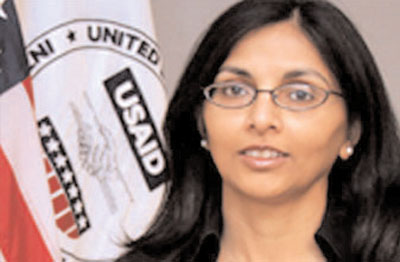
    WASHINGTON (TIP): US state department’s heavy hitter for India will be an Indian origin bureaucrat, Nisha Desai Biswal, a first for both the community and the administration. President Barack Obama on Thursday, July 18, sent a proposal to the senate to appoint Biswal assistant secretary of state for South Asia, top US diplomat for India.

    If confirmed Biswal will replace Robert Blake, an impossibly gangly career diplomat who liked to joke at India-US events his speeches were almost always the same as Indian ambassador’s. Biswal’s appointment was welcomed by the Indian American community, its experts and non-experts. “Great news … she is a terrific role model,” said a Facebook post.

    “This is a landmark appointment for Indian- Americans, the first time someone from the community has been chosen for the top diplomatic job dealing with South Asia,” said Sadanand Dhume, an Indian origin expert with conservative think tank American Enterprise Institute. “Nisha Biswal is an excellent choice for the position. She’s well-informed about the region and has many friends and admirers in both the executive and legislative branches of government.”

    Biswal is currently assistant administrator for Asia at the US Agency for International Development (USAID), a position she has held since September 2010. At USAID, her boss was administrator Raj Shah, another Indian American. who remains the senior most Indian American in the Obama administration. From 2005 to 2010, Biswal was the Majority Clerk for the State Department and Foreign Operations Subcommittee on the Committee on Appropriations in the House of Representatives.

    Biswal and her husband Subrat Biswal have two daughters. The position of assistant secretary of state – roughly the equivalent of additional secretary – is a crucial one, with responsibilities including Bangladesh and Sri Lanka. It wasn’t clear from the White House announcement if she would also hold charge of Central Asia, as was Blake’s brief, along side South Asia. She would most likely. But South Asia will not include Pakistan and Afghanistan, which have been entrusted to a special representative since the creation of that office in 2008, with Richard Holbrooke in charge.

  • A Harassed Indian Student’s Tale of Woe

    A Harassed Indian Student’s Tale of Woe

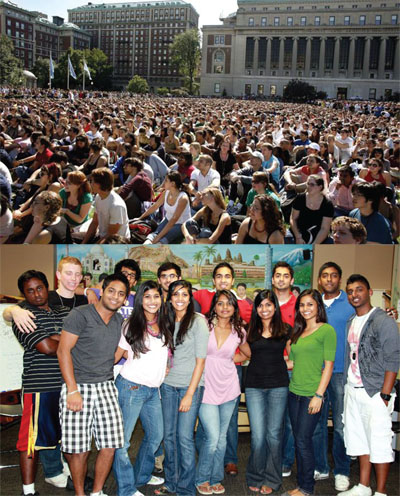
    The Open Doors report, which is published annually by the Institute of International Education (IIE) with support from the U.S. Department of State’s Bureau of Educational and Cultural Affairs, says that the number of international students at colleges and universities in the United States increased to an all-time high of 6,71,616 in the 2008-09 academic year and has been steadily growing.

    The report says India that has been at the top in enrolment in 2008, is now the second leading place of origin of students after China that has gained only a marginal edge over India. The report is based on a comprehensive survey of approximately 3,000 accredited U.S higher education institutions of all types and sizes, regarding international students at all levels of study. On many occasions we have heard stories of sufferings and misery of Indian students in the U.S. Most relate to bias and discrimination.

    Many a time the embassy of India and the Indian consulates have been accused of complete indifference to the students’ plight. The present story of a young student at University of Texas, Brownsville is no different. Harassed by the university authorities the young man turned to the Consulate at Houston but failed to move the authorities there.

    I do not wish to pass any judgment on the Indian Consulate in Houston but our readers will agree that this unhelpful attitude of the Consulate authorities in protecting the interests of an Indian student is not compatible with their charter of duties. Please do not forget young Indians come to this country with big dreams, as many of us came with, and we need to help them realize their dreams, for themselves and for India.

    Indian students are the second highest foreign student contingent in USA. They come here to study, to make a career and to experience a different culture. They do not come here to get assaulted, hazed upon, or to have sexually profane acts get carried out in their house. Lastly they do not expect their college to take a biased decision against them. However such is exactly the list of inexperiences that an Indian student, who requests not to be identified, had to suffer at University of Texas, Brownsville between January and December 2011, as a graduate student.

    During his stay, he was hazed upon by a PhD student from Sri Lanka by the name of Shihan Weeratunga, who asked repeatedly for over 3 months to be included in a start-up already registered in the Indian student’s and his American business partner’s name. No one can ask to divulge company secrets (tantamount to asking one to commit a crime) or insist overtly to be included in a start-up at the expense of an existing co-founder. Mr.Weeratunga also behaved in many unacceptable ways in the Indian student’s house, including but not limited to groping of a common friend.

    There were also plenty of sexual allusions and at least one promiscuous act with a fellow student, in the Indian student’s house, after tactfully getting the latter inebriated, the details of which are not being divulged for now upon request. This reporter feels that this act alone is enough to get someone thrown out of a college and possibly incarcerated.

    Finally on the night of 25th August, Mr.Weeratunga cornered the Indian student on the staircase outside his house, and with much name calling, finger pointing and shouting, physically assaulted (coming chest to chest, shove/push, hit) him. The University’s code of conduct can be found here – http://www.utb.edu/ba/hoop/Polic y/6-4-1.pdf Mr.Weeratunga was clearly in violation of multiple items.

    The Indian student lodged a complaint to the college coordinator of judicial affairs, first submitting a brief report on the 19th September 2011 and then a full complaint on the 2nd October 2011. The adjudicator, upon receiving the first of the complaints, replied with the following, even though he had been asked to sit in judgment – “Because your allegation of harassment of you by Mr. Weeratunga is so serious, I am compelled to respond in some form.

    I need to do this because if your allegations are found to be true, then they represent a violation of our policy on harassment. The University is intolerant of behaviors that would be deemed as harassment and that create a hostile environment for any individual on our campus.” The official complaint was only against Mr.Weeratunga, and did not directly implicate anyone else.

    However the adjudicator then made a volte face and shut the case up in one day, conducting only a shoddy evaluation, once another Hispanic female student of the college (who carried out her share of distasteful acts in his house) came into the picture. The Indian student was denied a fair and full investigation, which is mandated by US law for all employees (student worker) of American institutions, and was instead threatened verbally with suspension and told by the adjudicator not to mention these incidents ever again.

    The about turn (and shoddiness and haste with which the investigation was carried out) made by a Hispanic adjudicator of a principally Hispanic institution after a Hispanic woman came into the picture, reeks of prejudice and borders on racial partiality to say the least.We suspect the adjudicator had already decided to exonerate Mr. Weeratunga and intimidate the Indian student to keep things secret even before receiving the full (2nd) report, for the sake of the female student.

    The Indian student had to lapse into medical trauma (noted by the college medical counselor Miss. Liebscher) since the day of the assault and more so since this misjudgment. U.T. Brownsville is part of the University of Texas system of colleges and cannot act in violation of their central set of rules.

    We demand that U.T. Brownsville please explain the anomaly, and explain why Mr.Weeratunga was allowed to get away with assault and many other violations of University policy and why another student was made to suffer in this way – is it for the reason we suspect – to protect the reputation of the woman? Mr.Weeratunga is part of the Physics PhD program of U.T. Brownsville, which is a degree conferred by the University of Texas, San Antonio – we believe that U.T.S.A. would also consider distancing themselves from him once the full extent of Mr. Weeratunga’s misdoings emerges.

    The Indian student after suffering this way, produced a dismal grade, and was ousted by U.T. Brownsville. He has since returned to another college in Texas and is doing many times better there. He went back to Brownsville this April and filed a case for assault against Mr. Weeratunga, and made the Indian Consulate in Houston aware of these developments (including supplying the police report). The Consulate promised to take up the matter with the college but has not done so as yet.

    He also contacted many Indian organizations and Indian media agencies (including NDTV) and the U.S.I.E.F. in India, but with little or very modest success. Indian Panorama is the first to feature this story. The student has recently made the U.T. Brownsville Physics department aware of the full extent of Mr. Weeratunga’s misdemeanors and now intends to sue the college for damages on grounds of partiality and deliberate negligence but does not have the resources to engage another law firm (he already engaged the law offices of Sherin Thawer, to file for an U visa), except on a percentage basis.

    He is now toying with the idea of writing a reveal-all book in future and contacting watch-dog bodies that monitor acts of hazing, violence, sexual misdemeanor and racial partiality in American Universities.

  • DHONI WINS TRI-SERIES FOR INDIA

    DHONI WINS TRI-SERIES FOR INDIA

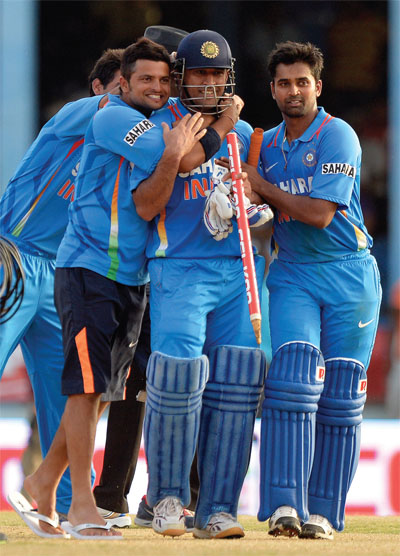
    PORT-OF-SPAIN (TIP): Leave it to me, he says. I want to take this to the last over. Me against one man. One on one. I know I am better than the last man the other team can put up against me. Once again, MS Dhoni reduced a lost match into a one-on-one contest with an opposition bowler, and knocked off the 15 required in just three hits.

    You could see the bowler – Shaminda Eranga, 9-2-34-2 until then, wickets of Shikhar Dhawan and Virat Kohli to his name – was intimidated the moment he saw the first one fly into the top of the top tier. Bear in mind that this was a treacherous pitch with seam, spin and uneven bounce. Dhoni was injured, and had come back only for this match. He wasn’t running as hard as he does, and wickets were falling at the other end.

    When Dhoni came in, the asking-rate was 3.35, but with falling wickets and turned-down singles, it hit the improbable towards the end. Dhoni, though, kept refusing singles, kept admonishing the last man Ishant Sharma for taking off for panic-stricken singles.

    Ishant couldn’t be blamed. The game had unravelled fast for India. They were cruising when Rohit Sharma had braved for yet another fifty despite another painful blow to his body (which makes it atleast four in two innings against Sri Lanka), despite many balls that seamed past his edge, despite the slow start. When India were 139 for 3 in the 32nd over, though, Rangana Herath delivered a grubber, and it squeezed under Rohit’s bat. Things were about to change. The pitch was still difficult to bat on as Suresh Raina soon found out.

    He thought he had a half-volley from Suranga Lakmal when he went for the drive, but even after pitching that full the ball seamed away appreciably and took his edge. The accurate and wily Herath saw an opening now. And burst through it. In the 38th over, his last, Herath trapped Ravindra Jadeja and R Ashwin – whose combined figures had been 17.5-1-65-6 – in successive deliveries.

    India 152 for 7. The drama had begun. Only a few minutes earlier, Mahela Jayawardene and Kumar Sangakkara had gone on and on – for overs it seemed – about an obstructing-the-field appeal against Dhoni. He had taken two steps down the wicket, and then realised he would have hit the other batsman if he ran straight. So he ran, nay hared on a bad hamstring, at an angle, but didn’t change his direction for the remaining 20 yards. The throw hit him, and the two senior Sri Lankans would not leave the umpire’s side.

    They knew they needed this man out as soon as possible. For the next half hour, though, Sri Lanka would have thought they didn’t need to get Dhoni out. Dhoni tried to intimidate Lakmal once during the Powerplay, but after that he began playing the percentage game. Sri Lanka knew Dhoni couldn’t manipulate the strike with that hamstring, and controlled the game well. Lasith Malinga – seven overs for 54 runs until then – finally got his radar right, and got Bhuvneshwar Kumar toe before wicket with his dipping slower yorker.

    In the tense overs that followed, R Vinay Kumar lost his cool, and slogged and got out. India 182 for 9 after 46.2 overs. With any other batsman than Dhoni, you would expect panic. Dhoni, though, wanted to corner just one man. He wanted to bring it down to that one man. He was also daring Sri Lanka to keep back Malinga, who had one over left, for the last. Sri Lanka didn’t. Malinga bowled the 48th. Dhoni faced the whole over, looking unhurried, for just a scrambled couple.

    The only man hurried was Ishant, who tried a suicidal single off the last ball of Malinga’s over to keep Dhoni on strike. The ball, though, had gone straight to the fielder, and Dhoni was miffed Ishant tried such desperation. It was not becoming of someone batting with the coolest and the best batsman in ODI cricket. Ishant would do that again off the first ball of the next over. Twice Dhoni let Ishant know what he did was not right. Ishant faced another dot. Then another dot. Seventeen off nine. Dhoni was cool at the other end.

    He had marked out his man. He knew it wouldn’t be an experienced bowler in the last over. Two runs came off the last three balls of the 49th over, but Ishant was made to feel under no pressure. He had been told to leave it to the man who knew his way around these lanes. Then began the great show. As soon as Ishant left alone – yes, left alone – the last ball of the 49th over, Dhoni signalled to the dressing room for a new, heavier bat.

    As Angelo Mathews psyched Shaminda Eranga up for the last over, Dhoni practised a few swings with two bats held together. Calculatedly he picked out one. Eranga went to his mark. This match should not have been on, but in Dhoni’s book this was even odds. Eranga bowled a nervous first ball: a wide length ball, which Dhoni swung hard at. That was a nervous ball, and would have been out of the ground had Dhoni connected. Dhoni didn’t. The second ball, though, was closer to Dhoni – swing, and met that hunk on the up.

    And up it went. And far. And kept going. Over the top of the stands. You could see it in Eranga’s eyes now. It was now going to be nigh impossible for Eranga to execute his skill. In one hit, Dhoni had brought it down to just luck for Sri Lanka. The luck was not with them. Eranga bowed length again, Dhoni went hard again, and the ball flew off the outside half of the bat, and over point. It was over already.

    Eranga just ran up for the formalities, delivered another length ball, and was dispatched over extra cover. The iceman had done it again, but he hadn’t had a great first half of the day as a keeper and a captain. Apart from not having been at his best with the gloves, Dhoni had also let Sri Lanka off the hook with his choice of part-time bowlers ahead of the specialist spinners, who would eventually go on to cut Sri Lanka’s effort short.

    Bhuvneshwar had given India his customary breakthroughs in the first spell, the scoring was difficult, but Virat Kohli and Raina provided Sangakkara and Lahiru Thirimanne relief with their odd long hop or big wides. Their partnership took Sri Lanka to 171 for 2, but then Thirimanne made a mistake, and almost every batsman that followed.

    In over-aiming during that Powerplay, Sri Lanka had lost their last eight wickets for 30 runs, letting Dhoni off the hook now. You will be justified to think of Dhoni’s choice of bowlers as odd. As you would have been with his persistence against all logic with Ishant in the Champions Trophy final. Just that the results were drastically different.

  • India Enter Final With Crushing Win

    India Enter Final With Crushing Win

    CARDIFF (TIP): The only glitches in India’s march into the final were two sets of pitch invaders running on to the field on two separate occasions. On a Cardiff surface with a lot of moisture, the ball seamed, bounced steeply and turned appreciably, and the Indian bowlers were all over Sri Lanka after winning the toss. In the afternoon, the Indian openers continued their run of impressive stands, adding 77 through some luck and some attractive shots, and India cruised home with 15 overs to spare.

    It would have reminded India of their first day of international cricket in South Africa on the 2010-11 tour, when they were inserted on a pitch that had absorbed a lot of rain and were bowled out for 136.Watching the first innings of this match, it seemed Sri Lanka had done well to not be rolled over for 136 themselves. The conditions were so juicy India’s three frontline quicks bowled the first 22 overs – even MS Dhoni had a bowl later – and India either beat the bat or hit edge on 68 occasions.

    The Sri Lankan batsmen couldn’t be blamed much, except for probably Kusal Perera. They had to dig in hard just to survive. They strived to – Kumar Sangakkara had left alone 12 out of his first 32 balls – but eventually the ball with your name arrived. However, what really foiled Sri Lanka’s plans was the assistance the pitch provided to spin, which they hadn’t budgeted for when they were batting out the quicks like it was a Test. The quicks went for 98 for four wickets in their 30 overs; the spinners took four wickets for 81 in their 20.

    The pitch might have been great help, but India exploited the toss advantage with impressive accuracy. The first extra came in the 20th over. Angelo Mathews, among others, fought the conditions, but like others he too fell the moment he became adventurous. It didn’t help that Sri Lanka had lost Dinesh Chandimal to injury before the match began and Tillakaratne Dilshan retired hurt in the fifth over.

    Kusal showed again that his game is not suited for these conditions as he followed a full and wide delivery to edge it for Suresh Raina to take one of his three catches at second slip. It was the seventh time in 12 matches that Buvneshwar Kumar had taken a wicket in his first spell, including five openers dismissed in single figures. Then Dilshan seemed to have pulled his calf while trying to keep out a sharply swinging delivery. He tried to bat on, but with the new no-runner regulations he had to leave the field. Sangakkara and Lahiru Thirimanne began to play it like the first morning of a Test, and justifiably so.

    India kept the pressure up with Bhuvneshwar bowling a nine-over spell, and Umesh Yadav and Ishant Sharma getting appreciable movement every time they landed the ball on the seam. Ishant got the ball to stick into the pitch and steep tennis-ball bounce too. Sangakkara began to take the odd risk at the end of the 13th over, but when he charged at Bhuvneshwar and square-drove him for the first boundary since the fourth over, the score had reached only 32.

    Around this time, Ishant was beginning to get balls to misbehave a lot. The batsmen had to start playing at balls sooner or later, and when they did it didn’t bring good news. The combination of that bounce and seam movement finally accounted for Thirimanne, who followed a short-of-a-length delivery and fended in front of his chest. Sangakkara provided a replay in case you had missed it. Raina had taken all three, and the score now was 41 for 3 after 18 overs. It was so inviting that when Dhoni finally took off a seamer after 22 overs, he gave up the pads and began to bowl the 24th over.

    During their 78-run stand in 18.1 overs, Mahela Jayawardene and Mathews successfully reviewed an lbw call each, and seemed to have put Sri Lanka back on track. With the ball turning thanks to the moisture, their plans unravelled. Jayawardene was bowled by a Jadeja skidder, and the batting Powerplay’s analysis read 5-2-12-1. Everyone who tried big hits in the remaining overs fell to the tricks of the pitch. Dilshan came back to bat for the last two overs. Sri Lanka, though, could manage just the 54 in the last 10. About an hour later, by when the Indian openers had seen off the Nuwan Kulasekara threat, it almost seemed the pitch had lost all its moisture.

    Shikhar Dhawan continued to drive and cut fearlessly, Rohit Sharma continued to provide the starts, and Virat Kohli added a fifty to four centuries in his last seven matches against Sri Lanka. Sri Lanka didn’t help themselves. They used Lasith Malinga – their best hope despite his poor record against India – only for three overs at the top and then when India had chugged along to 93 for 1. They dropped Dhawan thrice, first when he was on 18. India were not complaining, though.

  • Moneygram Gives U.S. Consumers Chance To Watch ICC Champion’s Trophy Final

    Moneygram Gives U.S. Consumers Chance To Watch ICC Champion’s Trophy Final

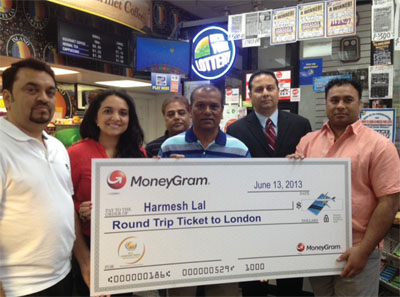
    Promotion lets MoneyGram users enter for a chance to win all-expense-paid trip to Birmingham, UK, for the final
    NEW YORK (TIP): It was an easy, nostrings- attached deal: U.S. consumers who sent money to India, Pakistan, Bangladesh, Sri Lanka and Nepal between April 19 and May 19 were entered to win a trip to watch the 2013 ICC Champion’s Trophy Cricket final. The ICC Champions Trophy match runs June 6 through June 23, and is second only in importance to the Cricket World Cup (the winners of this year’s trophy will snag an estimated $2 million, the most since the game’s inception).

    The final game will be held June 23. All agent locations and online sends qualified for entry (consumers could also mail-in entry without purchase). The more transactions consumers made the more chances they had to win. Harmesh Lal from Bellerose, NY is the lucky winner. He sent money to his family in Hoshiarpur, India and was thrilled to learn that he would get a chance to experience the game up close.

    The transaction was sent at one of our top agent locations (Jai Hind) in the New York area, home to many immigrants using our services. The contest gave MoneyGram a chance to remind South Asian immigrants living in the U.S. that we are the official money transfer partner of the ICC. Plus, it promoted the sweepstakes and will send the lucky winner packing for one of the biggest games of the year.

    “Contests like these are a great way for MoneyGram to bring our consumers closer to the game of cricket and the memories they have of watching it in their home countries – it allows us to relate to our customers and give back to them a piece of what they might have left behind. It’s a way of thanking them for being a loyal consumer and increasing our brand awareness while doing so” says Zainab Ali, senior marketing manager.

    About MoneyGram MoneyGram, a leading money transfer company, enables consumers who are not fully served by traditional financial institutions to meet their financial needs. MoneyGram offers bill payment services in the United States and Canada and money transfer services worldwide through a global network of more than 300,000 agent locations – including retailers, international post offices and financial institutions – in 196 countries and territories. To learn more about money transfer or bill payment at an agent location or online, please visit moneygram.com or connect with us on Facebook.

  • Shed Illusions On China

    Shed Illusions On China

    India’s appeasement policy won’t help
    It is high time the PMO and the MEA gathered courage to speak on the South China Sea and the issues having a bearing on national security, particularly in forums like the East Asia Summit, with the same clarity as the Defense Minister did.

    During the past month China inflicted a national humiliation on India by intruding 19 kilometers across what has been the traditional border between Ladakh and Tibet since the 17th century and forcing India to not only pull back from its own territory in the Daulat Beg Oldi sector, but also to dismantle defense structures in the Chumar sector.

    China has consistently refused to define where the so-called “Line of Actual Control” lies and acted aggressively when it finds Indian defenses neutralize its tactical and strategic advantages by pushing its claims westwards and well beyond what its own maps had earlier depicted. Moreover, apart from violating all past agreements on the Ladakh-Tibet border, China’s territorial claims also violate the provisions of the Wen Jiabao – Manmohan Singh Agreement of 2005 on the guiding principles for a border settlement which state: “The (Sino-Indian) boundary should be along well defined and easily identifiable geographical features, to be mutually agreed upon”.

    India’s claims, based on historical data, also fulfill the provisions of the 2005 agreement as they set the western borders up to the Indus river watershed, with the Karakoram mountains forming the natural boundary. After being militarily humiliated, India chose to subject itself to diplomatic ridicule in the joint statement issued after the visit of Premier Li Keqiang.

    While the joint statement paid lip service to the 2005 guiding principles, there was no mention of the need for defining the LAC in accordance with these guiding principles. Unless we do this and insist on China furnishing its version of the LAC, the Chinese will continue to stall and obfuscate while placing our forces in an untenable position along the borders, with India meekly agreeing to pull down any defenses the Chinese demand.

    Worse still, India agreed to accept some ridiculous and one-sided provisions which are clearly detrimental to its national interests. The most astonishing provision of the joint statement was the sentence: “The two sides are committed to taking a positive view and support each other’s friendship with other countries”. This, in effect, was an endorsement of Chinese policies of “low cost containment” of India.

    Over the past three decades China has provided Pakistan designs for its nuclear weapon, allowed the use of its territory in 1990 by Pakistan for testing nuclear weapons, upgraded Pakistan’s enrichment centrifuges, provided unsafeguarded plutonium production and reprocessing facilities and violated its commitment to the MTCR, by providing Pakistan wherewithal for manufacturing medium and long-range ballistic and cruise missiles.

    China is also Pakistan’s largest arms supplier, providing equipment ranging from JF 17 fighters and T 90 tanks to modern frigates. General Musharraf had made it clear just after the visit of then Chinese Premier Zhu Rongji that the Gwadar port being built with Chinese assistance would be made available to China if there were tensions with India. Moreover, does our ill-advised endorsement of the nature of Sino-Pakistani collusion not suggest an endorsement of Chinese growing presence in POK and the Northern Areas of Gilgit-Baltistan? As the Chinese government mouthpiece, The Global Times, mockingly observed: “India must accept and adapt to the enviable friendship between China and Pakistan.

    China cannot scale down this partnership merely because of India’s feelings!” On May 28 President Rajapakse of Sri Lanka signed a “strategic cooperation partnership” agreement with President Xi Jinping in Beijing, in which the two sides agreed to strengthen defense cooperation while jointly cracking down on the “three challenges of terrorism, separatism and extremism” and expanding cooperation on “international and regional affairs”.

    Virtually every South Asian leader choosing to challenge India, ranging from President Waheed in the Maldives to Begum Khaleda Zia in Bangladesh and Prachanda in Nepal, has received a warm welcome at the highest levels in Beijing. Moreover, China is bent on blocking India’s entry into forums like the Nuclear Suppliers Group. Worse still, India grandiosely agreed to support a Chinese role in the Gulf of Aden, without getting similar Chinese endorsement for its maritime and energy interests in the South China Sea, most notably for its exploration projects in the Phu Khanh Basin off the coast of Vietnam.

    Interestingly, while commissioning the first squadron of carrier-based Mig 29 aircraft on May 13, the Defense Minster, Mr. A.K. Antony, asserted that there should be freedom of navigation in the South China Sea, adding that while India is not a party to disputes there, it believes that these disputes should be settled according to the UN Convention of the Law of the Seas (UNCLOS). Mr. Antony added the protection of the sea lanes of communications is imperative for India’s trade, commerce and economic development.

    Sadly, such clarity on Indian interests is not evident in other parts of South Block. Moreover, Mr. Antony believes that there can be no “miracles” in the development of India-China relations and has no intention of either taking up residence in Beijing or waxing eloquent on the serenity and tranquility surrounding Tiananmen Square! New Delhi has to understand that the appeasement of an assertive China is a recipe for global and regional marginalization.

    Given China’s territorial claims, which have expanded from just Tawang, to the entire state of Arunachal Pradesh and its activities in PoK, India should not merely stop voicing the inane mantra that “Tibet is an Autonomous Region of China,” but make it clear that we did not invite the Dalai Lama to India. We would be happy if he reached an agreement to return to Tibet, with China respecting the provisions of the 17-point agreement it signed with the Tibetans in 1951. Moreover, apart from acquiring berthing facilities for the Navy in Vietnam, India would be well advised to provide Vietnam the ability to protect its maritime interests by the supply of Brahmos cruise missiles, much in the manner that China provides Pakistan ballistic and cruise missiles.

    On river waters, India is well placed to work with lower riparian states in the Mekong basin and, indeed internationally, to isolate China on its refusal to engage in prior consultations on projects on the Brahmaputra river. It is also high time the PMO and the MEA gathered courage to speak on the South China Sea and issues having a bearing on national security, particularly in forums like the East Asia Summit, with the same clarity as the Defense Minister, instead of appearing apologetic, weak and vacillating. The statements made and cooperation envisaged when the Prime Minister visited Japan are a good beginning.

  • Waiver Augurs Well For Indo-US Ties, Say Officials

    Waiver Augurs Well For Indo-US Ties, Say Officials

    NEW DELHI (TIP): New Delhi is happy that Washington has granted another sixmonth waiver to India on Iran-related sanctions just ahead of the fourth Indo-US strategic dialogue. Along with India, China, Malaysia, South Korea, Singapore, South Africa, Sri Lanka, Turkey and Taiwan have also qualified for the exemption from sanctions. India has reduced its oil purchases from Iran considerably in the past few years, cutting imports by nearly a fifth.

    China’s reductions have, however, been more modest. An indication about India getting a fresh waiver from sanctions was recently given by US Undersecretary for Political Affairs Wendy Sherman when she visited New Delhi. “They (India) have stood side-by-side with all of us in the international community to say that Iran should not acquire a nuclear weapon.

    We greatly appreciate all of the leadership that India has provided, including their enforcement of sanctions,” she said. Officials here candidly acknowledge that the Indian economy, already going through a rough period, would have suffered greater had India attracted the Iran-related sanctions. The waiver to India is being viewed here as a move that sets a perfect stage for the fourth India-US strategic dialogue to be held here on June 24. ‘

    External Affairs Minister Salman Khurshid and US Secretary of State John Kerry will lead their respective delegations at the dialogue, which will cover the entire range of relationship between the two countries. The US has been nudging India to reduce its engagement with Iran in view of its controversial nuclear program.

    New Delhi has, however, made it clear Washington that it could not be pressed beyond a limit on the issue of Iran, keeping in view its historical ties with the Islamic country. It has also been forthright in stating that it would only abide by UN sanctions against Iran and not those slapped by individual countries, like the US.

  • ICC WITHDRAWS UMPIRE ASAD RAUF FROM CHAMPIONS TROPHY

    ICC WITHDRAWS UMPIRE ASAD RAUF FROM CHAMPIONS TROPHY

    NEW DELHI (TIP): The raging spot-fixing saga in the IPL turned murkier with controversial Pakistani umpire Asad Rauf being withdrawn by the ICC from next month’s Champions Trophy in UK for his alleged role in the scandal which is growing bigger by the day. A week after the sensational arrest of India paceman S Sreesanth and two of his Rajasthan Royals team-mates on charges of spot-fixing, Rauf’s pull-out from the June 6-23 Champions Trophy added a new twist to the fast unfolding drama.

    The ICC said in a statement that Rauf has been withdrawn as he was under investigation by the Mumbai Police, thus becoming the first umpire to come under the scanner in the IPL spot-fixing scandal. “The decision has been made after media reports indicated that the umpire was under investigation by Mumbai Police,” the ICC release said.

    Explaining the decision, ICC Chief Executive David Richardson said: “In the wake of reports that the Mumbai Police are conducting an investigation into Asad Rauf’s activities, we feel that it is in Asad’s best interests as well as those of the sport and the event itself, that he is withdrawn from participating in the ICC Champions Trophy.” Rauf has had a history of controversies and only last year a small-time model named Leena Kapoor had accused him of sexually exploiting her for months before refusing to marry her.

    As per the duty schedule of the on-field umpires, Rauf was supposed to officiate in a warm-up match between Australia and West Indies in Cardiff on June 1. In the tournament group league stage, he was supposed to officiate in two matches in Cardiff. The first on June 9 was between Sri Lanka and New Zealand while other was between West Indies and South Africa. In the ongoing IPL, Rauf had on-field umpiring duty in 13 matches, the last one being in the game between Sunrisers Hyderabad and Kolkata Knight Riders in Hyderabad on May 19.

    The three Rajasthan Royals players — Sreesanth, Ajit Chandila and Ankeet Chavan — are in police custody while actor Vindu Randhawa, son of the late Dara Singh, has also been arrested by the Mumbai Police in connection with the case along with several other bookies, many of whom have underworld connection. But the BCCI threw its weight behind Srinivasan, saying that it was unfair to implicate his son-in-law of any wrong doing until the investigations are over.

  • India urges Lanka to honour transfer of power to provinces

    India urges Lanka to honour transfer of power to provinces

    NEW DELHI (TIP): Ahead of the crucial Northern Provincial Council elections in neighbouring Sri Lanka, India has explicitly warned the government there not to take any step which undermines its own commitment to the 13th Amendment and the island nation’s “expressed intention to build upon it”. Alarmed by reports that a key ally of President Mahinda Rajapaksa, JHU or the Heritage Party, was about to move a proposal in Parliament for abolishing the 13th Amendment, foreign minister Salman Khurshid called up his counterpart G L Peiris to expresses concern over the development. A product of the 1987 India-Sri Lanka Accord, the 13th Amendment is seen as key to devolution of power to the provinces and ongoing reconciliation process in the country. The JHU has demanded that provincial councils in the country be scrapped.

    Official sources said Khurshid took up with Peiris reports suggesting Lanka was considering doing away with land and police powers from provinces prior to polls. “The foreign minister told his Lankan counterpart that if this happens, India will view it as a retrograde step which is not in the interest of relations between the two countries,” said a source. In an interview to TOI last year, Rajapaksa had said, “There is no justification for any consideration that our commitment to the 13th Amendment is wavering.

    At least officially until now, Lanka has concurred with India that “building upon the 13th Amendment, would create conditions for genuine reconciliation”. The upcoming elections in the Northern Province are seen not just by India but also the international community as crucial to Lanka’s commitment to achieving reconciliation with local Tamils. Khurshid also referred to some reports about army acquiring private land in the Northern Province for high security zones. “He emphasized that this would not be in accordance with the LLRC recommendations and such a move would not be helpful,” said a source. The Lessons Learnt and Reconciliation Commission (LLRC) was set up by Rajapaksa’s government to look into allegations of war crimes from 2002 to until the time the war ended in 2009.

    While India believes that close to 70% of Lankan forces are still deployed in northern part of the country, Lanka has dismissed it has LTTE propaganda. Colombo denies the alleged continuing militarization of the region saying that while the troop strength was 27,000 in Jaffna in December 2009, the figure had come down to 15,000 in June, 2012.

  • Mini Melts Ties Up With Honeybee Amusements For Its India Foray

    Mini Melts Ties Up With Honeybee Amusements For Its India Foray

    BANGALORE (TIP): US-headquartered Mini Melts the $200 million INC 500 company has tied up with Bangalore-based HoneyBee Amusements for a foray in to India’s Rs 2,500 crore organized ice-cream market. The domestic ice-cream sales, growing at 18-20%, has seen the entry of super premium international players such as Haagen-Dazs in the recent past.The local partner of Mini Melts would invest $16 million to develop the business in three years.

    The 20-year-old ice-cream manufacturer, which operates in over 20 countries across the world, differentiates itself from other international premium players by manufacturing ice-creams using liquid nitrogen, an ingredient used by chefs in molecular gastronomy. Liquid nitrogen is inert and tasteless.

    Mini Melts would set up kiosks in high footfall locations and kids cafes to gain a toehold in the local market, said Shoeab Salim, MD, HoneyBee Amusements. HoneyBee Amusements, owners of Q Cinemas and developers of the Delhi Eye are the sole franchisee for Mini Melts in India as well as neighbouring countries such as Sri Lanka, Nepal, and Bangladesh.

  • More Than 6,500 Indians Languish In Foreign Jails

    More Than 6,500 Indians Languish In Foreign Jails

    CHENNAI (TIP): More than 6,500 Indians are living an uncertain life in prisons in 80 foreign countries, half of them in three Gulf countries. The Gulf countries have the largest number of Indian prisoners, with 1,691 in Kuwait, 1,161 in Saudi Arabia and 1,012 in the UAE. Among the neighbours, Pakistan holds 253 Indians in its prisons, China has 157 of them and Sri Lanka 63. Languishing in the Nepal prisons are 377 Indians. Italy, a country that recently raised a huge uproar demanding special guest house and home-made food for its two citizens arrested on charges of killing two Indian fishermen off the Kerala coast, has 121 Indian citizens in its prisons. The United Kingdom has 426 Indian inmates in their jails, thanks to a fast growing migration of skilled and unskilled labourers.

    There are 155 Indians in the US prisons. The statistics, obtained through RTI by Kochi-based NGO Human Rights Defense Forum, shows 6,569 Indians are in foreign prisons. On Indian prisoners in 30 countries, the ministry of external affairs said it had ‘nil report.’ The RTI reply also says “this figure keeps changing,” and gives no details about the prisoners or the charges against them. In 2007, it was reported that the number of Indian prisoners abroad had come down from 6,730 in 2005 to around 6,000. The RTI reply given by the ministry last month shows the number has gone up again. T P Sreenivasan, former ambassador of India to the United Nations, said ordinary crimes, drug trafficking and domestic violence land Indians in jails in European countries.

    “But a large number of prisoners in the Gulf countries are arrested for badly formulated contracts, illegal stay and migration,” he said. In Malaysia (187 Indian prisoners) and Singapore (156), most of the Indians have been arrested for immigration violations and a few for criminal cases like drug trafficking. In Pakistan, Bangladesh and Sri Lanka, most of the arrests are made on charges of violation of immigration laws. Sreenivasan said different factors, including delay in ensuring justice, communication between the local government and the Indian offices abroad play a major role in the number and duration of detentions.

  • Attacks on Sri Lankan monks were isolated incidents: INDIAN HIGH COMMISSIONER

    Attacks on Sri Lankan monks were isolated incidents: INDIAN HIGH COMMISSIONER

    COLOMBO (TIP): India has said that the recent attacks on Sri Lankan Buddhist monks in Tamil Nadu were isolated incidents and did not reflect the strong people-to-people bonds. “These were isolated incidents and did not reflect the strong people-topeople bonds that have been an integral part of the close historical, cultural and civilisational ties between the India and Sri Lanka,” Indian high commissioner Ashok K Kantha has said. He was making farewell calls on the two Buddhist high priests located in the central town of Kandy yesterday. The attacks on two Buddhist monks triggered protests here which even caused the wrath on Sri Lankan cricketers playing in the IPL. The protesters urged the cricketers to boycott IPL.

    The Indian envoy told the two high priests that “the state government of Tamil Nadu had taken immediate action to identify and prosecute the miscreants responsible for these incidents and that the Government of India, in consultation with the concerned state governments, had taken and would continue to take all possible measures to ensure the safety, security and well-being of Sri Lankan visitors to India, including to Tamil Nadu,” the Indian high commission said. Kantha’s remarks came just days after Sri Lankan President Mahinda Rajapaksa had said that Sri Lanka and India continued to enjoy good relations despite the rumblings in Tamil Nadu.

  • Mend your ways please, US envoy tells Sri Lanka

    Mend your ways please, US envoy tells Sri Lanka

    COLOMBO (TIP): Sri Lanka needs to get serious about post-war reconciliation and account for war crimes if it needs to avoid grief, US Ambassador Michele J. Sison has said. Painting a grim picture of the situation in Sri Lanka, Sison told the Foreign Correspondents Club here Monday that Colombo should stop treating calls for reconciliation and accountability as foreign “exhortations”. “History has shown that societies that do not adequately address reconciliation and accountability usually return to a conflict situation at some point down the road,” she said. “Thus, however difficult this process is, it is ultimately vital to the stability of Sri Lanka.” Sison explained at length why the US, despite being a friend of Sri Lanka, piloted a resolution critical of Colombo in 2012 and again in March this year at the UN Human Rights Council in Geneva. She urged the government to talk to the Tamil National Alliance (TNA) “on political devolution”, return to owners property taken by the military, and resolve outstanding land claim issues. “The people of the former conflict zones must be able to live their lives without interference, as do other citizens of Sri Lanka,” she said, referring to the island’s northeast where the military defeated the Tamil Tigers in May 2009. The US, the ambassador said, always spoke up when democratic values were threatened. She voiced American concern about threats against and attacks on the Sri Lankan media and pointed out that while several prominent journalists had fled the country, attacks on others remain unresolved. “Suspects are rarely apprehended or, if apprehended, are almost never convicted,” Sison said.

    She asked the Sri Lankan government to “fully investigate” last week’s attack in Kilinochchi town on the office of the Tamil newspaper Udhayan and “hold the perpetrators accountable”. She also expressed alarm over the recent attacks on Muslim businesses and “certain inflammatory calls to action”. “This type of hateful sentiment must not be allowed to fester.” Sison did not hide the US “disappointment with the stalled progress on reconciliation and accountability since the end of the conflict in 2009”, when the Liberation Tigers of Tamil Eelam (LTTE) was militarily routed.

    The ambassador explained that the 2012 UNHRC resolution had “simply asked Sri Lanka to fulfil its own commitments to its people from its Lessons Learnt and Reconciliation Commission (LLRC) report”. But this did not happen, she said. The government failed to implement even the National Action Plan, which did not cover all the recommendations of the LLRC, just as the LLRC didn’t address all outstanding issues of reconciliation and accountability.

    Sison admitted that issues of reconciliation and accountability in war torn societies take years to complete. “But it is important to start those processes as soon as possible, and to accomplish what it is possible quickly,” she said. “There were a number of items in the LLRC report and National Action Plan which could have, in fact, been achieved quite quickly.” Accountability, she said, means identifying those responsible for committing abuses and imposing consequences for acts or omissions. Sri Lanka is under widespread attack for overlooking the thousands of deaths of Tamil civilians during the final stages of the war against the LTTE — and for allegedly killing many combatants in cold blood.

  • Hero MotoCorp starts ops in Africa, LatAm

    Hero MotoCorp starts ops in Africa, LatAm

    NEW DELHI (TIP): The country’s largest twowheeler maker, Hero MotoCorp, said it had commenced operations in Africa, Latin and Central America. Pawan Munjal, managing director & chief executive officer, Hero MotoCorp, said: “We have started despatches to our new international markets in Central and Latin America and Africa. Our first consignments of twowheelers have already been shipped to Peru in Latin America, El Salvador, Guatemala and Honduras in Central America and to Burkina Faso and Ivory Coast in Africa.” The company is set to despatch the first lot of twowheelers to Kenya later this month. It has already appointed new distributors and channel partners in these markets, where retail sales of the Hero two-wheelers is likely to commence in the first quarter of this financial year. Hero motorcycles to be sold in these markets include a mix of models from the 100cc and 125cc range.

    Hero MotoCorp has earmarked Rs 1100 crore as capital expenditure for the current financial year. It includes an investment of about Rs 600 crore on the company’s upcoming fourth plant and global parts centre at Neemrana, and Rs 100-150 crore on a state-ofthe- art integrated R&D centre at Kukas (near Jaipur in Rajasthan). These initiatives are in line with Hero MotoCorp’s vision of reaching a total of 10-million unit volumes in a few years’ time, and garnering a million units — 10 per cent of that — from international business. The company currently registers around 2.5 per cent of its volumes from sales in overseas markets. To meet this objective, the company has already short-listed as many as 30 countries across Latin America, Central America, Africa and South East Asia. Colombia is the only country in Latin America where Hero MotoCorp currently exports to. The other international markets where Hero two-wheelers are sold include Sri Lanka, Bangladesh and Nepal.

  • Attack on Tamil paper office in Sri Lanka

    Attack on Tamil paper office in Sri Lanka

    COLOMBO (TIP): A group of unidentified men attacked the office of a Tamil newspaper in Sri Lanka’s former war zone on Wednesday, injuring several staffers and damaging equipment at the publication known for its government criticism. The attack is the latest in a series of assaults and threats on the staff of the Uthayan newspaper in recent years. The newspaper is published in the Tamil language spoken by the ethnic minority Tamils and is widely circulated in the island’s northern region, which was the stronghold of the Tamil Tiger rebels who fought the government during the nation’s 25-year civil war.

    Publisher E Saravanapavan said the masked attackers entered the office in Kilinochchi around 4:30 am. Using poles, they assaulted the manager and staff. Three workers were hospitalized and two had minor injuries, he said.

  • Diplomats celebrate the festival of Spring, Holi

    Diplomats celebrate the festival of Spring, Holi

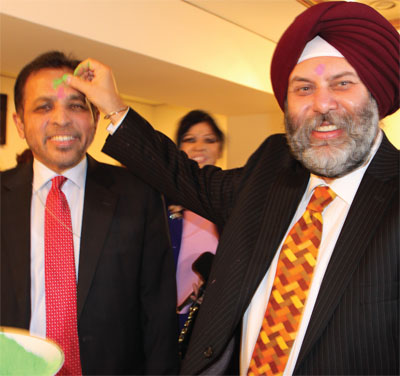
    NEW YORK (TIP): The Permanent Mission of India to the United Nations celebrated Holi at the permanent mission here on Wednesday, March 27, in style and with great enthusiasm. Colors and flower petals expressed the feeling of joy and delight that pervaded the atmosphere.

    Holi is one of the most popular festive occasions in India. The holiday celebrated mainly by the Hindus in India and Nepal marks the beginning of spring and the triumph of good over evil. Bonfires are set on the eve of Holi, and the next day the Hindus throw colored dry powder and water in celebration. It is also observed by the minority Hindus in Bangladesh and Pakistan as well in countries with large Indian Diaspora populations following Hinduism, such as Suriname, Malaysia, Guyana, South Africa, Trinidad and Tobago, the United Kingdom, the United States, Mauritius, and Fiji. Holi is of particular significance in the Braj region of North India, which includes locations traditionally connected to the Lord Krishna: Mathura, Vrindavan, Nandagaon, and Barsana, which become tourist destinations during the season of Holi. There is a legend associated with celebration of Holi. The word Holi originated from “Holika”, sister of Hiranyakashipu.

    The festival of Holi is celebrated because of a story in the old Hindu religion. In Vaishnavism, Hiranyakashipu is the great king of demons, and he had been granted a boon by Brahma, which made it almost impossible for him to be killed. The boon was due to his long penance, after which he had demanded that he not be killed “during day or night; inside the home or outside, not on earth or in the sky; neither by a man nor an animal; neither by astra nor by shastra”. Consequently, he grew arrogant and attacked the Heavens and the Earth. He demanded that people stop worshipping gods and start praising respectfully to him.

    According to this belief, Hiranyakashipu’s own son, Prahlada, was a devotee of Vishnu. In spite of several threats from Hiranyakashipu, Prahlada continued offering prayers to Vishnu. He was poisoned by Hiranyakashipu, but the poison turned to nectar in his mouth. He was ordered to be trampled by elephants yet remained unharmed. He was put in a room with hungry, poisonous snakes and survived. All of Hiranyakashipu’s attempts to kill his son failed. Finally, he ordered young Prahlada to sit on a pyre in the lap of Holika, Hiranyakashipu’s demoness sister, who also could not die because she had a boon preventing her from being burned by fire. Prahlada readily accepted his father’s orders, and prayed to Lord Vishnu to keep him safe. When the fire started, everyone watched in amazement as Holika burnt to death, while Prahlada survived unharmed.

    The salvation of Prahlada and burning of Holika is celebrated as Holi. In Mathura, where Krishna grew up, the festival is celebrated for 16 days (until Rangpanchmi) in commemoration of the divine love of Radha for Krishna. The festivities officially usher in spring, the celebrated season of love. The party at the Permanent Mission of India was hosted by Acting Permanent Representative Ambassador Manjeev S. Puri and his staff, who were in the best of spirits of Holi throughout the evening. Mrs. Puri who was dressed in a beautiful multicolored Saree for the multicolored occasion was enthusiastically going round, supervising arrangements and taking care of guests.

    The event was attended by Permanent Representative of Sri Lanka, Ambassador Palitha Kohona, and Permanent Representative of Republic of Singapore, Ambassador Albert Chua besides diplomats from many countries, and officials at the UN. Ambassador Puri was seen applying colors on his guests and welcoming them to the heavily attended celebratory party. He joyously threw flower petals and colors at the guests, as is the custom during Holi. The authentic Indian menu included Thandai, a special drink made during Holi and much other Holi specialty food that included chats and sweets, among many other delicacies.

  • India votes against Sri Lanka at UN

    India votes against Sri Lanka at UN

    NEW DELHI (TIP): India today voted in favour of the USsponsored resolution for promoting reconciliation and accountability in Sri Lanka at the UN Human Rights Council (UNHRC) in Geneva. It however failed to get its amendments incorporated in the text of the document. The resolution, critical of human rights record of Sri Lanka, called on Colombo to conduct an independent and credible investigation into alleged war crimes. However, what must have brought some relief to Sri Lanka was the fact that the resolution avoided references like call for an international probe into alleged human rights violations or “genocide” in the context of civilian killings during the prolonged conflict. The resolution was adopted with 25 votes in favour, 13 against and eight abstentions in the 47-member body. Gabon, a member-nation, could not vote due to voting rights issue.

    Pakistan voted against the resolution, saying the resolution would fail to engage Sri Lanka constructively and negatively impact the ongoing reconciliation process. Last year too, India had voted for the resolution against the island nation. Official sources said India wanted to introduce some tough amendments to the resolution in view of the overwhelming concerns over the plight of Tamils in the island nation but was dissuaded from doing so by the US. India’s envoy to the UN offices Dilip Sinha, who returned to Geneva early this morning carrying instructions from New Delhi, was told by the sponsors that the attempt was to make the resolution “broadest possible” and that certain words in the text might make things difficult for its smooth passage.

    The Indian representative was allowed to make intervention during the discussion. In his remarks, Sinha criticised Sri Lanka for making “inadequate progress” in fulfilling its commitment to the UNHRC in 2009 for genuine national reconciliation and full enjoyment of human rights by all its citizens.

    He said India would encourage Lanka to expedite the process of a broad-based, inclusive and meaningful reconciliation and political settlement that ensured all communities live in dignity, with equal rights and equal protection of the laws. “As a neighbour with thousands of years of relations with Sri Lanka, we cannot remain untouched by developments in that country and will continue to remain engaged in this matter.” The Sri Lankan envoy strongly opposed the resolution, contending that it was based on misrepresentation of facts. “The resolution casts aspersions on domestic processes without any foundation and could hinder the reconciliation process.” The resolution called upon Colombo to effectively implement the constructive recommendations made in the report of the Lessons Learnt and Reconciliation Commission.

    The resolution
    Calls for independent investigation by Colombo into alleged war crimes Seeks implementation of recommendations made in the Lessons Learnt and Reconciliation panel report Avoids references to international probe into alleged human rights violations or term ‘genocide’

    Disappointing: DMK
    Expressing ‘surprise’ over India supporting a ‘weak’ and ‘diluted’ US resolution against Sri Lanka at UNHRC, former UPA ally DMK on Thursday said New Delhi had by its action “totally disappointed” the entire Tamil diaspora.

  • Us Resolution Calls For ‘Credible’ Investigation By Sri Lanka

    Us Resolution Calls For ‘Credible’ Investigation By Sri Lanka

    WASHINGTON (TIP): The US-sponsored draft resolution before the ongoing session of the UN Human Rights Council in ( UNHRC) “calls” the Sri Lankan government to conduct an “independent and credible” investigation into allegations of human rights violations.

    The draft resolution – a copy of which has been obtained has not ceded to demands of human rights bodies for an independent international investigation, as being called by the Office of the UN High Commissioner for Human Rights in its report.Welcoming the announcement by the Lankan government to hold elections to the Provincial Council in the Northern Province in September 2013, the draft resolution now calls upon Colombo to fulfil its public commitments, including on the devolution of political authority.

    A previous version of the draft resolution had expressed concern over the “failure” of the Sri Lanka to fulfil its commitment on devolution of power.

    The draft resolution, currently under circulation, also welcomes and acknowledges the progress made by the Lankan government in rebuilding infrastructure, demining, resettling the majority of internally displaced persons. At the same time it takes note of the considerable work that lie ahead in the areas of justice, reconciliation and resumption of livelihoods, and stresses the importance of the full participation of local populations, including representatives of civil society and minorities, in these efforts.

    The draft resolution now encourages (not urges as in the previous version) the Sri Lankan government to implement the recommendations made in the report of the Office of the High Commissioner, and also “calls upon” it to “conduct an independent and credible investigation” into allegations of violations of international human rights law and international humanitarian law.

  • Sri Lanka slams  war crimes  resolution

    Sri Lanka slams war crimes resolution

    GENEVA/COLOMBO (TIP): Sri Lanka on Wednesday slammed the US-sponsored resolution at the UNHRC which it says seeks to “discredit” and “single out” the country over alleged human rights violations, terming it as “biased and politicised”. It also said the language of the resolution was borrowed from a “flawed” report by the UN High Commissioner of Human Rights Navaneetham Pillai. Lankan External Affairs Minister G L Peiris said in his communique to member states setting out his government’s stand on the resolution, said, “Drawing disproportionate attention to Sri Lanka’s situation and introducing resolution that seeks to discredit, single out and humiliate the country are unhelpful and counterproductive to Sri Lanka’s current reconciliation process”. “Just as the Government of Sri Lanka did not recognize the last HRC resolution, it rejects the new resolution. “Sri Lanka intends to request a vote when the draft resolution is taken up at the Human Rights Council on 21 March 2013.” “Sri Lanka seeks the understanding and the support of HRC member states at the vote on this resolution.” Peiris said the beneficiaries of the resolution would be none other than the divisive forces that seek to destabilize the hard won peace in Sri Lanka, he said.

    The Sri Lankan external affairs ministers warned that “the precedent created by intrusive, biased and politicized actions such as the US sponsored resolution on Sri Lanka would pose a danger for all nations”. Meanwhile, Lankan human rights envoy Mahinda Samarasinghe has slammed the US moved resolution to be voted at the UNHRC sessions in Geneva on Thursday as carrying borrowed language from a “flawed” report by UN High Commissioner of Human Rights. Samarasinghe was speaking at the session in Geneva on Wednesday ahead of Thursday’s formal presentation of the resolution. He said Lanka wishes to express strongest reservations as to the content of the report on Sri Lanka as well as the procedure followed in formulating it.

  • Dragon’s Feet In Land Of Cold Blooded Murders

    Dragon’s Feet In Land Of Cold Blooded Murders

    When the chilling new photographs of LTTE supremo Velupillai Pirapaharan’s 12-year-old son Balachandran captured and held in a sandbag bunker of the Sri Lankan Army and executed in cold blood and photographed again were published in the media recently, the international community was shocked but official India was unmoved. Unlike his older brother Charles Antony and sister Dwarka, Balachandran never joined the LTTE, never bore arms against the Sri Lankan armed forces or anyone else.

    He was executed in cold blood because of his ethnicity and parentage. It was an extremely barbaric act. The photographic evidence is part of the third documentary by Britain’s Channel 4 titled “No War Zone: The Killing Fields of Sri Lanka,” which will be screened in Geneva in March ahead of a second resolution sponsored by the USA against the island nation at the UN Human Rights Council.

    While most civilized world rallied behind a similar resolution last year to fix accountability of Sri Lanka’s war crimes and to take reparative steps, India made sure the text of the resolution was watered down to make it virtually ineffective. As the 22nd session of the UNHRC began in Geneva this week, it is important to keep in mind that Sri Lanka government has ignored last year’s resolution and that it is not at all committed to implementing the recommendations prescribed in its own presidentially appointed Lessons Learnt and Reconciliation Commission. The Human Rights Watch has called for the UNHRC to authorize an independent, international investigation into war crimes committed during the final months of Sri Lanka’s armed conflict. It was of the opinion the Commonwealth community of nations may have some leverage because Sri Lanka is scheduled to host Commonwealth Heads of Government Meeting in November, a prestigious event for a small country.

    A UN report compiled by its former spokesman in Colombo, Gordon Weiss, had said that about 40,000 people had been killed in the closing days of the civil war in May 2009. The Sri Lanka government, backed by a handful of nations with dubious human rights record, has been defiant even after the UNHRC resolution and has done precious little to implement it. In fact, it has become more brazen in muzzling free speech and civil liberties, and stripping down its constitutional institutions, including the judiciary.

    The UN High Commissioner for Human Rights, Navy Pillay, said recently the Sri Lanka government was indulging in triumphalism in the Northern Province. She said that no mechanism had been established to trace people who went missing in the aftermath of the civil war and that investigations of disappearances had not led to any arrest or prosecution.

    Civilians in the north have been prevented from commemorating victims of the war and more than 20,000 Tamil graves have been razed in the Vanni area where war museums and war memorials hailing Sinhala soldiers have been erected, Navi Pillay said. She warned the triumphalist images will create a strong sense of alienation among the Tamil population. The Sri Lanka government has launched a systematic campaign to destroy Tamil culture and identity in the island nation. Names of 89 Tamil villages and towns have been changed and given Sinhala names. Three hundred and sixty-seven Hindu temples have been demolished to make room for army camps.

    In the small district of Mullaitivu alone, there are 148 small and 13 large army camps. Although the war has ended four years ago and the LTTE decapitated, the defence (offence?) budget for 2013 has been raised to Rs. 290 billion from Rs. 230 billion in 2012, representing 11.5 per cent of the budget. The budget allocation for education is only 1.86 per cent of the GDP, which is the lowest in South Asia and one of the lowest in the world. The crisis in the education sector is compounded by closure of rural schools, particularly in Tamil areas, and militarization of the education space.

    When Mahinda Rajapaksa was elected President of Sri Lanka for the first time in 2005, he wanted to go down in history as the man who resolved the festering ethnic crisis which had already taken a heavy toll. He was also fully aware that without the active support and co-operation of India he could not accomplish his mission. From the early days of his presidentship, he was sending emissaries holding the olive branch to New Delhi to build bridges only to be rebuffed contemptuously.

    He was keen on India constructing the Hambantota all-weather port in southern Sri Lanka. Nirupama Menon Rao, who was then India’s High Commissioner in Colombo, would not even forward the proposal to New Delhi. Where India failed, China moved in with alacrity. Not willing to give up, Rajapaksa chose the back channel to find a solution. As it was beginning to show result, the Prime Minister’s Office in New Delhi intervened and blocked the channel and promised all assistance – moral, material and physical – to annihilate the LTTE.

    Rajapaksa found the offer tempting. The turnaround in India’s Sri Lanka policy was brought about by four civilian officers whose primary objective was to promote the sphere of influence of China in the Indian Ocean rim States and keep the USA out. The PMO played along with this group. The leader of this group is Shivshanker Menon who cut his teeth in the Indian Foreign Service as a junior officer in Beijing when he was bowled over by the Thoughts of Mao.

    He had two more postings in Beijing which helped the Chinese strengthen their ties with the Indian official. Vijay Nambiar, a 1967 batch IFS officer, is fluent in Chinese language and has worked in India’s diplomatic missions in Hong Kong and Beijing among other palaces and developed close affinity with China. Nirupama Rao also had a stint as India’s ambassador to China before becoming external affairs secretary.

    The three, with former National Security Adviser MK Narayanan played a crucial role in reversing India’s time-tested Sri Lanka policy enunciated by Nehru and carried forward by Indira Gandhi. The foundation of that policy was rested on the belief the Tamils in Sri Lanka are the natural ally of India while the Sinhalese are fair weather allies. This was proved time and again, most notably during the Bangladesh war. Shortly before that, Sri Lanka faced its worst ever internal threat by the JVP insurrection.

    Unhesitatingly India pressed into service its Air Force and Navy to save the government of the day. When the Bangladesh war broke out soon after, Pakistan found itself handicapped to rush troops and arms to its eastern wing as India refused right of its skies.

    Sri Lanka offered Pakistan use of its territory for transshipment of men and material and thereby delayed the liberation of Bangladesh by a few days. The foreign office trio and Narayanan, in the name of fighting ‘international terrorism’ helped train and equip Sri Lankan armed forces to wipe out the LTTE and along with it the Tamil movement for autonomy. For the final push, Rajapaksa sought the help of Lt.-Gen. Satish Nambiar, a retired Indian Army officer.

    Vijay Nambiar, as adviser to the UN Secretary-General, had ensured the closing stages of the war was conducted without witnesses. India has much to answer for the atrocities Sri Lanka had committed. The Northern and the Eastern Provinces, traditional homeland of the Tamils, have come under the virtual suzerainty of China. While Sri Lanka has not yet revoked the Indo- Sri Lanka Agreement of 1987, which promises autonomy to the provinces, Rajapaksa declared on the occasion of the Sri Lanka Independence Day recently that it was not practical for his country to grant autonomy to any province or ethnic group. “Equal rights to all communities” is his new mantra under which the Sinhala community is more equal than the rest.