Category: Stimulus Money

  • Unemployed and Others Can Get Additional Financial Benefits

    Unemployed and Others Can Get Additional Financial Benefits

    This past week, states like New York and New Jersey finally decided to accept Trump’s offer of $400 per week in Federal subsidy for every unemployed  in their states. They realized, based on the pressure from their residents, that taking $300 or $400 additional was better not only for the unemployed, it was also good for their states’ economies.

    When COVID-19 Federal Assistance of $600 per week for unemployed Americans seemed to be in peril because of the Democrat, House Leader Nancy Pelosi and Senator Chuck Schumer, and Republican, Treasury Secretary Steve Mnuchin and White House Chief of Staff Mark Meadows were not coming to a compromise, Trump made his move. On August 8, 2020, he signed four orders to help the working-class families in financial peril.

    One of the four orders will allow an assistance of $400 per week for every American on unemployment. The amount of $300 of this will come from the new Federal allocation and $100 from the respective states, drawing on the COVID-19 money already assigned to them.

    If the states move fast, Americans will see money in their unemployment benefits soon. While this amount is reduced from the untenable $600 per week, compare it to what the Obama Administration paid during the Great Recession of 2009. It was only $25 per week in Federal assistance to the unemployed; $400 per week by that measure is a very substantial amount.

    Another order from Trump is designed to help those who are employed. This gives those making up to $104,000 a year a payroll deduction holiday (Social Security reduction) until December 31, 2020. This will amount to approximately 7% increase in take-home pay for the eligible Americans. The deferred amount will be pardoned by Trump during his second term.

    Trump has also signed an executive order that will protect renters from being evicted for the lack of paying rent because the moratorium on evictions that was given during the CARES Act (Coronavirus Aid, Relief, and Economic Security Act) had expired on July 24, 2020. This executive order will protect tenants until December 31, 2020.

    The fourth executive order signed by Trump is aimed to help those holding student loans. This order will allow them to defer payments and waive interests on all student loans held by the Department of Education until December 31, 2020.

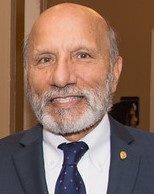
    (The author is Professor of Management, Stillman School of Business, Seton Hall University, South Orange, NJ 07079, USA. He can be reached at  Ad.amar@shu.edu)


  • Mega stimulus package: Self-reliance pitch timely, now for delivery

    Mega stimulus package: Self-reliance pitch timely, now for delivery

    A new slogan, ‘Be vocal about local’, has been added by the Prime Minister to his long list of aspirational-inspirational repertoire. How far it goes in infusing the much-required dynamism in the Covid-hit business and industry is the big question. For long, the low share of manufacturing in India’s GDP as compared to China has been seen as a huge weakness. So, while the country witnessed high growth numbers over the years, the job opportunities created as a result fell far short. The pandemic has only accentuated the serious problem. Hence, PM Modi’s strong pitch for use of products manufactured in the country and self-reliance could not be more timely.

    In a mega stimulus package, the Finance Minister has announced measures to restart the economy, including Rs 3 lakh crore collateral-free automatic loans for MSMEs, revising upwards the investment limit, introducing an additional criteria of turnover and no global tender for government procurement up to Rs 200 crore. Clearance of all pending payments is another big takeaway. The statutory PF contribution has been slashed by 2 per cent to increase the take-home salary. The 25 per cent cut in tax deducted at source for non-salary payments is also a huge relief. A six-month extension has been given to government contractors to finish projects.

    It is an undeniable fact that the drive to push manufacturing has met with limited success. The much-touted ‘Make in India’ has not lived up to potential. Aware of the ground reality, PM Modi has made clear his commitment to remove all domestic hurdles before manufacturing units and attract from China the global value chain. The vigor and hope reflected in the speech have to be translated into recognizable action. The first tranche of the package would soothe frayed nerves, but the road ahead is long. Forget about adding, will it bring back jobs? Is it a booster shot or a survival kit for the industry?

    (Tribune, India)


  • Narendra Modi announces ₹20-lakh-crore economic stimulus package

    Narendra Modi announces ₹20-lakh-crore economic stimulus package

    Gives a call for being ‘vocal for local’ and for self-reliance

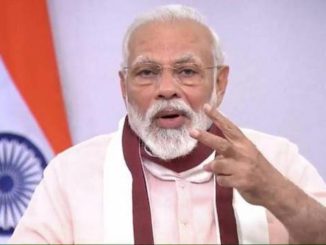
    Prime Minister Narendra Modi on Tuesday, May 12,  said a new-look Lockdown 4.0 beyond May 17 was in the offing, while announcing an economic stimulus package for ₹20-lakh-crore (estimated at 10% of the GDP), with a clearly defined leap towards economic reforms that will, in his words, lead to Atmanirbhar Bharat, or a self-reliant, resilient India.

    This amount includes packages already announced at the beginning of the lockdown incorporating a slew of measures from the RBI and the payouts under the Pradhan Mantri Garib Kalyan Yojana.

    Addressing the nation on television, Prime Minister Modi said the whole world was reeling from the crisis engendered by the COVID-19 pandemic, as was India. In this crisis, however, India had had an opportunity to look at systems and institutions that were in existence before the crisis hit and how they crumbled. “We have been hearing for many years that the 21st century will be India’s century, and this crisis is, I believe one that carries a message, that we have to move forward not just to combat the crisis but to prevail,” Mr. Modi said. “That can happen when we are self-reliant.”

    He gave the example of India’s ramped-up capacity in producing Personal Protection Equipment (PPE) kits and N-95 masks required by medical personnel and frontline health workers to illustrate his point that India could achieve this.

    “When the first case hit us, we didn’t produce either of these things. Now, within weeks we have the capacity to produce 2 lakh of PPE and 2 lakh of N95 masks every day,” Mr. Modi said.

    Clarifying that by self-reliance he did not mean insularity and suspicion of the world as in the past but embracing the world in the spirit of Vasudhaiva Kutumbakam (the world is one family).

    “Self-reliance in this sense is neither exclusionary nor isolationist, it is for helping the world, with our actions. In the past whenever we have acted it has impacted the world in a positive way — be it solving the Y2K riddle in 1999, or our campaigns against open defecation, tuberculosis and polio,” Mr. Modi said.

    He said that the new edifice of this self-reliant India would be based on the five pillars of the economy, infrastructure, demography, technologically driven systems and to strengthen demand and supply chains, with the supply chains being based on local sourcing.

    “In the past few days we have seen how local supply chains and shops are the only things that have helped,” he said.

    The Prime Minister said the economic package would not be based on incremental changes, but a quantum leap in bold reforms with regard to land, labor, law and liquidity.

    “In the last few days we have seen the suffering of our workers, migrant labor, street vendors and daily wagers and farmers. This package will be aimed at them. It will be aimed at the honest taxpayer, at our industry that makes its capital work,” he said.

    Mr. Modi signed off on a strong note to buy local, and to be vocal about it. “Local production helped us in this crisis, and when you look at several global brands, they began as local but were marketed and raised to a global level. We have to do the same with our produce. We need to be vocal about local,” he said. “We must and will make India self-reliant,” he said.

    A day after PM Modi made the announcement, the Finance Minister Nirmala Sitharaman, on May 13,  announced a ₹3 lakh crore collateral free loan scheme for businesses, especially micro, small and medium enterprises (MSMEs), as part of a ₹20-lakh-crore economic stimulus package to deal with the COVID-19 pandemic.

    For salaried workers and taxpayers, some relief was provided in the form of an extended deadline for income tax returns for financial year 2019-20, with the due date now pushed to November 30, 2020. The rates of tax deduction at source (TDS) and tax collection at source (TCS) have been cut by 25% for the next year, while statutory provident fund (PF) payments have been reduced from 12% to 10% for both employers and employees for the next three months.

    Apart from MSMEs, other stressed business sectors which got attention were non-banking finance companies (NBFCs), power distribution companies, contractors and the real estate industry.

    MSMEs will get the bulk of the funding. The ₹3 lakh crore emergency credit line will ensure that 45 lakh units will have access to working capital to resume business activity and safeguard jobs, Ms. Sitharaman said. For two lakh MSMEs which are stressed or considered non-performing assets, the Centre will facilitate provision of ₹20,000 crore as subordinate debt. A ₹50,000 crore equity infusion is also planned, through an MSME fund of funds with a corpus of ₹10,000 crore.

    NBFCs, housing finance companies and microfinance institutions — many of which serve the MSME sector — will be supported through a ₹30,000 crore investment scheme fully guaranteed by the Centre, and an expanded partial credit guarantee scheme worth ₹45,000 crore, of which the first 20% of losses will be borne by the Centre.

    Power distribution companies, which are facing an unprecedented cash flow crisis, will receive a ₹90,000 crore liquidity injection. Contractors will get a six-month extension from all Central agencies, and also get partial bank guarantees to ease their cash flows. Registered real estate projects will get a six-month extension, with COVID-19 to be treated as a “force majeure” event.

    Nirmala Sitharaman with MoS Anurag Thakur outlines stimulus plans at a news conference on Thursday, May 14.
    Photo Credit/ Shiv Kumar Pushpakar

    On May 14, the Finance Minister announced another round of stimulus.

    The Centre will help create affordable rental housing for the urban poor and provide relief worth ₹1,500 crore to small businesses through an interest subvention scheme, apart from extending credit for street vendors, farmers, and middle-class housing.

    Apart from free food for migrant workers, these are the major highlights of the second tranche of the Atmanirbhar Bharat Abhiyan stimulus package, announced by Finance Minister Nirmala Sitharaman on Thursday, May 14.

    Noting that migrant workers and other urban poor face difficulties in finding affordable housing, the Finance Minister said a scheme to build rental housing complexes through public private partnership mode would be launched under the existing Pradhan Mantri Awas Yojana (PMAY) scheme. Both public and private agencies will be incentivized to build rental housing on government and private land, while existing government housing will be converted into rental units.

    The credit linked subsidy scheme for lower middle class housing under PMAY will also be extended by one year to March 2021, and is likely to benefit 2.2 lakh more families, said Ms. Sitharaman, expressing the hope that this would also create jobs and stimulate demand for the steel, cement and construction industries.

    Street vendors who have been hit hard by the lockdown will be given access to easy credit through a ₹5,000 crore scheme, which will offer ₹10,000 loans for initial working capital.

    The scheme will be launched within a month and will benefit 50 lakh vendors, said the Finance Minister.

    Small businesses who have taken loans under the MUDRA-Shishu scheme, meant for loans worth ₹50,000 or less, will receive a 2% interest subvention relief for the next year, which will cost the government ₹1,500 crore.

    The Centre plans a drive to enroll 2.5 crore farmers who are not yet part of the Kisan Credit Cards scheme, along with fish workers and livestock farmers, and provide them with ₹2 lakh crore worth of concessional credit. NABARD (National Bank for Agriculture and Rural Development) will also extend additional refinance support worth ₹30,000 crore to rural banks for crop loans, Ms. Sitharaman said.

    “The only fiscal outlay in today’s announcements are the ₹3,500 crore for food grains to migrants and ₹1,500 crore for the MUDRA loanees. So only ₹5,000 crore is actually coming from government coffers, while the rest are credit-based measures,” said Himanshu, an economist at Jawaharlal Nehru University’s Centre for Economic Studies and Planning.

    Terming the government’s approach as “stingy and half-hearted”, he noted that at a time when demand is down, any moves to provide liquidity are not going to help, adding that putting cash in people’s pockets would have been a better approach.

    “Banks are parking money with the RBI (Reserve Bank of India), so the problem is not liquidity, but rather the appetite of people to take credit at this time,” he said. “Effectively, the burden of revival has been passed on to the people most affected by the lockdown,” he added.

    Meanwhile, Congress spokesman said Govt’s ‘jumla package’ fell way short of what PM Modi had promised.

    A senior spokesperson of the party, Anand Sharma, said the country believed that Prime Minister Narendra Modi was serious when he made the “dramatic” announcement of giving 10 per cent of the GDP as a package to revive the economy and support workers and migrant laborers, and that expectations had soared.

    “The Finance Minister’s announcement dashed all hopes,” he said.

    Congress’ chief spokesperson Randeep Surjewala said Finance Minister Nirmala Sitharaman’s announcements were nothing but a “jumla package”.

    Senior party leader Ahmed Patel said: “It is not an economic package. It is an empty package wrapped with speeches since the last three days.”

    Congress spokesperson Manish Tewari pointed out that Finance Minister Nirmala Sitharaman articulated the second tranche of the bailout or economic package that this government had conceptualized.

    “It is unfortunate that the entire press conference (of Sitharaman) was a classic display of arrogance, ignorance and insensitivity,” he said addressing reporters via a video link.

    “We expected that the Finance Minister would come out with what the government is doing to ferry the migrants who are walking on the roads back to their homes safely. But nothing like that happened,” Tewari said.

    (With inputs from agencies)

  • Get answers to Economic Impact Payment questions

    Get answers to Economic Impact Payment questions


    WASHINGTON  (TIP): The IRS is regularly updating the Economic Impact Payment  and the Get My Payment tool frequently asked questions pages on IRS.gov as more information becomes available. Taxpayers should check the FAQs often for the latest additions; many common questions are answered in these.

    More than 80 million Economic Impact Payments have already been delivered to the nation’s taxpayers. More payments are on their way. As part of this effort, the IRS has launched two tools to help taxpayers get their payments:

     Get My Payment is helping millions of taxpayers. Since its launch on April 15, millions of  taxpayers have been able to input their direct deposit information to speed—and track—their payments. The IRS reminds taxpayers the information is updated once daily, usually overnight, so they only need to enter information once a day.

     The Non-Filers Enter Payment Info tool is helping millions of taxpayers successfully submit basic information to receive Economic Impact Payments quickly to their bank accounts. This tool is designed only for people who are not required to submit a tax return.


    The IRS is working hard to deliver Economic Impact Payments to all eligible Americans as quickly as possible.

    Quick links to the Frequently Asked Questions on IRS.gov:

    Economic Impact Payments: www.irs.gov/eipfaq

    Get My Payment tool: www.irs.gov/getmypaymentfaq