Tag: Sunita Williams

  • Astronaut Sunita Williams Returns from her Nine-Month Space Odyssey

    Astronaut Sunita Williams Returns from her Nine-Month Space Odyssey

    “You don’t look at the big problem all together, because I think it’s a little intimidating. You just take it one day at a time, meet the people who are going to meet with you…, and really try to do the best job that you can. That’s all teamwork, and that’s what space travel is about.”

    By Vasudevan Mukunth

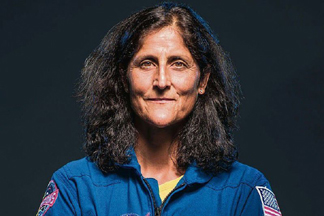
    Sunita Williams said this in a 2017 interview. Even in her full spacesuit gear complete with the helmet, there has always been something more between Ms. Williams and the rest of the world. There’s, of course, the recognition that she’s an icon. She’s undoubtedly an axis of soft diplomacy for NASA and the U.S., someone as associated with the pinnacle of human spaceflight as the admirable idea of (more) women in space.

    Growing up in Massachusetts, Ms. Williams wanted to be a veterinarian before her older brother Jay suggested joining the Navy. She did, graduating in 1987, becoming a naval aviator in 1989 and commencing her service at a Helicopter Combat Support Squadron in Virginia. Among other activities, she flew support missions for Operations Desert Shield (the first phase of the Gulf War, in 1990-91) and Provide Comfort, and helped with relief operations from aboard the USS Sylvania in the wake of Hurricane Andrew.

    Soon she was selected to study at the U.S. Naval Test Pilot School (NTPS) and graduated in 1993, qualifying to put new or modified aircraft through their paces. This role opened the door for her to become a NASA astronaut five years later.

    Ms. Williams’s first mission to the International Space Station (ISS) was STS-116, when NASA launched her and six other astronauts aboard the Space Shuttle Discovery. While she was a member of the Expedition 15 crew, she participated in Expedition 14 to the ISS until Russia’s Fyodor Yurichkin took over from the U.S.’s Michael López-Alegría as crew commander in April 2007. Once her duties concluded, the Space Shuttle Atlantis — which NASA had launched on June 8, 2007 — brought her back on June 22.

    Ms. Williams returned to the ISS in July 2012, this time onboard a Russian Soyuz spacecraft, along with Japan’s Akihiko Hoshide and Russia’s Yuri Malenchenko. She joined the Expedition 32 crew under the command of Gennady Padalka.

    Triathlon onboard the ISS

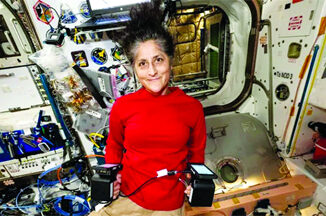
    Ms. Williams isn’t an icon for nothing. On April 16, 2007, she ran the Boston Marathon in space, completing 42 km on a treadmill onboard the ISS in 4 hours 24 minutes. Her younger sister Dina joined her on the earth. She went more than a step further in September 2012 when she completed a triathlon onboard the ISS (using specialized equipment onboard to approximate the swimming part of the event) in 1 hour 48.5 minutes. Importantly, on September 17, 2012, she also became only the second woman (after Peggy Whitson) to become the commander of the ISS, as part of Expedition 33.

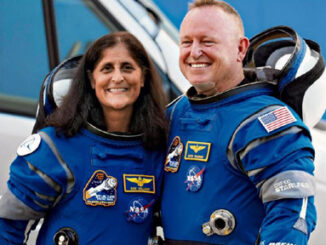
    Her next major assignment came in 2015, when NASA picked her to fly in the country’s first commercial spaceflights. She helped Boeing and SpaceX develop their crew capsules. On June 5, 2024, she became the first woman to test-fly an orbital spacecraft when NASA launched Boeing’s Starliner crew capsule. She was joined on this soon-to-be-infamous mission by astronaut Barry Wilmore.

    Mr. Wilmore’s career trajectory has roughly parallelled Ms. Williams’s but with some important distinctions. After training with the Navy and then graduating from the NTPS, he flew missions for Operation Desert Shield as well as Desert Storm (the second phase of the Gulf War), including 21 combat missions, and then Operation Southern Watch. NASA picked him as a pilot in 2000. He launched onboard the Space Shuttle Atlantis to the ISS in November 2009 as part of Expedition 21 in a mission that lasted 11 days. His next major stint, as with Ms. Williams, was when he launched onboard a Soyuz rocket and spacecraft in September 2014 with Russia’s Yelena Serova and Aleksandr Samokutyayev as part of Expedition 41 on the ISS, taking over in November that year as the commander of Expedition 42, which lasted until March 2015.

    He was also a bit of a trendsetter. For example, in his second stint, Mr. Wilmore required a ratchet wrench for a task but one wasn’t available onboard. So, he requested and received instructions from the earth to use an onboard 3D printer to make the wrench; the crew thus became the first to manufacture an item off-world.

    Ms. Williams and Mr. Wilmore both have something of an entrepreneurial spirit, guided by the “one step at a time” ethos and backed up by hard yards in the military and the rigors of being test pilots. They have both expressed excitement about working with NASA’s commercial partners and helping bring technologies created in the private sector to within the spaceflight fold.

    Entrepreneurialism is characterized even more by responding on one’s feet to unforeseen, unforeseeable challenges — the kind one might encounter on Starliner’s first crewed flight, which was technically a previously unflown mission. The two have also weathered with grace the oft-misguided media coverage of the Starliner flight as well as the clumsy political overtones U.S. President Donald Trump attached to the mission to return them from the ISS earlier this month.

    Support from India

    Ms. Williams has also had to weather almost covetous expressions of support from India’s political leaders, including the Prime Minister himself, only because she is of Indian descent. She was born in Ohio in 1965 to Deepak Pandya, who’d left India seven years prior, and Slovene-American Ursuline Bonnie Pandya. But riding on the popular interest in her in the country, leaders cutting across ideological lines, including those in power in Kerala and Tamil Nadu, have singled her out for congratulation.

    When Ministers Jitendra Singh, Jyotiraditya Scindia, and Piyush Goyal all called her “India’s daughter”, it was also a reminder that the same honorific has been withheld from the likes of Vinesh Phogat and Soni Sori, who have fought long and hard much closer home en route to their triumphs. Equally, Ms. Williams’s presence highlighted the absence of India’s own astronaut-designates — Shubanshu Shukla, Prasanth Balakrishnan Nair, Ajit Krishnan and Angad Pratap — from the limelight at an exceptional time in which so many people were interested in the lives and work of astronauts.

    Ultimately, Sunita Williams is an icon because she has constantly reminded us of what matters for us to do and how we can get there: one step at a time.

    (Vasudevan Mukunth is the Deputy Science Editor of The Hindu)

    (Source: The Hindu)

  • SpaceX, NASA launch mission to bring back astronauts Sunita Williams, Butch Wilmore from ISS

    SpaceX, NASA launch mission to bring back astronauts Sunita Williams, Butch Wilmore from ISS

    HOUSTON (TIP): SpaceX and NASA have launched a mission to bring back US astronauts Sunita Williams and Butch Wilmore from the International Space Station (ISS), where they have been stranded for nine months, an ANI report said. The lift-off took place at 7:03 ET on Friday, with a Falcon 9 rocket carrying a Dragon spacecraft on the Crew-10 mission.

    The mission also launched four crew members to the ISS: NASA astronauts Anne McClain and Nichole Ayers, JAXA (Japan Aerospace Exploration Agency) astronaut Takuya Onishi, and Roscosmos cosmonaut Kirill Peskov to the International Space Station.

    Crew-10 is the 10th crew rotation mission under SpaceX’s human space transportation system and the 11th flight with a crew aboard to the ISS station through NASA’s Commercial Crew Program, including the Demo-2 test flight.

    Sunita Williams and Butch Wilmore have been stranded on the ISS for nine months after reaching there in June last year. They were supposed to stay there for about a week. Ahead of the launch, US Secretary of Defense Pete Hegseth shared a video message expressing support for NASA’s SpaceX Crew-10, Fox News reported.

    In a video posted on X, Hegseth stated, “I just want to take a brief moment to say we are praying for you.” He added, “We wish you Godspeed, and we look forward to welcoming you all home soon.” “President Trump said to Elon Musk, ‘get the astronauts home and do it now’ – and they’re responding,” Hegseth said.

    “And they’re bringing NASA astronauts, [who] also happen to be retired US Navy Capt. Butch Wilmore and retired US Navy Capt. Suni Williams, home,” he added, as reported by Fox News.

  • Sunita Williams braces for life on Earth: Even lifting a pencil will be a workout

    Sunita Williams braces for life on Earth: Even lifting a pencil will be a workout

    As astronaut Sunita Williams prepares to return from her extended mission aboard the International Space Station (ISS), she faces the daunting challenge of readjusting to Earth’s gravity.
    Williams, who has spent over eight months in microgravity, will experience significant physical changes upon her return, as gravity begins to “punish” her body after months of living in weightlessness.
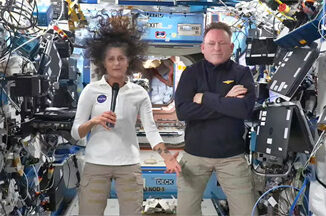
    Butch Wilmore, a fellow astronaut, stuck in space with Williams revealed how gravity will be the biggest challenge when the two astronauts return home.
    “Gravity is really tough, and that’s what we feel when we get back,” he explained. “Gravity starts pulling everything to lower extremities; fluids will be pulled down, and even lifting a pencil will feel like a workout,” Willmore said in an interview on CNN.
    This sudden shift will lead to discomfort and a feeling of heaviness as the body readjusts to gravitational forces.
    Williams echoed these sentiments, acknowledging that adapting to life on land will be challenging.
    “It’s gonna be a little bit hard to adapt,” she said. “It’s a day-for-day process when you get your fast-twitch muscle action back.” The astronauts are aware that within 24 hours of returning, they will begin to lose the unique sensations of weightlessness that they have come to enjoy during their time in space.
    Extended stays in microgravity lead to various physiological changes, including muscle atrophy and bone density loss. Astronauts can lose up to 1% of their bone mass per month due to the lack of weight-bearing activities.
    As Williams prepares for her return, she is likely to undergo a rigorous rehabilitation program aimed at regaining strength and bone density.
    Additionally, fluids in the body redistribute in space, causing what astronauts describe as “puffy faces” and thinner limbs. Upon returning to Earth, these fluids will shift back to their normal distribution, potentially leading to temporary discomfort as the body readjusts.
    Despite these challenges, both Williams and Wilmore remain optimistic about their return. They have previously adapted quickly after extended missions and hope for a similar experience this time. “Floating in space is a lot of fun; I like my crazy hair,” Wilmore remarked, reflecting on the joys of life aboard the ISS. The two astronauts will board SpaceX’s Dragon spacecraft and undock for ride home on March 19.

  • Indian Origin Sunita Williams to return to Earth earlier than scheduled: NASA

    Indian Origin Sunita Williams to return to Earth earlier than scheduled: NASA

    Sunita has  been stuck in space since June last year due to technical problems with Boeing’s Starliner which took them to International Space Station

    WASHINGTON, D.C. (TIP): NASA and SpaceX are accelerating the target launch and return dates for the upcoming crew rotation missions to and from the International Space Station (ISS), which will bring the agency’s stranded astronauts Sunita Williams and Butch Wilmore back home. The agency’s Crew-10 launch now is targeting March 12, pending mission readiness and completion of the agency’s certification of flight readiness process, NASA said late on Tuesday, February 11.

    The Crew-9 mission, consisting of Williams, Wilmore, NASA astronauts Nick Hague along with Roscosmos cosmonaut Aleksandr Gorbunov, is planned for return to Earth following a several-day handover period with the newly arrived Crew-10.

    The previous launch date for Crew-10 was no earlier than late March. The Crew-10 mission will carry NASA astronauts Anne McClain and Nichole Ayers, Japan Aerospace Exploration Agency astronaut Takuya Onishi and Roscosmos cosmonaut Kirill Peskov, to the space station.

    The earlier launch opportunity is available following a decision by mission management to adjust the agency’s original plan to fly a new Dragon spacecraft for the Crew-10 mission which requires additional processing time, according to NASA.

    The flight now will use a previously flown Dragon, called Endurance, and joint teams are working to complete assessments of the spacecraft’s previously flown hardware to ensure it meets the agency’s Commercial Crew Programme safety and certification requirements.

    This comes as US President Donald Trump asked SpaceX CEO Elon Musk to facilitate the return of both Williams and Wilmore as soon as possible.

    Musk claimed that it was “terrible” that the pair were left “stranded” at the ISS for so long, even though NASA had already roped in SpaceX months ago for the return of both astronauts as part of its Crew-9 mission.

    Williams and Wilmore have been stuck in space since June last year due to technical problems with Boeing’s Starliner which took them to ISS.

    (Source: ANI)

  • Indian Origin Sunita Williams steps out on spacewalk after 7 months in orbit

    Indian Origin Sunita Williams steps out on spacewalk after 7 months in orbit

    It was the first spacewalk by NASA astronauts since an aborted one last summer

    WASHINGTON, D.C. (TIP): One of NASA’s two stuck astronauts got a much welcomed change of scene on Thursday, January 16, stepping out on her first spacewalk since arriving at the International Space Station more than seven months ago. Indian-origin Sunita Williams, the station’s commander, had to tackle some overdue outdoor repair work alongside NASA’s Nick Hague. Plans called for Williams to float back out next week with Butch Wilmore.

    Williams and Wilmore launched aboard Boeing’s new Starliner capsule last June on what should have been a weeklong test flight. But Starliner trouble dragged out their return, and NASA ordered the capsule to come back empty. Then SpaceX delayed the launch of their replacements, meaning the two won’t be home until late March or early April—10 months after launching.

    It was the first spacewalk by NASA astronauts since an aborted one last summer. US spacewalks were put on hold after water leaked into the airlock from the cooling loop for an astronaut’s suit. NASA said the problem had been fixed. This was the eighth spacewalk for Williams, who has lived on the space station before.

  • Why Sunita Williams is growing lettuce in space

    Why Sunita Williams is growing lettuce in space

    NASA astronaut Sunita Williams, aboard the International Space Station (ISS), is leading an innovative agricultural experiment. She is growing “Outredgeous” romaine lettuce in microgravity, a study that promises significant benefits for space missions and Earth-based agriculture.
    The experiment, known as Plant Habitat-07, is designed to explore how varying levels of water availability influence plant growth in space.
    Its primary objectives are optimising plant cultivation techniques for deep-space missions and developing sustainable farming solutions for water-scarce regions on Earth.
    This study involves analysing growth rates, nutritional content, and the overall health of lettuce grown in microgravity. By addressing these parameters, the research aims to support NASA’s goal of establishing self-sustaining life-support systems for space exploration. As the lead scientist, Williams has set up the experiment by collecting baseline water samples from the Advanced Plant Habitat’s distribution reservoir and installing the Plant Habitat-07 science carrier, which serves as the cultivation chamber for the lettuce.
    The implications of this lettuce experiment extend beyond space exploration. For space missions, the research helps reduce reliance on costly resupply missions, ensures astronauts have access to fresh food, and boosts their psychological well-being by allowing them to grow and eat fresh produce. On Earth, the findings could inform water-efficient farming practices in drought-prone areas, improve crop yields with fewer resources, and promote sustainable food production worldwide.
    NASA’s plant experiments in space have evolved over time, and the Advanced Plant Habitat aboard the ISS provides an advanced platform for these studies.

  • Indian-origin astronaut Sunita Williams set to fly into space for a third time next month

    Indian-origin astronaut Sunita Williams set to fly into space for a third time next month

    Boeing’s Starliner first crewed spacecraft is expected to be launched between June 1 and 5

    HOUSTON (TIP): Boeing’s Starliner first crewed spacecraft to be piloted by Indian-origin astronaut Sunita Williams is expected to be launched between June 1 and 5 after the flight was postponed earlier this month due to a technical snag.

    Williams, 58, will fly into space for the third time aboard the test flight. A statement from NASA said: “Mission managers from NASA, Boeing and ULA (United Launch Alliance) continue to evaluate a path forward toward launching the agency’s Boeing Crew Flight Test to the International Space Station. The teams are now working toward a launch opportunity at 12.25 pm on Saturday, June 1, with additional opportunities on Sunday, June 2, Wednesday, June 5, and Thursday, June 6.”

    Work continues to assess Starliner performance and redundancy following the discovery of a small helium leak in the spacecraft’s service module, the statement said. It said teams were in the process of completing a follow-on propulsion system assessment to understand potential helium system impacts on some Starliner return scenarios.

    Starliner will carry Williams and Butch Wilmore to the International Space Station, marking what could be a momentous and long-awaited victory for the beleaguered Boeing programme.

    An attempt to launch the first crewed test flight for the International Space Station from Cape Canaveral in Florida was postponed on May 6 after a technical snag was discovered moments before the take-off.

    NASA will also conduct a Delta-Agency Flight Test Readiness Review to discuss the work that was performed since the last CFT launch attempt on May 6 and to evaluate issue closure and flight rationale ahead of the next attempt as part of NASA’s process for assessing readiness, the statement said. The statement said Williams and Butch Wilmore continued practicing in Starliner simulators to prepare for flight, and the crew, which remains quarantined, will fly back to NASA’s Kennedy Space Centre in Florida closer to the new launch date.

    The mission has been delayed for several years because of setbacks in the spacecraft’s development.

    If it is successful, it will become the second private firm able to provide crew transport to and from the ISS, alongside Elon Musk’s SpaceX.

    Such a scenario — with both SpaceX’s Crew Dragon and Starliner flying regularly — is one for which the US space agency NASA has long waited.

    This is Boeing’s second flight to the International Space Station and third Starliner flight test overall, following a second Orbital Flight Test, the uncrewed mission also known as OFT-2, in May 2022. Boeing also completed a pad abort demonstration in November 2019, according to NASA.

    SpaceX and Boeing developed their respective vehicles under NASA’s Commercial Crew Programme, a partnership with private industry contractors. From the outset, the space agency aimed to have both companies operating at once.

    The Crew Dragon and Starliner spacecrafts would each serve as a backup to the other, giving astronauts the option to keep flying, even if technical issues or other setbacks grounded one spacecraft.

    Williams received her commission as an Ensign in the United States Navy from the United States Naval Academy in May 1987.

    Williams was selected as an astronaut by NASA in 1998 and is a veteran of two space missions, Expeditions 14/15 and 32/33.

    She served as a flight engineer on Expedition 32 and then commander of Expedition 33.

    While on board, she established a world record for females with four spacewalks totaling 29 hours and 17 minutes. Astronaut Peggy Whitson subsequently broke the record in 2008 with a total of five spacewalks. Williams spent four months conducting research and exploration aboard the orbiting laboratory.  Williams was born in Euclid, Ohio, to Indian-American neuroanatomist Deepak Pandya and Slovene-American Ursuline Bonnie (Zalokar) Pandya.

    She holds a physical science degree from the US Naval Academy and a Master of Science in Engineering Management from Florida Institute of Technology.

    (Source: PTI)

  • Indian American astronaut Sunita Williams set for first piloted launch of Boeing’s Starliner

    Indian American astronaut Sunita Williams set for first piloted launch of Boeing’s Starliner

    WASHINGTON, D.C. (TIP): Veteran Indian American astronaut Sunita Williams is all set to go on her third mission to the international space station on May 6 on the first piloted flight of Boeing’s Starliner spacecraft. Williams and astronaut Barry “Butch” Wilmore, both former Navy test pilots, are set for the launch atop a United Launch Alliance Atlas 5 rocket at 10:34 pm EDT on Monday, May 6, according to a NASA statement.
    If all goes well, Williams and Wilmore will dock at the space station on May 8 and return to Earth May 15 or shortly thereafter. If the mission goes well, NASA plans to begin operational Starliner crew rotation flights in 2025, alternating crew launches with SpaceX.
    Williams and Wilmore, flew to the Kennedy Space Center Thursday afternoon to prepare for the first piloted launch of Starliner, a long-awaited flight running years behind schedule after two uncrewed test flights and extensive work to resolve a variety of technical problems.
    Two of NASA’s most seasoned astronauts with four previous spaceflights, 11 spacewalks and 500 days in orbit between then, landed at the spaceport’s 3-mile-long runway in T-38 jet trainers after a flight from the Johnson Space Center in Houston.
    “This is where the rubber meets the road, where we are going to leave this planet, and that is pretty darn cool!” Williams told reporters on the runway.
    Completing the Starliner’s Crew Flight Test, or CFT, will “broaden (NASA’s) capability to and from the space station, and that’s vitally important,” said Wilmore. “We’re excited to be here.”
    Williams’ space odyssey began with Expedition 14/15 from Dec 9, 2006, to June 22, 2007. She launched with the crew of STS-116 and served as Flight Engineer. She set a record for women with four spacewalks totaling 29 hours and 17 minutes. She returned to Earth with the STS-117 crew in June 2007.
    Her second space mission, Expedition 32/33 was from July 14 to Nov 18, 2012. She launched from the Baikonur Cosmodrome in Kazakhstan, along with Russian Soyuz commander Yuri Melnichenko and Flight Engineer Akihiko Hoshide of the Japan Aerospace Exploration Agency, on July 14, 2012.
    She spent four months conducting research and exploration aboard the orbiting laboratory. Williams once again held the record for total cumulative spacewalk time with a time of 50 hours and 40 minutes.
    NASA awarded two Commercial Crew Program contracts in 2014, one to SpaceX valued at $2.6 billion and the other to Boeing for $4.2 billion, to spur the development of independent spacecraft capable of carrying astronauts to and from the International Space Station.
    The goal was to end reliance on Russia’s Soyuz in the wake of the space shuttle’s retirement and to resume launching American astronauts from US soil aboard American rockets and spacecraft. SpaceX kicked off piloted flights in May 2020, successfully launching two NASA astronauts on a Crew Dragon test flight to the space station.
    Since then, SpaceX has launched 50 astronauts, cosmonauts and civilians to orbit in eight operational flights to the lab complex, three commercial visits and one privately funded flight to low-Earth orbit.
    Boeing launched its Starliner on an unpiloted test flight in December 2019, but the spacecraft experienced major software and communications problems that combined to derail an attempt to dock with the space station and almost led to the crew ship’s destruction.
    A second unpiloted flight was ordered (and paid for by Boeing), but during an August 2021 launch window engineers discovered corroded valves in the spacecraft’s propulsion system. Fixing that problem delayed the second test flight to May 2022.
    While the mission was successful, additional problems were discovered, including parachute issues and concern about possibly flammable protective tape wrapped around internal wiring. Correcting those problems and finding room for a visit in the space station’s complex flight schedule, eventually delayed the Crew Flight Test to May 6.