Tag: Syrian Crisis

  • US blacklists 271 Syrian chemists, other experts over sarin attack

    US blacklists 271 Syrian chemists, other experts over sarin attack

    WASHINGTON (TIP): The US government put 271 Syrian chemists and other officials on its financial blacklist Monday, punishing them for their presumed role in the deadly chemical weapons attack on a rebel-held town in early April.

    In one of its largest-ever sanctions announcements, the Treasury Department took aim at the Syrian Scientific Studies and Research Center (SSRC), which it said was responsible for developing the alleged sarin gas weapon used in the April 4 attack.

    The attack left 87 dead, including many children, in the town of Khan Sheikhun, provoking outrage in the West, which accused Syrian President Bashar al-Assad of being responsible.

    The sanctions will freeze all assets in the United States belonging to the 271 individuals on the blacklist, and block any American person or business from dealing with them.

    According to the Nuclear Threat Initiative, a Washington-based think tank, the SSRC is Syria’s leading scientific reasearch center, with close links to the country’s military.

    The center was the subject of two earlier sanctions declarations, in 2005 and 2007, due to its alleged role in developing weapons of mass destruction.

    The Treasury asserted in a statement Monday that the SSRC is behind the Syrian government’s efforts to develop chemical weapons and the means to deliver them.

    The 271 either have scientific expertise for the program or have been involved in it since 2012, the statement said.

    “These sweeping sanctions target the scientific support center for Syrian dictator Bashar al-Assad’s horrific chemical weapons attack on innocent civilian men, women and children,” Treasury Secretary Steven Mnuchin said.

    “These sanctions are intended to hold the Assad regime and those who support it — directly or indirectly –accountable for the regime’s blatant violations of the Chemical Weapons Convention and UN Security Council Resolution 2118,” he said. Assad has said the attack was a “fabrication” by the West. But the US military quickly responded on April 7, firing 59 Tomahawk cruise missiles at a Syrian airfield to punish the government and send a warning against any further chemical weapons attacks. (AFP)

  • UN, Russia set for Syria meet without US

    UN, Russia set for Syria meet without US

    GENEVA (TIP): The UN’s Syria envoy said today that he will hold talks with Russian officials next week but without the US present after previous plans for a trilateral meeting were “postponed”.

    UN peace mediator Staffan de Mistura said his meeting with Russia’s deputy foreign minister Gennady Gatilov is set for Monday in Geneva.”The trilateral meeting is not off the table, it is simply being postponed”, de Mistura told reporters.

    Asked why US President Donald Trump’s representatives decided to skip the meeting, de Mistura said: “you should ask them, frankly.”

    Syrian regime supporter Moscow and opposition-backer Washington had been the key foreign powers shaping the UN’s Syria peace process.

    De Mistura has previously asked for more clarity from Trump’s administration on its vision for the Syria talks.

    US officials have in recent weeks voiced commitment to support a negotiated solution to the conflict.

    Monday’s sitdown with Gatilov “will be a very intense bilateral meeting”, de Mistura said. He also restated his desire to convene a sixth round of UN-backed talks involving Syrian rivals next month. The previous rounds have failed to produce concrete results. (AFP)


  • Assad says army ‘gave up’ all chemical weapons in 2013

    Assad says army ‘gave up’ all chemical weapons in 2013

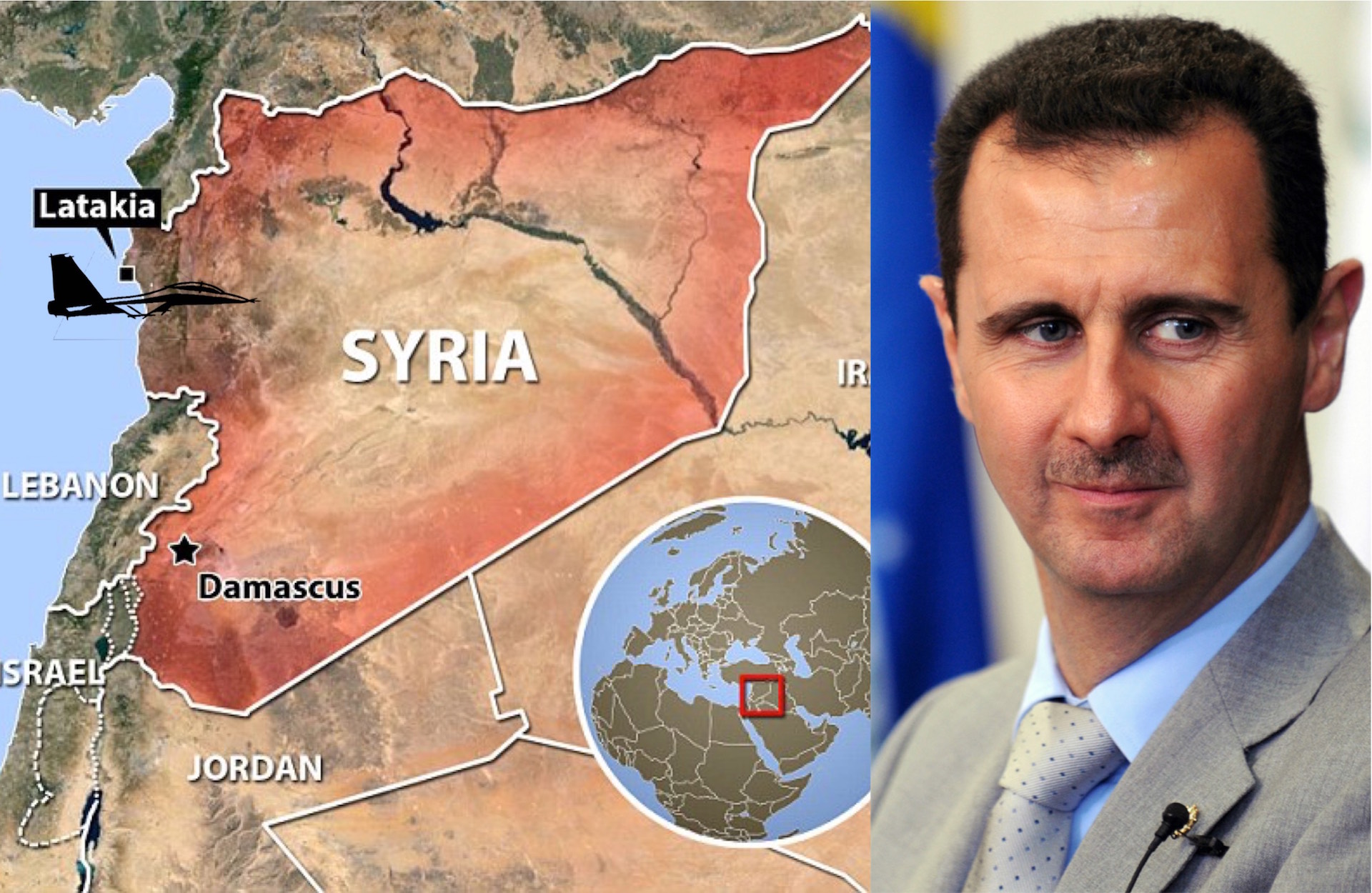
    DAMASCUS (TIP): Syrian President Bashar al-Assad said his government handed over all its chemical weapons stockpiles in 2013 and could not have been behind last week’s suspected sarin attack.

    “There was no order to make any attack… We gave up our arsenal a few years ago. Even if we have them, we wouldn’t use them,” Assad said in an exclusive interview with AFP in Damascus on Wednesday. (AFP)

    Coalition airstrike mistakenly kills 18 Syrian rebels: Pentagon

    WASHINGTON (TIP): An airstrike on Tuesday by a US-led coalition fighting Islamic State mistakenly killed 18 members of the Syrian Democratic Forces south of the city of Tabqa, Syria, the Pentagon said on Thursday.

    “The strike was requested by the partnered forces, who had identified the target location as an ISIS fighting position,” it said in a statement, referring to the Islamic State militant group by an acronym. “The target location was actually a forward Syrian Democratic Forces fighting position.” (Reuters)

  • Coalition airstrike mistakenly kills 18 Syrian rebels: Pentagon

    Coalition airstrike mistakenly kills 18 Syrian rebels: Pentagon

    WASHINGTON (TIP): An airstrike on Tuesday by a US-led coalition fighting Islamic State mistakenly killed 18 members of the Syrian Democratic Forces south of the city of Tabqa, Syria, the Pentagon said on Thursday.

    “The strike was requested by the partnered forces, who had identified the target location as an ISIS fighting position,” it said in a statement, referring to the Islamic State militant group by an acronym. “The target location was actually a forward Syrian Democratic Forces fighting position.” (Reuters)

    Assad says army ‘gave up’ all chemical weapons in 2013

    DAMASCUS (TIP): Syrian President Bashar al-Assad said his government handed over all its chemical weapons stockpiles in 2013 and could not have been behind last week’s suspected sarin attack.

    “There was no order to make any attack… We gave up our arsenal a few years ago. Even if we have them, we wouldn’t use them,” Assad said in an exclusive interview with AFP in Damascus on Wednesday. (AFP)

  • America Launches Missile Attack at Syrian Base after Chemical Weapons Attack kills 100

    America Launches Missile Attack at Syrian Base after Chemical Weapons Attack kills 100

    Piqued by Syria’s use of banned chemical weapons that killed at least 100 people, the U.S. military launched dozens of cruise missiles Thursday, April 6 night at a Syrian airfield

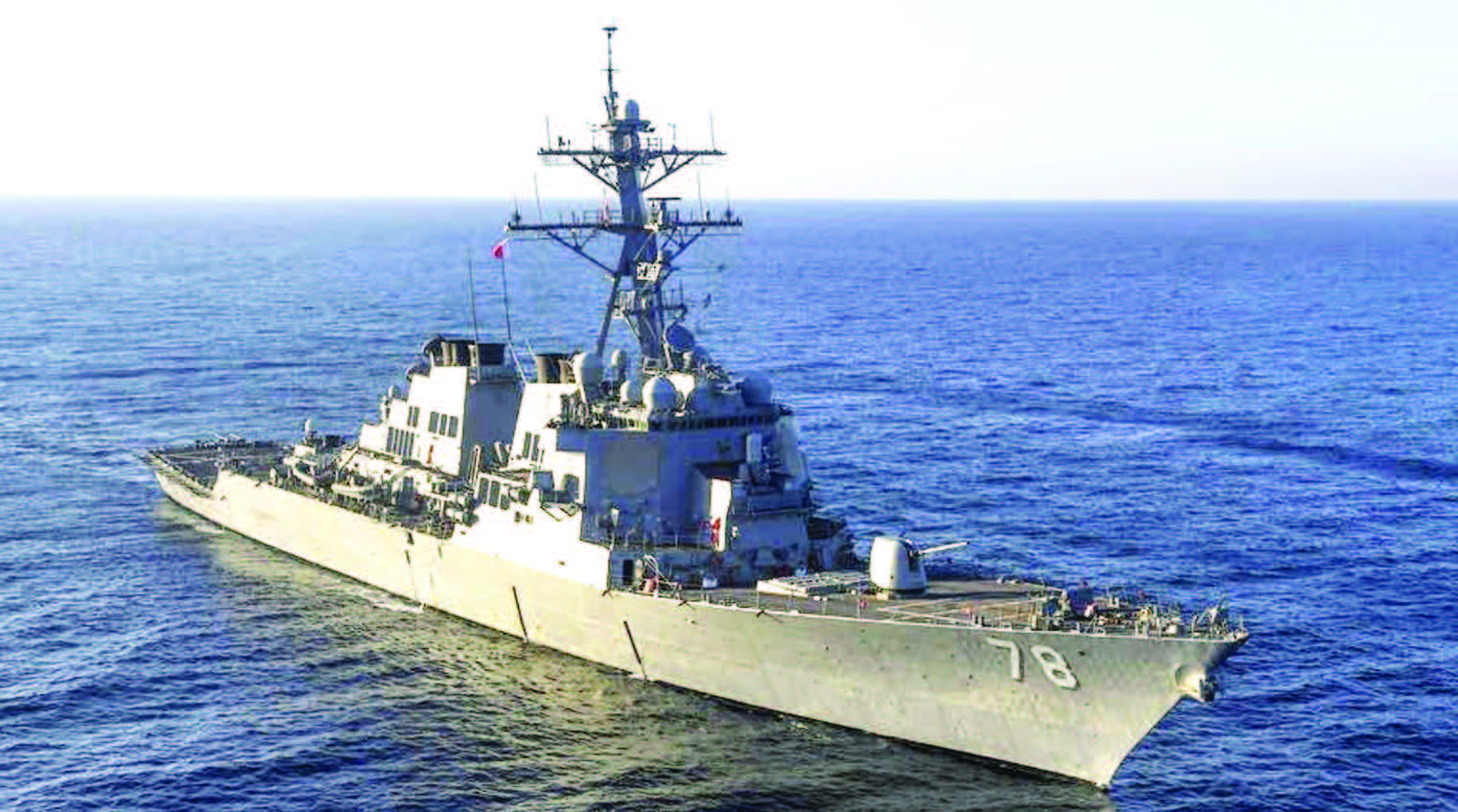
    Two U.S. warships in the Mediterranean Sea, the USS Ross and the USS Porter, fired 59 Tomahawk missiles intended for a single target -Shayrat Airfield in Homs province in western Syria, the Defense Department said. That’s the airfield from which the United States believes the government of Syrian President Bashar al-Assad fired the banned weapons.

    The Pentagon said people were not targeted, and there was no immediate word on casualties. U.S. officials told NBC News that aircraft and infrastructure at the site were hit, including the runway and gas fuel pumps.

    “Assad choked out the lives of helpless men, women and children,” President Donald Trump said in remarks from Mar-a-Lago, his family compound in Palm Beach, Florida.

    “It is in this vital national security interest of the United States to prevent and deter the spread and use of deadly chemical weapons,” said Trump, who called on other countries to end the bloodshed in Syria.

    NBC news reported that a White House official said that more than two dozen members of Congress were briefed by administration officials on the missile strike. Vice President Mike Pence returned to the White House after having gone home for dinner Thursday evening and monitored the events from the Situation Room, officials said.

    “We feel that the strike itself was proportional, because it was targeted at the facility that delivered this most recent chemical weapons attack,” Tillerson told reporters on Thursday night.

    “There was a thorough examination of a wide range of options, and I think the president made the correct choice and made the correct decision,” Tillerson said.

    Syrian television characterized the missile strike “as American aggression” Friday morning. But Ahrar Al Sham, the largest Syrian armed rebel group, told NBC News it “welcomes any U.S. intervention through surgical strikes that would deter the Assad regime capabilities to kill civilians and shorten the suffering of our people.”

    Navy Capt. Jeff Davis, a spokesman for the Defense Department, said initial assessments showed that the airfield was severely damaged, reducing Syria’s capability to deliver chemical weapons.

    Tillerson and Nikki Haley, the U.S. ambassador to the United Nations, have bluntly blamed Syria for the chemical weapons attack, whose victims included at least 25 children.

    “We have a very high level of confidence that the attacks were carried out by aircraft under the direction of Bashar al-Assad’s regime, and we also have very high confidence that the attacks involved the use of sarin nerve gas,” Tillerson said Thursday night.

    In a combative speech at the U.N. Security Council on Wednesday, Haley warned: “When the United Nations consistently fails in its duty to act collectively, there are times in the life of states that we are compelled to take our own action.”

    There was no immediate reaction to the missile strike from Russia, which Tillerson and Haley have accused of having turned a blind eye to Syria’s transgressions.

    Tillerson said there were no executive-level communications with Russian President Vladimir Putin before the missile strike. But he confirmed that U.S. officials had “multiple conversations” with the Russian government in accord with U.S.-Russian military “deconfliction” agreements.

    “We sought no approval from Moscow or at any other level within the Russian infrastructure,” Tillerson said. “This was simply following rules that we have put in place in agreement with the Russian military to deconflict. Because our target in this attack was not Russia.”

    Noting the 2013 U.N. arrangement under which Syria agreed to surrender its chemical weapons under the supervision of Russia, Tillerson said Thursday night: “Clearly, Russia has failed in its responsibility to deliver on that commitment from 2013. So, either Russia has been complicit or simply incompetent in its ability to deliver on that agreement.”

    McMaster said the missile strike wouldn’t have wiped out Assad’s “capacity to commit mass murder with chemical weapons.” But he said: “This was not a small strike. I mean, it was not a small strike. And I think what it does communicate is a big shift in Assad’s calculus – it should be, anyway.”

    (Source: NBC News)

    About the Missile Attack on Syria:

    * Fifty-nine Tomahawk missiles were fired from American destroyers in the eastern Mediterranean at Al Shayrat airfield in Syria, where officials said Mr. Assad’s chemical weapons attack this week originated.

    * Mr. Trump ordered the strike after two days of intense deliberations that involved two meetings of his top national security advisers, including one that Mr. Trump conducted from his Mar-a-Lago estate in Florida.

    * In announcing the strikes on Thursday evening, Mr. Trump called the chemical attack “very barbaric” and said his decision would “prevent and deter the spread and use of deadly chemical weapons.”

    * Administration officials described the missile strikes as a message to the world about Mr. Trump’s resolve and his commitment that the United States will no longer “turn away, turn a blind eye.”

    * The Russian military, which is active in Syria, was notified of the strikes in advance, though American officials did not personally inform President Vladimir V. Putin. In a briefing, Secretary of State Rex W. Tillerson criticized Moscow for failing to live up to its promise in 2013 to destroy all of Syria’s chemical weapons, calling Russia either “complicit” or “incompetent.”

  • Chemical attack kills 22 members of a single family in Syria

    Chemical attack kills 22 members of a single family in Syria

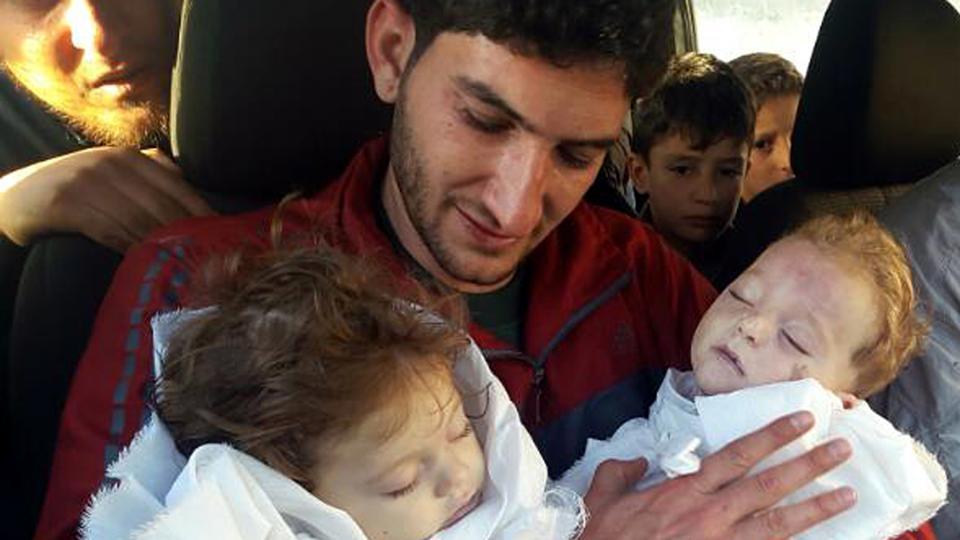
    BEIRUT (TIP): The grief-stricken father cradled his 9-month-old twins, Aya and Ahmed, each in the crook of an arm. Stroking their hair, he choked back tears, mumbling, “Say goodbye, baby, say goodbye” to their lifeless bodies.

    Then Abdel Hameed Alyousef took them to a mass grave where 22 members of his family were being buried. Each branch of the clan got its own trench.

    More than 80 people, including at least 30 children and 20 women, were killed in the chemical attack on the Syrian town of Khan Sheikhoun early Tuesday, and the toll could still rise. The Alyousef family, one of the town’s main clans, was hardest hit.

    Another member of the family, Aya Fadl, recalled running from her house with her 20-month-old son in her arms, thinking she could find safety from the toxic gas in the street. Instead, the 25-year-old English teacher was confronted face to face with the horror of it: A pick-up truck piled with the bodies of the dead, including many of her own relatives and students.

    “Ammar, Aya, Mohammed, Ahmad, I love you my birds. Really they were like birds. Aunt Sana, Uncle Yasser, Abdul-Kareem, please hear me,” Fadl said, choking back tears as she recalled how she said farewell to her relatives in the pile.

    “I saw them. They were dead. All are dead now.”

    The tragedy has devastated the small town. It also deepened the frustration felt by many Syrians in opposition-held areas that such scenes of mass death, which have become routine in the country’s 6-year-old civil war, bring no retribution or even determination of responsibility.

    The US and other Western countries accused President Bashar Assad of being behind the attack, while Syria and its main backer, Russia, denied it. Despite world condemnation, bringing justice is difficult in the absence of independent investigation of Syria’s chemical arsenal, which the government insists it has destroyed. (AP)