Tag: T S Tirumurti

  • The course ahead for Trump’s Gaza ceasefire plan

    The course ahead for Trump’s Gaza ceasefire plan

    The plan can be seen in two ways – as a statement of intentions on how to end the Gaza war, or an instrument of surrender

    By T.S. Tirumurti

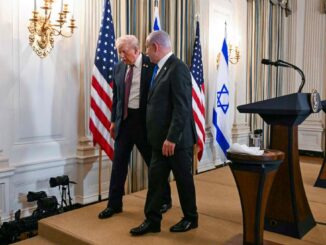
    Shortly before the second anniversary of Hamas’s attack on Israel (October 7, 2023), United States President Donald Trump unveiled his 20-point plan for a Gaza ceasefire. Hamas has reacted positively but has indicated that it will need to renegotiate parts of the plan. This has set the cat among the pigeons. Mr. Trump has hailed this as an opportunity to bring peace to West Asia while Israel is unhappy with the conditions attached to Hamas’ acceptance. Skepticism over progress on the plan is understandable given what happened in January this year when the ceasefire that was negotiated by U.S. Special Envoy Steve Witkoff, which was detailed, sequenced and agreed to by both sides, was torn up unilaterally by Israel after the first step. But this time around, all the major players, including Mr. Trump, want this plan to succeed as a last chance for peace in Gaza — except perhaps the Israel government.

    In a nutshell

    The 20 points include everything that the U.S. would like to see happen in Gaza in the foreseeable future; and, no, the Palestinian state is not one of them. The plan is at best a statement of intentions on how to end the Gaza war and bring normalcy to Palestinians in their destroyed land — and at worst, an instrument of surrender.

    Except for one solitary timeline, where Israeli hostages would be released by Hamas within 72 hours of the ceasefire, everything else needs fleshing out to become a road map. The details of what should be done by the Palestinian side are spelt out — hostages (release within 72 hours); Hamas (disarm and/or quit Gaza); Palestinian Authority (reform or perish); governance of Gaza (deradicalization, demilitarization and technocrats’ rule under an International Board of Peace headed by Mr. Trump), and security (international destabilization force in Gaza). However, there are a few details of Israeli obligations (when does fighting stop), territory (how much will remain with Israel and till what time), and the future role of the Israeli Defense Forces (IDF) (no timelines for withdrawal from Gaza). Of course, the plan is silent on the West Bank.

    The plan is designed to capitalize on the war fatigue of the Palestinians and pressure Hamas. Whether one agrees with its content or not, it covers aspects relating to security, economic development, governance and international involvement. Ethnic cleansing of Gaza has been ruled out. An international stabilization force could be a positive factor if the mandate is clear and regional and the other players involved play a committed role. Israel will get its security with a demilitarized Gaza and a disarmed and deradicalized Hamas.

    Unfortunately, a lack of clarity on timelines and sequencing converts the framework into a mere statement of disjointed intentions rather than a credible pathway for withdrawal of Israel from Gaza and restoring normalcy. It is not even a full ceasefire deal since, under the plan, fighting can continue side by side with the implementation. This is what Hamas has serious reservations about. This infirmity could be fatal if the U.S. and major regional players do not do the heavy lifting vis-à-vis Israel. This is why Mr. Trump’s call to Israel to stop the bombing of Gaza is important. Of course, it is not as if Israel has listened to the U.S. now or in the past.

    To state the obvious, the focus of the plan has been on the release of all Israeli hostages, dead or alive, since Israel’s Prime Minister Benjamin Netanyahu has been under tremendous domestic pressure to get them released. Once that is done within 72 hours of the ceasefire, the only arbiters of Palestinian destiny become the U.S. and Israel, which is incidentally the reality now. Every progress, or the lack of, by the Palestinians towards fulfilling the conditionalities will be decided by these two. There is no monitoring mechanism.

    Further, while the release of 250 Palestinian life prisoners and 1,700 Palestinian detainees in exchange for Israeli hostages is welcome, with the revolving door policy of Israel to arrest, imprison and release Palestinians at will, this stipulation in the plan may not have any practical value on the ground. To get a sense of this equation, at least 18,000 Palestinians have been arrested by Israel only in the West Bank since October 7, 2023.

    Burden shifts to Hamas, the Palestinians

    Given the above, this plan removes the international pressure on Israel on its daily killings in Gaza, by shifting the burden of stopping the war to the implementation of the plan by Hamas and the Palestinians. If they are seen not to implement it, then Israel’s continued presence in Gaza is legitimized and its continued attacks will be justified. When Mr. Netanyahu has declared that the IDF will remain in Gaza, entrusting Israel to decide on its exit from Gaza is a non-starter.

    Effectively, the plan puts governance and security under international control through its Board of Peace and International Stabilization Force. This can be a potential stop-gap arrangement provided the regional players remain committed and, where necessary, not hesitate to use their clout with the U.S. to stop Israeli violations. So far, the involvement of the Gulf countries in the Gaza war has been minimal since they have given priority to diminishing the threat of Iran and its proxies, which Israel helped them achieve. They are equally reluctant to compromise their larger interests in the region i.e., the Abraham Accords, their military ties with the U.S. and a newfound Syrian bonhomie, on the altar of an elusive two-state solution.

    Once Gaza comes under international control, the plan does not chart out any pathway to elections or to a representative governance structure except a possible reformed Palestinian Authority’s role sometime in the future. Ironically, the last legislative elections in the occupied territories, in 2006, were won by Hamas, which secured 44.45% of the vote share and 74 out of 132 seats, while Fatah won 41.43% and 45 seats. This led to a division in the Palestinian leadership and the eventual disconnect between Gaza and the West Bank. Now, the plan envisages a technocratic committee with ‘Palestinian and international experts’, with municipal jurisdiction working under international governance and a security framework, directly under Mr. Trump. Hamas had agreed to step aside from the governance of Gaza and to a Palestinian technocratic committee. But under this plan, the Palestinians will not control their future. Hamas has called this unacceptable and said that a decision on governance should be taken by broader Palestinian consensus in which Hamas will also participate.

    More a rehashed ‘Riviera’ plan

    The self-styled ‘Trump’ economic plan is possibly a rehash of the idea to make a ‘Riviera’ out of the Gaza seafront and build ‘modern miracle cities’ to pull 2.3 million Palestinians in Gaza out of poverty, while thousands in the West Bank are being uprooted from their cities, land and livelihood and driven to poverty.

    Earlier, one had argued that process usually trumped substance for negotiating a Palestinian state. This time there is not even a process except a solitary reference to self-determination in the plan which, both the U.S. and Israel know, is a point so distant that it may never be reached. Mr. Netanyahu has sworn never to concede a Palestinian state. His far-right partners have sworn to annex the West Bank this year. Therefore, it is no surprise that the plan does not base itself on international law or United Nations Security Council resolutions or even the recent International Court of Justice judgment on the 1967 borders to establish a Palestinian state. In fact, it goes in the opposite direction.

    Consequently, how long will the ceasefire hold after the exchange of hostages? If it does not, how much capital will the U.S. and Gulf players spend to restrain Israel from further attacks? The larger question of the Palestine state has been set aside — as it has been time and again. The rapidly changing ground realities in the West Bank, with marauding Israeli settlement construction and eviction of Palestinians from their land, is now out of the syllabus.

    [T.S. Tirumurti was Ambassador/Permanent Representative of India to the United Nations, New York (2020-22) and the first Representative of India to the Palestinian Authority in Gaza (1996-98)]

  • The fragmentation in the global fight against terror

    The fragmentation in the global fight against terror

    Gone are the days of a united fight against, and ‘zero tolerance’ to terror; a different yardstick applies when it comes to India, which is a victim of state-sponsored terror

    By T.S. Tirumurti

    The Pahalgam terror attack of April 22 has exposed, yet again, the fragmentation in the global fight against terror and Pakistan’s resort to terrorism when it fears normalcy in Jammu and Kashmir. While a number of countries have condemned the Pahalgam attack, they have, at the same time, called upon India and Pakistan to exercise restraint. The United States Secretary of State, Marco Rubio, went to the extent of calling on both parties to “work towards … a responsible resolution that maintains long term peace and regional stability in South Asia”. U.S. Vice-President J.D. Vance “hoped” that India’s response would not lead to a wider regional conflict. Russian Foreign Minister Sergey Lavrov has said that “settling disagreements” between New Delhi and Islamabad on a bilateral basis should be by political and diplomatic means. The European Union’s High Representative for Foreign Affairs and Security Policy Kaja Kallas could not even get around to calling it a “terror attack”.

    The end of a collective fight

    Gone are the days of “zero tolerance” to terror. Gone are the days when the perpetrators of terror were called out and accountability demanded. Some have even asked India for “proof” of Pakistan’s complicity, conveniently forgetting inter alia the Pulwama (2019) and 26/11 Mumbai (2008) terror attacks. In effect, they are calling on India, the victim, to be restrained and to not go after Pakistan, the perpetrator and backer.

    India should not be surprised. To begin with, the appetite for a flare-up in Asia is low after the raging wars in Ukraine, Gaza and West Asia. Moreover, successful elections in Jammu and Kashmir and tourists flocking to Kashmir are red flags for Pakistan. To top it all, the global fight against terror is no longer a collective fight. It is now left for each state to fend for itself. The consensus reached after the 9/11 terror attacks in the U.S. in 2001, to fight terror comprehensively, seems to have run its course. The world has gone back to the era of “my terrorist” and “your terrorist.”

    Europe is focused on “its” terrorists — right-wing extremism and terror. The U.S., under former President Joe Biden, focused on REMVE, or racially and ethnically motivated violent extremism. The Organisation of Islamic Cooperation (OIC) is keen only to use Islamophobia as an excuse to condone terror. Canada has told India that “your” terrorists are not “my” terrorists and that any terrorist threat against India from its soil is covered under its freedom of expression — in effect asking India to wait till a terror act is committed before approaching them. China has blocked proposals submitted by India in 2022 to “black-list”, under the UN Security Council 1267 sanctions regime, terrorists operating against India from Pakistani soil. Now that Pakistan is in the UN Security Council (UNSC) for 2025-26 (as a non-permanent member), these will remain blocked for at least two more years.

    The world is blindsided by the spread of terror in Asia and Africa. Terrorism in Africa has spread exponentially, from the Sahel to Mozambique. The Global Terrorism Index 2025 points out that the Sahel is now the epicenter of terrorism, accounting for over half of all terrorism deaths in the world. But the international community says they are “your” terrorists not “my” terrorists and is short-changing Africa.

    A different yardstick for India

    However, a different yardstick applies when it comes to India, which is the biggest victim of state-sponsored terror from Pakistan. First, it is about “regional stability” and not about fighting terror as Pakistan has successfully sold the “nuclear war” bogey to the world. Even as they egg Ukraine on in its war with “nuclear” Russia, the thought of two developing countries using nuclear arms scares the West enough to call on India to stop fighting cross-border terror. It is quickly forgotten that it was Prime Minister Narendra Modi who called on Russian President Vladimir Putin not to use nuclear arms in the Ukraine war for which he was thanked by the U.S. among other countries.

    Further, it is now common knowledge that in Pahalgam, the terrorists singled out the tourists based on religion and shot them. A Muslim pony ride operator was shot while trying to save the tourists. The terror attack, which The Resistance Front (a proxy of the Pakistan-based terror group Lashkar-e-Taiba) claimed that it had carried out — it retracted this statement later — was clearly done to raise tensions and create a communal divide in India.

    While the whole world cries hoarse in condemning Islamophobia, anti-Semitism and Christianophobia, why does it become silent when calling out the recent attack for what it is, i.e., Hinduphobia? When even protests in American university campuses are being dubbed anti-Semitic or Islamophobic and portrayed in religious terms, rather than contextualizing them in terms of the 52,000 Palestinians killed in Gaza or Israeli hostages still with Hamas, to maintain radio silence on Hinduphobic attacks is glaring, if not unexpected. Even U.S. presidential candidate Vivek Ramaswamy, was confronted with accusations of belonging to a “pagan, wicked” faith while on the campaign trail.

    But there has been a refreshing departure — the statement by the U.S. Director of National Intelligence, Tulsi Gabbard, who characterized the Pahalgam attack in religious terms, as a “horrific Islamist terrorist attack” and recognized that the targets were Hindus. A silver lining is the extradition of Tahawwur Rana from the U.S. to India for the Mumbai attacks, even if big fish, David Headley, is still in the U.S.

    Further, predictably, Pakistan used its presence in the UNSC to move for an emergency closed session on a “deteriorating regional environment and rising tension” posing “a serious risk of escalation”. In 2019, a similar closed meeting took place, at China’s behest, just after Article 370 was abrogated, but fizzled out. The meeting now was no different and no document was issued. It underlined once again that the P-5 (the five permanent UNSC member states), with the exception of China, is in no mood to play the “Kashmir” game, which it considers to be a bilateral matter between India and Pakistan (even if parts of it have been ceded by Pakistan to China).

    India’s move to keep the Indus Waters Treaty in abeyance has also been targeted by Pakistan at the UNSC. India will no doubt keep the pressure on the UNSC to stop any outcome document, unlike how a similar issue was dealt with in 2021 between Ethiopia and Egypt on the Grand Ethiopian Renaissance Dam. Any one country in the UNSC can stop a statement.

    The path ahead

    Consequently, if the world is so concerned about India not using kinetic options to fight terror from where it originates, should not India’s “strategic” partners demand accountability from Pakistan rather than substituting harsh words for real action or calling on “both sides” to “defuse” tensions? To deter Pakistan, India’s close Gulf partners, Saudi Arabia and the United Arab Emirates, which are themselves undertaking internal socio-religious reforms, need to step up. The international community must act to deter and sanction Pakistan, and not merely react episodically. If it refuses to act, India will act alone. Apart from the current slew of options, India will also have to think ahead

    Having built a strong international framework to combat terror, including terror financing and misuse of emerging technology, the international community cannot step back on combating terror, especially state-sponsored terrorism. Three years after raising it for the first time in the UN General Assembly in 2022, India has yet another opportunity to take the lead in combating religiophobia against non-Abrahamic religions. This time its campaign should go beyond the UN, where select Indian Missions should take up the issue bilaterally with their host countries.

    All this points to one thing. India should not only create geopolitical space for itself through its strategic autonomy and multi-alignment policy, but must also be prepared to use it when it matters. There is no doubt that such parleys are on.


    (T.S. Tirumurti was Ambassador/Permanent Representative of India to the United Nations, New York from 2020 to 2022)


  • India’s envoy to UN Tirumurty  gets extension

    India’s envoy to UN Tirumurty gets extension

    UNITED NATIONS (TIP): Amidst the ongoing crisis in Ukraine, the government has decided to extend the tenure of India’s envoy to the United Nations T.S. Tirumurti for three months. According to an announcement by the appointments committee of the Cabinet, Mr. Tirumurti, who was due to retire on March 31, will now remain in the position at the rank of Secretary to the government from April 1 to June 30, 2022. At least two officials aware of the decision said the extension was granted due to the government’s desire to keep a “steady hand” and “ensure continuity” in India’s presence at the United Nations Security Council during a crucial period with the Russian war in Ukraine, where India is completing its two-year tenure this year. Another official also cited a precedent, as India’s former UN envoy Hardeep Puri (now Union Minister for Petroleum and Housing) had been given a year’s extension by the previous UPA government led by then Prime Minister Manmohan Singh. At the time, India had completed a year in its two-year tenure at the UN Security Council (2011-2013), and Mr. Puri’s tenure was extended, so as to maintain continuity in India’s position at the UNSC. However, it is unclear why Mr. Tirumurti’s tenure has not been extended till December, when India’s current term at the UNSC will end. An official said the extension appeared to have been made in a “phased manner” and that a further extension could not be ruled out, if required.

    Mr. Tirumurti, a 1985-batch IFS officer assumed the UN Permanent Representative post in May 2020 and has been a prominent voice on issues including the COVID-19 pandemic, the Taliban takeover in Afghanistan, Russian war in Ukraine, and more recently, for a strong speech criticizing a UN resolution adopting an “International day to combat Islamophobia”, which, he said, “elevated phobia against one religion” while ignoring other “non-Abrahamic” religions. In the past month, he has articulated India’s position on the Ukraine conflict, where despite considerable pressure from the U.S. and European allies, the government has refused to vote for any resolution criticizing Russia’s actions and abstained from three votes at the UNSC and two at the UN General Assembly on resolutions brought by them. In the next few days, the UNSC is also expected to vote on a resolution brought by Russia on humanitarian issues pertaining to Ukraine’s eastern provinces which are under Russian control, and India’s vote and the UN envoy’s Explanation of vote (EoV) will be watched closely.

    During its present tenure at the UNSC, India has been asked to head two important committees, the Taliban Sanctions Committee and Counterterrorism Committee, which Mr. Tirumurti has chaired, and he also happened to be President of the UNSC in August 2021, during the Taliban takeover of Kabul, when an Indian-drafted UNSC resolution 2953 was adopted. India will again assume the rotating presidency of the UNSC for the month of December 2022.

  • India abstains from UNSC resolution against Russian aggression

    India abstains from UNSC resolution against Russian aggression

    Draft resolution fails as Russia exercises veto

    WASHINGTON, D.C. (TIP): With Russia exercising its veto, a draft resolution sponsored by the U.S. and Albania, condemning Russian aggression and calling for the country’s withdrawal from Ukraine, has failed to pass the United Nations Security Council (UNSC).

    India, along with China and the UAE, abstained, while 11 members voted in favor of it. The U.S. vowed to take the issue to the General Assembly, where Russia does not have a veto. Government officials said India has been speaking to all parties including Russia and Ukraine to return to the negotiating table  “By abstaining, India retained the option of reaching out to relevant sides in an effort to bridge the gap and find the middle ground with an aim to foster dialogue and diplomacy,” a source said.

    The vote at the UNSC had to be postponed twice, for an hour at a time, as U.S. and Albanian diplomats, the “penholders” of the resolution, negotiated with other countries, trying to build a consensus for the draft.

    However, according to officials who saw the draft, the original version was too strong, as it invoked UN Chapter VII, which authorizes the use of force against Russian troops in Ukraine. After several rounds of heated negotiations, the U.S. agreed to soften the resolution and drop the Chapter VII reference, which is believed to have ensured that China also abstained along with India and the UAE, while Russia was alone in voting against the resolution.

    “Let us never forget that this is a war of choice. Russia’s choice,” Linda Thomas-Greenfield, the U.S.’s permanent representative (PR) to the United Nations told the Council. “To those who say all parties are culpable, I say that is a clear cop out. One country… one country is invading another,” she said, adding that countries who based their position on Russia having a historical relationship with Ukraine should think about whom that label would apply to next.  “Vote ‘no’ or abstain if you do not uphold the charter and align yourselves with the aggressive and unprovoked actions of Russia,” she said.

    Delivering India’s explanation of vote, PR T.S. Tirumurti said India was “deeply disturbed” by the developments and called for the “immediate cessation “of violence. Mr. Tirumurti said that the global order had been built on the UN Charter and the respect for the territorial integrity and sovereignty of states. He called on states to respect these principles and for dialogue to settle their differences.

    During his speech, as with his other UNSC speeches relating to the Ukraine crisis, Mr. Tirumurti said India was “deeply concerned” about the welfare of Indians in the country. Ukraine’s PR Sergiy Kyslytsya took a shot at India on this count, when it was his turn to speak. “And I may say to some: It is exactly the safety of your nationals right now in Ukraine that you should be the first to vote to stop the war – to save your nationals in Ukraine. And not to think about whether you should or should not vote because of the safety for your nationals,” he said.

    Mr. Kyslytsya said he was “saddened” that a “small handful of members” seemed to be “tolerating” the war.

    China’s PR Zhang Jun backed diplomatic negotiations between the parties, saying, “Ukraine should become a bridge between the East and the West, not an outpost for confrontation between major powers.”

    Russia’s U.N. Ambassador Vassily Nebenzia called the resolution not just anti-Russian but also anti-Ukrainian, saying the document (draft resolution) ran counter to the interests of Ukraine’s people as it sought to keep the existing government in power.

    With reference to Russian President Vladimir Putin asking the Ukrainian army to depose its government, Mr. Kyslytsya, addressing his Russian counterpart in the Security Council Chamber, asked, “Are you crazy?”

    In post-meeting remarks to the press, U.N. Secretary-General Atonio Guterres said the meeting’s objective had not been achieved.

    “Today, that objective was not achieved. But we must never give up,” he said. “We must give peace another chance.”

  • Recognize ‘Hinduphobia’ and violence against Buddhists, Sikhs too: Ambassador Tirumurti

    Recognize ‘Hinduphobia’ and violence against Buddhists, Sikhs too: Ambassador Tirumurti

    NEW YORK (TIP): India’s Ambassador to the United Nations says global terror strategy is selective, urges against adding right wing extremism, violent nationalism to anti-terror resolutions. Callingon the United Nations to recognize ‘Hinduphobia’ along with other acts of religious hatred against Buddhism and Sikhism, India’s U.N. envoy T.S.Tirumurti said that the U.N.’s latest Global Counter-Terrorism strategy passed last year is full of flaws and is selective, and could reverse gains from the global consensus in the “war on terror” post 9/11. In remarks indicating the government’s discomfort with new terms being added to the definition of terrorism, he also said that terms like “violent nationalism” and “right wing extremism” must not be included to resolutions on terrorism, as they would “dilute” them.

    “In the past two years, several member states, driven by their political, religious and other motivations, have been trying to label terrorism into categories such as racially and ethnically motivated violent extremism, violent nationalism, right wing extremism, etc. This tendency is dangerous for several reasons,” Mr. Tirumurti said, delivering a keynote address at a virtual conference organized by the Delhi-based Global Counter-Terrorism Centre (GCTC), where he said he spoke as Ambassador of India to the U.N. and not in his capacity as Chair of the Counter-Terrorism Committee (CTC) at the U.N. Security Council for 2022.

    India assumed the chair of the CTC this month, and Mr. Tirumurti’s strong remarks suggest that India will oppose any expansion of the terms that are included in the UNSC’s discussions on terrorism, until it demits the UNSC seat in December this year. Mr. Tirumurti pointed out that only religious phobias against “Abrahamic religions”: Islam, Christianity and Judaism had been named in the “Global Counter Terrorism Strategy’s” 7th review passed by the U.N. General Assembly in June 2021. “The emergence of contemporary forms of religiophobia, especially anti-Hindu, anti-Buddhist and anti-Sikh phobias is a matter of serious concern and needs attention of the U.N. and all member states to address this threat,” Mr. Tirumurti said, without pointing out any examples.

    In comments that appeared to counter recent criticism in western press of “right-wing” ideology in India, the envoy said that putting “labels” to “so-called” threats was “misleading and erroneous”.

    “It is important to understand that in democracies right-wing and left-wing are part of the polity primarily because they come to power through the ballot reflecting the majority will of the people and also since democracy by definition contains a broad spectrum of ideologies and beliefs,” Mr. Tirumurti said, adding that national or regional narratives must not become part of global narratives.

    Mr. Tirumurti said that attempts to characterize the motivation behind terror groups were another danger that could take the world “back to the pre-9/11-era” where groups were labelled as “your terrorists and my terrorists”. At the UNSC, India also chairs the 1988 Taliban Sanctions Committee, and would have to preside over any requests on easing or waiving sanctions against Taliban leaders.

    “Terrorists are terrorists; there are no good and bad ones. Those who propagate this distinction have an agenda. And those who cover up for them are just as culpable,” he said, calling on the Security Council “to be on guard against new terminologies and false priorities that can dilute our focus”.

    (Source: The Hindu)

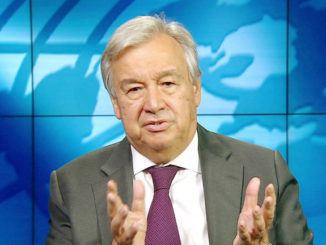
  • Antonio Guterres re-elected as UN Secretary-General for a second five-year term

    Antonio Guterres re-elected as UN Secretary-General for a second five-year term

    “India values Secretary General’s leadership of the United Nations”: India’s External Affairs Minister Jaishankar

    UNITED NATIONS (TIP): UN General Assembly on Friday, June 18, appointed Antonio Guterres as the UN Secretary-General for a second term beginning January 1, 2022, days after the powerful Security Council had unanimously recommended his name to the 193-member body for re-election.

    President of the 75th session of the UN General Assembly Volkan Bozkir announced that Mr. Guterres “has been appointed by acclamation Secretary-General of the United Nations for the second term of office beginning on January 1, 2022, and ending on December 31, 2026.” Mr. Bozkir then administered the oath of office to 72-year-old Guterres at the podium of the UN General Assembly Hall.

    On June 8, the 15-nation Council had held a closed meeting where it adopted by acclamation the resolution that recommended Mr. Guterres’ name to the General Assembly for a second five-year term as Secretary General from January 1, 2022-December 31, 2026.

    Estonia’s Ambassador to the UN Sven Jurgenson, President of the Council for the month of June, had told reporters after the meeting: “We have all seen actually the Secretary General in action. I think he has been an excellent Secretary General. He’s a bridge builder, his views on the conflict zones in the world and he’s able to speak to everybody. And I think this is something that is expected from the Secretary General, and he has proven worthy of the post already with the five years that he has been in office,” Mr. Jurgenson said.

    India had expressed its support for re-election of Mr. Guterres as UN Chief and welcomed the adoption of the resolution recommending his name.

    India’s Permanent Representative to the UN Ambassador T.S. Tirumurti tweeted “India welcomes the adoption of @UN #SecurityCouncil resolution recommending a second term to #UnitedNations Secretary-General @antonioguterres.” Last month, External Affairs Minister S. Jaishankar met Mr. Guterres at the United Nations headquarters and expressed New Delhi’s support to him for his second term as the world’s top diplomat.

    “India values UNSG’s leadership of the UN, especially in these challenging times. Conveyed our support for his candidature for a second term,” Mr. Jaishankar had said in a tweet after the meeting.

    Later a press release issued by the Permanent Mission of India to the UN also stated that Mr. Jaishankar “conveyed that India values Secretary General’s leadership of the United Nations, especially in these challenging times. He conveyed India’s support for his candidature for re-election for a second term.” Under the UN Charter, the Secretary-General is appointed by the General Assembly upon the recommendation of the Security Council. Each Secretary-General has the option of a second term if they can garner enough support from Member States.

    Mr. Guterres, the ninth Secretary-General of the United Nations, took over on January 1, 2017, and his first term ends on December 31 this year. Former Prime Minister of Portugal, Mr. Guterres served as the United Nations High Commissioner for Refugees for a decade from June 2005 to December 2015.

    Mr. Guterres, nominated by the Government of Portugal, has been the only official candidate for the position of Secretary General and his re-election was a given. There has been no woman Secretary General in the UN’s 75-year history and Mr. Guterres’ re-election will mean that any possibility of having a female lead the world organization can come only after 2026.

    In March, Mr. Guterres had circulated his vision statement and earlier in May, laid out his case for a second term to UN Member States during an informal interactive dialogue convened in the General Assembly Hall.

    Mr. Guterres was elected after a reformed selection process that included a public informal dialogue session in the General Assembly, involving civil society representatives, aimed at ensuring transparency and inclusivity.

    In his vision statement ‘Restoring trust and inspiring hope’, Mr. Guterres said that the imperatives for the next five years include mounting a massive and enduring response to the COVID-19 pandemic and its consequences in the short-term, leaving no stone unturned in the search for peace and security, making peace with nature and climate action, turbocharging the Decade of Action to achieve the Sustainable Development Goals and advocating for a more equitable world, ensuring the centrality of human rights, taking gender equality to the next level, focusing on people, rising to the challenge of digital transformation, advancing multilateralism and the common agenda, embarking on a ‘United Nations 2.0’ and rekindling shared commitment to enduring values.

    “As we emerge from the pandemic, the UN is more relevant than ever…We must act as a catalyst and a platform for more inclusive, networked and effective forms of multilateralism. Our direction of travel is clear on peace and security, climate action, sustainable development, human rights and the humanitarian imperative. Our power to transform the current situation into a better world and future for all depends on everyone everywhere and can only be done successfully if we are resolute and resolved to combine our efforts towards our common agenda for the benefit of humanity and the planet,” Mr. Guterres said in his vision statement.

    (Agencies)

  • Balancing act: On India’s stand in Israel-Palestine conflict

    Balancing act: On India’s stand in Israel-Palestine conflict

    India should oppose indiscriminate attacks on Israel and disproportionate bombing on Gaza

    At the open UN Security Council session on Sunday, May 16, on the Gaza conflict, India, a non-permanent member, attempted a delicate balancing act by reaffirming its traditional support for the Palestine cause without abandoning its new friend Israel. T.S. Tirumurti, India’s Permanent Representative at the UN, expressed concern over the violence in Jerusalem and the “possible eviction process” of Palestinian families in Sheikh Jarrah and warned against “attempts to unilaterally change the status quo” in Jerusalem. He also reiterated India’s “strong support for the just Palestinian cause and its unwavering commitment to the two-state solution”. But India was careful not to upset Israel’s sensitivities. There is a direct condemnation of the rocket attacks from Gaza but no direct reference to the disproportionate bombing Israel has been carrying out on the impoverished Gaza Strip since May 10. India also did not make any reference to the status of Jerusalem or the future borders of the two states, in line with a recent change in its policy. Until 2017, the Indian position was that it supported the creation of an independent, sovereign Palestine state based on the 1967 border and with East Jerusalem as its capital that lives alongside Israel. The balancing did not appear to have gone down well with the Israeli side. When Prime Minister Benjamin Netanyahu, who has a good rapport with Narendra Modi, thanked 25 countries that he said stood with Israel, there was no reference to India.

    For India, which voted against the creation of Israel in historic Palestine in 1947 in the UN General Assembly, ties with Israel have transformed since the early 1990s. In 2017, Mr. Modi became the first Indian PM to visit Israel and Mr. Netanyahu travelled to India in 2018. While Israel ties are on a strong footing, India cannot ignore the Palestinians for historic, moral, legal and realist reasons. Historically, India, which went through the horrors of 1947, opposed the partition of Palestine. Throughout the Cold War, it remained a strong supporter of Palestinian freedom, taking a moral and legal position against the Israeli occupation, in line with international laws and norms. It established full diplomatic relations with Israel in 1992, in the context of improving Israel-Palestine ties after the Madrid Conference and the changes in the global order following the disintegration of the Soviet Union, but never abandoned the Palestinians. India’s Palestine policy had realist underpinnings too. India has been energy dependent on the Arab world. It cannot alienate the Arab voices or be isolated in the General Assembly, where most member-countries oppose the occupation. These factors should have driven India to take a more emphatic position against both the indiscriminate rocket attacks into Israel, in which 12 people were killed, and the disproportionate bombing of Gaza, which has claimed at least 230 lives, including over 60 children.

    (The Hindu)

  • India contributes $300,000 to UN body for gender equality

    India contributes $300,000 to UN body for gender equality

    India has contributed USD 300,000 to the United Nations agency for gender equality and women empowerment, a contribution lauded by the UN entity. India made a contribution to UN Women, the world organisation’s entity for gender equality and women’s empowerment.

    “#India contributes USD 300,000 to @UN_Women for 2021,” India’s Permanent Representative to the UN Ambassador T S Tirumurti tweeted on Thursday.

    He said India reaffirms its support for gender equality and women empowerment, describing UN Women as a “valued partner in our progress from women’s development to #women-led development.”

    Assistant-Secretary-General and Deputy Executive Director of UN Women Anita Bhatia thanked India for the contribution and its support to UN Women and said in a tweet that “Women-led development envisions women as agents of change driving measurable impact in the lives of women & girls.”