Tag: T.T. Krishnamachari

  • Protect the power of ‘the little man’ in a democracy

    Protect the power of ‘the little man’ in a democracy

    The real challenge before the nation is how to make citizens, now bystanders, aware of their duties to defend the Constitution

    The nation stands polarized on religious and caste lines, resulting in the creation of deep distrust, if not animosity. The party in power at the Centre is unwilling to cede an inch to the Opposition to maintain a vibrant democracy. There is a constant targeting of the Opposition, as verbal attacks and political destabilization of governments in Opposition-ruled States, through political machinations and “raids” and “checks” by several core central agencies.

    By Dushyant Dave (Twitter photo)

    The nation may have celebrated “Azadi ka Amrit Mahotsav”, on the completion of 75 years of Independence and the 74th anniversary of the founding of the Republic, but there are still deep contradictions in the country. Abject poverty prevails, there is a deepening divide between the rich and the poor, precarious conditions affect the rule of law, and not-so-good governance poses grave challenges to the very existence of democracy and the republic.

    The nation stands polarized on religious and caste lines, resulting in the creation of deep distrust, if not animosity. The party in power at the Centre is unwilling to cede an inch to the Opposition to maintain a vibrant democracy. There is a constant targeting of the Opposition, as verbal attacks and political destabilization of governments in Opposition-ruled States, through political machinations and “raids” and “checks” by several core central agencies.

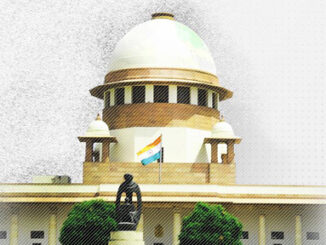
    With weakened constitutional safeguards and institutions, the judiciary, including the Supreme Court of India, has been slow to stop these attacks. For example, the floor test that the judiciary applies only seems to aid the efforts of the ruling party in bringing down Opposition governments, and is a completely futile judicial weapon. The judiciary needs to innovate to stop the luring of elected MLAs, in order to protect the power of the “little man” in a democracy, as Sir Winston Churchill described it.

    So, where is the Amrit? Our constitutional framers had envisaged a different India, as Constitutional Assembly debates show. H.V. Kamath on November 5, 1948, had said, “I hope that we in India will go forward and try to make the State exist for the individual rather than the individual for the State…At least let us try to bring about this empire of the spirit in our own political institutions. If we do not do this, our attempt today in this Assembly would not truly reflect the political genius of the Indian people… India of the ages is not dead nor has she spoken her last creative word; she lives and has still something to do for herself and for the human family.”

    Have we marched in this direction over seven decades? For those who perpetuate polarization, an incident narrated by H.V. Kamath is the answer. Referring to the 1927 Congress session in Madras, he narrates, “Pandit Madam Mohan Malviya asked Muslims, ‘What safeguards did you ask from the Secretary of State for India or from the Government of India? We are here. What better safeguards do you want?’” After that speech, Maulana Muhammad Ali came to the rostrum, embraced Pandit Malaviya and said, “I do not want any safeguards. We want to live as Indians, as part of the Indian body politic. We want no safeguards from the British Government. Pandit Malaviya is our best safeguard.”

    Constitutionally, the republic that was envisioned by the framers was what George Grote the historian had desired. B.R. Ambedkar quotes him reverentially (on November 4, 1948), “a paramount reverence for the forms of the Constitution, enforcing obedience to authority acting under and within these forms yet combined with the habit of open speech, of action subject only to definite legal control, and unrestrained censure of those very authorities as to all their public acts combined too with a perfect confidence in the bosom of every citizen amidst the bitterness of party contest that the forms of the Constitution will not be less sacred in the eyes of his opponents than in his own”. But then, B.R. Ambedkar expresses his fear thereupon, saying, “The other is that it is perfectly possible to prevent the Constitution, without changing its form by merely changing the form of the administration and making it inconsistent and opposed to the spirit of the Constitution. The question is, can we presume such a diffusion of Constitutional morality? Constitutional morality is not a natural sentiment. It has to be cultivated. We must realize that our people have yet to learn it. Democracy in India is only a top-dressing on Indian soil, which is essentially undemocratic.”

    The failure of the constitutional and administrative authorities to work as per the letter and spirit of the Constitution shows how undemocratic India is. Discussing the importance of Opposition members of the Constituent Assembly, Z.H. Lari, said on May 20, 1949, “… everyone knows that power corrupts and absolute power corrupts absolutely… It is also a truism to say that every party that comes into power tries to make its hold permanent. The only check on the degeneration of party government into despotism is the existence of another party that keeps a strict eye on the doings of the cabinet and the party and thereby prevents the degeneration of a party government into a dictatorship. Besides, there cannot be a proper functioning of any party government unless there is constant criticism of the doings of that party.”

    T.T. Krishnamachari said, “I have no doubt the future parliament and those who are going to be in charge of the destinies of this country would bear in mind the suggestion of Mr. Lari to pay a salary to the Leader of the Opposition, if that would encourage the creation of an Opposition, of a healthy Opposition Party.”

    M.A. Ayyangar said, “I agree there ought to be a healthy opposition… I am really surprised to see … the very protagonist of this healthy opposition had ample opportunity and I do not know why he did not start an opposition… Are their actions calculated to improve the welfare of the Country, much better than what the Congress party has stated in its manifesto?” Biswanath Das felt that the “opposition is a necessary evil and that the function of the opposition is to give the party in power full work”.
    The Congress, which dominated this country for almost four decades, sought to perpetuate its power, post-Independence, by preventing a healthy Opposition. The dismissal of governments in Opposition-ruled States was its key weapon. Yet, today, the Congress and other members of the Opposition have been forced to complain about the state of democracy.

    But are they collectively a healthy opposition? Their utterances and actions cause bewilderment. Are their actions calculated to improve the welfare of the country? Their not speaking in one voice only leaves a clear path for the ruling party to win election after election.

    The challenge before the nation is how to make citizens aware of their duties to defend the Constitution. People are now just bystanders before the political class which is making freedom irrelevant. In Israel, the proposals of Prime Minister Benjamin Netanyahu to undermine the judiciary are being strongly resisted. But what do we have in our nation today?

    The failure to have a strong and healthy Opposition is causing the ruling party to perpetuate its position in a dictatorial manner. Constant attacks on the Supreme Court of India by Ministers and others show the scant regard for a healthy democracy. The ruling party must remember what Ram Narayan Singh once said, “In this country we have just got freedom, and our own party, i.e., the Congress Party, has got no opposition to it. I have seen how things have been going on here and I feel that there must be a strong opposition to criticize our actions and review them…. A Government which does not like opposition and always wants to be in power is not a patriotic but a traitor Government.”

    Let us hope and pray that the party in power and the Opposition will realize their duties and responsibilities towards the Constitution, respect the wishes of the framers of the Constitution, and work for the welfare of the people of India.

    (Dushyant Dave is Senior Advocate in the Supreme Court of India and former President of the Supreme Court Bar Association)

  • India after Independence

    India after Independence

    • Independence day special

    When India became independent in August 1947, it faced a series of very great challenges. As a result of Partition, 8 million refugees had come into the country from what was now Pakistan. These people had to be found homes and jobs. Then there was the problem of the princely states, almost 500 of them, each ruled by a maharaja or a nawab, each of whom had to be persuaded to join the new nation.

    The problems of the refugees and of the princely states had to be addressed immediately. In the longer term, the new nation had to adopt a political system that would best serve the hopes and expectations of its population.

    India’s population in 1947 was large, almost 345 million. It was also divided. There were divisions between high castes and low castes, between the majority Hindu community and Indians who practiced other faiths. The citizens of this vast land spoke many different languages, wore many different kinds of dress, ate different kinds of food and practiced different professions. How could they be made to live together in one nation-state? To the problem of unity was added the problem of development. At Independence, the vast majority of Indians lived in the villages. Farmers and peasants depended on the monsoon for their survival. So did the non-farm sector of the rural economy, for if the crops failed, barbers, carpenters, weavers and other service groups would not get paid for their services either. In the cities, factory workers lived in crowded slums with little access to education or health care. Clearly, the new nation had to lift its masses out of poverty by increasing the productivity of agriculture and by promoting new, job-creating industries. Unity and development had to go hand in hand. If the divisions between different sections of India were not healed, they could result in violent and costly conflicts – high castes fighting with low castes, Hindus with Muslims and so on. At the same time, if the fruits of economic development did not reach the broad masses of the population, it could create fresh divisions – for example, between the rich and the poor, between cities and the countryside, between regions of India that were prosperous and regions that lagged behind.

    A Constitution is written

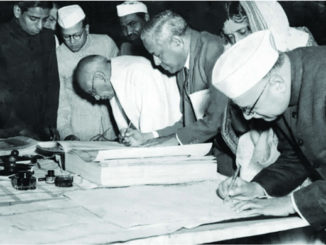
    Between December 1946 and November 1949, some three hundred Indians had a series of meetings on the country’s political future. The meetings of this “Constituent Assembly” were held in New Delhi, but the participants came from all over India, and from different political parties.

    These discussions resulted in the framing of the Indian Constitution, which came into effect on 26 January 1950. One feature of the Constitution was its adoption of universal adult franchise. All Indians above the age of 21 would be allowed to vote in state and national elections. This was a revolutionary step – for never before had Indians been allowed to choose their own leaders. In other countries, such as the United Kingdom and the United States, this right had been granted in stages. First only men of property had the vote. Then men who were educated were also added on. Working-class men got the vote only after a long struggle. Finally, after a bitter struggle of their own, American and British women were granted the vote. On the other hand, soon after Independence, India chose to grant this right to all its citizens regardless of gender, class or education.

    A second feature of the Constitution was that it guaranteed equality before the law to all citizens, regardless of their caste or religious affiliation. There were some Indians who wished that the political system of the new nation be based on Hindu ideals, and that India itself be run as a Hindu state. They pointed to the example of Pakistan, a country created explicitly to protect and further the interests of a particular religious community – the Muslims. However, the Indian Prime Minister, Jawaharlal Nehru, was of the opinion that India could not and must not become a “Hindu Pakistan”. Besides Muslims, India also had large populations of Sikhs and Christians, as well as many Parsis and Jains. Under the new Constitution, they would have the same rights as Hindus – the same opportunities when it came to seeking jobs in government or the private sector, the same rights before the law.

    A third feature of the Constitution was that it offered special privileges for the poorest and most disadvantaged Indians. The practice of untouchability, described as a “slur and a blot” on the “fair name of India”, was abolished. Hindu temples, previously open to only the higher castes, were thrown open to all, including the former untouchables. After a long debate, the Constituent Assembly also recommended that a certain percentage of seats in legislatures as well as jobs in government be reserved for members of the lowest castes. It had been argued by some that Untouchable or as they were now known, Harijan, candidates did not have good enough grades to get into the prestigious Indian Administrative Service. But, as one member of the Constituent Assembly, H.J. Khandekar, argued, it was the upper castes who were responsible for the Harijans “being unfit today”.

    Addressing his more privileged colleagues, Khandekar said: We were suppressed for thousands of years. You engaged us in your service to serve your own ends and suppressed us to such an extent that neither our minds nor our bodies and nor even our hearts work, nor are we able to march forward. Along with the former Untouchables, the adivasis or Scheduled Tribes were also granted reservation in seats and jobs. Like the Scheduled Castes, these Indians too had been deprived and discriminated against. The tribals had been deprived of modern health care and education, while their lands and forests had been taken away by more powerful outsiders.

    The new privileges granted them by the Constitution were meant to make amends for this. The Constituent Assembly spent many days discussing the powers of the central government versus those of the state governments. Some members thought that the Centre’s interests should be foremost. Only a strong Centre, it was argued, “would be in a position to think and plan for the well-being of the country as a whole”. Other members felt that the provinces should have greater autonomy and freedom.

     A member from Mysore feared that under the present system “democracy is centred in Delhi and it is not allowed to work in the same sense and spirit in the rest of the country”. A member from Madras insisted that “the initial responsibility for the well-being of the people of the provinces should rest with the Provincial Governments”. The Constitution sought to balance these competing claims by providing three lists of subjects: a Union List, with subjects such as taxes, defence and foreign affairs, which would be the exclusive responsibility of the Centre; a State List of subjects, such as education and health, which would be taken care of principally by the states; a Concurrent List, under which would come subjects such as forests and agriculture, in which the Centre and the states would have joint responsibility. Another major debate in the Constituent Assembly concerned language. Many members believed that the English language should leave India with the British rulers. Its place, they argued, should be taken by Hindi. However, those who did not speak Hindi were of a different opinion. Speaking in the Assembly, T.T. Krishnamachari conveyed “a warning on behalf of people of the South”, some of whom threatened to separate from India if Hindi was imposed on them.

     A compromise was finally arrived at: namely, that while Hindi would be the “official language” of India, English would be used in the courts, the services, and communications between one state and another. Many Indians contributed to the framing of the Constitution. But perhaps the most important role was played by Dr B.R. Ambedkar, who was Chairman of the Drafting Committee, and under whose supervision the document was finalised. In his final speech to the Constituent Assembly, Dr Ambedkar pointed out that political democracy had to be accompanied by economic and social democracy. Giving the right to vote would not automatically lead to the removal of other inequalities such as between rich and poor, or between upper and lower castes. With the new Constitution, he said, India was going to enter into a life of contradictions. In politics we will have equality and in social and economic life we will have inequality. In politicswe will be recognising the principle of one man one vote and one value. In our social and economic life, we shall, by reason of our social and economic structure, continue to deny the principle of one man one value.

    How were states to be formed?

    Back in the 1920s, the Indian National Congress – the main party of the freedom struggle – had promised that once the country won independence, each major linguistic group would have its own province. However, after independence the Congress did not take any steps to honour this promise. For India had been divided on the basis of religion: despite the wishes and efforts of Mahatma Gandhi, freedom had come not to one nation but to two. As a result of the partition of India, more than a million people had been killed in riots between Hindus and Muslims. Could the country afford further divisions on the basis of language? Both Prime Minister Nehru and Deputy Prime Minister Vallabhbhai Patel were against the creation of linguistic states. After the Partition, Nehru said, “disruptionist tendencies had come to the fore”; to check them, the nation had to be strong and united. Or, as Patel put it: … the first and last need of India at the present moment is that it should be made a nation … Everything which helps the growth of nationalism has to go forward and everything which throws obstacles in its way has to be rejected … We have applied this test to linguistic provinces also, and by this test, in our opinion [they] cannot be supported. That the Congress leaders would now go back on their promise created great disappointment. The Kannada speakers, Malayalam speakers, the Marathi speakers, had all looked forward to having their own state. The strongest protests, however, came from the Telugu-speaking districts of what was the Madras Presidency. When Nehru went to campaign there during the general elections of 1952, he was met with black flags and slogans demanding “We want Andhra”. In October of that year, a veteran Gandhian named Potti Sriramulu went on a hunger strike demanding the formation of Andhra state to protect the interests of Telugu speakers. As the fast went on, it attracted much support. Hartals and bandhs were observed in many towns.

    On 15 December 1952, fifty-eight days into his fast, Potti Sriramulu died. As a newspaper put it, “the news of the passing away of Sriramulu engulfed entire Andhra in chaos”. The protests were so widespread and intense that the central government was forced to give in to the demand. Thus, on 1 October 1953, the new state of Andhra came into being, which subsequently became Andhra Pradesh.

    After the creation of Andhra, other linguistic communities also demanded their own separate states. A States Reorganisation Commission was set up, which submitted its report in 1956, recommending the redrawing of district and provincial boundaries to form compact provinces of Assamese, Bengali, Oriya, Tamil, Malayalam, Kannada and Telugu speakers respectively. The large Hindi-speaking region of north India was also to be broken up into several states. A little later, in 1960, the bilingual state of Bombay was divided into separate states for Marathi and Gujarati speakers. In 1966, the state of Punjab was also divided into Punjab and Haryana, the former for the Punjabi speakers (who were also mostly Sikhs), the latter for the rest (who spoke not Punjabi but versions of Haryanvi or Hindi).

    Planning for development

    Lifting India and Indians out of poverty, and building a modern technical and industrial base were among the major objectives of the new nation. In 1950, the government set up a Planning Commission to help design and execute suitable policies for economic development. There was a broad agreement on what was called a “mixed economy” model. Here, both the State and the private sector would play important and complementary roles in increasing production and generating jobs. What, specifically, these roles were to be – which industries should be initiated by the state and which by the market, how to achieve a balance between the different regions and states – was to be defined by the Planning Commission.

    In 1956, the Second Five Year Plan was formulated. This focused strongly on the development of heavy industries such as steel, and on the building of large dams. These sectors would be under the control of the State. This focus on heavy industry, and the effort at state regulation of the economy was to guide economic policy for the next few decades. This approach had many strong supporters, but also some vocal critics.

    Some felt that it had put inadequate emphasis on agriculture. Others argued that it had neglected primary education. Still others believed that it had not taken account of the environmental implications of economic policies. As Mahatma Gandhi’s follower Mira Behn wrote in 1949, by “science and machinery he [mankind] may get huge returns for a time, but ultimately will come desolation. We have got to study Nature’s balance, and develop our lives within her laws, if we are to survive as a physically healthy and morally decent species.”

    The Nation, 75 years on

    On 15 August 2021, India celebrates 75 years of its existence as a free nation. How well has the country done in this time? And to what extent has it fulfilled the ideals set out in its Constitution? That India is still united, and that it is still democratic, are achievements that we might justly be proud of. Many foreign observers had felt that India could not survive as a single country, that it would break up into many parts, with each region or linguistic group seeking to form a nation of its own. Others believed that it would come under military rule. However, as many as thirteen general elections have been held since Independence, as well as hundreds of state and local elections. There is a free press, as well as an independent judiciary. Finally, the fact that people speak different languages or practise different faiths has not come in the way of national unity.

    On the other hand, deep divisions persist. Despite constitutional guarantees, the Untouchables or, as they are now referred to, the Dalits, face violence and discrimination. In many parts of rural India they are not allowed access to water sources, temples, parks and other public places. And despite the secular ideals enshrined in the Constitution, there have been clashes between different religious groups in many states. Above all, as many observers have noted, the gulf between the rich and the poor has grown over the years. Some parts of India and some groups of Indians have benefited a great deal from economic development. They live in large houses and dine in expensive restaurants, send their children to expensive private schools and take expensive foreign holidays. At the same time many others continue to live below the poverty line. Housed in urban slums, or living in remote villages on lands that yield little, they cannot afford to send their children to school. The Constitution recognises equality before the law, but in real life some Indians are more equal than others. Judged by the standards it set itself at Independence, the Republic of India has not been a great success. But it has not been a failure either.