Tag: Taiwan

  • India’s freedom struggle: From first invasion to midnight of Independence

    India’s freedom struggle: From first invasion to midnight of Independence

    India’s journey to freedom was neither swift nor simple-it was a centuries-long saga of resilience, rebellion, and renaissance. While the climax arrived on 15 August 1947, the struggle had its roots in the earliest invasions that disrupted the subcontinent’s autonomy. This story spans from medieval conquests to colonial exploitation, from fragmented resistance to unified nationalism, and from armed uprisings to non-violent mass movements.
    Before the Raj: Early Invasions
    The Turkish and Mughal Periods

    The first significant foreign incursions into India’s political structure began with Mahmud of Ghazni’s raids in the 11th century, followed by Muhammad Ghori’s conquests in the late 12th century. These invasions led to the establishment of the Delhi Sultanate (1206-1526), which reshaped governance and trade but also saw resistance from local rulers like the Rajputs.
    The arrival of the Mughals in 1526, under Babur, ushered in a new imperial order. While the Mughal period (especially under Akbar) was known for cultural synthesis, by the 18th century, weakening central control allowed European trading companies to gain influence.
    The European Footprint: Traders to Rulers
    Portuguese and Dutch Presence
    The Portuguese, led by Vasco da Gama’s arrival in 1498, were the first Europeans to establish a foothold, controlling ports like Goa. The Dutch East India Company followed, though their influence remained largely in trade.
    The British East India Company
    An official of the East India Company in processionSurrounded by Indians, a colonial official of the British East India Company moving on horseback in a procession. Watercolor on paper, c. 1825–30. The British first arrived not as conquerors, but as merchants, drawn by India’s extraordinary wealth, which had been famous in the West since Greek times. They arrived to find India dominated by the vast Mughal empire, which had been established in the 16th century by the conqueror Babur and now ruled most of the subcontinent. In 1613, the Mughal emperor Jahangir granted the British permission to establish a trading post in Surat, Gujarat, which would become the first British foothold in India.
    Over the following century, the British East India Company established additional trading posts and also gradually increased its economic and political influence throughout the subcontinent. After the death of Emperor Aurangzeb in 1707, the Mughal empire entered a rapid phase of decline, providing an opening for various regional powers, including the Marathas, the Sikhs, and the northern Rajput chiefs to assert their sovereignty. By the middle of the 18th century, there was no longer a single dominant power in the subcontinent, leaving the region vulnerable to colonial ambitions.
    The Battle of Plassey
    The Battle of Plassey in 1757, part of the larger Seven Years’ War between Britain and France, was a turning point in the British conquest of India. The East India Company had increasingly solidified its position and was now regarded by native rulers as a serious threat. The nawab (ruler) of Bengal, Siraj al-Dawlah, favoring an alliance with the French, had previously attacked company trading posts. With the help of some of the nawab’s own generals, the British were able to defeat and depose the nawab at the Battle of Plassey and appointed their own administration in Bengal. This crucial victory marked the transformation of the British East India Company from a mere mercantile presence into a military and political power in India. The company would go on to consolidate its power over the Indian subcontinent through a series of military campaigns. It established its dominance in Bengal and Bihar with the Battle of Buxar (1764), in southern India with Tipu Sultan’s defeat in the fourth Mysore War (1799), and in the Punjab following the second Sikh war (1848-49).
    The Rebellion of 1857 and the British raj
    By the 1850s, the company had consolidated its rule over much of India, fostering widespread discontent and a pattern of unrest that produced localized uprisings such as the Sannyasi Rebellion in the late 18th century and the Santhal Rebellion of 1855–56. On May 10, 1857, however, a rebellion erupted in Meerut that would profoundly alter the dynamic between India and Britain. Sepoys (Indian soldiers) in the company’s service shot their British officers and marched to Delhi, rallying local troops to their cause. By the evening of May 11, they had declared the aged Bahadur Shah II the emperor of India, symbolically restoring the Mughals to power and rejecting British rule.
    The Rebellion of 1857, often called as the Sepoy Mutiny in traditional British historiography, spread rapidly across northern and central India. It produced fierce battles at Delhi, Kanpur, and Lucknow, and it eventually involved leaders such as Nana Sahib, Tantia Tope, and Lakshmi Bai, the rani (“queen”) of Jhansi. Lakshmi Bai in particular became a legendary symbol of resistance against British rule; after the British attempted to annex Jhansi using the pretext of the doctrine of lapse, Lakshmi Bai took command of the rebels in the Bundelkhand region and fought valiantly before being killed in battle on June 17, 1858.
    By the end of 1858, the revolt was largely suppressed. The British captured Bahadur Shah II and exiled him to Rangoon (now Yangon, Myanmar [Burma]), where he died in 1862, marking the end of the Mughal dynasty. In response to the revolt, the British government recognized the administrative failures of the East India Company, and the British crown assumed direct rule of India, initiating the period known as the British raj.
    The failure of the revolt had a profound psychological impact on the people of India. The sepoys, the native princes, the queen of Jhansi, and the heir of Mughal grandeur had made their stand against the British—and they had failed. From this time all serious hope of a revival of the past or an exclusion of the West diminished. The traditional structure of Indian society began to break down and was eventually superseded by a Westernized class system, from which emerged a strong middle class with a heightened sense of Indian nationalism.
    Formation of the Indian National Congress
    Yet the struggle continued. On December 28, 1885, the Indian National Congress (Congress Party) was formed, marking the inception of the first major nationalist movement to emerge in the British Empire outside Britain. Led largely by Allan Octavian Hume, a retired British civil servant sympathetic to the cause of Indian freedom, the Congress Party was initially established as a platform for educated Indians to discuss political issues and advocate for a greater role in governance. The first meeting was held in Bombay (now Mumbai), drawing 72 delegates from across the Indian subcontinent. These initial delegates were largely Western-educated and from elite backgrounds and focused on moderate reforms rather than outright independence.
    By the early 20th century, a strong “extremist” faction emerged within the Indian National Congress in response to British policies, especially after the 1905 partition of Bengal, which was widely viewed as an attempt to weaken nationalist sentiment in the region. The partition of Bengal sparked the Swadeshi Movement (swadeshi: “of one’s own country”), the first organized mass action against British rule; though it declined by 1908, its central aim was achieved when the partition was annulled in 1911. By 1907, a clear delineation existed within the Congress between the “extremists,” led by Bal Gangadhar Tilak, Bipin Chandra Pal, and Lala Lajpat Rai, and the “moderates,” led by Gopal Krishna Gokhale.
    Formation of the All-India Muslim League
    The All-India Muslim League, the first political party for Muslims in India, was founded in Dhaka (now the capital of Bangladesh) on December 30, 1906. This development was driven by the increasing dissatisfaction among Indian Muslims with the Indian National Congress, which many perceived as primarily representing Hindu interests. The party was heavily influenced by the visionary Indian Muslim leader Sir Sayyid Ahmad Khan, who had died in 1898, and was founded by leaders including Mian Muhammad Shafi, Nawab Waqar-ul-Mulk, Nawab Mohsin-ul-Mulk, Syed Ameer Ali, Mualana Mohammad Ali Jouhar, and Sir Sultan Mohammed Shah (the league’s first president, also known as Aga Khan III). Sir Muhammad Iqbal would emerge as a key voice within a few years of the party’s founding.
    The league aimed to safeguard the rights of Indian Muslims and initially espoused loyalty to the British raj as a means to achieve greater civil rights and counterbalance the dominance of the Congress Party. The Muslim League would eventually lay the groundwork for modern Pakistan. Mohammed Ali Jinnah, who joined the league in 1913, would later transform the political party into a mass movement for Muslim autonomy.
    Gandhi’s return from South Africa
    Mohandas Karamchand Gandhi, later known as Mahatma (“Great Soul”) Gandhi, was born in 1869 in Porbandar, India, and initially trained as a lawyer in England before relocating to South Africa. There, he advocated for civil rights and developed his foundational philosophy of nonviolent resistance. After spending over two decades in South Africa, Gandhi returned to India in 1915 amid the backdrop of World War I and joined the Indian National Congress. Initially, he remained at the periphery of the movement, supporting the British war effort and refraining from political agitation. However, his perspective shifted dramatically following the enactment of the Rowlatt Act in 1919.
    The Rowlatt Act is passed
    In February 1919 the British government passed the Rowlatt Act, which empowered authorities to imprison suspected independence activists without trial and allowed for certain political cases to be tried without juries. The object of this act was to replace the repressive provisions of the wartime Defence of India Act with a permanent law. Indians felt profoundly betrayed after their support of Britain throughout World War I, and resentment spread throughout the country. Gandhi, provoked by the act, announced his initial satyagraha (“clinging to truth”) struggle, advocating nonviolent civil disobedience, which would lead to a political earthquake throughout the spring of 1919.
    The Jallianwala Bagh Massacre
    On April 13, 1919, British troops under the command of Gen. Reginald Dyer fired on a crowd of unarmed civilians in Amritsar. Following Gandhi’s calls for resistance and a one-day general strike earlier that month, protests had broken out across the country, particularly in Punjab. In Amritsar, following the arrests of prominent Indian leaders, protests had turned violent on April 10. A force of several dozen troops commanded by General Dyer was tasked with restoring order, and among the measures taken was a ban on public gatherings.
    On the afternoon of April 13, a crowd of at least 10,000 men, women, and children gathered in the Jallianwala Bagh, a public garden near the Golden Temple that was nearly completely enclosed by walls and had only one exit. It is not clear how many people there were protesters who were defying the ban on public meetings and how many had come to the city from the surrounding region to celebrate Baisakhi, a spring festival. Dyer and his soldiers arrived and sealed off the exit. Without warning, the troops opened fire on the crowd, reportedly shooting hundreds of rounds until they ran out of ammunition. It is not certain how many died in the bloodbath, but, according to one official British report, an estimated 379 people were killed, and about 1,200 more were wounded. After they ceased firing, the troops immediately withdrew, leaving behind the dead and wounded.
    The shooting was followed by the proclamation of martial law in Punjab that included public floggings and other humiliations. Indian outrage grew as news of the shooting and subsequent British actions spread throughout the subcontinent. The Bengali poet and Nobel laureate Rabindranath Tagore renounced the knighthood that he had received in 1915. Gandhi was initially hesitant to act, but he soon began organizing the noncooperation movement (1920–22), his first large-scale and sustained nonviolent protest campaign.
    The noncooperation movement
    Launched in 1920 Gandhi’s noncooperation movement, backed by the Congress Party, was a mass protest against British authority advocating nonparticipation in colonial institutions. Indians were encouraged to resign from their titles; boycott government educational institutions, courts, government services, foreign goods, and elections; and, eventually, refuse to pay taxes. The noncooperation movement rapidly gained momentum amid growing national anger toward the British raj, particularly in the wake of the Rowlatt Act and the Jallianwala Bagh massacre. The heavy-handedness of the British government and its failure to adequately address the actions of General Dyer only intensified the Indian resolve for self-governance.
    By 1921 the British government, confronted with a united Indian front for the first time, was visibly shaken. The noncooperation movement had definitively shown the potential of united, nonviolent civil disobedience against the colonial regime; additionally, it marked the transition of Indian nationalism from a middle-class movement to a nationwide struggle. Gandhi, at this point, emerged as the de facto leader of both the Indian National Congress and the independence movement itself. The noncooperation movement also drew support from the Khilafat movement, which was mobilizing Muslim protest against the dissolution of the Ottoman empire after World War I. Gandhi’s solidarity with the Khilafat movement helped strengthen Hindu-Muslim unity during this phase of the independence struggle.
    However, Gandhi called an end to the noncooperation movement in 1922 after an angry mob in Chauri Chaura killed 22 police officers. Gandhi feared that the movement was becoming violent, contrary to its principles. Gandhi was arrested for sedition that year and sentenced to six years in prison. Jawaharlal Nehru, a young leader within the Congress Party who would later become India’s first prime minister, had been arrested the previous year for anti-government activity and released a few months later.
    Gandhi was released in 1924 after serving only two years of his sentence. By the time of his release, the political landscape had changed significantly. The Indian National Congress had split into two factions: one led by Chittaranjan Das and Motilal Nehru (the father of Jawaharlal Nehru), favoring participation in the British-dominated legislative councils as a means to gain political influence, and the other led by Chakravarti Rajagopalachari and Vallabhbhai Patel, opposing this approach and advocating for a more assertive stance against British authority. Additionally, the unity between Hindus and Muslims had deteriorated. In 1924 Gandhi was named president of the Congress Party, a position he held for a year.
    Declaration of Purna Swaraj
    On January 26, 1930, the Indian National Congress publicly declared its Purna Swaraj (“Complete Self-Rule”) resolution, decisively rejecting the idea of dominion status within the British Empire and establishing full sovereignty as the goal of the independence movement. Initially, some leaders within the movement had aimed for dominion status, which would have given India a position similar to that of Canada and Australia within the British Empire. However, as the movement progressed, this idea was increasingly viewed as inadequate by Congress Party leaders.
    The resolution was initially passed by the Congress Party on December 19, 1929, during the presidency of Jawaharlal Nehru, who at the time was the youngest person to hold that position in the party. The resolution was publicly declared the following month, with the Congress Party urging Indians to celebrate January 26 as Independence Day. Although August 15 was later chosen as India’s official Independence Day after achieving independence in 1947, the date January 26 remained significant. The constitution of India was drafted to take effect on January 26, 1950, to honor the 1930 declaration, marking India’s transition to a republic. Today, January 26 is celebrated annually as Republic Day in India.
    The Salt March
    In March 1930 Gandhi launched the Salt March (popularly known as the Dandi March), a satyagraha campaign against the British monopoly on salt. Salt production and distribution in India had long been a lucrative monopoly of the British. Through a series of laws, the Indian populace was prohibited from producing or selling salt independently, and instead Indians were required to buy expensive, heavily taxed salt that often was imported. This affected the great majority of Indians, who were poor and could not afford to buy it. Indian protests against the salt tax began in the 19th century and remained a major contentious issue throughout the period of British rule.
    Gandhi decided to mount a highly visible demonstration against the increasingly repressive salt tax by marching through what is now the western Indian state of Gujarat from his ashram (religious retreat) at Sabarmati (near Ahmadabad) to the town of Dandi (near Surat) on the Arabian Sea coast. He set out on foot on March 12, accompanied by several dozen followers. After each day’s march the group stopped in a village along the route, where increasingly larger crowds would gather to hear Gandhi speak about the unfairness of the tax on poor people. Hundreds more would join the core group of followers as they made their way to the sea, until on April 5 the entourage reached Dandi after a journey of some 240 miles (385 km). On the morning of April 6, Gandhi and his followers picked up handfuls of salt along the shore, thus technically “producing” salt and breaking the law.
    In May Gandhi was arrested after informing Lord Irwin, the viceroy of India, of his intention to march on the Dharasana saltworks. Gandhi’s arrest further fueled the movement, prompting tens of thousands more people to join the satyagraha. On May 21 Sarojini Naidu, a well-known political activist and poet, led a march to the saltworks, where many of the 2,500 peaceful marchers were brutally attacked and beaten by police. By the end of 1930 approximately 60,000 people were imprisoned as part of the civil disobedience campaign. In January 1931 Gandhi was released from custody and began negotiations with Irwin, leading to the Gandhi-Irwin Pact, signed on March 5, 1931. This truce ended the satyagraha campaign and allowed Gandhi, accompanied by Naidu, to represent the Indian National Congress at the second section of the Round Table Conference in London later that year. This session, however failed to reach agreement, either on a constitutional framework or on communal representation.
    The Poona Pact, Ambedkar, and the movement against “untouchability”
    The Poona Pact, signed on September 24, 1932, was a significant agreement between Hindu leaders and Dalit representatives, granting new rights to Dalits, Hindu caste groups then labeled “untouchables.” This agreement arose from the British government’s Communal Award, which proposed separate electorates for Dalits to ensure their political representation. Bhimrao Ramji Ambedkar, the most prominent Dalit leader, supported the proposal, believing that it would allow Dalits to advance their interests. However, Mahatma Gandhi opposed separate electorates, fearing that it would divide the Hindu community and weaken India’s fight for independence. While imprisoned, Gandhi began a fast unto death on September 18, 1932, to protest the separate electorates. Faced with Gandhi’s deteriorating health, Ambedkar and Hindu leaders negotiated the Poona Pact, which increased Dalit representation within the Hindu electorate instead of creating separate electorates.
    Ambedkar’s advocacy of Dalit rights was rooted in his personal experiences of discrimination and his extensive education. Born on April 14, 1891, into a Dalit Mahar family, Ambedkar faced severe social exclusion from an early age. Nonetheless, he excelled academically, to the extent that he came to the attention of Sayajirao Gaekwad III, the maharaja of Baroda (now Vadodara). The maharaja provided financial support for Ambedkar’s education at Bombay’s Elphinstone College and later at Columbia University in the United States and the London School of Economics in Britain. Ambedkar would use this education to champion the cause of Dalit rights upon his return to India. Ambedkar would also later become the chairman of the Drafting Committee of the Constitution for the future Republic of India.
    Although the Poona Pact was a significant development in the movement against “untouchability,” Ambedkar felt coerced into the agreement by Gandhi’s threat of suicide by starvation. Nonetheless, Ambedkar’s work would continue. He would found several journals for Dalits and, through his later role in drafting the Indian constitution, secure special representation for them in legislative councils. His efforts laid the foundation for future advancements in social justice and the eventual outlawing of untouchability, although cultural caste prejudice continues to persist in India.
    Provincial elections of 1937
    Following the Government of India Act of 1935, which granted significant autonomy to the provinces of India in response to increasing momentum in the struggle against British rule, elections were held during the winter of 1936–37, and results were declared in February 1937. The Indian National Congress emerged victorious in seven provinces, demonstrating its popularity with the Indian populace. This allowed the Congress Party to form provincial governments, giving Indians significant control over local governance for the first time in over a century. The Muslim League, however, was unable to establish a government in any province, even the Muslim-majority provinces of Punjab and Bengal. The Congress Party ministries resigned only a few years later, in 1939, in protest against India being declared a belligerent nation in World War II without consultation.
    World War II begins
    With the outbreak of World War II in 1939, the Indian Independence Movement entered its last, crucial phase. The viceroy of India, Victor Alexander John Hope (commonly known as Lord Linlithgow), declared that India was at war with Germany, to the dismay of the Congress Party, which had not been consulted. Throughout the war, Indian soldiers would fight for Britain in Asia, Africa, and Europe.
    The Indian National Congress, under the leadership of figures like Mahatma Gandhi and Jawaharlal Nehru, grappled with how to respond to the war. Gandhi, a staunch anti-fascist, was fundamentally opposed to all forms of violence, including war. However, he was equally critical of British colonialism. Initially, the Congress Party was willing to support the British war effort, provided that Britain assured India of eventual self-governance. However, the British did not agree to this condition, leading the Congress Party to distance itself from Britain as the war progressed. In contrast, the Muslim League fully supported the war effort.
    The Lahore Resolution and the idea of Pakistan
    In March 1940 the Muslim League fully resolved to chart its own path. In Punjab’s ancient capital of Lahore, the league called for the creation of a separate state for Muslims, under the leadership of Mohammad Ali Jinnah. The famous Lahore Resolution, later known as the Pakistan Resolution, was passed by the largest gathering of league delegates just one day after Jinnah informed his followers that “the problem of India is not of an inter-communal but manifestly of an international character.” The league resolved, therefore, that any future constitutional plan proposed by the British for India would not be “acceptable to the Muslims” unless it was so designed that the Muslim-majority “areas” of India’s “North-Western and Eastern Zones” were “grouped to constitute ‘independent States’ in which the constituent units shall be autonomous and sovereign.” Although the term “Pakistan” was not mentioned in the resolution itself, it was popularized by the Hindu press in their coverage shortly after the resolution was passed, and the term was then widely adopted by Muslims. Jinnah later clarified that the resolution envisioned the establishment of not two separately administered Muslim countries but rather a single Muslim nation-state—namely, Pakistan.
    The Quit India Movement
    On July 14, 1942, the Congress Party passed its “Quit India” resolution calling for an immediate end to British rule in India. The involvement of India in the war outraged many Indian political leaders, who, despite a range of opinions on the just nature of the war, thought it was morally wrong for the British to force their subjects into the fighting without consulting Indian leadership and to use Indian resources for the effort. By the war’s end 2.5 million Indians had served in the British armed forces, though the majority were volunteers.
    As the war continued and Japanese armies swept through Britain’s Southeast Asian colonies—Singapore, Malaya (now Malaysia), and Burma (now Myanmar)—a faction of the Congress Party began to call for India to gain immediate independence from Britain in order to avoid a Japanese invasion. Japanese forces moved into the Bay of Bengal, attacked British ships, and bombed the east coast ports of Visakhapatnam and Kakinada, thus making the threat of full-scale war on Indian soil seem imminent. Gandhi became more adamant about the departure of the British colonists and less concerned about internal squabbles among Indian leadership. He notably demanded of the British in his magazine Harijan on May 24, 1942: “Leave India to God. If that is too much leave her to anarchy.”
    The Congress Party’s resolution authorized Gandhi to lead a mass nonviolent protest movement if independence was not granted. The slogan “Quit India” was coined by the mayor of Bombay (now Mumbai), Yusuf Meherally. When the British government failed to meet its demands, the Congress Party met in Bombay and voted on August 8 to initiate the Quit India Movement. During that meeting, Gandhi delivered his “Do or Die” speech, in which he famously declared: “The mantra is ‘Do or Die.’ We shall either free India or die in the attempt; we shall not live to see the perpetuation of our slavery.”
    The morning after the Quit India resolution was agreed upon in Bombay, British authorities invoked the Defense of India Act, which permitted detention without a trial, to arrest Gandhi and dozens of other leaders of the Congress Party, including Jawaharlal Nehru, Abul Kalam Azad, and Vallabhbhai Patel. Concern for Gandhi’s age and fear of worldwide condemnation persuaded the British not to jail Gandhi, and instead they confined him in the Aga Khan summer palace in Pune along with his wife, Kasturba, his secretary, and some followers. The British authorities erroneously hoped they could stifle the movement by imprisoning its leaders.
    The British authorities were, however, misguided. Younger leaders stepped forward; among the most prominent of these was Aruna Asaf Ali, who presided over the August 9 Congress session in Bombay, hoisted the Congress flag, and galvanized protesters across the country. The absence of senior Congress leaders also enabled more militant forces to turn the movement in a more incendiary direction. The British government, particularly secretary of state Leopold Amery in a radio address, further fanned the flames by justifying the arrests of the Congress Party leaders as a means of preventing mass violence. Amery’s description of the movement’s disruptive tactics might have inadvertently given voice and legitimacy to those very actions among more militant protesters. Also partly due to the lack of Congress Party leaders emphasizing nonviolence, many demonstrations turned into attacks on the British themselves and parts of the British raj’s infrastructure. Telegraph lines and railroads were destroyed, and hundreds of railway stations, post offices, and police stations were burned down or damaged.
    The British response to these protests was often brutal. The military, already present in India in larger than usual numbers for the war effort, was deployed to disperse rioters, and in a few cases airplanes were instructed to fire their machine guns on the crowds from the air. Parts of the United Provinces, Bihar, the North-West Frontier, and Bengal (now West Bengal state and Bangladesh) were bombed and strafed by pilots as the British raj resolved to crush all Indian resistance as swiftly as possible. Thousands of people were killed or wounded, and roughly 60,000 arrests were made in the first few months. Most of those arrested, along with the leaders of the Congress Party, were imprisoned for the duration of World War II to prevent further protests, although Gandhi was released on May 6, 1944, because of his failing health.
    Although the movement failed to achieve its stated aim of gaining India’s immediate independence from British rule, its impact was profound. The Quit India Movement demonstrated the willingness of ordinary Indians to take action to advance their independence and proved to the British government the necessity of decolonization after World War II.
    Subhas Chandra Bose and his Indian National Army
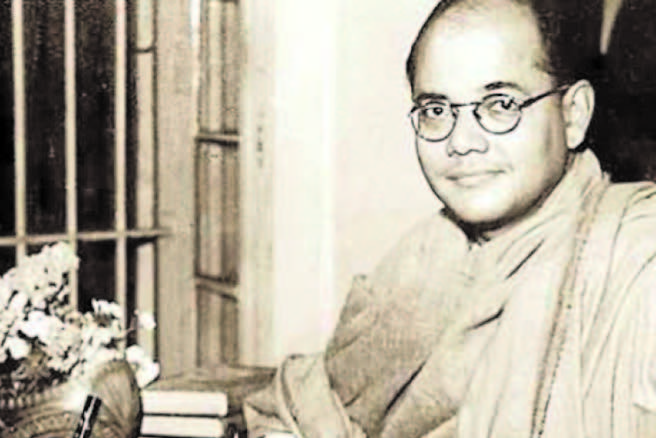
    Running parallel to the activities of Gandhi, Nehru, and the other nationalist leaders was the career of Subhas Chandra Bose, an individual with a biography worthy of Shakespearean tragedy. Commonly known as Netaji (“Respected Leader”), he was at times an ally and at other times an adversary of Gandhi. Dedicated to the independence movement from a young age, he advocated for broad industrialization, in contrast with Gandhi’s preference for cottage industries, and favored a militant approach to the independence struggle, as opposed to Gandhi’s insistence on nonviolence.
    During World War II, Bose sought alliances with Germany and Japan. Desperate for military support, he believed that they could aid India in driving the British out. In 1943, with Japanese aid and assistance, he proclaimed the establishment of a provisional independent Indian government and formed a trained army of about 40,000 troops in Japanese-occupied Southeast Asia, which he called the “Indian National Army” (Azad Hind Fauj). Alongside Japanese troops, his forces advanced to Rangoon (now Yangon) and thence overland into India, reaching Indian soil on March 18, 1944, and moving into Kohima and the plains of Imphal.
    In a stubborn battle, the mixed Indian and Japanese forces, lacking Japanese air support, were defeated and forced to retreat; the Indian National Army nevertheless for some time succeeded in maintaining its identity as a liberation army, based in Burma (now Myanmar) and later broader Southeast Asia. With the defeat of Japan, however, Bose’s fortunes ended. A few days after Japan’s announced surrender in August 1945, Bose, fleeing Southeast Asia, reportedly died in a Japanese hospital in Taiwan as a result of burn injuries from a plane crash.
    World War II ends
    By the end of World War II, Britain was greatly diminished, under immense international pressure to decolonize and, following the Quit India Movement, increasingly recognizing the necessity of withdrawal from India. In the 1945 United Kingdom general elections, Churchill’s Conservative Party government was voted out of power, and the new Labour Party prime minister, Clement Attlee, appointed one of Gandhi’s old admirers, Lord Frederick William Pethick-Lawrence, as Secretary of State for India and Burma. With the dawn of the atomic age in August and Japan’s surrender, London’s primary concern in India was how to find the political solution to the Hindu-Muslim conflict that would most expeditiously permit the British raj to withdraw its forces and to extricate as many of its assets as possible from what seemed to the Labour Party to have become more of an imperial burden and liability than any real advantage for Great Britain.

    The 1946 Cabinet Mission
    In 1946 Pethick-Lawrence personally led a three-man cabinet deputation to New Delhi with the hope of resolving the Congress Party–Muslim League deadlock and, thus, of transferring British power to a single Indian administration. Richard Stafford Cripps was responsible primarily for drafting the ingenious Cabinet Mission Plan, which proposed a three-tier federation for India, integrated by a minimal central-union government in Delhi, which would be limited to handling foreign affairs, communications, defense, and only those finances required to care for such unionwide matters. The subcontinent was to be divided into three major groups of provinces: Group A, to include the Hindu-majority provinces of the Bombay Presidency, Madras (now Chennai), the United Provinces (now Uttar Pradesh), Bihar, Orissa, and the Central Provinces (virtually all of what became independent India a year later); Group B, to contain the Muslim-majority provinces of Punjab, Sindh, the North-West Frontier, and Balochistan (the areas out of which the western part of Pakistan was created); and Group C, to include the Muslim-majority Bengal (a portion of which became the eastern part of Pakistan and in 1971 the country of Bangladesh) and the Hindu-majority Assam. The group governments were to be virtually autonomous in everything but matters reserved to the union center, and within each group the princely states were to be integrated into their neighboring provinces. Local provincial governments were to have the choice of opting out of the group in which they found themselves should a majority of their populace vote to do so.
    Punjab’s large and powerful Sikh population would have been placed in a particularly difficult and anomalous position, for Punjab as a whole would have belonged to Group B, and much of the Sikh community had become anti-Muslim since the start of the Mughal emperors’ persecution of their Gurus in the 17th century. Sikhs played so important a role in the British Indian Army that many of their leaders hoped that the British would reward them at the war’s end with special assistance in carving out their own country from the rich heart of Punjab’s fertile canal-colony lands, where, in the kingdom once ruled by Ranjit Singh (1780–1839), most Sikhs lived. Since World War I, Sikhs had been equally fierce in opposing the British raj, and, though never more than 2 percent of India’s population, they had as highly disproportionate a number of nationalist “martyrs” as of army officers. A Sikh Akali Dal (“Party of Immortals”), which was started in 1920, led militant marches to liberate gurdwaras (“doorways to the Guru”; the Sikh places of worship) from corrupt Hindu managers. Tara Singh (1885–1967), the most important leader of the vigorous Sikh political movement, first raised the demand for a separate Azad (“Free”) Punjab in 1942. By March 1946 many Sikhs demanded a Sikh nation-state, alternately called Sikhistan or Khalistan (“Land of the Sikhs” or “Land of the Pure”). The Cabinet Mission, however, had no time or energy to focus on Sikh separatist demands and found the Muslim League’s demand for Pakistan equally impossible to accept.
    Direct Action Day
    As a pragmatist, Jinnah—terminally afflicted with tuberculosis and lung cancer—accepted the Cabinet Mission’s proposal, as did Congress Party leaders. The early summer of 1946, therefore, saw a dawn of hope for India’s future prospects, but that soon proved false when Nehru announced at his first news conference as the reelected president of the Congress Party that no constituent assembly could be “bound” by any prearranged constitutional formula. Jinnah read Nehru’s remarks as a “complete repudiation” of the plan, which had to be accepted in its entirety in order to work. Jinnah then convened the league’s Working Committee, which withdrew its previous agreement to the federation scheme and declared August 16, 1946, to be “Direct Action Day,” a day of nationwide protest by the “Muslim Nation.” Thus began India’s bloodiest year of civil war since the mutiny nearly a century earlier. The Hindu-Muslim rioting and killing that started in Calcutta sent deadly sparks of fury, frenzy, and fear to every corner of the subcontinent, as all civilized restraint seemed to disappear.
    Lord Mountbatten’s arrival
    Lord Louis Mountbatten (served March–August 1947) was sent to replace Archibald Percival Wavell as viceroy as Britain prepared to transfer its power over India to some “responsible” hands by no later than June 1948. Shortly after reaching Delhi, where he conferred with the leaders of all parties and with his own officials, Mountbatten decided that the situation was too dangerous to wait even that brief period. Fearing a forced evacuation of British troops still stationed in India, Mountbatten resolved to opt for partition, one that would divide Punjab and Bengal, rather than risk further political negotiations while civil war raged and a new mutiny of Indian troops seemed imminent. Among the major Indian leaders, Gandhi alone refused to reconcile himself to partition and urged Mountbatten to offer Jinnah the premiership of a united India rather than a separate Muslim nation. Nehru, however, would not agree to that, nor would his most powerful Congress Party deputy, Vallabhbhai Patel, as both had become tired of arguing with Jinnah and were eager to get on with the job of running an independent government of India.
    The Indian Independence Act
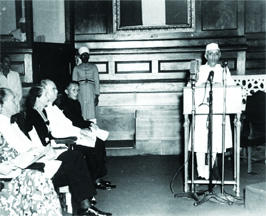
    Britain’s Parliament passed in July 1947 the Indian Independence Act. It ordered that the dominions of India and Pakistan be demarcated by midnight of August 14–15, 1947, now celebrated annually as Independence Day in both Pakistan (August 14) and India (August 15). It was both a glorious and a tragic moment. The peoples of the subcontinent, though deeply divided, were now free and the masters of their own destinies. Just before midnight, Nehru made his famous “Tryst with Destiny” speech to the Indian Constituent Assembly in the Parliament House.
    The Partition of India and Pakistan
    The Indian Independence Act ordered that the assets of the world’s largest empire—which had been integrated in countless ways for more than a century—be divided within a single month. Racing the deadline, the Boundary Commission, appointed by Mountbatten, worked desperately to partition Punjab and Bengal in such a way as to leave the maximum practical number of Muslims to the west of the former’s new boundary and to the east of the latter’s. The commission consisted of four members from the Congress Party and four from the Muslim League and was chaired by Cyril Radcliffe, a lawyer who had never before been to India. With little agreement between the parties and the deadline looming, Radcliffe made the final determination of the borders, which satisfied no one and infuriated everyone.
    Dividing Punjab and Bengal, the provinces with a slim Muslim majority, caused tremendous problems, as the demographic distributions of those regions were heterogeneous and diverse. The new borders ran through the middle of villages, towns, fields, and more. When Pakistan was created, East and West Pakistan were separated by about 1,000 miles (1,600 km).
    The commission also effectively cut in half the large Sikh population in Punjab. The western half of the community reacted with great concern over potential Muslim rule: the Mughal emperors had persecuted the Sikh Gurus in the 17th century, and the legacy of that persecution remained deeply felt. Although the commission had placed Amritsar, the Sikhs’ most sacred city, under Indian dominion, many other important Sikh shrines and landed estates were set to become part of Pakistan. Some Sikhs of western Punjab tried initially to retain control over their estates by pushing out local Muslims, but their attempts were met with violent reprisals. Nearly the entirety of the Sikh community ultimately fled to areas that would become part of India.
    The transfer of power was completed on August 14 in Pakistan and August 15 in India, held a day apart so that Mountbatten could attend both ceremonies. With the birth of the two independent countries, the British raj formally came to an end on August 15, 1947.
    The borders of the new countries were not published until August 17, two days after the end of British rule. This set the stage for an immediate escalation of communal violence in areas around the new borders. Many people did not understand what partition meant until they were in the middle of it, sometimes literally. If a border village was roughly evenly divided between Hindus and Muslims, one community could argue that the village rightly belonged to India or Pakistan by driving out or killing members of the other community.
    As soon as the new borders were announced, roughly 15 million Hindus, Muslims, and Sikhs fled from their homes on one side of the newly demarcated borders to what they thought would be “shelter” on the other. Some people were able to take trains or buses from one country to another, but most were forced to flee on foot, joining refugee columns that stretched for miles. These columns were the target of frequent ambushes, as were the trains that carried refugees across the new borders. In the course of that tragic exodus of innocents, as many as 2 million people were slaughtered in communal massacres (although scarce documentation left a wide range of estimates). Sikhs, settled astride Punjab’s new division, suffered the highest proportion of casualties relative to their numbers.
    While the worst of the violence took place during the first six weeks of partition, the consequences of those weeks played out for decades. Even provinces that had initially escaped violence later saw outbreaks of conflict; for example, Sindh struggled to absorb large numbers of refugees (muhajirs) from India who, although Muslim, belonged to different ethnolinguistic groups from the local population. Disparities that arose from the hasty creation of Pakistan led ultimately to a devastating war in 1971 between its eastern and western provinces, which resulted in the independence of East Pakistan as Bangladesh. Territorial disputes between India and Pakistan, particularly the question of the Kashmir region, have also led to multiple wars. Moreover, tensions over the rights of Sikhs and the preservation of their communal integrity have also led to violent confrontations in India, most notably with the storming of the Harmandir Sahib in 1984 and the subsequent assassination of Indira Gandhi.
    The assassination of Mahatma
    Gandhi and aftermath
    Amid growing communal violence, Gandhi traveled to New Delhi, India’s capital, to take part in a fast for peace and to participate in prayer meetings. His presence on the day of his death, January 30, 1948, attracted a crowd of followers estimated at between several hundred and 1,000 people. About 5:15 PM, Gandhi and his two granddaughters left Birla House, where he had been living, with the intent of leading his followers to a nearby summer pagoda where he often made his evening devotions. Nathuram Godse approached the frail politician, greeted him, then fired three shots at close range from a small-caliber revolver that he had hidden in his clasped hands, striking Gandhi in the upper thigh, abdomen, and chest. As Gandhi fell to the ground, he put his hand to his forehead in the Hindu gesture of forgiveness. He was quickly carried back into Birla House and placed on a couch, his head resting in the lap of his granddaughter Mani, who minutes later told the crowd: “Bapu is finished.” His final words were, allegedly, “He Ram, He Ram” (“Oh God, Oh God”).
    News of Gandhi’s death spread quickly throughout India, generating a sometimes violent response. In Bombay (now Mumbai), riots set fundamentalist Hindus against terrified Muslims. In New Delhi, throngs of people left their homes and businesses to mourn at Birla House. Troops were sent to maintain order. A few hours after Gandhi’s death, a balcony window at Birla House was opened and Gandhi’s body was carried outside and placed in a chair facing the crowd. Prime Minister Jawaharlal Nehru gave a radio address later in the evening in which he proclaimed a day of national mourning and appealed for calm:
    The light has gone out of our lives, and there is darkness everywhere. I do not know what to tell you and how to say it. Our beloved leader, Bapu as we called him, the Father of the Nation, is no more.…We will not run to him for advice and seek solace from him, and that is a terrible blow….The light has gone out, I said, and yet I was wrong….The light that has illumined this country for these many years will illumine this country for many more years, and a thousand years later, that light will be seen in this country and the world will see it and it will give solace to innumerable hearts.
    At the end of his speech, Nehru informed listeners that Gandhi’s body would be brought out at 11:30 AM the following day and taken to the banks of the Yamuna River, a tributary of the Ganges, and cremated there at 4 PM.
    Nathuram Godse was an acolyte of a right-wing fundamentalist political ideology known as Hindutva, championed at the time by the Rashtriya Swayamsevak Sangh (RSS), a Hindu nationalist organization. Godse was tried by a special court inside the historic Red Fort in May 1948. When it came time for him to speak, Godse read a 30,000-word confession in which he referred to Gandhi’s murder as “wholly and exclusively political” and held Gandhi responsible for partition and communal violence. Godse said he acted alone, although seven others were later convicted in relation to the murder. Godse and an accomplice, Narayan Apte, were executed by hanging on November 15, 1949; the other six were sentenced to life in prison.
    Yet Nehru carried on at India’s helm, and, owing in part to his secular enlightened leadership, not only did India’s flood of religious hatred and violence recede, but also some progress was made toward communal reconciliation and economic development. Nehru spoke out fearlessly against India’s “caste-ridden” and “priest-ridden” society, which, as a Hindu Brahman pandit, he could do without fear of too much upper-caste criticism. His charismatic brilliance, moreover, continued to make him a major vote-winner in each election campaign that he led (1951–52, 1957, and 1962) throughout his 17 arduous years in office as the Indian National Congress—opposed only by minor parties and independent candidates—dominated political life. Nehru’s modernist mentality and cosmopolitan popularity helped to hide the traditional continuity of India’s internal problems, few of which disappeared under his leadership.
    The promulgation of the Indian constitution
    The dominion of India was reborn on January 26, 1950, as a sovereign democratic republic and a union of states. That day is celebrated annually as Republic Day, a national holiday commemorating the adoption of India’s constitution on January 26, 1950. The constitution was crafted under the chairmanship of Bhimrao Ramji Ambedkar and resolved to secure for its citizens liberty, equality, and fraternity.
    With universal adult franchise, India’s electorate was the world’s largest, but the traditional feudal roots of most of its illiterate populace were deep, just as their religious caste beliefs were to remain far more powerful than more recent exotic ideas, such as secular statehood. Elections were to be held, however, at least every five years, and the major model of government followed by India’s constitution was that of British parliamentary rule, with a lower House of the People (Lok Sabha), in which an elected prime minister and a cabinet sat, and an upper Council of States (Rajya Sabha). Nehru led his ruling Congress Party from New Delhi’s Lok Sabha until his death in 1964. The nominal head of India’s republic, however, was a president, who was indirectly elected. India’s first two presidents were Hindu Brahmans, Rajendra Prasad and Sarvepalli Radhakrishnan, the latter a distinguished Sanskrit scholar who had lectured at the University of Oxford. Presidential powers were mostly ceremonial, except for brief periods of “emergency” rule, when the nation’s security was believed to be in great danger and normal constitutional procedures and civil rights were feared to be too cumbersome or threatening.

  • Global Virus Network issues guidance on new Covid-19 variant, vaccine protection

    Global Virus Network issues guidance on new Covid-19 variant, vaccine protection

    The newly identified Covid-19 variant, named NB.1.8.1, is spreading rapidly across parts of Asia including India and other regions such as the United States.
    While the variant has sparked concern due to its rising numbers, global health experts are urging caution, not panic.
    The Global Virus Network (GVN) – an international coalition of top virologists and research centres – which is closely tracking the situation, says there is no current evidence that NB.1.8.1 causes more severe illness than earlier variants.
    However, its growing presence has led the World Health Organisation (WHO) to list it as a ‘Variant Under Monitoring.’
    The variant, a sub-lineage of the Omicron family, was first detected in January 2025 and has now been found in 22 countries.
    As of May 18, 2025, NB.1.8.1 accounted for 10.7% of global Covid-19 virus samples submitted to the international database GISAID, global science initiative and primary source for freely sharing genomic data of viruses, especially influenza viruses.
    This is a sharp rise from just 2.5% four weeks earlier. In India, active Covid-19 cases have climbed to 6,491 (as of June 9), with more than 500 new infections reported in the past 24 hours.
    States such as Delhi, Kerala, Gujarat, Uttar Pradesh, and West Bengal are reporting steady increases in cases.
    Other countries are also seeing a rise. In Taiwan, hospital visits due to Covid-19 symptoms rose by 78% in one week, with nearly 6,000 people seeking care between April 27 and May 3.
    In the United States, more than a dozen cases of NB.1.8.1 have been reported, initially detected through airport screenings in California, Washington, Virginia, and New York. The variant has since been found in Ohio, Rhode Island, and Hawaii.

  • YOUTH MUSICIANS IN PEACE CONCERT PERFORM ON INSTRUMENTS  RESTORED FROM HOLOCAUST

    YOUTH MUSICIANS IN PEACE CONCERT PERFORM ON INSTRUMENTS RESTORED FROM HOLOCAUST

    By Mabel Pais

    Wharton Arts’ musicians will present A Concert for Peace with ‘Violins of Hope,’ a poignant tribute to human resilience and the power of music, on Sunday, January 12, 2025 at 3:00 p.m. at the New Jersey Performing Arts Center (NJPAC) in Newark.

    Led by Artistic Director and Principal Conductor Helen H. Cha-Pyo, this special concert showcases the extraordinary ‘Violins of Hope,’ precious stringed instruments that survived the Holocaust. These instruments, some of which were played by prisoners of ghettos and death camps, have been meticulously restored by Israeli luthiers Amnon and Avshi Weinstein. Today, they serve as symbols of survival and perseverance, bringing hope to audiences worldwide. Join us for an unforgettable performance of remembrance, reflection, and renewal as we commemorate the resilience of the human spirit and honor the legacy of those who perished in the Holocaust.

    The New Jersey Youth Symphony (NJYS) will perform works by Felix Mendelssohn, Paul Frucht, David Winkler, and Leonard Bernstein. During the rise of Hitler’s Third Reich in the twentieth century, Mendelssohn’s music was banned by the Nazis and his statue in Leipzig was destroyed (now rebuilt). Two ensembles of the New Jersey Youth Chorus, Coriste and Camerata, along with the Harmonium Choral Society, will join NJYS on stage, along with guest artists Asi Matathias and GRAMMY winner Ranaan Meyer.

    “The Concert for Peace with Violins of Hope is more than just a performance—it’s a profound tribute to the enduring stories of human resilience, carried by these precious violins,” said Helen H. Cha-Pyo, Artistic Director and Principal Conductor. “Through the voices of Wharton Arts youth musicians, a combined intergenerational chorus, and newly composed works performed alongside award-winning soloists, we bring these stories to life, ensuring their legacy inspires and uplifts generations to come.”

    Wharton Arts Trustee Courtney Pantirer said, “Each instrument comes with a history of its owner which is an incredible way to share their story, the story of European Jewry, and to keep their memories alive. Now more than ever it is important to educate and teach this new generation. We are so excited to bring this incredible concert to our communities in New Jersey and be able to educate about the Holocaust while looking to the future.”

    TICKETS & MORE INFORMATION

    For Tickets and more information, visit WhartonArts.org 

    Ticket holders are invited to a free pre-concert talk with luthier Avshi Weinstein and display of Violins of Hope at 1:30 p.m.

    A roundtable talk with a display of the instruments will take place on January 11 at 6:30 p.m. Pre-registration is required at WhartonArts.org.

    Wharton Arts

    Learn more at WhartonArts.org 

    ———————————————

    THIBAUDET PLAYS RAVEL WITH  NEW JERSEY SYMPHONY AND EDUSEI CONDUCTS

    THIBAUDET (Credit: njpac.org)
    • By Mabel Pais

    JEAN-YVES THIBAUDET is set to perform with the New Jersey Symphony this January 9-12. Kevin John Edusei will conduct the four performances. The performances will take place at New Jersey locations, January 9-12 (see program below).

    The program begins with Donghoon Shin’s ‘Of Rats and Men,’ which draws inspiration from two short stories: Franz Kafka’s ‘Josefine, die Sängerin oder Das Volk der Mäuse’ (‘Josephine the Singer, or the Mouse Folk’) and the Chilean writer Roberto Bolaño’s ‘Police Rat.’ Shin’s piece makes use of the entire orchestra’s instrumentation while maintaining a transparency that allows different layers of sound to emerge.

    The first half of the program closes with Ravel’s Piano Concerto in G, a work built upon broad musical influences. The sprightly outer movements feature jazz and blues influences, while Ravel drew inspiration from Mozart’s Clarinet Quintet for the central, beautifully simple slow movement.

    The second half of the program features Sibelius’ Symphony No. 2, which was composed between 1901 and 1902. Arguably Sibelius’ best-known work, the Second Symphony is known for its unconventional first movement form and the stirring nationalistic hymn that forms the main thrust of the finale.

     PROGRAM

    Jean-Yves Thibaudet Plays Ravel

    New Jersey Symphony Classical

    Kevin John Edusei conductor

    Jean-Yves Thibaudet piano

    New Jersey Symphony

    Newark – Thursday, January 9, 1:30 pm, New Jersey Performing Arts Center

    Princeton – Friday, January 10, 8 pm, Richardson Auditorium

    Newark – Saturday, January 11, 8 pm, New Jersey Performing Arts Center

    New Brunswick – Sunday, January 12, 3 pm, State Theatre New Jersey

    Donghoon Shin Of Rats and Men

    Maurice Ravel Piano Concerto in G

    Jean Sibelius Symphony No. 2

     For more information on concerts and tickets, visit njsymphony.org/events.

    Kevin John Edusei

    EDUSEI (Credit: kevinjohnedusei.com)

    Highlights of Kevin John Edusei’s 2024–25 season include debuts with the New York Philharmonic, Konzerthausorchester Berlin, Bournemouth Symphony Orchestra, Taiwan Philharmonic Orchestra and at the Musikverein with the Vienna Radio Symphony Orchestra.

    A strong advocate of contemporary music, Edusei’s carefully curated programs across the 2024–25 season include premieres of works by Hannah Kendall, Thomas Larcher, Samy Moussa, Brian Nabors, Derrick Skye and Gabriella Smith.

    Learn more at kevinjohnedusei.com, X: @kevinjohnedusei & Facebook: facebook.com/kevinjohnedusei.conductor

    Jean-Yves Thibaudet

    Over three decades, through elegant musicality and an insightful approach to contemporary and established repertoire, Jean-Yves Thibaudet has earned a reputation as one of the world’s finest pianists. He is especially known for his diverse interests beyond the classical world, including numerous collaborations in film, fashion and visual art. He is a devoted educator and the first-ever artist-in-residence at the Colburn School, which awards several scholarships in his name.

    A prolific recording artist, Thibaudet has appeared on more than 70 albums and six film scores; his extensive catalog has received two GRAMMY nominations, two ECHO Awards, the Preis der deutschen Schallplattenkritik, the Diapason d’Or, the CHOC du Monde de la Musique, the Edison Prize and Gramophone awards.

    Learn more at jeanyvesthibaudet.com

    The New Jersey Symphony

    New Jersey Symphony is a GRAMMY and Emmy Award-winning orchestra. Under the direction of the Music Director Xian Zhang, the Symphony performs more than 60 concerts at mainstage venues across the state, including Newark, Princeton, New Brunswick, Red Bank and Morristown as well as schools and public spaces statewide.

    Programming at the Symphony reflects an unwavering commitment to diversity, equity and inclusion while providing students across the state unparalleled opportunities to achieve musical excellence through its Youth Orchestra and other outreach programs.

    In 2024, the Symphony announced it would continue to deliver its statewide activities from a new, permanent office, rehearsal and concert space in Jersey City, set to open in 2026.

    Connect with NJ Symphony

    Follow NJ Symphony on Facebook, Instagram, TikTok, X and YouTube

    (Mabel Pais writes on The Arts and Entertainment, Business, Social Issues, Spirituality, Cuisine, Health & Wellness, and Education)

  • Taiwan tracks dozens of Chinese warplanes and navy vessels off its coast on second day of drills

    Taiwan tracks dozens of Chinese warplanes and navy vessels off its coast on second day of drills

    TAIPEI (TIP): Taiwan tracked dozens of Chinese warplanes and navy vessels off its coast on May 24 on the second day of a large exercise China’s People’s Liberation Army held in response to the inauguration of the island’s new leadership.
    China has issued elaborate releases to media showing Taiwan being surrounded by forces from the ruling Communist Party’s military wing, the People’s Liberation Army. A new video on Friday showed animated Chinese forces approaching from all sides and Taiwan being enclosed within a circular target area.
    Despite that, there was little sign of concern among Taiwan’s 23 million people, who have under threat of Chinese invasion since the sides divided during a bitter and bloody civil war in 1949. Taiwan’s parliament was mired in a dispute between its political parties over procedural measures Friday and business continued as usual in the bustling capital of Taipei.
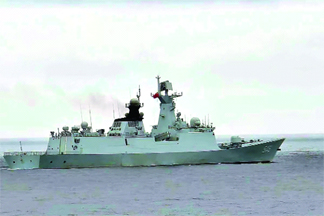
    In this photo released by the Taiwan Coast Guard, a Chinese navy vessel identified as the Chinese Missile Frigate FFG 548 is seen near the Pengjia Islet north of Taiwan on Thursday, May 23, 2024.
    Taiwan scrambles jets and puts missile, naval and land units on alert over China’s military drills
    The defense ministry said it tracked 49 warplanes and 19 navy vessels, as well as Chinese coast guard vessels, and that 35 of the planes flew across the median of the Taiwan Strait, the de facto boundary between the sides, over a 24-hour period from Thursday to Friday.
    Marine and coast guard vessels, air and ground-based missile units have all been put on alert, particularly around the Taiwan-controlled island chains of Kinmen and Matsu located just off the China coast and far from Taiwan’s main island, roughly 160 kilometers (100 miles) across the Taiwan Strait.
    “Facing external challenges and threats, we will continue to maintain the values of freedom and democracy,” Taiwan’s new President Lai Ching-te told sailors and top security officials Thursday as he visited a marine base in Taoyuan, just south of the capital, Taipei.
    In his inauguration speech Monday, Lai had called on Beijing to stop its military intimidation and said Taiwan was “a sovereign independent nation in which sovereignty lies in the hands of the people.” (AP)

  • India, Japan are natural partners’: Jaishankar at event with Hayashi

    India, Japan are natural partners’: Jaishankar at event with Hayashi

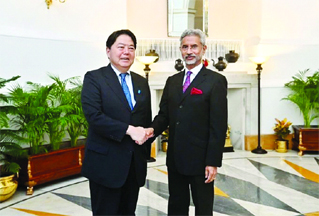
    New Delhi (TIP)- Japan’s foreign minister Yoshimasa Hayashi on Friday, July 28, held up India as an “indispensable” partner for achieving a free and open Indo-Pacific, while his Indian counterpart S Jaishankar said the two sides are “natural partners” for taking on challenges in areas ranging from the economy to emerging technologies. The two ministers were speaking at the second India-Japan Forum organised by the external affairs ministry. India was the first stop on Hayashi’s three-nation tour, which will also take him to Sri Lanka and the Maldives. During talks on Thursday, Jaishankar and Hayashi discussed ways to step up Japanese investments in India and deepen defence cooperation.
    Building on the “Free and Open Indo-Pacific (FOIP)” vision unveiled by Japanese Prime Minister Fumio Kishida during a visit to New Delhi in March this year, Hayashi said Japan intends to deepen cooperation with India in all areas. Japan and India are also working closely together under their presidencies of the G7 and the G20 respectively, he said.
    Pointing to Kishida announcing the new FOIP plan in New Delhi, he said: “This fact itself is a reflection of the critical importance Japan places on India, as your nation is an indispensable partner in achieving FOIP.”
    Hayashi added: “At a time when there are many pressing challenges, including Russia’s aggression against Ukraine, Japan and India fully share the necessity to lead the world to cooperation, rather than to division and confrontation.”
    Lauding the Indian G20 presidency’s focus on the Global South, Hayashi said the call to uphold a rules-based international order may sound like a slogan if there isn’t an adequate commitment to address challenges facing developing countries. At the same time, he noted that food security has deteriorated because of Russia’s aggression against Ukraine.
    Hayashi said India and Japan have made progress in new initiatives in areas such as cyber and space, while discussions are underway for “substantial cooperation” in defence equipment and technology.
    In his speech, Jaishankar highlighted key challenges confronting the world, including artificial intelligence, building reliable supply chains, ensuring trust and transparency in the digital domain, and upholding democratic values.
    Jaishankar said India and Japan are natural partners for jointly addressing these challenges. “I would say today whether it is the future of the international order, strategy, economics, technology, culture or indeed whether it’s history or geography, I think India and Japan have a lot going for each other,” he said.
    Hayashi also spoke about Japan’s plans to revise its “Development Cooperation Charter”, the basic document for development cooperation. “Under this revised charter, we will continue to undertake efforts to build quality infrastructure in India, including high-speed rail and urban transportation,” he said.
    When a Japanese reporter pointed out that a bilateral partnership is tested by a war or a crisis and asked how the two sides would collaborate in case of a war in the Taiwan Strait or a conflict on the India-China border, Jaishankar replied: “I fundamentally disagree with your question because I think it is actually peacetime cooperation which is when you are tested, because if you don’t work every day to build a relationship and to put in place capabilities, comfort and structures, then when something more severe comes – if I can’t handle a good day, how will I handle a difficult day.” Source: HT

  • Chinese human rights lawyer chased out of 13 homes in 2 months as pressure rises on legal advocates

    TAIPEI, Taiwan (TIP): A disbarred Chinese human rights lawyer has been forced to move 13 times in two months as part of a pattern of harassment against him and three other prominent rights advocates in Beijing that is further squeezing the country’s battered civil rights community. Wang Quanzhang said he is now living in a borrowed apartment in the suburbs where the power is frequently cut off, while another lawyer left Beijing entirely in hopes of ending the harassment. His colleague Bao Longjun said he is still in the apartment he owns, but has been barred from leaving it multiple times by unidentified groups of men who loiter outside his door. Bao said a fourth lawyer was detained along with his wife.
    All four are prominent members of a group known as the 709 lawyers, after the date — July 9, 2015 — when a crackdown on independent legal advocacy began in which hundreds were arrested. Such advocates are a rare source of help for people facing political charges, or trying to access benefits denied by often unaccountable bureaucracies.
    Their work has ranged from defending members of Falun Gong, a religious movement opposed to China’s government that Beijing bans as an “evil cult,” to helping people lobby for increases to their pensions.
    All four men were disbarred after their 2015 arrests, but after being released from prison they continued to do similar work that doesn’t require a law license. Yaqiu Wang, senior China researcher at Human Rights Watch, said in a statement that the lawyers’ ordeals coincided with a series of high-profile visits by foreign dignitaries. French President Emmanuel Macron visited Beijing in early April, followed by Germany’s foreign minister, and most recently U.S. Secretary of State Antony Blinken.
    The meetings, she wrote, were intended to “signal China is open for business and engagement again. But the petty and inhumane treatment of human rights lawyers and their families show that, the authorities only want to double down on repressing the Chinese civil society.”
    Beijing’s police department did not respond to a faxed request for comment.
    In mid-April, disbarred rights lawyer Yu Wensheng and his wife were detained by Beijing police while on their way to the European Union Delegation, said Bao Longjun, another one of the four advocates.
    Around the same time, two other rights lawyers were sentenced to more than 10 years in prison on charges of “subverting state power.”
    Wang, the lawyer who was chased out of his home, and Bao faced more bewildering situations.
    Groups of men began hanging out in front of Bao’s and Wang’s doors, and told them they were not allowed to go outside.
    The men did not say who they were or why they were there. The lawyers believe they are informal contractors for the police, a practice widely used by local Chinese governments to apply extralegal pressure to people they view as troublesome.
    More pressure came via Wang’s landlord. Around the time that the men appeared, the landlord told Wang that his lease was no longer valid and his family had to move. Initially, they refused, but after a few days the apartment’s electricity, water and gas were cut off.
    Fellow disbarred rights lawyer Li Heping and his family left Beijing after similar pressure, according to Wang and Sophie Luo, an activist based in the U.S. Li declined an interview. Bao was not forced out of his home, which he owns. He says groups of men in plain clothes come and go intermittently, sometimes confining him to his house.
    Bao said the harassment is intended to pressure advocates to leave Beijing. He said that authorities likely hope the advocates will return to their hometowns, where they will be another local government’s problem.
    Wang and his wife, Li Wenzu, are still in Beijing, after a month and a half during which the couple has moved from apartment to hotel to apartment 13 times.
    They’ve been followed to each location by groups of men in plain clothes who loiter nearby, unnerving landlords and neighbors.
    At times, Wang said, hotels have asked him to leave the same day he’s checked in. The longest they’ve managed to stay in one place was a hotel that allowed them to stay for nine days. The couple eventually sent their 10-year-old son to live with relatives.
    For the last week, the couple has been living an apartment in suburban Beijing owned by a friend, where the electricity is frequently cut off.
    The first time, Wang said, he was able to restore it by flipping a switch in a fuse box outside the apartment; on later occasions, he found a bicycle lock on the fuse box, or more complex damage that required an electrician to repair.
    AP journalists saw seven men hanging around the courtyard of the apartment building on Tuesday.
    To cope with blackouts, the couple has installed a solar panel to charge their phones, and stockpiled drinking water, rice and instant noodles. (AP)

  • China sanctions US defence firms Lockheed Martin, Raytheon for Taiwan sales

    BEIJING (TIP): China on February 16 imposed trade and investment sanctions on Lockheed Martin and a unit of Raytheon for supplying weapons to Taiwan, stepping up efforts to isolate the island democracy claimed by the ruling Communist Party as part of its territory.
    Lockheed Martin Corp. and Raytheon Technologies Corp.’s Raytheon Missiles and Defense are barred from importing goods into China or making new investments in the country, the Ministry of Commerce announced. It said they were added to the “unreliable entity” list of companies whose activities are restricted because they might endanger national sovereignty, security or development interests.
    It wasn’t clear what impact the penalties might have. The United States bars most sales of weapons-related technology to China, but some military contractors also have civilian businesses in aerospace and other markets.
    Taiwan and China split in 1949 after a civil war. The island of 22 million people never has been part of the People’s Republic of China, but the Communist Party says it is obliged to unite with the mainland, by force if necessary. President Xi Jinping’s government has stepped up efforts to intimidate Taiwan by flying fighter jets and bombers near the island and firing missiles into the sea.
    The United States has no official relations with Taiwan but maintains extensive commercial and informal contacts. Washington is obligated by federal law to make sure the island’s government has the means to defend itself. The United States is Taiwan’s main supplier of military equipment.
    Raytheon Missiles and Defense, part of Raytheon Technologies Corp., was awarded a $412 million contract in September to upgrade Taiwanese military radar as part of a $1.1 billion package of U.S. arms sales to the island. Boeing Defense received a $355 million contract to supply Harpoon missiles. Beijing responded to that sale by announcing sanctions against the CEOs of Raytheon and of Boeing Defense but gave no details of what they were.
    Lockheed Martin has supplied Taiwan’s military with radar, helicopters and air traffic control equipment. It plays a role in the island’s development of its own fighter jet and navy frigates. In China, Lockheed Martin has sold air traffic control equipment for civilian airports and helicopters for commercial use.
    Beijing announced plans for the “unreliable entity” list in 2019 in response to U.S. restrictions imposed on Huawei Technologies Ltd., a Chinese maker of telecom equipment. (AP)

  • Chinese eye in sky

    • ‘Spy balloon’ underlines need for constant alertness

    Days after a US Air Force fighter jet shot down a Chinese surveillance balloon — which the US claimed was a ‘spy balloon’ — off the South Carolina coast, it has been reported that China operates a fleet of such balloons and has targeted several countries, including India and Japan, in the past. A US media report, quoting several unnamed defense and intelligence officials, alleged that the spy balloon project has been operating for several years, and ‘has collected information on military assets in countries and areas of emerging strategic interest to China including Japan, India, Vietnam, Taiwan and the Philippines’. Senior US officials are reported to have briefed ‘nearly 150 foreign diplomats across 40 embassies’ in the US and Beijing, explaining its action of shooting down the balloon, presenting reasons why it was not a ‘civilian’ weather balloon, as China claimed, but an intelligence-gathering device.

    It seems counterintuitive to use an apparently low-tech method such as a balloon for intelligence-gathering when high-resolution satellite images of the earth’s surface are easily available, but such debates are best left to techint experts. Also, China keeping a spying eye on its neighbors and adversaries is not a significant point — it’s a fact that all countries engage in intelligence-gathering, or spying, even if not one would admit it publicly. What is really remarkable about the Chinese balloon is that if it were indeed spying, it was doing so in a very brazen manner; and if it indeed was a ‘civilian airship’ intended for ‘meteorological research’, China’s secretiveness about it is quite inexplicable.

    One takeaway for India from this episode is that it must keep its eyes open — it’s not quite a new lesson but the reinforcement of one, because China’s increased aggressiveness at the borders during the last few years has already underlined the need for India to always keep its guard up. For the countries that are concerned over China’s hegemonistic ambitions, it is imperative to share technology and intelligence in order to not be outsmarted and outmaneuvered in geopolitical games.

    (Tribune, India)

  • Jay Mandal

    More worried today than in last 50 years

    (As told by Jay Mandal to Priyanka Khanna)

    Asked to put my thoughts together about India, my home country, and global affairs – I simply could not get myself to see the silver lining.

    Those who know me, know that I am rarely downcast. And when I managed to circumvent the world on a rickety bicycle, traversing the length and breadth of 154 countries back in 1970s  and 1980s, I developed a deep sense of hopefulness for the human race. So often I had no place to sleep in the 17 years that I rode my cycle solo but somehow, I always found food and water to sustain me even in God forsaken places.

    And I did grow more hopeful than most people when I was helped by perfect strangers on countless occasions, survived accidents, even facing wild elephants in southern Africa that few feel were survivable, besides facing the full fury of nature during my cycling days. So, when I ended my tour and began covering Indian and global affairs from my base in New York, I did so through my lenses and with the heart of a survivor.

    But after spending the year 2021 waiting for the promised recovery post the COVID-19 pandemic, the year 2022 made me truly sad. Starting from revelations of how deep corruption is steeped in the State where I come from – West Bengal – to Russia’s war on Ukraine, the state of women in Afghanistan, Iran and so many other places, to the lack of specific actions against Climate Change – which is already a reality and not a possibility – left me wondering if I have seen any similarly bad phase while chronologizing global and Indian affairs over the last five decades.

    I have covered the UN and the White House here in the US just as well as I have witnessed history in the making at 7 Racecourse in Lutyens’ Delhi for half-a-century, but I haven’t heard so much collective bad news from all corners of the world in such a short time.

    What bewilders me more is that the pandemic showed us the importance of working together swiftly to contain a contagious pathogen. Yet, the hope that coming out of 2020 we will learn lessons and work more closely together seems dashed. Yes, there is a lot of good that is happening as well but on the whole I feel this year we had more misses than hits.

    Beyond the more obvious attention-grabbing headlines, this year saw collapse of entire economies  right at India’s southern Island Nation of Sri Lanka as well as global tensions raising over Algeria, Belarus, Morocco, Turkey, Taiwan, South China Sea, Korean peninsula, Gaza, Iran’s nuclear programme, the opening up of Arctic routes, the escalation of tensions in India’s own backyard with Pakistan and China and of course the ongoing global trade wars.

    While India has actually done very well on many fronts in 2022, did well on Sri Lanka front, is now on at the helms of the influential G20 and is set to become the most populous country in the world in 2023, I am entering 2023 worrisome and apprehensive. My only hope really is that this too shall pass so I end by wishing for more consensuses in Indian and global affairs.

    (Jay Mandal is a Veteran photo-journalist and world Traveler)

  • China reports 10,000 new virus cases, capital closes parks

    China reports 10,000 new virus cases, capital closes parks

    Beijing (TIP): China’s capital Beijing has closed city parks and imposed other restrictions as the country faces a new wave of covid cases.

    Elsewhere, more than five million people were under lockdown on Nov 10 in the southern manufacturing hub Guangzhou and the western megacity Chongqing. The country reported 10,729 new cases on Friday, almost all of them testing positive while showing no symptoms. With the bulk of Beijing’s 21 million people undergoing near daily testing, another 118 new cases were recorded in the sprawling city. Many city schools switched to online classes, hospitals restricted services and some shops and restaurants were shuttered, with their staff taken to quarantine. Videos on social media showed people in some areas protesting or fighting with police and health workers. Chinese leaders promised on Thursday to respond to public frustration over its severe “zero-covid” strategy that has confined millions to their homes and severely disrupted the economy.

    No details were offered other than a promise to release “stranded people” who have been in quarantine or blocked for weeks from leaving cities where there are cases. People from cities with a single case in the past week are barred from visiting Beijing, while travelers from abroad are required to be quarantined in a hotel for seven to 10 days — if they are able to navigate the timely and opaque process of acquiring a visa. Business groups say that discourages foreign executives from visiting, which has prompted companies to shift investment plans to other countries. Visits from US officials and lawmakers charged with maintaining the crucial trading relations amid tensions over tariffs, Taiwan and human rights have come to a virtual standstill.

    Speculation on when measures will be eased has centred on whether the government is willing to import or domestically produce more effective vaccines, with the elderly population left particularly vulnerable. That could come as soon as next spring, when a new slate of officials are due to be named under Xi’s continuing leadership.

    Or, restrictions could persist much longer if the government continues to reject the notion of living to learn with a relatively low level of cases that cause far fewer hospitalisations and deaths than when the pandemic was at its height.  (PTI)

  • Markets dive as Putin attacks Ukraine

    Markets dive as Putin attacks Ukraine

    New Delhi (TIP)-Investors bailed out of risky assets, sending stocks crashing after Russian President Vladimir Putin’s troops invaded Ukraine. On Thursday, the exodus from stocks wiped out Rs1.3 lakh crore in investor wealth on Indian stock markets. But the bad news for stocks was a boon for safer assets such as gold and government bonds. Crude oil surged past the $100 mark amid expectations of tighter supply. India’s benchmark indices Sensex and Nifty tumbled, ending 4.72% and 4.78% lower respectively, one of the sharpest daily declines in nearly two years. The declines put the indices in correction territory—defined as a drop of at least 10% from a recent peak. The Sensex hit a record high of 62,245.43 on October 19. A near-6% decline was recorded on 4 May 2020 after the government extended the nationwide lockdown and a flare-up in US-China tensions. The Russian invasion has triggered the worst security crisis in Europe since World War II. The attack on Ukraine heightens the pressure on the global economy already reeling from Covid and galloping inflation. Investors fear the unfolding crisis will further increase raw material and energy costs. Sanctions against Russia by Western powers are likely to isolate the erstwhile superpower, a major producer of oil and commodities.

    Global markets, too, saw deep corrections. Among Asian markets, the Hang Seng, Taiwan, Nikkei, Shanghai Composite, Jakarta Composite ended the day 1.48-3.21% lower. “The world can ill-afford further disruption in trade and commodities when Covid has already weakened sovereign balance sheets,” said Amar Ambani, head of institutional equities, Yes Securities.

    Brent crude hit $105 a barrel, a level not seen since August 2014, adding to the worries.

    S&P Global Platts Analytics said $100 oil aggravates pain as Asia’s top oil importers are dependent on imports for 70-100% of their needs. “High oil prices will dampen demand and undermine the fragile economic recovery,” said Lim Jit Yang, adviser for oil markets at S&P Global Platts Analytics.

    The concerns are likely to remain elevated. “Crude could stay over $100 a barrel in the medium term unless Opec hikes output,” said Hetal Gandhi, director, Crisil Research. Opec members have failed to meet targets over the past three months.

    Gold hit highest level in over a year. As Russia invaded Ukraine, gold prices skyrocketed to their highest level in more than a year.

    In India, the gold price  surged by Rs 1,400 , hitting the peak of Rs 51,750 per 10 gms in the early morning trade. This comes amid steep fall in the stock market with Sensex down by 1432.50 points and Nifty reporting a slump of 410.70 points at the time of opening. Several Asian stock markets also plunged in the aftermath of the Russian invasion.

    The bullion has witnessed a spike amid the increasing standoff between Russia and the West. Economic experts say gold is now being historically seen as a hedge against major economic and geopolitical ructions.

    Spot gold jumped as much as 2.1% to $1,949.03 an ounce, the highest level since January 2021, and traded at $1,939.55 at 1:08 p.m. in Singapore, news website Bloomberg reported.         Source: HT

  • Indian Americans top in family stability: Institute of Family Studies

    Indian Americans top in family stability: Institute of Family Studies

    CHARLOTTESVILLE, VA (TIP):  As a group, immigrant families tend to be more stable than families of native-born Americans with Indian Americans ranking at the top in family stability, according to new study.

    But not all immigrant families are equal when it comes to family structure, according to an analysis of census data by the Institute of Family Studies (IFS), a Charlottesville, Virginia, -based think tank.

    Among the 30 largest groups of working-age immigrants in the US, Indian Americans rank at the top in family stability, noted Wendy Wang, director of research at the IFS.

    Almost all (first-generation) Indian immigrants with children are stably married (94%), according to an IFS analysis of the 2019 American community survey. About 4% are remarried, and the share of unmarried Indian immigrants with children is only 2%. Family stability is also higher among immigrants from other parts of Asia, such as Bangladesh, Pakistan, Taiwan, Korea, China, and Japan, the study noted.

    More than 80% of immigrant families from these countries comprise two stably married adults with their children.

    The conventional wisdom that higher education and higher income drive family stability applies to immigrant families to some extent, says Wang, For example, immigrants from Asia tend to have higher educational levels than other immigrants and their family stability is also higher.

    More than six-in-ten Asian immigrants with children are college-educated (64%), compared with 13% of their Hispanic peers.And Indian immigrants not only top the list of family stability but also are one of the most highly educated and financially successful immigrant groups, IFS noted.

    Compared with native-born American parents, however, immigrants with children overall have lower levels of education and higher rates of poverty.

    Some 48% of immigrant parents have a high school or less education, compared with only 29% of native-born parents. And the poverty rate is 15% for immigrant families with children, compared to 11% for native-born American families. Yet, immigrant families are more stable than native-born American families.

    In fact, after controlling for education, income, race/ethnicity and age, immigrants with children are twice as likely to be in an intact family than native-born parents.

    Native-born Asian Americans with children are less likely to be in a stable marriage than first-generation Asian immigrants (78% vs. 85%), even though their income is higher. While Indian immigrants have the highest family stability: 94% of Indian immigrants with children are stably married, the share of intact marriage drops to 87% among native-born Indian Americans with children, the study noted.

    This is so despite the fact that they have higher incomes than the first-generation Indian immigrants, and their educational levels are equally high, Wang wrote. After controlling for education, income and age, Indian immigrants are more than twice likely to be in an intact family than native-born Indian Americans.

    “Obviously, education and income alone cannot explain this family advantage of first-generation immigrants. So, what is it that makes immigrants stand out?” Wang asked and suggested, “In a word: culture.”

    Immigrants are more likely than native-born Americans to embrace a family-first mindset when it comes to marriage and children.

    The families that immigrants embrace not only provides them a safe harbor when facing the challenges as newcomers, it also helps to provide a better environment for their children to advance in life, the study noted.

    According to a recent analysis by IFS senior fellow Nicholas Zill, children of immigrants are doing surprisingly well in school: they are more likely to get “As” and are less likely to have behavior problems.

    The reason for their academic success is not because these children are from better-off families (in fact, the majority of them are not), it is partly because they are more likely to live in intact families with two married parents, Wang wrote. With the share of immigrants in the US population near a historic high of about 14% or 45 million, the IFS study highlighting their cultural diversity noted the strength of immigrant families. Specifically, 72% of immigrants with children are still in their first marriage, whereas the share among native-born Americans is just 60%, it noted. Behind these numbers are the relatively higher marriage rates and lower divorce rates of immigrants in general. For every 1,000 unmarried immigrants ages 18 to 64 in 2019, 59 got married.

    The corresponding number for native-born Americans was 39. Likewise, only 13 out of 1000 married immigrants ages 18-64 got a divorce in 2019, compared with 20 out of 1000 among native-born Americans of same age.

    While immigrants represent a diverse array of cultures and traditions, what many new immigrants have in common is a dedication to family that translates into better performance in school and a stronger shot at realizing the American Dream, Wang wrote.

    Top 10 US immigrant groups leading in marriage stability:

    1. India – 94%
    2. Bangladesh – 90%
    3. Pakistan – 87%
    4. Taiwan – 86%
    5. Korea – 85%
    6. China – 84%
    7. Japan – 83%
    8. Poland – 80%
    9. Iran – 78%
    10. Canada – 78%

  • GENERAL DOUGLAS MacARTHUR & CHURCHILL ARE NEEDED IN 2021

    GENERAL DOUGLAS MacARTHUR & CHURCHILL ARE NEEDED IN 2021

    By Ravi Batra

    The world has not seen a weapon that without a bomb launched or a bullet fired could devastate economies of all nations on earth in one fell swoop, and render their citizenry dead or fearing for life itself.

    2020, to paraphrase FDR, is a year that will live in infamy, and it is also the year when Neville Chamberlain reigned supreme. Indeed, no less than President Trump – who has stood taller than any before him, including, Richard M. Nixon, when he was a Communism-buster up until prior to his 1967 abdication in Foreign Affairs’ pages with a quid pro quo op-ed entitled “Asia After Viet Nam” – called the Virus the “China Virus,” yet, then incredulously declared: that we are fighting “an invisible enemy.” No, we are not Mr. President. The Virus isn’t our enemy, just as on December 7, 1941 the Japanese bombs and bullets weren’t the enemy; Imperial Japan was, by attacking us at Pearl Harbor, in Hawaii. Then, FDR, after sentencing that day “to live in infamy,” unleashed the indominatable General Douglas MacArthur. The same General, who when first expelled from Philippines, left written messages for the people of Philippines:  “I shall return.” And, return he did. Promise made; promise kept. Indeed, a short few years later on September 2, 1945 there was a Surrender Ceremony. A visit to the USS Missouri website proudly shows that the infamous history started at Peral Harbor was in-fact stopped, and a new history of American Freedoms, for all, was made to wit:

    “On the teak decks of USS Missouri, WWII finally came to an end on 2 September 1945. The Surrender Ceremony, which formally brought an end to the bloodiest conflict in human history, lasted a mere 23 minutes. It began at 0902 with a brief opening speech by General Douglas MacArthur. In his speech, the General called for justice, tolerance, and rebuilding. After MacArthur’s speech, Foreign Minister Mamoru Shigemitsu, representing the Emperor of Japan, signed the Instrument of Surrender. He was followed by the Chief of the Army General Staff, General Yoshijirō Umezu, who signed for the Japanese Army. After this, General MacArthur signed the Instrument of Surrender as the Supreme Allied Commander with 6 pens. Of these pens, he gave two to former POWs Lt. General Jonathan Wainwright and Lt. General Lt. General Arthur E. Percival. Following MacArthur, other allied representatives followed in this order:

    Fleet Admiral Chester W. Nimitz signed for the United States; General Xu Yongchang for the Republic of China; Admiral Sir Bruce Fraser for the United Kingdom; Lt. General Kuzma Derevyanko for the Union of Soviet Socialist Republics (USSR); General Sir Thomas A. Blamey for the Commonwealth of Australia; Colonel Lawrence Moore Cosgrave for the Dominion of Canada; General Philippe Le Clerc for the Provisional Government of the French Republic; Lt. Admiral Conrad E. L. Helfrich for the Kingdom of the Netherlands;Air Vice Marshal Leonard M. Isitt for the Dominion of  New Zealand.

    5-Star General MacArthur’s Remarks – that day – on the deck of the USS Missouri are illuminating, and hence, worthy of reproduction so we may escape, even belatedly, History’s “curse of repetition” upon those who forget the past, while cuddling up to happy-amnesia:

    “We are gathered here, representatives of the major warring powers, to conclude a solemn agreement whereby peace may be restored. The issues involving divergent ideals and ideologies have been determined on the battlefields of the world, and hence are not for our discussion or debate. Nor is it for us here to meet, representing as we do a majority of the peoples of the earth, in a spirit of distrust, malice, or hatred.

    But rather it is for us, both victors and vanquished, to rise to that higher dignity which alone befits the sacred purposes we are about to serve, committing all of our peoples unreservedly to faithful compliance with the undertakings they are here formally to assume. It is my earnest hope, and indeed the hope of all mankind, that from this solemn occasion a better world shall emerge out of the blood and carnage of the past — a world founded upon faith and understanding, a world dedicated to the dignity of man and the fulfillment of his most cherished wish for freedom, tolerance, and justice. The terms and conditions upon which surrender of the Japanese Imperial Forces is here to be given and accepted are contained in the Instrument of Surrender now before you. As Supreme Commander for the Allied Powers, I announce it my firm purpose, in the tradition of the countries I represent, to proceed in the discharge of my responsibilities with justice and tolerance, while taking all necessary dispositions to insure that the terms of surrender are fully, promptly, and faithfully complied with. I now invite the representatives of the Emperor of Japan and the Japanese government and the Japanese Imperial General Headquarters to sign the Instrument of Surrender at the places indicated.”

    [After the Instrument of Surrender was executed by all, he concluded with:]

    “Let us pray that peace be now restored to the world, and that God will preserve it always. These proceedings are closed.” (Emphasis added)

    InWWII – we were united with USSR and China (not today’s Chinese Communist Party’s (CCP’s) People Republic of China (PRC)), but the Republic of China (ROC) – today, known as Taiwan, when General Chiang Kai-shek was head of ROC.  I cite the above snippet of history to document the gross geopolitical malpractice of leaders, here at home and abroad, since 1945. Indeed, CCP’s brilliant Chairman Mao, who had originally joined under the leadership of General Chiang, revolted, caused a civil war, and finally expelled him in 1949 from Mainland China to a mere island, Formosa, aka Taiwan. CCP’s China is a new world order – different from feudalism, communism, socialism, corporate-capitalism and our cherished Bill of Rights embedded in our Separated Powers regime – as it is an amalgam of all. Indeed, there are 99 million members of CCP – think corporate governance and the now-disappeared “Avon Lady.” Everybody in China is directly and intimately known by a CCP Member.

    From Chiang Kai-shek, to Harry Truman, to Pandit Nehru, and above all others, to Richard Nixon who rolled out the red carpet for CCP’s China and gifted the critical multi-polar Permanent Seat on the United Nations Security Council – after unilaterally amending History and taking it away from ROC – the world could not, and sadly did not, see the slowly moving tortoise of CCP-China as a threat greater than the fast-moving Adolf Hitler.

    We are at the Third Act of CCP’s “rejuvenation” of the Ming Dynasty’s Tribute System. Indeed, President Xi has honestly stated his China Policy to be “rejuvenation” – almost with as much delight as Edgar Allen Poe had in writing the Purloined Letter.  What former National Security Advisor H.R. McMaster warned about in The Atlantic on May 19, 2020 – “What China Wants” – but left off at, I have continued – as I must warn as Paul Revere did – that our “Emperor wears no clothes,” to metaphorically assert without doubt, that our China Policy – created and effectuated by our Deep State and Executive and Legislative Leaders – is both a misdiagnosis, and a mistreatment that embraces de facto, if not de jure, impotent Chamberlain while rejecting the necessary Churchill, who to them is truly “invisible,” let alone “necessary.” Giving us governmental malpractice that is both decrypt, as it is impotent.

    The world has not seen a weapon that without a bomb launched or a bullet fired could devastate economies of all nations on earth in one fell swoop, and render their citizenry dead or fearing for life itself. Coronavirus, with its transplanted from Bats’ “Spike Glycoprotein (S)” – which I wrote about in my Open Letter to President Trump on April 14, 2020, and the next day United States opened its then-Preliminary Investigation of China – is now the very piece of protein that Pfizer and Moderna’s mRNA-based vaccines now – in error – implant in every patient, and after the initial 2-shots, require a booster shot every 3 months, for life. Result: the enemy get refreshed, while our body’s “T cell” get exhausted or run out. Indeed, Merck’s CEO Kenneth C. Fraizer has correctly said: we don’t even understand the Virus yet, let alone treat it. How right he is. This vaccine frenzy is nothing short of a global clinical trial – worse than if you signed up for one – for now, as a patient, you don’t get paid, and if you suffer a severe reaction, you can’t sue as they have a liability shield, courtesy of Operation Warp Speed that didn’t have to do 10 years of public health studies to identify its efficacy, but its side effects. Risks vs Benefits. A patient with a migraine headache would never accept decapitation as a solution; yet, now, we are to accept this vaccine with a public health study over 10-years of time. Yes, we need a vaccine; but, we need the raw truth about the creation of SARS-CoV2, its escape from the Wuhan lab, its variations, etc., before we can figure out the correct cure.

    Kompromat – is a term used to suggest Russia’s ability to control another person or nation through some act or knowledge that the target would not like exposed. Blackmail. In our social media-connected world, with data that documents one’s hallucinations as if “fact,” our exceptional separated powers regime is sadly checkmated. As 2021 is the Year of Hope, like never before, I end with a wish that just as the Ming Dynasty voluntarily gave up its Tribute system, so does President Xi Jinping; and, instead, he joins in transparent disarming of SARS-CoV2 and dismantles his Jaws of War (which I have previously described). Otherwise, let Churchill be re-born as an American – worthy of everyday hardworking Americans who toil to achieve the American Dream, as merit alone can – and uphold our Flag high and free, as those who died doing so in 1814 at Fort McHenry and caused lawyer-poet Francis Scott Keys to be so moved by their undying courage and national pride to write “The Star-Spangled Banner.”

    (Ravi Batrais a senior attorney and  advisor to many governments. Twitter @RaviBatra)

  • Biden likely to give India more strategic space

    Biden likely to give India more strategic space

    Biden has said that he would constitute a united front of the US, its allies and partners to ‘confront China’s abusive behavior and human rights violations’ and ‘place US back at the head of the table’ to mobilize collective action on global threats. Germany, France and the European Union have welcomed Biden’s election promise to work on issues like China’s unfair trade practices and other challenges.

    By Yogesh Gupta

    Joseph  Biden Jr. will soon take over as the 46th President of the United States. There is some consternation as many critics are not sure how the Joe Biden-Kamala Harris duo will react to the human rights situation, particularly in Kashmir. Also, that he will be ‘soft’ on China which may recoil on India in its current military confrontation with that country. Biden is a seasoned and skillful politician, who for decades has served on the Senate Foreign Relations Committee, including as its chair. Second, he is calm, contemplative and a team leader who will listen to and go by the professional advice of the US establishment — including the State, Defense, National and Homeland Security, CIA, Trade and other departments. His long innings as the Vice President in two terms of President Obama unambiguously authenticate this view.

    In an article, Why America must lead again, in the Foreign Affairs journal in March this year, Biden wrote that President Trump had diminished the credibility and influence of the US by abdicating the American leadership, indulging in ill-advised trade wars which had hurt its own consumers and undermining and abandoning its allies which are America’s biggest strength.

    The post-COVID-19 world will be very different from 2016 when the Obama-Biden duo left. China’s economy has made huge strides during this period. However, much of China’s economic growth is based on extensive use of unfair trade practices, including denial of market access, stealing of foreign technologies, subsidies to its state-owned industries and others.

    China’s swift growth has been accompanied by massive modernization of its military, including manufacture of fifth generation of fighter and stealth aircraft, long- and medium-range missiles, hypersonic and artificial intelligence (AI)-based weapons, destroyers and aircraft carriers.

    Similarly, China has made considerable progress in other emerging technologies like 5G, quantum computing, new materials, robotics and space weapons. The rapidly growing China is now challenging the economic and military pre-eminence of the US in Asia. It has launched aggression against a number of countries allied or getting closer to the US such as India, Taiwan, Vietnam, Australia and others and is trying to divide the transatlantic alliance.

    Biden has said that he would constitute a “united front of the US, its allies and partners to confront China’s abusive behavior and human rights violations” and “place US back at the head of the table” to mobilize collective action on global threats. “When we join together with fellow democracies, our strength more than doubles. China can’t afford to ignore more than half the global economy,” he argued. Germany, France and leaders of the European Union have welcomed Biden’s election promising to work together on China and other challenges.

    Though the aggressive rhetoric of Trump administration may change as Biden seeks China’s collaboration on climate change, non-proliferation and control of infectious diseases, the US and its allies will take collective action against China’s unfair trade policies, as per the Biden team. The US sanctions on export of sensitive technologies to China are likely to continue. In his earlier avatars, Biden played an important role in the passage of the Indo-US Civil Nuclear Deal in the Congress (2005) and later when the Obama administration declared India as a ‘major defense partner’ (2016). With the signing of Logistics Exchange Memorandum of Agreement (LEMOA), Communications Compatibility and Security Agreement (COMCASA) and Basic Exchange and Cooperation Agreement for Geo-spatial Cooperation (BECA) recently, India has established close linkages with the US security architecture. Its large growing economy, professional armed forces and stout determination to resist China have augmented its strategic value. In its pursuit of multipolar world, India can play a critical role in checking the growth of China’s hegemony and its domination of Asia.

    Biden made it clear in his Foreign Affairs essay that he would “fortify the USA’s collective capabilities with democratic friends by reinvesting in its treaty alliances with Australia, Japan, South Korea and deepening partnerships from India to Indonesia to advance shared values in a region that will determine the USA’s future.”

    Biden has promised to invest in improving America’s competitiveness, pull down trade barriers, resist the slide towards protectionism and give more emphasis to fair trade. Given the rising trade deficit and unemployment in the US, it is likely that there will be some tough negotiations with India on issues such as high tariffs, market access, levy of taxes on US technological giants like Amazon and Google, but in an amicable manner without resorting to threats and tariffs.

    On issues relating to immigration, H1B visas and the studies of Indian students in US universities, Biden is likely to be more positive though keeping in view unemployment in his own country.Some Biden advisers have stated that he would raise human rights issues with India like Obama. This will be more in the nature of a dialogue among friendly states and would not be the main driver of his overall policy given New Delhi’s sensitivities and the importance attached to strategic issues confronting the two countries.

    Biden has stated that his administration would stand with India against the threats it faces from its own region and along its borders. Given the above template, it is likely that India would find greater resonance on Pakistan’s support of terrorism, a continued US role in the fight against terror groups in Afghanistan and on resuming a nuclear deal with Iran.

    Similarly, his stand on re-joining the Paris climate change agreement, convening a summit of democracies to discuss issues of common interest, meetings of major carbon emitters to reduce harmful emissions and control of infectious diseases would be of considerable interest to India. Summing up, India is likely to get more strategic space and a greater sympathetic understanding of its concerns from the Biden administration than that of President Trump.

    (The author is a former ambassador)

  • Chinese aircraft carrier sails into Hong Kong on maiden visit

    Chinese aircraft carrier sails into Hong Kong on maiden visit

    “I think Liaoning’s visit definitely gives the central government a chance to display its military power. It’s quite a positive and smart strategy to step up publicity overall,” said Sean Moran, a tourist from the United States, as the ship passed behind him on a blustery morning.

    HONG KONG (TIP): China’s first aircraft carrier sailed into Hong Kong waters on Friday in the latest show of the country’s growing military might at a time of heightened regional tensions.

    Tourists and residents gathered early to catch a glimpse of the massive carrier on its maiden visit to Hong Kong, part of celebrations marking 20 years since the handover of the city from British to Chinese rule.

    The Liaoning was accompanied by several other naval ships from its strike group, with jet fighters and helicopters visible on the flight deck alongside hundreds of crew dressed in white uniforms.

    “The Liaoning’s visit shows that China is a militarily superior country,” said Jack Chan, a retired businessman, who was watching the aircraft carrier from an oceanfront park.

    Thousands of Hong Kong residents queued for hours on Monday, many unsuccessfully, for 2,000 tickets allowing access to the vessel this weekend. Even though the former Russian naval ship remains a training vessel for China’s rapidly modernizing navy, its missions through tense regional seas have been closely followed in Hong Kong, which is more used to hosting US carriers and other foreign warships.

    “I think Liaoning’s visit definitely gives the central government a chance to display its military power. It’s quite a positive and smart strategy to step up publicity overall,” said Sean Moran, a tourist from the United States, as the ship passed behind him on a blustery morning.

    US consulate officials said that they have yet to be invited on board the Liaoning. The US navy often hosts the People’s Liberation Army (PLA) on ships visiting Hong Kong, sometimes flying local military chiefs to aircraft carriers.

    The Liaoning’s most recent drills at the weekend included operations in the Taiwan Strait that were closely monitored by Taiwan’s military given recent tensions with Beijing, which regards the island as a breakaway province.

    With its Soviet-era takeoff ramp distinguishing it from the ordinary Hong Kong traffic of container ships and bulk cargo vessels, the 55,000-tonne Liaoning steamed down the congested East Lamma channel shortly after dawn. Significantly smaller than the US carriers that have long stopped in Hong Kong, the Liaoning started life as one of the Soviet Union’s last carriers under construction, before being sold by Ukraine as a stripped down hulk to private Chinese interests in 1998.

    The vessel was later refitted in a northern Chinese shipyard in what was seen by foreign military analysts as a key early test of China’s naval modernization.

    The Liaoning began sea trials as China’s first aircraft carrier in 2011 and has more recently conducted fully integrated drills with its complement of J-15 jet fighters and a variety of support ships. (Reuters)

  • WHY YOU SHOULD HAVE BANANA PEEL

    WHY YOU SHOULD HAVE BANANA PEEL

    Good for depression

    Banana peels are packed with serotonin, a chemical that helps in boosting your mood and makes you feel good. According to a study at the University of Taiwan, if you consume two banana peels for three days continuously, your serotonin level will increase by 15 per cent.

    Help you sleep better

    Banana peels are full of tryptophan, a chemical that is known for inducing more relaxed sleep.

    Lowers Cholesterol

    Banana peels are full of soluble and insoluble fibre. In fact, they have more fibre than banana itself. Fibre helps to lower your cholesterol and thus, helps prevent cardiovascular diseases and strokes. A study conducted on a group of people who had high LDL (bad cholesterol) levels proved this fact. When the participants consumed banana peels everyday, it was reported that their bad cholesterol levels were decreased noticeably.

    Weight loss

    Because banana peels are full of fibre, they help in losing weight.

  • Shen Yun: The Stunning Theatrical Extravaganza

    Shen Yun: The Stunning Theatrical Extravaganza

    By Mabel Pais

    NEW YORK CITY (TIP): Preity Uupula, a former Miss India International, said of Shen Yun, “The energy was very powerful in the room. (For) some of the pieces, I just closed my eyes and I felt like it was a meditation. It’s very healing actually.”

    Like India, China can be proud of 5000 years of an ancient, rich civilization and culture. Having some of its roots in the ancient Indian spiritual path of Buddhism, Shen Yun, based in New York, has a mission to revive 5000 years of divinely inspired culture.

    The last performances of this breathtaking theatrical amazement, for the season, were held at NJPAC (the New Jersey Performing Arts Center, NJ) from May 3-7. For 5,000 years, divine culture flourished in the land of China.

    Shen Yun Performing Arts, Manchurian Elegance
    Shen Yun Performing Arts, Sleeves of Grace
    Shen Yun Performing Arts, Han Imperial Air

    Humanity’s treasure was nearly lost, but through breathtaking music and dance, Shen Yun is bringing back this glorious culture. Shen Yun means, “The beauty of heavenly beings dancing.”

    Falun Dafa, also known as Falun Gong, is a practice that combines teachings for self improvement and meditation exercises. The teachings are centered on three main principles-truth, compassion, and tolerance.

    Shen Yun’s artists practice Falun Dafa, and it is a source of inspiration for their performances. However, over the last 60 years of Communist rule, the regime has treated Chinese values – centered on the idea of harmony between heaven and earth – as a threat to its existence and banned traditional beliefs and practices.

    Through the universal language of music and dance, Shen Yun weaves a wondrous tapestry of heavenly realms, ancient legends, and modern heroic tales, taking you on a journey through 5,000 years of Chinese culture. Its stunning beauty and tremendous energy leave audiences uplifted and inspired.

    A Shen Yun performance features the world’s foremost classically trained dancers, a unique orchestra blending East and West, and dazzling animated backdrops-together creating one spectacular performance. The Shen Yun Symphony Orchestra blends the singular beauty of Chinese melodies with the precision and power of the Western orchestra.

    “Amazing! The artists perform as if they are fluid bodies with no bones. Gravity does not apply to them. They leap and fly in the air while they perform their numbers…..” quipped Pattie King, audience member at NJPAC.

    “Mesmerizing! Reclaiming the divinely inspired cultural heritage of China,” remarked Donna Karan, creator of DKNY.

    “I was mesmerized and astonished within the first few minutes…..Shen Yun music proves that not every message needs to be delivered via language or written words…..” Rojin Rahmani, musician.

    Shen Yun Performing Arts is the world’s premier classical Chinese Dance and Music company. In 2006, a group of leading classical internationally award winning Chinese artists came together in New York with one wish: to revive the 5000-year-lost world of traditional Chinese culture and share it with the world. Through breath taking music and dance, Shen Yun is bringing back this glorious culture.

    Each season, the company produces an all new show and tours with it around the globe, performing at the world’s top venues – Lincoln Center in New York, The New Jersey Performing Arts Center, New Jersey, Kennedy Center in Washington, the London Coliseum.

    Since ancient times, Chinese culture has been heralded as a gift from the divine; and part of that divine gift was a supreme art form that has endured to this day: Classical Chinese Dance. “It (Classical Chinese Dance) has a history of several thousand years in both folk and imperial settings. It served as entertainment for large gatherings and celebrations”, says Ms. H. Sue Guo, Principal, The Fei Tian Academy of the Arts College, New York, the college that trains the performers of Shen Yun. Branches of the college exist in California and Taiwan.

    Within China’s grand civilization of 5000 years, many traditions are linked together: martial arts, Chinese opera, folk dance and acrobatics. They all have something in common. Chinese dance has 3 main components: technical skill, form and a special feature called yun or physical bearing. Chinese dance’s technical skills include a whole series of challenging leaps, jumps, flips and many difficult tumbling techniques.

    In eastern philosophy, there is a saying “beauty and roundness,” explains choreographer, principal dancer and associate company manager Yungchia Chen. “The path of the movement needs to be circular, rounded and full. It’s different from ballet which focuses on straight lines.”

    What takes classical Chinese dance to another level is yun or physical bearing that is a certain sensibility when Chinese people perform classical Chinese dance. “It’s an artistic feeling that rises from the culture” demonstrates dance teacher Gu Yun. When the dancer moves there is an internal energy connected to the breath. The breath meets the body. The breath is crucial.

    Over the centuries, the technical skills, form and bearing all come together to make classical Chinese dance one of the richest, most expressive and most demanding art forms in the world.

    The training process for each dancer is extremely arduous. Daily training lasts for 7- 8 hours. It takes 6 years schooling just to be good enough to go on stage. After 10 years training in college is completed.

    Every year, Shen Yun creates a whole new production with original dances, costumes and music. By adding the distinctive melodies of ancient Chinese instruments, over Western orchestration, Shen Yun brings together two of the greatest classical musical traditions the world has ever known.

    Johnny Stuart, music director, calls the music “just phenomenal, mind blowing!” Music conductor Leon Natker says that “putting together classical Chinese instruments and classical western instruments is a way towards the future for me as a musician.” Jing Xian, a composer of the performance, says, “Both these (Chinese and western) musical systems are excellent. But it’s just like cooking. You might have great ingredients but if we don’t understand the characteristics of the ingredients, and to stir fry random things together, it simply won’t taste good.”

    Shen Yun music displays China’s traditional melodies. Just like dance, music can also present different times, places, characters and moods. China has 5 millennia worth of culture: from the melodic styles of over 50 ethnic groups to grand imperial court music and lavish folk tunes. This heritage is an endless source of inspiration.

    “What we are taking on is a responsibility we simply cannot shirk. There are times when I really feel it’s our life’s mission. It may take many life times to complete.” “I have dedicated my entire life to the arts. Yet it was only after I reached my 70s that I found that this is where it has the greatest meaning,” says Ms. H. Sue Guo, Principal, The Fei Tian Academy of the Arts College, New York.

    (Mabel Pais is a freelance writer. She writes on theater, health and wellness, social issues and spirituality)


  • Taiwan set to legalize same-sex marriages, a first in Asia

    Taiwan set to legalize same-sex marriages, a first in Asia

    TAIPEI (TIP): Su Shan and her partner are raising 5-month-old twins together, but only one of the women is their legal parent. That could soon change as Taiwan appears set to become the first place in Asia to legalize same-sex marriage.

    “Now, if something happens to the child, the other partner is nothing but a stranger,” said Su, a 35-year-old software engineer in Taipei. By contrast, either partner in a legally recognized marriage could make legal, medical and educational decisions, she says.

    Taiwanese lawmakers are currently working on three bills in support of marriage equality, one of which is already listed for review and could be passed within months. Same-sex marriage also has the prominent support of President Tsai Ing-wen, Taiwan’s first female head of state.

    About 80 percent of Taiwanese between ages 20 and 29 support same-sex marriage, said Tseng Yen-jung, spokeswoman for the group Taiwan LGBT Family Rights Advocacy , citing local university studies. Taiwan’s United Daily News found in a survey taken four years ago that 55 percent of the public supported same-sex marriage, with 37 percent opposed.

    That’s seen as a reflection of Taiwan’s ready acceptance of multi-party democracy and other inclusive attitudes, as well as the fact that Taiwan’s 23 million people largely follow Buddhism and traditional Chinese religions that take no strong positions on sexual orientation or gay marriage.

    Gay and lesbian relationships began to find wide acceptance in the 1990s, aided by the already well-established feminist movement, said Jens Damm, associate Professor in the Graduate Institute of Taiwan Studies at Chang Jung University in Taiwan.

    “The elite became in favor of a kind of gender equality,” Damm said.

    Still, same-sex marriage still had to overcome traditional perceptions of gender roles and the strong pressure on children to marry and have kids. The self-ruled island also lacks many openly gay and lesbian celebrities to lead the way; the writer and television talk show host Kevin Tsai is among the few exceptions.

    Taiwan would join Canada, Colombia, Ireland, the United States and 16 other countries that have legalized same-sex marriage over the past 15 years, according to the Washington, DC-based LGBT rights advocacy group Human Rights Campaign. But it would be a notable exception among Asian and Middle Eastern countries, at least 20 of which continue to ban same-sex intercourse.

    “It’s a big step forward for the history of human rights,” said Yu Mei-nu, a ruling Democratic Progressive Party lawmaker who is sponsoring the same-sex marriage bill now in line for parliamentary debate. “If Taiwan can get this passed … it will give other Asian countries a model.” Taiwan’s Justice Ministry has not backed a specific bill, but pledged on its website last month to maintain an “attitude of openness” toward same-sex marriage. (AP)

  • Japan confirmed Netaji’s death to US within weeks: UK website

    Japan confirmed Netaji’s death to US within weeks: UK website

    LONDON (TIP): Japan had confirmed to the US within weeks about the death of Netaji Subhas Chandra Bose in a plane crash in Taiwan in 1945, a UK website set up to document evidence on the circumstances of the freedom fighter’s demise claimed on Sept 8.

    Bosefiles.info says Japan’s communication to the US in 1945 was an interim report and a prelude to the final report handed over to the Indian government in 1956.

    The information had been sought by Lord Louis Mountbatten as commander of Allied Forces in India (then under British rule) and South East Asia.

    The Commander of the Allied Land Forces in the South West Pacific, US General Douglas MacArthur, through the Yokohama Division of the Japanese Army sought information from Japan on ‘Reported Death of Chandra Bose” on behalf of Mountbatten on August 30, 1945 – 12 days after Netaji is believed to have been killed on August 18.

    The latest disclosure is attributed to 91-year-old US-based Govind Talwalkar, the former chief editor of ‘Maharashtra Times’ who had received the documents from the National Diet (Parliament) Library of Japan on December 23, 2015.

    In the “ad interim” report now published on the website, the Japanese government said Bose died “in an airplane accident” in Taihoku (Japanese name for Taipei).

    The report says the 97-2 Model Japanese bomber carrying Bose reached the Taihoku Airfield (from Tourane, now known as Da Nang) at 13:00 o’clock.

    It states: “After refuelling it took off at 14:00 o’clock. When it rose about 10 metres above the ground the propeller of the left side engine fell apart. The plane, shaking violently right and left, listed to the left and crashed against the mound at the end of the airfield. Fire broke out instantly at both the front and the rear of the plane.

    “Bose, drenched in gasoline and covered with flame, emerged from a hole on the left side and toward the front of the fuselage.

    “His aide H R (Habib-ur-Rahman) also crawled out of the machine, and endeavoured to extinguish the fire on Bose, who however had been severely burned, beside being injured at several places, including two or three cuts in the neck. Ten minutes after the accident, he was taken to the Army Hospital in Taihoku, and received treatment at 15:00 o’clock. His death came at 21:00 o’clock.”

    In reference to the “disposition of the remains of Bose”, the report said, they were “placed in a coffin” on “August 20”, the “cremation” took place on “22 August” and the “funeral at the Nishi Honganji Temple, Taihoku” on “August 23”.

    “The records provided by the Japanese National Diet corroborate the mass of evidence published Bosefiles.info to establish beyond all doubt Bose’s tragic death at Taipei on 18 August 1945,” the website said in a statement.

    (PTI)

  • Philippine officials say China blocking access to disputed South China Sea atoll

    Philippine officials say China blocking access to disputed South China Sea atoll

    MANILA (TIP): China has stationed several ships near a disputed atoll in the South China Sea, preventing Filipino fishermen from accessing traditional fishing grounds and raising tensions in the volatile region, Philippine officials said on Wednesday.

    China had deployed up to seven ships to Quirino Atoll, also known as Jackson Atoll, said Eugenio Bito-onon Jr, the mayor of nearby Pagasa Island in the Spratly Islands.

    The Spratlys are the most contested archipelago in the South China Sea, a resource-rich region and critical shipping lane linking North Asia to Europe, South Asia and the Middle East.

    “This is very alarming, Quirino is on our path when we travel from Palawan to Pagasa. It is halfway and we normally stop there to rest,” Bito-onon Jr told Reuters.

    “I feel something different. The Chinese are trying to choke us by putting an imaginary checkpoint there. It is a clear violation of our right to travel, impeding freedom of navigation,” he said.

    Fishermen told the mayor one Filipino boat had run aground in the area and was still there but was not being harassed by the Chinese vessels.

    Chinese authorities did not immediately respond to faxed requests for comment.

    The Philippine military said it was trying to verify the presence of Chinese ships near Jackson Atoll, where a Chinese warship allegedly fired warning shots at Filipino fishermen in 2011.

    “We know there are Chinese ships moving around the Spratly area,” spokesman Brigadier-General Restituto Padilla told Reuters. “There are also ships around Second Thomas Shoal so we want to make sure if the presence is permanent.”

    Second Thomas Shoal is where the Philippine navy has been occupying and reinforcing a rusting ship that it ran aground in 1999 to bolster its claims to the disputed reef.

    TENSIONS ON THE RISE

    A military source from Palawan said a surveillance plane had seen four to five ships in the vicinity of Jackson Atoll last week. The source could not say if the ships were passing through or permanently stationed there because the area is close to Mischief Reef, where China is busy building an artificial island. “There are no indications China will build structures or develop it into an island,” said the source, who was not authorised to speak to the media about the South China Sea.

    The Philippines Star newspaper, which earlier reported the story, quoted an unidentified fisherman as saying Chinese boats chased them away when they tried to enter the area last week.

    “These gray and white Chinese ships, around four of them inside the lagoon, prevented us from entering our traditional fishing ground,” he said.

    Along with China and the Philippines, Brunei, Malaysia, Taiwan and Vietnam also have claims on the waters, through which about $5 trillion in trade is shipped every year.

    Tensions in the region have been building recently, with the United States and others protesting against Beijing’s land reclamations, along with the recent deployment of surface-to-air missiles and fighter jets in the Paracel Islands.

    U.S. Defense Secretary Ash Carter warned China on Tuesday against what he called “aggressive” actions in the region, saying there would be “specific consequences” to militarisation of the South China Sea.

    Beijing, for its part, has been angered by “freedom of navigation” air and sea patrols the United States has conducted near the islands it claims in the South China Sea and says it needs military facilities for its self defence.

    (Reuters)

  • India, Taiwan and China Triangle Opportunity for Strategic Balancing

    India, Taiwan and China Triangle Opportunity for Strategic Balancing

    History, despite Francis Fukuyama’s prediction of it having ended, was made on Saturday, January 16th 2016 inthe “Separate Customs Territory of Taiwan, Penghu, Kinmen and Matsu”, aka Chinese Taipei, aka Republic of China or the de facto Republic of Taiwan. Tsai Ing-Wen of the Democratic Progressive Party was elected President with 56% of the vote defeating Kuomintang’s Eric Chu. Besides, electing its first ever female president from the Democratic Progressive Party, the citizens of this island nation thoroughly defeated the President Ma Ying-Jeau’s Kuomintang Party for excessively placatory and deferential postures towards Beijing. The people of the Republic of Taiwan democratically slapped the Communist China on the face despite its repeated catastrophic warnings. History was also made because per analysts, “A new Taiwanese identity won” in the elections. A new generation with pro-independence mind gave a resounding defeat to the status quoist KMT. The 59 years old Tsai, a former law Professor is an alumnus of the University of Cambridge. She made the history as being elected the first female leader of an Asian nation without having any prior family connections or following the path of dynastic succession.

    It was the 6th direct election for the President of Taiwan since 1988 when Taiwan became a de facto and de jure democracy. The Democratic Progressive Party, also secured a majority in the legislature, marking the first time that the DPP can govern alone with over a 50%majority. Results on the Central Election Commission’s website showed Ms. Tsai receiving 6.9 million votes, around 56% of the total, with her main rival, KMT candidate Eric Chu, getting 3.8 million, or 31%. A third-party candidate took the remainder. It is the first time the ruling KMT and its allies have lost control of the legislature since Chiang Kai-shek moved his Nationalist government across the Taiwan Strait after its defeat on the mainland by Communist forces in 1949.

    Government of India should send a large official delegation for inauguration of the President-elect Tsai on May 20th 2016. India needs to exploit this democratic opportunity of government transition in Taiwan to engage it strategically besides deepening the economic and mercantile ties. Over the years, this analyst has made case for deeper economic, mercantile and strategic engagement with Taiwan in an effort to balance Communist China (1, 2). India’s civil society and the hyperactive NGOs need to make their presence felt in the Republic of Taiwan. There are several levels at which Indian civil society should engage the Taiwanese people. Since our ruling party the BJP has party to party relations with the Communist Party of China and has sent several party delegations to China, it should seriously consider sending an official party delegation for the inaugural of President Tsai.

    From a more pragmatic perspective, the BJP delegation should consist of former heavy weight cabinet ministers like Yashwant Sinha, Dr. Subramanian Swami and Dr. Arun Shourie. Building party to party relations with the Democratic Progressive Party will serve India’s long-term strategic interests.

    The easy way forward would be for the Federation of Indian Chambers of Commerce & Industry (FICCI) and the Confederation of Indian Industry (CII) to send large delegations to drum up more business, investments and joint ventures with their Taiwanese counter-parts. Indian business houses must invest in the tourism and hospitality sector in Taiwan especially in the strategically important island of Penghu in the Taiwan Straits. Newer business entities like Patanjali Yoga Trust should consider exporting their organic consumer items in Taiwan.

    Besides the business leaders, Indian Think-tanks, civil society, cultural and religious organizations should step up to the plate to foster people to people relations. Dharmic organizations should foster the Buddhist-Hindu brotherhood using Dharma-Dhamma paradigm. Since the time of Asoka, the great, India has exercised cultural and Dharmic diplomacy. Perhaps, His Holiness Dalai Lama should grace the occasion of inaugural function of the President-elect Tsai with his divine presence and blessings. In the same analogy, one of the Shankaracharyas should be persuaded to travel to Taiwan for blessing the new woman president of that nation! Organizations like Dharmacharya Sabha, Art of Living and Bharat Swabhiman have a role to play in promoting Yoga, meditation and other instruments of India’s soft power in Taiwan. Even ex-servicemen organizations should be encouraged to send delegations to Taiwan for the presidential inaugural.

    India needs to focus on developing religious tourist facilities in the islands of Matsu and Penghu especially shrines to the Mazu (Matsu) Guardian Goddess of the sea whom Taiwanese revere. Because Taiwan is an island and relies on the sea for sustenance, the “sea goddess” Mazu (Matsu) is very important for the seafaring Taiwanese people. Taiwanese and Chinese Goddess Guanyin (Kuanyin) began her divine existence and origin in India as the male bodhisattva Avalokiteshwara, but is usually described in Chinese communities as the Buddhist goddess of mercy. Worshipped by people of Chinese origin – including many who don’t explicitly identify themselves as Buddhist – since the 12th century, her full name is translated as, ‘she who hears all of mankind’s cries’. Reciprocally, India should hard-sell the Buddhist circuit for the Taiwanese tourists to India. Owing to historical Indian cultural influences in the East Asia, we need to remember and reinforce our soft power diplomacy while engaging Taiwan.

    We both nations are the legitimate trading partners in the World Trade Organization (WTO). Chinese Taipei has been a member of the WTO since 1 January 2002. Taiwan is also a member of the Asia Pacific Economic Conference (APEC) where India’s application is pending for membership for the last twenty years (3). Taiwan is an aspiring candidate country for membership of the Trans Pacific Partnership (TPP). Officially, since we have trade and commerce going on with the Separate Customs Territory of Taiwan, Penghu, Kinmen and Matsu (Chinese Taipei), the official Indian delegation should be headed by the Commerce Minister or by the Finance Minister. Communist China has intense trade and investment relations with Taiwan, so it can’t possibly object if India adopts the same course (2). India must deepen economic engagement with Taiwan on a war footing. Taiwanese investments should be sought aggressively and tapped voraciously for the #Make-In-India Campaign. Cash-rich Taiwan is sitting on foreign exchange reserves of $425 billion as of December 31st 2015. Instead of letting this money be invested across the straits in the Communist China, India should raise the economic costs for China by providing an attractive alternative destination for the Taiwanese surplus capital for investment in India’s infrastructure.

    The only country that currently exports arms to the Republic of Taiwan is the US. Taiwan is desperately trying to modernize its armed forces in view of continued military threat from the Communist China. India is trying to enter the lucrative arms export market. India has 3-4 defense items/armament systems ready in its inventory that can be exported to Taiwan in the near future. These armaments include the Tejas fighter aircrafts, Dhruva attacks helicopters, Arjun battle tanks and Brahmos hypersonic missiles. Taiwan would be delighted to buy Indian hardware for its defense. India should also take future orders from Taiwan for supply of frigates and submarines. Since Communist China is exporting and supplying arms to Pakistan and building its capacity continuously, we should do the same with Taiwan.

    India’s strategic establishment must adopt diplomatic and strategic pragmatism and must learn to strike when the iron is hot! Our soft power and hard power must be complimentary to each other for sake of furthering our strategic interests.


    The author (Dr. Adityanjee) is President, The Council For Strategic Affairs, New Delhi. He can be reached at adityancsa@gmail.com ; twitter@DrThinkTank

  • Chinese marines’ desert operations point to long-range ambitions

    Chinese marines’ desert operations point to long-range ambitions

    BEIJING: Days after China passed a new law that for the first time permits its military to venture overseas on counter-terror operations, its marines began exercises in the western deserts of Xinjiang, more than 2,000 kilometres from the nearest ocean. The continuing drills are an indication, analysts say, that the marines, who have traditionally trained for amphibious assault missions, are being honed into an elite force capable of deploying on land far from mainland China.

    China’s limited means to respond to threats abroad were highlighted by two incidents in November: when Islamic State executed a Chinese hostage, and the killing of three executives by Islamist militants who attacked a hotel in Mali.

    China’s new counter-terrorism law, passed in late December, is aimed at protecting its expanding global commercial and diplomatic interests. But China’s military commanders are also trying to create a military in the likeness of the world’s most dominant power projection force, analysts say.

    “They study what the Americans have done very carefully and it’s the mirror image effect,” said Leszek Buszynski, a visiting fellow at the Australian National University’s Strategic and Defence Studies Centre.

    The cold weather training will improve the marines’ ability to conduct “long-distance mobilization in unfamiliar regions”, the deputy chief of staff of the Navy’s South Sea fleet Li Xiaoyan said in a ministry of defence statement earlier this month.

    During the drills, the marines will travel 5,900 kilometres via air, truck and rail beginning in the southern province of Guangdong, the longest range manoeuvres ever conducted by the force, state media said.

    EXPEDITIONARY FORCE

    The exercises are the latest in recent years that show the efforts China is making to boost its expeditionary force capabilities.

    In 2014, the marines conducted their first training in the grasslands of the northern landlocked Inner Mongolia region. At the time, the exercise was seen as unusual for the south China-based force more proficient in beach landings.

    Since those drills, the roughly 15,000-strong marine corps, which operates under the People’s Liberation Army (PLA) Navy’s South Sea fleet, appears to be settling into a new niche.

    “They never really had a major strategic role, as force projection wasn’t something the PLA was willing, or able, to think about even ten years ago,” said Gary Li, an independent security analyst in Beijing.

    With amphibious divisions in the PLA Army also capable of extending China’s reach into the South China Sea and Taiwan, Li said the marines are a good fit for a budding Chinese expeditionary force.

    “The main advantage of playing around with the marines is that they have a higher concentration of specialists, act well as light infantry, have good esprit de corps, and are nimble enough to be deployed over long distances if needed,” he said.

    Chinese marines 1RISING GLOBAL PROFILE

    Along with President Xi Jinping’s vows to build a more modern military, the global profile of China’s armed forces is on the rise.

    Already, the South Sea fleet, which is based on the mainland coast near the island of Hainan, has been used on operations far from the South China Sea.

    The fleet’s vessels have ventured to the Middle East and Mediterranean after deployments on international anti-piracy patrols around the Horn of Africa.

    Chinese officials announced in November they were in talks with Djibouti to build permanent “support facilities” to further boost Chinese naval operations, in what would be China’s first such off-shore military base.

    The African port, sitting on the edge of the Red and Arabian seas, is home to several foreign military bases, including US, French and Japanese naval facilities.

    (Reuters)

  • Taiwan rock star Freddy Lim running for MP

    Taiwan rock star Freddy Lim running for MP

    Taiwan’s voters go to the polls on Saturday to choose a new president and parliament.

    This year an unusual candidate is running for MP. Freddy Lim is the lead singer of the Taiwanese heavy-metal band Chthonic.

    Tattooed, pony tailed and the front man for Asia’s biggest death metal band, it’s clear Freddy Lim is not your average politician.

    The 39-year-old is running for one of 113 seats up for grabs in Taiwan’s parliamentary elections Saturday the same day the island picks a new president.

    As he does with his music, he hopes to give voice to the island’s young people, many of whom fear a future under the influence of China.

    For his campaign photos, he’s suited up and pinned his long hair back so it’s barely visible but Lim, and his newly formed party, has unsettled many in Taiwan’s political establishment, who desperately need the younger voters he appeals to.

    His opponents don’t seem to know how to handle his counter-cultural appeal.

    Lin Yu-Fang, the ruling party incumbent in the Taipei district Lim is contesting, on Friday called on voters not to elect a candidate “who has hair that is longer than a woman’s,” according to the Taipei Times newspaper.

    The Indian Panorama spoke to Anny Yu who is an American citizen from Taiwan, she welcomes the change in political discourse and believes a long awaited good change will come with his (& New Power party – NPP) win.

    China has claimed sovereignty over Taiwan since the end of the Chinese civil war in 1949 when, as the Communists swept to power, the defeated Nationalist government moved to the island.

    China insists that other nations cannot have official relations with both countries at once, which has led to the diplomatic isolation of Taiwan. However, Taiwan has firm links with the US, from which it buys a great deal of its arms.

    Despite China’s efforts to blackball the country, Taiwan has become one of Asia’s big success stories as one of the world’s top producers of computer technology.

  • India, APEC and the US

    India, APEC and the US

    The major focus during the Asia Pacific Economic Cooperation (APEC) meeting in Manila, Philippines on November 18th and 19th would be on the Paris terror attacks though it is a trade promotion group that does not delve into security issues. The regional tensions in the South China Sea would be coming to some sort of attention indirectly despite Chinese efforts to block any discussion.  The issue of enlarging the membership and India’s pending membership application will most probably again be relegated to the background. Both China and the US will raise their pitch to sell their version of free trade blocks. China will try to sell its proposal for the Free Trade Area for Asia-Pacific (FTAAP) which excludes India and the US will do the same for the Trans-Pacific Partnership (TPP) which currently excludes China. Prime Minister Narendra Modi had raised the issue of Indian membership in the APEC with President Barack Obama in January 2015, when Obama visited India as the guest of honor for India’s Republic Day parade. President Obama expressed verbal support for India’s membership in the APEC at that time.


    The APEC was initially floated in 1989 by an Australian initiative and had 12 founding member economies: Australia, Brunei Darussalam, Canada, Indonesia, Japan, Korea, Malaysia, New Zealand, the Philippines, Singapore, Thailand and the United States. In 1991, China, Hong Kong, China and the Chinese Taipei (Taiwan) joined the APEC as a regional package. Mexico and Papua New Guinea followed in 1993. Chile was allowed to join the APEC in 1994.  Peru, Russia and Viet Nam joined the APEC in 1998, taking its full membership to 21 economies. The group acts with consensus in making decisions. APEC is more a trade promotion group and its recommendations are not binding on the member economies.


    The APEC’s mission statement reads: “Our primary goal is to support sustainable economic growth and prosperity in the Asia-Pacific region. We are united in our drive to build a dynamic and harmonious Asia-Pacific community by championing free and open trade and investment, promoting and accelerating regional economic integration, encouraging economic and technical cooperation, enhancing human security, and facilitating a favorable and sustainable business environment. Our initiatives turn policy goals into concrete results and agreements into tangible benefits.”


    The APEC put a moratorium on new memberships in 1997 for a period of 10 years though India’s membership application was pending. The moratorium was extended for another three years in 2007. However, for inexplicable reasons the APEC economies have not bothered to deal with the issue of further enlargement.  Especially India’s application for the membership has been pending with the APEC for last 20 years without approval. Every year since 2010, India has been looking expectantly for the APEC to consider India’s application for membership but nothing concrete has materialized owing to passive obstruction and stonewalling.


    Mainly, two arguments are used against India’s membership that India is not part of Asia-Pacific region and that India has proved to be an obstacle during negotiations in various international trade reforms/regimes. India had bargained tough during the Doha round and the Bali round of the WTO negotiations. Both these arguments are fallacious and self-serving. One fails to understand where countries like Thailand and Brunei have either land or sea borders with the Pacific Ocean? Or being a member of the ASEAN qualifies these two countries for the APEC membership! One also needs to ask a rhetoric question if India is an Asian country or not?  India is not located on the moon! Since the concept of Asia-Pacific has already been substituted by a larger strategic concept of the Indo-Pacific, there is no reason to continue to withhold India’s membership of the APEC on geographical grounds alone. Without India’s participation, there is no Indo-Pacific economy and hence no Asia-Pacific economy!


    India introduced market reforms initially in 1991 when China was allowed to join as a member. India has gradually introduced more market reforms & liberalization and that is the reason India applied for the membership of the APEC. It is true that Indian economy was largely socialistic prior to 1991 but so were China’s, Russia’s and Vietnam’s. Indian membership of the APEC would provide an incentive to continue further deeper economic liberalization. India has been a founding member of the WTO as well as of its previous incarnation of the GATT (General Agreement on Trade and Tariffs) since its inception. Interestingly, Russia is a part of the APEC since 1998 though it still does not qualify for the WTO membership as a market economy. China was allowed to join the WTO only in year 2000 despite being a member of the APEC since 1991. There seems to be some sort of unstated cooperation between both the US and China to continue to go slow on India’s membership of the APEC.

    A number of US based analysts have exhorted the US to champion India’s cause in the APEC for membership as a step toward eventual inclusion in the TPP.  Kevin Rudd, the former Australian PM and head of the CII-Asia Society Task Force  opined that the APEC misses much by not having India on board. Clarifying that APEC is not a free-trade body, Rudd said, “APEC is not a platform for market access negotiations, or a trade negotiating forum, but voluntary association of economies”. We, in India, can understand China’s reflexive and habitual pattern of opposition to India’s membership for any international arrangement with strategic implications because China is an adversary and a strategic threat. India does not perceive the US as an adversary in the post-cold war scenario. In fact, Pew Research on public opinion has consistently shown Indian public considering the US as one of the most  friendly nations.


    The US Deputy Assistant Secretary of State and Senior Official for the APEC Matt Matthews on November 2nd 2015 dampened cold water on India’s membership by categorically stating that it is not on the agenda of the APEC meeting in Manila in Philippines, on November 18 and 19. He further stated: “I do not believe there is any active consideration within APEC for expanded membership in the current time”. When reminded that President Obama had “supported” India’s desire for membership of the APEC during his 2015 visit to India on Republic Day, Matthews said the US had so far only welcomed “India’s interest” in joining the APEC. “It is important to be careful and accurate about describing President’s comment. President welcomed India’s interest in the APEC. That speaks for itself. We welcome India’s examination of APEC. We have not entered [into any] discussion about it. I do not believe India is formally pressing for actual membership now in APEC,” he said.


    India needs to hold the US to its words. The US must stop playing word games like China. The US expects too many unilateral concessions from India without delivering anything in return. The US, after signing the civil nuclear deal in 2005 and after ratifying the same in 2008, has not been able to shepherd India’s membership of the NSG, the MTCR, The Australia Group and the Wassenaar arrangement. The US has also made verbal promises to support India’s permanent membership of the UNSC. However, there is no concrete effort or will to make it implemented into reality despite a lot of rhetoric from the US. The proof of the US goodwill should reflect in active and actual support for India’s membership for the most benign of these international arrangements. Being an active member of the APEC will help India transform its domestic economy into full-fledged market economy. It will also prepare India for additional economic reforms so to obtain eventual membership of the RCEP or the TPP or the FTAAP.


    India and the US have had a legacy of trade disputes within the WTO. US trade representatives have invoked the Special 301 Priority Foreign Country designation for India. If the US continues to show a pattern of passive indifference and obstruction to India’s membership of the APEC while using the flowery rhetoric akin to China, India may have to utilize more aggressive marketing and trading strategies. Let it be known to everyone including the US that trade wars and denial of market access is as a detrimental as a hot war in the modern context. If you don’t support us, you are against us in our pursuit of market access. Since India and the US have now formalized an annual Strategic and Commercial dialogue, perhaps, the US performance in its active support to India’s membership of the APEC needs to be carefully monitored annually. Preferential trade access to Indian market for the US must be made contingent upon US behaviors towards India’s membership in the APEC and other free trade groups.

    To paraphrase and plagiarize Carla Anderson Hills, the former US trade representative: We (India) will be ready to open the APEC and other trade-blocks with a crowbar if necessary, but with a Namaste if possible!


    (The author is President, The Council for Strategic Affairs, New Delhi, India, an independent and privately funded Indian think-tank. He can be contacted at adityancsa@gmail.com)

  • US-China Confrontation in South China Seas

    US-China Confrontation in South China Seas

    China Reacts to US Ships in South China Seas

    The USS Fort Worth conducts patrols in international waters of the South China Sea
    The USS Fort Worth conducts patrols in international waters of the South China Sea

    Tuesday Oct 27: China reacted more harshly than expected to the passage last week of the warship USS Lassen that skirted within 12 miles of one of Beijing’s newly-created and increasingly militarized South China Sea islands.

    Chinese foreign ministry summoned US ambassador over the incident and lodged a strong protest.

    Addressing journalists in Beijing on Tuesday, Oct 27, afternoon, Lu Kang, a foreign ministry spokesman, said China was strongly dissatisfied with America’s actions, which he described as a threat to China’s sovereignty.

    But he refused to be drawn on whether China would consider a military response. “I will not answer hypothetical questions,” Lu said. “We hope that the US side will not take actions that will backfire.”

    Lu warned that further “provocative actions” might lead to accelerated Chinese construction in the South China Sea: “It would be a pity for us to realise that we have to strengthen and speed up relevant construction activities.”

    The Chinese embassy in Washington said the concept of “freedom of navigation” should not be used as an excuse for muscle-flexing and the US should “refrain from saying or doing anything provocative and act responsibly in maintaining regional peace and stability”.

    China claims most of the South China Sea on the basis of a segmented line that first appeared on Chinese maps in the 1940s. More than $5 trillion of world trade transits every year through the South China Seas. Vietnam, Malaysia, Brunei, the Philippines and Taiwan all have rival claims.

    US Counters by planning more patrols

    The US military will continue to operate "wherever" international law allows, US admiral Harry Harris said, a week after America infuriated China by sailing close to artificial islands it is building in the South China Sea
    The US military will continue to operate “wherever” international law allows, US admiral Harry Harris said, a week after America infuriated China by sailing close to artificial islands it is building in the South China Sea

    BEIJING Nov 03: “International seas and airspace belong to everyone and are not the dominion of any single nation,” admiral Harry Harris said, according to prepared remarks for a speech at the Stanford Center at Peking University while dismissing China’s claim as “ambiguous” and based on “the so-called 9-dash line”.

    “Our military will continue to fly, sail, and operate whenever and wherever international law allows. The South China Sea is not — and will not — be an exception,” he added.

    Harris is the commander of the US Pacific Command and his public declaration in the Chinese capital is a mark of US resolve over the strategically vital waterway, where Beijing has built up rocks and reefs into artificial islands with facilities for military use.

    The US Navy plans to conduct patrols within 12 nautical miles of artificial islands in the South China Sea about twice a quarter to remind China and other countries about US rights under international law, a US defence official said on Monday.

    The US military will continue to operate “wherever” international law allows, a top US admiral said in Beijing on Tuesday, a week after America infuriated China by sailing close to artificial islands it is building in the South China Sea.

    US Vice Admiral John Aquilino, deputy chief of naval operations for operations, plans and strategies, declined to comment about when the next patrols would take place.

    “We do operations like that all the time around the world. That will continue for us,” he told Reuters after his remarks at the same conference. “We’ll just keep going.”

    US Defense Secretary Ash Carter takes a swipe at China

    Defense Secretary Ash Carter listens to a question during a news conference after the Association of Southeast Asian Nations (ASEAN) Defense Ministers' Meeting Plus in Kuala Lumpur, Malaysia, Wednesday, Nov. 4, 2015.
    Defense Secretary Ash Carter listens to a question during a news conference after the Association of Southeast Asian Nations (ASEAN) Defense Ministers’ Meeting Plus in Kuala Lumpur, Malaysia, Wednesday, Nov. 4, 2015.

    ABOARD THE USS THEODORE ROOSEVELT (AP) — In a symbolic swipe at China’s muscular moves in the South China Sea, U.S. Defense Secretary Ash Carter visited an American aircraft carrier in the disputed waterway.

    Carter, who was in Malaysia for two days of talks with Asian defense ministers, used the visit to the USS Theodore Roosevelt to amplify the U.S. view that China is making excessive claims that nearly all of the South China Sea as its territory.

    Carter also signaled that the U.S. will keep a strong naval presence in the region in support of nations seeking to preserve stability. He flew aboard the carrier in a V-22 Osprey from a base in the east Malaysian state of Sabah, which is situated on the northern portion of Borneo.

    In announcing his visit Wednesday, Carter called it a “symbol of our commitment” to focusing more on U.S. interests in the Asia-Pacific following more than a decade of wars in the Middle East.

    Malaysian Defense Minister Hishammuddin Hussein accompanied Carter to the carrier, highlighting U.S. efforts to strengthen defense partnerships in the Asia-Pacific. Malaysia is among several countries that claim a portion of the South China Sea and disagree with China’s building of artificial islands.

    The Pentagon also is interested in making arrangements with Malaysia for more regular access to the naval base at Sabah for U.S. aircraft carriers.