Tag: Taiwan

  • China’s Ocean Hegemony and Implications for India

    China’s Ocean Hegemony and Implications for India

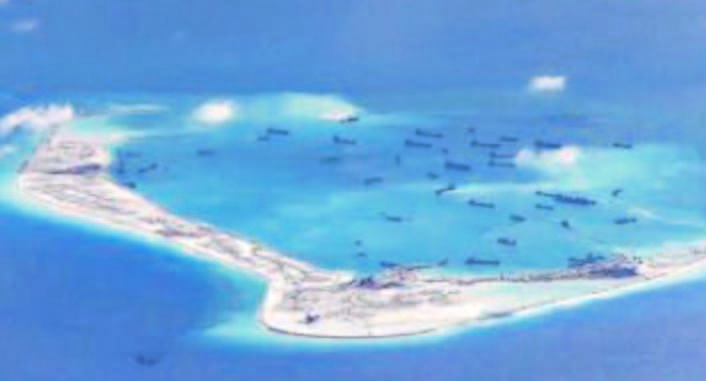
    The fifth generation of CCP leadership under Xi Jinping has de facto abandoned the Deng doctrine of keeping low profile internationally. China has become more ambitious of becoming a superpower and has been extending its sovereignty claims on the land and the sea. As a rising hegemon, China has started to challenge the existing international strategic order. China has been in the news recently for building artificial islands with air-landing strips in the South China Sea. It has demanded 12 nautical miles exclusive economic zone around these artificial, man-made reefs. China is a signatory to the law of the Seas (UNCLOS). Chinese attempts to claim the bulk of the South China Sea goes against both the letter and the spirit of the law of the sea. Beijing will invoke its EEZ for its own economic benefits while denying the same rights to other claimants. Brushing aside the ASEAN Code of Conduct in the SCS, China claims sovereignty over all of the SCS which is disputed by Vietnam, the Philippines, Malaysia, Brunei and Taiwan.

    For the last several years, Chinese official media has been harping on safeguarding China’s “Ocean Sovereignty”. The PLA navy’s goal is to have a “Thousand Ships Navy”. This stated “TSN” Goal is to further Chinese supremacy in the Indo-Pacific region and exploit the mineral & hydrocarbon wealth in the international sea-beds. PLAN has been entrusted to fight future wars for China’s security as per the former President Hu Jintao. On December 6th 2011, while addressing the PLA Navy, Hu Jintao pronounced that PLAN should make “extended preparations for warfare in order to make greater contributions to safeguard national security”. China unilaterally declared an air-defense identification zone in the East China Sea in November 2013. Recently, a Chinese admiral declared similar intentions of setting up an air defense identification zone in the future above the disputed areas of the South China Sea if Beijing thought it was facing a strategic threat.

    China has created not only facts on the ground but also facts on the Ocean in a very predictable manner of claiming sovereignty with the “Chinese Characteristics”. China always makes maximalist claims against other countries, disputes sovereignty, and alters the facts on the grounds of medieval history or economic reasons, bullies the smaller adversaries into submission, demands mutual concessions while later on sending its armed forces. China has constructed a couple of lighthouses in the South China Sea to provide a fig-leaf for its naked hegemony and sea-resources grabbing activities. China has successfully converted the South China Sea into a virtual private lake affecting the freedom of navigation for the entire world. India has vital maritime interests in the South China Sea. 55% of Indian maritime trade passes through the South China Sea. China has objected vehemently to ONGC’s oil drilling in collaboration with Vietnam in the South China Sea and PLAN ships have started to harass the Indian drilling rigs.

    Once the heat of the South China Sea is gone and Beijing has de facto acquired the marine resources of the South China Sea, the dragon will spread its strategic tentacles into the Indian Ocean. Warning bells are already ringing in the Indian Ocean. PLAN started its naval forays in Indian Ocean up to the Gulf of Aden in 2010 under the garb of anti-piracy operations to control Somali pirates. China’s string of pearl initiative got absorbed in the 21st Century Maritime Silk Road. China did acquire significant naval facilities in Hambantota, Chittagong, Maldives, and listening & communication facilities in the Coco Islands in Myanmar besides building the naval port in Gwadar. Incidentally, India has gifted the Coco islands to Myanmar in Nehru’s realm. Gwadar port was offered to India by Oman but Nehru declined and Pakistan became the owner and the beneficiary. China also acquired naval facilities for recuperation and re-fueling in Seychelles in December 2011. China has already signed an agreement with the UN backed International Seabed Authority to gain exclusive rights to explore poly-metallic sulfide ore deposits in 10,000 square-kilometers of international seabed in Indian Ocean for 15 years. China has been sending nuclear powered submarines to Sri Lanka and Pakistan. Pakistan will receive eight Chinese nuclear powered submarines effectively neutralizing the Indian second strike capabilities in case of a nuclear attack on India. China plans to buy an island from the Maldives for $ 1 billion under the current Maldivian Government of President Abdulla Yameen.

    China’s response to Malabar naval exercises in 2007 when trilateral format included Japan was very negative leading to non-invitation to Japan later on after 2007. India plans to invite Japan in the upcoming Malabar exercises and Chinese reaction would be worth watching. China remains very paranoid about the US “Pivot to Asia” doctrine. Chinese paranoia about the Asian Quadrilateral led to Australia pulling out of that mechanism for maritime cooperation in the Indo-Pacific.

    China had sent trial balloons to US for a G2 condominium by which US will take over the Atlantic Ocean whereas China will have rights over the Pacific Ocean. Unlike Tibet, Indo-Pacific is too important to be given to China on a platter. As a trading nation with vital economic and maritime interests, India will have to safeguard the sea-lanes of communication, ensure freedom of navigation and take the strategic ownership of her maritime interests.

    China’s foreign exchange reserves were at the peak of almost $4 trillion in June 2014. Despite a recent decline in Chinese economy, China’s foreign exchange reserves totaled $3.514 trillion at the end of September 2015. China still has the largest foreign exchange reserves in the world. China will continue to extend its strategic footprints under the much enlarged One Belt, One Road (OBOR) project because it has plenty of spare cash. China also proposes to use the Beijing sponsored AIIB as the financing arm for the OBOR which will ultimately require $ 1.4 trillion in investments. China has already sanctioned$46 billion on China-Pakistan Economic corridor as part of the OBOR connectivity without taking India’s sensitivities about CPEC passing through the POK. While India has cooperated with China in the BCIM (Bangladesh, China, India, and Myanmar) Corridor project, the GOI has been deliberately silent about any synergistic cooperation with the 21st Century Maritime Silk Road project.

    read-more

  • India to Declassify Netaji Files in January, 2016

    India to Declassify Netaji Files in January, 2016

    NEW DELHI (TIP): The process to declassify files relating to Netaji Subhas Chandra Bose will begin on his birth anniversary, January 23, Prime Minister Narendra Modi said on Wednesday, October 14, after meeting 35 members of Netaji’s extended family at his 7, Race Course Road residence. While making the announcement, the PM also said that he sees no reason to “strangle history”.

    Modi said this in a series of tweets after meeting members of Bose’s extended family at his residence here. The prime minister said the government would also request foreign governments to declassify their files on Bose, whose reported death in a plane crash in 1945 in present-day Taiwan is widely disputed.

    Modi said he will begin the process involving other countries with Russia in December when he visits Moscow. Bose, a leading light of India’s freedom movement, was said to be fleeing to Russia when his plane reportedly crashed and caught fire.

    This version has been challenged for decades by innumerable Bose followers who have held varying versions of what happened to him after 1945. Bose’s family members met Modi on Wednesday in the light of the West Bengal government’s declassification of official files related to the last days of Bose, founder of the Indian National Army.

    “It was a privilege to welcome family members of Subhas Babu to 7RCR. We had a remarkable and extensive interaction,” Modi said.

    The PM said that those nations who forget history also lose the power to create it. “Consider me a part of your family,” the PM said to the family members of Netaji. Union Ministers Rajnath Singh, Sushma Swaraj, and Minister of State Babul Supriyo were present on the occasion

    Modi said: “There is no need to strangle history. Nations that forget their history lack the power to create it.”

    The prime minister had said in September that he would meet over 50 members of Bose’s extended family living in India and abroad.

  • Philippines warns China flouting UN maritime laws

    Philippines warns China flouting UN maritime laws

    THE HAGUE (TIP): The Philippines has appealed to an international tribunal to declare China’s claims to most of the South China Sea illegal, warning the integrity of United Nations’ maritime laws is at stake.

    In opening comments to the tribunal in the Hague on yesterday, foreign secretary Albert del Rosario said the Philippines had sought judicial intervention because China’s behaviour had become increasingly “aggressive” and negotiations had proved futile.

    Del Rosario said the UN’s Convention on the Law of the Sea, which the Philippines and China have both ratified, should be used to resolve their bitter territorial dispute.

    “The case before you is of the utmost importance to the Philippines, to the region, and to the world,” del Rosario told the tribunal.

    “In our view, it is also of utmost significance to the integrity of the convention, and to the very fabric of the legal order of the seas and oceans.”

    China insists it has sovereign rights to nearly all of the South China Sea, a strategically vital waterway with shipping lanes through which about a third of all the world’s traded oil passes.

    Its claim, based on ancient Chinese maps, reaches close to the coasts of its southern neighbours. The Philippines, Vietnam, Malaysia, Brunei and Taiwan also have claims to parts of the sea, which have for decades made it a potential military flashpoint.

    Tensions have risen sharply in recent years as a rising China has sought to stake its claims more assertively.

    Following a stand-off between Chinese ships and the weak Filipino Navy in 2012, China took control of a rich fishing ground called Scarborough Shoal that is within the Philippines’ exclusive economic zone.

    China has also undertaken giant reclamation activities that have raised fears it will use artificial islands to build new military outposts close to the Philippines and other claimants.

    China has rejected all criticism over its actions, insisting it has undisputed sovereign rights to the sea. However del Rosario told the tribunal in the Hague that China’s argument of claiming the sea based on “historic rights” was without foundation.

    “The so-called nine dash line (based on an old map used by China) has no basis whatsoever under international law,” he said.

  • JAPAN’S NISHIKORI SOARS TO WORLD NUMBER FOUR

    TOKYO (TIP): Record-breaking Japan superstar Kei Nishikori rose to fourth in Monday’s new world rankings, equalling Kimiko Date-Krumm as his country’s highest-ranked tennis player. 

    The 24-year-old, who is the top-ranked Asian-born man ever, tweeted: “Just saw the new rankings. Very proud of another step…#4 this week.”

    Nishikori, last year’s US Open runner-up, now trails only Novak Djokovic, Roger Federer and Rafa Nadal after leapfrogging Britain’s Andy Murray, meaning he will avoid the top three until the semi-finals at the major tournaments.

    “He has the touch of a genius,” former Japan number one Shuzo Matsuoka told AFP. “He has the imagination and shots you just can’t teach.”

    Nishikori recently won his third successive Memphis Open, his eighth ATP Tour title. He is fast closing in on Nadal and trails the 14-times grand slam champion by just 260 ranking points.

    “It’s an achievement that’s almost impossible to explain,” Matsuoka told Japan’s Sankei Sports, comparing the skinny Nishikori to a sumo grand champion. “He’s really playing ‘yokozuna’-grade tennis.”

    Nishikori burst onto the scene as an 18-year-old by winning in Delray Beach as a 244th-ranked qualifier in 2008, and is a huge celebrity in Japan.

    Millions woke up at the crack of dawn to watch his bid to become the first Asian man to win a grand slam at last year’s US Open, where he lost in the final to Croatian Marin Cilic.

    China’s Li Na blazed a trail for Asian tennis players by reaching number two in the women’s WTA rankings last year after winning the Australian Open, capping a remarkable career in which she also captured the 2011 French Open.

    She retired seven months later with knee trouble. Nishikori’s coach Michael Chang, whose parents came from Taiwan and who was raised in the United States, is a former world number two who won the French Open in 1989.

  • China plans to build three more aircraft carriers: Report

    China plans to build three more aircraft carriers: Report

    BEIJING (TIP): China is planning to build three more aircraft carriers for deployment in the disputed South China Sea amid the escalating maritime stand-offs with its neighbours and the US’ big push into Asia-Pacific.


    While there is no official confirmation to the plans of additional aircraft carriers, Chinese defence expert Cao Weidong said that China pursues a defensive national defence policy and four aircraft carriers are appropriate for its present need especially for the deployment in South China Sea where China is entangled in maritime disputes with Vietnam, the Philippines, Malaysia and Brunei.


    “If China has four aircraft carriers, with two in the South China Sea and two in northern China, they can better accomplish their missions,” he was quoted as saying in the official People’s Daily online.


    Aircraft carriers are typically required for training, maintenance and duty.


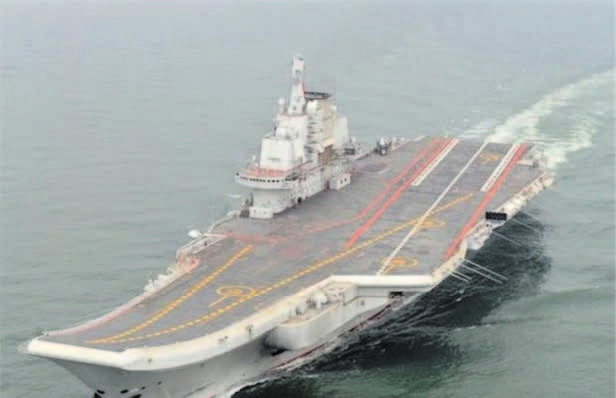
    So far, China only has Liaoning, as its sole aircraft carrier. Launched in September 2012, the Liaoning, which was refurbished after its hull was bought from Ukraine is in operation since 2013.


    On the size of the aircraft carrier, he said 60,000-80,000 tonnes carriers are appropriate for China’s needs at present and there is no need to build 100,000 tonners or larger carriers like the United States.


    A 60,000 tonne ship can carry from 30 to 40 fighters, while a 100,000 ton vessel can carry between 70 and 80 fighters.


    The displacement of an aircraft carrier will greatly affect its combat capability, the daily said.


    In addition to refurbishing the ship, China also had to build an aircraft suitable to operate from its deck. In May 2013, China’s first carrier-based air force was established and completed its first joint training.


    Last year, Liaoning returned to Dalian for a four-month overhaul.


    Liaoning was mostly regarded as trial aircraft carrier. Some reports said China is currently building two more.


    China claims most of the South China Sea, a vital sea lane and fishing ground that is believed to hold vast mineral resources. But the Philippines, Vietnam, Brunei and Taiwan also have overlapping claims over the waters.


    Beijing is also having a raging dispute with Japan over uninhabited islands in the East China Sea which has caused major upheaval in the relations between the two countries.


    China is also seriously concerned over the US’ Asia Pivot push siding with Japan and Asean countries to press for resolution of the maritime disputes.

  • New Balance of Power in Asia? India is challenging China’s assertiveness

    New Balance of Power in Asia? India is challenging China’s assertiveness

    “India must increase investments in education and infrastructure, achieve more equitable economic development if it is to emerge as a major driver of the global economy. Only then will it be able to make a significant contribution to Asian and international security and contribute to a new peace-promoting balance of power in Asia”, says the author.

    By Anita Inder Singh

    India’s decision to help Vietnam boost its defense modernization – against China’s wishes – raises yet again the question whether a new balance of power is emerging in Asia. India, Vietnam and Japan will try to coordinate security and economic policies. That suggests India is challenging China’s assertiveness in the Asia-Pacific region and staking a claim to explore the energy-rich resources of the South China Sea. Economic and strategic diplomacy were intertwined when Prime Minister Modi visited Japan and the US – and when Chinese President Xi Jinping visited India in mid-September.

    India needs investment to improve its rickety infrastructure and Japan, China and the US have come forward with offers to help India renew it. Companies in all three countries seek new investment destinations and potentially India is one of the biggest. Mutual economic interests are not enough for India to increase its contribution to Asian and global security. The simultaneous interest of Japan and the US in India’s development and its greater role in Asian security only highlight India’s economic weakness and the blunt fact that its ability to enhance its regional role will hinge on its economic performance improving quickly and steadily.

    India has much to gain – and learn – from closer ties with Japan, which is Asia’s oldest democracy. Neither history, nor political/territorial disputes divide India and Japan. As Asia’s post-1945 economic wunderkind Japan had surpassed India, China and many west European countries by the early 1960s. India and Japan are already collaborating on maritime security, counter-terrorism, and energy security. At their summit talks, Modi and Prime Minister Shinzo Abe decided to strengthen defense ties and forge a special strategic global partnership, emphasizing that a developed India and a prosperous Japan were important for Asia and for global peace and security.

    Economics and strategy mixed again when Modi met Japanese business leaders. The 21st century, Modi asserted, would belong to Asia – exactly how would depend on “how deep and progressive” the Indo-Japanese relationship is. This is the immediate context in which he deplored the “expansionist” tendencies among countries, caught in an 18th-century time-warp, to “engage in encroachment” and “intrude” into the seas of others. Evidently Modi was not letting trading interests blur the real political differences with such countries. These comments, made before President Xi Li Ping visited India, were widely interpreted as anti-China. The state-steered Chinese Global Times has downplayed any idea that China counted less than Japan with India.

    “China’s GDP is five times that of India’s. Mutual trust between Beijing and New Delhi, facing strategic pressure from the north, is difficult to build as there is also an unresolved border conflict between the two,” its editorial said. That appeared more of a threat than an olive branch to India. Modi carefully avoided running China down. Before leaving for the US he stated that the world should trust China to observe international law. But Xi’s visit did not enhance trust between New Delhi and Beijing. Even as Xi assured Modi of $20 billion in investment in Gujarat Chinese troops made one of their frequent forays into north-eastern Indian territory, which Beijing claims belongs to China.

    Those forays followed a pattern. China unilaterally invokes “history” (its version) when referring to territorial conflicts with India – and other neighbors. China’s attitude to India echoes that with its Asian neighbors, including Japan, Vietnam and the Philippines. By claiming a territory in the name of history it creates a dispute, dispatches its ships or aircraft – (or in India’s case, troops) – to back up that claim. That is how it unilaterally outlined last November an “air-defense identification zone” over an area of the East China Sea covering Senkaku islands that are also claimed by Japan (and Taiwan). Strong trading ties have not stopped China from using history to make claims on neighboring territories.

    In fact Japan is the largest foreign investor in China. And China is ASEAN’s largest trading partner. In New Delhi Xi’s reference to historical ties between ancient civilizations was marred by the assertion that the Sino-Indian border dispute had historical roots. Such statements imply that the border disputes will remain unsettled; more importantly, that Beijing will continue to lay claim to the Arunachal Pradesh and Ladakh regions. In that case India – like Japan and Vietnam – may find itself simultaneously taking up the politicalstrategic gauntlet and engaging in much-needed trade with China.

    China does nothing to dispel the fears of its neighbors and insists on bilateral solutions. Its claims to un-demarcated maritime waters, including the East and South China Seas (Beijing defines the latter as a ‘core’ interest) are contested by its neighbors, who want the disputes those claims give rise to be settled through international arbitration. That explains why, without naming China, the Obama-Modi communiqué, called on all parties to avoid the use, or threat of use, of force in advancing their claims. It also urged a resolution of their territorial and maritime disputes through all peaceful means, in accordance with the international law, including the UN Convention on the Law of the Sea. At another level, China has taken advantage of America’s planned withdrawal from Afghanistan and is increasing investments there. It is also securing its energy supplies in the oil and gas fields of Central Asia. Moreover, it is India’s main competitor for influence in the Indian Ocean area, which is bounded by Asia on the north, on the west by Africa, on the east by Australia, and on the south by the Southern (Antartic) Ocean.

    There is nothing improper about these activities. But they alarm China’s neighbors and the US, none of whom wants China to gain primacy in Asia. Unsurprisingly, Obama and Modi stressed the need to accelerate infrastructure connectivity and economic development corridors for regional economic integration linking South, Southeast, and Central Asia. The US and India want to promote the India- Pacific Economic Corridor, which will link India to its neighbors and the wider Asia-Pacific region, with a view to facilitating the flow of commerce and energy. That will not be lost on China. Meanwhile uncertainty hovers over the nature of America’s rebalance or pivot to Asia since it has been announced at a time when Washington is cutting defense expenditure. India must increase investments in education and infrastructure, achieve more equitable economic development if it is to emerge as a major driver of the global economy. Only then will it be able to make a significant contribution to Asian and international security and contribute to a new peace-promoting balance of power in Asia.

    (The author is a visiting professor at the Centre for Peace and Conflict Resolution, New Delhi)

  • JAPANESE NEWSPAPER APOLOGIZES FOR FALSE FUKUSHIMA REPORT

    JAPANESE NEWSPAPER APOLOGIZES FOR FALSE FUKUSHIMA REPORT

    TOKYO (TIP): The publisher of Japan’s leading newspaper apologized to readers on Sep 11 for several serious errors in its reporting, retracting an article that claimed workers abandoned their posts during the Fukushima nuclear disaster.

    Asahi’s publisher Tadakazu Kimura, speaking at a hastily arranged news conference, made the apology after a confidential government document cited in the daily’s report was finally released to the public with no mention of a mutiny by plant workers. “I offer profound apologies to our readers and people at Tokyo Electric Power Co. (TEPCO),” the 60-year-old publisher said. He said he would decide whether or not to resign after enacting “revival through sweeping reform.” The article published on May 20 said 90 per cent of workers at the Fukushima Dai-ichi nuclear power plant had left the complex, disobeying the plant chief’s order to stay put in the worst nuclear accident since Chernobyl in 1986.

    TEPCO operates the plant, located 220 kilometres (138 miles) northeast of Tokyo. A massive earthquake and tsunami crippled its cooling systems and sent reactors into meltdown in March 2011. The daily said about 650 employees, or 90 per cent of the plant’s workforce, retreated to another seaside TEPCO nuclear plant 12 kilometres away when the nuclear crisis worsened a few days after the accident.

    The official document released on Thursday recounted the testimony of plant chief Masao Yoshida to a government investigative panel, with no trace of staff “disobeying Yoshida’s order” as Asahi had claimed. Yoshida died of cancer in July last year. Other dailies which also had access to the then confidential statement had already cast doubt on the article.

    In the same news conference, Kimura also admitted a highly contentious report published 32 years ago on the topic of Japan’s wartime sexual enslavement of Korean women was also false. That report cited a Japanese writer who claimed to have witnessed the kidnapping of women on the South Korean island of Jeju for the purposes of sex slavery, which has since been discredited by independent research by rival newspapers and academics. Asahi admitted in early August that its 1982 article on the comfort women and follow-up reports were based on a “false” statement by the witness, but Kimura’s apology was the publication’s first in relation to it.

    “I apologize to readers for publishing the erroneous articles and being too late in making the correction,” he said. The admission of the mistake has boosted the country’s conservative forces, which have insisted there was no “sex slavery” at the frontline brothels and that many of the comfort women were highly paid prostitutes. Prime Minister Shinzo Abe told a radio talk show on Thursday the report had “agonized many people and impaired Japan’s reputation in the international community”. With few official records available, researchers have estimated up to 200,000 women, many from Korea but also from China, Indonesia, the Philippines and Taiwan, served Japanese soldiers in “comfort stations”.

  • Roger Federer advances with milestone Masters match win

    Roger Federer advances with milestone Masters match win

    CINCINNATI (TIP): Roger Federer became the first man to win 300 matches at the ATP Masters 1000 level, beating Vasek Pospisil 7-6 (7/4), 5-7, 6-2 on August 12 in Cincinnati. The victory in just over two hours put the 33-year-old world number three into the third round of his final tune-up tournament for the US Open.

    The Swiss great, who had notched his 200th Masters match win against Lleyton Hewitt at Cincinnati five years ago, arrived at the tournament he has won five times off a runner-up finish to Jo-Wilfried Tsonga in Toronto. He delivered a dominant third set to finally subdue the 46th-ranked Pospisil, who was a finalist last month in Washington.


    He stretched his career record over the Canadian to 3-0. “It’s a nice round number,” said Federer of his most recent achievement, “I’ve had some more important ones than the one today, but nevertheless it’s nice to reach such milestones. “I was one of those guys who struggled early on in the Masters 1000. I know how hard it is to win all these matches because it’s always against top 50 players, if not top 20, if not top 10. “From that standpoint, I’m obviously happy that it is at 300, it’s nice.” After taking the first set in the tiebreaker, Federer was broken in the 12th game of the second as the challenger forced a deciding set.

    But Federer powered through the third, breaking his opponent twice on the way to victory and finishing with 23 winners and 21 unforced errors, with six aces along the way. “The transition (from one event to the next) is always a tough one,” said Federer, “We don’t have enough days. “You can’t expect too much, we just hope to get through the first match in tough conditions.” While Federer safely followed top seed Novak Djokovic into the third round, three of the men’s top nine were toppled.

    Taiwan’s Lu Yen-Hsun stunned Czech fourth seed Tomas Berdych 3-6, 6-3, 6-4 while Poland’s Jerzy Janowicz upset number seven Grigor Dimitrov 6-4, 3-6, 6-3 — four days after the Bulgarian played a semifinal in Toronto. American Steve Johnson stopped ninth seed Ernests Gulbis 6-4, 6-4. Number five Milos Raonic was untroubled by wild card Robby Ginepri 6-2, 6-2. Sixth seed David Ferrer fought through three tiebreakers to beat German Philipp Kohlschreiber 6-7 (4/7), 7-6 (7/4), 7-6 (7/4), and eighth-seeded Andy Murray advanced with a smooth, 6-3, 6-3 victory over Portugal’s Joao Sousa. Murray, who lifted the Cincinnati trophy in 2008 and 2011, is searching for his first title since winning Wimbledon 13 months ago.

    Since returning in January from back surgery, Murray has enjoyed only modest results, with his best 2014 showings semifinals at Roland Garros and Acapulco. Both of the Scot’s Cincinnati titles came in finals against Djokovic, who has won every Masters 1000 title save this one. Murray improved to 3-0 over the 37thranked Souza, never trailing in the match that lasted 71 minutes. He handed Souza his 21st loss of the season in either the first or second round, advancing on his first match point when Souza sent a service return long.

    Murray broke Souza three times, and fired 16 winners matched by 16 unforced errors. “I got the win and that’s the most important thing,” Murray said. “Conditions are completely different here to Toronto. But I hit the ball well from the back of the court today. I was able to control the ball well.” Number 11 American John Isner beat Australian Marinko Matosevic 6-3, 7-6 (7/1), Fabio Fognini, seeded 15th, dispatched Lleyton Hewitt 6-1, 6-4 while number 16 Spaniard Tommy Robredo beat Sam Querrey 6-2, 6-4.Women’s top seed Serena Williams advanced on cue, downing Australian Samantha Stosur 7-6 (9/7), 7-6 (9/7), but third-seeded Wimbledon champion Petra Kvitova stumbled out of the gate.

    Ukrainian teenager Elina Svitolina toppled the Czech 6-2, 7-6 (7/2). The defeat comes on the heels of Kvitova’s third-round exit at Montreal in another blow to her build-up to the US Open — the last Grand Slam of the year that starts on August 25 at Flushing Meadows. Wimbledon finalist Eugenie Bouchard was another casualty, falling to Svetlana Kuznetsova in three sets.

  • Gas explosions kill 20, injure 270 in Taiwan

    Gas explosions kill 20, injure 270 in Taiwan

    TAIPEI, TAIWAN (TIP): A series of underground gas explosions killed 20 people and injured 270 others late Thursday in Taiwan’s second-largest city, authorities said. The National Fire Agency said five firefighters were among the dead. Taiwan’s Central News Agency reported that firefighters had been at the scene investigating reports of a gas leak when the explosions occurred. Taiwan’s premier Jiang Yi-huah said at least five blasts shook the streets of Kaohsiung, a southwestern port city of 2.8 million.

    Video from Taiwanese broadcaster ETTV showed a row of large fires burning in the middle of a street in the southwestern city, with smoke rising into the night sky. Power was cut off in the area, making it difficult for firefighters to search for others who might be buried in rubble. The source of the leak had not yet been located. But Kaohsiung Mayor Chen Chu said several petrochemical companies have pipelines built along the sewage system in Chian-Chen district, which has both factories and residential buildings. “Our priority is to save people now. We ask citizens living along the pipelines to evacuate,” Chen told TVBS television.

    CNA said the local fire department received reports from residents of gas leakage at around 8.46pm and that explosions started around midnight. Closed-circuit television showed the explosion rippling through the floor of a motorcycle parking area, hurling concrete and other debris through the air. Mobile phone video captured the sound of an explosion as flames leapt at least 30 feet (9 meters) into the air. Video from TVBS showed locals searching for victims in shattered shop fronts.

    Rescue workers pulled several injured people from the rubble in the center of the road, placing them on stretchers as passers-by helped other victims on the sidewalk. The explosion left a large trench running down the center of one road, edged with piles of concrete slabs torn apart by the force of the blast. A damaged motorcycle lay in the crater, and TVBS showed cars flipped over. The force of the initial blast also felled trees lining the street.

  • Of Bullet Trains and Boundary Disputes

    Of Bullet Trains and Boundary Disputes

    “While economic cooperation with China is mutually beneficial, India must review its approach to border issues with the Asian giant. It should insist that the dispute be resolved in accordance with 2005 Guiding Principles”, says the author.

    Addressing an election rally in Arunachal Pradesh on February 22, Mr Narendra Modi called on China to shed its “mindset of expansionism”. Mr Modi averred: “Arunachal Pradesh is an integral part of India and will remain so. No power can snatch it from us. I swear in the name of this soil that I would never allow this State to disappear, breakdown, or bow down. China should shed its expansionist mindset and forge bilateral ties with India for peace, progress and prosperity of both nations”. This message was reinforced with the appointment of Mr Kiren Rijiju from Arunachal Pradesh as Minister of State for Home Affairs.

    China made the predictable noises, with Prime Minister Li Keqiang congratulating Mr Modi on his appointment and President Xi Jinping sending his Foreign Minister Wang Yi to meet Mr Modi, with a personal message of greetings. Did these gestures signal any substantive change in China’s policies, either on its outrageous territorial claims on Arunachal Pradesh, or the continuing intrusion of its troops across the Line of Actual Control? The answer is clearly in the negative. Just on the eve of Vice President Hamid Ansari’s visit to the Middle Kingdom, China published yet another official map depicting the entire State of Arunachal Pradesh as its territory.

    While the UPA Government had claimed that new “mechanisms” had been agreed upon to curb cross border intrusions, the intrusions continued. Given these developments the NDA Government should carefully consider reviewing and reorienting existing policies on China. Any talk of more robust military responses to Chinese adventurism is illadvised. The NDA Government has unfortunately inherited a situation where India’s armed forces are inadequately equipped and lacking in numbers. It would take a minimum of five years before the armed forces are adequately equipped and manned, to be able to present a more selfconfident response to Chinese adventurism.

    New Delhi should, however, now reorient its diplomacy, by taking note of the fact that Chinese assertiveness and aggression is directed not only against India, but towards all its maritime neighbors, with unilateral declarations on delineation of its maritime boundaries. Just as China’s claims on Arunachal Pradesh have no legal or historical basis, its claims on its boundaries with all its maritime neighbors, are in violation of the UN Convention on the Laws of the Seas. China has used force to seize disputed Islands claimed by the Philippines and Vietnam and to explore for offshore oil and gas.

    Tensions with Japan are escalating, because of China’s claims to the Senkaku Islands, controlled by Japan since 1894. China’s unilateral declaration of an Air Defence Identification Zone beyond its borders has been rejected by South Korea and Japan. Its territorial claims on its maritime borders face challenges from South Korea, Taiwan, Japan, Vietnam, Philippines, Brunei, Malaysia and Indonesia. Yet another major source of concern has been the Chinese policy of strategic containment of India, primarily based on enhancing Pakistan’s nuclear weapons, missile, maritime, air power and army capabilities.

    This is an issue which India inexplicably and rarely, if ever, highlights either bilaterally, or internationally. This policy of strategic containment through Pakistan has been reinforced by China’s readiness to provide weapons and liberal economic assistance to all of India’s neighbors in South Asia. Worse still, bending to Chinese pressures, India has periodically avoided proposed joint military exercises with Japan and the US. A measured response to Chinese containment would be for India to step up military cooperation with Vietnam, including supply of Brahmos cruise missiles which can enable Vietnam to counter Chinese maritime bullying.

    This would be an appropriate answer to China’s unrestrained military relationship with Pakistan. Given the fact that Russia is a major arms supplier to Vietnam, President Vladimir Putin’s concurrence can surely be obtained for such missile supplies to Vietnam. Russia has, after all, given its concurrence to China’s supply of Russian designed advanced RD 93 fighter aircraft engines to Pakistan. Will growing trade relations with China soften its approach to border claims, or its strategic containment of India, as some in India appear to believe? Bilateral trade with China today amounts to around $66 billion, with India facing a growing trade deficit, currently of around $29 billion.

    China’s annual bilateral trade with Japan amounts to $314 billion and that with South Korea $235 billion. China is also the largest trade and investment partner of Vietnam. Both Japan and South Korea also have substantial investment ties with China. Despite this, China has remained unyielding on its territorial claims on these countries, not hesitated to use force and threatened to cut its investment ties with Vietnam, after recent tensions. To believe that China will embark on a path of reason on border issues, because it sells us a few bullet trains and invests in infrastructure in India would be, to put it mildly, naïve.

    On the contrary, India needs to ensure that unrestricted, duty-free access of Chinese products, in areas like energy and electronics, does not adversely affect indigenous development and production, or undermine energy, communications and cyber security. While dialogue, economic cooperation and interaction with China in forums like the BRICS and the G20 are mutually beneficial, there is need to review our approach to border issues with China. It is evident that China has no intention of exchanging maps specifying its definition of the Line of Actual Control, either in Ladakh, or Arunachal Pradesh. India should now insist that the border issue has to be resolved in accordance with the Guiding Principles agreed to in 2005.

    The boundary has to be along “well defined and easily identifiable natural geographic features”. Secondly, any border settlement should “safeguard due interests of their settled populations in the border areas”. Proceeding according to these Guiding Principles enables India to reinforce its claims that the border lies along the Karakoram Range in Ladakh and the McMahon Line in Arunachal Pradesh. Given China’s agreement to safeguard the “interests of settled populations,” its claims to Arunachal Pradesh are untenable.

    Moreover, with the Dalai Lama now clarifying he no longer seeks an independent Tibet, India should not hesitate to state that it hopes the Tibet issue is settled in accordance with the 17 point 1951 agreement between the Chinese authorities and the Dalai Lama. This agreement acknowledges Chinese “sovereignty” in Tibet, while respecting the freedom of religion and the “established status, functions and powers of the Dalai Lama”.

  • Progressive Democrat John Liu officially announces Campaign for State Senate

    Progressive Democrat John Liu officially announces Campaign for State Senate

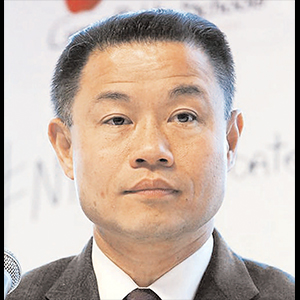
    NEW YORK, NY (TIP): With a broad progressive coalition, and widespread support based on a record of delivering real results, former City Comptroller and Councilman John Liu, May 22, announced the launch of his campaign for the 11th State Senate District in Queens. In recent weeks, Liu has been buoyed by the overwhelming support from local elected officials, Democratic Party leaders and a host of prominent community activists who encouraged him to enter the primary. “I humbly declare my candidacy for the State Senate to represent northeast Queens, where I’ve lived and grown up my whole life and am now raising my own family,” said Liu.

    “This community is bedrock of New York, and the people here rightfully demand and deserve effective results-oriented representation. I offer my legislative experience and fiscal expertise to solve issues, from quality of life concerns to deep economic inequities. In the State Senate, I will tirelessly fight for a real minimum wage, rights for working people, women’s equality and resources for public schools, transportation and healthcare. Over the next several months, I will take my message straight to the voters of Senate District 11 to ask for your support.” There will be major announcements to come, including details on the official campaign kickoff this week.

    About John
    The first Asian American to have been elected to citywide office, John Liu has always been a fighter for the hardworking people of this city, first as a member of the New York City Council, then as City Comptroller. The 43rd Comptroller of New York City, John Liu established an impressive record as the chief financial officer for 8.4 million residents and overseeing municipal government with an annual budget of $70 billion.

    John saved taxpayers $5 billion through rigorous audits of City agencies, detailed scrutiny of contracts with private companies, and refinancing of $20 billion of outstanding City bond debt. During his four-year term of office, he achieved an enviable total investment return, increasing the City’s pension asset portfolio to $150 billion. John created the nationally acclaimed online application “CheckbookNYC.com” providing unprecedented transparency in government spending.

    He facilitated economic development and new job creation with acceleration of City capital projects, capturing low interest rates in the bond markets. Always emphasizing that “it’s not just about numbers, it’s about people,” John Liu championed fairness and equality. An early and staunch opponent of stop-and-frisk tactics, John highlighted the risks to communities and taxpayers alike due to damaged police-community relations.

    John presented daily-updated M/WBE Report Cards for City agencies to monitor and encourage greater government contracting opportunities for minority entrepreneurs. John also proposed sound economic policies to create real economic growth and narrow the ever-widening wealth gap, protected wage standards and recouped back wages and fines on behalf of cheated workers from contractors who just don’t want to play by the rules, and exposed the billions of dollars in publiclysubsidized corporate welfare doled out by the City that failed to deliver on promised new jobs and fair housing.

    As a member of the New York City Council, John Liu represented his hometown of Flushing and northeast Queens. He secured millions of dollars in additional funding for schools, libraries, parks, senior citizen centers, and youth programs. John served as chairperson of the Council’s Transportation Committee overseeing operations of the Metropolitan Transportation Authority, Department of Transportation, and Taxi and Limousine Commission, and enacted legislation boosting efficiency and efficacy of key City agencies.

    John’s significant accomplishments as a legislator include exposing financial irregularities at the MTA, enacting legislation like the Equal Access Bill mandating on-demand language services in health and human services agencies, the School Zone Engine Idling Bill limiting engine idling near schools, and the Dignity for All Schools Act requiring the Department of Education to track bullying and harassment in schools.

    Hailed as a “Trailblazer” and “Pioneer,” John’s historic elections – as the first Asian American to win legislative office in New York and the first to win citywide office – were milestones for Asian Americans in New York and across the nation. Although he wishes Asian Americans had been elected long before, John is honored to be the first and embraces the opportunity to broaden representation and public service.

    John Liu emigrated from Taiwan at the age of five. He was educated in New York public schools, including Hunter College High School, Bronx High School of Science, and Binghamton University, attaining his degree in Mathematical Physics. John lives in Flushing with his wife Jenny and their son Joey.

  • SOLAR GEAR MAKERS TAKE RS 1,000 CR HIT ON US, CHINA DUMPING

    SOLAR GEAR MAKERS TAKE RS 1,000 CR HIT ON US, CHINA DUMPING

    NEW DELHI (TIP):
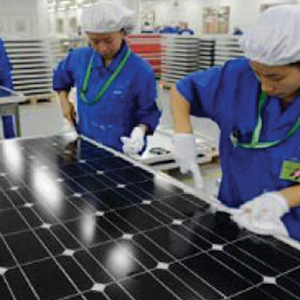
    Amid ongoing trade battle with the US over domestic content clause in solar projects, manufacturers of PV (photo-voltaic) panels have said they were losing Rs 1,000 crore worth of business annually and suffering job losses due to dumping by US, China, Taiwan and Malaysia. Indian Solar Manufacturers’ Association, the apex industry body representing 25 companies, on Wednesday demanded 30-35% anti-dumping duty on imports from these countries “at ridiculously low prices” in violation of international fair trade regulations.

    The government recently said solar projects must use at least 15% of locally manufactured equipment, stoking US trade ire. US and EU too insist on domestic equipment and recently imposed anti-dumping duty on Chinese panels. In January 2013, the commerce ministry issued a gazette notification for launch of anti-dumping investigations on imports from these countries. ISMA also debunked criticism from project developers over quality of Indianmade panels.

    The association said Indian solar cells and modules are compliant with German-certified IEC specs and calibrated in German laboratories. “India has been supplying cells and modules to all major countries in Europe and Japan who have by far the most stringent quality standards and has found a ready market in these discerning countries,” ISMA said in a statement.

    The industry body also argued that countries in the EU and the West Asia, the US, China and South Africa require locally manufactured equipment to be used in solar farms, ensuring energy security and employment to their countrymen.

  • World’s fastest lift climbs 95 floors in 3 seconds at speeds of up to 45mph

    World’s fastest lift climbs 95 floors in 3 seconds at speeds of up to 45mph

    LONDON (TIP): Climbing 95 floors in 43 seconds flat? Even Usain Bolt couldn’t do that. The world’s fastest elevators with a speed of 72 km/hour is coming up in China. Until today the record holder for speedy elevation was held by the lift in the Tapei 101 building in Taiwan which travels at 37.7 mph and reaches its top floor in just 30 seconds.

    However on Wednesday, Hitachi in Britain has announced that the ultra-high-speed elevator that will climb 95 floors in 43 seconds is being built at the Guangzhou CTF Finance Centre (530 meters tall) currently under construction in Guangzhou, China. The elevator will be unveiled in 2016. The 1,200 m/min ultra-high-speed elevator that Hitachi will deliver will feature both the drive power needed to attain the world’s fastest speed and also reliable control capabilities.

    The elevator will travel a shaft height of 440 from the 1st to 95th floor in approximately 43 seconds. Furthermore, Hitachi will achieve both high-speed elevator operation and a safe, comfortable ride by using braking equipment that safely bring the elevator to a stop. A new technology will also prevent lateral vibration to reduce the sensation of ear blockage caused by air pressure differences.

    In 1968, Hitachi developed Japan’s fastest elevator at the time, with a speed of 300 m/min. The first commercial passenger elevator was installed by the Otis Elevator Company in 1857 in New York City, climbing at a then-staggering rate of 40 feet per minute

  • China warns US against selling arms to Taiwan

    China warns US against selling arms to Taiwan

    BEIJING (TIP): A Chinese defense ministry spokesman on April 9 told the United Stated to stop selling arms to Taiwan and respect China’s “core interests”. The demand came a day after visiting US defence chief Chuck Hagel was questioned at a local university and Chinese officials warned him against taking sides with Japan.

    “We firmly oppose US sales of advanced weapons to Taiwan. The stance is clear, firm and consistent,” Chinese government spokesman Geng Yansheng said while discussing the passage of a Taiwan-related bill in the US house of representatives. The US bill called on the Obama administration to sell Perry-class frigates to Taiwan besides reaffirming the importance of the “Taiwan Relations Act”.

    Sources said China thinks the arms sales to Taiwan violate the three China-US joint communiques under which the US agreed to gradually reduce its arms sales to Taiwan. Arms sales to Taiwan will disturb the major power relations being forged by China and the US, Geng warned. Geng admitted that US arms sales to Taiwan would seriously disturb the development of bilateral military relations and cross-strait ties between mainland China and Taiwan.

    China considers Taiwan as part of its territory. During his speech at the National Defense University on Tuesday, a person in the audience told Hagel that the US was stirring up trouble in the East and South China Sea because it feared someday “China will be too big a challenge for the United States to cope with”.

  • US warns China not to attempt Crimea-style action in Asia

    US warns China not to attempt Crimea-style action in Asia

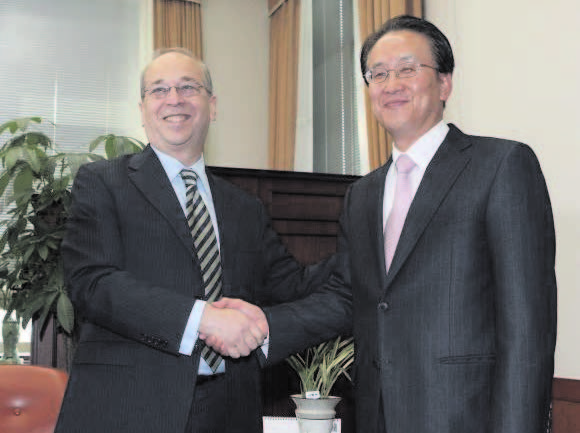
    WASHINGTON: China should not doubt the US commitment to defend its Asian allies and the prospect of economic retaliation should also discourage Beijing from using force to pursue territorial claims in Asia in the way Russia has in Crimea, a senior US official said on April 3.

    Daniel Russel, President Barack Obama’s diplomatic point man for East Asia, said it was difficult to determine what China’s intentions might be, but Russia’s annexation of Crimea had heightened concerns among US allies in the region about the possibility of China using force to pursue its claims.

    “The net effect is to put more pressure on China to demonstrate that it remains committed to the peaceful resolution of the problems,” Russel, the US assistant secretary of state for East Asia, told the Senate Foreign Relations Committee. Russel said the retaliatory sanctions imposed on Russia by the United States, the European Union and others should have a “chilling effect on anyone in China who might contemplate the Crimea annexation as a model.”

    This was especially so given the extent of China’s economic interdependence with the United States and its Asia neighbors, Russel said. Russel said that while the United States did not take a position on rival territorial claims in East Asia, China should be in no doubt about Washington’s resolve to defend its allies if necessary. “The president of the United States and the Obama administration is firmly committed to honoring our defense commitments to our allies,” he said.

    While Washington stood by its commitments – which include defense treaties with Japan, the Philippines and South Korea – Russel said there was no reason why the rival territorial claims could not be resolved by peaceful means. He said he hoped the fact that the Philippines had filed a case against China on Sunday at an arbitration tribunal in The Hague would encourage China to clarify and remove the ambiguity surrounding its own claims.

    Russel termed the deployment of large numbers of Chinese vessels in its dispute with the Philippines in the South China Sea “problematic” and said that Beijing had taken “what to us appears to be intimidating steps.” “It is incumbent of all of the claimants to foreswear intimidation, coercion and other non-diplomatic or extra-legal means,” he said. In Asia, China also has competing territorial claims with Japan and South Korea, as well as with Vietnam, Malaysia, Brunei and Taiwan in potentially energy-rich waters. Obama is due to visit Japan, South Korea, Malaysia and the Philippines from April 22, when he is expected to stress his commitment to a rebalancing of US strategic and economic focus towards the Asia-Pacific region in the face of an increasingly assertive China.

  • Ratan Tata, 8 Indian- Americans inducted in US engineering academy

    Ratan Tata, 8 Indian- Americans inducted in US engineering academy

    WASHINGTON (TIP): Leading Indian industrialist Ratan Tata has been inducted into the prestigious US National Academy of Engineering in the US for his “outstanding contributions to industrial development in India and the world”. Tata, chairman emeritus of the Tata Group, was inducted as one of 11 new foreign associates of the private, independent, nonprofit institution that provides independent advice to the US federal government on matters involving engineering and technology. Besides Tata, eight Indian- Americans were among 69 new elected members taking the total US membership to 2,250 and the number of foreign associates to 211. Addressing the annual meeting of the group on Sunday, NAE president CD Mote Jr lamented that talented engineering workforce was not being given desired priority attention in the US.

    At just four percent, the percentage of US engineering graduates among all its graduates is 1/3 of the European average (13 percent) and 1/6 of the Asian (India, Japan, China, Taiwan, South Korea, and Singapore) competitor average of 23%, he said. As part of its efforts to push its global reach, NAE has started bilateral “Frontiers of Engineering” programmes with India, Germany, Japan, China, and the EU and a new one with Brazil is scheduled for 2014, he said. The new Indian-American members are: Anant Agarwal, president, edX (online learning initiative of MIT and Harvard University) for contributions to shared-memory and multicore computer architectures. Murty P Bhavaraju, senior consultant, PJM Interconnection, Norristown, Pennsylvania for probabilistic reliability evaluation tools for large electric power systems. Ashok J Gadgil, director and senior scientist, environmental energy technologies division, Lawrence Berkeley National Laboratory for engineering solutions to the problems of potable water and energy in underdeveloped nations.

  • Waiver Augurs Well For Indo-US Ties, Say Officials

    Waiver Augurs Well For Indo-US Ties, Say Officials

    NEW DELHI (TIP): New Delhi is happy that Washington has granted another sixmonth waiver to India on Iran-related sanctions just ahead of the fourth Indo-US strategic dialogue. Along with India, China, Malaysia, South Korea, Singapore, South Africa, Sri Lanka, Turkey and Taiwan have also qualified for the exemption from sanctions. India has reduced its oil purchases from Iran considerably in the past few years, cutting imports by nearly a fifth.

    China’s reductions have, however, been more modest. An indication about India getting a fresh waiver from sanctions was recently given by US Undersecretary for Political Affairs Wendy Sherman when she visited New Delhi. “They (India) have stood side-by-side with all of us in the international community to say that Iran should not acquire a nuclear weapon.

    We greatly appreciate all of the leadership that India has provided, including their enforcement of sanctions,” she said. Officials here candidly acknowledge that the Indian economy, already going through a rough period, would have suffered greater had India attracted the Iran-related sanctions. The waiver to India is being viewed here as a move that sets a perfect stage for the fourth India-US strategic dialogue to be held here on June 24. ‘

    External Affairs Minister Salman Khurshid and US Secretary of State John Kerry will lead their respective delegations at the dialogue, which will cover the entire range of relationship between the two countries. The US has been nudging India to reduce its engagement with Iran in view of its controversial nuclear program.

    New Delhi has, however, made it clear Washington that it could not be pressed beyond a limit on the issue of Iran, keeping in view its historical ties with the Islamic country. It has also been forthright in stating that it would only abide by UN sanctions against Iran and not those slapped by individual countries, like the US.

  • HTC INDIA EYES 15% SHARE, TO START EMI SCHEME

    HTC INDIA EYES 15% SHARE, TO START EMI SCHEME

    NEW DELHI (TIP): Betting big on its flagship smartphone HTC One, handset maker HTC on Wednesday said it aims to achieve 15% market share in the domestic smartphone market by the end of this year. “We are aiming 15% market share in the domestic smartphone market by the end of this year,” HTC country head Faisal Siddiqui told PTI.

    As per research agency GFK, HTC currently has 6% share in the domestic smartphone market, he said. The company, which had launched HTC One globally in April, today showcased the device in Delhi. It has partnered with Reliance Communications to offer 1GB of 3G data free for three months. The aluminium unibodied device has new features like HTC BlinkFeed, HTC Zoe and HTC BoomSound as well as innovations in HTC Sense, the company said.

    Like its peers, HTC also plans to come out with EMI (easy monthly instalments) scheme for the phone next month. The company has also added two national distributors and it now has three distributors across the country, who cater to over 100 dealers and 3,500 outlets, Siddiqui said. The company, however, has no plans to start production of the phone in the country and will continue to import it from China and Taiwan.

  • No First Use Nuclear Doctrine with ‘Chinese Characteristics’

    No First Use Nuclear Doctrine with ‘Chinese Characteristics’

    The writing is on the wall as China does not have good track record of strategic comfort and reliability vis-a-vis India. The current incidence of Chinese incursion into Indian territory in Daulat Beg Oldie region in the Ladakh sector should be an eye-opener. While India must focus on its economic, infrastructure and social development and must not waste her meager fiscal resources in a costly nuclear race, she needs to be prepared for all strategic options. Given the aggressive behavior of China in recent years appropriate and credible policies need to be adopted including having a re-look at evolving nuclear posture of China”, says the author.

    Like a chameleon, the dragon, very predictably is changing its colors with regards to its often stated nuclear doctrine of “no first use” (NFU). Since 1964 when China conducted its first nuclear weapon test, China has repeatedly and vociferously insisted that it would not be the first nuclear power to use a tactical or strategic nuclear weapon in pursuit of its strategic objectives. This NFU pledge was explicitly and unconditionally included in each of China’s defense white papers from the first in 1998 through the seventh one in 2011.

    Recently, there is some international debate about possible changes in China’s NFU doctrine following publication of China’s biannual 2013 Defense White Paper. However, it appears that China may have moved beyond its socalled NFU doctrine and its duplicitous pledges do not hold any sincere meaning. Strategic deception has been an important part of China’s military DNA since the times of Sun Tzu who wrote in his treatise the Art of War: “All warfare is based on deception. Hence, when we are able to attack, we must seem unable; when using our forces, we must seem inactive; when we are near, we must make the enemy believe we are far away.

    Since achieving a great economic success and flush with $ 3.4 trillion foreign exchange reserves, China has increased its list of core national issues and has adopted a more belligerent strategic posture and hegemonic attitude towards international community in general and its neighbors in particular. Disregarding the Deng’s advice of lying low and bidding your time, the current (5th) generation of China’s leaders are adopting aggressive postures militarily though the transformation into visibly hardened strategic claims started really during the reign of the 4th generation leaders (Hu Jintao, Wen Jiabao and Wu Bangguo).

    The last time a Chinese paramount leader reaffirmed the so-called NFU pledge was on March 27th 2012 in Seoul Nuclear Conference when Hu Jintao mentioned it in his address. However, in December 2012, the new 5th generation Chinese paramount leader Xi Jinping failed to mention about the so-called no first use pledge in a speech given to Second Artillery Force of the PLA which manages China’s land-based nuclear weapons. Apparently, he also stated that nuclear weapons create strategic support for China’s status as a major world power.

    This is a significant departure from the previously stated public positions citing Mao Zedong’s ideas about the use of nuclear weapons as a taboo and labeling the nuclear weapons essentially as “paper tigers”.

    Fundamentals of NFU Commitment
    Out of the nine countries that possess nuclear weapons currently, only two, China and India had explicitly stated “No First Use” as the guiding principle of their strategic nuclear doctrine.

    An absolute and unconditional NFU commitment would have four following components:
    1. Not to use nuclear weapons first against countries that possess nuclear weapons
    2. Not to threaten use nuclear weapons first against countries that possess nuclear weapons
    3. Not to use nuclear weapons first against countries that do not possess nuclear weapons
    4. Not to threaten to use nuclear weapons first against countries that do not possess nuclear weapons
    NFU policy has been a core feature of the Chinese defense policy having been decided apparently by Chairman Mao himself in 1964. Critics of the Chinese NFU commitment claim that it is completely unverifiable and is mere rhetoric. Selfdescribed “China hawks” in the West have derisively dismissed the Chinese NFU pledge as pure propaganda for the last five decades. Chinese strategists have debated the merits of dropping or altering the NFU policy. This debate was reportedly very intense from mid to late 2000s.

    There are assertions from Chinese officials that Chinese NFU commitment is not applicable to perceived claims on territories. China has territorial disputes with multiple neighbors including India. Presumably since China continues to claim that Arunachal Pradesh is its own territory, in a hypothetical scenario, it may use tactical nuclear weapons in a war with India in eastern sector because China will consider this use not against any other country but in its own perceived territory. Similarly, China will not be bound by its

    NFU if the US were to intervene in Taiwan in case of a Sino-Taiwanese war as it considers Taiwan as a renegade province. Chinese NFU is not applicable if it apprehends annihilation of its top leadership by conventional means. Similarly, a conventional attack on strategic target like the Three Gorges Dam would be an exception to the NFU pledge. More recently, Chinese have discussed other possible exceptions from their NFU commitment including a massive precision guided conventional attack on their intercontinental ballistic missile silos or their strategic facilities. As China moves away from minimal credible deterrence to “limited deterrence”, a more sophisticated delivery mechanism and an exponential increase in its nuclear stockpile, it has also moved towards greater flexibility and continued opacity in its nuclear operational doctrine. It is pertinent to say that the socalled Chinese NFU commitment has never been taken seriously by both the US and Russia at any time in their policy matrix.

    Chinese Nuclear Arsenal
    China can be considered the largest nuclear power after the US and Russia. China’s nuclear capability is apparently stronger than those of the next six nuclear states combined. According to Russian estimates, since early 1960s China has generated 40 tons of enriched weapons grade uranium and 10 tons of plutonium which would be enough to produce 3,600 nuclear war-heads. It is probable that half of this fissile material is kept in stocks whereas the rest half has been used up to produce 1500-1800 warheads, half of which may be in storage. This would leave 800-900 warheads that could be available for operational deployment on various types of delivery vehicles. Therefore, the real motives for China’s complete secrecy about its nuclear forces lie not in their “weakness” and “small size” but in much larger strength of China’s actual nuclear arsenal that is much higher than the commonly cited number of 300-400 warheads by the western analysts. There is also a great degree of international uncertainty about the hundreds of tunnels being built in China as their purpose has not yet been officially explained.

    Chinese Nuclear Posture and Track II Interactions

    Personal interactions with various Chinese academicians and officials during policy conferences suggest that China will continue to add to its nuclear arsenal and will not participate in any nuclear disarmament program till it reaches a certain level. This analyst has interacted with Professor Shen Dingli, Associate Dean of the Institute of International Studies from Fudan University, Shanghai over the last four years with very consistent and candid answers regarding Chinese national nuclear posture.

    Professor Shen Dingli claims to have independent (but sometimes more hawkish views) from those of the Chinese Government. In 2009 Carnegie Nuclear Policy Conference in Washington, DC, he expressed absolute ignorance about Chinese proliferation activities and the fact that Chinese weapons designs were turned in by Libya to the International Atomic energy Agency (IAEA) when Libya folded up their clandestine nuclear program.

    He was totally unaware of China’s both vertical and horizontal proliferation activities as late as April 2009. During the 2009 Carnegie International Nonproliferation Conference, Washington, DC, he agreed that Chinese government will continue to increase its number of nuclear war-heads.

    In a more recent Carnegie Endowment meeting on India-China dialogue in Washington DC on January 10th 2013, he again reiterated that China will continue to modernize its nuclear arsenals and the delivery systems till a perceived parity is achieved with the two great powers (US and Russia). China will certainly not agree to cut the number of nuclear arsenals as it wants both the US and Russia to implement further reductions in their respective nuclear arsenals.

    Interactions with another Chinese academician Dr. Shulong Chu, Professor of Political Science and International Relations at the School of Public Policy and Management and the Deputy Director of the Institute of International Strategic and Development Studies at Tsinghua University in Beijing, China in a session on China-US Strategic Stability on 4/6/2009 during the Carnegie International Nonproliferation Conference, Washington DC revealed very interesting Chinese perspectives.

    Chu explicitly stated that since China has accepted US supremacy, analogously both India and Japan should accept Chinese supremacy in the Asiapacific region. China is a bigger country than Japan and India. It has bigger military requirements. Japan, India and other Asian countries should understand that and should be willing to accept China’s ongoing modernization of its military and strategic (read nuclear) assets. Chu further went on saying: “Russia and the US have too many nuclear war-heads. They can afford to have deep cuts. China cannot do that because China has too few. China wants more and its agenda is to have more nuclear weapons”.

  • The Dragon Covets the Arctic

    The Dragon Covets the Arctic

    China’s lust for oil, minerals, rare earths, fish and desire for an alternative northern sea route boils the Arctic Geopolitics!
    Iceland is a small, sparsely populated island nation with a population of only 320,000 and area of 40,000 square miles. It is the only member of the NATO that does not have an army of its own. Icelandic banks were part of the 2008 global financial crisis and meltdown when they exposed the Icelandic government of huge financial risks by indulging in risky loans and speculative foreign currency transactions without having enough liquidity and capital reserves. The fiscal crisis led to a former Icelandic prime minister losing his job and being hauled to court of law for not supervising the banks enough. In an international capitalistic, mercantile system, if Iceland were a company, it was “sitting duck” for outright purchase and acquisition. Fortunately, foreigners are not allowed to buy any property or real estate in Iceland and need a special permit. And here comes the Peoples’ Republic of China, rich with $ 3.4 trillion in foreign exchange reserves in its kitty.

    It has built a palatial embassy in Reykjavik, Iceland worth $250 million with only 7 accredited diplomats. China is negotiating a free trade area with Iceland, the first with any European nation. Former Chinese Prime Minister Wen Jiabao even paid a state visit to Iceland for two full days in 2012. Other Chinese ministers and officials have also been very active in Iceland with bilateral visits and cultural events. In 2010, Huang Nubo, a “poetry loving” Chinese billionaire and former communist party official visited Iceland to meet his former classmate Hjorleifur Sveinbjornsson, a Chinese translator with whom he had shared a room in 1970s in the Peking University. He expressed his intense love for poetry and put up $ one million to finance Iceland-China Cultural Fund and organized two poetry summits, the first one in Reykjavik in 2010 and the second one in Beijing in 2011.

    Last year (2012), Huang Nubo and his Beijing based company, the Zhongkun group offered to buy 300 sq km of Icelandic land ostensibly to develop a holiday resort with a golf course. This Chinese billionaire wanted to pay $7million to an Icelandic sheep farmer to take over the land and build a $100 million 100-room five star resort hotel, luxury villas, an eco-golf course and an airstrip with 10 aircrafts.

    A state owned Chinese bank reportedly offered the Zhongkun group a soft loan of $ 800 million for this project. The deal was blocked by the Icelandic Interior Minister who asked many pertinent questions but reportedly got no answers. Huang would not take no for an answer and has submitted a revised bid for leasing the land for $ one million instead of outright purchase. He makes an unbelievable assertion that there is a market demand for peace and solitude: “Rich Chinese people are so fed up of pollution that they would like to enjoy the fresh air and solitude of the snowy Iceland”. The current Icelandic government, a leftof- center coalition has given this proposal a cold shoulder.

    But, with elections due in April 2013 in Iceland, China is hoping for a more sympathetic government to approve the project. Iceland looks like an easy bird of prey for the wily red Dragon with insatiable appetite. China is showing generosity to another poor and sparsely populated, self-governing island of Greenland by offering investments in mining industry with proposal to import Chinese crews for construction and mining operations. Greenland is rich in mineral deposits and rare earth metals. China wants Greenland to provide exclusive rights to its rare earth metals in lieu of the fiscal investments. Under one such proposal, China would invest $2.5 billion in an iron mine and would bring 5000 Chinese construction and mining workers whereas the population of the capital of Greenland, Nuuk is only 15000.

    Arctic Council Membership:
    There are eight members of the Arctic Council that includes Canada, Denmark (including Greenland), Finland, Iceland, Norway, Russia, Sweden and the USA. All these eight countries have geographic territories within the Arctic Circle. It was constituted in 1996 as an intergovernmental body but has evolved gradually from a dialogue forum to a geo-political club and a decision making body. There are continuing territorial disputes in Arctic Circle. Ownership of the Arctic is governed by the United Nations Convention of the Law of the Sea, which gives the Arctic nations an exclusive economic zone that extends 200 nautical miles from the land. Member countries signed their first treaty on joint search and rescue missions in 2011. A second treaty on cleaning up oil spills is being negotiated. The group established its permanent secretariat at Tromso, Norway in January 2013.

    Arctic Melting and Opening of Newer Sea Lanes:
    With global warming becoming a reality, the Arctic ice has started to melt rapidly opening the northern sea-lanes that were frozen earlier. In summer of 2012, 46 ships sailed through the Arctic Waters carrying 1.2 million tonnes of cargo. There are legal questions about the international status of the northern sea lanes.

    China’s Lust for Arctic Resources:
    The Arctic has 13% of the world’s undiscovered oil and 30% of gas according to the US Geological Survey. Greenland alone contains approximately one tenth of the world’s deposits of rare earth minerals. China which already has a monopoly on world’s rare earth metal trade wants to continue controlling this global trade. China piously claims that the Arctic resources are the heritage of the entire mankind while insisting that the South China sea is its exclusive sovereign territory. In 2004, China set up its first and the only Arctic scientific research station, curiously named “Yellow River Station” on the Svalbard Island of Norway.

    China, so far, has sent 6 arctic expeditions. China plans to build more research bases. In 2012, the 170- meters long ice-breaker “Snow Dragon” (MV Xue Long) became the first Chinese Arctic expedition to sail along the Northern Sea Route into the Barente Sea. Incidentally, as early as 1999, this 21000 metric ton research ice-breaker Xue Long had docked in the Canadian North-Western territory unexpectedly. China is building another 120-meter long ice-breaker with the help of Finland while the Polar Research institute in Shanghai trains scientists and other personnel for Arctic expeditions.

    China’s Previous Use of Deception:
    There is no mandarin character for word transparency. China has been known to use duplicity and deception since the Art of War was written by Sun Tzu. China’s rhetoric of “peaceful and harmonious rise” and hegemonic behavior are predictably diametrically opposite to each other. China’s use of deception to camouflage its intentions in geopolitical matters is not surprising. While China joined the NPT in 1991, it provided 50 kg of highly enriched uranium to Pakistan, provided that country with a nuclear weapon design and supervised Pakistan’s first nuclear test at the Chinese nuclear testing site of Lop Nur.

    China purchased in 1998 an unfinished aircraft carrier from Ukraine after the break-up of Soviet Union ostensibly for developing a floating casino. The same “floating casino” is now China’s first aircraft carrier projecting Chinese naval and maritime power in the South China Sea. China’s Application in Arctic Council Membership: China currently has an ad hoc observer status with Arctic Council. China’s application for permanent observer-ship was denied by Norway in 2012 owing to bilateral dispute over awarding of Nobel peace prize to China’s Liu Xiabo in 2010. China still has a pending application to be decided in May 2013 Arctic Council summit in Sweden when Canada takes over the chair for the next two years. With a permanent observer status, China would get full access to all Arctic Council meetings. Permanent observers do not have voting rights in the council but can participate in deliberations.

    China is trying to distinguish itself from the rest of the applicants as a “Near Arctic State” on the perniciously clever but fallacious grounds that the northernmost part of China in the province of Manchuria (the Amur river) is only one thousand miles south to the Arctic circle. The fallacy is that Manchuria was a separate, independent country that was annexed by China after the Communist take-over. Manchus had ruled over China for centuries during the reign of Manchu dynasty and last Chinese Emperor Pu Yi was actually the last Manchu emperor. Chinese ownership and annexation of Manchuria (Manchu-Kuo) is still not settled. A disputed territory cannot be used by China to make a geo-political claim for being a “Near Arctic State”.

    Other Pending Applications:
    Other countries or non-state actors with pending applications for permanent observer-ship status include Japan, South Korea, India, Singapore, European Union, and non-state actors like Greenpeace and the International Association of Oil and Gas Producers. All these applications will be decided one way or the other in May 2013. The vote has to be unanimous for acceptance and how the US and Russia will vote is the crucial issue. In the past, Norway had vetoed China’s membership application. Some of the Arctic Council members may not approve European Union’s application because of EU’s penchant for restrictive and narrow rulings. Whereas Sweden, Canada, Iceland and Denmark may support China’s application, there are doubts about Norway, Russia and the US. Russia is currently the most vociferous member of Arctic Council that has serious reservations in expanding the Arctic club.

    Strategic Issues:
    China has voracious appetite for new territories and has been seeking new frontiers for the last three hundred years with Inner Mongolia, Manchuria, Xinjiang and Tibet. China’s list of “core issues” is ever-expanding, starting with Taiwan and Tibet. China has included the whole the South China Sea and its islands as a core issue. China is aggressively claiming sovereignty on these islands based on historical maps and manufactured mythological evidence. China has now a license from the UN for deep sea bed mining for minerals in the Indian Ocean and has developed naval bases in Indian Ocean and Arabian Sea ports. If China manages to get a toehold in Arctic Circle, its behavior will become as belligerent in Arctic as it is in the South China Sea. It might claim sovereignty over the whole of the Northern route sea lanes based on “historical evidence”. If in 22nd century, China decides that the Arctic Circle is its core national issue, one would be seeing Chinese aircraft carriers in the Arctic Sea and Chinese nuclear powered submarines in the Barente Sea along with military bases with “Chinese characteristics” in the Iceland and Greenland.

  • Chinese New Year 2013

    Chinese New Year 2013

    Chinese Spring Festival, also called Lunar New Year,has more than 4,000 years of history. Being one ofthe traditional Chinese festivals, it is the grandestand the most important festival for Chinese people. It isalso the time for the whole families to get together, which issimilar with Christmas Day to the westerners. Originatingduring the Shang Dynasty (about 17th – 11th century BC),Spring Festival, which celebrates family reunion, is full ofrich and colorful activities, and new hopes with the adventof spring and flowers blossoming. People from differentregions and different ethnic groups celebrate it in theirunique ways.

    Festival Time
    The Spring Festival comes on the first day of Chineselunar calendar and lasts for almost half of a month. But infolk custom, this traditional holiday lasts from the 23rd dayof the twelfth month to the 15th day of the first month(Lantern Festival) in the lunar calendar. Among these days,the New Year’s Eve and the first day of the New Year is thepeak time of the festival. The exact days are different inevery year according to the lunar calendar. Schedule ofSpring Festival in recent years is offered in the followingtable.Chinese New Year begins according to the Chinesecalendar which consists of both Gregorian and lunar-solarcalendar systems. Because the track of the new moonchanges from year to year, Chinese New Year can beginanytime between late January and mid-February.

    Below isa chart that shows the beginning day of Chinese New Yearand the animal sign for that year.Chinese New Year is the longest and most importantfestivity in the Chinese calendar. The origin of ChineseNew Year is itself centuries old and gains significancebecause of several myths and traditions. Chinese New Yearis celebrated in China and in countries and territories withsignificant Chinese populations, including Hong Kong,Macau, Singapore, Thailand, Indonesia, Malaysia, Taiwan,Mauritius, Philippines, and also in Chinatowns elsewhere.Chinese New Year is considered a major holiday for theChinese and has had influence on the lunar new yearcelebrations of its geographic neighbors.Within China, regional customs and traditionsconcerning the celebration of the Chinese new year varywidely.

    People will pour out their money to buy presents,decoration, material, food, and clothing. It is alsotraditional for every family to thoroughly cleanse thehouse, in order to sweep away any ill-fortune and to makeway for good incoming luck. Windows and doors will bedecorated with red color paper-cuts and couplets withpopular themes of “good fortune” or “happiness”, “wealth”,and “longevity.” On the Eve of Chinese New Year, supper isa feast with families. Food will include such items as pigs,ducks, chicken and sweet delicacies. The family will endthe night with firecrackers. Early the next morning,children will greet their parents by wishing them a healthyand happy new year, and receive money in red paperenvelopes.

    The Chinese New Year tradition is to reconcile,forget all grudges and sincerely wish peace and happinessfor everyone.Although the Chinese calendar traditionally does not usecontinuously numbered years, outside China its years areoften numbered from the reign of the Yellow Emperor. Butat least three different years numbered 1 are now used byvarious scholars, making the year beginning in 2012 AD the”Chinese Year” 4710, 4709, or 4649.Every family does a thorough house cleaning andpurchases enough food, including fish, meat, roasted nutsand seeds, all kinds of candies and fruits, etc, for thefestival period. Also, new clothes must be bought,especially for children. Red scrolls with complementarypoetic couplets, one line on each side of the gate, are pastedat every gate. The Chinese character ‘Fu’ is pasted on thecenter of the door and paper-cut pictures adorn windows.

    Taboos
    The Spring Festival is a new start for a new year, so it isregarded as the omen of a new year. People have manytaboos during this period. Many bad words related to”death”, “broken”, “killing”, “ghost” and “illness” or”sickness” are forbidden during conversations. In someplaces, there are more specific details. They consider itunlucky if the barrel of rice is empty, because they thinkthey will have nothing to eat in the next year. Takingmedicine is forbidden on this day, otherwise, people willhave sick for the whole year and take medicine constantly.

    Festival Food
    Food during this festival has its characteristics, which isthe representative of Chinese festival food culture.Dumplings and the reunion dinner are indispensable atthis time. Cold and hot dishes are all served. Fish is alwaysan important dish then, which expresses people’s hope ofhaving a wealthy new year.

    History
    It is said that the custom of Spring Festival started inwhen people offered sacrifice to ancestors in the last monthof Chinese lunar calendar. At that time, people preparedthe sacrifice by doing thorough cleaning, having bathesand so on. Later, people began to worship different deitiesas well on that day. It is the time that almost all the farmworks were done and people have free time. The sacrificingtime changed according to the farming schedule and wasnot fixed until the Han Dynasty (202BC-220AD). Thecustoms of worshipping deities and ancestors remainseven though the ceremonies are not as grand as before. It isalso the time that spring is coming, so people held all kindsof ceremonies to welcome the spring.

    Legends
    There are many legends about the festival in Chineseculture. In folk culture, the Spring Festival is also called”guonian” (meaning “passing a year”). It is said that the “nian”(year) was a strong monster which was fierce and cruel andate one kind of animal including human being a day. Humanbeings were scared about it and had to hide on the eveningwhen the “nian” came out. Later, people found that “nian” wasvery scared about the red color and fireworks. So after that,people use red color and fireworks or firecrackers to driveaway “nian” every year. As a result, the custom of using redcolor and setting off fireworks remains.

    Festivities Schedule
    Preparing the New Year starts 7 days before the NewYear’s Eve. According to Chinese lunar calendar, peoplestart to clean the house on Dec. 24, butcher on Dec. 26th andso on. People have certain things to do on each day. Thesefestival activities will end Jan. 15th of the lunar calendar.

  • Rethinking our China strategy

    Rethinking our China strategy

    Senate committees will soon be asked to vote on President Obama’s nominees to head the departments of State and Defense and the Central Intelligence Agency. Many, if not most, of the senators’ questions will be focused on the nominees’ views on the pressing security problems the United States faces in the greater Middle East and Afghanistan. But it would be a mistake for the committees to let the hearings pass without also examining the administration’s own stated policy priority – the “pivot” or “rebalance” to the Asia-Pacific region. A productive discussion of the pivot, however, will require a frank acknowledgment that the primary factor driving the change is increased nervousness in Washington and Asian capitals about China’s rise and, in turn, recognition that the U.S. policy of engagement with China has not been as effective in shaping that rise as successive administrations, Republican and Democratic, had hoped. On this point, it is particularly useful to reread then-Deputy Secretary of State Robert Zoellick’s 2005 speech in which he famously invited Beijing to become a “responsible stakeholder” in the international system. Since the late 1970s, the U.S. had been, as Zoellick put it, “opening doors to China’s membership into the international system” with the expectation that doing so would lead to change in Chinese behavior as it saw the security and economic benefits of that system. By no means a China “hawk,” Zoellick provided a reasonable set of benchmarks for judging just how successful engagement would be in moving China along the path of a benign rise to great-power status. So,what does the score card look like? To start, Zoellick noted that, although China had “gained much from its membership in an open, rules-based international economic system,” its mercantilist economic policies put in doubt its commitment to that system’s underlying principles. And little has changed on that front. China keeps its currency undervalued to promote its exports, limits foreign access to its markets and treats natural resources as exclusive national assets. The government has done little to rein in intellectual property piracy or commercial cyber-espionage. State-owned banks still dominate China’s financial sector, and Beijingdriven industrial policies have increased, not decreased, in recent years. Another point of contention Zoellick hoped the Chinese would address was the lack of transparency when it came to China’s military buildup. But despite repeated U.S. initiatives, military-to-military exchanges have produced little of substance, and American intelligence continues to be surprised as some new Chinese weapons system is rolled out of its hangar or deployed at sea. Even during some of the roughest patches of the Cold War, the White House had a direct hot line to the Kremlin, and we knew, by mutual agreement, how many strategic warheads and missiles the Soviets had.With China,we haven’t a clue. As a responsible stakeholder, Zoellick said, China could and should do more to address the problem of North Korea and weapons proliferation more generally. On North Korea, only Beijing has the ability to pressure or persuade Pyongyang to change behavior. Yet North Korea continues to stockpile nuclear weapons and is bent on perfecting missiles that threaten our allies and, soon enough, the United States. If there is any good news, China’s direct role in proliferating has lessened. And while the recent vote by Beijing in support of the U.N. Security Council resolution condemning North Korea’s last missile test is a small but positive step, Beijing has not used its considerable leverage with Pyongyang to stop North Korea’s proliferation, and has dragged its feet on helping the rest of the world deal with the destabilizing impact of Iran’s nuclear program.

    As Zoellick noted, “China’s actions on Iran’s nuclear program will reveal the seriousness of China’s commitment to nonproliferation” and, so far, its record falls short of that mark. And, finally, Zoellick said that “China’s choices about Taiwan will send an important message too…. It is important for China to resolve its differences with Taiwan peacefully.” However, despite the most conciliatory government in Taiwan since the establishment of the People’s Republic of China, Beijing’s military buildup across from the island democracy has not diminished.

    Since Zoellick’s speech, China has taken an even more aggressive posture toward its neighbors, with confrontations with Japan in the East China Sea and Vietnam and the Philippines in the South China Sea. So what does this assessment of Chinese behavior mean for U.S. policy in an Obama second term? First, it reinforces the administration’s rationale for upping America’s strategic game in the Asia-Pacific region.

    What the Senate should be looking to hear, however, is exactly how the new national security team will go about making that a reality, especially in an era of major cuts in defense spending. Second, it means that, to the extent engagement is pursued, it should be with an eye to what is mutually and concretely beneficial, not with the expectation that the process itself will lead to China’s transformation.

    Finding the right balance in U.S.-China policy is a complex task. But the first step for the new secretaries of State and Defense in getting it right must be to understand what engagement can and can’t do, and to realize it is unlikely that China will become a member in good standing of the liberal international order until its leaders have made the decision to become liberal at home.

  • Islands row: Japan fires water cannon at Taiwanese boat

    Islands row: Japan fires water cannon at Taiwanese boat

    TAIPEI (TIP): A boat with Taiwanese activists headed for disputed Japanesecontrolled islands turned back Thursday after coast guard vessels from the two sides converged and duelled with water cannon. The boat, carrying seven people including four Taiwanese activists, gave up a plan to land on the East China Sea islands after being blocked by Japanese coast guard vessels as it sailed within 17 nautical miles of the archipelago. “We fired water cannon at each other,” Taiwanese coast guard spokesman Shih Yiche said of the confrontation. The disputed islands, in an area where the seabed is believed to harbour valuable mineral reserves, are known as Senkaku in Japanese and Diaoyu in Chinese. Both China and Taiwan claim them. As the standoff unfolded, three Chinese surveillance vessels were positioned a few nautical miles off, the Taiwanese coast guard said. It added that it was the first time ships from China had been spotted near a Taiwanese-Japanese incident, and that it had sent a radio message to the three boats to keep their distance in order not to complicate matters. The incident came at a time of growing regional concern over the intensified friction over the islands between China and Japan, with both Beijing and Tokyo recently scrambling fighter jets to assert their claims to the area. The Japanese coast guard confirmed that it took action after encountering the Taiwanese vessel. “Our patrol boat carried out restrictions on the vessel such as blocking its path and discharging water,” it said in a statement. “The vessel left our country’s contiguous zone at around 1:30 pm (0430 GMT) and continued sailing west-southwest away from the Senkakus.” The activists, who set off in the early hours and were expected to return to Taiwan at about 7pm (1100 GMT), had hoped to place a statue of the Goddess of the Sea on the islands, to protect Taiwanese fishermen in the area. They had also intended to “maintain sovereignty” in defiance of Japan’s control, said Hsieh Mang-lin, the Taiwanese chairman of the Chinese Association for Protecting the Diaoyutais (Diaoyu Islands).

    Taiwan’s coast guard said four of its vessels on routine patrols in the area had protected the activists’ boat. “The coast guard will protect our people’s voluntary actions to defend the Diaoyu islands. coast guard vessels will go wherever the fishing boat is… to defend our sovereignty and protect our fishing rights,” it said in a statement. A Japanese foreign ministry spokesman said officials at the nation’s de facto embassy in Taipei, established in the absence of formal relations, had been in touch with the Taiwanese government about the incident. “We have repeatedly called on the Taiwan side to take proper action in order to prevent an unfavourable situation from arising in the favourable Japan-Taiwan relations,” he said. coast guard vessels from Japan and Taiwan also exchanged water cannon barrages in September after dozens of Taiwanese boats were escorted by patrol ships into the islands’ waters.

    Previous activist landings have resulted in the arrest and deportation of those setting foot on what Japan says has been its indisputable territory for more than a century. The rocky island outposts have been the scene of a diplomatic tussle between Japan and China for months. Japan’s government nationalised three of them in September by taking them out of private Japanese ownership

  • US military to boost Philippines presence; China tells army to be prepared

    US military to boost Philippines presence; China tells army to be prepared

    MANILA (TIP): US and Philippine officials are expected to agree on an increase in the number of US military ships, aircraft and troops rotating through the Philippines, Filipino officials said, as tensions simmer with China over its maritime claims.
    Though he made no direct reference to the territorial disputes, new Chinese Communist Party chief Xi Jinping urged his military to prepare for a struggle. He made the comments during his visit to a South China Sea fleet ship in southern Guangdong province, but did not name any potential aggressor.

    Senior US and Philippine officials met on Wednesday in Manila to discuss strengthening security and economic ties at a time of growing tension over China’s aggressive sovereignty claims over vast stretches of the disputed South China Sea. Philippine defense and diplomatic officials said they expected to see more US ships, aircraft and troops for training exercises and disaster and relief operations. “What we are discussing right now is increasing the rotational presence of US forces,” Carlos Sorreta, the foreign ministry’s assistant secretary for American Affairs, told reporters.

    A fiveyear joint US-Philippine military exercise plan would be approved this week, he added. The size of the increase in the US military assets in the Philippines, a former US colony, was unclear. Pio Lorenzo Batino, Philippine deputy defence minister, said there were “substantial discussions” on a possible new framework allowing Washington to put equipment in the Southeast Asian state. “There has been no discussion yet on specifics … (these are) policy consultations and the specifics would be determined by the technical working groups,” he told a news conference, saying the new framework was discussed in the context of increasing rotational presence. US assistant sevretary of state Kurt Campbell said the two allies’ relationship was “in a renaissance”.

    The discussions come as the Philippines, Australia and other parts of the region have seen a resurgence of US warships, planes and personnel under Washington’s so-called “pivot” in foreign, economic and security policy towards Asia announced last year.

    Wary of Washington’s intentions, China is building up its own military. Its claims over most of the South China Sea have set it directly against US allies Vietnam and the Philippines, while Brunei, Taiwan and Malaysia also claim parts of the mineral-rich waters. Xi, who assumed the role of military chief about a month ago, called on the 2.3-million-strong People’s Liberation Army to “push forward preparations for a military struggle”, state news agency Xinhua said. Xi, speaking during a three-day inspection of the PLA’s Guangzhou base starting last Saturday, did not say against whom the struggle might be fought.

    His remarks echo those he made a week ago and are a common refrain by Chinese leaders. Xi replaced President Hu Jintao as chairman of the Central Military Commission on November 15. Xi also said the army should “modernize” for combat readiness, but gave no specific details.

    Military bases
    US and Philippine officials say there is no plan to revive permanent US military bases in the Philippines – the last ones were closed in 1992 – and that the increased presence would help provide relief during disasters such as a typhoon last week that killed more than 700 people.

    “The increase rotation presence is in areas where we have been traditionally exercising,” said Sorreta. “There are other areas for example where we have been experiencing more disasters. So we might be expanding exercises there.” One US official said Washington was not ready to wade directly into the territorial dispute in the South China Sea and instead would focus on strengthening security ties with longstanding allies such as the Philippines. “I don’t think you’ll see any real movement on the South China Sea,” the US official said. “I’m sure it will come up, but we aren’t trying to step in and ‘solve’ that issue. We really want the solution to be done by the claimants themselves and are hoping the Code of Conduct discussions move forward,” said the official, referring to a Code of Conduct aimed at easing the risk of naval flashpoints. Sorreta told Reuters the Philippines also favored an increased deployment of US aircraft and ships “so we can make use of them when the need arises”, citing last week’s typhoon. He said they would also welcome more US humanitarian supplies.

  • Consul General Invokes the Memory of Swami Vivekananda at the NFIA Convention

    Consul General Invokes the Memory of Swami Vivekananda at the NFIA Convention

    CHICAGO (TIP): Inaugurating the 17th biennial convention of the National Federation of Indian American Associations (NFIA), Consul General of India, Ms. Mukta Dutta Tomar, on Friday October 12, 2012 welcomed the delegates from all over the United States to Chicago and said that this town is a remarkable place where Swami Vivekananda made his extraordinary speech to the 1893 World’s Parliament of Religions. “Almost 120 years later, his words still hold true, promoting tolerance and universal acceptance,” she continued, “I hope you will take a little time to visit the Art Institute and renew your connections to that historic event.” The Consul General then went on to pay a glowing tribute to the Indian American community and said that the people of India origin have proved themselves in a tough global competitive environment through their innovative, dynamic, pioneering qualities, as they continue to produce new generation of talented individuals, good corporate and social citizens and enterprising and creative professionals.

    Studies support that over 3 million immigrants from India living in the US are one of the most remarkable concentration of Indians, she noted. Seventy percent of them over the age of 25 are college graduates, 67% over the age of 16 are professionals and the median income of Indian household is over $90,000, the highest among all ethnic groups in the United States. A joint UC Berkeley-Duke University study revealed that Indian American immigrants have founded more engineering and technology companies from 1995 to 2005 than immigrants from UK, China, Taiwan and Japan combined.

    Tomar also addressed the growing ties between India and the United States. “The partnership between the two countries is based on shared values of democracy, pluralism, and rule of law. The relations have widened in scope and encompass cooperation in areas like economy and trade, defense and security, education, science and technology, civil nuclear energy, space technology, clean energy, environment and health.”

    The inauguration ceremony started with a welcome remarks by Convention Convener Sohan Joshi and NFIA President Lal Motwani. Congressman Joe Walsh (D-8th District of Illinois) also addressed the delegates saying that he was very happy to be there. “I have fallen in love with India and people of Indian origin in my district.” His brief remarks were followed by a colorful cultural program of dances and music. Lal Motwani, president of NFIA and Sohan Joshi, the convener of the gathering also made brief remarks.

    The next day was filled with intellectually stimulating seminars. The day was organized into 10 sessions including two plenary sessions. The first plenary session was titled “Indian American Making an Impact in America” with Dr. Ann Lata Kalayil, an Obama appointee as GSA Administrator for Great Lakes Region as the keynote speaker and Anju Bhargava, a member of White House Office of Faith-based and Neighborhood Partnership as speaker. Dr. Kalayil spoke about her experience growing as a second generation Indian American kid, taking interest in political process and that how she made it to the current position as GSA administrator and called upon the new generation to get involved in public service. Ms. Bhargava spoke on many avenues of involvement for the community in faith-based and neighborhood partnership. In a second plenary session, Dr. Sid Gautam, Professor of Financial Economics; Director, Center for Entrepreneurship, Methodist University, Fayetteville, NC spoke on the Innovative DNA of the Indian Diaspora.

    There were eight other conference sessions which dealt with Honoring the Pioneers – Celebrating 100th Anniversary Gadar Movement (organized by GOPIO International); New Tax Rules in the US and India affecting the Community – Foreign Income Reporting, FBAR, OVDI, Avoid Double Taxation and New NRI Taxes in India; Indian Americans Making Impact in the Society; Taking Care of Our Own – Services to the Community; Indian American Senior Citizens – Mobilizing Services; Community’s Success in Political Involvement; Indian Americans Making Impact in India’s Development; Indian American Youth and Young Professionals Achieving Success. In addition, an Indian delegate Dr. Sudha Gopalakrishnan, Executive Director of SAHAPEDIA made a special presentation on An Open encyclopedia on Indian Culture and Heritage.

    There was a spirited discussion on the political involvement of the community and the success it has achieved in this area. Toby Chaudhary, a political activist from Washington DC, urged the audience to wake up and participate in the mainstream politics.

    “The conference sessions were very well attended and the speakers brought many issues and prospects of the Indian American community including many community groups sharing exchanging their experiences in serving the community,’ said the conference chairman Dr. Thomas Abraham, who is also the founder president of NFIA.

    A gala banquet was held on Saturday evening and Cook County Clerk Dorothy Brown and Secretary of State Jesse White made remarks at the event. The six individual award winners were: Harkrishana Majumdar and Dr. Najma Sultana for their involvement in community service; Nitin Shah in the field of hospitality and financing; Sid Gautam for promoting entrepreneurship; Rathna Kumar for her excellence in performing arts and Dr. Hemant Patel for his service to medicine and organizational leadership.

    Three organizations, Sahara TV, India Abroad, the oldest Indian American weekly, and Indo-American Centre of Chicago, an organization that focuses on assisting South Asian immigrants as they adjust to life in the United States, were also recognized for their exemplary achievements.

    Sunday morning was devoted to the business of the organization, revision of bylaws, and elections were held for the president and the board followed by a lunch.

    .The delegates parted company to take their flights back to their home States, after making new friends, collecting a bunch of business cards, and carrying fond memories of their stay in Chicago.